P

Curiosity Sends Holiday Postcard from Mars – NASA’s Curiosity Mars rover used its black-and-white navigation cameras to capture panoramas at two times of day on Nov. 18, 2025, spanning periods that occurred on both the 4,722nd and 4,723rd Martian days, or sols, of the mission. The panoramas were captured at 4:15 p.m. on Sol 4,722 and 8:20 a.m. on Sol 4,723 (both at local Mars time), then merged together. Color was later added for an artistic interpretation of the scene with blue representing the morning panorama and yellow representing the afternoon one.

NASA’s Curiosity Mars rover used its black-and-white navigation cameras to capture panoramas at two times of day on Nov. 18, 2025, spanning periods that occurred on both the 4,722nd and 4,723rd Martian days, or sols, of the mission. The panoramas were captured at 4:15 p.m. on Sol 4,722 and 8:20 a.m. on Sol 4,723 (both at local Mars time), then merged together. Color was later added for an artistic interpretation of the scene with blue representing the morning panorama and yellow representing the afternoon one.

Read More
Popular Catholic speaker pleads for a miracle amid son’s medical emergency #Catholic 
 
 Micah Kim, 5, son of popular Catholic speaker Paul Kim, is anointed by a priest on Dec. 26, 2025. Credit: Courtesy of Paul Kim's Facebook page / null

Dec 29, 2025 / 17:51 pm (CNA).
Paul Kim, a highly popular Catholic youth and young adult speaker, continues to share updates on his 5-year-old son, Micah, who remains on life support following a sudden medical emergency just days before Christmas.Entering his ninth day in the hospital, Micah’s condition has sparked an outpouring of prayers across the globe, with the family invoking the intercession of Venerable Fulton Sheen for a miracle amid grim medical prognoses.The ordeal began when Micah was rushed to the hospital last week after experiencing severe internal bleeding and other complications. Kim, a devoted husband and father of six known for his engaging talks on faith and family at Catholic conferences, first alerted followers via social media on Dec. 22: “My son Micah is having a medical emergency right now and headed to the hospital in an ambulance.”By Dec. 24, Micah underwent emergency chest surgery to address the bleeding, which successfully stabilized his heart function. Kim shared on social media that after the surgery, his son’s heart began beating independently and his vital signs remained steady.Doctors gradually reduced life support, with Micah’s lungs showing slow improvement on a ventilator. However, a subsequent MRI revealed severe brain damage, leading physicians to conclude there is “no medical possibility” of recovery.“Micah is fighting for his life,” Kim said in a Dec. 29 update on Instagram. “We’re waiting on the Lord, and we don’t give up trust.”Micah received the sacrament of anointing of the sick on Dec. 23 at 3 p.m., “when divine mercy redeemed us all,” and Kim invited all Catholics to join with his family in praying the Divine Mercy Chaplet, humbly requesting a miracle “through the intercession of Archbishop Fulton Sheen.”In addition to an outpouring of prayer for Micah, a GoFundMe campaign was begun to support the family amid mounting medical costs.“Praying that all is stable and the parents are resting,” one supporter posted on social media platform X, echoing widespread sentiment.As of Dec. 29, Micah’s kidney function remains a concern, but the family is holding fast to hope. “Please keep praying! God has the ultimate say. He is the Divine Physician,” Kim noted on Instagram.

Popular Catholic speaker pleads for a miracle amid son’s medical emergency #Catholic Micah Kim, 5, son of popular Catholic speaker Paul Kim, is anointed by a priest on Dec. 26, 2025. Credit: Courtesy of Paul Kim's Facebook page / null Dec 29, 2025 / 17:51 pm (CNA). Paul Kim, a highly popular Catholic youth and young adult speaker, continues to share updates on his 5-year-old son, Micah, who remains on life support following a sudden medical emergency just days before Christmas.Entering his ninth day in the hospital, Micah’s condition has sparked an outpouring of prayers across the globe, with the family invoking the intercession of Venerable Fulton Sheen for a miracle amid grim medical prognoses.The ordeal began when Micah was rushed to the hospital last week after experiencing severe internal bleeding and other complications. Kim, a devoted husband and father of six known for his engaging talks on faith and family at Catholic conferences, first alerted followers via social media on Dec. 22: “My son Micah is having a medical emergency right now and headed to the hospital in an ambulance.”By Dec. 24, Micah underwent emergency chest surgery to address the bleeding, which successfully stabilized his heart function. Kim shared on social media that after the surgery, his son’s heart began beating independently and his vital signs remained steady.Doctors gradually reduced life support, with Micah’s lungs showing slow improvement on a ventilator. However, a subsequent MRI revealed severe brain damage, leading physicians to conclude there is “no medical possibility” of recovery.“Micah is fighting for his life,” Kim said in a Dec. 29 update on Instagram. “We’re waiting on the Lord, and we don’t give up trust.”Micah received the sacrament of anointing of the sick on Dec. 23 at 3 p.m., “when divine mercy redeemed us all,” and Kim invited all Catholics to join with his family in praying the Divine Mercy Chaplet, humbly requesting a miracle “through the intercession of Archbishop Fulton Sheen.”In addition to an outpouring of prayer for Micah, a GoFundMe campaign was begun to support the family amid mounting medical costs.“Praying that all is stable and the parents are resting,” one supporter posted on social media platform X, echoing widespread sentiment.As of Dec. 29, Micah’s kidney function remains a concern, but the family is holding fast to hope. “Please keep praying! God has the ultimate say. He is the Divine Physician,” Kim noted on Instagram.


Micah Kim, 5, son of popular Catholic speaker Paul Kim, is anointed by a priest on Dec. 26, 2025. Credit: Courtesy of Paul Kim's Facebook page / null

Dec 29, 2025 / 17:51 pm (CNA).

Paul Kim, a highly popular Catholic youth and young adult speaker, continues to share updates on his 5-year-old son, Micah, who remains on life support following a sudden medical emergency just days before Christmas.

Entering his ninth day in the hospital, Micah’s condition has sparked an outpouring of prayers across the globe, with the family invoking the intercession of Venerable Fulton Sheen for a miracle amid grim medical prognoses.

The ordeal began when Micah was rushed to the hospital last week after experiencing severe internal bleeding and other complications. Kim, a devoted husband and father of six known for his engaging talks on faith and family at Catholic conferences, first alerted followers via social media on Dec. 22: “My son Micah is having a medical emergency right now and headed to the hospital in an ambulance.”

By Dec. 24, Micah underwent emergency chest surgery to address the bleeding, which successfully stabilized his heart function. Kim shared on social media that after the surgery, his son’s heart began beating independently and his vital signs remained steady.

Doctors gradually reduced life support, with Micah’s lungs showing slow improvement on a ventilator. However, a subsequent MRI revealed severe brain damage, leading physicians to conclude there is “no medical possibility” of recovery.

“Micah is fighting for his life,” Kim said in a Dec. 29 update on Instagram. “We’re waiting on the Lord, and we don’t give up trust.”

Micah received the sacrament of anointing of the sick on Dec. 23 at 3 p.m., “when divine mercy redeemed us all,” and Kim invited all Catholics to join with his family in praying the Divine Mercy Chaplet, humbly requesting a miracle “through the intercession of Archbishop Fulton Sheen.”

In addition to an outpouring of prayer for Micah, a GoFundMe campaign was begun to support the family amid mounting medical costs.

“Praying that all is stable and the parents are resting,” one supporter posted on social media platform X, echoing widespread sentiment.

As of Dec. 29, Micah’s kidney function remains a concern, but the family is holding fast to hope. “Please keep praying! God has the ultimate say. He is the Divine Physician,” Kim noted on Instagram.

Read More
UPDATED: Pope asked Illinois governor to veto assisted suicide bill #Catholic 
 
 Pope Leo meets with Illinois Gov. JB Pritzker in November 2025. / Credit: Courtesy of the Office of Gov. JB Pritzker

Castel Gandolfo, Italy, Dec 23, 2025 / 14:55 pm (CNA).
Pope Leo XIV appealed to Illinois Gov. JB Pritzker to veto a bill legalizing assisted suicide during a Vatican meeting last month, the pope told reporters Tuesday.The pope, responding to a question from Rudolf Gehrig of EWTN News, said he made his opposition to the bill clear in the November conversation with the governor. Leo told Pritzker it was important to defend the value of life and that every life is sacred, the pope told reporters outside the papal villa of Castel Gandolfo before his return to Rome.The Vatican had not earlier provided details of the meeting.Pritzker signed the assisted suicide measure, ardently opposed by Catholic leaders, into law Dec. 12.“I spoke very explicitly with Gov. Pritzker about that,” the pope said, and he said Cardinal Blase Cupich also expressed his views. “But we were very clear about the necessity to respect the sacredness of life from the very beginning to the very end. And unfortunately, for different reasons, he decided to sign that bill. Very disappointed about that.”People should use Christmastime to think about the value of life, the pope added.“I would invite all people, especially in this Christmas feast days, to reflect upon the nature of human life, the goodness of human life. God became human like us to show us what it means really to live human life. And I hope and pray that the respect for life will once again grow in all moments of human existence, from conception to natural death,” the pope said.Catholic bishops had objected to the Illinois law.“This law ignores the very real failures in access to quality care that drive vulnerable people to despair,” according to the Catholic Conference of Illinois. “It does nothing to ensure patients are offered services, protected from coercion, or surrounded by loved ones when they kill themselves.” Several states and countries also have advanced legislation to expand access to physician-assisted suicide besides Illinois.Other U.S. jurisdictions with assisted suicide laws include California, Colorado, Delaware, Hawaii, Maine, New Jersey, New Mexico, Oregon, Vermont, Washington, and the District of Columbia. Pope Leo XIV tells reporters Dec. 23, 2025, that he appealed to Illinois Gov. JB Pritzer to veto a bill legalizing assisted suicide during a Vatican meeting in November. Credit: EWTN NewsBritish lawmakers in the House of Commons passed a bill in June to legalize assisted suicide for terminally ill patients in England and Wales. Legislators in Uruguay passed a bill in August to legalize euthanasia in the country.A Canadian law allowing medical assistance in dying led to disproportionately high rates of premature deaths among vulnerable groups, a report showed.Rudolf Gehrig contributed to this story.This story was updated at 3:15 p.m. ET on Dec. 23, 2025, with the quotations from the pope.

UPDATED: Pope asked Illinois governor to veto assisted suicide bill #Catholic Pope Leo meets with Illinois Gov. JB Pritzker in November 2025. / Credit: Courtesy of the Office of Gov. JB Pritzker Castel Gandolfo, Italy, Dec 23, 2025 / 14:55 pm (CNA). Pope Leo XIV appealed to Illinois Gov. JB Pritzker to veto a bill legalizing assisted suicide during a Vatican meeting last month, the pope told reporters Tuesday.The pope, responding to a question from Rudolf Gehrig of EWTN News, said he made his opposition to the bill clear in the November conversation with the governor. Leo told Pritzker it was important to defend the value of life and that every life is sacred, the pope told reporters outside the papal villa of Castel Gandolfo before his return to Rome.The Vatican had not earlier provided details of the meeting.Pritzker signed the assisted suicide measure, ardently opposed by Catholic leaders, into law Dec. 12.“I spoke very explicitly with Gov. Pritzker about that,” the pope said, and he said Cardinal Blase Cupich also expressed his views. “But we were very clear about the necessity to respect the sacredness of life from the very beginning to the very end. And unfortunately, for different reasons, he decided to sign that bill. Very disappointed about that.”People should use Christmastime to think about the value of life, the pope added.“I would invite all people, especially in this Christmas feast days, to reflect upon the nature of human life, the goodness of human life. God became human like us to show us what it means really to live human life. And I hope and pray that the respect for life will once again grow in all moments of human existence, from conception to natural death,” the pope said.Catholic bishops had objected to the Illinois law.“This law ignores the very real failures in access to quality care that drive vulnerable people to despair,” according to the Catholic Conference of Illinois. “It does nothing to ensure patients are offered services, protected from coercion, or surrounded by loved ones when they kill themselves.” Several states and countries also have advanced legislation to expand access to physician-assisted suicide besides Illinois.Other U.S. jurisdictions with assisted suicide laws include California, Colorado, Delaware, Hawaii, Maine, New Jersey, New Mexico, Oregon, Vermont, Washington, and the District of Columbia. Pope Leo XIV tells reporters Dec. 23, 2025, that he appealed to Illinois Gov. JB Pritzer to veto a bill legalizing assisted suicide during a Vatican meeting in November. Credit: EWTN NewsBritish lawmakers in the House of Commons passed a bill in June to legalize assisted suicide for terminally ill patients in England and Wales. Legislators in Uruguay passed a bill in August to legalize euthanasia in the country.A Canadian law allowing medical assistance in dying led to disproportionately high rates of premature deaths among vulnerable groups, a report showed.Rudolf Gehrig contributed to this story.This story was updated at 3:15 p.m. ET on Dec. 23, 2025, with the quotations from the pope.


Pope Leo meets with Illinois Gov. JB Pritzker in November 2025. / Credit: Courtesy of the Office of Gov. JB Pritzker

Castel Gandolfo, Italy, Dec 23, 2025 / 14:55 pm (CNA).

Pope Leo XIV appealed to Illinois Gov. JB Pritzker to veto a bill legalizing assisted suicide during a Vatican meeting last month, the pope told reporters Tuesday.

The pope, responding to a question from Rudolf Gehrig of EWTN News, said he made his opposition to the bill clear in the November conversation with the governor. 

Leo told Pritzker it was important to defend the value of life and that every life is sacred, the pope told reporters outside the papal villa of Castel Gandolfo before his return to Rome.

The Vatican had not earlier provided details of the meeting.

Pritzker signed the assisted suicide measure, ardently opposed by Catholic leaders, into law Dec. 12.

“I spoke very explicitly with Gov. Pritzker about that,” the pope said, and he said Cardinal Blase Cupich also expressed his views. “But we were very clear about the necessity to respect the sacredness of life from the very beginning to the very end. And unfortunately, for different reasons, he decided to sign that bill. Very disappointed about that.”

People should use Christmastime to think about the value of life, the pope added.

“I would invite all people, especially in this Christmas feast days, to reflect upon the nature of human life, the goodness of human life. God became human like us to show us what it means really to live human life. And I hope and pray that the respect for life will once again grow in all moments of human existence, from conception to natural death,” the pope said.

Catholic bishops had objected to the Illinois law.

“This law ignores the very real failures in access to quality care that drive vulnerable people to despair,” according to the Catholic Conference of Illinois. “It does nothing to ensure patients are offered services, protected from coercion, or surrounded by loved ones when they kill themselves.” 

Several states and countries also have advanced legislation to expand access to physician-assisted suicide besides Illinois.

Other U.S. jurisdictions with assisted suicide laws include California, Colorado, Delaware, Hawaii, Maine, New Jersey, New Mexico, Oregon, Vermont, Washington, and the District of Columbia. 

Pope Leo XIV tells reporters Dec. 23, 2025, that he appealed to Illinois Gov. JB Pritzer to veto a bill legalizing assisted suicide during a Vatican meeting in November. Credit: EWTN News

British lawmakers in the House of Commons passed a bill in June to legalize assisted suicide for terminally ill patients in England and Wales. Legislators in Uruguay passed a bill in August to legalize euthanasia in the country.

A Canadian law allowing medical assistance in dying led to disproportionately high rates of premature deaths among vulnerable groups, a report showed.

Rudolf Gehrig contributed to this story.

This story was updated at 3:15 p.m. ET on Dec. 23, 2025, with the quotations from the pope.

Read More
What is ‘papal infallibility?’ CNA explains an often-misunderstood Church teaching #Catholic 
 
 When Pope Pius IX declared the doctrine of the Immaculate Conception of the Virgin Mary on Dec. 8, 1854, he had a golden crown added to the mosaic of Mary, Virgin Immaculate, in the Chapel of the Choir in St. Peter’s Basilica. / Credit: Daniel Ibañez/CNA

CNA Staff, Dec 8, 2025 / 06:00 am (CNA).
On Dec. 8 the Catholic Church celebrates the solemnity of the Immaculate Conception — a paramount feast in the Church’s liturgical calendar and one that indirectly touches on a regularly misunderstood but important piece of Church dogma.The solemnity is the patronal feast of the United States and marks the recognition of the Blessed Mother’s freedom from original sin, which the Church teaches she was granted from the moment of conception.The Catechism of the Catholic Church states that Mary was “redeemed from the moment of her conception” (No. 491) in order “to be able to give the free assent of her faith to the announcement of her vocation” (No. 490). The dogma was disputed and challenged by Protestants over the centuries, leading Pope Pius IX to affirm it in his 1854 encyclical Ineffabilis Deus, stating unequivocally that Mary “was endowed with the grace of the Holy Spirit and preserved from original sin” upon her conception. Ineffabilis Deus is among the papal pronouncements that theologians have long considered to be “infallible.” But what does papal infallibility mean in the context and history of the Church?Defined by First Vatican Council in 1870Though Church historians argue that numerous papal statements down through the centuries can potentially be regarded as infallible under this teaching, the concept itself was not fully defined by the Church until the mid-19th century.In its first dogmatic constitution on the Church of Christ, Pastor Aeternus, the First Vatican Council held that the pope, when speaking “in the exercise of his office as shepherd and teacher of all Christians, in virtue of his supreme apostolic authority,” and while defining “a doctrine concerning faith or morals to be held by the whole Church,” possesses the infallibility that Jesus “willed his Church to enjoy in defining doctrine concerning faith or morals.”Father Patrick Flanagan, an associate professor of theology at St. John’s University, told CNA that the doctrine of papal infallibility “does not concern the pope’s character.”“The pope is human,” Flanagan said. “In other words, he is fallible. He can sin and err in what he says about everyday matters.”Yet in “rare historical, narrowly defined moments” when the pope “exercises his authority as the supreme teacher of the Church of the Petrine office” and speaks “ex cathedra,” he is guided by the Holy Spirit to speak “indisputable truth” about faith and morals, Flanagan said. Flanagan underscored the four specific criteria that a papal statement must make to be considered infallible. For one, the pope must speak “in his official capacity as supreme pontiff,” not off-the-cuff or informally. The doctrine, meanwhile, must concern a matter of faith or morals. “No pope would speak ex cathedra on scientific, economic, or other nonreligious subjects,” Flanagan said. The statement must also be “explicitly straightforward and definitive,” he said, and it “must be intended to bind the whole Church as a matter of divine and Roman Catholic faith.” John P. Joy, a professor of theology and the dean of faculty at St. Ambrose Academy in Madison, Wisconsin, told CNA that the doctrine can be identified in part by the reading of Matthew 16:19.In that passage, Christ tells Peter, the first pope: “I will give you the keys to the kingdom of heaven. Whatever you bind on earth shall be bound in heaven, and whatever you loose on earth shall be loosed in heaven.”“Part of what Jesus is promising here is that he will endorse and ratify in heaven all of the judgments that Peter makes on earth,” Joy said. “So when Peter (or one of his successors) turns the key, so to speak, that is, when he explicitly declares that all Catholics are bound to believe something on earth, then we have the words of Jesus assuring us that God himself will hold us bound to believe the same thing in heaven,” he said. Though the concept of papal infallibility is well known and has become something of a pop culture reference, the number of times a pope has declared something infallibly appears to be relatively small. Theologians and historians do not always agree on what papal statements through the centuries can be deemed infallible. Joy pointed to the Immaculate Conception, as well as Pope Pius XII’s declaration on the Assumption of the Blessed Virgin in 1950, as two of the most well known.He pointed to numerous other statements, such as Pope Benedict XII’s Benedictus Deus from 1336 and Pope Leo X’s Exsurge Domine in 1520, as infallible statements. Flanagan pointed out that there is “no official list” of papally infallible statements. Such declarations are “rare,” he said. “A pope invokes his extraordinary magisterial powers sparingly.” When Catholics trust a papally infallible statement, Joy stressed, they “are not putting [their] faith in the pope as if he were an oracle of truth or a source of divine revelation.” “We are rather putting our faith in God, whom we firmly believe will intervene in order to stop any pope who might be tempted to proclaim a false doctrine in a definitive way,” he said. 

What is ‘papal infallibility?’ CNA explains an often-misunderstood Church teaching #Catholic When Pope Pius IX declared the doctrine of the Immaculate Conception of the Virgin Mary on Dec. 8, 1854, he had a golden crown added to the mosaic of Mary, Virgin Immaculate, in the Chapel of the Choir in St. Peter’s Basilica. / Credit: Daniel Ibañez/CNA CNA Staff, Dec 8, 2025 / 06:00 am (CNA). On Dec. 8 the Catholic Church celebrates the solemnity of the Immaculate Conception — a paramount feast in the Church’s liturgical calendar and one that indirectly touches on a regularly misunderstood but important piece of Church dogma.The solemnity is the patronal feast of the United States and marks the recognition of the Blessed Mother’s freedom from original sin, which the Church teaches she was granted from the moment of conception.The Catechism of the Catholic Church states that Mary was “redeemed from the moment of her conception” (No. 491) in order “to be able to give the free assent of her faith to the announcement of her vocation” (No. 490). The dogma was disputed and challenged by Protestants over the centuries, leading Pope Pius IX to affirm it in his 1854 encyclical Ineffabilis Deus, stating unequivocally that Mary “was endowed with the grace of the Holy Spirit and preserved from original sin” upon her conception. Ineffabilis Deus is among the papal pronouncements that theologians have long considered to be “infallible.” But what does papal infallibility mean in the context and history of the Church?Defined by First Vatican Council in 1870Though Church historians argue that numerous papal statements down through the centuries can potentially be regarded as infallible under this teaching, the concept itself was not fully defined by the Church until the mid-19th century.In its first dogmatic constitution on the Church of Christ, Pastor Aeternus, the First Vatican Council held that the pope, when speaking “in the exercise of his office as shepherd and teacher of all Christians, in virtue of his supreme apostolic authority,” and while defining “a doctrine concerning faith or morals to be held by the whole Church,” possesses the infallibility that Jesus “willed his Church to enjoy in defining doctrine concerning faith or morals.”Father Patrick Flanagan, an associate professor of theology at St. John’s University, told CNA that the doctrine of papal infallibility “does not concern the pope’s character.”“The pope is human,” Flanagan said. “In other words, he is fallible. He can sin and err in what he says about everyday matters.”Yet in “rare historical, narrowly defined moments” when the pope “exercises his authority as the supreme teacher of the Church of the Petrine office” and speaks “ex cathedra,” he is guided by the Holy Spirit to speak “indisputable truth” about faith and morals, Flanagan said. Flanagan underscored the four specific criteria that a papal statement must make to be considered infallible. For one, the pope must speak “in his official capacity as supreme pontiff,” not off-the-cuff or informally. The doctrine, meanwhile, must concern a matter of faith or morals. “No pope would speak ex cathedra on scientific, economic, or other nonreligious subjects,” Flanagan said. The statement must also be “explicitly straightforward and definitive,” he said, and it “must be intended to bind the whole Church as a matter of divine and Roman Catholic faith.” John P. Joy, a professor of theology and the dean of faculty at St. Ambrose Academy in Madison, Wisconsin, told CNA that the doctrine can be identified in part by the reading of Matthew 16:19.In that passage, Christ tells Peter, the first pope: “I will give you the keys to the kingdom of heaven. Whatever you bind on earth shall be bound in heaven, and whatever you loose on earth shall be loosed in heaven.”“Part of what Jesus is promising here is that he will endorse and ratify in heaven all of the judgments that Peter makes on earth,” Joy said. “So when Peter (or one of his successors) turns the key, so to speak, that is, when he explicitly declares that all Catholics are bound to believe something on earth, then we have the words of Jesus assuring us that God himself will hold us bound to believe the same thing in heaven,” he said. Though the concept of papal infallibility is well known and has become something of a pop culture reference, the number of times a pope has declared something infallibly appears to be relatively small. Theologians and historians do not always agree on what papal statements through the centuries can be deemed infallible. Joy pointed to the Immaculate Conception, as well as Pope Pius XII’s declaration on the Assumption of the Blessed Virgin in 1950, as two of the most well known.He pointed to numerous other statements, such as Pope Benedict XII’s Benedictus Deus from 1336 and Pope Leo X’s Exsurge Domine in 1520, as infallible statements. Flanagan pointed out that there is “no official list” of papally infallible statements. Such declarations are “rare,” he said. “A pope invokes his extraordinary magisterial powers sparingly.” When Catholics trust a papally infallible statement, Joy stressed, they “are not putting [their] faith in the pope as if he were an oracle of truth or a source of divine revelation.” “We are rather putting our faith in God, whom we firmly believe will intervene in order to stop any pope who might be tempted to proclaim a false doctrine in a definitive way,” he said. 


When Pope Pius IX declared the doctrine of the Immaculate Conception of the Virgin Mary on Dec. 8, 1854, he had a golden crown added to the mosaic of Mary, Virgin Immaculate, in the Chapel of the Choir in St. Peter’s Basilica. / Credit: Daniel Ibañez/CNA

CNA Staff, Dec 8, 2025 / 06:00 am (CNA).

On Dec. 8 the Catholic Church celebrates the solemnity of the Immaculate Conception — a paramount feast in the Church’s liturgical calendar and one that indirectly touches on a regularly misunderstood but important piece of Church dogma.

The solemnity is the patronal feast of the United States and marks the recognition of the Blessed Mother’s freedom from original sin, which the Church teaches she was granted from the moment of conception.

The Catechism of the Catholic Church states that Mary was “redeemed from the moment of her conception” (No. 491) in order “to be able to give the free assent of her faith to the announcement of her vocation” (No. 490). 

The dogma was disputed and challenged by Protestants over the centuries, leading Pope Pius IX to affirm it in his 1854 encyclical Ineffabilis Deus, stating unequivocally that Mary “was endowed with the grace of the Holy Spirit and preserved from original sin” upon her conception. 

Ineffabilis Deus is among the papal pronouncements that theologians have long considered to be “infallible.” But what does papal infallibility mean in the context and history of the Church?

Defined by First Vatican Council in 1870

Though Church historians argue that numerous papal statements down through the centuries can potentially be regarded as infallible under this teaching, the concept itself was not fully defined by the Church until the mid-19th century.

In its first dogmatic constitution on the Church of Christ, Pastor Aeternus, the First Vatican Council held that the pope, when speaking “in the exercise of his office as shepherd and teacher of all Christians, in virtue of his supreme apostolic authority,” and while defining “a doctrine concerning faith or morals to be held by the whole Church,” possesses the infallibility that Jesus “willed his Church to enjoy in defining doctrine concerning faith or morals.”

Father Patrick Flanagan, an associate professor of theology at St. John’s University, told CNA that the doctrine of papal infallibility “does not concern the pope’s character.”

“The pope is human,” Flanagan said. “In other words, he is fallible. He can sin and err in what he says about everyday matters.”

Yet in “rare historical, narrowly defined moments” when the pope “exercises his authority as the supreme teacher of the Church of the Petrine office” and speaks “ex cathedra,” he is guided by the Holy Spirit to speak “indisputable truth” about faith and morals, Flanagan said. 

Flanagan underscored the four specific criteria that a papal statement must make to be considered infallible. For one, the pope must speak “in his official capacity as supreme pontiff,” not off-the-cuff or informally. 

The doctrine, meanwhile, must concern a matter of faith or morals. “No pope would speak ex cathedra on scientific, economic, or other nonreligious subjects,” Flanagan said. 

The statement must also be “explicitly straightforward and definitive,” he said, and it “must be intended to bind the whole Church as a matter of divine and Roman Catholic faith.” 

John P. Joy, a professor of theology and the dean of faculty at St. Ambrose Academy in Madison, Wisconsin, told CNA that the doctrine can be identified in part by the reading of Matthew 16:19.

In that passage, Christ tells Peter, the first pope: “I will give you the keys to the kingdom of heaven. Whatever you bind on earth shall be bound in heaven, and whatever you loose on earth shall be loosed in heaven.”

“Part of what Jesus is promising here is that he will endorse and ratify in heaven all of the judgments that Peter makes on earth,” Joy said. 

“So when Peter (or one of his successors) turns the key, so to speak, that is, when he explicitly declares that all Catholics are bound to believe something on earth, then we have the words of Jesus assuring us that God himself will hold us bound to believe the same thing in heaven,” he said. 

Though the concept of papal infallibility is well known and has become something of a pop culture reference, the number of times a pope has declared something infallibly appears to be relatively small. 

Theologians and historians do not always agree on what papal statements through the centuries can be deemed infallible. Joy pointed to the Immaculate Conception, as well as Pope Pius XII’s declaration on the Assumption of the Blessed Virgin in 1950, as two of the most well known.

He pointed to numerous other statements, such as Pope Benedict XII’s Benedictus Deus from 1336 and Pope Leo X’s Exsurge Domine in 1520, as infallible statements. 

Flanagan pointed out that there is “no official list” of papally infallible statements. Such declarations are “rare,” he said. “A pope invokes his extraordinary magisterial powers sparingly.” 

When Catholics trust a papally infallible statement, Joy stressed, they “are not putting [their] faith in the pope as if he were an oracle of truth or a source of divine revelation.” 

“We are rather putting our faith in God, whom we firmly believe will intervene in order to stop any pope who might be tempted to proclaim a false doctrine in a definitive way,” he said. 

Read More
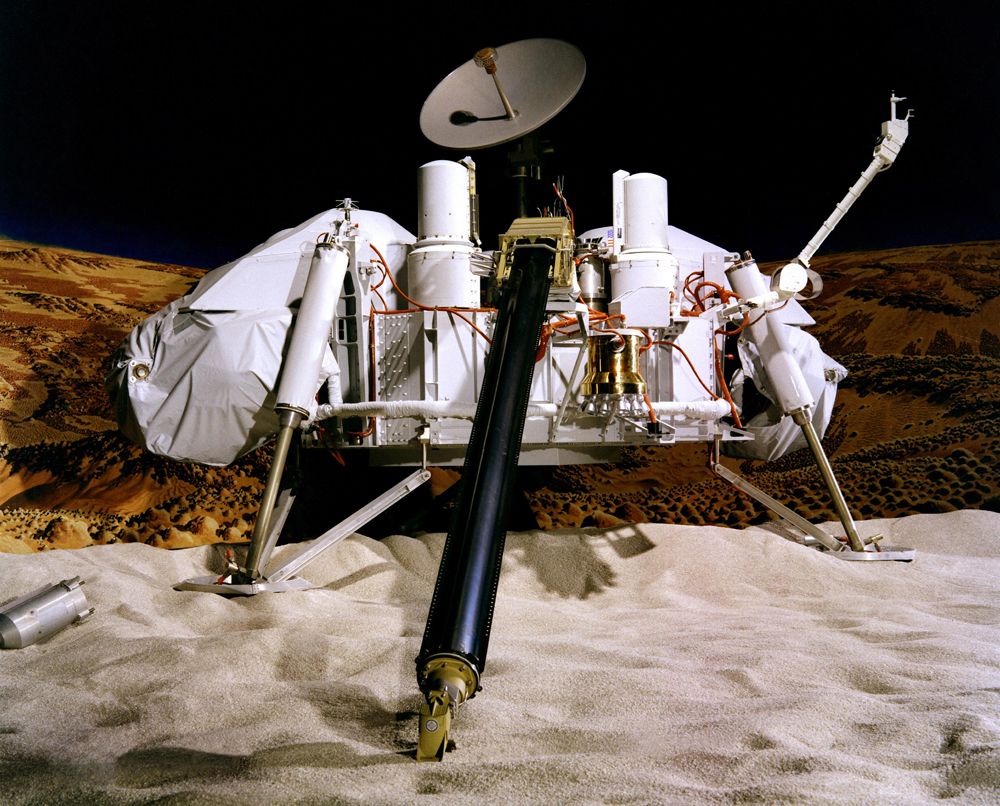
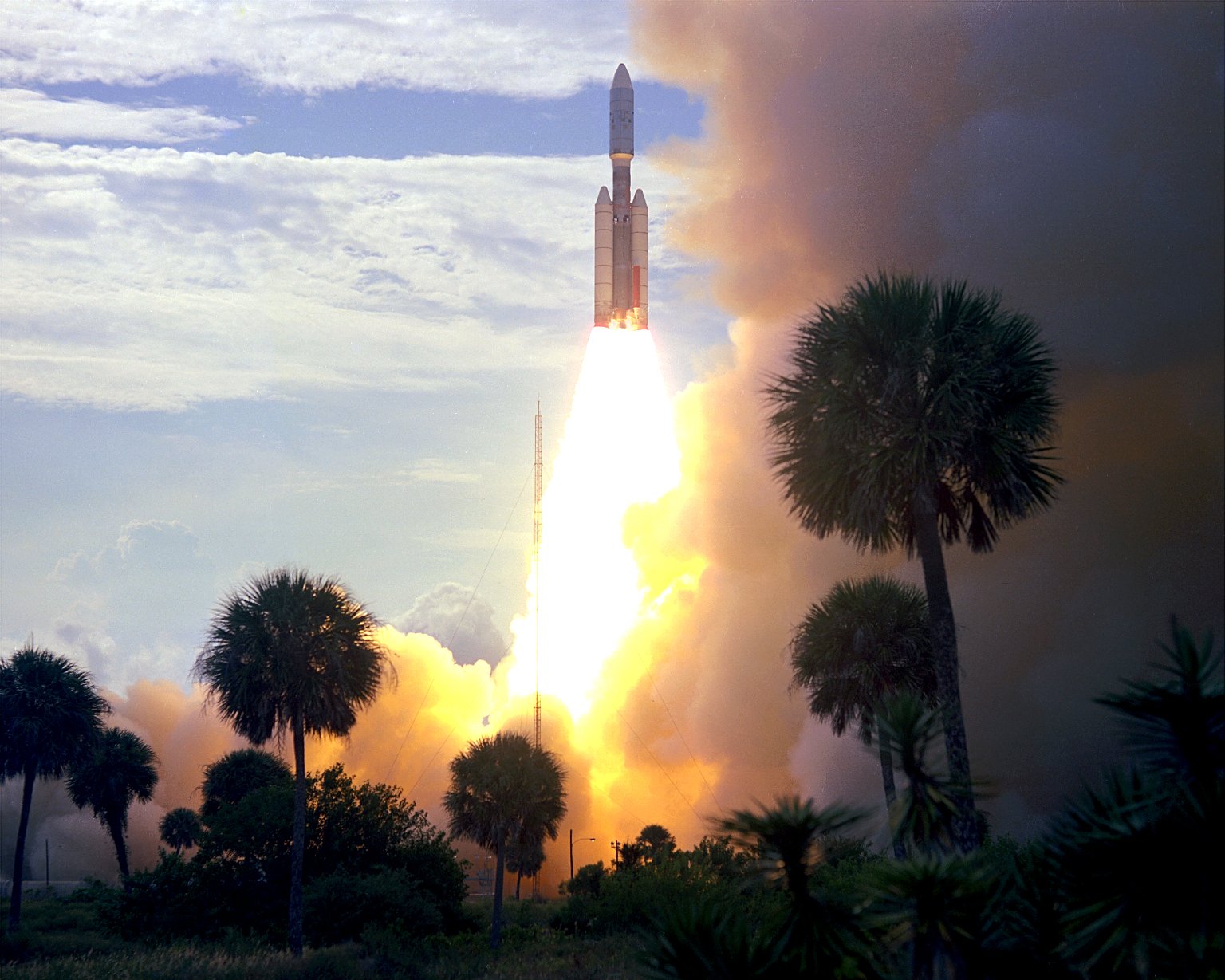
Viking 1 Begins Journey to Mars

Viking 1 was launched by a Titan-Centaur rocket from Complex 41 at Cape Canaveral Air Force Station at 5:22 p.m. EDT on Aug. 20, 1975, to begin a half-billion mile, 11-month journey through space to explore Mars. The 4-ton spacecraft went into orbit around the red planet in mid-1976 and landed on Mars on July 20, 1976.

Read More
NASA’s Lucy Spacecraft Images Asteroid Donaldjohanson

The asteroid Donaldjohanson as seen by the Lucy Long-Range Reconnaissance Imager (L’LORRI). This is one of the most detailed images returned by NASA’s Lucy spacecraft during its flyby. This image was taken at 1:51 p.m. EDT (17:51 UTC), April 20, 2025, near closest approach, from a range of approximately 660 miles (1,100 km). The spacecraft’s closest approach distance was 600 miles (960 km), but the image shown was taken approximately 40 seconds beforehand. The image has been sharpened and processed to enhance contrast.

Read More
NASA’s SpaceX Crew-10 Launch

A SpaceX Falcon 9 rocket carrying the company’s Dragon spacecraft is launched on NASA’s SpaceX Crew-10 mission to the International Space Station with NASA astronauts Anne McClain and Nichole Ayers, JAXA (Japan Aerospace Exploration Agency) astronaut Takuya Onishi, and Roscosmos cosmonaut Kirill Peskov onboard, Friday, March 14, 2025, from NASA’s Kennedy Space Center in Florida. NASA’s SpaceX Crew-10 mission is the tenth crew rotation mission of the SpaceX Dragon spacecraft and Falcon 9 rocket to the International Space Station as part of the agency’s Commercial Crew Program. McClain, Ayers, Onishi, and Peskov launched at 7:03 p.m. EDT from Launch Complex 39A at NASA Kennedy to begin a six-month mission aboard the orbital outpost.

Read More
Sun Rises on Crew-10 at Launch Pad

A SpaceX Falcon 9 rocket with the company’s Dragon spacecraft on top is seen during sunrise on the launch pad at Launch Complex 39A at NASA’s Kennedy Space Center in Florida on Tuesday, March 11, 2025, ahead of the agency’s SpaceX Crew-10 launch. Crew-10 is the 10th crew rotation mission with SpaceX to the International Space Station as part of the agency’s Commercial Crew Program. Liftoff is targeted for 7:48 p.m. EDT on Wednesday, March 12, 2025.

Read More
Intuitive Machines-2 Lifts Off

Creating a golden streak in the night sky, a SpaceX Falcon 9 rocket carrying Intuitive Machines’ Nova-C lunar lander (IM-2) soars upward after liftoff from Launch Complex 39A at NASA’s Kennedy Space Center in Florida at 7:16 p.m. EST Wednesday, Feb. 26 as part of NASA’s CLPS (Commercial Lunar Payload Services) initiative. The IM-2 launch is carrying NASA science, technology demonstrations, and other commercial payloads to Mons Mouton, a lunar plateau to advance our understanding of the Moon and planetary processes, while paving the way for future crewed missions.

Read More
Golden Moon over the Superdome

The full moon rises over the Superdome and the city of New Orleans, Louisiana on Monday evening, January 13, 2025. The Wolf Moon, also known as the Ice or Cold Moon, was full at 5:27 p.m. EST. New Orleans is home to NASA’s Michoud Assembly Facility where several pieces of hardware for the SLS (Space Launch System) are being built.

Read More