P

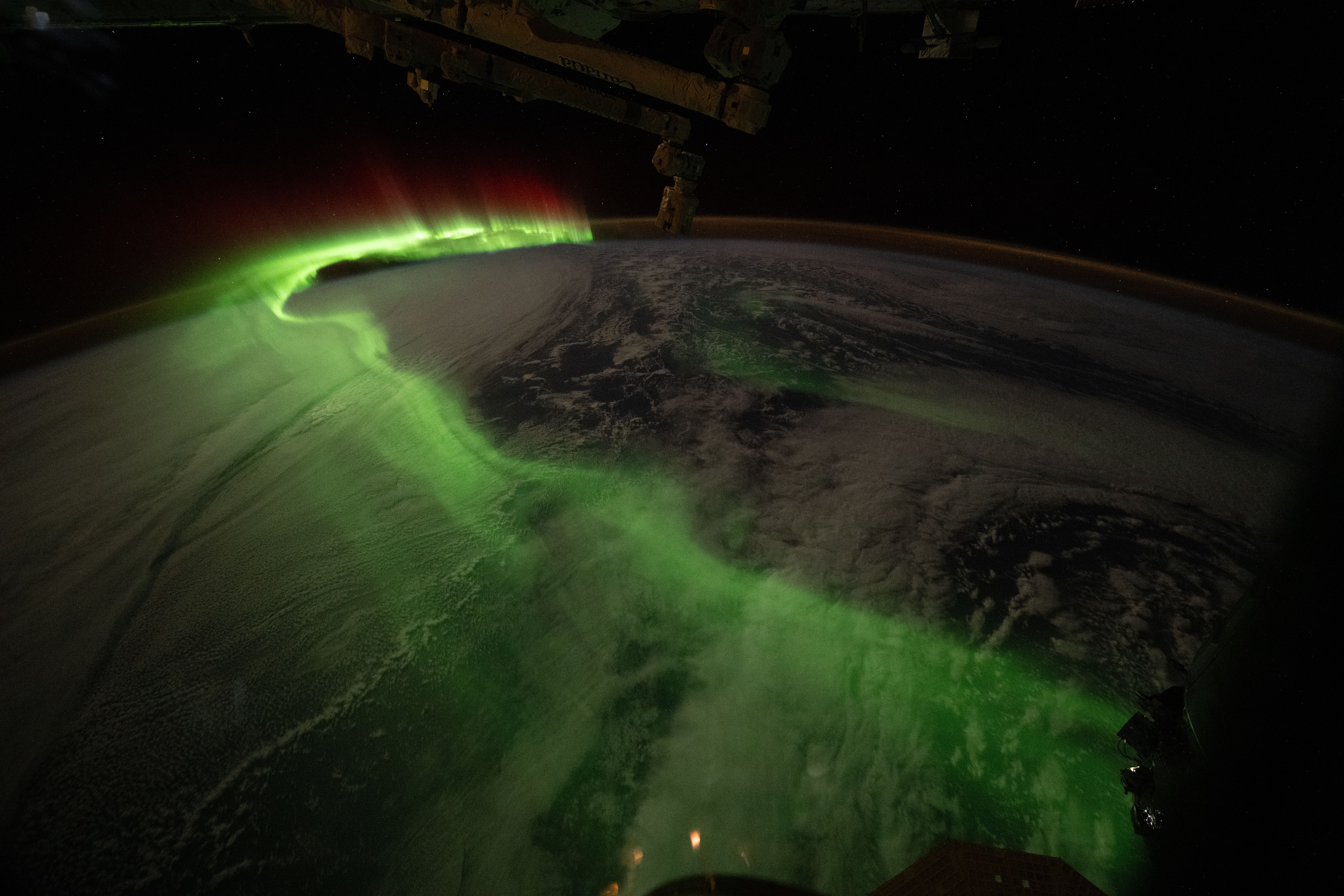
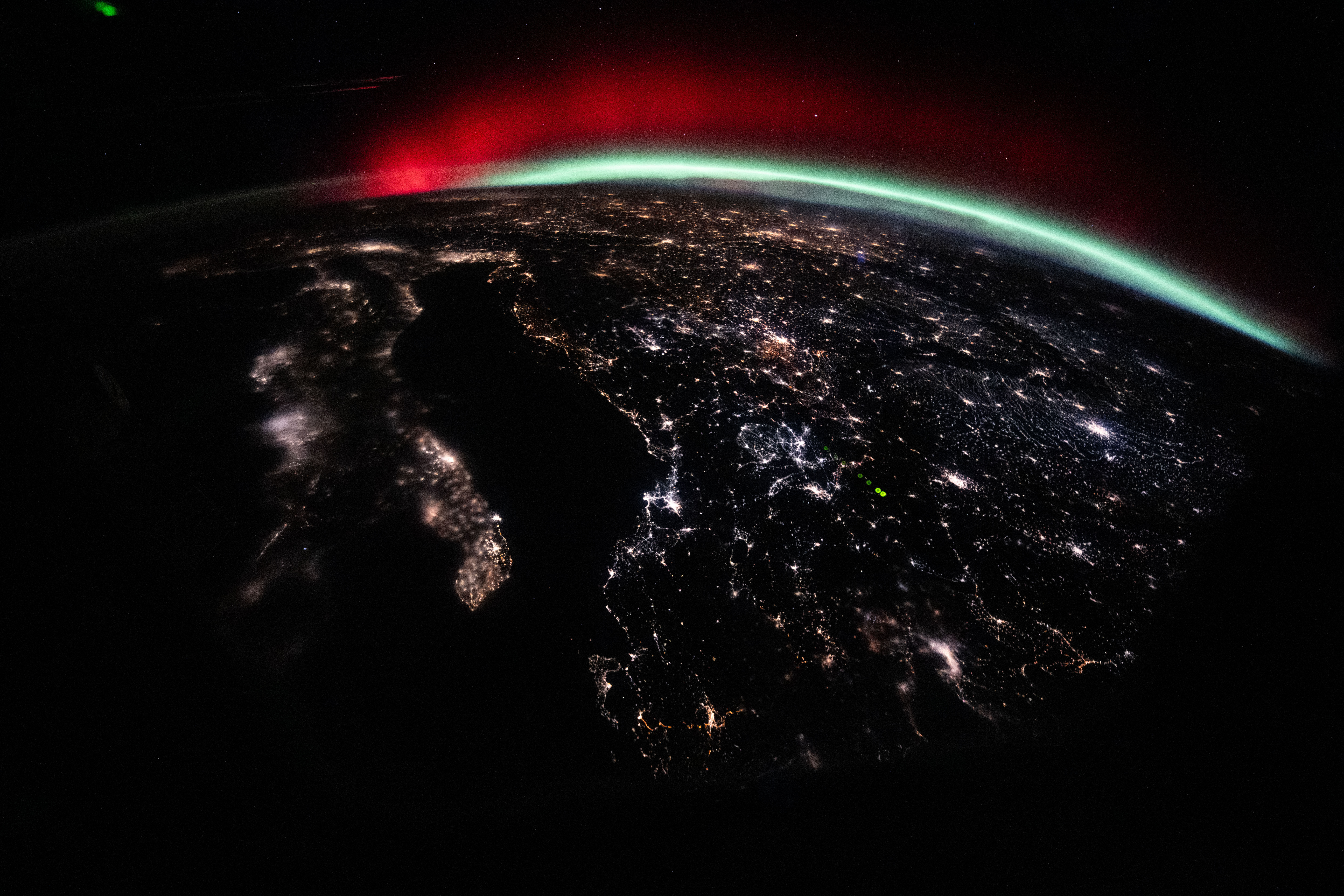
The aurora australis arcs over Earth during an active solar event in this photograph taken at approximately 11:32 p.m. local time from the International Space Station as it orbited 271 miles above the Indian Ocean southwest of Perth, Australia on June 5.

Read More
Earthquake in Peru: statue of Mary untouched as church roof caves in #Catholic Following an earthquake the night of July 18 in Junín, Peru, that left at least five people dead, a statue of the Virgin Mary remained intact even as the roof and part of the façade of St. James the Apostle parish church collapsed.Speaking from the scene, Father Henry Díaz described the extensive damage to the church, RPP’s Rotafono reported.“A large part of the church nave has collapsed. You can see huge cracks everywhere and roof tiles that have come loose. The high altar collapsed into the rubble. The statue of the Virgin remains intact,” the priest recounted.Instagram post“The Viceroyalty-era altars have been …very damaged. It appears the church tower is leaning slightly backward and to the right,” Díaz noted.The priest called on the Ministry of Culture and the authorities who visited the earthquake-affected area to help rebuild the church.He also noted that the church’s restoration could cost more than 7 million soles (.06 M) and take about a year to complete.July 18 earthquakePeruʼs bishops offered prayers and expressed their solidarity with the victims of the earthquake that struck the night of July 18, leaving at least five people dead, more than 20 injured, and hundreds more affected.The earthquake, recorded around 9 p.m., was centered in the district of Chongos Bajo, Chupaca province, Junín region, in the central Peruvian Andes, 193 miles east of Lima, according to the National Civil Defense Institute.As a result of the quake, the historic Cani Cross erected in 1534 and located in the main square of Chongos Bajo, one of the regionʼs oldest religious monuments, also collapsed.This story was first published by ACI Prensa, the Spanish-language sister service of EWTN News. It has been translated and adapted by EWTN News English.

Earthquake in Peru: statue of Mary untouched as church roof caves in #Catholic Following an earthquake the night of July 18 in Junín, Peru, that left at least five people dead, a statue of the Virgin Mary remained intact even as the roof and part of the façade of St. James the Apostle parish church collapsed.Speaking from the scene, Father Henry Díaz described the extensive damage to the church, RPP’s Rotafono reported.“A large part of the church nave has collapsed. You can see huge cracks everywhere and roof tiles that have come loose. The high altar collapsed into the rubble. The statue of the Virgin remains intact,” the priest recounted.Instagram post“The Viceroyalty-era altars have been …very damaged. It appears the church tower is leaning slightly backward and to the right,” Díaz noted.The priest called on the Ministry of Culture and the authorities who visited the earthquake-affected area to help rebuild the church.He also noted that the church’s restoration could cost more than 7 million soles ($2.06 M) and take about a year to complete.July 18 earthquakePeruʼs bishops offered prayers and expressed their solidarity with the victims of the earthquake that struck the night of July 18, leaving at least five people dead, more than 20 injured, and hundreds more affected.The earthquake, recorded around 9 p.m., was centered in the district of Chongos Bajo, Chupaca province, Junín region, in the central Peruvian Andes, 193 miles east of Lima, according to the National Civil Defense Institute.As a result of the quake, the historic Cani Cross erected in 1534 and located in the main square of Chongos Bajo, one of the regionʼs oldest religious monuments, also collapsed.This story was first published by ACI Prensa, the Spanish-language sister service of EWTN News. It has been translated and adapted by EWTN News English.

The walls of the colonial era church are still standing, but the roof collapsed into the nave. The parish priest estimated restoring the church will cost $2 million.

Read More
Parishioners in western New York ask Vatican to let them save 160-year-old church #Catholic “[We] will not receive an extension or any second chances.” That’s the urgent message Catholics in western New York are telling the local faithful in their bid to preserve a Civil War-era parish in the small town of Auburn. The Diocese of Rochester is moving to permanently close and potentially sell Holy Family Church due to structural issues that officials say make it unsafe to use as a parish. 
 
 Interior details of Holy Family Catholic Church in Auburn, New York. | Credit: Photo courtesy of H.O.P.E.
 
 The diocese shut down the church in June 2024, but parishioners of the parish in Auburn — located about 40 minutes outside of Syracuse — are petitioning the Vatican to keep the church an active holy site rather than allow it to be sold off to potential developers. On its website, Holy Family Organization to Preserve and Endure says the Vatican has requested that the group “demonstrate funding for the purchase, repair, and maintenance of the church.”The organizers say they are working to raise pledges to support the parish but there is a “narrow time window” and numbers “must be provided to the Vatican by mid-late summer 2026.”“If H.O.P.E. fails to demonstrate sufficient evidence to the Vatican by mid-late summer, then Holy Family Church could be sold to a secular buyer and could be destroyed,” the group said.Parish’s roots stretch back to early 1800sThe Auburn-based Roblee Historic Preservation said in a “statement of significance” report that Auburn was the site of the first Catholic Mass in the Western New York region in the early 1800s. The Roblee report was drafted in order to assist the city’s historic review board in potentially awarding a landmark designation to the parish. The New York Historic Preservation Office had previously said the property was eligible for listing on both the state and national historic registers.
 
 Holy Family Church hosts the wedding of Joseph Paul Staehr Sr. and Jean Marie Hayes Staehr on Nov. 29, 1958. | Credit: Photo courtesy of Richard Staehr
 
 The Church of the Holy Family was initially dedicated in 1830 in a chapel previously used by local Methodists. The current building was built in 1861 by local Dutch-born master builder John Vanderbosch.The report described the parish as the “mother church” of Auburn and “an iconic part of its downtown skyline.” On its website, the Catholic preservation group says it hopes to retain the parish for “Catholic religious activity,” including rosary groups and private prayer groups, “occasional worship,” sacred music concerts, sacred art displays, and architecture tours.Karen Odrzywolski, the president of the parish preservation group, said the church is also meant to preserve the memory and legacy of Bishop Patrick Byrne, an apostolic delegate to Korea who was martyred in 1950 during a four-month-long forced march while in the captivity of communist forces in North Korea. Born in Washington, D.C., Byrne spent his formative years in Auburn, living just a few blocks from the parish. His family attended Mass there and he attended the parochial school; he was confirmed at the parish in 1900. 
 
 A record from Holy Family Church shows the Sept. 2, 1900, date of Bishop Patrick Byrne’s confirmation. | Credit: Courtesy of H.O.P.E.
 
 Odrzywolski told EWTN News the preservation group formed in July 2024, a month after the parish was officially shuttered by the diocese. “We initially put together a preservation plan, which we shared with our pastor and with the Diocese of Rochester,” she said. “We’ve also shared it with the Vatican.” “We’ve also worked on educating the community as to the significance of the church,” she said. “We’ve had events in honor of Bishop Byrne and of his family, and on the 75th anniversary of his martyrdom we had a prayer vigil.”In addition to the link with Byrne, Odrzywolski said the parish was also once host to another famous Catholic bishop, now-Venerable Archbishop Fulton Sheen. The prelate, at the time the bishop of the Diocese of Rochester, officiated the funeral Mass of Father William Davie at the parish in 1968. The Vatican has requested that the group demonstration its ability to fund the church’s upkeep, she said. “We’re very appreciative of this opportunity. We’re hopeful if we can demonstrate the funding they’ll allow us to proceed with preserving the church.”Thus far, Odrzywolski said, the group isn’t accepting cash donations; instead, it is collecting pledges “so we can demonstrate our ability to fund the maintenance, repair, and preservation of the church.” “We’ve received over 300 pledges,” she continued. “We’re extremely grateful to every single person who has pledged. Many people have pledged as much as they possibly can. Many who pledge in general may be of limited or fixed income.”Odrzywolski said the needed repairs are limited to the exterior facade. The interior, she said, has been well maintained over more than a century and a half. The Vatican, meanwhile, is expecting the group’s proof of viability by August. “We’re trying our best to aim for an Aug. 1 deadline in order to allow enough time to prepare the documents in a timely manner,” she said.“The truth is, we need the entire community to come together,” she said. “The closure of the church impacts the entire community, and we need individuals, families, and businesses to come together.” “It’s about the future of Auburn,” she continued. “but it’s also about honoring Bishop Byrne, and ultimately honoring God.”

Parishioners in western New York ask Vatican to let them save 160-year-old church #Catholic “[We] will not receive an extension or any second chances.” That’s the urgent message Catholics in western New York are telling the local faithful in their bid to preserve a Civil War-era parish in the small town of Auburn. The Diocese of Rochester is moving to permanently close and potentially sell Holy Family Church due to structural issues that officials say make it unsafe to use as a parish. Interior details of Holy Family Catholic Church in Auburn, New York. | Credit: Photo courtesy of H.O.P.E. The diocese shut down the church in June 2024, but parishioners of the parish in Auburn — located about 40 minutes outside of Syracuse — are petitioning the Vatican to keep the church an active holy site rather than allow it to be sold off to potential developers. On its website, Holy Family Organization to Preserve and Endure says the Vatican has requested that the group “demonstrate funding for the purchase, repair, and maintenance of the church.”The organizers say they are working to raise pledges to support the parish but there is a “narrow time window” and numbers “must be provided to the Vatican by mid-late summer 2026.”“If H.O.P.E. fails to demonstrate sufficient evidence to the Vatican by mid-late summer, then Holy Family Church could be sold to a secular buyer and could be destroyed,” the group said.Parish’s roots stretch back to early 1800sThe Auburn-based Roblee Historic Preservation said in a “statement of significance” report that Auburn was the site of the first Catholic Mass in the Western New York region in the early 1800s. The Roblee report was drafted in order to assist the city’s historic review board in potentially awarding a landmark designation to the parish. The New York Historic Preservation Office had previously said the property was eligible for listing on both the state and national historic registers. Holy Family Church hosts the wedding of Joseph Paul Staehr Sr. and Jean Marie Hayes Staehr on Nov. 29, 1958. | Credit: Photo courtesy of Richard Staehr The Church of the Holy Family was initially dedicated in 1830 in a chapel previously used by local Methodists. The current building was built in 1861 by local Dutch-born master builder John Vanderbosch.The report described the parish as the “mother church” of Auburn and “an iconic part of its downtown skyline.” On its website, the Catholic preservation group says it hopes to retain the parish for “Catholic religious activity,” including rosary groups and private prayer groups, “occasional worship,” sacred music concerts, sacred art displays, and architecture tours.Karen Odrzywolski, the president of the parish preservation group, said the church is also meant to preserve the memory and legacy of Bishop Patrick Byrne, an apostolic delegate to Korea who was martyred in 1950 during a four-month-long forced march while in the captivity of communist forces in North Korea. Born in Washington, D.C., Byrne spent his formative years in Auburn, living just a few blocks from the parish. His family attended Mass there and he attended the parochial school; he was confirmed at the parish in 1900. A record from Holy Family Church shows the Sept. 2, 1900, date of Bishop Patrick Byrne’s confirmation. | Credit: Courtesy of H.O.P.E. Odrzywolski told EWTN News the preservation group formed in July 2024, a month after the parish was officially shuttered by the diocese. “We initially put together a preservation plan, which we shared with our pastor and with the Diocese of Rochester,” she said. “We’ve also shared it with the Vatican.” “We’ve also worked on educating the community as to the significance of the church,” she said. “We’ve had events in honor of Bishop Byrne and of his family, and on the 75th anniversary of his martyrdom we had a prayer vigil.”In addition to the link with Byrne, Odrzywolski said the parish was also once host to another famous Catholic bishop, now-Venerable Archbishop Fulton Sheen. The prelate, at the time the bishop of the Diocese of Rochester, officiated the funeral Mass of Father William Davie at the parish in 1968. The Vatican has requested that the group demonstration its ability to fund the church’s upkeep, she said. “We’re very appreciative of this opportunity. We’re hopeful if we can demonstrate the funding they’ll allow us to proceed with preserving the church.”Thus far, Odrzywolski said, the group isn’t accepting cash donations; instead, it is collecting pledges “so we can demonstrate our ability to fund the maintenance, repair, and preservation of the church.” “We’ve received over 300 pledges,” she continued. “We’re extremely grateful to every single person who has pledged. Many people have pledged as much as they possibly can. Many who pledge in general may be of limited or fixed income.”Odrzywolski said the needed repairs are limited to the exterior facade. The interior, she said, has been well maintained over more than a century and a half. The Vatican, meanwhile, is expecting the group’s proof of viability by August. “We’re trying our best to aim for an Aug. 1 deadline in order to allow enough time to prepare the documents in a timely manner,” she said.“The truth is, we need the entire community to come together,” she said. “The closure of the church impacts the entire community, and we need individuals, families, and businesses to come together.” “It’s about the future of Auburn,” she continued. “but it’s also about honoring Bishop Byrne, and ultimately honoring God.”

Holy Family Church in Auburn, New York, is facing a possible sale to developers if local Catholics cannot provide a financial plan to the Holy See.

Read More
How the St. Benedict medal became a shield against the powers of darkness #Catholic Temptations in a fallen city, memories of a beautiful woman, a poisoned chalice, the attacks of an envious priest, curses from a pagan priest, a rock that won’t budge and another that falls on a young monk, a kitchen in flames, a dragon that lurks to devour a fleeing monk, threats from Gothic warlords, and the prospect of a destroyed monastery.These are some of the attacks that St. Benedict, whose feast the Catholic Church celebrates on July 11, endured throughout his life.Benedict even had to use force to manifest his authority as abbot over his monks oppressed by the enemy, as related in Father Robert Nixon’s book “The Cross and Medal of Saint Benedict: A Mystical Sign of Divine Power” (TAN, 2024):“Benedict found this monk outside wandering around aimlessly when he should have been in the oratory in prayer. With a certain degree of paternal severity and charitable discipline, he reprimanded him for his lack of wisdom and discernment and struck him with his staff. At this, the monk fell down, motionless. And after that, the devil … never troubled him again. It was as if the staff of Benedict had not struck the hapless monk but had rather driven away the wicked tempter himself!” (p. 14).St. Benedict has come to be recognized for the power of his actions against the enemy, alongside St. Michael the Archangel, as a major protector against evil — particularly through the medal that bears his image.Nixon’s book offers an overview of how the medal rose to prominence as a Catholic devotion and received papal approval, couching it within the story of St. Benedict’s life and the rise of his order of monks.The St. Benedict medalIf you’ve seen the back of a St. Benedict medal, you may have noticed a series of letters. The first set is arranged in and around the shape of the cross: C S P B C S S M L N D S M D. The next set is arranged in a circle around the cross: V R S N S M V S M Q L I V B.This arrangement first came to serious attention in the year 1647 in relation to the Benedictine Abbey of Metten in Bavaria, Germany, when it was believed to have prevented a series of diabolic attacks.Although some of the laity already had medals with these letters engraved, no one at the time understood their meaning. It was only in researching the library’s manuscripts that a 15th-century illustration of St. Benedict pointed to the full prayer they abbreviated:“Cross of our Holy Father Benedict. May the cross be light to me. May the dragon not be a leader to me. Get behind me, Satan: Never persuade me to vain things. What you like is evil; may you yourself drink your venom!”Due to a widespread story of the medal preventing the effect of curses and bringing about exorcisms and healings, which Nixon details in his book, its use spread across Europe, with Pope Benedict XIV approving an official blessing for it and granting it indulgences in 1741.The great father of modern Benedictine monasticism, Dom Prosper Guéranger, speculated why God would grant so many favors to those who invoke his help through St. Benedict’s medal. In an age when “rationalism is so rife,” God has deigned to offer help to those “who put their confidence in the sacred signs marked on the medal” with “strong and simple” faith (Guéranger, “The Medal or Cross of St. Benedict,” author’s preface). It’s as if to laugh at the devil and his plans to pull people away from God through the alleged sophistication of the modern world, overcoming them with simple signs pointing us to the cross and the protection of a holy monk.Of course, the medal should not be used in a superstitious way. It expresses our faith and confidence in God, which conquers the power of the enemy through the blood of Christ. Within God’s plan of salvation, there are certain key defenders of God’s people. St. Benedict proved himself as one over his own monks in spiritual combat. Through the efficacy of his medal, he has manifested himself as a fatherly defender of all who invoke his help.Throughout history, the monastic life has served as a constant beacon calling us to greater conversion of life and prayer. Turning to St. Benedict can lead us to embrace some of his spiritual principles, such as humility, obedience, stability, hospitality, the prayerful reading of Scripture in “lectio divina,” and viewing our work as a means of honoring God.While St. Benedict faced trials in his life as a monk, we all face trials and attacks from the enemy in the Christian life. Sacramentals can help us in our journey of faith, including our efforts to keep evil far away.St. Benedict medals and rosaries with the medal affixed can be purchased at religious gift stores and can be blessed after purchase. Medals are also available at EWTN’s Religious Catalogue site.This story was first published by the National Catholic Register, the sister partner of EWTN News, and has been adapted by EWTN News.

How the St. Benedict medal became a shield against the powers of darkness #Catholic Temptations in a fallen city, memories of a beautiful woman, a poisoned chalice, the attacks of an envious priest, curses from a pagan priest, a rock that won’t budge and another that falls on a young monk, a kitchen in flames, a dragon that lurks to devour a fleeing monk, threats from Gothic warlords, and the prospect of a destroyed monastery.These are some of the attacks that St. Benedict, whose feast the Catholic Church celebrates on July 11, endured throughout his life.Benedict even had to use force to manifest his authority as abbot over his monks oppressed by the enemy, as related in Father Robert Nixon’s book “The Cross and Medal of Saint Benedict: A Mystical Sign of Divine Power” (TAN, 2024):“Benedict found this monk outside wandering around aimlessly when he should have been in the oratory in prayer. With a certain degree of paternal severity and charitable discipline, he reprimanded him for his lack of wisdom and discernment and struck him with his staff. At this, the monk fell down, motionless. And after that, the devil … never troubled him again. It was as if the staff of Benedict had not struck the hapless monk but had rather driven away the wicked tempter himself!” (p. 14).St. Benedict has come to be recognized for the power of his actions against the enemy, alongside St. Michael the Archangel, as a major protector against evil — particularly through the medal that bears his image.Nixon’s book offers an overview of how the medal rose to prominence as a Catholic devotion and received papal approval, couching it within the story of St. Benedict’s life and the rise of his order of monks.The St. Benedict medalIf you’ve seen the back of a St. Benedict medal, you may have noticed a series of letters. The first set is arranged in and around the shape of the cross: C S P B C S S M L N D S M D. The next set is arranged in a circle around the cross: V R S N S M V S M Q L I V B.This arrangement first came to serious attention in the year 1647 in relation to the Benedictine Abbey of Metten in Bavaria, Germany, when it was believed to have prevented a series of diabolic attacks.Although some of the laity already had medals with these letters engraved, no one at the time understood their meaning. It was only in researching the library’s manuscripts that a 15th-century illustration of St. Benedict pointed to the full prayer they abbreviated:“Cross of our Holy Father Benedict. May the cross be light to me. May the dragon not be a leader to me. Get behind me, Satan: Never persuade me to vain things. What you like is evil; may you yourself drink your venom!”Due to a widespread story of the medal preventing the effect of curses and bringing about exorcisms and healings, which Nixon details in his book, its use spread across Europe, with Pope Benedict XIV approving an official blessing for it and granting it indulgences in 1741.The great father of modern Benedictine monasticism, Dom Prosper Guéranger, speculated why God would grant so many favors to those who invoke his help through St. Benedict’s medal. In an age when “rationalism is so rife,” God has deigned to offer help to those “who put their confidence in the sacred signs marked on the medal” with “strong and simple” faith (Guéranger, “The Medal or Cross of St. Benedict,” author’s preface). It’s as if to laugh at the devil and his plans to pull people away from God through the alleged sophistication of the modern world, overcoming them with simple signs pointing us to the cross and the protection of a holy monk.Of course, the medal should not be used in a superstitious way. It expresses our faith and confidence in God, which conquers the power of the enemy through the blood of Christ. Within God’s plan of salvation, there are certain key defenders of God’s people. St. Benedict proved himself as one over his own monks in spiritual combat. Through the efficacy of his medal, he has manifested himself as a fatherly defender of all who invoke his help.Throughout history, the monastic life has served as a constant beacon calling us to greater conversion of life and prayer. Turning to St. Benedict can lead us to embrace some of his spiritual principles, such as humility, obedience, stability, hospitality, the prayerful reading of Scripture in “lectio divina,” and viewing our work as a means of honoring God.While St. Benedict faced trials in his life as a monk, we all face trials and attacks from the enemy in the Christian life. Sacramentals can help us in our journey of faith, including our efforts to keep evil far away.St. Benedict medals and rosaries with the medal affixed can be purchased at religious gift stores and can be blessed after purchase. Medals are also available at EWTN’s Religious Catalogue site.This story was first published by the National Catholic Register, the sister partner of EWTN News, and has been adapted by EWTN News.

St. Benedict, whose feast the Catholic Church celebrates on July 11, endured constant attacks from the enemy throughout his life.

Read More
Canonization cause for Mother Angelica’s spiritual mentor, Rhoda Wise, reaches next step #Catholic The canonization cause for Servant of God Rhoda Wise crossed another hurdle after formal documents that outline her life, heroic virtues, and holiness were submitted to the Vatican’s Dicastery for the Causes of Saints.Wise — who was born in 1888 in Cadiz, Ohio, and died in 1948 in Canton, Ohio — was a laywoman and a mystic who received visions of Jesus Christ and St. Thérèse of Lisieux. In 1939, she reported a miraculous healing of her stomach cancer and a wound that doctors told her was incurable.She was raised Protestant but was introduced to Catholicism by religious sisters during her hospital stay, where she developed a strong devotion to the rosary and St. Thérèse.After news of the miracle spread, hundreds of people visited her home weekly, with whom she would pray. Hundreds of those who visited her home both during and after her lifetime reported miraculous, unexplained healings, including EWTN Founder Mother Angelica, who developed a close friendship with Wise after being healed of a stomach ailment.Wise also had a visible stigmata — which resembles the wounds Christ had at the Crucifixion — that appeared on her body from noon until 3 p.m. for two and a half years, from 1942 to 1945.On July 7, Father John Sheridan — liaison between the Diocese of Youngstown, Ohio, and the Rhoda Wise House in Canton, Ohio — announced that the Vatican had received the formal “positio,” which is a collection of documents that details the holiness of her life and makes the case for why Pope Leo XIV should consider her beatification.Valentina Culurgioni, the postulator tasked with preparing the document, gave the paperwork to the dicastery several months ago, but it was first announced by Sheridan during the Diocese of Youngstown’s annual Mass for the cause of beatification of Wise.Following the Mass, Sheridan delivered the news to the faithful gathered by reading a letter he received from Culurgioni.“Testimonies of healings and graces received through the intercession of Rhoda Wise continue to arrive at the shrine, which testify [to] her growing reputation of holiness and signs, and I would like to entrust to all of you two prayer intentions for this year, related to the progress of the cause in the Vatican,” Culurgioni wrote in the letter.“First, that all the experts — historians and theologians — who will be called upon to study and evaluate the ‘positio’ may be enlightened by the Holy Spirit in their valuable and delicate work,” she added. “Second, that among all the reports of graces and healings we receive, suitable cases may be identified for investigation as alleged miracles.”“Do not stop praying to God, asking for the spiritual or material graces you need through the intercession of Rhoda, and continue to share and bear witness to the wonders of his powerful love in your lives,” Culurgioni wrote.Next stepsRyan Schweitzer, assistant director of the Rhoda Wise House and Grotto, told EWTN News that the next step is the dicastery’s review of the “positio,” which includes evaluations by theologians, historians, and Catholic hierarchy. The dicastery will provide its conclusions to the Holy Father, who will determine whether to beatify her and grant her the title “venerable.”He said there’s no real estimate for the timeline of this process but asked Catholics to “continue to pray for Rhoda’s intercession and continue to pray for her beatification.”Schweitzer called the news of this development “exciting.” He said if Leo elevates her status to “venerable,” “that’s a very small group of individuals on their pathway to canonization.” He said that would increase her visibility and “Our Lord can utilize that visibility and knowledge of Rhoda to pray for her intercession.”Rhoda Wise’s legacyThe Rhoda Wise House and Grotto continues to host visitors and frequently receives reports of miraculous healings on a regular basis, now nearly 80 years after her death.According to Schweitzer, hundreds of people still visit Wise’s home weekly, many of whom come “because they’re seeking healing,” whether that be physical, mental, or spiritual. He said many of the visitors come because “they heard that something happened to a friend, some healing” and some visitors return to share stories of their healing.Wise had a strong friendship with Mother Angelica — then Rita Rizzo — when she was just 19 years old, before entering religious life. Schweitzer noted that Rizzo “suffered from a really debilitating stomach ailment,” and her mother took her to see Wise.Rizzo began praying a nine-day novena to St. Thérèse of Lisieux with Wise and continued to pray it each day until its conclusion, at which point she was healed of her ailment. Schweitzer said this experience served as “a catalyst to become serious about her spiritual life” and Rizzo became close friends with Wise, who served as a mentor to her.Schweitzer said one of the most important things to know about Wise is that she was “a very humble housewife,” a person who is “not someone who is unreachable” for the average person.“She really reflects troubles that many people today are associated with,” Schweitzer said.

Canonization cause for Mother Angelica’s spiritual mentor, Rhoda Wise, reaches next step #Catholic The canonization cause for Servant of God Rhoda Wise crossed another hurdle after formal documents that outline her life, heroic virtues, and holiness were submitted to the Vatican’s Dicastery for the Causes of Saints.Wise — who was born in 1888 in Cadiz, Ohio, and died in 1948 in Canton, Ohio — was a laywoman and a mystic who received visions of Jesus Christ and St. Thérèse of Lisieux. In 1939, she reported a miraculous healing of her stomach cancer and a wound that doctors told her was incurable.She was raised Protestant but was introduced to Catholicism by religious sisters during her hospital stay, where she developed a strong devotion to the rosary and St. Thérèse.After news of the miracle spread, hundreds of people visited her home weekly, with whom she would pray. Hundreds of those who visited her home both during and after her lifetime reported miraculous, unexplained healings, including EWTN Founder Mother Angelica, who developed a close friendship with Wise after being healed of a stomach ailment.Wise also had a visible stigmata — which resembles the wounds Christ had at the Crucifixion — that appeared on her body from noon until 3 p.m. for two and a half years, from 1942 to 1945.On July 7, Father John Sheridan — liaison between the Diocese of Youngstown, Ohio, and the Rhoda Wise House in Canton, Ohio — announced that the Vatican had received the formal “positio,” which is a collection of documents that details the holiness of her life and makes the case for why Pope Leo XIV should consider her beatification.Valentina Culurgioni, the postulator tasked with preparing the document, gave the paperwork to the dicastery several months ago, but it was first announced by Sheridan during the Diocese of Youngstown’s annual Mass for the cause of beatification of Wise.Following the Mass, Sheridan delivered the news to the faithful gathered by reading a letter he received from Culurgioni.“Testimonies of healings and graces received through the intercession of Rhoda Wise continue to arrive at the shrine, which testify [to] her growing reputation of holiness and signs, and I would like to entrust to all of you two prayer intentions for this year, related to the progress of the cause in the Vatican,” Culurgioni wrote in the letter.“First, that all the experts — historians and theologians — who will be called upon to study and evaluate the ‘positio’ may be enlightened by the Holy Spirit in their valuable and delicate work,” she added. “Second, that among all the reports of graces and healings we receive, suitable cases may be identified for investigation as alleged miracles.”“Do not stop praying to God, asking for the spiritual or material graces you need through the intercession of Rhoda, and continue to share and bear witness to the wonders of his powerful love in your lives,” Culurgioni wrote.Next stepsRyan Schweitzer, assistant director of the Rhoda Wise House and Grotto, told EWTN News that the next step is the dicastery’s review of the “positio,” which includes evaluations by theologians, historians, and Catholic hierarchy. The dicastery will provide its conclusions to the Holy Father, who will determine whether to beatify her and grant her the title “venerable.”He said there’s no real estimate for the timeline of this process but asked Catholics to “continue to pray for Rhoda’s intercession and continue to pray for her beatification.”Schweitzer called the news of this development “exciting.” He said if Leo elevates her status to “venerable,” “that’s a very small group of individuals on their pathway to canonization.” He said that would increase her visibility and “Our Lord can utilize that visibility and knowledge of Rhoda to pray for her intercession.”Rhoda Wise’s legacyThe Rhoda Wise House and Grotto continues to host visitors and frequently receives reports of miraculous healings on a regular basis, now nearly 80 years after her death.According to Schweitzer, hundreds of people still visit Wise’s home weekly, many of whom come “because they’re seeking healing,” whether that be physical, mental, or spiritual. He said many of the visitors come because “they heard that something happened to a friend, some healing” and some visitors return to share stories of their healing.Wise had a strong friendship with Mother Angelica — then Rita Rizzo — when she was just 19 years old, before entering religious life. Schweitzer noted that Rizzo “suffered from a really debilitating stomach ailment,” and her mother took her to see Wise.Rizzo began praying a nine-day novena to St. Thérèse of Lisieux with Wise and continued to pray it each day until its conclusion, at which point she was healed of her ailment. Schweitzer said this experience served as “a catalyst to become serious about her spiritual life” and Rizzo became close friends with Wise, who served as a mentor to her.Schweitzer said one of the most important things to know about Wise is that she was “a very humble housewife,” a person who is “not someone who is unreachable” for the average person.“She really reflects troubles that many people today are associated with,” Schweitzer said.

A positio for Servant of God Rhoda Wise was submitted to the Vatican. She has been associated with hundreds of unexplained, miraculous healings in the United States.

Read More
Earthquake survivor in Venezuela: ‘The Miraculous Medal saved me’ #Catholic In Playa Grande, a neighborhood in the city of La Guaira, Venezuela, Kamar Galíndez was on the top floor of Chipi’s Beach Hotel, preparing to start his daily workout in the gym, unaware that his life was about to change forever.It was Wednesday, June 24, the feast day of St. John the Baptist and a national holiday commemorating the anniversary of the decisive Battle of Carabobo. At 6:05 p.m., the peaceful atmosphere created by the stunning ocean view from the top of the hotel was shattered by the thunderous violence of two consecutive earthquakes that took everyone by surprise, sowing anguish and confusion.Speaking with ACI Prensa, the Spanish-language sister service of EWTN News, Galíndez, a 53-year-old lawyer, recalled how the heavy gym machines began moving from one side to the other, much like an air hockey puck. Disaster struck within seconds.“The floor split, and immediately I saw half the building tilting forward while the section I was in collapsed straight down; I felt my feet were no longer standing on anything, and the next thing [I knew], I was trapped in the rubble,” he recounted.
 
 Remains of Chipi’s Beach Hotel in Playa Grande, from which Kamar Galíndez managed to come out alive. | Credit: Andrés Henríquez/EWTN News
 
 Faced with imminent death: ‘Lord, have mercy!’Galíndez recounted that the only thing he managed to do was to seek protection beside a nearby wall. As he felt the building collapsing, what came to his mind was the image of the Lord Jesus as he first appeared to St. Faustina Kowalska on Feb. 22, 1931.“I remember thinking of the merciful Christ and praying, ‘Lord, have mercy,’” he said, on the verge of tears. “The next thing was feeling the building collapse because with that violent shaking, I kept saying, ‘It’s going to fall,’ and of course, it did.”Galíndez never lost consciousness. He said he felt every blow but that “amid the shock and fear, physical sensations become secondary.” Once the confusion of the collapse subsided, he realized he was alive, though his body was completely buried in the rubble and pinned by a massive beam crushing his chest.He couldn’t breathe properly. His head had not been buried, and through that immense mountain of twisted metal, bricks, and earth, he could see the sky, still lit by the last rays of the evening sun. All around, the desperate screams of other people trapped in the rubble could be heard.Galíndez wiped his face and tried to move to free himself. Then he realized his left arm was broken: “A lot of desperation, a lot of fear” is what he recalled feeling, yet amid the suffering, he didn’t hesitate to entrust himself to God’s protection.“Then I prayed to stay calm. What I did was to pray a lot: ‘OK, Father God, help me get out of here. Keep me calm’ was the first thing I prayed. ‘Keep me calm and tell me what I need to do,’” he recounted.He signaled for help as best he could. He said he has no idea how long he was underneath the rubble, but he knows it “felt like an eternity.” Finally, a man who had climbed the mountain of debris helped him break free.‘The Miraculous Medal saved me’Galíndez made his way down the remains of the collapsed building on his own. Upon realizing the magnitude of the tragedy, which claimed thousands of lives in a split second, he is positive that emerging virtually unharmed was a miracle, one he attributes to Our Lady of the Miraculous Medal, to whom he has always been devoted.“I was wearing a small chain with a crucifix and a tiny medal of the Miraculous Virgin. Among the things I lost track of, the chain broke, though, of course, I hadnʼt noticed it at the time,” he recalled.On his way to his home, which was also completely destroyed, a couple of young people helped Galíndez with first aid. While they were tending to him, he became aware of one of those small miracles that holds profound meaning for someone with sincere faith.He asked the young people to help him put his watch into one of the pockets of his shorts, as he needed to remove it to hold his fractured arm still. And then, the inexplicable happened.“I was wearing shorts with a small zippered pocket, and when I looked — don’t ask me where from, don’t ask me how — a piece of the chain and the Miraculous Medal were caught inside.”"Of course, I told the boy: ‘Please, put that little medal away for me too, because that was what saved me,’” he said. “I havenʼt the slightest doubt.”“Absolutely, absolutely,” he replied when asked if he truly believes his life is a miracle obtained through the intercession of the Blessed Virgin.
 
 The Miraculous Medal that Kamar Galíndez wore around his neck, which broke during the collapse and later appeared — inexplicably — in the pocket of his shorts. | Credit: Andrés Henríquez/EWTN News
 
 Many people didn’t make it out of what was left of the hotel. For Galíndez, having survived is the work of the mercy of God, who listened to his pleas in every instant and granted him his request for a reason he still does not know.“In the greatest adversity, you begin to see it in terms of what is most basic, because the most basic thing becomes impossible. When the most basic thing is impossible and you manage to do it anyway, you say: ‘Only God can do that,’” he reflected.“There is a God who looks after you in that moment, attending to what you are asking of him and what you need. From freeing up an arm or reminding you of his presence by leaving a small medal hanging from your [shorts],” he said. He then emphasized what he considers most important following his harrowing experience: "I have the greatest gift God [my dear] Father gave me, which is life.”Galíndez said he feels deeply grateful to be alive. For him, what happened serves as a humbling reminder that what we have comes from the will and mercy of God, who does not abandon his people; who does not abandon Venezuelans, especially during times of greatest suffering.At the time of publication, the official death toll in Venezuela from the double earthquake has risen to 3,535, while the number of injured has reached 16,740. Estimates by independent organizations indicate that tens of thousands of people are still missing.This story was first published by ACI Prensa, the Spanish-language sister service of EWTN News. It has been translated and adapted by EWTN News English.

Earthquake survivor in Venezuela: ‘The Miraculous Medal saved me’ #Catholic In Playa Grande, a neighborhood in the city of La Guaira, Venezuela, Kamar Galíndez was on the top floor of Chipi’s Beach Hotel, preparing to start his daily workout in the gym, unaware that his life was about to change forever.It was Wednesday, June 24, the feast day of St. John the Baptist and a national holiday commemorating the anniversary of the decisive Battle of Carabobo. At 6:05 p.m., the peaceful atmosphere created by the stunning ocean view from the top of the hotel was shattered by the thunderous violence of two consecutive earthquakes that took everyone by surprise, sowing anguish and confusion.Speaking with ACI Prensa, the Spanish-language sister service of EWTN News, Galíndez, a 53-year-old lawyer, recalled how the heavy gym machines began moving from one side to the other, much like an air hockey puck. Disaster struck within seconds.“The floor split, and immediately I saw half the building tilting forward while the section I was in collapsed straight down; I felt my feet were no longer standing on anything, and the next thing [I knew], I was trapped in the rubble,” he recounted. Remains of Chipi’s Beach Hotel in Playa Grande, from which Kamar Galíndez managed to come out alive. | Credit: Andrés Henríquez/EWTN News Faced with imminent death: ‘Lord, have mercy!’Galíndez recounted that the only thing he managed to do was to seek protection beside a nearby wall. As he felt the building collapsing, what came to his mind was the image of the Lord Jesus as he first appeared to St. Faustina Kowalska on Feb. 22, 1931.“I remember thinking of the merciful Christ and praying, ‘Lord, have mercy,’” he said, on the verge of tears. “The next thing was feeling the building collapse because with that violent shaking, I kept saying, ‘It’s going to fall,’ and of course, it did.”Galíndez never lost consciousness. He said he felt every blow but that “amid the shock and fear, physical sensations become secondary.” Once the confusion of the collapse subsided, he realized he was alive, though his body was completely buried in the rubble and pinned by a massive beam crushing his chest.He couldn’t breathe properly. His head had not been buried, and through that immense mountain of twisted metal, bricks, and earth, he could see the sky, still lit by the last rays of the evening sun. All around, the desperate screams of other people trapped in the rubble could be heard.Galíndez wiped his face and tried to move to free himself. Then he realized his left arm was broken: “A lot of desperation, a lot of fear” is what he recalled feeling, yet amid the suffering, he didn’t hesitate to entrust himself to God’s protection.“Then I prayed to stay calm. What I did was to pray a lot: ‘OK, Father God, help me get out of here. Keep me calm’ was the first thing I prayed. ‘Keep me calm and tell me what I need to do,’” he recounted.He signaled for help as best he could. He said he has no idea how long he was underneath the rubble, but he knows it “felt like an eternity.” Finally, a man who had climbed the mountain of debris helped him break free.‘The Miraculous Medal saved me’Galíndez made his way down the remains of the collapsed building on his own. Upon realizing the magnitude of the tragedy, which claimed thousands of lives in a split second, he is positive that emerging virtually unharmed was a miracle, one he attributes to Our Lady of the Miraculous Medal, to whom he has always been devoted.“I was wearing a small chain with a crucifix and a tiny medal of the Miraculous Virgin. Among the things I lost track of, the chain broke, though, of course, I hadnʼt noticed it at the time,” he recalled.On his way to his home, which was also completely destroyed, a couple of young people helped Galíndez with first aid. While they were tending to him, he became aware of one of those small miracles that holds profound meaning for someone with sincere faith.He asked the young people to help him put his watch into one of the pockets of his shorts, as he needed to remove it to hold his fractured arm still. And then, the inexplicable happened.“I was wearing shorts with a small zippered pocket, and when I looked — don’t ask me where from, don’t ask me how — a piece of the chain and the Miraculous Medal were caught inside.”"Of course, I told the boy: ‘Please, put that little medal away for me too, because that was what saved me,’” he said. “I havenʼt the slightest doubt.”“Absolutely, absolutely,” he replied when asked if he truly believes his life is a miracle obtained through the intercession of the Blessed Virgin. The Miraculous Medal that Kamar Galíndez wore around his neck, which broke during the collapse and later appeared — inexplicably — in the pocket of his shorts. | Credit: Andrés Henríquez/EWTN News Many people didn’t make it out of what was left of the hotel. For Galíndez, having survived is the work of the mercy of God, who listened to his pleas in every instant and granted him his request for a reason he still does not know.“In the greatest adversity, you begin to see it in terms of what is most basic, because the most basic thing becomes impossible. When the most basic thing is impossible and you manage to do it anyway, you say: ‘Only God can do that,’” he reflected.“There is a God who looks after you in that moment, attending to what you are asking of him and what you need. From freeing up an arm or reminding you of his presence by leaving a small medal hanging from your [shorts],” he said. He then emphasized what he considers most important following his harrowing experience: "I have the greatest gift God [my dear] Father gave me, which is life.”Galíndez said he feels deeply grateful to be alive. For him, what happened serves as a humbling reminder that what we have comes from the will and mercy of God, who does not abandon his people; who does not abandon Venezuelans, especially during times of greatest suffering.At the time of publication, the official death toll in Venezuela from the double earthquake has risen to 3,535, while the number of injured has reached 16,740. Estimates by independent organizations indicate that tens of thousands of people are still missing.This story was first published by ACI Prensa, the Spanish-language sister service of EWTN News. It has been translated and adapted by EWTN News English.

Kamar Galíndez credits his survival to the Blessed Virgin Mary. The Miraculous Medal he wore was torn from his neck as the building collapsed and inexplicably ended up in one of his zippered pockets.

Read More
Church bells in Mexico to toll for peace and in memory of victims of violence #Catholic Catholic church bells in Mexico will be rung on June 20 “as a call to build peace” and in memory of victims of violence in the country, marking the fourth anniversary of the murders of Jesuit priests Javier Campos Morales and Joaquín César Mora Salazar.In a statement released on June 14, the National Dialogue for Peace called for placing a “white ribbon or small flag” on the doors of homes, schools, and workplaces on June 20 to make “visible the commitment to peace, dialogue, reconciliation, or hope.”The group also called for “ringing church bells on June 20 at 3 p.m. as a call to all sectors of society to build peace and to renew our commitment to forming the community that Mexico needs today.”Campos Morales and Mora Salazar were killed on June 20, 2022, inside their parish church in the town of Cerocahui in the Mexican state of Chihuahua while attempting to protect a man who was being pursued by a criminal. The organization also asked Mexicans to “place photographs of missing persons at church altars during the celebrations on Sunday, June 21,” as well as to “offer a special prayer for families searching [for their loved ones] and invite adolescents and young people to present the offerings as a sign of a Church that recognizes their place and accompanies them in building hope.”The National Dialogue for Peace was started following the murder of the Jesuits as an initiative of the Catholic Church in Mexico formed by the Mexican Bishops’ Conference, the Bishops’ Commission for the Laity, the Conference of Major Religious Superiors of Mexico, and the Society of Jesus in Mexico.In its statement, the National Dialogue for Peace stated that on June 20, “we remember the murdered religious leaders, the thousands of missing persons, the families living amid violence, the merchants suffering extortion, and the forests illegally logged.”“It’s a day to remember the suffering that we are standing against throughout Mexico and to call upon all sectors of society to redouble their efforts to sow peace. Amid the pain this country is experiencing, Jesus continues to call us to build peace,” the statement explained.Reflecting on the efforts made since 2022, the organization noted that “over these four years, we have learned that the great challenge is to build a responsible and participatory community capable of deciding its own destiny.”While “violence isolates people and stifles social participation, paving the way for the imposition of criminal projects and ideas,” the National Dialogue for Peace said, noting that “the process of building peace entails reaching out to others to heal, participate, and form one’s own judgment.”“Building peace today entails healing the wound caused by the forced disappearance of loved ones, having concern for abandoned youth, and envisioning the institutional framework Mexico needs. That wound is healed through truth, political will, and reparation for the harm done,” the National Dialogue for Peace stated.This story was first published by ACI Prensa, the Spanish-language sister service of EWTN News. It has been translated and adapted by EWTN News English.

Church bells in Mexico to toll for peace and in memory of victims of violence #Catholic Catholic church bells in Mexico will be rung on June 20 “as a call to build peace” and in memory of victims of violence in the country, marking the fourth anniversary of the murders of Jesuit priests Javier Campos Morales and Joaquín César Mora Salazar.In a statement released on June 14, the National Dialogue for Peace called for placing a “white ribbon or small flag” on the doors of homes, schools, and workplaces on June 20 to make “visible the commitment to peace, dialogue, reconciliation, or hope.”The group also called for “ringing church bells on June 20 at 3 p.m. as a call to all sectors of society to build peace and to renew our commitment to forming the community that Mexico needs today.”Campos Morales and Mora Salazar were killed on June 20, 2022, inside their parish church in the town of Cerocahui in the Mexican state of Chihuahua while attempting to protect a man who was being pursued by a criminal. The organization also asked Mexicans to “place photographs of missing persons at church altars during the celebrations on Sunday, June 21,” as well as to “offer a special prayer for families searching [for their loved ones] and invite adolescents and young people to present the offerings as a sign of a Church that recognizes their place and accompanies them in building hope.”The National Dialogue for Peace was started following the murder of the Jesuits as an initiative of the Catholic Church in Mexico formed by the Mexican Bishops’ Conference, the Bishops’ Commission for the Laity, the Conference of Major Religious Superiors of Mexico, and the Society of Jesus in Mexico.In its statement, the National Dialogue for Peace stated that on June 20, “we remember the murdered religious leaders, the thousands of missing persons, the families living amid violence, the merchants suffering extortion, and the forests illegally logged.”“It’s a day to remember the suffering that we are standing against throughout Mexico and to call upon all sectors of society to redouble their efforts to sow peace. Amid the pain this country is experiencing, Jesus continues to call us to build peace,” the statement explained.Reflecting on the efforts made since 2022, the organization noted that “over these four years, we have learned that the great challenge is to build a responsible and participatory community capable of deciding its own destiny.”While “violence isolates people and stifles social participation, paving the way for the imposition of criminal projects and ideas,” the National Dialogue for Peace said, noting that “the process of building peace entails reaching out to others to heal, participate, and form one’s own judgment.”“Building peace today entails healing the wound caused by the forced disappearance of loved ones, having concern for abandoned youth, and envisioning the institutional framework Mexico needs. That wound is healed through truth, political will, and reparation for the harm done,” the National Dialogue for Peace stated.This story was first published by ACI Prensa, the Spanish-language sister service of EWTN News. It has been translated and adapted by EWTN News English.

The National Dialogue for Peace, a Church-led organization in Mexico, is calling a day of remembrance for the victims of violence.

Read More

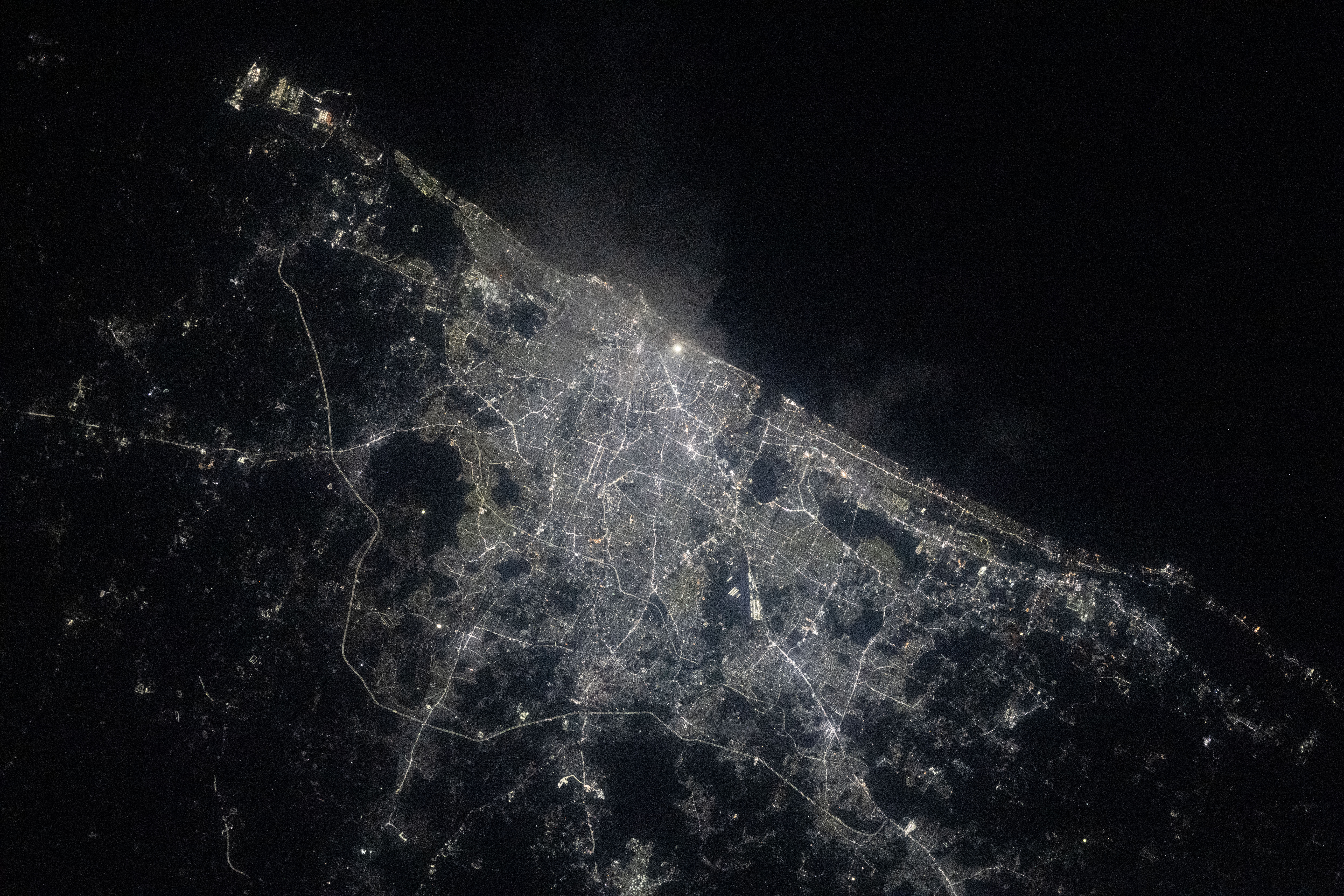
Chennai, on India’s southern coast along the Bay of Bengal and with a metropolitan population of about 8.7 million, shines with white LED streetlights in this photograph taken at approximately 9:13 p.m. local time on May 2, 2026, from the International Space Station.

Read More
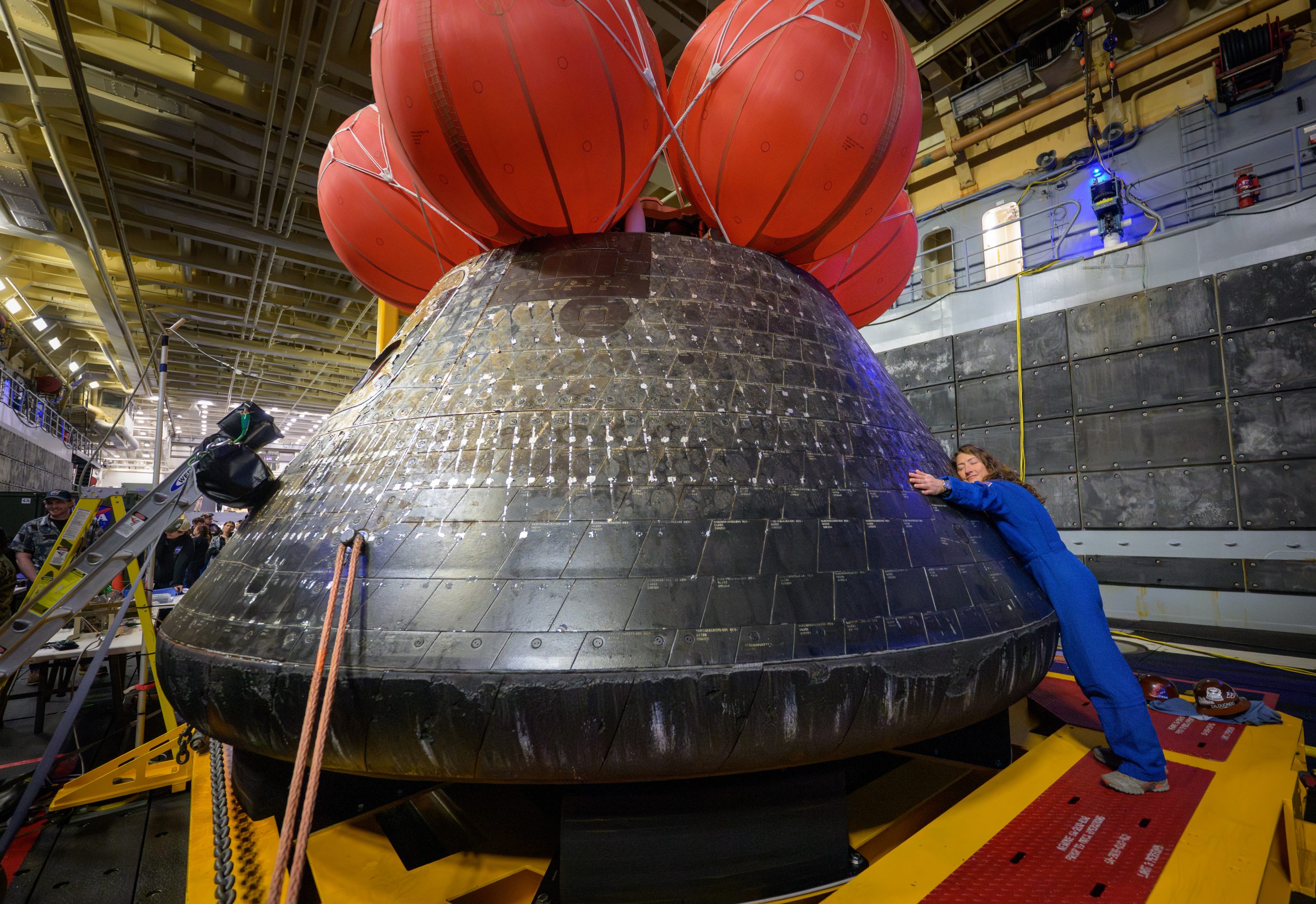
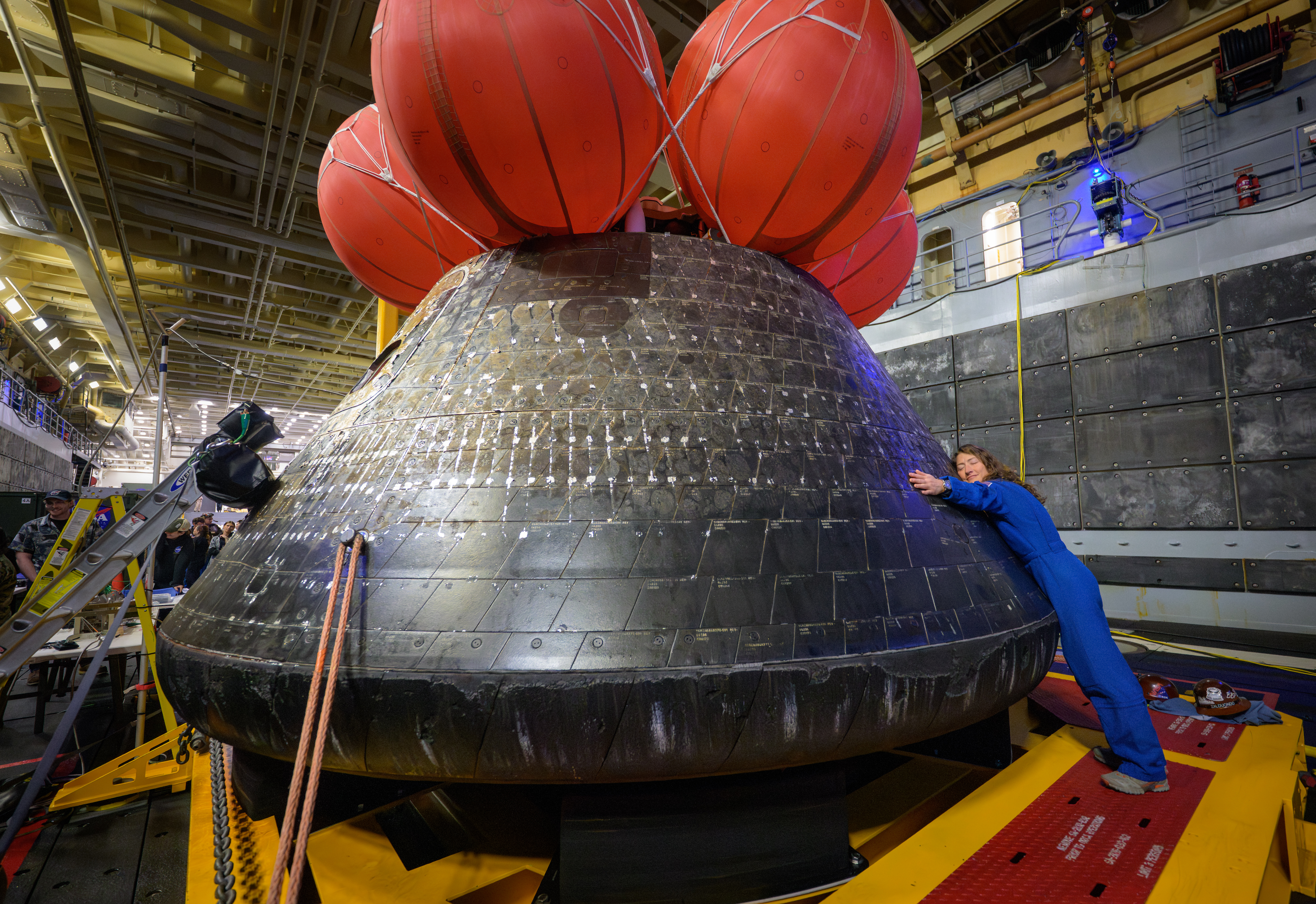
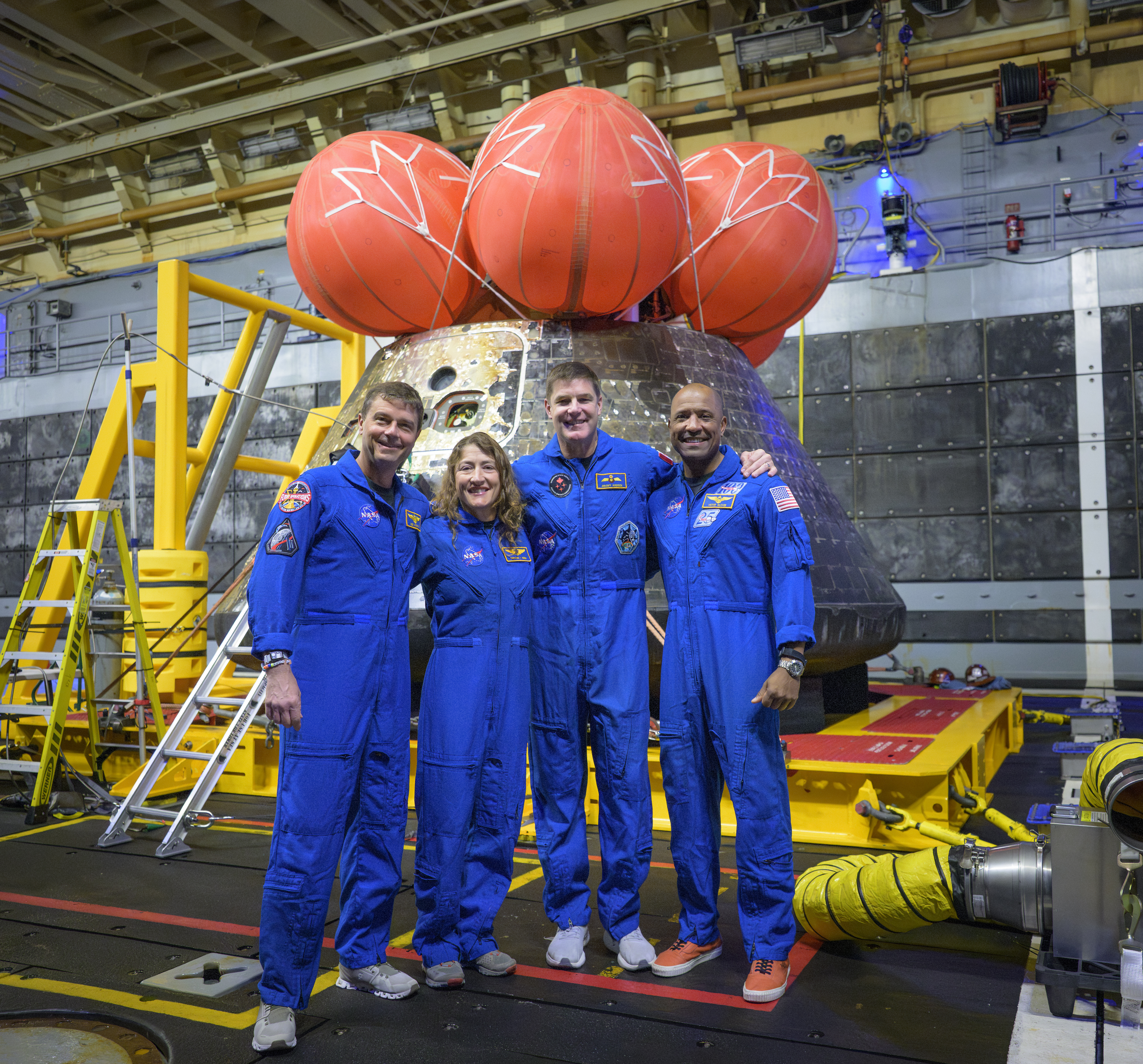
NASA astronauts Reid Wiseman, commander; left, Christina Koch, mission specialist; CSA (Canadian Space Agency) astronaut Jeremy Hansen, mission specialist; and NASA astronaut Victor Glover, Artemis II pilot, right, pose for a group photo after viewing the Orion spacecraft in the well deck of USS John P. Murtha, Saturday, April 11, 2026, in the Pacific Ocean off the coast of California. The quartet splashed down Friday, April 10 at 5:07 p.m. PDT (8:07p.m. EDT).

Read More
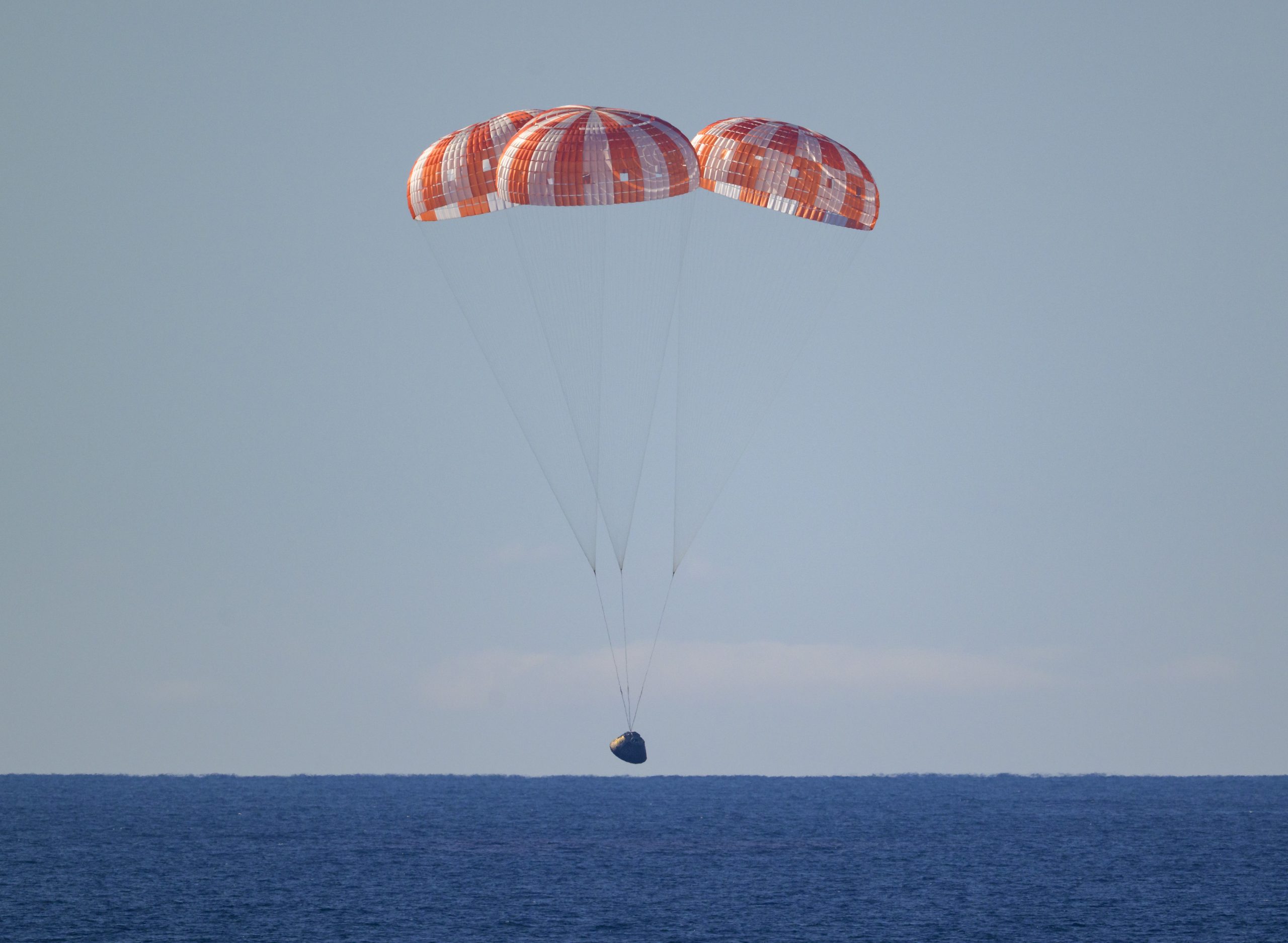
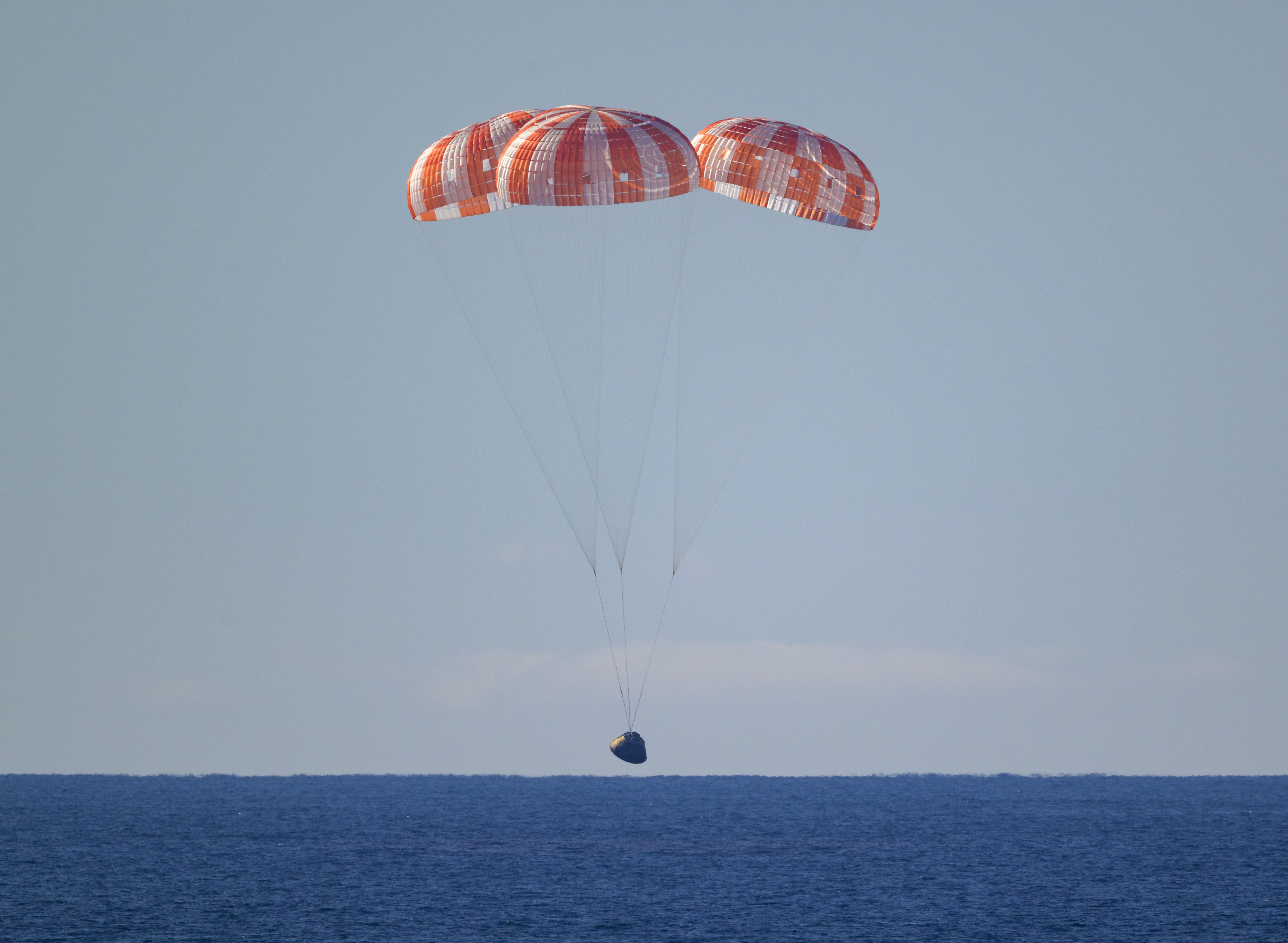
Artemis II Recovery – NASA’s Orion spacecraft with Artemis II crewmembers NASA astronauts Reid Wiseman, commander; Victor Glover, pilot; Christina Koch, mission specialist; and CSA (Canadian Space Agency) astronaut Jeremy Hansen, mission specialist aboard is seen under parachutes as it lands in the Pacific Ocean off the coast of California, Friday, April 10, 2026. NASA’s Artemis II mission took Wiseman, Glover, Koch, and Hansen on a 10-day journey around the Moon and back to Earth. Following a splashdown at 7:07 p.m. EDT, NASA, U.S. Navy, and U.S. Air Force teams are working to bring the crewmembers and Orion spacecraft aboard USS John P. Murtha.

NASA’s Orion spacecraft with Artemis II crewmembers NASA astronauts Reid Wiseman, commander; Victor Glover, pilot; Christina Koch, mission specialist; and CSA (Canadian Space Agency) astronaut Jeremy Hansen, mission specialist aboard is seen under parachutes as it lands in the Pacific Ocean off the coast of California, Friday, April 10, 2026. NASA’s Artemis II mission took Wiseman, Glover, Koch, and Hansen on a 10-day journey around the Moon and back to Earth. Following a splashdown at 7:07 p.m. EDT, NASA, U.S. Navy, and U.S. Air Force teams are working to bring the crewmembers and Orion spacecraft aboard USS John P. Murtha.

Read More


Red, Green Light Show – A green and red aurora streams across Earth’s horizon above the city lights of Europe in this Jan. 19, 2026, photograph, which looks north across Italy toward Germany. The International Space Station was orbiting 262 miles above the Mediterranean Sea at approximately 10:02 p.m. local time when the image was captured.

A green and red aurora streams across Earth’s horizon above the city lights of Europe in this Jan. 19, 2026, photograph, which looks north across Italy toward Germany. The International Space Station was orbiting 262 miles above the Mediterranean Sea at approximately 10:02 p.m. local time when the image was captured.

Read More


Curiosity Sends Holiday Postcard from Mars – NASA’s Curiosity Mars rover used its black-and-white navigation cameras to capture panoramas at two times of day on Nov. 18, 2025, spanning periods that occurred on both the 4,722nd and 4,723rd Martian days, or sols, of the mission. The panoramas were captured at 4:15 p.m. on Sol 4,722 and 8:20 a.m. on Sol 4,723 (both at local Mars time), then merged together. Color was later added for an artistic interpretation of the scene with blue representing the morning panorama and yellow representing the afternoon one.

NASA’s Curiosity Mars rover used its black-and-white navigation cameras to capture panoramas at two times of day on Nov. 18, 2025, spanning periods that occurred on both the 4,722nd and 4,723rd Martian days, or sols, of the mission. The panoramas were captured at 4:15 p.m. on Sol 4,722 and 8:20 a.m. on Sol 4,723 (both at local Mars time), then merged together. Color was later added for an artistic interpretation of the scene with blue representing the morning panorama and yellow representing the afternoon one.

Read More
Viking 1 Begins Journey to Mars

Viking 1 was launched by a Titan-Centaur rocket from Complex 41 at Cape Canaveral Air Force Station at 5:22 p.m. EDT on Aug. 20, 1975, to begin a half-billion mile, 11-month journey through space to explore Mars. The 4-ton spacecraft went into orbit around the red planet in mid-1976 and landed on Mars on July 20, 1976.

Read More