painting

Yad Vashem chief: Holocaust memory is key to fighting antisemitism #Catholic Dani Dayan, chairman of Yad Vashem, said that remembering and honoring the Holocaust is essential to combating rising antisemitism worldwide.Dayan, who met with Pope Leo XIV on March 23 together with Israel’s ambassador to the Holy See, Yaron Sideman, said their conversation focused on “two issues: the historical remembrance, the need to remember, to know about the Holocaust — but not just for the sake of history, also for the sake of the present and the sake of the future.”We have to make sure that an “atrocity like this cannot happen again — not to the Jewish people, not to any other people,” he said.He added that antisemitism is “raising its ugly head again all over the world” and that the two issues are closely linked.“I think that knowing about the Holocaust, learning about the Holocaust, remembering, honoring the Holocaust is one of the tools to combat antisemitism,” Dayan said.‘Antisemitism is bigotry’Asked whether Israeli policy risks fueling antisemitism, Dayan rejected the premise.“I think antisemitism should not have palliative reasons. Antisemitism is bigotry, antisemitism is racism, and it’s completely independent of anything that Israel does or does not,” he said.He described antisemitism as a unifying force among otherwise opposed extremist groups.“In many sectors in the world, antisemitism has become the common denominator, the lingua franca of all the extremists in the world — left-wing extremists, right-wing extremists, religious extremists, Islamist extremists, and many others,” he said.“They hate each other on any other issue… [but] they don’t only agree, they even collaborate.”“Antisemitism should not be understood. It should be combated without any reservation,” he added, noting he found “full agreement” with Pope Leo XIV on the point.Memory, politics, and responsibilityDayan emphasized the distinction between Holocaust remembrance and contemporary political debates.“The policy and Holocaust remembrance are two completely different things,” he said, while noting that the Holocaust remains “omnipresent in the back of our minds” for many Jews and continues to shape collective identity.He said the obligation to remember the Holocaust is “threefold”: for the future, to build a world free of bigotry and genocide; for the present, amid resurging antisemitism; and as a moral duty to the victims.“Six million victims that were massacred by Nazi Germany and its collaborators during the Shoah deserve to be remembered,” he said. “It’s a debt that we have to maintain.”A shared history and a future visit?Reflecting on relations between the Catholic Church and the Jewish people, Dayan pointed to the significance of papal visits to Yad Vashem.He presented Pope Leo XIV with a painting by Jewish artist Carol Deutsch, created during the Shoah, depicting the biblical question “Adam, where are you?”He linked the image to Pope Francis’ address at Yad Vashem, in which the late pope asked: “Where was humanity?”Dayan expressed hope that Pope Leo XIV would visit Yad Vashem in the future, “when circumstances allow it.”‘Peace is an imperative’Asked about the role of believers in promoting peace, Dayan said the memory of the Holocaust underscores the urgency of that mission.“To yearn for it and to act for it,” he said. “Learning about the Holocaust… is one of the greatest motivations a person can have to understand that peace is an imperative.”He acknowledged that he once believed the devastation of World War II and the Holocaust would end war and antisemitism.“Unfortunately… I was very naive in that respect. We have to work harder, all of us, in order to make that a reality in the future,” he said.This story was first published by ACI Stampa, the Italian-language sister service of EWTN News. It has been translated and adapted by EWTN News English.

Yad Vashem chief: Holocaust memory is key to fighting antisemitism #Catholic Dani Dayan, chairman of Yad Vashem, said that remembering and honoring the Holocaust is essential to combating rising antisemitism worldwide.Dayan, who met with Pope Leo XIV on March 23 together with Israel’s ambassador to the Holy See, Yaron Sideman, said their conversation focused on “two issues: the historical remembrance, the need to remember, to know about the Holocaust — but not just for the sake of history, also for the sake of the present and the sake of the future.”We have to make sure that an “atrocity like this cannot happen again — not to the Jewish people, not to any other people,” he said.He added that antisemitism is “raising its ugly head again all over the world” and that the two issues are closely linked.“I think that knowing about the Holocaust, learning about the Holocaust, remembering, honoring the Holocaust is one of the tools to combat antisemitism,” Dayan said.‘Antisemitism is bigotry’Asked whether Israeli policy risks fueling antisemitism, Dayan rejected the premise.“I think antisemitism should not have palliative reasons. Antisemitism is bigotry, antisemitism is racism, and it’s completely independent of anything that Israel does or does not,” he said.He described antisemitism as a unifying force among otherwise opposed extremist groups.“In many sectors in the world, antisemitism has become the common denominator, the lingua franca of all the extremists in the world — left-wing extremists, right-wing extremists, religious extremists, Islamist extremists, and many others,” he said.“They hate each other on any other issue… [but] they don’t only agree, they even collaborate.”“Antisemitism should not be understood. It should be combated without any reservation,” he added, noting he found “full agreement” with Pope Leo XIV on the point.Memory, politics, and responsibilityDayan emphasized the distinction between Holocaust remembrance and contemporary political debates.“The policy and Holocaust remembrance are two completely different things,” he said, while noting that the Holocaust remains “omnipresent in the back of our minds” for many Jews and continues to shape collective identity.He said the obligation to remember the Holocaust is “threefold”: for the future, to build a world free of bigotry and genocide; for the present, amid resurging antisemitism; and as a moral duty to the victims.“Six million victims that were massacred by Nazi Germany and its collaborators during the Shoah deserve to be remembered,” he said. “It’s a debt that we have to maintain.”A shared history and a future visit?Reflecting on relations between the Catholic Church and the Jewish people, Dayan pointed to the significance of papal visits to Yad Vashem.He presented Pope Leo XIV with a painting by Jewish artist Carol Deutsch, created during the Shoah, depicting the biblical question “Adam, where are you?”He linked the image to Pope Francis’ address at Yad Vashem, in which the late pope asked: “Where was humanity?”Dayan expressed hope that Pope Leo XIV would visit Yad Vashem in the future, “when circumstances allow it.”‘Peace is an imperative’Asked about the role of believers in promoting peace, Dayan said the memory of the Holocaust underscores the urgency of that mission.“To yearn for it and to act for it,” he said. “Learning about the Holocaust… is one of the greatest motivations a person can have to understand that peace is an imperative.”He acknowledged that he once believed the devastation of World War II and the Holocaust would end war and antisemitism.“Unfortunately… I was very naive in that respect. We have to work harder, all of us, in order to make that a reality in the future,” he said.This story was first published by ACI Stampa, the Italian-language sister service of EWTN News. It has been translated and adapted by EWTN News English.

Dani Dayan speaks after meeting Pope Leo XIV, says antisemitism is “bigotry” independent of Israeli policy.

Read More
Angola parish prepares to host historic meeting of pope and Church leaders #Catholic LUANDA, Angola — Our Lady of Fátima Parish in the Archdiocese of Luanda is at the center of preparations for a historic moment in Angola as it prepares to host Pope Leo XIV’s meeting with bishops, priests, women and men religious, and catechists during his planned April 18–21 apostolic visit.The encounter, scheduled for April 20, places the parish — run by members of the Order of Friars Minor Capuchin (OFM Cap) — in the spotlight, drawing attention from across the country and around the world.For Father Diogo Messias, pastor of the parish, the choice of Our Lady of Fátima as host is both an honor and a profound spiritual moment for the local Church.“The visit of the Holy Father to our community is a moment of great significance, joy, and pride for all the faithful,” he said in an interview with ACI Africa, the sister service of EWTN News in Africa, on March 18.“The pope’s presence is a blessing for our parish and for all of Angola,” he said. “The visit marks a historic moment, and seeing our parish chosen for this meeting is a cause of joy and renewal for our community.”
 
 Father Diogo Messias is pastor of Our Lady of Fátima Parish in the Archdiocese of Luanda in Angola. | Credit: Photo courtesy of ACI Africa
 
 As the largest Capuchin fraternity in Angola, the parish has become a hive of activity, with preparations focused on ensuring that the venue is ready to welcome hundreds of Church leaders and participants expected for the encounter.“The preparations are focused both inside and outside the church,” Messias explained, adding: “Visible work includes improving the courtyard, pavement, and chairs. The essential part, however, is the interior, where the meeting with the Holy Father will take place.”The parish’s infrastructure is old, but efforts are underway to enhance the space and ensure it reflects the dignity of the occasion.“It is not a case of serious deterioration, but we want to give dignity to the Capuchin house and the place of prayer for the faithful. Every touch and detail matters,” the priest said.
 
 Preparations are being made both inside and outside of Our Lady of Fátima Parish in the Archdiocese of Luanda, Angola, to prepare for Pope Leo XIV’s historic apostolic visit April 18–21, 2026. | Credit: Photo courtesy of ACI Africa
 
 Renovation works include painting, structural repairs, and adapting the church to accommodate the expected influx of participants. At the same time, improvements are ongoing in surrounding areas, particularly at Largo Rainha Ginga, where access routes and walkways are being upgraded.“These works aim to improve access and movement for everyone and enhance the appearance of the church that will receive the pope on April 20,” Messias said.Beyond logistics, Messias underscored the significance of the gathering, describing it as a moment that brings together the entire Church in Angola and beyond.“The meeting with the Holy Father involves the entire Church in Angola, including religious sisters, catechists, and members from other dioceses and neighboring countries, such as São Tomé,” he said. “The event will have national and international impact, showing the unity of the Church and the richness of Angolan culture.”While the parish prepares physically, the emphasis remains on spiritual renewal for those who will take part in the encounter.“Despite the great mobilization, the most important thing is the experience of renewal for all those present. Those who participate will leave strengthened in spirit, committed to the community, and motivated to live values of fraternity and respect,” Messias said.The April 20 meeting is expected to be one of the defining moments of the pope’s visit to Angola, offering a unique opportunity for direct engagement with Church leaders and pastoral agents.“Bishops, women and men religious, and catechists in Angola expect Pope Leo XIV to bring a message centered above all on unity, hope, and community commitment,” Messias said.He said the visit is widely seen as an opportunity for deeper reflection and renewal within the Church.
 
 Our Lady of Fátima Parish in Angola’s Archdiocese of Luanda will host Pope Leo XIV’s meeting with Church leaders during the pope’s planned apostolic visit April 18–21, 2026. | Credit: Photo courtesy of ACI Africa
 
 “The visit of the Holy Father is seen as a moment that goes beyond a simple meeting, being understood as an opportunity for inner renewal,” he said, adding: “It is expected that the Holy Father’s message will help consecrated persons renew their vocation, strengthen their dedication to service, and assume with greater responsibility the role they play in the life of the Church and the country.”Meanwhile, members of the local community are playing an active role in the preparations. Among them is David Afonso, a young carpenter overseeing the restoration of church benches.“Working to receive the Holy Father is a great responsibility, and we are doing our best to ensure everything is in good condition,” he said.Although not a Catholic, Afonso expressed pride in contributing to the preparations.“It is a pleasure to take part in an event of this magnitude. Every detail matters, and we want the space to be worthy and memorable for all the faithful and visitors,” he said.This story was first published by ACI Africa, the sister service of EWTN News in Africa, and has been adapted by EWTN News.

Angola parish prepares to host historic meeting of pope and Church leaders #Catholic LUANDA, Angola — Our Lady of Fátima Parish in the Archdiocese of Luanda is at the center of preparations for a historic moment in Angola as it prepares to host Pope Leo XIV’s meeting with bishops, priests, women and men religious, and catechists during his planned April 18–21 apostolic visit.The encounter, scheduled for April 20, places the parish — run by members of the Order of Friars Minor Capuchin (OFM Cap) — in the spotlight, drawing attention from across the country and around the world.For Father Diogo Messias, pastor of the parish, the choice of Our Lady of Fátima as host is both an honor and a profound spiritual moment for the local Church.“The visit of the Holy Father to our community is a moment of great significance, joy, and pride for all the faithful,” he said in an interview with ACI Africa, the sister service of EWTN News in Africa, on March 18.“The pope’s presence is a blessing for our parish and for all of Angola,” he said. “The visit marks a historic moment, and seeing our parish chosen for this meeting is a cause of joy and renewal for our community.” Father Diogo Messias is pastor of Our Lady of Fátima Parish in the Archdiocese of Luanda in Angola. | Credit: Photo courtesy of ACI Africa As the largest Capuchin fraternity in Angola, the parish has become a hive of activity, with preparations focused on ensuring that the venue is ready to welcome hundreds of Church leaders and participants expected for the encounter.“The preparations are focused both inside and outside the church,” Messias explained, adding: “Visible work includes improving the courtyard, pavement, and chairs. The essential part, however, is the interior, where the meeting with the Holy Father will take place.”The parish’s infrastructure is old, but efforts are underway to enhance the space and ensure it reflects the dignity of the occasion.“It is not a case of serious deterioration, but we want to give dignity to the Capuchin house and the place of prayer for the faithful. Every touch and detail matters,” the priest said. Preparations are being made both inside and outside of Our Lady of Fátima Parish in the Archdiocese of Luanda, Angola, to prepare for Pope Leo XIV’s historic apostolic visit April 18–21, 2026. | Credit: Photo courtesy of ACI Africa Renovation works include painting, structural repairs, and adapting the church to accommodate the expected influx of participants. At the same time, improvements are ongoing in surrounding areas, particularly at Largo Rainha Ginga, where access routes and walkways are being upgraded.“These works aim to improve access and movement for everyone and enhance the appearance of the church that will receive the pope on April 20,” Messias said.Beyond logistics, Messias underscored the significance of the gathering, describing it as a moment that brings together the entire Church in Angola and beyond.“The meeting with the Holy Father involves the entire Church in Angola, including religious sisters, catechists, and members from other dioceses and neighboring countries, such as São Tomé,” he said. “The event will have national and international impact, showing the unity of the Church and the richness of Angolan culture.”While the parish prepares physically, the emphasis remains on spiritual renewal for those who will take part in the encounter.“Despite the great mobilization, the most important thing is the experience of renewal for all those present. Those who participate will leave strengthened in spirit, committed to the community, and motivated to live values of fraternity and respect,” Messias said.The April 20 meeting is expected to be one of the defining moments of the pope’s visit to Angola, offering a unique opportunity for direct engagement with Church leaders and pastoral agents.“Bishops, women and men religious, and catechists in Angola expect Pope Leo XIV to bring a message centered above all on unity, hope, and community commitment,” Messias said.He said the visit is widely seen as an opportunity for deeper reflection and renewal within the Church. Our Lady of Fátima Parish in Angola’s Archdiocese of Luanda will host Pope Leo XIV’s meeting with Church leaders during the pope’s planned apostolic visit April 18–21, 2026. | Credit: Photo courtesy of ACI Africa “The visit of the Holy Father is seen as a moment that goes beyond a simple meeting, being understood as an opportunity for inner renewal,” he said, adding: “It is expected that the Holy Father’s message will help consecrated persons renew their vocation, strengthen their dedication to service, and assume with greater responsibility the role they play in the life of the Church and the country.”Meanwhile, members of the local community are playing an active role in the preparations. Among them is David Afonso, a young carpenter overseeing the restoration of church benches.“Working to receive the Holy Father is a great responsibility, and we are doing our best to ensure everything is in good condition,” he said.Although not a Catholic, Afonso expressed pride in contributing to the preparations.“It is a pleasure to take part in an event of this magnitude. Every detail matters, and we want the space to be worthy and memorable for all the faithful and visitors,” he said.This story was first published by ACI Africa, the sister service of EWTN News in Africa, and has been adapted by EWTN News.

Our Lady of Fatima Parish in the Archdiocese of Luanda is preparing to host Pope Leo XIV’s meeting with bishops, priests, women and men religious, and catechists during his April 18–21 visit.

Read More
Picture of the day


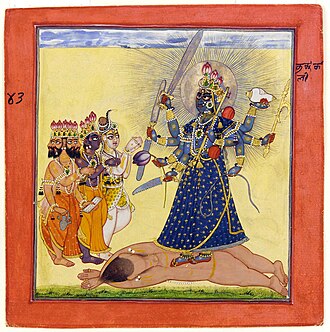
A circa 1660–70 Pahari painting from Basohli, Jammu, India, depicting the Hindu goddess Bhadrakali being worshipped by the three supreme gods of Hinduism: Brahma the creator, Vishnu the preserver, and Shiva the destroyer, to pacify her after she killed the demon Mahishasura, who could not be killed by them, the men or other gods. Her victory over the demon is celebrated by Hindus as the victory of good over evil on the day of Vijayadashami, which is today.
 #ImageOfTheDay
Picture of the day
A circa 1660–70 Pahari painting from Basohli, Jammu, India, depicting the Hindu goddess Bhadrakali being worshipped by the three supreme gods of Hinduism: Brahma the creator, Vishnu the preserver, and Shiva the destroyer, to pacify her after she killed the demon Mahishasura, who could not be killed by them, the men or other gods. Her victory over the demon is celebrated by Hindus as the victory of good over evil on the day of Vijayadashami, which is today.
Read More
Picture of the day


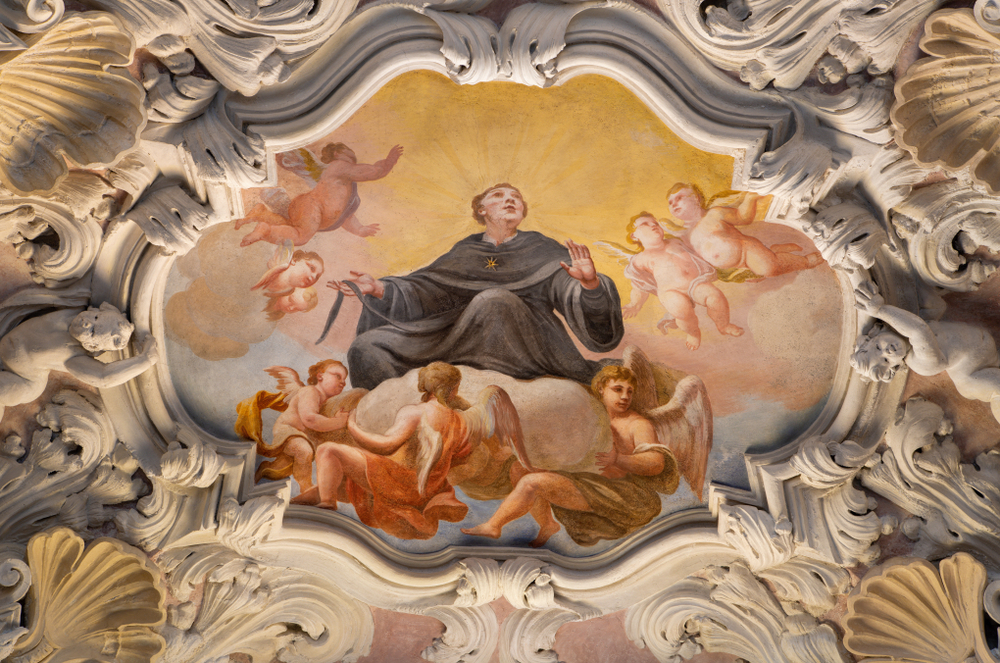
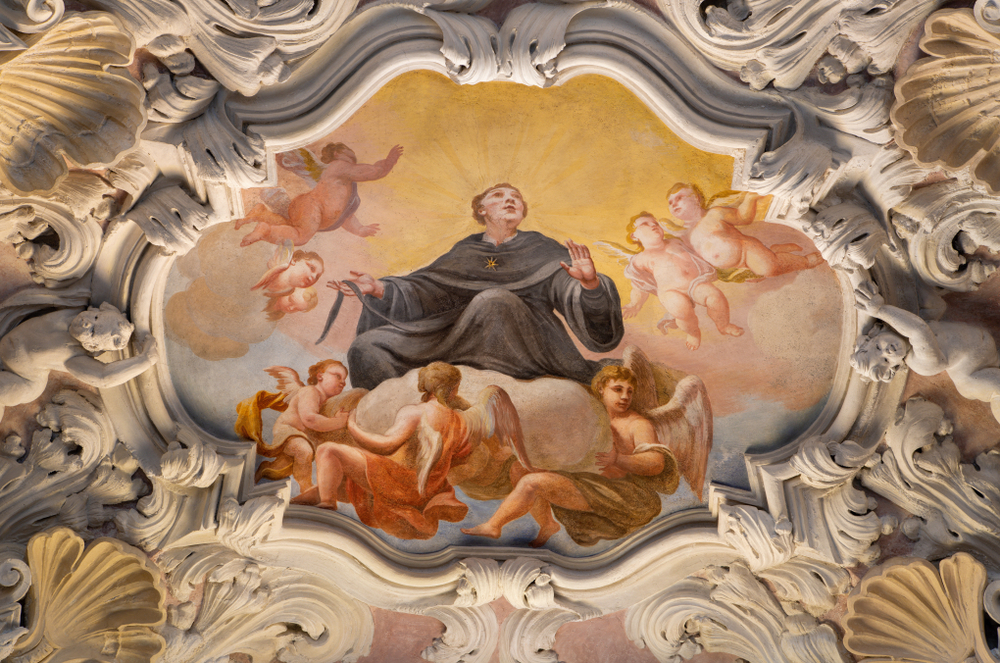
This painting on the ceiling in Santa Maria della Concezione dei Cappuccini, a church on Via Veneto in Rome, depicts the Virgin Mary being assumed body and soul into heaven. Today is the Feast of the Assumption of Mary in much of Western Christianity or the Dormition of the Mother of God in Eastern Christianity.
 #ImageOfTheDay
Picture of the day
This painting on the ceiling in Santa Maria della Concezione dei Cappuccini, a church on Via Veneto in Rome, depicts the Virgin Mary being assumed body and soul into heaven. Today is the Feast of the Assumption of Mary in much of Western Christianity or the Dormition of the Mother of God in Eastern Christianity.
Read More