Paper

The Catholic Church has a lot to say about Labor Day — why? #Catholic As the U.S. celebrates Labor Day, Catholics have a wealth of resources in biblical interpretation, Church teaching, and social thought that address the nature of work and the place of the worker in society and in God’s creation.But are Catholics, and others, aware of these resources?One Catholic leader considering such questions is Father Sinclair Oubre, a priest of the Diocese of Beaumont, Texas. He is the spiritual moderator of the Catholic Labor Network, a Catholic association that promotes Catholic teaching about work and labor unions. It also supports labor organizing.“All work, no matter what the work is, is essential,” Oubre likes to say. In his view, if a woman in janitorial work at a major software company does not show up to clean the toilets and empty the trash, all production in the office will nosedive.Centuries of Catholic teaching about labor can be found compiled in the Compendium of the Social Doctrine of the Church, published in 2004 by the Pontifical Commission for Justice and Peace. It dedicates its entire sixth chapter to human work and labor, its place in God’s plan, its role in society, and the rights and duties of workers.“The Compendium gathers together in one place those rights that are found in Catholic social teaching, whether it’s Rerum Novarum, or Quadragesimo Anno, or Centesimus Annus, and synthesizes them,” Oubre told EWTN News, referring to the respective encyclicals of popes Leo XIII, Pius XI, and John Paul II.“It’s a beautiful reflection on human work in the world and a very mature and in-depth discussion of the place of work, the place of labor, and the communal nature of it,” Oubre said.Labor, politics, and spiritualityOubre said Catholic teaching is a challenge regardless of people’s political views.“It’s a challenge to the right, but it’s also a challenge to the left,” he said. Catholicism encourages those on the political right not simply to pray novenas and commit themselves to spiritual actions. It is a challenge not to leave other questions about work and labor to the market.For the political left, Catholic social teaching “means you have to enter into a more intimate relationship with your Church and your relationship with Jesus and not just be as a social justice person by throwing a couple of little quotes around. It requires you to enter into that deeper spiritual relationship.”Oubre stressed the importance of starting from the view of Catholic spirituality, not only social justice, because if we don’t, our approach “becomes ideological and polemic.” The spiritual approach “brings us closer to Jesus Christ.”“No matter how dirty, how uncomfortable, how awful the job is, we are participating in God’s ongoing creation. It’s important that we do that job in a way that gives glory to God,” Oubre said.God and man at workThe Compendium’s reflection on work begins with its biblical aspects: There is a human duty to “cultivate and care for the earth” and other good things created by God, it says. Work existed before the fall of Adam and Eve, and it is not a punishment or curse until the break with God transforms it into “toil and pain.” However, God’s rest on the seventh day of creation is the sign of the “fuller freedom” of the “eternal Sabbath.”The life of Jesus Christ is a mission of work, from his early life helping St. Joseph in the work of a carpenter to his ministry of preaching and healing, and most of all in his redemptive labors on the cross.The Compendium presents human labor as a way of supporting oneself and one’s loved ones but also a way to serve those in need. Work is a way to make God’s creation more beautiful, since humankind shares in God’s art and wisdom.“Human work, directed to charity as its final goal, becomes an occasion for contemplation, it becomes devout prayer, vigilantly rising towards and in anxious hope of the day that will not end,” the Compendium says.The rights of laborGod’s rest on the seventh day of creation, the Compendium says, means men and women must enjoy “sufficient rest and free time that will allow them to tend to their family, cultural, social, and religious life.”The Compendium outlines and explains the many rights of workers: the right to rest from work; the right to a working environment that is not harmful to a worker’s health or moral integrity; the right to unemployment protections; the right to a pension and insurance for old age, disability, and work-related accidents; the right to social security for working mothers; and the right to assemble and form associations; the right to just wages and remuneration; and the right to strike.Labor unions play a “fundamental role” in serving the common good and promoting social order and solidarity, though they must not abuse their role in society or become simply arms of a political party.“The recognition of workers’ rights has always been a difficult problem to resolve because this recognition takes place within complex historical and institutional processes, and still today it remains incomplete,” the Compendium says. “This makes the practice of authentic solidarity among workers more fitting and necessary than ever.”A challenge for Catholics and institutionsCatholic teaching has a lengthy paper record. But as in other areas, there is a challenge to practice it.“What I find over and over again that the Church — our Church — gives us wonderful documents of guidance… and we never go back and read them,” Oubre told EWTN News.He cited the U.S. Conference of Catholic Bishops’ 1996 pastoral letter “Economic Justice for All,” which says the Church should be a model for labor rights and treating workers justly.However, Oubre said that in his experience Catholic parishes often neglect to provide unemployment insurance to employees if the law allows them to opt out. Catholic institutions often act as “at-will” employers in which management can fire employees for any reason. They may show preferences for nonunion labor over unionized labor when planning and funding construction projects.“You’re going to undercut the guy who has actually followed the Church’s teachings in regards to work by hiring somebody who may be not offering medical insurance for his employees,” the priest lamented.For Labor Day, Oubre encouraged parishes, dioceses, and other institutions to make sure to adopt policies that put Catholic labor teaching into practice.This story was first published on Sept. 4, 2023, and has been updated.

The Catholic Church has a lot to say about Labor Day — why? #Catholic As the U.S. celebrates Labor Day, Catholics have a wealth of resources in biblical interpretation, Church teaching, and social thought that address the nature of work and the place of the worker in society and in God’s creation.But are Catholics, and others, aware of these resources?One Catholic leader considering such questions is Father Sinclair Oubre, a priest of the Diocese of Beaumont, Texas. He is the spiritual moderator of the Catholic Labor Network, a Catholic association that promotes Catholic teaching about work and labor unions. It also supports labor organizing.“All work, no matter what the work is, is essential,” Oubre likes to say. In his view, if a woman in janitorial work at a major software company does not show up to clean the toilets and empty the trash, all production in the office will nosedive.Centuries of Catholic teaching about labor can be found compiled in the Compendium of the Social Doctrine of the Church, published in 2004 by the Pontifical Commission for Justice and Peace. It dedicates its entire sixth chapter to human work and labor, its place in God’s plan, its role in society, and the rights and duties of workers.“The Compendium gathers together in one place those rights that are found in Catholic social teaching, whether it’s Rerum Novarum, or Quadragesimo Anno, or Centesimus Annus, and synthesizes them,” Oubre told EWTN News, referring to the respective encyclicals of popes Leo XIII, Pius XI, and John Paul II.“It’s a beautiful reflection on human work in the world and a very mature and in-depth discussion of the place of work, the place of labor, and the communal nature of it,” Oubre said.Labor, politics, and spiritualityOubre said Catholic teaching is a challenge regardless of people’s political views.“It’s a challenge to the right, but it’s also a challenge to the left,” he said. Catholicism encourages those on the political right not simply to pray novenas and commit themselves to spiritual actions. It is a challenge not to leave other questions about work and labor to the market.For the political left, Catholic social teaching “means you have to enter into a more intimate relationship with your Church and your relationship with Jesus and not just be as a social justice person by throwing a couple of little quotes around. It requires you to enter into that deeper spiritual relationship.”Oubre stressed the importance of starting from the view of Catholic spirituality, not only social justice, because if we don’t, our approach “becomes ideological and polemic.” The spiritual approach “brings us closer to Jesus Christ.”“No matter how dirty, how uncomfortable, how awful the job is, we are participating in God’s ongoing creation. It’s important that we do that job in a way that gives glory to God,” Oubre said.God and man at workThe Compendium’s reflection on work begins with its biblical aspects: There is a human duty to “cultivate and care for the earth” and other good things created by God, it says. Work existed before the fall of Adam and Eve, and it is not a punishment or curse until the break with God transforms it into “toil and pain.” However, God’s rest on the seventh day of creation is the sign of the “fuller freedom” of the “eternal Sabbath.”The life of Jesus Christ is a mission of work, from his early life helping St. Joseph in the work of a carpenter to his ministry of preaching and healing, and most of all in his redemptive labors on the cross.The Compendium presents human labor as a way of supporting oneself and one’s loved ones but also a way to serve those in need. Work is a way to make God’s creation more beautiful, since humankind shares in God’s art and wisdom.“Human work, directed to charity as its final goal, becomes an occasion for contemplation, it becomes devout prayer, vigilantly rising towards and in anxious hope of the day that will not end,” the Compendium says.The rights of laborGod’s rest on the seventh day of creation, the Compendium says, means men and women must enjoy “sufficient rest and free time that will allow them to tend to their family, cultural, social, and religious life.”The Compendium outlines and explains the many rights of workers: the right to rest from work; the right to a working environment that is not harmful to a worker’s health or moral integrity; the right to unemployment protections; the right to a pension and insurance for old age, disability, and work-related accidents; the right to social security for working mothers; and the right to assemble and form associations; the right to just wages and remuneration; and the right to strike.Labor unions play a “fundamental role” in serving the common good and promoting social order and solidarity, though they must not abuse their role in society or become simply arms of a political party.“The recognition of workers’ rights has always been a difficult problem to resolve because this recognition takes place within complex historical and institutional processes, and still today it remains incomplete,” the Compendium says. “This makes the practice of authentic solidarity among workers more fitting and necessary than ever.”A challenge for Catholics and institutionsCatholic teaching has a lengthy paper record. But as in other areas, there is a challenge to practice it.“What I find over and over again that the Church — our Church — gives us wonderful documents of guidance… and we never go back and read them,” Oubre told EWTN News.He cited the U.S. Conference of Catholic Bishops’ 1996 pastoral letter “Economic Justice for All,” which says the Church should be a model for labor rights and treating workers justly.However, Oubre said that in his experience Catholic parishes often neglect to provide unemployment insurance to employees if the law allows them to opt out. Catholic institutions often act as “at-will” employers in which management can fire employees for any reason. They may show preferences for nonunion labor over unionized labor when planning and funding construction projects.“You’re going to undercut the guy who has actually followed the Church’s teachings in regards to work by hiring somebody who may be not offering medical insurance for his employees,” the priest lamented.For Labor Day, Oubre encouraged parishes, dioceses, and other institutions to make sure to adopt policies that put Catholic labor teaching into practice.This story was first published on Sept. 4, 2023, and has been updated.

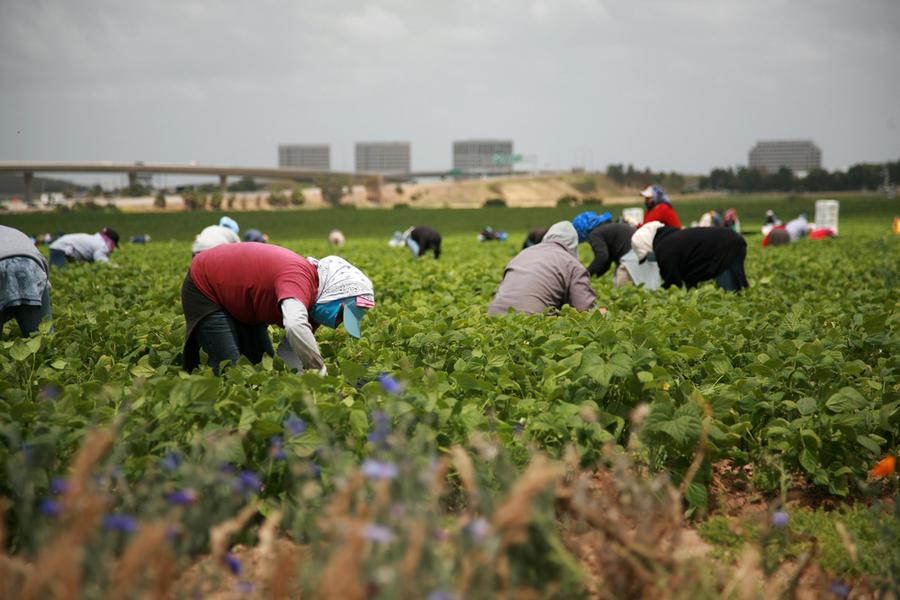
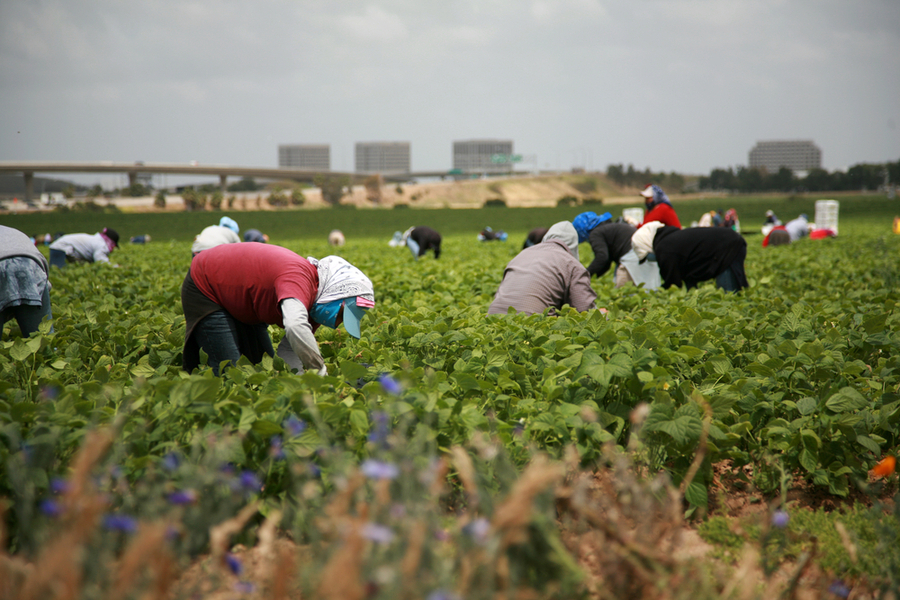
“All work, no matter what the work is, is essential,” said Father Sinclair Oubre, spiritual moderator of the Catholic Labor Network.
Read More
Hope for broken marriages: One couple’s story #Catholic On April 7, 2009, Mariela Villanueva landed in Venezuela convinced that she was going to end her marriage. Five years had passed since her husband, Harold Figueras, had left his family in Peru and rebuilt his life in another country. She carried with her the pain of a long separation and the resolve to sign the divorce papers. He had with him a written list of all the grievances he intended to unleash the moment he saw her.Nothing happened the way either of them had imagined.They arranged to meet on a Wednesday at 3 p.m., the Hour of Mercy, at the very spot where they had courted years before. When Mariela appeared, Harold frantically searched for the sheet of paper containing his complaints. It had vanished.“I was expecting a war. She opened her arms to embrace me, and I realized that I was the only one who wanted to fight,” Harold recalled in an interview with ACI Prensa, the Spanish-language sister service of EWTN News. Mariela said she made that gesture because she had already begun a process of conversion and was holding onto one last hope.That embrace did not immediately restore the marriage, however. It would still be nearly a month before he ended the other relationship he was in and decided to return to his family. But on that day, they both attest, Jesus won the first great battle.
 
 Harold and Mariela in front of Lima Cathedral. | Credit: Photo courtesy of Harold Figueras and Mariela Villanueva
 
 A marriage marked by woundednessHarold and Mariela met in 1998 at the Venezuelan College of Engineers. He worked in systems; she was a young lawyer running a legal consultation firm with dozens of professionals under her supervision.While Mariela had grown up in a Catholic family and frequently prayed the rosary, Harold was completely indifferent to the faith.“I used to make fun of priests. For me, getting married in the Church was simply a matter of fulfilling a social formality,” he admitted.They were married in a civil ceremony and on Sept. 2, 2000, received the sacrament at marriage at St. Francis of Assisi Parish in Barranco, Peru. However, they acknowledged that they came to the altar without truly understanding the meaning of the vocation of marriage.“We began our life together without God at the center. That was the first major mistake,” Harold explained.Over the years, deep-seated wounds began to surface: abandonment, loneliness, pride, an inability to communicate, and unrealistic expectations about love. Venezuela’s economic crisis further aggravated the situation. Harold traveled constantly between the two countries until, one day, he simply stopped coming back.Mariela was left alone in Lima with her young daughter.
 
 Recent photo of Harold and Mariela with their three daughters in Lima, Peru. | Credit: Photo courtesy of Harold Figueras and Mariela Villanueva
 
 ‘Mom, teach me to pray’Paradoxically, the restoration did not begin when Harold changed. It began when Mariela got down on her knees.Estranged from the Church and filled with resentment, the young mother had abandoned the practice of her faith after being hurt by a bad experience at a parish. Everything changed thanks to an unexpected request from her 7-year-old daughter: “Mom, grandma says you know how to pray. Teach me the rosary.”Mariela agreed, more out of a sense of obligation than anything else. Shortly after that, her daughter insisted on making her first Communion and said something that pierced her mother’s heart: “You know what it’s like to have Jesus in your heart… so why don’t you [go to Communion]?”Those words led Mariela back to the confessional.From then on, she began a routine that would change her life: daily Mass before work, Eucharistic adoration at midday, and the rosary every night with her daughter.“I was looking for God to change my husband. The Lord ended up changing me,” she related.
 
 Harold and Mariela with members of the Peruvian Catholic movement “Jesus and Mary Are Restoring My Family.” | Credit: Photo courtesy of Harold Figueras and Mariela Villanueva
 
 ‘Look at me’During Eucharistic adoration, an experience occurred that would, years later, give its name to the retreat the couple now leads as part of the Peruvian Catholic movement “Jesus and Mary Are Restoring My Family.”Mariela was praying, seeing herself as the victim in her story: “Lord, look at me. Look at how good I am. Look at what he did to me.”Then, she raised her eyes toward the monstrance.“I no longer saw the monstrance. I saw Jesus, wounded and bloodied. And he said to me only: ‘Look at me.’”In that moment, she experienced a personal encounter with Jesus. She began to recall her own sins from childhood and realized that, for years, she had been unable to recognize her own wounds.“I realized that God wasn’t going to ask me about Harold’s sins. He was going to ask me how much I loved my husband within the sacrament.”Her prayer changed completely, and she no longer asked for Harold to return. She only prayed: “Lord, bring him back to you.”
 
 Mariela Villanueva. | Credit: Photo courtesy of Mariela Villanueva
 
 The hell of the occultWhile Mariela was deepening her prayer life, Harold was heading down a completely opposite path.Seeking better financial prospects, he began consulting tarot cards. Next came syncretist Santería practices, and finally Palería, a witchcraft practice involving human remains and animal sacrifices.“I entered a dark room containing skeletal remains. I felt an indescribable fear, yet I kept looking for answers where they weren’t to be found,” Harold recalled.Amid that emptiness, he began to notice something strange. Mariela kept calling him, but no longer to get him back. One afternoon, in a mocking tone, he asked her: “What’s wrong? Don’t you need me anymore?”Her answer baffled him.“No. Whatʼs going on is that I have someone here who loves me.”Harold thought she had another romantic partner, but today he knows his wife was speaking of Christ himself.
 
 Harold Figueras. | Credit: Photo courtesy of Harold Figueras
 
 Welcomed back with loveAfter that encounter with his wife in Venezuela, Harold eventually returned to Peru.He admitted he was terrified of facing Mariela’s family and above all, their daughter. He imagined reproaches, humiliation, and rejection. Yet, he found exactly the opposite.“They all hugged me as if I had just stepped out to buy bread,” he recounted.A few days later, he accompanied Mariela to the Oblate Fathers’ church in the Barranco neighborhood of Lima. He had no thought of even going inside. He was standing near the doorway when, as he tells it, he felt an inner impulse that led him straight to the confessional.“I told the priest: ‘Father, I’ve been separated from my wife for five years, and I don’t know why I’ve come back.’”The priest invited him to attend a spiritual retreat. It was there that Harold experienced his own conversion.Before the Blessed Sacrament, after resisting for hours, Harold looked up: “I no longer saw the monstrance. I saw two honey-colored eyes that pierced my heart. I began to weep as I never had in my life.”From that moment on, he abandoned the occult and began a journey of faith that continues to this day.An ongoing miracleMore than 15 years have passed since that reconciliation.Harold and Mariela maintain that the true miracle was not simply living together again but discovering that marriage is a daily path to holiness.“Restoring the marriage takes your whole life. It doesn’t stop when the husband returns. It begins there,” Mariela said.
 
 Harold and Mariela today. | Credit: Photo courtesy of Harold Figueras and Mariela Villanueva
 
 That experience gave rise to the “Jesus and Mary Are Restoring My Family” movement, an initiative that supports spouses who are separated or on the verge of divorce. The path they propose begins with oneʼs own conversion rather than an attempt to change oneʼs spouse.Those who come to the mission begin with what’s called “Mary’s Workshop,” a preparation for consecration to the Immaculate Heart of Mary that focuses on the sacrament of marriage. There, the aim is for each person to acknowledge his or her own wounds and receive the tools to discern how to handle their issues as a family.However, Harold and Mariela noted that not all journeys end the same way. Some married couples manage to reunite, while others go their separate ways, including through the process of a declaration of nullity. What remains, they maintain, is the call to conversion and to seek God’s will.“The Lord wants us to be holy,” Mariela explained. She said that even when a person goes through a process different from what she or he hoped for, suffering can become an opportunity to draw closer to Christ and offer that pain for the holiness of the Church.Today, when they look back, the couple no longer see themselves as the same people who had separated. Mariela describes Harold as a man more committed to knowing Godʼs love and capable of giving of himself to his family.For his part, he acknowledged that the woman he reunited with after five years was no longer the same one he had left behind.
 
 The Figueras Villanueva family today. | Credit: Photo courtesy of Harold Figueras and Mariela Villanueva
 
 For this reason, their testimony does not aim to offer a formula for restoring a lost marriage. It is, above all, the story of two people who discovered that, before asking God to change the other person, they had to allow themselves to be transformed by him.“Many people come saying, ‘I want my husband to come back.’ We tell them: First, let Jesus return to the center of your heart,” Harold explained.Their message to couples in crisis stems from that experience: Don’t hide your wounds, don’t let shame defeat you, and don’t confuse restoration with a simple return to the life you had before.For as they discovered that Wednesday afternoon in 2009, some marital battles are not won by defeating the other person but by allowing oneself to be conquered by God’s merciful love.This story was first published by ACI Prensa, the Spanish-language sister service of EWTN News. It has been translated and adapted by EWTN News English.

Hope for broken marriages: One couple’s story #Catholic On April 7, 2009, Mariela Villanueva landed in Venezuela convinced that she was going to end her marriage. Five years had passed since her husband, Harold Figueras, had left his family in Peru and rebuilt his life in another country. She carried with her the pain of a long separation and the resolve to sign the divorce papers. He had with him a written list of all the grievances he intended to unleash the moment he saw her.Nothing happened the way either of them had imagined.They arranged to meet on a Wednesday at 3 p.m., the Hour of Mercy, at the very spot where they had courted years before. When Mariela appeared, Harold frantically searched for the sheet of paper containing his complaints. It had vanished.“I was expecting a war. She opened her arms to embrace me, and I realized that I was the only one who wanted to fight,” Harold recalled in an interview with ACI Prensa, the Spanish-language sister service of EWTN News. Mariela said she made that gesture because she had already begun a process of conversion and was holding onto one last hope.That embrace did not immediately restore the marriage, however. It would still be nearly a month before he ended the other relationship he was in and decided to return to his family. But on that day, they both attest, Jesus won the first great battle. Harold and Mariela in front of Lima Cathedral. | Credit: Photo courtesy of Harold Figueras and Mariela Villanueva A marriage marked by woundednessHarold and Mariela met in 1998 at the Venezuelan College of Engineers. He worked in systems; she was a young lawyer running a legal consultation firm with dozens of professionals under her supervision.While Mariela had grown up in a Catholic family and frequently prayed the rosary, Harold was completely indifferent to the faith.“I used to make fun of priests. For me, getting married in the Church was simply a matter of fulfilling a social formality,” he admitted.They were married in a civil ceremony and on Sept. 2, 2000, received the sacrament at marriage at St. Francis of Assisi Parish in Barranco, Peru. However, they acknowledged that they came to the altar without truly understanding the meaning of the vocation of marriage.“We began our life together without God at the center. That was the first major mistake,” Harold explained.Over the years, deep-seated wounds began to surface: abandonment, loneliness, pride, an inability to communicate, and unrealistic expectations about love. Venezuela’s economic crisis further aggravated the situation. Harold traveled constantly between the two countries until, one day, he simply stopped coming back.Mariela was left alone in Lima with her young daughter. Recent photo of Harold and Mariela with their three daughters in Lima, Peru. | Credit: Photo courtesy of Harold Figueras and Mariela Villanueva ‘Mom, teach me to pray’Paradoxically, the restoration did not begin when Harold changed. It began when Mariela got down on her knees.Estranged from the Church and filled with resentment, the young mother had abandoned the practice of her faith after being hurt by a bad experience at a parish. Everything changed thanks to an unexpected request from her 7-year-old daughter: “Mom, grandma says you know how to pray. Teach me the rosary.”Mariela agreed, more out of a sense of obligation than anything else. Shortly after that, her daughter insisted on making her first Communion and said something that pierced her mother’s heart: “You know what it’s like to have Jesus in your heart… so why don’t you [go to Communion]?”Those words led Mariela back to the confessional.From then on, she began a routine that would change her life: daily Mass before work, Eucharistic adoration at midday, and the rosary every night with her daughter.“I was looking for God to change my husband. The Lord ended up changing me,” she related. Harold and Mariela with members of the Peruvian Catholic movement “Jesus and Mary Are Restoring My Family.” | Credit: Photo courtesy of Harold Figueras and Mariela Villanueva ‘Look at me’During Eucharistic adoration, an experience occurred that would, years later, give its name to the retreat the couple now leads as part of the Peruvian Catholic movement “Jesus and Mary Are Restoring My Family.”Mariela was praying, seeing herself as the victim in her story: “Lord, look at me. Look at how good I am. Look at what he did to me.”Then, she raised her eyes toward the monstrance.“I no longer saw the monstrance. I saw Jesus, wounded and bloodied. And he said to me only: ‘Look at me.’”In that moment, she experienced a personal encounter with Jesus. She began to recall her own sins from childhood and realized that, for years, she had been unable to recognize her own wounds.“I realized that God wasn’t going to ask me about Harold’s sins. He was going to ask me how much I loved my husband within the sacrament.”Her prayer changed completely, and she no longer asked for Harold to return. She only prayed: “Lord, bring him back to you.” Mariela Villanueva. | Credit: Photo courtesy of Mariela Villanueva The hell of the occultWhile Mariela was deepening her prayer life, Harold was heading down a completely opposite path.Seeking better financial prospects, he began consulting tarot cards. Next came syncretist Santería practices, and finally Palería, a witchcraft practice involving human remains and animal sacrifices.“I entered a dark room containing skeletal remains. I felt an indescribable fear, yet I kept looking for answers where they weren’t to be found,” Harold recalled.Amid that emptiness, he began to notice something strange. Mariela kept calling him, but no longer to get him back. One afternoon, in a mocking tone, he asked her: “What’s wrong? Don’t you need me anymore?”Her answer baffled him.“No. Whatʼs going on is that I have someone here who loves me.”Harold thought she had another romantic partner, but today he knows his wife was speaking of Christ himself. Harold Figueras. | Credit: Photo courtesy of Harold Figueras Welcomed back with loveAfter that encounter with his wife in Venezuela, Harold eventually returned to Peru.He admitted he was terrified of facing Mariela’s family and above all, their daughter. He imagined reproaches, humiliation, and rejection. Yet, he found exactly the opposite.“They all hugged me as if I had just stepped out to buy bread,” he recounted.A few days later, he accompanied Mariela to the Oblate Fathers’ church in the Barranco neighborhood of Lima. He had no thought of even going inside. He was standing near the doorway when, as he tells it, he felt an inner impulse that led him straight to the confessional.“I told the priest: ‘Father, I’ve been separated from my wife for five years, and I don’t know why I’ve come back.’”The priest invited him to attend a spiritual retreat. It was there that Harold experienced his own conversion.Before the Blessed Sacrament, after resisting for hours, Harold looked up: “I no longer saw the monstrance. I saw two honey-colored eyes that pierced my heart. I began to weep as I never had in my life.”From that moment on, he abandoned the occult and began a journey of faith that continues to this day.An ongoing miracleMore than 15 years have passed since that reconciliation.Harold and Mariela maintain that the true miracle was not simply living together again but discovering that marriage is a daily path to holiness.“Restoring the marriage takes your whole life. It doesn’t stop when the husband returns. It begins there,” Mariela said. Harold and Mariela today. | Credit: Photo courtesy of Harold Figueras and Mariela Villanueva That experience gave rise to the “Jesus and Mary Are Restoring My Family” movement, an initiative that supports spouses who are separated or on the verge of divorce. The path they propose begins with oneʼs own conversion rather than an attempt to change oneʼs spouse.Those who come to the mission begin with what’s called “Mary’s Workshop,” a preparation for consecration to the Immaculate Heart of Mary that focuses on the sacrament of marriage. There, the aim is for each person to acknowledge his or her own wounds and receive the tools to discern how to handle their issues as a family.However, Harold and Mariela noted that not all journeys end the same way. Some married couples manage to reunite, while others go their separate ways, including through the process of a declaration of nullity. What remains, they maintain, is the call to conversion and to seek God’s will.“The Lord wants us to be holy,” Mariela explained. She said that even when a person goes through a process different from what she or he hoped for, suffering can become an opportunity to draw closer to Christ and offer that pain for the holiness of the Church.Today, when they look back, the couple no longer see themselves as the same people who had separated. Mariela describes Harold as a man more committed to knowing Godʼs love and capable of giving of himself to his family.For his part, he acknowledged that the woman he reunited with after five years was no longer the same one he had left behind. The Figueras Villanueva family today. | Credit: Photo courtesy of Harold Figueras and Mariela Villanueva For this reason, their testimony does not aim to offer a formula for restoring a lost marriage. It is, above all, the story of two people who discovered that, before asking God to change the other person, they had to allow themselves to be transformed by him.“Many people come saying, ‘I want my husband to come back.’ We tell them: First, let Jesus return to the center of your heart,” Harold explained.Their message to couples in crisis stems from that experience: Don’t hide your wounds, don’t let shame defeat you, and don’t confuse restoration with a simple return to the life you had before.For as they discovered that Wednesday afternoon in 2009, some marital battles are not won by defeating the other person but by allowing oneself to be conquered by God’s merciful love.This story was first published by ACI Prensa, the Spanish-language sister service of EWTN News. It has been translated and adapted by EWTN News English.

Starting out their marriage without God at the center, the couple became estranged and the husband left, but things began to change when their daughter asked her mom, “Teach me to pray.”

Read More