preaching

97-year-old cardinal, tortured under communism, climbs Medjugorje’s Apparition Hill #Catholic Cardinal Ernest Simoni, 97, who was tortured by Albaniaʼs communist regime, climbed Apparition Hill in Medjugorje on June 23, the day before the 45th anniversary of the start of the alleged apparitions.Six young people claimed to have seen the Virgin Mary for the first time on June 24, 1981, the feast day of St. John the Baptist, on Mount Podbrdo. Since then, some of those visionaries say they still receive messages from the Mother of God on a daily basis.Following a lengthy investigation, the Dicastery for the Doctrine of the Faith approved a document in 2024 titled The Queen of Peace, which acknowledges the spiritual fruits that have been borne, finds no obstacles in the alleged messages received, and makes no pronouncement regarding the supernatural nature of the phenomena.Assisted by young people from the Cenacolo Community, who carried the cardinal part of the way as he was seated on a litter, the Albanian cardinal traversed a portion of the rocky path on foot, though not without difficulty.
 
 Members of the Cenacolo Community carry Cardinal Simoni in Medjugorje. | Credit: Courtesy of Maria Vision Medjugorje
 
 Along the way, he blessed those present who stopped to greet him. Upon reaching the summit of the mountain, he prayed the rosary beside the statue of the Virgin Mary and blessed the water with which he sprinkled the crowd before returning.The footage of this pilgrimage, provided by María Visión Medjugorje, bears witness to the determination of the cardinal who, as a priest, endured the communist dictatorship of Enver Hoxha, the man who proclaimed Albania to be “the first atheist state in the world."A priest twice sentenced to deathBorn in 1928 in the village of Troshani, the young Simoni underwent formation with the Franciscans from 1938 to 1948, until a bloody religious persecution eliminated the communityʼs superiors and forced him to continue his formation in secret.In 1956, he was ordained a priest at St. Stephenʼs Cathedral in the Archdiocese of Shkodrë-Pult. Seven years later, after celebrating Christmas Eve Mass on Dec. 24, 1963, he was arrested by four agents and informed that he would be executed by hanging, accused of having celebrated a Mass for the repose of the soul of recently assassinated U.S. President John F. Kennedy at the behest of St. Paul VI. According to his own account, an attempt was made to entrap him by placing another prisoner in his cell who began complaining about the Communist Party. News of his preaching about love for oneʼs enemies while in prison reached the dictator, who decided to commute his sentence to 28 years of forced labor. During those years, he continued to celebrate Mass and exercise his priestly ministry clandestinely.In 1973, he was once again sentenced to death, accused of inciting a rebellion. However, exonerating testimony prevented the immediate execution of the sentence, and he remained in prison for another 18 years until his release in 1981.He continued his pastoral work in secret for another nine years, until the fall of the communist regime in 1990. “The Lord has helped me to serve so many people and to reconcile many, driving hatred and the devil away from the hearts of men,” he stated upon concluding his testimony before Pope Francis in October 2016.A month later, Simoni was created a cardinal at the consistory held on Nov. 19, 2016.This story was first published by ACI Prensa, the Spanish-language sister service of EWTN News. It has been translated and adapted by EWTN News English.

97-year-old cardinal, tortured under communism, climbs Medjugorje’s Apparition Hill #Catholic Cardinal Ernest Simoni, 97, who was tortured by Albaniaʼs communist regime, climbed Apparition Hill in Medjugorje on June 23, the day before the 45th anniversary of the start of the alleged apparitions.Six young people claimed to have seen the Virgin Mary for the first time on June 24, 1981, the feast day of St. John the Baptist, on Mount Podbrdo. Since then, some of those visionaries say they still receive messages from the Mother of God on a daily basis.Following a lengthy investigation, the Dicastery for the Doctrine of the Faith approved a document in 2024 titled The Queen of Peace, which acknowledges the spiritual fruits that have been borne, finds no obstacles in the alleged messages received, and makes no pronouncement regarding the supernatural nature of the phenomena.Assisted by young people from the Cenacolo Community, who carried the cardinal part of the way as he was seated on a litter, the Albanian cardinal traversed a portion of the rocky path on foot, though not without difficulty. Members of the Cenacolo Community carry Cardinal Simoni in Medjugorje. | Credit: Courtesy of Maria Vision Medjugorje Along the way, he blessed those present who stopped to greet him. Upon reaching the summit of the mountain, he prayed the rosary beside the statue of the Virgin Mary and blessed the water with which he sprinkled the crowd before returning.The footage of this pilgrimage, provided by María Visión Medjugorje, bears witness to the determination of the cardinal who, as a priest, endured the communist dictatorship of Enver Hoxha, the man who proclaimed Albania to be “the first atheist state in the world."A priest twice sentenced to deathBorn in 1928 in the village of Troshani, the young Simoni underwent formation with the Franciscans from 1938 to 1948, until a bloody religious persecution eliminated the communityʼs superiors and forced him to continue his formation in secret.In 1956, he was ordained a priest at St. Stephenʼs Cathedral in the Archdiocese of Shkodrë-Pult. Seven years later, after celebrating Christmas Eve Mass on Dec. 24, 1963, he was arrested by four agents and informed that he would be executed by hanging, accused of having celebrated a Mass for the repose of the soul of recently assassinated U.S. President John F. Kennedy at the behest of St. Paul VI. According to his own account, an attempt was made to entrap him by placing another prisoner in his cell who began complaining about the Communist Party. News of his preaching about love for oneʼs enemies while in prison reached the dictator, who decided to commute his sentence to 28 years of forced labor. During those years, he continued to celebrate Mass and exercise his priestly ministry clandestinely.In 1973, he was once again sentenced to death, accused of inciting a rebellion. However, exonerating testimony prevented the immediate execution of the sentence, and he remained in prison for another 18 years until his release in 1981.He continued his pastoral work in secret for another nine years, until the fall of the communist regime in 1990. “The Lord has helped me to serve so many people and to reconcile many, driving hatred and the devil away from the hearts of men,” he stated upon concluding his testimony before Pope Francis in October 2016.A month later, Simoni was created a cardinal at the consistory held on Nov. 19, 2016.This story was first published by ACI Prensa, the Spanish-language sister service of EWTN News. It has been translated and adapted by EWTN News English.

In an act of great devotion, the elderly cardinal reached the top with assistance, prayed the rosary and blessed those present with holy water.

Read More
Pope Leo XIV declares American religious founder Mary Teresa Tallon venerable #Catholic Pope Leo XIV has declared American religious sister Mary Teresa Tallon venerable.The pontiff signed a decree on Thursday recognizing the heroic virtue of the foundress of the Parish Visitors of Mary Immaculate in New York. He also recognized the heroic virtue of several others, bringing them closer to sainthood. Just before signing the decree, he met with Cardinal Marcello Semeraro, prefect of the Dicastery for the Causes of Saints.Mary Teresa Tallon: Making every soul countTallon was born on May 6, 1867, in Hanover, New York, as the daughter of Irish immigrants.In 1887, at the age of 19, Tallon joined the Sisters of the Holy Cross, despite her family’s disapproval. She remained part of the congregation for the next 33 years, teaching in Catholic schools in South Bend, Indiana.During this time, Tallon was inspired to establish a new congregation dedicated to contemplation and to preaching the Gospel to the neglected. In 1920, she left the Sisters of the Holy Cross and, on Aug. 15, established the Parish Visitors of Mary Immaculate (PVMI). She gave it the motto “Make every soul count.”Considered a gifted scholar, Tallon authored a report documenting the first decade of the Confraternity of Christian Doctrine in New York for the National Catechetical Congress in 1936.Tallon died on Feb. 10, 1954, after a prolonged illness. In 2013, she was declared a servant of God in recognition of her holiness.Others declared venerablePope Leo XIV on June 18 also moved several other servants of God along the path to sainthood.Two Italians were declared venerable: Maria Agnese Tribbioli, a religious sister who founded the Pie Operaie di San Giuseppe congregation, and Maria Petra Giordano, a Dominican nun.Others included Spanish nun Clara Andreu y Malferit and Belgian missionary Júlio Maria de Lombaerde.Leo also recognized the martyrdom of Juan Torres Torres and 19 companions, all Catholic priests, for having been killed “in odium fidei” (“in hatred of the faith”) in Spain during the Spanish Civil War.

Pope Leo XIV declares American religious founder Mary Teresa Tallon venerable #Catholic Pope Leo XIV has declared American religious sister Mary Teresa Tallon venerable.The pontiff signed a decree on Thursday recognizing the heroic virtue of the foundress of the Parish Visitors of Mary Immaculate in New York. He also recognized the heroic virtue of several others, bringing them closer to sainthood. Just before signing the decree, he met with Cardinal Marcello Semeraro, prefect of the Dicastery for the Causes of Saints.Mary Teresa Tallon: Making every soul countTallon was born on May 6, 1867, in Hanover, New York, as the daughter of Irish immigrants.In 1887, at the age of 19, Tallon joined the Sisters of the Holy Cross, despite her family’s disapproval. She remained part of the congregation for the next 33 years, teaching in Catholic schools in South Bend, Indiana.During this time, Tallon was inspired to establish a new congregation dedicated to contemplation and to preaching the Gospel to the neglected. In 1920, she left the Sisters of the Holy Cross and, on Aug. 15, established the Parish Visitors of Mary Immaculate (PVMI). She gave it the motto “Make every soul count.”Considered a gifted scholar, Tallon authored a report documenting the first decade of the Confraternity of Christian Doctrine in New York for the National Catechetical Congress in 1936.Tallon died on Feb. 10, 1954, after a prolonged illness. In 2013, she was declared a servant of God in recognition of her holiness.Others declared venerablePope Leo XIV on June 18 also moved several other servants of God along the path to sainthood.Two Italians were declared venerable: Maria Agnese Tribbioli, a religious sister who founded the Pie Operaie di San Giuseppe congregation, and Maria Petra Giordano, a Dominican nun.Others included Spanish nun Clara Andreu y Malferit and Belgian missionary Júlio Maria de Lombaerde.Leo also recognized the martyrdom of Juan Torres Torres and 19 companions, all Catholic priests, for having been killed “in odium fidei” (“in hatred of the faith”) in Spain during the Spanish Civil War.

On June 18, the pope issued a decree recognizing the heroic virtue of the foundress of the Parish Visitors of Mary Immaculate in New York, among several others.

Read More
Defending marriage ‘is not against anyone’s dignity,’ Polish bishops say #Catholic Polandʼs bishops have defended the constitutional meaning of marriage, saying that upholding it is not acting “against anyone or taking away anyoneʼs dignity,” as Polish cities begin registering same-sex couples following an EU court ruling.“Respect for each person does not mean giving up the truth about marriage that the Church has been preaching from the beginning,” the Family Council of the Polish Bishops' Conference (KEP) said in a May 22 statement signed by its chairman, Archbishop Wiesław Śmigiel.Warsaw and Wrocław have begun transcribing same-sex “marriage” certificates into Polandʼs civil registry after Prime Minister Donald Tusk pledged to implement a November 2025 ruling by the Court of Justice of the European Union requiring member states to recognize such unions contracted elsewhere in the bloc.In their reaction, the bishops recall that Article 18 of the Polish Constitution states that “marriage, being a union of a man and a woman, as well as the family, motherhood, and parenthood, shall be placed under the protection and care of the Republic of Poland.”This is not a formality, the bishops say, warning that “expansive interpretations of law may lead to the weakening of the constitutional understanding of marriage.” They contend that “such fundamental issues should not be resolved through interpretations that raise serious social and constitutional concerns,” pointing instead to a deeply rooted reality in “the Polish legal system, cultural tradition, and the Christian understanding of marriage and family, which for centuries have co-shaped European understanding of humanity.”The episcopate stressed that the debate on marriage “should be conducted with responsibility, calm, and genuine concern for the common good.”
 
 Poland to register same-sex ‘marriages’ from EU countries
 
 Meanwhile, Slovak lawmaker Michal Šabo “married” his male partner in Hainburg, Austria, just across the Slovak border, where same-sex marriage is legal. He wants Slovakia to recognize the marriage, but the countryʼs constitution has defined marriage as a union of a man and a woman since 2014, and a September 2025 amendment recognized only two sexes, male and female.Šabo knows Slovakia cannot register the union and would eventually sue the country over it, former minister Milan Krajniak warned. The progressives “do not want tolerance” but want others “to have to accept their idea of the world,” the former minister claimed.In April, after elections in Hungary, the EUʼs top court ruled that the countryʼs 2021 law limiting the promotion of LGBT and gender-related issues to minors, passed under outgoing Prime Minister Viktor Orbán, breached the EUʼs founding values.

Defending marriage ‘is not against anyone’s dignity,’ Polish bishops say #Catholic Polandʼs bishops have defended the constitutional meaning of marriage, saying that upholding it is not acting “against anyone or taking away anyoneʼs dignity,” as Polish cities begin registering same-sex couples following an EU court ruling.“Respect for each person does not mean giving up the truth about marriage that the Church has been preaching from the beginning,” the Family Council of the Polish Bishops' Conference (KEP) said in a May 22 statement signed by its chairman, Archbishop Wiesław Śmigiel.Warsaw and Wrocław have begun transcribing same-sex “marriage” certificates into Polandʼs civil registry after Prime Minister Donald Tusk pledged to implement a November 2025 ruling by the Court of Justice of the European Union requiring member states to recognize such unions contracted elsewhere in the bloc.In their reaction, the bishops recall that Article 18 of the Polish Constitution states that “marriage, being a union of a man and a woman, as well as the family, motherhood, and parenthood, shall be placed under the protection and care of the Republic of Poland.”This is not a formality, the bishops say, warning that “expansive interpretations of law may lead to the weakening of the constitutional understanding of marriage.” They contend that “such fundamental issues should not be resolved through interpretations that raise serious social and constitutional concerns,” pointing instead to a deeply rooted reality in “the Polish legal system, cultural tradition, and the Christian understanding of marriage and family, which for centuries have co-shaped European understanding of humanity.”The episcopate stressed that the debate on marriage “should be conducted with responsibility, calm, and genuine concern for the common good.” Poland to register same-sex ‘marriages’ from EU countries Meanwhile, Slovak lawmaker Michal Šabo “married” his male partner in Hainburg, Austria, just across the Slovak border, where same-sex marriage is legal. He wants Slovakia to recognize the marriage, but the countryʼs constitution has defined marriage as a union of a man and a woman since 2014, and a September 2025 amendment recognized only two sexes, male and female.Šabo knows Slovakia cannot register the union and would eventually sue the country over it, former minister Milan Krajniak warned. The progressives “do not want tolerance” but want others “to have to accept their idea of the world,” the former minister claimed.In April, after elections in Hungary, the EUʼs top court ruled that the countryʼs 2021 law limiting the promotion of LGBT and gender-related issues to minors, passed under outgoing Prime Minister Viktor Orbán, breached the EUʼs founding values.

As an EU court presses member states to recognize same-sex “marriages,” Poland’s bishops insist defending marriage takes nothing from anyone’s dignity.

Read More
Picture of the day


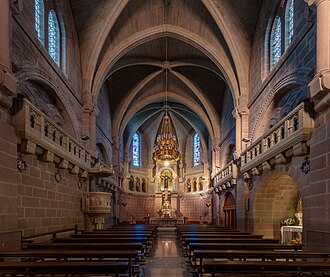
Basilica, Xavier, Navarre, Spain. The basilica belongs to the ensemble of the Castle of Xavier, built in the 10th century, although the basilica was not built until end of the 19th and beginning of the 20th century. Of eclectic style, the interior has a unique neogothic nave built with grey stone and white marble. The stained glass is a work of painter Marcelino Santamaría from Burgos. The main altar is an artistic decorative work, carved in stone inlaid with mosaics, bronzes and enamels by the Biais house in Paris. The tabernacle is located on a high relief that represents San Francisco baptizing and preaching.
 #ImageOfTheDay
Picture of the day
Basilica, Xavier, Navarre, Spain. The basilica belongs to the ensemble of the Castle of Xavier, built in the 10th century, although the basilica was not built until end of the 19th and beginning of the 20th century. Of eclectic style, the interior has a unique neogothic nave built with grey stone and white marble. The stained glass is a work of painter Marcelino Santamaría from Burgos. The main altar is an artistic decorative work, carved in stone inlaid with mosaics, bronzes and enamels by the Biais house in Paris. The tabernacle is located on a high relief that represents San Francisco baptizing and preaching.
Read More