Racism

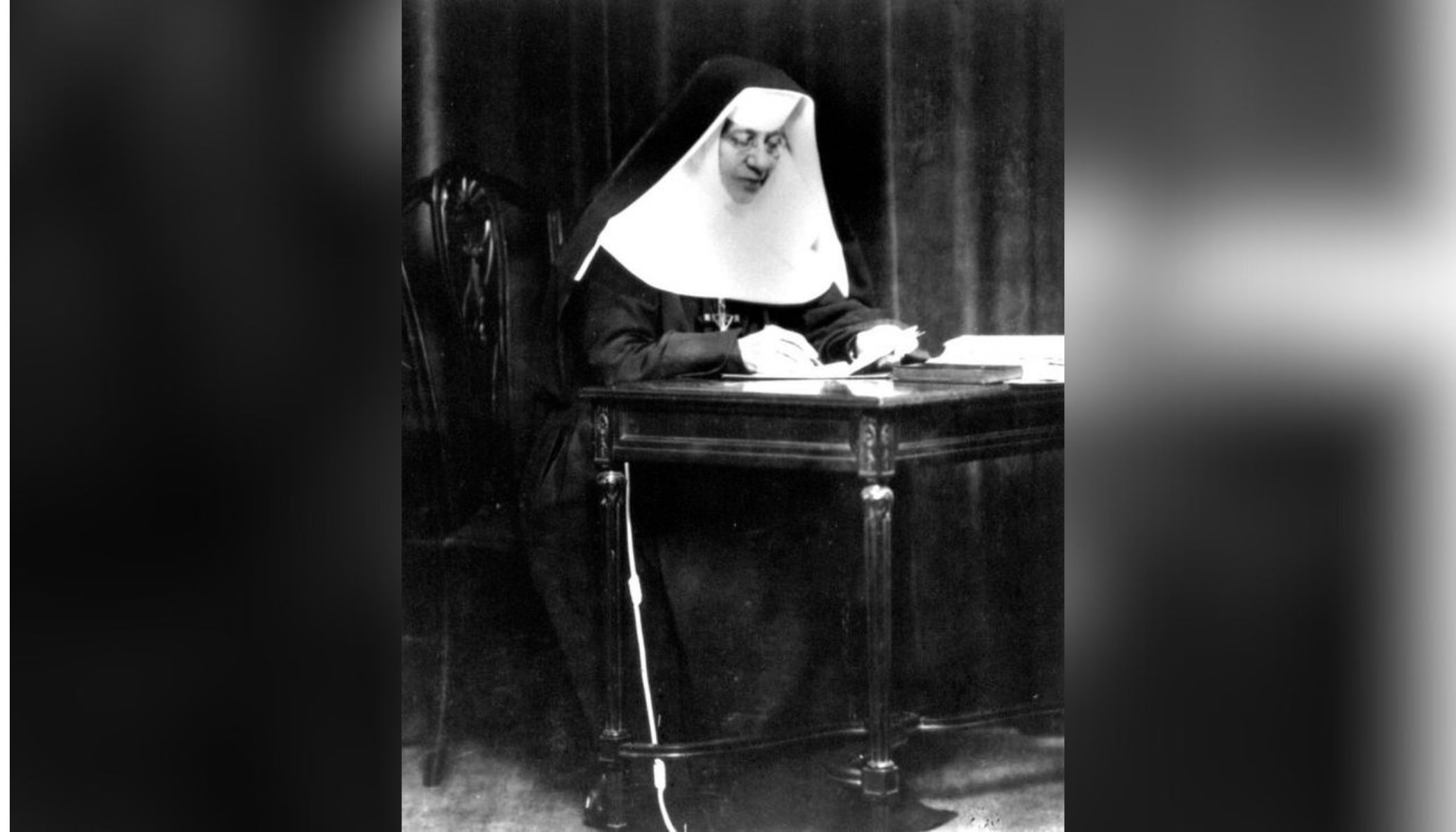
From heiress to saint: The radical life of St. Katharine Drexel #Catholic St. Katharine Drexel was born in 1858 to a wealthy family in Philadelphia. Five weeks after her birth, her mother died. She and her two sisters were reared by their father, Frank, a successful international banker, and stepmother, Emma — whom Katharine always considered her mother. Both were devout Catholics and loving parents. The family was generous with the poor — three times a week they opened their lavish home to those in need, offering them food, clothing, medicine, and other necessities.From the earliest ages, the Drexel children were taught to pursue personal holiness through daily Mass, meditation, the rosary, and other devotions as well as by acts of penance and sacrifice. Katharine kept notes on her efforts to grow in virtue. In 1878, she wrote: “I am resolved during this year to try to overcome impatience and give attention to lessons. I, Katie, put these resolutions at the feet of Jesus, Mary, and Joseph hoping that they will find acceptance there. May Jesus, Mary, and Joseph help me to bear much fruit in the year 1878.”When she was in her 20s, Katharine lost both of her parents and inherited a portion of the family’s vast wealth. At this time, she became aware of the plight of the Native Americans, many of whom suffered from dire poverty and a lack of education. She would devote the remainder of her life to assisting them.In two private audiences with Pope Leo XIII, she begged him to send more missionaries to the Native Americans. During one of these meetings, the Holy Father suggested to an astonished Katharine that she herself become such a missionary.Although Katharine enjoyed an opulent lifestyle, she became disillusioned with the things of the world. She wrote a longtime friend, Bishop James O’Connor, of her desire to enter religious life.“Like the little girl who wept when she found that her doll was stuffed with sawdust and her drum was hollow, I, too, have made a horrifying discovery and my discovery, like hers, is true. I have ripped both the doll and the drum open and the fact lies plainly and in all its glaring reality before me: All, all, all (there is no exception) is passing away and will pass away,” she wrote.The bishop thought Katharine could do more for the Church in her position in society and worried she might have difficulty in renouncing her wealth. She responded: “The question alone important, the solution of which depends upon how I have spent my life, is the state of my soul at the moment of death. Infinite misery or infinite happiness! There is no half and half, either one or the other.”The bishop eventually relented and advised her to found a community to work among Native Americans and African Americans, declaring: “God has put in your heart a great love for the Indian and the Negroes.” In 1891, joined by 13 others, she founded the Sisters of the Blessed Sacrament.Mother Drexel went to work opening mission churches and boarding schools for Black and Native American children throughout the U.S.At times, prejudice and racism hindered her work. She would often buy buildings to create schools through third parties — otherwise, when sellers learned Mother Drexel was buying them to educate Black or Native children, they wouldn’t sell to her.Once, when members of the Nashville, Tennessee, city council wondered if Blacks were capable of higher education, she responded: “I cannot share these views with regard to the education of the race. I feel that if among our colored people we find individuals gifted with capabilities, with those sterling qualities which constitute character, our holy mother the Church who fosters and develops the intellect only that it may give God more glory and be of benefit to others, should also concede to the Negro the privilege of higher education.”In 1915, Katharine founded a teachers’ college in Louisiana, which would eventually become Xavier University of New Orleans and one of the first American colleges to admit Black students.Throughout her life, Mother Drexel’s chief motivation in addition to her missionary outreach was to help more souls know and love Jesus in the Blessed Sacrament. She believed devotion to the Blessed Sacrament was key to the success to her community’s missionary work.She died in 1955 at the age of 96 and was canonized by Pope John Paul II in 2000. Her community’s motherhouse for decades was located in Bensalem, Pennsylvania, a Philadelphia suburb, which included a shrine — elements of which included Mother Drexel’s remains and a museum dedicated to her memory. However, due to a lack of vocations, the motherhouse closed and the property sold at the end of 2017. The St. Katharine Drexel Shrine is now part of the Cathedral Basilica of Sts. Peter and Paul in Philadelphia.St. Katharine Drexel is honored in the Church on March 3.This story was first published by the National Catholic Register, a sister news service of EWTN News, on March 3, 2021, and has been updated and adapted by EWTN News.

From heiress to saint: The radical life of St. Katharine Drexel #Catholic St. Katharine Drexel was born in 1858 to a wealthy family in Philadelphia. Five weeks after her birth, her mother died. She and her two sisters were reared by their father, Frank, a successful international banker, and stepmother, Emma — whom Katharine always considered her mother. Both were devout Catholics and loving parents. The family was generous with the poor — three times a week they opened their lavish home to those in need, offering them food, clothing, medicine, and other necessities.From the earliest ages, the Drexel children were taught to pursue personal holiness through daily Mass, meditation, the rosary, and other devotions as well as by acts of penance and sacrifice. Katharine kept notes on her efforts to grow in virtue. In 1878, she wrote: “I am resolved during this year to try to overcome impatience and give attention to lessons. I, Katie, put these resolutions at the feet of Jesus, Mary, and Joseph hoping that they will find acceptance there. May Jesus, Mary, and Joseph help me to bear much fruit in the year 1878.”When she was in her 20s, Katharine lost both of her parents and inherited a portion of the family’s vast wealth. At this time, she became aware of the plight of the Native Americans, many of whom suffered from dire poverty and a lack of education. She would devote the remainder of her life to assisting them.In two private audiences with Pope Leo XIII, she begged him to send more missionaries to the Native Americans. During one of these meetings, the Holy Father suggested to an astonished Katharine that she herself become such a missionary.Although Katharine enjoyed an opulent lifestyle, she became disillusioned with the things of the world. She wrote a longtime friend, Bishop James O’Connor, of her desire to enter religious life.“Like the little girl who wept when she found that her doll was stuffed with sawdust and her drum was hollow, I, too, have made a horrifying discovery and my discovery, like hers, is true. I have ripped both the doll and the drum open and the fact lies plainly and in all its glaring reality before me: All, all, all (there is no exception) is passing away and will pass away,” she wrote.The bishop thought Katharine could do more for the Church in her position in society and worried she might have difficulty in renouncing her wealth. She responded: “The question alone important, the solution of which depends upon how I have spent my life, is the state of my soul at the moment of death. Infinite misery or infinite happiness! There is no half and half, either one or the other.”The bishop eventually relented and advised her to found a community to work among Native Americans and African Americans, declaring: “God has put in your heart a great love for the Indian and the Negroes.” In 1891, joined by 13 others, she founded the Sisters of the Blessed Sacrament.Mother Drexel went to work opening mission churches and boarding schools for Black and Native American children throughout the U.S.At times, prejudice and racism hindered her work. She would often buy buildings to create schools through third parties — otherwise, when sellers learned Mother Drexel was buying them to educate Black or Native children, they wouldn’t sell to her.Once, when members of the Nashville, Tennessee, city council wondered if Blacks were capable of higher education, she responded: “I cannot share these views with regard to the education of the race. I feel that if among our colored people we find individuals gifted with capabilities, with those sterling qualities which constitute character, our holy mother the Church who fosters and develops the intellect only that it may give God more glory and be of benefit to others, should also concede to the Negro the privilege of higher education.”In 1915, Katharine founded a teachers’ college in Louisiana, which would eventually become Xavier University of New Orleans and one of the first American colleges to admit Black students.Throughout her life, Mother Drexel’s chief motivation in addition to her missionary outreach was to help more souls know and love Jesus in the Blessed Sacrament. She believed devotion to the Blessed Sacrament was key to the success to her community’s missionary work.She died in 1955 at the age of 96 and was canonized by Pope John Paul II in 2000. Her community’s motherhouse for decades was located in Bensalem, Pennsylvania, a Philadelphia suburb, which included a shrine — elements of which included Mother Drexel’s remains and a museum dedicated to her memory. However, due to a lack of vocations, the motherhouse closed and the property sold at the end of 2017. The St. Katharine Drexel Shrine is now part of the Cathedral Basilica of Sts. Peter and Paul in Philadelphia.St. Katharine Drexel is honored in the Church on March 3.This story was first published by the National Catholic Register, a sister news service of EWTN News, on March 3, 2021, and has been updated and adapted by EWTN News.

Throughout her life, St. Katharine Drexel’s chief motivation was to help more people know and love Jesus in the Blessed Sacrament.
Read More
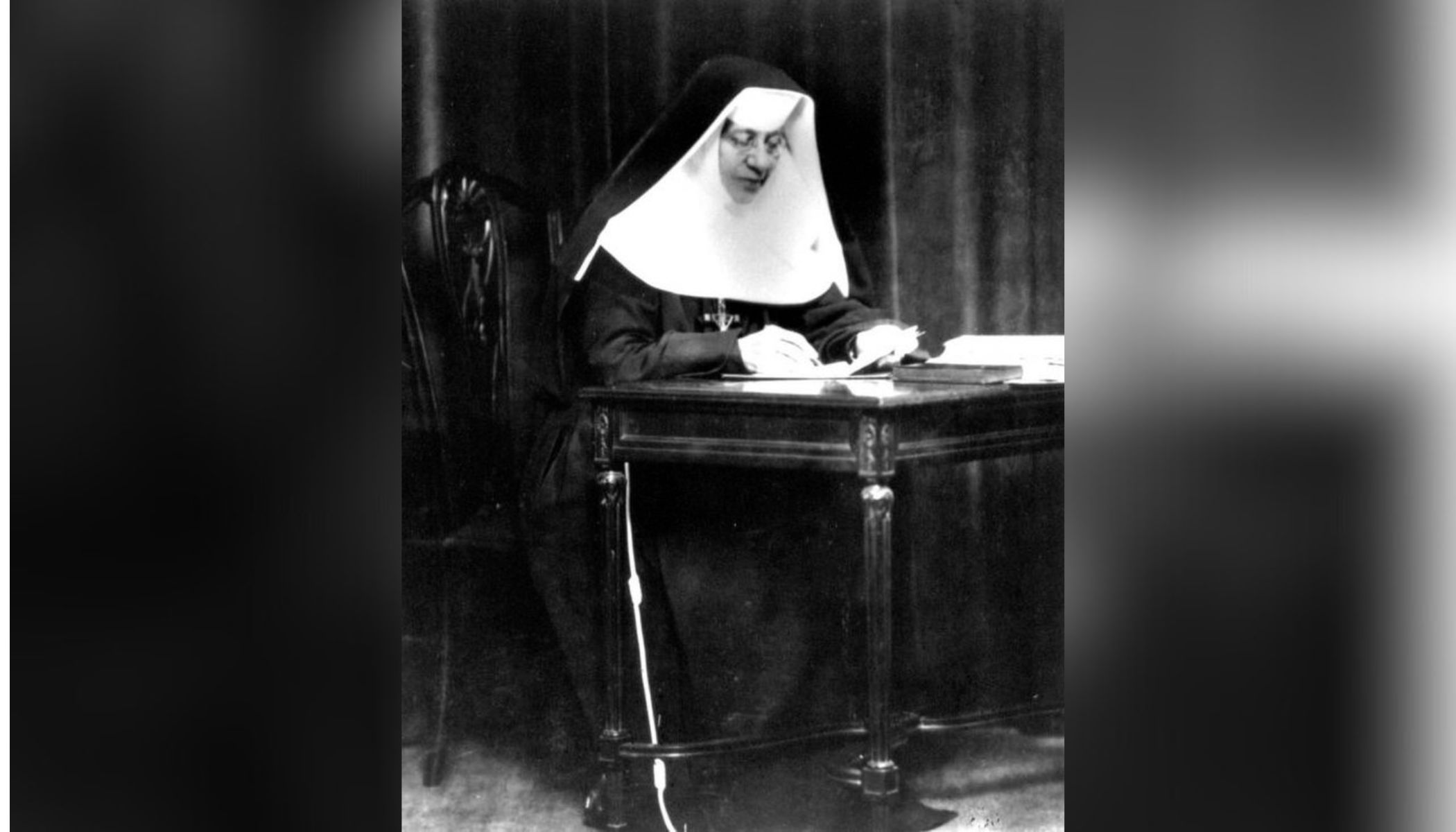
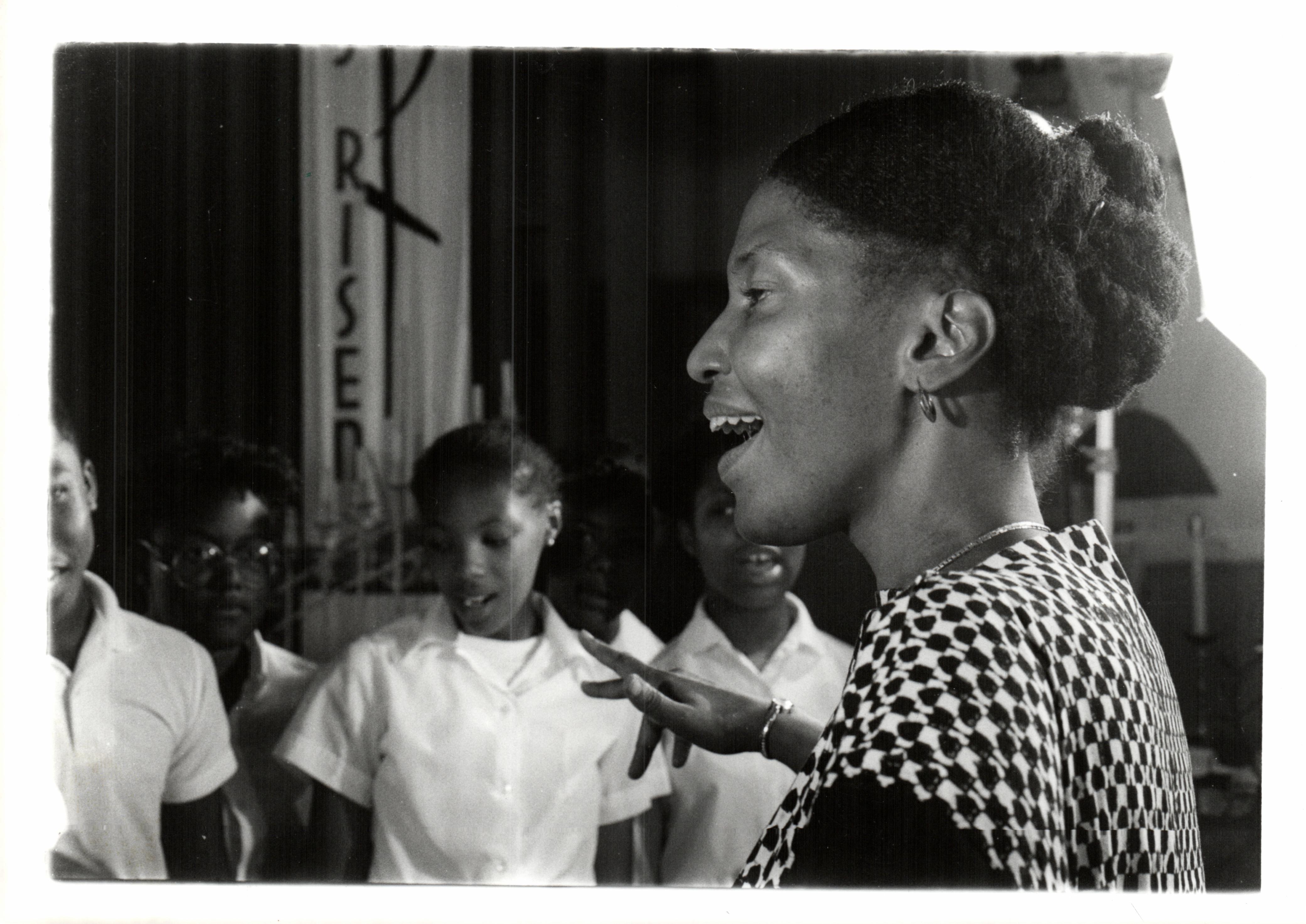
Servant of God Sister Thea Bowman’s voice needed ‘more than ever’ #Catholic African American Servant of God Sister Thea Bowman’s ability to bridge divides shines as a witness needed today, according to those who knew her, and her cause for canonization may create a pathway for other African Americans on their ways to sainthood.More than three decades after her death, Bowman should be remembered for “her charism, gifts, prophetic voice, charismatic personality, and real strong commitment to the Church — truly being Catholic,” Bishop Joseph Kopacz of the Diocese of Jackson, Mississippi, told EWTN News.Bowman, the granddaughter of a slave, challenged the Church in the 20th century to confront its history of racial exclusion and to embrace Black Catholics through her work as a scholar, teacher, and speaker.The Diocese of Jackson officially closed its proceedings regarding her potential sainthood on Feb. 9 after Kopacz opened her cause in November 2018. The records are now being sent to the Dicastery for the Causes of Saints at the Vatican.“People around the world will be very excited and will celebrate what we hope will be the occasion of her canonization. And that’s because people, Catholic and non-Catholics alike, are drawn to her story,” Veryl Miles, law professor and leader of the Sister Thea Bowman Committee at The Catholic University of America, told EWTN News.Sister Thea’s life and legacyBowman was born Dec. 29, 1937, in Yazoo City, Mississippi, and was given the name Bertha Elizabeth Bowman. While her family was Methodist, Bowman was called to the Catholic faith at a young age.“At 9 years old, she told her parents she wanted to be Catholic. The sisters who were teaching at the school, the parish where she was, had such an impact on her. Then six years later, she joined their religious community,” Kopacz said.She joined the Franciscan Sisters of Perpetual Adoration at age 15 and enrolled in Viterbo University, which was run by the Franciscan sisters. Three years into formation, she took the religious name Thea, which means “of God” and is a version of her father’s name, Theon.“She was so focused on serving the Lord as a religious, and in this community, because they loved her as a young child,” Kopaz said. Bowman knew: “This is who I know. This is who I love. This is where I want to be.”She was the first and only African American woman in her religious community, often facing racism both within and beyond the Church, leading her to become an advocate for the dignity of Black people, their culture, and Black Catholic spirituality.Bowman went on to study at The Catholic University of America, earning a doctorate in English in 1972. Bowman helped found the National Black Sisters’ Conference and taught the university’s first Black literature course.Bowman, who taught for many years, was “a master teacher,” Franciscan Sister of Perpetual Adoration Charlene Smith, a close friend of Bowman’s and co-author of her biography “Thea’s Song,” told EWTN News.Smith and Bowman met in 1954 in La Crosse, Wisconsin, at St. Rose Convent. “She was just like me. We both wanted to be Franciscans, we both wanted to teach, and we both wanted to major in English in college, and we did all three of those things,” Smith said.After having moved away for graduate school, Bowman returned to La Crosse to teach in the English Department at Viterbo University. Smith also returned to serve as the school’s dean of students.“When I got back to La Crosse, they told me that I should beware of Sister Thea Bowman because she was ‘the most powerful woman on campus.’ They didn’t know that we were really good friends,” Smith said.“Being the dean, I was able to go to any classroom. I would go to Thea’s classrooms, and she would always come bounding in with a song, and she would get everybody into a really good mood,” Smith said.Bowman would also teach at parishes about Black liturgy and music. Eventually she starting to speak at a national level, becoming the first African American woman to address the U.S. bishops’ conference.She often used music to help evangelize and bridge interracial divides, and became a major contributor to the development of “Lead Me, Guide Me,” the Black Catholic hymnal published in 1987.Smith reflected on Bowman’s “marvelous” and “magnetic” personality. “We were invited to a dinner at a hotel, and she was going to give a speech. We got there early, so we went to sit down in the lobby … a pianist from Argentina was playing songs from ‘Porgy and Bess,’ and Thea got up and started singing ‘Summertime.’”“She got a standing ovation and an encore,” Smith said. “I think one of the greatest gifts, graces, in my life was my friendship with her. She was very kind to me, and she was very kind to all the people that she met.”At age 54, on March 30, 1990, Bowman died of breast cancer. She was buried at Elmwood Cemetery in Memphis, Tennessee, alongside her parents.Impact of Bowman’s causeBowman’s journey toward sainthood could have an especially effective impact today with the present division in the nation, as she would preach how we are “all human beings, and we should love everybody,” Smith said.“She was not interested in the melting pot at all,” Smith said. “She was more interested in a salad bowl because she said: ‘In a salad, people keep their identity, whereas in a melting pot, they’re all mushed together.’”Bowman “welcomed all in the universal body of Christ” Kopacz said. “She said the Church needs to truly be actively universal, and embrace different cultures and all the gifts that people bring.”“So today, more than ever, that voice is needed in our society as we can get more divisive,” Kopacz said. “I just think it’s perfect for our time and our Church.”“Her message is so universal,” Miles said. Especially “understanding the relationship between faith and identity among its members.”“She really understood and articulated so beautifully that we are people of faith and we are people of identities. The Church is a global church. There’s so many different people who are part of this Church  — people of different races, different ethnicities, and nationalities.”‘An impetus’ for other African Americans on their way to sainthoodCurrently, there are no canonized African American saints, but the Church honors Black saints from other nations, including St. Josephine Bakhita, St. Martin de Porres, St. Monica of Hippo, and St. Augustine of Hippo, among others.Bowman is among seven African American Catholics with active canonization causes — dubbed the “Saintly Seven.” The group also includes Venerable Pierre Toussaint, Venerable Mother Mary Lange, Venerable Mother Henriette Delille, Venerable Father Augustus Tolton, Servant of God Julia Greeley, and Servant of God Friar Martin de Porres Maria Ward.Even before her potential canonization, Bowman will “draw attention” to the group, Kopacz said. If she becomes venerable, which the bishop expects she will, he believes Bowman “will be an impetus” for the causes of other African Americans to move forward. “She’s going to be an important part, and she’ll move the other causes along,” he said.Since people “can relate” to Bowman’s story as it “is so contemporary and so special,” Miles said she also hopes the other stories of the seven Catholics “will become highlighted” by her cause.“People will be more interested in finding out about the other African Americans who are in the process of canonization, because their stories are very special and very unique, too,” Miles said.

Servant of God Sister Thea Bowman’s voice needed ‘more than ever’ #Catholic African American Servant of God Sister Thea Bowman’s ability to bridge divides shines as a witness needed today, according to those who knew her, and her cause for canonization may create a pathway for other African Americans on their ways to sainthood.More than three decades after her death, Bowman should be remembered for “her charism, gifts, prophetic voice, charismatic personality, and real strong commitment to the Church — truly being Catholic,” Bishop Joseph Kopacz of the Diocese of Jackson, Mississippi, told EWTN News.Bowman, the granddaughter of a slave, challenged the Church in the 20th century to confront its history of racial exclusion and to embrace Black Catholics through her work as a scholar, teacher, and speaker.The Diocese of Jackson officially closed its proceedings regarding her potential sainthood on Feb. 9 after Kopacz opened her cause in November 2018. The records are now being sent to the Dicastery for the Causes of Saints at the Vatican.“People around the world will be very excited and will celebrate what we hope will be the occasion of her canonization. And that’s because people, Catholic and non-Catholics alike, are drawn to her story,” Veryl Miles, law professor and leader of the Sister Thea Bowman Committee at The Catholic University of America, told EWTN News.Sister Thea’s life and legacyBowman was born Dec. 29, 1937, in Yazoo City, Mississippi, and was given the name Bertha Elizabeth Bowman. While her family was Methodist, Bowman was called to the Catholic faith at a young age.“At 9 years old, she told her parents she wanted to be Catholic. The sisters who were teaching at the school, the parish where she was, had such an impact on her. Then six years later, she joined their religious community,” Kopacz said.She joined the Franciscan Sisters of Perpetual Adoration at age 15 and enrolled in Viterbo University, which was run by the Franciscan sisters. Three years into formation, she took the religious name Thea, which means “of God” and is a version of her father’s name, Theon.“She was so focused on serving the Lord as a religious, and in this community, because they loved her as a young child,” Kopaz said. Bowman knew: “This is who I know. This is who I love. This is where I want to be.”She was the first and only African American woman in her religious community, often facing racism both within and beyond the Church, leading her to become an advocate for the dignity of Black people, their culture, and Black Catholic spirituality.Bowman went on to study at The Catholic University of America, earning a doctorate in English in 1972. Bowman helped found the National Black Sisters’ Conference and taught the university’s first Black literature course.Bowman, who taught for many years, was “a master teacher,” Franciscan Sister of Perpetual Adoration Charlene Smith, a close friend of Bowman’s and co-author of her biography “Thea’s Song,” told EWTN News.Smith and Bowman met in 1954 in La Crosse, Wisconsin, at St. Rose Convent. “She was just like me. We both wanted to be Franciscans, we both wanted to teach, and we both wanted to major in English in college, and we did all three of those things,” Smith said.After having moved away for graduate school, Bowman returned to La Crosse to teach in the English Department at Viterbo University. Smith also returned to serve as the school’s dean of students.“When I got back to La Crosse, they told me that I should beware of Sister Thea Bowman because she was ‘the most powerful woman on campus.’ They didn’t know that we were really good friends,” Smith said.“Being the dean, I was able to go to any classroom. I would go to Thea’s classrooms, and she would always come bounding in with a song, and she would get everybody into a really good mood,” Smith said.Bowman would also teach at parishes about Black liturgy and music. Eventually she starting to speak at a national level, becoming the first African American woman to address the U.S. bishops’ conference.She often used music to help evangelize and bridge interracial divides, and became a major contributor to the development of “Lead Me, Guide Me,” the Black Catholic hymnal published in 1987.Smith reflected on Bowman’s “marvelous” and “magnetic” personality. “We were invited to a dinner at a hotel, and she was going to give a speech. We got there early, so we went to sit down in the lobby … a pianist from Argentina was playing songs from ‘Porgy and Bess,’ and Thea got up and started singing ‘Summertime.’”“She got a standing ovation and an encore,” Smith said. “I think one of the greatest gifts, graces, in my life was my friendship with her. She was very kind to me, and she was very kind to all the people that she met.”At age 54, on March 30, 1990, Bowman died of breast cancer. She was buried at Elmwood Cemetery in Memphis, Tennessee, alongside her parents.Impact of Bowman’s causeBowman’s journey toward sainthood could have an especially effective impact today with the present division in the nation, as she would preach how we are “all human beings, and we should love everybody,” Smith said.“She was not interested in the melting pot at all,” Smith said. “She was more interested in a salad bowl because she said: ‘In a salad, people keep their identity, whereas in a melting pot, they’re all mushed together.’”Bowman “welcomed all in the universal body of Christ” Kopacz said. “She said the Church needs to truly be actively universal, and embrace different cultures and all the gifts that people bring.”“So today, more than ever, that voice is needed in our society as we can get more divisive,” Kopacz said. “I just think it’s perfect for our time and our Church.”“Her message is so universal,” Miles said. Especially “understanding the relationship between faith and identity among its members.”“She really understood and articulated so beautifully that we are people of faith and we are people of identities. The Church is a global church. There’s so many different people who are part of this Church  — people of different races, different ethnicities, and nationalities.”‘An impetus’ for other African Americans on their way to sainthoodCurrently, there are no canonized African American saints, but the Church honors Black saints from other nations, including St. Josephine Bakhita, St. Martin de Porres, St. Monica of Hippo, and St. Augustine of Hippo, among others.Bowman is among seven African American Catholics with active canonization causes — dubbed the “Saintly Seven.” The group also includes Venerable Pierre Toussaint, Venerable Mother Mary Lange, Venerable Mother Henriette Delille, Venerable Father Augustus Tolton, Servant of God Julia Greeley, and Servant of God Friar Martin de Porres Maria Ward.Even before her potential canonization, Bowman will “draw attention” to the group, Kopacz said. If she becomes venerable, which the bishop expects she will, he believes Bowman “will be an impetus” for the causes of other African Americans to move forward. “She’s going to be an important part, and she’ll move the other causes along,” he said.Since people “can relate” to Bowman’s story as it “is so contemporary and so special,” Miles said she also hopes the other stories of the seven Catholics “will become highlighted” by her cause.“People will be more interested in finding out about the other African Americans who are in the process of canonization, because their stories are very special and very unique, too,” Miles said.

Bowman’s ability to see the dignity of each individual, and embrace all gifts and cultures, is an essential message for Catholics and non-Catholics alike.
Read More
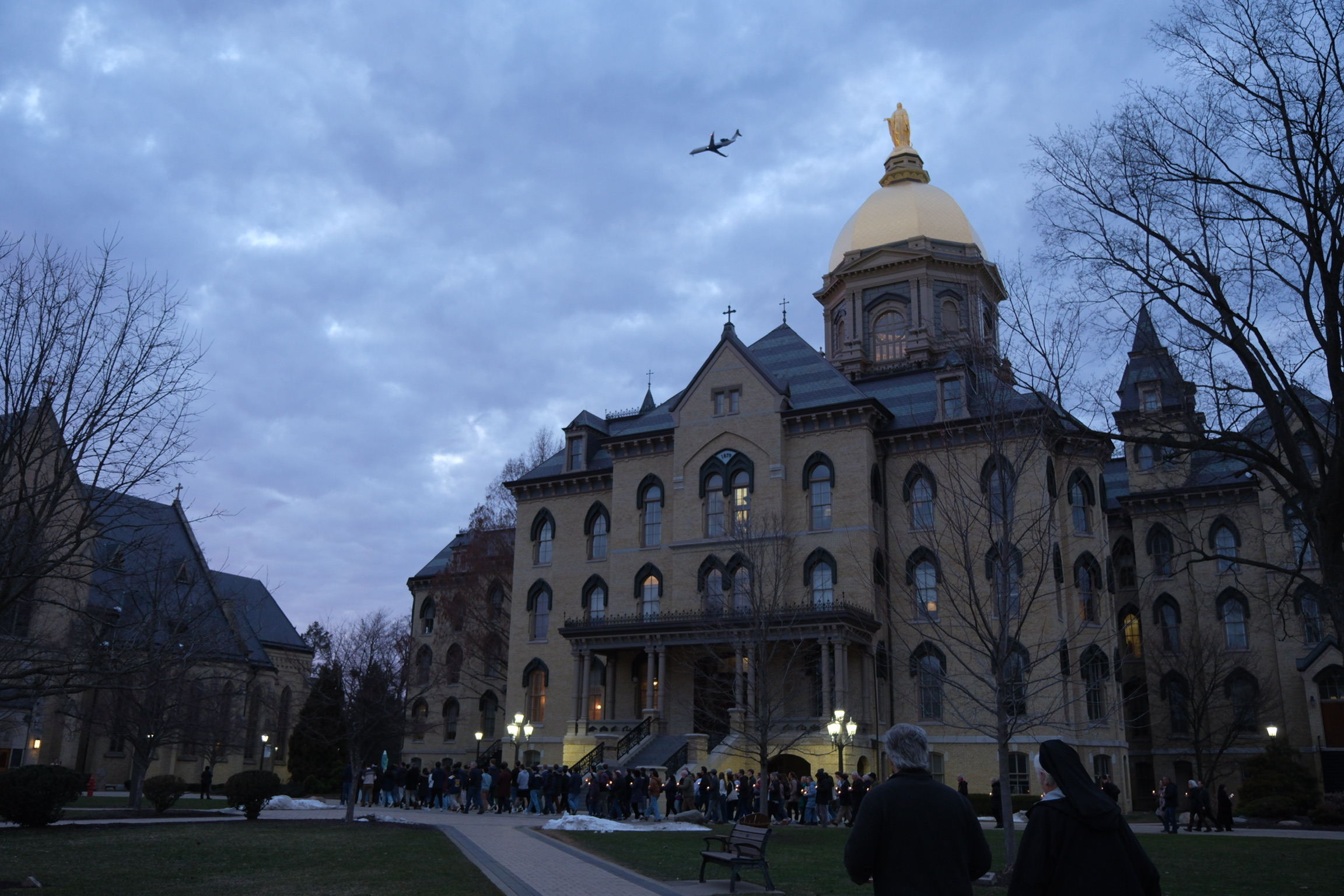
Students pray for Notre Dame’s Catholic identity after dispute over pro-abortion professor #Catholic Students at the University of Notre Dame gathered on Feb. 27 for a candlelit prayer service to offer thanksgiving for the university’s Catholic identity.The event was originally planned as a protest in response to the university’s appointment of abortion advocate Professor Susan Ostermann as the head of the Liu Institute for Asia and Asian Studies. After Ostermann withdrew from the position earlier this week, the student organizers turned the event into a prayer vigil offered “in thanksgiving and support for Notre Dame’s Catholic mission.”A group of about 150 students, community members, faculty and priests from the Congregation of Holy Cross met on the south quad of campus, where they were greeted by students Luke Woodyard and Gabe Ortner, the event’s organizers. After a blessing of candles, those present processed to the Grotto of Our Lady of Lourdes, where they prayed the Rosary.
 
 Students gather to pray the Rosary at the Grotto of Our Lady of Lourdes at the University of Notre Dame, Friday, Feb. 27, 2026 | Credit: Notre Dame Right to Life
 
 The event was co-sponsored by the major Catholic clubs on campus: Right to Life, Militia Immaculata, Children of Mary, the Knights of Columbus, and Students for Child-Oriented Policy.According to Woodyard, while a protest would have drawn a greater number of attendees, organizers agreed that changing the event to a prayer vigil would be a more appropriate response to the news of Ostermann’s withdrawal.“The big reason we changed the protest to a prayer vigil was because we won, we got Ostermann to not be appointed. And even though this was a victory in a battle, not the [larger] war, we can celebrate this victory now," Woodyard said.“If we came here with a bunch of protests, it would make us seem like we weren't grateful for the university listening to us," he added. "And we really are. We praise [President] Father [Robert] Dowd for any impact that he had on Ostermann withdrawing, and we pray for the future of Notre Dame.”Ostermann, whose appointment was announced in January, has publicly supported abortion on multiple occasions, calling it “freedom-enhancing” and “consistent with integral human development that emphasizes social justice and human dignity."She has also argued that the pro-life movement has its roots in “white supremacy and racism” and has described pregnancy resource centers “anti-abortion propaganda sites."Since the appointment was announced in January, the university has faced backlash from Catholics across the country, including students, alumni, faculty, and more than a dozen bishops. The university continued to defend Ostermann’s promotion amid the criticism, citing her expertise in Asian studies and her past research. When Ostermann withdrew from the position on Feb. 26, students were surprised at the unexpected reversal but grateful for the desired outcome.Maria Madigan, a sophomore who serves as the head of service for Notre Dame Right to Life, told EWTN News that the grateful and loving spirit of the prayer service was the same spirit in which the protest had been planned.“[The planned protest] was never filled with hate or any [kind of] malicious intent. …We love Notre Dame because of her Catholic mission and her identity," she said. "We wanted to protest the Ostermann appointment because we felt it that went against our mission. And then when Ostermann withdrew, the focus shifted, because… we want to think about having a positive vision going forward for Notre Dame.”Regarding Ostermann’s withdrawal, Woodyard said: “We don't know what happened behind the scenes — hopefully that will come out in the coming weeks — but what we do know is that she did withdraw, and so we're thankful for that, and that's why we're here, but at some point, we have to make sure this doesn't happen again.”Organizer Gabe Ortner emphasized that although the planned protest was turned into a prayer vigil, the defense of Notre Dame’s Catholic mission is far from over.“We have to recognize the work that Father Dowd has done in leading this university. He's clearly been working tirelessly on this with Bishop Rhoades, and I admire the direction that he seems to be taking Notre Dame in, and that gives me a lot of hope," Ortner said. "However, at the same time, there also seem to be particular members of the administration who do not entirely share the Catholic vision of Notre Dame," he said.“Ultimately, Notre Dame should be united in its Catholic identity among all of the members of administration, with no exception.”If the protest had gone forward, speakers would have included Anna Kelley,  president of the school's Right to Life group; Lucy Spence, editor-in-chief of the Irish Rover student newspaper; and Theo Austin, vice president of Students for Child-Oriented Policy.Students have expressed concern that the appointment shows a willingness of university administration — particularly on the part of Provost John McGreevy, who approved the appointment — to deviate from the university’s Catholic mission.Max McNiff, a student who attended the prayer vigil, shared his hopes that the controversy that precipitated Ostermann’s withdrawal would send a clear signal to the university.“I think this sets a sets a good precedent for stuff like this in the future. I think that the administration is going to be very cautious, and hopefully nothing like this will happen again.”“I think this also sets a precedent that researchers who are considered maybe ‘elite’ by secular academic standards, but who very manifestly publicly contradict Catholic doctrine [on matters] such as abortion, should not expect to come into leadership positions at Notre Dame," he said. Ultimately, however, students expressed their gratitude at the reversal of Ostermann’s appointment, calling it a “victory” in the battle for Notre Dame’s Catholic identity.“Having the opportunity to gather together and to thank God for his faithfulness, and the faithfulness of the university, is really beautiful, and I think you can see it in the passion of the students," Madigan said. "Everyone here knew it wasn’t a protest anymore, but they were still coming.”“We're all here because we care and we love this university and we want to uphold its Catholic mission and its pro-life mission as much as possible," she said. "And at the end of the day, whether one person showed up, or whether 200 people showed up, this was a prayer service, and it was to God, and the words that were said here were to him." "And that's what I really want the focus of this whole event to be on, praise and thanksgiving to the Lord for his faithfulness and to Our Lady for protecting her university.”

Students pray for Notre Dame’s Catholic identity after dispute over pro-abortion professor #Catholic Students at the University of Notre Dame gathered on Feb. 27 for a candlelit prayer service to offer thanksgiving for the university’s Catholic identity.The event was originally planned as a protest in response to the university’s appointment of abortion advocate Professor Susan Ostermann as the head of the Liu Institute for Asia and Asian Studies. After Ostermann withdrew from the position earlier this week, the student organizers turned the event into a prayer vigil offered “in thanksgiving and support for Notre Dame’s Catholic mission.”A group of about 150 students, community members, faculty and priests from the Congregation of Holy Cross met on the south quad of campus, where they were greeted by students Luke Woodyard and Gabe Ortner, the event’s organizers. After a blessing of candles, those present processed to the Grotto of Our Lady of Lourdes, where they prayed the Rosary. Students gather to pray the Rosary at the Grotto of Our Lady of Lourdes at the University of Notre Dame, Friday, Feb. 27, 2026 | Credit: Notre Dame Right to Life The event was co-sponsored by the major Catholic clubs on campus: Right to Life, Militia Immaculata, Children of Mary, the Knights of Columbus, and Students for Child-Oriented Policy.According to Woodyard, while a protest would have drawn a greater number of attendees, organizers agreed that changing the event to a prayer vigil would be a more appropriate response to the news of Ostermann’s withdrawal.“The big reason we changed the protest to a prayer vigil was because we won, we got Ostermann to not be appointed. And even though this was a victory in a battle, not the [larger] war, we can celebrate this victory now," Woodyard said.“If we came here with a bunch of protests, it would make us seem like we weren't grateful for the university listening to us," he added. "And we really are. We praise [President] Father [Robert] Dowd for any impact that he had on Ostermann withdrawing, and we pray for the future of Notre Dame.”Ostermann, whose appointment was announced in January, has publicly supported abortion on multiple occasions, calling it “freedom-enhancing” and “consistent with integral human development that emphasizes social justice and human dignity."She has also argued that the pro-life movement has its roots in “white supremacy and racism” and has described pregnancy resource centers “anti-abortion propaganda sites."Since the appointment was announced in January, the university has faced backlash from Catholics across the country, including students, alumni, faculty, and more than a dozen bishops. The university continued to defend Ostermann’s promotion amid the criticism, citing her expertise in Asian studies and her past research. When Ostermann withdrew from the position on Feb. 26, students were surprised at the unexpected reversal but grateful for the desired outcome.Maria Madigan, a sophomore who serves as the head of service for Notre Dame Right to Life, told EWTN News that the grateful and loving spirit of the prayer service was the same spirit in which the protest had been planned.“[The planned protest] was never filled with hate or any [kind of] malicious intent. …We love Notre Dame because of her Catholic mission and her identity," she said. "We wanted to protest the Ostermann appointment because we felt it that went against our mission. And then when Ostermann withdrew, the focus shifted, because… we want to think about having a positive vision going forward for Notre Dame.”Regarding Ostermann’s withdrawal, Woodyard said: “We don't know what happened behind the scenes — hopefully that will come out in the coming weeks — but what we do know is that she did withdraw, and so we're thankful for that, and that's why we're here, but at some point, we have to make sure this doesn't happen again.”Organizer Gabe Ortner emphasized that although the planned protest was turned into a prayer vigil, the defense of Notre Dame’s Catholic mission is far from over.“We have to recognize the work that Father Dowd has done in leading this university. He's clearly been working tirelessly on this with Bishop Rhoades, and I admire the direction that he seems to be taking Notre Dame in, and that gives me a lot of hope," Ortner said. "However, at the same time, there also seem to be particular members of the administration who do not entirely share the Catholic vision of Notre Dame," he said.“Ultimately, Notre Dame should be united in its Catholic identity among all of the members of administration, with no exception.”If the protest had gone forward, speakers would have included Anna Kelley,  president of the school's Right to Life group; Lucy Spence, editor-in-chief of the Irish Rover student newspaper; and Theo Austin, vice president of Students for Child-Oriented Policy.Students have expressed concern that the appointment shows a willingness of university administration — particularly on the part of Provost John McGreevy, who approved the appointment — to deviate from the university’s Catholic mission.Max McNiff, a student who attended the prayer vigil, shared his hopes that the controversy that precipitated Ostermann’s withdrawal would send a clear signal to the university.“I think this sets a sets a good precedent for stuff like this in the future. I think that the administration is going to be very cautious, and hopefully nothing like this will happen again.”“I think this also sets a precedent that researchers who are considered maybe ‘elite’ by secular academic standards, but who very manifestly publicly contradict Catholic doctrine [on matters] such as abortion, should not expect to come into leadership positions at Notre Dame," he said. Ultimately, however, students expressed their gratitude at the reversal of Ostermann’s appointment, calling it a “victory” in the battle for Notre Dame’s Catholic identity.“Having the opportunity to gather together and to thank God for his faithfulness, and the faithfulness of the university, is really beautiful, and I think you can see it in the passion of the students," Madigan said. "Everyone here knew it wasn’t a protest anymore, but they were still coming.”“We're all here because we care and we love this university and we want to uphold its Catholic mission and its pro-life mission as much as possible," she said. "And at the end of the day, whether one person showed up, or whether 200 people showed up, this was a prayer service, and it was to God, and the words that were said here were to him." "And that's what I really want the focus of this whole event to be on, praise and thanksgiving to the Lord for his faithfulness and to Our Lady for protecting her university.”

The event was originally planned as a protest in response to the university’s appointment of abortion advocate Professor Susan Ostermann as the head of the Liu Institute for Asia and Asian Studies.
Read More
Multiple U.S. bishops join call for Notre Dame to rescind appointment of pro-abortion advocate #Catholic A growing chorus of U.S. bishops on Feb. 11 called on the University of Notre Dame to rescind the controversial appointment of a pro-abortion advocate to lead one of the revered Catholic institution’s academic departments. Earlier in the day Fort Wayne-South Bend, Indiana, Bishop Kevin Rhoades issued a statement criticizing the university for appointing global affairs Professor Susan Ostermann as director of the school’s Liu Institute for Asia and Asian Studies.Rhoades said the school’s appointment of Ostermann — in spite of her public and uncompromising support for abortion — had caused a scandal and threatened Notre Dame’s Catholic identity and mission. He urged the school to rescind the nomination before it goes into effect on July 1.Several of Rhoades’ fellow prelates subsequently joined the call for Notre Dame to reverse Ostermann’s appointment. Among them was Denver Archbishop Samuel Aquila, who in a post on X thanked Rhoades for his statement and said that the school’s decision “tarnishes Our Lady’s university and what it means to be Catholic.”“I pray that those who can rescind this terrible appointment will do so! Pray for the conversion of hearts!” the archbishop wrote.TweetWinona-Rochester, Minnesota, Bishop Robert Barron similarly offered his “strong support” for Rhoades’ statement, arguing that Ostermann is “not simply ‘pro-choice’” on the question of abortion. Rather, “she is a sharp critic of the pro-life position and those who advocate it,” Barron said, pointing out that Ostermann has “characterize[d] the anti-abortion stance as rooted in white supremacy and racism” and “insinuated that the Catholic commitment to integral human development implies the support of abortion rights.”TweetBarron said he has “strong connections to and deep affections” for the university. “I believe that going ahead with this appointment is repugnant to the identity and mission of that great center of Catholic learning,” he wrote. Fort Worth, Texas, Bishop Michael Olson also offered his support for Rhoades “in his carrying out of his pastoral responsibility.”TweetThe bishop called for prayers that the university might “reconsider this distressing decision.” Support for Rhoades did not just come from his brother bishops. Actress and outspoken Catholic pro-life advocate Patricia Heaton thanked both Barron and Rhoades for their statements on Feb. 11.Former U.S. Rep. Dan Lipinski, who was named as a Pope Leo XIII Fellow on Social Thought at the University of Dallas in 2023, also thanked Rhoades, writing on X: “Public witness is extremely powerful and must be used to point all to the truth.”Though backlash to the appointment has been growing for weeks, the university has not backed off the controversial decision. The school told the Irish Rover as recently as Feb. 8 that it had “not changed its position” on Ostermann’s leadership of the department. Ostermann herself told the National Catholic Register on Jan. 29 that her role at the school “is to support the diverse research of our scholars and students, not to advance a personal political agenda.”“I respect Notre Dame’s institutional position on the sanctity of life at every stage,” she told the Register, describing herself as “inspired by the university’s focus on integral human development, which calls us to promote the dignity and flourishing of every person.”

Multiple U.S. bishops join call for Notre Dame to rescind appointment of pro-abortion advocate #Catholic A growing chorus of U.S. bishops on Feb. 11 called on the University of Notre Dame to rescind the controversial appointment of a pro-abortion advocate to lead one of the revered Catholic institution’s academic departments. Earlier in the day Fort Wayne-South Bend, Indiana, Bishop Kevin Rhoades issued a statement criticizing the university for appointing global affairs Professor Susan Ostermann as director of the school’s Liu Institute for Asia and Asian Studies.Rhoades said the school’s appointment of Ostermann — in spite of her public and uncompromising support for abortion — had caused a scandal and threatened Notre Dame’s Catholic identity and mission. He urged the school to rescind the nomination before it goes into effect on July 1.Several of Rhoades’ fellow prelates subsequently joined the call for Notre Dame to reverse Ostermann’s appointment. Among them was Denver Archbishop Samuel Aquila, who in a post on X thanked Rhoades for his statement and said that the school’s decision “tarnishes Our Lady’s university and what it means to be Catholic.”“I pray that those who can rescind this terrible appointment will do so! Pray for the conversion of hearts!” the archbishop wrote.TweetWinona-Rochester, Minnesota, Bishop Robert Barron similarly offered his “strong support” for Rhoades’ statement, arguing that Ostermann is “not simply ‘pro-choice’” on the question of abortion. Rather, “she is a sharp critic of the pro-life position and those who advocate it,” Barron said, pointing out that Ostermann has “characterize[d] the anti-abortion stance as rooted in white supremacy and racism” and “insinuated that the Catholic commitment to integral human development implies the support of abortion rights.”TweetBarron said he has “strong connections to and deep affections” for the university. “I believe that going ahead with this appointment is repugnant to the identity and mission of that great center of Catholic learning,” he wrote. Fort Worth, Texas, Bishop Michael Olson also offered his support for Rhoades “in his carrying out of his pastoral responsibility.”TweetThe bishop called for prayers that the university might “reconsider this distressing decision.” Support for Rhoades did not just come from his brother bishops. Actress and outspoken Catholic pro-life advocate Patricia Heaton thanked both Barron and Rhoades for their statements on Feb. 11.Former U.S. Rep. Dan Lipinski, who was named as a Pope Leo XIII Fellow on Social Thought at the University of Dallas in 2023, also thanked Rhoades, writing on X: “Public witness is extremely powerful and must be used to point all to the truth.”Though backlash to the appointment has been growing for weeks, the university has not backed off the controversial decision. The school told the Irish Rover as recently as Feb. 8 that it had “not changed its position” on Ostermann’s leadership of the department. Ostermann herself told the National Catholic Register on Jan. 29 that her role at the school “is to support the diverse research of our scholars and students, not to advance a personal political agenda.”“I respect Notre Dame’s institutional position on the sanctity of life at every stage,” she told the Register, describing herself as “inspired by the university’s focus on integral human development, which calls us to promote the dignity and flourishing of every person.”

Though backlash to the appointment has been growing for weeks, the university has not backed off the controversial decision.

Read More