reading

U.S. bishops unveil prayer service for America’s 250th anniversary centered on migrants #Catholic The U.S. Conference of Catholic Bishops (USCCB) has released a national prayer service for the country’s upcoming 250th anniversary that places immigration, justice, and the dignity of migrants at the center of America’s semiquincentennial observance.Titled “A National Prayer Service Honoring the Many Journeys that Shaped America,” the resource was developed by the Committee on Migration and the Subcommittee for the Promotion of Racial Justice and Reconciliation.Designed as a template for dioceses and parishes across the country, the prayer service invites Catholics to reflect on the nation’s history through the lens of migration, displacement, slavery, and faith while encouraging advocacy for vulnerable migrant populations.“In observance of the United States’ 250th anniversary in 2026, and rooted in the Church’s pastoral mission of welcome, accompaniment, and solidarity,” the instructions state, the service seeks “to acknowledge and honor the many diverse communities that have journeyed to the United States in search of hope, safety, and opportunity.”The document also highlights “the voices, sufferings, and enduring contributions of those who were forcibly brought to this land.”A prayer service rooted in hospitalityThe proposed service combines hymns, Scripture readings, intercessory prayers, testimonies, and guided reflections focused heavily on migrants, refugees, victims of trafficking, and immigrant communities.Organizers are encouraged to adapt the service to local needs and cultures by incorporating music and devotional practices that reflect “the lived experiences of migration, displacement, resilience, and faith.”The service opens with the hymn “All Are Welcome” by Marty Haugen and includes prayers asking Catholics to “walk in deeper solidarity with immigrant communities” and to advocate for “greater protection, justice, and accompaniment for vulnerable and at-risk migrant populations.”A prayer to St. Frances Xavier Cabrini — patroness of immigrants and herself an immigrant to the United States — asks for protection for migrant families separated from one another and for the grace to “welcome every stranger as Christ in our midst.”The document also includes a “call to action” encouraging Catholics to reflect on “concrete and compassionate ways to welcome, protect, promote, and integrate migrants, immigrants, and refugees” while advocating for “just and humane immigration reform that upholds the dignity of every human person created in the image of God.”The service concludes with a “Prayer for Migrants” asking God to help the Church “welcome, protect, promote, and integrate those who knock at our doors.”Scripture and civil rights themes woven throughoutThe Scripture passages selected for the service strongly emphasize hospitality toward foreigners and care for society’s most vulnerable.A reading from Deuteronomy 10:12-22 exhorts believers: “So you too must befriend the alien, for you were once aliens yourselves in the land of Egypt.”  The Gospel reading from Matthew 25:31-46 centers on Christ’s words, “I was thirsty and you gave me drink, a stranger and you welcomed me.”The template also incorporates themes of racial justice and historical memory. Intercessions address slavery and modern human trafficking, praying both for victims of exploitation and for “perpetrators of slavery” to repent.The service further recommends “Lift Every Voice and Sing,” often referred to as the Black national anthem and rooted in Black church worship and civic life in the U.S., as an intermediate hymn. It also includes optional excerpts from Dr. Martin Luther King Jr.’s “I Have a Dream" speech for use in a homily or guided reflection, alongside passages from the bishops’ 2025 special pastoral message on immigration.Dignity of migrantsIn recent years, U.S. bishops have consistently advocated for immigration reform while emphasizing the dignity of migrants, opposition to family separation, and support for refugees and trafficking victims.The prayer service places those concerns within the broader context of the nation’s identity ahead of America’s 250th anniversary observances.“This prayer service seeks to provide a sacred space for reflection, remembrance, lament, and hope,” the document states, inviting participants to encounter one another “as members of the one human family and the one body of Christ.”EWTN News reached out to the USCCB for comment but did not receive a response by publication time.

U.S. bishops unveil prayer service for America’s 250th anniversary centered on migrants #Catholic The U.S. Conference of Catholic Bishops (USCCB) has released a national prayer service for the country’s upcoming 250th anniversary that places immigration, justice, and the dignity of migrants at the center of America’s semiquincentennial observance.Titled “A National Prayer Service Honoring the Many Journeys that Shaped America,” the resource was developed by the Committee on Migration and the Subcommittee for the Promotion of Racial Justice and Reconciliation.Designed as a template for dioceses and parishes across the country, the prayer service invites Catholics to reflect on the nation’s history through the lens of migration, displacement, slavery, and faith while encouraging advocacy for vulnerable migrant populations.“In observance of the United States’ 250th anniversary in 2026, and rooted in the Church’s pastoral mission of welcome, accompaniment, and solidarity,” the instructions state, the service seeks “to acknowledge and honor the many diverse communities that have journeyed to the United States in search of hope, safety, and opportunity.”The document also highlights “the voices, sufferings, and enduring contributions of those who were forcibly brought to this land.”A prayer service rooted in hospitalityThe proposed service combines hymns, Scripture readings, intercessory prayers, testimonies, and guided reflections focused heavily on migrants, refugees, victims of trafficking, and immigrant communities.Organizers are encouraged to adapt the service to local needs and cultures by incorporating music and devotional practices that reflect “the lived experiences of migration, displacement, resilience, and faith.”The service opens with the hymn “All Are Welcome” by Marty Haugen and includes prayers asking Catholics to “walk in deeper solidarity with immigrant communities” and to advocate for “greater protection, justice, and accompaniment for vulnerable and at-risk migrant populations.”A prayer to St. Frances Xavier Cabrini — patroness of immigrants and herself an immigrant to the United States — asks for protection for migrant families separated from one another and for the grace to “welcome every stranger as Christ in our midst.”The document also includes a “call to action” encouraging Catholics to reflect on “concrete and compassionate ways to welcome, protect, promote, and integrate migrants, immigrants, and refugees” while advocating for “just and humane immigration reform that upholds the dignity of every human person created in the image of God.”The service concludes with a “Prayer for Migrants” asking God to help the Church “welcome, protect, promote, and integrate those who knock at our doors.”Scripture and civil rights themes woven throughoutThe Scripture passages selected for the service strongly emphasize hospitality toward foreigners and care for society’s most vulnerable.A reading from Deuteronomy 10:12-22 exhorts believers: “So you too must befriend the alien, for you were once aliens yourselves in the land of Egypt.”  The Gospel reading from Matthew 25:31-46 centers on Christ’s words, “I was thirsty and you gave me drink, a stranger and you welcomed me.”The template also incorporates themes of racial justice and historical memory. Intercessions address slavery and modern human trafficking, praying both for victims of exploitation and for “perpetrators of slavery” to repent.The service further recommends “Lift Every Voice and Sing,” often referred to as the Black national anthem and rooted in Black church worship and civic life in the U.S., as an intermediate hymn. It also includes optional excerpts from Dr. Martin Luther King Jr.’s “I Have a Dream" speech for use in a homily or guided reflection, alongside passages from the bishops’ 2025 special pastoral message on immigration.Dignity of migrantsIn recent years, U.S. bishops have consistently advocated for immigration reform while emphasizing the dignity of migrants, opposition to family separation, and support for refugees and trafficking victims.The prayer service places those concerns within the broader context of the nation’s identity ahead of America’s 250th anniversary observances.“This prayer service seeks to provide a sacred space for reflection, remembrance, lament, and hope,” the document states, inviting participants to encounter one another “as members of the one human family and the one body of Christ.”EWTN News reached out to the USCCB for comment but did not receive a response by publication time.

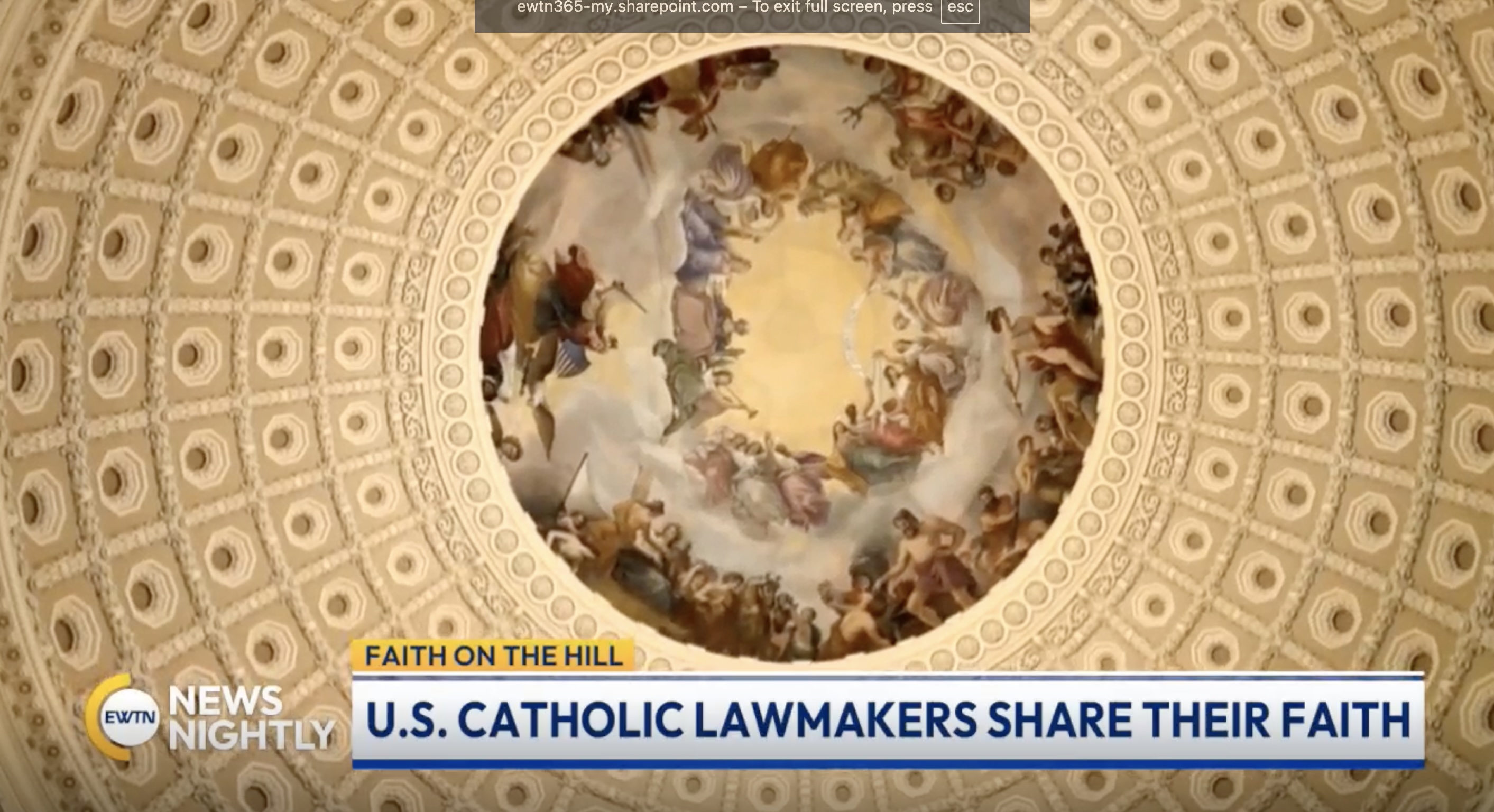
The prayer service invites Catholics to reflect on the nation’s history through the lens of migration, displacement, slavery, and faith while encouraging advocacy for vulnerable migrant populations.

Read More
Madrid archbishop says Catholics feel ‘incredible expectation’ at pope’s upcoming trip to Spain #Catholic Madrid Archbishop Cardinal José Cobo Cano said that the imminent visit of Pope Leo XIV to Spain has generated “incredible expectations” and that the main challenge will not only be organizational, but pastoral.“The challenge is that it is not an event. We are used to concerts, which are prepared, closed and thatʼs it," he said in an interview with EWTN News about the preparations for the trip of Pope Leo XIV, who will visit Madrid, Barcelona and the Canary Islands from June 6 to 12. He expressed hope that the visit will be “a moment of experience and … a moment also that will be slow, that it helps us to look up and take a step forward.”Preparations in record timeCardinal Cobo explained that the visit has been organized in “record time,” with just three months of work, and with a much greater social and ecclesial response than expected.“We have had three scarce months to prepare a trip, during which we have also found that there is a great desire and an incredible expectation. I think we thought it was going to be something [for which] we had to motivate [Catholics] a lot, but nothing was needed,” he said.As he highlighted, the popeʼs program in Madrid has been designed as a “pastoral triptych” with three major components: the celebration of the Eucharist on the feast of Corpus Christi, the great meeting with the Church of Madrid at the Santiago Bernabéu stadium, and a space for dialogue with leaders of culture, economy and sport.“The celebration of the Eucharist, [especially on] Corpus Christi — which is a very important holiday for us — and celebrating it with the successor of Peter, is a gift for the whole Church of Madrid and for the whole Church of Spain, because they will come from all places. This is the most celebratory central moment,” said the cardinal.The pope and “politics with capital letters”In Coboʼs opinion, one of the most delicate moments will be the appearance of the Holy Father in the Cortes, or the Spanish parliament, before a joint session of both the Congress of Deputies and the Senate.Cobo warned that he is concerned that a message about “politics with capital letters” may be reduced to a partisan reading.“In a society where we are used to talking about political parties, that moment is important,” he said. “Of course the intention is that the pope will come, that he will support politicians, that he will support politics and that he will thus be able to reinforce democracy from the experience and tradition of the Church,” he said.Asked if the recent accusation of alleged corruption of the former Spanish Prime Minister José Luis Rodríguez Zapatero could have any impact on the visit, Cobo indicated it was unlikely. “We are used to working with many events in political life. Thatʼs already part of life and the headlines are moving,” he said. “I think the good thing about a papal visit is that … it can help us look up and see that despite the political situation that is painful … there is a higher level.”“There is another level, a level that speaks to us of hope, it is a level that speaks to us of responsibility, that speaks to us of ethics,” he said. “I believe that we are not going to contradict one thing with another, but we are going to get used to being also in another space, which is that of non-confrontation and welcoming wounds and difficulties and putting them in front of the space of meaning that life gives and that faith tells us.”The hope of the young, and not so youngThe cardinal also noted that for young people the visit could represent a response to a climate of “disorientation”, “uprooting” and “hopelessness.” He maintained that many are looking for “anchors” and answers about the meaning of life, something that, in his opinion, explains the renewed interest in the figure of the pope among new generations.“I think it is a response to a longing that young people have … and not only young people, I think it is from a very broad generation, I believe that there is an experience of a certain discomfort, a disorientation … a certain de-rooting. People need anchors that they donʼt have.”A meeting between Pope Leo XIV and Bad Bunny?Regarding the coincidence of the popeʼs presence in Madrid occurring at the same time as the rapper Bad Bunnyʼs concerts, Cobo did not close the door to a possible meeting, although he left it in the hands of both parties. “The pope is never closed to talking to anyone who wants to enter into dialogue with him,” he said.“If at some point that can happen, we wouldnʼt rule it out of course, but that depends on the two of them. What is certain is that indeed Madrid is very big and can have different events on the same day,” he said.

Madrid archbishop says Catholics feel ‘incredible expectation’ at pope’s upcoming trip to Spain #Catholic Madrid Archbishop Cardinal José Cobo Cano said that the imminent visit of Pope Leo XIV to Spain has generated “incredible expectations” and that the main challenge will not only be organizational, but pastoral.“The challenge is that it is not an event. We are used to concerts, which are prepared, closed and thatʼs it," he said in an interview with EWTN News about the preparations for the trip of Pope Leo XIV, who will visit Madrid, Barcelona and the Canary Islands from June 6 to 12. He expressed hope that the visit will be “a moment of experience and … a moment also that will be slow, that it helps us to look up and take a step forward.”Preparations in record timeCardinal Cobo explained that the visit has been organized in “record time,” with just three months of work, and with a much greater social and ecclesial response than expected.“We have had three scarce months to prepare a trip, during which we have also found that there is a great desire and an incredible expectation. I think we thought it was going to be something [for which] we had to motivate [Catholics] a lot, but nothing was needed,” he said.As he highlighted, the popeʼs program in Madrid has been designed as a “pastoral triptych” with three major components: the celebration of the Eucharist on the feast of Corpus Christi, the great meeting with the Church of Madrid at the Santiago Bernabéu stadium, and a space for dialogue with leaders of culture, economy and sport.“The celebration of the Eucharist, [especially on] Corpus Christi — which is a very important holiday for us — and celebrating it with the successor of Peter, is a gift for the whole Church of Madrid and for the whole Church of Spain, because they will come from all places. This is the most celebratory central moment,” said the cardinal.The pope and “politics with capital letters”In Coboʼs opinion, one of the most delicate moments will be the appearance of the Holy Father in the Cortes, or the Spanish parliament, before a joint session of both the Congress of Deputies and the Senate.Cobo warned that he is concerned that a message about “politics with capital letters” may be reduced to a partisan reading.“In a society where we are used to talking about political parties, that moment is important,” he said. “Of course the intention is that the pope will come, that he will support politicians, that he will support politics and that he will thus be able to reinforce democracy from the experience and tradition of the Church,” he said.Asked if the recent accusation of alleged corruption of the former Spanish Prime Minister José Luis Rodríguez Zapatero could have any impact on the visit, Cobo indicated it was unlikely. “We are used to working with many events in political life. Thatʼs already part of life and the headlines are moving,” he said. “I think the good thing about a papal visit is that … it can help us look up and see that despite the political situation that is painful … there is a higher level.”“There is another level, a level that speaks to us of hope, it is a level that speaks to us of responsibility, that speaks to us of ethics,” he said. “I believe that we are not going to contradict one thing with another, but we are going to get used to being also in another space, which is that of non-confrontation and welcoming wounds and difficulties and putting them in front of the space of meaning that life gives and that faith tells us.”The hope of the young, and not so youngThe cardinal also noted that for young people the visit could represent a response to a climate of “disorientation”, “uprooting” and “hopelessness.” He maintained that many are looking for “anchors” and answers about the meaning of life, something that, in his opinion, explains the renewed interest in the figure of the pope among new generations.“I think it is a response to a longing that young people have … and not only young people, I think it is from a very broad generation, I believe that there is an experience of a certain discomfort, a disorientation … a certain de-rooting. People need anchors that they donʼt have.”A meeting between Pope Leo XIV and Bad Bunny?Regarding the coincidence of the popeʼs presence in Madrid occurring at the same time as the rapper Bad Bunnyʼs concerts, Cobo did not close the door to a possible meeting, although he left it in the hands of both parties. “The pope is never closed to talking to anyone who wants to enter into dialogue with him,” he said.“If at some point that can happen, we wouldnʼt rule it out of course, but that depends on the two of them. What is certain is that indeed Madrid is very big and can have different events on the same day,” he said.

Archbishop José Cobo Cano hopes Pope Leo XIV’s visit will help Catholics “look up and take a step forward.”

Read More
German Catholic congress approves bondage group’s booth #Catholic An ecumenical working group promoting “consensual BDSM culture” will again exhibit at Germanyʼs Catholic Congress in Würzburg this week after organizers said its guidelines pose “no contradiction with the Catechism.”BDSM is an acronym that stands for “bondage and discipline, dominance and submission, sadism and masochism.”“The Ecumenical Working Group BDSM and Christianity has been represented on the Kirchenmeile at several Catholic Congresses now,” Cosima Jagow-Duda, head of press and marketing at the Catholic Congress, told CNA Deutsch, the German-language sister service of EWTN News, in response to an inquiry.“All organizations with an explicitly Christian reference have this right in principle, provided they are not unconstitutional or hostile to specific groups.” The groupʼs guidelines, she added, contain “no contradiction with the Catechism.”The working group was founded in 1999, according to its own website. It also exhibited at the previous Catholic Congress in Erfurt in 2024.Organized by the Central Committee of German Catholics (ZdK), the German Catholic Congress (Katholikentag) is a biennial gathering led by laypeople and representing the countryʼs main umbrella organization for lay Catholic associations. The 104th edition is taking place from May 13 to 17 in Würzburg under the motto “Have Courage, Stand Up!” Around 20,000 people are expected to attend the event, which features approximately 900 events across 50 venues.The approved booth is listed in the official program as stand number MW-R-07 on the Kirchenmeile — a German term meaning “Church Mile” — an exhibitor area where approximately 300 organizations present themselves to attendees.‘Out of the taboo corner’On its website, the working group describes itself as “Christians from various denominations who deal with eroticism and sexuality, particularly in the area of sadomasochistic sexual preferences.”Its published guidelines open with a “preamble on the relationship with God,” affirm belief in “the love and salvation through Jesus Christ,” and state that the group “accepts and lives the diverse and consensual BDSM culture.” The group has also said it wants to take the topic “out of the taboo corner.”Jagow-Duda told CNA Deutsch that applications for the Kirchenmeile “follow clear rules and guidelines” and that the organizers do not admit, for example, “right-wing extremist or anti-democratic groups.”The printed program book states, on page 58, that “a diversity of opinions that encourages and enriches discourse on the cohesion of society is expressly desired,” with limits “where discriminatory, racist, or antisemitic convictions are represented, expressions of group-related misanthropy, or an ideological distance from the free democratic constitutional order are to be expected.”“This concerns a booth where Christians are entering into conversation about their faith,” Jagow-Duda said.Other groups presenting on the Kirchenmeile whose positions stand in tension with Catholic teaching on sexuality include the Network of Catholic Lesbians, the LGBT initiative #OutInChurch, and the Ecumenical Working Group Homosexuals and Church.The official program also lists a “Queer worship service” on May 16 under the title “Life is colorful — diversity in the Church?!” and a Bible workshop titled “Reading the Bible queerly. Why G*D is a fan of diversity.”Pro-life panels rejected, association still presentThe eventʼs panel program, meanwhile, turned down three proposals on surrogacy, abortion, and end-of-life care from the countryʼs largest lay pro-life association, citing limited slots, even as the association maintains its own booth at the congress.The proposals were submitted by the Action for the Right to Life for All (ALfA) in cooperation with the Association of Catholic German Teachers (VkdL).The proposals' titles, according to the Catholic weekly Die Tagespost, were “Life Without a Child? Is Surrogacy the Solution on the Way to a Wished-For Child?”, “Taboo Topic Abortion — ‘I didnʼt want to abort, I had to,’” and “My Death and My Dignity — Autonomy and Human Dignity at the End of Life.”Britta Baas, a spokeswoman for the ZdK, told Die Tagespost that the rejections were made on “capacity grounds.” Two-thirds of all applications had to be turned down because only 40 panel slots were available, she said.The Catholic Congress leadership had set up a so-called “topic convention” before the nationwide call for proposals opened, which pre-selected the 40 panel themes. About three times as many applications were submitted as there were slots, Baas said, and “the panel working group commissioned by the Catholic Congress leadership then had to make a selection.”According to Die Tagespost, ALfA and VkdL had already secured several speakers for the proposed panels, including psychiatrist Christian Spaemann, surgeon and medical ethicist Kai Witzel, and the jurist Felix Böllmann of Alliance Defending Freedom International.The Catholic Congress will, however, host one panel on assisted suicide, titled “Quo Vadis Assisted Suicide? General Regulations and Individual Wishes,” with Social Democratic Party (SPD) parliamentarian Lars Castellucci and the president of the German Caritas Association, Eva Maria Welskop-Deffaa, among the discussants.ALfA itself will be present at the Catholic Congress with a booth on the Kirchenmeile, located in the “Social Cohesion” theme area. In parallel to the official program, the association is holding its own events in cooperation with the VkdL and Die Tagespost, including a lecture on end-of-life autonomy by Witzel, a presentation on international surrogacy by ALfA national chair Cornelia Kaminski, and a panel discussion with Bishop Rudolf Voderholzer of Regensburg on the relationship between the Catholic Church and the German pro-life movement.“The commitment to the protection of human life belongs at the heart of the Church,” Kaminski said in a May 8 statement. “The Catholic Congress is therefore an important place to enter into conversation with people, to present our work, and to make clear how many areas there are in which the right to life and human dignity are under threat — and how needed Church members are who commit themselves to this cause.”Catholic teaching on sexualityThe Catechism of the Catholic Church teaches that sexual pleasure “is morally disordered when sought for itself, isolated from its procreative and unitive purposes” (No. 2351).Chastity, the Catechism teaches, “involves the integrity of the person and the integrality of the gift” and is realized in “the complete and lifelong mutual gift of a man and a woman” (No. 2337). It requires what the Catechism calls “an apprenticeship in self-mastery which is a training in human freedom” (No. 2339).Consent does not, in Catholic moral theology, automatically change the moral character of an act.

German Catholic congress approves bondage group’s booth #Catholic An ecumenical working group promoting “consensual BDSM culture” will again exhibit at Germanyʼs Catholic Congress in Würzburg this week after organizers said its guidelines pose “no contradiction with the Catechism.”BDSM is an acronym that stands for “bondage and discipline, dominance and submission, sadism and masochism.”“The Ecumenical Working Group BDSM and Christianity has been represented on the Kirchenmeile at several Catholic Congresses now,” Cosima Jagow-Duda, head of press and marketing at the Catholic Congress, told CNA Deutsch, the German-language sister service of EWTN News, in response to an inquiry.“All organizations with an explicitly Christian reference have this right in principle, provided they are not unconstitutional or hostile to specific groups.” The groupʼs guidelines, she added, contain “no contradiction with the Catechism.”The working group was founded in 1999, according to its own website. It also exhibited at the previous Catholic Congress in Erfurt in 2024.Organized by the Central Committee of German Catholics (ZdK), the German Catholic Congress (Katholikentag) is a biennial gathering led by laypeople and representing the countryʼs main umbrella organization for lay Catholic associations. The 104th edition is taking place from May 13 to 17 in Würzburg under the motto “Have Courage, Stand Up!” Around 20,000 people are expected to attend the event, which features approximately 900 events across 50 venues.The approved booth is listed in the official program as stand number MW-R-07 on the Kirchenmeile — a German term meaning “Church Mile” — an exhibitor area where approximately 300 organizations present themselves to attendees.‘Out of the taboo corner’On its website, the working group describes itself as “Christians from various denominations who deal with eroticism and sexuality, particularly in the area of sadomasochistic sexual preferences.”Its published guidelines open with a “preamble on the relationship with God,” affirm belief in “the love and salvation through Jesus Christ,” and state that the group “accepts and lives the diverse and consensual BDSM culture.” The group has also said it wants to take the topic “out of the taboo corner.”Jagow-Duda told CNA Deutsch that applications for the Kirchenmeile “follow clear rules and guidelines” and that the organizers do not admit, for example, “right-wing extremist or anti-democratic groups.”The printed program book states, on page 58, that “a diversity of opinions that encourages and enriches discourse on the cohesion of society is expressly desired,” with limits “where discriminatory, racist, or antisemitic convictions are represented, expressions of group-related misanthropy, or an ideological distance from the free democratic constitutional order are to be expected.”“This concerns a booth where Christians are entering into conversation about their faith,” Jagow-Duda said.Other groups presenting on the Kirchenmeile whose positions stand in tension with Catholic teaching on sexuality include the Network of Catholic Lesbians, the LGBT initiative #OutInChurch, and the Ecumenical Working Group Homosexuals and Church.The official program also lists a “Queer worship service” on May 16 under the title “Life is colorful — diversity in the Church?!” and a Bible workshop titled “Reading the Bible queerly. Why G*D is a fan of diversity.”Pro-life panels rejected, association still presentThe eventʼs panel program, meanwhile, turned down three proposals on surrogacy, abortion, and end-of-life care from the countryʼs largest lay pro-life association, citing limited slots, even as the association maintains its own booth at the congress.The proposals were submitted by the Action for the Right to Life for All (ALfA) in cooperation with the Association of Catholic German Teachers (VkdL).The proposals' titles, according to the Catholic weekly Die Tagespost, were “Life Without a Child? Is Surrogacy the Solution on the Way to a Wished-For Child?”, “Taboo Topic Abortion — ‘I didnʼt want to abort, I had to,’” and “My Death and My Dignity — Autonomy and Human Dignity at the End of Life.”Britta Baas, a spokeswoman for the ZdK, told Die Tagespost that the rejections were made on “capacity grounds.” Two-thirds of all applications had to be turned down because only 40 panel slots were available, she said.The Catholic Congress leadership had set up a so-called “topic convention” before the nationwide call for proposals opened, which pre-selected the 40 panel themes. About three times as many applications were submitted as there were slots, Baas said, and “the panel working group commissioned by the Catholic Congress leadership then had to make a selection.”According to Die Tagespost, ALfA and VkdL had already secured several speakers for the proposed panels, including psychiatrist Christian Spaemann, surgeon and medical ethicist Kai Witzel, and the jurist Felix Böllmann of Alliance Defending Freedom International.The Catholic Congress will, however, host one panel on assisted suicide, titled “Quo Vadis Assisted Suicide? General Regulations and Individual Wishes,” with Social Democratic Party (SPD) parliamentarian Lars Castellucci and the president of the German Caritas Association, Eva Maria Welskop-Deffaa, among the discussants.ALfA itself will be present at the Catholic Congress with a booth on the Kirchenmeile, located in the “Social Cohesion” theme area. In parallel to the official program, the association is holding its own events in cooperation with the VkdL and Die Tagespost, including a lecture on end-of-life autonomy by Witzel, a presentation on international surrogacy by ALfA national chair Cornelia Kaminski, and a panel discussion with Bishop Rudolf Voderholzer of Regensburg on the relationship between the Catholic Church and the German pro-life movement.“The commitment to the protection of human life belongs at the heart of the Church,” Kaminski said in a May 8 statement. “The Catholic Congress is therefore an important place to enter into conversation with people, to present our work, and to make clear how many areas there are in which the right to life and human dignity are under threat — and how needed Church members are who commit themselves to this cause.”Catholic teaching on sexualityThe Catechism of the Catholic Church teaches that sexual pleasure “is morally disordered when sought for itself, isolated from its procreative and unitive purposes” (No. 2351).Chastity, the Catechism teaches, “involves the integrity of the person and the integrality of the gift” and is realized in “the complete and lifelong mutual gift of a man and a woman” (No. 2337). It requires what the Catechism calls “an apprenticeship in self-mastery which is a training in human freedom” (No. 2339).Consent does not, in Catholic moral theology, automatically change the moral character of an act.

Organizers of the Würzburg congress told EWTN News the group’s guidelines contain ‘no contradiction with the Catechism.’

Read More
Christ is not ‘a guru or a good luck charm,’ pope says at Mass in Angola #Catholic SAURIMO, Angola — Pope Leo XIV warned at Mass in Saurimo, Angola, on Monday of making God into an idol that is sought only when advantageous — “when genuine faith is replaced with superstitious practices.”“There are erroneous motives for seeking Christ, particularly when he is considered to be a guru or a good luck charm,” the pope said on April 20, referring to how the crowds in the Gospel reading reacted after Jesus performed the miracle of the loaves and the fishes.“They were not seeking a teacher whom they love but a leader to applaud for their own advantage,” he said.Joyful faith in Saurimo
 
 Pope Leo XIV celebrates Mass in Saurimo, Angola, on April 20, 2026. | Credit: Vatican Media
 
 From the start of his arrival in Sub-Saharan Africa — first in Cameroon and then in Angola — Pope Leo has been welcomed by the warmth of the faithful. In Saurimo, a city in northeastern Angola, the atmosphere greeting the pope on Monday was marked by joyful faith. Everyone welcomed the successor of Peter with songs, dances, and applause.Despite the intense heat, upon reaching the esplanade before Mass, Leo XIV greeted the roughly 60,000 faithful of all ages — who had come from across the region and neighboring dioceses — by making a circuit in the popemobile.“This is the first time a pope has gone beyond Angola’s coastal belt and come — using Pope Francis’ language — to the peripheries,“ the director of the communications office of the Archdiocese of Saurimo said. ”This is a region rich in diamonds, but there is also great poverty, and he comes here to show our reality. For us, having the Holy Father in our region is a great joy.”“This is a unique and unforgettable moment in my life and in the lives of the many pilgrims here today,” Filomena Vunda, who works in the pastoral secretariat of the Archdiocese of Malanje, told ACI Africa, the sister service of EWTN News in Africa, at the Mass.Vunda encouraged non-Catholics in Angola to “keep in mind our African word ‘Ubuntu’: The happiness of others depends on me; my happiness depends solely on the happiness of others.”Ubuntu is an African philosophy about human interconnectedness. It can be translated as “I am because we are.”‘Disciples of Christ’In his homily at Mass, concelebrated by Angolan bishops, Pope Leo said: “In every part of the world, the Church lives as a people who walk as disciples of Christ, our brother and redeemer.”"He, the Risen One, illumines for us the path to the Father and with the strength of the Spirit he sanctifies us so that we may transform our way of life in conformity with his love," the pope said. "This is the good news, the Gospel that courses through our veins like blood, sustaining us on the journey. A journey that has brought me here with you today!”
 
 Pope Leo XIV celebrates Mass in Saurimo, Angola, on April 20, 2026. | Credit: Vatican Media
 
 Commenting on the Gospel of the day, Leo reflected: “Indeed, when the Son of God became man, he performed striking miracles in order to manifest the will of the Father: He made light shine in the darkness by giving sight to the blind, he gave a voice to the oppressed by loosening the tongues of the mute, he slaked our thirst for justice by multiplying bread for the poor and weak. Anyone who heard about these works set out in search of Jesus. At the same time, the Lord looks into our heart and asks us whether we seek him out of gratitude or for our own self-interest, with calculation or with love.”“The Lord himself says,” the pope continued, “‘you are looking for me, not because you saw signs, but because you ate your fill of the loaves’ (Jn 6:26). His words reveal the designs of those who do not want to encounter a person but want to consume things. The crowd sees Jesus as means to an end, a provider of services. If he had not given them something to eat, his actions and teachings would not have interested them.”“This happens,” Leo XIV explained, “when genuine faith is replaced with superstitious practices, in which God becomes an idol that is sought only when it is advantageous to us and only for as long as it is. Even the most beautiful gifts of the Lord, which are always for the care of his people, become a pretext, a prize or a bargaining chip, and are misinterpreted by those who receive them.”“How different is Jesus’ attitude toward us,” the pontiff continued. “Yet, he does not reject this insincere search, but encourages its conversion ... Christ calls us to freedom: He does not want servants or clients, rather he seeks brothers and sisters to whom he can totally dedicate himself.”“Therefore,” Leo XIV said, “the admonition that the Lord directs to the crowd is transformed into an invitation: ‘Do not work for the food that perishes, but for the food that endures for eternal life’ (Jn 6:27)."“His gift sheds light on our current situation,” the pope went on. “We can see today how the hope of many people is frustrated by violence, exploited by the powerful, and defrauded by the rich. Consequently, when injustice corrupts hearts, the bread of all becomes the possession of a few."“In the face of these evils, Christ hears the cry of the people and renews our history by lifting us up from every fall, comforting us in every suffering, and encouraging us in our mission," he said. 
 
 Crowds of people brave the heat and sun to attend Mass with Pope Leo XIV in Saurimo, Angola, on April 20, 2026. | Credit: Raúl Kangombe Sapiti/ACI Africa
 
 “All this,” the pope exhorted, “means that, in light of our discipleship, the ecclesial journey is a ‘synod of resurrection and hope,’ as St. John Paul II affirmed in his apostolic exhortation Ecclesia in Africa. Let us proceed in this wise direction! Christ himself guides and strengthens our journey, a journey that we want to learn to live more and more as it should be, that is, in a synodal manner.”The pope concluded by recalling the importance of the martyrs and saints, whose witness “encourages us and pushes us onto a path of hope, reconciliation, and peace, along which the gift of God becomes the responsibility of the head of the household, in the Christian community, in civil society.”"The vitality of the vocations that you experience [in Angola]," he said, "is a sign that you are responding to the Lord’s gift, which is always abundant for those who welcome it with pure hearts.”ACI Africa reporter Raúl Kangombe Sapiti contributed to this report.This story was first published by ACI Stampa, the Italian-language sister service of EWTN News. It has been translated and adapted by EWTN News English.

Christ is not ‘a guru or a good luck charm,’ pope says at Mass in Angola #Catholic SAURIMO, Angola — Pope Leo XIV warned at Mass in Saurimo, Angola, on Monday of making God into an idol that is sought only when advantageous — “when genuine faith is replaced with superstitious practices.”“There are erroneous motives for seeking Christ, particularly when he is considered to be a guru or a good luck charm,” the pope said on April 20, referring to how the crowds in the Gospel reading reacted after Jesus performed the miracle of the loaves and the fishes.“They were not seeking a teacher whom they love but a leader to applaud for their own advantage,” he said.Joyful faith in Saurimo Pope Leo XIV celebrates Mass in Saurimo, Angola, on April 20, 2026. | Credit: Vatican Media From the start of his arrival in Sub-Saharan Africa — first in Cameroon and then in Angola — Pope Leo has been welcomed by the warmth of the faithful. In Saurimo, a city in northeastern Angola, the atmosphere greeting the pope on Monday was marked by joyful faith. Everyone welcomed the successor of Peter with songs, dances, and applause.Despite the intense heat, upon reaching the esplanade before Mass, Leo XIV greeted the roughly 60,000 faithful of all ages — who had come from across the region and neighboring dioceses — by making a circuit in the popemobile.“This is the first time a pope has gone beyond Angola’s coastal belt and come — using Pope Francis’ language — to the peripheries,“ the director of the communications office of the Archdiocese of Saurimo said. ”This is a region rich in diamonds, but there is also great poverty, and he comes here to show our reality. For us, having the Holy Father in our region is a great joy.”“This is a unique and unforgettable moment in my life and in the lives of the many pilgrims here today,” Filomena Vunda, who works in the pastoral secretariat of the Archdiocese of Malanje, told ACI Africa, the sister service of EWTN News in Africa, at the Mass.Vunda encouraged non-Catholics in Angola to “keep in mind our African word ‘Ubuntu’: The happiness of others depends on me; my happiness depends solely on the happiness of others.”Ubuntu is an African philosophy about human interconnectedness. It can be translated as “I am because we are.”‘Disciples of Christ’In his homily at Mass, concelebrated by Angolan bishops, Pope Leo said: “In every part of the world, the Church lives as a people who walk as disciples of Christ, our brother and redeemer.”"He, the Risen One, illumines for us the path to the Father and with the strength of the Spirit he sanctifies us so that we may transform our way of life in conformity with his love," the pope said. "This is the good news, the Gospel that courses through our veins like blood, sustaining us on the journey. A journey that has brought me here with you today!” Pope Leo XIV celebrates Mass in Saurimo, Angola, on April 20, 2026. | Credit: Vatican Media Commenting on the Gospel of the day, Leo reflected: “Indeed, when the Son of God became man, he performed striking miracles in order to manifest the will of the Father: He made light shine in the darkness by giving sight to the blind, he gave a voice to the oppressed by loosening the tongues of the mute, he slaked our thirst for justice by multiplying bread for the poor and weak. Anyone who heard about these works set out in search of Jesus. At the same time, the Lord looks into our heart and asks us whether we seek him out of gratitude or for our own self-interest, with calculation or with love.”“The Lord himself says,” the pope continued, “‘you are looking for me, not because you saw signs, but because you ate your fill of the loaves’ (Jn 6:26). His words reveal the designs of those who do not want to encounter a person but want to consume things. The crowd sees Jesus as means to an end, a provider of services. If he had not given them something to eat, his actions and teachings would not have interested them.”“This happens,” Leo XIV explained, “when genuine faith is replaced with superstitious practices, in which God becomes an idol that is sought only when it is advantageous to us and only for as long as it is. Even the most beautiful gifts of the Lord, which are always for the care of his people, become a pretext, a prize or a bargaining chip, and are misinterpreted by those who receive them.”“How different is Jesus’ attitude toward us,” the pontiff continued. “Yet, he does not reject this insincere search, but encourages its conversion … Christ calls us to freedom: He does not want servants or clients, rather he seeks brothers and sisters to whom he can totally dedicate himself.”“Therefore,” Leo XIV said, “the admonition that the Lord directs to the crowd is transformed into an invitation: ‘Do not work for the food that perishes, but for the food that endures for eternal life’ (Jn 6:27)."“His gift sheds light on our current situation,” the pope went on. “We can see today how the hope of many people is frustrated by violence, exploited by the powerful, and defrauded by the rich. Consequently, when injustice corrupts hearts, the bread of all becomes the possession of a few."“In the face of these evils, Christ hears the cry of the people and renews our history by lifting us up from every fall, comforting us in every suffering, and encouraging us in our mission," he said. Crowds of people brave the heat and sun to attend Mass with Pope Leo XIV in Saurimo, Angola, on April 20, 2026. | Credit: Raúl Kangombe Sapiti/ACI Africa “All this,” the pope exhorted, “means that, in light of our discipleship, the ecclesial journey is a ‘synod of resurrection and hope,’ as St. John Paul II affirmed in his apostolic exhortation Ecclesia in Africa. Let us proceed in this wise direction! Christ himself guides and strengthens our journey, a journey that we want to learn to live more and more as it should be, that is, in a synodal manner.”The pope concluded by recalling the importance of the martyrs and saints, whose witness “encourages us and pushes us onto a path of hope, reconciliation, and peace, along which the gift of God becomes the responsibility of the head of the household, in the Christian community, in civil society.”"The vitality of the vocations that you experience [in Angola]," he said, "is a sign that you are responding to the Lord’s gift, which is always abundant for those who welcome it with pure hearts.”ACI Africa reporter Raúl Kangombe Sapiti contributed to this report.This story was first published by ACI Stampa, the Italian-language sister service of EWTN News. It has been translated and adapted by EWTN News English.

After praying at the Cathedral of Our Lady of the Assumption in Saurimo, Pope Leo XIV proceeded to the site of the Mass, attended by an estimated 60,000 people.

Read More
Picture of the day


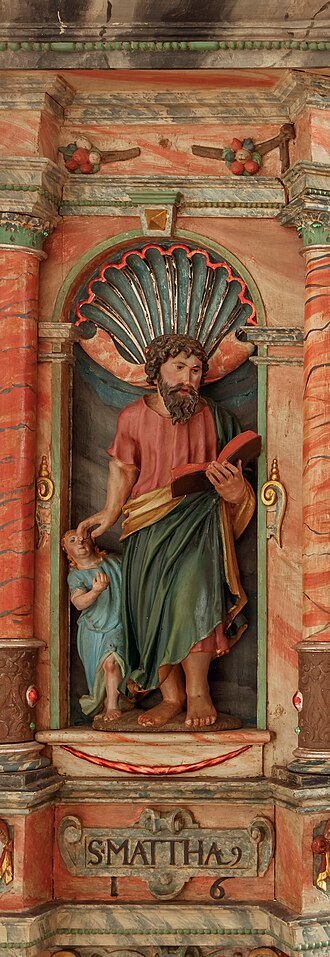
This sculpture representing the Gospel of Matthew appears in St. Genesius Church in Baden-Württemberg. It depicts a tetramorph element standing next the apostle reading a codex. Today is Saint Matthew’s feast day.
 #ImageOfTheDay
Picture of the day
This sculpture representing the Gospel of Matthew appears in St. Genesius Church in Baden-Württemberg. It depicts a tetramorph element standing next the apostle reading a codex. Today is Saint Matthew’s feast day.
Read More