Representation

U.S. Catholic bishops urge ‘fair representation’ on Voting Rights Act anniversary #Catholic A subcommittee of the U.S. Conference of Catholic Bishops (USCCB) urged policymakers to protect “fair representation” in elections ahead of the 61st anniversary of President Lyndon B. Johnson signing the Voting Rights Act of 1965.“The Voting Rights Act of 1965 emerged from the sacrifices and perseverance of countless individuals who worked to secure the fundamental right to vote, particularly for communities of color that had long faced discrimination and exclusion,” said Bishop Daniel E. Garcia, chair of the USCCB Subcommittee for the Promotion of Racial Justice and Reconciliation.The USCCB issued the statement on Aug. 5, one day before the anniversary. The Voting Rights Act was enacted to combat Jim Crow laws that were designed to disenfranchise Black Americans.“For decades, the U.S. bishops have advocated for the right of eligible citizens to participate fully in public life, including the protection of voting rights,” said Garcia, bishop of Austin, Texas. “We encourage all citizens to exercise their right to vote and urge policymakers to safeguard voting rights and promote fair representation for all.”“Today is also an occasion to remember the hard-won history of voting rights in our country, and to recommit to the work which remains,” he added.Garcia also said in his statement that “today, many communities of color worry about how recent developments will impact their fair representation and future participation in the democratic process.”Recent developments could affect fair district maps, equal representation, and long‑term participation in elections. One development includes a 2013 Supreme Court decision, which ruled unconstitutional a provision of the Voting Rights Act that required certain states to obtain federal approval to change voting laws if that state had a history of disenfranchising voters.Another development included a 2020 ruling that upheld Arizona election laws that required voters to cast ballots in their assigned precincts and banned people from submitting another person’s ballot (unless that person is a family or household member).Rulings in 2023 and 2026 addressed racial gerrymandering, which is illegal under the Voting Rights Act. The 2023 ruling found a 2023 Alabama congressional district map to be illegal for not having any Black-majority districts and the 2026 ruling struck down Louisiana maps for relying too much on race in crafting districts.Although racial gerrymandering is illegal, federal law does not prohibit partisan gerrymandering.Garcia quoted Pope Leo XIV’s encyclical Magnifica Humanitas, saying the bishops “affirm the value of democracy ‘insofar as it guarantees the effective participation of citizens’ as a reflection of their dignity.”“May we continue to work together for the common good and for a society in which all citizens are able to participate fully and faithfully in our democracy,” Garcia said.

U.S. Catholic bishops urge ‘fair representation’ on Voting Rights Act anniversary #Catholic A subcommittee of the U.S. Conference of Catholic Bishops (USCCB) urged policymakers to protect “fair representation” in elections ahead of the 61st anniversary of President Lyndon B. Johnson signing the Voting Rights Act of 1965.“The Voting Rights Act of 1965 emerged from the sacrifices and perseverance of countless individuals who worked to secure the fundamental right to vote, particularly for communities of color that had long faced discrimination and exclusion,” said Bishop Daniel E. Garcia, chair of the USCCB Subcommittee for the Promotion of Racial Justice and Reconciliation.The USCCB issued the statement on Aug. 5, one day before the anniversary. The Voting Rights Act was enacted to combat Jim Crow laws that were designed to disenfranchise Black Americans.“For decades, the U.S. bishops have advocated for the right of eligible citizens to participate fully in public life, including the protection of voting rights,” said Garcia, bishop of Austin, Texas. “We encourage all citizens to exercise their right to vote and urge policymakers to safeguard voting rights and promote fair representation for all.”“Today is also an occasion to remember the hard-won history of voting rights in our country, and to recommit to the work which remains,” he added.Garcia also said in his statement that “today, many communities of color worry about how recent developments will impact their fair representation and future participation in the democratic process.”Recent developments could affect fair district maps, equal representation, and long‑term participation in elections. One development includes a 2013 Supreme Court decision, which ruled unconstitutional a provision of the Voting Rights Act that required certain states to obtain federal approval to change voting laws if that state had a history of disenfranchising voters.Another development included a 2020 ruling that upheld Arizona election laws that required voters to cast ballots in their assigned precincts and banned people from submitting another person’s ballot (unless that person is a family or household member).Rulings in 2023 and 2026 addressed racial gerrymandering, which is illegal under the Voting Rights Act. The 2023 ruling found a 2023 Alabama congressional district map to be illegal for not having any Black-majority districts and the 2026 ruling struck down Louisiana maps for relying too much on race in crafting districts.Although racial gerrymandering is illegal, federal law does not prohibit partisan gerrymandering.Garcia quoted Pope Leo XIV’s encyclical Magnifica Humanitas, saying the bishops “affirm the value of democracy ‘insofar as it guarantees the effective participation of citizens’ as a reflection of their dignity.”“May we continue to work together for the common good and for a society in which all citizens are able to participate fully and faithfully in our democracy,” Garcia said.

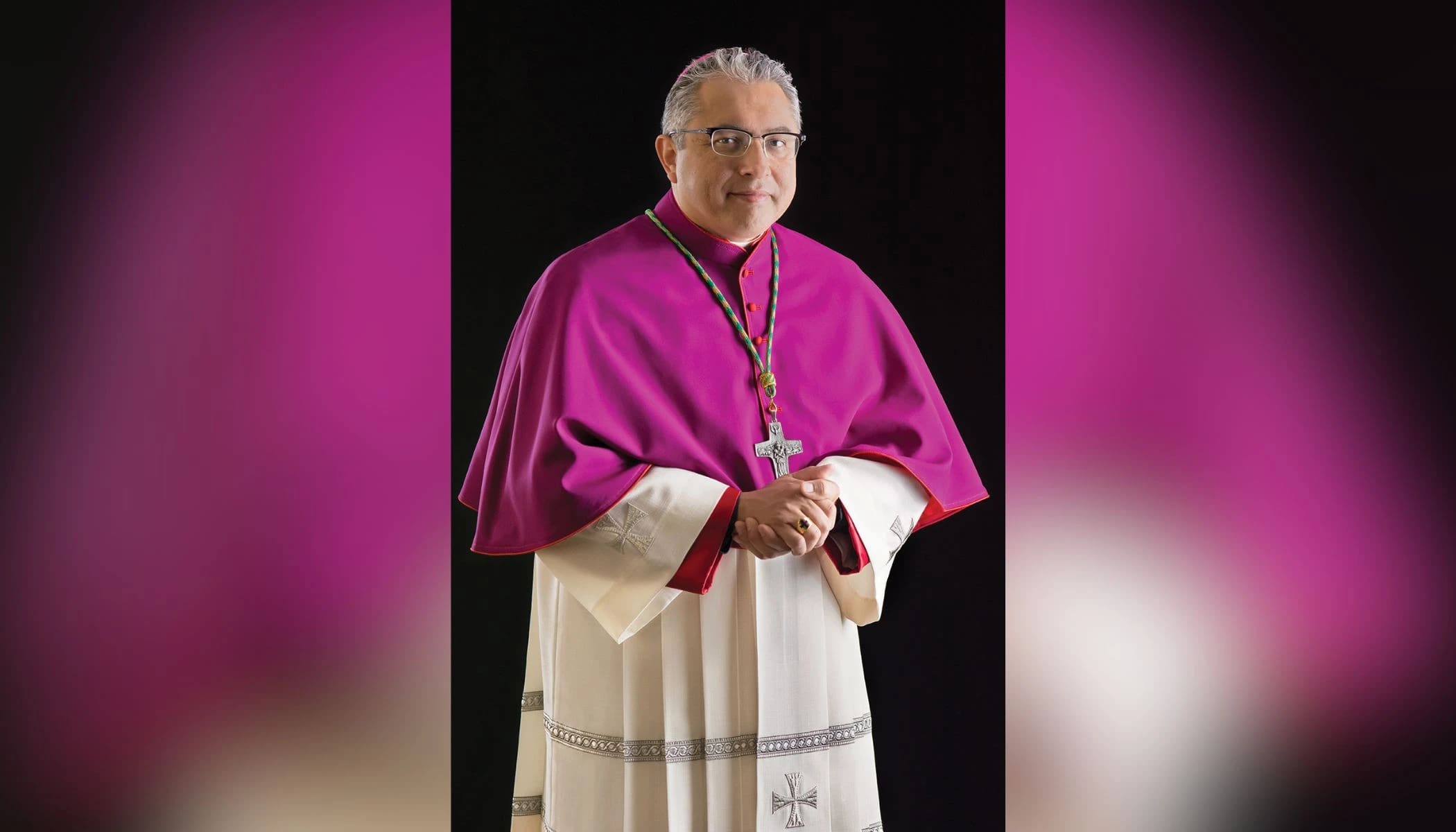
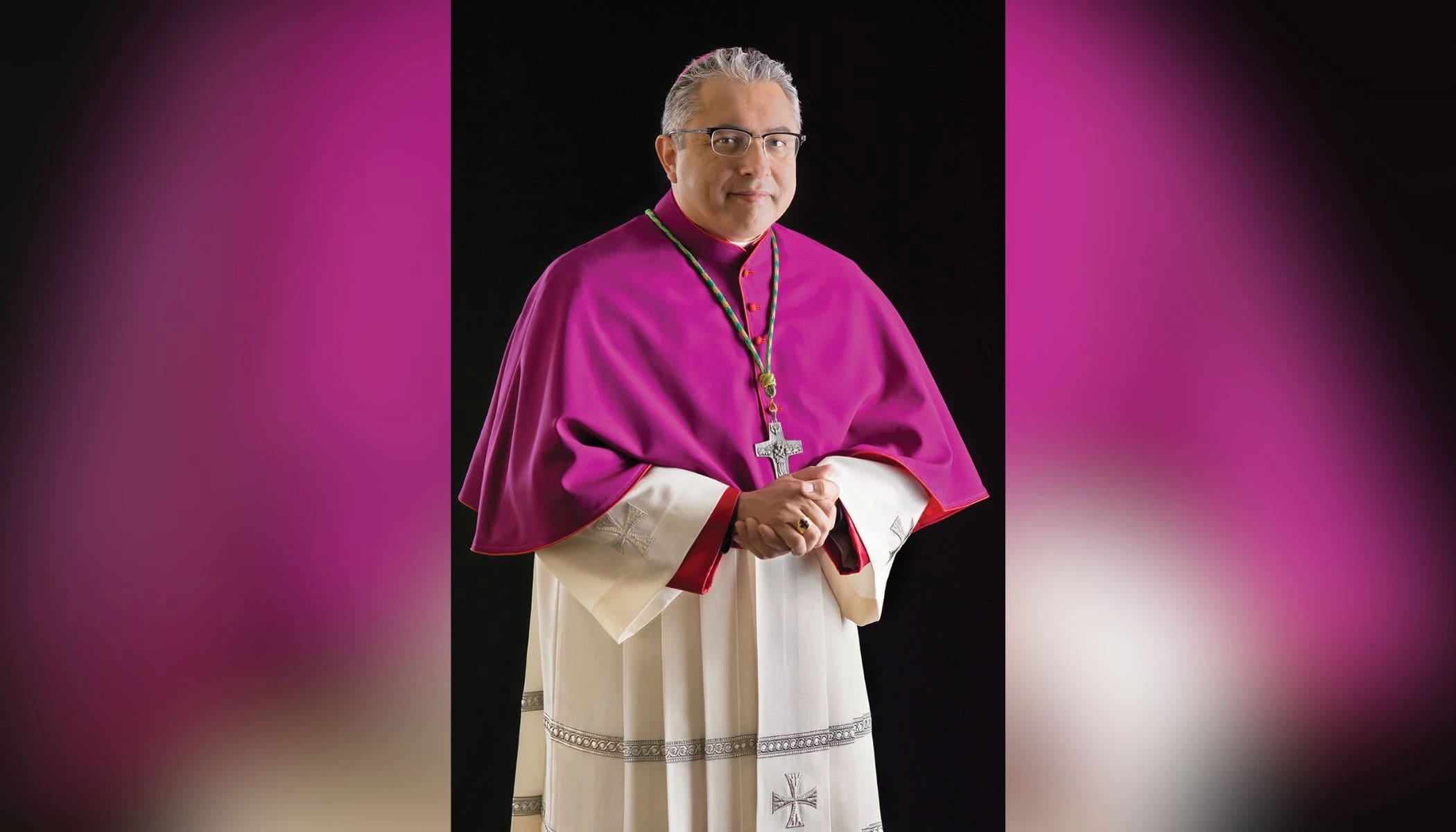
Bishop Daniel E. Garcia said the Voting Rights Act was born from the sacrifice of those who fought to secure equal access to the ballot, especially for communities of color long denied that right.
Read More
Bishops issue new calls for recognition of immigrants’ human dignity and immigration reform #Catholic In response to increased immigration enforcement measures throughout the country, two U.S. Catholic bishops have issued fresh statements affirming the human dignity of immigrants as children of God and calling for immigration reform.Both prelates said Americans should understand why people flee their home countries in search of a better life while acknowledging the nation’s right to enforce its immigration laws. The current situation, however, is unjust, immoral, and must be fixed, both men emphasized.On Aug. 3, the centennial anniversary of the elevation of San Antonio to a metropolitan archdiocese, Archbishop Gustavo García-Siller released a pastoral letter expressing the Church’s solidarity with migrants and calling for the “careful and well-formed moral discernment of every Catholic conscience” in response.Meanwhile, on Aug. 1, Bishop Robert Gruss of the Diocese of Saginaw, Michigan, issued a statement in which he reminded the faithful of the “inherent human dignity” of every person.Gruss said the current “challenge” facing the United States, which has “consistently received immigrants, refugees, exiles, and the persecuted from other lands” throughout its history, is “how to deal with a situation when one administration has allowed individuals and families to migrate … freely and the next administration wants their removal.”The bishop wrote that the removal of “immigrants who have caused harm to society by participating in criminal activity” is understandable, but asked if it is “fair to remove those who are and have been contributing to society in a positive way, oftentimes for many years?”He said that a “just and civil society” would not allow the deportation or detention of people “without cause” or “meaningful legal representation, without access to family or a supportive community, and without basic human needs being met.”He urged the faithful to “push for public policy changes that secure civil rights for all immigrants” and “humane border enforcement policies” that simultaneously uphold national security while protecting the “safety and dignity” of those who come to the country to work.‘We will come to you’García-Siller promulgated his letter, titled “We Will Come to You: United in Solidarity with Our Brothers and Sisters in Migration,” at a Mass at San Fernando Cathedral in downtown San Antonio.“We are living in a world of war,” the letter began. “Across continents, people are dying every day. Across borders, survivors are forced to migrate. They do not leave by choice, but because of violence, hunger, fear, and oppression.”In the 56-page letter, composed of five sections and concluding with a prayer to Our Lady of Guadalupe, García-Siller said he prayed “for a long time” before writing, saying he wanted to write from “the right place, one of accompaniment and solidarity.”He said the letter addresses an “unprecedented” time in the country, writing that “a convergence of structural and legal tactics … calls for the careful and well-formed moral discernment of every Catholic conscience.”“I write to comfort the afflicted, to ignite the comfortable, and to confront injustice with the full conviction of the Gospel.”He went on to cite his personal experience of “years walking alongside” migrants, many of whom are living in so much fear they rarely leave their homes, as well as his own story as a migrant himself.The archbishop wrote that he has witnessed a “fear that has taken root” across the archdiocese, saying he and other pastors “pray with parents who embrace their children each morning unsure if they will be home at night,” and describing parents who avoid taking children to the doctor or to go to work “because each mile carries risk.”“The community bears this cross, and the Church cannot be silent,” he wrote, describing declining Mass attendance and the worsening physical health of those who suffer fear related to immigration.“The people have not lost their faith,” he wrote. “Many, however, have lost their sense of safety and belonging.”The Church must “defend the dignity of those caught in the machinery of removal,” he emphasized.García-Siller described visiting three detention centers in the area, including the South Texas Family Residential Center in Dilley, the largest family detention center in the nation, saying he’s witnessed "firsthand, violations of human dignity within their walls.”He went on to quote Bishop Steven Biegler of the Diocese of Cheyenne, Wyoming, who wrote in a pastoral letter in April that “‘the current campaign of mass detention and deportations is immoral.’”García-Siller accused private corporations of profiting from the processing and movement of large numbers of detained immigrants from one site to another.He also cited an investigation by U.S. Sen. John Ossoff, D-Georgia, which documented more than 1,000 “credible reports of human rights abuses since January 2025, including “medical neglect, denial of food and water, overcrowding, sleep deprivation, and the separation of breastfeeding mothers from their infants,” as well as similar abuses in privately-run sites.García-Siller called the public narrative that only criminals are being removed “misleading,” writing that “73% of those in immigration detention have no criminal conviction, and only 5% have been convicted of a violent crime.”He described how pastors, deacons, extraordinary ministers, and trained catechists are developing “active ministries of accompaniment” in the archdiocese, visiting migrants in their homes, bringing the sacraments along with medicines and other supplies, as well as in detention centers.“If your family has been detained, tell us. We will go to them. The Body of Christ does not abandon its members in chains,” García-Siller declared.The archbishop went on to lament that existing legal pathways take years to navigate, years that families cannot afford to wait as they seek safety and stability. He called for more accessible legal pathways, saying migrants would take those pathways if they were available. Migrants’ “contribution to the common good of our nation” demands such, he wrote.At the end of the letter, García-Siller entrusted the situation to Our Lady of Guadalupe, who herself crossed borders of culture and race and walked the road of exile with the Holy Family: “Long before she was Queen of Mexico … she was a mother who crossed a border. She knows this road; she walked it with her own feet.”

Bishops issue new calls for recognition of immigrants’ human dignity and immigration reform #Catholic In response to increased immigration enforcement measures throughout the country, two U.S. Catholic bishops have issued fresh statements affirming the human dignity of immigrants as children of God and calling for immigration reform.Both prelates said Americans should understand why people flee their home countries in search of a better life while acknowledging the nation’s right to enforce its immigration laws. The current situation, however, is unjust, immoral, and must be fixed, both men emphasized.On Aug. 3, the centennial anniversary of the elevation of San Antonio to a metropolitan archdiocese, Archbishop Gustavo García-Siller released a pastoral letter expressing the Church’s solidarity with migrants and calling for the “careful and well-formed moral discernment of every Catholic conscience” in response.Meanwhile, on Aug. 1, Bishop Robert Gruss of the Diocese of Saginaw, Michigan, issued a statement in which he reminded the faithful of the “inherent human dignity” of every person.Gruss said the current “challenge” facing the United States, which has “consistently received immigrants, refugees, exiles, and the persecuted from other lands” throughout its history, is “how to deal with a situation when one administration has allowed individuals and families to migrate … freely and the next administration wants their removal.”The bishop wrote that the removal of “immigrants who have caused harm to society by participating in criminal activity” is understandable, but asked if it is “fair to remove those who are and have been contributing to society in a positive way, oftentimes for many years?”He said that a “just and civil society” would not allow the deportation or detention of people “without cause” or “meaningful legal representation, without access to family or a supportive community, and without basic human needs being met.”He urged the faithful to “push for public policy changes that secure civil rights for all immigrants” and “humane border enforcement policies” that simultaneously uphold national security while protecting the “safety and dignity” of those who come to the country to work.‘We will come to you’García-Siller promulgated his letter, titled “We Will Come to You: United in Solidarity with Our Brothers and Sisters in Migration,” at a Mass at San Fernando Cathedral in downtown San Antonio.“We are living in a world of war,” the letter began. “Across continents, people are dying every day. Across borders, survivors are forced to migrate. They do not leave by choice, but because of violence, hunger, fear, and oppression.”In the 56-page letter, composed of five sections and concluding with a prayer to Our Lady of Guadalupe, García-Siller said he prayed “for a long time” before writing, saying he wanted to write from “the right place, one of accompaniment and solidarity.”He said the letter addresses an “unprecedented” time in the country, writing that “a convergence of structural and legal tactics … calls for the careful and well-formed moral discernment of every Catholic conscience.”“I write to comfort the afflicted, to ignite the comfortable, and to confront injustice with the full conviction of the Gospel.”He went on to cite his personal experience of “years walking alongside” migrants, many of whom are living in so much fear they rarely leave their homes, as well as his own story as a migrant himself.The archbishop wrote that he has witnessed a “fear that has taken root” across the archdiocese, saying he and other pastors “pray with parents who embrace their children each morning unsure if they will be home at night,” and describing parents who avoid taking children to the doctor or to go to work “because each mile carries risk.”“The community bears this cross, and the Church cannot be silent,” he wrote, describing declining Mass attendance and the worsening physical health of those who suffer fear related to immigration.“The people have not lost their faith,” he wrote. “Many, however, have lost their sense of safety and belonging.”The Church must “defend the dignity of those caught in the machinery of removal,” he emphasized.García-Siller described visiting three detention centers in the area, including the South Texas Family Residential Center in Dilley, the largest family detention center in the nation, saying he’s witnessed "firsthand, violations of human dignity within their walls.”He went on to quote Bishop Steven Biegler of the Diocese of Cheyenne, Wyoming, who wrote in a pastoral letter in April that “‘the current campaign of mass detention and deportations is immoral.’”García-Siller accused private corporations of profiting from the processing and movement of large numbers of detained immigrants from one site to another.He also cited an investigation by U.S. Sen. John Ossoff, D-Georgia, which documented more than 1,000 “credible reports of human rights abuses since January 2025, including “medical neglect, denial of food and water, overcrowding, sleep deprivation, and the separation of breastfeeding mothers from their infants,” as well as similar abuses in privately-run sites.García-Siller called the public narrative that only criminals are being removed “misleading,” writing that “73% of those in immigration detention have no criminal conviction, and only 5% have been convicted of a violent crime.”He described how pastors, deacons, extraordinary ministers, and trained catechists are developing “active ministries of accompaniment” in the archdiocese, visiting migrants in their homes, bringing the sacraments along with medicines and other supplies, as well as in detention centers.“If your family has been detained, tell us. We will go to them. The Body of Christ does not abandon its members in chains,” García-Siller declared.The archbishop went on to lament that existing legal pathways take years to navigate, years that families cannot afford to wait as they seek safety and stability. He called for more accessible legal pathways, saying migrants would take those pathways if they were available. Migrants’ “contribution to the common good of our nation” demands such, he wrote.At the end of the letter, García-Siller entrusted the situation to Our Lady of Guadalupe, who herself crossed borders of culture and race and walked the road of exile with the Holy Family: “Long before she was Queen of Mexico … she was a mother who crossed a border. She knows this road; she walked it with her own feet.”

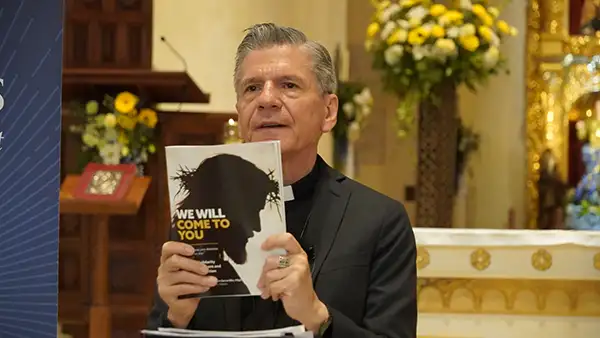
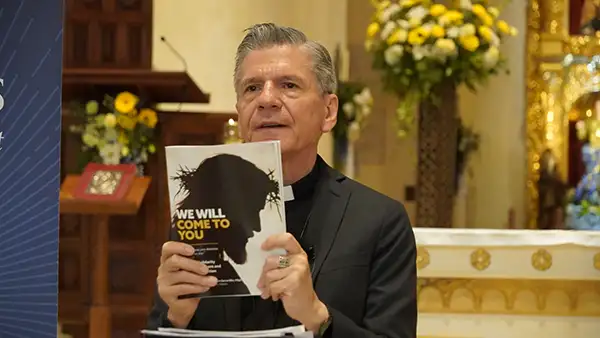
“I write to comfort the afflicted, to ignite the comfortable, and to confront injustice with the full conviction of the Gospel,” San Antonio Archbishop Gustavo García-Siller wrote.
Read More