righteousness

Start here: 15 quotes from Pope Leo XIV’s first encyclical Magnifica Humanitas #Catholic Pope Leo XIV just released his first encyclical — and it may be the most important Church document of our lifetime. Called Magnifica Humanitas, it covers artificial intelligence, human dignity, childrenʼs phones, autonomous weapons, doomscrolling, the mystery of the human soul, and why no machine will ever have the final word on what it means to be a person made in the image of God.The full document is available to download here — and worth a read. But for a quick taste of whatʼs inside, here are 15 powerful quotes from the encyclical:“Never has humanity had such power over itself.” (par. 4)"In practice, however, technology is never neutral, because it takes on the characteristics of those who devise, finance, regulate and use it. Therefore, the primary choice is not between a ‘yes’ or ‘no’ to technology, but rather between constructing Babel or rebuilding Jerusalem; between a power that claims to dominate the heavens and a people who work together in the presence of God to rebuild the walls of fraternal coexistence.” (par. 9)“In the era of artificial intelligence, when human dignity is threatened by new forms of dehumanization, ours is the pressing duty to remain profoundly human. We must lovingly safeguard the grandeur of humanity bestowed upon us and revealed in its fullness in Christ, the splendor of which no machine can ever replace.” (par. 15)“Thus, the ‘rejected stones’ — the poor, the sick, the migrants and the least among us — will become the cornerstone, and a solid, welcoming common home will emerge on the earth, where love and faithfulness will finally meet, and righteousness and peace will embrace (cf. Ps 85:10).” (par.16)“Human dignity does not depend on a person’s abilities, wealth, or position in life, nor on the right or wrong choices made; instead, it is a gift that precedes and transcends each person, endowed by God as an expression of his unfailing love.” (par. 50)“Among these ideologies, I consider particularly insidious the one that suggests that every person must earn or justify his or her own worth, to the point of attributing greater value to those who are more efficient or effective.” (par. 51)“No sin, failure, humiliation, or exclusion can diminish the profound value of a human life that God has willed and called into being.” (par. 52)“Solidarity demands that decisions regarding data, algorithms, platforms and artificial intelligence take into account not only the immediate benefit for a few, but also the impact on all peoples and on future generations.” (par. 76)“For an algorithm, an error is a flaw to be corrected; for a person, however, an error can be a catalyst for profound change. A person’s future is not calculable, but depends on one’s freedom — elevated by the inexhaustible grace of God — and on the relationships cultivated.” (par. 128)“Having a personal mobile device at too early an age and using it without adult supervision can exacerbate young people’s vulnerabilities, foster addiction, and expose them to isolation, bullying, and cyberbullying, as well as to pressures to share intimate images or sensitive information.” (par. 141)“Even in the darkest nights, the Lord raises up men and women who refuse to give up, who persevere in doing good, who protect the vulnerable and open pathways to reconciliation. The memory of the saints, righteous people, and the oft-forgotten peacemakers, show us that grace does not magically eliminate conflict, but instead it inspires active resistance to evil and an astonishing creativity in doing good.” (par. 211)“The civilization of love will not arise from a single or spectacular gesture, but from the sum total of small and steadfast acts of fidelity that serve as a bulwark against dehumanization.” (par. 213)“‘Let us disarm words and we will help to disarm the world.’ Words have enormous power, something we experience in our daily interactions; for example, spoken words can change our mood for better or for worse." (par. 214)“No computational system, however sophisticated, can create a heart that gives itself, or a conscience that discerns good from evil. Even when machines excel in efficiency, a human face that asks to be gazed upon remains the center of our history. This human face is the fullness toward which history is moving.” (par. 233)“Let us remain faithful to the truth! Living amid incessant flows of information, opinions and images, we know how easy it can be to influence decisions and preferences through increasingly sophisticated algorithms. In this context, it is imperative to cultivate hearts that love the truth, prefer what is right despite the most appealing content and pursue wisdom rather than immediate results.” (par. 237)

Start here: 15 quotes from Pope Leo XIV’s first encyclical Magnifica Humanitas #Catholic Pope Leo XIV just released his first encyclical — and it may be the most important Church document of our lifetime. Called Magnifica Humanitas, it covers artificial intelligence, human dignity, childrenʼs phones, autonomous weapons, doomscrolling, the mystery of the human soul, and why no machine will ever have the final word on what it means to be a person made in the image of God.The full document is available to download here — and worth a read. But for a quick taste of whatʼs inside, here are 15 powerful quotes from the encyclical:“Never has humanity had such power over itself.” (par. 4)"In practice, however, technology is never neutral, because it takes on the characteristics of those who devise, finance, regulate and use it. Therefore, the primary choice is not between a ‘yes’ or ‘no’ to technology, but rather between constructing Babel or rebuilding Jerusalem; between a power that claims to dominate the heavens and a people who work together in the presence of God to rebuild the walls of fraternal coexistence.” (par. 9)“In the era of artificial intelligence, when human dignity is threatened by new forms of dehumanization, ours is the pressing duty to remain profoundly human. We must lovingly safeguard the grandeur of humanity bestowed upon us and revealed in its fullness in Christ, the splendor of which no machine can ever replace.” (par. 15)“Thus, the ‘rejected stones’ — the poor, the sick, the migrants and the least among us — will become the cornerstone, and a solid, welcoming common home will emerge on the earth, where love and faithfulness will finally meet, and righteousness and peace will embrace (cf. Ps 85:10).” (par.16)“Human dignity does not depend on a person’s abilities, wealth, or position in life, nor on the right or wrong choices made; instead, it is a gift that precedes and transcends each person, endowed by God as an expression of his unfailing love.” (par. 50)“Among these ideologies, I consider particularly insidious the one that suggests that every person must earn or justify his or her own worth, to the point of attributing greater value to those who are more efficient or effective.” (par. 51)“No sin, failure, humiliation, or exclusion can diminish the profound value of a human life that God has willed and called into being.” (par. 52)“Solidarity demands that decisions regarding data, algorithms, platforms and artificial intelligence take into account not only the immediate benefit for a few, but also the impact on all peoples and on future generations.” (par. 76)“For an algorithm, an error is a flaw to be corrected; for a person, however, an error can be a catalyst for profound change. A person’s future is not calculable, but depends on one’s freedom — elevated by the inexhaustible grace of God — and on the relationships cultivated.” (par. 128)“Having a personal mobile device at too early an age and using it without adult supervision can exacerbate young people’s vulnerabilities, foster addiction, and expose them to isolation, bullying, and cyberbullying, as well as to pressures to share intimate images or sensitive information.” (par. 141)“Even in the darkest nights, the Lord raises up men and women who refuse to give up, who persevere in doing good, who protect the vulnerable and open pathways to reconciliation. The memory of the saints, righteous people, and the oft-forgotten peacemakers, show us that grace does not magically eliminate conflict, but instead it inspires active resistance to evil and an astonishing creativity in doing good.” (par. 211)“The civilization of love will not arise from a single or spectacular gesture, but from the sum total of small and steadfast acts of fidelity that serve as a bulwark against dehumanization.” (par. 213)“‘Let us disarm words and we will help to disarm the world.’ Words have enormous power, something we experience in our daily interactions; for example, spoken words can change our mood for better or for worse." (par. 214)“No computational system, however sophisticated, can create a heart that gives itself, or a conscience that discerns good from evil. Even when machines excel in efficiency, a human face that asks to be gazed upon remains the center of our history. This human face is the fullness toward which history is moving.” (par. 233)“Let us remain faithful to the truth! Living amid incessant flows of information, opinions and images, we know how easy it can be to influence decisions and preferences through increasingly sophisticated algorithms. In this context, it is imperative to cultivate hearts that love the truth, prefer what is right despite the most appealing content and pursue wisdom rather than immediate results.” (par. 237)

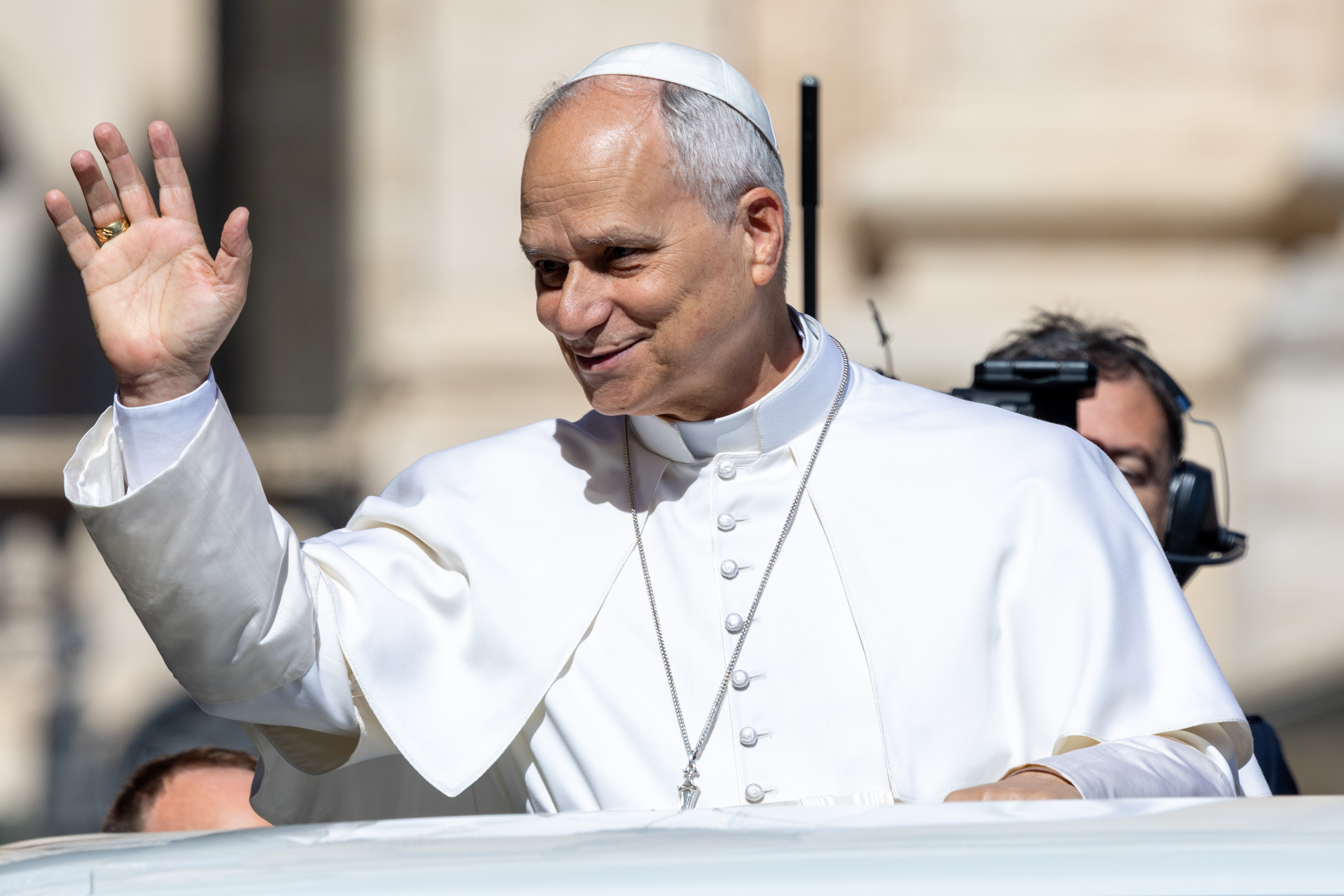
Pope Leo XIV just released his first encyclical — and it may be the most important Church document of our lifetime.

Read More
Pope Leo XIV prays for Sahel victims #Catholic VATICAN CITY — Pope Leo XIV on Sunday prayed for victims of growing violence in the Sahel, thanked the people of the Canary Islands for welcoming a cruise ship carrying people sick with hantavirus, and offered a special blessing for mothers during his Regina Caeli address in St. Peter’s Square.Speaking after the Marian prayer May 10, the pope said he had learned “with deep concern of the reports regarding the growing violence in the Sahel region, particularly in Chad and Mali,” which have recently suffered terrorist attacks.“I offer the assurance of my heartfelt prayers for the victims and my spiritual closeness to all those who are suffering as a result of the tragic events,” he said. “I fervently hope that every form of violence may cease, and I encourage all efforts aimed at fostering peace and development in that beloved land.”The pope also marked the annual “Day of Coptic-Catholic Friendship,” extending “fraternal greetings” to Pope Tawadros II and assuring “the entire beloved Coptic Church” of his “remembrance in prayer.”“It is my hope that our journey of friendship will lead us to perfect unity in Christ, who has called us ‘friends,’” he said.In Spanish, Pope Leo XIV thanked the people of the Canary Islands who, “with the hospitality characteristic of them,” welcomed the Hondius cruise ship and the passengers infected with hantavirus.“I look forward to seeing all of you next month during my visit to the Islands,” he said.The pope also offered a Mother’s Day greeting, asking Mary, “the Mother of Jesus and our own Mother,” to intercede for all mothers.“Let us pray with love and gratitude for every mother, particularly those living in very difficult circumstances,” he said. “Thank you! May God bless you!”Before the Regina Caeli, Pope Leo reflected on the Gospel for the Sixth Sunday of Easter, in which Jesus tells his disciples: “If you love me, you will keep my commandments.”The pope said the words of Jesus free Christians from the misconception “that we are loved because we keep the commandments, as if our righteousness were a prerequisite for God’s love.”“On the contrary, God’s love is the basis for our righteousness,” he said.Jesus’ words, he said, are “an invitation to enter into a relationship, not a blackmail or a suspicious ultimatum.”The Lord commands his followers to love one another as he has loved them, Pope Leo said, because “it is Jesus’ love that begets love within us.”Christ, he said, is “the standard, the measure of true love: the love that is faithful forever, pure and unconditional,” the love that knows no “buts” or “maybes.”“Because God loved us first, we too can love, and when we truly love God, we truly love one another,” he said.The pope said the Lord’s commandments are “a way of life that heal us from false loves” and “a spiritual lifestyle that is a path towards salvation.”Because God loves his people, the pope continued, he “does not leave us alone in life’s trials” but promises the Paraclete, the Advocate, the “Spirit of truth.”The Holy Spirit, he said, is a gift that “the world cannot receive” as long as it persists in evil, “oppressing the poor, excluding the weak and killing the innocent.” But those who respond to Jesus’ love for all “will find in the Holy Spirit an ally who will never fail.”Pope Leo said Christians can always bear witness to “God, who is love,” adding that love is “not an idea of the human mind, but the reality of divine life, through which all things were created out of nothing and redeemed from death.”Jesus, he said, shares with believers his identity as the beloved Son: “I am in my Father, and you in me, and I in you.”This “all-encompassing communion of life,” the pope said, refutes the Accuser, the adversary of the Paraclete, who seeks to set humanity against God and people against one another. Jesus does the opposite, he said, “saving us from evil and uniting us as a people of brothers and sisters in the Church.”This story was first published by ACI Stampa, the Italian-language sister service of EWTN News. It has been translated and adapted by EWTN News English.

Pope Leo XIV prays for Sahel victims #Catholic VATICAN CITY — Pope Leo XIV on Sunday prayed for victims of growing violence in the Sahel, thanked the people of the Canary Islands for welcoming a cruise ship carrying people sick with hantavirus, and offered a special blessing for mothers during his Regina Caeli address in St. Peter’s Square.Speaking after the Marian prayer May 10, the pope said he had learned “with deep concern of the reports regarding the growing violence in the Sahel region, particularly in Chad and Mali,” which have recently suffered terrorist attacks.“I offer the assurance of my heartfelt prayers for the victims and my spiritual closeness to all those who are suffering as a result of the tragic events,” he said. “I fervently hope that every form of violence may cease, and I encourage all efforts aimed at fostering peace and development in that beloved land.”The pope also marked the annual “Day of Coptic-Catholic Friendship,” extending “fraternal greetings” to Pope Tawadros II and assuring “the entire beloved Coptic Church” of his “remembrance in prayer.”“It is my hope that our journey of friendship will lead us to perfect unity in Christ, who has called us ‘friends,’” he said.In Spanish, Pope Leo XIV thanked the people of the Canary Islands who, “with the hospitality characteristic of them,” welcomed the Hondius cruise ship and the passengers infected with hantavirus.“I look forward to seeing all of you next month during my visit to the Islands,” he said.The pope also offered a Mother’s Day greeting, asking Mary, “the Mother of Jesus and our own Mother,” to intercede for all mothers.“Let us pray with love and gratitude for every mother, particularly those living in very difficult circumstances,” he said. “Thank you! May God bless you!”Before the Regina Caeli, Pope Leo reflected on the Gospel for the Sixth Sunday of Easter, in which Jesus tells his disciples: “If you love me, you will keep my commandments.”The pope said the words of Jesus free Christians from the misconception “that we are loved because we keep the commandments, as if our righteousness were a prerequisite for God’s love.”“On the contrary, God’s love is the basis for our righteousness,” he said.Jesus’ words, he said, are “an invitation to enter into a relationship, not a blackmail or a suspicious ultimatum.”The Lord commands his followers to love one another as he has loved them, Pope Leo said, because “it is Jesus’ love that begets love within us.”Christ, he said, is “the standard, the measure of true love: the love that is faithful forever, pure and unconditional,” the love that knows no “buts” or “maybes.”“Because God loved us first, we too can love, and when we truly love God, we truly love one another,” he said.The pope said the Lord’s commandments are “a way of life that heal us from false loves” and “a spiritual lifestyle that is a path towards salvation.”Because God loves his people, the pope continued, he “does not leave us alone in life’s trials” but promises the Paraclete, the Advocate, the “Spirit of truth.”The Holy Spirit, he said, is a gift that “the world cannot receive” as long as it persists in evil, “oppressing the poor, excluding the weak and killing the innocent.” But those who respond to Jesus’ love for all “will find in the Holy Spirit an ally who will never fail.”Pope Leo said Christians can always bear witness to “God, who is love,” adding that love is “not an idea of the human mind, but the reality of divine life, through which all things were created out of nothing and redeemed from death.”Jesus, he said, shares with believers his identity as the beloved Son: “I am in my Father, and you in me, and I in you.”This “all-encompassing communion of life,” the pope said, refutes the Accuser, the adversary of the Paraclete, who seeks to set humanity against God and people against one another. Jesus does the opposite, he said, “saving us from evil and uniting us as a people of brothers and sisters in the Church.”This story was first published by ACI Stampa, the Italian-language sister service of EWTN News. It has been translated and adapted by EWTN News English.

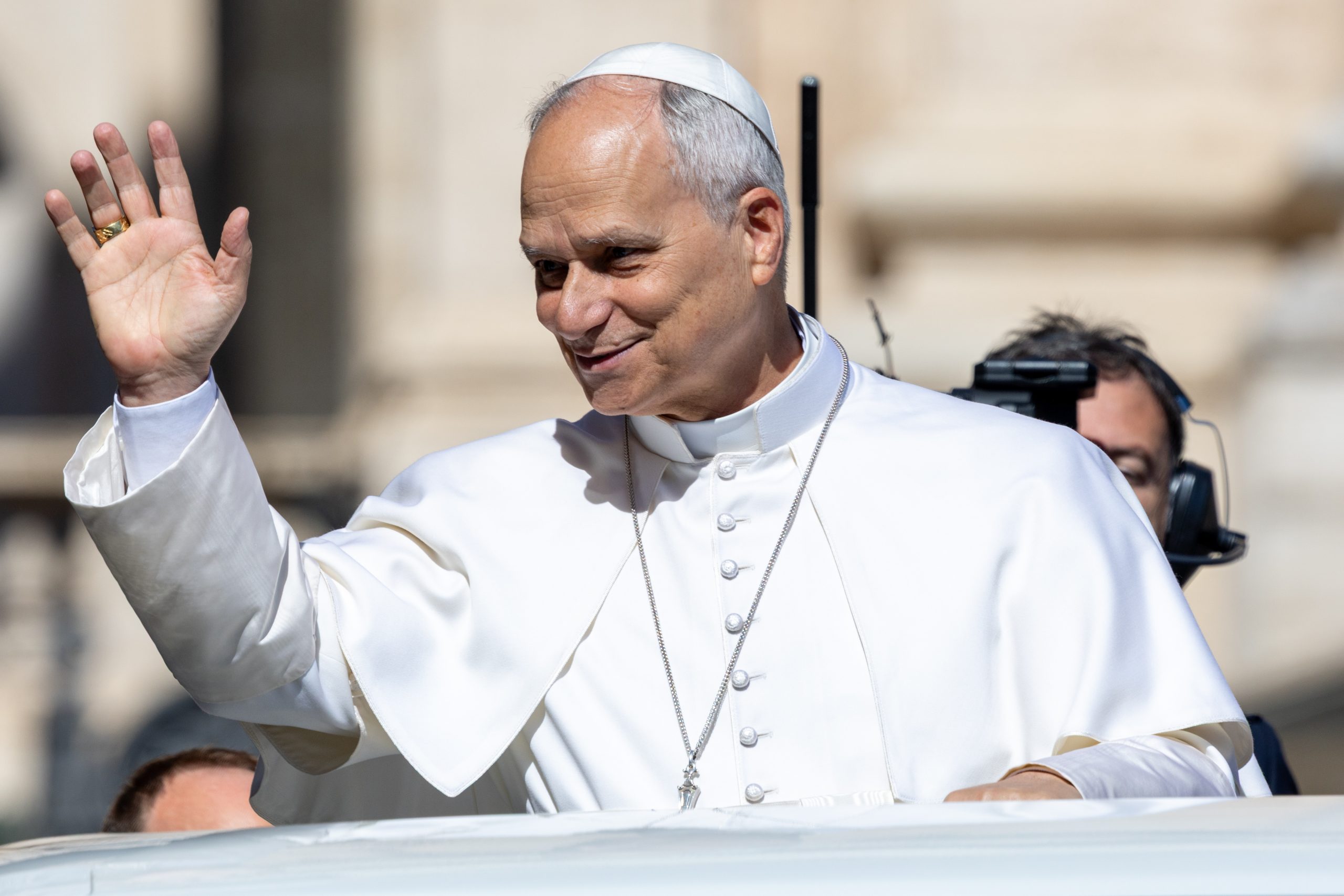
At the Regina Caeli, the pope also thanked the Canary Islands for welcoming a cruise ship with passengers sick with hantavirus.

Read More
Pope Leo XIV tells new priests: ‘You are a channel, not a filter’ #Catholic VATICAN CITY, April 26, 2026 — Pope Leo XIV ordained 10 new priests in St. Peter’s Basilica on Sunday, urging them to keep the doors of the Church open and to remember that their mission is to welcome, not to exclude.“Today more than ever, especially when statistics seem to indicate a divide between people and the Church, keep the door open! Let people in, and be prepared to go out,” the pope said in his homily for the Mass on the Fourth Sunday of Easter, also known as Good Shepherd Sunday.“This is another secret for your life: you are a channel, not a filter,” he told the ordinands.Eight of the new priests were ordained for the Diocese of Rome, of which the pope is bishop: Guglielmo Lapenna, Giorgio Larosa, Jos Emanuele Nleme Sabate, Giovanni Emanuele Nunziante Salazar, Antonino Ordine, Yordan Camilo Ramos Medina, Daniele Riscica, and Cristian Sguazzino.The pope also ordained Armando Roa Núñez, born in Mexico and incardinated in the Diocese of Miao in India, and Selwyn Pinto Loyce, born in Saudi Arabia and incardinated in the Institute of Christ the Redeemer, Idente Missionaries.Reflecting on the Gospel in which Jesus says, “I am the gate,” Leo told the new priests to see themselves as servants of a suffering humanity that awaits abundant life.“Never hide this holy door. Do not block it; do not be an obstacle to those who wish to enter,” he said. Quoting Jesus’ rebuke in Luke’s Gospel, he added: “You did not enter yourselves, and you hindered those who were entering.”The pope said priestly ministry should be marked by communion and openness. “You belong to everyone and are for everyone!” he said. “Let this be the fundamental purpose of your mission: to keep the threshold open and direct others to it, without using too many words.”Leo also urged the ordinands not to reduce Christian life to parish structures or ecclesial groups.“The Church’s doors are open, but not to cut us off from life: life does not end in a parish, in an association, in a movement, in a group,” he said. “Whoever is saved can ‘go out and find pasture.’”“Dear brothers, go out and discover culture, people and life!” the pope continued. “Marvel at the things that God makes grow without our having sown them.”The pope also spoke about celibacy, comparing it to the love of spouses.“Certainly, like the love of spouses, the love that inspires celibacy for the Kingdom of God must also be guarded and constantly renewed, for every true affection matures and becomes fruitful over time,” he said.He told the new priests that the deeper their bond with Christ, “the more radical” their belonging to humanity becomes, adding that they are called to be “not only good priests but also honest, helpful citizens, builders of peace and social friendship.”The pope warned against fear and the search for scapegoats, saying that the need for security today can make people aggressive and cause communities to close in on themselves.“May your security not lie in the role you hold, but in the life, death and resurrection of Jesus as well as in your participation, along with your people, in the story of salvation,” he said.The communities to which the priests will be sent, he said, are already places where the risen Christ is present.“These communities will also help you to become saints!” Leo said. “For your part, help them to walk together, following Jesus, the Good Shepherd, so that they may become places — gardens — of life that rise anew and share themselves with others.”He added: “Facilitating encounters, helping to bring together those who would otherwise never meet, and conciliating division is one and the same as celebrating the Eucharist and Reconciliation. Coming together always means planting the Church anew.”Later on Sunday, before leading the Regina Caeli from the window of the Apostolic Palace, Pope Leo returned to the image of Jesus as the Good Shepherd and the gate of the sheepfold.“Jesus does not come as a thief to take away our life and our freedom, but to lead us along the paths of righteousness,” he said. “He does not come to ensnare or deceive our conscience, but to illuminate it with the light of his wisdom. He does not come to taint our earthly joys, but to open them to a fuller and more lasting happiness.”“Those who entrust themselves to him have nothing to fear,” the pope said, “for he does not deprive us of life, but comes to give it to us in abundance.”Leo urged the faithful to be vigilant about who or what enters “the gate” of their hearts.“‘Thieves’ can take many forms,” he said, citing those who “suppress our freedom or fail to respect our dignity,” as well as “beliefs and biases,” “mistaken ideas,” and “superficial and consumeristic lifestyles” that leave people empty inside.He also pointed to those who harm humanity by “pillaging the earth’s resources, waging blood-thirsty wars, or fueling evil in any form,” saying they “do nothing but rob each of us of the possibility of a future marked by peace and serenity.”The pope invited the faithful to examine their consciences: “Who do we want to guide us in life? Which ‘thieves’ have tried to break into our fold? Have they succeeded, or have we managed to ward them off?”After the Regina Caeli, Leo recalled the 40th anniversary of the Chernobyl nuclear disaster, calling it a warning about the risks of powerful technologies.“Let us entrust those who died and all who still suffer from the aftermath of the disaster to God’s mercy,” he said. “I hope that discernment and responsibility will always prevail at every level of decision-making so that all use of atomic energy may be placed at the service of life and peace.”The pope also offered a special greeting to the relatives and friends of the new priests of the Diocese of Rome.“Please continue to accompany these young ministers of the Gospel with your prayers,” he said.This story was first published in two parts by ACI Prensa, EWTN News’ Spanish-language news partner. It has been translated and adapted by EWTN News English.

Pope Leo XIV tells new priests: ‘You are a channel, not a filter’ #Catholic VATICAN CITY, April 26, 2026 — Pope Leo XIV ordained 10 new priests in St. Peter’s Basilica on Sunday, urging them to keep the doors of the Church open and to remember that their mission is to welcome, not to exclude.“Today more than ever, especially when statistics seem to indicate a divide between people and the Church, keep the door open! Let people in, and be prepared to go out,” the pope said in his homily for the Mass on the Fourth Sunday of Easter, also known as Good Shepherd Sunday.“This is another secret for your life: you are a channel, not a filter,” he told the ordinands.Eight of the new priests were ordained for the Diocese of Rome, of which the pope is bishop: Guglielmo Lapenna, Giorgio Larosa, Jos Emanuele Nleme Sabate, Giovanni Emanuele Nunziante Salazar, Antonino Ordine, Yordan Camilo Ramos Medina, Daniele Riscica, and Cristian Sguazzino.The pope also ordained Armando Roa Núñez, born in Mexico and incardinated in the Diocese of Miao in India, and Selwyn Pinto Loyce, born in Saudi Arabia and incardinated in the Institute of Christ the Redeemer, Idente Missionaries.Reflecting on the Gospel in which Jesus says, “I am the gate,” Leo told the new priests to see themselves as servants of a suffering humanity that awaits abundant life.“Never hide this holy door. Do not block it; do not be an obstacle to those who wish to enter,” he said. Quoting Jesus’ rebuke in Luke’s Gospel, he added: “You did not enter yourselves, and you hindered those who were entering.”The pope said priestly ministry should be marked by communion and openness. “You belong to everyone and are for everyone!” he said. “Let this be the fundamental purpose of your mission: to keep the threshold open and direct others to it, without using too many words.”Leo also urged the ordinands not to reduce Christian life to parish structures or ecclesial groups.“The Church’s doors are open, but not to cut us off from life: life does not end in a parish, in an association, in a movement, in a group,” he said. “Whoever is saved can ‘go out and find pasture.’”“Dear brothers, go out and discover culture, people and life!” the pope continued. “Marvel at the things that God makes grow without our having sown them.”The pope also spoke about celibacy, comparing it to the love of spouses.“Certainly, like the love of spouses, the love that inspires celibacy for the Kingdom of God must also be guarded and constantly renewed, for every true affection matures and becomes fruitful over time,” he said.He told the new priests that the deeper their bond with Christ, “the more radical” their belonging to humanity becomes, adding that they are called to be “not only good priests but also honest, helpful citizens, builders of peace and social friendship.”The pope warned against fear and the search for scapegoats, saying that the need for security today can make people aggressive and cause communities to close in on themselves.“May your security not lie in the role you hold, but in the life, death and resurrection of Jesus as well as in your participation, along with your people, in the story of salvation,” he said.The communities to which the priests will be sent, he said, are already places where the risen Christ is present.“These communities will also help you to become saints!” Leo said. “For your part, help them to walk together, following Jesus, the Good Shepherd, so that they may become places — gardens — of life that rise anew and share themselves with others.”He added: “Facilitating encounters, helping to bring together those who would otherwise never meet, and conciliating division is one and the same as celebrating the Eucharist and Reconciliation. Coming together always means planting the Church anew.”Later on Sunday, before leading the Regina Caeli from the window of the Apostolic Palace, Pope Leo returned to the image of Jesus as the Good Shepherd and the gate of the sheepfold.“Jesus does not come as a thief to take away our life and our freedom, but to lead us along the paths of righteousness,” he said. “He does not come to ensnare or deceive our conscience, but to illuminate it with the light of his wisdom. He does not come to taint our earthly joys, but to open them to a fuller and more lasting happiness.”“Those who entrust themselves to him have nothing to fear,” the pope said, “for he does not deprive us of life, but comes to give it to us in abundance.”Leo urged the faithful to be vigilant about who or what enters “the gate” of their hearts.“‘Thieves’ can take many forms,” he said, citing those who “suppress our freedom or fail to respect our dignity,” as well as “beliefs and biases,” “mistaken ideas,” and “superficial and consumeristic lifestyles” that leave people empty inside.He also pointed to those who harm humanity by “pillaging the earth’s resources, waging blood-thirsty wars, or fueling evil in any form,” saying they “do nothing but rob each of us of the possibility of a future marked by peace and serenity.”The pope invited the faithful to examine their consciences: “Who do we want to guide us in life? Which ‘thieves’ have tried to break into our fold? Have they succeeded, or have we managed to ward them off?”After the Regina Caeli, Leo recalled the 40th anniversary of the Chernobyl nuclear disaster, calling it a warning about the risks of powerful technologies.“Let us entrust those who died and all who still suffer from the aftermath of the disaster to God’s mercy,” he said. “I hope that discernment and responsibility will always prevail at every level of decision-making so that all use of atomic energy may be placed at the service of life and peace.”The pope also offered a special greeting to the relatives and friends of the new priests of the Diocese of Rome.“Please continue to accompany these young ministers of the Gospel with your prayers,” he said.This story was first published in two parts by ACI Prensa, EWTN News’ Spanish-language news partner. It has been translated and adapted by EWTN News English.

The pope ordained 10 men to the priesthood on Good Shepherd Sunday and later warned at the Regina Caeli against the “thieves” that rob people of freedom, dignity, and peace.

Read More