Rohingya

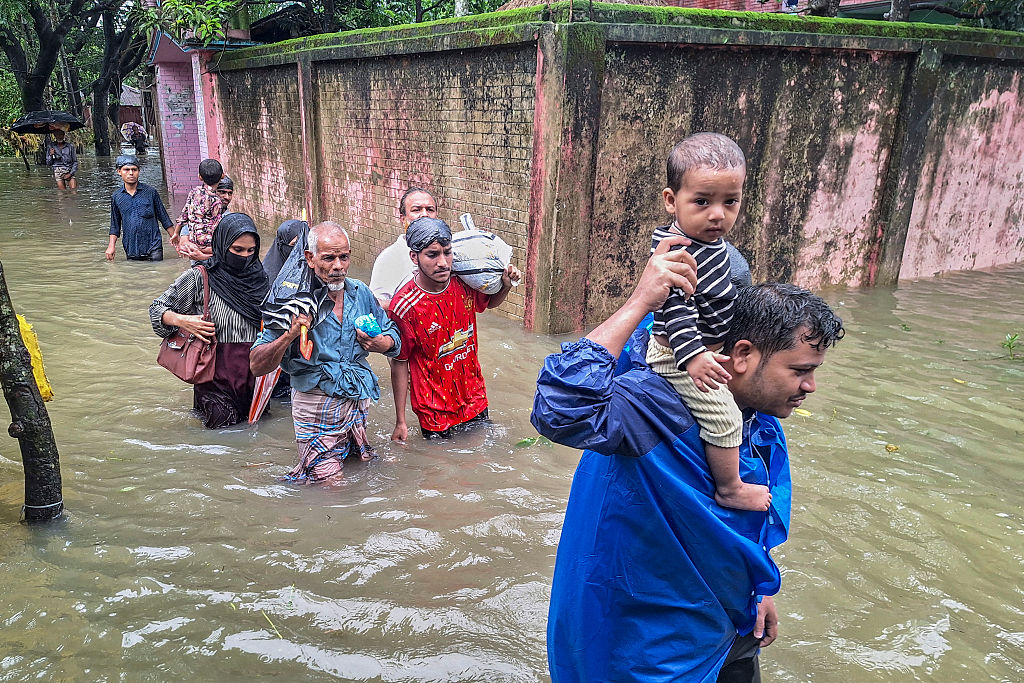
Catholic relief agencies mobilize across Asia as storms trigger widespread humanitarian need #Catholic Catholic aid groups in Bangladesh and China are responding to severe midsummer storms, with Caritas Bangladesh coordinating relief in dioceses hit by early‑July monsoon flooding and Jinde Charities delivering assistance on behalf of the Shanghai and Beijing dioceses after flash floods and tornadoes.Caritas Bangladesh is collaborating with local partners in dioceses affected by monsoon rains and flooding that swept the country in early July.Caritas disaster relief efforts have been underway after the July 5–9 flooding, which has resulted in the deaths of at least 34 people in Bangladesh, according to a July 10 press release from the aid organization. “More than 241,000 people have been affected. Among them are more than 7,400 Rohingya refugees living in 25 camps severely affected by floods and landslides,” Caritas said.The rainfall has impacted Bangladesh’s Chattogram Division, including the districts of Bandarban, Khagrachari, Rangamati, Cox’s Bazar, and Chattogram.“Caritas Bangladesh has mobilized local staff and community volunteers, who went from door to door sharing early warning messages and helping families living in high-risk areas move to safety before the worst of the rains arrived,” the aid organization said.“This latest disaster comes on top of a protracted humanitarian crisis,” the press release continued. “As humanitarian funding continues to decline, many Rohingya families face growing food insecurity, reduced access to essential services and fewer opportunities to rebuild their lives with dignity. The floods are a reminder that sustained international solidarity remains essential.”Catholics in China distribute aid after flooding The government-registered Catholic relief organization Jinde Charities has been acting on behalf of the Shanghai and Beijing dioceses to deliver humanitarian assistance in the wake of flash floods and tornadoes.
 
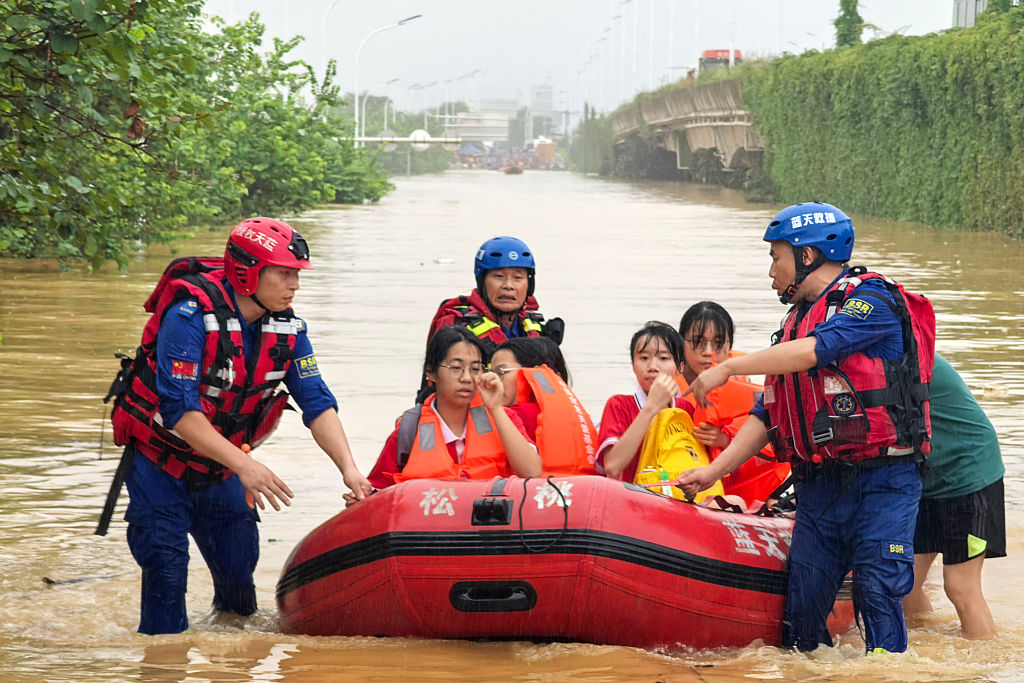
 Rescue workers evacuate flood-affected students in Guigang, in China’s southern Guangxi region, on July 8, 2026. | Credit: CN-STR/AFP via Getty Images
 
 According to a July 18 press release on the organization’s website, Jinde Charities is collaborating with local partners and traveling to Shuangfeng Village, Sanli Town, Qintang District, Guigang City, Guangxi, to deliver food aid to disaster-affected villagers.Jinde noted in an earlier release that as of July 13, about 827,000 people have been affected by the disaster in Guigang City. In addition to food aid, Jinde has distributed tools such as chainsaws, shovels, wheelbarrows, bamboo brooms, and other supplies. Fides News Agency, a Vatican news service, reported that many Catholic families in Guigang have been left without running water and electricity.

Catholic relief agencies mobilize across Asia as storms trigger widespread humanitarian need #Catholic Catholic aid groups in Bangladesh and China are responding to severe midsummer storms, with Caritas Bangladesh coordinating relief in dioceses hit by early‑July monsoon flooding and Jinde Charities delivering assistance on behalf of the Shanghai and Beijing dioceses after flash floods and tornadoes.Caritas Bangladesh is collaborating with local partners in dioceses affected by monsoon rains and flooding that swept the country in early July.Caritas disaster relief efforts have been underway after the July 5–9 flooding, which has resulted in the deaths of at least 34 people in Bangladesh, according to a July 10 press release from the aid organization. “More than 241,000 people have been affected. Among them are more than 7,400 Rohingya refugees living in 25 camps severely affected by floods and landslides,” Caritas said.The rainfall has impacted Bangladesh’s Chattogram Division, including the districts of Bandarban, Khagrachari, Rangamati, Cox’s Bazar, and Chattogram.“Caritas Bangladesh has mobilized local staff and community volunteers, who went from door to door sharing early warning messages and helping families living in high-risk areas move to safety before the worst of the rains arrived,” the aid organization said.“This latest disaster comes on top of a protracted humanitarian crisis,” the press release continued. “As humanitarian funding continues to decline, many Rohingya families face growing food insecurity, reduced access to essential services and fewer opportunities to rebuild their lives with dignity. The floods are a reminder that sustained international solidarity remains essential.”Catholics in China distribute aid after flooding The government-registered Catholic relief organization Jinde Charities has been acting on behalf of the Shanghai and Beijing dioceses to deliver humanitarian assistance in the wake of flash floods and tornadoes. Rescue workers evacuate flood-affected students in Guigang, in China’s southern Guangxi region, on July 8, 2026. | Credit: CN-STR/AFP via Getty Images According to a July 18 press release on the organization’s website, Jinde Charities is collaborating with local partners and traveling to Shuangfeng Village, Sanli Town, Qintang District, Guigang City, Guangxi, to deliver food aid to disaster-affected villagers.Jinde noted in an earlier release that as of July 13, about 827,000 people have been affected by the disaster in Guigang City. In addition to food aid, Jinde has distributed tools such as chainsaws, shovels, wheelbarrows, bamboo brooms, and other supplies. Fides News Agency, a Vatican news service, reported that many Catholic families in Guigang have been left without running water and electricity.

Caritas Bangladesh and Jinde Charities in China are providing aid after devastating flooding.

Read More
Funding cuts force Catholic charity to scale back Rohingya aid in Bangladesh #Catholic Caritas Bangladesh has been forced to scale back its relief work for Rohingya refugees in the city of Coxʼs Bazar as funding from foreign donors declines, its emergency response director said.“Our biggest challenge now is funding,” said Liton Luis Gomes, project director of Caritas Bangladeshʼs Emergency Response Program.“We only received 60% of the funds we planned for this fiscal year; we didnʼt get the remaining 40%,” Gomes told EWTN News by phone. “Thatʼs why we had to reduce the quantity while maintaining the quality of our services.”The cuts have fallen hardest on shelter and hygiene work. “If we used to be able to repair 500 houses, now it has decreased by 50%. If someone asks for a hygiene kit like soap, we canʼt give it urgently,” Gomes said.A shrinking budgetThe decline in donor support has been steep. Caritas Bangladesh reported receiving about 916 million taka ($7.4 million) for its Rohingya response in 2017–18. Support fell to about 468 million taka ($3.8 million) in 2020 and about 417 million taka ($3.4 million) in 2024. It rose to about 531 million taka ($4.3 million) in 2025 before falling again to about 427 million taka ($3.5 million) so far in 2026, the agency said.Even so, Gomes said, the charity is maintaining the services that do not require money. “We are doing things like training volunteers for the crisis period, raising awareness about disaster relief,” he said.Caritas Bangladesh has worked in the camps since the 2017 exodus, providing shelter, water and sanitation, child protection, and education. Between 2017 and 2024, its shelter and settlement program reached an average of 38,335 households a year, the charity said, through transitional shelter assistance, repairs, tarpaulin distribution, and monsoon support. It runs 12 learning centers and two youth and adolescent centers in the camps, teaching children under the Myanmar curriculum.Lives in the campsThe charityʼs work is felt in individual lives. Mohammad Arshad, 23, who lives in Camp 19, has volunteered in the shelter program of Caritas Bangladeshʼs Emergency Response Program since 2018. He had studied up to class nine in Myanmar and helped his father run a grocery shop before the family was forced to flee. With no stable income and eight people to support, including his aging parents, his wife, his young son, and two younger siblings, he had lain awake wondering how he would provide.“The job was more than just a source of income; it gave me a sense of purpose. I learned how to organize workers, coordinate with engineers, and develop technical skills,” Arshad told EWTN News.“This opportunity had not only helped me; it supports my family but also [has] given me hope for a better future. As I watched my son sleep peacefully at night, [I] whispered silent thanks, to Caritas Bangladesh, to the people who had trusted me, to the strength that kept me going,” Arshad added.Momtaz Begum, a vulnerable woman who received income-generating support through Caritas, described a similar turnaround. “My husbandʼs addiction left us in debt, and after he abandoned us, I struggled to provide for my family by raising poultry and growing vegetables. The COVID-19 pandemic made things worse, leaving us without food or income. When our home was destroyed in the rain, I moved to my fatherʼs house, where I faced mistreatment from relatives,” she told EWTN News.On Jan. 18, 2022, Begum received 25,000 taka (about $200) from Caritas Bangladesh to start an income-generating activity. She used the money to expand her cloth business. “Earlier, I had to share profits with a shopkeeper, but now I buy cloth independently and keep all the profit. This has increased my daily earnings to 400-500 taka [about $3 to $4], allowing me to save … money,” Begum told EWTN News.A stateless peopleRohingya refugees have fled Myanmar for Bangladesh since the 1970s. In the 1990s, more than 250,000 sheltered in Coxʼs Bazar, though all but 20,000 were repatriated after a campaign that began in the early 2000s. The influx resumed in 2015, and by 2017 an estimated 300,000 Rohingya were in Bangladesh. About 537,000 more fled across the border to Coxʼs Bazar in August 2017 as violence intensified in Myanmarʼs Rakhine state, prompting the United Nations to call the situation “a textbook example of ethnic cleansing.” By December 2023, 971,904 Rohingya were living in 33 camps in the Coxʼs Bazar district. Pope Francis met a group of Rohingya refugees during his apostolic visit to Bangladesh in 2017.Looking ahead, Caritas Bangladesh said it aims to build stronger links between the refugees it assists and local businesses, and to deepen cooperation with government and aid agencies, even within a tighter budget.

Funding cuts force Catholic charity to scale back Rohingya aid in Bangladesh #Catholic Caritas Bangladesh has been forced to scale back its relief work for Rohingya refugees in the city of Coxʼs Bazar as funding from foreign donors declines, its emergency response director said.“Our biggest challenge now is funding,” said Liton Luis Gomes, project director of Caritas Bangladeshʼs Emergency Response Program.“We only received 60% of the funds we planned for this fiscal year; we didnʼt get the remaining 40%,” Gomes told EWTN News by phone. “Thatʼs why we had to reduce the quantity while maintaining the quality of our services.”The cuts have fallen hardest on shelter and hygiene work. “If we used to be able to repair 500 houses, now it has decreased by 50%. If someone asks for a hygiene kit like soap, we canʼt give it urgently,” Gomes said.A shrinking budgetThe decline in donor support has been steep. Caritas Bangladesh reported receiving about 916 million taka ($7.4 million) for its Rohingya response in 2017–18. Support fell to about 468 million taka ($3.8 million) in 2020 and about 417 million taka ($3.4 million) in 2024. It rose to about 531 million taka ($4.3 million) in 2025 before falling again to about 427 million taka ($3.5 million) so far in 2026, the agency said.Even so, Gomes said, the charity is maintaining the services that do not require money. “We are doing things like training volunteers for the crisis period, raising awareness about disaster relief,” he said.Caritas Bangladesh has worked in the camps since the 2017 exodus, providing shelter, water and sanitation, child protection, and education. Between 2017 and 2024, its shelter and settlement program reached an average of 38,335 households a year, the charity said, through transitional shelter assistance, repairs, tarpaulin distribution, and monsoon support. It runs 12 learning centers and two youth and adolescent centers in the camps, teaching children under the Myanmar curriculum.Lives in the campsThe charityʼs work is felt in individual lives. Mohammad Arshad, 23, who lives in Camp 19, has volunteered in the shelter program of Caritas Bangladeshʼs Emergency Response Program since 2018. He had studied up to class nine in Myanmar and helped his father run a grocery shop before the family was forced to flee. With no stable income and eight people to support, including his aging parents, his wife, his young son, and two younger siblings, he had lain awake wondering how he would provide.“The job was more than just a source of income; it gave me a sense of purpose. I learned how to organize workers, coordinate with engineers, and develop technical skills,” Arshad told EWTN News.“This opportunity had not only helped me; it supports my family but also [has] given me hope for a better future. As I watched my son sleep peacefully at night, [I] whispered silent thanks, to Caritas Bangladesh, to the people who had trusted me, to the strength that kept me going,” Arshad added.Momtaz Begum, a vulnerable woman who received income-generating support through Caritas, described a similar turnaround. “My husbandʼs addiction left us in debt, and after he abandoned us, I struggled to provide for my family by raising poultry and growing vegetables. The COVID-19 pandemic made things worse, leaving us without food or income. When our home was destroyed in the rain, I moved to my fatherʼs house, where I faced mistreatment from relatives,” she told EWTN News.On Jan. 18, 2022, Begum received 25,000 taka (about $200) from Caritas Bangladesh to start an income-generating activity. She used the money to expand her cloth business. “Earlier, I had to share profits with a shopkeeper, but now I buy cloth independently and keep all the profit. This has increased my daily earnings to 400-500 taka [about $3 to $4], allowing me to save … money,” Begum told EWTN News.A stateless peopleRohingya refugees have fled Myanmar for Bangladesh since the 1970s. In the 1990s, more than 250,000 sheltered in Coxʼs Bazar, though all but 20,000 were repatriated after a campaign that began in the early 2000s. The influx resumed in 2015, and by 2017 an estimated 300,000 Rohingya were in Bangladesh. About 537,000 more fled across the border to Coxʼs Bazar in August 2017 as violence intensified in Myanmarʼs Rakhine state, prompting the United Nations to call the situation “a textbook example of ethnic cleansing.” By December 2023, 971,904 Rohingya were living in 33 camps in the Coxʼs Bazar district. Pope Francis met a group of Rohingya refugees during his apostolic visit to Bangladesh in 2017.Looking ahead, Caritas Bangladesh said it aims to build stronger links between the refugees it assists and local businesses, and to deepen cooperation with government and aid agencies, even within a tighter budget.

As foreign donations dwindle, the Catholic Church’s relief agency in Bangladesh is repairing fewer shelters and rationing hygiene supplies for Rohingya refugees who depend on it.

Read More