![Cardinal O’Malley at Catholic-Orthodox conference: ‘Come together and pray for unity’ #Catholic WASHINGTON — Cardinal Seán Patrick OʼMalley, retired archbishop of Boston, encouraged Catholic and Eastern Orthodox Christians to pray together for reunification at a joint conference focused on healing the nearly 1,000-year schism between the churches.“Come together and pray for unity,” O’Malley said at the conference, hosted by the Orientale Lumen Foundation at the retreat house for the St. John Paul II National Shrine on July 13–15.Speakers included Roman Catholic, Eastern Catholic, and Eastern Orthodox bishops, and a few dozen laity and clergy focused on ecumenism attended. Along with O’Malley, speakers included Archbishop Flavio Pace — secretary of the Vatican’s Dicastery for Promoting Christian Unity — and Metropolitan Tikhon Mollard, primate of the Orthodox Church in America (OCA).O’Malley encouraged concrete steps to integrate Catholic and Orthodox communities, one of the most important of which was “praying together.” Just prior to his speech, the Catholic and Orthodox clergy — including O’Malley, Pace, and Mollard — prayed daily vespers together in the form used in Eastern churches.The cardinal, speaking to those gathered, said unity will ultimately be achieved as a gift to the faithful granted by Christ and will come about “how he wills [it].” He said he considers joint prayer to be crucial because it is the Holy Spirit who will “illuminate the way” toward East-West communion.‘Work for unity’In his address, O’Malley discussed his concern with the disunity of Christianity, which he said “weakens our ability [as Christians] to proclaim the Gospel with coherence and authority.”He recalled his early work in the 1970s with the Order of Friars Minor Capuchin. The order was deeply involved in missionary work in Papua New Guinea. Although O’Malley himself was not a missionary there, he spoke about conversations with colleagues who were working with people accepting Christianity in large numbers.O’Malley noted that when new converts had learned about the various Christian denominations, many felt “sad and embarrassed.” Although many Christians view the disunity as “normative,” he said, the people of Papua New Guinea correctly recognized it as “scandalous.”“All disciples of Jesus Christ must feel an impulse to work for unity among Christians,” O’Malley said.O’Malley said Catholics should see Orthodoxy as the “greatest possibility of success in this task in fulfilling Christ’s wish so that we all become one so the world may believe.” He noted that the two share “so many saints and devotions” and are more similar to Catholics in theology than any other Christian community.He expressed joy that many Orthodox churches send representatives to meetings held by the Vatican and the U.S. Conference of Catholic Bishops, and that the Catholic Church also sent representatives to the Orthodox Council of Crete in 2016. Yet, he encouraged a stronger bond.O’Malley urged the bodies to “consider the possibility of joint pastoral letters or statements” on issues of mutual agreement like world hunger, euthanasia, and abortion. He said they should establish committees together to organize joint prayer, study sessions, and works of mercy.His idea of unity, he explained, would be “communion without absorption” and said there is a difference between “unity and uniformity.” He said people should look to the Eastern Catholic Churches as a model, saying “they are bridges for reconciliation and laboratories for synodal communion.”Although Rome’s relationship with the Eastern Catholics was not always perfect (O’Malley noted historical attempts at forced Latinization), the cardinal said there is an opportunity to work more closely with Eastern Catholics as part of ecumenical efforts, focused on “greater respect for their uniqueness.”Mollard, speaking from the Orthodox position, echoed O’Malley’s desire for unity and the feeling of pain over continued separation.“It affects the faithful in the parishes and how they live their lives,” the metropolitan said. “And perhaps encourage[s] us all to not just reach out and educate but really inspire in people that faith in Christ and love for the Church can drive … [the path toward] unity.”O’Malley told EWTN News that ecumenism requires “different groups that would be Catholic and Orthodox, working together,” and Church leaders should be “letting people know the progress that has been made in the dialogue.”He said Eastern Orthodox Christians “have the sacraments,” they have apostolic succession, and “the differences are not great.” Although theological disputes remain a division between Catholicism and Orthodoxy, he said he believes the causes of the schism were more political and cultural.“Most Catholics and Orthodox in the pews are not focused on those fine points of theology,” O’Malley said.Ongoing Vatican ecumenical workMany theological disputes, however, are being hashed out at the highest levels of the Catholic and Eastern Orthodox Churches. Some of the biggest include questions of papal supremacy, primacy, and jurisdiction as well as the language of the Nicene Creed and subsequently certain details about the Holy Trinity.Pace, who flew in from Rome, discussed some of the history and recent progress on ecumenism related to these subjects during his speech, noting that the end goal is “full unity” between the East and the West.
Archbishop Flavio Pace, secretary of the Vatican’s Dicastery for Promoting Christian Unity, speaks at the Orientale Lumen Foundation conference at the retreat house for the St. John Paul II National Shrine in Washington, D.C., on July 15, 2026. | Credit: Tyler Arnold/EWTN News
The Joint International Commission for Theological Dialogue between the Roman Catholic Church and the Orthodox Church, formed in 1980, created two subcommittees in 2024. One focuses on infallibility, which is the current priority. The other is about the dispute about the Nicene Creed."We have to prepare a very good draft,” Pace told EWTN News.He said once the subcommittee completes its draft on infallibility, the body will consider a call for a full meeting for approval. He said the subcommittee must “arrive to a good document that the [full committee] can discuss and approve.”The First Vatican Council teaches that the pope speaks infallibly on matters of faith and morals when defining matters of doctrine and invoking his papal authority, binding the declaration on the entire Church.Bishop Anthony Vrame, a Greek Orthodox bishop and director of Holy Cross Orthodox Press, said in a panel discussion that Orthodoxy recognizes the indefectibility of councils: “When the Church gathers together in council, … no error is possible.” Yet, papal infallibility is different, as it is “designated to one person.”Cardinal Kurt Koch, president of the Vatican’s Dicastery for Promoting Christian Unity, offered a prerecorded video message for the conference, stating that he hopes the eventual documents will be received by the Catholic Church and Eastern Orthodox churches.Koch emphasized the importance of clergy informing the laity when there are developments, so the progress is “not to be remained known only by experts.”](https://unitedyam.com/wp-content/uploads/2026/07/cardinal-omalley-at-catholic-orthodox-conference-come-together-and-pray-for-unity-catholic-washington-cardinal-sean-patrick-ocabcmalley-retired-archbishop-of-scaled.jpg "Cardinal O’Malley at Catholic-Orthodox conference: ‘Come together and pray for unity’ #Catholic WASHINGTON — Cardinal Seán Patrick OʼMalley, retired archbishop of Boston, encouraged Catholic and Eastern Orthodox Christians to pray together for reunification at a joint conference focused on healing the nearly 1,000-year schism between the churches.“Come together and pray for unity,” O’Malley said at the conference, hosted by the Orientale Lumen Foundation at the retreat house for the St. John Paul II National Shrine on July 13–15.Speakers included Roman Catholic, Eastern Catholic, and Eastern Orthodox bishops, and a few dozen laity and clergy focused on ecumenism attended. Along with O’Malley, speakers included Archbishop Flavio Pace — secretary of the Vatican’s Dicastery for Promoting Christian Unity — and Metropolitan Tikhon Mollard, primate of the Orthodox Church in America (OCA).O’Malley encouraged concrete steps to integrate Catholic and Orthodox communities, one of the most important of which was “praying together.” Just prior to his speech, the Catholic and Orthodox clergy — including O’Malley, Pace, and Mollard — prayed daily vespers together in the form used in Eastern churches.The cardinal, speaking to those gathered, said unity will ultimately be achieved as a gift to the faithful granted by Christ and will come about “how he wills [it].” He said he considers joint prayer to be crucial because it is the Holy Spirit who will “illuminate the way” toward East-West communion.‘Work for unity’In his address, O’Malley discussed his concern with the disunity of Christianity, which he said “weakens our ability [as Christians] to proclaim the Gospel with coherence and authority.”He recalled his early work in the 1970s with the Order of Friars Minor Capuchin. The order was deeply involved in missionary work in Papua New Guinea. Although O’Malley himself was not a missionary there, he spoke about conversations with colleagues who were working with people accepting Christianity in large numbers.O’Malley noted that when new converts had learned about the various Christian denominations, many felt “sad and embarrassed.” Although many Christians view the disunity as “normative,” he said, the people of Papua New Guinea correctly recognized it as “scandalous.”“All disciples of Jesus Christ must feel an impulse to work for unity among Christians,” O’Malley said.O’Malley said Catholics should see Orthodoxy as the “greatest possibility of success in this task in fulfilling Christ’s wish so that we all become one so the world may believe.” He noted that the two share “so many saints and devotions” and are more similar to Catholics in theology than any other Christian community.He expressed joy that many Orthodox churches send representatives to meetings held by the Vatican and the U.S. Conference of Catholic Bishops, and that the Catholic Church also sent representatives to the Orthodox Council of Crete in 2016. Yet, he encouraged a stronger bond.O’Malley urged the bodies to “consider the possibility of joint pastoral letters or statements” on issues of mutual agreement like world hunger, euthanasia, and abortion. He said they should establish committees together to organize joint prayer, study sessions, and works of mercy.His idea of unity, he explained, would be “communion without absorption” and said there is a difference between “unity and uniformity.” He said people should look to the Eastern Catholic Churches as a model, saying “they are bridges for reconciliation and laboratories for synodal communion.”Although Rome’s relationship with the Eastern Catholics was not always perfect (O’Malley noted historical attempts at forced Latinization), the cardinal said there is an opportunity to work more closely with Eastern Catholics as part of ecumenical efforts, focused on “greater respect for their uniqueness.”Mollard, speaking from the Orthodox position, echoed O’Malley’s desire for unity and the feeling of pain over continued separation.“It affects the faithful in the parishes and how they live their lives,” the metropolitan said. “And perhaps encourage[s] us all to not just reach out and educate but really inspire in people that faith in Christ and love for the Church can drive … [the path toward] unity.”O’Malley told EWTN News that ecumenism requires “different groups that would be Catholic and Orthodox, working together,” and Church leaders should be “letting people know the progress that has been made in the dialogue.”He said Eastern Orthodox Christians “have the sacraments,” they have apostolic succession, and “the differences are not great.” Although theological disputes remain a division between Catholicism and Orthodoxy, he said he believes the causes of the schism were more political and cultural.“Most Catholics and Orthodox in the pews are not focused on those fine points of theology,” O’Malley said.Ongoing Vatican ecumenical workMany theological disputes, however, are being hashed out at the highest levels of the Catholic and Eastern Orthodox Churches. Some of the biggest include questions of papal supremacy, primacy, and jurisdiction as well as the language of the Nicene Creed and subsequently certain details about the Holy Trinity.Pace, who flew in from Rome, discussed some of the history and recent progress on ecumenism related to these subjects during his speech, noting that the end goal is “full unity” between the East and the West.
Archbishop Flavio Pace, secretary of the Vatican’s Dicastery for Promoting Christian Unity, speaks at the Orientale Lumen Foundation conference at the retreat house for the St. John Paul II National Shrine in Washington, D.C., on July 15, 2026. | Credit: Tyler Arnold/EWTN News
The Joint International Commission for Theological Dialogue between the Roman Catholic Church and the Orthodox Church, formed in 1980, created two subcommittees in 2024. One focuses on infallibility, which is the current priority. The other is about the dispute about the Nicene Creed.\"We have to prepare a very good draft,” Pace told EWTN News.He said once the subcommittee completes its draft on infallibility, the body will consider a call for a full meeting for approval. He said the subcommittee must “arrive to a good document that the [full committee] can discuss and approve.”The First Vatican Council teaches that the pope speaks infallibly on matters of faith and morals when defining matters of doctrine and invoking his papal authority, binding the declaration on the entire Church.Bishop Anthony Vrame, a Greek Orthodox bishop and director of Holy Cross Orthodox Press, said in a panel discussion that Orthodoxy recognizes the indefectibility of councils: “When the Church gathers together in council, … no error is possible.” Yet, papal infallibility is different, as it is “designated to one person.”Cardinal Kurt Koch, president of the Vatican’s Dicastery for Promoting Christian Unity, offered a prerecorded video message for the conference, stating that he hopes the eventual documents will be received by the Catholic Church and Eastern Orthodox churches.Koch emphasized the importance of clergy informing the laity when there are developments, so the progress is “not to be remained known only by experts.”")

Cardinal Seán O’Malley discussed ways in which Catholics and Orthodox Christians can build closer bonds. Archbishop Flavio Pace discussed ongoing Vatican efforts to help bring about unity.
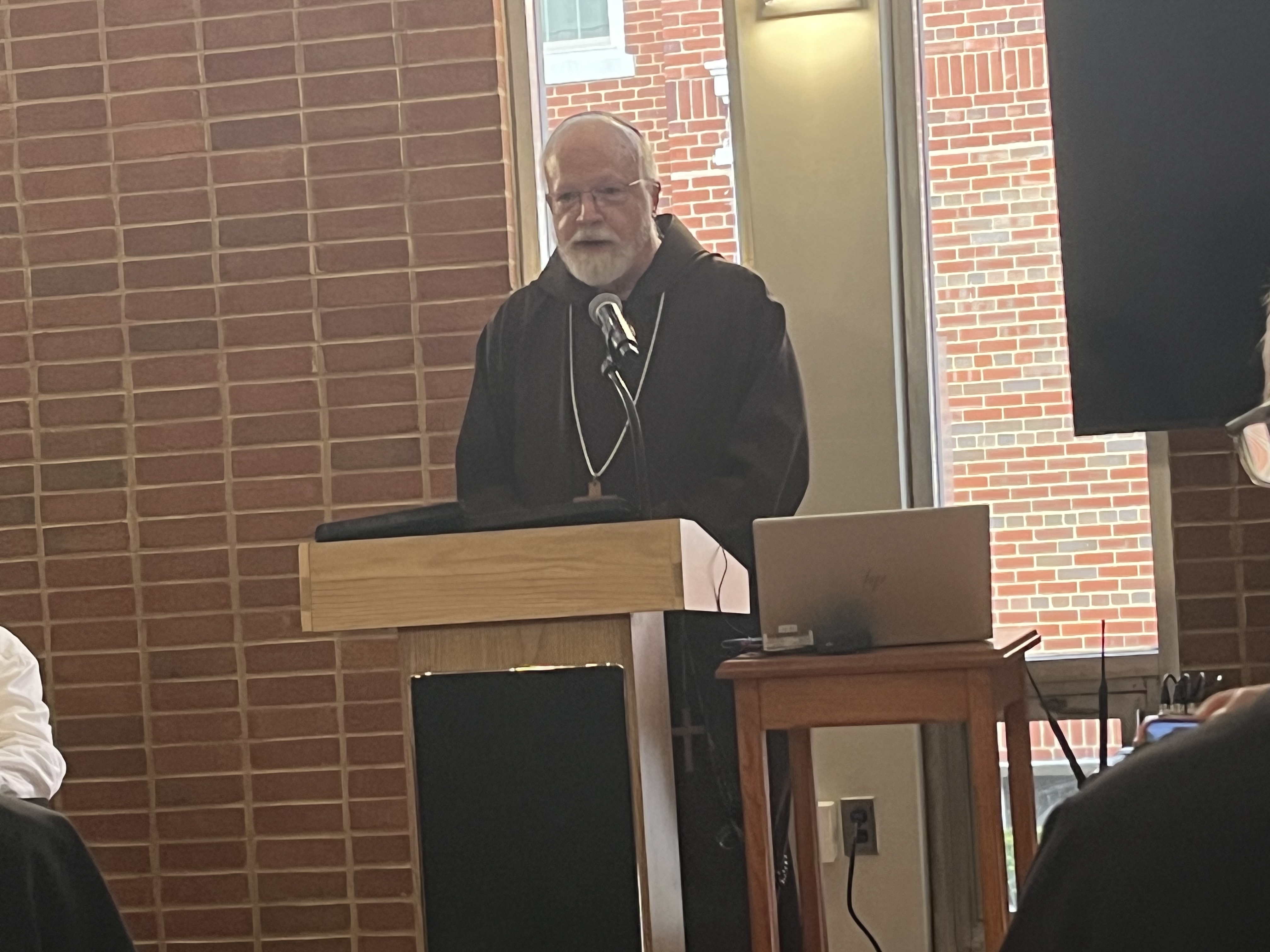
Cardinal Seán O’Malley discussed ways in which Catholics and Orthodox Christians can build closer bonds. Archbishop Flavio Pace discussed ongoing Vatican efforts to help bring about unity.
![Nicaraguan dictatorship detains Bishop Abelardo Mata again #Catholic Nicaraguan police detained Bishop Emeritus Abelardo Mata again on June 30, just one day after his initial detention and subsequent release on June 29. The 80-year-old prelate is reportedly now under house arrest.Mata, bishop emeritus of Estelí, was arrested at a clinic where he had gone for a checkup for his pacemaker. This occurred the day after he celebrated a Mass in which he prayed for the persecuted Church in Nicaragua, an act that may have provoked the ire of the dictatorship of President Daniel Ortega and his wife and vice president, Rosario Murillo.Following the new detention, the bishop is reportedly under house arrest at his home in the town of Tisma, according to the Nicaraguan newspaper La Prensa.In addition to the bishop, Father Francisco Morales, pastor of Calvary’s Cross Church in Estelí, where Mata celebrated Mass on June 28, and Deacon Wilfred Arauz Rodríguez were also detained. Both were released but remain subject to conditions.“Bishop Mata holds no administrative responsibilities within the Diocese of Estelí but continues to assist that diocese with its pastoral needs. He thus went to celebrate Mass last Sunday at the request of the parish priest. However, the Sandinista dictatorship has forbidden him from being in the department of Estelí,” Martha Patricia Molina explained on July 2 to ACI Prensa, the Spanish-language sister service of EWTN News. She is the author of the report “Nicaragua: A Persecuted Church,” which documents thousands of attacks by the dictatorship against Catholics since 2018.Molina further highlighted that “the Diocese of Estelí has always been a target of repression by the Sandinista dictatorship due to the hatred the dictatorial couple harbors toward Bishop Rolando José Álvarez, the apostolic administrator. Although Álvarez is not voicing opinions, the dictatorship views him as a constant focus of their attention.”Álvarez, apostolic administrator of Estelí since 2021, following Mata’s resignation, currently lives in Rome after being exiled in January 2024 while serving a 26-year prison sentence. The prelate was a consistent critic of the Ortega-Murillo dictatorship.Even though Álvarez is living in exile, Pope Francis confirmed him in his position as bishop of Matagalpa and apostolic administrator of Estelí.Molina also told ACI Prensa that the situation in Estelí “is being aggravated because Mata has been critical of the arbitrary actions committed by the Sandinista dictatorship. Currently, we only learn of 10% of the attacks committed against the Catholic Church because the rest go unreported due to the fear and caution priests and laypeople have about speaking out in the news media or on social media.”The researcher noted that the number of reports could reach “400 a day” if Catholics were able to speak freely in public.The ‘dire’ situation in EstelíMolina noted that the dictatorship is now persecuting the Church in a different way: “They had stopped abducting priests, but now they have gone back to it; furthermore, there are cases of priests having to report to police stations to give statements, and also there’s the constant monitoring and harassment of priests across the countryʼs various dioceses by the police.”The researcher pointed out that the Diocese of Estelí, “the one most persecuted by the Ortega-Murillo dictatorship after Matagalpa,” is currently forced to “operate without [its bishop] and with only 42% of its clergy. This makes pastoral work difficult and places a heavier workload on the active priests.”These priests must also take on “the duties of those who are in exile due to persecution, those who have passed away, or those who, for one reason or another, are not exercising their ministry in Nicaragua,” she pointed out.“The situation is worsening because the Sandinista dictatorship has banned diaconal and priestly ordinations in that diocese,” she emphasized. Ordinations are also forbidden in Matagalpa, Jinotega, and Siuna. None of the four dioceses has its bishop present, as they have all been exiled from Nicaragua.The need to be vigilant“We have to remain vigilant regarding Bishop Mata because his health is fragile and requires professional care. What worries me is that the last individuals who have been under surveillance by the dictatorship or the police have ended up in worse condition or even dead,” Arturo McFields, Nicaragua’s former ambassador to the Organization of American States (OAS), told ACI Prensa on July 2.A recent example of this situation is the case of Brooklyn Rivera, an Indigenous leader and political prisoner whom the Ortega-Murillo dictatorship held incommunicado for over 970 days. He passed away in late May at the age of 73, following several statements from the regime regarding his critical health condition.“If the dictatorship’s actions are not strongly denounced, the regime would not hesitate to bring about the death of Bishop Mata, as they harbor deep resentment toward this man of God because of his courage and clarity for many years,” McFields emphasized.An exiled Nicaraguan priest who prefers to remain anonymous to avoid reprisals told ACI Prensa that the situation involving Mata “is sad, but it can also be viewed as a sign of the fear the dictatorship has of an elderly bishop, an 80-year-old (with health issues) because his presence as a shepherd strengthens the lives of the faithful,” ensuring that “the faith remains alive.”The priest emphasized that he continues to prepare “our hearts for a future in which we can rebuild the Church in Nicaragua not only socially but also through faith because spiritual and pastoral reconstruction work must also be done.”Call for releaseFélix Maradiaga, president of the Freedom for Nicaragua Foundation, issued “an urgent call to the international community, human rights organizations, the world’s democracies, and all people of goodwill to remain vigilant, demand the immediate release of Bishop Juan Abelardo Mata and all arbitrarily detained members of the clergy, and firmly condemn this new escalation of repression.”“Nicaragua cannot normalize a dictatorship imprisoning priests, silencing pulpits, and persecuting the faith. The moral voice of the Church has historically stood with the Nicaraguan people during their most difficult times, and that is precisely why the regime seeks to intimidate it,” Maradiaga told ACI Prensa.This story was first published by ACI Prensa, the Spanish-language sister service of EWTN News. It has been translated and adapted by EWTN News English.](https://unitedyam.com/wp-content/uploads/2026/07/nicaraguan-dictatorship-detains-bishop-abelardo-mata-again-catholic-nicaraguan-police-detained-bishop-emeritus-abelardo-mata-again-on-june-30-just-one-day-after-his-initial-detention-and-subsequent.webp "Nicaraguan dictatorship detains Bishop Abelardo Mata again #Catholic Nicaraguan police detained Bishop Emeritus Abelardo Mata again on June 30, just one day after his initial detention and subsequent release on June 29. The 80-year-old prelate is reportedly now under house arrest.Mata, bishop emeritus of Estelí, was arrested at a clinic where he had gone for a checkup for his pacemaker. This occurred the day after he celebrated a Mass in which he prayed for the persecuted Church in Nicaragua, an act that may have provoked the ire of the dictatorship of President Daniel Ortega and his wife and vice president, Rosario Murillo.Following the new detention, the bishop is reportedly under house arrest at his home in the town of Tisma, according to the Nicaraguan newspaper La Prensa.In addition to the bishop, Father Francisco Morales, pastor of Calvary’s Cross Church in Estelí, where Mata celebrated Mass on June 28, and Deacon Wilfred Arauz Rodríguez were also detained. Both were released but remain subject to conditions.“Bishop Mata holds no administrative responsibilities within the Diocese of Estelí but continues to assist that diocese with its pastoral needs. He thus went to celebrate Mass last Sunday at the request of the parish priest. However, the Sandinista dictatorship has forbidden him from being in the department of Estelí,” Martha Patricia Molina explained on July 2 to ACI Prensa, the Spanish-language sister service of EWTN News. She is the author of the report “Nicaragua: A Persecuted Church,” which documents thousands of attacks by the dictatorship against Catholics since 2018.Molina further highlighted that “the Diocese of Estelí has always been a target of repression by the Sandinista dictatorship due to the hatred the dictatorial couple harbors toward Bishop Rolando José Álvarez, the apostolic administrator. Although Álvarez is not voicing opinions, the dictatorship views him as a constant focus of their attention.”Álvarez, apostolic administrator of Estelí since 2021, following Mata’s resignation, currently lives in Rome after being exiled in January 2024 while serving a 26-year prison sentence. The prelate was a consistent critic of the Ortega-Murillo dictatorship.Even though Álvarez is living in exile, Pope Francis confirmed him in his position as bishop of Matagalpa and apostolic administrator of Estelí.Molina also told ACI Prensa that the situation in Estelí “is being aggravated because Mata has been critical of the arbitrary actions committed by the Sandinista dictatorship. Currently, we only learn of 10% of the attacks committed against the Catholic Church because the rest go unreported due to the fear and caution priests and laypeople have about speaking out in the news media or on social media.”The researcher noted that the number of reports could reach “400 a day” if Catholics were able to speak freely in public.The ‘dire’ situation in EstelíMolina noted that the dictatorship is now persecuting the Church in a different way: “They had stopped abducting priests, but now they have gone back to it; furthermore, there are cases of priests having to report to police stations to give statements, and also there’s the constant monitoring and harassment of priests across the countryʼs various dioceses by the police.”The researcher pointed out that the Diocese of Estelí, “the one most persecuted by the Ortega-Murillo dictatorship after Matagalpa,” is currently forced to “operate without [its bishop] and with only 42% of its clergy. This makes pastoral work difficult and places a heavier workload on the active priests.”These priests must also take on “the duties of those who are in exile due to persecution, those who have passed away, or those who, for one reason or another, are not exercising their ministry in Nicaragua,” she pointed out.“The situation is worsening because the Sandinista dictatorship has banned diaconal and priestly ordinations in that diocese,” she emphasized. Ordinations are also forbidden in Matagalpa, Jinotega, and Siuna. None of the four dioceses has its bishop present, as they have all been exiled from Nicaragua.The need to be vigilant“We have to remain vigilant regarding Bishop Mata because his health is fragile and requires professional care. What worries me is that the last individuals who have been under surveillance by the dictatorship or the police have ended up in worse condition or even dead,” Arturo McFields, Nicaragua’s former ambassador to the Organization of American States (OAS), told ACI Prensa on July 2.A recent example of this situation is the case of Brooklyn Rivera, an Indigenous leader and political prisoner whom the Ortega-Murillo dictatorship held incommunicado for over 970 days. He passed away in late May at the age of 73, following several statements from the regime regarding his critical health condition.“If the dictatorship’s actions are not strongly denounced, the regime would not hesitate to bring about the death of Bishop Mata, as they harbor deep resentment toward this man of God because of his courage and clarity for many years,” McFields emphasized.An exiled Nicaraguan priest who prefers to remain anonymous to avoid reprisals told ACI Prensa that the situation involving Mata “is sad, but it can also be viewed as a sign of the fear the dictatorship has of an elderly bishop, an 80-year-old (with health issues) because his presence as a shepherd strengthens the lives of the faithful,” ensuring that “the faith remains alive.”The priest emphasized that he continues to prepare “our hearts for a future in which we can rebuild the Church in Nicaragua not only socially but also through faith because spiritual and pastoral reconstruction work must also be done.”Call for releaseFélix Maradiaga, president of the Freedom for Nicaragua Foundation, issued “an urgent call to the international community, human rights organizations, the world’s democracies, and all people of goodwill to remain vigilant, demand the immediate release of Bishop Juan Abelardo Mata and all arbitrarily detained members of the clergy, and firmly condemn this new escalation of repression.”“Nicaragua cannot normalize a dictatorship imprisoning priests, silencing pulpits, and persecuting the faith. The moral voice of the Church has historically stood with the Nicaraguan people during their most difficult times, and that is precisely why the regime seeks to intimidate it,” Maradiaga told ACI Prensa.This story was first published by ACI Prensa, the Spanish-language sister service of EWTN News. It has been translated and adapted by EWTN News English.")
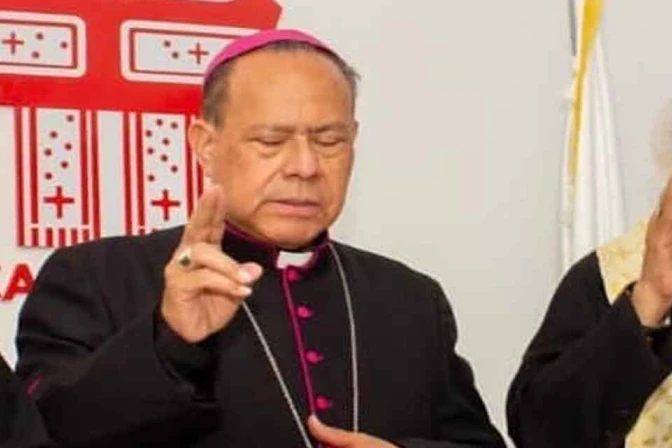
Mata was detained on June 29, released the same day, and as of June 30 reportedly is under house arrest. At a June 28 Mass he asked for prayers for the persecuted Church, triggering retaliation.