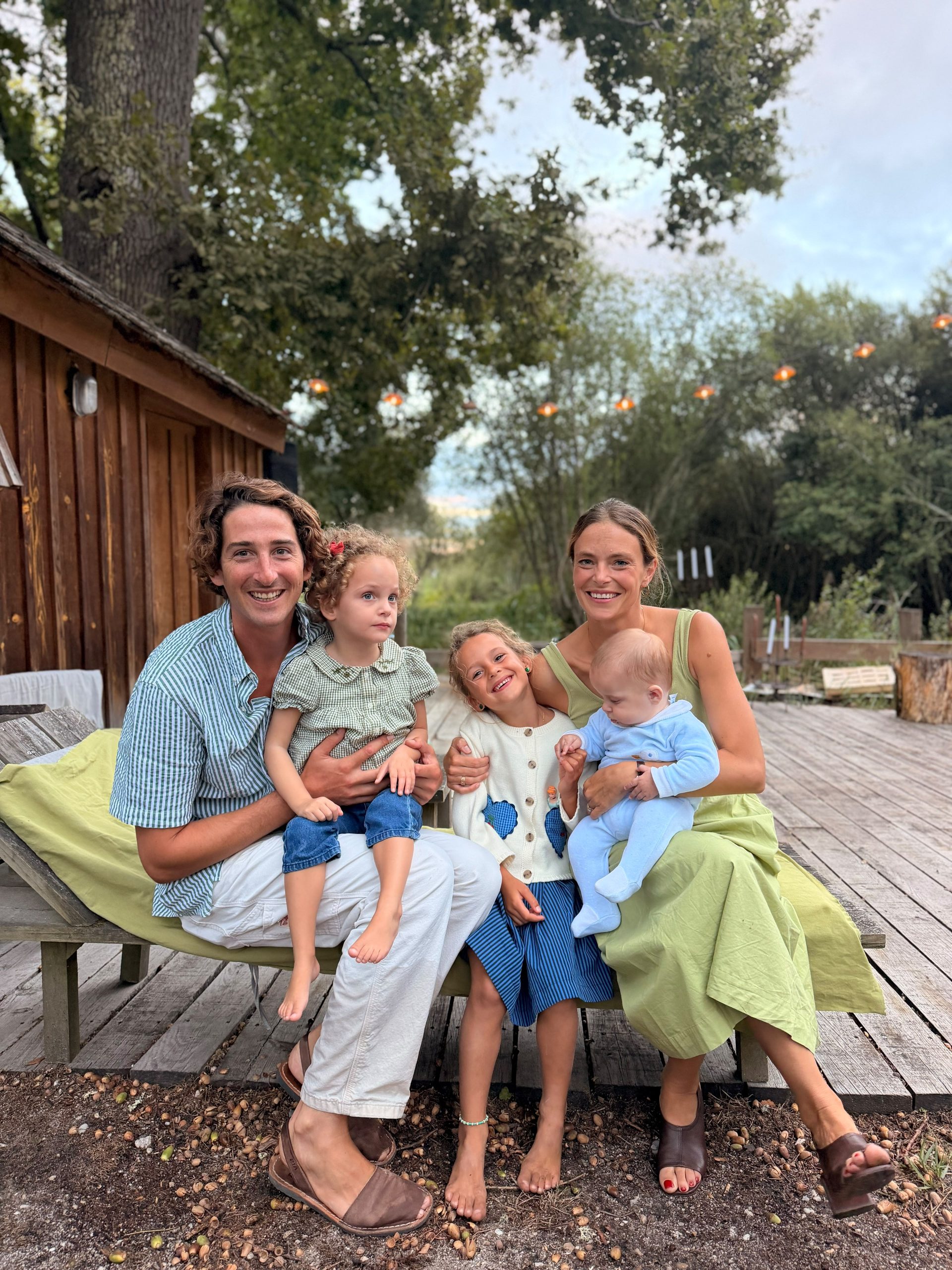
Read More U.S. Vice President JD Vance and wife Usha welcome fourth child #Catholic U.S. Vice President JD Vance and his wife, Usha, announced the birth of their fourth child, a baby boy named Alec Neel Vance, on Sunday, July 19.In a statement shared on social media, the couple wrote: “We are excited to announce that our baby boy, Alec Neel Vance, was born this morning. Usha and the baby are happy and healthy, and our kids are overjoyed to meet their little brother.”The Vances are already parents to Ewan (9), Vivek (6), and Mirabel (4). Vance was received into the Catholic Church in 2019 and recently released a book about his faith journey, titled “Communion: Finding My Way Back to Faith.”Usha Vance, who is Hindu and has said she has no plans to convert, has shared that the family attends Mass together and sends their children to Catholic schools. She said in a June 2025 interview with Megan McCain that after her husband converted, “we had to have a lot of real conversations about how” to raise their children.“When you convert to Catholicism it comes with several important obligations, like to raise your child in the faith and all that,” she said.The couple allows their children to discern whether to be baptized; their son Ewan has since chosen to become Catholic.Vice President Vance has long spoken of children as a profound blessing and vocation.In a March interview with podcaster Benny Johnson, Vance reflected: “If I have one regret, it’s that I wish we had started earlier and had more, because it’s the most rewarding thing; it’s the coolest thing.”He said his three children, who have “their own little personalities” are “so quirky and fun.”To young men thinking of becoming fathers, but waiting until “everything in your life is perfect,” Vance had this to say: “I think that’s a ridiculous attitude … You’re never ready. There’s no point at which you can sort of get all your little ducks in a row and get … your financial situation in a row. Whenever you have a baby, whatever stage of life, it will be shocking, it will be crazy, it will be the most difficult and the most rewarding thing that you’ve ever done.”“You have kids, you figure it out,” he continued. “They’re the thing that perfects life. Fatherhood is the absolute best motivator.”His words on fatherhood align with his public advocacy for a renewed culture of life. In his first public address as vice president at the National March for Life in January 2025, he declared: “I want more babies in the United States of America. I want more happy children in our country and I want beautiful young men and women who are eager to welcome them into the world and eager to raise them.”The Vance’s happy news arrives against the backdrop of America’s ongoing demographic challenges.According to the latest CDC provisional data, U.S. births fell 1% in 2025 to 3.6 million, with the general fertility rate dropping to a record low of 53.1 births per 1,000 women ages 15–44. The total fertility rate remains well below the replacement level of 2.1, continuing a decline since 2007.Catholic leaders have repeatedly called attention to this trend as a spiritual and cultural crisis.Pope Leo in May decried “the time of drastic sterility” in which we are living, emphasizing that discouraging demographic data “are not merely statistics but speak of fatherhood, motherhood, and children. And children are the future!”The Church’s teaching affirms openness to life, the gift of children and the vocation of marriage and family as a “domestic church.”U.S. President Donald Trump offered warm congratulations to the couple in a post on Truth Social: “Congratulations! A perfect baby boy for the wonderful Vance family,” accompanied by a photo of the newborn with two of his siblings.Usha and JD Vance’s baby is the first in modern U.S. history (and the first in over 150 years) for a sitting American vice president’s family. The last time a baby was born to a U.S. vice president was in 1870, when Vice President Schuyler Colfax (under President Ulysses S. Grant) and his wife Ellen welcomed a son, Schuyler Colfax III. unitedyam July 20, 2026July 21, 2026 “Children are the most rewarding thing,“ Vance said in an interview earlier this year. Read More
Read More Funding cuts force Catholic charity to scale back Rohingya aid in Bangladesh #Catholic Caritas Bangladesh has been forced to scale back its relief work for Rohingya refugees in the city of Coxʼs Bazar as funding from foreign donors declines, its emergency response director said.“Our biggest challenge now is funding,” said Liton Luis Gomes, project director of Caritas Bangladeshʼs Emergency Response Program.“We only received 60% of the funds we planned for this fiscal year; we didnʼt get the remaining 40%,” Gomes told EWTN News by phone. “Thatʼs why we had to reduce the quantity while maintaining the quality of our services.”The cuts have fallen hardest on shelter and hygiene work. “If we used to be able to repair 500 houses, now it has decreased by 50%. If someone asks for a hygiene kit like soap, we canʼt give it urgently,” Gomes said.A shrinking budgetThe decline in donor support has been steep. Caritas Bangladesh reported receiving about 916 million taka ($7.4 million) for its Rohingya response in 2017–18. Support fell to about 468 million taka ($3.8 million) in 2020 and about 417 million taka ($3.4 million) in 2024. It rose to about 531 million taka ($4.3 million) in 2025 before falling again to about 427 million taka ($3.5 million) so far in 2026, the agency said.Even so, Gomes said, the charity is maintaining the services that do not require money. “We are doing things like training volunteers for the crisis period, raising awareness about disaster relief,” he said.Caritas Bangladesh has worked in the camps since the 2017 exodus, providing shelter, water and sanitation, child protection, and education. Between 2017 and 2024, its shelter and settlement program reached an average of 38,335 households a year, the charity said, through transitional shelter assistance, repairs, tarpaulin distribution, and monsoon support. It runs 12 learning centers and two youth and adolescent centers in the camps, teaching children under the Myanmar curriculum.Lives in the campsThe charityʼs work is felt in individual lives. Mohammad Arshad, 23, who lives in Camp 19, has volunteered in the shelter program of Caritas Bangladeshʼs Emergency Response Program since 2018. He had studied up to class nine in Myanmar and helped his father run a grocery shop before the family was forced to flee. With no stable income and eight people to support, including his aging parents, his wife, his young son, and two younger siblings, he had lain awake wondering how he would provide.“The job was more than just a source of income; it gave me a sense of purpose. I learned how to organize workers, coordinate with engineers, and develop technical skills,” Arshad told EWTN News.“This opportunity had not only helped me; it supports my family but also [has] given me hope for a better future. As I watched my son sleep peacefully at night, [I] whispered silent thanks, to Caritas Bangladesh, to the people who had trusted me, to the strength that kept me going,” Arshad added.Momtaz Begum, a vulnerable woman who received income-generating support through Caritas, described a similar turnaround. “My husbandʼs addiction left us in debt, and after he abandoned us, I struggled to provide for my family by raising poultry and growing vegetables. The COVID-19 pandemic made things worse, leaving us without food or income. When our home was destroyed in the rain, I moved to my fatherʼs house, where I faced mistreatment from relatives,” she told EWTN News.On Jan. 18, 2022, Begum received 25,000 taka (about $200) from Caritas Bangladesh to start an income-generating activity. She used the money to expand her cloth business. “Earlier, I had to share profits with a shopkeeper, but now I buy cloth independently and keep all the profit. This has increased my daily earnings to 400-500 taka [about $3 to $4], allowing me to save … money,” Begum told EWTN News.A stateless peopleRohingya refugees have fled Myanmar for Bangladesh since the 1970s. In the 1990s, more than 250,000 sheltered in Coxʼs Bazar, though all but 20,000 were repatriated after a campaign that began in the early 2000s. The influx resumed in 2015, and by 2017 an estimated 300,000 Rohingya were in Bangladesh. About 537,000 more fled across the border to Coxʼs Bazar in August 2017 as violence intensified in Myanmarʼs Rakhine state, prompting the United Nations to call the situation “a textbook example of ethnic cleansing.” By December 2023, 971,904 Rohingya were living in 33 camps in the Coxʼs Bazar district. Pope Francis met a group of Rohingya refugees during his apostolic visit to Bangladesh in 2017.Looking ahead, Caritas Bangladesh said it aims to build stronger links between the refugees it assists and local businesses, and to deepen cooperation with government and aid agencies, even within a tighter budget. unitedyam June 20, 2026June 20, 2026 As foreign donations dwindle, the Catholic Church’s relief agency in Bangladesh is repairing fewer shelters and rationing hygiene supplies for Rohingya refugees who depend on it. Read More