Spain

5 things to know about ‘Seeking Beauty’ and its host, David Henrie #Catholic 
 
 Actor David Henrie in the new series “Seeking Beauty,” which airs on EWTN+. | Credit: EWTN Studios

Jan 22, 2026 / 12:00 pm (CNA).
Catholic figures gathered in Los Angeles on Jan. 16 for the premiere of “Seeking Beauty,” the first original series from EWTN Studios airing exclusively on the network’s brand-new streaming platform, EWTN+.Here are five things to know about the new series and its host, actor David Henrie.What is ‘Seeking Beauty’?“Seeking Beauty” is a first-of-its-kind adventure documentary series that explores culture, architecture, food, art, and music, and aims to point viewers to the beautiful — and ultimately to the divine.The series follows Henrie’s journey into the heart of Italy to explore what makes Italian culture one of the most beautiful in the world. It not only looks at the physical beauty of the country but also its spiritual richness.Where can I watch it?“Seeking Beauty” is available to watch exclusively on EWTN+, a free digital streaming platform that offers faith-based content. EWTN+ is available on RokuTV, GoogleTV, AppleTV, AmazonFireTV, and on EWTN.com.Where does ‘Seeking Beauty’ take place?The first season of “Seeking Beauty” takes place in several cities across Italy including Vatican City, Rome, Milan, Florence, and Venice.Who is David Henrie?Henrie is best known for his breakout role as Justin Russo on Disney Channel’s “Wizards of Waverly Place.” He grew up in a Catholic household with Italian heritage; however, Henrie’s early adult years were marked by what he has described as a relativistic and agnostic period. He has also spoken about how the successes of early fame left him feeling unfulfilled and searching for deeper meaning.Henrie’s return to the Catholic faith was a profound personal transformation that he says began around age 21 or 22.A significant influence came while working on the movie “Little Boy,” where conversations with Catholic cast members Kevin James and Eduardo Verástegui, as well as a visit to St. Michael Abbey in Orange County, California — including his first confession since childhood — played a pivotal role in rediscovering his faith.Since then, Henrie has embraced his faith publicly and personally, integrating his beliefs into his family life, creative projects, and charity work, including serving as a brand ambassador for Cross Catholic Outreach and participating in mission trips that reflect his commitment to living out his faith. He is married and has three children.Will there be another season of ‘Seeking Beauty’?Yes! The second season of the series was filmed in Spain and is scheduled to premiere this fall.

5 things to know about ‘Seeking Beauty’ and its host, David Henrie #Catholic Actor David Henrie in the new series “Seeking Beauty,” which airs on EWTN+. | Credit: EWTN Studios Jan 22, 2026 / 12:00 pm (CNA). Catholic figures gathered in Los Angeles on Jan. 16 for the premiere of “Seeking Beauty,” the first original series from EWTN Studios airing exclusively on the network’s brand-new streaming platform, EWTN+.Here are five things to know about the new series and its host, actor David Henrie.What is ‘Seeking Beauty’?“Seeking Beauty” is a first-of-its-kind adventure documentary series that explores culture, architecture, food, art, and music, and aims to point viewers to the beautiful — and ultimately to the divine.The series follows Henrie’s journey into the heart of Italy to explore what makes Italian culture one of the most beautiful in the world. It not only looks at the physical beauty of the country but also its spiritual richness.Where can I watch it?“Seeking Beauty” is available to watch exclusively on EWTN+, a free digital streaming platform that offers faith-based content. EWTN+ is available on RokuTV, GoogleTV, AppleTV, AmazonFireTV, and on EWTN.com.Where does ‘Seeking Beauty’ take place?The first season of “Seeking Beauty” takes place in several cities across Italy including Vatican City, Rome, Milan, Florence, and Venice.Who is David Henrie?Henrie is best known for his breakout role as Justin Russo on Disney Channel’s “Wizards of Waverly Place.” He grew up in a Catholic household with Italian heritage; however, Henrie’s early adult years were marked by what he has described as a relativistic and agnostic period. He has also spoken about how the successes of early fame left him feeling unfulfilled and searching for deeper meaning.Henrie’s return to the Catholic faith was a profound personal transformation that he says began around age 21 or 22.A significant influence came while working on the movie “Little Boy,” where conversations with Catholic cast members Kevin James and Eduardo Verástegui, as well as a visit to St. Michael Abbey in Orange County, California — including his first confession since childhood — played a pivotal role in rediscovering his faith.Since then, Henrie has embraced his faith publicly and personally, integrating his beliefs into his family life, creative projects, and charity work, including serving as a brand ambassador for Cross Catholic Outreach and participating in mission trips that reflect his commitment to living out his faith. He is married and has three children.Will there be another season of ‘Seeking Beauty’?Yes! The second season of the series was filmed in Spain and is scheduled to premiere this fall.


Actor David Henrie in the new series “Seeking Beauty,” which airs on EWTN+. | Credit: EWTN Studios

Jan 22, 2026 / 12:00 pm (CNA).

Catholic figures gathered in Los Angeles on Jan. 16 for the premiere of “Seeking Beauty,” the first original series from EWTN Studios airing exclusively on the network’s brand-new streaming platform, EWTN+.

Here are five things to know about the new series and its host, actor David Henrie.

What is ‘Seeking Beauty’?

“Seeking Beauty” is a first-of-its-kind adventure documentary series that explores culture, architecture, food, art, and music, and aims to point viewers to the beautiful — and ultimately to the divine.

The series follows Henrie’s journey into the heart of Italy to explore what makes Italian culture one of the most beautiful in the world. It not only looks at the physical beauty of the country but also its spiritual richness.

Where can I watch it?

“Seeking Beauty” is available to watch exclusively on EWTN+, a free digital streaming platform that offers faith-based content. EWTN+ is available on RokuTV, GoogleTV, AppleTV, AmazonFireTV, and on EWTN.com.

Where does ‘Seeking Beauty’ take place?

The first season of “Seeking Beauty” takes place in several cities across Italy including Vatican City, Rome, Milan, Florence, and Venice.

Who is David Henrie?

Henrie is best known for his breakout role as Justin Russo on Disney Channel’s “Wizards of Waverly Place.” He grew up in a Catholic household with Italian heritage; however, Henrie’s early adult years were marked by what he has described as a relativistic and agnostic period. He has also spoken about how the successes of early fame left him feeling unfulfilled and searching for deeper meaning.

Henrie’s return to the Catholic faith was a profound personal transformation that he says began around age 21 or 22.

A significant influence came while working on the movie “Little Boy,” where conversations with Catholic cast members Kevin James and Eduardo Verástegui, as well as a visit to St. Michael Abbey in Orange County, California — including his first confession since childhood — played a pivotal role in rediscovering his faith.

Since then, Henrie has embraced his faith publicly and personally, integrating his beliefs into his family life, creative projects, and charity work, including serving as a brand ambassador for Cross Catholic Outreach and participating in mission trips that reflect his commitment to living out his faith. He is married and has three children.

Will there be another season of ‘Seeking Beauty’?

Yes! The second season of the series was filmed in Spain and is scheduled to premiere this fall.

Read More
Picture of the day


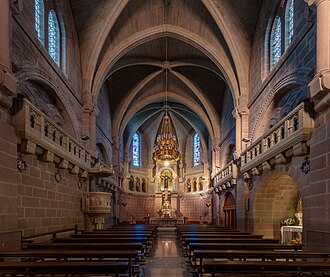
Basilica, Xavier, Navarre, Spain. The basilica belongs to the ensemble of the Castle of Xavier, built in the 10th century, although the basilica was not built until end of the 19th and beginning of the 20th century. Of eclectic style, the interior has a unique neogothic nave built with grey stone and white marble. The stained glass is a work of painter Marcelino Santamaría from Burgos. The main altar is an artistic decorative work, carved in stone inlaid with mosaics, bronzes and enamels by the Biais house in Paris. The tabernacle is located on a high relief that represents San Francisco baptizing and preaching.
 #ImageOfTheDay
Picture of the day
Basilica, Xavier, Navarre, Spain. The basilica belongs to the ensemble of the Castle of Xavier, built in the 10th century, although the basilica was not built until end of the 19th and beginning of the 20th century. Of eclectic style, the interior has a unique neogothic nave built with grey stone and white marble. The stained glass is a work of painter Marcelino Santamaría from Burgos. The main altar is an artistic decorative work, carved in stone inlaid with mosaics, bronzes and enamels by the Biais house in Paris. The tabernacle is located on a high relief that represents San Francisco baptizing and preaching.
Read More
Picture of the day


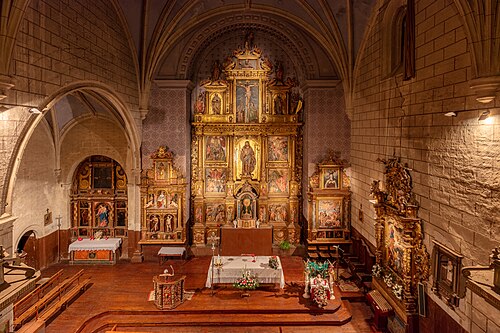
Church of El Salvador, Luesia, Zaragoza, Spain. The church is located in the highest area of the nucleus of the village of Luesia, next to the remains of the old medieval castle, to which it is historically and constructively associated. Its origin dates back to the end of the 11th century with the construction of the semicircular triple apse head with a double crypt at the bottom, while the body with three naves was built throughout the 12th century and the two portals on its southern fronts and occidental already respond to models from the beginning of the 13th century. The Romanesque building underwent a profound reform though in the mid-16th century. The main altarpiece is a Romanesque piece carved in wood; polychrome and gilt. The work is attributed to Gaspar Ramos, a sculptor from Sangüesa, who executed it around 1630.
 #ImageOfTheDay
Picture of the day
Church of El Salvador, Luesia, Zaragoza, Spain. The church is located in the highest area of the nucleus of the village of Luesia, next to the remains of the old medieval castle, to which it is historically and constructively associated. Its origin dates back to the end of the 11th century with the construction of the semicircular triple apse head with a double crypt at the bottom, while the body with three naves was built throughout the 12th century and the two portals on its southern fronts and occidental already respond to models from the beginning of the 13th century. The Romanesque building underwent a profound reform though in the mid-16th century. The main altarpiece is a Romanesque piece carved in wood; polychrome and gilt. The work is attributed to Gaspar Ramos, a sculptor from Sangüesa, who executed it around 1630.
Read More
Picture of the day


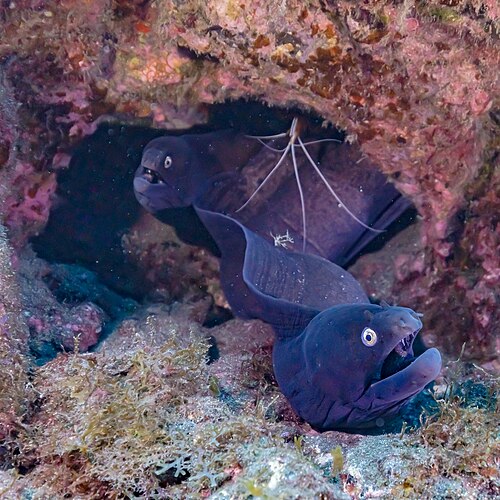
Moray eels (Muraena augusti) and a cleaner shrimp (Lysmata grabhami), Teno-Rasca marine strip, Tenerife, Spain. It belongs to the family of moray eel and is endemic of the Canary Islands, Madeira and Azores. It is non-migratory, and dwells at a depth range of 0 to 250 metres (0 to 820 ft), most often at around 0 to 50 metres (0 to 164 ft). Muraena augusti is active during the night and hides in holes or crevices during the day. It can reach up to 100 centimetres (39 in) length and is a carnivore that feeds on small fishes, shrimps and crabs. Like all other moray eels their vision is poor but their sense of smell extraordinary.
 #ImageOfTheDay
Picture of the day
Moray eels (Muraena augusti) and a cleaner shrimp (Lysmata grabhami), Teno-Rasca marine strip, Tenerife, Spain. It belongs to the family of moray eel and is endemic of the Canary Islands, Madeira and Azores. It is non-migratory, and dwells at a depth range of 0 to 250 metres (0 to 820 ft), most often at around 0 to 50 metres (0 to 164 ft). Muraena augusti is active during the night and hides in holes or crevices during the day. It can reach up to 100 centimetres (39 in) length and is a carnivore that feeds on small fishes, shrimps and crabs. Like all other moray eels their vision is poor but their sense of smell extraordinary.
Read More
Picture of the day


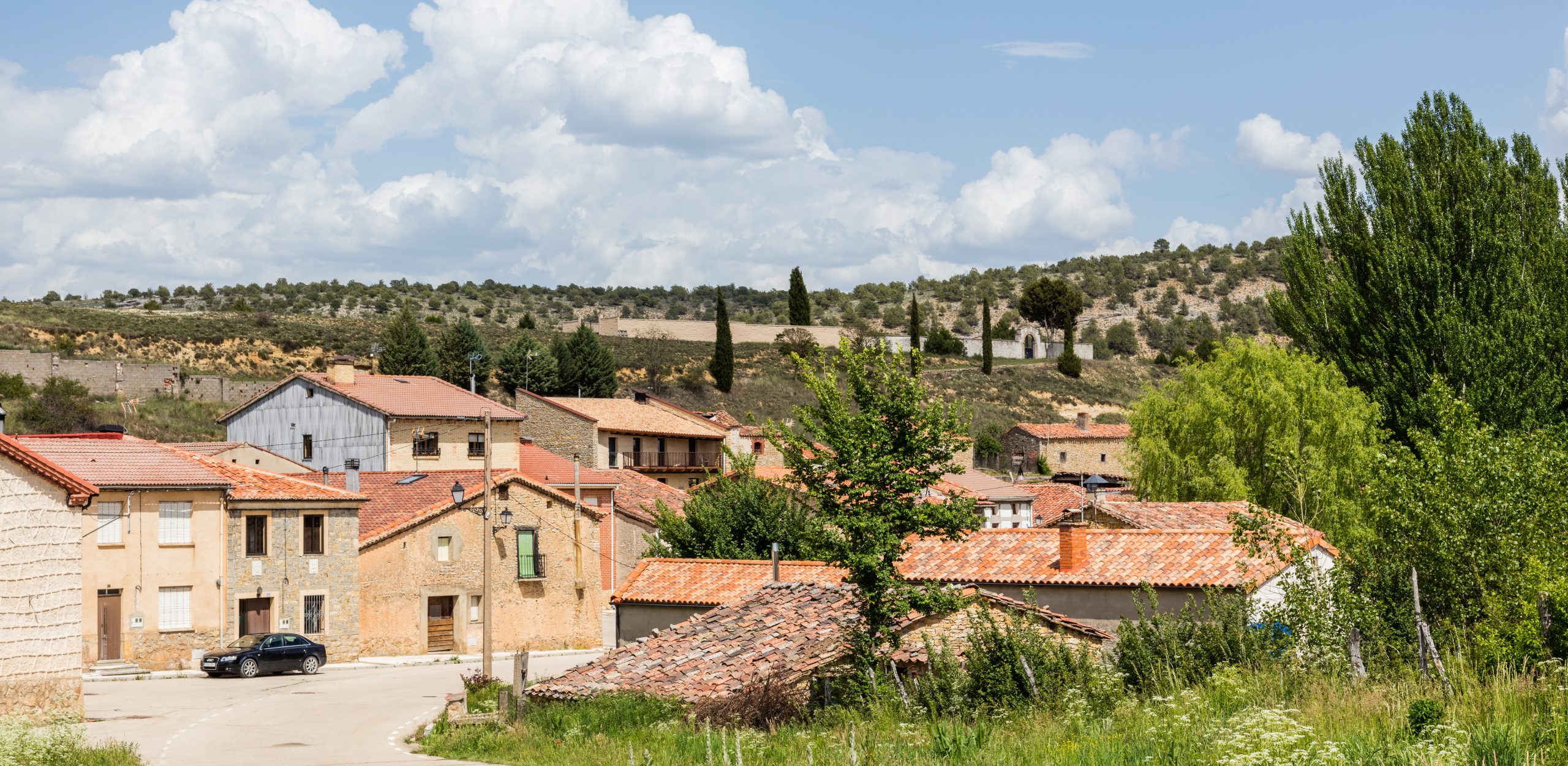
La Fuentona, Muriel de la Fuente, Soria, Spain. The natural spring is a natural monument since 1998. There are only 6 such monuments in the Community of Castile and León (the biggest in Spain by surface).
 #ImageOfTheDay
Picture of the day
La Fuentona, Muriel de la Fuente, Soria, Spain. The natural spring is a natural monument since 1998. There are only 6 such monuments in the Community of Castile and León (the biggest in Spain by surface).
Read More
Picture of the day


Pelagic stingray (Pteroplatytrygon violacea), Cape Palos, region of Murcia, Spain. This species of stingray has a worldwide distribution in waters warmer than 19 °C (66 °F), and migrates seasonally to spend the summer closer to the continental shelf and at higher latitudes. The only stingray that almost exclusively inhabits the open ocean, this species is typically found in surface waters down to a depth of 100 m (330 ft). The pelagic stingray typically grows to 1.3 m (4.3 ft) long and 59 cm (23 in) across. It’s an active predator that captures prey by wrapping its pectoral fins around it, before manipulating it to the mouth. A wide variety of organisms are represented in its diet: crustaceans, molluscs, bony fishes, sea horses and filefish, comb jellies and medusae, and polychaete worms.
 #ImageOfTheDay
Picture of the day
Pelagic stingray (Pteroplatytrygon violacea), Cape Palos, region of Murcia, Spain. This species of stingray has a worldwide distribution in waters warmer than 19 °C (66 °F), and migrates seasonally to spend the summer closer to the continental shelf and at higher latitudes. The only stingray that almost exclusively inhabits the open ocean, this species is typically found in surface waters down to a depth of 100 m (330 ft). The pelagic stingray typically grows to 1.3 m (4.3 ft) long and 59 cm (23 in) across. It’s an active predator that captures prey by wrapping its pectoral fins around it, before manipulating it to the mouth. A wide variety of organisms are represented in its diet: crustaceans, molluscs, bony fishes, sea horses and filefish, comb jellies and medusae, and polychaete worms.
Read More
Picture of the day


Apse of the higher church in the Royal Monastery of San Juan de la Peña, Huesca, Aragon, Spain. It was one of the most important monasteries in Aragon in the Middle Ages. Its two-level church is partially carved in the stone of the great cliff that overhangs the foundation. San Juan de la Peña means “Saint John of the Cliff”. The lower church includes some mozarabic architectural surviving elements, although most of the parts of the monastery (including the impressive cloister, under the great rock) are Romanesque. After the fire of 1675, a new monastery was built. The old monastery (built in 920) was declared a National Monument on 13 July 1889, and the new monastery in 1923.
 #ImageOfTheDay
Picture of the day
Apse of the higher church in the Royal Monastery of San Juan de la Peña, Huesca, Aragon, Spain. It was one of the most important monasteries in Aragon in the Middle Ages. Its two-level church is partially carved in the stone of the great cliff that overhangs the foundation. San Juan de la Peña means “Saint John of the Cliff”. The lower church includes some mozarabic architectural surviving elements, although most of the parts of the monastery (including the impressive cloister, under the great rock) are Romanesque. After the fire of 1675, a new monastery was built. The old monastery (built in 920) was declared a National Monument on 13 July 1889, and the new monastery in 1923.
Read More
Picture of the day


Ceiling of the Oratory of Saint Mary Queen and Mother, Málaga, Spain. The church was constructed in 2008 and is host of the Confraternity of the Sorrows. The paintings in the ceiling, done with acrylic paint, are work of Raúl Berzosa Fernández and were executed in different phases between 2008 and 2014. The 140 square metres (1,500 sq ft) surface is dedicated to the Coronation of the Virgin.
 #ImageOfTheDay
Picture of the day
Ceiling of the Oratory of Saint Mary Queen and Mother, Málaga, Spain. The church was constructed in 2008 and is host of the Confraternity of the Sorrows. The paintings in the ceiling, done with acrylic paint, are work of Raúl Berzosa Fernández and were executed in different phases between 2008 and 2014. The 140 square metres (1,500 sq ft) surface is dedicated to the Coronation of the Virgin.
Read More