Spain

8,645 candles light Finland’s Parliament in pro-life vigil for unborn #Catholic HELSINKI — Thousands of candles illuminated the steps of Finlandʼs Parliament in Helsinki on March 21 as pro-life advocates held a public vigil commemorating children lost to abortion.Organized by the Finnish pro-life group Oikeus elämään ry, the “Muistamme” (“In remembrance”) event featured 8,645 candles, one for each abortion performed in Finland in 2024. Johannes Laitinen, one of the eventʼs organizers, said approximately 100 preselected participants were invited to light the candles, chosen because of their personal connection to the loss of children through abortion. Members of the public were also given the opportunity to take part in the candle lighting during the vigil.
 
 Johannes Laitinen, one of the organizers of the “Muistamme” pro-life vigil held outside Finland’s Parliament in Helsinki on March 21, 2026. | Credit: Miika Soininen
 
 After the candles were lit, participants observed a minute of silence, while volunteers remained through the night as the display continued glowing in central Helsinki.A public witness in the heart of HelsinkiSpeaking to EWTN News, Kirsi Morgan-MacKay, chairman of Finlandʼs Right to Life Association, said the vigil sought both to honor the unborn and to confront the public with the scale of abortion in the country. “The event created a visual that touched peopleʼs hearts and perhaps made them stop and think about how many children are actually lost every year through abortion,” she said.Morgan-MacKay added that the vigil also aimed to acknowledge the often-unspoken grief experienced by women and families affected by abortion.
 
 The full display of 8,645 candles glows on the steps of Finland’s Parliament in Helsinki on the night of March 21, 2026. | Credit: Jaakko Haapanen
 
 She noted that leaders from multiple Christian denominations attended the event, which organizers viewed as an encouraging sign of broader ecclesial engagement. “We have always hoped that churches would come together to defend the lives of unborn children,” she said, explaining that abortion is not merely political but “a spiritual, ethical, and moral issue.”A prayer gathering was also held in connection with the vigil at Luther Church in Helsinki, where clergy from Lutheran, Presbyterian, and Catholic communities offered prayers. Representing the Catholic Church, Jean Claude Kabeza, vicar general of the Diocese of Helsinki, conveyed greetings from Bishop Raimo Goyarrola.Finlandʼs welfare state and the limits of social supportWhile happy about Finlandʼs reputation for its strong social welfare system, Morgan-MacKay noted that many women facing crisis pregnancies still experience profound isolation. “Many women and families are still left alone in the midst of a crisis,” she said, adding that loneliness and lack of support often persist even within families.She also observed that in Finland, the lives of unborn children often go unvalued when a pregnancy is unwanted. She pointed out that women confronted with an unplanned pregnancy, sometimes in shock, may see abortion as an “easy” way out, particularly since medical abortion is frequently presented as a simple “procedure.”
 
 Pro-life advocates carry the “Muistamme” banner through central Helsinki during the candlelit vigil on March 21, 2026. | Credit: Miika Soininen
 
 Morgan-MacKay also drew attention to Finlandʼs liberalized abortion framework, particularly the increased accessibility of medical abortion, arguing that women may be pressured into rushed decisions without adequate counseling.“Sometimes the health care system offers abortion as the only option,” she said. “Many times, these women need space to pause, think everything through, and receive real support.”She added that while Finlandʼs pro-life movement remains relatively small, it is gradually growing, with increased awareness of abortionʼs broader social and personal consequences. She expressed particular encouragement at the involvement of younger supporters, especially young men, saying she believes “God is raising up a new generation of pro-lifers” as more Finns begin speaking openly about the issue.A bishopʼs medical perspective on abortionEWTN News also spoke with Goyarrola, who said he remains hopeful that Finland can become more receptive to pro-life values, despite abortion remaining a sensitive and often taboo topic in public life.Goyarrolaʼs comments carry added weight in Finlandʼs abortion debates because of his medical background. Before entering the priesthood, he trained as a physician, graduating with a degree in medicine and surgery from the University of Navarra in Spain in 1992, and has pursued doctoral research in palliative care at the University of Eastern Finland since 2022.
 
 Spanish Opus Dei priest announced as new Helsinki bishop
 
 Drawing on his medical knowledge, he has also written extensively on social issues for general audiences, authoring “Ihmiselämää äidin kohdussa” (“Human Life in the Womb”), on abortion, and “Arvokas kuolema” (“A Dignified Death”), on euthanasia. Both books were widely praised for making complex bioethical questions accessible to ordinary readers.Reflecting on his experience, Goyarrola said that with regard to discussing abortion, conversations require clarity and compassion rather than confrontation.“I believe that positive language is what truly reaches people and opens hearts to reflection,” he said. “The Church speaks in defense of life by offering real solutions to real problems and proposing ways to prevent abortion.”“No one celebrates abortion as a joyful experience,” he added.Signs of change among younger FinnsAssessing the broader cultural climate, Goyarrola said abortion has historically remained difficult to discuss openly in Finnish society. “Abortion has long been a taboo subject in Finland, and to a large extent it still is,” he said, noting that public discourse is often narrowly framed around “the womanʼs right to her own body.”Yet the bishop said younger generations appear increasingly willing to engage the issue more thoughtfully. “Among young people, the topic is beginning to be discussed more openly, and with many serious questions,” he noted.
 
 Participants light some of the 8,645 candles on the steps of Finlandʼs Parliament in Helsinki on March 21, 2026, one for each abortion performed in Finland in 2024. | Credit: Jaakko Haapanen
 
 Goyarrola explained that because over 90% of abortions in Finland are carried out for social rather than medical reasons, the underlying causes must be addressed socially as well. He called for “better education, access to information, healthier lifestyles, and more personal responsibility and support for marriage and family life.”He added that the Church must continue promoting a concrete vision of family and human dignity, saying: “We aim to promote a culture that values life, family, and hope.” He also noted that the Catholic Church in Finland tries to speak about the “need for more children in society,” not for economic or labor-related reasons but rather for the future of Finnish society itself.“I hope that we can speak about abortion and about life in the motherʼs womb without prejudice, in a rational and thoughtful way,” Goyarrola added. “Only through open and respectful conversation can we better understand the complexity of the issue and seek humane and responsible solutions.”

8,645 candles light Finland’s Parliament in pro-life vigil for unborn #Catholic HELSINKI — Thousands of candles illuminated the steps of Finlandʼs Parliament in Helsinki on March 21 as pro-life advocates held a public vigil commemorating children lost to abortion.Organized by the Finnish pro-life group Oikeus elämään ry, the “Muistamme” (“In remembrance”) event featured 8,645 candles, one for each abortion performed in Finland in 2024. Johannes Laitinen, one of the eventʼs organizers, said approximately 100 preselected participants were invited to light the candles, chosen because of their personal connection to the loss of children through abortion. Members of the public were also given the opportunity to take part in the candle lighting during the vigil. Johannes Laitinen, one of the organizers of the “Muistamme” pro-life vigil held outside Finland’s Parliament in Helsinki on March 21, 2026. | Credit: Miika Soininen After the candles were lit, participants observed a minute of silence, while volunteers remained through the night as the display continued glowing in central Helsinki.A public witness in the heart of HelsinkiSpeaking to EWTN News, Kirsi Morgan-MacKay, chairman of Finlandʼs Right to Life Association, said the vigil sought both to honor the unborn and to confront the public with the scale of abortion in the country. “The event created a visual that touched peopleʼs hearts and perhaps made them stop and think about how many children are actually lost every year through abortion,” she said.Morgan-MacKay added that the vigil also aimed to acknowledge the often-unspoken grief experienced by women and families affected by abortion. The full display of 8,645 candles glows on the steps of Finland’s Parliament in Helsinki on the night of March 21, 2026. | Credit: Jaakko Haapanen She noted that leaders from multiple Christian denominations attended the event, which organizers viewed as an encouraging sign of broader ecclesial engagement. “We have always hoped that churches would come together to defend the lives of unborn children,” she said, explaining that abortion is not merely political but “a spiritual, ethical, and moral issue.”A prayer gathering was also held in connection with the vigil at Luther Church in Helsinki, where clergy from Lutheran, Presbyterian, and Catholic communities offered prayers. Representing the Catholic Church, Jean Claude Kabeza, vicar general of the Diocese of Helsinki, conveyed greetings from Bishop Raimo Goyarrola.Finlandʼs welfare state and the limits of social supportWhile happy about Finlandʼs reputation for its strong social welfare system, Morgan-MacKay noted that many women facing crisis pregnancies still experience profound isolation. “Many women and families are still left alone in the midst of a crisis,” she said, adding that loneliness and lack of support often persist even within families.She also observed that in Finland, the lives of unborn children often go unvalued when a pregnancy is unwanted. She pointed out that women confronted with an unplanned pregnancy, sometimes in shock, may see abortion as an “easy” way out, particularly since medical abortion is frequently presented as a simple “procedure.” Pro-life advocates carry the “Muistamme” banner through central Helsinki during the candlelit vigil on March 21, 2026. | Credit: Miika Soininen Morgan-MacKay also drew attention to Finlandʼs liberalized abortion framework, particularly the increased accessibility of medical abortion, arguing that women may be pressured into rushed decisions without adequate counseling.“Sometimes the health care system offers abortion as the only option,” she said. “Many times, these women need space to pause, think everything through, and receive real support.”She added that while Finlandʼs pro-life movement remains relatively small, it is gradually growing, with increased awareness of abortionʼs broader social and personal consequences. She expressed particular encouragement at the involvement of younger supporters, especially young men, saying she believes “God is raising up a new generation of pro-lifers” as more Finns begin speaking openly about the issue.A bishopʼs medical perspective on abortionEWTN News also spoke with Goyarrola, who said he remains hopeful that Finland can become more receptive to pro-life values, despite abortion remaining a sensitive and often taboo topic in public life.Goyarrolaʼs comments carry added weight in Finlandʼs abortion debates because of his medical background. Before entering the priesthood, he trained as a physician, graduating with a degree in medicine and surgery from the University of Navarra in Spain in 1992, and has pursued doctoral research in palliative care at the University of Eastern Finland since 2022. Spanish Opus Dei priest announced as new Helsinki bishop Drawing on his medical knowledge, he has also written extensively on social issues for general audiences, authoring “Ihmiselämää äidin kohdussa” (“Human Life in the Womb”), on abortion, and “Arvokas kuolema” (“A Dignified Death”), on euthanasia. Both books were widely praised for making complex bioethical questions accessible to ordinary readers.Reflecting on his experience, Goyarrola said that with regard to discussing abortion, conversations require clarity and compassion rather than confrontation.“I believe that positive language is what truly reaches people and opens hearts to reflection,” he said. “The Church speaks in defense of life by offering real solutions to real problems and proposing ways to prevent abortion.”“No one celebrates abortion as a joyful experience,” he added.Signs of change among younger FinnsAssessing the broader cultural climate, Goyarrola said abortion has historically remained difficult to discuss openly in Finnish society. “Abortion has long been a taboo subject in Finland, and to a large extent it still is,” he said, noting that public discourse is often narrowly framed around “the womanʼs right to her own body.”Yet the bishop said younger generations appear increasingly willing to engage the issue more thoughtfully. “Among young people, the topic is beginning to be discussed more openly, and with many serious questions,” he noted. Participants light some of the 8,645 candles on the steps of Finlandʼs Parliament in Helsinki on March 21, 2026, one for each abortion performed in Finland in 2024. | Credit: Jaakko Haapanen Goyarrola explained that because over 90% of abortions in Finland are carried out for social rather than medical reasons, the underlying causes must be addressed socially as well. He called for “better education, access to information, healthier lifestyles, and more personal responsibility and support for marriage and family life.”He added that the Church must continue promoting a concrete vision of family and human dignity, saying: “We aim to promote a culture that values life, family, and hope.” He also noted that the Catholic Church in Finland tries to speak about the “need for more children in society,” not for economic or labor-related reasons but rather for the future of Finnish society itself.“I hope that we can speak about abortion and about life in the motherʼs womb without prejudice, in a rational and thoughtful way,” Goyarrola added. “Only through open and respectful conversation can we better understand the complexity of the issue and seek humane and responsible solutions.”

Organizers of the “Muistamme” vigil lit one candle for each of the 8,645 abortions performed in Finland in 2024, drawing Catholic, Lutheran, and Presbyterian clergy together in central Helsinki.

Read More
Nigerian archbishop to Trump: Give our nation intel and weapons to combat violence #Catholic Archbishop Ignatius Ayau Kaigama of Abuja, Nigeria, has requested intelligence assets and weaponry from U.S. President Donald Trump to combat violence in the country.The Nigerian prelate made his remarks during an informational briefing in Madrid, where the pontifical foundation Aid to the Church in Need (ACN) presented the campaign “May Persecution Not Have the Last Word: Heal Nigeria,” which aims to strengthen faith, heal the trauma caused by violence, and protect the persecuted.
 
 Ignatius Ayau Kaigama, archbishop of Abuja, Nigeria, at Aid to the Church in Need headquarters in Spain. | Credit: Nicolás de Cárdenas/ACI Prensa
 
 Kaigama noted that the U.S. president was “the first head of state to declare as a global leader, clearly and unequivocally, that Christians in Nigeria are being persecuted.”“We thank him,” noted the archbishop, who lamented that for years, only organizations like ACN had spoken out against the situation amid the silence of Western nations.“I was glad when I heard Donald Trump say, ‘We are going to go to Nigeria; we are going to put an end to Boko Haram’ … at Christmas, we received a gift — a bomb that fell on Nigerian soil — and, truth be told, I could not say whether it did any good,” the prelate commented.He explained that, initially, they welcomed Trump’s condemnation of the violence but in the long run it has proven counterproductive: “We thought he would come to strike at the root of the problem, utilizing intelligence, equipment, everything necessary to eradicate Boko Haram and allow us to live in peace. But a single bomb hasn’t accomplished much.” “On the contrary, these people are now more emboldened; they attack with regular frequency and are making things worse,” he said. “That incident, coupled with Donald Trump’s words, has greatly inflamed the passions of the Islamists in that territory. The number of attacks, the number of kidnappings carried out by Boko Haram and other groups, has been rising ever since.”
 
 The Catholic Church in Nigeria is under constant threat and attack from Islamic groups and other gangs. | Credit: ACN Spain
 
 “So we say to Donald Trump: Give us intelligence reports, give us weapons, collaborate with our government, and then find a way to eradicate all these military groups,” stated the prelate, who also sent a message to the leaders of other Western nations: “Stop ignoring what is happening in Africa, especially in Nigeria.”Deliberate Islamist effort to reduce Christian presence“Nigeria is bleeding,” Kaigama continued. “Nigeria is wounded. Nigeria is being destroyed by multiple factors. And we must ask God to help us heal Nigeria.”“There is a deliberate program by Islamists to reduce the Christian presence in this country,” he continued. “They are instilling fear into the laity who gather to celebrate Mass — bombarding them, shooting at them, threatening them, and preventing them from assembling.” He charged that “there is a deliberate strategy to thwart the growth of the Church, as well as the expansion of evangelization in Nigeria.”The archbishop warned that “if this continues, we will be in danger of losing our faith and also of being unable to remain strong enough to promote the faith and identity of our Church.”“If we are left alone, we will become sickened in mind and spirit. We are suffering,” he lamented.Heal NigeriaDuring the campaign launch, José María Garrido, the director of ACN Spain, described the dire situation facing Nigeria, where Boko Haram’s terrorism in the north is compounded by the criminal actions of extremist Fulani herdsmen groups and kidnapping gangs.From 2015 to 2025 alone, more than 200 priests were kidnapped across 70% of the country’s dioceses. Of these, 183 were released, 12 were murdered, and three others died as a result of the conditions of their captivity.
 
 From 2015 to 2025, more than 200 priests were kidnapped in Nigeria. | Credit: ACN Spain
 
 More than 80 communities have been attacked, and there are over 3 million internally displaced persons in the country due to the violence.To strengthen the faith of persecuted Christians, ACN Spain is fundraising for the construction of centers for psychological and spiritual assistance in the dioceses of Makurdi and Abuja.Furthermore, aid has been planned for the seminary in Kaduna — one of the dioceses hardest hit by kidnappings — to ensure that one of the universal Church’s greatest sources of vocations can carry on despite the prevailing fear and hardships.ACN Spain also seeks to provide support through various security projects, including the installation of alarm systems in parish centers and the provision of vehicles, enabling priests to minister to rural communities without the risk of being kidnapped.ACN Spain supports the persecuted Church in Nigeria through contributions that have steadily increased in recent years — exceeding 3 million euros (.48 million) in 2025 — and which the organization aims to sustain through its “Heal Nigeria” campaign.This story was first published by ACI Prensa, the Spanish-language sister service of EWTN News. It has been translated and adapted by EWTN News English.

Nigerian archbishop to Trump: Give our nation intel and weapons to combat violence #Catholic Archbishop Ignatius Ayau Kaigama of Abuja, Nigeria, has requested intelligence assets and weaponry from U.S. President Donald Trump to combat violence in the country.The Nigerian prelate made his remarks during an informational briefing in Madrid, where the pontifical foundation Aid to the Church in Need (ACN) presented the campaign “May Persecution Not Have the Last Word: Heal Nigeria,” which aims to strengthen faith, heal the trauma caused by violence, and protect the persecuted. Ignatius Ayau Kaigama, archbishop of Abuja, Nigeria, at Aid to the Church in Need headquarters in Spain. | Credit: Nicolás de Cárdenas/ACI Prensa Kaigama noted that the U.S. president was “the first head of state to declare as a global leader, clearly and unequivocally, that Christians in Nigeria are being persecuted.”“We thank him,” noted the archbishop, who lamented that for years, only organizations like ACN had spoken out against the situation amid the silence of Western nations.“I was glad when I heard Donald Trump say, ‘We are going to go to Nigeria; we are going to put an end to Boko Haram’ … at Christmas, we received a gift — a bomb that fell on Nigerian soil — and, truth be told, I could not say whether it did any good,” the prelate commented.He explained that, initially, they welcomed Trump’s condemnation of the violence but in the long run it has proven counterproductive: “We thought he would come to strike at the root of the problem, utilizing intelligence, equipment, everything necessary to eradicate Boko Haram and allow us to live in peace. But a single bomb hasn’t accomplished much.” “On the contrary, these people are now more emboldened; they attack with regular frequency and are making things worse,” he said. “That incident, coupled with Donald Trump’s words, has greatly inflamed the passions of the Islamists in that territory. The number of attacks, the number of kidnappings carried out by Boko Haram and other groups, has been rising ever since.” The Catholic Church in Nigeria is under constant threat and attack from Islamic groups and other gangs. | Credit: ACN Spain “So we say to Donald Trump: Give us intelligence reports, give us weapons, collaborate with our government, and then find a way to eradicate all these military groups,” stated the prelate, who also sent a message to the leaders of other Western nations: “Stop ignoring what is happening in Africa, especially in Nigeria.”Deliberate Islamist effort to reduce Christian presence“Nigeria is bleeding,” Kaigama continued. “Nigeria is wounded. Nigeria is being destroyed by multiple factors. And we must ask God to help us heal Nigeria.”“There is a deliberate program by Islamists to reduce the Christian presence in this country,” he continued. “They are instilling fear into the laity who gather to celebrate Mass — bombarding them, shooting at them, threatening them, and preventing them from assembling.” He charged that “there is a deliberate strategy to thwart the growth of the Church, as well as the expansion of evangelization in Nigeria.”The archbishop warned that “if this continues, we will be in danger of losing our faith and also of being unable to remain strong enough to promote the faith and identity of our Church.”“If we are left alone, we will become sickened in mind and spirit. We are suffering,” he lamented.Heal NigeriaDuring the campaign launch, José María Garrido, the director of ACN Spain, described the dire situation facing Nigeria, where Boko Haram’s terrorism in the north is compounded by the criminal actions of extremist Fulani herdsmen groups and kidnapping gangs.From 2015 to 2025 alone, more than 200 priests were kidnapped across 70% of the country’s dioceses. Of these, 183 were released, 12 were murdered, and three others died as a result of the conditions of their captivity. From 2015 to 2025, more than 200 priests were kidnapped in Nigeria. | Credit: ACN Spain More than 80 communities have been attacked, and there are over 3 million internally displaced persons in the country due to the violence.To strengthen the faith of persecuted Christians, ACN Spain is fundraising for the construction of centers for psychological and spiritual assistance in the dioceses of Makurdi and Abuja.Furthermore, aid has been planned for the seminary in Kaduna — one of the dioceses hardest hit by kidnappings — to ensure that one of the universal Church’s greatest sources of vocations can carry on despite the prevailing fear and hardships.ACN Spain also seeks to provide support through various security projects, including the installation of alarm systems in parish centers and the provision of vehicles, enabling priests to minister to rural communities without the risk of being kidnapped.ACN Spain supports the persecuted Church in Nigeria through contributions that have steadily increased in recent years — exceeding 3 million euros ($3.48 million) in 2025 — and which the organization aims to sustain through its “Heal Nigeria” campaign.This story was first published by ACI Prensa, the Spanish-language sister service of EWTN News. It has been translated and adapted by EWTN News English.

Archbishop Ignatius Ayau Kaigama appealed for U.S. assistance in combatting Islamic terrorism.

Read More
King Felipe VI of Spain installed as protocanon of the Basilica of St. Mary Major #Catholic VATICAN CITY — King Felipe VI of Spain on Friday was installed as protocanon of the Basilica of St. Mary Major in a solemn ceremony that underscores the historic link of the Spanish monarchy with the oldest Marian church in the West.“Protocanon” is an honorary title reserved exclusively for the Spanish head of state, recognizing the monarch as a collaborator of the pope without bestowing executive functions or decision-making power. The investiture March 20 renewed a relationship that dates back centuries and that last took place with Juan Carlos I of Spain in 1977.The king arrived at the Marian basilica, one of four papal basilicas in Rome, after a 50-minute audience with Pope Leo XIV at the Apostolic Palace in the Vatican. The meeting served as a prelude to the pontiff’s upcoming apostolic journey to Spain, scheduled for June 6–12.Upon their arrival at the basilica, the king and his wife, Queen Letizia, were received at the Bronze Gate by the Spanish canon of the chapter, Monsignor José Jaime Brosel, and the archpriest of the basilica, Cardinal Rolandas Makrickas.The king and queen viewed a statue of Philip IV of Spain, ancestor of the current monarch, a work designed by Gian Lorenzo Bernini and one of the pieces of evidence that show the centuries-old historical and spiritual relationship between Spain and the oldest Marian temple in the West.During the ceremony, Makrickas stressed that “authentic tradition is not stagnation but the living transmission of a gift that transcends time” and recalled that the basilica is entrusted with prayer for Spain and its head of state.Parts of the bull Hispaniarum Fidelitas were also read at the ceremony. Pope Pius XII signed the important document, which renewed and confirmed the historic ties of devotion and protection between the Spanish nation and the Basilica of St. Mary Major, in Rome on Aug. 5, 1953.In a short speech, King Felipe VI reaffirmed his commitment to the historic Roman basilica and appealed for “clarity of deed and word, of heart and conscience” in the current context. He also invited people to overcome selfishness and indifference in order to become “a small beacon of concord, generosity, and dedication to the common good.”Spain’s connection to the Basilica of St. Mary MajorFew know that the Basilica of St. Mary Major has close ties to the Spanish crown. Proof of this lies in the statue of Philip IV — an ancestor of the current king — which stands in the atrium.The work was inaugurated in 1692 during the tenure of the Spanish ambassador, the Duke of Medinaceli.The duke “was one of the main benefactors of St. Mary Major,” Brosel, a canon of the basilica and rector of the Spanish National Church of Santiago and Monserrat in Rome, told EWTN News ahead of the March 20 event.“In fact, it was in 1647 that Pope Innocent X formally established the Spanish Charitable Foundation in this basilica. Furthermore, the pope established an annual income in exchange for certain privileges for the Spanish monarchy,” Brosel explained.From that moment onward, the kings of Spain have held the title of “honorary protocanon.” This was a gesture of support for the pope during the Counter-Reformation but also a guarantee to safeguard the influence of the Spanish monarchy within the Holy See.The last time a Spanish head of state took possession as protocanon of the basilica was the father of the current king, Juan Carlos I, on Feb. 10, 1977.Brosel emphasized that Spain’s bond with the basilica “is born from the heart of Spain and its deep Marian devotion, where Spaniards feel St. Mary Major is their home.”
 
 King Felipe VI and Queen Letizia of Spain meet Pope Leo XIV at the Vatican on March 20, 2026. | Credit: Vatican Media
 
 Papal audienceThe investiture ceremony for the king took place following a visit to the Vatican and private audience with Pope Leo XIV.Leo’s upcoming trip to Spain — which is expected to include stops in Madrid, Barcelona, and the Canary Islands — will be the first papal journey to Spain in 15 years.Benedict XVI was the last pope to visit the country, traveling to Madrid for World Youth Day in 2011. At that time, Felipe VI was still a prince and the king was his father, Juan Carlos I.Queen Letizia at Friday’s papal audience wore white, a privilege reserved for Catholic queens, although without a mantilla or hair comb.The private conversation and exchange of gifts with Pope Leo was followed by talks with Cardinal Pietro Parolin and Archbishop Paul Gallagher in the Secretariat of State.This story was first published as three articles by ACI Prensa, the Spanish-language sister agency of EWTN News. It was translated and adapted by EWTN News English.

King Felipe VI of Spain installed as protocanon of the Basilica of St. Mary Major #Catholic VATICAN CITY — King Felipe VI of Spain on Friday was installed as protocanon of the Basilica of St. Mary Major in a solemn ceremony that underscores the historic link of the Spanish monarchy with the oldest Marian church in the West.“Protocanon” is an honorary title reserved exclusively for the Spanish head of state, recognizing the monarch as a collaborator of the pope without bestowing executive functions or decision-making power. The investiture March 20 renewed a relationship that dates back centuries and that last took place with Juan Carlos I of Spain in 1977.The king arrived at the Marian basilica, one of four papal basilicas in Rome, after a 50-minute audience with Pope Leo XIV at the Apostolic Palace in the Vatican. The meeting served as a prelude to the pontiff’s upcoming apostolic journey to Spain, scheduled for June 6–12.Upon their arrival at the basilica, the king and his wife, Queen Letizia, were received at the Bronze Gate by the Spanish canon of the chapter, Monsignor José Jaime Brosel, and the archpriest of the basilica, Cardinal Rolandas Makrickas.The king and queen viewed a statue of Philip IV of Spain, ancestor of the current monarch, a work designed by Gian Lorenzo Bernini and one of the pieces of evidence that show the centuries-old historical and spiritual relationship between Spain and the oldest Marian temple in the West.During the ceremony, Makrickas stressed that “authentic tradition is not stagnation but the living transmission of a gift that transcends time” and recalled that the basilica is entrusted with prayer for Spain and its head of state.Parts of the bull Hispaniarum Fidelitas were also read at the ceremony. Pope Pius XII signed the important document, which renewed and confirmed the historic ties of devotion and protection between the Spanish nation and the Basilica of St. Mary Major, in Rome on Aug. 5, 1953.In a short speech, King Felipe VI reaffirmed his commitment to the historic Roman basilica and appealed for “clarity of deed and word, of heart and conscience” in the current context. He also invited people to overcome selfishness and indifference in order to become “a small beacon of concord, generosity, and dedication to the common good.”Spain’s connection to the Basilica of St. Mary MajorFew know that the Basilica of St. Mary Major has close ties to the Spanish crown. Proof of this lies in the statue of Philip IV — an ancestor of the current king — which stands in the atrium.The work was inaugurated in 1692 during the tenure of the Spanish ambassador, the Duke of Medinaceli.The duke “was one of the main benefactors of St. Mary Major,” Brosel, a canon of the basilica and rector of the Spanish National Church of Santiago and Monserrat in Rome, told EWTN News ahead of the March 20 event.“In fact, it was in 1647 that Pope Innocent X formally established the Spanish Charitable Foundation in this basilica. Furthermore, the pope established an annual income in exchange for certain privileges for the Spanish monarchy,” Brosel explained.From that moment onward, the kings of Spain have held the title of “honorary protocanon.” This was a gesture of support for the pope during the Counter-Reformation but also a guarantee to safeguard the influence of the Spanish monarchy within the Holy See.The last time a Spanish head of state took possession as protocanon of the basilica was the father of the current king, Juan Carlos I, on Feb. 10, 1977.Brosel emphasized that Spain’s bond with the basilica “is born from the heart of Spain and its deep Marian devotion, where Spaniards feel St. Mary Major is their home.” King Felipe VI and Queen Letizia of Spain meet Pope Leo XIV at the Vatican on March 20, 2026. | Credit: Vatican Media Papal audienceThe investiture ceremony for the king took place following a visit to the Vatican and private audience with Pope Leo XIV.Leo’s upcoming trip to Spain — which is expected to include stops in Madrid, Barcelona, and the Canary Islands — will be the first papal journey to Spain in 15 years.Benedict XVI was the last pope to visit the country, traveling to Madrid for World Youth Day in 2011. At that time, Felipe VI was still a prince and the king was his father, Juan Carlos I.Queen Letizia at Friday’s papal audience wore white, a privilege reserved for Catholic queens, although without a mantilla or hair comb.The private conversation and exchange of gifts with Pope Leo was followed by talks with Cardinal Pietro Parolin and Archbishop Paul Gallagher in the Secretariat of State.This story was first published as three articles by ACI Prensa, the Spanish-language sister agency of EWTN News. It was translated and adapted by EWTN News English.

“Protocanon” is an honorary title reserved exclusively for the Spanish head of state, recognizing the monarch as a collaborator of the pope.

Read More
Pope names Spanish Augustinian as papal almoner #Catholic Pope Leo XIV has appointed Spanish Augustinian Archbishop Luis Marín de San Martín as papal almoner and prefect of the Dicastery for the Service of Charity.Cardinal Konrad Krajewski, who has led the office since 2022, will return to his native Poland as the new metropolitan archbishop of Łódź.Marín de San Martín, titular bishop of Suliana, became a more prominent figure in the Vatican during the Synod on Synodality, when Pope Francis named him undersecretary of the Synod of Bishops in 2021.He and Leo XIV, both Augustinians, have known each other for years. In 2008, when the current pontiff was serving as prior general of the Augustinian order, he asked Marín de San Martín to take charge of the order’s archive in Rome, where he has now served for 18 years.Born in Madrid in 1961, Marín de San Martín holds degrees in spiritual theology from the Pontifical Comillas University in Madrid and in dogmatic theology from the Pontifical Gregorian University in Rome. He also earned a doctorate in theology from Comillas with a dissertation on the ecclesiology of St. John XXIII and holds a diploma in archival studies.He served as provincial councilor of the Augustinian Province of Spain from 1999 to 2002 and was pastor of the parish of Santa Ana y la Esperanza in Madrid. Until 2008, he was prior of the Monastery of Santa María de la Vid in Burgos. He has also taught at the San Agustín Theological Center in El Escorial and at the Augustinian Theological Study Center in Valladolid.With extensive experience in lay pastoral ministry, he has served since 2008 as general archivist of the Order of St. Augustine and since 2013 as assistant general to the prior general of the order, as well as president of the Augustinian Spirituality Institute.The Apostolic Almonry, formally renamed the Dicastery for the Service of Charity under Pope Francis’ 2022 reform of the Roman Curia, is the Vatican office responsible for carrying out charitable works for the poor in the name of the Holy Father, especially in Rome and in conflict zones.The papal almoner is also delegated by the pope to grant apostolic blessings through parchment certificates. The office carries the dignity of archbishop and membership in the pontifical family, allowing participation in papal liturgies and official audiences.Krajewski, born in Łódź in 1963, entered the diocesan seminary there in 1982 and earned a theology degree from the John Paul II Catholic University of Lublin before being ordained a priest on June 11, 1988.He later earned a licentiate in liturgy from the Pontifical Liturgical Institute of Sant’Anselmo in Rome and a doctorate in theology with a specialization in liturgy from the Pontifical University of St. Thomas Aquinas, also in Rome. He also worked with the Office for the Liturgical Celebrations of the Supreme Pontiff.Over the years, he served as master of ceremonies to the metropolitan archbishop of Łódź, taught at the diocesan seminary and at Franciscan and Salesian seminaries in the archdiocese, and was a professor at the Warsaw academy.He also served as pontifical master of ceremonies in the Office for the Liturgical Celebrations of the Supreme Pontiff. In 2013, he was named papal almoner and titular archbishop, receiving episcopal ordination on Sept. 17 of that year.Pope Francis made him a cardinal in the June 28, 2018, consistory, assigning him the deaconry of Santa Maria Immacolata all’Esquilino. Since 2022, he has served as prefect of the Dicastery for the Service of Charity.This story was first published by EWTN’s Spanish-language news partner, ACI Prensa. It has been translated and adapted by EWTN News.

Pope names Spanish Augustinian as papal almoner #Catholic Pope Leo XIV has appointed Spanish Augustinian Archbishop Luis Marín de San Martín as papal almoner and prefect of the Dicastery for the Service of Charity.Cardinal Konrad Krajewski, who has led the office since 2022, will return to his native Poland as the new metropolitan archbishop of Łódź.Marín de San Martín, titular bishop of Suliana, became a more prominent figure in the Vatican during the Synod on Synodality, when Pope Francis named him undersecretary of the Synod of Bishops in 2021.He and Leo XIV, both Augustinians, have known each other for years. In 2008, when the current pontiff was serving as prior general of the Augustinian order, he asked Marín de San Martín to take charge of the order’s archive in Rome, where he has now served for 18 years.Born in Madrid in 1961, Marín de San Martín holds degrees in spiritual theology from the Pontifical Comillas University in Madrid and in dogmatic theology from the Pontifical Gregorian University in Rome. He also earned a doctorate in theology from Comillas with a dissertation on the ecclesiology of St. John XXIII and holds a diploma in archival studies.He served as provincial councilor of the Augustinian Province of Spain from 1999 to 2002 and was pastor of the parish of Santa Ana y la Esperanza in Madrid. Until 2008, he was prior of the Monastery of Santa María de la Vid in Burgos. He has also taught at the San Agustín Theological Center in El Escorial and at the Augustinian Theological Study Center in Valladolid.With extensive experience in lay pastoral ministry, he has served since 2008 as general archivist of the Order of St. Augustine and since 2013 as assistant general to the prior general of the order, as well as president of the Augustinian Spirituality Institute.The Apostolic Almonry, formally renamed the Dicastery for the Service of Charity under Pope Francis’ 2022 reform of the Roman Curia, is the Vatican office responsible for carrying out charitable works for the poor in the name of the Holy Father, especially in Rome and in conflict zones.The papal almoner is also delegated by the pope to grant apostolic blessings through parchment certificates. The office carries the dignity of archbishop and membership in the pontifical family, allowing participation in papal liturgies and official audiences.Krajewski, born in Łódź in 1963, entered the diocesan seminary there in 1982 and earned a theology degree from the John Paul II Catholic University of Lublin before being ordained a priest on June 11, 1988.He later earned a licentiate in liturgy from the Pontifical Liturgical Institute of Sant’Anselmo in Rome and a doctorate in theology with a specialization in liturgy from the Pontifical University of St. Thomas Aquinas, also in Rome. He also worked with the Office for the Liturgical Celebrations of the Supreme Pontiff.Over the years, he served as master of ceremonies to the metropolitan archbishop of Łódź, taught at the diocesan seminary and at Franciscan and Salesian seminaries in the archdiocese, and was a professor at the Warsaw academy.He also served as pontifical master of ceremonies in the Office for the Liturgical Celebrations of the Supreme Pontiff. In 2013, he was named papal almoner and titular archbishop, receiving episcopal ordination on Sept. 17 of that year.Pope Francis made him a cardinal in the June 28, 2018, consistory, assigning him the deaconry of Santa Maria Immacolata all’Esquilino. Since 2022, he has served as prefect of the Dicastery for the Service of Charity.This story was first published by EWTN’s Spanish-language news partner, ACI Prensa. It has been translated and adapted by EWTN News.

Archbishop Luis Marín de San Martín will succeed Cardinal Konrad Krajewski, who has been appointed metropolitan archbishop of Łódź, Poland.

Read More
Picture of the day


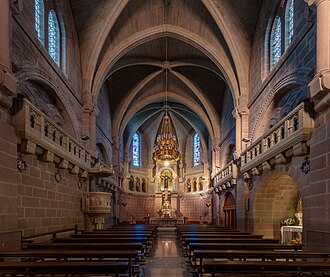
Basilica, Xavier, Navarre, Spain. The basilica belongs to the ensemble of the Castle of Xavier, built in the 10th century, although the basilica was not built until end of the 19th and beginning of the 20th century. Of eclectic style, the interior has a unique neogothic nave built with grey stone and white marble. The stained glass is a work of painter Marcelino Santamaría from Burgos. The main altar is an artistic decorative work, carved in stone inlaid with mosaics, bronzes and enamels by the Biais house in Paris. The tabernacle is located on a high relief that represents San Francisco baptizing and preaching.
 #ImageOfTheDay
Picture of the day
Basilica, Xavier, Navarre, Spain. The basilica belongs to the ensemble of the Castle of Xavier, built in the 10th century, although the basilica was not built until end of the 19th and beginning of the 20th century. Of eclectic style, the interior has a unique neogothic nave built with grey stone and white marble. The stained glass is a work of painter Marcelino Santamaría from Burgos. The main altar is an artistic decorative work, carved in stone inlaid with mosaics, bronzes and enamels by the Biais house in Paris. The tabernacle is located on a high relief that represents San Francisco baptizing and preaching.
Read More
Picture of the day


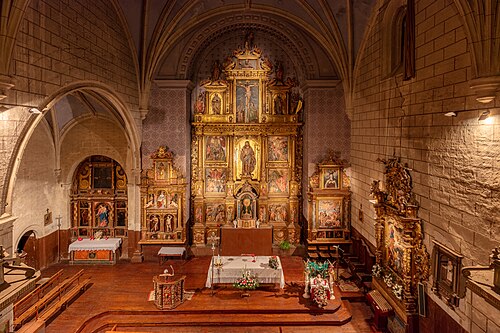
Church of El Salvador, Luesia, Zaragoza, Spain. The church is located in the highest area of the nucleus of the village of Luesia, next to the remains of the old medieval castle, to which it is historically and constructively associated. Its origin dates back to the end of the 11th century with the construction of the semicircular triple apse head with a double crypt at the bottom, while the body with three naves was built throughout the 12th century and the two portals on its southern fronts and occidental already respond to models from the beginning of the 13th century. The Romanesque building underwent a profound reform though in the mid-16th century. The main altarpiece is a Romanesque piece carved in wood; polychrome and gilt. The work is attributed to Gaspar Ramos, a sculptor from Sangüesa, who executed it around 1630.
 #ImageOfTheDay
Picture of the day
Church of El Salvador, Luesia, Zaragoza, Spain. The church is located in the highest area of the nucleus of the village of Luesia, next to the remains of the old medieval castle, to which it is historically and constructively associated. Its origin dates back to the end of the 11th century with the construction of the semicircular triple apse head with a double crypt at the bottom, while the body with three naves was built throughout the 12th century and the two portals on its southern fronts and occidental already respond to models from the beginning of the 13th century. The Romanesque building underwent a profound reform though in the mid-16th century. The main altarpiece is a Romanesque piece carved in wood; polychrome and gilt. The work is attributed to Gaspar Ramos, a sculptor from Sangüesa, who executed it around 1630.
Read More
Picture of the day


Moray eels (Muraena augusti) and a cleaner shrimp (Lysmata grabhami), Teno-Rasca marine strip, Tenerife, Spain. It belongs to the family of moray eel and is endemic of the Canary Islands, Madeira and Azores. It is non-migratory, and dwells at a depth range of 0 to 250 metres (0 to 820 ft), most often at around 0 to 50 metres (0 to 164 ft). Muraena augusti is active during the night and hides in holes or crevices during the day. It can reach up to 100 centimetres (39 in) length and is a carnivore that feeds on small fishes, shrimps and crabs. Like all other moray eels their vision is poor but their sense of smell extraordinary.
 #ImageOfTheDay
Picture of the day
Moray eels (Muraena augusti) and a cleaner shrimp (Lysmata grabhami), Teno-Rasca marine strip, Tenerife, Spain. It belongs to the family of moray eel and is endemic of the Canary Islands, Madeira and Azores. It is non-migratory, and dwells at a depth range of 0 to 250 metres (0 to 820 ft), most often at around 0 to 50 metres (0 to 164 ft). Muraena augusti is active during the night and hides in holes or crevices during the day. It can reach up to 100 centimetres (39 in) length and is a carnivore that feeds on small fishes, shrimps and crabs. Like all other moray eels their vision is poor but their sense of smell extraordinary.
Read More
Picture of the day


La Fuentona, Muriel de la Fuente, Soria, Spain. The natural spring is a natural monument since 1998. There are only 6 such monuments in the Community of Castile and León (the biggest in Spain by surface).
 #ImageOfTheDay
Picture of the day
La Fuentona, Muriel de la Fuente, Soria, Spain. The natural spring is a natural monument since 1998. There are only 6 such monuments in the Community of Castile and León (the biggest in Spain by surface).
Read More
Picture of the day


Pelagic stingray (Pteroplatytrygon violacea), Cape Palos, region of Murcia, Spain. This species of stingray has a worldwide distribution in waters warmer than 19 °C (66 °F), and migrates seasonally to spend the summer closer to the continental shelf and at higher latitudes. The only stingray that almost exclusively inhabits the open ocean, this species is typically found in surface waters down to a depth of 100 m (330 ft). The pelagic stingray typically grows to 1.3 m (4.3 ft) long and 59 cm (23 in) across. It’s an active predator that captures prey by wrapping its pectoral fins around it, before manipulating it to the mouth. A wide variety of organisms are represented in its diet: crustaceans, molluscs, bony fishes, sea horses and filefish, comb jellies and medusae, and polychaete worms.
 #ImageOfTheDay
Picture of the day
Pelagic stingray (Pteroplatytrygon violacea), Cape Palos, region of Murcia, Spain. This species of stingray has a worldwide distribution in waters warmer than 19 °C (66 °F), and migrates seasonally to spend the summer closer to the continental shelf and at higher latitudes. The only stingray that almost exclusively inhabits the open ocean, this species is typically found in surface waters down to a depth of 100 m (330 ft). The pelagic stingray typically grows to 1.3 m (4.3 ft) long and 59 cm (23 in) across. It’s an active predator that captures prey by wrapping its pectoral fins around it, before manipulating it to the mouth. A wide variety of organisms are represented in its diet: crustaceans, molluscs, bony fishes, sea horses and filefish, comb jellies and medusae, and polychaete worms.
Read More
Picture of the day


Apse of the higher church in the Royal Monastery of San Juan de la Peña, Huesca, Aragon, Spain. It was one of the most important monasteries in Aragon in the Middle Ages. Its two-level church is partially carved in the stone of the great cliff that overhangs the foundation. San Juan de la Peña means “Saint John of the Cliff”. The lower church includes some mozarabic architectural surviving elements, although most of the parts of the monastery (including the impressive cloister, under the great rock) are Romanesque. After the fire of 1675, a new monastery was built. The old monastery (built in 920) was declared a National Monument on 13 July 1889, and the new monastery in 1923.
 #ImageOfTheDay
Picture of the day
Apse of the higher church in the Royal Monastery of San Juan de la Peña, Huesca, Aragon, Spain. It was one of the most important monasteries in Aragon in the Middle Ages. Its two-level church is partially carved in the stone of the great cliff that overhangs the foundation. San Juan de la Peña means “Saint John of the Cliff”. The lower church includes some mozarabic architectural surviving elements, although most of the parts of the monastery (including the impressive cloister, under the great rock) are Romanesque. After the fire of 1675, a new monastery was built. The old monastery (built in 920) was declared a National Monument on 13 July 1889, and the new monastery in 1923.
Read More
Picture of the day


Ceiling of the Oratory of Saint Mary Queen and Mother, Málaga, Spain. The church was constructed in 2008 and is host of the Confraternity of the Sorrows. The paintings in the ceiling, done with acrylic paint, are work of Raúl Berzosa Fernández and were executed in different phases between 2008 and 2014. The 140 square metres (1,500 sq ft) surface is dedicated to the Coronation of the Virgin.
 #ImageOfTheDay
Picture of the day
Ceiling of the Oratory of Saint Mary Queen and Mother, Málaga, Spain. The church was constructed in 2008 and is host of the Confraternity of the Sorrows. The paintings in the ceiling, done with acrylic paint, are work of Raúl Berzosa Fernández and were executed in different phases between 2008 and 2014. The 140 square metres (1,500 sq ft) surface is dedicated to the Coronation of the Virgin.
Read More