Travel

Official delegation announced for Pope Leo XIV’s upcoming visit to Equatorial Guinea #Catholic EBEBIYÍN, Equatorial Guinea — Preparations for the planned apostolic visit of Pope Leo XIV to Equatorial Guinea have gained momentum, with Church authorities unveiling details of the high-level delegation expected to accompany the Holy Father during his visit scheduled for April 21–23.The announcement was made by Father Cristino Ela Engonga, secretary-general of the Episcopal Conference of Equatorial Guinea (CEGE) and general coordinator of the Church commission for the papal visit, during a strategic meeting that was held on March 28 at the bishop’s house in Bata Diocese.The meeting brought together members of various subcommissions from the dioceses of Bata, Ebibeyín, Evinayong, and Mongomo to assess ongoing preparations and receive updates from the Holy See regarding the historic visit, which will mark Pope Leo XIV’s first trip to Africa.According to Engonga, nearly 50 Vatican officials are expected to accompany the pontiff, including five cardinals. Among them is Cardinal Robert Sarah, prefect emeritus of the Dicastery for Divine Worship and the Discipline of the Sacraments.The pope is expected to visit key cities, including Malabo, Mongomo, and Bata, accompanied by senior Vatican officials such as Secretary of State Cardinal Pietro Parolin and Cardinal Luis Antonio Tagle, pro-prefect of the Dicastery for Evangelization.Other prominent members of the papal entourage include Cardinal George Jacob Koovakad, prefect of the Dicastery for Interreligious Dialogue, and Cardinal Peter Kodwo Appiah Turkson, chancellor of the Pontifical Academy of Social Sciences.They will be joined by 42 additional Vatican officials, including Monsignor José Nahúm Jairo Salas, who is responsible for coordinating papal international travels, as well as leading Vatican communicators such as Paolo Ruffini and Matteo Bruni.Beyond the papal entourage, the meeting also highlighted the participation of special guests, including Cardinal Fridolin Ambongo, president of the Symposium of Episcopal Conferences of Africa and Madagascar (SECAM), as well as Archbishop Luis Javier Argüello García, president of the Spanish Episcopal Conference (CEE).Engonga further said that more than 40 Catholic bishops from six central African countries have expressed their intention to attend the event.During the meeting, participants also received a report from the masters of ceremonies of CEGE, Fathers Julio Enrique Meheme and Diosdado Márquez Sabadell, who recently traveled to Rome to prepare the liturgical celebrations the pope will preside over.The Holy Father is expected to arrive in Malabo on Tuesday, April 21, the final leg of his four-nation African trip. Following the official welcome ceremony, he will meet the president of Equatorial Guinea and address political leaders, civil society representatives, and the diplomatic corps.In the afternoon, the pope will engage with academics and artists during a meeting with representatives of the world of culture at the León XIV Campus of the National University. A pastoral visit to patients and staff at the Jean Pierre Olie Psychiatric Hospital is also scheduled for this day.On Wednesday, April 22, the pope will travel to Mongomo to celebrate Mass at the Basilica of the Immaculate Conception before visiting the Pope Francis Technology School.Later in the day, the Holy Father will continue to Bata, where he is scheduled to visit a prison; pray at a memorial dedicated to victims of the March 7, 2021, explosion; and meet young people and families at Bata Stadium.The apostolic journey to Africa is to conclude on Thursday, April 23, with a final Mass celebrated by the pope at Malabo Stadium.Following the farewell ceremony at Malabo International Airport, the Holy Father will depart for Rome, arriving later that evening at Rome’s Fiumicino International Airport.This story was first published by ACI Africa, the sister service of EWTN News in Africa, and has been adapted by EWTN News.

Official delegation announced for Pope Leo XIV’s upcoming visit to Equatorial Guinea #Catholic EBEBIYÍN, Equatorial Guinea — Preparations for the planned apostolic visit of Pope Leo XIV to Equatorial Guinea have gained momentum, with Church authorities unveiling details of the high-level delegation expected to accompany the Holy Father during his visit scheduled for April 21–23.The announcement was made by Father Cristino Ela Engonga, secretary-general of the Episcopal Conference of Equatorial Guinea (CEGE) and general coordinator of the Church commission for the papal visit, during a strategic meeting that was held on March 28 at the bishop’s house in Bata Diocese.The meeting brought together members of various subcommissions from the dioceses of Bata, Ebibeyín, Evinayong, and Mongomo to assess ongoing preparations and receive updates from the Holy See regarding the historic visit, which will mark Pope Leo XIV’s first trip to Africa.According to Engonga, nearly 50 Vatican officials are expected to accompany the pontiff, including five cardinals. Among them is Cardinal Robert Sarah, prefect emeritus of the Dicastery for Divine Worship and the Discipline of the Sacraments.The pope is expected to visit key cities, including Malabo, Mongomo, and Bata, accompanied by senior Vatican officials such as Secretary of State Cardinal Pietro Parolin and Cardinal Luis Antonio Tagle, pro-prefect of the Dicastery for Evangelization.Other prominent members of the papal entourage include Cardinal George Jacob Koovakad, prefect of the Dicastery for Interreligious Dialogue, and Cardinal Peter Kodwo Appiah Turkson, chancellor of the Pontifical Academy of Social Sciences.They will be joined by 42 additional Vatican officials, including Monsignor José Nahúm Jairo Salas, who is responsible for coordinating papal international travels, as well as leading Vatican communicators such as Paolo Ruffini and Matteo Bruni.Beyond the papal entourage, the meeting also highlighted the participation of special guests, including Cardinal Fridolin Ambongo, president of the Symposium of Episcopal Conferences of Africa and Madagascar (SECAM), as well as Archbishop Luis Javier Argüello García, president of the Spanish Episcopal Conference (CEE).Engonga further said that more than 40 Catholic bishops from six central African countries have expressed their intention to attend the event.During the meeting, participants also received a report from the masters of ceremonies of CEGE, Fathers Julio Enrique Meheme and Diosdado Márquez Sabadell, who recently traveled to Rome to prepare the liturgical celebrations the pope will preside over.The Holy Father is expected to arrive in Malabo on Tuesday, April 21, the final leg of his four-nation African trip. Following the official welcome ceremony, he will meet the president of Equatorial Guinea and address political leaders, civil society representatives, and the diplomatic corps.In the afternoon, the pope will engage with academics and artists during a meeting with representatives of the world of culture at the León XIV Campus of the National University. A pastoral visit to patients and staff at the Jean Pierre Olie Psychiatric Hospital is also scheduled for this day.On Wednesday, April 22, the pope will travel to Mongomo to celebrate Mass at the Basilica of the Immaculate Conception before visiting the Pope Francis Technology School.Later in the day, the Holy Father will continue to Bata, where he is scheduled to visit a prison; pray at a memorial dedicated to victims of the March 7, 2021, explosion; and meet young people and families at Bata Stadium.The apostolic journey to Africa is to conclude on Thursday, April 23, with a final Mass celebrated by the pope at Malabo Stadium.Following the farewell ceremony at Malabo International Airport, the Holy Father will depart for Rome, arriving later that evening at Rome’s Fiumicino International Airport.This story was first published by ACI Africa, the sister service of EWTN News in Africa, and has been adapted by EWTN News.

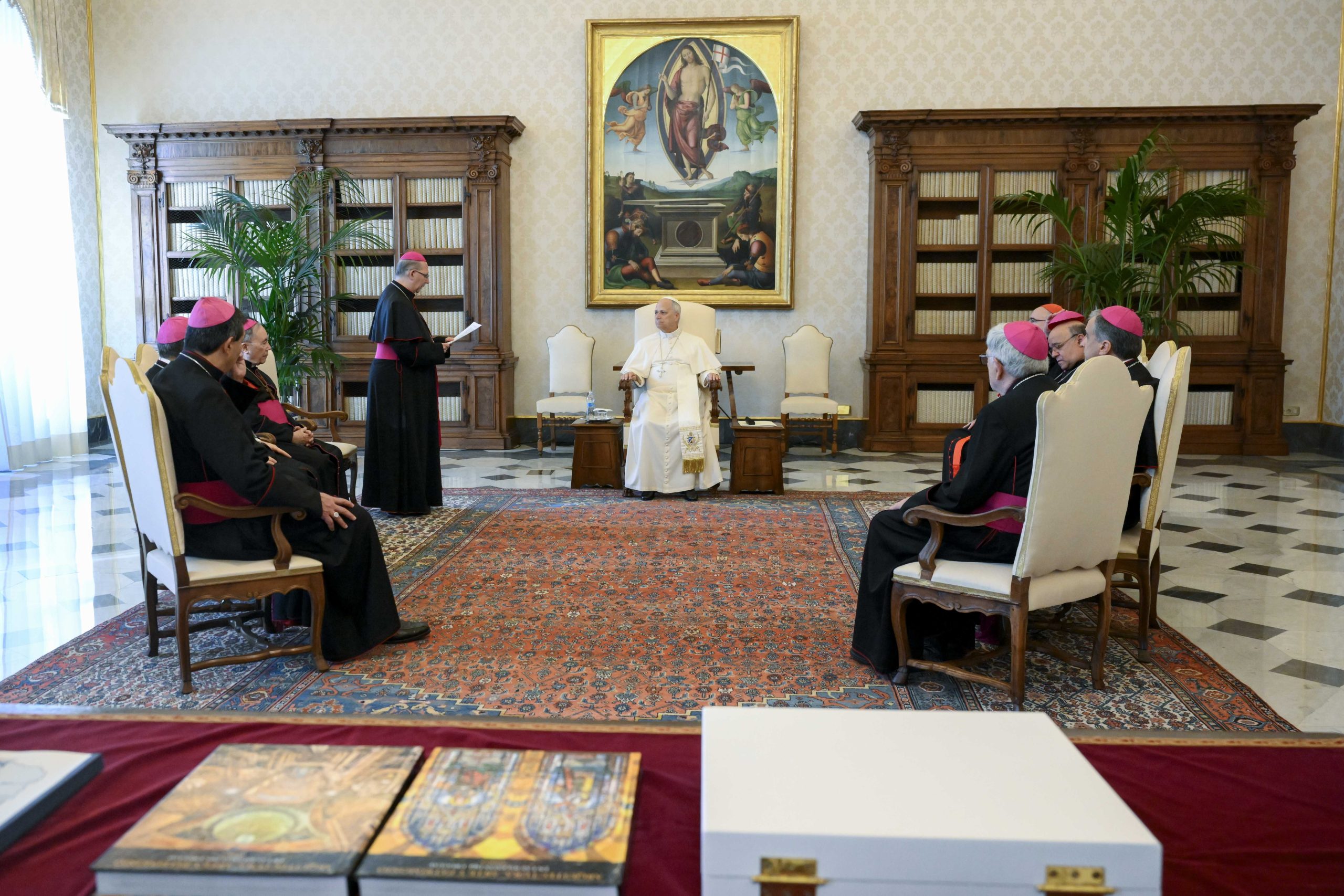
Church authorities unveiled details of the official delegation expected to accompany the Holy Father during his visit scheduled for April 21–23.

Read More
Pope Leo XIV to move into papal apartment of Apostolic Palace #Catholic Pope Leo XIV on March 14 took possession of the traditional papal apartment within the Apostolic Palace, moving into the quarters traditionally reserved for his predecessors. The move was announced on March 14 by the Holy See Press Office, more than ten months after Leoʼs election.The Holy Father had been staying at an apartment at the Palace of the Holy Office but will now reside in what has long served as the home of the reigning pontiff. The custom was discontinued in March of 2013 by Pope Francis, who chose to reside at Casa Santa Marta from the beginning of his pontificate.Pope Leo XIV has also reinstated the papal tradition of staying at the summer residence of Castel Gandolfo. In the summer of 2025 the pope stayed at Villa Barberini; subsequently, he decided to travel to Castel Gandolfo almost every week, staying from Monday evening until Tuesday evening.The papal apartment has undergone a lengthy and meticulous restoration, having remained unoccupied since the conclusion of Pope Benedict XVI’s pontificate on February 28, 2013. The previous renovation dated back to the spring of 2005, following the death of Pope John Paul II and prior to Benedict XVI taking up residence in the quarters.In addition to the bedrooms, the apartment comprises a private study for the pope — from the window of which he appears every Sunday to recite the Angelus — as well as a dining room and a private chapel, where pontiffs have traditionally celebrated Mass at the start of each day.Residing alongside Pope Leo XIV in the papal apartment within the Apostolic Palace will likely be his two secretaries, the Peruvian Monsignor Edgard Iván Rimaycuna Inga and the Italian Father Marco Billeri.This story was first published by ACI Stampa, the Italian-language sister service of EWTN News. It has been translated and adapted by EWTN News English.

Pope Leo XIV to move into papal apartment of Apostolic Palace #Catholic Pope Leo XIV on March 14 took possession of the traditional papal apartment within the Apostolic Palace, moving into the quarters traditionally reserved for his predecessors. The move was announced on March 14 by the Holy See Press Office, more than ten months after Leoʼs election.The Holy Father had been staying at an apartment at the Palace of the Holy Office but will now reside in what has long served as the home of the reigning pontiff. The custom was discontinued in March of 2013 by Pope Francis, who chose to reside at Casa Santa Marta from the beginning of his pontificate.Pope Leo XIV has also reinstated the papal tradition of staying at the summer residence of Castel Gandolfo. In the summer of 2025 the pope stayed at Villa Barberini; subsequently, he decided to travel to Castel Gandolfo almost every week, staying from Monday evening until Tuesday evening.The papal apartment has undergone a lengthy and meticulous restoration, having remained unoccupied since the conclusion of Pope Benedict XVI’s pontificate on February 28, 2013. The previous renovation dated back to the spring of 2005, following the death of Pope John Paul II and prior to Benedict XVI taking up residence in the quarters.In addition to the bedrooms, the apartment comprises a private study for the pope — from the window of which he appears every Sunday to recite the Angelus — as well as a dining room and a private chapel, where pontiffs have traditionally celebrated Mass at the start of each day.Residing alongside Pope Leo XIV in the papal apartment within the Apostolic Palace will likely be his two secretaries, the Peruvian Monsignor Edgard Iván Rimaycuna Inga and the Italian Father Marco Billeri.This story was first published by ACI Stampa, the Italian-language sister service of EWTN News. It has been translated and adapted by EWTN News English.

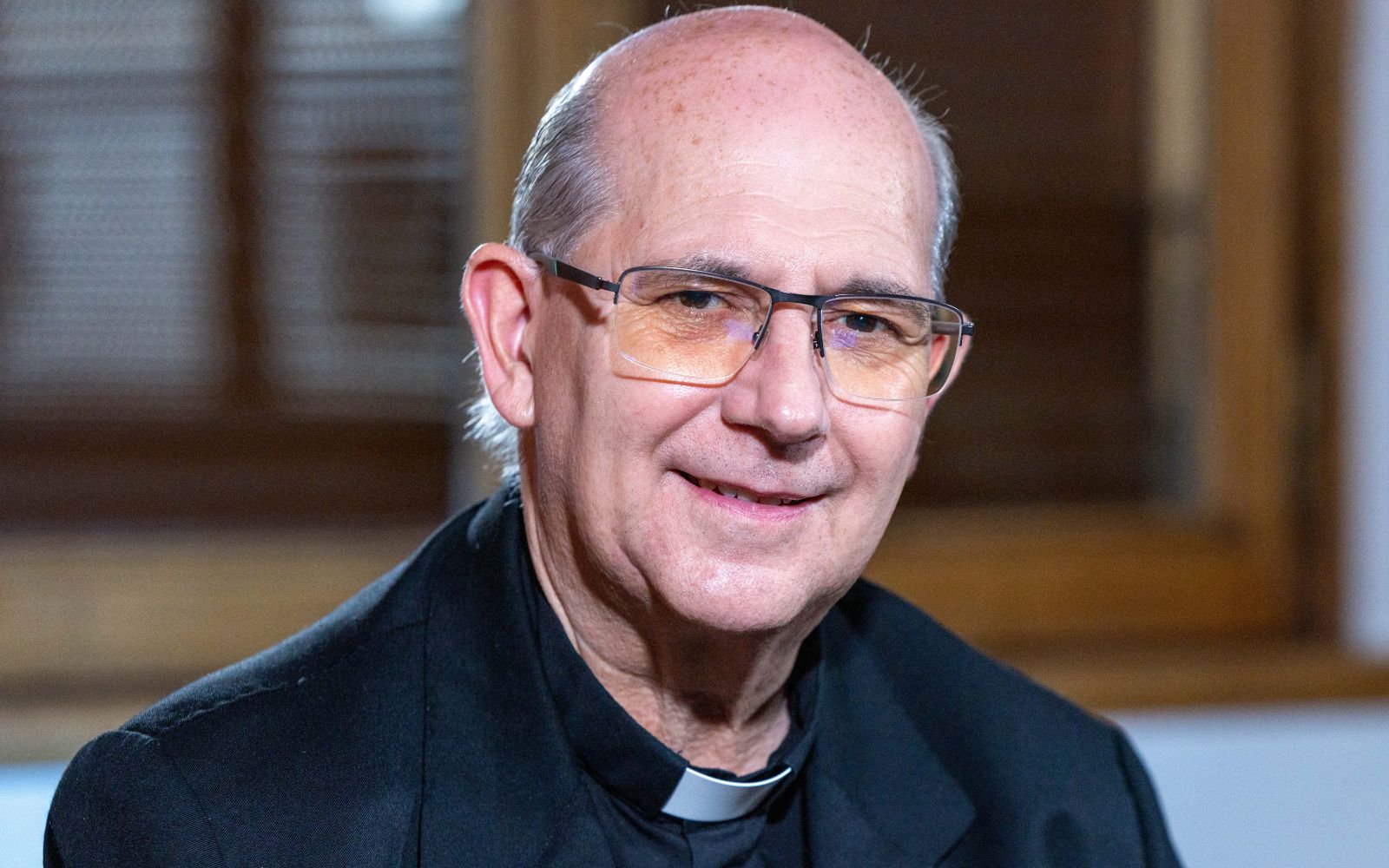
The move was announced on March 14 by the Holy See Press Office, more than ten months after Leo’s election.

Read More
Pakistani Christians join Muslims for Ramadan meals amid Iran war fallout #Catholic LAHORE, Pakistan — White bedsheets for Muslim worshippers were laid on the grassy lawn outside the Dominican Peace Center in Punjab an hour before the annual interfaith iftar — the fast-breaking meal during Ramadan.The aroma of crispy pakoras (fritters), dried dates, rose-flavored Rooh Afza, and dahi bhallay (lentil dumplings in yogurt) drew guests to the dining tables after they finished reciting their iftar prayers in Lahore, the provincial capital.Dominican Father James Channan, director of the center, has hosted such interfaith gatherings for 25 years in a country where religious tensions have periodically turned violent.
 
 Dominican Father James Channan speaks at a combined International Women’s Day and interfaith iftar program at the Dominican Peace Center in Lahore, Pakistan, on March 8, 2026. | Credit: Kamran Chaudhry
 
 “Table friendships are very important in our context. People attending such forums highlight them on social media, reaching millions,” he told EWTN News at the sidelines of the program, timed with International Women’s Day on March 8.“The combined meals and prayer services have helped curb trends of church attacks that followed U.S. wars in Muslim countries.”Pakistani Christians have faced multiple terrorist attacks since October 2001, after the United States — seen by many Pakistani Muslims as a Christian nation — launched its military campaign in Afghanistan.“It’s a bitter past. Churches and Christian settlements were considered soft targets. The ongoing conflicts are not crusades; they are wars of interest,” Channan said.Interfaith meals continue despite unrestInterfaith gatherings continued this year even as protests against U.S. and Israeli strikes on Iran left 26 dead in Pakistan.Church leaders joined clerics in prayers for peace and shared meals at mosques, church premises, and hotels across six dioceses and one apostolic vicariate, as Middle East air travel disruption and rising fuel prices added regional tension.Many Pakistanis view the United States and Western Europe as Christian nations, and some militant groups target local Christians as linked to these “Christian countries.”Communal tensions have also erupted locally. In May 2024, a mob attacked 74-year-old Christian Nazir Masih over alleged blasphemy in Sargodha. He later died of his injuries. In August 2023, violence in Jaranwala destroyed 26 churches and 80 Christian homes following allegations of Quran desecration.In a Feb. 17 message, Archbishop Joseph Arshad of Rawalpindi-Islamabad invited Christians and Muslims to offer special prayers for peace as Lent and Ramadan coincided this year. He encouraged people of both faiths “to visit one another, exchange greetings with respect, and unite in serving vulnerable segments of society.”Joint events across PakistanIn Multan, over 82 participants attended a Feb. 28 iftar jointly organized by the Catholic Commission for Inter-Religious Dialogue and Ecumenism; Saiban-e-Pakistan, a state peace initiative; and the Centre of Excellence on Countering Violent Extremism.A day earlier in Lahore, Channan and four Catholic priests attended the fast-breaking event at the Badshahi Mosque, the country’s second-largest mosque. He presented a framed photo of Abdul Khabeer Azad, the mosque’s “khateeb” (prayer leader), who met Pope Leo XIV in October 2025 at the “Christian-Muslim Dialogue and Daring Peace” conference in Rome organized by the Community of Sant’Egidio.
 
 Guests share the interfaith iftar meal at the Dominican Peace Center in Lahore on March 8, 2026. | Credit: Kamran Chaudhry
 
 Among 120 guests at the Dominican iftar was Muslim speaker Shehzad Qaiser. The event, held in collaboration with groups including the Seventh-day Adventist Church, highlighted ongoing social challenges.The head of external affairs at Sundas Foundation, which supports patients with blood disorders, agreed that Christians face discrimination in some offices and some Muslims refuse the food prepared by Christians.“It is very important to share our common practices, joys, and sorrows. Religious leaders have the duty to raise awareness. Sadly some mistake local Christians as ‘kafir’ (infidels),” Qaiser said.“During Ramadan, people distribute free meals to everyone without asking their religion. Blood donors don’t discriminate either. This is the real spirit of Ramadan and Lent.”

Pakistani Christians join Muslims for Ramadan meals amid Iran war fallout #Catholic LAHORE, Pakistan — White bedsheets for Muslim worshippers were laid on the grassy lawn outside the Dominican Peace Center in Punjab an hour before the annual interfaith iftar — the fast-breaking meal during Ramadan.The aroma of crispy pakoras (fritters), dried dates, rose-flavored Rooh Afza, and dahi bhallay (lentil dumplings in yogurt) drew guests to the dining tables after they finished reciting their iftar prayers in Lahore, the provincial capital.Dominican Father James Channan, director of the center, has hosted such interfaith gatherings for 25 years in a country where religious tensions have periodically turned violent. Dominican Father James Channan speaks at a combined International Women’s Day and interfaith iftar program at the Dominican Peace Center in Lahore, Pakistan, on March 8, 2026. | Credit: Kamran Chaudhry “Table friendships are very important in our context. People attending such forums highlight them on social media, reaching millions,” he told EWTN News at the sidelines of the program, timed with International Women’s Day on March 8.“The combined meals and prayer services have helped curb trends of church attacks that followed U.S. wars in Muslim countries.”Pakistani Christians have faced multiple terrorist attacks since October 2001, after the United States — seen by many Pakistani Muslims as a Christian nation — launched its military campaign in Afghanistan.“It’s a bitter past. Churches and Christian settlements were considered soft targets. The ongoing conflicts are not crusades; they are wars of interest,” Channan said.Interfaith meals continue despite unrestInterfaith gatherings continued this year even as protests against U.S. and Israeli strikes on Iran left 26 dead in Pakistan.Church leaders joined clerics in prayers for peace and shared meals at mosques, church premises, and hotels across six dioceses and one apostolic vicariate, as Middle East air travel disruption and rising fuel prices added regional tension.Many Pakistanis view the United States and Western Europe as Christian nations, and some militant groups target local Christians as linked to these “Christian countries.”Communal tensions have also erupted locally. In May 2024, a mob attacked 74-year-old Christian Nazir Masih over alleged blasphemy in Sargodha. He later died of his injuries. In August 2023, violence in Jaranwala destroyed 26 churches and 80 Christian homes following allegations of Quran desecration.In a Feb. 17 message, Archbishop Joseph Arshad of Rawalpindi-Islamabad invited Christians and Muslims to offer special prayers for peace as Lent and Ramadan coincided this year. He encouraged people of both faiths “to visit one another, exchange greetings with respect, and unite in serving vulnerable segments of society.”Joint events across PakistanIn Multan, over 82 participants attended a Feb. 28 iftar jointly organized by the Catholic Commission for Inter-Religious Dialogue and Ecumenism; Saiban-e-Pakistan, a state peace initiative; and the Centre of Excellence on Countering Violent Extremism.A day earlier in Lahore, Channan and four Catholic priests attended the fast-breaking event at the Badshahi Mosque, the country’s second-largest mosque. He presented a framed photo of Abdul Khabeer Azad, the mosque’s “khateeb” (prayer leader), who met Pope Leo XIV in October 2025 at the “Christian-Muslim Dialogue and Daring Peace” conference in Rome organized by the Community of Sant’Egidio. Guests share the interfaith iftar meal at the Dominican Peace Center in Lahore on March 8, 2026. | Credit: Kamran Chaudhry Among 120 guests at the Dominican iftar was Muslim speaker Shehzad Qaiser. The event, held in collaboration with groups including the Seventh-day Adventist Church, highlighted ongoing social challenges.The head of external affairs at Sundas Foundation, which supports patients with blood disorders, agreed that Christians face discrimination in some offices and some Muslims refuse the food prepared by Christians.“It is very important to share our common practices, joys, and sorrows. Religious leaders have the duty to raise awareness. Sadly some mistake local Christians as ‘kafir’ (infidels),” Qaiser said.“During Ramadan, people distribute free meals to everyone without asking their religion. Blood donors don’t discriminate either. This is the real spirit of Ramadan and Lent.”

Church leaders and Muslim clerics shared Ramadan fast-breaking meals across six Pakistani dioceses this year as the overlap of Lent and Ramadan inspired joint prayers for peace.

Read More
‘My trust was in God’: Priest recounts flight from Holy Land amid Iranian conflict #Catholic A Jesuit priest says he has a “much larger perspective” of the crisis of war after fleeing the Holy Land at the outset of U.S. and Israeli aggressions against Iran.Father Anthony Wieck, SJ, told EWTN News he was leading a pilgrimage of about 20 Catholics in the Holy Land when the war began on Feb. 28.“We had just spent a week in Galilee and prayed our way through the holy sites of Jesus’ teaching and miracles,” Wieck said, describing the region as “a lovely land [God] created for himself to enjoy on this earth.”The group arrived in Jerusalem on Feb. 26, he said, and the next day word began to spread of the need to evacuate from the region. Several pilgrims were able to leave immediately, Wieck said, while others who attempted to leave the next day were unable to get a flight out and eventually had to return to the pilgrim group.Ben Gurion International Airport “is not a safe place to be because there are military installations near the airport,” he said. “Iranian missiles were being sent that way, and our people ... were taken into the bomb shelter five stories down below the airport.”Wieck said that even as the conflict broke out, his group still toured holy sites, including the Church of the Pater Noster, where tradition holds that Christ taught the disciples to pray the Our Father. “We were instructed by our guide to continue the tour and to simply seek cover whenever the sirens went off,” he said, pointing out that “those living in Jerusalem are so used to warning sirens there that they have much less fear than we do. They’re observant but not fearful. And we were trusting them.”The priest was offering a chanted Mass at the Dominus Flevit Church while explosions sounded in the distance as Israel’s Iron Dome intercepted Iranian missiles.“It was scary, yes,” Wieck said. “But I continued the Mass with trust, and after Communion (before the final prayer) asked all pilgrims to pray for a couple minutes regarding where the Lord was in all of this situation.”
 
 Father Anthony Wieck, SJ, says Mass at the Dominus Flevit Church in Jerusalem on Saturday, Feb. 28, 2026. | Credit: Father Anthony Wieck, SJ
 
 After Mass, a group of pilgrims from Kansas joined them in the church amid sirens and explosions in the surrounding region. “It struck me as supremely important that we not make decisions based on fear but on faith,” he said.The priest’s group took a truncated walking tour of Jerusalem, he said, which “became eerily quiet that evening.”The tour company ordered them to evacuate the following morning.  Departing for Jordan, the group found itself stuck amid a crush of evacuations in the area. “A typical two-hour trip to Amman, Jordan, took us seven hours,” Wieck said. And while the group initially “felt much safer being outside of Jerusalem,” they eventually felt “locked in” at their hotel, particularly amid mass flight cancellations. 
 
 Missile contrails are seen over the Holy Land region on Sunday, March 1, 2026. | Credit: Father Anthony Wieck, SJ
 
 Jordanians in the area kept assuring the Americans that the country’s King Abdullah II would protect them. “Not feeling the same allegiance to their king, my trust was in God,” the priest said.The U.S. Department of State provided military evacuations to Americans in the area. “Little by little, our pilgrims found an occasional flight that [shuttled] them out of the war zone,” Wieck said. The priest and one other pilgrim, a religious from Phoenix, were the last from their group to remain in Jordan before they took a flight with Royal Jordanian Airlines on March 4. Wieck said the pilot took “great efforts to circumvent Israeli airspace.” The air carrier “was bold enough to keep to their travel plans despite the threats,” Wieck said, describing the airline as “my new favorite.” ‘Truly a Catholic experience’Wieck told EWTN News that he “would not say that I was stellar in my response to what God was doing here.” “I wanted to pray much but felt so much stress and trauma around me that it was truly difficult,” he said. “I was exhausted.”Yet during the frightening evacuation, he said, “hundreds of people” back home were lifting up the pilgrims with prayers and sacrifices. “They knew our plight was becoming a bit more grave,” he said.Back home in the U.S., Wieck, who lives in Louisiana, said he was still reflecting on what happened but said the harrowing ordeal gave him “a much larger perspective to have experienced profoundly how much we need the help of our brothers and sisters in times of crisis.”“It was truly a Catholic experience,” he said.“Though as humans we usually don’t carry our crosses in times of crisis all that well, our brothers and sisters in the faith can see us through. That was my experience,” he said.“How wonderful it is to be Catholic!” he added.

‘My trust was in God’: Priest recounts flight from Holy Land amid Iranian conflict #Catholic A Jesuit priest says he has a “much larger perspective” of the crisis of war after fleeing the Holy Land at the outset of U.S. and Israeli aggressions against Iran.Father Anthony Wieck, SJ, told EWTN News he was leading a pilgrimage of about 20 Catholics in the Holy Land when the war began on Feb. 28.“We had just spent a week in Galilee and prayed our way through the holy sites of Jesus’ teaching and miracles,” Wieck said, describing the region as “a lovely land [God] created for himself to enjoy on this earth.”The group arrived in Jerusalem on Feb. 26, he said, and the next day word began to spread of the need to evacuate from the region. Several pilgrims were able to leave immediately, Wieck said, while others who attempted to leave the next day were unable to get a flight out and eventually had to return to the pilgrim group.Ben Gurion International Airport “is not a safe place to be because there are military installations near the airport,” he said. “Iranian missiles were being sent that way, and our people … were taken into the bomb shelter five stories down below the airport.”Wieck said that even as the conflict broke out, his group still toured holy sites, including the Church of the Pater Noster, where tradition holds that Christ taught the disciples to pray the Our Father. “We were instructed by our guide to continue the tour and to simply seek cover whenever the sirens went off,” he said, pointing out that “those living in Jerusalem are so used to warning sirens there that they have much less fear than we do. They’re observant but not fearful. And we were trusting them.”The priest was offering a chanted Mass at the Dominus Flevit Church while explosions sounded in the distance as Israel’s Iron Dome intercepted Iranian missiles.“It was scary, yes,” Wieck said. “But I continued the Mass with trust, and after Communion (before the final prayer) asked all pilgrims to pray for a couple minutes regarding where the Lord was in all of this situation.” Father Anthony Wieck, SJ, says Mass at the Dominus Flevit Church in Jerusalem on Saturday, Feb. 28, 2026. | Credit: Father Anthony Wieck, SJ After Mass, a group of pilgrims from Kansas joined them in the church amid sirens and explosions in the surrounding region. “It struck me as supremely important that we not make decisions based on fear but on faith,” he said.The priest’s group took a truncated walking tour of Jerusalem, he said, which “became eerily quiet that evening.”The tour company ordered them to evacuate the following morning.  Departing for Jordan, the group found itself stuck amid a crush of evacuations in the area. “A typical two-hour trip to Amman, Jordan, took us seven hours,” Wieck said. And while the group initially “felt much safer being outside of Jerusalem,” they eventually felt “locked in” at their hotel, particularly amid mass flight cancellations. Missile contrails are seen over the Holy Land region on Sunday, March 1, 2026. | Credit: Father Anthony Wieck, SJ Jordanians in the area kept assuring the Americans that the country’s King Abdullah II would protect them. “Not feeling the same allegiance to their king, my trust was in God,” the priest said.The U.S. Department of State provided military evacuations to Americans in the area. “Little by little, our pilgrims found an occasional flight that [shuttled] them out of the war zone,” Wieck said. The priest and one other pilgrim, a religious from Phoenix, were the last from their group to remain in Jordan before they took a flight with Royal Jordanian Airlines on March 4. Wieck said the pilot took “great efforts to circumvent Israeli airspace.” The air carrier “was bold enough to keep to their travel plans despite the threats,” Wieck said, describing the airline as “my new favorite.” ‘Truly a Catholic experience’Wieck told EWTN News that he “would not say that I was stellar in my response to what God was doing here.” “I wanted to pray much but felt so much stress and trauma around me that it was truly difficult,” he said. “I was exhausted.”Yet during the frightening evacuation, he said, “hundreds of people” back home were lifting up the pilgrims with prayers and sacrifices. “They knew our plight was becoming a bit more grave,” he said.Back home in the U.S., Wieck, who lives in Louisiana, said he was still reflecting on what happened but said the harrowing ordeal gave him “a much larger perspective to have experienced profoundly how much we need the help of our brothers and sisters in times of crisis.”“It was truly a Catholic experience,” he said.“Though as humans we usually don’t carry our crosses in times of crisis all that well, our brothers and sisters in the faith can see us through. That was my experience,” he said.“How wonderful it is to be Catholic!” he added.

Father Anthony Wieck, SJ, was leading a group of pilgrims in Jerusalem when the U.S. and Israel began launching strikes against Iran.

Read More
American Catholics launch crowdfunding effort to gift Pope Leo XIV papal tiara #Catholic A newly established nonprofit launched a crowdfunding effort to construct a papal tiara that will contain Catholic and American symbolism, with the plan to offer it to Pope Leo XIV as a gift from American Catholics for the first pontiff from the United States.“Historically, the majority of papal tiaras are gifts, usually from the home diocese of the pope or from religious [communities] they may be affiliated with,” Isaac Smith, a convert to Catholicism and the founder of Amici Vaticani, told EWTN News.Smith said he was motivated to launch the project to provide Leo with a papal tiara based on the desire for “us, as Americans, to continue that tradition.” He said the first American pope is “such a historical milestone” for Catholicism in the United States.The history of papal crowns dates back to at least the eighth century with the word “tiara” first used in the 12th century. A second crown was added to the tiara in the 13th century to symbolize that the pope holds authority in both spiritual and temporal matters.A three-crown tiara first appeared in the 14th century. One interpretation of the three crowns is that they represent the threefold office of Christ: priest, prophet, and king. Another suggests it represents the militant, the suffering, and the triumphant Church.The proposed tiara commissioned by Amici Vaticani maintains the 14th-century tradition of three crowns. The tiara will be constructed with sterling silver and the crowns will be gold-plated.Because the gift is meant to honor Leo’s American heritage, the tiara will have red, white, and blue stones, which represent the colors of the American flag. It will incorporate other American symbols: oak leaves, representing the national tree; and corn stalks, representing the national crop.Some of the symbols included in the tiara have dual meanings relevant to both the papacy and the United States. It will incorporate roses, which is a symbol of the Virgin Mary and the national flower; and it will incorporate olives, which is a symbol of the pontiff’s commitment to peace and appears on the Great Seal of the United States.A buttony cross will sit atop the crown as a symbol of American Catholicism. The cross is used in the coat of arms for the Archdiocese of Baltimore, the country’s first Catholic diocese, and is featured on the flag of Maryland, which is the location of the first English Catholic colonies.The design, Smith explained, is meant to be “elegant and traditional” to honor the office of the papacy but is also meant to “incorporate distinctively American elements” to honor the pope’s American heritage.
 
 Maltese jeweler Gabriel Farrugia works on a project. | Credit: Photo courtesy of Gabriel Farrugia
 
 Smith said he hopes to fund the project through small donations from the American Catholic faithful so the pontiff can see “this was a group effort” and a gift from Catholics in his home country. This project, he said, provides “a tangible way for people to connect with the successor of Peter.”He also said he plans to compile the names of every person who donates more than $20 into a book, which would be presented to the Holy Father along with the crown and would say on the cover: “Holy Father, please pray for these people.”Smith said his intention is that the tiara can “hopefully [be] put on display in a place of honor” after it is constructed “and presented to the pope when he visits.” When Leo met Vice President JD Vance, the pontiff said he would travel to the United States at some point, although the Holy Father does not have any specific publicly announced plans to visit as of yet.The tiara will be constructed by a Maltese jeweler and artist named Gabriel Farrugia, who has a background in creating religious art, including an Our Lady of Fátima crown, which was used in a coronation ceremony in Guardamangia, Malta. He has also been commissioned by Catholic churches for artistic projects.“Making sacred art is a type of thanksgiving to the One who created us,” Farrugia told EWTN News.“For the God that created us and gave us life, I think we should give him something,” he said, adding that sacred art provides “something that will be left there for ages” and something for “people to admire, to enjoy, and to reflect [upon].”The construction of the crown has not yet begun, as Amici Vaticani is still in the early stages of the crowdfunding effort.Amici Vaticani was launched in 2025 for the purpose of constructing the tiara. According to its website, the nonprofit also seeks to build up “the awakening of a Catholic spirit in the United States.”“Our country, once defined by its Protestant heritage, is now witnessing a boon of conversions,” the website notes. “Men and women rediscovering the depth, beauty, and authority of the Catholic faith.”

American Catholics launch crowdfunding effort to gift Pope Leo XIV papal tiara #Catholic A newly established nonprofit launched a crowdfunding effort to construct a papal tiara that will contain Catholic and American symbolism, with the plan to offer it to Pope Leo XIV as a gift from American Catholics for the first pontiff from the United States.“Historically, the majority of papal tiaras are gifts, usually from the home diocese of the pope or from religious [communities] they may be affiliated with,” Isaac Smith, a convert to Catholicism and the founder of Amici Vaticani, told EWTN News.Smith said he was motivated to launch the project to provide Leo with a papal tiara based on the desire for “us, as Americans, to continue that tradition.” He said the first American pope is “such a historical milestone” for Catholicism in the United States.The history of papal crowns dates back to at least the eighth century with the word “tiara” first used in the 12th century. A second crown was added to the tiara in the 13th century to symbolize that the pope holds authority in both spiritual and temporal matters.A three-crown tiara first appeared in the 14th century. One interpretation of the three crowns is that they represent the threefold office of Christ: priest, prophet, and king. Another suggests it represents the militant, the suffering, and the triumphant Church.The proposed tiara commissioned by Amici Vaticani maintains the 14th-century tradition of three crowns. The tiara will be constructed with sterling silver and the crowns will be gold-plated.Because the gift is meant to honor Leo’s American heritage, the tiara will have red, white, and blue stones, which represent the colors of the American flag. It will incorporate other American symbols: oak leaves, representing the national tree; and corn stalks, representing the national crop.Some of the symbols included in the tiara have dual meanings relevant to both the papacy and the United States. It will incorporate roses, which is a symbol of the Virgin Mary and the national flower; and it will incorporate olives, which is a symbol of the pontiff’s commitment to peace and appears on the Great Seal of the United States.A buttony cross will sit atop the crown as a symbol of American Catholicism. The cross is used in the coat of arms for the Archdiocese of Baltimore, the country’s first Catholic diocese, and is featured on the flag of Maryland, which is the location of the first English Catholic colonies.The design, Smith explained, is meant to be “elegant and traditional” to honor the office of the papacy but is also meant to “incorporate distinctively American elements” to honor the pope’s American heritage. Maltese jeweler Gabriel Farrugia works on a project. | Credit: Photo courtesy of Gabriel Farrugia Smith said he hopes to fund the project through small donations from the American Catholic faithful so the pontiff can see “this was a group effort” and a gift from Catholics in his home country. This project, he said, provides “a tangible way for people to connect with the successor of Peter.”He also said he plans to compile the names of every person who donates more than $20 into a book, which would be presented to the Holy Father along with the crown and would say on the cover: “Holy Father, please pray for these people.”Smith said his intention is that the tiara can “hopefully [be] put on display in a place of honor” after it is constructed “and presented to the pope when he visits.” When Leo met Vice President JD Vance, the pontiff said he would travel to the United States at some point, although the Holy Father does not have any specific publicly announced plans to visit as of yet.The tiara will be constructed by a Maltese jeweler and artist named Gabriel Farrugia, who has a background in creating religious art, including an Our Lady of Fátima crown, which was used in a coronation ceremony in Guardamangia, Malta. He has also been commissioned by Catholic churches for artistic projects.“Making sacred art is a type of thanksgiving to the One who created us,” Farrugia told EWTN News.“For the God that created us and gave us life, I think we should give him something,” he said, adding that sacred art provides “something that will be left there for ages” and something for “people to admire, to enjoy, and to reflect [upon].”The construction of the crown has not yet begun, as Amici Vaticani is still in the early stages of the crowdfunding effort.Amici Vaticani was launched in 2025 for the purpose of constructing the tiara. According to its website, the nonprofit also seeks to build up “the awakening of a Catholic spirit in the United States.”“Our country, once defined by its Protestant heritage, is now witnessing a boon of conversions,” the website notes. “Men and women rediscovering the depth, beauty, and authority of the Catholic faith.”

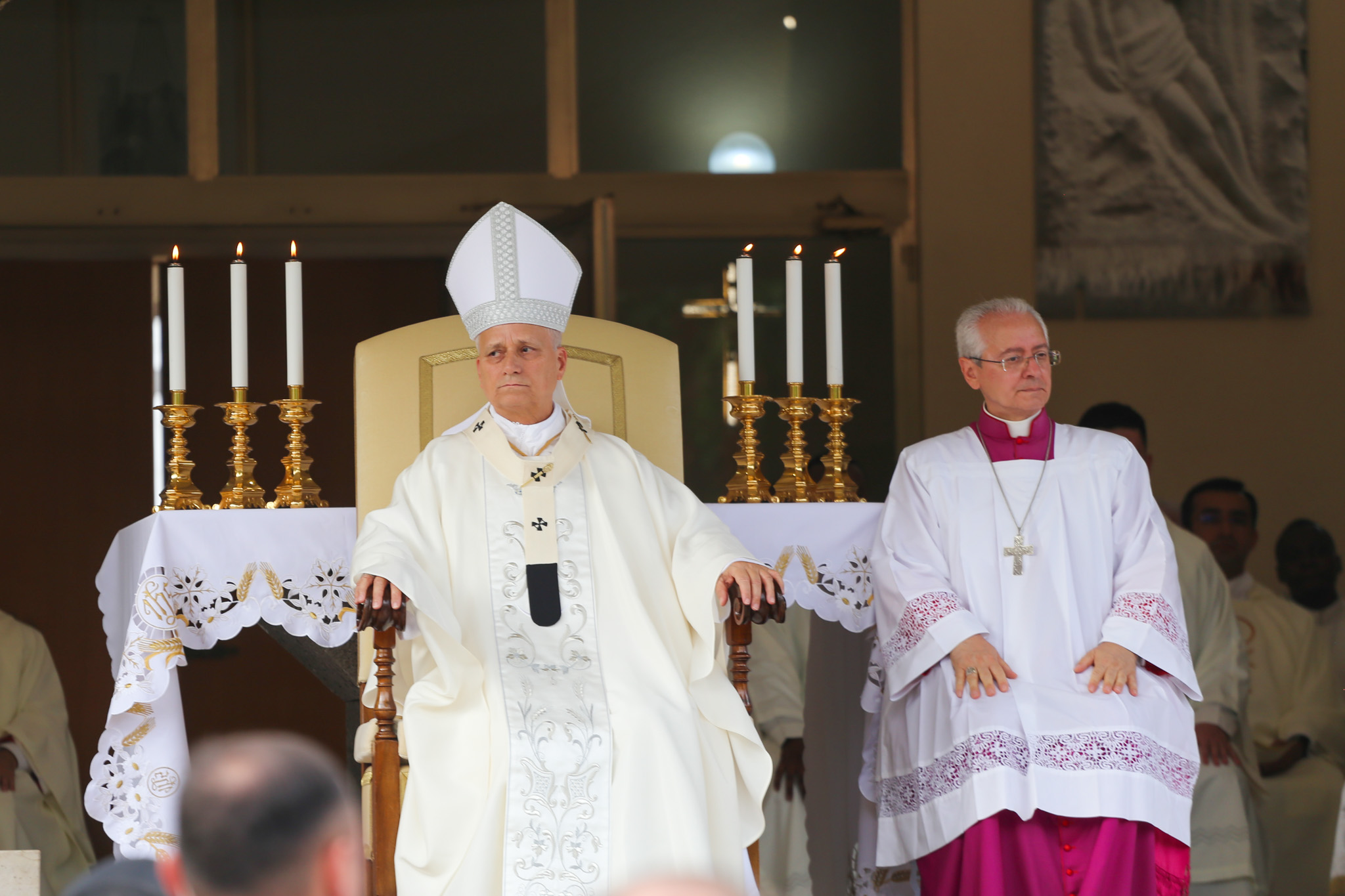
A nonprofit hopes to generate enough small donations to construct a papal tiara for Pope Leo XIV as a gift from American Catholics.

Read More
10 things to know about St. Frances Xavier Cabrini #Catholic A statue of St. Frances Xavier Cabrini, the first American saint, will replace a statue of Christopher Columbus at Arrigo Park in Chicago — an area known as Little Italy — Chicago Park District officials announced Feb. 18.Cabrini, who served poor Italian immigrants in Chicago, received roughly 38% of the almost 4,000 votes cast during an online contest to pick three nominees for the honor.The park district is now looking for artists who want to create the statue and are asking that applications be submitted by March 1.Here are 10 things to know about this beloved Catholic saint:1. She was the first American citizen to be canonized.Though born in Italy, Frances Xavier Cabrini became a naturalized U.S. citizen in 1909. In 1946, she was canonized by Pope Pius XII, becoming the first American citizen to be declared a saint.2. She originally wanted to be a missionary to China.Inspired by St. Francis Xavier, Cabrini hoped to evangelize in China. Instead, Pope Leo XIII directed her westward, telling her to serve immigrants in the United States, “not to the East, but to the West.”3. She arrived in New York with almost nothing.In 1889, Cabrini landed in New York City with six fellow sisters and limited resources. What awaited her was not a warm welcome but housing instability and overwhelming poverty among Italian immigrants.4. She founded the Missionary Sisters of the Sacred Heart.In 1880, she established the Missionary Sisters of the Sacred Heart of Jesus, a religious order dedicated to education, health care, and missionary work. The order continues its work worldwide today.5. She built an empire of schools and hospitals.By the time of her death, Cabrini had founded nearly 70 institutions, including orphanages, schools, and hospitals across the United States, Europe, and Latin America.6. She served Italian immigrants during a time of intense prejudice.In the late 19th and early 20th centuries, Italian immigrants faced widespread discrimination in America. Cabrini advocated fiercely for their dignity, education, and health care.7. She became a U.S. citizen in 1909.Cabrini’s naturalization reflected her long-term commitment to serving American communities, particularly in cities like New York and Chicago.8. She died in Chicago in 1917.Cabrini passed away on Dec. 22, 1917, in Chicago after years of tireless travel and work. The doctor attributed her death to chronic endocarditis, or heart disease. Her body is preserved for veneration at the National Shrine of St. Frances Xavier Cabrini.9. She is the patron saint of immigrants.In 1950, Pope Pius XII officially named her the patron saint of immigrants, recognizing her lifelong dedication to displaced and marginalized communities.10. Her legacy remains visible across the U.S.Hospitals, schools, and institutions bearing her name continue her mission of faith-driven service and education.

10 things to know about St. Frances Xavier Cabrini #Catholic A statue of St. Frances Xavier Cabrini, the first American saint, will replace a statue of Christopher Columbus at Arrigo Park in Chicago — an area known as Little Italy — Chicago Park District officials announced Feb. 18.Cabrini, who served poor Italian immigrants in Chicago, received roughly 38% of the almost 4,000 votes cast during an online contest to pick three nominees for the honor.The park district is now looking for artists who want to create the statue and are asking that applications be submitted by March 1.Here are 10 things to know about this beloved Catholic saint:1. She was the first American citizen to be canonized.Though born in Italy, Frances Xavier Cabrini became a naturalized U.S. citizen in 1909. In 1946, she was canonized by Pope Pius XII, becoming the first American citizen to be declared a saint.2. She originally wanted to be a missionary to China.Inspired by St. Francis Xavier, Cabrini hoped to evangelize in China. Instead, Pope Leo XIII directed her westward, telling her to serve immigrants in the United States, “not to the East, but to the West.”3. She arrived in New York with almost nothing.In 1889, Cabrini landed in New York City with six fellow sisters and limited resources. What awaited her was not a warm welcome but housing instability and overwhelming poverty among Italian immigrants.4. She founded the Missionary Sisters of the Sacred Heart.In 1880, she established the Missionary Sisters of the Sacred Heart of Jesus, a religious order dedicated to education, health care, and missionary work. The order continues its work worldwide today.5. She built an empire of schools and hospitals.By the time of her death, Cabrini had founded nearly 70 institutions, including orphanages, schools, and hospitals across the United States, Europe, and Latin America.6. She served Italian immigrants during a time of intense prejudice.In the late 19th and early 20th centuries, Italian immigrants faced widespread discrimination in America. Cabrini advocated fiercely for their dignity, education, and health care.7. She became a U.S. citizen in 1909.Cabrini’s naturalization reflected her long-term commitment to serving American communities, particularly in cities like New York and Chicago.8. She died in Chicago in 1917.Cabrini passed away on Dec. 22, 1917, in Chicago after years of tireless travel and work. The doctor attributed her death to chronic endocarditis, or heart disease. Her body is preserved for veneration at the National Shrine of St. Frances Xavier Cabrini.9. She is the patron saint of immigrants.In 1950, Pope Pius XII officially named her the patron saint of immigrants, recognizing her lifelong dedication to displaced and marginalized communities.10. Her legacy remains visible across the U.S.Hospitals, schools, and institutions bearing her name continue her mission of faith-driven service and education.

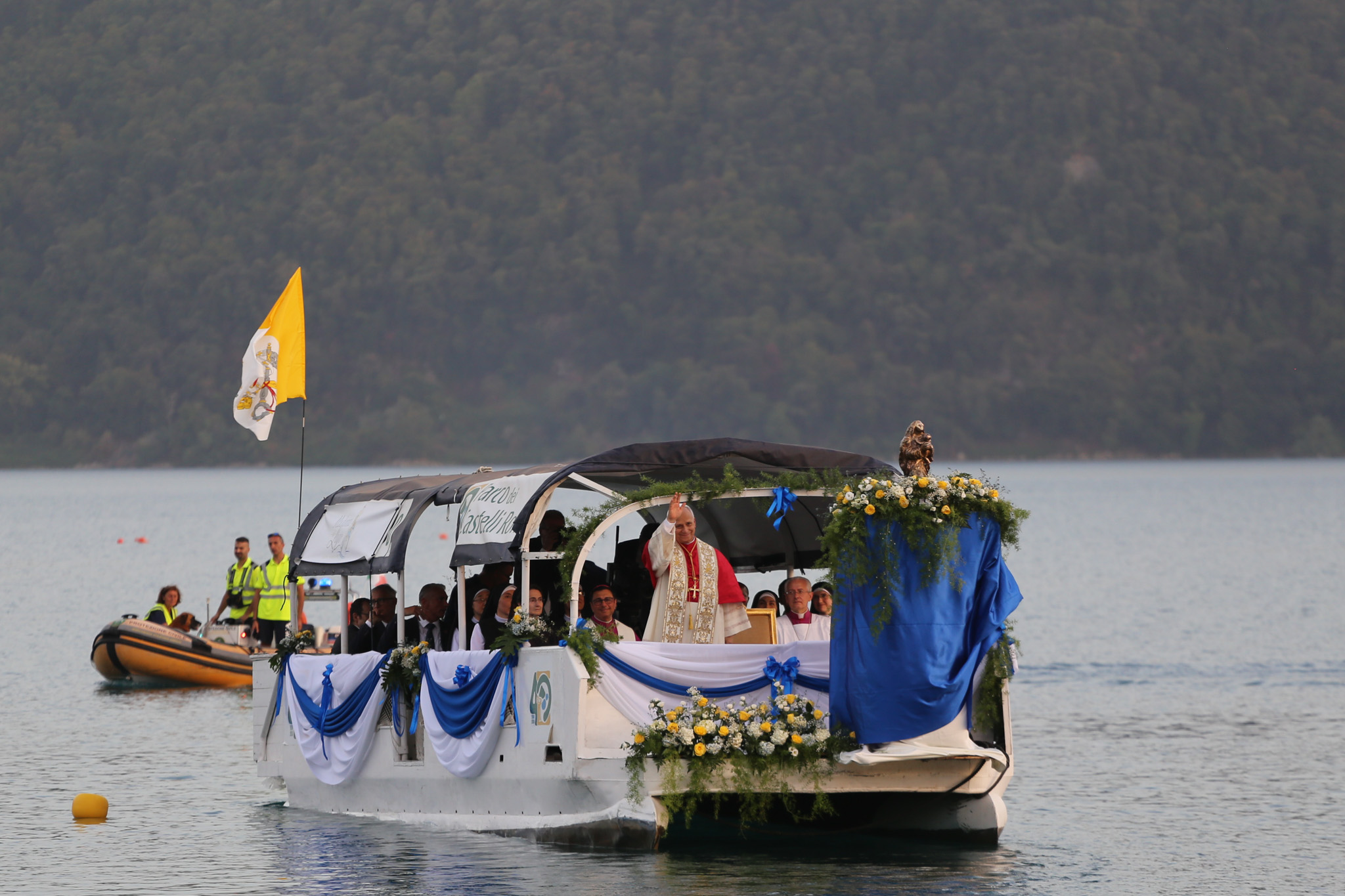
St. Frances Xavier Cabrini was the first American citizen to be canonized and is the patron saint of immigrants. A new statue of her will be erected in Chicago’s Little Italy.

Read More