Unions

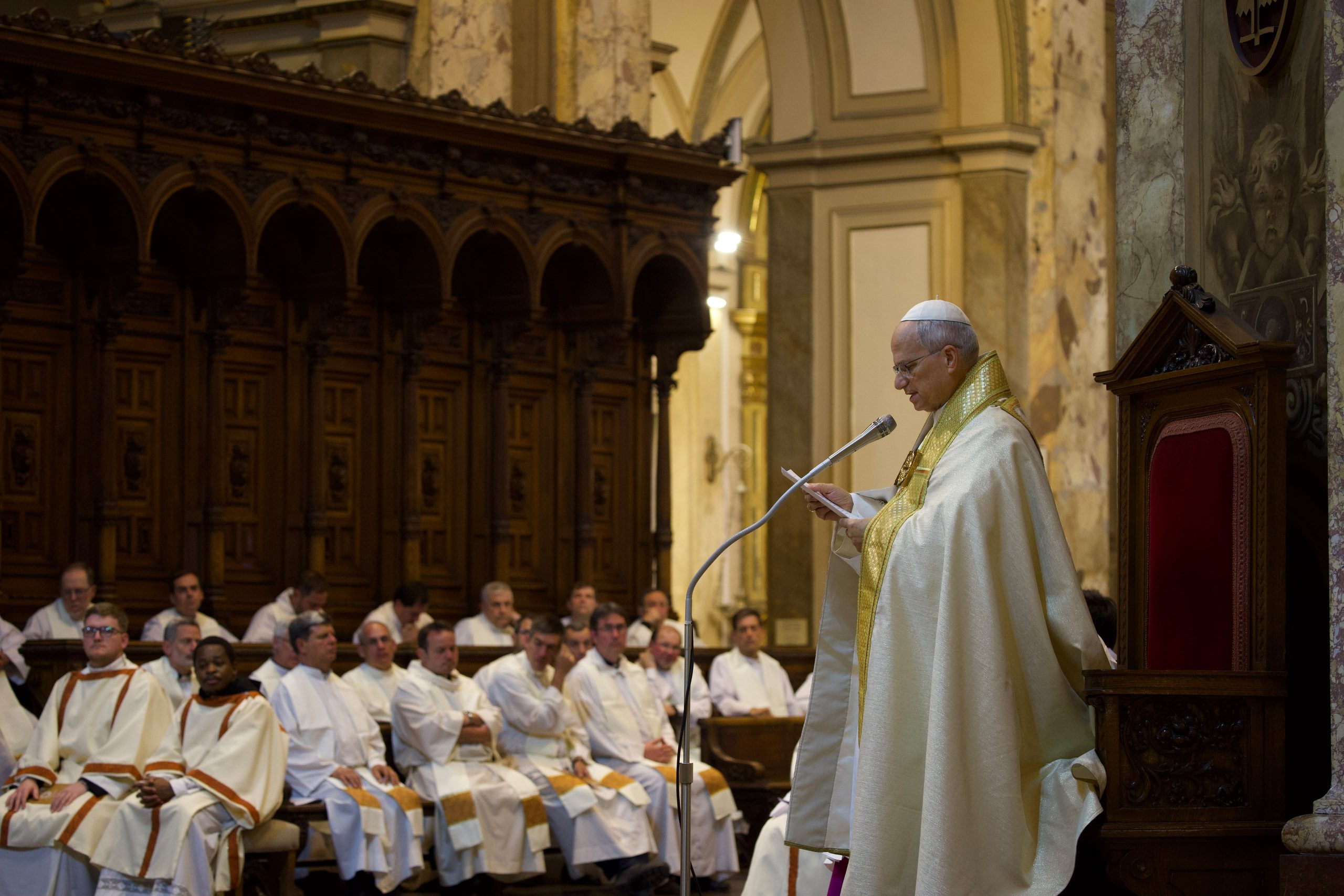
Pope Leo XIV calls for religious and social unity in Argentina #Catholic BUENOS AIRES, Argentina — Pope Leo XIV has made it clear since the start of his pontificate that he seeks to be a pope of unity. On Monday, Nov. 9, he brought that message to Argentina, in speeches on economic relations, interfaith dialogue and leadership of the Church itself.Speaking to an audience at the Catholic University of Argentina that included business leaders, trade unionists and grass-roots social activists, the pope encouraged groups with apparently conflicting interests to join together in embracing the fundamental principles of Catholic Social Teaching.Leo made his talk a mini-tutorial in the subject, offering brief definitions of the dignity of the human person, the common good, the universal destination of goods, solidarity and subsidiarity. By acting in accordance with these, he said, society could “build the civilization of love.”The pope offered a concrete example of someone who lived by the principles in the Venerable Enrique Shaw, an Argentine businessman “who underwent a conversion after discovering the beauty of the Gospel as expressed in the Church’s Social Doctrine.”Leo said the entrepreneur “understood that industry was not just a productive mechanism or a means of accumulating capital, but a true community of people called to grow together.”Shaw died in 1962 and Pope Francis recognized his heroic virtues in 2021.The pope also pointed to trade unions, workers’ associations, cooperatives and welfare organizations, whose “specific mission is to be instruments of solidarity and cohesion, channels of cooperation between workers and businesses.”A little later the same afternoon, Leo addressed representatives of other Christian churches and other religions, proposing an understanding of “sincere prayer” that unites their different creeds. Such prayer, the pope said, gives voice to “religions as guardians of human dignity, religions as expressions of our freedom, and religions as places in which to cultivate hope.”The pope’s last public event of the day was a vespers service with the Catholic bishops of Argentina. After surveying the geographic and cultural diversity of the country, Leo noted that Catholicism in the country is united by veneration of the Virgin Mary, though under different titles and devotions, including the Most Holy Virgin of the Miracle, Our Lady of the Valley, the Virgin of the Rosary, Mary of Itatí and Our Lady of Luján.Leo is scheduled to celebrate Mass in front of the Basilica of Our Lady of Luján on Wednesday, his last day in Argentina.The pope offered the biblical story of Joseph’s reunion with his father Jacob and his brothers, depicted in a relief on the facade of the cathedral where he was speaking, as a model of reconciliation for his listeners.“Let us cultivate communion, welcoming our legitimate differences with charity and fostering fraternity, so that our unity may make Christ’s love visible and help many to encounter him,” the pope said.Leo asked the bishops “to continue listening to one another and discerning together what the Holy Spirit is asking of you in the light of the word of God and the Magisterium of the Church.” He said they should do so in conjunction with their synodal teams, also present in the cathedral, since they were “fellow disciples of the one Teacher.”Synodality, a signature initiative of Pope Francis that Leo has pledged to continue, seeks to involve the whole Church, including the laity, more fully in discernment and mission.

Pope Leo XIV calls for religious and social unity in Argentina #Catholic BUENOS AIRES, Argentina — Pope Leo XIV has made it clear since the start of his pontificate that he seeks to be a pope of unity. On Monday, Nov. 9, he brought that message to Argentina, in speeches on economic relations, interfaith dialogue and leadership of the Church itself.Speaking to an audience at the Catholic University of Argentina that included business leaders, trade unionists and grass-roots social activists, the pope encouraged groups with apparently conflicting interests to join together in embracing the fundamental principles of Catholic Social Teaching.Leo made his talk a mini-tutorial in the subject, offering brief definitions of the dignity of the human person, the common good, the universal destination of goods, solidarity and subsidiarity. By acting in accordance with these, he said, society could “build the civilization of love.”The pope offered a concrete example of someone who lived by the principles in the Venerable Enrique Shaw, an Argentine businessman “who underwent a conversion after discovering the beauty of the Gospel as expressed in the Church’s Social Doctrine.”Leo said the entrepreneur “understood that industry was not just a productive mechanism or a means of accumulating capital, but a true community of people called to grow together.”Shaw died in 1962 and Pope Francis recognized his heroic virtues in 2021.The pope also pointed to trade unions, workers’ associations, cooperatives and welfare organizations, whose “specific mission is to be instruments of solidarity and cohesion, channels of cooperation between workers and businesses.”A little later the same afternoon, Leo addressed representatives of other Christian churches and other religions, proposing an understanding of “sincere prayer” that unites their different creeds. Such prayer, the pope said, gives voice to “religions as guardians of human dignity, religions as expressions of our freedom, and religions as places in which to cultivate hope.”The pope’s last public event of the day was a vespers service with the Catholic bishops of Argentina. After surveying the geographic and cultural diversity of the country, Leo noted that Catholicism in the country is united by veneration of the Virgin Mary, though under different titles and devotions, including the Most Holy Virgin of the Miracle, Our Lady of the Valley, the Virgin of the Rosary, Mary of Itatí and Our Lady of Luján.Leo is scheduled to celebrate Mass in front of the Basilica of Our Lady of Luján on Wednesday, his last day in Argentina.The pope offered the biblical story of Joseph’s reunion with his father Jacob and his brothers, depicted in a relief on the facade of the cathedral where he was speaking, as a model of reconciliation for his listeners.“Let us cultivate communion, welcoming our legitimate differences with charity and fostering fraternity, so that our unity may make Christ’s love visible and help many to encounter him,” the pope said.Leo asked the bishops “to continue listening to one another and discerning together what the Holy Spirit is asking of you in the light of the word of God and the Magisterium of the Church.” He said they should do so in conjunction with their synodal teams, also present in the cathedral, since they were “fellow disciples of the one Teacher.”Synodality, a signature initiative of Pope Francis that Leo has pledged to continue, seeks to involve the whole Church, including the laity, more fully in discernment and mission.

On Monday in Buenos Aires, Pope Leo XIV spoke on Catholic social teaching, prayer among religions, and communion in the Church.
Read More
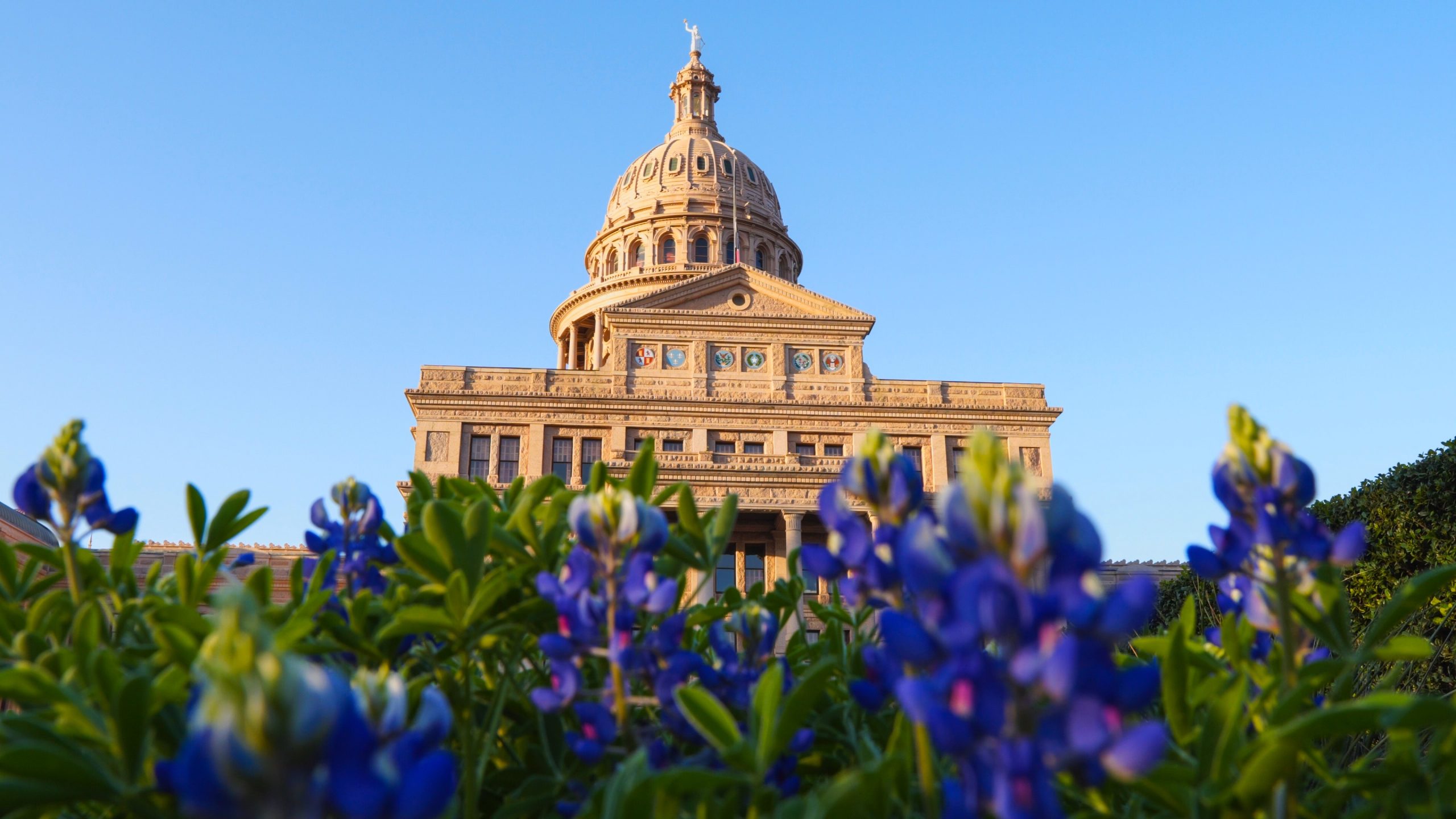
Texas Democrats sweep statewide offices; Catholics, pro-lifers respond #Catholic Democrats captured every major statewide office in Texas on Tuesday, ending more than three decades of Republican dominance in the Lone Star State. Catholics and other Christians are warning that the results threaten hard-won gains on the protection of unborn life and parental rights in education.In a surprise defeat in the governor’s race, former state legislator Gina Hinojosa defeated three-time incumbent Greg Abbott, who was first elected in 2014. In 2021, he signed into law the Texas Heartbeat Act, which banned abortions once fetal cardiac activity is detectable (around six weeks).While both Hinojosa and Abbott are Catholic, Hinojosa is pro-abortion, voting against the Heartbeat Act and saying she would sign a bill repealing Texas’ abortion law if it came to her desk, though she has expressed that would be unlikely due to the Republican-majority Legislature. Republicans retained the state Senate but lost their majority in the House.She said in September that expanding abortion access will not be a priority for her as governor because it will take more than her election to get Texas out of the “deep hole” itʼs in regarding what she calls “reproductive rights.”Pro-life advocates warn of setbacks, see opportunitiesJohn Seago, president of Texas Right to Life, a Christian pro-life advocacy group, told EWTN News the election results dealt a “devastating blow” to the pro-life movement in Texas, though he said it was not an “utter disaster” because Republicans, many of whom are pro-life, hung on to the state Senate. He said that will provide “a backstop to kill legislation that would move the pro-life movement backwards.”Seago said the major political change is an opportunity for those who defend life to explain “even more passionately and articulately” why it is so important to do so.In a message to its supporters, the organization wrote: “We cannot simply focus on elections and expect our culture to change by itself. We must make the case for life in our churches, our communities, and our everyday conversations.”Seago said the Republican Party is to blame for the massive electoral shift, saying “the only discussion about abortion in Texas in this election came from [U.S. Senate candidate] James Talarico, who claimed God gave Mary the choice to abort Jesus and said the Bible is silent on abortion.” “Democrats appeared moderate, while Republicans stayed silent,” he said. “That sent a message to pro-lifers that they had a choice between two equal candidates.”He said Texas Right to Life will now focus its efforts on making sure the Republican-majority state Senate blocks “bad” bills, emphasizing the group will be “vigilant” in working with senators. He said even in the Democrat-controlled house, the organization will try to make progress on other pro-life issues where there is bipartisan support and “where the Democrats are usually right there with us,” including protecting patients’ rights, improving foster care and adoption services, and supporting nonprofits that help women.Anthony Joseph, a history professor at the University of St. Thomas in Houston, told EWTN News that Catholics “who’ve been buoyed by the Supreme Court’s Dobbs decision are being painfully reminded yet again that the democratic process often morally misfires and creates innocent human casualties.”“Voters often are simply unaware of the harm they are doing,” he said.Joseph said “one consolation for pro-lifers is that Dobbs allowed states to protect unborn children, and the protective laws that resulted in some states will not easily be repealed.”“In Texas, the state Senate will likely continue to have a pro-life majority but Catholics must continue to urge these legislators to uphold current Texas law,” he said.Catholics in those states need “to double and triple their outreach” to state legislators to ensure that these laws stay on the books, he said.Parental rights and education policy at riskHinojosa opposes Abbott’s Texas Freedom of Education Act, which expanded school choice through vouchers parents can use at private schools, calling it a “payout for the privileged” because she says it takes money away from public schools and favors the rich.Joseph said school vouchers encourage religious freedom and empower parents, who, as the Church teaches, bear the primary responsibility for the education of their children.“Parents should have more say in where and how their children are educated,” Joseph said, highlighting that low-income parents who live in neighborhoods with failing public schools especially benefit from the program.Susan Hanssen, a history professor at the University of Dallas, agreed, telling EWTN News that Hinojosaʼs election is “a big loss for a key principle of Catholic social doctrine — the rights of parents over their childrenʼs education.”“The school voucher program frees parents from the stranglehold of the teacherʼs unions, which consistently oppose parental rights in education legislation. It will now be up to the Republicans in the state Senate to defend parental rights,” Hanssen said.“The Church urges Catholics to participate in civic life,” Joseph noted, saying they should remain engaged between elections as much as during election seasons. “Our duty to seek the common good is not episodic but ongoing. It neither begins nor ends with voting, and continues whether our preferred party wins or not.”

Texas Democrats sweep statewide offices; Catholics, pro-lifers respond #Catholic Democrats captured every major statewide office in Texas on Tuesday, ending more than three decades of Republican dominance in the Lone Star State. Catholics and other Christians are warning that the results threaten hard-won gains on the protection of unborn life and parental rights in education.In a surprise defeat in the governor’s race, former state legislator Gina Hinojosa defeated three-time incumbent Greg Abbott, who was first elected in 2014. In 2021, he signed into law the Texas Heartbeat Act, which banned abortions once fetal cardiac activity is detectable (around six weeks).While both Hinojosa and Abbott are Catholic, Hinojosa is pro-abortion, voting against the Heartbeat Act and saying she would sign a bill repealing Texas’ abortion law if it came to her desk, though she has expressed that would be unlikely due to the Republican-majority Legislature. Republicans retained the state Senate but lost their majority in the House.She said in September that expanding abortion access will not be a priority for her as governor because it will take more than her election to get Texas out of the “deep hole” itʼs in regarding what she calls “reproductive rights.”Pro-life advocates warn of setbacks, see opportunitiesJohn Seago, president of Texas Right to Life, a Christian pro-life advocacy group, told EWTN News the election results dealt a “devastating blow” to the pro-life movement in Texas, though he said it was not an “utter disaster” because Republicans, many of whom are pro-life, hung on to the state Senate. He said that will provide “a backstop to kill legislation that would move the pro-life movement backwards.”Seago said the major political change is an opportunity for those who defend life to explain “even more passionately and articulately” why it is so important to do so.In a message to its supporters, the organization wrote: “We cannot simply focus on elections and expect our culture to change by itself. We must make the case for life in our churches, our communities, and our everyday conversations.”Seago said the Republican Party is to blame for the massive electoral shift, saying “the only discussion about abortion in Texas in this election came from [U.S. Senate candidate] James Talarico, who claimed God gave Mary the choice to abort Jesus and said the Bible is silent on abortion.” “Democrats appeared moderate, while Republicans stayed silent,” he said. “That sent a message to pro-lifers that they had a choice between two equal candidates.”He said Texas Right to Life will now focus its efforts on making sure the Republican-majority state Senate blocks “bad” bills, emphasizing the group will be “vigilant” in working with senators. He said even in the Democrat-controlled house, the organization will try to make progress on other pro-life issues where there is bipartisan support and “where the Democrats are usually right there with us,” including protecting patients’ rights, improving foster care and adoption services, and supporting nonprofits that help women.Anthony Joseph, a history professor at the University of St. Thomas in Houston, told EWTN News that Catholics “who’ve been buoyed by the Supreme Court’s Dobbs decision are being painfully reminded yet again that the democratic process often morally misfires and creates innocent human casualties.”“Voters often are simply unaware of the harm they are doing,” he said.Joseph said “one consolation for pro-lifers is that Dobbs allowed states to protect unborn children, and the protective laws that resulted in some states will not easily be repealed.”“In Texas, the state Senate will likely continue to have a pro-life majority but Catholics must continue to urge these legislators to uphold current Texas law,” he said.Catholics in those states need “to double and triple their outreach” to state legislators to ensure that these laws stay on the books, he said.Parental rights and education policy at riskHinojosa opposes Abbott’s Texas Freedom of Education Act, which expanded school choice through vouchers parents can use at private schools, calling it a “payout for the privileged” because she says it takes money away from public schools and favors the rich.Joseph said school vouchers encourage religious freedom and empower parents, who, as the Church teaches, bear the primary responsibility for the education of their children.“Parents should have more say in where and how their children are educated,” Joseph said, highlighting that low-income parents who live in neighborhoods with failing public schools especially benefit from the program.Susan Hanssen, a history professor at the University of Dallas, agreed, telling EWTN News that Hinojosaʼs election is “a big loss for a key principle of Catholic social doctrine — the rights of parents over their childrenʼs education.”“The school voucher program frees parents from the stranglehold of the teacherʼs unions, which consistently oppose parental rights in education legislation. It will now be up to the Republicans in the state Senate to defend parental rights,” Hanssen said.“The Church urges Catholics to participate in civic life,” Joseph noted, saying they should remain engaged between elections as much as during election seasons. “Our duty to seek the common good is not episodic but ongoing. It neither begins nor ends with voting, and continues whether our preferred party wins or not.”

Pro-life activists note that Republicans, many of whom are pro-life, retain control of the state Senate, which will be “a backstop to kill legislation that would move the pro-life movement backwards.”
Read More