Visit

Arthur Brooks at SEEK26: ‘Your job isn’t to win arguments, it’s to win a soul’ #Catholic 
 
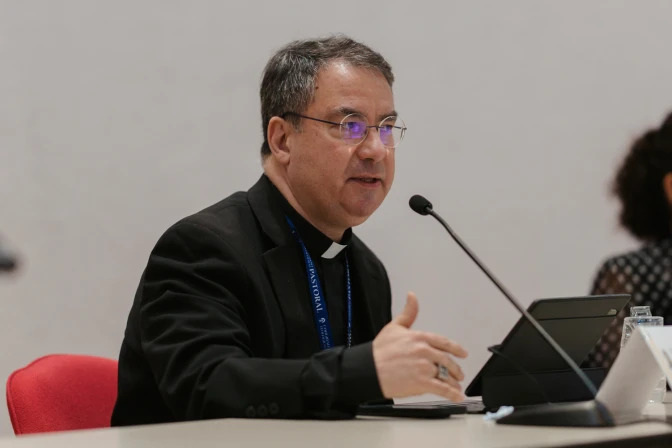
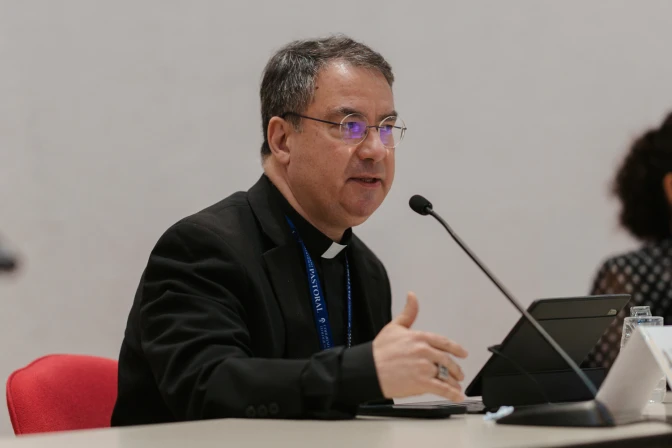
 Arthur Brooks gives a keynote address at SEEK 2026 on Jan. 4, 2026, in Columbus, Ohio. | Credit: Madalaine Elhabbal/CNA

Jan 6, 2026 / 12:29 pm (CNA).
New York Times bestselling author and Harvard professor Arthur Brooks encouraged attendees at SEEK 2026 to resist the temptation as missionaries to “fight fire with fire.”In his Jan. 4 keynote speech in Columbus, Ohio, Brooks said the world “is not just a cold world” but “a world that attacks you.” In this context, he said, it can be challenging not to fight back.However, he said, “your job isn’t to win arguments, it’s to win a soul.”Brooks teaches at the Harvard Kennedy School and Harvard Business School and has written multiple books on finding happiness and meaning in life, including “From Strength to Strength” and “Build the Life You Want,” which he coauthored with Oprah Winfrey. He also writes a column for The Free Press.Some 26,000 attendees have gathered through Jan. 5 in Columbus, Denver, and Fort Worth, Texas, for the SEEK 2026 conference organized by FOCUS.“The spirit of the missionary will take you into the heart of a culture war,” Brooks said. “And in that culture war, you won’t win with violence … as you can win with love.” Brooks recounted his experience giving a talk in Manchester, New Hampshire, in 2014 for an audience he said was “a very ideologically oriented group.”According to Brooks, he was the only speaker out of the 15 present who was not a presidential candidate. He said that during his address, he told his audience: “You’ve been hearing from political candidates who want your vote. And what they’re telling you is that you’re right and the people who disagree with you are stupid people and hate America, but I want you to remember something. Those people, they’re your neighbors, and they’re your family … It’s not that they hate America, it’s that they disagree with you.”When acting as a missionary, he said, the goal is to persuade people. “If you want to persuade them, you can’t do that with hatred, because nobody has ever been insulted into agreement,” Brooks said.‘Entering mission territory’Brooks concluded by telling about a retreat center that he and his wife, Ester, visit when they give marriage preparation. Inside the chapel of the retreat center, he said, there is a sign over the door to exit the chapel that reads: “You are now entering mission territory.”“So as you leave this beautiful, beautiful gathering tomorrow, the signs on the door of your hotel or this conference facility, any place that you find yourself as you leave this city, and effectively for the last time tomorrow, is that you’re entering mission territory,” Brooks said. “Let’s set the world on fire together.”Katie Tangeman, a sophomore at Northwest Missouri State University, said she came away from Brooks’ talk motivated to “just take a step back whenever I’m feeling frustrated or annoyed with somebody, or if they’re attacking me, to just see them as a beloved son or daughter of God and approach them with love instead of the contempt and hate that [Brooks] was talking about.”“Because that’s not being a good Christian,” she added.“I want to say the biggest thing I took away from Arthur Brooks’ talk tonight, his keynote speech, [is] that you can change the trajectory of how a conversation goes by battling it with kindness in a way,” said Andrew Stuart, an agricultural business major, also at Northwest Missouri State.

Arthur Brooks at SEEK26: ‘Your job isn’t to win arguments, it’s to win a soul’ #Catholic Arthur Brooks gives a keynote address at SEEK 2026 on Jan. 4, 2026, in Columbus, Ohio. | Credit: Madalaine Elhabbal/CNA Jan 6, 2026 / 12:29 pm (CNA). New York Times bestselling author and Harvard professor Arthur Brooks encouraged attendees at SEEK 2026 to resist the temptation as missionaries to “fight fire with fire.”In his Jan. 4 keynote speech in Columbus, Ohio, Brooks said the world “is not just a cold world” but “a world that attacks you.” In this context, he said, it can be challenging not to fight back.However, he said, “your job isn’t to win arguments, it’s to win a soul.”Brooks teaches at the Harvard Kennedy School and Harvard Business School and has written multiple books on finding happiness and meaning in life, including “From Strength to Strength” and “Build the Life You Want,” which he coauthored with Oprah Winfrey. He also writes a column for The Free Press.Some 26,000 attendees have gathered through Jan. 5 in Columbus, Denver, and Fort Worth, Texas, for the SEEK 2026 conference organized by FOCUS.“The spirit of the missionary will take you into the heart of a culture war,” Brooks said. “And in that culture war, you won’t win with violence … as you can win with love.” Brooks recounted his experience giving a talk in Manchester, New Hampshire, in 2014 for an audience he said was “a very ideologically oriented group.”According to Brooks, he was the only speaker out of the 15 present who was not a presidential candidate. He said that during his address, he told his audience: “You’ve been hearing from political candidates who want your vote. And what they’re telling you is that you’re right and the people who disagree with you are stupid people and hate America, but I want you to remember something. Those people, they’re your neighbors, and they’re your family … It’s not that they hate America, it’s that they disagree with you.”When acting as a missionary, he said, the goal is to persuade people. “If you want to persuade them, you can’t do that with hatred, because nobody has ever been insulted into agreement,” Brooks said.‘Entering mission territory’Brooks concluded by telling about a retreat center that he and his wife, Ester, visit when they give marriage preparation. Inside the chapel of the retreat center, he said, there is a sign over the door to exit the chapel that reads: “You are now entering mission territory.”“So as you leave this beautiful, beautiful gathering tomorrow, the signs on the door of your hotel or this conference facility, any place that you find yourself as you leave this city, and effectively for the last time tomorrow, is that you’re entering mission territory,” Brooks said. “Let’s set the world on fire together.”Katie Tangeman, a sophomore at Northwest Missouri State University, said she came away from Brooks’ talk motivated to “just take a step back whenever I’m feeling frustrated or annoyed with somebody, or if they’re attacking me, to just see them as a beloved son or daughter of God and approach them with love instead of the contempt and hate that [Brooks] was talking about.”“Because that’s not being a good Christian,” she added.“I want to say the biggest thing I took away from Arthur Brooks’ talk tonight, his keynote speech, [is] that you can change the trajectory of how a conversation goes by battling it with kindness in a way,” said Andrew Stuart, an agricultural business major, also at Northwest Missouri State.


Arthur Brooks gives a keynote address at SEEK 2026 on Jan. 4, 2026, in Columbus, Ohio. | Credit: Madalaine Elhabbal/CNA

Jan 6, 2026 / 12:29 pm (CNA).

New York Times bestselling author and Harvard professor Arthur Brooks encouraged attendees at SEEK 2026 to resist the temptation as missionaries to “fight fire with fire.”

In his Jan. 4 keynote speech in Columbus, Ohio, Brooks said the world “is not just a cold world” but “a world that attacks you.” In this context, he said, it can be challenging not to fight back.

However, he said, “your job isn’t to win arguments, it’s to win a soul.”

Brooks teaches at the Harvard Kennedy School and Harvard Business School and has written multiple books on finding happiness and meaning in life, including “From Strength to Strength” and “Build the Life You Want,” which he coauthored with Oprah Winfrey. He also writes a column for The Free Press.

Some 26,000 attendees have gathered through Jan. 5 in Columbus, Denver, and Fort Worth, Texas, for the SEEK 2026 conference organized by FOCUS.

“The spirit of the missionary will take you into the heart of a culture war,” Brooks said. “And in that culture war, you won’t win with violence … as you can win with love.” Brooks recounted his experience giving a talk in Manchester, New Hampshire, in 2014 for an audience he said was “a very ideologically oriented group.”

According to Brooks, he was the only speaker out of the 15 present who was not a presidential candidate. He said that during his address, he told his audience: “You’ve been hearing from political candidates who want your vote. And what they’re telling you is that you’re right and the people who disagree with you are stupid people and hate America, but I want you to remember something. Those people, they’re your neighbors, and they’re your family … It’s not that they hate America, it’s that they disagree with you.”

When acting as a missionary, he said, the goal is to persuade people. “If you want to persuade them, you can’t do that with hatred, because nobody has ever been insulted into agreement,” Brooks said.

‘Entering mission territory’

Brooks concluded by telling about a retreat center that he and his wife, Ester, visit when they give marriage preparation. Inside the chapel of the retreat center, he said, there is a sign over the door to exit the chapel that reads: “You are now entering mission territory.”

“So as you leave this beautiful, beautiful gathering tomorrow, the signs on the door of your hotel or this conference facility, any place that you find yourself as you leave this city, and effectively for the last time tomorrow, is that you’re entering mission territory,” Brooks said. “Let’s set the world on fire together.”

Katie Tangeman, a sophomore at Northwest Missouri State University, said she came away from Brooks’ talk motivated to “just take a step back whenever I’m feeling frustrated or annoyed with somebody, or if they’re attacking me, to just see them as a beloved son or daughter of God and approach them with love instead of the contempt and hate that [Brooks] was talking about.”

“Because that’s not being a good Christian,” she added.

“I want to say the biggest thing I took away from Arthur Brooks’ talk tonight, his keynote speech, [is] that you can change the trajectory of how a conversation goes by battling it with kindness in a way,” said Andrew Stuart, an agricultural business major, also at Northwest Missouri State.

Read More
CNA’s top Catholic moments of 2025 #Catholic 
 
 Pope Leo XIV greets a girl in a wheelchair during an audience with members of Italian Catholic Action on Dec. 19, 2025 at the Vatican. Credit: Vatican Media

Dec 31, 2025 / 08:00 am (CNA).
2025 was filled with impactful moments — from the death of Pope Francis to the election of the first American-born pope, Leo XIV, to hundreds of thousands of young people who gathered in Rome for the Jubilee of Youth to the canonization of the Church’s first millennial saint.Here are some of the top Catholic moments of 2025:Death of Pope FrancisThe new year began with Catholics around the world uniting in prayer for Pope Francis’ health as he entered the hospital on Feb. 14. He was admitted to Gemelli Hospital in Rome due to a respiratory infection that progressed to bilateral pneumonia, requiring a prolonged hospitalization that lasted almost six weeks. 
         View this post on Instagram            
 
 On March 23, Pope Francis was discharged from the hospital and gave a blessing from the hospital window to the faithful who were gathered. 
         View this post on Instagram            
 
 Soon after, on March 29, the late pontiff was readmitted to the hospital with difficulty breathing. On April 21, the day after Easter, Pope Francis passed away at the age of 88 from a stroke, coma, and irreversible cardiovascular collapse, according to the death certificate published just over 12 hours after Francis’ death.More than 400,000 people filled St. Peter’s Square for the funeral of Pope Francis on April 26 as the world said goodbye to the first Latin American pope, who led the Catholic Church for 12 years.Conclave and election of Pope Leo XIVOn May 7, 133 cardinal electors gathered in the Sistine Chapel for the start of the conclave. After four ballots, Cardinal Robert Prevost was elected on May 8 as the 267th pope of the Catholic Church and took the name Pope Leo XIV. A Chicago native, he became the first American pope in Church history.Thousands gathered in St. Peter’s Square erupted in cheers as the bells of the basilica began to toll, confirming the election of a new pontiff. The crowds gathered as word spread throughout Rome that a new pope had been chosen. 
         View this post on Instagram            
 
 Jubilee of YouthOne of Pope Leo’s first major events was the Jubilee of Youth, which was held in Rome from July 28 to Aug. 3. Roughly 1 million young adults from around the world filled the streets of Rome as each day was filled with different opportunities and events for the young people to experience the richness of the Catholic faith.On Aug. 2, Pope Leo XIV was greeted by the largest crowd he had addressed during his pontificate thus far for the evening vigil at Tor Vergata, an outdoor venue 10 miles east of Rome. An estimated 1 million people were in attendance. The Holy Father arrived by helicopter and then drove through the grounds on the popemobile, waving to the cheering young people before the prayer service began.Pope Leo XIV approaches Tor Vergata in Rome by helicopter on Saturday, Aug. 2, 2025. | Credit: Vatican MediaMinneapolis school shootingThe Catholic community was shaken when a school shooting took place on Aug. 27 at Annunciation Catholic Church in Minneapolis. Two children were killed and 20 were injured. The shooter was identified as Robin Westman — who was born “Robert” and identified as a transgender woman — who died by suicide shortly after shooting through the windows of the church during a weekday school Mass.The Holy Father sent his condolences and offered prayers for the victims. He described the event as an “extremely difficult” and “terrible” tragedy.People attend a vigil at Lynnhurst Park to mourn the dead and pray for the wounded after a gunman opened fire on students at Annunciation Catholic School on Aug. 27, 2025, in Minneapolis. | Credit: Scott Olson/Getty ImagesCanonization of Carlo Acutis and Pier Giorgio FrassatiOn Sept. 7, two of the Church’s most beloved blesseds became saints: Carlo Acutis and Pier Giorgio Frassati. The canonizations of the two men, promulgated before an estimated 70,000 people in St. Peter’s Square, were the first of Leo XIV’s pontificate.During his homily, the pope said: “Today we look to St. Pier Giorgio Frassati and St. Carlo Acutis: a young man from the early 20th century and a teenager from our own day, both in love with Jesus and ready to give everything for him.”“Dear friends, Sts. Pier Giorgio Frassati and Carlo Acutis are an invitation to all of us, especially young people, not to squander our lives but to direct them upwards and make them masterpieces,” he added. 
         View this post on Instagram            
 
 Newman made doctor of the ChurchThe Catholic Church gained a new doctor of the Church on Nov. 1 , when Pope Leo XIV declared St. John Henry Newman a doctor of the Church, recognizing the English cardinal and theologian — one of the most influential converts from Anglicanism — as a towering figure of faith and intellect in modern Catholicism.“Newman’s impressive spiritual and cultural stature will surely serve as an inspiration to new generations whose hearts thirst for the infinite and who, through research and knowledge, are willing to undertake that journey which, as the ancients said, takes us ‘per aspera ad astra,’ through difficulties to the stars,” the pope said in his homily.On All Saints’ Day 2025, St. John Henry Newman was proclaimed a doctor of the Church by Pope Leo XIV. | Credit: Vatican MediaPope Leo featured at NCYCOn Nov. 21, Pope Leo took part in his first digital encounter with American youth during the National Catholic Youth Conference, which took place Nov. 20–22 in Indianapolis.The conference featured Catholic speakers, daily Mass and adoration, music and worship, breakout groups and workshops, and interactive exhibits with games, vendors, meetups, and live radio shows.The main attraction of the conference was the hourlong live, virtual dialogue the pope had with those in attendance. Five young people were chosen to ask the Holy Father questions, which ranged from prayer to technology to friendships and the future of the Church. Pope Leo gave those gathered invaluable advice regarding the several different topics discussed.First papal trip to Turkey and LebanonPope Leo visited Turkey and Lebanon during his first papal trip from Nov. 27–Dec. 2. The wide-ranging international visit included historic ecumenical encounters, deeply symbolic gestures of prayer, and pastoral visits to Christian communities under pressure. The Holy Father highlighted the importance of unity, peace, and fraternity, and brought encouragement to a region marked by ancient faith and present suffering.Pope Leo XIV visits the Sultan Ahmed Mosque, also known as the “Blue Mosque,” in Istanbul, Turkey, on Nov. 29, 2025. Credit: Vatican Media

CNA’s top Catholic moments of 2025 #Catholic Pope Leo XIV greets a girl in a wheelchair during an audience with members of Italian Catholic Action on Dec. 19, 2025 at the Vatican. Credit: Vatican Media Dec 31, 2025 / 08:00 am (CNA). 2025 was filled with impactful moments — from the death of Pope Francis to the election of the first American-born pope, Leo XIV, to hundreds of thousands of young people who gathered in Rome for the Jubilee of Youth to the canonization of the Church’s first millennial saint.Here are some of the top Catholic moments of 2025:Death of Pope FrancisThe new year began with Catholics around the world uniting in prayer for Pope Francis’ health as he entered the hospital on Feb. 14. He was admitted to Gemelli Hospital in Rome due to a respiratory infection that progressed to bilateral pneumonia, requiring a prolonged hospitalization that lasted almost six weeks. View this post on Instagram On March 23, Pope Francis was discharged from the hospital and gave a blessing from the hospital window to the faithful who were gathered. View this post on Instagram Soon after, on March 29, the late pontiff was readmitted to the hospital with difficulty breathing. On April 21, the day after Easter, Pope Francis passed away at the age of 88 from a stroke, coma, and irreversible cardiovascular collapse, according to the death certificate published just over 12 hours after Francis’ death.More than 400,000 people filled St. Peter’s Square for the funeral of Pope Francis on April 26 as the world said goodbye to the first Latin American pope, who led the Catholic Church for 12 years.Conclave and election of Pope Leo XIVOn May 7, 133 cardinal electors gathered in the Sistine Chapel for the start of the conclave. After four ballots, Cardinal Robert Prevost was elected on May 8 as the 267th pope of the Catholic Church and took the name Pope Leo XIV. A Chicago native, he became the first American pope in Church history.Thousands gathered in St. Peter’s Square erupted in cheers as the bells of the basilica began to toll, confirming the election of a new pontiff. The crowds gathered as word spread throughout Rome that a new pope had been chosen. View this post on Instagram Jubilee of YouthOne of Pope Leo’s first major events was the Jubilee of Youth, which was held in Rome from July 28 to Aug. 3. Roughly 1 million young adults from around the world filled the streets of Rome as each day was filled with different opportunities and events for the young people to experience the richness of the Catholic faith.On Aug. 2, Pope Leo XIV was greeted by the largest crowd he had addressed during his pontificate thus far for the evening vigil at Tor Vergata, an outdoor venue 10 miles east of Rome. An estimated 1 million people were in attendance. The Holy Father arrived by helicopter and then drove through the grounds on the popemobile, waving to the cheering young people before the prayer service began.Pope Leo XIV approaches Tor Vergata in Rome by helicopter on Saturday, Aug. 2, 2025. | Credit: Vatican MediaMinneapolis school shootingThe Catholic community was shaken when a school shooting took place on Aug. 27 at Annunciation Catholic Church in Minneapolis. Two children were killed and 20 were injured. The shooter was identified as Robin Westman — who was born “Robert” and identified as a transgender woman — who died by suicide shortly after shooting through the windows of the church during a weekday school Mass.The Holy Father sent his condolences and offered prayers for the victims. He described the event as an “extremely difficult” and “terrible” tragedy.People attend a vigil at Lynnhurst Park to mourn the dead and pray for the wounded after a gunman opened fire on students at Annunciation Catholic School on Aug. 27, 2025, in Minneapolis. | Credit: Scott Olson/Getty ImagesCanonization of Carlo Acutis and Pier Giorgio FrassatiOn Sept. 7, two of the Church’s most beloved blesseds became saints: Carlo Acutis and Pier Giorgio Frassati. The canonizations of the two men, promulgated before an estimated 70,000 people in St. Peter’s Square, were the first of Leo XIV’s pontificate.During his homily, the pope said: “Today we look to St. Pier Giorgio Frassati and St. Carlo Acutis: a young man from the early 20th century and a teenager from our own day, both in love with Jesus and ready to give everything for him.”“Dear friends, Sts. Pier Giorgio Frassati and Carlo Acutis are an invitation to all of us, especially young people, not to squander our lives but to direct them upwards and make them masterpieces,” he added. View this post on Instagram Newman made doctor of the ChurchThe Catholic Church gained a new doctor of the Church on Nov. 1 , when Pope Leo XIV declared St. John Henry Newman a doctor of the Church, recognizing the English cardinal and theologian — one of the most influential converts from Anglicanism — as a towering figure of faith and intellect in modern Catholicism.“Newman’s impressive spiritual and cultural stature will surely serve as an inspiration to new generations whose hearts thirst for the infinite and who, through research and knowledge, are willing to undertake that journey which, as the ancients said, takes us ‘per aspera ad astra,’ through difficulties to the stars,” the pope said in his homily.On All Saints’ Day 2025, St. John Henry Newman was proclaimed a doctor of the Church by Pope Leo XIV. | Credit: Vatican MediaPope Leo featured at NCYCOn Nov. 21, Pope Leo took part in his first digital encounter with American youth during the National Catholic Youth Conference, which took place Nov. 20–22 in Indianapolis.The conference featured Catholic speakers, daily Mass and adoration, music and worship, breakout groups and workshops, and interactive exhibits with games, vendors, meetups, and live radio shows.The main attraction of the conference was the hourlong live, virtual dialogue the pope had with those in attendance. Five young people were chosen to ask the Holy Father questions, which ranged from prayer to technology to friendships and the future of the Church. Pope Leo gave those gathered invaluable advice regarding the several different topics discussed.First papal trip to Turkey and LebanonPope Leo visited Turkey and Lebanon during his first papal trip from Nov. 27–Dec. 2. The wide-ranging international visit included historic ecumenical encounters, deeply symbolic gestures of prayer, and pastoral visits to Christian communities under pressure. The Holy Father highlighted the importance of unity, peace, and fraternity, and brought encouragement to a region marked by ancient faith and present suffering.Pope Leo XIV visits the Sultan Ahmed Mosque, also known as the “Blue Mosque,” in Istanbul, Turkey, on Nov. 29, 2025. Credit: Vatican Media


Pope Leo XIV greets a girl in a wheelchair during an audience with members of Italian Catholic Action on Dec. 19, 2025 at the Vatican. Credit: Vatican Media

Dec 31, 2025 / 08:00 am (CNA).

2025 was filled with impactful moments — from the death of Pope Francis to the election of the first American-born pope, Leo XIV, to hundreds of thousands of young people who gathered in Rome for the Jubilee of Youth to the canonization of the Church’s first millennial saint.

Here are some of the top Catholic moments of 2025:

Death of Pope Francis

The new year began with Catholics around the world uniting in prayer for Pope Francis’ health as he entered the hospital on Feb. 14. He was admitted to Gemelli Hospital in Rome due to a respiratory infection that progressed to bilateral pneumonia, requiring a prolonged hospitalization that lasted almost six weeks.

On March 23, Pope Francis was discharged from the hospital and gave a blessing from the hospital window to the faithful who were gathered.

Soon after, on March 29, the late pontiff was readmitted to the hospital with difficulty breathing. On April 21, the day after Easter, Pope Francis passed away at the age of 88 from a stroke, coma, and irreversible cardiovascular collapse, according to the death certificate published just over 12 hours after Francis’ death.

More than 400,000 people filled St. Peter’s Square for the funeral of Pope Francis on April 26 as the world said goodbye to the first Latin American pope, who led the Catholic Church for 12 years.

Conclave and election of Pope Leo XIV

On May 7, 133 cardinal electors gathered in the Sistine Chapel for the start of the conclave. After four ballots, Cardinal Robert Prevost was elected on May 8 as the 267th pope of the Catholic Church and took the name Pope Leo XIV. A Chicago native, he became the first American pope in Church history.

Thousands gathered in St. Peter’s Square erupted in cheers as the bells of the basilica began to toll, confirming the election of a new pontiff. The crowds gathered as word spread throughout Rome that a new pope had been chosen.

Jubilee of Youth

One of Pope Leo’s first major events was the Jubilee of Youth, which was held in Rome from July 28 to Aug. 3. Roughly 1 million young adults from around the world filled the streets of Rome as each day was filled with different opportunities and events for the young people to experience the richness of the Catholic faith.

On Aug. 2, Pope Leo XIV was greeted by the largest crowd he had addressed during his pontificate thus far for the evening vigil at Tor Vergata, an outdoor venue 10 miles east of Rome. An estimated 1 million people were in attendance. The Holy Father arrived by helicopter and then drove through the grounds on the popemobile, waving to the cheering young people before the prayer service began.

Pope Leo XIV approaches Tor Vergata in Rome by helicopter on Saturday, Aug. 2, 2025. | Credit: Vatican Media

Minneapolis school shooting

The Catholic community was shaken when a school shooting took place on Aug. 27 at Annunciation Catholic Church in Minneapolis. Two children were killed and 20 were injured. The shooter was identified as Robin Westman — who was born “Robert” and identified as a transgender woman — who died by suicide shortly after shooting through the windows of the church during a weekday school Mass.

The Holy Father sent his condolences and offered prayers for the victims. He described the event as an “extremely difficult” and “terrible” tragedy.

People attend a vigil at Lynnhurst Park to mourn the dead and pray for the wounded after a gunman opened fire on students at Annunciation Catholic School on Aug. 27, 2025, in Minneapolis. | Credit: Scott Olson/Getty Images

Canonization of Carlo Acutis and Pier Giorgio Frassati

On Sept. 7, two of the Church’s most beloved blesseds became saints: Carlo Acutis and Pier Giorgio Frassati. The canonizations of the two men, promulgated before an estimated 70,000 people in St. Peter’s Square, were the first of Leo XIV’s pontificate.

During his homily, the pope said: “Today we look to St. Pier Giorgio Frassati and St. Carlo Acutis: a young man from the early 20th century and a teenager from our own day, both in love with Jesus and ready to give everything for him.”

“Dear friends, Sts. Pier Giorgio Frassati and Carlo Acutis are an invitation to all of us, especially young people, not to squander our lives but to direct them upwards and make them masterpieces,” he added.

Newman made doctor of the Church

The Catholic Church gained a new doctor of the Church on Nov. 1 , when Pope Leo XIV declared St. John Henry Newman a doctor of the Church, recognizing the English cardinal and theologian — one of the most influential converts from Anglicanism — as a towering figure of faith and intellect in modern Catholicism.

“Newman’s impressive spiritual and cultural stature will surely serve as an inspiration to new generations whose hearts thirst for the infinite and who, through research and knowledge, are willing to undertake that journey which, as the ancients said, takes us ‘per aspera ad astra,’ through difficulties to the stars,” the pope said in his homily.

On All Saints’ Day 2025, St. John Henry Newman was proclaimed a doctor of the Church by Pope Leo XIV. | Credit: Vatican Media

Pope Leo featured at NCYC

On Nov. 21, Pope Leo took part in his first digital encounter with American youth during the National Catholic Youth Conference, which took place Nov. 20–22 in Indianapolis.

The conference featured Catholic speakers, daily Mass and adoration, music and worship, breakout groups and workshops, and interactive exhibits with games, vendors, meetups, and live radio shows.

The main attraction of the conference was the hourlong live, virtual dialogue the pope had with those in attendance. Five young people were chosen to ask the Holy Father questions, which ranged from prayer to technology to friendships and the future of the Church. Pope Leo gave those gathered invaluable advice regarding the several different topics discussed.

First papal trip to Turkey and Lebanon

Pope Leo visited Turkey and Lebanon during his first papal trip from Nov. 27–Dec. 2. The wide-ranging international visit included historic ecumenical encounters, deeply symbolic gestures of prayer, and pastoral visits to Christian communities under pressure. The Holy Father highlighted the importance of unity, peace, and fraternity, and brought encouragement to a region marked by ancient faith and present suffering.

Pope Leo XIV visits the Sultan Ahmed Mosque, also known as the “Blue Mosque,” in Istanbul, Turkey, on Nov. 29, 2025. Credit: Vatican Media
Read More
Vice President Vance presents a Christian vision of politics #Catholic 
 
 U.S. Vice President JD Vance. / Credit: Gage Skidmore, CC BY-SA 4.0, via Wikimedia Commons

CNA Staff, Dec 23, 2025 / 14:27 pm (CNA).
U.S. Vice President JD Vance, America’s second Catholic vice president, laid out a distinctly Christian vision for American politics in a speech this week, declaring that “the only thing that has truly served as an anchor of the United States of America is that we have been and, by the grace of God, we always will be a Christian nation.”Speaking to more than 30,000 young conservatives at Turning Point USA’s AmFest 2025 some three months after the death of its founder Charlie Kirk, Vance called for a politics rooted in a Christian faith that honors the family, protects the weak, and rejects what he described as a decades-long “war” on Christianity in public life.The Christian faith has provided a “shared moral language” since the nation’s founding, the Yale-trained lawyer argued, which led to “our understanding of natural law and rights, our sense of duty to one’s neighbor, the conviction that the strong must protect the weak, and the belief in individual conscience.”“Christianity is America’s creed,” the vice president said to loud cheers, while acknowledging that not everyone needs to be a Christian and “we must respect each individual’s pathway” to God. Even so, he said, “even our famously American idea of religious liberty is a Christian concept.” Vance described how, over the past several decades, “freedom of religion transformed into freedom from religion” as a result of the cultural assault on Christian faith from those on “the left” who have “labored to push Christianity out of national life. They’ve kicked it out of the schools, out of the workplace, out of the fundamental parts of the public square.”He continued: “And in a public square devoid of God, we got a vacuum. And the ideas that filled that void preyed on the very worst of human nature rather than uplifting it.”Vance said cultural voices opposed to Christian faith “told us not that we were children of God, but children of this or that identity group. They replaced God’s beautiful design for the family that men and women could rely on … with the idea that men could turn into women so long as they bought the right bunch of pills from Big Pharma.” The former U.S. senator and Catholic convert credited President Donald Trump for ending the cultural “war that has been waged on Christians and Christianity in the United States of America,” touting the administration’s policy priorities as the fruit of Christian motivation.“We help older Americans in retirement, including by ending taxes on Social Security, because we believe in honoring your father and mother rather than shipping all of their money off to Ukraine,” he said. “We believe in taking care of the poor, which is why we have Medicaid, so that the least among us can afford their prescriptions or to take their kids to see a doctor.”Speaking of the despair he felt after the assassination of his friend Kirk, he said: “What saved me was realizing that the story of the Christian faith … is one of immense loss followed by even bigger victory. It’s a story of very dark nights followed by very bright dawns. What saved me was remembering the inherent goodness of God and that his grace overflows when we least expect it.”Of masculinity, Vance said: “The fruits of true Christianity are good husbands, patient fathers, builders of great things, and slayers of dragons. And yes, men who are willing to die for a principle if that’s what God asked them to do.”He described how he saw the fruits of Christian men living out their faith during a recent visit to a men’s ministry that aids those who struggle with addiction and homelessness: “They feed them. They clothe them. They give them shelter and financial advice. They live out the very best part of Christ’s commission.”After eating lunch with some of the men who were “all back on their feet” after receiving help, Vance said he saw that the answer to “What saved them?” was not “racial commonality or grievance … a DEI prep course” or “a welfare check.”“It was the fact that a carpenter died 2,000 years ago and changed the world in the process.” “A true Christian politics,” he said, “cannot just be about the protection of the unborn or the promotion of the family. As important as those things absolutely are, it must be at the heart of our full understanding of government.” On immigration policy, Vance has challenged U.S. bishops, popesThe vice president has publicly disagreed with the U.S. bishops on their reaction to the Trump administration’s immigration policies, as well as with Pope Leo XIV and the late Pope Francis, who seemed to criticize Vance in a letter the pontiff penned to the U.S. bishops last winter. In defense of the administration’s approach to immigration, Vance had in a late January interview invoked an “old school … Christian concept” he later identified as the “ordo amoris,” or “rightly ordered love.” He said that according to the concept, one’s “compassion belongs first” to one’s family and fellow citizens, “and then after that” to the rest of the world.After Pope Leo on Nov. 18 asked Americans to listen to U.S. bishops’ message opposing “the indiscriminate mass deportation of people” and urging the humane treatment of migrants, Vance countered: “Border security is not just good for American citizens. It is the humanitarian thing to do for the entire world.”Vance continued: “Open borders” do not promote “[human] dignity, even of the illegal migrants themselves,” citing drug and sex trafficking.“When you empower the cartels and when you empower the human traffickers, whether in the United States or anywhere else, you’re empowering the very worst people in the world,” Vance said.In this week’s AmFest speech, he touted the administration’s successes regarding immigration: “December marks seven months straight of zero releases at the southern border. More than 2.5 million illegal immigrants have left the United States. The first time in over 50 years that we have had negative net migration.”At the end of the speech, Vance told the thousands of young people that while “only God can promise you salvation in heaven” if they have faith in God, “I promise you closed borders and safe communities. I promise you good jobs and a dignified life … together, we can fulfill the promise of the greatest nation in the history of the earth.”

Vice President Vance presents a Christian vision of politics #Catholic U.S. Vice President JD Vance. / Credit: Gage Skidmore, CC BY-SA 4.0, via Wikimedia Commons CNA Staff, Dec 23, 2025 / 14:27 pm (CNA). U.S. Vice President JD Vance, America’s second Catholic vice president, laid out a distinctly Christian vision for American politics in a speech this week, declaring that “the only thing that has truly served as an anchor of the United States of America is that we have been and, by the grace of God, we always will be a Christian nation.”Speaking to more than 30,000 young conservatives at Turning Point USA’s AmFest 2025 some three months after the death of its founder Charlie Kirk, Vance called for a politics rooted in a Christian faith that honors the family, protects the weak, and rejects what he described as a decades-long “war” on Christianity in public life.The Christian faith has provided a “shared moral language” since the nation’s founding, the Yale-trained lawyer argued, which led to “our understanding of natural law and rights, our sense of duty to one’s neighbor, the conviction that the strong must protect the weak, and the belief in individual conscience.”“Christianity is America’s creed,” the vice president said to loud cheers, while acknowledging that not everyone needs to be a Christian and “we must respect each individual’s pathway” to God. Even so, he said, “even our famously American idea of religious liberty is a Christian concept.” Vance described how, over the past several decades, “freedom of religion transformed into freedom from religion” as a result of the cultural assault on Christian faith from those on “the left” who have “labored to push Christianity out of national life. They’ve kicked it out of the schools, out of the workplace, out of the fundamental parts of the public square.”He continued: “And in a public square devoid of God, we got a vacuum. And the ideas that filled that void preyed on the very worst of human nature rather than uplifting it.”Vance said cultural voices opposed to Christian faith “told us not that we were children of God, but children of this or that identity group. They replaced God’s beautiful design for the family that men and women could rely on … with the idea that men could turn into women so long as they bought the right bunch of pills from Big Pharma.” The former U.S. senator and Catholic convert credited President Donald Trump for ending the cultural “war that has been waged on Christians and Christianity in the United States of America,” touting the administration’s policy priorities as the fruit of Christian motivation.“We help older Americans in retirement, including by ending taxes on Social Security, because we believe in honoring your father and mother rather than shipping all of their money off to Ukraine,” he said. “We believe in taking care of the poor, which is why we have Medicaid, so that the least among us can afford their prescriptions or to take their kids to see a doctor.”Speaking of the despair he felt after the assassination of his friend Kirk, he said: “What saved me was realizing that the story of the Christian faith … is one of immense loss followed by even bigger victory. It’s a story of very dark nights followed by very bright dawns. What saved me was remembering the inherent goodness of God and that his grace overflows when we least expect it.”Of masculinity, Vance said: “The fruits of true Christianity are good husbands, patient fathers, builders of great things, and slayers of dragons. And yes, men who are willing to die for a principle if that’s what God asked them to do.”He described how he saw the fruits of Christian men living out their faith during a recent visit to a men’s ministry that aids those who struggle with addiction and homelessness: “They feed them. They clothe them. They give them shelter and financial advice. They live out the very best part of Christ’s commission.”After eating lunch with some of the men who were “all back on their feet” after receiving help, Vance said he saw that the answer to “What saved them?” was not “racial commonality or grievance … a DEI prep course” or “a welfare check.”“It was the fact that a carpenter died 2,000 years ago and changed the world in the process.” “A true Christian politics,” he said, “cannot just be about the protection of the unborn or the promotion of the family. As important as those things absolutely are, it must be at the heart of our full understanding of government.” On immigration policy, Vance has challenged U.S. bishops, popesThe vice president has publicly disagreed with the U.S. bishops on their reaction to the Trump administration’s immigration policies, as well as with Pope Leo XIV and the late Pope Francis, who seemed to criticize Vance in a letter the pontiff penned to the U.S. bishops last winter. In defense of the administration’s approach to immigration, Vance had in a late January interview invoked an “old school … Christian concept” he later identified as the “ordo amoris,” or “rightly ordered love.” He said that according to the concept, one’s “compassion belongs first” to one’s family and fellow citizens, “and then after that” to the rest of the world.After Pope Leo on Nov. 18 asked Americans to listen to U.S. bishops’ message opposing “the indiscriminate mass deportation of people” and urging the humane treatment of migrants, Vance countered: “Border security is not just good for American citizens. It is the humanitarian thing to do for the entire world.”Vance continued: “Open borders” do not promote “[human] dignity, even of the illegal migrants themselves,” citing drug and sex trafficking.“When you empower the cartels and when you empower the human traffickers, whether in the United States or anywhere else, you’re empowering the very worst people in the world,” Vance said.In this week’s AmFest speech, he touted the administration’s successes regarding immigration: “December marks seven months straight of zero releases at the southern border. More than 2.5 million illegal immigrants have left the United States. The first time in over 50 years that we have had negative net migration.”At the end of the speech, Vance told the thousands of young people that while “only God can promise you salvation in heaven” if they have faith in God, “I promise you closed borders and safe communities. I promise you good jobs and a dignified life … together, we can fulfill the promise of the greatest nation in the history of the earth.”


U.S. Vice President JD Vance. / Credit: Gage Skidmore, CC BY-SA 4.0, via Wikimedia Commons

CNA Staff, Dec 23, 2025 / 14:27 pm (CNA).

U.S. Vice President JD Vance, America’s second Catholic vice president, laid out a distinctly Christian vision for American politics in a speech this week, declaring that “the only thing that has truly served as an anchor of the United States of America is that we have been and, by the grace of God, we always will be a Christian nation.”

Speaking to more than 30,000 young conservatives at Turning Point USA’s AmFest 2025 some three months after the death of its founder Charlie Kirk, Vance called for a politics rooted in a Christian faith that honors the family, protects the weak, and rejects what he described as a decades-long “war” on Christianity in public life.

The Christian faith has provided a “shared moral language” since the nation’s founding, the Yale-trained lawyer argued, which led to “our understanding of natural law and rights, our sense of duty to one’s neighbor, the conviction that the strong must protect the weak, and the belief in individual conscience.”

“Christianity is America’s creed,” the vice president said to loud cheers, while acknowledging that not everyone needs to be a Christian and “we must respect each individual’s pathway” to God. Even so, he said, “even our famously American idea of religious liberty is a Christian concept.” 

Vance described how, over the past several decades, “freedom of religion transformed into freedom from religion” as a result of the cultural assault on Christian faith from those on “the left” who have “labored to push Christianity out of national life. They’ve kicked it out of the schools, out of the workplace, out of the fundamental parts of the public square.”

He continued: “And in a public square devoid of God, we got a vacuum. And the ideas that filled that void preyed on the very worst of human nature rather than uplifting it.”

Vance said cultural voices opposed to Christian faith “told us not that we were children of God, but children of this or that identity group. They replaced God’s beautiful design for the family that men and women could rely on … with the idea that men could turn into women so long as they bought the right bunch of pills from Big Pharma.” 

The former U.S. senator and Catholic convert credited President Donald Trump for ending the cultural “war that has been waged on Christians and Christianity in the United States of America,” touting the administration’s policy priorities as the fruit of Christian motivation.

“We help older Americans in retirement, including by ending taxes on Social Security, because we believe in honoring your father and mother rather than shipping all of their money off to Ukraine,” he said. “We believe in taking care of the poor, which is why we have Medicaid, so that the least among us can afford their prescriptions or to take their kids to see a doctor.”

Speaking of the despair he felt after the assassination of his friend Kirk, he said: “What saved me was realizing that the story of the Christian faith … is one of immense loss followed by even bigger victory. It’s a story of very dark nights followed by very bright dawns. What saved me was remembering the inherent goodness of God and that his grace overflows when we least expect it.”

Of masculinity, Vance said: “The fruits of true Christianity are good husbands, patient fathers, builders of great things, and slayers of dragons. And yes, men who are willing to die for a principle if that’s what God asked them to do.”

He described how he saw the fruits of Christian men living out their faith during a recent visit to a men’s ministry that aids those who struggle with addiction and homelessness: “They feed them. They clothe them. They give them shelter and financial advice. They live out the very best part of Christ’s commission.”

After eating lunch with some of the men who were “all back on their feet” after receiving help, Vance said he saw that the answer to “What saved them?” was not “racial commonality or grievance … a DEI prep course” or “a welfare check.”

“It was the fact that a carpenter died 2,000 years ago and changed the world in the process.” 

“A true Christian politics,” he said, “cannot just be about the protection of the unborn or the promotion of the family. As important as those things absolutely are, it must be at the heart of our full understanding of government.” 

On immigration policy, Vance has challenged U.S. bishops, popes

The vice president has publicly disagreed with the U.S. bishops on their reaction to the Trump administration’s immigration policies, as well as with Pope Leo XIV and the late Pope Francis, who seemed to criticize Vance in a letter the pontiff penned to the U.S. bishops last winter. 

In defense of the administration’s approach to immigration, Vance had in a late January interview invoked an “old school … Christian concept” he later identified as the “ordo amoris,” or “rightly ordered love.” 

He said that according to the concept, one’s “compassion belongs first” to one’s family and fellow citizens, “and then after that” to the rest of the world.

After Pope Leo on Nov. 18 asked Americans to listen to U.S. bishops’ message opposing “the indiscriminate mass deportation of people” and urging the humane treatment of migrants, Vance countered: “Border security is not just good for American citizens. It is the humanitarian thing to do for the entire world.”

Vance continued: “Open borders” do not promote “[human] dignity, even of the illegal migrants themselves,” citing drug and sex trafficking.

“When you empower the cartels and when you empower the human traffickers, whether in the United States or anywhere else, you’re empowering the very worst people in the world,” Vance said.

In this week’s AmFest speech, he touted the administration’s successes regarding immigration: “December marks seven months straight of zero releases at the southern border. More than 2.5 million illegal immigrants have left the United States. The first time in over 50 years that we have had negative net migration.”

At the end of the speech, Vance told the thousands of young people that while “only God can promise you salvation in heaven” if they have faith in God, “I promise you closed borders and safe communities. I promise you good jobs and a dignified life … together, we can fulfill the promise of the greatest nation in the history of the earth.”

Read More
Christmas 2025: Handmade gifts from 14 Catholic monasteries #Catholic 
 
 The contemplative Sisters of the Monastery of Bethlehem in Livingston Manor, New York, support themselves by offering their hand-painted chinaware and other unique gifts for sale. / Credit: Monastery of Bethlehem

Washington, D.C. Newsroom, Dec 6, 2025 / 06:00 am (CNA).
Many monasteries and communities of religious brothers and sisters depend on proceeds from the sales of their products to sustain their lives of prayer and service throughout the year. These days, most have online gift shops that will ship your purchases to arrive before Christmas.Here’s a guide to some of our favorite handmade gifts to give and receive this year:Fudge and candyMonk Bakery Gifts, Monastery of the Holy Spirit: Monks in Conyers, Georgia, make their famous fudge with premium chocolate and real butter. Try a 12-ounce gift box for . And for a taste of Georgia, try their Southern Touch fudge, “made with real peach morsels, pecans, and a touch of peach brandy.”Monastery Candy, Our Lady of the Mississippi Abbey: These contemplative nuns in Dubuque, Iowa, are known for their delicious caramels, which they make by hand to support their way of life. A 9-ounce box of chocolate-covered caramels sells for .55.Monastery Creamed Honey, Holy Cross Abbey: The monks at Our Lady of the Holy Cross Abbey in Berryville, Virginia, support themselves financially through their own labor, a characteristic of the Cistercian order’s way of life. Their 100% natural Monastery Creamed Honey, locally sourced in the Shenandoah Valley of Virginia, makes a great gift. A set of four 10-ounce tubs includes natural-, cinnamon-, almond-, and brandy-flavored honey and sells for .95. Add some delicious chocolate truffles to the order for a sure-to-be-appreciated Christmas gift.CookiesClarisa Cookies, Capuchin Poor Clare Sisters: The Capuchin Poor Clare nuns make their famous butter cookies from their monastery in Denver. The “Clarisas” come in a beautiful gift box featuring an image of St. Clare and sell for  for a 1.5-pound box.Monks’ Biscotti, Abbey of the Genesee: The Trappist monks of the Abbey of the Genesee have been baking from their monastery in western New York since 1953. As their website explains: “The bakery supports the monastery’s primary mission, which is to pray for the world.” The twice-baked biscotti is a popular item, which makes a great gift basket when combined with monk-made coffee and a mug. A bundle of four boxes of biscotti in a variety of flavors sells for .99. Springerele Christmas cookies, Sisters of St. Benedict: The Benedictine religious sisters are known for their Springerele cookies, a traditional German treat with an “Old World” charm. A package of six cookies, each bearing a different, intricate design, sells for . CoffeeMystic Monk Coffee, Carmelites Monks of Wyoming Monastery: The Monks of the Most Blessed Virgin Mary of Mount Carmel live a cloistered life in the Rocky Mountains in the Diocese of Cheyenne, Wyoming. They help support themselves through Mystic Monk Coffee, which they roast in small batches. The website CoffeeReview.com ranks their coffee among the highest of the coffees it reviews. A 12-ounce bag of their most popular flavor, Jingle Bell Java, sells for .95 in the EWTN Religious Catalogue. Visit their website for more coffee selections.FruitcakeBrandy-dipped fruitcake, New Camaldoli Hermitage: With all due respect, this is not your grandmother’s fruitcake. The monks of New Camaldoli Hermitage in Big Sur, California, offer a fruitcake soaked in brandy and aged for three months. It “has converted many a fruitcake ‘atheist,’” according to its creators. Order a 1-pound fruitcake for .98.Kentucky Bourbon Fruitcake, Monks of the Abbey of Gethsemani: At their monastery in New Haven, Kentucky, Trappist monks offer a 20-ounce Kentucky Bourbon Fruitcake along with a jar of Trappist Apricot-Pineapple preserves and a jar of Trappist Quince Jelly, which makes a lovely Christmas gift for .50.BeerBirra Nursia, Benedictine Monks of Norcia: In 2012, a community of Benedictine monks revived the order’s ancient beer-making tradition at their 16th-century monastery in Nursia, the birthplace of St. Benedict. Tragically, four years later, a devastating earthquake struck, seriously damaging their monastery and threatening their way of life. Today, their monastery is open again thanks to money raised in part from the beer they make and sell and export to the United States and elsewhere. Beer in 750-milliliter (25-ounce) bottles is available at their U.S. online store for .99 each.Handmade Christmas-themed giftsChristmas Boutique, Monastery of Bethlehem: The contemplative Sisters of the Monastery of Bethlehem in Livingston Manor, New York, support themselves by offering their hand-painted chinaware and other unique gifts for sale. This Christmas their online shop features several Christmas-related items that would make wonderful gifts. A beautiful hand-carved Nativity, made in the sisters’ monastery in Mougères, France, includes Joseph, Mary, the baby Jesus, and a wooden manger, and sells for 0. This is a great value for a keepsake that is sure to be passed down from generation to generation. Or why not come bearing the gift of myrrh this Christmas with an attractive tin of imported incense ()? Also available: a pack of five Christmas greeting cards, hand-calligraphed by the sisters and duplicated on fine paper. Each card features a mystery of the lives of Jesus and Mary.Custom rosaries, Carmelite Monastery of the Sacred Hearts: The cloistered nuns of the Carmelite Monastery of the Sacred Hearts in Colorado also offer several handmade items that would make beautiful gifts including custom, handmade rosaries. Those interested can choose their own beads, crucifix, centerpiece, the option to add decorative caps and side medals, and whether you would like the rosary to be a one-decade, five-decade, or 15-decade rosary.Gifts from the Holy LandHoly Land gifts, Franciscan Monastery of the Holy Land in America: The Franciscan friars based at their monastery in Washington, D.C., are dedicated to supporting and protecting the sacred sites and people of the Holy Land. They sell products made by artisans in the Holy Land to help their businesses so they can continue to live in the land of their forefathers. Among the gifts at the Holy Land gift shop are hand-painted ceramic candleholders made by a young artist in Bethlehem; olive wood Nativity sets, crosses, and rosaries; and olive oil soap. Visit the Holy Land Gift Shop here. Soaps and candlesCloister Shoppe, Summit Dominicans: The nuns from the Dominican Monastery of Our Lady of the Rosary in Summit, New Jersey, live a life of prayer through Eucharistic adoration and dedication to the rosary. To support this way of life they create handmade candles and skin-care products, which they sell at their Cloister Shoppe. Create your own Christmas gift bag of two bars of soap, a hand cream, a jar candle, a face moisturizer, and a handmade rosary made from olive wood beads from the Holy Land for . Throw in a pair of Bayberry Christmas Eve Tapers for  to give your holiday table a festive glow.

Christmas 2025: Handmade gifts from 14 Catholic monasteries #Catholic The contemplative Sisters of the Monastery of Bethlehem in Livingston Manor, New York, support themselves by offering their hand-painted chinaware and other unique gifts for sale. / Credit: Monastery of Bethlehem Washington, D.C. Newsroom, Dec 6, 2025 / 06:00 am (CNA). Many monasteries and communities of religious brothers and sisters depend on proceeds from the sales of their products to sustain their lives of prayer and service throughout the year. These days, most have online gift shops that will ship your purchases to arrive before Christmas.Here’s a guide to some of our favorite handmade gifts to give and receive this year:Fudge and candyMonk Bakery Gifts, Monastery of the Holy Spirit: Monks in Conyers, Georgia, make their famous fudge with premium chocolate and real butter. Try a 12-ounce gift box for $15. And for a taste of Georgia, try their Southern Touch fudge, “made with real peach morsels, pecans, and a touch of peach brandy.”Monastery Candy, Our Lady of the Mississippi Abbey: These contemplative nuns in Dubuque, Iowa, are known for their delicious caramels, which they make by hand to support their way of life. A 9-ounce box of chocolate-covered caramels sells for $16.55.Monastery Creamed Honey, Holy Cross Abbey: The monks at Our Lady of the Holy Cross Abbey in Berryville, Virginia, support themselves financially through their own labor, a characteristic of the Cistercian order’s way of life. Their 100% natural Monastery Creamed Honey, locally sourced in the Shenandoah Valley of Virginia, makes a great gift. A set of four 10-ounce tubs includes natural-, cinnamon-, almond-, and brandy-flavored honey and sells for $35.95. Add some delicious chocolate truffles to the order for a sure-to-be-appreciated Christmas gift.CookiesClarisa Cookies, Capuchin Poor Clare Sisters: The Capuchin Poor Clare nuns make their famous butter cookies from their monastery in Denver. The “Clarisas” come in a beautiful gift box featuring an image of St. Clare and sell for $18 for a 1.5-pound box.Monks’ Biscotti, Abbey of the Genesee: The Trappist monks of the Abbey of the Genesee have been baking from their monastery in western New York since 1953. As their website explains: “The bakery supports the monastery’s primary mission, which is to pray for the world.” The twice-baked biscotti is a popular item, which makes a great gift basket when combined with monk-made coffee and a mug. A bundle of four boxes of biscotti in a variety of flavors sells for $33.99. Springerele Christmas cookies, Sisters of St. Benedict: The Benedictine religious sisters are known for their Springerele cookies, a traditional German treat with an “Old World” charm. A package of six cookies, each bearing a different, intricate design, sells for $11. CoffeeMystic Monk Coffee, Carmelites Monks of Wyoming Monastery: The Monks of the Most Blessed Virgin Mary of Mount Carmel live a cloistered life in the Rocky Mountains in the Diocese of Cheyenne, Wyoming. They help support themselves through Mystic Monk Coffee, which they roast in small batches. The website CoffeeReview.com ranks their coffee among the highest of the coffees it reviews. A 12-ounce bag of their most popular flavor, Jingle Bell Java, sells for $14.95 in the EWTN Religious Catalogue. Visit their website for more coffee selections.FruitcakeBrandy-dipped fruitcake, New Camaldoli Hermitage: With all due respect, this is not your grandmother’s fruitcake. The monks of New Camaldoli Hermitage in Big Sur, California, offer a fruitcake soaked in brandy and aged for three months. It “has converted many a fruitcake ‘atheist,’” according to its creators. Order a 1-pound fruitcake for $27.98.Kentucky Bourbon Fruitcake, Monks of the Abbey of Gethsemani: At their monastery in New Haven, Kentucky, Trappist monks offer a 20-ounce Kentucky Bourbon Fruitcake along with a jar of Trappist Apricot-Pineapple preserves and a jar of Trappist Quince Jelly, which makes a lovely Christmas gift for $33.50.BeerBirra Nursia, Benedictine Monks of Norcia: In 2012, a community of Benedictine monks revived the order’s ancient beer-making tradition at their 16th-century monastery in Nursia, the birthplace of St. Benedict. Tragically, four years later, a devastating earthquake struck, seriously damaging their monastery and threatening their way of life. Today, their monastery is open again thanks to money raised in part from the beer they make and sell and export to the United States and elsewhere. Beer in 750-milliliter (25-ounce) bottles is available at their U.S. online store for $15.99 each.Handmade Christmas-themed giftsChristmas Boutique, Monastery of Bethlehem: The contemplative Sisters of the Monastery of Bethlehem in Livingston Manor, New York, support themselves by offering their hand-painted chinaware and other unique gifts for sale. This Christmas their online shop features several Christmas-related items that would make wonderful gifts. A beautiful hand-carved Nativity, made in the sisters’ monastery in Mougères, France, includes Joseph, Mary, the baby Jesus, and a wooden manger, and sells for $180. This is a great value for a keepsake that is sure to be passed down from generation to generation. Or why not come bearing the gift of myrrh this Christmas with an attractive tin of imported incense ($56)? Also available: a pack of five Christmas greeting cards, hand-calligraphed by the sisters and duplicated on fine paper. Each card features a mystery of the lives of Jesus and Mary.Custom rosaries, Carmelite Monastery of the Sacred Hearts: The cloistered nuns of the Carmelite Monastery of the Sacred Hearts in Colorado also offer several handmade items that would make beautiful gifts including custom, handmade rosaries. Those interested can choose their own beads, crucifix, centerpiece, the option to add decorative caps and side medals, and whether you would like the rosary to be a one-decade, five-decade, or 15-decade rosary.Gifts from the Holy LandHoly Land gifts, Franciscan Monastery of the Holy Land in America: The Franciscan friars based at their monastery in Washington, D.C., are dedicated to supporting and protecting the sacred sites and people of the Holy Land. They sell products made by artisans in the Holy Land to help their businesses so they can continue to live in the land of their forefathers. Among the gifts at the Holy Land gift shop are hand-painted ceramic candleholders made by a young artist in Bethlehem; olive wood Nativity sets, crosses, and rosaries; and olive oil soap. Visit the Holy Land Gift Shop here. Soaps and candlesCloister Shoppe, Summit Dominicans: The nuns from the Dominican Monastery of Our Lady of the Rosary in Summit, New Jersey, live a life of prayer through Eucharistic adoration and dedication to the rosary. To support this way of life they create handmade candles and skin-care products, which they sell at their Cloister Shoppe. Create your own Christmas gift bag of two bars of soap, a hand cream, a jar candle, a face moisturizer, and a handmade rosary made from olive wood beads from the Holy Land for $50. Throw in a pair of Bayberry Christmas Eve Tapers for $18 to give your holiday table a festive glow.


The contemplative Sisters of the Monastery of Bethlehem in Livingston Manor, New York, support themselves by offering their hand-painted chinaware and other unique gifts for sale. / Credit: Monastery of Bethlehem

Washington, D.C. Newsroom, Dec 6, 2025 / 06:00 am (CNA).

Many monasteries and communities of religious brothers and sisters depend on proceeds from the sales of their products to sustain their lives of prayer and service throughout the year. These days, most have online gift shops that will ship your purchases to arrive before Christmas.

Here’s a guide to some of our favorite handmade gifts to give and receive this year:

Fudge and candy

Monk Bakery Gifts, Monastery of the Holy Spirit: Monks in Conyers, Georgia, make their famous fudge with premium chocolate and real butter. Try a 12-ounce gift box for $15. And for a taste of Georgia, try their Southern Touch fudge, “made with real peach morsels, pecans, and a touch of peach brandy.”

Monastery Candy, Our Lady of the Mississippi Abbey: These contemplative nuns in Dubuque, Iowa, are known for their delicious caramels, which they make by hand to support their way of life. A 9-ounce box of chocolate-covered caramels sells for $16.55.

Monastery Creamed Honey, Holy Cross Abbey: The monks at Our Lady of the Holy Cross Abbey in Berryville, Virginia, support themselves financially through their own labor, a characteristic of the Cistercian order’s way of life. Their 100% natural Monastery Creamed Honey, locally sourced in the Shenandoah Valley of Virginia, makes a great gift. A set of four 10-ounce tubs includes natural-, cinnamon-, almond-, and brandy-flavored honey and sells for $35.95. Add some delicious chocolate truffles to the order for a sure-to-be-appreciated Christmas gift.

Cookies

Clarisa Cookies, Capuchin Poor Clare Sisters: The Capuchin Poor Clare nuns make their famous butter cookies from their monastery in Denver. The “Clarisas” come in a beautiful gift box featuring an image of St. Clare and sell for $18 for a 1.5-pound box.

Monks’ Biscotti, Abbey of the Genesee: The Trappist monks of the Abbey of the Genesee have been baking from their monastery in western New York since 1953. As their website explains: “The bakery supports the monastery’s primary mission, which is to pray for the world.” The twice-baked biscotti is a popular item, which makes a great gift basket when combined with monk-made coffee and a mug. A bundle of four boxes of biscotti in a variety of flavors sells for $33.99

Springerele Christmas cookies, Sisters of St. Benedict: The Benedictine religious sisters are known for their Springerele cookies, a traditional German treat with an “Old World” charm. A package of six cookies, each bearing a different, intricate design, sells for $11. 

Coffee

Mystic Monk Coffee, Carmelites Monks of Wyoming Monastery: The Monks of the Most Blessed Virgin Mary of Mount Carmel live a cloistered life in the Rocky Mountains in the Diocese of Cheyenne, Wyoming. They help support themselves through Mystic Monk Coffee, which they roast in small batches. The website CoffeeReview.com ranks their coffee among the highest of the coffees it reviews. A 12-ounce bag of their most popular flavor, Jingle Bell Java, sells for $14.95 in the EWTN Religious Catalogue. Visit their website for more coffee selections.

Fruitcake

Brandy-dipped fruitcake, New Camaldoli Hermitage: With all due respect, this is not your grandmother’s fruitcake. The monks of New Camaldoli Hermitage in Big Sur, California, offer a fruitcake soaked in brandy and aged for three months. It “has converted many a fruitcake ‘atheist,’” according to its creators. Order a 1-pound fruitcake for $27.98.

Kentucky Bourbon Fruitcake, Monks of the Abbey of Gethsemani: At their monastery in New Haven, Kentucky, Trappist monks offer a 20-ounce Kentucky Bourbon Fruitcake along with a jar of Trappist Apricot-Pineapple preserves and a jar of Trappist Quince Jelly, which makes a lovely Christmas gift for $33.50.

Beer

Birra Nursia, Benedictine Monks of Norcia: In 2012, a community of Benedictine monks revived the order’s ancient beer-making tradition at their 16th-century monastery in Nursia, the birthplace of St. Benedict. Tragically, four years later, a devastating earthquake struck, seriously damaging their monastery and threatening their way of life. Today, their monastery is open again thanks to money raised in part from the beer they make and sell and export to the United States and elsewhere. Beer in 750-milliliter (25-ounce) bottles is available at their U.S. online store for $15.99 each.

Handmade Christmas-themed gifts

Christmas Boutique, Monastery of Bethlehem: The contemplative Sisters of the Monastery of Bethlehem in Livingston Manor, New York, support themselves by offering their hand-painted chinaware and other unique gifts for sale. This Christmas their online shop features several Christmas-related items that would make wonderful gifts. 

A beautiful hand-carved Nativity, made in the sisters’ monastery in Mougères, France, includes Joseph, Mary, the baby Jesus, and a wooden manger, and sells for $180. This is a great value for a keepsake that is sure to be passed down from generation to generation. Or why not come bearing the gift of myrrh this Christmas with an attractive tin of imported incense ($56)? Also available: a pack of five Christmas greeting cards, hand-calligraphed by the sisters and duplicated on fine paper. Each card features a mystery of the lives of Jesus and Mary.

Custom rosaries, Carmelite Monastery of the Sacred Hearts: The cloistered nuns of the Carmelite Monastery of the Sacred Hearts in Colorado also offer several handmade items that would make beautiful gifts including custom, handmade rosaries. Those interested can choose their own beads, crucifix, centerpiece, the option to add decorative caps and side medals, and whether you would like the rosary to be a one-decade, five-decade, or 15-decade rosary.

Gifts from the Holy Land

Holy Land gifts, Franciscan Monastery of the Holy Land in America: The Franciscan friars based at their monastery in Washington, D.C., are dedicated to supporting and protecting the sacred sites and people of the Holy Land. They sell products made by artisans in the Holy Land to help their businesses so they can continue to live in the land of their forefathers. Among the gifts at the Holy Land gift shop are hand-painted ceramic candleholders made by a young artist in Bethlehem; olive wood Nativity sets, crosses, and rosaries; and olive oil soap. Visit the Holy Land Gift Shop here

Soaps and candles

Cloister Shoppe, Summit Dominicans: The nuns from the Dominican Monastery of Our Lady of the Rosary in Summit, New Jersey, live a life of prayer through Eucharistic adoration and dedication to the rosary. To support this way of life they create handmade candles and skin-care products, which they sell at their Cloister Shoppe. Create your own Christmas gift bag of two bars of soap, a hand cream, a jar candle, a face moisturizer, and a handmade rosary made from olive wood beads from the Holy Land for $50. Throw in a pair of Bayberry Christmas Eve Tapers for $18 to give your holiday table a festive glow.

Read More
Report details persecution of Turkish Christians ahead of Pope Leo XIV's visit #Catholic 
 
 The scene outside a Catholic church in Istanbul, Turkey, where a reported armed attack took place on Jan. 28, 2024. / Credit: Rudolf Gehrig/EWTN

Washington, D.C. Newsroom, Nov 26, 2025 / 16:15 pm (CNA).
A Christian advocacy group’s report details “legal, institutional, and social hostility” toward Turkish Christians as Pope Leo XIV begins his six-day visit to Turkey and Lebanon Thursday.The report from The European Centre for Law and Justice (ECLJ), titled “The Persecution of Christians in Turkey,” explores government interference against clergy and Christian entities, restrictions on foreign Christians who visit the country, and widespread social animosity toward the faithful, which sometimes includes direct violence.“Communities that were once integral to the cultural, religious, and historical fabric of Anatolia have been reduced to a fragile remnant,” the authors state.“Their disappearance is not the product of a single event but the cumulative result of restrictive legislation, administrative obstruction, property confiscations, denial of legal personality, and — more recently — arbitrary expulsions of clergy, missionaries, and converts,” they add.Modern-day Turkey, which was governed by Christians prior to the Ottoman Empire invasions in late Middle Ages, is still home to about 257,000 Christians. In 1915, Christians still accounted for about 20% of the Turkish population, but the number has dwindled over the past century and they now account for less than 0.3% of the population.Persecution of ChristiansThe report says hostility toward Christians is kept alive through environmental factors, such as Turkey’s refusal to recognize its past by continuing to deny the genocide of Armenians and other Christians during World War I. At that time, about 1.5 million Armenians and 500,000 other Christians were forcibly deported or massacred, and Turkey’s criminalization of “insulting the Turkish nation” and “insulting Turkishness” is often enforced to quell speech about the historical events, according to the report.It notes that politicians and state-run media frequently scapegoat Christians for societal issues and depict them as an external and internal threat, with one example being President Recep Tayyip Erdoğan referring to survivors of the genocide as “terrorists escaped from the sword” and another being the state-run Yeni Akit allegedly editing Wikipedia to smear Christians, Jews, and other groups.In some cases, this hostility yields violence, including a 2024 terrorist attack on a Catholic church that killed one person, and other acts of violence and vandalism.The report notes that Turkey signed the Treaty of Lausanne after the Armenian genocide, which granted people who believe some non-majority faiths full legal recognition and property rights.Yet, a narrow interpretation of the treaty ensures “a national narrative that presents Sunni Islam as the primary marker of Turkish identity,” the report says. The treaty also fails to recognize all Christians, only giving a specific reference to Greek Orthodox, Armenian Apostolic Christians, and Jews, but not Catholics or Protestants, according to the report.It states that Sunni Islam is often tied to Turkish identity in public education and the process to be exempt from compulsory Islamic education is burdensome for Christians not covered under the treaty.No church holds legal personality as a religious institution, which means patriarchates, dioceses, and churches cannot “own property in their own name, initiate legal proceedings, employ staff, open bank accounts, or formally interact with public authorities,” the report states.The government also interferes with religious leadership, prohibiting non-Turkish citizens from being elected as Ecumenical Patriarch, sitting on the Holy Synod, or participating in patriarchal elections in the Greek Orthodox Church. The government also regulates elections for leadership in the Armenian Apostolic Church.Turkey shut down the Greek Orthodox Halki Seminary in 1971 and — despite promises to let it reopen — keeps it shut down, according to the report.The report also says Turkey imposes legal constraints and administrative obstruction on Christian “community foundations,” which operate churches, schools, hospitals, and charitable institutions.This includes blocking board elections and failing to enforce court orders. One of the more egregious violations is imposing “mazbut” trusteeship, which ends Christian institutions’ legal recognition and grants control to the government, which essentially confiscates property, the report said.“These practices reveal a structural system designed to undermine the autonomy, continuity, and survival of Christian communities in Turkey,” the report states.According to the report, foreign Protestant pastors are often expelled from seminaries. More broadly, it states that foreign missionaries and converts are often targeted as “national security” threats and frequently expelled from Turkey. The authors encouraged Turkey to grant full legal recognition to all churches, halt interference in Christian organizations, protect places of worship, end arbitrary expulsions, and return property that has been confiscated.

Report details persecution of Turkish Christians ahead of Pope Leo XIV's visit #Catholic The scene outside a Catholic church in Istanbul, Turkey, where a reported armed attack took place on Jan. 28, 2024. / Credit: Rudolf Gehrig/EWTN Washington, D.C. Newsroom, Nov 26, 2025 / 16:15 pm (CNA). A Christian advocacy group’s report details “legal, institutional, and social hostility” toward Turkish Christians as Pope Leo XIV begins his six-day visit to Turkey and Lebanon Thursday.The report from The European Centre for Law and Justice (ECLJ), titled “The Persecution of Christians in Turkey,” explores government interference against clergy and Christian entities, restrictions on foreign Christians who visit the country, and widespread social animosity toward the faithful, which sometimes includes direct violence.“Communities that were once integral to the cultural, religious, and historical fabric of Anatolia have been reduced to a fragile remnant,” the authors state.“Their disappearance is not the product of a single event but the cumulative result of restrictive legislation, administrative obstruction, property confiscations, denial of legal personality, and — more recently — arbitrary expulsions of clergy, missionaries, and converts,” they add.Modern-day Turkey, which was governed by Christians prior to the Ottoman Empire invasions in late Middle Ages, is still home to about 257,000 Christians. In 1915, Christians still accounted for about 20% of the Turkish population, but the number has dwindled over the past century and they now account for less than 0.3% of the population.Persecution of ChristiansThe report says hostility toward Christians is kept alive through environmental factors, such as Turkey’s refusal to recognize its past by continuing to deny the genocide of Armenians and other Christians during World War I. At that time, about 1.5 million Armenians and 500,000 other Christians were forcibly deported or massacred, and Turkey’s criminalization of “insulting the Turkish nation” and “insulting Turkishness” is often enforced to quell speech about the historical events, according to the report.It notes that politicians and state-run media frequently scapegoat Christians for societal issues and depict them as an external and internal threat, with one example being President Recep Tayyip Erdoğan referring to survivors of the genocide as “terrorists escaped from the sword” and another being the state-run Yeni Akit allegedly editing Wikipedia to smear Christians, Jews, and other groups.In some cases, this hostility yields violence, including a 2024 terrorist attack on a Catholic church that killed one person, and other acts of violence and vandalism.The report notes that Turkey signed the Treaty of Lausanne after the Armenian genocide, which granted people who believe some non-majority faiths full legal recognition and property rights.Yet, a narrow interpretation of the treaty ensures “a national narrative that presents Sunni Islam as the primary marker of Turkish identity,” the report says. The treaty also fails to recognize all Christians, only giving a specific reference to Greek Orthodox, Armenian Apostolic Christians, and Jews, but not Catholics or Protestants, according to the report.It states that Sunni Islam is often tied to Turkish identity in public education and the process to be exempt from compulsory Islamic education is burdensome for Christians not covered under the treaty.No church holds legal personality as a religious institution, which means patriarchates, dioceses, and churches cannot “own property in their own name, initiate legal proceedings, employ staff, open bank accounts, or formally interact with public authorities,” the report states.The government also interferes with religious leadership, prohibiting non-Turkish citizens from being elected as Ecumenical Patriarch, sitting on the Holy Synod, or participating in patriarchal elections in the Greek Orthodox Church. The government also regulates elections for leadership in the Armenian Apostolic Church.Turkey shut down the Greek Orthodox Halki Seminary in 1971 and — despite promises to let it reopen — keeps it shut down, according to the report.The report also says Turkey imposes legal constraints and administrative obstruction on Christian “community foundations,” which operate churches, schools, hospitals, and charitable institutions.This includes blocking board elections and failing to enforce court orders. One of the more egregious violations is imposing “mazbut” trusteeship, which ends Christian institutions’ legal recognition and grants control to the government, which essentially confiscates property, the report said.“These practices reveal a structural system designed to undermine the autonomy, continuity, and survival of Christian communities in Turkey,” the report states.According to the report, foreign Protestant pastors are often expelled from seminaries. More broadly, it states that foreign missionaries and converts are often targeted as “national security” threats and frequently expelled from Turkey. The authors encouraged Turkey to grant full legal recognition to all churches, halt interference in Christian organizations, protect places of worship, end arbitrary expulsions, and return property that has been confiscated.


The scene outside a Catholic church in Istanbul, Turkey, where a reported armed attack took place on Jan. 28, 2024. / Credit: Rudolf Gehrig/EWTN

Washington, D.C. Newsroom, Nov 26, 2025 / 16:15 pm (CNA).

A Christian advocacy group’s report details “legal, institutional, and social hostility” toward Turkish Christians as Pope Leo XIV begins his six-day visit to Turkey and Lebanon Thursday.

The report from The European Centre for Law and Justice (ECLJ), titled “The Persecution of Christians in Turkey,” explores government interference against clergy and Christian entities, restrictions on foreign Christians who visit the country, and widespread social animosity toward the faithful, which sometimes includes direct violence.

“Communities that were once integral to the cultural, religious, and historical fabric of Anatolia have been reduced to a fragile remnant,” the authors state.

“Their disappearance is not the product of a single event but the cumulative result of restrictive legislation, administrative obstruction, property confiscations, denial of legal personality, and — more recently — arbitrary expulsions of clergy, missionaries, and converts,” they add.

Modern-day Turkey, which was governed by Christians prior to the Ottoman Empire invasions in late Middle Ages, is still home to about 257,000 Christians. In 1915, Christians still accounted for about 20% of the Turkish population, but the number has dwindled over the past century and they now account for less than 0.3% of the population.

Persecution of Christians

The report says hostility toward Christians is kept alive through environmental factors, such as Turkey’s refusal to recognize its past by continuing to deny the genocide of Armenians and other Christians during World War I. 

At that time, about 1.5 million Armenians and 500,000 other Christians were forcibly deported or massacred, and Turkey’s criminalization of “insulting the Turkish nation” and “insulting Turkishness” is often enforced to quell speech about the historical events, according to the report.

It notes that politicians and state-run media frequently scapegoat Christians for societal issues and depict them as an external and internal threat, with one example being President Recep Tayyip Erdoğan referring to survivors of the genocide as “terrorists escaped from the sword” and another being the state-run Yeni Akit allegedly editing Wikipedia to smear Christians, Jews, and other groups.

In some cases, this hostility yields violence, including a 2024 terrorist attack on a Catholic church that killed one person, and other acts of violence and vandalism.

The report notes that Turkey signed the Treaty of Lausanne after the Armenian genocide, which granted people who believe some non-majority faiths full legal recognition and property rights.

Yet, a narrow interpretation of the treaty ensures “a national narrative that presents Sunni Islam as the primary marker of Turkish identity,” the report says. The treaty also fails to recognize all Christians, only giving a specific reference to Greek Orthodox, Armenian Apostolic Christians, and Jews, but not Catholics or Protestants, according to the report.

It states that Sunni Islam is often tied to Turkish identity in public education and the process to be exempt from compulsory Islamic education is burdensome for Christians not covered under the treaty.

No church holds legal personality as a religious institution, which means patriarchates, dioceses, and churches cannot “own property in their own name, initiate legal proceedings, employ staff, open bank accounts, or formally interact with public authorities,” the report states.

The government also interferes with religious leadership, prohibiting non-Turkish citizens from being elected as Ecumenical Patriarch, sitting on the Holy Synod, or participating in patriarchal elections in the Greek Orthodox Church. The government also regulates elections for leadership in the Armenian Apostolic Church.

Turkey shut down the Greek Orthodox Halki Seminary in 1971 and — despite promises to let it reopen — keeps it shut down, according to the report.

The report also says Turkey imposes legal constraints and administrative obstruction on Christian “community foundations,” which operate churches, schools, hospitals, and charitable institutions.

This includes blocking board elections and failing to enforce court orders. One of the more egregious violations is imposing “mazbut” trusteeship, which ends Christian institutions’ legal recognition and grants control to the government, which essentially confiscates property, the report said.

“These practices reveal a structural system designed to undermine the autonomy, continuity, and survival of Christian communities in Turkey,” the report states.

According to the report, foreign Protestant pastors are often expelled from seminaries. More broadly, it states that foreign missionaries and converts are often targeted as “national security” threats and frequently expelled from Turkey. 

The authors encouraged Turkey to grant full legal recognition to all churches, halt interference in Christian organizations, protect places of worship, end arbitrary expulsions, and return property that has been confiscated.

Read More
‘Say thank you to someone’ this Thanksgiving, Pope Leo XIV says #Catholic 
 
 Pope Leo XIV speaks to reporters after a daylong stay at the papal villa of Castel Gandolfo on Nov. 25, 2025. / Credit: Daniel Ibáñez/CNA

Castel Gandolfo, Italy, Nov 25, 2025 / 15:31 pm (CNA).
Pope Leo XIV on Tuesday suggested that people “say thank you to someone” this Thanksgiving and he addressed concerns about violence in Lebanon ahead of his trip there later this week.Speaking two days before Thanksgiving, the first U.S.-born pope celebrated what he called “this beautiful feast that we have in the United States, which unites all people, people of different faiths, people who perhaps do not have the gift of faith.” The pope urged all people, not just Americans, to take the occasion “to recognize that we all have received so many gifts, first and foremost, the gift of life, the gift of faith, the gift of unity … and to give thanks to God for the many gifts we’ve been given.” Pope Leo answered questions from reporters as he left for Rome after a daylong stay at the papal villa of Castel Gandolfo.Pope Leo XIV speaks to reporters after a daylong stay at the papal villa of Castel Gandolfo on Nov. 25, 2025. Credit: Daniel Ibáñez/CNALeo is set to begin his first international trip as pope Nov. 27, a six-day visit to Turkey and Lebanon. The foreign trip is the fulfillment of a promise made by Pope Francis to visit Lebanon, a Muslim-majority country. Regional instability and internal crises have battered the small country where about a third of the population is Christian.Reporters asked Leo if violence in Lebanon is a concern.“It’s always a concern,” the pope said. “Again, I would invite all people to look for ways, to abandon the use of arms as a way of solving problems, and to come together, to respect one another, to sit down together at the table, to dialogue and to work together for solutions for the problems that affect us.”Pope Leo XIV answers questions from reporters as he leaves for Rome after a daylong stay at the papal villa of Castel Gandolfo on Nov. 25, 2025. Credit: Daniel Ibáñez/CNARegarding a message for Israel, the pope said he likewise encourages all people “to look for peace, to look for justice, because oftentimes violence occurs as a result of injustices. And I think we have to work together, look for greater unity, respect for all people and all religions.”Pope Leo XIV exits the papal villa of Castel Gandolfo on Nov. 25, 2025. Credit: Daniel Ibáñez/CNA

‘Say thank you to someone’ this Thanksgiving, Pope Leo XIV says #Catholic Pope Leo XIV speaks to reporters after a daylong stay at the papal villa of Castel Gandolfo on Nov. 25, 2025. / Credit: Daniel Ibáñez/CNA Castel Gandolfo, Italy, Nov 25, 2025 / 15:31 pm (CNA). Pope Leo XIV on Tuesday suggested that people “say thank you to someone” this Thanksgiving and he addressed concerns about violence in Lebanon ahead of his trip there later this week.Speaking two days before Thanksgiving, the first U.S.-born pope celebrated what he called “this beautiful feast that we have in the United States, which unites all people, people of different faiths, people who perhaps do not have the gift of faith.” The pope urged all people, not just Americans, to take the occasion “to recognize that we all have received so many gifts, first and foremost, the gift of life, the gift of faith, the gift of unity … and to give thanks to God for the many gifts we’ve been given.” Pope Leo answered questions from reporters as he left for Rome after a daylong stay at the papal villa of Castel Gandolfo.Pope Leo XIV speaks to reporters after a daylong stay at the papal villa of Castel Gandolfo on Nov. 25, 2025. Credit: Daniel Ibáñez/CNALeo is set to begin his first international trip as pope Nov. 27, a six-day visit to Turkey and Lebanon. The foreign trip is the fulfillment of a promise made by Pope Francis to visit Lebanon, a Muslim-majority country. Regional instability and internal crises have battered the small country where about a third of the population is Christian.Reporters asked Leo if violence in Lebanon is a concern.“It’s always a concern,” the pope said. “Again, I would invite all people to look for ways, to abandon the use of arms as a way of solving problems, and to come together, to respect one another, to sit down together at the table, to dialogue and to work together for solutions for the problems that affect us.”Pope Leo XIV answers questions from reporters as he leaves for Rome after a daylong stay at the papal villa of Castel Gandolfo on Nov. 25, 2025. Credit: Daniel Ibáñez/CNARegarding a message for Israel, the pope said he likewise encourages all people “to look for peace, to look for justice, because oftentimes violence occurs as a result of injustices. And I think we have to work together, look for greater unity, respect for all people and all religions.”Pope Leo XIV exits the papal villa of Castel Gandolfo on Nov. 25, 2025. Credit: Daniel Ibáñez/CNA


Pope Leo XIV speaks to reporters after a daylong stay at the papal villa of Castel Gandolfo on Nov. 25, 2025. / Credit: Daniel Ibáñez/CNA

Castel Gandolfo, Italy, Nov 25, 2025 / 15:31 pm (CNA).

Pope Leo XIV on Tuesday suggested that people “say thank you to someone” this Thanksgiving and he addressed concerns about violence in Lebanon ahead of his trip there later this week.

Speaking two days before Thanksgiving, the first U.S.-born pope celebrated what he called “this beautiful feast that we have in the United States, which unites all people, people of different faiths, people who perhaps do not have the gift of faith.” 

The pope urged all people, not just Americans, to take the occasion “to recognize that we all have received so many gifts, first and foremost, the gift of life, the gift of faith, the gift of unity … and to give thanks to God for the many gifts we’ve been given.” 

Pope Leo answered questions from reporters as he left for Rome after a daylong stay at the papal villa of Castel Gandolfo.

Pope Leo XIV speaks to reporters after a daylong stay at the papal villa of Castel Gandolfo on Nov. 25, 2025. Credit: Daniel Ibáñez/CNA

Leo is set to begin his first international trip as pope Nov. 27, a six-day visit to Turkey and Lebanon. The foreign trip is the fulfillment of a promise made by Pope Francis to visit Lebanon, a Muslim-majority country. Regional instability and internal crises have battered the small country where about a third of the population is Christian.

Reporters asked Leo if violence in Lebanon is a concern.

“It’s always a concern,” the pope said. “Again, I would invite all people to look for ways, to abandon the use of arms as a way of solving problems, and to come together, to respect one another, to sit down together at the table, to dialogue and to work together for solutions for the problems that affect us.”

Pope Leo XIV answers questions from reporters as he leaves for Rome after a daylong stay at the papal villa of Castel Gandolfo on Nov. 25, 2025. Credit: Daniel Ibáñez/CNA

Regarding a message for Israel, the pope said he likewise encourages all people “to look for peace, to look for justice, because oftentimes violence occurs as a result of injustices. And I think we have to work together, look for greater unity, respect for all people and all religions.”

Pope Leo XIV exits the papal villa of Castel Gandolfo on Nov. 25, 2025. Credit: Daniel Ibáñez/CNA

Read More
Giving people hope is greatest challenge, custos of Holy Land says in U.S. visit #Catholic 
 
 Custos of the Holy Land Father Franceso Ielpo speaks with EWTN News in a two-part interview that began airing on “EWTN News Nightly” on Nov. 24, 2025. / Credit: “EWTN News Nightly”/Screenshot

Washington, D.C. Newsroom, Nov 25, 2025 / 09:00 am (CNA).
The custos of the Holy Land said in an interview with EWTN News that the “greatest challenge” is to be a source of hope amid perpetual devastation due to conflict. “The greatest challenge is to always be able to give people hope. One can have food, one can have a home, one can have medicine, one can have the best schools, but to live, we all need hope. And this hope always arises when you see, when you feel the presence of God through the presence of the Church beside you,” Father Franceso Ielpo told EWTN News’ Matthew Bunson in a two-part interview that began airing Nov. 24 on “EWTN News Nightly.” Ielpo has served as custos of the Holy Land since his appointment by Pope Leo XIV in June, when he succeeded Father Francesdo Patton. It is Ielpo’s first visit to the United States as custos, a Latin term for “guardian” associated with the Franciscan order’s special responsibility to oversee and care for holy sites in the Holy Land.Ielpo explained this challenge confronts the Christian community not only in Israel and Palestine but also in Lebanon and Syria. Custodians in these countries, he said, are faced with having “to grow and continue to live in a context of tension, in a context of perpetual conflict.” The Custody of the Holy Land is made up of 325 friars from over 40 countries. Ielpo said the latest conflict in Israel “has had very serious consequences” for “all communities in the Holy Land,” particularly in the employment sphere due to a lack of pilgrims to the region, which depends on religious tourism to generate income. He further emphasized the “tension of uncertainty about the future, especially for one’s children.” “The custody continues first and foremost to support and sustain the salaries of all our employees, of all our Christians, and also seeks to continue the educational work that is the schools,” Ielpo said. “We currently have 18 schools with about 10,000 students, both Christian and Muslim. Even for families who can no longer pay for school, we continue to guarantee education because we are convinced that the future is built in the classroom.” The work of the custody is not limited to the Christian community alone, he said, noting that 90% of the student population attending the Franciscan school in Jericho are Muslim. “They understand and appreciate that the service we offer is for everyone and is of high quality,” he said. At Magnificat, a music school that just celebrated its 30th anniversary, students and teachers are Christian, Muslim, and Jewish, he added.“The thing that gives me the most hope is that God’s timing is not our timing, that history is carried forward despite all its contradictions by someone else,” he said. Even amid conflict, he continued, “hope always arises from the fact that God is the true protagonist of history, even in storms, even when it seems that he is on the boat and sleeping.” Concretely, the custos emphasized the need for pilgrims to return, not only for economic reasons, but to demonstrate to residents of the Holy Land that they are “seen, recognized, wanted, loved.” “The invitation is to return to the Holy Land,” he said. “The shrines are safe — come back, visit, and don’t just visit the shrines. Always ask to meet the communities, even if only for a prayer together … even if only for a greeting, because it is good for everyone.”

Giving people hope is greatest challenge, custos of Holy Land says in U.S. visit #Catholic Custos of the Holy Land Father Franceso Ielpo speaks with EWTN News in a two-part interview that began airing on “EWTN News Nightly” on Nov. 24, 2025. / Credit: “EWTN News Nightly”/Screenshot Washington, D.C. Newsroom, Nov 25, 2025 / 09:00 am (CNA). The custos of the Holy Land said in an interview with EWTN News that the “greatest challenge” is to be a source of hope amid perpetual devastation due to conflict. “The greatest challenge is to always be able to give people hope. One can have food, one can have a home, one can have medicine, one can have the best schools, but to live, we all need hope. And this hope always arises when you see, when you feel the presence of God through the presence of the Church beside you,” Father Franceso Ielpo told EWTN News’ Matthew Bunson in a two-part interview that began airing Nov. 24 on “EWTN News Nightly.” Ielpo has served as custos of the Holy Land since his appointment by Pope Leo XIV in June, when he succeeded Father Francesdo Patton. It is Ielpo’s first visit to the United States as custos, a Latin term for “guardian” associated with the Franciscan order’s special responsibility to oversee and care for holy sites in the Holy Land.Ielpo explained this challenge confronts the Christian community not only in Israel and Palestine but also in Lebanon and Syria. Custodians in these countries, he said, are faced with having “to grow and continue to live in a context of tension, in a context of perpetual conflict.” The Custody of the Holy Land is made up of 325 friars from over 40 countries. Ielpo said the latest conflict in Israel “has had very serious consequences” for “all communities in the Holy Land,” particularly in the employment sphere due to a lack of pilgrims to the region, which depends on religious tourism to generate income. He further emphasized the “tension of uncertainty about the future, especially for one’s children.” “The custody continues first and foremost to support and sustain the salaries of all our employees, of all our Christians, and also seeks to continue the educational work that is the schools,” Ielpo said. “We currently have 18 schools with about 10,000 students, both Christian and Muslim. Even for families who can no longer pay for school, we continue to guarantee education because we are convinced that the future is built in the classroom.” The work of the custody is not limited to the Christian community alone, he said, noting that 90% of the student population attending the Franciscan school in Jericho are Muslim. “They understand and appreciate that the service we offer is for everyone and is of high quality,” he said. At Magnificat, a music school that just celebrated its 30th anniversary, students and teachers are Christian, Muslim, and Jewish, he added.“The thing that gives me the most hope is that God’s timing is not our timing, that history is carried forward despite all its contradictions by someone else,” he said. Even amid conflict, he continued, “hope always arises from the fact that God is the true protagonist of history, even in storms, even when it seems that he is on the boat and sleeping.” Concretely, the custos emphasized the need for pilgrims to return, not only for economic reasons, but to demonstrate to residents of the Holy Land that they are “seen, recognized, wanted, loved.” “The invitation is to return to the Holy Land,” he said. “The shrines are safe — come back, visit, and don’t just visit the shrines. Always ask to meet the communities, even if only for a prayer together … even if only for a greeting, because it is good for everyone.”


Custos of the Holy Land Father Franceso Ielpo speaks with EWTN News in a two-part interview that began airing on “EWTN News Nightly” on Nov. 24, 2025. / Credit: “EWTN News Nightly”/Screenshot

Washington, D.C. Newsroom, Nov 25, 2025 / 09:00 am (CNA).

The custos of the Holy Land said in an interview with EWTN News that the “greatest challenge” is to be a source of hope amid perpetual devastation due to conflict. 

“The greatest challenge is to always be able to give people hope. One can have food, one can have a home, one can have medicine, one can have the best schools, but to live, we all need hope. And this hope always arises when you see, when you feel the presence of God through the presence of the Church beside you,” Father Franceso Ielpo told EWTN News’ Matthew Bunson in a two-part interview that began airing Nov. 24 on “EWTN News Nightly.” 

Ielpo has served as custos of the Holy Land since his appointment by Pope Leo XIV in June, when he succeeded Father Francesdo Patton. It is Ielpo’s first visit to the United States as custos, a Latin term for “guardian” associated with the Franciscan order’s special responsibility to oversee and care for holy sites in the Holy Land.

Ielpo explained this challenge confronts the Christian community not only in Israel and Palestine but also in Lebanon and Syria. Custodians in these countries, he said, are faced with having “to grow and continue to live in a context of tension, in a context of perpetual conflict.” The Custody of the Holy Land is made up of 325 friars from over 40 countries. 

Ielpo said the latest conflict in Israel “has had very serious consequences” for “all communities in the Holy Land,” particularly in the employment sphere due to a lack of pilgrims to the region, which depends on religious tourism to generate income. He further emphasized the “tension of uncertainty about the future, especially for one’s children.” 

“The custody continues first and foremost to support and sustain the salaries of all our employees, of all our Christians, and also seeks to continue the educational work that is the schools,” Ielpo said. “We currently have 18 schools with about 10,000 students, both Christian and Muslim. Even for families who can no longer pay for school, we continue to guarantee education because we are convinced that the future is built in the classroom.” 

The work of the custody is not limited to the Christian community alone, he said, noting that 90% of the student population attending the Franciscan school in Jericho are Muslim. “They understand and appreciate that the service we offer is for everyone and is of high quality,” he said. At Magnificat, a music school that just celebrated its 30th anniversary, students and teachers are Christian, Muslim, and Jewish, he added.

“The thing that gives me the most hope is that God’s timing is not our timing, that history is carried forward despite all its contradictions by someone else,” he said. Even amid conflict, he continued, “hope always arises from the fact that God is the true protagonist of history, even in storms, even when it seems that he is on the boat and sleeping.” 

Concretely, the custos emphasized the need for pilgrims to return, not only for economic reasons, but to demonstrate to residents of the Holy Land that they are “seen, recognized, wanted, loved.” 

“The invitation is to return to the Holy Land,” he said. “The shrines are safe — come back, visit, and don’t just visit the shrines. Always ask to meet the communities, even if only for a prayer together … even if only for a greeting, because it is good for everyone.”

Read More