Day: February 3, 2026

Almighty and eternal God,
You have promised that there will someday be but one fold and one Shepherd.
Hasten that day, we pray You,
in Your most merciful kindness and generosity.
Pour the light of Your grace
into the minds of our non-Catholic friends
so that they may see the truth,
and fully realize that the truth is one and undivided.
Give them also the strength of will
needed to follow in the direction of the light You give them.

Let us, their neighbors and …

Read More
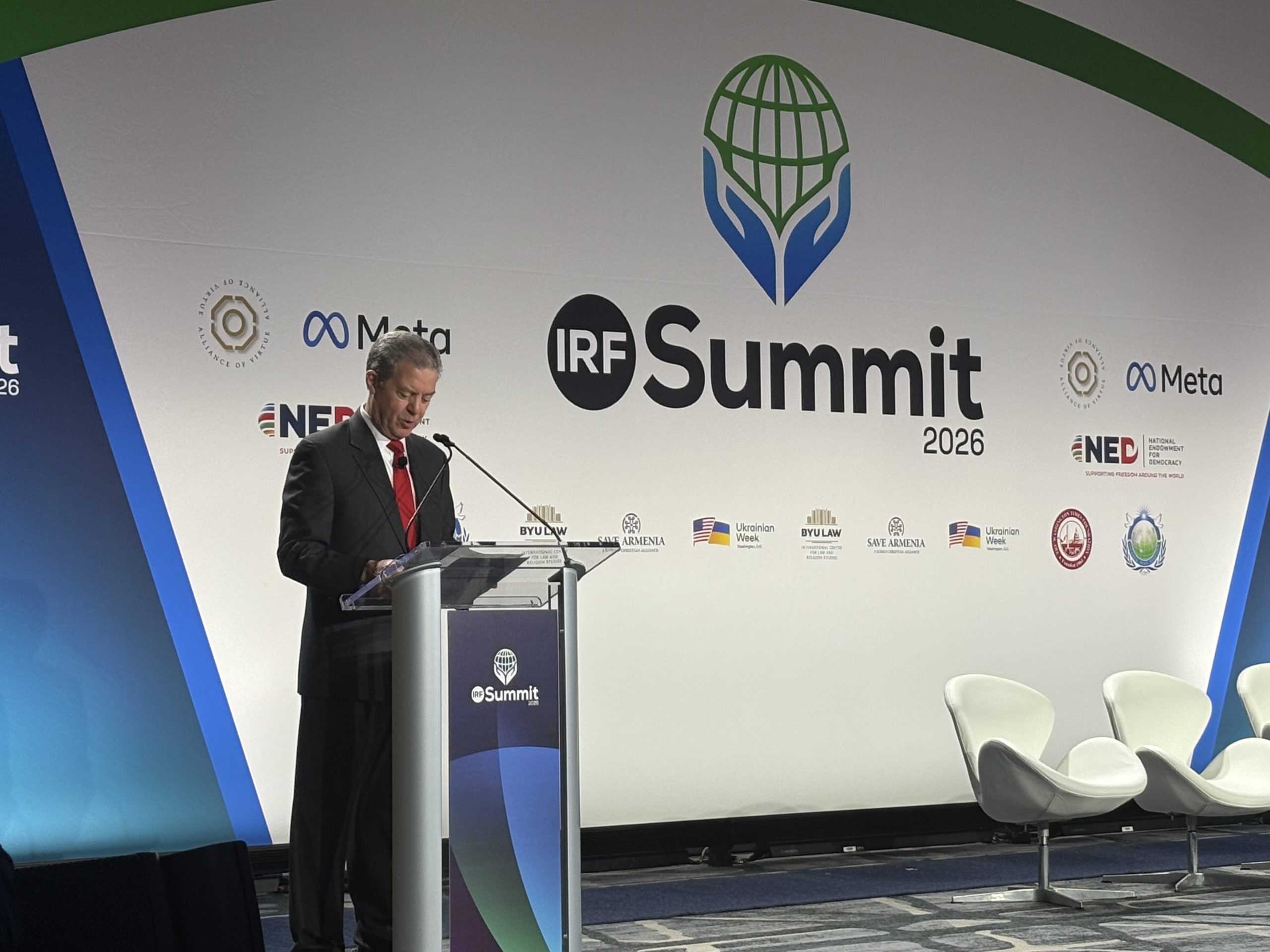
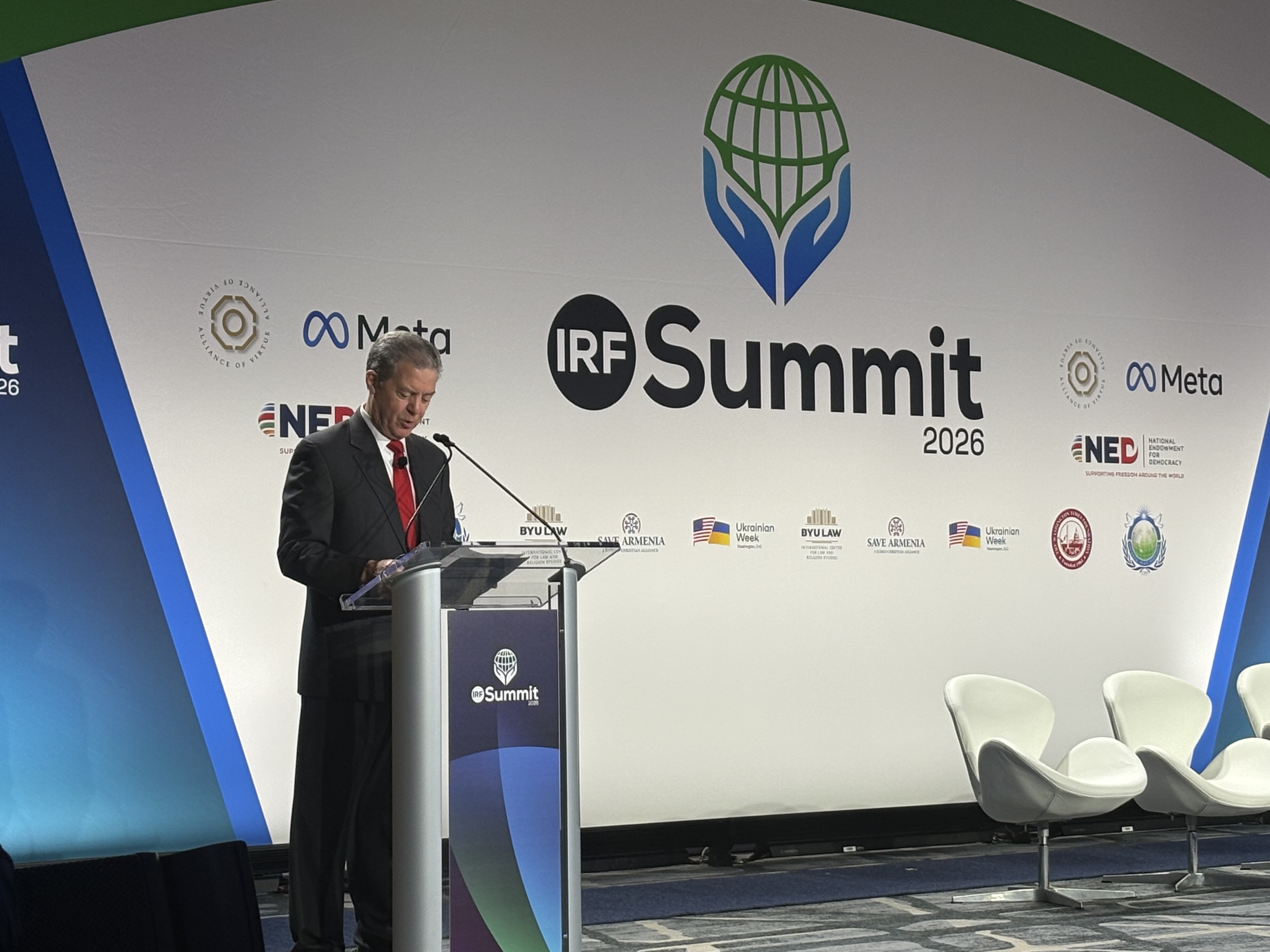
International Religious Freedom Summit co-chairs assess current state of global religious liberty – #Catholic – 2026 International Religious Freedom (IRF) Summit co-chairs Sam Brownback and Katrina Lantos Swett offered a fresh assessment of the current state of global religious liberty and the movement’s growth.The IRF Summit, which concluded in Washington, D.C., on Tuesday, is a broad coalition of religious and human rights groups that advocate for religious freedom for all people across the globe. Co-chair Brownback previously served as ambassador at large for international religious freedom during the first Trump administration and Lantos Swett is president of the Lantos Foundation for Human Rights and Justice and a former chair of the United States Commission on International Religious Freedom (USCIRF).Assessing the current religious freedom panorama, “we see more countries putting resources into this issue, appointing high-level envoys focused on freedom of religion or belief,” Lantos Swett told EWTN News. “So that’s on the good side of the ledger.”“On the bad side of the ledger, the evidence now is that over 80% of the world’s population live in countries where there is some degree of repression, persecution, and societal and legal imposition on this fundamental human right,” she said.Current concerns right now include what is known as “transnational repression.” She explained: “We increasingly are seeing some of these very bad actors in the world reaching the long hand of violence, threat, intimidation, harassment beyond their national borders.”Lantos Swett detailed China, Iran, and Russia are at the “top of the list” of worst countries when it comes to religious freedom matters.“We’re very concerned about the efforts by the Chinese government to engage in what I would view as a hostile takeover of the Catholic Church by appointing their own bishops and controlling what the Catholic Church is allowed to do in China,” she indicated.There is also present “false propaganda” and even potential issues with artificial intelligence (AI) and how it “will impact for good and for ill, the defense of conscience rights.”Infringement upon religious freedom around the world is “a massive problem,” Brownback said. “It’s probably one of the most abused human rights in the world.”“It happens to all different faiths everywhere. It’s time the world wakes up and pushed us back against this,” Brownback said.Agreeing with Lantos Swett, Brownback said China is “No. 1” when it comes to the worst countries for religious freedom. He also noted Nigeria and the Indian subcontinent.In China, “they oppress their people, but then they also produce the technology that goes out to, we think, nearly 80 countries for oppression,” he said.How religious freedom movement can take actionThose involved in the IRF movement have “been climbing up the backside of the mountain where nobody could see us for a long period of time, and now we’re up at a perch that a lot of people are shooting at us,” Brownback said during a Feb. 2 summit panel.“Now that we’re in the center of the debate and the discussion, we’ve got to act like it. We’ve got to have our factual settings together. We’ve got to be careful and cautious, but bold and courageous,” he said.
 
 Jan Jekielek, senior editor with The Epoch Times, with International Religious Freedom (IRF) Summit co-chairs Sam Brownback and Katrina Lantos Swett at the 2026 IRF Summit in Washington, D.C., on Feb. 2, 2026, in Washington, D.C. | Credit: Photo courtesy of IRF Summit
 
 “At the same time, we’ve got to form alliances and pull people in, not just from religious freedom, but also from democracy movements, from security movements to make this … a global movement, a grassroots movement, because that’s where we win as a global grassroots movement.”Lantos Swett expanded further on what the movement needs to do next. She said the cause for religious liberty is bigger than the “politics of the day.” The cause “is more profound and ultimately more unifying than the many things that pull us apart.”“We have become deeply divided, deeply hostile towards those who don’t agree with us politically or on some other criteria. But Ambassador Brownback and I certainly have felt that as it relates to the fight to defend religious freedom for everyone everywhere, it is of paramount importance that this remain really not just a bipartisan cause but a nonpartisan cause,” she said.The “movement is growing” in part to “an unease about the pervasive nihilism we see in the world around us,” Lantos Swett said. “You know, nihilism, this philosophy, either moral nihilism, there’s no such thing as right and wrong. Or as existential nihilism, life itself has no meaning, no purpose. It’s a terrible way to live. It’s a terrible way for a community and a society to feel.”“I do think, especially maybe even among young people, that you sense that they’re moving away from that somewhat aimless and nihilistic view of life and searching for something more meaningful.”“I hope that that will also help us recruit a new generation of leaders to this movement because they are starting to understand how important it is to have a defining purpose and sense of meaning and consequence to your life,” she said.

International Religious Freedom Summit co-chairs assess current state of global religious liberty – #Catholic – 2026 International Religious Freedom (IRF) Summit co-chairs Sam Brownback and Katrina Lantos Swett offered a fresh assessment of the current state of global religious liberty and the movement’s growth.The IRF Summit, which concluded in Washington, D.C., on Tuesday, is a broad coalition of religious and human rights groups that advocate for religious freedom for all people across the globe. Co-chair Brownback previously served as ambassador at large for international religious freedom during the first Trump administration and Lantos Swett is president of the Lantos Foundation for Human Rights and Justice and a former chair of the United States Commission on International Religious Freedom (USCIRF).Assessing the current religious freedom panorama, “we see more countries putting resources into this issue, appointing high-level envoys focused on freedom of religion or belief,” Lantos Swett told EWTN News. “So that’s on the good side of the ledger.”“On the bad side of the ledger, the evidence now is that over 80% of the world’s population live in countries where there is some degree of repression, persecution, and societal and legal imposition on this fundamental human right,” she said.Current concerns right now include what is known as “transnational repression.” She explained: “We increasingly are seeing some of these very bad actors in the world reaching the long hand of violence, threat, intimidation, harassment beyond their national borders.”Lantos Swett detailed China, Iran, and Russia are at the “top of the list” of worst countries when it comes to religious freedom matters.“We’re very concerned about the efforts by the Chinese government to engage in what I would view as a hostile takeover of the Catholic Church by appointing their own bishops and controlling what the Catholic Church is allowed to do in China,” she indicated.There is also present “false propaganda” and even potential issues with artificial intelligence (AI) and how it “will impact for good and for ill, the defense of conscience rights.”Infringement upon religious freedom around the world is “a massive problem,” Brownback said. “It’s probably one of the most abused human rights in the world.”“It happens to all different faiths everywhere. It’s time the world wakes up and pushed us back against this,” Brownback said.Agreeing with Lantos Swett, Brownback said China is “No. 1” when it comes to the worst countries for religious freedom. He also noted Nigeria and the Indian subcontinent.In China, “they oppress their people, but then they also produce the technology that goes out to, we think, nearly 80 countries for oppression,” he said.How religious freedom movement can take actionThose involved in the IRF movement have “been climbing up the backside of the mountain where nobody could see us for a long period of time, and now we’re up at a perch that a lot of people are shooting at us,” Brownback said during a Feb. 2 summit panel.“Now that we’re in the center of the debate and the discussion, we’ve got to act like it. We’ve got to have our factual settings together. We’ve got to be careful and cautious, but bold and courageous,” he said. Jan Jekielek, senior editor with The Epoch Times, with International Religious Freedom (IRF) Summit co-chairs Sam Brownback and Katrina Lantos Swett at the 2026 IRF Summit in Washington, D.C., on Feb. 2, 2026, in Washington, D.C. | Credit: Photo courtesy of IRF Summit “At the same time, we’ve got to form alliances and pull people in, not just from religious freedom, but also from democracy movements, from security movements to make this … a global movement, a grassroots movement, because that’s where we win as a global grassroots movement.”Lantos Swett expanded further on what the movement needs to do next. She said the cause for religious liberty is bigger than the “politics of the day.” The cause “is more profound and ultimately more unifying than the many things that pull us apart.”“We have become deeply divided, deeply hostile towards those who don’t agree with us politically or on some other criteria. But Ambassador Brownback and I certainly have felt that as it relates to the fight to defend religious freedom for everyone everywhere, it is of paramount importance that this remain really not just a bipartisan cause but a nonpartisan cause,” she said.The “movement is growing” in part to “an unease about the pervasive nihilism we see in the world around us,” Lantos Swett said. “You know, nihilism, this philosophy, either moral nihilism, there’s no such thing as right and wrong. Or as existential nihilism, life itself has no meaning, no purpose. It’s a terrible way to live. It’s a terrible way for a community and a society to feel.”“I do think, especially maybe even among young people, that you sense that they’re moving away from that somewhat aimless and nihilistic view of life and searching for something more meaningful.”“I hope that that will also help us recruit a new generation of leaders to this movement because they are starting to understand how important it is to have a defining purpose and sense of meaning and consequence to your life,” she said.

As the sixth annual International Religious Freedom Summit wrapped up in Washington, D.C., the organization’s co-chairs addressed the current state of global religious liberty.

Read More

Gospel and Word of the Day – 04 February 2026 – From the Second Book of Samuel 2 Samuel 24:2, 9-17 King David said to Joab and the leaders of the army who were with him, “Tour all the tribes in Israel from Dan to Beer-sheba and register the people, that I may know their number.” Joab then reported to the king the number of people registered: in Israel, eight hundred thousand men fit for military service; in Judah, five hundred thousand. Afterward, however, David regretted having numbered the people, and said to the LORD: “I have sinned grievously in what I have done. But now, LORD, forgive the guilt of your servant, for I have been very foolish.” When David rose in the morning, the LORD had spoken to the prophet Gad, David’s seer, saying: “Go and say to David, ‘This is what the LORD says: I offer you three alternatives; choose one of them, and I will inflict it on you.’” Gad then went to David to inform him. He asked: “Do you want a three years’ famine to come upon your land, or to flee from your enemy three months while he pursues you, or to have a three days’ pestilence in your land? Now consider and decide what I must reply to him who sent me.” David answered Gad: “I am in very serious difficulty. Let us fall by the hand of God, for he is most merciful; but let me not fall by the hand of man.” Thus David chose the pestilence. Now it was the time of the wheat harvest when the plague broke out among the people. The LORD then sent a pestilence over Israel from morning until the time appointed, and seventy thousand of the people from Dan to Beer-sheba died. But when the angel stretched forth his hand toward Jerusalem to destroy it, the LORD regretted the calamity and said to the angel causing the destruction among the people, “Enough now! Stay your hand.” The angel of the LORD was then standing at the threshing floor of Araunah the Jebusite. When David saw the angel who was striking the people, he said to the LORD: “It is I who have sinned; it is I, the shepherd, who have done wrong. But these are sheep; what have they done? Punish me and my kindred.”From the Gospel according to Mark 6:1-6 Jesus departed from there and came to his native place, accompanied by his disciples. When the sabbath came he began to teach in the synagogue, and many who heard him were astonished. They said, “Where did this man get all this? What kind of wisdom has been given him? What mighty deeds are wrought by his hands! Is he not the carpenter, the son of Mary, and the brother of James and Joseph and Judas and Simon? And are not his sisters here with us?” And they took offense at him. Jesus said to them, “A prophet is not without honor except in his native place and among his own kin and in his own house.” So he was not able to perform any mighty deed there, apart from curing a few sick people by laying his hands on them. He was amazed at their lack of faith.We may ask ourselves: why do Jesus’ fellow townsmen go from astonishment to disbelief? They make a comparison between Jesus’ humble origins and his current abilities: he is a carpenter; he did not study and yet he preaches better than the scribes and he performs miracles. And instead of opening up to the reality, they take offence. According to the people of Nazareth, God is too great to humble himself to speak through such a simple man! It is the scandal of the Incarnation: the unsettling event of a God made flesh who thinks with the mind of a man, works and acts with the hands of a man, loves with a human heart, a God who struggles, eats and sleeps like one of us. The Son of God overturns every human framework: it is not the disciples who washed the feet of the Lord, but it is the Lord who washed the feet of the disciples (cf. Jn 13:1-20). This is a reason for scandal and incredulity, not only in that period, but in all ages, even today. The radical change Jesus brought about commits his disciples of both yesterday and today to a personal and community [self] examination. Indeed, even in our day it can happen that we harbour some prejudices that prevent us from seeing reality. But, today, the Lord asks us to adopt an attitude of humble listening and docile expectation because God’s grace often manifests itself in surprising ways that do not match our expectations. (Pope Francis, Angelus, 8 July 2018)

From the Second Book of Samuel
2 Samuel 24:2, 9-17

King David said to Joab and the leaders of the army who were with him,
“Tour all the tribes in Israel from Dan to Beer-sheba
and register the people, that I may know their number.”
Joab then reported to the king the number of people registered:
in Israel, eight hundred thousand men fit for military service;
in Judah, five hundred thousand.

Afterward, however, David regretted having numbered the people,
and said to the LORD:
“I have sinned grievously in what I have done.
But now, LORD, forgive the guilt of your servant,
for I have been very foolish.”
When David rose in the morning,
the LORD had spoken to the prophet Gad, David’s seer, saying:
“Go and say to David, ‘This is what the LORD says:
I offer you three alternatives;
choose one of them, and I will inflict it on you.’”
Gad then went to David to inform him.
He asked: “Do you want a three years’ famine to come upon your land,
or to flee from your enemy three months while he pursues you,
or to have a three days’ pestilence in your land?
Now consider and decide what I must reply to him who sent me.”
David answered Gad: “I am in very serious difficulty.
Let us fall by the hand of God, for he is most merciful;
but let me not fall by the hand of man.”
Thus David chose the pestilence.
Now it was the time of the wheat harvest
when the plague broke out among the people.
The LORD then sent a pestilence over Israel
from morning until the time appointed,
and seventy thousand of the people from Dan to Beer-sheba died.
But when the angel stretched forth his hand toward Jerusalem to destroy it,
the LORD regretted the calamity
and said to the angel causing the destruction among the people,
“Enough now! Stay your hand.”
The angel of the LORD was then standing
at the threshing floor of Araunah the Jebusite.
When David saw the angel who was striking the people,
he said to the LORD: “It is I who have sinned;
it is I, the shepherd, who have done wrong.
But these are sheep; what have they done?
Punish me and my kindred.”

From the Gospel according to Mark
6:1-6

Jesus departed from there and came to his native place,
accompanied by his disciples.
When the sabbath came he began to teach in the synagogue,
and many who heard him were astonished.
They said, “Where did this man get all this?
What kind of wisdom has been given him?
What mighty deeds are wrought by his hands!
Is he not the carpenter, the son of Mary,
and the brother of James and Joseph and Judas and Simon?
And are not his sisters here with us?”
And they took offense at him.
Jesus said to them,
“A prophet is not without honor except in his native place
and among his own kin and in his own house.”
So he was not able to perform any mighty deed there,
apart from curing a few sick people by laying his hands on them.
He was amazed at their lack of faith.

We may ask ourselves: why do Jesus’ fellow townsmen go from astonishment to disbelief? They make a comparison between Jesus’ humble origins and his current abilities: he is a carpenter; he did not study and yet he preaches better than the scribes and he performs miracles. And instead of opening up to the reality, they take offence. According to the people of Nazareth, God is too great to humble himself to speak through such a simple man! It is the scandal of the Incarnation: the unsettling event of a God made flesh who thinks with the mind of a man, works and acts with the hands of a man, loves with a human heart, a God who struggles, eats and sleeps like one of us. The Son of God overturns every human framework: it is not the disciples who washed the feet of the Lord, but it is the Lord who washed the feet of the disciples (cf. Jn 13:1-20). This is a reason for scandal and incredulity, not only in that period, but in all ages, even today.

The radical change Jesus brought about commits his disciples of both yesterday and today to a personal and community [self] examination. Indeed, even in our day it can happen that we harbour some prejudices that prevent us from seeing reality. But, today, the Lord asks us to adopt an attitude of humble listening and docile expectation because God’s grace often manifests itself in surprising ways that do not match our expectations. (Pope Francis, Angelus, 8 July 2018)

Read More
U.S. solicitor general backs Colorado Catholics in dispute over universal preschool program – #Catholic – The United States solicitor general urged the Supreme Court to stop Colorado from excluding Catholic schools from the state’s universal preschool (UPK) program in a brief on Friday.The 25-page amicus brief, submitted by Solicitor General John Sauer, Principal Deputy Solicitor General Sarah Harris, and Assistant to the Solicitor General Emily Hall, asked the Supreme Court to consider the religious discrimination case.The friend-of-the-court brief is the latest development in the yearslong legal troubles that religious preschools wanting to be involved in the UPK have faced. The UPK program pledges to provide tuition assistance to families for qualifying preschools, but several religious preschools have been excluded from the program due to its requirements related to its equal opportunity mandate.Most recently, the U.S Court of Appeals for the 10th Circuit upheld the UPK program in spite of alleged religious discrimination against faith-based preschools. In response, the parish-run preschools and the Catholic Archdiocese of Denver are appealing to the Supreme Court.The solicitor general’s brief highlighted the “severity of the court of appeals’ error.” The solicitor general noted that the UPK gives some exemptions from its equal access requirements to secular schools while withholding exemptions from religious schools.“Colorado’s exemptions allow differential treatment for some groups, e.g., low-income families or disabled children, but not others. Having departed from universal even-handedness, Colorado cannot claim that allowing Catholic preschools to apply a preference based on Catholic teachings on sexual orientation and gender identity would uniquely undermine its law,” the brief read.“Granting review in this case would allow this court to provide useful guidance on a subject that lower courts frequently confront,” the brief stated.Becket, the religious liberty legal group arguing the case, welcomed the brief.“The solicitor general’s filing in this case signals to the court just how egregious, illegal, and dangerous Colorado’s discrimination is,” Nick Reaves, senior counsel at Becket and lead attorney for the preschools and families, said in a statement.“The state is labeling a program ‘universal’ and then banning religious families and schools from it because of their faith,” Reaves continued. “If that kind of exclusion is allowed to stand, no religious group is safe from being pushed out of public life.”Twenty other parties have filed friend-of-the-court briefs on behalf of the preschools since December 2025, including Thomas More Society, the United States Conference of Catholic Bishops, the Notre Dame Education Law Project, and West Virginia and 21 other states.“Our preschools exist to help parents who want an education rooted in the Catholic faith for their children,” said Scott Elmer, chief mission officer for the Archdiocese of Denver, in a November 2025 statement. “All we ask is for the ability to offer families who choose a Catholic education the same access to free preschool services that’s available at thousands of other preschools across Colorado.”“We’re grateful the solicitor general recognized what’s at stake here and added his voice to a growing chorus urging the Supreme Court to hear this case,” Reaves concluded.

U.S. solicitor general backs Colorado Catholics in dispute over universal preschool program – #Catholic – The United States solicitor general urged the Supreme Court to stop Colorado from excluding Catholic schools from the state’s universal preschool (UPK) program in a brief on Friday.The 25-page amicus brief, submitted by Solicitor General John Sauer, Principal Deputy Solicitor General Sarah Harris, and Assistant to the Solicitor General Emily Hall, asked the Supreme Court to consider the religious discrimination case.The friend-of-the-court brief is the latest development in the yearslong legal troubles that religious preschools wanting to be involved in the UPK have faced. The UPK program pledges to provide tuition assistance to families for qualifying preschools, but several religious preschools have been excluded from the program due to its requirements related to its equal opportunity mandate.Most recently, the U.S Court of Appeals for the 10th Circuit upheld the UPK program in spite of alleged religious discrimination against faith-based preschools. In response, the parish-run preschools and the Catholic Archdiocese of Denver are appealing to the Supreme Court.The solicitor general’s brief highlighted the “severity of the court of appeals’ error.” The solicitor general noted that the UPK gives some exemptions from its equal access requirements to secular schools while withholding exemptions from religious schools.“Colorado’s exemptions allow differential treatment for some groups, e.g., low-income families or disabled children, but not others. Having departed from universal even-handedness, Colorado cannot claim that allowing Catholic preschools to apply a preference based on Catholic teachings on sexual orientation and gender identity would uniquely undermine its law,” the brief read.“Granting review in this case would allow this court to provide useful guidance on a subject that lower courts frequently confront,” the brief stated.Becket, the religious liberty legal group arguing the case, welcomed the brief.“The solicitor general’s filing in this case signals to the court just how egregious, illegal, and dangerous Colorado’s discrimination is,” Nick Reaves, senior counsel at Becket and lead attorney for the preschools and families, said in a statement.“The state is labeling a program ‘universal’ and then banning religious families and schools from it because of their faith,” Reaves continued. “If that kind of exclusion is allowed to stand, no religious group is safe from being pushed out of public life.”Twenty other parties have filed friend-of-the-court briefs on behalf of the preschools since December 2025, including Thomas More Society, the United States Conference of Catholic Bishops, the Notre Dame Education Law Project, and West Virginia and 21 other states.“Our preschools exist to help parents who want an education rooted in the Catholic faith for their children,” said Scott Elmer, chief mission officer for the Archdiocese of Denver, in a November 2025 statement. “All we ask is for the ability to offer families who choose a Catholic education the same access to free preschool services that’s available at thousands of other preschools across Colorado.”“We’re grateful the solicitor general recognized what’s at stake here and added his voice to a growing chorus urging the Supreme Court to hear this case,” Reaves concluded.

The United States solicitor general urged the Supreme Court to stop Colorado from excluding Catholic schools from the state’s universal preschool (UPK) program.

Read More
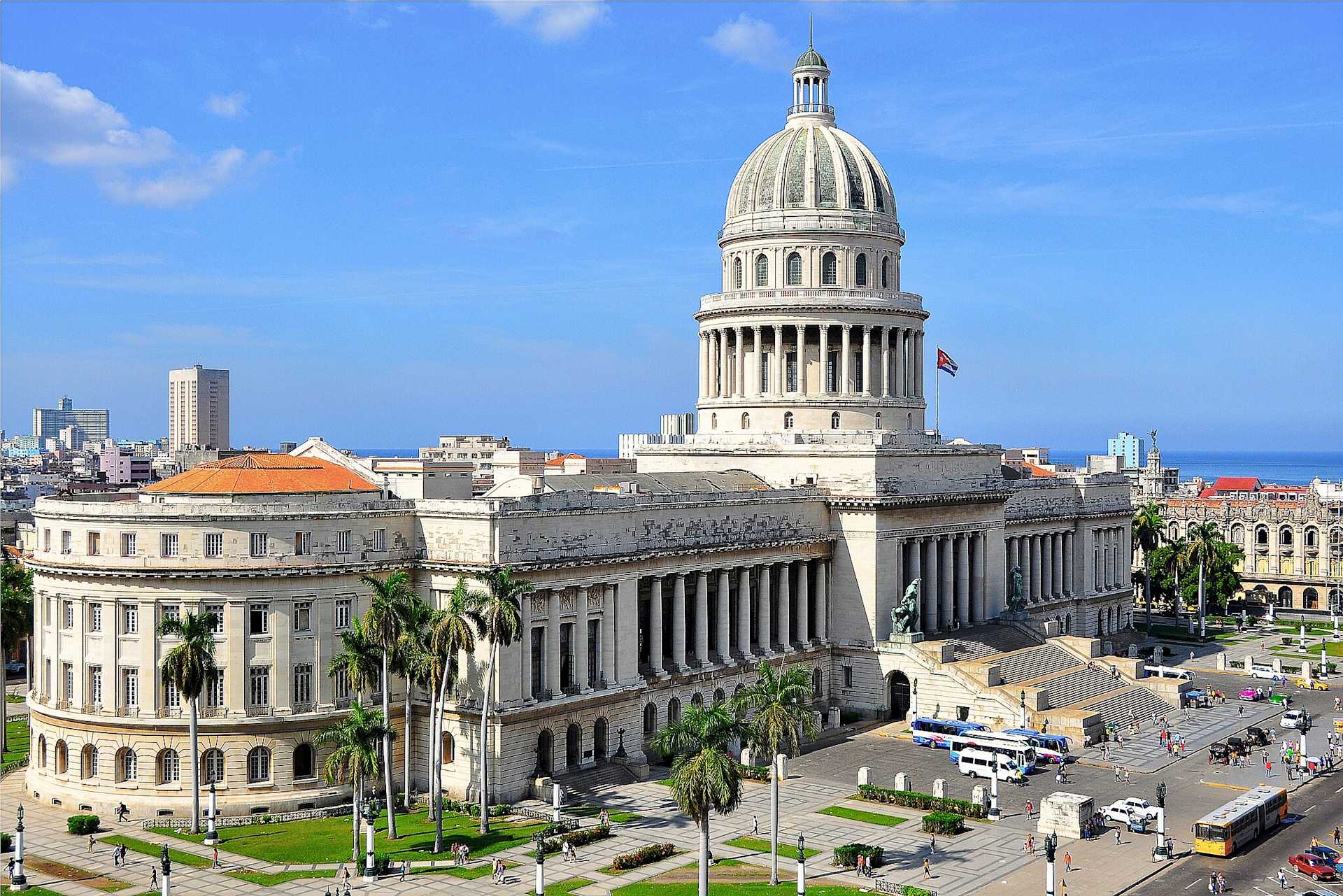
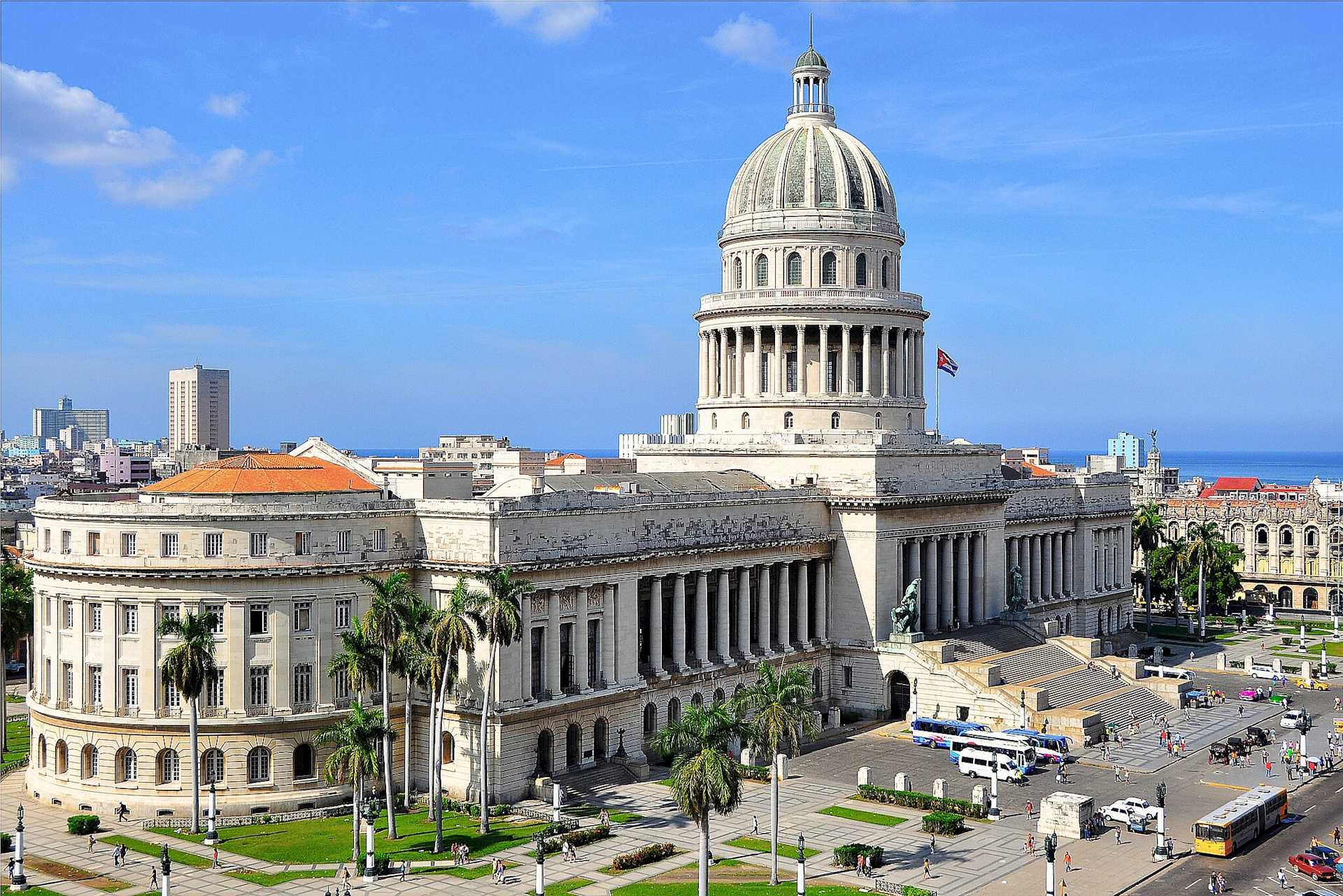
Bishops warn that Cuba risks social chaos if urgent changes are not made – #Catholic – The Conference of Catholic Bishops of Cuba (COCC, by its Spanish acronym) warned that the country risks descending into social chaos and violence if  increasingly urgent structural changes are not implemented.The Catholic Church’s warning came in a message released on Jan. 31, two days after U.S. President Donald Trump’s decision to impose extraordinary tariffs on countries that send oil to Cuba.Venezuela had stopped exporting oil to Cuba in November 2025, and with the capture of President Nicolás Maduro by U.S. forces in January and the pressure on the socialist regime that is still in place, a resumption of these exports is unlikely.Russia and Algeria stopped sending fuel to the Cuban regime in October and February 2025, respectively, leaving Mexico as the only remaining supplier, with its last shipment arriving in early January.The fuel shortage is stifling the already struggling Cuban economy, and according to statements reported by the Financial Times, Victoria Grabenwöger, an analyst at the market research firm Kpler, stated late last week that Cuba’s remaining reserves “could last 15 to 20 days.”The bishops recalled that in their June 15, 2025, message they had already called for “the structural, social, economic, and political changes that Cuba needs” to save it from the dire situation it has been facing for several years.The prelates noted at the time that they did not imagine “that things could get any worse,” yet, “the situation has deteriorated, and anguish and despair have intensified.”Furthermore, “recent news, which announces, among other things, the elimination of any possibility of oil entering the country, is raising alarms, especially for the least fortunate. The risk of social chaos and violence among the sons and daughters of the same nation is real. No Cuban of goodwill would rejoice at this,” the bishops said.The COCC stated that “Cuba needs changes, and they are becoming increasingly urgent, but it certainly doesn’t need any more anguish or suffering” for its people. The conference therefore expressed gratitude for the aid that arrived from the U.S. government and was distributed through the Catholic Church to those affected by Hurricane Melissa.On Jan. 30, the president of the COCC, Bishop Arturo Gonzalez Amador, and Cardinal Juan de la Caridad García met with the head of mission at the U.S. Embassy, ​​Mike Hammer, who wrote on X that “if everything goes well and the aid is reaching those most in need, the Trump administration is ready to send more assistance.”In their message, the bishops also addressed relations between states. “The unwavering position of the pope and the Holy See, consistent with international law, is that governments should be able to resolve their disagreements and conflicts through dialogue and diplomacy, not coercion or war,” they stated.However, they also said that “respect for the dignity and exercise of freedom of every human being within their own nation cannot be subject to or conditioned by the variables of external conflicts.”The bishops urged that “the good of Cuba be placed above partisan interests” and assured that the Catholic Church will continue to accompany the people, especially the most vulnerable, also offering “its willingness, if requested, to help de-escalate hostilities between the parties and create spaces for fruitful collaboration for the common good.”Pope Leo XIV addressed the rising tensions between Cuba and the United States at the end of the Feb. 1 Angelus, expressing his concern and echoing the bishops’ message he invited “all responsible parties to promote a sincere and effective dialogue, in order to avoid violence and every action that could increase the suffering of the dear Cuban people.”A situation more serious than during the ‘Special Period’Osvaldo Gallardo, a Cuban writer and analyst residing in the United States, stated that during the 40 years he lived on the island, he never experienced a crisis “like the one being experienced now,” with prolonged power outages, food shortages, the collapse of basic services, and a greater lack of freedom.He said that this social and economic situation can be considered worse than the one that occurred during the so-called “Special Period” of 1991–1994, which followed the collapse of the Soviet Union — which economically supported the island — and the fall of communism in Eastern Europe.“During the Special Period, it was difficult, but there was more of a sense of transiency. It was very difficult, but there was still a structure that responded to a reality that had been more stable; not better, but more stable,” he explained to ACI Prensa, the Spanish-language sister service of EWTN News.However, he noted that now the anthropological damage in Cuba “is real and evident,” and “all the human capital has been dissolved.” Furthermore, “this period is already lasting longer, from 2020 to 2026, since the pandemic,” and the country is not recovering.“That suffering did not begin with sanctions; it began with an exhausted model and a power structure that refuses to relinquish control,” Gallardo added in a post on Facebook.In this regard, he said that the bishops’ message “is a moral warning issued when the deterioration is reaching dangerous levels and the risk of social chaos ceases to be a hypothesis.”However, he noted that the communist regime “is not going to engage in dialogue,” just as it “hasn’t done so in more than six decades.” He pointed out that for the dictatorship, dialogue “has always been a strategy to buy time, not to change the country.”“It must be said unequivocally: The dictatorship has to go,” Gallardo stated. “Cuba needs urgent changes. It doesn’t need more useless sacrifices or a false peace bought at the price of resignation. True peace is not the absence of conflict: It is justice. And when injustice is prolonged in the name of order, what is being protected is not peace, but abuse,” he said.This story was first published by ACI Prensa, the Spanish-language sister service of EWTN News. It has been translated and adapted by EWTN News English.

Bishops warn that Cuba risks social chaos if urgent changes are not made – #Catholic – The Conference of Catholic Bishops of Cuba (COCC, by its Spanish acronym) warned that the country risks descending into social chaos and violence if  increasingly urgent structural changes are not implemented.The Catholic Church’s warning came in a message released on Jan. 31, two days after U.S. President Donald Trump’s decision to impose extraordinary tariffs on countries that send oil to Cuba.Venezuela had stopped exporting oil to Cuba in November 2025, and with the capture of President Nicolás Maduro by U.S. forces in January and the pressure on the socialist regime that is still in place, a resumption of these exports is unlikely.Russia and Algeria stopped sending fuel to the Cuban regime in October and February 2025, respectively, leaving Mexico as the only remaining supplier, with its last shipment arriving in early January.The fuel shortage is stifling the already struggling Cuban economy, and according to statements reported by the Financial Times, Victoria Grabenwöger, an analyst at the market research firm Kpler, stated late last week that Cuba’s remaining reserves “could last 15 to 20 days.”The bishops recalled that in their June 15, 2025, message they had already called for “the structural, social, economic, and political changes that Cuba needs” to save it from the dire situation it has been facing for several years.The prelates noted at the time that they did not imagine “that things could get any worse,” yet, “the situation has deteriorated, and anguish and despair have intensified.”Furthermore, “recent news, which announces, among other things, the elimination of any possibility of oil entering the country, is raising alarms, especially for the least fortunate. The risk of social chaos and violence among the sons and daughters of the same nation is real. No Cuban of goodwill would rejoice at this,” the bishops said.The COCC stated that “Cuba needs changes, and they are becoming increasingly urgent, but it certainly doesn’t need any more anguish or suffering” for its people. The conference therefore expressed gratitude for the aid that arrived from the U.S. government and was distributed through the Catholic Church to those affected by Hurricane Melissa.On Jan. 30, the president of the COCC, Bishop Arturo Gonzalez Amador, and Cardinal Juan de la Caridad García met with the head of mission at the U.S. Embassy, ​​Mike Hammer, who wrote on X that “if everything goes well and the aid is reaching those most in need, the Trump administration is ready to send more assistance.”In their message, the bishops also addressed relations between states. “The unwavering position of the pope and the Holy See, consistent with international law, is that governments should be able to resolve their disagreements and conflicts through dialogue and diplomacy, not coercion or war,” they stated.However, they also said that “respect for the dignity and exercise of freedom of every human being within their own nation cannot be subject to or conditioned by the variables of external conflicts.”The bishops urged that “the good of Cuba be placed above partisan interests” and assured that the Catholic Church will continue to accompany the people, especially the most vulnerable, also offering “its willingness, if requested, to help de-escalate hostilities between the parties and create spaces for fruitful collaboration for the common good.”Pope Leo XIV addressed the rising tensions between Cuba and the United States at the end of the Feb. 1 Angelus, expressing his concern and echoing the bishops’ message he invited “all responsible parties to promote a sincere and effective dialogue, in order to avoid violence and every action that could increase the suffering of the dear Cuban people.”A situation more serious than during the ‘Special Period’Osvaldo Gallardo, a Cuban writer and analyst residing in the United States, stated that during the 40 years he lived on the island, he never experienced a crisis “like the one being experienced now,” with prolonged power outages, food shortages, the collapse of basic services, and a greater lack of freedom.He said that this social and economic situation can be considered worse than the one that occurred during the so-called “Special Period” of 1991–1994, which followed the collapse of the Soviet Union — which economically supported the island — and the fall of communism in Eastern Europe.“During the Special Period, it was difficult, but there was more of a sense of transiency. It was very difficult, but there was still a structure that responded to a reality that had been more stable; not better, but more stable,” he explained to ACI Prensa, the Spanish-language sister service of EWTN News.However, he noted that now the anthropological damage in Cuba “is real and evident,” and “all the human capital has been dissolved.” Furthermore, “this period is already lasting longer, from 2020 to 2026, since the pandemic,” and the country is not recovering.“That suffering did not begin with sanctions; it began with an exhausted model and a power structure that refuses to relinquish control,” Gallardo added in a post on Facebook.In this regard, he said that the bishops’ message “is a moral warning issued when the deterioration is reaching dangerous levels and the risk of social chaos ceases to be a hypothesis.”However, he noted that the communist regime “is not going to engage in dialogue,” just as it “hasn’t done so in more than six decades.” He pointed out that for the dictatorship, dialogue “has always been a strategy to buy time, not to change the country.”“It must be said unequivocally: The dictatorship has to go,” Gallardo stated. “Cuba needs urgent changes. It doesn’t need more useless sacrifices or a false peace bought at the price of resignation. True peace is not the absence of conflict: It is justice. And when injustice is prolonged in the name of order, what is being protected is not peace, but abuse,” he said.This story was first published by ACI Prensa, the Spanish-language sister service of EWTN News. It has been translated and adapted by EWTN News English.

The Conference of Catholic Bishops of Cuba warned that the country risks descending into social chaos and violence if urgent structural changes are not made.

Read More

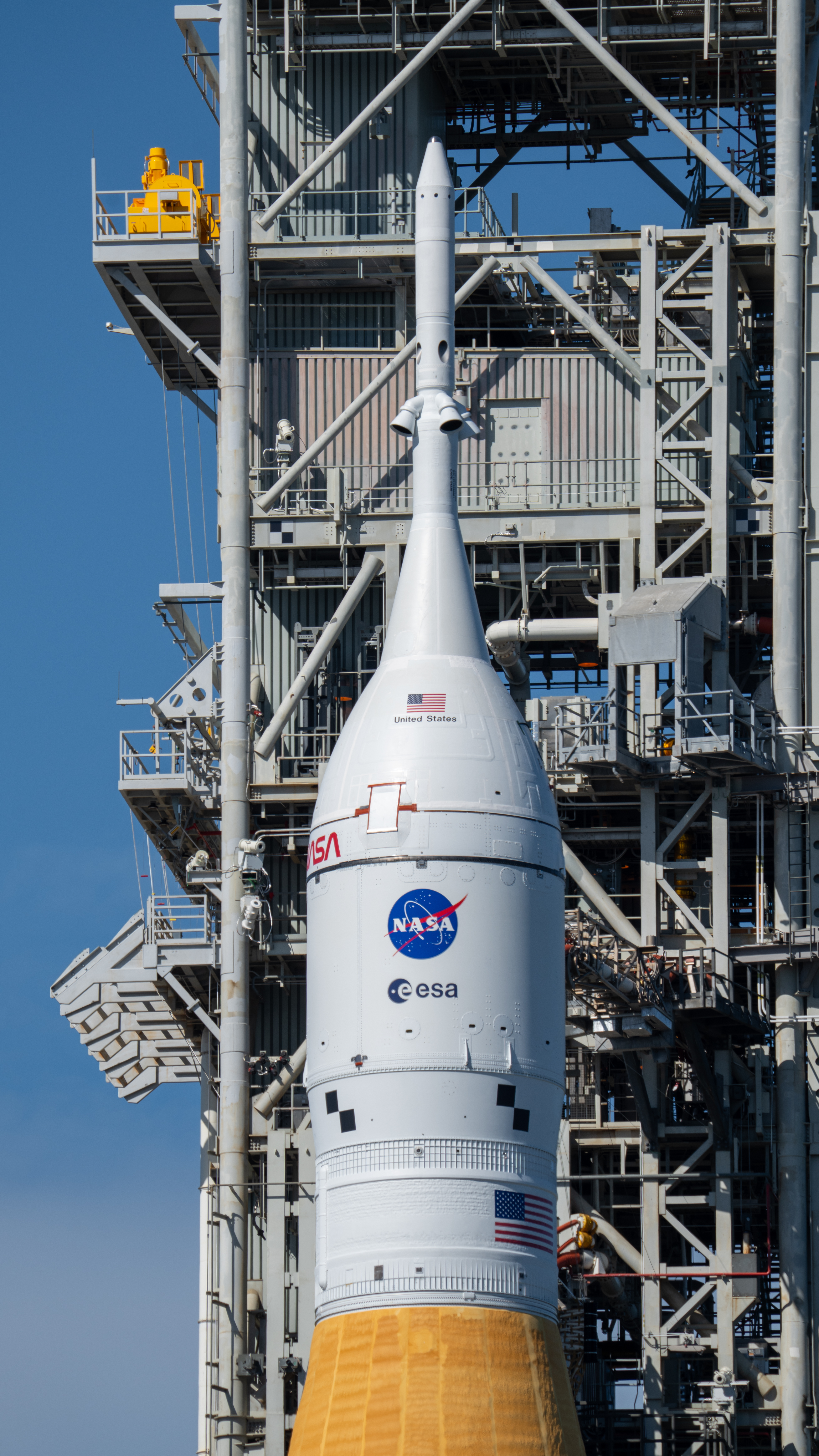
The FAA has warned pilots to be prepared to “exercise extreme caution” when flying below the trajectory of commercial spacecraft — some of which have the potential for “catastrophic failures resulting in debris fields.” That is the language used in a recent Safety Alert for Operators (SAFO), dated Jan. 8, that is intended to provide guidance toContinue reading “FAA warns ‘catastrophic’ spaceflight mishaps pose threat to aircraft”

The post FAA warns ‘catastrophic’ spaceflight mishaps pose threat to aircraft appeared first on Astronomy Magazine.

Read More
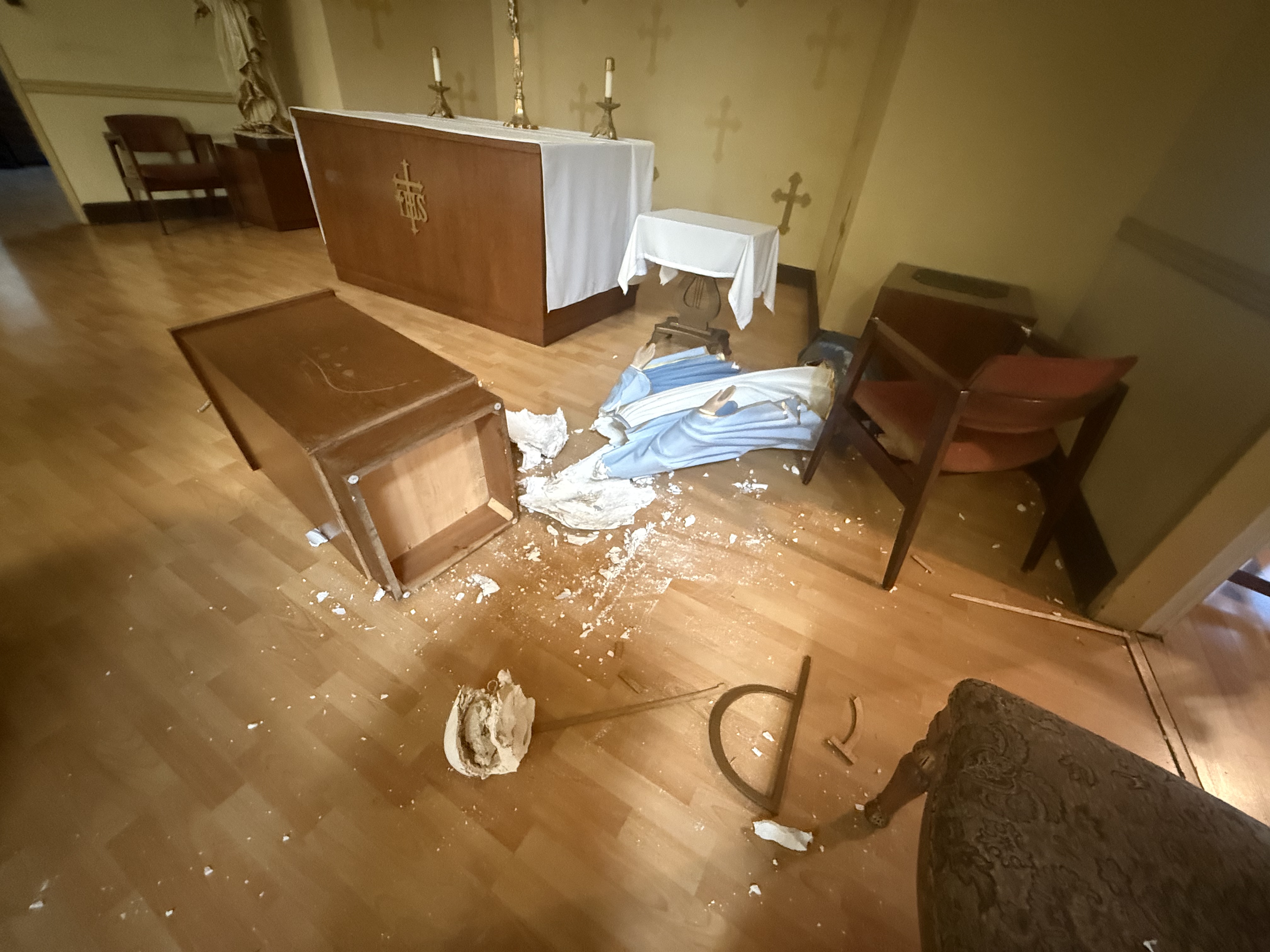
Department of Justice investigates vandalism at California Catholic school #Catholic Federal officials are investigating after a Los Angeles-area Catholic school was targeted in a major act of vandalism that included the beheading of a statue of the Blessed Mother. Assistant Attorney General for Civil Rights Harmeet Dhillon said on X on Feb. 2 that the Department of Justice’s civil rights division “will open an investigation into [the] awful crime” against Holy Innocents Catholic School in Long Beach.TweetCyril Cruz, the principal of the school, told EWTN News that she came into the school early on the morning of Feb. 2 and discovered the vandalism in the hall where the school holds Mass. “Our statue of the Virgin Mary was smashed, and the tabernacle was removed and thrown to the floor in an apparent attempt to force it open,” she said. “The atrium lovingly prepared by the Carmelite Sisters for our scholars was completely destroyed.” “Audio equipment and lighting were ripped from the walls, speakers and instruments loaded onto carts, and the missals our students use daily were soaked and ruined.” Photos shared with EWTN News showed the vandalization in multiple rooms, including the destroyed statue, overturned shelves, scattered papers and Mass materials, and other scenes of destruction. 
 
 Destruction is seen at Holy Innocents Catholic School in Long Beach, California, Monday, Feb. 2, 2026. | Credit: Photo courtesy of Holy Innocents Catholic School
 
 Cruz said Los Angeles Auxiliary Bishop Marc Trudeau was scheduled to hold a reparation Mass at the school on Feb. 3. The pastor of Holy Innocents Catholic Church and School, Father Peter Irving, was also scheduled to lead a Eucharistic procession around the school “as we entrust our community to Christ and respond with prayer, faith, and hope.”Irving told EWTN News that the community was “very sad,” though they were “very grateful” that the Blessed Sacrament was “not violated,” he said. “The tabernacle was not breached although it was left damaged,” he said. “Investigators said that this was the worst desecration that they have seen.”
 
 Missals are tipped over and thrown around at Holy Innocents Catholic School in Long Beach, California, Monday, Feb. 2, 2026. | Credit: Photo courtesy of Holy Innocents Catholic School
 
 The vandalism has received national media coverage. A GoFundMe campaign, meanwhile, had raised nearly $76,000 by the morning of Feb. 3. That campaign said Trudeau described the incident as “the worst case of vandalism that he’s ever seen in the region.”Still, Cruz said, amid the destruction, “our community came together — scholars, families, and Knights of Columbus — to clean, restore, and prepare the hall so that Mass could once again be celebrated.” “Yesterday, our school community gathered in prayer to pray the rosary for healing and also for the conversion and mercy for those who committed this act,” she added. “We are grateful no one was physically harmed, and we are responding as a faith community with prayer, reparation, and trust in Christ,” she said.

Department of Justice investigates vandalism at California Catholic school #Catholic Federal officials are investigating after a Los Angeles-area Catholic school was targeted in a major act of vandalism that included the beheading of a statue of the Blessed Mother. Assistant Attorney General for Civil Rights Harmeet Dhillon said on X on Feb. 2 that the Department of Justice’s civil rights division “will open an investigation into [the] awful crime” against Holy Innocents Catholic School in Long Beach.TweetCyril Cruz, the principal of the school, told EWTN News that she came into the school early on the morning of Feb. 2 and discovered the vandalism in the hall where the school holds Mass. “Our statue of the Virgin Mary was smashed, and the tabernacle was removed and thrown to the floor in an apparent attempt to force it open,” she said. “The atrium lovingly prepared by the Carmelite Sisters for our scholars was completely destroyed.” “Audio equipment and lighting were ripped from the walls, speakers and instruments loaded onto carts, and the missals our students use daily were soaked and ruined.” Photos shared with EWTN News showed the vandalization in multiple rooms, including the destroyed statue, overturned shelves, scattered papers and Mass materials, and other scenes of destruction. Destruction is seen at Holy Innocents Catholic School in Long Beach, California, Monday, Feb. 2, 2026. | Credit: Photo courtesy of Holy Innocents Catholic School Cruz said Los Angeles Auxiliary Bishop Marc Trudeau was scheduled to hold a reparation Mass at the school on Feb. 3. The pastor of Holy Innocents Catholic Church and School, Father Peter Irving, was also scheduled to lead a Eucharistic procession around the school “as we entrust our community to Christ and respond with prayer, faith, and hope.”Irving told EWTN News that the community was “very sad,” though they were “very grateful” that the Blessed Sacrament was “not violated,” he said. “The tabernacle was not breached although it was left damaged,” he said. “Investigators said that this was the worst desecration that they have seen.” Missals are tipped over and thrown around at Holy Innocents Catholic School in Long Beach, California, Monday, Feb. 2, 2026. | Credit: Photo courtesy of Holy Innocents Catholic School The vandalism has received national media coverage. A GoFundMe campaign, meanwhile, had raised nearly $76,000 by the morning of Feb. 3. That campaign said Trudeau described the incident as “the worst case of vandalism that he’s ever seen in the region.”Still, Cruz said, amid the destruction, “our community came together — scholars, families, and Knights of Columbus — to clean, restore, and prepare the hall so that Mass could once again be celebrated.” “Yesterday, our school community gathered in prayer to pray the rosary for healing and also for the conversion and mercy for those who committed this act,” she added. “We are grateful no one was physically harmed, and we are responding as a faith community with prayer, reparation, and trust in Christ,” she said.

The DOJ’s civil rights division will investigate the “awful crime” at Holy Innocents Catholic School.

Read More