Day: February 12, 2026

O Christ Jesus,
when all is darkness
and we feel our weakness and helplessness,
give us the sense of Your presence,
Your love, and Your strength.
Help us to have perfect trust
in Your protecting love
and strengthening power,
so that nothing may frighten or worry us,
for, living close to You,
we shall see Your hand,
Your purpose, Your will through all things.

By Saint Ignatius of Loyola

Read More
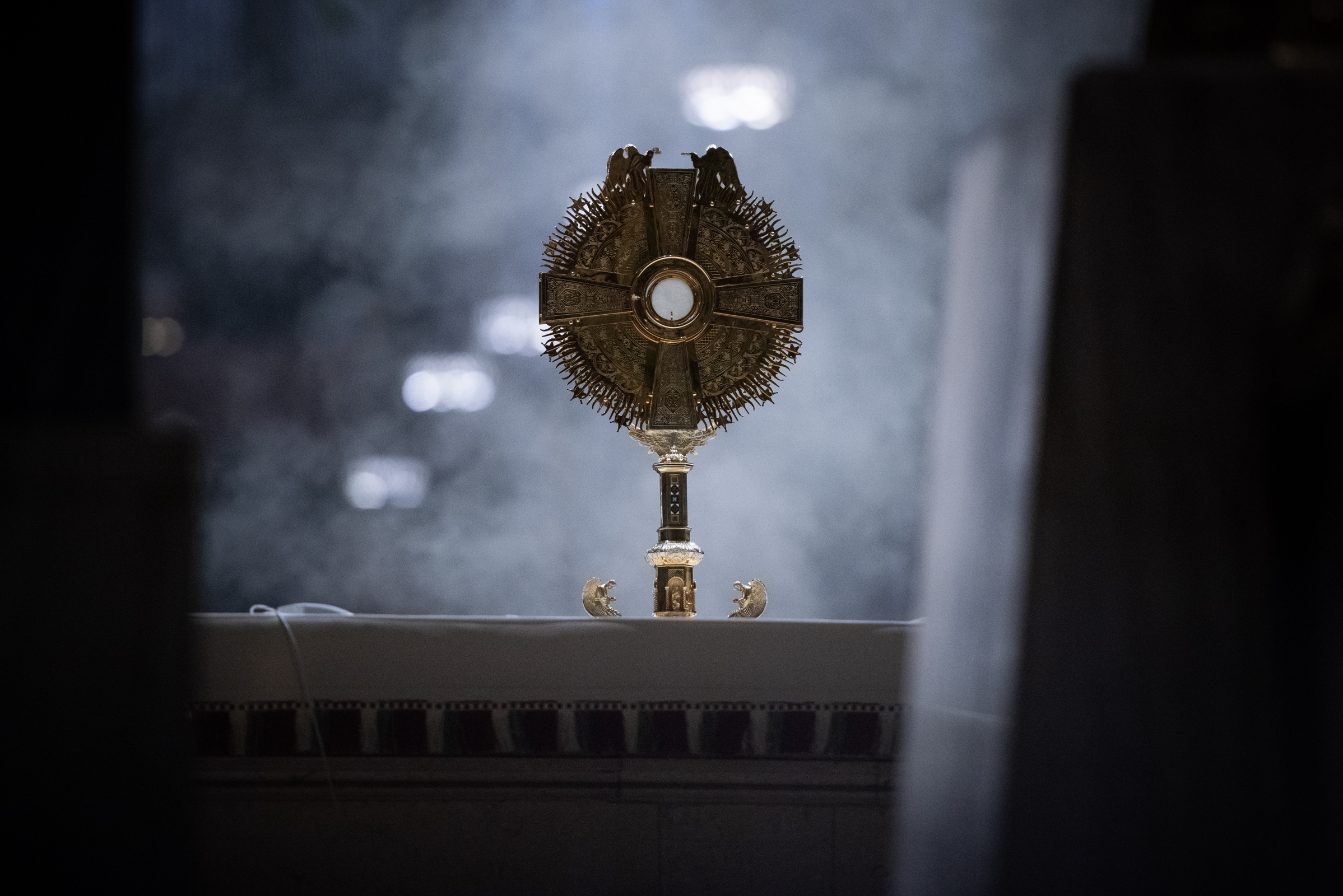
Catholic bishops to honor 250th anniversary of U.S. independence with adoration, works of mercy – #Catholic – The U.S. Conference of Catholic Bishops (USCCB) is asking Catholics to participate in an initiative to honor the 250th anniversary of the signing of the Declaration of Independence through Eucharistic adoration and works of mercy.“All Catholics are encouraged to join the bishops in praying for the unity and healing of our country,” a bishops’ guideline on the initiative reads.Leading up to July 4, the bishops are encouraging individuals and parishes to contribute to 250 collective hours of adoration and 250 collective works of mercy as Americans approach the anniversary of the country’s formation.The initiative also coincides with the lead up to the bishops’ reconsecration of the United States to the Sacred Heart of Jesus on the June 12 solemnity. The consecration is set to happen during a Mass at the Basilica of the National Shrine of the Immaculate Conception in Washington, D.C.Aaron Weldon, assistant director of the USCCB Committee for Religious Liberty, told EWTN News the initiative was born out of a desire “to do something to kind of celebrate in a prayerful way.” He said the bishops also wanted to “give Catholics a way to participate in the consecration.”The USCCB published a guide with resources on how to participate, which suggests parishes can set up a Holy Hour with Eucharistic adoration on a weekly or monthly basis leading up to the Fourth of July.“While 250 hours seems like a lot, each person present constitutes an hour prayed,” the guide states.It provides resources for setting up Holy Hours dedicated to specific intentions, such as a Holy Hour for life or a Holy Hour for peace. It adds that parishes can also incorporate the Litany of the Sacred Heart of Jesus into the Holy Hour to prepare for the consecration.“You may have other ways to invite members of your community to spend some time in prayer for our country with Jesus truly present in the Blessed Sacrament,” the guide adds.For works of mercy, the USCCB guide states that individuals and groups can engage in existing activities in their parishes or start initiatives on a weekly or monthly basis leading up to the Fourth of July.“Our works of mercy draw from the deep well of our faith and prayer, constantly reminding us that in tending to our brothers and sisters, we tend to Christ himself,” it states.Works of mercy can include a variety of activities, such as assisting women who face a crisis pregnancy, donating to food pantries, sponsoring a refugee family, or volunteering at homeless shelters, among other things, according to the USCCB guide.
 
 Sister Betsy Van Deusen, CEO Catholic Charities of the Diocese of Albany, New York (right), talks with Elisabeth Espinosa, director of Outreach Programs at the Roarke Center Food Pantry, on April 4, 2025, at St. Anthony of Padua Church in Troy, New York. | Credit: Cindy Schultz for The Washington Post via Getty Images
 
 The USCCB is asking parishes to document their communities’ participation in the initiative and report to the bishops about ways in which people participated and fruits from the prayers and the actions.Weldon said the bishops hope to “collect stories about the different ways that parishes … or small Catholic groups found a way to put these ideas into actions,” adding that the suggestions are “flexible,” so parishes and other Catholic groups can “do what works best for them.”“I hope that we can start to hear back from people the different ways that people are putting some of these ideas into action,” Weldon said.In September 2025, the White House launched the “America Prays” initiative, which also asks people to pray for the United States and its people leading up to the 250th anniversary of the signing of the Declaration of Independence.Weldon said the USCCB initiative is separate and independent from that. He said the bishops’ consecration and the adoration and works of mercy offer “distinctly Catholic ways of celebrating” the 250th anniversary launched by the bishops.

Catholic bishops to honor 250th anniversary of U.S. independence with adoration, works of mercy – #Catholic – The U.S. Conference of Catholic Bishops (USCCB) is asking Catholics to participate in an initiative to honor the 250th anniversary of the signing of the Declaration of Independence through Eucharistic adoration and works of mercy.“All Catholics are encouraged to join the bishops in praying for the unity and healing of our country,” a bishops’ guideline on the initiative reads.Leading up to July 4, the bishops are encouraging individuals and parishes to contribute to 250 collective hours of adoration and 250 collective works of mercy as Americans approach the anniversary of the country’s formation.The initiative also coincides with the lead up to the bishops’ reconsecration of the United States to the Sacred Heart of Jesus on the June 12 solemnity. The consecration is set to happen during a Mass at the Basilica of the National Shrine of the Immaculate Conception in Washington, D.C.Aaron Weldon, assistant director of the USCCB Committee for Religious Liberty, told EWTN News the initiative was born out of a desire “to do something to kind of celebrate in a prayerful way.” He said the bishops also wanted to “give Catholics a way to participate in the consecration.”The USCCB published a guide with resources on how to participate, which suggests parishes can set up a Holy Hour with Eucharistic adoration on a weekly or monthly basis leading up to the Fourth of July.“While 250 hours seems like a lot, each person present constitutes an hour prayed,” the guide states.It provides resources for setting up Holy Hours dedicated to specific intentions, such as a Holy Hour for life or a Holy Hour for peace. It adds that parishes can also incorporate the Litany of the Sacred Heart of Jesus into the Holy Hour to prepare for the consecration.“You may have other ways to invite members of your community to spend some time in prayer for our country with Jesus truly present in the Blessed Sacrament,” the guide adds.For works of mercy, the USCCB guide states that individuals and groups can engage in existing activities in their parishes or start initiatives on a weekly or monthly basis leading up to the Fourth of July.“Our works of mercy draw from the deep well of our faith and prayer, constantly reminding us that in tending to our brothers and sisters, we tend to Christ himself,” it states.Works of mercy can include a variety of activities, such as assisting women who face a crisis pregnancy, donating to food pantries, sponsoring a refugee family, or volunteering at homeless shelters, among other things, according to the USCCB guide. Sister Betsy Van Deusen, CEO Catholic Charities of the Diocese of Albany, New York (right), talks with Elisabeth Espinosa, director of Outreach Programs at the Roarke Center Food Pantry, on April 4, 2025, at St. Anthony of Padua Church in Troy, New York. | Credit: Cindy Schultz for The Washington Post via Getty Images The USCCB is asking parishes to document their communities’ participation in the initiative and report to the bishops about ways in which people participated and fruits from the prayers and the actions.Weldon said the bishops hope to “collect stories about the different ways that parishes … or small Catholic groups found a way to put these ideas into actions,” adding that the suggestions are “flexible,” so parishes and other Catholic groups can “do what works best for them.”“I hope that we can start to hear back from people the different ways that people are putting some of these ideas into action,” Weldon said.In September 2025, the White House launched the “America Prays” initiative, which also asks people to pray for the United States and its people leading up to the 250th anniversary of the signing of the Declaration of Independence.Weldon said the USCCB initiative is separate and independent from that. He said the bishops’ consecration and the adoration and works of mercy offer “distinctly Catholic ways of celebrating” the 250th anniversary launched by the bishops.

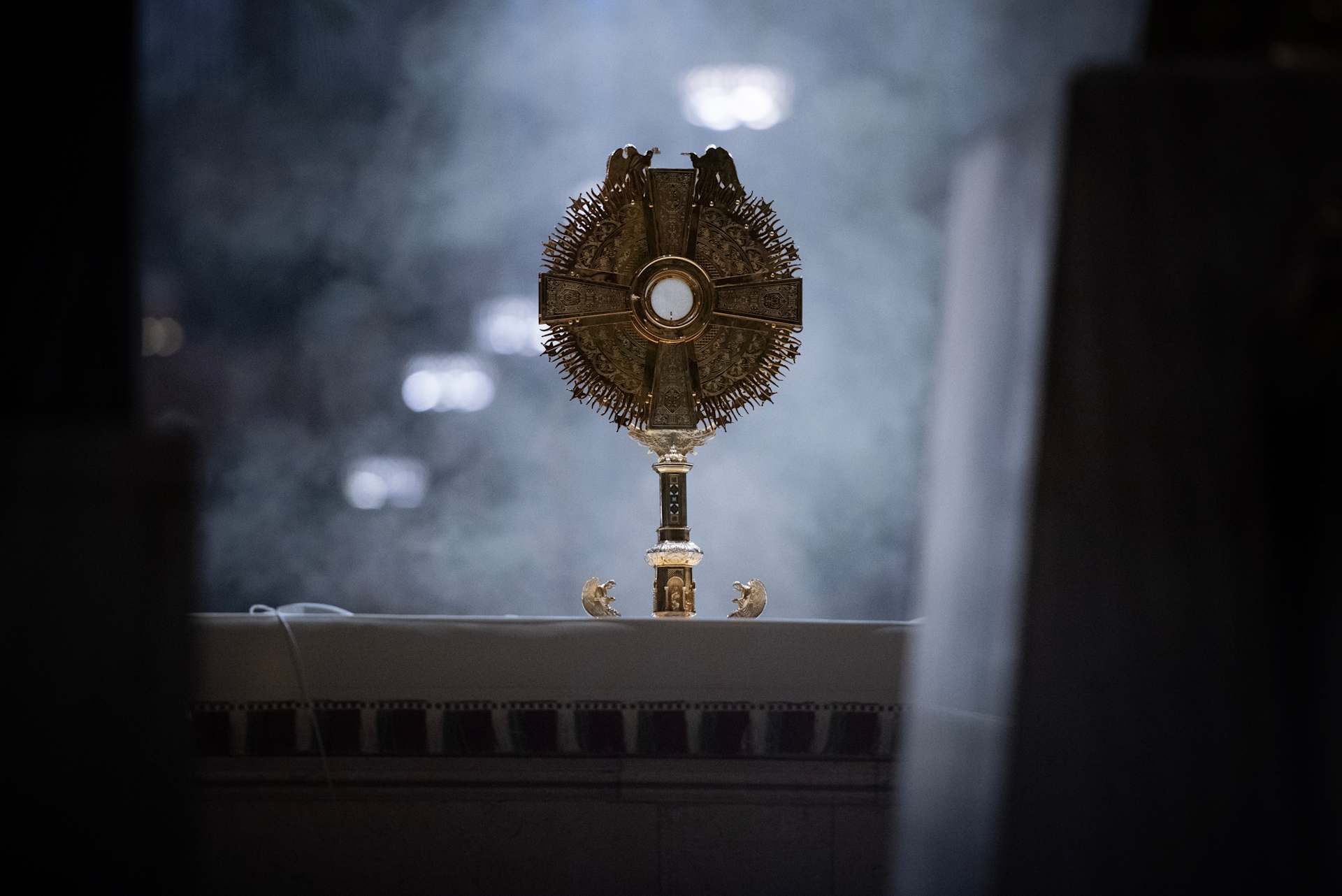
U.S. parishes and other Catholic groups are expected to participate in the initiative ahead of the Fourth of July.
Read More

Gospel and Word of the Day – 13 February 2026 – A reading from the First Book of Kings 1 Kings 11:29-32; 12:19 Jeroboam left Jerusalem, and the prophet Ahijah the Shilonite met him on the road. The two were alone in the area, and the prophet was wearing a new cloak. Ahijah took off his new cloak, tore it into twelve pieces, and said to Jeroboam: “Take ten pieces for yourself; the LORD, the God of Israel, says: ‘I will tear away the kingdom from Solomon’s grasp and will give you ten of the tribes. One tribe shall remain to him for the sake of David my servant, and of Jerusalem, the city I have chosen out of all the tribes of Israel.’” Israel went into rebellion against David’s house to this day.From the Gospel according to Mark 7:31-37 Jesus left the district of Tyre and went by way of Sidon to the Sea of Galilee, into the district of the Decapolis. And people brought to him a deaf man who had a speech impediment and begged him to lay his hand on him. He took him off by himself away from the crowd. He put his finger into the man’s ears and, spitting, touched his tongue; then he looked up to heaven and groaned, and said to him, "Ephphatha!" (that is, "Be opened!") And immediately the man’s ears were opened, his speech impediment was removed, and he spoke plainly. He ordered them not to tell anyone. But the more he ordered them not to, the more they proclaimed it. They were exceedingly astonished and they said, "He has done all things well. He makes the deaf hear and the mute speak."Brothers and sisters, there is an interior deafness that we can ask Jesus to touch and heal today. It is interior deafness, which is worse than physical deafness, because it is the deafness of the heart. Taken up with haste, by so many things to say and do, we do not find time to stop and listen to those who speak to us. We run the risk of becoming impervious to everything and not making room for those who need to be heard. I am thinking about children, young people, the elderly, the many who do not really need words and sermons, but to be heard. Let us ask ourselves: how is my capacity to listen going? Do I let myself be touched by people’s lives? Do I know how to spend time with those who are close to me in order to listen? This regards all of us, but in a special way also priests. The priest must listen to people, not in a rushed way, but listen and see how he can help, but after having listened. (…) Starting a dialogue often happens not through words but silence, by not insisting, by patiently beginning anew to listen to others, hearing about their struggles and what they carry inside. The healing of the heart begins with listening. Listening. This is what restores the heart. (Pope Francis, Angelus, 5 September 2021)

A reading from the First Book of Kings
1 Kings 11:29-32; 12:19

Jeroboam left Jerusalem,
and the prophet Ahijah the Shilonite met him on the road.
The two were alone in the area,
and the prophet was wearing a new cloak.
Ahijah took off his new cloak,
tore it into twelve pieces, and said to Jeroboam:

“Take ten pieces for yourself;
the LORD, the God of Israel, says:
‘I will tear away the kingdom from Solomon’s grasp
and will give you ten of the tribes.
One tribe shall remain to him for the sake of David my servant,
and of Jerusalem,
the city I have chosen out of all the tribes of Israel.’”

Israel went into rebellion against David’s house to this day.

From the Gospel according to Mark
7:31-37

Jesus left the district of Tyre
and went by way of Sidon to the Sea of Galilee,
into the district of the Decapolis.
And people brought to him a deaf man who had a speech impediment
and begged him to lay his hand on him.
He took him off by himself away from the crowd.
He put his finger into the man’s ears
and, spitting, touched his tongue;
then he looked up to heaven and groaned, and said to him,
"Ephphatha!" (that is, "Be opened!")
And immediately the man’s ears were opened,
his speech impediment was removed,
and he spoke plainly.
He ordered them not to tell anyone.
But the more he ordered them not to,
the more they proclaimed it.
They were exceedingly astonished and they said,
"He has done all things well.
He makes the deaf hear and the mute speak."

Brothers and sisters, there is an interior deafness that we can ask Jesus to touch and heal today. It is interior deafness, which is worse than physical deafness, because it is the deafness of the heart. Taken up with haste, by so many things to say and do, we do not find time to stop and listen to those who speak to us. We run the risk of becoming impervious to everything and not making room for those who need to be heard. I am thinking about children, young people, the elderly, the many who do not really need words and sermons, but to be heard. Let us ask ourselves: how is my capacity to listen going? Do I let myself be touched by people’s lives? Do I know how to spend time with those who are close to me in order to listen? This regards all of us, but in a special way also priests. The priest must listen to people, not in a rushed way, but listen and see how he can help, but after having listened. (…) Starting a dialogue often happens not through words but silence, by not insisting, by patiently beginning anew to listen to others, hearing about their struggles and what they carry inside. The healing of the heart begins with listening. Listening. This is what restores the heart. (Pope Francis, Angelus, 5 September 2021)

Read More
Two-thirds of aborted babies lost their lives to abortion pills, report finds - #Catholic - About two-thirds of aborted babies lost their lives to abortion pills, according to a Feb. 10 report by the National Right to Life.The 2026 “Status of Abortion in the United States” report, an analysis of developments in abortion policy, found that chemical abortions account for 63% of all reported abortions in the U.S. as of 2023.Mail-order pills, which can be shipped into every state, even if they are illegal, make chemical abortion easily accessible. State safeguards designed to protect women — such as required in-person physician visits — can be easily sidestepped.But studies continue to show high rates of negative outcomes for women who take abortion drugs. Chemical abortion has a complication rate four times that of surgical abortion, one study found. According to a 2025 study, 1 in 10 patients had “a serious adverse event” and 6% of patients needed surgery.The Trump administration has pledged to review the dangers of the abortion drug but has not restored safeguards that the Biden administration removed.National Right to Life looks to establish accountability on the state and local level through legislation.“This is a moment of stark contrast in America,” said Carol Tobias, president of National Right to Life. “Some states are racing to entrench abortion at any cost, while others are advancing compassionate policies that recognize the humanity of unborn children and provide real support to mothers.”The Abortion Pill Provider Liability and Education (APPLE) Act is “designed to hold abortion-pill providers accountable and give women legal recourse when harmed,” according to the Feb. 10 press release.The report calls the model legislation a “fresh approach.”“The APPLE Act empowers women to sue any party involved in the abortion pill supply chain — prescribers, sellers, manufacturers — when harm occurs,” the report read. “The goal is accountability and transparency.”Dr. Christina Francis, CEO of the American Association of Pro-Life Obstetricians and Gynecologists, said the removal of safeguards around abortion pill prescriptions was “reckless.”“The abortion industry treats abortion pills like casual online purchases, though the reality is that they are far more dangerous,” Francis told EWTN News. “Known complications for women include hemorrhage, severe infection, and the need for emergency surgery.”
 
 Dr. Christina Francis heads the American Association of Pro-Life Obstetricians and Gynecologists (AAPLOG). | Credit: AAPLOG
 
 “Anyone can order them online — a woman, a minor, even an abuser — with no ID, no pregnancy verification, and zero medical supervision or follow‑up,” she continued.The APPLE Act would ensure a public record of injuries and failures — something currently not in place, as abortion pill complications go underreported.“This report makes clear that while Roe [v. Wade] is gone, the abortion industry has simply shifted tactics — relying heavily on dangerous mail-order pills and legal loopholes to avoid accountability,” Tobias said.“At the same time, we’re seeing encouraging momentum in states working to protect both women and their unborn children,” Tobias continued. “The APPLE Act is one important step toward restoring transparency and responsibility in an industry that has operated for too long without either.”So far, two states — Washington and Ohio — have introduced the APPLE Act.“Because the APPLE Act is fundamentally consumer protection law, it has the potential to gain traction even in states that support abortion,” the report read.“The truth about chemical abortion is becoming harder to ignore,” the report continued.Francis urged the FDA to reinstate the safeguards.“When the FDA recklessly scrapped the last remaining safeguards over these high-risk drugs, it opened the floodgates for extensive harm and abuse of both women and preborn children,” Francis continued. “The result is widespread and reckless distribution of these pills, thousands of preborn lives lost, and more women harmed because they were never given truly informed consent or afforded basic medical care and support.”“This is medical malpractice, and it is time for the FDA to take this situation seriously and do its job by restoring essential safeguards,” she said.

Two-thirds of aborted babies lost their lives to abortion pills, report finds – #Catholic – About two-thirds of aborted babies lost their lives to abortion pills, according to a Feb. 10 report by the National Right to Life.The 2026 “Status of Abortion in the United States” report, an analysis of developments in abortion policy, found that chemical abortions account for 63% of all reported abortions in the U.S. as of 2023.Mail-order pills, which can be shipped into every state, even if they are illegal, make chemical abortion easily accessible. State safeguards designed to protect women — such as required in-person physician visits — can be easily sidestepped.But studies continue to show high rates of negative outcomes for women who take abortion drugs. Chemical abortion has a complication rate four times that of surgical abortion, one study found. According to a 2025 study, 1 in 10 patients had “a serious adverse event” and 6% of patients needed surgery.The Trump administration has pledged to review the dangers of the abortion drug but has not restored safeguards that the Biden administration removed.National Right to Life looks to establish accountability on the state and local level through legislation.“This is a moment of stark contrast in America,” said Carol Tobias, president of National Right to Life. “Some states are racing to entrench abortion at any cost, while others are advancing compassionate policies that recognize the humanity of unborn children and provide real support to mothers.”The Abortion Pill Provider Liability and Education (APPLE) Act is “designed to hold abortion-pill providers accountable and give women legal recourse when harmed,” according to the Feb. 10 press release.The report calls the model legislation a “fresh approach.”“The APPLE Act empowers women to sue any party involved in the abortion pill supply chain — prescribers, sellers, manufacturers — when harm occurs,” the report read. “The goal is accountability and transparency.”Dr. Christina Francis, CEO of the American Association of Pro-Life Obstetricians and Gynecologists, said the removal of safeguards around abortion pill prescriptions was “reckless.”“The abortion industry treats abortion pills like casual online purchases, though the reality is that they are far more dangerous,” Francis told EWTN News. “Known complications for women include hemorrhage, severe infection, and the need for emergency surgery.” Dr. Christina Francis heads the American Association of Pro-Life Obstetricians and Gynecologists (AAPLOG). | Credit: AAPLOG “Anyone can order them online — a woman, a minor, even an abuser — with no ID, no pregnancy verification, and zero medical supervision or follow‑up,” she continued.The APPLE Act would ensure a public record of injuries and failures — something currently not in place, as abortion pill complications go underreported.“This report makes clear that while Roe [v. Wade] is gone, the abortion industry has simply shifted tactics — relying heavily on dangerous mail-order pills and legal loopholes to avoid accountability,” Tobias said.“At the same time, we’re seeing encouraging momentum in states working to protect both women and their unborn children,” Tobias continued. “The APPLE Act is one important step toward restoring transparency and responsibility in an industry that has operated for too long without either.”So far, two states — Washington and Ohio — have introduced the APPLE Act.“Because the APPLE Act is fundamentally consumer protection law, it has the potential to gain traction even in states that support abortion,” the report read.“The truth about chemical abortion is becoming harder to ignore,” the report continued.Francis urged the FDA to reinstate the safeguards.“When the FDA recklessly scrapped the last remaining safeguards over these high-risk drugs, it opened the floodgates for extensive harm and abuse of both women and preborn children,” Francis continued. “The result is widespread and reckless distribution of these pills, thousands of preborn lives lost, and more women harmed because they were never given truly informed consent or afforded basic medical care and support.”“This is medical malpractice, and it is time for the FDA to take this situation seriously and do its job by restoring essential safeguards,” she said.

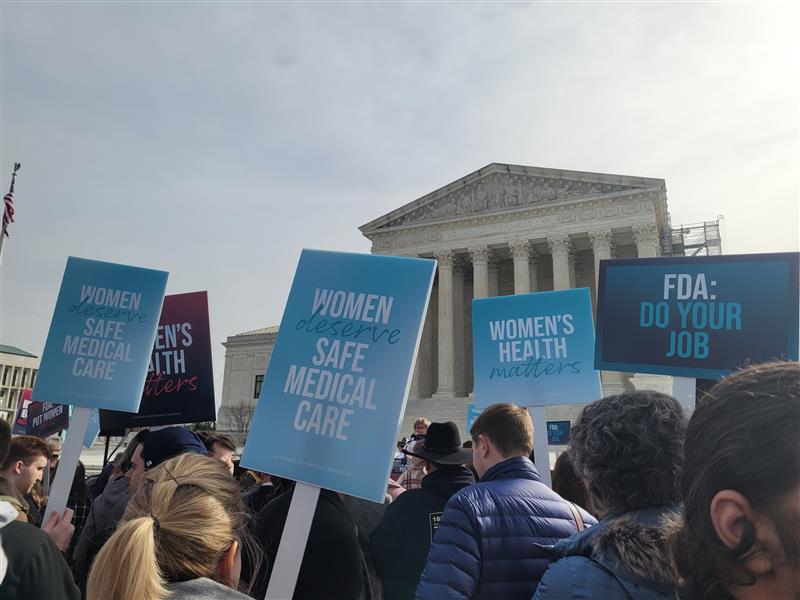
After a report found that nearly two-thirds of abortions are chemical, advocacy groups are pushing for national and local safeguards against mail-order abortion pill prescriptions.
Read More
More bishops call for Notre Dame to drop appointment of pro-abortion professor #Catholic Nearly half a dozen more bishops have joined the growing backlash against the University of Notre Dame over its controversial appointment of an outspoken abortion advocate to lead a university department.Fort Wayne-South Bend, Indiana, Bishop Kevin Rhoades on Feb. 11 issued a statement criticizing the university for appointing global affairs Professor Susan Ostermann as director of the school’s Liu Institute for Asia and Asian Studies.Three of Rhoades’ fellow bishops quickly backed the prelate’s remarks, voicing support on social media and calling on the university to drop Ostermann’s nomination. On Feb. 12, five more bishops commended Rhoades for his statement and expressed hope that the historic Catholic university would rescind the appointment. Gallup, New Mexico, Bishop James Wall praised Rhoades for his stance, with the western U.S. prelate offering a quote attributed to Pope Leo XIV: “We cannot build a just society if we discard the weakest, whether the child in the womb or the old man in his fragility, for both are gifts from God.”TweetSan Francisco Archbishop Salvatore Cordileone also thanked Rhoades for “speaking up.” “Holy Mary, Mother of God and Our Lady, pray for the university that bears your name,” Cordileone said. TweetGreen Bay, Wisconsin, Bishop David Ricken, meanwhile, wrote: “I fully affirm and stand in solidarity with my brother bishop [Rhoades].” He said Rhoades spoke “with clarity, courage, and fidelity to the Church’s mission.”“[L]et us turn with confidence to our Blessed Mother. Our Lady, pray for us! You are our loving Mother — we love you and entrust this to your Immaculate Heart,” Ricken wrote.TweetMadison, Wisconsin, Bishop Donald Hying described Rhoades’ statement as “a profound reflection on human dignity and the culture of life.”Tweet“We pray that all of our educational institutions support Catholic teaching, especially regarding human life,” he said. Lincoln, Nebraska, Bishop James Conley said he “stand[s] in support of Bishop Rhoades” while sharing his concern over the appointment. “Catholic institutions must faithfully reflect the truth of the dignity of every human life in both their mission and their leadership,” he said. TweetThe University of Notre Dame has continued to stand by its appointment of Ostermann, whose post is scheduled to take effect July 1. Rhoades on Feb. 11 said there is “still time [for the university] to make things right.”Ostermann, meanwhile, told the National Catholic Register in January that her role at the school “is to support the diverse research of our scholars and students, not to advance a personal political agenda.”The professor said she “respect[s] Notre Dame’s institutional position on the sanctity of life at every stage” and described herself as “inspired by the university’s focus on integral human development, which calls us to promote the dignity and flourishing of every person.”

More bishops call for Notre Dame to drop appointment of pro-abortion professor #Catholic Nearly half a dozen more bishops have joined the growing backlash against the University of Notre Dame over its controversial appointment of an outspoken abortion advocate to lead a university department.Fort Wayne-South Bend, Indiana, Bishop Kevin Rhoades on Feb. 11 issued a statement criticizing the university for appointing global affairs Professor Susan Ostermann as director of the school’s Liu Institute for Asia and Asian Studies.Three of Rhoades’ fellow bishops quickly backed the prelate’s remarks, voicing support on social media and calling on the university to drop Ostermann’s nomination. On Feb. 12, five more bishops commended Rhoades for his statement and expressed hope that the historic Catholic university would rescind the appointment. Gallup, New Mexico, Bishop James Wall praised Rhoades for his stance, with the western U.S. prelate offering a quote attributed to Pope Leo XIV: “We cannot build a just society if we discard the weakest, whether the child in the womb or the old man in his fragility, for both are gifts from God.”TweetSan Francisco Archbishop Salvatore Cordileone also thanked Rhoades for “speaking up.” “Holy Mary, Mother of God and Our Lady, pray for the university that bears your name,” Cordileone said. TweetGreen Bay, Wisconsin, Bishop David Ricken, meanwhile, wrote: “I fully affirm and stand in solidarity with my brother bishop [Rhoades].” He said Rhoades spoke “with clarity, courage, and fidelity to the Church’s mission.”“[L]et us turn with confidence to our Blessed Mother. Our Lady, pray for us! You are our loving Mother — we love you and entrust this to your Immaculate Heart,” Ricken wrote.TweetMadison, Wisconsin, Bishop Donald Hying described Rhoades’ statement as “a profound reflection on human dignity and the culture of life.”Tweet“We pray that all of our educational institutions support Catholic teaching, especially regarding human life,” he said. Lincoln, Nebraska, Bishop James Conley said he “stand[s] in support of Bishop Rhoades” while sharing his concern over the appointment. “Catholic institutions must faithfully reflect the truth of the dignity of every human life in both their mission and their leadership,” he said. TweetThe University of Notre Dame has continued to stand by its appointment of Ostermann, whose post is scheduled to take effect July 1. Rhoades on Feb. 11 said there is “still time [for the university] to make things right.”Ostermann, meanwhile, told the National Catholic Register in January that her role at the school “is to support the diverse research of our scholars and students, not to advance a personal political agenda.”The professor said she “respect[s] Notre Dame’s institutional position on the sanctity of life at every stage” and described herself as “inspired by the university’s focus on integral human development, which calls us to promote the dignity and flourishing of every person.”

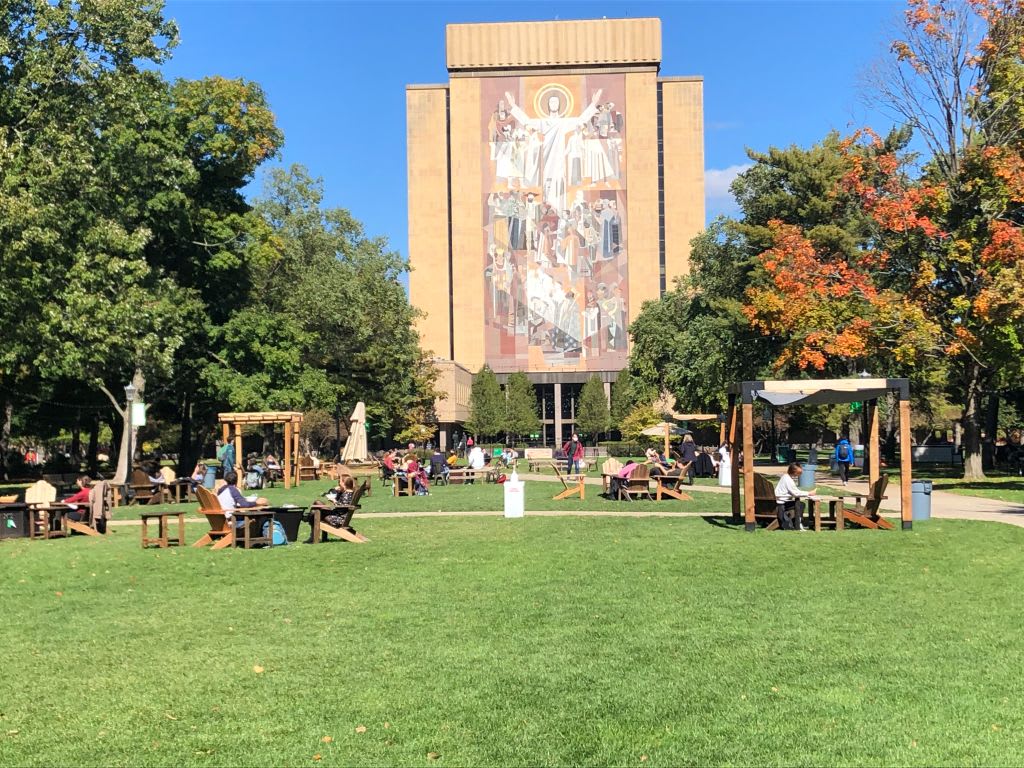
The university has endured sustained backlash for nominating the outspoken abortion advocate to lead an academic department.
Read More
After skipping installation, New York mayor meets Archbishop Hicks #Catholic Mayor Zohran Mamdani broke a long-standing New York tradition when he missed the Feb. 6 installation Mass for Archbishop Ronald Hicks at St. Patrick’s Cathedral and met with the archbishop four days later.Joseph Zwilling, director of communications for the Archdiocese of New York, told EWTN News that “the mayor and the archbishop were together at a [New York Police Department] event” Feb. 10 and “then spoke by phone later in the day.”The archdiocese confirmed that Mamdani was invited to the installation Mass. Prior to Hicks’ installation, a sitting mayor was present for at least the past five archbishop installations, which were in 2009, 2000, 1984, 1968, and 1939. Hicks replaced Cardinal Timothy Dolan following his retirement.In Mamdani’s absence, Helen Arteaga, deputy mayor for Health and Human Services, attended the Feb. 6 installation Mass. Prior to the meeting and phone call, Mamdani congratulated Hicks on social media. “Congratulations to Archbishop Ronald Hicks on today’s installment and welcome to New York City,” Mamdani said in a post on X. “I know that Archbishop Hicks and I share a deep and abiding commitment to the dignity of every human being and look forward to working together to create a more just and compassionate city where every New Yorker can thrive.”TweetThe mayor’s press office did not immediately respond to a request for comment.Mamdani became the first Muslim and first democratic-socialist mayor of the city on Jan. 1.Bill Donohue, president of the Catholic League, a Catholic advocacy group, criticized Mamdani for missing the Mass, saying in a statement that Mamdani “ghosted the event.”“He could easily have been there,” Donohue said. “Instead, he attended to business as usual.”“One in 3 New Yorkers are Catholic, making them the largest faith community in the city,” he added. “Mamdani’s professed interest in diversity and inclusion obviously hits a brick wall when it comes to Catholics. He wants nothing to do with them.”Donohue also criticized some of Mamdani’s policy positions, which he said includes “rabid support for abortion, gay marriage, and transgenderism (including the child abuse inherent in sex-reassignment surgery for minors).”During his campaign, Mamdani vowed to increase public funding for abortion, hormone therapy drugs, and surgeries designed to make a person appear like the opposite sex.Mamdani defeated two candidates with nearly 51% of the vote in the November 2025 election. His plans include free buses, city-owned grocery stores, no-cost child care, raising the minimum wage to $30 per hour, and freezing the rent for people in rent-stabilized apartments.“Mamdani has been in office for just over a month, and already he is signaling to Catholics that they are not welcome,” Donohue said.

After skipping installation, New York mayor meets Archbishop Hicks #Catholic Mayor Zohran Mamdani broke a long-standing New York tradition when he missed the Feb. 6 installation Mass for Archbishop Ronald Hicks at St. Patrick’s Cathedral and met with the archbishop four days later.Joseph Zwilling, director of communications for the Archdiocese of New York, told EWTN News that “the mayor and the archbishop were together at a [New York Police Department] event” Feb. 10 and “then spoke by phone later in the day.”The archdiocese confirmed that Mamdani was invited to the installation Mass. Prior to Hicks’ installation, a sitting mayor was present for at least the past five archbishop installations, which were in 2009, 2000, 1984, 1968, and 1939. Hicks replaced Cardinal Timothy Dolan following his retirement.In Mamdani’s absence, Helen Arteaga, deputy mayor for Health and Human Services, attended the Feb. 6 installation Mass. Prior to the meeting and phone call, Mamdani congratulated Hicks on social media. “Congratulations to Archbishop Ronald Hicks on today’s installment and welcome to New York City,” Mamdani said in a post on X. “I know that Archbishop Hicks and I share a deep and abiding commitment to the dignity of every human being and look forward to working together to create a more just and compassionate city where every New Yorker can thrive.”TweetThe mayor’s press office did not immediately respond to a request for comment.Mamdani became the first Muslim and first democratic-socialist mayor of the city on Jan. 1.Bill Donohue, president of the Catholic League, a Catholic advocacy group, criticized Mamdani for missing the Mass, saying in a statement that Mamdani “ghosted the event.”“He could easily have been there,” Donohue said. “Instead, he attended to business as usual.”“One in 3 New Yorkers are Catholic, making them the largest faith community in the city,” he added. “Mamdani’s professed interest in diversity and inclusion obviously hits a brick wall when it comes to Catholics. He wants nothing to do with them.”Donohue also criticized some of Mamdani’s policy positions, which he said includes “rabid support for abortion, gay marriage, and transgenderism (including the child abuse inherent in sex-reassignment surgery for minors).”During his campaign, Mamdani vowed to increase public funding for abortion, hormone therapy drugs, and surgeries designed to make a person appear like the opposite sex.Mamdani defeated two candidates with nearly 51% of the vote in the November 2025 election. His plans include free buses, city-owned grocery stores, no-cost child care, raising the minimum wage to $30 per hour, and freezing the rent for people in rent-stabilized apartments.“Mamdani has been in office for just over a month, and already he is signaling to Catholics that they are not welcome,” Donohue said.

A sitting mayor attended the past five archbishop installations in New York dating back to 1939.
Read More
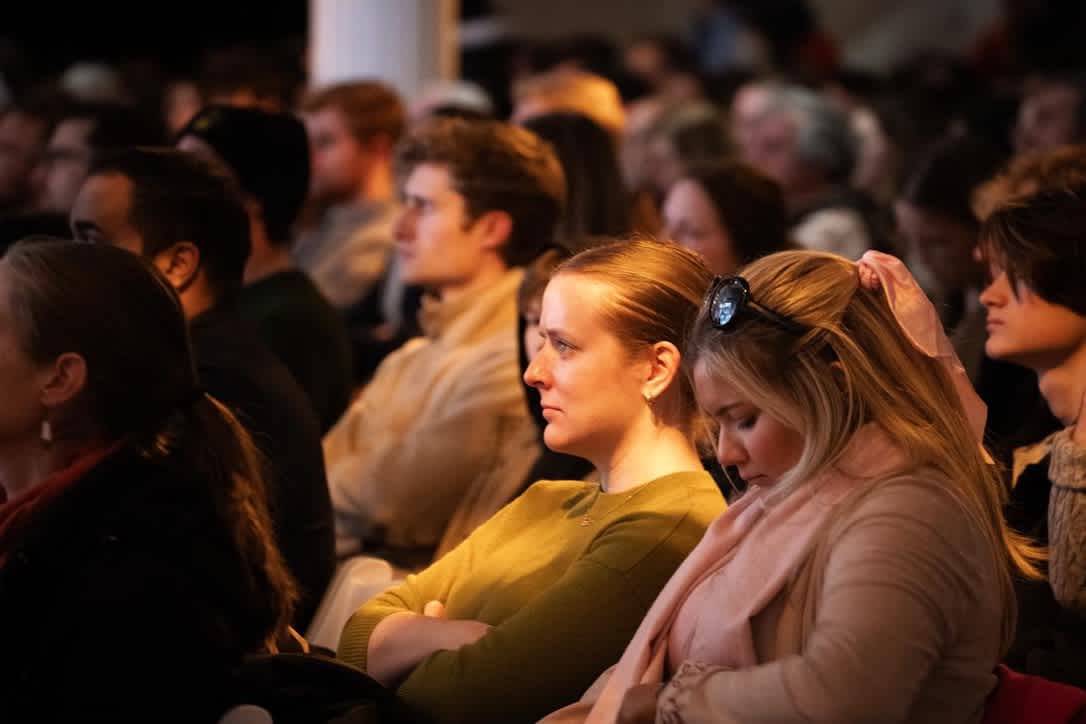
What to expect at the New York Encounter, ‘Where Everything Is Waiting for You’ #Catholic The annual three-day cultural event hosted by Communion and Liberation, a movement within the Church founded by Father Luigi Giussani, begins this Friday evening with a video message from Cardinal Pierbattista Pizzaballa.This year’s New York Encounter will center on the theme “Where Everything Is Waiting for You,” focusing on “the reemerging human desire for authentic belonging amid global isolation, emphasizing how freedom, truth, forgiveness, and dignity foster certainty and openness in true community.”The event is set to take place Feb. 13–15 at the Metropolitan Pavilion in New York City’s Chelsea neighborhood. Several of the presentations will be livestreamed, but for those who wish to attend in person, the event is free and open to all.Holly Peterson, one of the event’s moderators, told “EWTN News Nightly” on Feb. 10 that amid life’s challenges and “the angst of the world we live in,” the New York Encounter is “a place to go where everything is waiting for you.”“We’ll have amazing speakers who will be able to address some of the challenges that we have today, whether it be social media or AI or whatnot,” she said. “But it’s a place where everyone is welcome.”Peterson said the Latin patriarch of Jerusalem has recorded a “phenomenal” video that will be aired at the event. She further highlighted several panels and discussions set to take place at the event, including one on just war theory and another featuring Bishop Earl Fernandes of Columbus, Ohio, who will be interviewing two Ukrainian bishops about the situation on the ground in Ukraine.Dialogue and reflection will focus on urgent questions shaping common life, according to the event’s website. The Encounter plans to bring together leading voices from culture, academia, faith, and the arts to explore how human flourishing is possible in today’s world.Peterson said she hopes participants will leave the event with “curiosity” and motivated to ask “deep questions and not necessarily find answers, but to be able to address some of the topics that are discussed with friends and family.”“There’ll be thousands of people there, but it’s all free and everyone will be welcome,” she said.

What to expect at the New York Encounter, ‘Where Everything Is Waiting for You’ #Catholic The annual three-day cultural event hosted by Communion and Liberation, a movement within the Church founded by Father Luigi Giussani, begins this Friday evening with a video message from Cardinal Pierbattista Pizzaballa.This year’s New York Encounter will center on the theme “Where Everything Is Waiting for You,” focusing on “the reemerging human desire for authentic belonging amid global isolation, emphasizing how freedom, truth, forgiveness, and dignity foster certainty and openness in true community.”The event is set to take place Feb. 13–15 at the Metropolitan Pavilion in New York City’s Chelsea neighborhood. Several of the presentations will be livestreamed, but for those who wish to attend in person, the event is free and open to all.Holly Peterson, one of the event’s moderators, told “EWTN News Nightly” on Feb. 10 that amid life’s challenges and “the angst of the world we live in,” the New York Encounter is “a place to go where everything is waiting for you.”“We’ll have amazing speakers who will be able to address some of the challenges that we have today, whether it be social media or AI or whatnot,” she said. “But it’s a place where everyone is welcome.”Peterson said the Latin patriarch of Jerusalem has recorded a “phenomenal” video that will be aired at the event. She further highlighted several panels and discussions set to take place at the event, including one on just war theory and another featuring Bishop Earl Fernandes of Columbus, Ohio, who will be interviewing two Ukrainian bishops about the situation on the ground in Ukraine.Dialogue and reflection will focus on urgent questions shaping common life, according to the event’s website. The Encounter plans to bring together leading voices from culture, academia, faith, and the arts to explore how human flourishing is possible in today’s world.Peterson said she hopes participants will leave the event with “curiosity” and motivated to ask “deep questions and not necessarily find answers, but to be able to address some of the topics that are discussed with friends and family.”“There’ll be thousands of people there, but it’s all free and everyone will be welcome,” she said.

Communion and Liberation’s annual cultural event, the New York Encounter, will begin Friday in the heart of New York City.
Read More
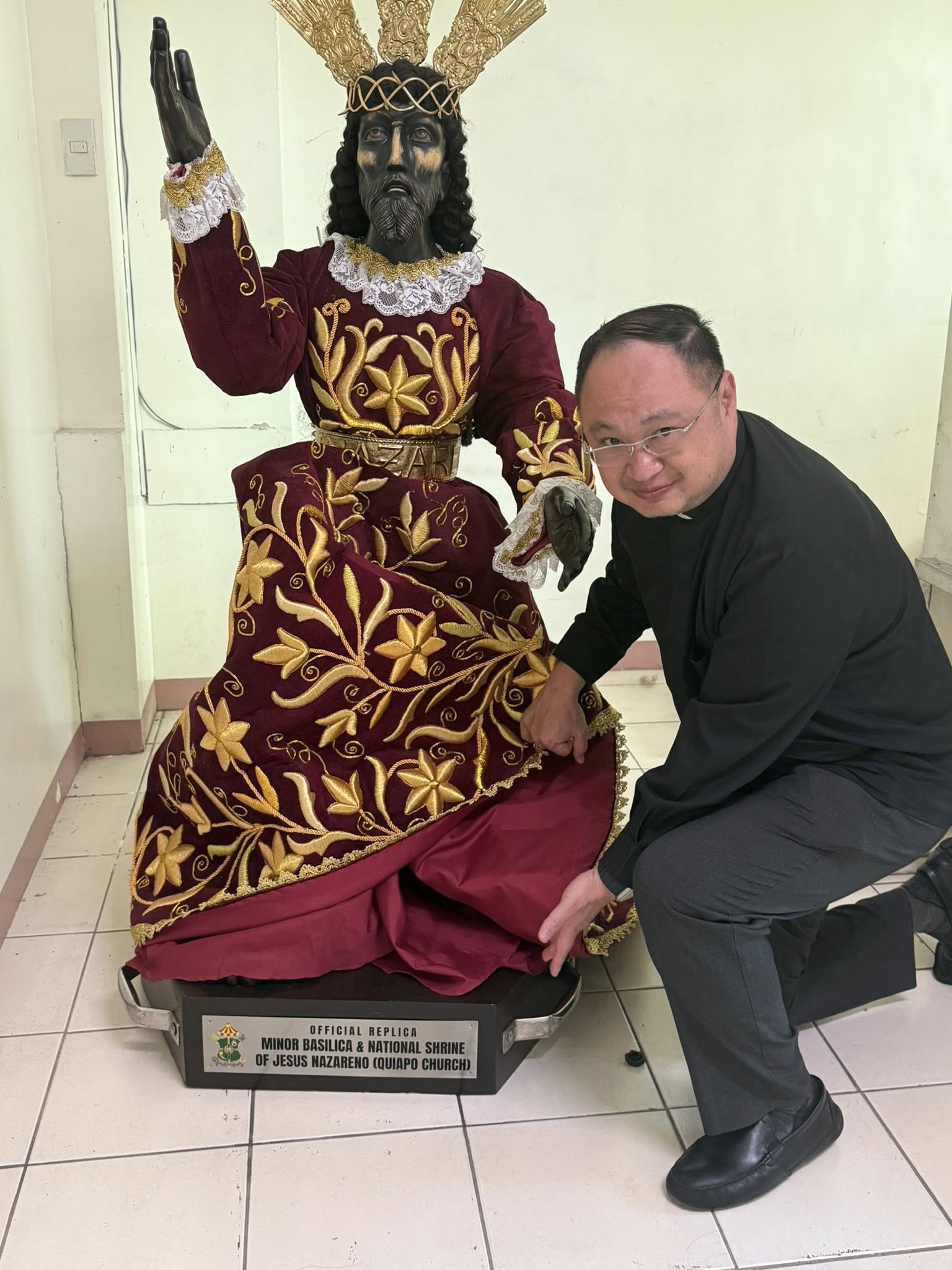
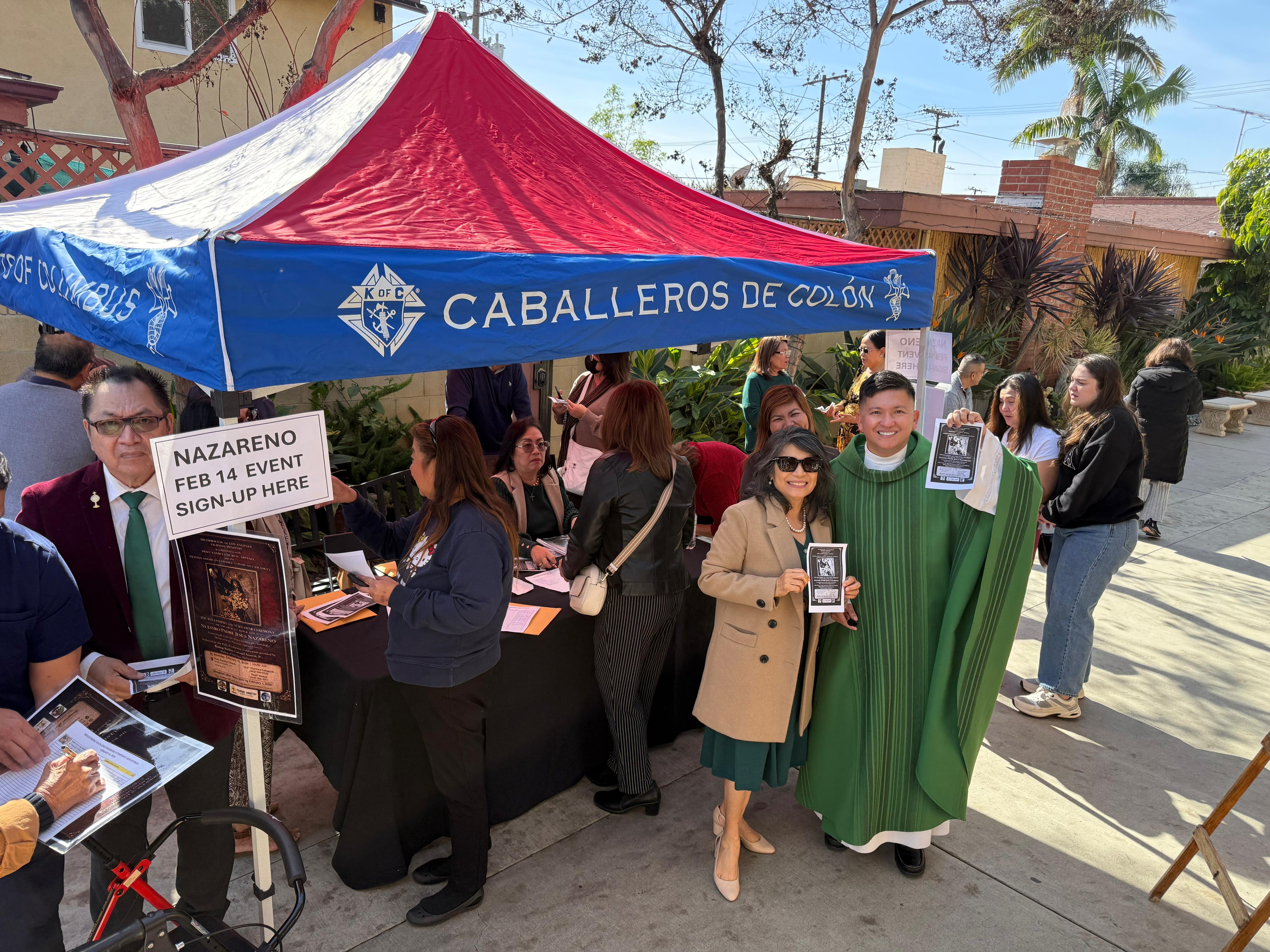
Replica of Manila’s famed ‘Black Nazarene’ arrives in Los Angeles Archdiocese #Catholic The centuries-old devotion to Nuestro Padre Jesús Nazareno of Quiapo, Manila, in the Philippines has formally reached the U.S. West Coast as an official replica of the revered image was turned over to the Archdiocese of Los Angeles and entrusted to Holy Family Parish in Artesia and the archdiocese’s Filipino ministry.The replica, gifted by the Minor Basilica and National Shrine of Jesús Nazareno in Manila, will be enthroned at Holy Family Parish and serve as a pilgrim image, visiting parishes across the archdiocese’s five pastoral regions as part of a broader evangelization initiative.
 
 Father John Cordero displays the official replica of the Jesús Nazareno from Manila’s Quiapo Church in 2025. | Credit: Holy Family Catholic Church Artesia
 
 The arrival of the image marks the fruit of an evangelization effort spearheaded by then-rector of Quiapo Church, now Bishop Rufino Sescon of Balanga, Bataan. According to Father John Cordero of the Marian Missionaries of the Holy Cross, pastor of Holy Family Parish, the development unfolded providentially.“The real starting point of this development was the evangelization initiative of the National Shrine of Jesús Nazareno in Manila, spearheaded by then-rector and now bishop of Balanga, Rufino ‘Jun’ Sescon,” Cordero told EWTN News.The replica was initially offered to the Archdiocese of Los Angeles through Father Rodel Balagtas, priest liaison to the Filipino Ministry. Although another parish had first expressed willingness to host the image, no final arrangements had been made.Months later, Sescon personally contacted Cordero — a former graduate school classmate — to reestablish communication between Quiapo Church and a receiving parish. What seemed at first a closed matter reopened, and Cordero discerned that the parish could accommodate the image by converting a religious goods store in the vestibule into a shrine.“I noticed something that had slipped my attention: We have space,” Cordero said. After consultation with Filipino Ministry leaders, including its president and parishioner Noel Motus, the parish agreed to receive the image. “It is a gift from the national shrine, and our parish was merely chosen to be the caretakers.”Formal reception and MassSescon will celebrate the Mass marking the official arrival and reception of the replica in Los Angeles on Feb. 14. Later this year, the image will also be brought to the annual Religious Education Congress, further expanding its exposure to thousands of catechists and ministry leaders.Bishop Oscar Solis of Salt Lake City — the first Filipino-born bishop to lead a diocese in the United States — is also scheduled to celebrate a Mass in connection with the image’s visit.While there was no prior organized clamor among parishioners for a Nazareno image, Cordero said the parishioners’ response after learning that their parish will be the home of the replica has been one of “sheer joy,” with Filipino and Hispanic faithful alike rallying around the new shrine.“As a pastor explaining this new devotion to my multicultural parish, I would like to point to our mutual interconnectedness with this image,” he said. “This is primarily an image of Jesus, the focal point of our Christian unity.”Historical connectionsThe original image of the Jesús Nazareno, which arrived in Manila from Mexico in 1606, bears deep historical ties to both the Philippines and the Americas. California itself was once part of Mexico, and devotion to Jesús Nazareno has long-standing roots throughout Latin America.“The image, touched by hundreds of millions of pilgrims throughout its four centuries of devotional history, connects us with the everyday faith stories of all who identify with the suffering of Our Lord,” Cordero said.In a gesture underscoring that spiritual continuity, “like the Galileans who were content with touching the tassels of the cloak of Jesus for their healing,” Cordero requested Father Jade Licuanan, the current Quiapo Basilica rector, to have the replica be touched to the original image in Quiapo before being shipped to the United States. Cordero described this as an “intimate act of blessing and sending.”Mass devotion in ManilaThe devotion to the image once known as the “Black Nazarene” is among the largest Catholic expressions of popular piety in the world. Each January, millions of barefoot devotees join the Traslación procession in Manila, accompanying the dark wooden image of Christ carrying the cross through the streets of Quiapo.
 
 Manila’s feast of the Black Nazarene draws 9.6 million devotees
 
 Cordero, who recently visited the basilica, described the scale of devotion as “mind-boggling,” noting that even hourly Masses draw thousands of worshippers.Now, he believes, the image comes to Los Angeles at a providential moment.“Amid a sociopolitical climate marked by fear and division, this symbol of our connection in the Lord and with one another, embodied in this rustic image of Jesus carrying the cross, offers us consolation and mission,” he said.Citing the U.S. bishops’ pastoral letter “A Treasured Presence,” which describes Filipino Catholics as a vital but often unseen minority in the United States, Cordero said the Nazareno highlights the “prophetic resiliency and joy” they bring to the Church.“The Jesús Nazareno reassures us that we are not alone in bearing our crosses,” he said. “In this strange new world, our Catholic faith has been our familiar refuge of connection, support, and strength.”Revitalizing faithBalagtas said he hopes the popular Filipino icon that has a rich tradition in Latin America will help revitalize the faith of the people of the largest and most ethnically diverse archdiocese in the United States, thanks to the vibrant devotion of Filipino Catholics. 
 
 Father John Cordero, MMHC, signs the “Memorandum of Agreement” formalizing Holy Family Parish’s reception of the official replica of the Jesús Nazareno on behalf of the Filipino Ministry of the Archdiocese of Los Angeles, as Father Jade Licuanan, rector of the Basilica and National Shrine of Jesús Nazareno in Manila, looks on in 2025. | Credit: Holy Family Catholic Church Artesia
 
 “The people who are filling the pews of the churches in the Archdiocese of Los Angeles, as in other dioceses, are Filipino Catholics.”From Quiapo, Manila’s narrow streets, where millions gather each year for the Traslación, to the sprawling parishes of Southern California, the cross-bearing Christ now stands in a new land — inviting the faithful not only to venerate but also to follow him.

Replica of Manila’s famed ‘Black Nazarene’ arrives in Los Angeles Archdiocese #Catholic The centuries-old devotion to Nuestro Padre Jesús Nazareno of Quiapo, Manila, in the Philippines has formally reached the U.S. West Coast as an official replica of the revered image was turned over to the Archdiocese of Los Angeles and entrusted to Holy Family Parish in Artesia and the archdiocese’s Filipino ministry.The replica, gifted by the Minor Basilica and National Shrine of Jesús Nazareno in Manila, will be enthroned at Holy Family Parish and serve as a pilgrim image, visiting parishes across the archdiocese’s five pastoral regions as part of a broader evangelization initiative. Father John Cordero displays the official replica of the Jesús Nazareno from Manila’s Quiapo Church in 2025. | Credit: Holy Family Catholic Church Artesia The arrival of the image marks the fruit of an evangelization effort spearheaded by then-rector of Quiapo Church, now Bishop Rufino Sescon of Balanga, Bataan. According to Father John Cordero of the Marian Missionaries of the Holy Cross, pastor of Holy Family Parish, the development unfolded providentially.“The real starting point of this development was the evangelization initiative of the National Shrine of Jesús Nazareno in Manila, spearheaded by then-rector and now bishop of Balanga, Rufino ‘Jun’ Sescon,” Cordero told EWTN News.The replica was initially offered to the Archdiocese of Los Angeles through Father Rodel Balagtas, priest liaison to the Filipino Ministry. Although another parish had first expressed willingness to host the image, no final arrangements had been made.Months later, Sescon personally contacted Cordero — a former graduate school classmate — to reestablish communication between Quiapo Church and a receiving parish. What seemed at first a closed matter reopened, and Cordero discerned that the parish could accommodate the image by converting a religious goods store in the vestibule into a shrine.“I noticed something that had slipped my attention: We have space,” Cordero said. After consultation with Filipino Ministry leaders, including its president and parishioner Noel Motus, the parish agreed to receive the image. “It is a gift from the national shrine, and our parish was merely chosen to be the caretakers.”Formal reception and MassSescon will celebrate the Mass marking the official arrival and reception of the replica in Los Angeles on Feb. 14. Later this year, the image will also be brought to the annual Religious Education Congress, further expanding its exposure to thousands of catechists and ministry leaders.Bishop Oscar Solis of Salt Lake City — the first Filipino-born bishop to lead a diocese in the United States — is also scheduled to celebrate a Mass in connection with the image’s visit.While there was no prior organized clamor among parishioners for a Nazareno image, Cordero said the parishioners’ response after learning that their parish will be the home of the replica has been one of “sheer joy,” with Filipino and Hispanic faithful alike rallying around the new shrine.“As a pastor explaining this new devotion to my multicultural parish, I would like to point to our mutual interconnectedness with this image,” he said. “This is primarily an image of Jesus, the focal point of our Christian unity.”Historical connectionsThe original image of the Jesús Nazareno, which arrived in Manila from Mexico in 1606, bears deep historical ties to both the Philippines and the Americas. California itself was once part of Mexico, and devotion to Jesús Nazareno has long-standing roots throughout Latin America.“The image, touched by hundreds of millions of pilgrims throughout its four centuries of devotional history, connects us with the everyday faith stories of all who identify with the suffering of Our Lord,” Cordero said.In a gesture underscoring that spiritual continuity, “like the Galileans who were content with touching the tassels of the cloak of Jesus for their healing,” Cordero requested Father Jade Licuanan, the current Quiapo Basilica rector, to have the replica be touched to the original image in Quiapo before being shipped to the United States. Cordero described this as an “intimate act of blessing and sending.”Mass devotion in ManilaThe devotion to the image once known as the “Black Nazarene” is among the largest Catholic expressions of popular piety in the world. Each January, millions of barefoot devotees join the Traslación procession in Manila, accompanying the dark wooden image of Christ carrying the cross through the streets of Quiapo. Manila’s feast of the Black Nazarene draws 9.6 million devotees Cordero, who recently visited the basilica, described the scale of devotion as “mind-boggling,” noting that even hourly Masses draw thousands of worshippers.Now, he believes, the image comes to Los Angeles at a providential moment.“Amid a sociopolitical climate marked by fear and division, this symbol of our connection in the Lord and with one another, embodied in this rustic image of Jesus carrying the cross, offers us consolation and mission,” he said.Citing the U.S. bishops’ pastoral letter “A Treasured Presence,” which describes Filipino Catholics as a vital but often unseen minority in the United States, Cordero said the Nazareno highlights the “prophetic resiliency and joy” they bring to the Church.“The Jesús Nazareno reassures us that we are not alone in bearing our crosses,” he said. “In this strange new world, our Catholic faith has been our familiar refuge of connection, support, and strength.”Revitalizing faithBalagtas said he hopes the popular Filipino icon that has a rich tradition in Latin America will help revitalize the faith of the people of the largest and most ethnically diverse archdiocese in the United States, thanks to the vibrant devotion of Filipino Catholics. Father John Cordero, MMHC, signs the “Memorandum of Agreement” formalizing Holy Family Parish’s reception of the official replica of the Jesús Nazareno on behalf of the Filipino Ministry of the Archdiocese of Los Angeles, as Father Jade Licuanan, rector of the Basilica and National Shrine of Jesús Nazareno in Manila, looks on in 2025. | Credit: Holy Family Catholic Church Artesia “The people who are filling the pews of the churches in the Archdiocese of Los Angeles, as in other dioceses, are Filipino Catholics.”From Quiapo, Manila’s narrow streets, where millions gather each year for the Traslación, to the sprawling parishes of Southern California, the cross-bearing Christ now stands in a new land — inviting the faithful not only to venerate but also to follow him.

An official replica of Manila’s centuries-old Jesús Nazareno image has been entrusted to Holy Family Parish in Artesia, California, bringing one of the world’s largest Catholic devotions to the U.S.
Read More
Obituary: Sister Pauline Gambacorto, of the Sisters of the Church of Paterson, 90 #Catholic – A Memorial Mass will be held at a later date at the Chapel of the Immaculate Conception at Mount St. Mary Academy in Watchung, N.J., for Sister Pauline Gambacorto, a member of the Society of Sisters of the Church of Paterson, N.J., since 1986, who died on Feb. 3. She was 90.
Born July 6, 1935, in Long Branch, N.J., Sister Gambacorto entered the Religious Teachers of St. Lucy Filippini in Morristown, N.J., in 1949. She received her habit in 1951 and made her final profession in 1952. She taught in many schools throughout New Jersey and New York. Sister Gambacorto touched many lives as a teacher and musician. She taught piano and voice. Her voice was captivating; she frequently led songs at Mass. Sister Gambacorto served the Filippini community for 29 years.
In 1978, Sister Gambacorto left the Filippini community and joined the Society of Sisters of the Church of Paterson in 1986.
Sister Gambacorto was a loving and giving servant of Christ, living to serve the “least among us.” She was always searching for God and ways to serve him. Sister Gambacorto enjoyed knitting and crocheting, donating many newborn caps and blankets to hospitals, churches, and shelters. She was an artist who created greeting cards for family and friends. She was skilled in calligraphy, personally addressing each of the 310 wedding invitations for one of her nieces.
Sister Gambacorto was predeceased by her parents, Joseph and Mary (née Clemente) Gambacorto; her brother, Thomas, and his wife (Theresa) Gambacorto; and her sister, Angelina (née Mills). She is survived by her brother, Dominic, and his wife Janet Gambacorto, of Red Bank, N.J.; her sister, Joann (Keith, deceased) Richardson, of Maryland; and many nieces, nephews, and grand-nieces.
Her niece, Sister Lisa Gambacorto, RSM, will host the Memorial Mass at a later date at the Chapel of the Immaculate Conception at Mount St. Mary Academy in Watchung, N.J.

Click here to subscribe to our weekly newsletter.


Obituary: Sister Pauline Gambacorto, of the Sisters of the Church of Paterson, 90 #Catholic – A Memorial Mass will be held at a later date at the Chapel of the Immaculate Conception at Mount St. Mary Academy in Watchung, N.J., for Sister Pauline Gambacorto, a member of the Society of Sisters of the Church of Paterson, N.J., since 1986, who died on Feb. 3. She was 90. Born July 6, 1935, in Long Branch, N.J., Sister Gambacorto entered the Religious Teachers of St. Lucy Filippini in Morristown, N.J., in 1949. She received her habit in 1951 and made her final profession in 1952. She taught in many schools throughout New Jersey and New York. Sister Gambacorto touched many lives as a teacher and musician. She taught piano and voice. Her voice was captivating; she frequently led songs at Mass. Sister Gambacorto served the Filippini community for 29 years. In 1978, Sister Gambacorto left the Filippini community and joined the Society of Sisters of the Church of Paterson in 1986. Sister Gambacorto was a loving and giving servant of Christ, living to serve the “least among us.” She was always searching for God and ways to serve him. Sister Gambacorto enjoyed knitting and crocheting, donating many newborn caps and blankets to hospitals, churches, and shelters. She was an artist who created greeting cards for family and friends. She was skilled in calligraphy, personally addressing each of the 310 wedding invitations for one of her nieces. Sister Gambacorto was predeceased by her parents, Joseph and Mary (née Clemente) Gambacorto; her brother, Thomas, and his wife (Theresa) Gambacorto; and her sister, Angelina (née Mills). She is survived by her brother, Dominic, and his wife Janet Gambacorto, of Red Bank, N.J.; her sister, Joann (Keith, deceased) Richardson, of Maryland; and many nieces, nephews, and grand-nieces. Her niece, Sister Lisa Gambacorto, RSM, will host the Memorial Mass at a later date at the Chapel of the Immaculate Conception at Mount St. Mary Academy in Watchung, N.J. Click here to subscribe to our weekly newsletter.          

Obituary: Sister Pauline Gambacorto, of the Sisters of the Church of Paterson, 90 #Catholic –

A Memorial Mass will be held at a later date at the Chapel of the Immaculate Conception at Mount St. Mary Academy in Watchung, N.J., for Sister Pauline Gambacorto, a member of the Society of Sisters of the Church of Paterson, N.J., since 1986, who died on Feb. 3. She was 90.

Born July 6, 1935, in Long Branch, N.J., Sister Gambacorto entered the Religious Teachers of St. Lucy Filippini in Morristown, N.J., in 1949. She received her habit in 1951 and made her final profession in 1952. She taught in many schools throughout New Jersey and New York. Sister Gambacorto touched many lives as a teacher and musician. She taught piano and voice. Her voice was captivating; she frequently led songs at Mass. Sister Gambacorto served the Filippini community for 29 years.

In 1978, Sister Gambacorto left the Filippini community and joined the Society of Sisters of the Church of Paterson in 1986.

Sister Gambacorto was a loving and giving servant of Christ, living to serve the “least among us.” She was always searching for God and ways to serve him. Sister Gambacorto enjoyed knitting and crocheting, donating many newborn caps and blankets to hospitals, churches, and shelters. She was an artist who created greeting cards for family and friends. She was skilled in calligraphy, personally addressing each of the 310 wedding invitations for one of her nieces.

Sister Gambacorto was predeceased by her parents, Joseph and Mary (née Clemente) Gambacorto; her brother, Thomas, and his wife (Theresa) Gambacorto; and her sister, Angelina (née Mills). She is survived by her brother, Dominic, and his wife Janet Gambacorto, of Red Bank, N.J.; her sister, Joann (Keith, deceased) Richardson, of Maryland; and many nieces, nephews, and grand-nieces.

Her niece, Sister Lisa Gambacorto, RSM, will host the Memorial Mass at a later date at the Chapel of the Immaculate Conception at Mount St. Mary Academy in Watchung, N.J.


Click here to subscribe to our weekly newsletter.


A Memorial Mass will be held at a later date at the Chapel of the Immaculate Conception at Mount St. Mary Academy in Watchung, N.J., for Sister Pauline Gambacorto, a member of the Society of Sisters of the Church of Paterson, N.J., since 1986, who died on Feb. 3. She was 90. Born July 6, 1935, in Long Branch, N.J., Sister Gambacorto entered the Religious Teachers of St. Lucy Filippini in Morristown, N.J., in 1949. She received her habit in 1951 and made her final profession in 1952. She taught in many schools throughout New Jersey and New York. Sister

Read More
Learn to encourage mental wellness at Pompton Lakes workshop #Catholic – The Paterson Diocese in New Jersey will host The Mental Health Association of New Jersey (MHA-NJ) for “Mental Health Matters”, an interactive workshop to provide people who work with or accompany others a clear, accessible introduction to mental health in a short, impactful format. The presentation will be on Thursday, March 5, from 6:30 to 8 p.m. at St. Mary’s Church in Pompton Lakes, N.J.

Attendees of the workshop will gain clarity with a basic understanding of mental-health challenges such as stress, anxiety, depression, and the impact of trauma. They will learn to be confident in ways to support those who might be experiencing these challenges.
Adults of all backgrounds and professions are welcome, including clergy, religious, parish and school staff, catechists, youth and young adult ministers, community leaders, parents, or anyone who supports the mental health of others.

Click here to subscribe to our weekly newsletter.

“The workshop will help people who serve others to recognize those who might be struggling with mental illness and how to direct them to get proper treatment,” said John Cammarata, executive director of St. Paul Inside the Walls Evangelization Center in Madison, N.J., and director of diocesan Youth Ministry. He is coordinating the diocese’s event with Salesian Sister Theresa Lee, the diocesan chancellor and delegate for religious.
Bishop Kevin J. Sweeney will be present and will give the opening prayer for the workshop.
Four presenters from MHA-NJ will provide real-world examples and simple, actionable guidance to demystify mental health. They will cover a basic understanding of key mental health concepts, early warning signs and symptoms of mental-health challenges to watch for, strategies for offering supportive, non-judgmental conversations, and steps for connecting individuals to appropriate resources when needed.
The workshop will conclude with a question-and-answer period with the MHA-NJ speakers.
The MHA-NJ has a rich history of improving the lives of people with mental illness and substance use disorders. This statewide non-profit organization strives for children and adults to achieve victory over mental illness and substance use disorders through advocacy, education, training, and services.
St. Mary’s Church has plenty of parking for the “Mental Health Matters” workshop.
To register for free, visit https://rcdop.org/mental-health-matters.
 

Learn to encourage mental wellness at Pompton Lakes workshop #Catholic – The Paterson Diocese in New Jersey will host The Mental Health Association of New Jersey (MHA-NJ) for “Mental Health Matters”, an interactive workshop to provide people who work with or accompany others a clear, accessible introduction to mental health in a short, impactful format. The presentation will be on Thursday, March 5, from 6:30 to 8 p.m. at St. Mary’s Church in Pompton Lakes, N.J. Attendees of the workshop will gain clarity with a basic understanding of mental-health challenges such as stress, anxiety, depression, and the impact of trauma. They will learn to be confident in ways to support those who might be experiencing these challenges. Adults of all backgrounds and professions are welcome, including clergy, religious, parish and school staff, catechists, youth and young adult ministers, community leaders, parents, or anyone who supports the mental health of others. Click here to subscribe to our weekly newsletter. “The workshop will help people who serve others to recognize those who might be struggling with mental illness and how to direct them to get proper treatment,” said John Cammarata, executive director of St. Paul Inside the Walls Evangelization Center in Madison, N.J., and director of diocesan Youth Ministry. He is coordinating the diocese’s event with Salesian Sister Theresa Lee, the diocesan chancellor and delegate for religious. Bishop Kevin J. Sweeney will be present and will give the opening prayer for the workshop. Four presenters from MHA-NJ will provide real-world examples and simple, actionable guidance to demystify mental health. They will cover a basic understanding of key mental health concepts, early warning signs and symptoms of mental-health challenges to watch for, strategies for offering supportive, non-judgmental conversations, and steps for connecting individuals to appropriate resources when needed. The workshop will conclude with a question-and-answer period with the MHA-NJ speakers. The MHA-NJ has a rich history of improving the lives of people with mental illness and substance use disorders. This statewide non-profit organization strives for children and adults to achieve victory over mental illness and substance use disorders through advocacy, education, training, and services. St. Mary’s Church has plenty of parking for the “Mental Health Matters” workshop. To register for free, visit https://rcdop.org/mental-health-matters.  

Learn to encourage mental wellness at Pompton Lakes workshop #Catholic –

The Paterson Diocese in New Jersey will host The Mental Health Association of New Jersey (MHA-NJ) for “Mental Health Matters”, an interactive workshop to provide people who work with or accompany others a clear, accessible introduction to mental health in a short, impactful format. The presentation will be on Thursday, March 5, from 6:30 to 8 p.m. at St. Mary’s Church in Pompton Lakes, N.J.

Attendees of the workshop will gain clarity with a basic understanding of mental-health challenges such as stress, anxiety, depression, and the impact of trauma. They will learn to be confident in ways to support those who might be experiencing these challenges.

Adults of all backgrounds and professions are welcome, including clergy, religious, parish and school staff, catechists, youth and young adult ministers, community leaders, parents, or anyone who supports the mental health of others.


Click here to subscribe to our weekly newsletter.

“The workshop will help people who serve others to recognize those who might be struggling with mental illness and how to direct them to get proper treatment,” said John Cammarata, executive director of St. Paul Inside the Walls Evangelization Center in Madison, N.J., and director of diocesan Youth Ministry. He is coordinating the diocese’s event with Salesian Sister Theresa Lee, the diocesan chancellor and delegate for religious.

Bishop Kevin J. Sweeney will be present and will give the opening prayer for the workshop.

Four presenters from MHA-NJ will provide real-world examples and simple, actionable guidance to demystify mental health. They will cover a basic understanding of key mental health concepts, early warning signs and symptoms of mental-health challenges to watch for, strategies for offering supportive, non-judgmental conversations, and steps for connecting individuals to appropriate resources when needed.

The workshop will conclude with a question-and-answer period with the MHA-NJ speakers.

The MHA-NJ has a rich history of improving the lives of people with mental illness and substance use disorders. This statewide non-profit organization strives for children and adults to achieve victory over mental illness and substance use disorders through advocacy, education, training, and services.

St. Mary’s Church has plenty of parking for the “Mental Health Matters” workshop.

To register for free, visit https://rcdop.org/mental-health-matters.


The Paterson Diocese in New Jersey will host The Mental Health Association of New Jersey (MHA-NJ) for “Mental Health Matters”, an interactive workshop to provide people who work with or accompany others a clear, accessible introduction to mental health in a short, impactful format. The presentation will be on Thursday, March 5, from 6:30 to 8 p.m. at St. Mary’s Church in Pompton Lakes, N.J. Attendees of the workshop will gain clarity with a basic understanding of mental-health challenges such as stress, anxiety, depression, and the impact of trauma. They will learn to be confident in ways to support those
Read More
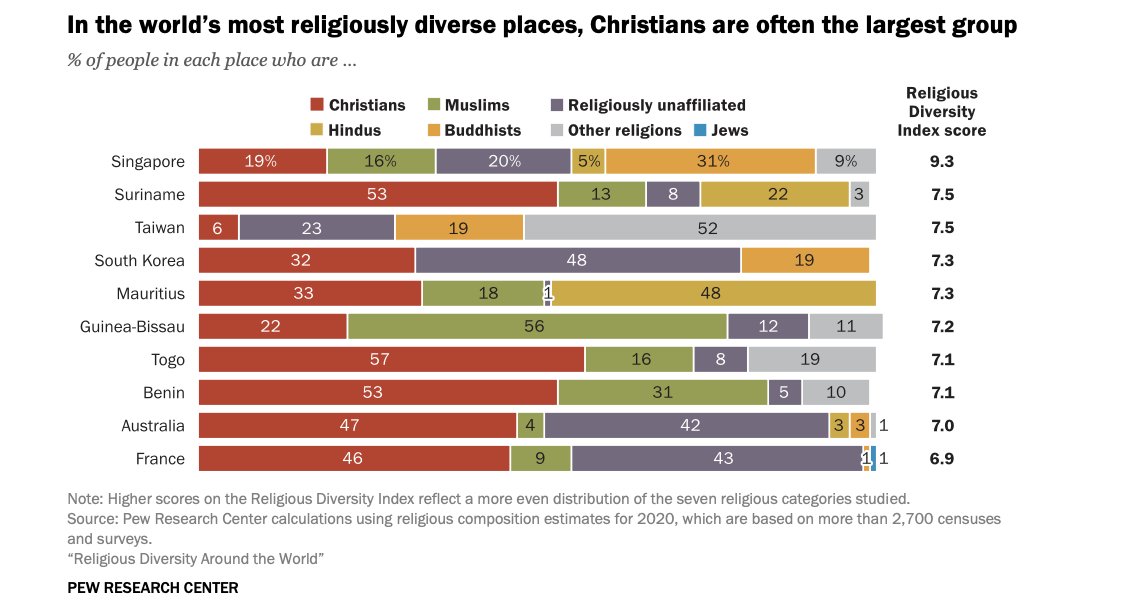
Pew report finds Christians are often largest group in the world’s most religiously diverse places #Catholic The Pew Research Center released a report examining the most and least religiously diverse countries and territories across the globe.The Feb. 12 report found that the United States is not among the 10 most religiously diverse countries in the world, but when examining only the 10 most populous nations, the U.S. ranks first in religious diversity.The report, “Religious Diversity Around the World,” describes levels of religious diversity in 201 countries and territories. It measures how evenly each country’s population is distributed among seven groups including Christians, Muslims, Hindus, Buddhists, Jews, adherents of all other religions, and people with no religious affiliation.The research is part of the Pew-Templeton Global Religious Futures project, which analyzes religious change and its impact on societies around the world.Most of the analysis is from Pew’s Religious Diversity Index (RDI). Pew calculated the religious diversity of 201 areas that together are home to 99.98% of the world’s population based on the size of seven religious groups to give them scores for religious diversity.
 
 In the world’s most religiously diverse places, Christians are often the largest group, a Feb. 12, 2026, Pew Research Center report finds. | Credit: Courtesy of Pew Research Center
 
 Overall, religious diversity levels around the world did not substantially change  between 2010 and 2020, as the religious composition of most countries remained fairly stable, the report said. The research found that while some places around the world have diverse populations of religious groups, it is more common for nations to primarily consist of a single religious group.In 194 countries and territories, 50% or more of the population falls into one religious category, the report said. This includes 43 places where at least 95% of the population is in the same religious group. These places are predominantly Muslim (25), Christian (17), or Buddhist (1).Most religiously diverse countriesThe research found that Singapore is the most religiously diverse country overall, while the United States ranks 32nd.In the world’s most religiously diverse places, Christians are often the largest group. Out of the 10 most religiously diverse counties overall, half have a majority Christian population, the report said.Singapore is the world’s most religiously diverse country as of 2020, with Buddhists (31%) as the largest religious group, the report said. Its population also includes substantial shares of religiously unaffiliated people (20%), Christians (19%), Muslims (16%), Hindus (5%), and adherents of all other religions (9%), the report said.Most of the other places in the top 10 are in the Asia-Pacific region or sub-Saharan Africa region including Suriname, Taiwan, South Korea, Mauritius, Guinea-Bissau, Togo, Benin, Australia, and France.
 
 A Pew Research Center report Feb. 12, 2026, identifies 10 countries where 90% of the population falls most evenly into a pair of religious categories. | Credit: Courtesy of Pew Research Center
 
 France is the only European country in the top 10 list. Its population is largely Christian (46%) and religiously unaffiliated (43%). In Suriname, another country in the top 10, about half of its residents (53%) are Christians and the rest are mainly Hindus (22%), Muslims (13%), and religiously unaffiliated people (8%). Christians are also the largest groups in Togo (57%), Benin (53%), and Australia (47%), which all fall in the top 10 most diverse places, the report said.Least religiously diverse countriesThe Middle East-North Africa region was found to be the least diverse of the regions Pew studied, with a population that is 94% Muslim. This region includes five of the world’s 10 least religiously diverse countries and territories.Eight of the least religiously diverse places have populations that are almost entirely Muslim, including Tunisia, Iraq, Western Sahara, Morocco, Iran, Somalia, Afghanistan, and Yemen, which all have a Muslim population of more than 99%, the report said.The other two countries with the least diverse scores were found to have very high majorities of Christians including Moldova and Timor-Lester, which both have populations made up of 99.5% of Christians.U.S. ranks high for religious diversity among largest nationsThe United States is not among the 10 most religiously diverse countries in the world, ranking 32nd overall. However, the U.S. is the most religiously diverse nation among the most populous countries, each of which has a population of at least 120 million. It is followed by Nigeria, Russia, India, and Brazil, the report said.Christians make up an estimated 64% of the U.S. population as of 2020, while religiously unaffiliated people account for about 30%, the report said. The remaining 6% are Muslims, Hindus, Buddhists, Jews, and people who practice other religions, the report said.The research showed the growth of religiously unaffiliated people and the decline of the Christian majority by 14% in the U.S. yielded an increase in the country’s religious diversity between 2010 and 2020.Nigeria is the second-most religiously diverse of the largely populated countries and is among the nations where 90% of the population is fairly evenly divided between two religious categories, the report said. The most populous religious groups in Nigeria are Muslims (56%) and Christians (43%), the report said.Out of the other nine countries where most of the population falls most into a pair of religious categories, seven include Christianity among the two religious groups. Eritrea, Bosnia-Herzegovina, Uruguay, Estonia, Chad, Ivory Coast, and Ethiopia, all include Christianity and one other group as their top religious groups as of 2020, the report said.Pakistan was found to be the least religiously diverse among the most populous countries, with Muslims making up a high majority (97%) of its residents.

Pew report finds Christians are often largest group in the world’s most religiously diverse places #Catholic The Pew Research Center released a report examining the most and least religiously diverse countries and territories across the globe.The Feb. 12 report found that the United States is not among the 10 most religiously diverse countries in the world, but when examining only the 10 most populous nations, the U.S. ranks first in religious diversity.The report, “Religious Diversity Around the World,” describes levels of religious diversity in 201 countries and territories. It measures how evenly each country’s population is distributed among seven groups including Christians, Muslims, Hindus, Buddhists, Jews, adherents of all other religions, and people with no religious affiliation.The research is part of the Pew-Templeton Global Religious Futures project, which analyzes religious change and its impact on societies around the world.Most of the analysis is from Pew’s Religious Diversity Index (RDI). Pew calculated the religious diversity of 201 areas that together are home to 99.98% of the world’s population based on the size of seven religious groups to give them scores for religious diversity. In the world’s most religiously diverse places, Christians are often the largest group, a Feb. 12, 2026, Pew Research Center report finds. | Credit: Courtesy of Pew Research Center Overall, religious diversity levels around the world did not substantially change  between 2010 and 2020, as the religious composition of most countries remained fairly stable, the report said. The research found that while some places around the world have diverse populations of religious groups, it is more common for nations to primarily consist of a single religious group.In 194 countries and territories, 50% or more of the population falls into one religious category, the report said. This includes 43 places where at least 95% of the population is in the same religious group. These places are predominantly Muslim (25), Christian (17), or Buddhist (1).Most religiously diverse countriesThe research found that Singapore is the most religiously diverse country overall, while the United States ranks 32nd.In the world’s most religiously diverse places, Christians are often the largest group. Out of the 10 most religiously diverse counties overall, half have a majority Christian population, the report said.Singapore is the world’s most religiously diverse country as of 2020, with Buddhists (31%) as the largest religious group, the report said. Its population also includes substantial shares of religiously unaffiliated people (20%), Christians (19%), Muslims (16%), Hindus (5%), and adherents of all other religions (9%), the report said.Most of the other places in the top 10 are in the Asia-Pacific region or sub-Saharan Africa region including Suriname, Taiwan, South Korea, Mauritius, Guinea-Bissau, Togo, Benin, Australia, and France. A Pew Research Center report Feb. 12, 2026, identifies 10 countries where 90% of the population falls most evenly into a pair of religious categories. | Credit: Courtesy of Pew Research Center France is the only European country in the top 10 list. Its population is largely Christian (46%) and religiously unaffiliated (43%). In Suriname, another country in the top 10, about half of its residents (53%) are Christians and the rest are mainly Hindus (22%), Muslims (13%), and religiously unaffiliated people (8%). Christians are also the largest groups in Togo (57%), Benin (53%), and Australia (47%), which all fall in the top 10 most diverse places, the report said.Least religiously diverse countriesThe Middle East-North Africa region was found to be the least diverse of the regions Pew studied, with a population that is 94% Muslim. This region includes five of the world’s 10 least religiously diverse countries and territories.Eight of the least religiously diverse places have populations that are almost entirely Muslim, including Tunisia, Iraq, Western Sahara, Morocco, Iran, Somalia, Afghanistan, and Yemen, which all have a Muslim population of more than 99%, the report said.The other two countries with the least diverse scores were found to have very high majorities of Christians including Moldova and Timor-Lester, which both have populations made up of 99.5% of Christians.U.S. ranks high for religious diversity among largest nationsThe United States is not among the 10 most religiously diverse countries in the world, ranking 32nd overall. However, the U.S. is the most religiously diverse nation among the most populous countries, each of which has a population of at least 120 million. It is followed by Nigeria, Russia, India, and Brazil, the report said.Christians make up an estimated 64% of the U.S. population as of 2020, while religiously unaffiliated people account for about 30%, the report said. The remaining 6% are Muslims, Hindus, Buddhists, Jews, and people who practice other religions, the report said.The research showed the growth of religiously unaffiliated people and the decline of the Christian majority by 14% in the U.S. yielded an increase in the country’s religious diversity between 2010 and 2020.Nigeria is the second-most religiously diverse of the largely populated countries and is among the nations where 90% of the population is fairly evenly divided between two religious categories, the report said. The most populous religious groups in Nigeria are Muslims (56%) and Christians (43%), the report said.Out of the other nine countries where most of the population falls most into a pair of religious categories, seven include Christianity among the two religious groups. Eritrea, Bosnia-Herzegovina, Uruguay, Estonia, Chad, Ivory Coast, and Ethiopia, all include Christianity and one other group as their top religious groups as of 2020, the report said.Pakistan was found to be the least religiously diverse among the most populous countries, with Muslims making up a high majority (97%) of its residents.

Among the most populous nations, the U.S. ranks first in religious diversity. Singapore is the most religiously diverse country overall, and the U.S. ranks 32nd.
Read More
Notre Dame, Villanova finalizing plans to open college basketball season in Rome #Catholic Pope Leo XIV may get the opportunity to watch his alma mater play basketball in person during the 2026-2027 season. According to a report from CBS Sports, the Villanova and Notre Dame men’s and women’s basketball teams have received special clearance from the NCAA to open their seasons in Rome for a doubleheader on Nov. 1.The college basketball season officially starts on Nov. 2 but, according to the report, the NCAA approved a waiver in January to allow the teams to start one day before given the precedence of these games.Both universities are prominent Catholic schools that have ties to the pope. Pope Leo, born Robert Francis Prevost in Chicago, is a 1977 alumnus of Villanova University. As for the University of Notre Dame, it is regarded as the most prominent Catholic institution of higher learning in the world and has an outpost in Rome.It is well known that Pope Leo is an avid sports fan. He has already welcomed several athletes to the Vatican during his papacy, including the SSC Napoli soccer team after its league championship in May 2025 and Italian professional tennis player Jannik Sinner. Many have also seen the viral image of the pope attending game 1 of the Chicago White Sox’s World Series run in 2005.The teams will play the doubleheader at the Palazzetto dello Sport, also known as the PalaTiziano. The arena seats 3,500 people and was built in the late 1950s for the 1960 Olympics in Rome. It is about 30 minutes away from the pope’s residence in Vatican City.The director of the Holy See Press Office, Matteo Bruni, told EWTN News it was “too early to tell” if Leo will participate in the historic game.According to the report, officials from both universities have been in contact with the pope and people around the Holy See. Leadership from Notre Dame had a private meeting with Pope Leo in November 2025 and Villanova officials attended the pope’s inaugural Mass.For the men’s teams, it is believed this will be the first season opener outside of the U.S. in men’s college basketball history. For the Notre Dame women, this will be their second regular season game outside of the country. They opened the 2023-2024 season against South Carolina in Paris.Hannah Brockhaus contributed to this report from Rome.

Notre Dame, Villanova finalizing plans to open college basketball season in Rome #Catholic Pope Leo XIV may get the opportunity to watch his alma mater play basketball in person during the 2026-2027 season. According to a report from CBS Sports, the Villanova and Notre Dame men’s and women’s basketball teams have received special clearance from the NCAA to open their seasons in Rome for a doubleheader on Nov. 1.The college basketball season officially starts on Nov. 2 but, according to the report, the NCAA approved a waiver in January to allow the teams to start one day before given the precedence of these games.Both universities are prominent Catholic schools that have ties to the pope. Pope Leo, born Robert Francis Prevost in Chicago, is a 1977 alumnus of Villanova University. As for the University of Notre Dame, it is regarded as the most prominent Catholic institution of higher learning in the world and has an outpost in Rome.It is well known that Pope Leo is an avid sports fan. He has already welcomed several athletes to the Vatican during his papacy, including the SSC Napoli soccer team after its league championship in May 2025 and Italian professional tennis player Jannik Sinner. Many have also seen the viral image of the pope attending game 1 of the Chicago White Sox’s World Series run in 2005.The teams will play the doubleheader at the Palazzetto dello Sport, also known as the PalaTiziano. The arena seats 3,500 people and was built in the late 1950s for the 1960 Olympics in Rome. It is about 30 minutes away from the pope’s residence in Vatican City.The director of the Holy See Press Office, Matteo Bruni, told EWTN News it was “too early to tell” if Leo will participate in the historic game.According to the report, officials from both universities have been in contact with the pope and people around the Holy See. Leadership from Notre Dame had a private meeting with Pope Leo in November 2025 and Villanova officials attended the pope’s inaugural Mass.For the men’s teams, it is believed this will be the first season opener outside of the U.S. in men’s college basketball history. For the Notre Dame women, this will be their second regular season game outside of the country. They opened the 2023-2024 season against South Carolina in Paris.Hannah Brockhaus contributed to this report from Rome.

Pope Leo XIV is a 1977 alumnus of Villanova University and an avid sports fan.

Read More

Looking for a sky event this week? Check out our full Sky This Week column.  February 11: Ganymede’s shadow, Io cross Jupiter Asteroid 44 Nysa may be just past opposition, but it’s still placed perfectly for evening viewing in Cancer the Crab. Wait until a few hours after sunset, when Cancer is high in the eastern sky,Continue reading “The Sky Today on Thursday, February 12: Asteroid Nysa approaches a star”

The post The Sky Today on Thursday, February 12: Asteroid Nysa approaches a star appeared first on Astronomy Magazine.

Read More

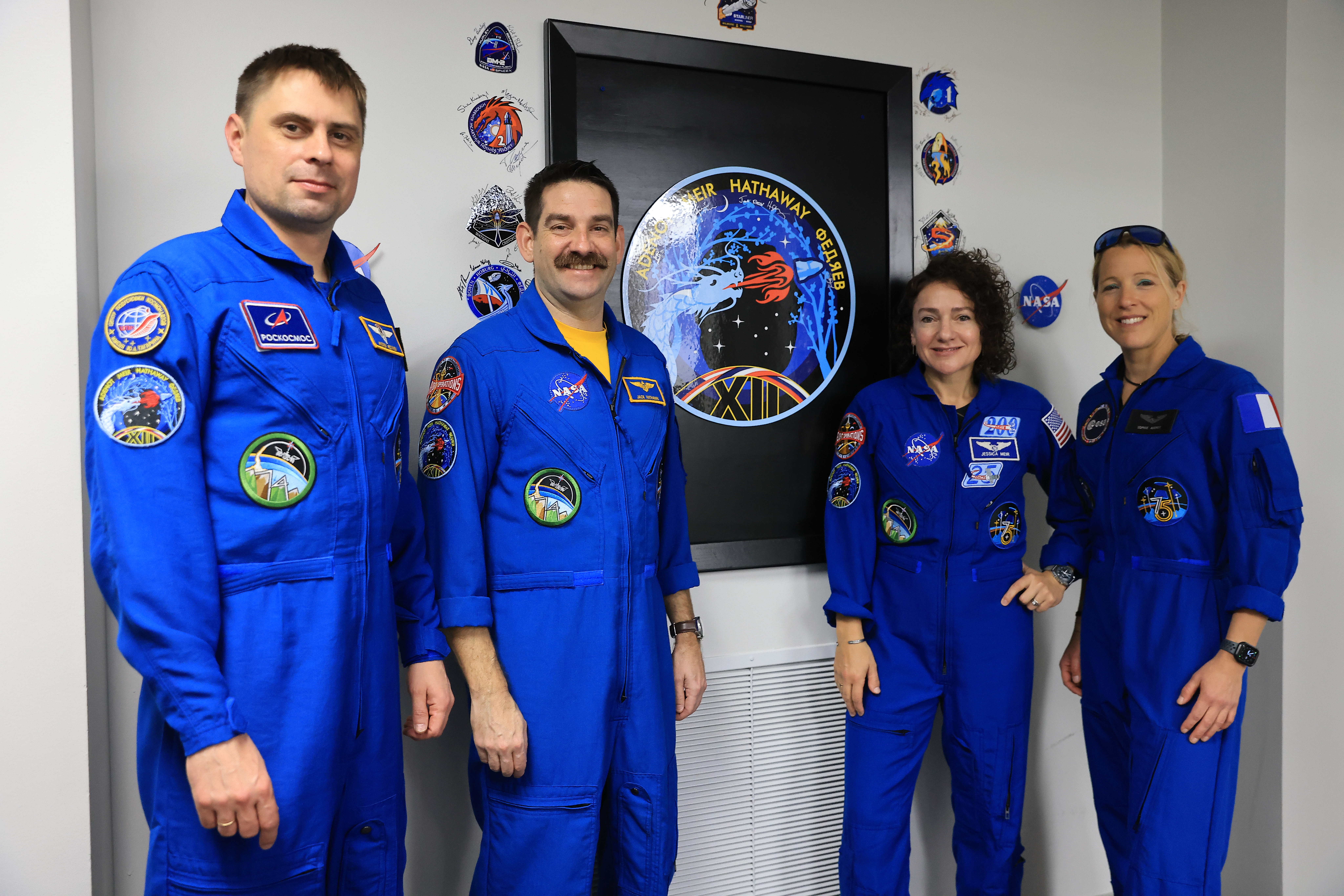
Crew-12 Members and Insignia – From left, NASA’s SpaceX Crew-12 crew members – Roscosmos cosmonaut Andrey Fedyaev, NASA astronauts Jack Hathaway and Jessica Meir, and ESA (European Space Agency) astronaut Sophie Adenot – pose next to their mission insignia inside the Astronaut Crew Quarters in the Neil A. Armstrong Operations and Checkout Building at NASA’s Kennedy Space Center in Florida on Monday, Feb. 9, 2026.

From left, NASA’s SpaceX Crew-12 crew members – Roscosmos cosmonaut Andrey Fedyaev, NASA astronauts Jack Hathaway and Jessica Meir, and ESA (European Space Agency) astronaut Sophie Adenot – pose next to their mission insignia inside the Astronaut Crew Quarters in the Neil A. Armstrong Operations and Checkout Building at NASA’s Kennedy Space Center in Florida on Monday, Feb. 9, 2026.

Read More