Day: February 14, 2026

Gospel and Word of the Day – 15 February 2026 – A reading from the Book of Sirach 15:15-20 If you choose you can keep the commandments, they will save you; if you trust in God, you too shall live; he has set before you fire and water to whichever you choose, stretch forth your hand. Before man are life and death, good and evil, whichever he chooses shall be given him. Immense is the wisdom of the Lord; he is mighty in power, and all-seeing. The eyes of God are on those who fear him; he understands man’s every deed. No one does he command to act unjustly, to none does he give license to sin.   A reading from the First Letter of St. Paul to the Corinthians 1 Corinthians 2:6-10 Brothers and sisters: We speak a wisdom to those who are mature, not a wisdom of this age, nor of the rulers of this age who are passing away. Rather, we speak God’s wisdom, mysterious, hidden, which God predetermined before the ages for our glory, and which none of the rulers of this age knew; for, if they had known it, they would not have crucified the Lord of glory. But as it is written: What eye has not seen, and ear has not heard, and what has not entered the human heart, what God has prepared for those who love him, this God has revealed to us through the Spirit. For the Spirit scrutinizes everything, even the depths of God.From the Gospel according to Matthew 5:17-37 Jesus said to his disciples: "Do not think that I have come to abolish the law or the prophets. I have come not to abolish but to fulfill. Amen, I say to you, until heaven and earth pass away, not the smallest letter or the smallest part of a letter will pass from the law, until all things have taken place. Therefore, whoever breaks one of the least of these commandments and teaches others to do so will be called least in the kingdom of heaven. But whoever obeys and teaches these commandments will be called greatest in the kingdom of heaven. I tell you, unless your righteousness surpasses that of the scribes and Pharisees, you will not enter the kingdom of heaven. "You have heard that it was said to your ancestors, You shall not kill; and whoever kills will be liable to judgment. But I say to you, whoever is angry with his brother will be liable to judgment; and whoever says to his brother, ‘Raqa,’ will be answerable to the Sanhedrin; and whoever says, ‘You fool,’ will be liable to fiery Gehenna. Therefore, if you bring your gift to the altar, and there recall that your brother has anything against you, leave your gift there at the altar, go first and be reconciled with your brother, and then come and offer your gift. Settle with your opponent quickly while on the way to court. Otherwise your opponent will hand you over to the judge, and the judge will hand you over to the guard, and you will be thrown into prison. Amen, I say to you, you will not be released until you have paid the last penny. "You have heard that it was said, You shall not commit adultery. But I say to you, everyone who looks at a woman with lust has already committed adultery with her in his heart. If your right eye causes you to sin, tear it out and throw it away. It is better for you to lose one of your members than to have your whole body thrown into Gehenna. And if your right hand causes you to sin, cut it off and throw it away. It is better for you to lose one of your members than to have your whole body go into Gehenna. "It was also said, Whoever divorces his wife must give her a bill of divorce. But I say to you, whoever divorces his wife – unless the marriage is unlawful – causes her to commit adultery, and whoever marries a divorced woman commits adultery. "Again you have heard that it was said to your ancestors, Do not take a false oath, but make good to the Lord all that you vow. But I say to you, do not swear at all; not by heaven, for it is God’s throne; nor by the earth, for it is his footstool; nor by Jerusalem, for it is the city of the great King. Do not swear by your head, for you cannot make a single hair white or black. Let your ‘Yes’ mean ‘Yes,’ and your ‘No’ mean ‘No.’ Anything more is from the evil one."“Unless your righteousness exceeds that of the Scribes and Pharisees, you will never enter the Kingdom of Heaven” (Mt 5:17,20). But what do this “fullness” of Christ’s Law and this “superior” justice that he demands consist in? Jesus explains it with a series of antitheses between the old commandments and his new way of propounding them. He begins each time: “You have heard that it was said to the men of old…”, and then he asserts: “but I say to you”…. (…). And he does this six times. This manner of speaking made a great impression on the people, who were shocked, because those words: “I say to you” were equivalent to claiming the actual authority of God, the source of the Law. The newness of Jesus consists essentially in the fact that he himself “fulfils” the commandments with the love of God, with the power of the Holy Spirit who dwells within him. And we, through faith in Christ, can open ourselves to the action of the Holy Spirit who makes us capable of living divine love. So it is that every precept becomes true as a requirement of love, and all join in a single commandment: love God with all your heart and love your neighbour as yourself. (Pope Benedict XVI, Angelus, 13 February 2011)

A reading from the Book of Sirach
15:15-20

If you choose you can keep the commandments, they will save you;
if you trust in God, you too shall live;
he has set before you fire and water
to whichever you choose, stretch forth your hand.
Before man are life and death, good and evil,
whichever he chooses shall be given him.
Immense is the wisdom of the Lord;
he is mighty in power, and all-seeing.
The eyes of God are on those who fear him;
he understands man’s every deed.
No one does he command to act unjustly,
to none does he give license to sin.


A reading from the First Letter of St. Paul to the Corinthians
1 Corinthians 2:6-10

Brothers and sisters:
We speak a wisdom to those who are mature,
not a wisdom of this age,
nor of the rulers of this age who are passing away.
Rather, we speak God’s wisdom, mysterious, hidden,
which God predetermined before the ages for our glory,
and which none of the rulers of this age knew;
for, if they had known it,
they would not have crucified the Lord of glory.
But as it is written:
What eye has not seen, and ear has not heard,
and what has not entered the human heart,
what God has prepared for those who love him,
this God has revealed to us through the Spirit.

For the Spirit scrutinizes everything, even the depths of God.

From the Gospel according to Matthew
5:17-37

Jesus said to his disciples:
"Do not think that I have come to abolish the law or the prophets.
I have come not to abolish but to fulfill.
Amen, I say to you, until heaven and earth pass away,
not the smallest letter or the smallest part of a letter
will pass from the law,
until all things have taken place.
Therefore, whoever breaks one of the least of these commandments
and teaches others to do so
will be called least in the kingdom of heaven.
But whoever obeys and teaches these commandments
will be called greatest in the kingdom of heaven.
I tell you, unless your righteousness surpasses
that of the scribes and Pharisees,
you will not enter the kingdom of heaven.

"You have heard that it was said to your ancestors,
You shall not kill; and whoever kills will be liable to judgment.
But I say to you,
whoever is angry with his brother
will be liable to judgment;
and whoever says to his brother, ‘Raqa,’
will be answerable to the Sanhedrin;
and whoever says, ‘You fool,’
will be liable to fiery Gehenna.
Therefore, if you bring your gift to the altar,
and there recall that your brother
has anything against you,
leave your gift there at the altar,
go first and be reconciled with your brother,
and then come and offer your gift.
Settle with your opponent quickly while on the way to court.
Otherwise your opponent will hand you over to the judge,
and the judge will hand you over to the guard,
and you will be thrown into prison.
Amen, I say to you,
you will not be released until you have paid the last penny.

"You have heard that it was said,
You shall not commit adultery.
But I say to you,
everyone who looks at a woman with lust
has already committed adultery with her in his heart.
If your right eye causes you to sin,
tear it out and throw it away.
It is better for you to lose one of your members
than to have your whole body thrown into Gehenna.
And if your right hand causes you to sin,
cut it off and throw it away.
It is better for you to lose one of your members
than to have your whole body go into Gehenna.

"It was also said,
Whoever divorces his wife must give her a bill of divorce.
But I say to you,
whoever divorces his wife – unless the marriage is unlawful –
causes her to commit adultery,
and whoever marries a divorced woman commits adultery.

"Again you have heard that it was said to your ancestors,
Do not take a false oath,
but make good to the Lord all that you vow.
But I say to you, do not swear at all;
not by heaven, for it is God’s throne;
nor by the earth, for it is his footstool;
nor by Jerusalem, for it is the city of the great King.
Do not swear by your head,
for you cannot make a single hair white or black.
Let your ‘Yes’ mean ‘Yes,’ and your ‘No’ mean ‘No.’
Anything more is from the evil one."

“Unless your righteousness exceeds that of the Scribes and Pharisees, you will never enter the Kingdom of Heaven” (Mt 5:17,20). But what do this “fullness” of Christ’s Law and this “superior” justice that he demands consist in?

Jesus explains it with a series of antitheses between the old commandments and his new way of propounding them. He begins each time: “You have heard that it was said to the men of old…”, and then he asserts: “but I say to you”…. (…).

And he does this six times. This manner of speaking made a great impression on the people, who were shocked, because those words: “I say to you” were equivalent to claiming the actual authority of God, the source of the Law. The newness of Jesus consists essentially in the fact that he himself “fulfils” the commandments with the love of God, with the power of the Holy Spirit who dwells within him. And we, through faith in Christ, can open ourselves to the action of the Holy Spirit who makes us capable of living divine love.

So it is that every precept becomes true as a requirement of love, and all join in a single commandment: love God with all your heart and love your neighbour as yourself. (Pope Benedict XVI, Angelus, 13 February 2011)

Read More
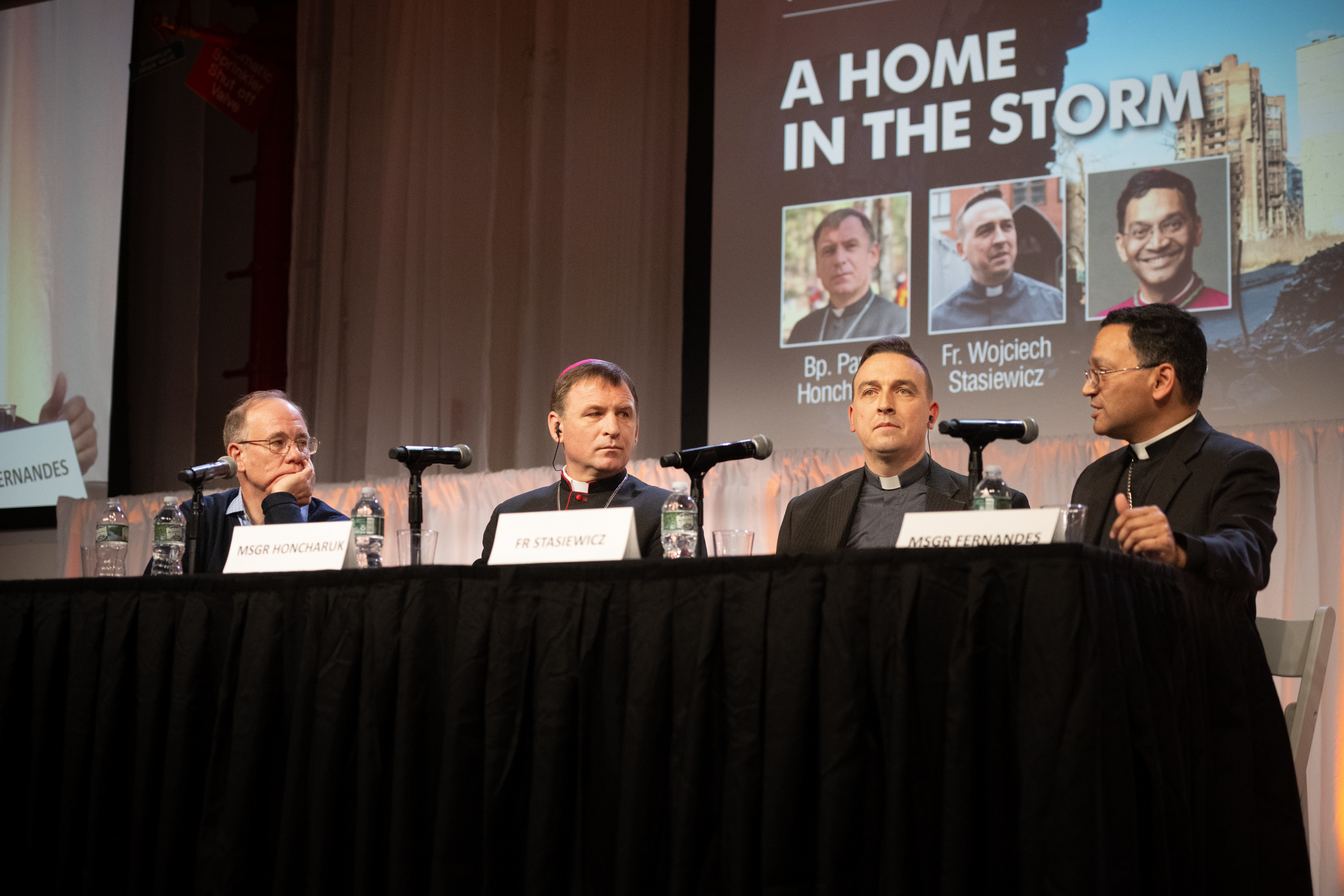
Ukraine bishop at New York Encounter: War begins when man rejects God from his heart – #Catholic – Amid the ongoing Russia-Ukraine war, survival means remaining in relationship with Christ and in community with one another, according to a delegation of Ukrainian Catholic Church leaders who gave their testimony at the New York Encounter on Feb. 14. Bishop Pavlo Honcharuk of Kharkiv and Father Wojciech Stasiewicz, director of Caritas-Spes of the Kharkiv-Zaporizhia Diocese, shared how they have approached survival throughout the four-year conflict that has ravaged their communities.The bishop and priest spoke during a panel moderated by Bishop Earl Fernandes of Columbus, Ohio.
 
 Bishop Pavlo Honcharuk of Kharkiv, Father Wojciech Stasiewicz, and Bishop Earl Fernandes of Columbus, Ohio speak at the New York Encounter, Saturday, Feb. 14, 2026 | Credit: Jeff Bruno
 
 This year’s New York Encounter is centered on the theme “Where Everything Is Waiting for You,” focusing on “the reemerging human desire for authentic belonging amid global isolation, emphasizing how freedom, truth, forgiveness, and dignity foster certainty and openness in true community.” The event will continue through Feb. 15.“We can say that, thanks to God, thanks to our Faith, we have a strong foundation,” said Honcharuk, who compared the current situation in Ukraine to the Titanic. The bishop described the struggles faced by Ukrainians today, including the obliteration of power grids across the country, below-freezing temperatures, and ongoing drone and missile strikes.“We are in the middle of a tempest of suffering and pain,” he said. “In this sense, we're always expecting or waiting for death, but in the midst of all that, we are trying to be able to love, and to help others.”The bishop reflected during his remarks that survival for him has been in keeping busy with the demands of his role, which extend far beyond pastoral care due to the humanitarian aid role the Church in Ukraine has assumed. From traveling to precarious locations to preside over funeral services, to thawing frozen generators, the bishop remains occupied.“If you were to stop and sit and look at it, and try to deepen what is happening, you wouldn’t be able to stand it. There are many instances where people lose their minds, they close in on themselves.” This, he said, “is the most terrible thing.”Honcharuk said Christ’s love is what compels him to remain with his people, and that ultimately, having faith in God is what brings peace.“The beginning of war is in the hearts of men,” the bishop said. “When there is no God, a person does not feel like someone. He has to prove all the time to himself and to others that he is someone. He exploits everything to show that he is someone.”In the end, he said, a person’s encounter with God is where peace begins.Father Stasiewicz also shared how his work with Caritas has acted as both a humanitarian hub for Ukrainians, and as a ministry of faithful presence and community throughout the war. The priest emphasized the need to be in community, especially during conflict, otherwise “you're carrying all this burden by yourself, and you have nobody to help you, or to sustain you.”Papal Nuncio to the U.S. Cardinal Christophe Pierre attended the panel, which took place in the main auditorium of the Metropolitan Pavilion. The event was at maximum capacity, and attendees gave a warm standing ovation to the Ukrainian bishop and priest for several minutes. 

Ukraine bishop at New York Encounter: War begins when man rejects God from his heart – #Catholic – Amid the ongoing Russia-Ukraine war, survival means remaining in relationship with Christ and in community with one another, according to a delegation of Ukrainian Catholic Church leaders who gave their testimony at the New York Encounter on Feb. 14. Bishop Pavlo Honcharuk of Kharkiv and Father Wojciech Stasiewicz, director of Caritas-Spes of the Kharkiv-Zaporizhia Diocese, shared how they have approached survival throughout the four-year conflict that has ravaged their communities.The bishop and priest spoke during a panel moderated by Bishop Earl Fernandes of Columbus, Ohio. Bishop Pavlo Honcharuk of Kharkiv, Father Wojciech Stasiewicz, and Bishop Earl Fernandes of Columbus, Ohio speak at the New York Encounter, Saturday, Feb. 14, 2026 | Credit: Jeff Bruno This year’s New York Encounter is centered on the theme “Where Everything Is Waiting for You,” focusing on “the reemerging human desire for authentic belonging amid global isolation, emphasizing how freedom, truth, forgiveness, and dignity foster certainty and openness in true community.” The event will continue through Feb. 15.“We can say that, thanks to God, thanks to our Faith, we have a strong foundation,” said Honcharuk, who compared the current situation in Ukraine to the Titanic. The bishop described the struggles faced by Ukrainians today, including the obliteration of power grids across the country, below-freezing temperatures, and ongoing drone and missile strikes.“We are in the middle of a tempest of suffering and pain,” he said. “In this sense, we're always expecting or waiting for death, but in the midst of all that, we are trying to be able to love, and to help others.”The bishop reflected during his remarks that survival for him has been in keeping busy with the demands of his role, which extend far beyond pastoral care due to the humanitarian aid role the Church in Ukraine has assumed. From traveling to precarious locations to preside over funeral services, to thawing frozen generators, the bishop remains occupied.“If you were to stop and sit and look at it, and try to deepen what is happening, you wouldn’t be able to stand it. There are many instances where people lose their minds, they close in on themselves.” This, he said, “is the most terrible thing.”Honcharuk said Christ’s love is what compels him to remain with his people, and that ultimately, having faith in God is what brings peace.“The beginning of war is in the hearts of men,” the bishop said. “When there is no God, a person does not feel like someone. He has to prove all the time to himself and to others that he is someone. He exploits everything to show that he is someone.”In the end, he said, a person’s encounter with God is where peace begins.Father Stasiewicz also shared how his work with Caritas has acted as both a humanitarian hub for Ukrainians, and as a ministry of faithful presence and community throughout the war. The priest emphasized the need to be in community, especially during conflict, otherwise “you're carrying all this burden by yourself, and you have nobody to help you, or to sustain you.”Papal Nuncio to the U.S. Cardinal Christophe Pierre attended the panel, which took place in the main auditorium of the Metropolitan Pavilion. The event was at maximum capacity, and attendees gave a warm standing ovation to the Ukrainian bishop and priest for several minutes. 

“We can say that, thanks to God, thanks to our Faith, we have a strong foundation,” said Bishop Pavlo Honcharuk.


Read More
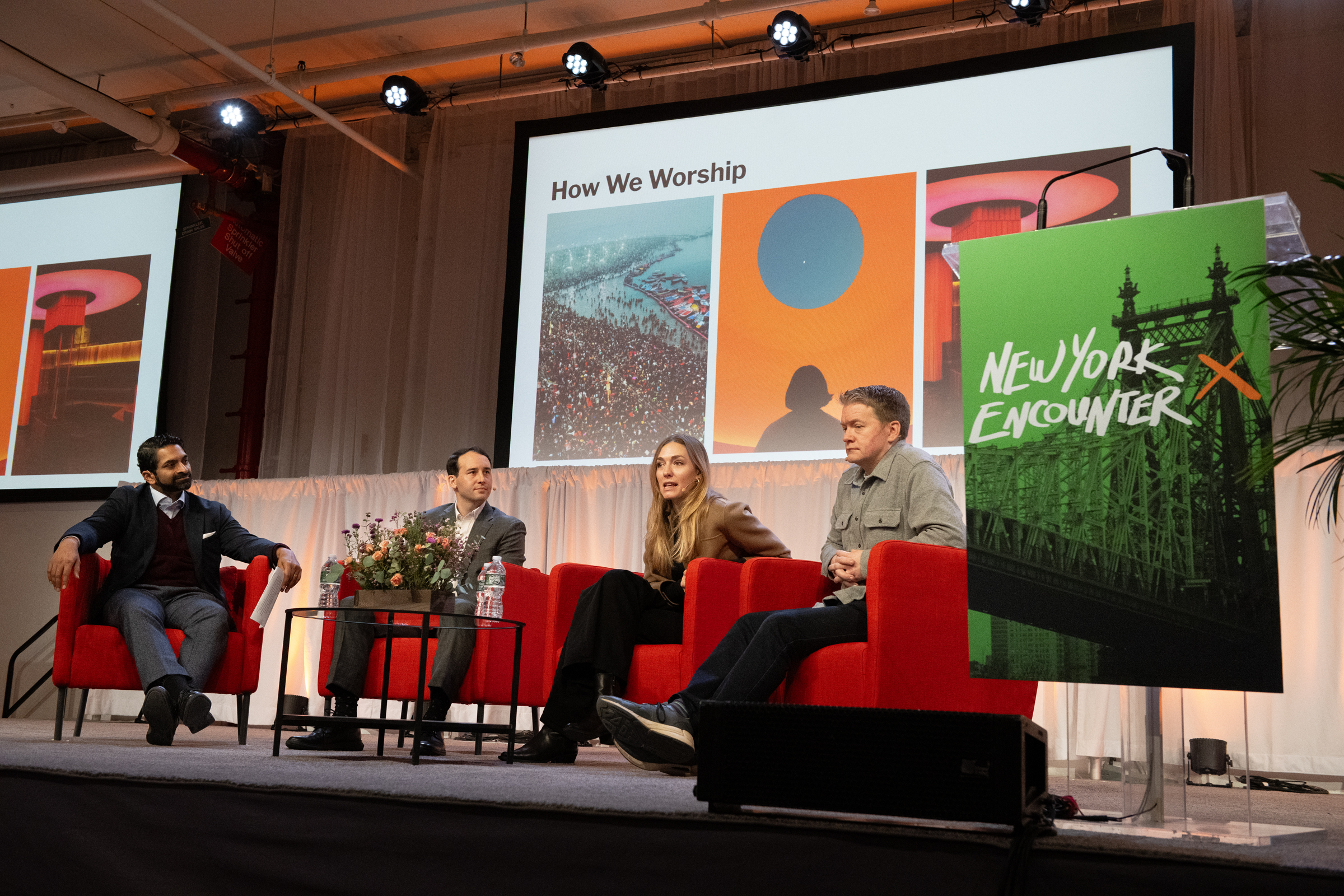
Slowing of religious decline points to ‘shifting’ faith landscape, experts say at New York Encounter #Catholic Recent claims of an emerging religious revival in the West may overstate the case, but there are clear signs that belief in God is rising, experts said Saturday at the New York Encounter, the annual conference hosted by members of Communion and Liberation.Speaking at the gathering, Chip Rotolo, a research associate at the Pew Research Center, cited data showing that religious affiliation in the United States has declined steadily for decades. Yet recent findings from Pew’s Religious Landscape Study have offered reasons for cautious optimism among those concerned about the nation’s secularization.According to Pew’s data, the share of U.S. adults identifying as Christian (63%) is down from 2007 levels (78%) but has held steady since 2020.
 
 Panelists Brandon Vaidyanathan, Chip Rotolo, Lauren Jackson, and Justin Brierley speak on the panel “Hungry for Belonging” at New York Encounter on Saturday, Feb. 14, 2026. | Credit: Jeff Bruno
 
 “The fact that the religious decline we’re so used to seeing is leveled off is a huge shift,” Rotolo said, noting that recent data shows that the number of Americans who are religiously affiliated, attend church, and pray daily have “been very stable.”He noted that this stabilization began during the COVID-19 pandemic, when many might have expected religious participation to drop as churches closed and communities were forced to rethink worship and parish life.“If you already had one foot out the door at your church, it would have been easy to step away,” Rotolo said. “But we’ve seen this remarkable stability. That has drawn a lot of attention, curiosity, and hope.”A second key finding has further fueled interest. According to Pew’s research, 92% of Americans express some form of spiritual outlook — meaning they believe in at least one of the following: that people have souls, that God exists, that there is something spiritual beyond the natural world, or that there is an afterlife.
 
 Attendees listen to the panel “Hungry for Belonging” at New York Encounter on Saturday, Feb. 14, 2026. | Credit: Jeff Bruno
 
 “Something is definitely shifting in American religious life,” Rotolo said. “We can disagree and continue figuring out exactly what that is, but it’s certainly an interesting time to study.”Also speaking at the panel was Justin Brierley, author of “The Surprising Rebirth of Belief in God.” Brierley said that although there have been questions raised about the methodology of surveys showing an increase in religiosity in the West, there has been a noticeable cultural shift away from the “New Atheism” popularized in the early 2000s by figures such as Richard Dawkins, author of “The God Delusion.”By the 2010s, Brierley said, he began to see public intellectuals acknowledging Christianity’s formative role in shaping Western civilization. Some, he added, have gone further — openly professing religious belief.He pointed to the conversion of the Somali-born Dutch and American writer Ayaan Hirsi Ali, who in late 2023 published a viral essay titled “Why I’m Now a Christian.”“When she came out with that article, it made a lot of people say, ‘If Ayaan Hirsi Ali — arguably one of the most prominent former atheists in the world — has changed her mind, it could happen to anyone,’” Brierley said.Lauren Jackson, a religion columnist at The New York Times, said her outlet recently launched a series titled “Believing,” inspired in part by Pew’s findings on religious life in America.“We took all this data together and made the claim that Americans haven’t found a satisfying alternative to religion,” Jackson said. Through interviews and surveys, she added, many in the U.S. have expressed “an intense desire for belonging, for meaning, for community, for connection to the transcendent.”That desire, however, is not always expressed within the walls of a church. The series has explored other avenues through which Americans seek spiritual meaning and communal identity, including the growing popularity of saunas and the sense of belonging fostered by soccer communities.While the speakers stopped short of declaring a religious revival at work, they agreed that the current moment reflects a significant shift — one marked by a renewed openness to faith and the enduring human search for transcendence.Brierley noted that to most people the once-popular atheists’ arguments in favor of science and technology as an alternative to religion haven’t been convincing.“I think as we’ve lost the Christian story in the modern West, it has led to people looking for other stories to make sense of their life. I think some people did for a while reach for the atheist materialist story,” he explained.“When you look at where culture has actually gone and the science and technology we put in, it turns out we have made ourselves unhappier,” he said.

Slowing of religious decline points to ‘shifting’ faith landscape, experts say at New York Encounter #Catholic Recent claims of an emerging religious revival in the West may overstate the case, but there are clear signs that belief in God is rising, experts said Saturday at the New York Encounter, the annual conference hosted by members of Communion and Liberation.Speaking at the gathering, Chip Rotolo, a research associate at the Pew Research Center, cited data showing that religious affiliation in the United States has declined steadily for decades. Yet recent findings from Pew’s Religious Landscape Study have offered reasons for cautious optimism among those concerned about the nation’s secularization.According to Pew’s data, the share of U.S. adults identifying as Christian (63%) is down from 2007 levels (78%) but has held steady since 2020. Panelists Brandon Vaidyanathan, Chip Rotolo, Lauren Jackson, and Justin Brierley speak on the panel “Hungry for Belonging” at New York Encounter on Saturday, Feb. 14, 2026. | Credit: Jeff Bruno “The fact that the religious decline we’re so used to seeing is leveled off is a huge shift,” Rotolo said, noting that recent data shows that the number of Americans who are religiously affiliated, attend church, and pray daily have “been very stable.”He noted that this stabilization began during the COVID-19 pandemic, when many might have expected religious participation to drop as churches closed and communities were forced to rethink worship and parish life.“If you already had one foot out the door at your church, it would have been easy to step away,” Rotolo said. “But we’ve seen this remarkable stability. That has drawn a lot of attention, curiosity, and hope.”A second key finding has further fueled interest. According to Pew’s research, 92% of Americans express some form of spiritual outlook — meaning they believe in at least one of the following: that people have souls, that God exists, that there is something spiritual beyond the natural world, or that there is an afterlife. Attendees listen to the panel “Hungry for Belonging” at New York Encounter on Saturday, Feb. 14, 2026. | Credit: Jeff Bruno “Something is definitely shifting in American religious life,” Rotolo said. “We can disagree and continue figuring out exactly what that is, but it’s certainly an interesting time to study.”Also speaking at the panel was Justin Brierley, author of “The Surprising Rebirth of Belief in God.” Brierley said that although there have been questions raised about the methodology of surveys showing an increase in religiosity in the West, there has been a noticeable cultural shift away from the “New Atheism” popularized in the early 2000s by figures such as Richard Dawkins, author of “The God Delusion.”By the 2010s, Brierley said, he began to see public intellectuals acknowledging Christianity’s formative role in shaping Western civilization. Some, he added, have gone further — openly professing religious belief.He pointed to the conversion of the Somali-born Dutch and American writer Ayaan Hirsi Ali, who in late 2023 published a viral essay titled “Why I’m Now a Christian.”“When she came out with that article, it made a lot of people say, ‘If Ayaan Hirsi Ali — arguably one of the most prominent former atheists in the world — has changed her mind, it could happen to anyone,’” Brierley said.Lauren Jackson, a religion columnist at The New York Times, said her outlet recently launched a series titled “Believing,” inspired in part by Pew’s findings on religious life in America.“We took all this data together and made the claim that Americans haven’t found a satisfying alternative to religion,” Jackson said. Through interviews and surveys, she added, many in the U.S. have expressed “an intense desire for belonging, for meaning, for community, for connection to the transcendent.”That desire, however, is not always expressed within the walls of a church. The series has explored other avenues through which Americans seek spiritual meaning and communal identity, including the growing popularity of saunas and the sense of belonging fostered by soccer communities.While the speakers stopped short of declaring a religious revival at work, they agreed that the current moment reflects a significant shift — one marked by a renewed openness to faith and the enduring human search for transcendence.Brierley noted that to most people the once-popular atheists’ arguments in favor of science and technology as an alternative to religion haven’t been convincing.“I think as we’ve lost the Christian story in the modern West, it has led to people looking for other stories to make sense of their life. I think some people did for a while reach for the atheist materialist story,” he explained.“When you look at where culture has actually gone and the science and technology we put in, it turns out we have made ourselves unhappier,” he said.

According to Pew data, the share of U.S. adults identifying as Christian is down from 2007 levels but has held steady since 2020.

Read More
Urgent search for stem cell donor to save boy #Catholic – Father Jude Salus, a Benedictine monk at St. Mary’s Abbey in Morristown, N.J., is coming to communities he served and the Paterson Diocese in New Jersey —and beyond —with a desperate plea for help for a 15-year-old boy with a rare blood disorder.

The priest is asking people of both genders, ages 18 to 35, of mixed heritage, with roots in the Caribbean or South America, who may also have European ancestry, to take a genetic test to determine whether they might be a match as a stem-cell donor for Max Uribe. He was diagnosed with the rare blood disorder more than two years ago.
A simple 30-second cheek swab is all it takes to see if someone is Max’s “genetic twin” and possibly save his life. To request a kit or learn more about Max’s story, click here. This vibrant, energetic ninth-grader excels in school, sports, and music.

Click here to subscribe to our weekly newsletter.

Father Salus made the plea in a letter published in the bulletin of Notre Dame of Mount Carmel Parish in the Cedar Knolls neighborhood of Hanover Township, N.J., where he formally served as pastor. Max is the grandson of Joseph and Gloria Uribe, who were Notre Dame parishioners for many years, and the son of Juan Uribe, Joseph and Gloria’s son, and his wife, Lucia. Father Salus taught Juan at Delbarton School, also in Morristown, run by the Benedictine community there.
Max’s doctors told the family that Max needs a stem cell transplant to repair his bone marrow. Because of his unique Afro-Latino and European heritage, Max has a rare marker (B*42:02) that makes finding a perfect-match donor very difficult. The prevalence of Max’s rare marker is higher among these groups.
A perfect match donor will raise Max’s five-year survival rate from 85 to 95 percent, a 10-percent increase. The reality is that white patients have an 80 percent chance of finding a perfect match, a Latin/Hispanic patient’s chances are only 50 percent, and a black patient’s are only 30 percent.
For an overview of the stem-cell donation process, click here.

Urgent search for stem cell donor to save boy #Catholic – Father Jude Salus, a Benedictine monk at St. Mary’s Abbey in Morristown, N.J., is coming to communities he served and the Paterson Diocese in New Jersey —and beyond —with a desperate plea for help for a 15-year-old boy with a rare blood disorder. The priest is asking people of both genders, ages 18 to 35, of mixed heritage, with roots in the Caribbean or South America, who may also have European ancestry, to take a genetic test to determine whether they might be a match as a stem-cell donor for Max Uribe. He was diagnosed with the rare blood disorder more than two years ago. A simple 30-second cheek swab is all it takes to see if someone is Max’s “genetic twin” and possibly save his life. To request a kit or learn more about Max’s story, click here. This vibrant, energetic ninth-grader excels in school, sports, and music. Click here to subscribe to our weekly newsletter. Father Salus made the plea in a letter published in the bulletin of Notre Dame of Mount Carmel Parish in the Cedar Knolls neighborhood of Hanover Township, N.J., where he formally served as pastor. Max is the grandson of Joseph and Gloria Uribe, who were Notre Dame parishioners for many years, and the son of Juan Uribe, Joseph and Gloria’s son, and his wife, Lucia. Father Salus taught Juan at Delbarton School, also in Morristown, run by the Benedictine community there. Max’s doctors told the family that Max needs a stem cell transplant to repair his bone marrow. Because of his unique Afro-Latino and European heritage, Max has a rare marker (B*42:02) that makes finding a perfect-match donor very difficult. The prevalence of Max’s rare marker is higher among these groups. A perfect match donor will raise Max’s five-year survival rate from 85 to 95 percent, a 10-percent increase. The reality is that white patients have an 80 percent chance of finding a perfect match, a Latin/Hispanic patient’s chances are only 50 percent, and a black patient’s are only 30 percent. For an overview of the stem-cell donation process, click here.

Urgent search for stem cell donor to save boy #Catholic –

Father Jude Salus, a Benedictine monk at St. Mary’s Abbey in Morristown, N.J., is coming to communities he served and the Paterson Diocese in New Jersey —and beyond —with a desperate plea for help for a 15-year-old boy with a rare blood disorder.

The priest is asking people of both genders, ages 18 to 35, of mixed heritage, with roots in the Caribbean or South America, who may also have European ancestry, to take a genetic test to determine whether they might be a match as a stem-cell donor for Max Uribe. He was diagnosed with the rare blood disorder more than two years ago.

A simple 30-second cheek swab is all it takes to see if someone is Max’s “genetic twin” and possibly save his life. To request a kit or learn more about Max’s story, click here. This vibrant, energetic ninth-grader excels in school, sports, and music.


Click here to subscribe to our weekly newsletter.

Father Salus made the plea in a letter published in the bulletin of Notre Dame of Mount Carmel Parish in the Cedar Knolls neighborhood of Hanover Township, N.J., where he formally served as pastor. Max is the grandson of Joseph and Gloria Uribe, who were Notre Dame parishioners for many years, and the son of Juan Uribe, Joseph and Gloria’s son, and his wife, Lucia. Father Salus taught Juan at Delbarton School, also in Morristown, run by the Benedictine community there.

Max’s doctors told the family that Max needs a stem cell transplant to repair his bone marrow. Because of his unique Afro-Latino and European heritage, Max has a rare marker (B*42:02) that makes finding a perfect-match donor very difficult. The prevalence of Max’s rare marker is higher among these groups.

A perfect match donor will raise Max’s five-year survival rate from 85 to 95 percent, a 10-percent increase. The reality is that white patients have an 80 percent chance of finding a perfect match, a Latin/Hispanic patient’s chances are only 50 percent, and a black patient’s are only 30 percent.

For an overview of the stem-cell donation process, click here.

Father Jude Salus, a Benedictine monk at St. Mary’s Abbey in Morristown, N.J., is coming to communities he served and the Paterson Diocese in New Jersey —and beyond —with a desperate plea for help for a 15-year-old boy with a rare blood disorder. The priest is asking people of both genders, ages 18 to 35, of mixed heritage, with roots in the Caribbean or South America, who may also have European ancestry, to take a genetic test to determine whether they might be a match as a stem-cell donor for Max Uribe. He was diagnosed with the rare blood disorder
Read More
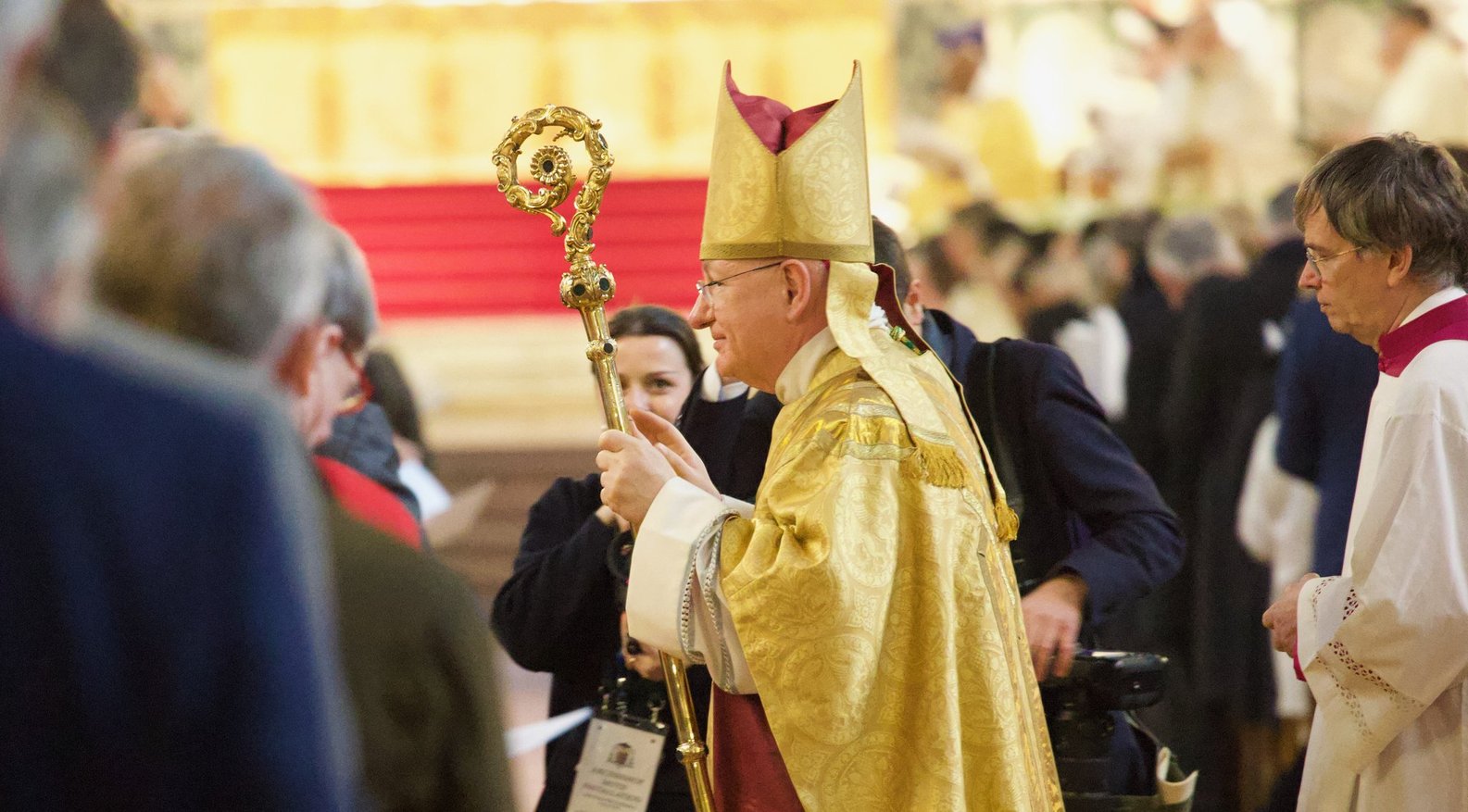
Archbishop Moth calls the faithful to courageous witness at Westminster installation Mass – #Catholic – “Fan into flame the gift of God” and courageously live out the gifts of the Holy Spirit to a world currently crying out for hope, Archbishop Richard Moth exhorted the faithful on Feb. 14 at his installation Mass at Westminster Cathedral.In his first homily as the 12th archbishop of Westminster, and to a packed cathedral filled with clergy, religious leaders, civic leaders, and lay faithful, Moth recalled the words of St. Paul to Timothy, insisting that God’s call is not a summons to worldly power or domination but to a life marked by self-control “guided, empowered by the Holy Spirit” and by a love that mirrors Christ’s total self-giving on the cross.
 
 Archbishop Richard Moth speaks at Westminster Cathedral at his installation Mass on Saturday, Feb. 14, 2026, in London. | Credit: Edward Pentin
 
 He noted that he had heard that same passage from Scripture when he attended the episcopal consecration of one of his predecessors, Cardinal Basil Hume, in 1976.Describing this path as “Christ-like service,” he said it brings faith, love, and hope “to a world that, in our present age, cries out for hope.” The grace of the Holy Spirit received in baptism, confirmation, and holy orders, he noted, is given to all the faithful, and their gifts are “fanned into flame” as they live out the mission entrusted to them.Moth, 67, had served as bishop of Arundel and Brighton in southern England for the past decade until Pope Leo XIV nominated him in December 2025. Best known for his work on prisons, criminal justice, and life issues, as well as his expertise in canon law, he succeeds Cardinal Vincent Nichols as archbishop of the leading diocese of England and Wales.Drawing on the Gospel image of Christ calling the 72 disciples, the new archbishop continued his homily by calling on Catholics to go out into “the world of our own age” bearing the message of the Gospel of peace and ensuring that its light shines in parish communities, homes, schools, universities, and workplaces. At every opportunity, he urged believers to “shed the light of the Gospel on the world of our day,” including the public square.He quoted Pope Benedict XVI from his 2010 address in Westminster Hall, when the late pontiff spoke of how faith and reason “need one another,” should be in dialogue “for the good of our civilization,” and that religion was “not a problem, but a vital contributor to the conversation.”This encounter will, at times, “require the boldness that we see in Paul and Barnabas in today’s first reading, but we need not fear,” Moth said, and he linked the Church’s evangelizing mission directly to the “great questions of our time,” naming them as the quest for peace, human dignity, the right to life at every stage, the protection of the vulnerable, the plight of refugees and the dispossessed, and the safeguarding of “our common home.” All these issues, he insisted, are “intrinsic to the work of evangelization.”Evangelization requires patienceMarking the feast of St. Cyril and Methodius, the archbishop stressed that it is “from the Eucharist and from prayer that our work of evangelization flows, for evangelization is a call to a relationship, the relationship with the person of Jesus Christ.”Evangelization requires patience, he said, adding that “we need not be concerned to seek for results according to our own timescale.” But he drew attention to reports of a “quiet revival” of faith and expressed hope that the depth of this revival will show itself, adding: “It is certainly the case that this is a good moment to be a Christian, a Catholic, a disciple of Christ.”If this flame of the Holy Spirit is to be fanned, he added, it must be nurtured through prayer and a deepening understanding of the gift of faith, helping mission to grow “ever more effective.”
 
 Archbishop Richard Moth prays at his installation Mass at Westminster Cathedral on Saturday, Feb. 14, 2026, in London. | Credit: Edward Pentin
 
 At the same time, the archbishop acknowledged that this work is “fragile and adversely impacted by our failures in love, power, and self-control,” and he spoke of his keen awareness of occasions when members of the Church, or the Church as a whole, have failed, especially in relation to the vulnerable.Those failures, he implied, make the call to Holy Spirit-led self-control, humble service, and courageous witness all the more urgent as the diocese embarks on a new chapter of its life.Moth gave thanks for the long witness of the local Church and in particular his predecessor, Nichols, saying there is “so much for which to be thankful, so much on which to build.” He expressed joy that the Lord has called him to share with the people and clergy of the diocese the same mission once given by Christ to the 72 disciples.Solemn installationThe rite of installation began soon after noon when the cathedral bells were rung and the Great West Door opened to mark his arrival. The archbishop, dressed in gold vestments featuring Byzantine-inspired designs and a gold mitre, knelt at the threshold in silent prayer for a few moments, surrounded by great marble medallions on which are representations of 12 archbishops of Canterbury, each of whom were saints.A trumpet fanfare sounded and the archbishop entered the cathedral narthex to be greeted by the provost, Canon Shaun Lennard. The cathedral choir sang a Responsory accompanied by the music of contemporary Scottish composer Sir James MacMillan.After Pope Leo XIV’s apostolic letter formally announcing the appointment was read out, the solemn installation began. Lennard, standing in front of the archbishops’ throne, read out a prayer and the words of installation, asking that “Our Lord Jesus Christ guard your going in from henceforth, now and for evermore.”Nichols then formally handed the archbishop his crozier, a symbol of his office as bishop.Dignitaries including the lord mayor of Westminster and the Catholic politician Edward Leigh then greeted the new archbishop, which was followed by a few words of welcome from Dame Sarah Mullally, the newly confirmed, though not yet enthroned, Anglican archbishop of Canterbury.
 
 Dignitaries gather at Archbishop Richard Moth’s installation Mass at Westminster Cathedral on Saturday, Feb. 14, 2026, in London. | Credit: Edward Pentin
 
 Speaking on behalf of the ecumenical group Churches Together, Mullally said she very much looked forward to working with the new archbishop “to deepen our relationships and to strengthen our shared Christian witness.”Following the conclusion of the installation rite, Moth celebrated a pontifical Mass, with readings of the feast of Sts. Cyril and Methodius and the Gospel reading on the sending of the 72 disciples in Luke.The cathedral authorities said the principal chalice used during the Mass dated from 1529 and was crafted in silver gilt during the reign of King Henry VIII, just predating the Reformation. Toward the end of the pontifical Mass, the Te Deum was sung, and Moth was led around the cathedral to bless the faithful, pausing briefly for prayer at the tomb of one of his predecessors, Cardinal Cormac Murphy-O’Connor.In concluding words, the papal nuncio, Archbishop Miguel Maury Buendia, shared words from Pope Leo XIV and expressed his gratitude to Nichols. Noting that the installation fell on Valentine’s Day, he prayed to the Lord that “love would flourish over all” during Moth’s ministry in Westminster.Speaking in December 2025 about his appointment, Moth said his first priority would be to listen widely rather than carry out preconceived plans and underlined that everything in the archdiocese must be rooted in prayer and especially the Eucharist. He also spoke of a renewed commitment to bringing the Gospel into today’s world, adapting how the faith is presented without altering its substance, and continuing “the great adventure that is the life of the Church and witness to the Gospel” in Westminster.

Archbishop Moth calls the faithful to courageous witness at Westminster installation Mass – #Catholic – “Fan into flame the gift of God” and courageously live out the gifts of the Holy Spirit to a world currently crying out for hope, Archbishop Richard Moth exhorted the faithful on Feb. 14 at his installation Mass at Westminster Cathedral.In his first homily as the 12th archbishop of Westminster, and to a packed cathedral filled with clergy, religious leaders, civic leaders, and lay faithful, Moth recalled the words of St. Paul to Timothy, insisting that God’s call is not a summons to worldly power or domination but to a life marked by self-control “guided, empowered by the Holy Spirit” and by a love that mirrors Christ’s total self-giving on the cross. Archbishop Richard Moth speaks at Westminster Cathedral at his installation Mass on Saturday, Feb. 14, 2026, in London. | Credit: Edward Pentin He noted that he had heard that same passage from Scripture when he attended the episcopal consecration of one of his predecessors, Cardinal Basil Hume, in 1976.Describing this path as “Christ-like service,” he said it brings faith, love, and hope “to a world that, in our present age, cries out for hope.” The grace of the Holy Spirit received in baptism, confirmation, and holy orders, he noted, is given to all the faithful, and their gifts are “fanned into flame” as they live out the mission entrusted to them.Moth, 67, had served as bishop of Arundel and Brighton in southern England for the past decade until Pope Leo XIV nominated him in December 2025. Best known for his work on prisons, criminal justice, and life issues, as well as his expertise in canon law, he succeeds Cardinal Vincent Nichols as archbishop of the leading diocese of England and Wales.Drawing on the Gospel image of Christ calling the 72 disciples, the new archbishop continued his homily by calling on Catholics to go out into “the world of our own age” bearing the message of the Gospel of peace and ensuring that its light shines in parish communities, homes, schools, universities, and workplaces. At every opportunity, he urged believers to “shed the light of the Gospel on the world of our day,” including the public square.He quoted Pope Benedict XVI from his 2010 address in Westminster Hall, when the late pontiff spoke of how faith and reason “need one another,” should be in dialogue “for the good of our civilization,” and that religion was “not a problem, but a vital contributor to the conversation.”This encounter will, at times, “require the boldness that we see in Paul and Barnabas in today’s first reading, but we need not fear,” Moth said, and he linked the Church’s evangelizing mission directly to the “great questions of our time,” naming them as the quest for peace, human dignity, the right to life at every stage, the protection of the vulnerable, the plight of refugees and the dispossessed, and the safeguarding of “our common home.” All these issues, he insisted, are “intrinsic to the work of evangelization.”Evangelization requires patienceMarking the feast of St. Cyril and Methodius, the archbishop stressed that it is “from the Eucharist and from prayer that our work of evangelization flows, for evangelization is a call to a relationship, the relationship with the person of Jesus Christ.”Evangelization requires patience, he said, adding that “we need not be concerned to seek for results according to our own timescale.” But he drew attention to reports of a “quiet revival” of faith and expressed hope that the depth of this revival will show itself, adding: “It is certainly the case that this is a good moment to be a Christian, a Catholic, a disciple of Christ.”If this flame of the Holy Spirit is to be fanned, he added, it must be nurtured through prayer and a deepening understanding of the gift of faith, helping mission to grow “ever more effective.” Archbishop Richard Moth prays at his installation Mass at Westminster Cathedral on Saturday, Feb. 14, 2026, in London. | Credit: Edward Pentin At the same time, the archbishop acknowledged that this work is “fragile and adversely impacted by our failures in love, power, and self-control,” and he spoke of his keen awareness of occasions when members of the Church, or the Church as a whole, have failed, especially in relation to the vulnerable.Those failures, he implied, make the call to Holy Spirit-led self-control, humble service, and courageous witness all the more urgent as the diocese embarks on a new chapter of its life.Moth gave thanks for the long witness of the local Church and in particular his predecessor, Nichols, saying there is “so much for which to be thankful, so much on which to build.” He expressed joy that the Lord has called him to share with the people and clergy of the diocese the same mission once given by Christ to the 72 disciples.Solemn installationThe rite of installation began soon after noon when the cathedral bells were rung and the Great West Door opened to mark his arrival. The archbishop, dressed in gold vestments featuring Byzantine-inspired designs and a gold mitre, knelt at the threshold in silent prayer for a few moments, surrounded by great marble medallions on which are representations of 12 archbishops of Canterbury, each of whom were saints.A trumpet fanfare sounded and the archbishop entered the cathedral narthex to be greeted by the provost, Canon Shaun Lennard. The cathedral choir sang a Responsory accompanied by the music of contemporary Scottish composer Sir James MacMillan.After Pope Leo XIV’s apostolic letter formally announcing the appointment was read out, the solemn installation began. Lennard, standing in front of the archbishops’ throne, read out a prayer and the words of installation, asking that “Our Lord Jesus Christ guard your going in from henceforth, now and for evermore.”Nichols then formally handed the archbishop his crozier, a symbol of his office as bishop.Dignitaries including the lord mayor of Westminster and the Catholic politician Edward Leigh then greeted the new archbishop, which was followed by a few words of welcome from Dame Sarah Mullally, the newly confirmed, though not yet enthroned, Anglican archbishop of Canterbury. Dignitaries gather at Archbishop Richard Moth’s installation Mass at Westminster Cathedral on Saturday, Feb. 14, 2026, in London. | Credit: Edward Pentin Speaking on behalf of the ecumenical group Churches Together, Mullally said she very much looked forward to working with the new archbishop “to deepen our relationships and to strengthen our shared Christian witness.”Following the conclusion of the installation rite, Moth celebrated a pontifical Mass, with readings of the feast of Sts. Cyril and Methodius and the Gospel reading on the sending of the 72 disciples in Luke.The cathedral authorities said the principal chalice used during the Mass dated from 1529 and was crafted in silver gilt during the reign of King Henry VIII, just predating the Reformation. Toward the end of the pontifical Mass, the Te Deum was sung, and Moth was led around the cathedral to bless the faithful, pausing briefly for prayer at the tomb of one of his predecessors, Cardinal Cormac Murphy-O’Connor.In concluding words, the papal nuncio, Archbishop Miguel Maury Buendia, shared words from Pope Leo XIV and expressed his gratitude to Nichols. Noting that the installation fell on Valentine’s Day, he prayed to the Lord that “love would flourish over all” during Moth’s ministry in Westminster.Speaking in December 2025 about his appointment, Moth said his first priority would be to listen widely rather than carry out preconceived plans and underlined that everything in the archdiocese must be rooted in prayer and especially the Eucharist. He also spoke of a renewed commitment to bringing the Gospel into today’s world, adapting how the faith is presented without altering its substance, and continuing “the great adventure that is the life of the Church and witness to the Gospel” in Westminster.

Archbishop Richard Moth served as bishop of Arundel and Brighton in southern England for the past decade until Pope Leo XIV nominated him in December.
Read More
Pope Leo XIV appoints Texas cardinal as administrator of Amarillo until new bishop chosen #Catholic Pope Leo XIV on Feb. 14 accepted the resignation of Amarillo Bishop Patrick Zurek, appointing Cardinal Daniel DiNardo to serve as apostolic administrator of the Texas diocese until a permanent replacement can be found. Zurek has served as the Amarillo bishop for nearly 20 years, having been appointed to the post by Pope Benedict XVI in 2008. He had previously served as an auxiliary bishop of the Archdiocese of San Antonio. The diocese on its website identifies him as "the longest serving Bishop in the history of the Diocese of Amarillo." At 77 he was two years past the customary retirement age for bishops. DiNardo previously served as the archbishop of Galveston-Houston from 2006 to 2025. He was created a cardinal by Pope Benedict XVI in 2007. He has served as both the president and vice president of the U.S. Conference of Catholic Bishops. Religious sister named deputy director of Vatican press officeOn Feb. 13, meanwhile, Pope Leo XIV appointed Sister Nina Benedikta Krapić, MVZ as deputy director of the Holy See Press Office. The first religious sister to serve in the role, Krapić previously served in the Dicastery for Communications. Vatican News reported that she has also worked "as a journalist and as a legal advisor for women victims of domestic violence and other marginalized individuals."She is currently studying for a doctorate in social sciences at the Collegium Maximum of the Pontifical Gregorian University in Rome. She will take up the post in the Vatican press office in March 1. Krapić replaces Cristiane Murray in the press role. Murray was appointed to the position by Pope Francis in 2019 after having worked for Vatican Radio for more than 25 years.

Pope Leo XIV appoints Texas cardinal as administrator of Amarillo until new bishop chosen #Catholic Pope Leo XIV on Feb. 14 accepted the resignation of Amarillo Bishop Patrick Zurek, appointing Cardinal Daniel DiNardo to serve as apostolic administrator of the Texas diocese until a permanent replacement can be found. Zurek has served as the Amarillo bishop for nearly 20 years, having been appointed to the post by Pope Benedict XVI in 2008. He had previously served as an auxiliary bishop of the Archdiocese of San Antonio. The diocese on its website identifies him as "the longest serving Bishop in the history of the Diocese of Amarillo." At 77 he was two years past the customary retirement age for bishops. DiNardo previously served as the archbishop of Galveston-Houston from 2006 to 2025. He was created a cardinal by Pope Benedict XVI in 2007. He has served as both the president and vice president of the U.S. Conference of Catholic Bishops. Religious sister named deputy director of Vatican press officeOn Feb. 13, meanwhile, Pope Leo XIV appointed Sister Nina Benedikta Krapić, MVZ as deputy director of the Holy See Press Office. The first religious sister to serve in the role, Krapić previously served in the Dicastery for Communications. Vatican News reported that she has also worked "as a journalist and as a legal advisor for women victims of domestic violence and other marginalized individuals."She is currently studying for a doctorate in social sciences at the Collegium Maximum of the Pontifical Gregorian University in Rome. She will take up the post in the Vatican press office in March 1. Krapić replaces Cristiane Murray in the press role. Murray was appointed to the position by Pope Francis in 2019 after having worked for Vatican Radio for more than 25 years.

The Holy Father accepted the resignation of Amarillo Bishop Patrick Zurek, who has reached retirement age.

Read More
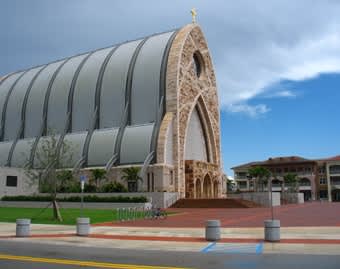
Ave Maria University to open campus in Ireland #Catholic Here is a round up of recent Catholic-education-related news:Ave Maria University to open campus in IrelandAve Maria University, a Catholic liberal arts university in Florida, is opening a new campus at a former monastery in rural Ireland, according to an announcement on its website.The new campus will be in County Waterford in the southern region of Ireland at the former Cistercian monastery of Mount Melleray near Cappoquin, the university announced in a video. The abbey closed in January 2025 after almost two centuries.The video announcement pledged that the new campus would be “a fully integrated Ave Maria University experience now embedded in the rich Catholic and cultural heritage of Europe.”Diocese of Brooklyn to close 7 struggling schools Seven Catholic schools will be closing in June in the Diocese of Brooklyn, New York, due to financial challenges and enrollment declines, the diocese announced Feb. 11.The seven schools closing are: Sacred Heart Catholic Academy, Cambria Heights; St. Bartholomew Catholic Academy in Elmhurst; St. Nicholas of Tolentine Catholic Academy in Jamaica; Incarnation Catholic Academy in Queens Village; St. Thomas the Apostle Catholic Academy in Woodhaven; St. Elizabeth Catholic Academy in Ozone Park; and Our Lady of Trust Catholic Academy in Canarsie.“Our responsibility is both pastoral and practical,” said Deacon Kevin McCormack, superintendent of schools for the diocese. “We will walk with our families and employees through this process while continuing to strengthen Catholic education throughout Brooklyn and Queens.”The enrollment decline has been ongoing since 2019, with a sharp decline from 2024 to 2025, according to the diocese newspaper.The diocese has a website to help families facilitate transferring to nearby Catholic schools.Thomas Aquinas College celebrates 100 alumni priestsA Catholic liberal arts college in California with an East Coast satellite location in Massachusetts celebrated its 100th alumni priest.Priest alumni of Thomas Aquinas College include 11 Benedictines, nine Dominicans, eight Norbertines, and 40 diocesan priests, among others, according to a Feb. 12 press release shared with EWTN News.Thomas Aquinas College has a combined enrollment of about 500 students and is designed to be an intentionally small community.“We are deeply honored to have played some small part in these men’s formation, and we pray for their ministry and witness as they serve Christ’s people throughout the world,” President Paul O’Reilly said in a statement shared with EWTN News.The four newest priests were ordained in 2024 at three separate ordination masses.

Ave Maria University to open campus in Ireland #Catholic Here is a round up of recent Catholic-education-related news:Ave Maria University to open campus in IrelandAve Maria University, a Catholic liberal arts university in Florida, is opening a new campus at a former monastery in rural Ireland, according to an announcement on its website.The new campus will be in County Waterford in the southern region of Ireland at the former Cistercian monastery of Mount Melleray near Cappoquin, the university announced in a video. The abbey closed in January 2025 after almost two centuries.The video announcement pledged that the new campus would be “a fully integrated Ave Maria University experience now embedded in the rich Catholic and cultural heritage of Europe.”Diocese of Brooklyn to close 7 struggling schools Seven Catholic schools will be closing in June in the Diocese of Brooklyn, New York, due to financial challenges and enrollment declines, the diocese announced Feb. 11.The seven schools closing are: Sacred Heart Catholic Academy, Cambria Heights; St. Bartholomew Catholic Academy in Elmhurst; St. Nicholas of Tolentine Catholic Academy in Jamaica; Incarnation Catholic Academy in Queens Village; St. Thomas the Apostle Catholic Academy in Woodhaven; St. Elizabeth Catholic Academy in Ozone Park; and Our Lady of Trust Catholic Academy in Canarsie.“Our responsibility is both pastoral and practical,” said Deacon Kevin McCormack, superintendent of schools for the diocese. “We will walk with our families and employees through this process while continuing to strengthen Catholic education throughout Brooklyn and Queens.”The enrollment decline has been ongoing since 2019, with a sharp decline from 2024 to 2025, according to the diocese newspaper.The diocese has a website to help families facilitate transferring to nearby Catholic schools.Thomas Aquinas College celebrates 100 alumni priestsA Catholic liberal arts college in California with an East Coast satellite location in Massachusetts celebrated its 100th alumni priest.Priest alumni of Thomas Aquinas College include 11 Benedictines, nine Dominicans, eight Norbertines, and 40 diocesan priests, among others, according to a Feb. 12 press release shared with EWTN News.Thomas Aquinas College has a combined enrollment of about 500 students and is designed to be an intentionally small community.“We are deeply honored to have played some small part in these men’s formation, and we pray for their ministry and witness as they serve Christ’s people throughout the world,” President Paul O’Reilly said in a statement shared with EWTN News.The four newest priests were ordained in 2024 at three separate ordination masses.

Ave Maria University, a Catholic liberal arts university in Florida, is opening a new campus at a former monastery in rural Ireland. Learn more in this Catholic education news roundup.
Read More
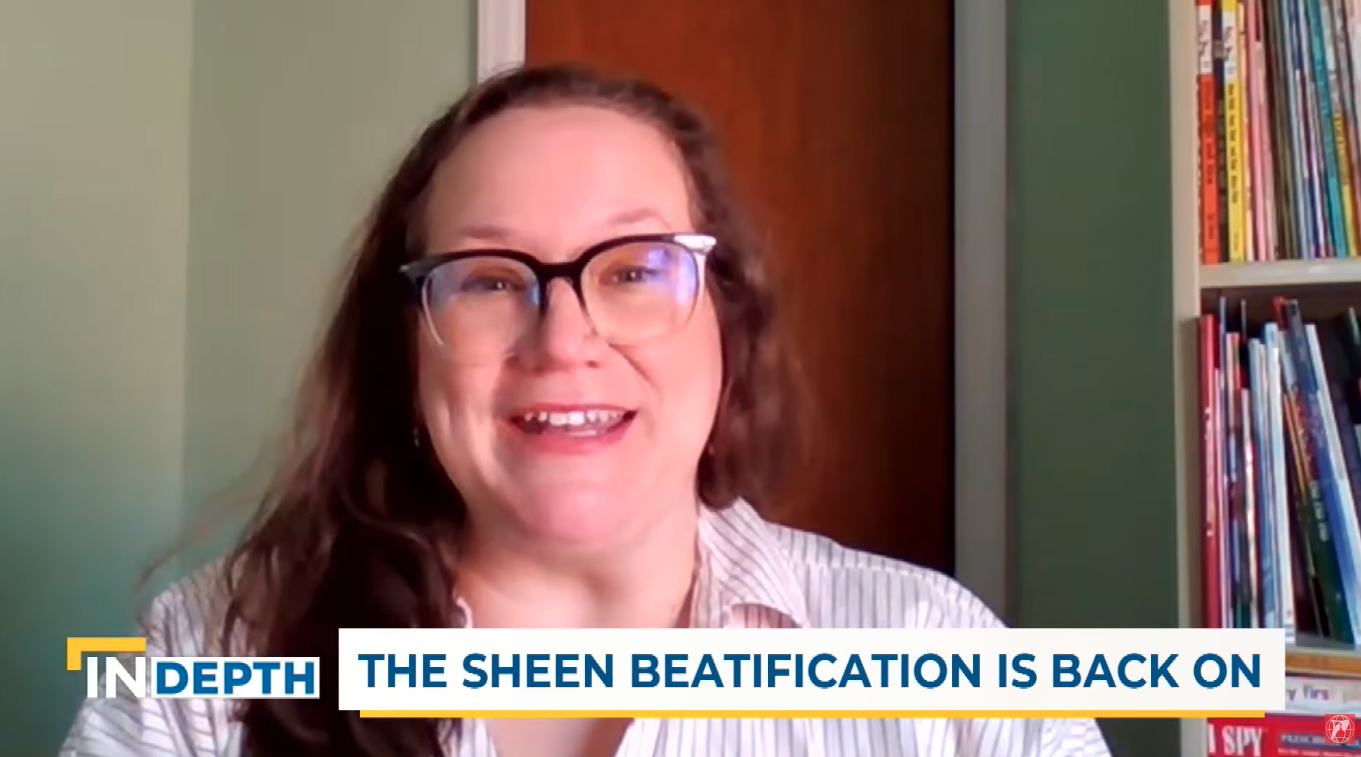
Mother of boy healed through intercession of Fulton Sheen celebrates his upcoming beatification #Catholic Bonnie Engstrom, the mother of the child who was healed through Archbishop J. Fulton Sheen’s intercession, said she “laughed out loud with joy” when she heard his beatification was going to move forward.On Feb. 9, the Holy See officially informed Bishop Louis Tylka of the Diocese of Peoria, Illinois, that the cause for the Venerable Servant of God Archbishop Fulton J. Sheen can proceed to beatification. He is credited for the miracle that saved the life of Engstrom’s son James Fulton Engstrom, who was named after Sheen.“We had started getting to know Fulton Sheen and growing in our devotion to him while I was pregnant with James,” Engstrom said in a Feb. 13 interview with “EWTN News In Depth.” “During that pregnancy we had decided to name our son after him … to really put him under his patronage.”On Sept. 16, 2010, James was born at home. It had been a healthy pregnancy, and it was a healthy labor, but there was a knot in James’ umbilical cord that tightened during birth. “He was a stillborn, there was absolutely no sign of life,” Engstrom said.In the “time of crisis, I was in a state of shock,” she said. “I didn’t really know what to do, but I remember calling on Fulton Sheen, just saying his name, ‘Fulton Sheen, Fulton Sheen, Fulton Sheen.’”“While [James] was at home, while he was in the ambulance, and while he was at the hospital in the emergency room, he did not have a pulse for that entire time,” she said. “Right as the medical team was ready to call time of death, all hands were off. And at that moment, his heart started to beat again, and it never stopped after that.”James is a freshman in high school and doing “great,” Engstrom said. “He is doing really well. He loves music. He’s in an art class that he’s really enjoying … he’s a great kid. Hardworking, funny.”While James “has had some medical issues along the way,” there is nothing the family can attribute to his health issues at birth.Engstrom said that her son’s “initial MRI, the first 24 hours of his life, showed extensive brain damage, and the follow-up one was perfectly clear.”Sheen’s beatificationSheen’s cause for canonization was first opened in 2002 under the leadership of the Diocese of Peoria, Sheen’s birthplace, and from then on he was referred to as a servant of God. Pope Benedict XVI declared him venerable in June 2012.On March 6, 2014, the board of medical experts who advise the then-Congregation for the Causes of Saints unanimously approved the reported miracle of James. Pope Francis approved of the miracle of Sheen’s on July 5, 2019, and the beatification experienced numerous delays due to an ownership dispute of his remains and an investigation into clergy sex abuse in New York.While obstacles were eventually cleared, Engstrom said initially her family was “frustrated” and “disappointed” with the delays. “I think as things in the Church just continue to progress and time went by, we realized, we trust in Jesus and he’s got it in control. And so we were able to really lean into that and move past the initial disappointment,” she said.The family is “so excited,” Engstrom said. "We’re so happy about it.” “We really appreciate that in all of Church history, our family has a little footnote in it in a very special way, and it’s remarkable. It is such an honor, and it’s such a joyful thing,” she said.

Mother of boy healed through intercession of Fulton Sheen celebrates his upcoming beatification #Catholic Bonnie Engstrom, the mother of the child who was healed through Archbishop J. Fulton Sheen’s intercession, said she “laughed out loud with joy” when she heard his beatification was going to move forward.On Feb. 9, the Holy See officially informed Bishop Louis Tylka of the Diocese of Peoria, Illinois, that the cause for the Venerable Servant of God Archbishop Fulton J. Sheen can proceed to beatification. He is credited for the miracle that saved the life of Engstrom’s son James Fulton Engstrom, who was named after Sheen.“We had started getting to know Fulton Sheen and growing in our devotion to him while I was pregnant with James,” Engstrom said in a Feb. 13 interview with “EWTN News In Depth.” “During that pregnancy we had decided to name our son after him … to really put him under his patronage.”On Sept. 16, 2010, James was born at home. It had been a healthy pregnancy, and it was a healthy labor, but there was a knot in James’ umbilical cord that tightened during birth. “He was a stillborn, there was absolutely no sign of life,” Engstrom said.In the “time of crisis, I was in a state of shock,” she said. “I didn’t really know what to do, but I remember calling on Fulton Sheen, just saying his name, ‘Fulton Sheen, Fulton Sheen, Fulton Sheen.’”“While [James] was at home, while he was in the ambulance, and while he was at the hospital in the emergency room, he did not have a pulse for that entire time,” she said. “Right as the medical team was ready to call time of death, all hands were off. And at that moment, his heart started to beat again, and it never stopped after that.”James is a freshman in high school and doing “great,” Engstrom said. “He is doing really well. He loves music. He’s in an art class that he’s really enjoying … he’s a great kid. Hardworking, funny.”While James “has had some medical issues along the way,” there is nothing the family can attribute to his health issues at birth.Engstrom said that her son’s “initial MRI, the first 24 hours of his life, showed extensive brain damage, and the follow-up one was perfectly clear.”Sheen’s beatificationSheen’s cause for canonization was first opened in 2002 under the leadership of the Diocese of Peoria, Sheen’s birthplace, and from then on he was referred to as a servant of God. Pope Benedict XVI declared him venerable in June 2012.On March 6, 2014, the board of medical experts who advise the then-Congregation for the Causes of Saints unanimously approved the reported miracle of James. Pope Francis approved of the miracle of Sheen’s on July 5, 2019, and the beatification experienced numerous delays due to an ownership dispute of his remains and an investigation into clergy sex abuse in New York.While obstacles were eventually cleared, Engstrom said initially her family was “frustrated” and “disappointed” with the delays. “I think as things in the Church just continue to progress and time went by, we realized, we trust in Jesus and he’s got it in control. And so we were able to really lean into that and move past the initial disappointment,” she said.The family is “so excited,” Engstrom said. "We’re so happy about it.” “We really appreciate that in all of Church history, our family has a little footnote in it in a very special way, and it’s remarkable. It is such an honor, and it’s such a joyful thing,” she said.

Bonnie Engstrom, the mother of boy healed through the intercession of Fulton Sheen, provides an update on her son following the announcement of the archbishop’s upcoming beatification.
Read More
Mexican priest appeals to violent criminals to repent and convert this Lent – #Catholic – With Lent beginning on Ash Wednesday, Feb. 18, Father Manuel Corral, canon of the metropolitan cathedral of Mexico City, called on those involved in criminal violence to live this liturgical season as a genuine opportunity for interior conversion.During a Feb. 6 press conference, the priest explained that Lent is a 40-day liturgical season of preparation for Easter in the Catholic Church, beginning on Ash Wednesday and concluding before Holy Thursday.He emphasized that this is a privileged period for undergoing a profound transformation of attitudes, as it is an opportune moment to “be disposed to change.”He also reminded everyone that, although many Christians like to visibly wear the ash cross on their foreheads, its essential meaning should not be lost, since “it is a symbol of repentance” that invites us to examine our lives and turn our hearts back to God.In this context, he made an explicit appeal to those who perpetrate violence in the country. He acknowledged that this exhortation is particularly complex regarding those involved in organized crime, since the cartels, he said, “are in such a huge spiral of violence that making an appeal” for an end to violence during Holy Week “is very difficult.”Nevertheless, he affirmed that “prayer, as recollection, can bring us peace, provided there is dialogue and that encounter with Christ.”As an example, he recalled when in 2011 the relic of St. John Paul II was being taken from place to place both in San Fernando in Tamaulipas state, and in Apatzingán in Michoacán state. In both cases, he explained, it was possible to create a period of calm amid contexts marked by violence.In an interview with ACI Prensa, the Spanish-language sister service of EWTN News, the cathedral canon noted that, although it is not common, there are criminals who approach the Church seeking reconciliation. He acknowledged that this process is not easy, since receiving sacramental forgiveness requires taking responsibility, because “you have to repent,” and sometimes that means “going and turning yourself in to the authorities.”“It’s not easy,” he admitted, “but I tell you there have been [cases]… I can attest to people who have changed.”Beyond armed violence, Corral emphasized that the call to conversion is also personal and daily. In this regard, he urged the faithful to examine those attitudes that create conflict in daily life, reminding them that each person must “do what you have to do within yourself to foster and create a peaceful environment.”He also called for recognizing behaviors that harm others, such as “selfishness, not cooperating, or annoying others.”Begin Lent reconciledTo begin Lent reconciled with Christ, the priest pointed out that the most important thing is to approach the sacrament of confession.As a sign of hope, Corral shared that during the opening of the Jubilee of Hope door at the metropolitan cathedral, he witnessed long days of confessions in which thousands of people came “moved by a real desire for change.”“Confession is like a blank check the Lord gives us, and we fill it with whatever we want, but having this [disposition], to say: Lord, here I am, and I want to have different attitudes, give me the strength so that my life is transformed, so that my life is changed,” he said.Along with confession, the priest reminded everyone that Lent is lived concretely through fasting, prayer, and charity.He clarified that fasting is not a meaningless deprivation but rather “means self-discipline”; that prayer is not simply repeating formulas but rather involves “above all, silence… that is, ‘speak, Lord, for your servant is listening.’”He also emphasized that charity goes beyond giving alms, as it involves living with genuine generosity, since “to be charitable is to be generous, but generous in giving the best of myself, yes, taking responsibility for my life; that is carrying the cross, as I was saying, that is what it means to be charitable.”This story was first pub lished by ACI Prensa, the Spanish-language sister service of EWTN News. It has been translated and adapted by EWTN News English.

Mexican priest appeals to violent criminals to repent and convert this Lent – #Catholic – With Lent beginning on Ash Wednesday, Feb. 18, Father Manuel Corral, canon of the metropolitan cathedral of Mexico City, called on those involved in criminal violence to live this liturgical season as a genuine opportunity for interior conversion.During a Feb. 6 press conference, the priest explained that Lent is a 40-day liturgical season of preparation for Easter in the Catholic Church, beginning on Ash Wednesday and concluding before Holy Thursday.He emphasized that this is a privileged period for undergoing a profound transformation of attitudes, as it is an opportune moment to “be disposed to change.”He also reminded everyone that, although many Christians like to visibly wear the ash cross on their foreheads, its essential meaning should not be lost, since “it is a symbol of repentance” that invites us to examine our lives and turn our hearts back to God.In this context, he made an explicit appeal to those who perpetrate violence in the country. He acknowledged that this exhortation is particularly complex regarding those involved in organized crime, since the cartels, he said, “are in such a huge spiral of violence that making an appeal” for an end to violence during Holy Week “is very difficult.”Nevertheless, he affirmed that “prayer, as recollection, can bring us peace, provided there is dialogue and that encounter with Christ.”As an example, he recalled when in 2011 the relic of St. John Paul II was being taken from place to place both in San Fernando in Tamaulipas state, and in Apatzingán in Michoacán state. In both cases, he explained, it was possible to create a period of calm amid contexts marked by violence.In an interview with ACI Prensa, the Spanish-language sister service of EWTN News, the cathedral canon noted that, although it is not common, there are criminals who approach the Church seeking reconciliation. He acknowledged that this process is not easy, since receiving sacramental forgiveness requires taking responsibility, because “you have to repent,” and sometimes that means “going and turning yourself in to the authorities.”“It’s not easy,” he admitted, “but I tell you there have been [cases]… I can attest to people who have changed.”Beyond armed violence, Corral emphasized that the call to conversion is also personal and daily. In this regard, he urged the faithful to examine those attitudes that create conflict in daily life, reminding them that each person must “do what you have to do within yourself to foster and create a peaceful environment.”He also called for recognizing behaviors that harm others, such as “selfishness, not cooperating, or annoying others.”Begin Lent reconciledTo begin Lent reconciled with Christ, the priest pointed out that the most important thing is to approach the sacrament of confession.As a sign of hope, Corral shared that during the opening of the Jubilee of Hope door at the metropolitan cathedral, he witnessed long days of confessions in which thousands of people came “moved by a real desire for change.”“Confession is like a blank check the Lord gives us, and we fill it with whatever we want, but having this [disposition], to say: Lord, here I am, and I want to have different attitudes, give me the strength so that my life is transformed, so that my life is changed,” he said.Along with confession, the priest reminded everyone that Lent is lived concretely through fasting, prayer, and charity.He clarified that fasting is not a meaningless deprivation but rather “means self-discipline”; that prayer is not simply repeating formulas but rather involves “above all, silence… that is, ‘speak, Lord, for your servant is listening.’”He also emphasized that charity goes beyond giving alms, as it involves living with genuine generosity, since “to be charitable is to be generous, but generous in giving the best of myself, yes, taking responsibility for my life; that is carrying the cross, as I was saying, that is what it means to be charitable.”This story was first pub lished by ACI Prensa, the Spanish-language sister service of EWTN News. It has been translated and adapted by EWTN News English.

With Lent beginning on Ash Wednesday, Feb. 18, Mexican priest Father Manuel Corral called on those involved in criminal violence to use this liturgical season as an opportunity for inner conversion.

Read More
What this 115-year-old Catholic youth movement can teach a secular Europe – #Catholic – VILNIUS, Lithuania — As Catholic youth movements across Europe continue to shrink or retreat from public engagement, Lithuania’s Ateitis Federation stands out as a rare exception: an intergenerational Catholic movement that still forms leaders, sustains disciplined membership, and translates faith into civic presence.Once a lay Catholic resistance movement behind the Iron Curtain, Ateitis at its 115th anniversary offers a rare case study of Catholic youth translating faith into sustained public influence in post-Soviet Europe.From a student journal to a national movementAteitis began as a student magazine, circulated discreetly among Lithuanian university students during the final years of the Russian Empire. Its founders were young Catholics who recognized the increasingly secularized educational and civic model imposed by imperial authorities and refused to accept it as inevitable.
 
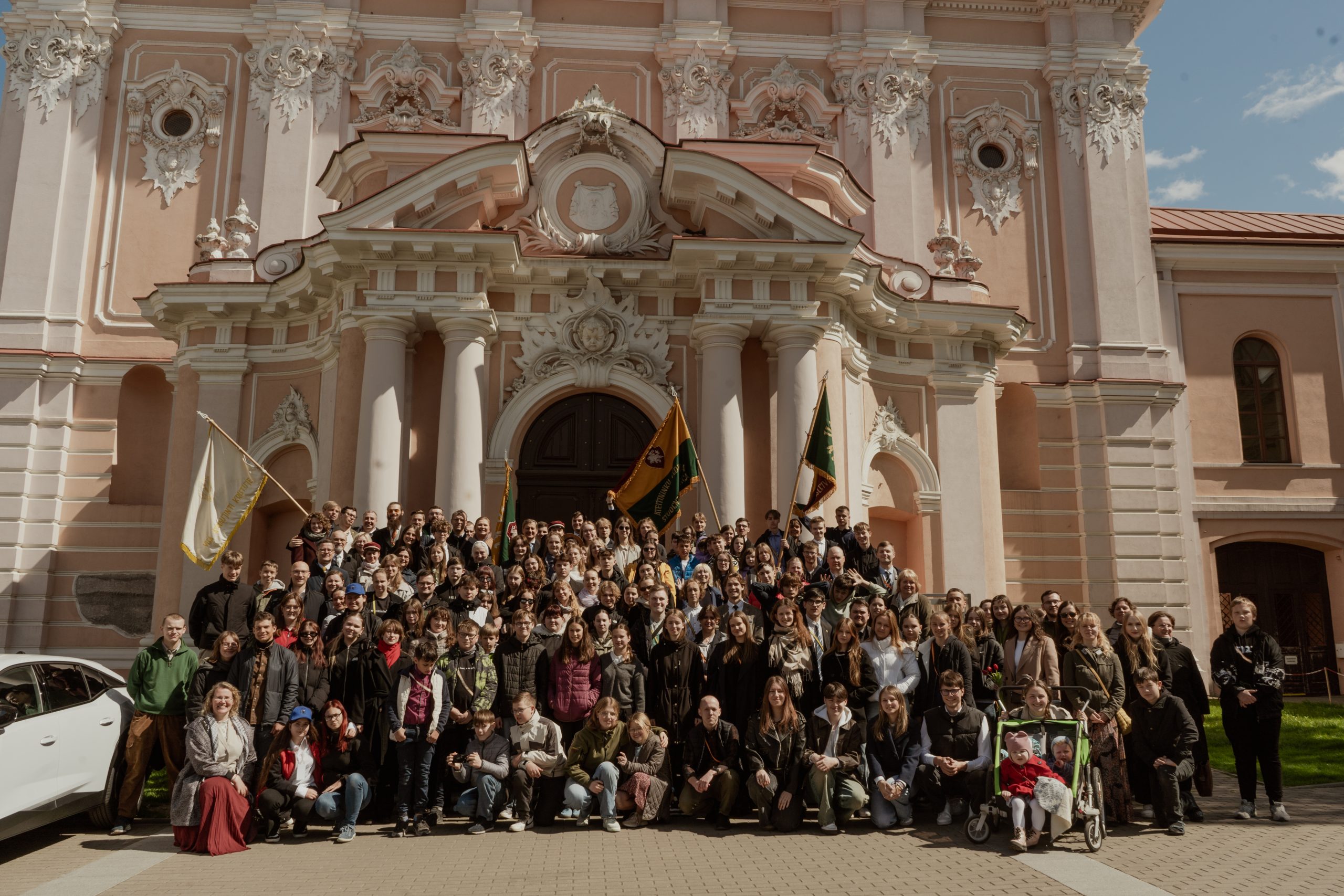
 Members of the Ateitis Federation pose inside a church in Vilnius, Lithuania. | Credit: The Ateitis Federation
 
 Eventually the name of the publication became the name of a broader Catholic youth federation, one that wove together faith, intellectual formation, and national renewal. Its essence was summed up in the words that became its motto: “Visa atnaujinti Kristuje” — “To renew all things in Christ.”That phrase echoes the mission of St. Pius X, whose 1903 encyclical E Supremi Apostolatus called for a moral and religious renewal of society in Christ. Ateitis became one of the early movements in the region to adopt that vision explicitly, aligning itself with the wider tradition of Catholic Action.Principles that endureIn 2020, Archbishop Gintaras Grušas of Vilnius, himself the spiritual leader of the Ateitis Federation, reflected publicly on how the movement’s five principles function as a direct response to modern ideological pressures: Catholicism as an answer to relativism, nationality as a safeguard against rootless globalism, family as a response to radical individualism, intellectual excellence against cultural mediocrity, and public engagement as a defense against efforts to exclude faith from the public square.That emphasis on coherent formation helps explain why Ateitis has remained unusually active at a time when many Catholic initiatives struggle to maintain continuity.A demanding membershipIn an era when many young people hesitate to commit to anything long-term, the federation continues to ask for more than occasional participation.“If you want to become a full member, you are asked to take an oath in front of the entire organization,” Ignas Kriaučiūnas, the general secretary of Ateitis, told EWTN News.
 
 A new member receives her ceremonial sash, which signifies membership in the Ateitis Federation, during an oath ceremony. | Credit: The Ateitis Federation
 
 Kriaučiūnas acknowledged that the meaning of this oath has been interpreted in different ways over time, “ranging from an almost monastic vow to a symbolic declaration,” but insisted that it remains “a powerful foundation of our organizational unity,” clearly distinguishing a committed member from someone who simply appreciates the movement.Those who want to take the oath must also complete age-appropriate tasks and commitments intended to demonstrate that they are already living the federation’s principles.Continuity of traditionsLike many youth movements, Ateitis has retreats and major gatherings. But Kriaučiūnas believes the federation’s durability depends on something less dramatic than events: a consistent structure of local life.“Yes, events are fun,” he said, “but success is determined by quiet, steady work.”Ateitis organizes school-aged members into basic units and groups, while students form clubs and even student corporations. The key, he explained, is having “a constant form of activity” — a regular format that gathers people “at least once a month” — which creates both retention and generational continuity.That continuity of formation naturally strengthens one of the hardest things for Catholic initiatives to maintain: meaningful, active partnership between members present now and those who came before.Young members bring energy and enthusiasm. Alumni, in turn, provide resources and support, not merely as donors, but as participants who find renewed meaning through the movement’s ongoing life. “There you have it,” Kriaučiūnas said, “the recipe for successful intergenerational cooperation.”‘To renew all things in Christ’ — not only in church settingsAteitis is often described as possessing a strong intellectual tradition, and for some, that reputation can sound intimidating. But Kriaučiūnas insisted that serious reflection on faith should not feel like a separate, rarefied activity — it must be integrated into everyday life.
 
 Ignas Kriaučiūnas, general secretary of the Ateitis Federation, speaks during an Ateitis conference in Vilnius, Lithuania. | Credit: The Ateitis Federation
 
 “Our motto is: ‘Renew everything in Christ,’” he said. And he stressed that the word “everything” is meant literally: “Not just university or school, but also your home or the gym.”That approach, he explained, shapes a movement in which members from different professions and interests can actually meet, rather than remaining siloed by age or vocation. It also forms Catholics who do not “leave their faith in the churchyard but carry it out into the whole world.”The result, he suggested, is a natural apostolate: meeting people in ordinary spaces — at universities, workplaces, and sports settings — all while showing that Catholic faith is not a limitation on life but an impetus toward growth.“We are Catholics, and that does not prevent us from living,” he said. “On the contrary, it is precisely the impulse of faith that drives us to study, play sports, and live with joy.”A warning for the futureAsked what Catholic leaders across Europe might learn from Ateitis’ 115-year history, Kriaučiūnas hesitated to present the movement as a model of superiority. But he did offer one clear caution: Catholic organizations must resist drifting into structures that dilute their Church identity.He pointed to the temptation to transform Catholic movements into modern NGOs (nongovernmental organizations) “financed by large donors,” a shift that can subtly reorder loyalties and priorities.Ateitis, he said, has managed to avoid becoming dependent on state or international institutions that can pressure movements to “put our loyalty to the Church on the back burner.”
 
 Members of the Ateitis Federation pose with the organization’s flag in the Lithuanian countryside. | Credit: The Ateitis Federation

 
 Yet he also admitted that the movement has faced its own dangers, including the risk of confusing preservation with renewal. Referencing a warning often attributed to Pope Benedict XVI that “the Church, married to her own age, becomes a widow,” Kriaučiūnas said there were times Ateitis forgot to repeatedly ask what it means to renew the world in Christ.“As we sometimes joke,” he said, “we did not renew everything, but preserved everything in Christ.”Looking forward, he expressed confidence in a younger generation of leaders who are not burdened by institutional memory but attentive to the concerns of today. Each era must choose fidelity anew, he said, echoing Benedict’s insistence that “each generation must choose its ideals anew.”“It is not enough to have renewed everything in Christ 115 years ago,” Kriaučiūnas added. “We must do so again now.”

What this 115-year-old Catholic youth movement can teach a secular Europe – #Catholic – VILNIUS, Lithuania — As Catholic youth movements across Europe continue to shrink or retreat from public engagement, Lithuania’s Ateitis Federation stands out as a rare exception: an intergenerational Catholic movement that still forms leaders, sustains disciplined membership, and translates faith into civic presence.Once a lay Catholic resistance movement behind the Iron Curtain, Ateitis at its 115th anniversary offers a rare case study of Catholic youth translating faith into sustained public influence in post-Soviet Europe.From a student journal to a national movementAteitis began as a student magazine, circulated discreetly among Lithuanian university students during the final years of the Russian Empire. Its founders were young Catholics who recognized the increasingly secularized educational and civic model imposed by imperial authorities and refused to accept it as inevitable. Members of the Ateitis Federation pose inside a church in Vilnius, Lithuania. | Credit: The Ateitis Federation Eventually the name of the publication became the name of a broader Catholic youth federation, one that wove together faith, intellectual formation, and national renewal. Its essence was summed up in the words that became its motto: “Visa atnaujinti Kristuje” — “To renew all things in Christ.”That phrase echoes the mission of St. Pius X, whose 1903 encyclical E Supremi Apostolatus called for a moral and religious renewal of society in Christ. Ateitis became one of the early movements in the region to adopt that vision explicitly, aligning itself with the wider tradition of Catholic Action.Principles that endureIn 2020, Archbishop Gintaras Grušas of Vilnius, himself the spiritual leader of the Ateitis Federation, reflected publicly on how the movement’s five principles function as a direct response to modern ideological pressures: Catholicism as an answer to relativism, nationality as a safeguard against rootless globalism, family as a response to radical individualism, intellectual excellence against cultural mediocrity, and public engagement as a defense against efforts to exclude faith from the public square.That emphasis on coherent formation helps explain why Ateitis has remained unusually active at a time when many Catholic initiatives struggle to maintain continuity.A demanding membershipIn an era when many young people hesitate to commit to anything long-term, the federation continues to ask for more than occasional participation.“If you want to become a full member, you are asked to take an oath in front of the entire organization,” Ignas Kriaučiūnas, the general secretary of Ateitis, told EWTN News. A new member receives her ceremonial sash, which signifies membership in the Ateitis Federation, during an oath ceremony. | Credit: The Ateitis Federation Kriaučiūnas acknowledged that the meaning of this oath has been interpreted in different ways over time, “ranging from an almost monastic vow to a symbolic declaration,” but insisted that it remains “a powerful foundation of our organizational unity,” clearly distinguishing a committed member from someone who simply appreciates the movement.Those who want to take the oath must also complete age-appropriate tasks and commitments intended to demonstrate that they are already living the federation’s principles.Continuity of traditionsLike many youth movements, Ateitis has retreats and major gatherings. But Kriaučiūnas believes the federation’s durability depends on something less dramatic than events: a consistent structure of local life.“Yes, events are fun,” he said, “but success is determined by quiet, steady work.”Ateitis organizes school-aged members into basic units and groups, while students form clubs and even student corporations. The key, he explained, is having “a constant form of activity” — a regular format that gathers people “at least once a month” — which creates both retention and generational continuity.That continuity of formation naturally strengthens one of the hardest things for Catholic initiatives to maintain: meaningful, active partnership between members present now and those who came before.Young members bring energy and enthusiasm. Alumni, in turn, provide resources and support, not merely as donors, but as participants who find renewed meaning through the movement’s ongoing life. “There you have it,” Kriaučiūnas said, “the recipe for successful intergenerational cooperation.”‘To renew all things in Christ’ — not only in church settingsAteitis is often described as possessing a strong intellectual tradition, and for some, that reputation can sound intimidating. But Kriaučiūnas insisted that serious reflection on faith should not feel like a separate, rarefied activity — it must be integrated into everyday life. Ignas Kriaučiūnas, general secretary of the Ateitis Federation, speaks during an Ateitis conference in Vilnius, Lithuania. | Credit: The Ateitis Federation “Our motto is: ‘Renew everything in Christ,’” he said. And he stressed that the word “everything” is meant literally: “Not just university or school, but also your home or the gym.”That approach, he explained, shapes a movement in which members from different professions and interests can actually meet, rather than remaining siloed by age or vocation. It also forms Catholics who do not “leave their faith in the churchyard but carry it out into the whole world.”The result, he suggested, is a natural apostolate: meeting people in ordinary spaces — at universities, workplaces, and sports settings — all while showing that Catholic faith is not a limitation on life but an impetus toward growth.“We are Catholics, and that does not prevent us from living,” he said. “On the contrary, it is precisely the impulse of faith that drives us to study, play sports, and live with joy.”A warning for the futureAsked what Catholic leaders across Europe might learn from Ateitis’ 115-year history, Kriaučiūnas hesitated to present the movement as a model of superiority. But he did offer one clear caution: Catholic organizations must resist drifting into structures that dilute their Church identity.He pointed to the temptation to transform Catholic movements into modern NGOs (nongovernmental organizations) “financed by large donors,” a shift that can subtly reorder loyalties and priorities.Ateitis, he said, has managed to avoid becoming dependent on state or international institutions that can pressure movements to “put our loyalty to the Church on the back burner.” Members of the Ateitis Federation pose with the organization’s flag in the Lithuanian countryside. | Credit: The Ateitis Federation Yet he also admitted that the movement has faced its own dangers, including the risk of confusing preservation with renewal. Referencing a warning often attributed to Pope Benedict XVI that “the Church, married to her own age, becomes a widow,” Kriaučiūnas said there were times Ateitis forgot to repeatedly ask what it means to renew the world in Christ.“As we sometimes joke,” he said, “we did not renew everything, but preserved everything in Christ.”Looking forward, he expressed confidence in a younger generation of leaders who are not burdened by institutional memory but attentive to the concerns of today. Each era must choose fidelity anew, he said, echoing Benedict’s insistence that “each generation must choose its ideals anew.”“It is not enough to have renewed everything in Christ 115 years ago,” Kriaučiūnas added. “We must do so again now.”

Founded under Russian imperial rule in 1910, Lithuania’s Ateitis federation has survived occupations and secularization to become a rare model of sustained Catholic youth engagement in Europe.
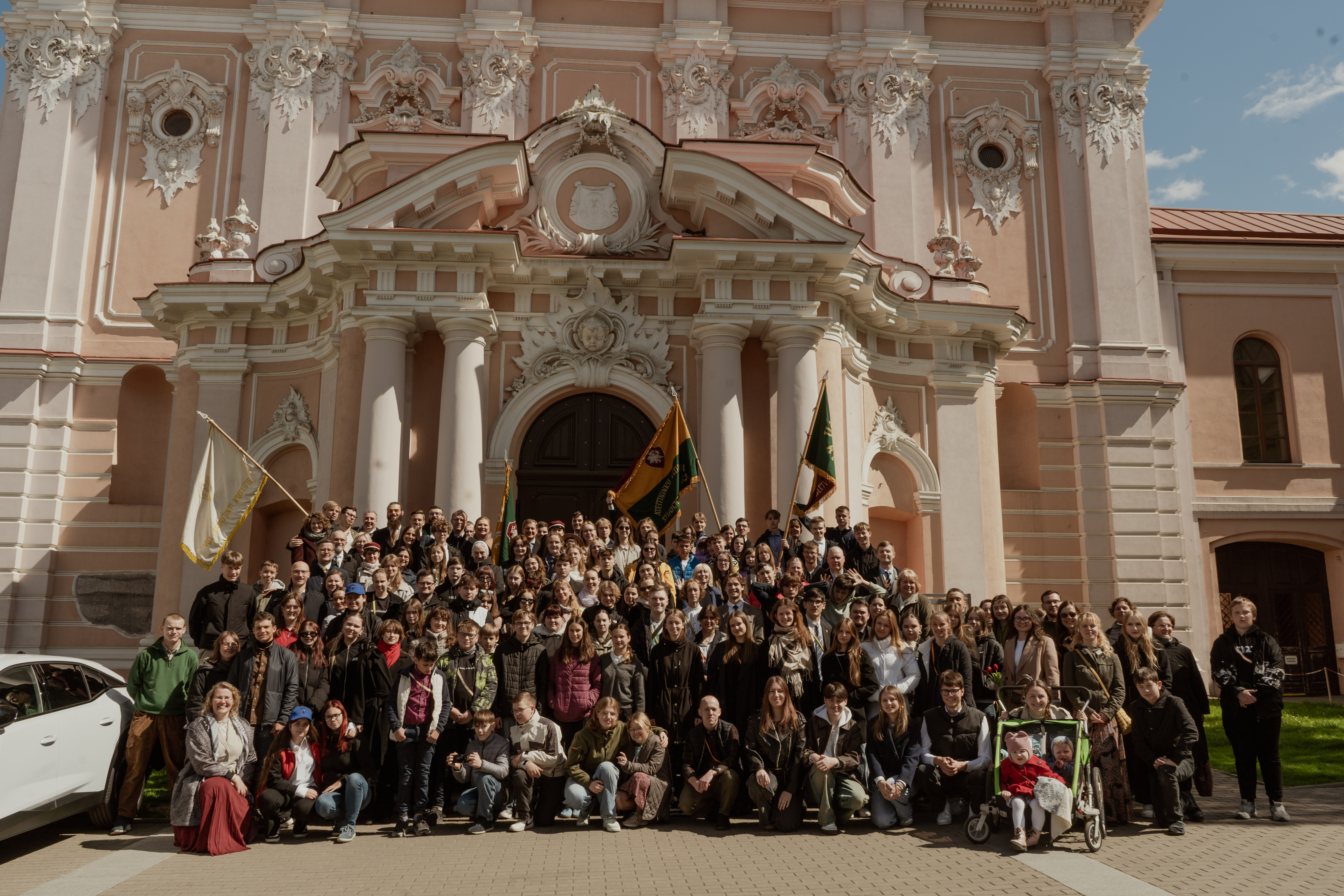
Read More
Head of U.S. bishops joins call for Notre Dame to drop appointment of pro-abortion professor #Catholic U.S. Conference of Catholic Bishops President Archbishop Paul Coakley is urging the University of Notre Dame to drop the leadership appointment of an outspoken pro-abortion professor, joining nearly a dozen bishops in calling on the historic Catholic university to back away from the controversial decision. The controversy at Notre Dame exploded this week after Fort Wayne-South Bend, Indiana, Bishop Kevin Rhoades on Feb. 11 expressed “dismay” and “strong opposition” to the school's appointment of Professor Susan Ostermann as director of the school’s Liu Institute for Asia and Asian Studies.Ostermann has in the past spoken out strongly in favor of abortion and sharply criticized the pro-life movement, at times suggesting that its roots are in "white supremacy" and misogyny. Rhoades said Ostermann's beliefs, coupled with her leadership promotion at the Catholic school, were “causing scandal to the faithful of our diocese and beyond.”Multiple U.S. bishops from around the country backed Rhoades's call throughout the week, with Coakley himself speaking out about the controversy on Feb. 13. "I fully support Bishop Kevin Rhoades in his challenge to Notre Dame to rectify its poor judgement in hiring a professor who openly stands against Catholic teaching when it comes to the sanctity of life, in this case protection of the unborn," Coakley said in a statement on X. TweetThe statement was shared hundreds of times on X, including by Cardinal Joseph Zen Ze-kiun, the bishop emeritus of Hong Kong. Though criticism against Notre Dame's decision has come from top Catholic leadership in the U.S. throughout the week, the school has indicated that it will be standing by its plan to have Ostermann lead the institute. Notre Dame told EWTN News on Feb. 13 that Ostermann is "a highly regarded political scientist and legal scholar" who is "well prepared" to serve in the role. At the same time the university stressed its “unwavering” commitment “to upholding the inherent dignity of the human person and the sanctity of life at every stage.” Ostermann herself has told media that she “respect[s] Notre Dame’s institutional position on the sanctity of life at every stage." She has described herself as "fully committed to maintaining an environment of academic freedom where a plurality of voices can flourish."

Head of U.S. bishops joins call for Notre Dame to drop appointment of pro-abortion professor #Catholic U.S. Conference of Catholic Bishops President Archbishop Paul Coakley is urging the University of Notre Dame to drop the leadership appointment of an outspoken pro-abortion professor, joining nearly a dozen bishops in calling on the historic Catholic university to back away from the controversial decision. The controversy at Notre Dame exploded this week after Fort Wayne-South Bend, Indiana, Bishop Kevin Rhoades on Feb. 11 expressed “dismay” and “strong opposition” to the school's appointment of Professor Susan Ostermann as director of the school’s Liu Institute for Asia and Asian Studies.Ostermann has in the past spoken out strongly in favor of abortion and sharply criticized the pro-life movement, at times suggesting that its roots are in "white supremacy" and misogyny. Rhoades said Ostermann's beliefs, coupled with her leadership promotion at the Catholic school, were “causing scandal to the faithful of our diocese and beyond.”Multiple U.S. bishops from around the country backed Rhoades's call throughout the week, with Coakley himself speaking out about the controversy on Feb. 13. "I fully support Bishop Kevin Rhoades in his challenge to Notre Dame to rectify its poor judgement in hiring a professor who openly stands against Catholic teaching when it comes to the sanctity of life, in this case protection of the unborn," Coakley said in a statement on X. TweetThe statement was shared hundreds of times on X, including by Cardinal Joseph Zen Ze-kiun, the bishop emeritus of Hong Kong. Though criticism against Notre Dame's decision has come from top Catholic leadership in the U.S. throughout the week, the school has indicated that it will be standing by its plan to have Ostermann lead the institute. Notre Dame told EWTN News on Feb. 13 that Ostermann is "a highly regarded political scientist and legal scholar" who is "well prepared" to serve in the role. At the same time the university stressed its “unwavering” commitment “to upholding the inherent dignity of the human person and the sanctity of life at every stage.” Ostermann herself has told media that she “respect[s] Notre Dame’s institutional position on the sanctity of life at every stage." She has described herself as "fully committed to maintaining an environment of academic freedom where a plurality of voices can flourish."

The school has indicated it will stick by its decision for Professor Susan Ostermann to lead a university institute.
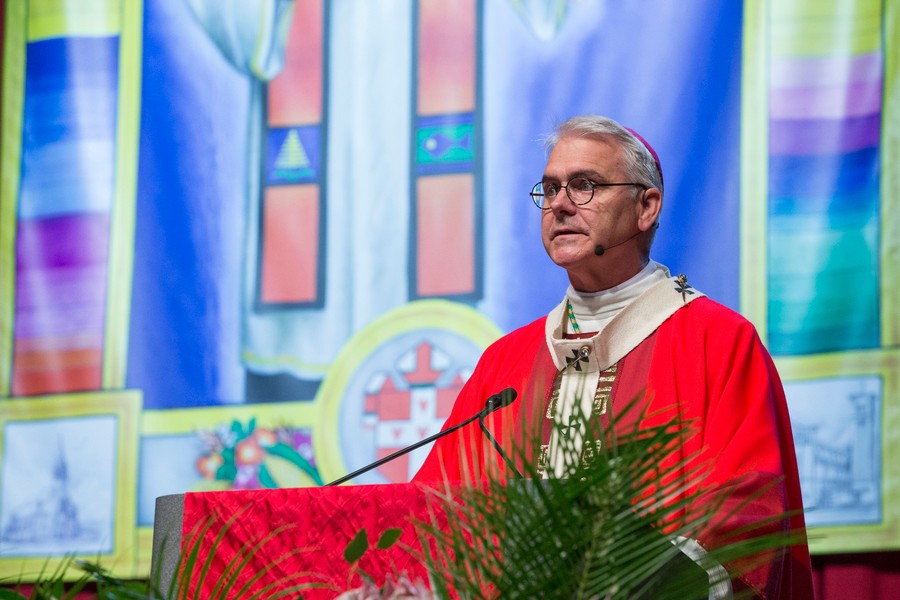
Read More
New film brings to life the Book of Revelation - #Catholic - A new movie titled “The Apocalypse of St. John” brings to life the Book of Revelation. Not only does the film tackle the challenging messages found in Revelation, but it also makes them accessible to a wider audience.Written, created, and directed by Simón Delacre, the docudrama will air in theaters across the United States Feb. 15–17 after having tremendous success in South America and Latin America.Delacre told EWTN News that he was inspired to make the film because he was a big fan of apocalyptic Hollywood movies growing up.“But of course, being Catholic, I knew that would be somewhat far from the truth, somewhat far from the actual book of Revelation,” he said.He began to dive deeper into the theology of the Book of Revelation because he was “very intrigued” by the symbolism and complex images and explained that what impacted him the most was “how current the topic of Revelation was for our times.”“We are living in a crisis that is global in all aspects of men — like in the moral aspect, there’s a huge crisis, there’s a big crisis in the spiritual aspect, there’s a crisis in the economic aspect, political aspect, all aspects of life. We’re going through a great crisis that is at the same time global,” Delacre said.He added: “Since we are living — well, this is my opinion — the greatest crisis of all time, I think it is very important to give the world the good prophecy that is the Book of Revelation and give it in a Catholic way.”Delacre explained that he worked with many priests, biblical scholars, and theologians to properly depict Revelation and ensured to use language that would be understood by a general audience.
 
 A still from the docudrama “The Apocalypse of St. John,” which will be in theaters Feb. 15–17, 2026. | Credit: Caravel Films
 
 Amid his research into Revelation and creating the film, Delacre said his own faith was impacted in a way that allowed him to view crises in the world “not with desperation but with hope.”“Every time I see a new crisis, I just see something that moves history forwards to the second coming,” he shared.He recalled being in the middle of studying Revelation when his home country of Argentina legalized abortion in 2020. He spoke with a friend of his who is a priest on that day and despite being disappointed by the news, they “couldn’t feel sad because we saw in that another sign that proves that we are closer to the second coming and that Christ is coming soon.”The filmmaker said he hopes audiences will have a similar experience after watching the film in that it will “bring comfort and solace to people who watch the movie in the midst of this crisis we are living [through].”“Also, to teach them that the book of Revelation is not a book of terror, but a book of hope … Just rip off that fear to the book and encourage them to study more of Revelation.”

New film brings to life the Book of Revelation – #Catholic – A new movie titled “The Apocalypse of St. John” brings to life the Book of Revelation. Not only does the film tackle the challenging messages found in Revelation, but it also makes them accessible to a wider audience.Written, created, and directed by Simón Delacre, the docudrama will air in theaters across the United States Feb. 15–17 after having tremendous success in South America and Latin America.Delacre told EWTN News that he was inspired to make the film because he was a big fan of apocalyptic Hollywood movies growing up.“But of course, being Catholic, I knew that would be somewhat far from the truth, somewhat far from the actual book of Revelation,” he said.He began to dive deeper into the theology of the Book of Revelation because he was “very intrigued” by the symbolism and complex images and explained that what impacted him the most was “how current the topic of Revelation was for our times.”“We are living in a crisis that is global in all aspects of men — like in the moral aspect, there’s a huge crisis, there’s a big crisis in the spiritual aspect, there’s a crisis in the economic aspect, political aspect, all aspects of life. We’re going through a great crisis that is at the same time global,” Delacre said.He added: “Since we are living — well, this is my opinion — the greatest crisis of all time, I think it is very important to give the world the good prophecy that is the Book of Revelation and give it in a Catholic way.”Delacre explained that he worked with many priests, biblical scholars, and theologians to properly depict Revelation and ensured to use language that would be understood by a general audience. A still from the docudrama “The Apocalypse of St. John,” which will be in theaters Feb. 15–17, 2026. | Credit: Caravel Films Amid his research into Revelation and creating the film, Delacre said his own faith was impacted in a way that allowed him to view crises in the world “not with desperation but with hope.”“Every time I see a new crisis, I just see something that moves history forwards to the second coming,” he shared.He recalled being in the middle of studying Revelation when his home country of Argentina legalized abortion in 2020. He spoke with a friend of his who is a priest on that day and despite being disappointed by the news, they “couldn’t feel sad because we saw in that another sign that proves that we are closer to the second coming and that Christ is coming soon.”The filmmaker said he hopes audiences will have a similar experience after watching the film in that it will “bring comfort and solace to people who watch the movie in the midst of this crisis we are living [through].”“Also, to teach them that the book of Revelation is not a book of terror, but a book of hope … Just rip off that fear to the book and encourage them to study more of Revelation.”

Written, created, and directed by Simón Delacre, “The Apocalypse of St. John” will air in theaters across the United States Feb. 15–17.


Read More
NASA’s SpaceX Crew-12 Launch – A SpaceX Falcon 9 rocket carrying the company’s Dragon spacecraft is launched on NASA’s SpaceX Crew-12 mission to the International Space Station with NASA astronauts Jessica Meir, Jack Hathaway, ESA (European Space Agency) astronaut Sophie Adenot, and Roscosmos cosmonaut Andrey Fedyaev onboard, Friday, Feb. 13, 2026, from Cape Canaveral Space Force Station in Florida. NASA’s SpaceX Crew-12 mission is the twelfth crew rotation mission of the SpaceX Dragon spacecraft and Falcon 9 rocket to the International Space Station as part of the agency’s Commercial Crew Program. Meir, Hathaway, Adenot, and Fedyaev launched at 5:15 a.m. EST from Space Launch Complex 40 at the Cape Canaveral Space Force Station to begin a mission aboard the orbital outpost.

A SpaceX Falcon 9 rocket carrying the company’s Dragon spacecraft is launched on NASA’s SpaceX Crew-12 mission to the International Space Station with NASA astronauts Jessica Meir, Jack Hathaway, ESA (European Space Agency) astronaut Sophie Adenot, and Roscosmos cosmonaut Andrey Fedyaev onboard, Friday, Feb. 13, 2026, from Cape Canaveral Space Force Station in Florida. NASA’s SpaceX Crew-12 mission is the twelfth crew rotation mission of the SpaceX Dragon spacecraft and Falcon 9 rocket to the International Space Station as part of the agency’s Commercial Crew Program. Meir, Hathaway, Adenot, and Fedyaev launched at 5:15 a.m. EST from Space Launch Complex 40 at the Cape Canaveral Space Force Station to begin a mission aboard the orbital outpost.

Read More

On Valentine’s Day, Boston Archdiocese welcomes marriages into Church with convalidation ceremony - #Catholic - About two dozen couples in the Archdiocese of Boston will have their marriages “brought into the Church” this year, part of a now-yearly tradition there in which husbands and wives can take part in “convalidation” ceremonies. Convalidation offers civilly married husbands and wives the opportunity for a valid Catholic sacramental marriage. The Boston Archdiocese describes the ceremony as “an opportunity for couples married outside of the Catholic Church to enter a marriage covenant in the Catholic tradition, be strengthened by God’s grace, and be supported by his Church.”
 
 Couples celebrate the convalidation of their marriages in the Archdiocese of Boston on Saturday, Feb. 8, 2025. | Credit: Gregory Tracy/Archdiocese of Boston
 
 Liz Cotrupi, the director of family life and ecclesial movements in the archdiocesan evangelization office, told EWTN News that this year’s ceremony will be the third the archdiocese has held in as many years. “We’ve been doing it during National Marriage Week,” she said. “It just so happens that this year it falls on Valentine’s Day, so it’s a little special.”The program arose in Boston when former Regional Bishop Mark O’Connell began offering convalidation ceremonies in the north region of the archdiocese over which he presided. “When he became the vicar general [in 2023], he said, ‘Hey I’ve been doing this regionally in the north region and it’s had some good feedback — what about doing it archdiocesan-wide?’” Cotrupi said. The program has grown ever since. “We’ll probably have 22 to 24 couples this year,” Cotrupi said. The archdiocese has advertised the ceremony in parish bulletins and on social media, she said, and the reaction has been positive. “People are coming out of the woodwork,” she said. 
 
 A couple receives convalidation of their marriage by Bishop Mark O’Connell in the Archdiocese of Boston on Saturday, Feb. 8, 2025. | Credit: Gregory Tracy/Archdiocese of Boston
 
 The process is similar, but not identical, to that of preparing couples for marriage. “We’ve learned a lot through this process,” Cotrupi said with a laugh. The archdiocesan canonical affairs office takes part in the marriage preparation, she said, while a priest helps prepare the couple directly. “Each couple, it’s as if they’re making their vows for the very first time,” she said. “They will exchange consent, answer the questions, and then exchange rings, which are blessed.” 
 
 “Each couple, it’s as if they’re making their vows for the very first time.”
 
 Liz CotrupiDirector of Family Life and Ecclesial Movements, Archdiocese of Boston
 
 
 The ceremony is not a full Mass, she said, but rather consists of the Liturgy of the Word, the prayers of the faithful, a blessing, and the marriage ceremony itself. The event often has all the trappings of a wedding, she said. “Some brides come dressed in wedding dresses,” she said. Others are dressed more casually. Some families bring their children. 
 
 Young guests attend a convalidation ceremony in the Archdiocese of Boston on Saturday, Feb. 8, 2025. | Credit: Gregory Tracy/Archdiocese of Boston
 
 At times, Cotrupi said, couples forget to bring the required two witnesses to the event, in which case she and archdiocesan Family Life Consultant Emily Elliott have often stood as witnesses. Couples are often given a gift on the day of the ceremony, she said, and afterward they often go out to dinner with family and friends to celebrate. Cotrupi said the usual administrative tasks surrounding the process, like “all the paperwork,” can be “a bit much.” Still, she said, “it’s a joyous occasion.”“We’re so happy to do it for them,” she said.

On Valentine’s Day, Boston Archdiocese welcomes marriages into Church with convalidation ceremony – #Catholic – About two dozen couples in the Archdiocese of Boston will have their marriages “brought into the Church” this year, part of a now-yearly tradition there in which husbands and wives can take part in “convalidation” ceremonies. Convalidation offers civilly married husbands and wives the opportunity for a valid Catholic sacramental marriage. The Boston Archdiocese describes the ceremony as “an opportunity for couples married outside of the Catholic Church to enter a marriage covenant in the Catholic tradition, be strengthened by God’s grace, and be supported by his Church.” Couples celebrate the convalidation of their marriages in the Archdiocese of Boston on Saturday, Feb. 8, 2025. | Credit: Gregory Tracy/Archdiocese of Boston Liz Cotrupi, the director of family life and ecclesial movements in the archdiocesan evangelization office, told EWTN News that this year’s ceremony will be the third the archdiocese has held in as many years. “We’ve been doing it during National Marriage Week,” she said. “It just so happens that this year it falls on Valentine’s Day, so it’s a little special.”The program arose in Boston when former Regional Bishop Mark O’Connell began offering convalidation ceremonies in the north region of the archdiocese over which he presided. “When he became the vicar general [in 2023], he said, ‘Hey I’ve been doing this regionally in the north region and it’s had some good feedback — what about doing it archdiocesan-wide?’” Cotrupi said. The program has grown ever since. “We’ll probably have 22 to 24 couples this year,” Cotrupi said. The archdiocese has advertised the ceremony in parish bulletins and on social media, she said, and the reaction has been positive. “People are coming out of the woodwork,” she said. A couple receives convalidation of their marriage by Bishop Mark O’Connell in the Archdiocese of Boston on Saturday, Feb. 8, 2025. | Credit: Gregory Tracy/Archdiocese of Boston The process is similar, but not identical, to that of preparing couples for marriage. “We’ve learned a lot through this process,” Cotrupi said with a laugh. The archdiocesan canonical affairs office takes part in the marriage preparation, she said, while a priest helps prepare the couple directly. “Each couple, it’s as if they’re making their vows for the very first time,” she said. “They will exchange consent, answer the questions, and then exchange rings, which are blessed.” “Each couple, it’s as if they’re making their vows for the very first time.” Liz CotrupiDirector of Family Life and Ecclesial Movements, Archdiocese of Boston The ceremony is not a full Mass, she said, but rather consists of the Liturgy of the Word, the prayers of the faithful, a blessing, and the marriage ceremony itself. The event often has all the trappings of a wedding, she said. “Some brides come dressed in wedding dresses,” she said. Others are dressed more casually. Some families bring their children. Young guests attend a convalidation ceremony in the Archdiocese of Boston on Saturday, Feb. 8, 2025. | Credit: Gregory Tracy/Archdiocese of Boston At times, Cotrupi said, couples forget to bring the required two witnesses to the event, in which case she and archdiocesan Family Life Consultant Emily Elliott have often stood as witnesses. Couples are often given a gift on the day of the ceremony, she said, and afterward they often go out to dinner with family and friends to celebrate. Cotrupi said the usual administrative tasks surrounding the process, like “all the paperwork,” can be “a bit much.” Still, she said, “it’s a joyous occasion.”“We’re so happy to do it for them,” she said.

The archdiocese has seen growing interest in the ceremony for several years.

Read More
Pro-lifers rally for baby left to die after failed abortion – #Catholic – Pro-lifers rally for baby left to die after failed abortionBorn alive at 16 weeks at an Australian hospital after a failed abortion, baby Samuel sucked his thumb. Doctors left him to die.“He was left to die. No one picked him up, wrapped him or gave him any medical care to alleviate his pain and suffering,” said South Australian pro-life activist Joanna Howe.The photo was leaked by a whistleblower who Howe said “risked their career” by sharing the photo. Australian authorities are reportedly trying to remove the image from social media.Australian pro-lifers rallied on Feb. 9 outside Queensland Parliament House in Brisbane for a “Public Gathering for Queensland Babies.”In 2024, a legislator introduced a bill to protect babies born alive after abortions. The Archdiocese of Brisbane came out in support of the amendment, saying that even if the child was unlikely to survive, medical staff had a duty to care for the baby.But the motion failed to pass after Queensland Premier David Crisafulli banned discussion of abortion in state Parliament for the next four years.Arizona judge strikes down pro-life laws, citing abortion rights amendmentAn Arizona judge on Friday struck down three pro-life laws in the state, saying they violated the state constitution.The ruling comes as a result of the abortion rights amendment that voters passed in Arizona in 2024. Citing the amendment, Judge Gregory Como ruled that the restrictions violated the state’s constitutional right to abortion.The court overturned state laws requiring in-person visits for chemical abortions as well as a 24-hour waiting period with mandatory ultrasound and a ban on discriminatory abortions.“Each of these laws infringe on a woman’s ‘autonomous decision-making’ by mandating medical procedures and disclosure of information regardless of the patient’s needs and wishes,” Como said in the ruling.Right to Life Michigan suit alleges state hiring law violates First AmendmentRight to Life Michigan, a group that advocates for pro-life policies, is suing the state over its requirements to hire pro-abortion employees.In a Feb. 3 filing, Right to Life Michigan and a pregnancy resource center alleged that a state employment law violates their First Amendment rights.The state law redefined bans against discrimination based on sex to include termination of pregnancy. The law also requires the pro-life groups to offer abortion coverage in their insurance plans.A spokesman from Alliance Defending Freedom, a nonprofit legal group defending Right to Life Michigan, said the law “makes no sense” and “forces these organizations to contradict their beliefs.”“Pro-life groups should be free to share the message of hope and joy with women and families experiencing a difficult season through employees who share their common goal,” Senior Counsel Bryan Neihart said in a statement.Iowa lawmakers propose anti-trafficking law, abortion criminalizationIowa lawmakers are considering several pro-life bills, including one that would screen pregnant women for coercion and abuse before abortions.The proposed bill would require an in-person examination by a physician before prescribing a pregnant woman abortion drugs and would require physicians to screen for coercion and abuse.Another bill introduced Friday would make it a criminal act for a person to cause an elective abortion. A similar bill would criminalize abortion as a homicide at any stage.Iowa law currently protects unborn children after their heartbeats can be detected, at about six weeks of pregnancy.Federal judge dismisses abortion advertisers’ free speech lawsuitAfter the South Dakota attorney general sued an abortion rights group for allegedly misleading and harmful advertisements, a federal judge declined to intervene on the abortion rights group’s behalf.The federal judge ruled the court has no jurisdiction in the South Dakota issue and declined to intervene in a lawsuit.South Dakota Attorney General Marty Jackley has sued the group Mayday Health in state court, alleging that the abortion pill ads were deceptive and harmful to women. Mayday launched a countersuit saying this violated its First Amendment right to free speech.South Dakota protects unborn children from abortions in all cases, except to save the life of the mother.California to give additional  million to abortion providersCalifornia Gov. Gavin Newsom signed a bill on Feb. 11 to give  million to abortion providers.Designed to replace Trump’s federal cuts, the one-time grant will give funding to Planned Parenthood and other abortion providers that lost funding because they offer abortion.The bill follows the One Big Beautiful Bill Act signed by Trump last year, which prohibited federal Medicaid funding from going to the abortion provider Planned Parenthood.In October 2025, Newsom signed a bill to supplement Planned Parenthood with another 0 million, also citing the Trump cuts.The state already refunds more than 80% of an estimated 1.3 million patient visits to Planned Parenthood via its state Medicaid program, Medi-Cal.Students for Life of America kicks of pro-life tour to reach Gen ZStudents for Life of America is kicking off a college speaking tour designed to reach Generation Z.The “Make Gen Z Anti-Abortion” campus tour “counters the assumption that Gen Z is all in on abortion,” according to the SFLA press release.From February to April, SFLA spokesperson Lydia Taylor Davis will be speaking at University of Florida, Florida International University, University of South Carolina, Liberty University, University of Pittsburgh, and Virginia Commonwealth University.“Gen Z is the largest voting bloc in America, with youth voters now making up over 48.5% of the electorate. Yet they’re easily dismissed by conservatives — and heavily targeted by the abortion lobby,” the SFLA press release said.“But according to recent polling from SFLA’s Demetree Institute for Pro-Life Advancement, roughly 6 in 10 youth voters are in the ‘moveable middle’ on abortion,” SFLA continued.

Pro-lifers rally for baby left to die after failed abortion – #Catholic – Pro-lifers rally for baby left to die after failed abortionBorn alive at 16 weeks at an Australian hospital after a failed abortion, baby Samuel sucked his thumb. Doctors left him to die.“He was left to die. No one picked him up, wrapped him or gave him any medical care to alleviate his pain and suffering,” said South Australian pro-life activist Joanna Howe.The photo was leaked by a whistleblower who Howe said “risked their career” by sharing the photo. Australian authorities are reportedly trying to remove the image from social media.Australian pro-lifers rallied on Feb. 9 outside Queensland Parliament House in Brisbane for a “Public Gathering for Queensland Babies.”In 2024, a legislator introduced a bill to protect babies born alive after abortions. The Archdiocese of Brisbane came out in support of the amendment, saying that even if the child was unlikely to survive, medical staff had a duty to care for the baby.But the motion failed to pass after Queensland Premier David Crisafulli banned discussion of abortion in state Parliament for the next four years.Arizona judge strikes down pro-life laws, citing abortion rights amendmentAn Arizona judge on Friday struck down three pro-life laws in the state, saying they violated the state constitution.The ruling comes as a result of the abortion rights amendment that voters passed in Arizona in 2024. Citing the amendment, Judge Gregory Como ruled that the restrictions violated the state’s constitutional right to abortion.The court overturned state laws requiring in-person visits for chemical abortions as well as a 24-hour waiting period with mandatory ultrasound and a ban on discriminatory abortions.“Each of these laws infringe on a woman’s ‘autonomous decision-making’ by mandating medical procedures and disclosure of information regardless of the patient’s needs and wishes,” Como said in the ruling.Right to Life Michigan suit alleges state hiring law violates First AmendmentRight to Life Michigan, a group that advocates for pro-life policies, is suing the state over its requirements to hire pro-abortion employees.In a Feb. 3 filing, Right to Life Michigan and a pregnancy resource center alleged that a state employment law violates their First Amendment rights.The state law redefined bans against discrimination based on sex to include termination of pregnancy. The law also requires the pro-life groups to offer abortion coverage in their insurance plans.A spokesman from Alliance Defending Freedom, a nonprofit legal group defending Right to Life Michigan, said the law “makes no sense” and “forces these organizations to contradict their beliefs.”“Pro-life groups should be free to share the message of hope and joy with women and families experiencing a difficult season through employees who share their common goal,” Senior Counsel Bryan Neihart said in a statement.Iowa lawmakers propose anti-trafficking law, abortion criminalizationIowa lawmakers are considering several pro-life bills, including one that would screen pregnant women for coercion and abuse before abortions.The proposed bill would require an in-person examination by a physician before prescribing a pregnant woman abortion drugs and would require physicians to screen for coercion and abuse.Another bill introduced Friday would make it a criminal act for a person to cause an elective abortion. A similar bill would criminalize abortion as a homicide at any stage.Iowa law currently protects unborn children after their heartbeats can be detected, at about six weeks of pregnancy.Federal judge dismisses abortion advertisers’ free speech lawsuitAfter the South Dakota attorney general sued an abortion rights group for allegedly misleading and harmful advertisements, a federal judge declined to intervene on the abortion rights group’s behalf.The federal judge ruled the court has no jurisdiction in the South Dakota issue and declined to intervene in a lawsuit.South Dakota Attorney General Marty Jackley has sued the group Mayday Health in state court, alleging that the abortion pill ads were deceptive and harmful to women. Mayday launched a countersuit saying this violated its First Amendment right to free speech.South Dakota protects unborn children from abortions in all cases, except to save the life of the mother.California to give additional $90 million to abortion providersCalifornia Gov. Gavin Newsom signed a bill on Feb. 11 to give $90 million to abortion providers.Designed to replace Trump’s federal cuts, the one-time grant will give funding to Planned Parenthood and other abortion providers that lost funding because they offer abortion.The bill follows the One Big Beautiful Bill Act signed by Trump last year, which prohibited federal Medicaid funding from going to the abortion provider Planned Parenthood.In October 2025, Newsom signed a bill to supplement Planned Parenthood with another $140 million, also citing the Trump cuts.The state already refunds more than 80% of an estimated 1.3 million patient visits to Planned Parenthood via its state Medicaid program, Medi-Cal.Students for Life of America kicks of pro-life tour to reach Gen ZStudents for Life of America is kicking off a college speaking tour designed to reach Generation Z.The “Make Gen Z Anti-Abortion” campus tour “counters the assumption that Gen Z is all in on abortion,” according to the SFLA press release.From February to April, SFLA spokesperson Lydia Taylor Davis will be speaking at University of Florida, Florida International University, University of South Carolina, Liberty University, University of Pittsburgh, and Virginia Commonwealth University.“Gen Z is the largest voting bloc in America, with youth voters now making up over 48.5% of the electorate. Yet they’re easily dismissed by conservatives — and heavily targeted by the abortion lobby,” the SFLA press release said.“But according to recent polling from SFLA’s Demetree Institute for Pro-Life Advancement, roughly 6 in 10 youth voters are in the ‘moveable middle’ on abortion,” SFLA continued.

Here is a roundup of recent pro-life and abortion-related news.

Read More

Looking for a sky event this week? Check out our full Sky This Week column.  February 13: Catch the zodiacal light This Valentine’s Day, the sky is serving up the perfect target: the Heart Nebula (IC 1805) in Cassiopeia the Queen. Best seen in the early evening after dark, there’s no Moon in the sky to interfereContinue reading “The Sky Today on Saturday, February 14: A Valentine’s Heart (Nebula)”

The post The Sky Today on Saturday, February 14: A Valentine’s Heart (Nebula) appeared first on Astronomy Magazine.

Read More