Day: February 16, 2026

Gospel and Word of the Day – 17 February 2026 – A reading from the letter of James Jas 1:12-18 Blessed is he who perseveres in temptation, for when he has been proven he will receive the crown of life that he promised to those who love him. No one experiencing temptation should say, "I am being tempted by God"; for God is not subject to temptation to evil, and he himself tempts no one. Rather, each person is tempted when lured and enticed by his desire. Then desire conceives and brings forth sin, and when sin reaches maturity it gives birth to death. Do not be deceived, my beloved brothers and sisters: all good giving and every perfect gift is from above, coming down from the Father of lights, with whom there is no alteration or shadow caused by change. He willed to give us birth by the word of truth that we may be a kind of firstfruits of his creatures.From the Gospel according to Mark Mark 8:14-21 The disciples had forgotten to bring bread, and they had only one loaf with them in the boat. Jesus enjoined them, "Watch out, guard against the leaven of the Pharisees and the leaven of Herod." They concluded among themselves that it was because they had no bread. When he became aware of this he said to them, "Why do you conclude that it is because you have no bread? Do you not yet understand or comprehend? Are your hearts hardened? Do you have eyes and not see, ears and not hear? And do you not remember, when I broke the five loaves for the five thousand, how many wicker baskets full of fragments you picked up?" They answered him, "Twelve." "When I broke the seven loaves for the four thousand, how many full baskets of fragments did you pick up?" They answered him, "Seven." He said to them, "Do you still not understand?"Let us think about the four ideological groups of Jesus’ time: the Pharisees, the Sadducees, the Essenes, and the Zealots. Four groups that had hardened their hearts to carry out a plan that was not God’s; there was no place for God’s plan, no place for compassion. When the heart becomes hard, when the heart hardens, one forgets… One forgets about the grace of salvation, one forgets its gratuitousness. A hard heart leads to arguments, it leads to wars, it leads to selfishness, it leads to the destruction of one’s brother, because there is no compassion. And the greatest message of salvation is that God had compassion for us. That refrain in the Gospel, when Jesus sees a person, a painful situation: “he had compassion”. […] Jesus is the Father’s compassion; Jesus is the rebuke to any hardness of heart. Each one of us has something that has hardened in our hearts. Let us remember this, and may the Lord give us a righteous and sincere heart … where the Lord dwells. The Lord cannot enter hard hearts; the Lord cannot enter ideological hearts. The Lord only enters hearts that are like his heart: compassionate hearts, hearts that have compassion, open hearts. (Pope Francis, Homily at Santa Marta, 18 February 2020)

A reading from the letter of James
Jas 1:12-18

Blessed is he who perseveres in temptation,
for when he has been proven he will receive the crown of life
that he promised to those who love him.
No one experiencing temptation should say,
"I am being tempted by God";
for God is not subject to temptation to evil,
and he himself tempts no one.
Rather, each person is tempted when lured and enticed by his desire.
Then desire conceives and brings forth sin,
and when sin reaches maturity it gives birth to death.

Do not be deceived, my beloved brothers and sisters:
all good giving and every perfect gift is from above,
coming down from the Father of lights,
with whom there is no alteration or shadow caused by change.
He willed to give us birth by the word of truth
that we may be a kind of firstfruits of his creatures.

From the Gospel according to Mark
Mark 8:14-21

The disciples had forgotten to bring bread,
and they had only one loaf with them in the boat.
Jesus enjoined them, "Watch out,
guard against the leaven of the Pharisees
and the leaven of Herod."
They concluded among themselves that
it was because they had no bread.
When he became aware of this he said to them,
"Why do you conclude that it is because you have no bread?
Do you not yet understand or comprehend?
Are your hearts hardened?
Do you have eyes and not see, ears and not hear?
And do you not remember,
when I broke the five loaves for the five thousand,
how many wicker baskets full of fragments you picked up?"
They answered him, "Twelve."
"When I broke the seven loaves for the four thousand,
how many full baskets of fragments did you pick up?"
They answered him, "Seven."
He said to them, "Do you still not understand?"

Let us think about the four ideological groups of Jesus’ time: the Pharisees, the Sadducees, the Essenes, and the Zealots. Four groups that had hardened their hearts to carry out a plan that was not God’s; there was no place for God’s plan, no place for compassion. When the heart becomes hard, when the heart hardens, one forgets… One forgets about the grace of salvation, one forgets its gratuitousness. A hard heart leads to arguments, it leads to wars, it leads to selfishness, it leads to the destruction of one’s brother, because there is no compassion. And the greatest message of salvation is that God had compassion for us. That refrain in the Gospel, when Jesus sees a person, a painful situation: “he had compassion”. […] Jesus is the Father’s compassion; Jesus is the rebuke to any hardness of heart. Each one of us has something that has hardened in our hearts. Let us remember this, and may the Lord give us a righteous and sincere heart … where the Lord dwells. The Lord cannot enter hard hearts; the Lord cannot enter ideological hearts. The Lord only enters hearts that are like his heart: compassionate hearts, hearts that have compassion, open hearts. (Pope Francis, Homily at Santa Marta, 18 February 2020)

Read More
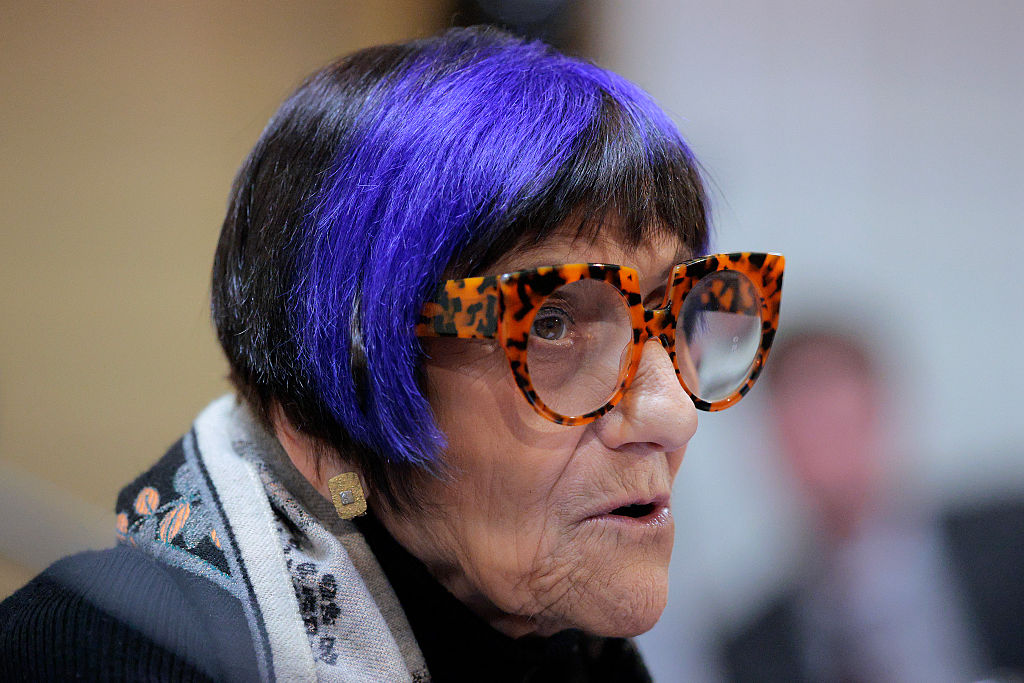
43 Catholic Democrats pledge migrant solidarity, invoke Leo XIV, Francis #Catholic More than 40 Catholic Democrats in the House of Representatives signed onto a statement of principles regarding immigration, which urged “solidarity” with migrants and cited Catholic social teaching and the visions of Pope Francis and Pope Leo XIV to back up their positions.The statement comes as the U.S. Conference of Catholic Bishops (USCCB) continues to speak out against indiscriminate mass deportations. Lawmakers are also negotiating an end to a partial government shutdown, which was spurred by debates about funding and potential reforms for immigration enforcement.“We feel called in solidarity to stand with immigrants — especially those who are poor, marginalized, or fleeing hardship — and to ensure they are treated with dignity, justice, and compassion,” the statement said.“As Catholics and elected officials, we believe that addressing long-standing inequities and expanding meaningful opportunities for immigrants is an essential part of our responsibility to community and to those most in need,” the lawmakers said.The statement was led by Rep. Rosa L. DeLauro, D-Connecticut, and signed by former House Speaker Nancy Pelosi, D-California, and 41 other Catholic Democrats. No Republicans signed onto the statement.The Catholic Democrats said their position is rooted in three principles of Catholic social teaching on immigration: that people have a right to migrate to sustain their lives and the lives of their families, that nations have a right to regulate borders, and that all enforcement must be consistent with justice and mercy.In their statement, they said Jesus Christ “identifies with the migrant” when he says in Matthew 25:35: “I was … a stranger and you welcomed me.” They also cited Pope Leo XIV’s encyclical Dilexi Te, commenting on migration, in which he said the Church knows that “in every rejected migrant, it is Christ himself who knocks at the door of the community.”They quoted Pope Francis’ 2019 message for the World Day of Migrants and Refugees, in which the former pontiff said the Church’s response to immigration can be summed up in four verbs: “welcome, protect, promote, and integrate.”The statement recognizes that regulations on immigration are legitimate, citing the Catechism of the Catholic Church, which teaches that “political authorities, for the sake of the common good for which they are responsible, may make the exercise of the right to immigrate subject to various juridical conditions.”“Catholic social teaching approaches migration with realism: It affirms the right of persons to seek safety and opportunity while recognizing the legitimate authority of nations to regulate their borders,” they said. “Sound immigration policy is ordered, humane, and sustainable, balancing solidarity with prudence in service of human dignity and the common good.”The Catholic Democrats said, however, that border enforcement “is never a license for cruelty, indifference, or dehumanization” but instead “must be governed by justice and mercy.” They accused Immigrations and Customs Enforcement (ICE) and Customs and Border Protection (CBP) of having “failed this moral standard.”“Their actions have separated families, removed law-abiding individuals from our communities, and, tragically, contributed to the deaths of detained migrants and citizens like Renee Good and Alex Pretti,” the statement read.The Catholic Democrats, in their statement, said their position on immigration is “guided by a living Catholic tradition that affirms the dignity of every human life.” Despite the USCCB having called “the threat of abortion” its “preeminent priority” in the 2024 election, the Democratic Party supports abortion access, identifying abortion as an essential component of health care.Negotiating ICE, CBP reformsThe signatories called on Congress to “bear the Church’s teachings in mind” when considering reforms to ICE and CBP, which are being negotiated.On Feb. 14, the government entered into a partial shutdown when Congress did not reach an agreement on funding for the Department of Homeland Security (DHS), which operates both ICE and CBP.Many Democrats are proposing reforms that would restrict immigration enforcement as a condition of approving funds. Some have gone further, calling for the abolition of ICE altogether.Catholic administration officials have rejected the Democrats’ characterization that immigration enforcement has violated the human dignity of migrants.In December 2025, border czar Tom Homan told EWTN News that “we treat everybody with dignity.” He said “the most humane thing you can do is enforce the law, secure the border, because it saves lives” and asserted that the administration targets criminals and cited its work to combat fentanyl and sex trafficking.Nathaniel Madden, principal deputy assistant secretary for communications at DHS, told EWTN News in November 2025 that detainees “are going to be treated like a person, and your dignity is going to be respected.” He said dignity and immigration enforcement are compatible and “we have to take into account that laws were broken.”In January, U.S. citizens Pretti and Good were both shot and killed by federal immigration officers in separate incidents in Minneapolis.In November 2025, the USCCB issued a special message that opposed “the indiscriminate mass deportation of people” and called for an end to “dehumanizing rhetoric and violence, whether directed at immigrants or at law enforcement.” The message was approved by a vote of 216-5.

43 Catholic Democrats pledge migrant solidarity, invoke Leo XIV, Francis #Catholic More than 40 Catholic Democrats in the House of Representatives signed onto a statement of principles regarding immigration, which urged “solidarity” with migrants and cited Catholic social teaching and the visions of Pope Francis and Pope Leo XIV to back up their positions.The statement comes as the U.S. Conference of Catholic Bishops (USCCB) continues to speak out against indiscriminate mass deportations. Lawmakers are also negotiating an end to a partial government shutdown, which was spurred by debates about funding and potential reforms for immigration enforcement.“We feel called in solidarity to stand with immigrants — especially those who are poor, marginalized, or fleeing hardship — and to ensure they are treated with dignity, justice, and compassion,” the statement said.“As Catholics and elected officials, we believe that addressing long-standing inequities and expanding meaningful opportunities for immigrants is an essential part of our responsibility to community and to those most in need,” the lawmakers said.The statement was led by Rep. Rosa L. DeLauro, D-Connecticut, and signed by former House Speaker Nancy Pelosi, D-California, and 41 other Catholic Democrats. No Republicans signed onto the statement.The Catholic Democrats said their position is rooted in three principles of Catholic social teaching on immigration: that people have a right to migrate to sustain their lives and the lives of their families, that nations have a right to regulate borders, and that all enforcement must be consistent with justice and mercy.In their statement, they said Jesus Christ “identifies with the migrant” when he says in Matthew 25:35: “I was … a stranger and you welcomed me.” They also cited Pope Leo XIV’s encyclical Dilexi Te, commenting on migration, in which he said the Church knows that “in every rejected migrant, it is Christ himself who knocks at the door of the community.”They quoted Pope Francis’ 2019 message for the World Day of Migrants and Refugees, in which the former pontiff said the Church’s response to immigration can be summed up in four verbs: “welcome, protect, promote, and integrate.”The statement recognizes that regulations on immigration are legitimate, citing the Catechism of the Catholic Church, which teaches that “political authorities, for the sake of the common good for which they are responsible, may make the exercise of the right to immigrate subject to various juridical conditions.”“Catholic social teaching approaches migration with realism: It affirms the right of persons to seek safety and opportunity while recognizing the legitimate authority of nations to regulate their borders,” they said. “Sound immigration policy is ordered, humane, and sustainable, balancing solidarity with prudence in service of human dignity and the common good.”The Catholic Democrats said, however, that border enforcement “is never a license for cruelty, indifference, or dehumanization” but instead “must be governed by justice and mercy.” They accused Immigrations and Customs Enforcement (ICE) and Customs and Border Protection (CBP) of having “failed this moral standard.”“Their actions have separated families, removed law-abiding individuals from our communities, and, tragically, contributed to the deaths of detained migrants and citizens like Renee Good and Alex Pretti,” the statement read.The Catholic Democrats, in their statement, said their position on immigration is “guided by a living Catholic tradition that affirms the dignity of every human life.” Despite the USCCB having called “the threat of abortion” its “preeminent priority” in the 2024 election, the Democratic Party supports abortion access, identifying abortion as an essential component of health care.Negotiating ICE, CBP reformsThe signatories called on Congress to “bear the Church’s teachings in mind” when considering reforms to ICE and CBP, which are being negotiated.On Feb. 14, the government entered into a partial shutdown when Congress did not reach an agreement on funding for the Department of Homeland Security (DHS), which operates both ICE and CBP.Many Democrats are proposing reforms that would restrict immigration enforcement as a condition of approving funds. Some have gone further, calling for the abolition of ICE altogether.Catholic administration officials have rejected the Democrats’ characterization that immigration enforcement has violated the human dignity of migrants.In December 2025, border czar Tom Homan told EWTN News that “we treat everybody with dignity.” He said “the most humane thing you can do is enforce the law, secure the border, because it saves lives” and asserted that the administration targets criminals and cited its work to combat fentanyl and sex trafficking.Nathaniel Madden, principal deputy assistant secretary for communications at DHS, told EWTN News in November 2025 that detainees “are going to be treated like a person, and your dignity is going to be respected.” He said dignity and immigration enforcement are compatible and “we have to take into account that laws were broken.”In January, U.S. citizens Pretti and Good were both shot and killed by federal immigration officers in separate incidents in Minneapolis.In November 2025, the USCCB issued a special message that opposed “the indiscriminate mass deportation of people” and called for an end to “dehumanizing rhetoric and violence, whether directed at immigrants or at law enforcement.” The message was approved by a vote of 216-5.

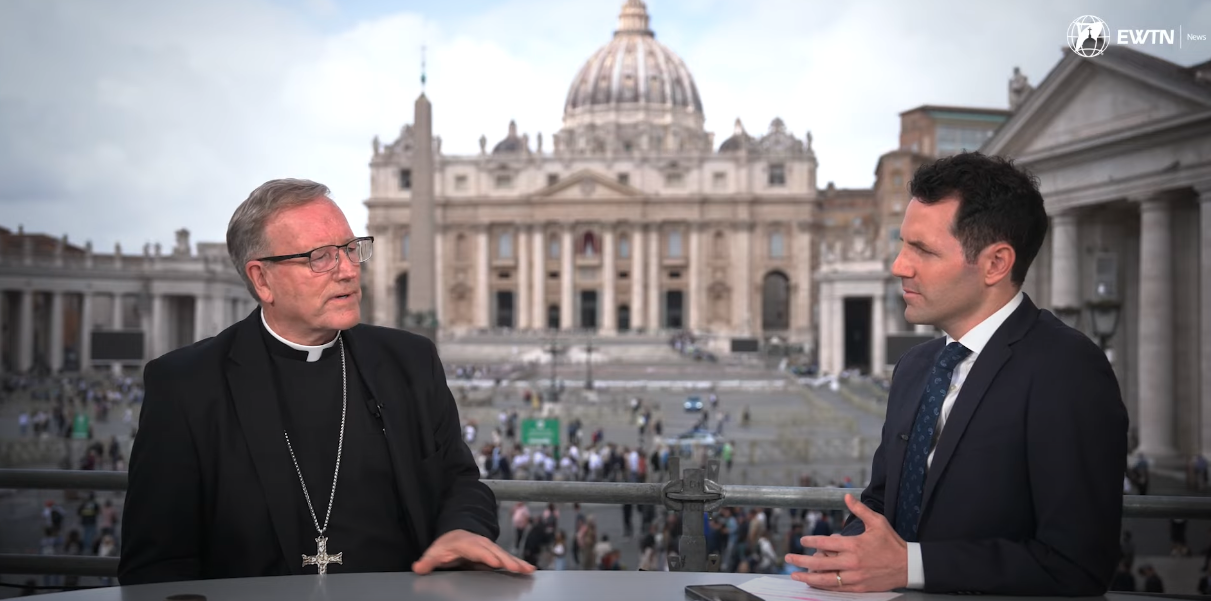
Catholic U.S. House Democrats cited Church teaching in defense of the dignity of migrants as Trump administration officials defend immigration enforcement.
Read More
Bishop Barron lauds U.S. secretary of state’s speech to Munich Security Conference – #Catholic – U.S. Secretary of State Marco Rubio delivered a speech at the Munich Security Conference (MSC) over the weekend that elicited a standing ovation and widespread accolades, including from Bishop Robert Barron of the Diocese of Winona-Rochester, Minnesota.In his Feb. 14 speech, Rubio said Europe and the U.S. are part of “one civilization — Western civilization” and are “bound to one another by the deepest bonds that nations could share,” including shared “Christian faith, culture, heritage, language, ancestry, and the sacrifices our forefathers made together for the common civilization to which we have fallen heir.”“It was here in Europe where the ideas that planted the seeds of liberty that changed the world were born,” he said. “It was here in Europe … which gave the world the rule of law, the universities, and the scientific revolution.”To applause, Rubio said the destiny of the U.S. will “always be intertwined” with Europe’s and “the fate of Europe will never be irrelevant to our own.”Rubio recalled that at the first MSC meeting in 1963, “thousands of years of Western civilization hung in the balance” after the devastation of two world wars and before a united Europe and United States eventually “prevailed” against the “evil empire” that was the communist Soviet Union.He said that after the fall of the Berlin Wall in 1989, it was “foolish” to assume that “every nation would now be a liberal democracy” and “we would now live in a world without borders where everyone became a citizen of the world” thanks to the replacement of nationhood by commerce and trade.This was a mistake, he said, citing “free and unfettered trade” as the reason for the deindustrialization that has taken place in the U.S. and Europe as well as the “rapid” militarization of countries that are “adversaries and rivals” who have taken over “our critical supply chains.”Mass migration threatens ‘cohesion of our societies’Rubio blamed the pursuit of “a world without borders” for the “unprecedented wave of mass migration that threatens the cohesion of our societies, the continuity of our culture, and the future of our people.”He called for both Europe and the U.S. to “gain control of our national borders,” saying enforcing immigration law is “not an expression of xenophobia or hate but rather a “fundamental act of national sovereignty.”“And the failure to do so is not just an abdication of one of our most basic duties owed to our people,” he said. “It is an urgent threat to the fabric of our societies and the survival of our civilization itself.”He also criticized what he called “a climate cult” that has led to the self-imposition in Europe and the U.S. of “energy policies … that are impoverishing our people, even as our competitors exploit oil and coal and natural gas and anything else — not just to power their economies but to use as leverage against our own.”He said President Donald Trump refuses to see the “West’s age of dominance” as declining, saying that the U.S. has “no interest in being polite and orderly caretakers of the West’s managed decline.”Instead, Rubio said the U.S. wants to “revitalize” its alliance with Europe and, together, “renew the greatest civilization in human history.”Looking to the future, Rubio called for the U.S. and Europe to be “unapologetic in our heritage” as both societies rebuild by reindustrializing, limiting immigration, and investing in military defense.“We made these mistakes together,” he said, “and now, together, we owe it to our people to face those facts and to move forward, to rebuild.”The speech received a standing ovation.Barron’s assessmentIn an X post following Rubio’s speech, Barron said that “what most grabbed my attention was his stress on the common culture that unites Europe and America.”Barron pointed out that “that culture is grounded ultimately in the Christian faith. It is simply the case that reverence for the dignity of the individual, for human rights, for political freedom, and for equality comes, in the final analysis, from the Christian Gospel.”“Basic to his presentation was the conviction that Europe and America will truly flourish when each rediscovers its spiritual mooring,” the bishop observed.Last week, the presidents of the Italian, French, German, and Polish bishops’ conferences issued a statement in which they also called upon Europeans to “return to the foundations of their hope.”“Christianity has been one of the essential foundations of our continent,” they wrote, and Europe must “rediscover its soul in order to offer the entire world its indispensable contribution to the ‘common good.’”“The world needs Europe,” the bishops wrote. “This is the urgency that Christians must embrace in order to then commit themselves decisively, wherever they are, to its future with the same keen awareness as the founding fathers.”The Munich Security ConferenceThe MSC was founded in 1963 and chaired until 1998 by Ewald-Heinrich von Kleist-Schmenzin, a German publisher, former Wehrmacht officer, and participant in the July 1944 plot to assassinate Adolf Hitler.The MSC is not a decision-making body but an independent venue for launching diplomatic initiatives and shaping international security policy discourse. It serves as an annual gathering for heads of state, foreign and defense ministers, military leaders, experts, and representatives from business, academia, and civil society to discuss global security challenges in an informal setting.

Bishop Barron lauds U.S. secretary of state’s speech to Munich Security Conference – #Catholic – U.S. Secretary of State Marco Rubio delivered a speech at the Munich Security Conference (MSC) over the weekend that elicited a standing ovation and widespread accolades, including from Bishop Robert Barron of the Diocese of Winona-Rochester, Minnesota.In his Feb. 14 speech, Rubio said Europe and the U.S. are part of “one civilization — Western civilization” and are “bound to one another by the deepest bonds that nations could share,” including shared “Christian faith, culture, heritage, language, ancestry, and the sacrifices our forefathers made together for the common civilization to which we have fallen heir.”“It was here in Europe where the ideas that planted the seeds of liberty that changed the world were born,” he said. “It was here in Europe … which gave the world the rule of law, the universities, and the scientific revolution.”To applause, Rubio said the destiny of the U.S. will “always be intertwined” with Europe’s and “the fate of Europe will never be irrelevant to our own.”Rubio recalled that at the first MSC meeting in 1963, “thousands of years of Western civilization hung in the balance” after the devastation of two world wars and before a united Europe and United States eventually “prevailed” against the “evil empire” that was the communist Soviet Union.He said that after the fall of the Berlin Wall in 1989, it was “foolish” to assume that “every nation would now be a liberal democracy” and “we would now live in a world without borders where everyone became a citizen of the world” thanks to the replacement of nationhood by commerce and trade.This was a mistake, he said, citing “free and unfettered trade” as the reason for the deindustrialization that has taken place in the U.S. and Europe as well as the “rapid” militarization of countries that are “adversaries and rivals” who have taken over “our critical supply chains.”Mass migration threatens ‘cohesion of our societies’Rubio blamed the pursuit of “a world without borders” for the “unprecedented wave of mass migration that threatens the cohesion of our societies, the continuity of our culture, and the future of our people.”He called for both Europe and the U.S. to “gain control of our national borders,” saying enforcing immigration law is “not an expression of xenophobia or hate but rather a “fundamental act of national sovereignty.”“And the failure to do so is not just an abdication of one of our most basic duties owed to our people,” he said. “It is an urgent threat to the fabric of our societies and the survival of our civilization itself.”He also criticized what he called “a climate cult” that has led to the self-imposition in Europe and the U.S. of “energy policies … that are impoverishing our people, even as our competitors exploit oil and coal and natural gas and anything else — not just to power their economies but to use as leverage against our own.”He said President Donald Trump refuses to see the “West’s age of dominance” as declining, saying that the U.S. has “no interest in being polite and orderly caretakers of the West’s managed decline.”Instead, Rubio said the U.S. wants to “revitalize” its alliance with Europe and, together, “renew the greatest civilization in human history.”Looking to the future, Rubio called for the U.S. and Europe to be “unapologetic in our heritage” as both societies rebuild by reindustrializing, limiting immigration, and investing in military defense.“We made these mistakes together,” he said, “and now, together, we owe it to our people to face those facts and to move forward, to rebuild.”The speech received a standing ovation.Barron’s assessmentIn an X post following Rubio’s speech, Barron said that “what most grabbed my attention was his stress on the common culture that unites Europe and America.”Barron pointed out that “that culture is grounded ultimately in the Christian faith. It is simply the case that reverence for the dignity of the individual, for human rights, for political freedom, and for equality comes, in the final analysis, from the Christian Gospel.”“Basic to his presentation was the conviction that Europe and America will truly flourish when each rediscovers its spiritual mooring,” the bishop observed.Last week, the presidents of the Italian, French, German, and Polish bishops’ conferences issued a statement in which they also called upon Europeans to “return to the foundations of their hope.”“Christianity has been one of the essential foundations of our continent,” they wrote, and Europe must “rediscover its soul in order to offer the entire world its indispensable contribution to the ‘common good.’”“The world needs Europe,” the bishops wrote. “This is the urgency that Christians must embrace in order to then commit themselves decisively, wherever they are, to its future with the same keen awareness as the founding fathers.”The Munich Security ConferenceThe MSC was founded in 1963 and chaired until 1998 by Ewald-Heinrich von Kleist-Schmenzin, a German publisher, former Wehrmacht officer, and participant in the July 1944 plot to assassinate Adolf Hitler.The MSC is not a decision-making body but an independent venue for launching diplomatic initiatives and shaping international security policy discourse. It serves as an annual gathering for heads of state, foreign and defense ministers, military leaders, experts, and representatives from business, academia, and civil society to discuss global security challenges in an informal setting.

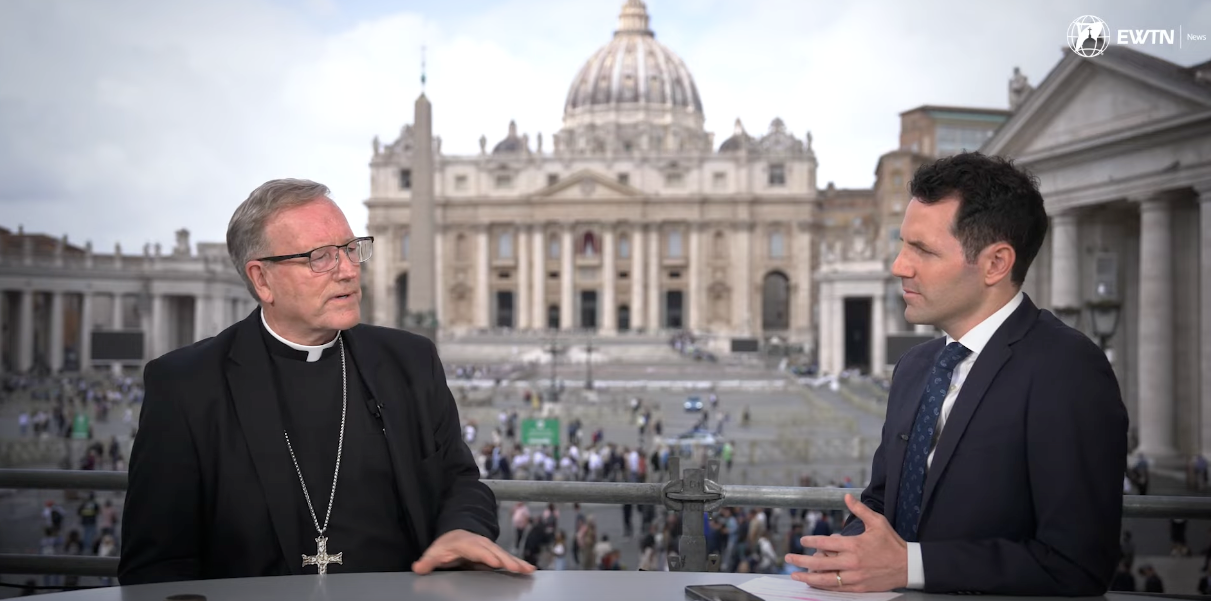
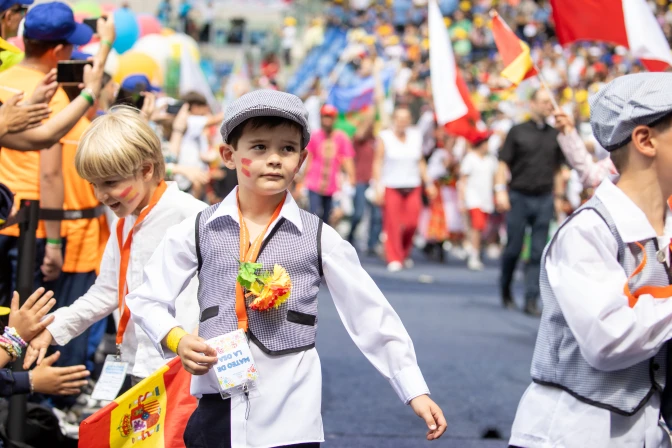
Marco Rubio’s speech elicited a standing ovation and widespread accolades, including from the bishop of Winona-Rochester, Minnesota.
Read More
Pope Leo XIV eliminates committee created by Francis for World Children’s Day – #Catholic – Pope Leo XIV has eliminated the Pontifical Committee for World Children’s Day, established by Pope Francis in November 2024. In a decree published on Feb. 13, the Holy Father reaffirmed the importance of the Church giving special attention to children, in continuity with the intention expressed by his predecessor.However, with the aim of “fostering greater synergies” and ensuring a more effective organization of this “noble initiative,” the decree stipulates that all the committee’s functions will be transferred to the Dicastery for the Laity, the Family, and Life, where it has been integrated since August 2025.The document also establishes the annulment of the acts and regulations adopted to date by the body, which will cease to have legal effect under both canon and civil law.Likewise, the president, vice president, and other members of the committee are immediately relieved of their duties.Finally, it states that the prefect of the dicastery, Cardinal Kevin Joseph Farrell, must resolve outstanding matters and submit a final liquidation report to the Secretariat for the Economy.Pope Francis established this day on Dec. 8, 2023. On that occasion, he announced that the first World Children’s Day would be celebrated worldwide on May 25-26, 2024.Subsequently, Francis established the Pontifical Committee for World Children’s Day and appointed Father Enzo Fortunato, also director of communications for St. Peter’s Basilica and head of the press office of St. Francis of Assisi Basilica, as its president.The next World Children’s Day will be celebrated Sept. 25–27 and is expected to be a time of encounter, prayer, and celebration involving children and their families from all over the world.This story was first published by ACI Prensa, the Spanish-language sister service of EWTN News. It has been translated and adapted by EWTN News English.

Pope Leo XIV eliminates committee created by Francis for World Children’s Day – #Catholic – Pope Leo XIV has eliminated the Pontifical Committee for World Children’s Day, established by Pope Francis in November 2024. In a decree published on Feb. 13, the Holy Father reaffirmed the importance of the Church giving special attention to children, in continuity with the intention expressed by his predecessor.However, with the aim of “fostering greater synergies” and ensuring a more effective organization of this “noble initiative,” the decree stipulates that all the committee’s functions will be transferred to the Dicastery for the Laity, the Family, and Life, where it has been integrated since August 2025.The document also establishes the annulment of the acts and regulations adopted to date by the body, which will cease to have legal effect under both canon and civil law.Likewise, the president, vice president, and other members of the committee are immediately relieved of their duties.Finally, it states that the prefect of the dicastery, Cardinal Kevin Joseph Farrell, must resolve outstanding matters and submit a final liquidation report to the Secretariat for the Economy.Pope Francis established this day on Dec. 8, 2023. On that occasion, he announced that the first World Children’s Day would be celebrated worldwide on May 25-26, 2024.Subsequently, Francis established the Pontifical Committee for World Children’s Day and appointed Father Enzo Fortunato, also director of communications for St. Peter’s Basilica and head of the press office of St. Francis of Assisi Basilica, as its president.The next World Children’s Day will be celebrated Sept. 25–27 and is expected to be a time of encounter, prayer, and celebration involving children and their families from all over the world.This story was first published by ACI Prensa, the Spanish-language sister service of EWTN News. It has been translated and adapted by EWTN News English.

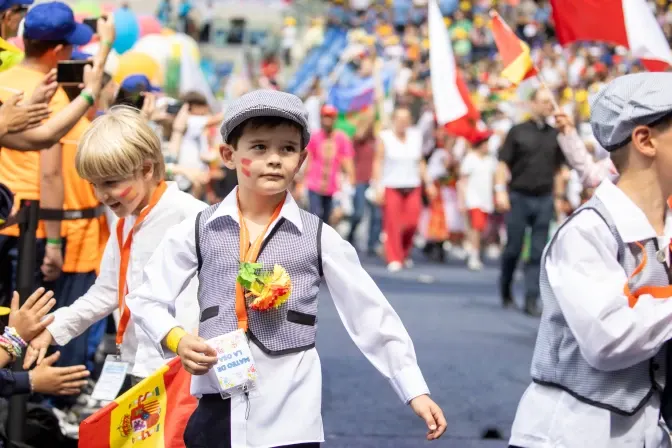
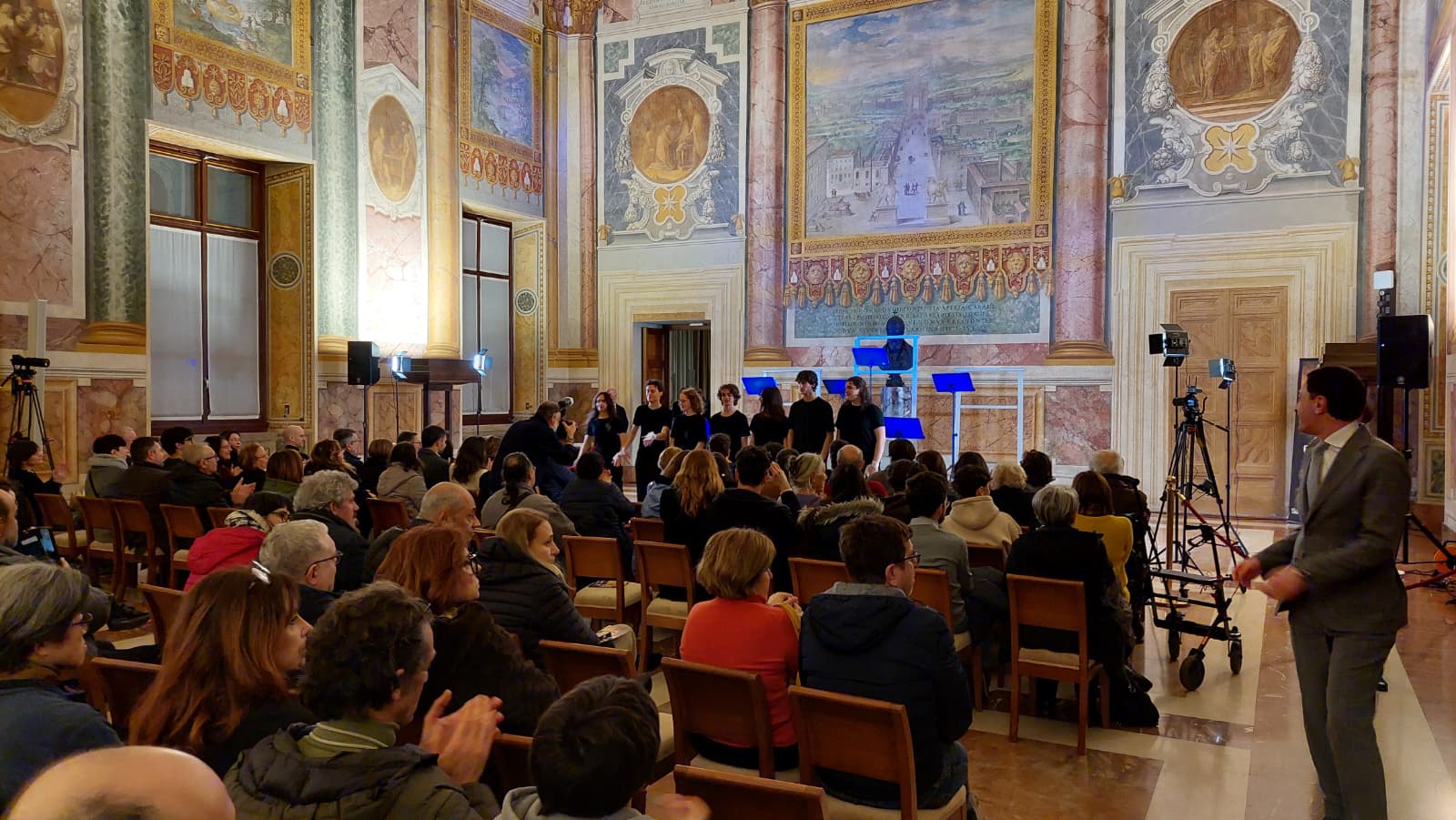
Pope Leo XIV has eliminated the Pontifical Committee for World Children’s Day, transferring the committee’s functions to the Dicastery for the Laity, the Family, and Life.
Read More
Apostolic vicariate in Rome dedicates its day of arts to Gaza – #Catholic – On Saturday, Feb. 14, the humanitarian situation in Gaza was the focus of a day of the arts at the apostolic vicariate in Rome. In the halls of the Lateran Apostolic Palace, the third edition of the initiative focused on the Gaza Strip, burdened by destruction and loss, where the suffering of its residents calls for ongoing attention. 
 
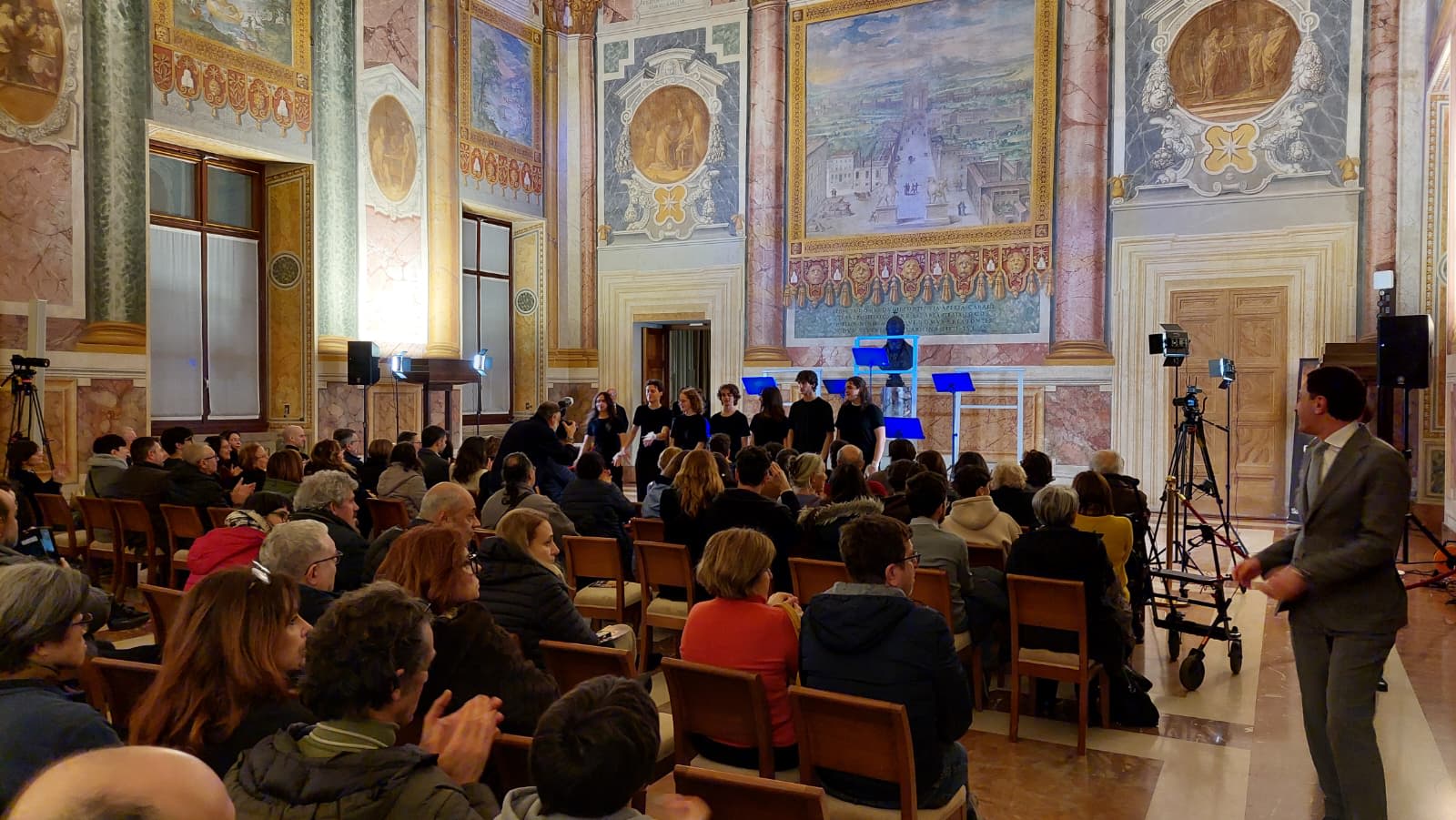
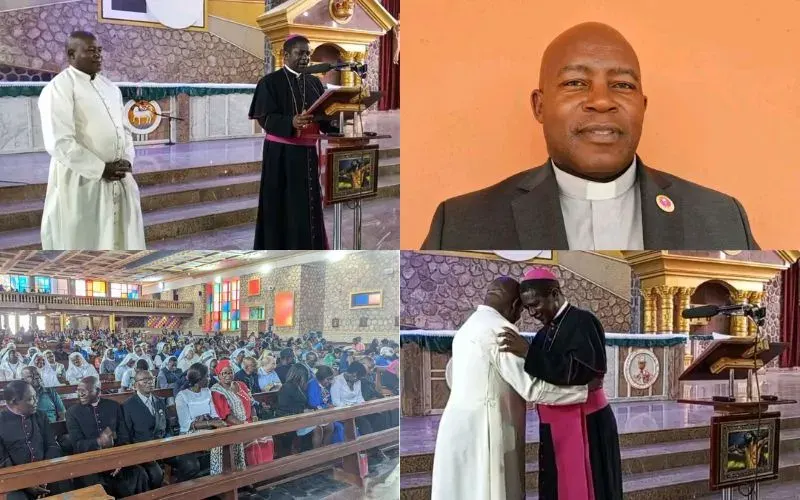
 The apostolic vicariate in Rome dedicated the third edition of its day of the arts to shedding light on the Gaza Strip. | Credit: Photo by Elias Turk/ACI MENA
 
 The event offered an artistic journey divided into four consecutive performances under the title “If There Were Water.” Father Gabriele Vecchioni, deputy director of the University Pastoral Office at the vicariate, explained at the event that art stands in direct opposition to adaptation and forgetfulness. Shedding light on Gaza, he said, means confronting what the world has heard in recent months: the killing of 64,000 people, including 18,000 children — figures that an arts day insists must not be archived but preserved as an active memory.
 
 The apostolic vicariate in Rome dedicated the third edition of its day of the arts to shedding light on the Gaza Strip. | Credit: Photo by Elias Turk/ACI MENA
 
 In the “Hall of Reconciliation,” the theatrical work “Gaza: Before the Silence” by Francesco D’Alfonso was performed by first-year students of the National Academy of Dramatic Art Silvio D’Amico. Through poetry, music, international reports, and literary excerpts, the performance restored faces and names to the victims. White shrouds and the stark numbers of the tragedy became signs of a collective responsibility shared by all.
 
 The apostolic vicariate in Rome dedicated the third edition of its day of the arts to shedding light on the Gaza Strip. | Credit: Photo by Elias Turk/ACI MENA
 
 Reflection on the suffering of Gaza’s people continued in the “Hall of the Emperors” with the artistic work “Holm” (“Dream”). This project by the National Academy of Dance combined choreography and video. Through the languages of body and image, it opened an intellectual space for reflection on the Palestinian cause, entrusting dance with the task of fostering listening and awareness.
 
 The apostolic vicariate in Rome dedicated the third edition of its day of the arts to shedding light on the Gaza Strip. | Credit: Photo by Elias Turk/ACI MENA
 
 In the Hall of David, “Who Are You? A Beautiful Question,” a work within the relational art movement, directly engaged the audience with the issue. Through words, images, and sounds, it unfolded fragments of memory about what has taken place in the Gaza Strip.
 
 The apostolic vicariate in Rome dedicated the third edition of its day of the arts to shedding light on the Gaza Strip. | Credit: Photo by Elias Turk/ACI MENA
 
 In the Hall of the Apostles, the event hosted the Santa Cecilia Music Institute, with Senka Slipać on the violin and Vehbija Hodžić on the accordion. The musicians performed works by Antonio Vivaldi, Dražan Kosorić, and Vittorio Monti. The artistic journey at the Lateran also included a work titled “Fire,” a collective installation created within a workshop sponsored by Caritas Rome.
 
 The apostolic vicariate in Rome dedicated the third edition of its day of the arts to shedding light on the Gaza Strip. | Credit: Photo by Elias Turk/ACI MENA

Apostolic vicariate in Rome dedicates its day of arts to Gaza – #Catholic – On Saturday, Feb. 14, the humanitarian situation in Gaza was the focus of a day of the arts at the apostolic vicariate in Rome. In the halls of the Lateran Apostolic Palace, the third edition of the initiative focused on the Gaza Strip, burdened by destruction and loss, where the suffering of its residents calls for ongoing attention. The apostolic vicariate in Rome dedicated the third edition of its day of the arts to shedding light on the Gaza Strip. | Credit: Photo by Elias Turk/ACI MENA The event offered an artistic journey divided into four consecutive performances under the title “If There Were Water.” Father Gabriele Vecchioni, deputy director of the University Pastoral Office at the vicariate, explained at the event that art stands in direct opposition to adaptation and forgetfulness. Shedding light on Gaza, he said, means confronting what the world has heard in recent months: the killing of 64,000 people, including 18,000 children — figures that an arts day insists must not be archived but preserved as an active memory. The apostolic vicariate in Rome dedicated the third edition of its day of the arts to shedding light on the Gaza Strip. | Credit: Photo by Elias Turk/ACI MENA In the “Hall of Reconciliation,” the theatrical work “Gaza: Before the Silence” by Francesco D’Alfonso was performed by first-year students of the National Academy of Dramatic Art Silvio D’Amico. Through poetry, music, international reports, and literary excerpts, the performance restored faces and names to the victims. White shrouds and the stark numbers of the tragedy became signs of a collective responsibility shared by all. The apostolic vicariate in Rome dedicated the third edition of its day of the arts to shedding light on the Gaza Strip. | Credit: Photo by Elias Turk/ACI MENA Reflection on the suffering of Gaza’s people continued in the “Hall of the Emperors” with the artistic work “Holm” (“Dream”). This project by the National Academy of Dance combined choreography and video. Through the languages of body and image, it opened an intellectual space for reflection on the Palestinian cause, entrusting dance with the task of fostering listening and awareness. The apostolic vicariate in Rome dedicated the third edition of its day of the arts to shedding light on the Gaza Strip. | Credit: Photo by Elias Turk/ACI MENA In the Hall of David, “Who Are You? A Beautiful Question,” a work within the relational art movement, directly engaged the audience with the issue. Through words, images, and sounds, it unfolded fragments of memory about what has taken place in the Gaza Strip. The apostolic vicariate in Rome dedicated the third edition of its day of the arts to shedding light on the Gaza Strip. | Credit: Photo by Elias Turk/ACI MENA In the Hall of the Apostles, the event hosted the Santa Cecilia Music Institute, with Senka Slipać on the violin and Vehbija Hodžić on the accordion. The musicians performed works by Antonio Vivaldi, Dražan Kosorić, and Vittorio Monti. The artistic journey at the Lateran also included a work titled “Fire,” a collective installation created within a workshop sponsored by Caritas Rome. The apostolic vicariate in Rome dedicated the third edition of its day of the arts to shedding light on the Gaza Strip. | Credit: Photo by Elias Turk/ACI MENA

The humanitarian situation in Gaza was the focus of a day of the arts at the Lateran Apostolic Palace on Feb. 14, drawing attention to the ongoing suffering of residents in the Gaza Strip.
Read More
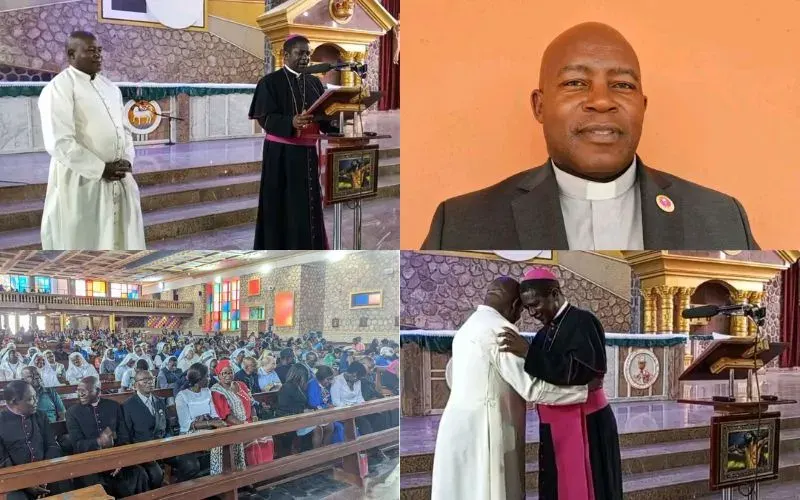
Catholic priest who was abducted in Cameroon appointed auxiliary bishop – #Catholic – Pope Leo XIV has appointed Father John Berinyuy Tatah, who was among six Catholic priests abducted in Cameroon’s Bamenda Archdiocese on Nov. 15, 2025, and later released, as auxiliary bishop of the archdiocese.The appointment of Berinyuy, rector of the Catholic University of Cameroon in Bamenda, to assist Archbishop Andrew Nkea Fuanya in shepherding the archdiocese was made public on Feb. 13 by the Holy See Press Office.Born on Dec. 18, 1975, in Mbuluf-Shisong in the Diocese of Kumbo, the bishop-elect studied philosophy and theology at St. Thomas Aquinas Interdiocesan Major Seminary in Bambui, Bamenda. He was ordained a priest for the Kumbo Diocese on March 30, 2005.The priest pursued further studies in spirituality at the Dominican monastery of Bambui and was awarded a doctorate in theology, specializing in Christian anthropology, at the Pontifical Theological Faculty Teresianum in Rome.Following his priestly ordination, Berinyuy served as parish vicar of St. Joseph in Bafut (2005–2006) and parish priest of St. Patrick in Babanki-Tungo (2006–2010).Before being appointed to his current position, he served as spiritual director and lecturer at St. Thomas Aquinas Major Seminary in Bambui and chaplain of the diocesan charismatic movement.The bishop-elect was the last of the six priests to regain freedom on Dec. 2, 2025, after being held captive for over two weeks.In a video circulated on Facebook shortly after his release, the Cameroonian priest recounted how he and his brother priests were abducted and appealed for peace in Cameroon’s troubled Anglophone regions.“I was arrested with my brothers because the forces of La Republic accompanied us to Ndop for the opening of the university. During the Mass, the nuncio came to inaugurate the university in the war zone, and we say that we are very sorry that that happened, and that it will not happen again,” Berinyuy said.He added: “We are praying that there should be dialogue to see to the solution of the southern Cameroonian, and that there should be justice and peace, so that a lasting solution should be brought to these problems that we are facing.”Following the incident, Pope Leo XIV expressed sorrow over the kidnappings of priests, Christians, and students in Nigeria and Cameroon, urging authorities to act swiftly to secure their freedom.Once consecrated bishop, Berinyuy will assist 60-year-old Nkea in shepherding 615,015 Catholics out of the total population of 1,460,253, representing 42.1% of the population, according to 2022 statistics.This story was first published by ACI Africa, the sister service of EWTN News in Africa, and has been adapted by EWTN News English.

Catholic priest who was abducted in Cameroon appointed auxiliary bishop – #Catholic – Pope Leo XIV has appointed Father John Berinyuy Tatah, who was among six Catholic priests abducted in Cameroon’s Bamenda Archdiocese on Nov. 15, 2025, and later released, as auxiliary bishop of the archdiocese.The appointment of Berinyuy, rector of the Catholic University of Cameroon in Bamenda, to assist Archbishop Andrew Nkea Fuanya in shepherding the archdiocese was made public on Feb. 13 by the Holy See Press Office.Born on Dec. 18, 1975, in Mbuluf-Shisong in the Diocese of Kumbo, the bishop-elect studied philosophy and theology at St. Thomas Aquinas Interdiocesan Major Seminary in Bambui, Bamenda. He was ordained a priest for the Kumbo Diocese on March 30, 2005.The priest pursued further studies in spirituality at the Dominican monastery of Bambui and was awarded a doctorate in theology, specializing in Christian anthropology, at the Pontifical Theological Faculty Teresianum in Rome.Following his priestly ordination, Berinyuy served as parish vicar of St. Joseph in Bafut (2005–2006) and parish priest of St. Patrick in Babanki-Tungo (2006–2010).Before being appointed to his current position, he served as spiritual director and lecturer at St. Thomas Aquinas Major Seminary in Bambui and chaplain of the diocesan charismatic movement.The bishop-elect was the last of the six priests to regain freedom on Dec. 2, 2025, after being held captive for over two weeks.In a video circulated on Facebook shortly after his release, the Cameroonian priest recounted how he and his brother priests were abducted and appealed for peace in Cameroon’s troubled Anglophone regions.“I was arrested with my brothers because the forces of La Republic accompanied us to Ndop for the opening of the university. During the Mass, the nuncio came to inaugurate the university in the war zone, and we say that we are very sorry that that happened, and that it will not happen again,” Berinyuy said.He added: “We are praying that there should be dialogue to see to the solution of the southern Cameroonian, and that there should be justice and peace, so that a lasting solution should be brought to these problems that we are facing.”Following the incident, Pope Leo XIV expressed sorrow over the kidnappings of priests, Christians, and students in Nigeria and Cameroon, urging authorities to act swiftly to secure their freedom.Once consecrated bishop, Berinyuy will assist 60-year-old Nkea in shepherding 615,015 Catholics out of the total population of 1,460,253, representing 42.1% of the population, according to 2022 statistics.This story was first published by ACI Africa, the sister service of EWTN News in Africa, and has been adapted by EWTN News English.

Father John Berinyuy Tatah was among six Catholic priests abducted in Cameroon’s Bamenda Archdiocese last year and later released.
Read More
Pope appoints Catholic Harvard professor to Vatican social sciences academy – #Catholic – Pope Leo XIV has appointed a Harvard University epidemiology professor and director of the Human Flourishing Program to the Pontifical Academy of Social Sciences.Tyler J. VanderWeele, a Catholic, is also co-director of the Initiative on Health, Spirituality, and Religion at Harvard University and a contributor to the Institute for Family Studies, which promotes traditional marriage and family structures.VanderWeele joins 35 other ordinary members — academics and professionals in the fields of law, political science, economics, and sociology — at the Vatican academy.VanderWeele told EWTN News he is grateful “for the opportunity to participate and contribute” to the work of the Pontifical Academy of Social Sciences.“Catholic social teaching has powerfully shaped the way I think about my own work and about the pursuit of societal flourishing,” he said.The academic, who entered the Catholic Church in 2012, said: “The principles of the dignity of the human person, the common good, subsidiarity, and solidarity provide a powerful roadmap for our life together. We certainly need to retain what is distinctive about the Catholic faith, but we also need to find common ground with others, and these principles of Catholic social teaching can help us to do so.”VanderWeele holds degrees in mathematics, philosophy, theology, finance, and biostatistics from Harvard, the University of Oxford, and the University of Pennsylvania.The Catholic University of America awarded VanderWeele an honorary doctorate in 2020.VanderWeele described his work at the Human Flourishing Program as aiming “to create a ‘positive epidemiology,’ wherein we study the distribution and determinants of well-being, and to expand the purview of public health to include the promotion of individual and societal flourishing,” according to the website of the social sciences academy.VanderWeele has also defended Catholic teaching on family and marriage, and written on the topic of preventing and healing child sexual abuse in religious communities.He spoke about Christianity’s contribution to the notion of human flourishing at a talk for the Veritas Forum at the Massachusetts Institute of Technology in 2023.Established by Pope John Paul II in 1994, the Pontifical Academy of Social Sciences brings together academicians from a wide range of religious and nonreligious backgrounds. Current ordinary members include Catholic theologian Tracey Rowland and economist Jeffrey Sachs.The academy is led by Sister Helen Alford, OP, president, and Cardinal Peter Turkson, chancellor.

Pope appoints Catholic Harvard professor to Vatican social sciences academy – #Catholic – Pope Leo XIV has appointed a Harvard University epidemiology professor and director of the Human Flourishing Program to the Pontifical Academy of Social Sciences.Tyler J. VanderWeele, a Catholic, is also co-director of the Initiative on Health, Spirituality, and Religion at Harvard University and a contributor to the Institute for Family Studies, which promotes traditional marriage and family structures.VanderWeele joins 35 other ordinary members — academics and professionals in the fields of law, political science, economics, and sociology — at the Vatican academy.VanderWeele told EWTN News he is grateful “for the opportunity to participate and contribute” to the work of the Pontifical Academy of Social Sciences.“Catholic social teaching has powerfully shaped the way I think about my own work and about the pursuit of societal flourishing,” he said.The academic, who entered the Catholic Church in 2012, said: “The principles of the dignity of the human person, the common good, subsidiarity, and solidarity provide a powerful roadmap for our life together. We certainly need to retain what is distinctive about the Catholic faith, but we also need to find common ground with others, and these principles of Catholic social teaching can help us to do so.”VanderWeele holds degrees in mathematics, philosophy, theology, finance, and biostatistics from Harvard, the University of Oxford, and the University of Pennsylvania.The Catholic University of America awarded VanderWeele an honorary doctorate in 2020.VanderWeele described his work at the Human Flourishing Program as aiming “to create a ‘positive epidemiology,’ wherein we study the distribution and determinants of well-being, and to expand the purview of public health to include the promotion of individual and societal flourishing,” according to the website of the social sciences academy.VanderWeele has also defended Catholic teaching on family and marriage, and written on the topic of preventing and healing child sexual abuse in religious communities.He spoke about Christianity’s contribution to the notion of human flourishing at a talk for the Veritas Forum at the Massachusetts Institute of Technology in 2023.Established by Pope John Paul II in 1994, the Pontifical Academy of Social Sciences brings together academicians from a wide range of religious and nonreligious backgrounds. Current ordinary members include Catholic theologian Tracey Rowland and economist Jeffrey Sachs.The academy is led by Sister Helen Alford, OP, president, and Cardinal Peter Turkson, chancellor.

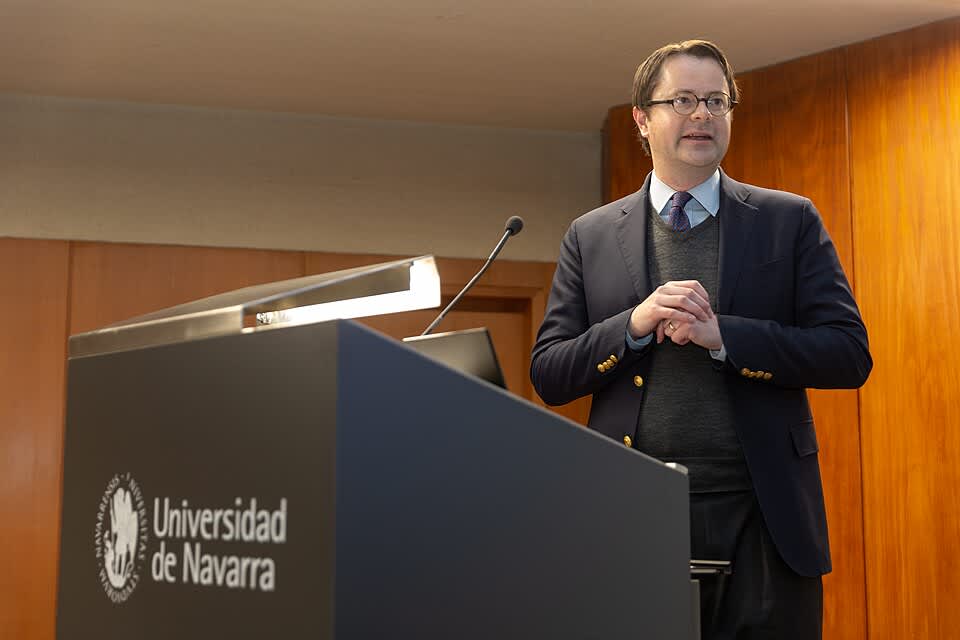
Tyler J. VanderWeele, a Catholic, is an epidemiologist and director of the Human Flourishing Program at Harvard University.
Read More
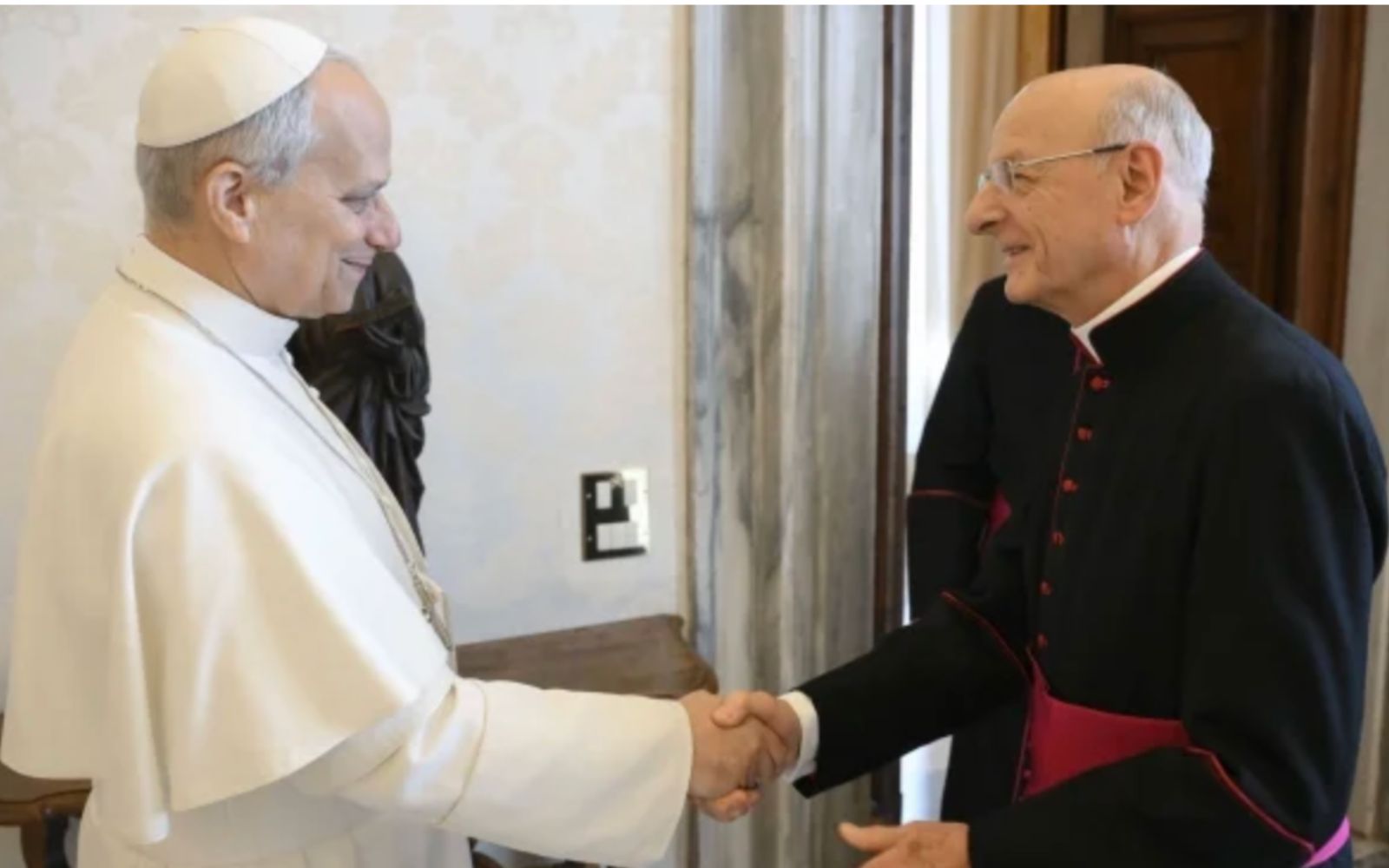
Pope Leo XIV tells Opus Dei no decision yet on revised statutes – #Catholic – Pope Leo XIV told the prelate of Opus Dei on Feb. 16 that “the process of updating Opus Dei’s statutes continues in its study phase and that no publication date can yet be foreseen,” according to a statement from the prelature.The pope received Opus Dei’s prelate, Monsignor Fernando Ocáriz, in audience at the Vatican on Monday. Ocáriz was accompanied by his auxiliary vicar, Monsignor Mariano Fazio.The Holy See Press Office did not immediately respond to a request for comment.The Vatican meeting came as the personal prelature’s proposed statutes — submitted to the Holy See on June 11, 2025 — remain under review. Opus Dei’s draft is being examined by the Dicastery for the Clergy following the reforms to the governance of personal prelatures introduced under Pope Francis.Opus Dei said that “several topics were addressed in an atmosphere of great trust,” including “the perspectives and challenges of the work of evangelization that Opus Dei carries out throughout the world, as it approaches its first centenary.”The prelature added that it presented to the pope “the institutional perspective on some specific controversies in Argentina” and that the audience also included discussion of vocations in the Church, “particularly, the contrast between the situation in Africa and in Europe.”According to the statement, Ocáriz presented the pope with two books: “The Church in the Street: The Reception of Gaudium et Spes in Six Holy Pastors,” by Augustinian Father Ramón Sala González, and “Yauyos, an Adventure in the Andes,” an account by Samuel Valero about Opus Dei priests’ evangelizing work in two provinces of Peru.Opus Dei is currently the only personal prelature in the Catholic Church and reports about 94,450 members worldwide.This story was first published by ACI Prensa, the Spanish-language sister service of EWTN News. It has been translated and adapted by EWTN News English.

Pope Leo XIV tells Opus Dei no decision yet on revised statutes – #Catholic – Pope Leo XIV told the prelate of Opus Dei on Feb. 16 that “the process of updating Opus Dei’s statutes continues in its study phase and that no publication date can yet be foreseen,” according to a statement from the prelature.The pope received Opus Dei’s prelate, Monsignor Fernando Ocáriz, in audience at the Vatican on Monday. Ocáriz was accompanied by his auxiliary vicar, Monsignor Mariano Fazio.The Holy See Press Office did not immediately respond to a request for comment.The Vatican meeting came as the personal prelature’s proposed statutes — submitted to the Holy See on June 11, 2025 — remain under review. Opus Dei’s draft is being examined by the Dicastery for the Clergy following the reforms to the governance of personal prelatures introduced under Pope Francis.Opus Dei said that “several topics were addressed in an atmosphere of great trust,” including “the perspectives and challenges of the work of evangelization that Opus Dei carries out throughout the world, as it approaches its first centenary.”The prelature added that it presented to the pope “the institutional perspective on some specific controversies in Argentina” and that the audience also included discussion of vocations in the Church, “particularly, the contrast between the situation in Africa and in Europe.”According to the statement, Ocáriz presented the pope with two books: “The Church in the Street: The Reception of Gaudium et Spes in Six Holy Pastors,” by Augustinian Father Ramón Sala González, and “Yauyos, an Adventure in the Andes,” an account by Samuel Valero about Opus Dei priests’ evangelizing work in two provinces of Peru.Opus Dei is currently the only personal prelature in the Catholic Church and reports about 94,450 members worldwide.This story was first published by ACI Prensa, the Spanish-language sister service of EWTN News. It has been translated and adapted by EWTN News English.

Pope Francis moved the prelature’s Vatican oversight from the office for bishops to that of clergy, triggering an ongoing review and rewrite of its governing norms.
Read More
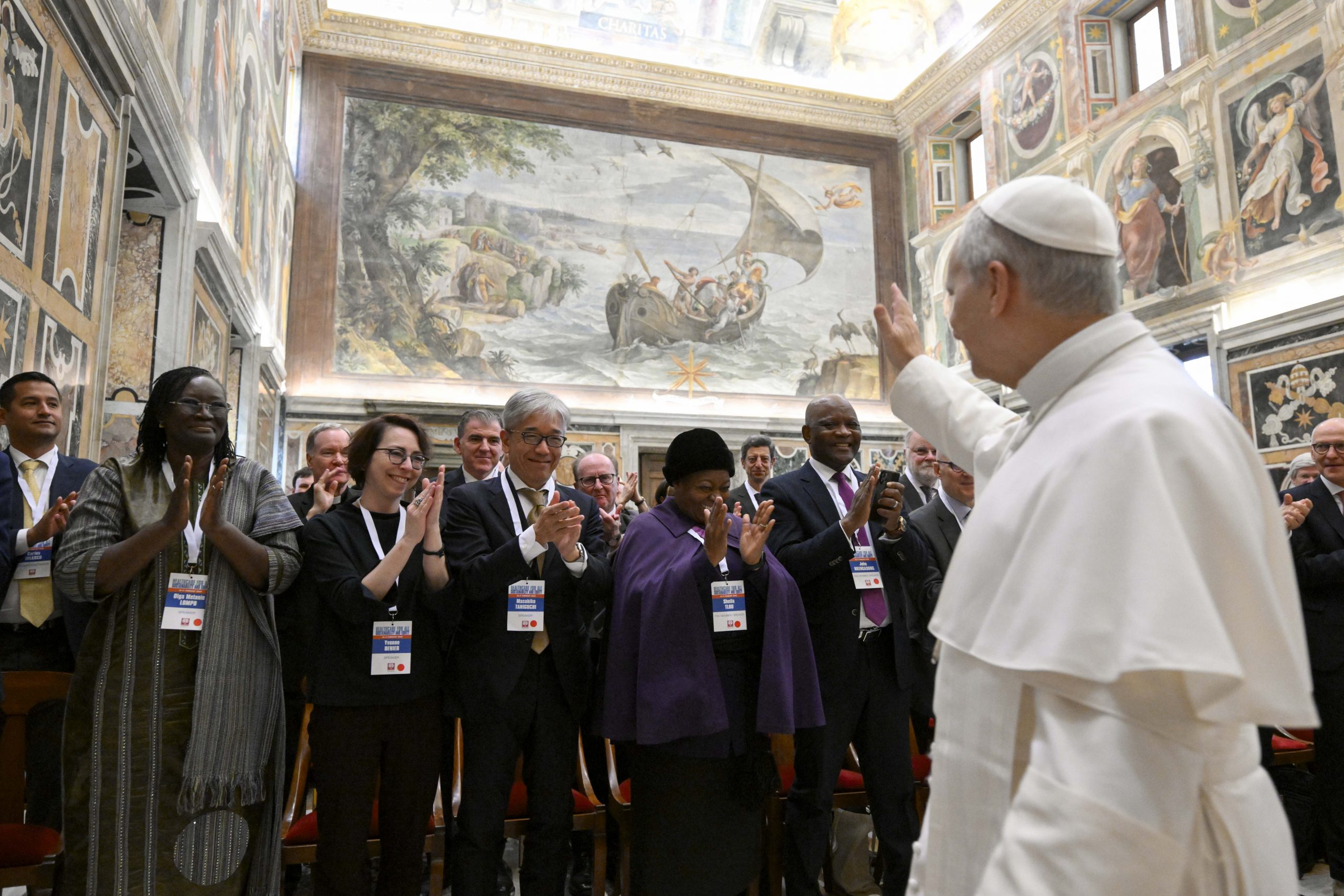
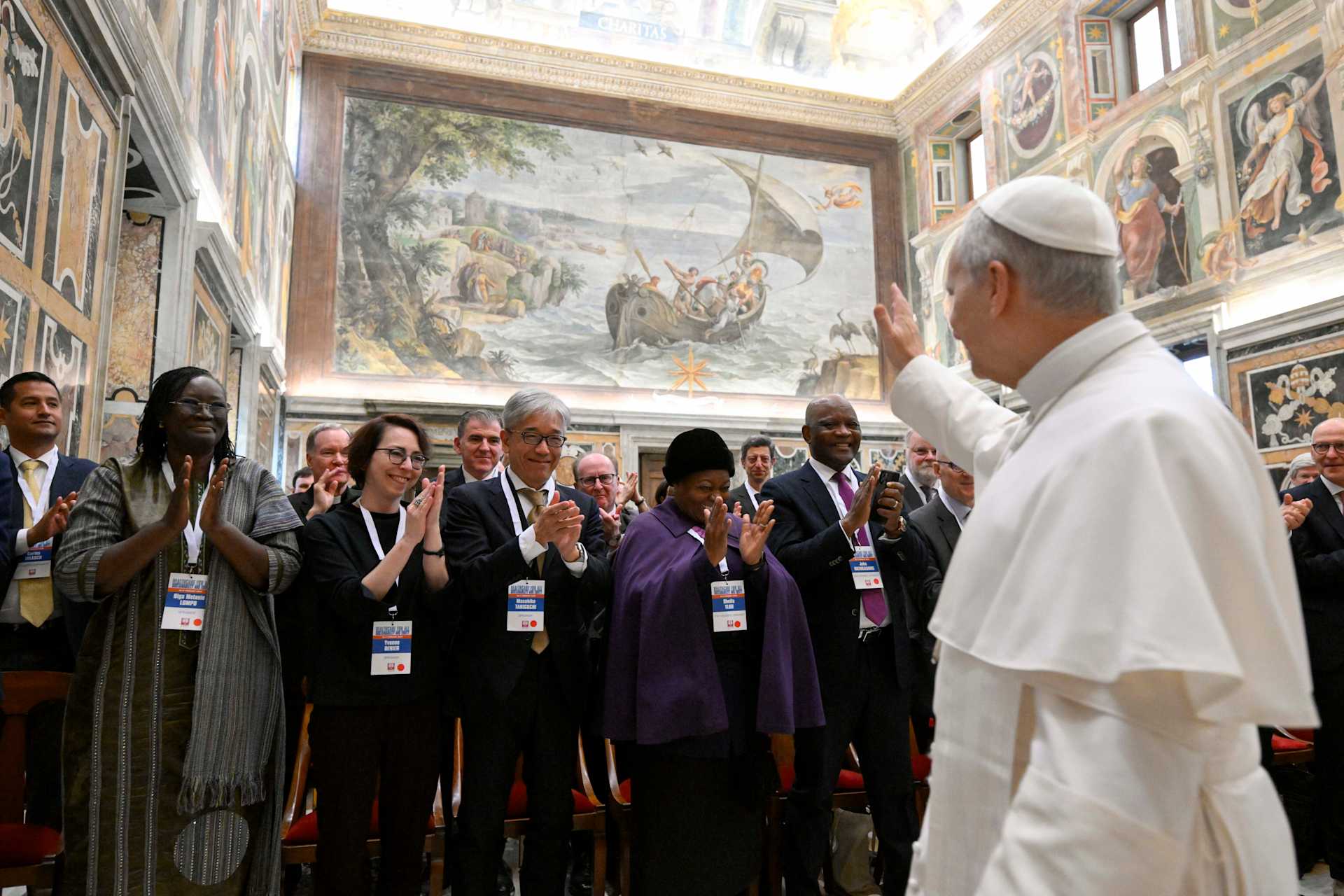
Pope Leo XIV: ‘All lives are not equally respected’ amid war and inequality – #Catholic – Pope Leo XIV on Monday warned that modern conflicts and widening social disparities are eroding respect for human life and equal access to health care, telling members of the Pontifical Academy for Life that “all lives are not equally respected and health is neither protected nor promoted in the same way for everyone.”Addressing participants in the academy’s plenary assembly in the Apostolic Palace, the pope praised the meeting’s theme — “Health Care for All: Sustainability and Equity” — and lamented that “in a world scarred by conflicts, which consume enormous economic, technological, and organizational resources in the production of arms and other types of military equipment, it has never been more important to dedicate time, people, and expertise to safeguarding life and health.”He cited Pope Francis’ insistence that health care cannot be treated as a luxury, noting that it “is not a consumer good but a universal right, which means that access to health care services cannot be a privilege.”Reflecting on the COVID-19 pandemic, Leo said it “has become clear how much reciprocity and interdependence underpin our health and our very lives,” adding that this reality demands collaboration across disciplines, including “medicine, politics, ethics, management, and others.”Turning to global disparities, the pope said that when we examine “life expectancy and the quality of health in different countries and social groups, we discover enormous inequalities” tied to factors such as income, education, and the neighborhoods where people live. He also deplored wars that strike civilian infrastructure, including hospitals, calling them “the most grave attacks that human hands can make against life and public health.”“It is often said that life and health are equally fundamental values for all,” he said, “but this statement is hypocritical if, at the same time, we ignore the structural causes and policies that determine inequalities.”Leo also highlighted the “One health” approach, encouraging an integrated vision that recognizes the links between human health, environmental conditions, and other forms of life — an outlook he said aligns with the academy’s work in global bioethics.The pope urged renewed commitment to the common good, warning it can become “an abstract and irrelevant notion” unless it is rooted in strong social bonds. “We need to rediscover the fundamental attitude of care as support and closeness to others,” he said, arguing that this is key to building sustainable health systems and restoring trust in medicine amid “misinformation or skepticism regarding science.”Concluding, Leo renewed his call for stronger international and multilateral cooperation, saying such relationships are essential for preventing conflicts and resisting “the mindset of force, whether verbal, physical or military.”This story was first published by ACI Stampa, the Italian-language sister service of EWTN News, and has been translated and adapted by EWTN News English.

Pope Leo XIV: ‘All lives are not equally respected’ amid war and inequality – #Catholic – Pope Leo XIV on Monday warned that modern conflicts and widening social disparities are eroding respect for human life and equal access to health care, telling members of the Pontifical Academy for Life that “all lives are not equally respected and health is neither protected nor promoted in the same way for everyone.”Addressing participants in the academy’s plenary assembly in the Apostolic Palace, the pope praised the meeting’s theme — “Health Care for All: Sustainability and Equity” — and lamented that “in a world scarred by conflicts, which consume enormous economic, technological, and organizational resources in the production of arms and other types of military equipment, it has never been more important to dedicate time, people, and expertise to safeguarding life and health.”He cited Pope Francis’ insistence that health care cannot be treated as a luxury, noting that it “is not a consumer good but a universal right, which means that access to health care services cannot be a privilege.”Reflecting on the COVID-19 pandemic, Leo said it “has become clear how much reciprocity and interdependence underpin our health and our very lives,” adding that this reality demands collaboration across disciplines, including “medicine, politics, ethics, management, and others.”Turning to global disparities, the pope said that when we examine “life expectancy and the quality of health in different countries and social groups, we discover enormous inequalities” tied to factors such as income, education, and the neighborhoods where people live. He also deplored wars that strike civilian infrastructure, including hospitals, calling them “the most grave attacks that human hands can make against life and public health.”“It is often said that life and health are equally fundamental values for all,” he said, “but this statement is hypocritical if, at the same time, we ignore the structural causes and policies that determine inequalities.”Leo also highlighted the “One health” approach, encouraging an integrated vision that recognizes the links between human health, environmental conditions, and other forms of life — an outlook he said aligns with the academy’s work in global bioethics.The pope urged renewed commitment to the common good, warning it can become “an abstract and irrelevant notion” unless it is rooted in strong social bonds. “We need to rediscover the fundamental attitude of care as support and closeness to others,” he said, arguing that this is key to building sustainable health systems and restoring trust in medicine amid “misinformation or skepticism regarding science.”Concluding, Leo renewed his call for stronger international and multilateral cooperation, saying such relationships are essential for preventing conflicts and resisting “the mindset of force, whether verbal, physical or military.”This story was first published by ACI Stampa, the Italian-language sister service of EWTN News, and has been translated and adapted by EWTN News English.

The pope told the Pontifical Academy for Life it is hypocritical to call health a universal value while ignoring policies that drive disparities.
Read More
Catholic bishop calls on Bangladesh’s new leaders to protect minorities – #Catholic – DHAKA, Bangladesh — The Catholic Church in Bangladesh has congratulated the country’s newly elected government after the Bangladesh Nationalist Party (BNP) won a commanding two-thirds majority in the Feb. 12 parliamentary election — the first since a student-led uprising toppled former Prime Minister Sheikh Hasina in 2024.Bishop Gervas Rozario of Rajshahi, vice president of the Catholic Bishops’ Conference of Bangladesh (CBCB), told EWTN News the election appeared to be a fair contest and urged the incoming government to prioritize human rights.“We only want the new government to respect and promote human rights of all citizens, including minority people of other faiths and cultures, and promote justice and peace for all,” said Rozario, who also chairs the CBCB’s justice and peace commission.BNP wins landslide; Islamist party becomes oppositionThe BNP and its allies won 212 of 299 contested parliamentary seats, while the Islamist party Bangladesh Jamaat-e-Islami and its alliance secured 77 seats, according to official results published by the Bangladesh Election Commission. The National Citizens Party, a youth-led group that emerged from the 2024 uprising, won six seats.Jamaat-e-Islami will serve as the main opposition in the Jatiya Sangsad, the national parliament.
 
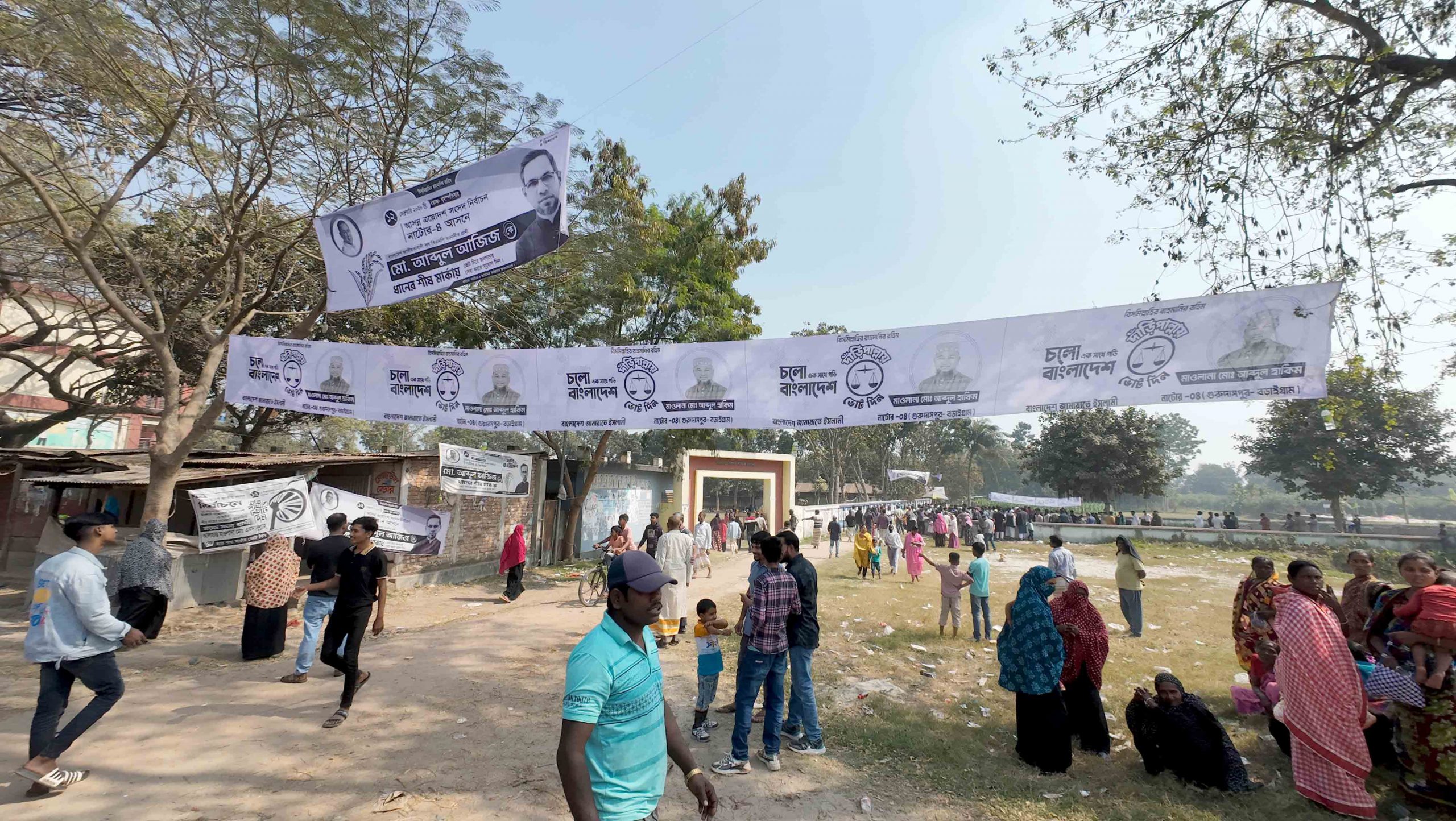
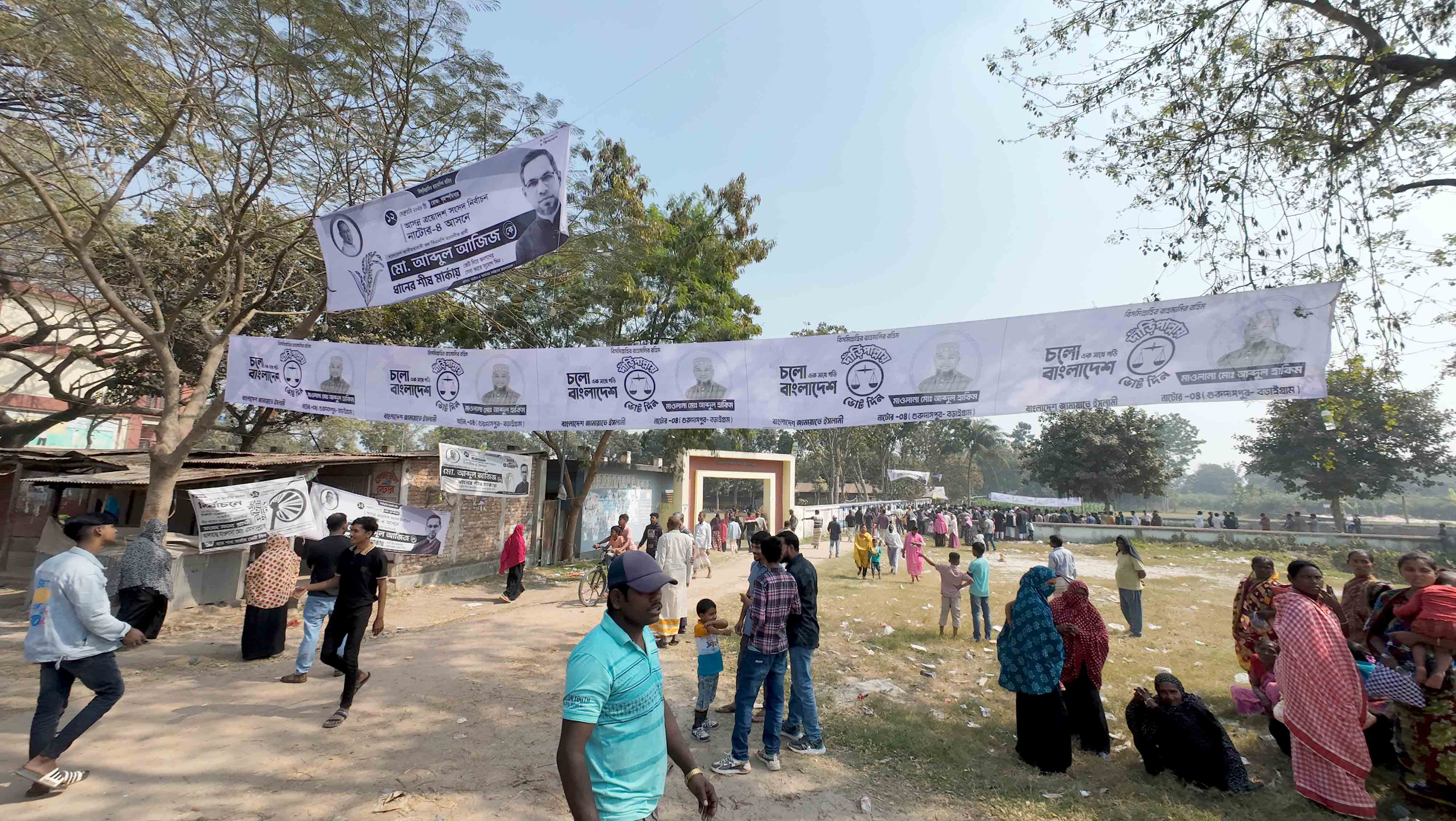
 A voter casts his ballot at a polling station in Natore district, Bangladesh, on Feb. 12, 2026. | Credit: Stephan Uttom Rozario/EWTN News
 
 Rozario said he hoped the Islamist party would play a constructive role. “We hope Jamaat-e-Islami will be able to play the role of a strong opposition in the house,” he said. “The people of Bangladesh want this party to apologize for their role in 1971.”During Bangladesh’s war of independence from Pakistan in 1971, Jamaat-e-Islami was accused of collaborating with Pakistani forces. The previous Awami League government tried and executed several of the party’s senior leaders on war crimes charges.First election since 2024 uprisingThe 2024 student-led mass uprising forced the ouster of Hasina, whose Bangladesh Awami League had governed the country for 15 years amid allegations of increasing authoritarianism. Hasina fled to neighboring India, where she remains.An interim government led by Nobel laureate Muhammad Yunus subsequently took power. The interim government held the election within approximately 18 months, though the Awami League was barred from participating after its activities were banned under public pressure.BNP chairman Tarique Rahman, who is expected to become prime minister, told a press conference on Feb. 14 that the new government faces significant challenges. Rahman cited the need to repair the economy, restore law and order, and ensure good governance across institutions that he said had been politicized by the previous government.Constitutional referendum held alongside electionA constitutional referendum on the “July Charter” — a reform blueprint drafted under the interim government — was held simultaneously with the parliamentary election. According to official Election Commission results, approximately 62% of voters approved the charter, which proposes sweeping governance changes including the creation of a bicameral parliament and term limits for the prime minister.Catholics make up less than half a percent of Bangladesh’s population of approximately 175 million. The country has eight dioceses, including two archdioceses.

Catholic bishop calls on Bangladesh’s new leaders to protect minorities – #Catholic – DHAKA, Bangladesh — The Catholic Church in Bangladesh has congratulated the country’s newly elected government after the Bangladesh Nationalist Party (BNP) won a commanding two-thirds majority in the Feb. 12 parliamentary election — the first since a student-led uprising toppled former Prime Minister Sheikh Hasina in 2024.Bishop Gervas Rozario of Rajshahi, vice president of the Catholic Bishops’ Conference of Bangladesh (CBCB), told EWTN News the election appeared to be a fair contest and urged the incoming government to prioritize human rights.“We only want the new government to respect and promote human rights of all citizens, including minority people of other faiths and cultures, and promote justice and peace for all,” said Rozario, who also chairs the CBCB’s justice and peace commission.BNP wins landslide; Islamist party becomes oppositionThe BNP and its allies won 212 of 299 contested parliamentary seats, while the Islamist party Bangladesh Jamaat-e-Islami and its alliance secured 77 seats, according to official results published by the Bangladesh Election Commission. The National Citizens Party, a youth-led group that emerged from the 2024 uprising, won six seats.Jamaat-e-Islami will serve as the main opposition in the Jatiya Sangsad, the national parliament. A voter casts his ballot at a polling station in Natore district, Bangladesh, on Feb. 12, 2026. | Credit: Stephan Uttom Rozario/EWTN News Rozario said he hoped the Islamist party would play a constructive role. “We hope Jamaat-e-Islami will be able to play the role of a strong opposition in the house,” he said. “The people of Bangladesh want this party to apologize for their role in 1971.”During Bangladesh’s war of independence from Pakistan in 1971, Jamaat-e-Islami was accused of collaborating with Pakistani forces. The previous Awami League government tried and executed several of the party’s senior leaders on war crimes charges.First election since 2024 uprisingThe 2024 student-led mass uprising forced the ouster of Hasina, whose Bangladesh Awami League had governed the country for 15 years amid allegations of increasing authoritarianism. Hasina fled to neighboring India, where she remains.An interim government led by Nobel laureate Muhammad Yunus subsequently took power. The interim government held the election within approximately 18 months, though the Awami League was barred from participating after its activities were banned under public pressure.BNP chairman Tarique Rahman, who is expected to become prime minister, told a press conference on Feb. 14 that the new government faces significant challenges. Rahman cited the need to repair the economy, restore law and order, and ensure good governance across institutions that he said had been politicized by the previous government.Constitutional referendum held alongside electionA constitutional referendum on the “July Charter” — a reform blueprint drafted under the interim government — was held simultaneously with the parliamentary election. According to official Election Commission results, approximately 62% of voters approved the charter, which proposes sweeping governance changes including the creation of a bicameral parliament and term limits for the prime minister.Catholics make up less than half a percent of Bangladesh’s population of approximately 175 million. The country has eight dioceses, including two archdioceses.

A Catholic bishop calls on Bangladesh’s newly elected government to protect minority rights after the BNP’s landslide victory in the country’s first election since the 2024 uprising.
Read More
Lawmakers urge White House to restore visas for international adoptions #Catholic Lawmakers are urging the Trump administration to offer government exceptions for international adoption visas so that children can be united with their adoptive families and “welcomed into safe and stable homes.”U.S. Sens. Kevin Cramer and Amy Klobuchar, along with U.S. Reps. Robert Aderholt and Danny Davis, asked the Department of State to restore a “categorical exemption for adoption visas,” one that was suspended in December 2025 amid government travel restrictions on certain countries.The suspension of the visas “has introduced uncertainty for children and American parents who have waited years for their adoptions to be completed and were preparing to bring their children home,” the lawmakers said.The letter cited Department of State guidance from 2025 that acknowledged that adoption “involves children in need — some in urgent need — of a loving, permanent home and family.”In that guidance the State Department acknowledged the need to “vigorously engage at both the policy and case levels to protect the interests of all parties involved.”“We strongly urge you to advocate for the restoration of the categorical exemption for adoption visas,” the lawmakers said, calling on the department to “move expeditiously to address this situation to ensure these children are united with their adoptive parents.”Difficulty of international adoption changes with governmentsKatie Dillon, a spokeswoman for Commonwealth Catholic Charities in Virginia, said international adoptions “typically follow clear, predictable steps,” though she said the process is “lengthy.”Like many Catholic charity groups, Commonwealth Catholic Charities offers adoptive families a variety of resources and services to facilitate in both domestic and international adoptions. Dillon said the Virginia group “acts as the home study provider and post-placement agency” for families seeking to adopt from other countries.Such adoptions “can be a difficult process that ebbs and flows with global policy shifts,” she said. “It can be a challenging process for families to navigate.”“Families interested in international adoption work with an in-state agency like Commonwealth Catholic Charities to complete their home study and an international agency to help with the placement of the child,” she said.Child placement agencies must be accredited by the Hague Adoption Convention of 1993, an international accord that established protections for children in international adoptions. Such agencies “have programs in certain countries to legally assist a family in the adoption of a child from that country,” Dillon said.Though there are numerous resources that prospective adoptive families can utilize to help them in their journey, Dillon said international adoption “is often a long process that can take upwards of three or four years.” Some countries can require parents to reside in the country in question for anywhere from several months to a year, she said.Amid the uncertainty at the federal level, Dillon stressed that the difficult process is at times upended by elections in which government rules can shift without warning.“Parents who are considering international adoption should be aware that adoption policies can change abruptly with changes in government leadership,” she said. “There are no guarantees.”

Lawmakers urge White House to restore visas for international adoptions #Catholic Lawmakers are urging the Trump administration to offer government exceptions for international adoption visas so that children can be united with their adoptive families and “welcomed into safe and stable homes.”U.S. Sens. Kevin Cramer and Amy Klobuchar, along with U.S. Reps. Robert Aderholt and Danny Davis, asked the Department of State to restore a “categorical exemption for adoption visas,” one that was suspended in December 2025 amid government travel restrictions on certain countries.The suspension of the visas “has introduced uncertainty for children and American parents who have waited years for their adoptions to be completed and were preparing to bring their children home,” the lawmakers said.The letter cited Department of State guidance from 2025 that acknowledged that adoption “involves children in need — some in urgent need — of a loving, permanent home and family.”In that guidance the State Department acknowledged the need to “vigorously engage at both the policy and case levels to protect the interests of all parties involved.”“We strongly urge you to advocate for the restoration of the categorical exemption for adoption visas,” the lawmakers said, calling on the department to “move expeditiously to address this situation to ensure these children are united with their adoptive parents.”Difficulty of international adoption changes with governmentsKatie Dillon, a spokeswoman for Commonwealth Catholic Charities in Virginia, said international adoptions “typically follow clear, predictable steps,” though she said the process is “lengthy.”Like many Catholic charity groups, Commonwealth Catholic Charities offers adoptive families a variety of resources and services to facilitate in both domestic and international adoptions. Dillon said the Virginia group “acts as the home study provider and post-placement agency” for families seeking to adopt from other countries.Such adoptions “can be a difficult process that ebbs and flows with global policy shifts,” she said. “It can be a challenging process for families to navigate.”“Families interested in international adoption work with an in-state agency like Commonwealth Catholic Charities to complete their home study and an international agency to help with the placement of the child,” she said.Child placement agencies must be accredited by the Hague Adoption Convention of 1993, an international accord that established protections for children in international adoptions. Such agencies “have programs in certain countries to legally assist a family in the adoption of a child from that country,” Dillon said.Though there are numerous resources that prospective adoptive families can utilize to help them in their journey, Dillon said international adoption “is often a long process that can take upwards of three or four years.” Some countries can require parents to reside in the country in question for anywhere from several months to a year, she said.Amid the uncertainty at the federal level, Dillon stressed that the difficult process is at times upended by elections in which government rules can shift without warning.“Parents who are considering international adoption should be aware that adoption policies can change abruptly with changes in government leadership,” she said. “There are no guarantees.”

“Adoption visas are not guaranteed” amid a travel freeze, said lawmakers who have asked the State Department to restore a “categorical exemption for adoption visas.”

Read More
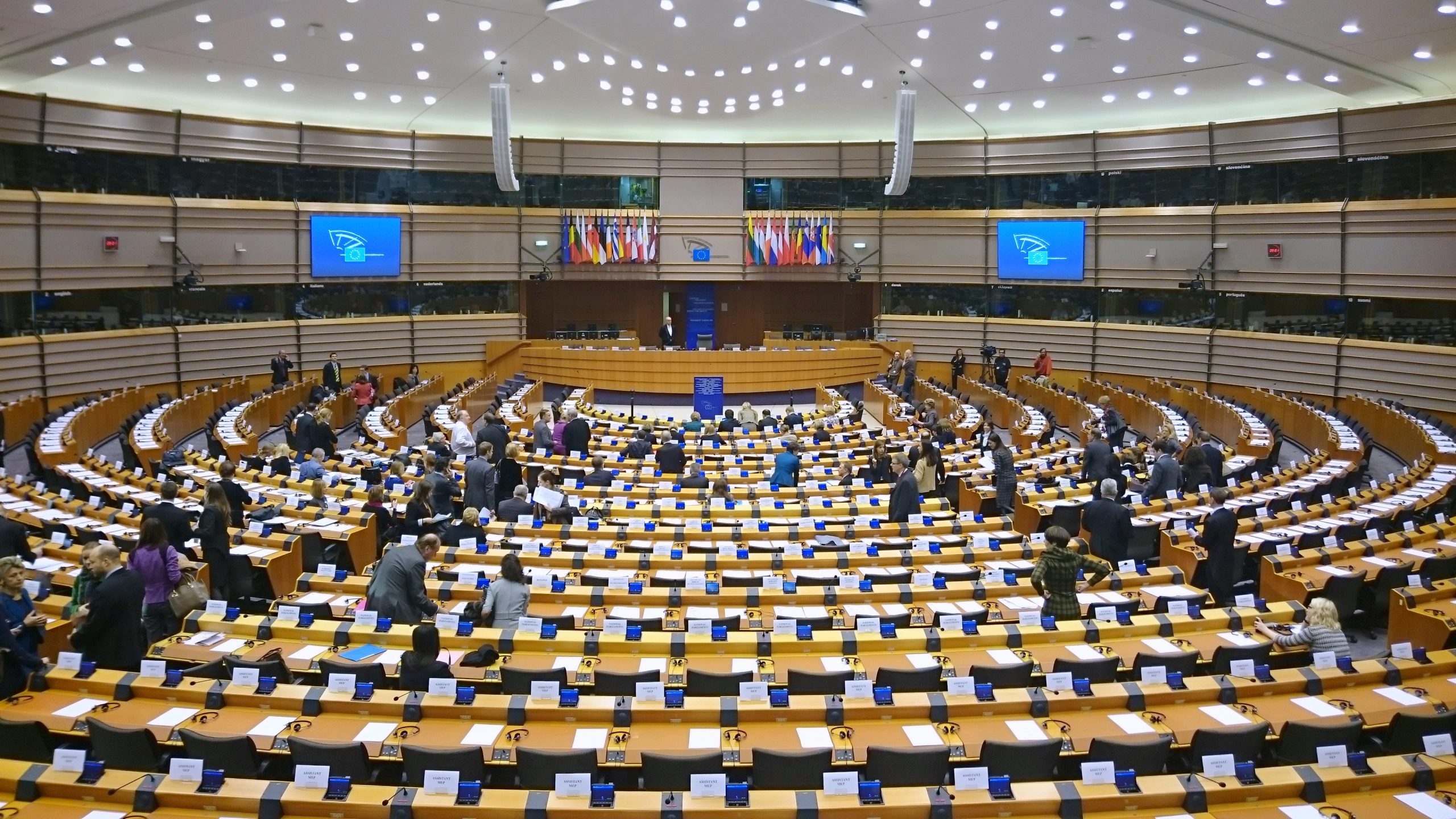
European Parliament votes to condemn Turkey’s expulsion of Christian workers – #Catholic – BRUSSELS, Belgium — The European Parliament adopted a resolution on Feb. 12 strongly condemning Turkey’s expulsion of Christian missionaries under what lawmakers described as opaque “national security” pretexts. The resolution urges the capital city of Ankara to respect freedom of religion and allow those affected to return.The European Parliament, the EU’s directly elected legislature, represents over 450 million citizens across 27 member states.The resolution passed with 502 votes in favor, two against, and 59 abstentions, following a late-evening parliamentary debate on Wednesday, reflecting broad cross-party concern over the treatment of foreign Christian religious workers.Missionaries targeted as ‘threat to national security’During the debate, Dutch Member of the European Parliament Bert-Jan Ruissen described the situation facing missionaries in Turkey in stark terms.“You bring the good news of the Gospel, the message of peace and reconciliation through Jesus Christ. Then you are considered a threat to national security and are no longer allowed to enter the country. That is the harsh reality of missionaries working in Turkey,” Ruissen said.He urged Turkish authorities to “take freedom of religion seriously,” adding that as the EU strengthens engagement with Ankara, it must speak clearly about fundamental rights. 
 
 How urban planning is used to undermine Christian institutions in Turkey
 
 “Turkey must stop targeting churches, guarantee freedom of religion or belief, and allow Christians to share their faith freely,” he said.At least 160 foreign Christian workers expelled or denied reentryAccording to ADF International, at least 160 foreign Christian workers, along with their families, have been expelled from Turkey or denied reentry in recent years, often after living and serving in the country for decades.Many of those affected were issued so-called “N-82” administrative codes, a national security classification used to bar individuals from returning. ADF International reports that these bans are often applied without public explanation or effective legal remedy, leaving missionaries unable to challenge their exclusion.Approximately 20 related cases are currently before the European Court of Human Rights, where applicants are challenging the legality of the expulsions and reentry restrictions, according to ADF International.The adopted resolution calls on Turkish authorities to ensure that national security measures are not applied arbitrarily and urges Turkey to respect international human rights obligations, including protections for freedom of religion or belief.Turkey’s foreign ministry reportedly rejected the resolution on Feb. 13, saying claims regarding freedom of expression and religion “contradict the facts” and that “no foreign institution, including the European Parliament, can interfere in judicial proceedings conducted in our country.”Resolution puts EU-Turkey relations further on the lineThe resolution comes amid long-standing tensions between the EU and Turkey over human rights and rule of law concerns. Despite holding official EU candidate status since 1999, Turkey’s long-stalled bid to join the bloc has effectively frozen.The European Parliament has repeatedly raised concerns regarding the treatment of journalists, civil society actors, and religious minorities in the country. Thursday’s vote adds the expulsion of Christian missionaries to the list of issues under parliamentary scrutiny.Although European Parliament resolutions are not legally binding, the adopted resolution carries political weight, signaling the EU’s stance on freedom of religion and prompting the European Commission and the European External Action Service, the EU’s diplomatic service, to raise the issue with Turkish authorities.Croatian Member of the European Parliament Tomislav Sokol, speaking during the debate, framed Turkey’s expulsions within a broader global challenge to religious freedom. He highlighted the ongoing persecution of Christians in Nigeria, including widespread killings and the destruction of churches. He warned that Turkey’s expulsions represent a different but equally serious form of persecution — including administrative bans, deportations, church closures, and denial of legal protection. He added: “Our credibility is measured by our willingness to defend freedom of religion everywhere and without double standards.”

European Parliament votes to condemn Turkey’s expulsion of Christian workers – #Catholic – BRUSSELS, Belgium — The European Parliament adopted a resolution on Feb. 12 strongly condemning Turkey’s expulsion of Christian missionaries under what lawmakers described as opaque “national security” pretexts. The resolution urges the capital city of Ankara to respect freedom of religion and allow those affected to return.The European Parliament, the EU’s directly elected legislature, represents over 450 million citizens across 27 member states.The resolution passed with 502 votes in favor, two against, and 59 abstentions, following a late-evening parliamentary debate on Wednesday, reflecting broad cross-party concern over the treatment of foreign Christian religious workers.Missionaries targeted as ‘threat to national security’During the debate, Dutch Member of the European Parliament Bert-Jan Ruissen described the situation facing missionaries in Turkey in stark terms.“You bring the good news of the Gospel, the message of peace and reconciliation through Jesus Christ. Then you are considered a threat to national security and are no longer allowed to enter the country. That is the harsh reality of missionaries working in Turkey,” Ruissen said.He urged Turkish authorities to “take freedom of religion seriously,” adding that as the EU strengthens engagement with Ankara, it must speak clearly about fundamental rights. How urban planning is used to undermine Christian institutions in Turkey “Turkey must stop targeting churches, guarantee freedom of religion or belief, and allow Christians to share their faith freely,” he said.At least 160 foreign Christian workers expelled or denied reentryAccording to ADF International, at least 160 foreign Christian workers, along with their families, have been expelled from Turkey or denied reentry in recent years, often after living and serving in the country for decades.Many of those affected were issued so-called “N-82” administrative codes, a national security classification used to bar individuals from returning. ADF International reports that these bans are often applied without public explanation or effective legal remedy, leaving missionaries unable to challenge their exclusion.Approximately 20 related cases are currently before the European Court of Human Rights, where applicants are challenging the legality of the expulsions and reentry restrictions, according to ADF International.The adopted resolution calls on Turkish authorities to ensure that national security measures are not applied arbitrarily and urges Turkey to respect international human rights obligations, including protections for freedom of religion or belief.Turkey’s foreign ministry reportedly rejected the resolution on Feb. 13, saying claims regarding freedom of expression and religion “contradict the facts” and that “no foreign institution, including the European Parliament, can interfere in judicial proceedings conducted in our country.”Resolution puts EU-Turkey relations further on the lineThe resolution comes amid long-standing tensions between the EU and Turkey over human rights and rule of law concerns. Despite holding official EU candidate status since 1999, Turkey’s long-stalled bid to join the bloc has effectively frozen.The European Parliament has repeatedly raised concerns regarding the treatment of journalists, civil society actors, and religious minorities in the country. Thursday’s vote adds the expulsion of Christian missionaries to the list of issues under parliamentary scrutiny.Although European Parliament resolutions are not legally binding, the adopted resolution carries political weight, signaling the EU’s stance on freedom of religion and prompting the European Commission and the European External Action Service, the EU’s diplomatic service, to raise the issue with Turkish authorities.Croatian Member of the European Parliament Tomislav Sokol, speaking during the debate, framed Turkey’s expulsions within a broader global challenge to religious freedom. He highlighted the ongoing persecution of Christians in Nigeria, including widespread killings and the destruction of churches. He warned that Turkey’s expulsions represent a different but equally serious form of persecution — including administrative bans, deportations, church closures, and denial of legal protection. He added: “Our credibility is measured by our willingness to defend freedom of religion everywhere and without double standards.”

The near-unanimous resolution calls on Ankara to respect religious freedom and allow expelled Christian workers to return.
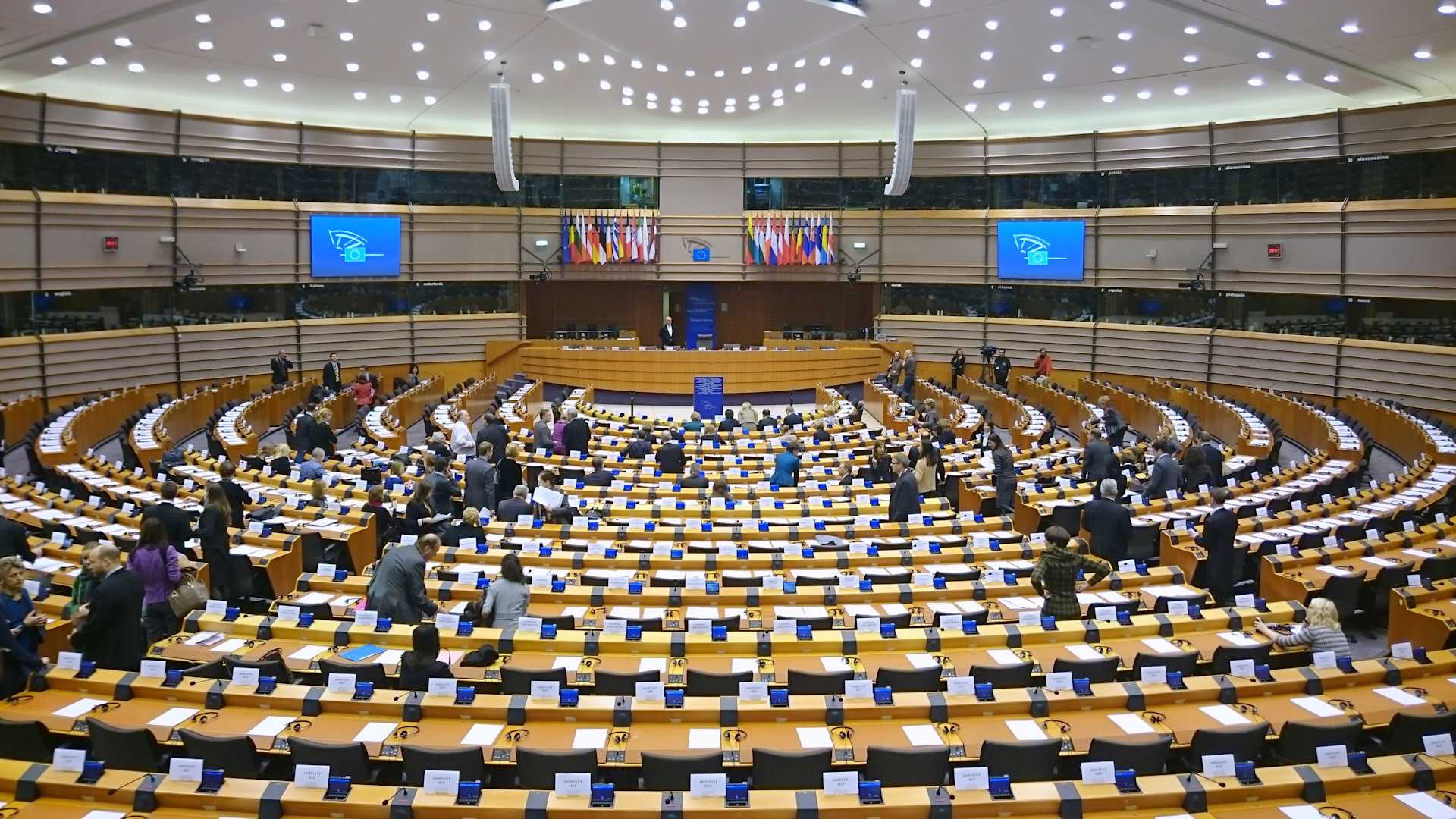
Read More
Scouts encouraged to be inspired by saints at Mass #Catholic - Bishop Kevin J. Sweeney urged scouts and leaders to find inspiration in the saints, such as Ss. Cyril & Methodius, while celebrating the annual Scout Sunday Mass of the Paterson Diocese in New Jersey on Feb. 14, the feast of the two Slavic saints and St. Valentine’s Day. The liturgy was held at Our Lady of Good Counsel (OLGC) Church in the Pompton Plains neighborhood of Pequannock, N.J.
After presiding over the Mass, Bishop Sweeney presented religious awards to Boy Scouts, Girl Scouts, and adult Boy Scout leaders to inspire and strengthen their Catholic faith.
Among the priests concelebrating the Mass with Bishop Sweeney were Father Frank Agresti, chaplain of the diocesan Catholic Committee on Girl Scouting who is offering pastoral assistance to St. Anthony Parish in Hawthorne, N.J.; Father Christopher Barkhausen, pastor of St. Francis de Sales Parish in the McAfee neighborhood of Vernon, N.J., and chaplain of the diocesan Catholic Committee on Boy Scouting; and Father Benjamin Williams, pastor of St. Thomas the Apostle Parish in the Oak Ridge neighborhood of Jefferson Township and St. John Vianney Parish in the Stockholm neighborhood of Hardyston, N.J. who is involved in several capacities with the Boy Scouts’ Patriots Path Council.

Click here to subscribe to our weekly newsletter.

Father Darwin Lastra, pastor of OLGC, also concelebrated the Mass. Father Jared Brogan, director of the diocesan Worship Office, was master of ceremonies for the liturgy.
On social media, Bishop Sweeney posted after the event, “I was blessed to celebrate Mass this Morning with our Catholic Scouting Community and be part of their annual Awards Ceremony. I thanked the Girl Scouts and Boy Scouts, their parents, Scout Leaders, and Chaplains for their dedication, generosity, and example of servant leadership. I encouraged them to learn from and be inspired by the saints, especially Ss. Cyril & Methodius.”
Ss. Cyril and Methodius were two missionaries, brothers from Thessaloniki in Greece, who popularized Christianity among the Slavic peoples. Such was their influence that they are now known as the “Apostles to the Slavs.”
Deacon Marc Mackin of OLGC assisted with the Mass. Several Scouts participated in the Mass.
The diocese’s Boy Scouts and Girl Scouts have been holding a Scout Sunday Mass collectively for at least 10 years. Last year, the Boy Scouts of America rebranded as Scouting America to be more inclusive to all youth.
A list of Boy Scout and Girl Scout award recipients will follow soon.
BEACON PHOTOS | JOE GIGLI
 [See image gallery at beaconnj.org]  

Scouts encouraged to be inspired by saints at Mass #Catholic – Bishop Kevin J. Sweeney urged scouts and leaders to find inspiration in the saints, such as Ss. Cyril & Methodius, while celebrating the annual Scout Sunday Mass of the Paterson Diocese in New Jersey on Feb. 14, the feast of the two Slavic saints and St. Valentine’s Day. The liturgy was held at Our Lady of Good Counsel (OLGC) Church in the Pompton Plains neighborhood of Pequannock, N.J. After presiding over the Mass, Bishop Sweeney presented religious awards to Boy Scouts, Girl Scouts, and adult Boy Scout leaders to inspire and strengthen their Catholic faith. Among the priests concelebrating the Mass with Bishop Sweeney were Father Frank Agresti, chaplain of the diocesan Catholic Committee on Girl Scouting who is offering pastoral assistance to St. Anthony Parish in Hawthorne, N.J.; Father Christopher Barkhausen, pastor of St. Francis de Sales Parish in the McAfee neighborhood of Vernon, N.J., and chaplain of the diocesan Catholic Committee on Boy Scouting; and Father Benjamin Williams, pastor of St. Thomas the Apostle Parish in the Oak Ridge neighborhood of Jefferson Township and St. John Vianney Parish in the Stockholm neighborhood of Hardyston, N.J. who is involved in several capacities with the Boy Scouts’ Patriots Path Council. Click here to subscribe to our weekly newsletter. Father Darwin Lastra, pastor of OLGC, also concelebrated the Mass. Father Jared Brogan, director of the diocesan Worship Office, was master of ceremonies for the liturgy. On social media, Bishop Sweeney posted after the event, “I was blessed to celebrate Mass this Morning with our Catholic Scouting Community and be part of their annual Awards Ceremony. I thanked the Girl Scouts and Boy Scouts, their parents, Scout Leaders, and Chaplains for their dedication, generosity, and example of servant leadership. I encouraged them to learn from and be inspired by the saints, especially Ss. Cyril & Methodius.” Ss. Cyril and Methodius were two missionaries, brothers from Thessaloniki in Greece, who popularized Christianity among the Slavic peoples. Such was their influence that they are now known as the “Apostles to the Slavs.” Deacon Marc Mackin of OLGC assisted with the Mass. Several Scouts participated in the Mass. The diocese’s Boy Scouts and Girl Scouts have been holding a Scout Sunday Mass collectively for at least 10 years. Last year, the Boy Scouts of America rebranded as Scouting America to be more inclusive to all youth. A list of Boy Scout and Girl Scout award recipients will follow soon. BEACON PHOTOS | JOE GIGLI [See image gallery at beaconnj.org]  

Scouts encouraged to be inspired by saints at Mass #Catholic –

Bishop Kevin J. Sweeney urged scouts and leaders to find inspiration in the saints, such as Ss. Cyril & Methodius, while celebrating the annual Scout Sunday Mass of the Paterson Diocese in New Jersey on Feb. 14, the feast of the two Slavic saints and St. Valentine’s Day. The liturgy was held at Our Lady of Good Counsel (OLGC) Church in the Pompton Plains neighborhood of Pequannock, N.J.

After presiding over the Mass, Bishop Sweeney presented religious awards to Boy Scouts, Girl Scouts, and adult Boy Scout leaders to inspire and strengthen their Catholic faith.

Among the priests concelebrating the Mass with Bishop Sweeney were Father Frank Agresti, chaplain of the diocesan Catholic Committee on Girl Scouting who is offering pastoral assistance to St. Anthony Parish in Hawthorne, N.J.; Father Christopher Barkhausen, pastor of St. Francis de Sales Parish in the McAfee neighborhood of Vernon, N.J., and chaplain of the diocesan Catholic Committee on Boy Scouting; and Father Benjamin Williams, pastor of St. Thomas the Apostle Parish in the Oak Ridge neighborhood of Jefferson Township and St. John Vianney Parish in the Stockholm neighborhood of Hardyston, N.J. who is involved in several capacities with the Boy Scouts’ Patriots Path Council.


Click here to subscribe to our weekly newsletter.

Father Darwin Lastra, pastor of OLGC, also concelebrated the Mass. Father Jared Brogan, director of the diocesan Worship Office, was master of ceremonies for the liturgy.

On social media, Bishop Sweeney posted after the event, “I was blessed to celebrate Mass this Morning with our Catholic Scouting Community and be part of their annual Awards Ceremony. I thanked the Girl Scouts and Boy Scouts, their parents, Scout Leaders, and Chaplains for their dedication, generosity, and example of servant leadership. I encouraged them to learn from and be inspired by the saints, especially Ss. Cyril & Methodius.”

Ss. Cyril and Methodius were two missionaries, brothers from Thessaloniki in Greece, who popularized Christianity among the Slavic peoples. Such was their influence that they are now known as the “Apostles to the Slavs.”
Deacon Marc Mackin of OLGC assisted with the Mass. Several Scouts participated in the Mass.

The diocese’s Boy Scouts and Girl Scouts have been holding a Scout Sunday Mass collectively for at least 10 years. Last year, the Boy Scouts of America rebranded as Scouting America to be more inclusive to all youth.

A list of Boy Scout and Girl Scout award recipients will follow soon.

BEACON PHOTOS | JOE GIGLI

Bishop Kevin J. Sweeney urged scouts and leaders to find inspiration in the saints, such as Ss. Cyril & Methodius, while celebrating the annual Scout Sunday Mass of the Paterson Diocese in New Jersey on Feb. 14, the feast of the two Slavic saints and St. Valentine’s Day. The liturgy was held at Our Lady of Good Counsel (OLGC) Church in the Pompton Plains neighborhood of Pequannock, N.J. After presiding over the Mass, Bishop Sweeney presented religious awards to Boy Scouts, Girl Scouts, and adult Boy Scout leaders to inspire and strengthen their Catholic faith. Among the priests concelebrating the

Read More
Families make unforgettable memories at Haskell prom #Catholic - Once again, St. Francis of Assisi Parish in the Haskell neighborhood of Wanaque, N.J., was excited on Feb. 13 to be an official host church for the 2026 Night to Shine Prom sponsored by the Tim Tebow Foundation.
Night to Shine is a prom night experience and part of a worldwide celebration, centered on God’s love, for people with physical or developmental disabilities, ages 14 and older. Bishop Kevin J. Sweeney and Father Greg Golba, pastor of St. Francis, joined the party that night.

Click here to subscribe to our weekly newsletter.

Guests of Night to Shine entered the complimentary event on a red carpet with a warm welcome from a friendly crowd and paparazzi. Once inside, guests received the royal treatment, including hair and makeup stations, shoe shining stations, limousine rides, corsages and boutonnieres, a karaoke room, a catered dinner, prom favors, a Respite Room for parents and caretakers, and dancing.
The highlight of the night arrived when each Night to Shine guest was crowned a king or queen of the prom.
BEACON PHOTOS | JOE GIGLI
 [See image gallery at beaconnj.org]  

Families make unforgettable memories at Haskell prom #Catholic –

Once again, St. Francis of Assisi Parish in the Haskell neighborhood of Wanaque, N.J., was excited on Feb. 13 to be an official host church for the 2026 Night to Shine Prom sponsored by the Tim Tebow Foundation.

Night to Shine is a prom night experience and part of a worldwide celebration, centered on God’s love, for people with physical or developmental disabilities, ages 14 and older. Bishop Kevin J. Sweeney and Father Greg Golba, pastor of St. Francis, joined the party that night.


Click here to subscribe to our weekly newsletter.

Guests of Night to Shine entered the complimentary event on a red carpet with a warm welcome from a friendly crowd and paparazzi. Once inside, guests received the royal treatment, including hair and makeup stations, shoe shining stations, limousine rides, corsages and boutonnieres, a karaoke room, a catered dinner, prom favors, a Respite Room for parents and caretakers, and dancing.

The highlight of the night arrived when each Night to Shine guest was crowned a king or queen of the prom.

BEACON PHOTOS | JOE GIGLI

Once again, St. Francis of Assisi Parish in the Haskell neighborhood of Wanaque, N.J., was excited on Feb. 13 to be an official host church for the 2026 Night to Shine Prom sponsored by the Tim Tebow Foundation. Night to Shine is a prom night experience and part of a worldwide celebration, centered on God’s love, for people with physical or developmental disabilities, ages 14 and older. Bishop Kevin J. Sweeney and Father Greg Golba, pastor of St. Francis, joined the party that night. Click here to subscribe to our weekly newsletter. Guests of Night to Shine entered the complimentary
Read More
Just what does it mean to be named a ‘chaplain of His Holiness’? – #Catholic – Among the recent appointments of Pope Leo XIV, one in particular has been made with remarkable frequency: that of “chaplain of His Holiness.” What does this honorary title mean?In November 2025, the Holy Father bestowed this title upon his secretary, Peruvian priest Father Edgard Iván Rimaycuna Inga, officially incorporating him into the papal household, in accordance with the provisions of the 1968 motu proprio Pontificalis Domus (“Pontifical House”).Among those who have received this distinction in recent days is Father Fermín González Melado, a diocesan priest born in Badajoz, Spain, who has resided in Rome since 2019.With degrees in biology and the theology of marriage and family, González is an adviser to the Dicastery for the Doctrine of the Faith and a member of the clinical ethics committee at the Bambino Gesù Children’s Hospital. He has also served as vice rector of the Spanish National Church of St. James and Montserrat in Rome since 2021.
 
 Father Fermín González Melado. | Credit: Archdiocese of Mérida-Badajoz
 
 In an interview with ACI Prensa, the Spanish-language sister service of EWTN News, he explained that the title of “chaplain of His Holiness” is a recognition “granted by the dicasteries, since it is the prefects who suggest to the secretariat of state the recognition of individuals who have been working at the Holy See.”He clarified that this “does not imply a change of job or employment status, but rather a kind of medal that recognizes meritorious work. It is an honorary title that entails a change of cassock colors and little else,” he explained.With this appointment as chaplain, the pope also bestowed upon him the honorary title of monsignor. From now on, as a member of the papal household, the priest may wear the cassock with purple buttons and trim, along with the sash of the same color, according to protocol.González said this title is not reserved just for the Holy See to give “but can also be granted by bishops in their dioceses after requesting it from the Vatican.”He pointed out that there is no precise figure for the number of chaplains of His Holiness worldwide. “Some dioceses grant this honor to priests upon reaching the age of 80, in recognition of their service,” he added.Although he has not yet been able to express his gratitude to Pope Leo XIV in person, he recalled his recent meeting with him, along with other members of the Dicastery for the Doctrine of the Faith, during its plenary assembly.The priest told ACI Prensa that every time he meets with the Holy Father, he likes to give him “some small gift.” On the last occasion, he gave him a book and a documentary film about the Shrine of Our Lady of Sorrows of Chandavila, in La Codosera, Spain, which is in his diocese.“It’s the first shrine and the first devotion to Our Lady of Sorrows approved in Spain under the new regulations of the dicastery on alleged supernatural phenomena,” he explained.This story was first published by ACI Prensa, the Spanish-language sister service of EWTN News. It has been translated and adapted by EWTN News English.

Just what does it mean to be named a ‘chaplain of His Holiness’? – #Catholic – Among the recent appointments of Pope Leo XIV, one in particular has been made with remarkable frequency: that of “chaplain of His Holiness.” What does this honorary title mean?In November 2025, the Holy Father bestowed this title upon his secretary, Peruvian priest Father Edgard Iván Rimaycuna Inga, officially incorporating him into the papal household, in accordance with the provisions of the 1968 motu proprio Pontificalis Domus (“Pontifical House”).Among those who have received this distinction in recent days is Father Fermín González Melado, a diocesan priest born in Badajoz, Spain, who has resided in Rome since 2019.With degrees in biology and the theology of marriage and family, González is an adviser to the Dicastery for the Doctrine of the Faith and a member of the clinical ethics committee at the Bambino Gesù Children’s Hospital. He has also served as vice rector of the Spanish National Church of St. James and Montserrat in Rome since 2021. Father Fermín González Melado. | Credit: Archdiocese of Mérida-Badajoz In an interview with ACI Prensa, the Spanish-language sister service of EWTN News, he explained that the title of “chaplain of His Holiness” is a recognition “granted by the dicasteries, since it is the prefects who suggest to the secretariat of state the recognition of individuals who have been working at the Holy See.”He clarified that this “does not imply a change of job or employment status, but rather a kind of medal that recognizes meritorious work. It is an honorary title that entails a change of cassock colors and little else,” he explained.With this appointment as chaplain, the pope also bestowed upon him the honorary title of monsignor. From now on, as a member of the papal household, the priest may wear the cassock with purple buttons and trim, along with the sash of the same color, according to protocol.González said this title is not reserved just for the Holy See to give “but can also be granted by bishops in their dioceses after requesting it from the Vatican.”He pointed out that there is no precise figure for the number of chaplains of His Holiness worldwide. “Some dioceses grant this honor to priests upon reaching the age of 80, in recognition of their service,” he added.Although he has not yet been able to express his gratitude to Pope Leo XIV in person, he recalled his recent meeting with him, along with other members of the Dicastery for the Doctrine of the Faith, during its plenary assembly.The priest told ACI Prensa that every time he meets with the Holy Father, he likes to give him “some small gift.” On the last occasion, he gave him a book and a documentary film about the Shrine of Our Lady of Sorrows of Chandavila, in La Codosera, Spain, which is in his diocese.“It’s the first shrine and the first devotion to Our Lady of Sorrows approved in Spain under the new regulations of the dicastery on alleged supernatural phenomena,” he explained.This story was first published by ACI Prensa, the Spanish-language sister service of EWTN News. It has been translated and adapted by EWTN News English.

Father Fermín González Melado, who was recently named a “chaplain of His Holiness” by Pope Leo XIV, explains the qualifications and purpose of bestowing this honorary title.
Read More
Pope Leo to mark start of Lent with historic procession on ancient Roman hill – #Catholic – Pope Leo XIV will preside over the traditional Ash Wednesday procession and Mass on Rome’s Aventine Hill, an important place of Christian veneration and pilgrimage for more than 1,500 years.For the Dominican and Benedictine religious orders, whose communities have had a significant historical presence on the Aventine, the Holy Father’s Feb. 18 visit will be a special occasion to begin the Church’s liturgical season dedicated to prayer and fasting before Easter.On the first day of the 40-day Lenten “Stations Churches” pilgrimage — formally instituted in the sixth century by Pope Gregory the Great and restored by Pope John XXIII in 1959 — the pope leads a penitential procession from the Benedictine church of Sant’Anselmo to the nearby Dominican Basilica of Santa Sabina.“To walk with Pope Leo on this pilgrimage from the nearby Sant’Anselmo church will be a sign, a symbol, for all of us of the spiritual work that’s taking place in our hearts in Lent,” Santa Sabina resident Father Patrick Briscoe, OP, told EWTN News. “We’ll all be on pilgrimage together.”This year, Pope Leo will preside over a short afternoon prayer service at the Benedictine monastery and then celebrate the Ash Wednesday Mass at Santa Sabina, a fourth-century basilica that was gifted to St. Dominic and the Order of Preachers in 1219 by Pope Honorius III.“The pope himself imposes ashes on [the cardinals] during the Mass,” Briscoe added. “The cardinals stand in for the whole Church and they’re a sign of all of us joining and following the pope’s lead.”As part of the Lenten tradition, the pope leads the procession through the main doors of Santa Sabina, which contains the oldest known artistic portrayal of Jesus Christ crucified.“On the door we have a very important Christian symbol… It allows us to think of the meaning of Lent and to embrace the suffering of Christ,” Briscoe said.“When we consider it from the historical perspective and the evolution of Christian understanding, we really didn’t know how to handle the cross,” he explained. “It took us a hundred years to depict it.”“This says something to each of us entering into Lent — to discover anew what our sufferings mean and how to have them transformed by Christ’s own sacrifice,” he said.Father Eusebius Martis, OSB, a sacramental theology professor who teaches at the Pontifical Athenaeum of Sant’Anselmo, told EWTN News the Aventine is an ideal place for prayer and pilgrimage.“It’s really an ideal spot because it’s quiet and it’s a little bit separated but not too far [from the city center],” he said.According to Martis, nature on the Aventine has inspired artists and pilgrims alike throughout the centuries to contemplate the death and resurrection of Jesus Christ.“The acanthus leaf is growing all across our property here at [Sant’Anselmo],” Martis said. “It dies and it lays against the ground … completely dead until the spring [when] it comes back to life.”“In a couple of weeks, it will start putting up flowers, which represent a bloom around Easter time,” he said.Pointing out the reliefs of the acanthus leaf found on the Corinthian columns inside the Basilica of Sant’Anselmo, Martis said several churches across Rome purposefully depict the leaf to symbolize the Church’s belief in Jesus’ victory over sin and death.“The architects wanted us to remember that, every time we’re at the altar, we are at Easter,” the Benedictine father said.

Pope Leo to mark start of Lent with historic procession on ancient Roman hill – #Catholic – Pope Leo XIV will preside over the traditional Ash Wednesday procession and Mass on Rome’s Aventine Hill, an important place of Christian veneration and pilgrimage for more than 1,500 years.For the Dominican and Benedictine religious orders, whose communities have had a significant historical presence on the Aventine, the Holy Father’s Feb. 18 visit will be a special occasion to begin the Church’s liturgical season dedicated to prayer and fasting before Easter.On the first day of the 40-day Lenten “Stations Churches” pilgrimage — formally instituted in the sixth century by Pope Gregory the Great and restored by Pope John XXIII in 1959 — the pope leads a penitential procession from the Benedictine church of Sant’Anselmo to the nearby Dominican Basilica of Santa Sabina.“To walk with Pope Leo on this pilgrimage from the nearby Sant’Anselmo church will be a sign, a symbol, for all of us of the spiritual work that’s taking place in our hearts in Lent,” Santa Sabina resident Father Patrick Briscoe, OP, told EWTN News. “We’ll all be on pilgrimage together.”This year, Pope Leo will preside over a short afternoon prayer service at the Benedictine monastery and then celebrate the Ash Wednesday Mass at Santa Sabina, a fourth-century basilica that was gifted to St. Dominic and the Order of Preachers in 1219 by Pope Honorius III.“The pope himself imposes ashes on [the cardinals] during the Mass,” Briscoe added. “The cardinals stand in for the whole Church and they’re a sign of all of us joining and following the pope’s lead.”As part of the Lenten tradition, the pope leads the procession through the main doors of Santa Sabina, which contains the oldest known artistic portrayal of Jesus Christ crucified.“On the door we have a very important Christian symbol… It allows us to think of the meaning of Lent and to embrace the suffering of Christ,” Briscoe said.“When we consider it from the historical perspective and the evolution of Christian understanding, we really didn’t know how to handle the cross,” he explained. “It took us a hundred years to depict it.”“This says something to each of us entering into Lent — to discover anew what our sufferings mean and how to have them transformed by Christ’s own sacrifice,” he said.Father Eusebius Martis, OSB, a sacramental theology professor who teaches at the Pontifical Athenaeum of Sant’Anselmo, told EWTN News the Aventine is an ideal place for prayer and pilgrimage.“It’s really an ideal spot because it’s quiet and it’s a little bit separated but not too far [from the city center],” he said.According to Martis, nature on the Aventine has inspired artists and pilgrims alike throughout the centuries to contemplate the death and resurrection of Jesus Christ.“The acanthus leaf is growing all across our property here at [Sant’Anselmo],” Martis said. “It dies and it lays against the ground … completely dead until the spring [when] it comes back to life.”“In a couple of weeks, it will start putting up flowers, which represent a bloom around Easter time,” he said.Pointing out the reliefs of the acanthus leaf found on the Corinthian columns inside the Basilica of Sant’Anselmo, Martis said several churches across Rome purposefully depict the leaf to symbolize the Church’s belief in Jesus’ victory over sin and death.“The architects wanted us to remember that, every time we’re at the altar, we are at Easter,” the Benedictine father said.

Pope Leo XIV will preside over the traditional Ash Wednesday procession and Mass on Feb. 18 on Rome’s Aventine Hill, an important place of Christian pilgrimage for more than 1,500 years.
Read More

Looking for a sky event this week? Check out our full Sky This Week column.  February 15: Saturn and Neptune stand close Now roughly 7th magnitude, Comet C/2024 E1 (Wierzchoś) is readily visible in the Northern Hemisphere once more. With New Moon less than a day away, it’s the perfect time to check in on this cometaryContinue reading “The Sky Today on Monday, February 16: Catch Comet Wierzchoś in twilight”

The post The Sky Today on Monday, February 16: Catch Comet Wierzchoś in twilight appeared first on Astronomy Magazine.

Read More