Day: February 19, 2026

Crystals Grown in Space – This image of lysozyme crystals grown aboard the International Space Station was taken after the crystals returned to Earth in April 2024. Lysozyme is a protein found in bodily fluids like tears, saliva, and milk. It is used as a control compound to demonstrate well-formed crystals.

This image of lysozyme crystals grown aboard the International Space Station was taken after the crystals returned to Earth in April 2024. Lysozyme is a protein found in bodily fluids like tears, saliva, and milk. It is used as a control compound to demonstrate well-formed crystals.

Read More

Amateur astronomers, take note: A wonderful celestial event known as a total lunar eclipse will occur in the skies above North America during the morning hours of Monday, March 3.  Lunar eclipses happen when the Sun, Earth, and the Moon align, in that order. When this alignment is precise, Earth’s shadow falls upon the Moon, obscuring itContinue reading “How to observe the March 3 total lunar eclipse”

The post How to observe the March 3 total lunar eclipse appeared first on Astronomy Magazine.

Read More
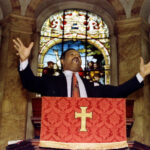
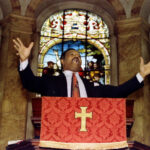
Rev. Jesse Jackson dies at 84; Catholic leaders praise civil rights leader’s work for justice #Catholic – WASHINGTON (OSV News) — Catholic leaders were among those who praised the legacy of the Rev. Jesse Jackson, a Baptist minister and prominent civil rights leader, who died Feb. 17. He was 84.
“For more than six decades, Reverend Jackson dedicated his life to advancing equality, dismantling systems of oppression, and amplifying the voices of the underserved,” said a statement from his family announcing his death.
News reports said he died at his home in Chicago. A cause of death was not immediately shared by the family.
A former aide to the Rev. Dr. Martin Luther King Jr., Rev. Jackson later sought the Democratic presidential nomination in 1984 and 1988. Although those bids were unsuccessful, he became the first Black candidate for U.S. president to get on the primary ballot in all 50 states.
Although, as a politician, Rev. Jackson took some public policy positions at odds with church teaching — such as changing his original views opposing abortion to supporting it over the course of his life — Catholic leaders praised his work in the area of racial justice.
Bishop Daniel E. Garcia of Austin, Texas, chairman of the U.S. Conference of Catholic Bishops’ Subcommittee for the Promotion of Racial Justice and Reconciliation, said in written comments to OSV News, “As an advocate for racial justice and a central figure in the civil rights movement, Rev. Jesse Jackson played a key role in securing equal rights for African Americans and offered prophetic witness to the dignity of people of all racial backgrounds.”

Click here to subscribe to our weekly newsletter.

“He inspired generations to pursue racial justice, love goodness, and walk humbly with God. My prayers are with his family and close collaborators — may his legacy continue to inspire, guide and uplift all who strive for a more just world and an end to racism,” Bishop Garcia said.
Krisanne Vaillancourt Murphy, executive director of Catholic Mobilizing Network, told OSV News that in 1991, Rev. Jackson “came through my small hometown in Connecticut.” The network she heads advocates for the abolition of capital punishment in line with Catholic teaching as well as restorative justice, including addressing the sin of racism.
“He literally walked his talk as he marched through our state, calling attention to the social and economic ills for people who were forgotten, overlooked, and marginalized,” she said. “He was a larger-than-life figure and a deeply faithful man who consistently and pointedly connected the realities of injustice in the present day to the often overlooked sins of systemic racism and institutionalized discrimination.
“Jesse carried an indefatigable hope and a more perfect vision for the future. His faith informed his engagement in politics and the policy arena and undergirded his vision for justice that centered the dignity of all people.”
Vaillancourt Murphy said Catholic Mobilizing Network’s “advocacy to end the death penalty, which recognizes the deep-rooted racism and institutionalized discrimination within the U.S. criminal legal system, has learned much from civil rights leaders like Jesse Jackson.”
“Racism is a sin, and engagement in racial justice efforts are required at the individual, social and systemic levels so that truth-telling can dismantle unjust systems and build up approaches to justice that are equitable, restorative, and life-affirming — more fitting of our faith convictions,” she said. “Jesse Jackson’s witness — a tireless and fervently hopeful pursuit of the good — provides a faithful inspiration in this work.”
Gloria Purvis, a special adviser for integral human development and dignity at Providence College in Rhode Island and a senior fellow at Georgetown’s Initiative for Catholic Social Thought in Public Life in Washington, told OSV News that Rev. Jackson met with St. John Paul II multiple times, notably to advocate for Haitian refugees.
“The preferential option for the poor, solidarity with the oppressed, the dignity of the human person, all of those things, I think, are the positive parts of his legacy that should be remembered and even though he was Baptist, he recognized the moral authority of the Holy Father,” Purvis said.
In a post on X, Bishop Robert E. Barron of Winona-Rochester, Minnesota, said, “A few years ago, I shared a dinner with a number of US representatives, and among them was Jesse Jackson, Jr. When I shook his hand, I said, ‘tell your Dad I’m praying for him.’”
“Though we differed on a number of issues, I always admired Jesse Jackson, who died today at 84,” Bishop Barron said. “A top lieutenant of Dr. Martin Luther King, Jackson consistently advocated for the transformative power of non-violence. At a time when our social interaction is marked by terrible violence, this continues to be a welcome message.”
“Moreover, throughout his long public career, Jackson called for the empowerment of young black men through education and the assuming of moral responsibility,” Bishop Barron said. “He knew that government programs were never sufficient for the lifting up of the black community; what was especially needed was the shaping of character. He was also one of the very best public speakers on the scene when I was coming of age. I particularly recall an episode of ‘Firing Line’ which featured a debate between William F. Buckley and Jesse Jackson: very different styles indeed, but both a delight to listen to. So on the day of his death, I will, once again, pray for Jesse Jackson.”
Bipartisan tributes were also made to Rev. Jackson.
Purvis said that “at this time in particular (when) to be able to empathize with other people’s struggles seems to be a difficulty,” Rev. Jackson’s legacy was “a practical enactment” of what Catholic social teaching calls solidarity, “the recognition that we are all responsible for one another.”
President Donald Trump called Rev. Jackson “a good man, with lots of personality, grit, and ‘street smarts’” in a post on his social media website Truth Social.
“He was very gregarious – Someone who truly loved people!” Trump said, adding he was sending “my deepest sympathies and condolences” to his family.
House Minority Leader Hakeem Jeffries, D-N.Y., called Rev. Jackson “a legendary voice for the voiceless, powerful civil rights champion and trailblazer extraordinaire.”
“For decades, while laboring in the vineyards of the community, he inspired us to keep hope alive in the struggle for liberty and justice for all,” Jeffries said in a post on X. “We are thankful for the incredible service of Rev. Jesse Jackson to the nation and his profound sacrifice as the people’s champion.”
Kate Scanlon is a national reporter for OSV News covering Washington. Follow her on X @kgscanlon.
 

Rev. Jesse Jackson dies at 84; Catholic leaders praise civil rights leader’s work for justice #Catholic – WASHINGTON (OSV News) — Catholic leaders were among those who praised the legacy of the Rev. Jesse Jackson, a Baptist minister and prominent civil rights leader, who died Feb. 17. He was 84. “For more than six decades, Reverend Jackson dedicated his life to advancing equality, dismantling systems of oppression, and amplifying the voices of the underserved,” said a statement from his family announcing his death. News reports said he died at his home in Chicago. A cause of death was not immediately shared by the family. A former aide to the Rev. Dr. Martin Luther King Jr., Rev. Jackson later sought the Democratic presidential nomination in 1984 and 1988. Although those bids were unsuccessful, he became the first Black candidate for U.S. president to get on the primary ballot in all 50 states. Although, as a politician, Rev. Jackson took some public policy positions at odds with church teaching — such as changing his original views opposing abortion to supporting it over the course of his life — Catholic leaders praised his work in the area of racial justice. Bishop Daniel E. Garcia of Austin, Texas, chairman of the U.S. Conference of Catholic Bishops’ Subcommittee for the Promotion of Racial Justice and Reconciliation, said in written comments to OSV News, “As an advocate for racial justice and a central figure in the civil rights movement, Rev. Jesse Jackson played a key role in securing equal rights for African Americans and offered prophetic witness to the dignity of people of all racial backgrounds.” Click here to subscribe to our weekly newsletter. “He inspired generations to pursue racial justice, love goodness, and walk humbly with God. My prayers are with his family and close collaborators — may his legacy continue to inspire, guide and uplift all who strive for a more just world and an end to racism,” Bishop Garcia said. Krisanne Vaillancourt Murphy, executive director of Catholic Mobilizing Network, told OSV News that in 1991, Rev. Jackson “came through my small hometown in Connecticut.” The network she heads advocates for the abolition of capital punishment in line with Catholic teaching as well as restorative justice, including addressing the sin of racism. “He literally walked his talk as he marched through our state, calling attention to the social and economic ills for people who were forgotten, overlooked, and marginalized,” she said. “He was a larger-than-life figure and a deeply faithful man who consistently and pointedly connected the realities of injustice in the present day to the often overlooked sins of systemic racism and institutionalized discrimination. “Jesse carried an indefatigable hope and a more perfect vision for the future. His faith informed his engagement in politics and the policy arena and undergirded his vision for justice that centered the dignity of all people.” Vaillancourt Murphy said Catholic Mobilizing Network’s “advocacy to end the death penalty, which recognizes the deep-rooted racism and institutionalized discrimination within the U.S. criminal legal system, has learned much from civil rights leaders like Jesse Jackson.” “Racism is a sin, and engagement in racial justice efforts are required at the individual, social and systemic levels so that truth-telling can dismantle unjust systems and build up approaches to justice that are equitable, restorative, and life-affirming — more fitting of our faith convictions,” she said. “Jesse Jackson’s witness — a tireless and fervently hopeful pursuit of the good — provides a faithful inspiration in this work.” Gloria Purvis, a special adviser for integral human development and dignity at Providence College in Rhode Island and a senior fellow at Georgetown’s Initiative for Catholic Social Thought in Public Life in Washington, told OSV News that Rev. Jackson met with St. John Paul II multiple times, notably to advocate for Haitian refugees. “The preferential option for the poor, solidarity with the oppressed, the dignity of the human person, all of those things, I think, are the positive parts of his legacy that should be remembered and even though he was Baptist, he recognized the moral authority of the Holy Father,” Purvis said. In a post on X, Bishop Robert E. Barron of Winona-Rochester, Minnesota, said, “A few years ago, I shared a dinner with a number of US representatives, and among them was Jesse Jackson, Jr. When I shook his hand, I said, ‘tell your Dad I’m praying for him.’” “Though we differed on a number of issues, I always admired Jesse Jackson, who died today at 84,” Bishop Barron said. “A top lieutenant of Dr. Martin Luther King, Jackson consistently advocated for the transformative power of non-violence. At a time when our social interaction is marked by terrible violence, this continues to be a welcome message.” “Moreover, throughout his long public career, Jackson called for the empowerment of young black men through education and the assuming of moral responsibility,” Bishop Barron said. “He knew that government programs were never sufficient for the lifting up of the black community; what was especially needed was the shaping of character. He was also one of the very best public speakers on the scene when I was coming of age. I particularly recall an episode of ‘Firing Line’ which featured a debate between William F. Buckley and Jesse Jackson: very different styles indeed, but both a delight to listen to. So on the day of his death, I will, once again, pray for Jesse Jackson.” Bipartisan tributes were also made to Rev. Jackson. Purvis said that “at this time in particular (when) to be able to empathize with other people’s struggles seems to be a difficulty,” Rev. Jackson’s legacy was “a practical enactment” of what Catholic social teaching calls solidarity, “the recognition that we are all responsible for one another.” President Donald Trump called Rev. Jackson “a good man, with lots of personality, grit, and ‘street smarts’” in a post on his social media website Truth Social. “He was very gregarious – Someone who truly loved people!” Trump said, adding he was sending “my deepest sympathies and condolences” to his family. House Minority Leader Hakeem Jeffries, D-N.Y., called Rev. Jackson “a legendary voice for the voiceless, powerful civil rights champion and trailblazer extraordinaire.” “For decades, while laboring in the vineyards of the community, he inspired us to keep hope alive in the struggle for liberty and justice for all,” Jeffries said in a post on X. “We are thankful for the incredible service of Rev. Jesse Jackson to the nation and his profound sacrifice as the people’s champion.” Kate Scanlon is a national reporter for OSV News covering Washington. Follow her on X @kgscanlon.  

Rev. Jesse Jackson dies at 84; Catholic leaders praise civil rights leader’s work for justice #Catholic –

WASHINGTON (OSV News) — Catholic leaders were among those who praised the legacy of the Rev. Jesse Jackson, a Baptist minister and prominent civil rights leader, who died Feb. 17. He was 84.

“For more than six decades, Reverend Jackson dedicated his life to advancing equality, dismantling systems of oppression, and amplifying the voices of the underserved,” said a statement from his family announcing his death.

News reports said he died at his home in Chicago. A cause of death was not immediately shared by the family.

A former aide to the Rev. Dr. Martin Luther King Jr., Rev. Jackson later sought the Democratic presidential nomination in 1984 and 1988. Although those bids were unsuccessful, he became the first Black candidate for U.S. president to get on the primary ballot in all 50 states.

Although, as a politician, Rev. Jackson took some public policy positions at odds with church teaching — such as changing his original views opposing abortion to supporting it over the course of his life — Catholic leaders praised his work in the area of racial justice.

Bishop Daniel E. Garcia of Austin, Texas, chairman of the U.S. Conference of Catholic Bishops’ Subcommittee for the Promotion of Racial Justice and Reconciliation, said in written comments to OSV News, “As an advocate for racial justice and a central figure in the civil rights movement, Rev. Jesse Jackson played a key role in securing equal rights for African Americans and offered prophetic witness to the dignity of people of all racial backgrounds.”


Click here to subscribe to our weekly newsletter.

“He inspired generations to pursue racial justice, love goodness, and walk humbly with God. My prayers are with his family and close collaborators — may his legacy continue to inspire, guide and uplift all who strive for a more just world and an end to racism,” Bishop Garcia said.

Krisanne Vaillancourt Murphy, executive director of Catholic Mobilizing Network, told OSV News that in 1991, Rev. Jackson “came through my small hometown in Connecticut.” The network she heads advocates for the abolition of capital punishment in line with Catholic teaching as well as restorative justice, including addressing the sin of racism.

“He literally walked his talk as he marched through our state, calling attention to the social and economic ills for people who were forgotten, overlooked, and marginalized,” she said. “He was a larger-than-life figure and a deeply faithful man who consistently and pointedly connected the realities of injustice in the present day to the often overlooked sins of systemic racism and institutionalized discrimination.

“Jesse carried an indefatigable hope and a more perfect vision for the future. His faith informed his engagement in politics and the policy arena and undergirded his vision for justice that centered the dignity of all people.”

Vaillancourt Murphy said Catholic Mobilizing Network’s “advocacy to end the death penalty, which recognizes the deep-rooted racism and institutionalized discrimination within the U.S. criminal legal system, has learned much from civil rights leaders like Jesse Jackson.”

“Racism is a sin, and engagement in racial justice efforts are required at the individual, social and systemic levels so that truth-telling can dismantle unjust systems and build up approaches to justice that are equitable, restorative, and life-affirming — more fitting of our faith convictions,” she said. “Jesse Jackson’s witness — a tireless and fervently hopeful pursuit of the good — provides a faithful inspiration in this work.”

Gloria Purvis, a special adviser for integral human development and dignity at Providence College in Rhode Island and a senior fellow at Georgetown’s Initiative for Catholic Social Thought in Public Life in Washington, told OSV News that Rev. Jackson met with St. John Paul II multiple times, notably to advocate for Haitian refugees.

“The preferential option for the poor, solidarity with the oppressed, the dignity of the human person, all of those things, I think, are the positive parts of his legacy that should be remembered and even though he was Baptist, he recognized the moral authority of the Holy Father,” Purvis said.

In a post on X, Bishop Robert E. Barron of Winona-Rochester, Minnesota, said, “A few years ago, I shared a dinner with a number of US representatives, and among them was Jesse Jackson, Jr. When I shook his hand, I said, ‘tell your Dad I’m praying for him.’”

“Though we differed on a number of issues, I always admired Jesse Jackson, who died today at 84,” Bishop Barron said. “A top lieutenant of Dr. Martin Luther King, Jackson consistently advocated for the transformative power of non-violence. At a time when our social interaction is marked by terrible violence, this continues to be a welcome message.”

“Moreover, throughout his long public career, Jackson called for the empowerment of young black men through education and the assuming of moral responsibility,” Bishop Barron said. “He knew that government programs were never sufficient for the lifting up of the black community; what was especially needed was the shaping of character. He was also one of the very best public speakers on the scene when I was coming of age. I particularly recall an episode of ‘Firing Line’ which featured a debate between William F. Buckley and Jesse Jackson: very different styles indeed, but both a delight to listen to. So on the day of his death, I will, once again, pray for Jesse Jackson.”

Bipartisan tributes were also made to Rev. Jackson.

Purvis said that “at this time in particular (when) to be able to empathize with other people’s struggles seems to be a difficulty,” Rev. Jackson’s legacy was “a practical enactment” of what Catholic social teaching calls solidarity, “the recognition that we are all responsible for one another.”

President Donald Trump called Rev. Jackson “a good man, with lots of personality, grit, and ‘street smarts’” in a post on his social media website Truth Social.

“He was very gregarious – Someone who truly loved people!” Trump said, adding he was sending “my deepest sympathies and condolences” to his family.

House Minority Leader Hakeem Jeffries, D-N.Y., called Rev. Jackson “a legendary voice for the voiceless, powerful civil rights champion and trailblazer extraordinaire.”

“For decades, while laboring in the vineyards of the community, he inspired us to keep hope alive in the struggle for liberty and justice for all,” Jeffries said in a post on X. “We are thankful for the incredible service of Rev. Jesse Jackson to the nation and his profound sacrifice as the people’s champion.”

Kate Scanlon is a national reporter for OSV News covering Washington. Follow her on X @kgscanlon.
 

WASHINGTON (OSV News) — Catholic leaders were among those who praised the legacy of the Rev. Jesse Jackson, a Baptist minister and prominent civil rights leader, who died Feb. 17. He was 84. “For more than six decades, Reverend Jackson dedicated his life to advancing equality, dismantling systems of oppression, and amplifying the voices of the underserved,” said a statement from his family announcing his death. News reports said he died at his home in Chicago. A cause of death was not immediately shared by the family. A former aide to the Rev. Dr. Martin Luther King Jr., Rev. Jackson

Read More
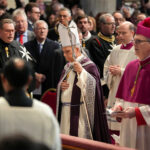
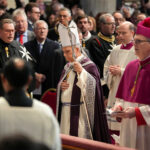
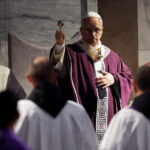
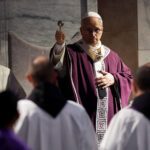
Pope Leo XIV calls for ‘countercultural’ repentance on first Ash Wednesday of his pontificate #Catholic – ROME (OSV News) — Beneath the Roman pines of the Aventine Hill, Pope Leo XIV led a solemn penitential procession Feb. 18 to Rome’s oldest extant basilica, marking the first Ash Wednesday of his pontificate with a call for “countercultural” repentance for sins from individuals, institutions and the Church itself.
Priests, bishops and cardinals chanted the Litany of the Saints as the procession wound from the Benedictine Basilica of Sant’Anselmo to the ancient Dominican Basilica of Santa Sabina, where the pope offered Ash Wednesday Mass.
“How rare it is to find adults who repent — individuals, businesses and institutions that admit they have done wrong,” Pope Leo said in his homily in the Basilica of Santa Sabina.

Click here to subscribe to our weekly newsletter.

“Indeed, during Lent, a people is formed that recognizes its sins. These sins are evils that have not come from supposed enemies, but afflicts our hearts, and exist within us. We need to respond by courageously accepting responsibility for them,” he added.
Pope Leo acknowledged that “this attitude is countercultural,” but it “constitutes an authentic, honest and attractive option, especially in our times, when it is so easy to feel powerless in the face of a world that is in flames.”
In his homily, the pope pointed to young people as an unexpected sign of openness today.
“Even in secularized contexts, many young people, more than in the past, are open to the invitation of Ash Wednesday,” Pope Leo observed. “Young people especially understand clearly that it is possible to live a just lifestyle, and that there should be accountability for wrongdoings in the Church and in the world.”
He called on the faithful to “embrace the missionary significance of Lent,” not as a distraction from personal conversion, but “in a way that introduces this season to the many restless people of good will who are seeking authentic ways to renew their lives, within the context of the Kingdom of God and his justice.”
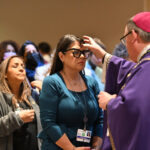
Pope Leo received ashes sprinkled atop his head in the Italian custom before imposing them on the cardinals and some of the faithful present.
“We perceive in the ashes imposed on us the weight of a world that is ablaze, of entire cities destroyed by war,” he said.
“This is also reflected in the ashes of international law and justice among peoples, the ashes of entire ecosystems and harmony among peoples, the ashes of critical thinking and ancient local wisdom, the ashes of that sense of the sacred that dwells in every creature,” Pope Leo added.
The pope recalled that 60 years ago, on the Ash Wednesday following the close of the Second Vatican Council, St. Paul VI had warned of the modern world’s “fundamental pessimism” and its tendency to proclaim “‘the inevitable vanity of everything, the immense sadness of life, the metaphysics of the absurd and of nothingness.’”
“Today, we can recognize that his words were prophetic,” Pope Leo added.
The pope also reflected on the significance of the Lenten Station Church tradition, in which pilgrims pray at the tombs of Rome’s early Christian martyrs. The Basilica of Santa Sabina, where Pope Leo offered Mass, is the first church in the Roman Station Church pilgrimage. The basilica dates back to A.D. 422.
“”The ancient and contemporary martyrs shine as pioneers on our journey towards Easter,” he said. “The ancient Roman tradition of the Lenten stationes — which begins today with the first station — is instructive: it refers both to moving, as pilgrims, and to stopping, statio, at the ‘memories’ of the Martyrs, on which stand the basilicas of Rome.”
“Is this not perhaps an invitation to follow in the footsteps of the admirable witnesses to the faith, who can now be found throughout the world?” he added.
Ash Wednesday marks the start of the 40-day Lenten season, during which Christians are called to prayer, fasting, and works of charity. Lent concludes with the Easter Triduum.
“We recognize our sins so that we can be converted; this is itself a sign and testimony of Resurrection. Indeed, it means that we will not remain among the ashes, but will rise up and rebuild,” Pope Leo said.
“Then the Easter Triduum, which we will celebrate as the summit of the Lenten journey, will unleash all its beauty and meaning. This will take place if we participate, through penance, in the passage from death to life, from powerlessness to the possibilities of God.”
Courtney Mares is Vatican editor for OSV News. Follow her on X @catholicourtney.

Pope Leo XIV calls for ‘countercultural’ repentance on first Ash Wednesday of his pontificate #Catholic – ROME (OSV News) — Beneath the Roman pines of the Aventine Hill, Pope Leo XIV led a solemn penitential procession Feb. 18 to Rome’s oldest extant basilica, marking the first Ash Wednesday of his pontificate with a call for “countercultural” repentance for sins from individuals, institutions and the Church itself. Priests, bishops and cardinals chanted the Litany of the Saints as the procession wound from the Benedictine Basilica of Sant’Anselmo to the ancient Dominican Basilica of Santa Sabina, where the pope offered Ash Wednesday Mass. “How rare it is to find adults who repent — individuals, businesses and institutions that admit they have done wrong,” Pope Leo said in his homily in the Basilica of Santa Sabina. Click here to subscribe to our weekly newsletter. “Indeed, during Lent, a people is formed that recognizes its sins. These sins are evils that have not come from supposed enemies, but afflicts our hearts, and exist within us. We need to respond by courageously accepting responsibility for them,” he added. Pope Leo acknowledged that “this attitude is countercultural,” but it “constitutes an authentic, honest and attractive option, especially in our times, when it is so easy to feel powerless in the face of a world that is in flames.” In his homily, the pope pointed to young people as an unexpected sign of openness today. “Even in secularized contexts, many young people, more than in the past, are open to the invitation of Ash Wednesday,” Pope Leo observed. “Young people especially understand clearly that it is possible to live a just lifestyle, and that there should be accountability for wrongdoings in the Church and in the world.” He called on the faithful to “embrace the missionary significance of Lent,” not as a distraction from personal conversion, but “in a way that introduces this season to the many restless people of good will who are seeking authentic ways to renew their lives, within the context of the Kingdom of God and his justice.” Pope Leo received ashes sprinkled atop his head in the Italian custom before imposing them on the cardinals and some of the faithful present. “We perceive in the ashes imposed on us the weight of a world that is ablaze, of entire cities destroyed by war,” he said. “This is also reflected in the ashes of international law and justice among peoples, the ashes of entire ecosystems and harmony among peoples, the ashes of critical thinking and ancient local wisdom, the ashes of that sense of the sacred that dwells in every creature,” Pope Leo added. The pope recalled that 60 years ago, on the Ash Wednesday following the close of the Second Vatican Council, St. Paul VI had warned of the modern world’s “fundamental pessimism” and its tendency to proclaim “‘the inevitable vanity of everything, the immense sadness of life, the metaphysics of the absurd and of nothingness.’” “Today, we can recognize that his words were prophetic,” Pope Leo added. The pope also reflected on the significance of the Lenten Station Church tradition, in which pilgrims pray at the tombs of Rome’s early Christian martyrs. The Basilica of Santa Sabina, where Pope Leo offered Mass, is the first church in the Roman Station Church pilgrimage. The basilica dates back to A.D. 422. “”The ancient and contemporary martyrs shine as pioneers on our journey towards Easter,” he said. “The ancient Roman tradition of the Lenten stationes — which begins today with the first station — is instructive: it refers both to moving, as pilgrims, and to stopping, statio, at the ‘memories’ of the Martyrs, on which stand the basilicas of Rome.” “Is this not perhaps an invitation to follow in the footsteps of the admirable witnesses to the faith, who can now be found throughout the world?” he added. Ash Wednesday marks the start of the 40-day Lenten season, during which Christians are called to prayer, fasting, and works of charity. Lent concludes with the Easter Triduum. “We recognize our sins so that we can be converted; this is itself a sign and testimony of Resurrection. Indeed, it means that we will not remain among the ashes, but will rise up and rebuild,” Pope Leo said. “Then the Easter Triduum, which we will celebrate as the summit of the Lenten journey, will unleash all its beauty and meaning. This will take place if we participate, through penance, in the passage from death to life, from powerlessness to the possibilities of God.” Courtney Mares is Vatican editor for OSV News. Follow her on X @catholicourtney.

Pope Leo XIV calls for ‘countercultural’ repentance on first Ash Wednesday of his pontificate #Catholic –

ROME (OSV News) — Beneath the Roman pines of the Aventine Hill, Pope Leo XIV led a solemn penitential procession Feb. 18 to Rome’s oldest extant basilica, marking the first Ash Wednesday of his pontificate with a call for “countercultural” repentance for sins from individuals, institutions and the Church itself.

Priests, bishops and cardinals chanted the Litany of the Saints as the procession wound from the Benedictine Basilica of Sant’Anselmo to the ancient Dominican Basilica of Santa Sabina, where the pope offered Ash Wednesday Mass.

“How rare it is to find adults who repent — individuals, businesses and institutions that admit they have done wrong,” Pope Leo said in his homily in the Basilica of Santa Sabina.


Click here to subscribe to our weekly newsletter.

“Indeed, during Lent, a people is formed that recognizes its sins. These sins are evils that have not come from supposed enemies, but afflicts our hearts, and exist within us. We need to respond by courageously accepting responsibility for them,” he added.

Pope Leo acknowledged that “this attitude is countercultural,” but it “constitutes an authentic, honest and attractive option, especially in our times, when it is so easy to feel powerless in the face of a world that is in flames.”

In his homily, the pope pointed to young people as an unexpected sign of openness today.

“Even in secularized contexts, many young people, more than in the past, are open to the invitation of Ash Wednesday,” Pope Leo observed. “Young people especially understand clearly that it is possible to live a just lifestyle, and that there should be accountability for wrongdoings in the Church and in the world.”

He called on the faithful to “embrace the missionary significance of Lent,” not as a distraction from personal conversion, but “in a way that introduces this season to the many restless people of good will who are seeking authentic ways to renew their lives, within the context of the Kingdom of God and his justice.”

Pope Leo received ashes sprinkled atop his head in the Italian custom before imposing them on the cardinals and some of the faithful present.

“We perceive in the ashes imposed on us the weight of a world that is ablaze, of entire cities destroyed by war,” he said.

“This is also reflected in the ashes of international law and justice among peoples, the ashes of entire ecosystems and harmony among peoples, the ashes of critical thinking and ancient local wisdom, the ashes of that sense of the sacred that dwells in every creature,” Pope Leo added.

The pope recalled that 60 years ago, on the Ash Wednesday following the close of the Second Vatican Council, St. Paul VI had warned of the modern world’s “fundamental pessimism” and its tendency to proclaim “‘the inevitable vanity of everything, the immense sadness of life, the metaphysics of the absurd and of nothingness.’”

“Today, we can recognize that his words were prophetic,” Pope Leo added.

The pope also reflected on the significance of the Lenten Station Church tradition, in which pilgrims pray at the tombs of Rome’s early Christian martyrs. The Basilica of Santa Sabina, where Pope Leo offered Mass, is the first church in the Roman Station Church pilgrimage. The basilica dates back to A.D. 422.

“”The ancient and contemporary martyrs shine as pioneers on our journey towards Easter,” he said. “The ancient Roman tradition of the Lenten stationes — which begins today with the first station — is instructive: it refers both to moving, as pilgrims, and to stopping, statio, at the ‘memories’ of the Martyrs, on which stand the basilicas of Rome.”

“Is this not perhaps an invitation to follow in the footsteps of the admirable witnesses to the faith, who can now be found throughout the world?” he added.

Ash Wednesday marks the start of the 40-day Lenten season, during which Christians are called to prayer, fasting, and works of charity. Lent concludes with the Easter Triduum.

“We recognize our sins so that we can be converted; this is itself a sign and testimony of Resurrection. Indeed, it means that we will not remain among the ashes, but will rise up and rebuild,” Pope Leo said.

“Then the Easter Triduum, which we will celebrate as the summit of the Lenten journey, will unleash all its beauty and meaning. This will take place if we participate, through penance, in the passage from death to life, from powerlessness to the possibilities of God.”

Courtney Mares is Vatican editor for OSV News. Follow her on X @catholicourtney.

ROME (OSV News) — Beneath the Roman pines of the Aventine Hill, Pope Leo XIV led a solemn penitential procession Feb. 18 to Rome’s oldest extant basilica, marking the first Ash Wednesday of his pontificate with a call for “countercultural” repentance for sins from individuals, institutions and the Church itself. Priests, bishops and cardinals chanted the Litany of the Saints as the procession wound from the Benedictine Basilica of Sant’Anselmo to the ancient Dominican Basilica of Santa Sabina, where the pope offered Ash Wednesday Mass. “How rare it is to find adults who repent — individuals, businesses and institutions that

Read More