Two decades in prison for dealing in international death and mayhem.
The post US Court Sentences Japanese Yakuza Gangster to Twenty Years in Prison for Trafficking Drugs, Weapons and Nuclear Material appeared first on The Gateway Pundit.
Read More
Two decades in prison for dealing in international death and mayhem.
The post US Court Sentences Japanese Yakuza Gangster to Twenty Years in Prison for Trafficking Drugs, Weapons and Nuclear Material appeared first on The Gateway Pundit.
Read More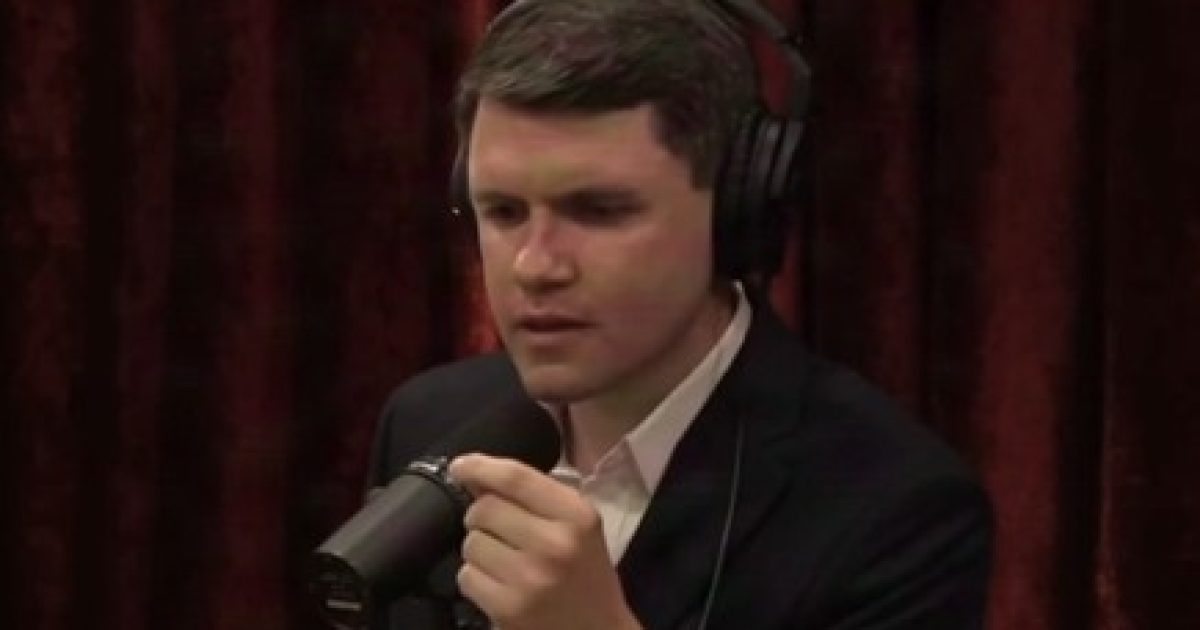


Absolutely shocking and ultra-woke comments from the liberal media darling James Talarico, a Texas State Representative, have surfaced as he tries to become the first Democrat in more than 30 years to win in Texas.
The post “God is Non-Binary… Our Trans Community Needs Abortion Care Too” — Several INSANE Comments from James Talarico Emerge After He Beats Crockett to Win Texas Senate Dem Primary (VIDEO) appeared first on The Gateway Pundit.
Read More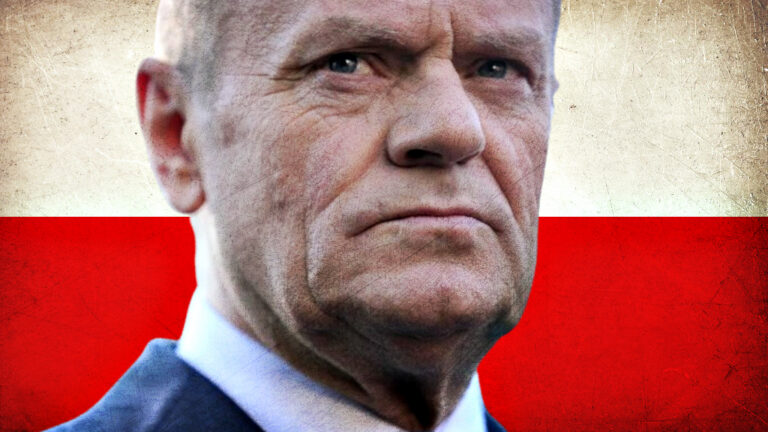


Poland’s government has signaled that it intends to take a far more assertive role in shaping Europe’s nuclear future.
The post Poland Will Seek Its Own Nuclear Weapons, Prime Minister Tusk Says appeared first on The Gateway Pundit.
Read MoreO Lord, in your anger punish me not; in your wrath chastise me not. For your arrows have sunk deep in me; your hand has come down upon me. There is no health in my flesh because of your indignation; there is no wholeness in my bones because of my sin. For my iniquities have overwhelmed me; they are like a heavy burden, beyond my strength. Noisome and festering are my sores, because of my folly. I am stooped and bowed down profoundly; all the day I go in mourning. For my loins are filled with …
Read MoreA reading from the Book of Jeremiah
17:5-10
Thus says the LORD:
Cursed is the man who trusts in human beings,
who seeks his strength in flesh,
whose heart turns away from the LORD.
He is like a barren bush in the desert
that enjoys no change of season,
But stands in a lava waste,
a salt and empty earth.
Blessed is the man who trusts in the LORD,
whose hope is the LORD.
He is like a tree planted beside the waters
that stretches out its roots to the stream:
It fears not the heat when it comes,
its leaves stay green;
In the year of drought it shows no distress,
but still bears fruit.
More tortuous than all else is the human heart,
beyond remedy; who can understand it?
I, the LORD, alone probe the mind
and test the heart,
To reward everyone according to his ways,
according to the merit of his deeds.
From the Gospel according to Luke
16:19-31
Jesus said to the Pharisees:
"There was a rich man who dressed in purple garments and fine linen
and dined sumptuously each day.
And lying at his door was a poor man named Lazarus, covered with sores,
who would gladly have eaten his fill of the scraps
that fell from the rich man’s table.
Dogs even used to come and lick his sores.
When the poor man died,
he was carried away by angels to the bosom of Abraham.
The rich man also died and was buried,
and from the netherworld, where he was in torment,
he raised his eyes and saw Abraham far off
and Lazarus at his side.
And he cried out, ‘Father Abraham, have pity on me.
Send Lazarus to dip the tip of his finger in water and cool my tongue,
for I am suffering torment in these flames.’
Abraham replied, ‘My child,
remember that you received what was good during your lifetime
while Lazarus likewise received what was bad;
but now he is comforted here, whereas you are tormented.
Moreover, between us and you a great chasm is established
to prevent anyone from crossing
who might wish to go from our side to yours
or from your side to ours.’
He said, ‘Then I beg you, father, send him
to my father’s house,
for I have five brothers, so that he may warn them,
lest they too come to this place of torment.’
But Abraham replied, ‘They have Moses and the prophets.
Let them listen to them.’
He said, ‘Oh no, father Abraham,
but if someone from the dead goes to them, they will repent.’
Then Abraham said,
‘If they will not listen to Moses and the prophets,
neither will they be persuaded
if someone should rise from the dead.’"
As long as Lazarus was outside his house, the rich man had the opportunity for salvation, to thrust open the door, to help Lazarus, but now that they are both dead, the situation has become irreparable. God is never called upon directly, but the parable clearly warns: God’s mercy toward us is linked to our mercy toward our neighbour; when this is lacking, also that of not finding room in our closed heart, He cannot enter. If I do not thrust open the door of my heart to the poor, that door remains closed. Even to God. This is terrible. (…)
In order to convert, we must not wait for prodigious events, but open our heart to the Word of God, which calls us to love God and neighbour. The Word of God may revive a withered heart and cure it of its blindness. (Pope Francis, General Audience, 18 May 2016)
Read More
With the communist government of Cuba under extreme pressure from the economic crisis of its own making and a U.S.-imposed oil embargo, exiled Cuban opposition leaders outlined the way to democracy.



For the first time, a much younger version of the Sun has been caught red-handed blowing bubbles in the galaxy, by astronomers using NASA’s Chandra X-ray Observatory.
Read More
Experts: Debates about Zionism, even by Catholics, often at odds with Catholic understanding #Catholic – 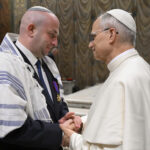
PHILADELPHIA (OSV News) — Experts in Jewish-Catholic relations told OSV News that some current public debates about Zionism, including among Catholics, are at odds with the Catholic understanding of the term — which itself has an array of meanings, as does the word “Israel” itself.
And, they said, broad catechetical education about Jews and Judaism for Catholics is more needed than ever.
Recent clashes invoking Israel and Zionism have seen Holy Land patriarchs and Church heads denounce Christian Zionism as among the “damaging ideologies” that ultimately harm the presence and unity of Christians there.
In February, conservative influencer Carrie Prejean Boller initiated a tense exchange with Jewish American witnesses at a U.S. Religious Liberty Commission hearing on antisemitism in the U.S., stating — without defining the term — “Catholics do not embrace Zionism, just so you know. So are all Catholics antisemites?”
The incident led to her removal from the commission, with its chair, Texas Lt. Gov. Dan Patrick, stating in an X post that Prejean Boller had sought to “hijack” the hearing for a “personal and political agenda,” although Prejean Boller has claimed Patrick lacks the authority to remove her.
“‘Zionism’ has become linked, on the one hand, to the ‘Christian Zionist’ religious readings of the Scriptures without regard for context, and, on the other hand, the equation of Zionism with later European colonialism as if Jews were not indigenous to the land in biblical times,” said Philip Cunningham, professor of theology and co-director of the Institute for Jewish-Catholic Relations at St. Joseph’s University in Philadelphia.
“Neither (view) represents Catholic thought as expressed in Vatican and papal statements,” he emphasized.
In its 1965 declaration “Nostra Aetate,” the Second Vatican Council affirmed the spiritual patrimony between Christians and Jews, while denouncing “hatred, persecutions, displays of anti-Semitism, directed against Jews at any time and by anyone,” and rejecting the view of Jews as “rejected or accursed by God.”
As Jewish-Catholic dialogue has steadily advanced since the council — emphasizing mutual understanding and respect for both faith traditions — the Church has issued several documents explaining in greater fullness the application of “Nostra Aetate.”
Speaking to OSV News, Holy Cross Father Russell McDougall, executive director of the U.S. Conference of Catholic Bishops’ Secretariat of Ecumenical and Interreligious Affairs, cited two key post-conciliar documents: a set of guidelines issued in 1974 by the Vatican’s Commission for Religious Relations with the Jews, and a set of 1985 notes on how to correctly present Jews and Judaism in Catholic preaching and catechesis.
Quoting the 1985 document, Father McDougall said, “The history of Israel did not end in 70 A.D.,” when Jerusalem fell to Roman forces, but “continued, especially in a numerous diaspora that preserved both fidelity to God and the memory of their forefathers’ land.”
“Christians are invited to understand this religious attachment which finds its roots in biblical tradition, without however making their own any particular religious interpretation of this relationship,” Father McDougall said, quoting the document further.
It also states that “the existence of the State of Israel and its political options should be envisaged not in a perspective which is in itself religious, but in their reference to the common principles of international law.”
As Jewish-Catholic dialogue has made clear, the single word “Israel” actually signifies a number of realities, explained Cunningham and IJCR co-director Adam Gregerman, professor of theology at St. Joseph’s University.
In Hebrew, the word “Israel” can mean “something like to ‘wrestle/grapple with God,’ as in the story of Jacob wrestling with a spiritual being in Genesis 32:22-32,” said Cunningham.
In addition, Israel is “the primary self-designation of the Jewish people, especially biblically and liturgically,” as in the Hebrew “am Israel” (“the people of Israel”) or “b’nai Israel” (“the children of Israel”), he said.
“Eretz Israel” refers to “the homeland of the people of Israel,” while “medinat Israel” indicates “the modern nation-state of Israel,” Cunningham said.
“One simply should be careful to make clear in what sense they are using the name,” he stressed.
“I think from our perspective as Catholics, when we speak about Israel in general, it’s the term we use to refer to a people, to the children of Abraham, Isaac and Jacob, whom God has called to live in friendship with himself,” said Father McDougall.
But he added, “When it comes to the emergence of modern Zionism, that’s a complex issue, because historians can trace the emergence of modern Zionism back several centuries.”
The emergence of Zionism in 19th century should be situated in the broader context of “key trends taking place in Europe,” specifically “enlightenment and emancipation in Western and central Europe and state centralization and enlightened absolutism in Eastern Europe,” Liora Halperin, a University of Washington historian of Israel and Palestine, noted in a January 2015 article for the Foreign Policy Research Institute think tank. “Both of these would lead some Jews toward Zionism, though not always for the same reasons.”
Father McDougall said that “more practically for us today, ‘Zionism’ is the term that we use to refer especially to the nationalist political movement that emerged in the 19th century alongside other nationalist movements.”
“This was the time of German unification, Italian unification; there was agitation for the reemergence of a Polish state after Poland had been carved up by Prussia, Austria and Russia,” said Father McDougall. “National consciousness was part of the air people breathed in the late 19th century, and a growing Jewish national consciousness was part of that.”
That same consciousness also extended to what would become Arab-majority nations in the Middle East, following the parceling of the former Ottoman Empire between Britain and France after World War I, and the independence movements that subsequently ousted colonial forces.
Halperin noted in her FPRI article that along with a broader emergence of nationalism in Europe, centuries of antisemitic persecution, marked by expulsions and pogroms, was also a determining factor in the development of Zionism.
After the Shoah, or Holocaust — the systematic murder of 6 million Jews by Germany’s Nazi regime and its allies and collaborators during the World War II — the United Nations approved the partitioning of the British-mandated Palestine into two states, one Jewish, one Arab — ultimately leading to the modern state of Israel, Father McDougall noted.
The Vatican formally recognized the state of Israel in 1993, reiterating the Church’s condemnation of antisemitism.
That condemnation, reaffirmed in several Church documents since then, was restated in 2024, when the U.S. Conference of Catholic Bishops and the American Jewish Committee teamed up to release “Translate Hate: The Catholic Edition,” a resource that confronts antisemitism by cataloging anti-Jewish slurs, while providing Catholic teaching that counters such hatred.
In his foreword to the guide, Bishop Joseph C. Bambera of Scranton, Pennsylvania, chairman of the USCCB’s Committee on Ecumenical and Interreligious Affairs, noted that “the scourge of antisemitism shows itself whenever the Jewish people are treated merely as a collective — whether it be racial, ethnic, national, or cultural — that deserves contempt, disparagement, diminishment, or destruction.”
He added, “When this attitude leads an individual or group to mistreat, discriminate against, or harm Jews in speech or act, it is a sin that contradicts Catholic teaching on the unity of the human race and the dignity of all peoples.”
In 2018, the retired Pope Benedict XVI wrote that “the Vatican has recognized the State of Israel as a modern constitutional state and sees it as a legitimate home of the Jewish people, the rationale of which cannot be derived directly from Holy Scripture. Yet, in another sense, it expresses God’s faithfulness to the people of Israel.”
Father McDougall said that politicians and polemics have tended to frame the debate as “whether the Jewish people have a right to a national homeland” — but the question, from a Catholic perspective, is in a way “a moot point.”
“They do have a national homeland now in the state of Israel,” said Father McDougall.
Gregerman also used the word “moot” in his assessment of Zionism.
“Zionism is the name for the movement for Jewish national self-determination and sovereignty in the land of Israel,” he said. “It is actually moot in the present and a largely useless term, since that’s over, unless one is contesting whether the movement’s accomplishments are currently illegitimate,” which he said “is a whole other discussion, and not about Zionism but about morality and the lives of Israelis today.”
“Nearly everything else dealing with views of the state is mostly just politics,” Gregerman added, noting that “whether some Jews and/or Christians assign religious significance to that event is separate from the event itself. In that case, it’s then just religious politics.”
“Most Jews don’t care if non-Jews give religious legitimacy to the state of Israel,” said Gregerman. “Practical and secular legitimacy is enough, almost all would say, and thus the Catholic position would meet with near universal approval.”
Ultimately, said Cunningham, “I don’t think education on these terms can be conducted apart from the larger educational and catechetical project of teaching about Jews and Judaism generally.”
He pointed to a 2022 survey of American Catholics co-sponsored by the IJCR, which showed that “most Catholics do not know much about Catholic post-Nostra Aetate teachings” regarding Judaism. This includes the ongoing Jewish covenant with God, Cunningham said, “even though relevant education was explicitly called for in Vatican documents beginning in 1974.”
Cunningham added, “Addressing this lacuna is urgently needed today, especially in seminaries, theologates, and in preaching and catechesis on New Testament texts.”
Gina Christian is a multimedia reporter for OSV News. Follow her on X @GinaJesseReina. Kate Scanlon, national reporter for OSV News from Washington, contributed to this report. Follow her on X @kgscanlon.
– PHILADELPHIA (OSV News) — Experts in Jewish-Catholic relations told OSV News that some current public debates about Zionism, including among Catholics, are at odds with the Catholic understanding of the term — which itself has an array of meanings, as does the word “Israel” itself. And, they said, broad catechetical education about Jews and Judaism for Catholics is more needed than ever. Recent clashes invoking Israel and Zionism have seen Holy Land patriarchs and Church heads denounce Christian Zionism as among the “damaging ideologies” that ultimately harm the presence and unity of Christians there. In February, conservative influencer Carrie Prejean
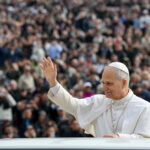
Full text: Pope Leo XIV’s general audience given Mar. 4, 2026 #Catholic – 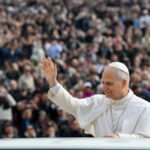
(OSV News) — The following is the full text of Pope Leo XIV’s general audience address given Mar. 4 at St. Peter’s Square.
Catechesis. The Documents of Vatican Council II. II. Dogmatic Constitution Lumen gentium. 2. The Church, a Visible and Spiritual Reality
Dear brothers and sisters, good morning and welcome!
Today, we will continue our exploration of the Conciliar Constitution Lumen gentium, a dogmatic Constitution on the Church.
In the first chapter, which is primarily intended to answer the question of what the Church is, she is described as a “complex reality” (no. 8). Now we ask ourselves: what does this complexity consist of? Some might answer that the Church is complex in that she is ‘complicated’ and therefore difficult to explain; others might think that her complexity derives from the fact that she is an institution steeped in two thousand years of history, with characteristics that differ from any other social or religious group. In Latin, however, the word ‘complex’ indicates rather the orderly union of different aspects or dimensions within the same reality. For this reason, Lumen gentium can affirm that the Church is a well-organized body, in which the human and divine dimensions coexist without separation and without confusion.
The first dimension is immediately perceptible, in that the Church is a community of men and women who share the joy and struggle of being Christians, with their strengths and weaknesses, proclaiming the Gospel and becoming a sign of the presence of Christ who accompanies us on our journey through life. Yet this aspect – which is also evident in its institutional organization – is not sufficient to describe the true nature of the Church, because it also has a divine dimension. The latter does not consist in an ideal perfection or spiritual superiority of its members, but in the fact that the Church is generated by God’s plan for humanity, realized in Christ.
Therefore, the Church is at the same time an earthly community and the mystical body of Christ, a visible assembly and a spiritual mystery, a reality present in history and a people journeying towards heaven (LG, 8; CCC, 771).
The human and divine dimensions integrate harmoniously, without one overshadowing the other; thus, the Church lives in this paradox. She is a reality that is both human and divine, which welcomes the sinful man and leads him to God.
To illuminate this ecclesial condition, Lumen gentium refers to the life of Christ. In fact, those who met Jesus along the roads of Palestine experienced his humanity, his eyes, his hands, the sound of his voice. Those who decided to follow him were moved precisely by the experience of his welcoming gaze, the touch of his blessing hands, his words of liberation and healing. At the same time, however, by following that Man, the disciples opened themselves to an encounter with God. Indeed, Christ’s flesh, his face, his gestures and his words visibly manifest the invisible God.
In the light of the reality of Jesus, we can now return to the Church: when we look at her closely, we discover a human dimension made up of real people, who sometimes manifest the beauty of the Gospel and other times struggle and make mistakes like everyone else. However, it is precisely through her members and her limited earthly aspects that Christ’s presence and his saving action are manifested. As Benedict XVI said, there is no opposition between the Gospel and the institution; on the contrary, the structures of the Church serve precisely for the “realization and concretization of the Gospel in our time” (Address to Swiss Bishops, 9 November 2006). An ideal and pure Church, separated from the earth, does not exist; only the one Church of Christ, embodied in history.
This is what constitutes the holiness of the Church: the fact that Christ dwells in her and continues to give himself through the smallness and fragility of her members. Contemplating this perennial miracle that takes place in her, we understand ‘God’s method’: He makes himself visible through the weakness of creatures, continuing to manifest himself and to act. For this reason, Pope Francis, in Evangelii gaudium, exhorts us all to learn “to remove our sandals before the sacred ground of the other (cf. Ex 3:5)” (no. 169). This enables us still today to build up the Church: not only by organizing its visible forms, but by building that spiritual edifice which is the body of Christ, through communion and charity among ourselves.
Indeed, charity constantly generates the presence of the Risen One. “If only we could all just let our thoughts dwell on the one thing, charity! It’s the only thing, you see, which both surpasses all things, and without which all things worth nothing, and which draws all things to itself, wherever it may be” (Sermon 354, 6, 6).
Special greetings:
I greet all the English-speaking pilgrims and visitors taking part in today’s Audience, particularly the groups from England, India, the Philippines, Singapore, Vietnam and the United States of America. With prayerful good wishes that this Lent will be a time of grace and spiritual renewal for you and your families, I invoke upon all of you joy and peace in our Lord Jesus Christ.
Summary of the Holy Father’s words:
Dear brothers and sisters, in our continuing catechesis on the Second Vatican Council, today we consider the mystery of the human and divine dimensions of the Church as presented by the Dogmatic Constitution Lumen Gentium. Just as Jesus’ humanity was immediately apparent to those who walked by his side, so too the human dimension of the Church is easy to perceive: it is a community of men and women who, with their gifts and their flaws, seek to proclaim the Gospel within a visible structure. Those who followed Jesus more closely, however, recognized that his humanity — his loving gaze, his merciful gestures and his powerful word — manifested his divinity, which led them to salvation. In a similar way, through the visible and human dimension of the Church, the spirit of Christ and his saving action are present and active in the world. Let us strive to be authentic witnesses of the love of Christ so that all can recognize in us and among us the charity that characterizes true Christians and builds up the Church.
– (OSV News) — The following is the full text of Pope Leo XIV’s general audience address given Mar. 4 at St. Peter’s Square. Catechesis. The Documents of Vatican Council II. II. Dogmatic Constitution Lumen gentium. 2. The Church, a Visible and Spiritual Reality Dear brothers and sisters, good morning and welcome! Today, we will continue our exploration of the Conciliar Constitution Lumen gentium, a dogmatic Constitution on the Church. In the first chapter, which is primarily intended to answer the question of what the Church is, she is described as a “complex reality” (no. 8). Now we ask ourselves: what
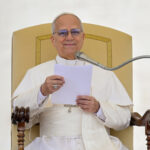
Texto completo: Audiencia general del Papa León XIV del 4 de marzo de 2026 #Catholic – 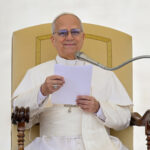
(OSV News) — A continuación, compartimos el texto completo del discurso pronunciado por el Papa León XIV en la audiencia general del 4 de marzo de 2026, en la Plaza de San Pedro.
***
Catequesis – Los Documentos del Concilio Vaticano II-II. Constitución dogmática Lumen gentium. 2. La Iglesia, realidad visible y espiritual
Queridos hermanos y hermanas, ¡buenos días y bienvenidos!
Hoy seguimos profundizando en la Constitución conciliar Lumen gentium, constitución dogmática sobre la Iglesia.
En el primer capítulo, en el que se procura principalmente responder a la pregunta sobre qué es la Iglesia, ésta es descrita como “una realidad compleja” (n. 8). Ahora nos preguntamos: ¿en qué consiste tal complejidad? Alguien podría responder que la Iglesia es compleja en cuanto que es “complicada” y, por tanto, difícil de explicar; algún otro podría pensar que su complejidad deriva del hecho de que es una institución que cuenta con dos mil años de historia y con características diversas respecto a cualquier otra agrupación social o religiosa. Sin embargo, en latín la palabra “compleja” indica más bien la unión ordenada de aspectos o dimensiones diversos dentro de una misma realidad. Por eso, la Lumen gentium puede afirmar que la Iglesia es un organismo bien compaginado, en el que conviven la dimensión humana y la divina sin separación y sin confusión.
La primera dimensión se percibe inmediatamente, ya que la Iglesia es una comunidad de hombres y mujeres, con sus virtudes y sus defectos, que comparten la alegría y el esfuerzo de ser cristianos que anuncian el Evangelio y se hacen signo de la presencia de Cristo que nos acompaña en el camino de la vida. Pero este aspecto –que se manifiesta asimismo en la organización institucional– no basta para describir la verdadera naturaleza de la Iglesia, porque ésta posee también una dimensión divina. Esta última no consiste en una perfección ideal o en una superioridad espiritual de sus miembros, sino en el hecho de que la Iglesia es fruto del plan de amor de Dios por la humanidad, realizado en Cristo. Por eso, la Iglesia es al mismo tiempo comunidad terrena y cuerpo místico de Cristo, asamblea visible y misterio espiritual, realidad presente en la historia y pueblo que peregrina hacia el cielo (LG, 8; CCC, 771).
La dimensión humana y la divina se integran armoniosamente, sin que la una se superponga a la otra; así, la Iglesia vive en esta paradoja: es una realidad a la vez humana y divina, que acoge al hombre pecador y lo conduce a Dios.
Para iluminar dicha condición eclesial, la Lumen Gentium remite a la vida de Cristo. Efectivamente, quien se encontraba con Jesús por los caminos de Palestina experimentaba su humanidad, percibía sus ojos, sus manos, el sonido de su voz. Quien decidía seguirlo se sentía impulsado precisamente por la experiencia de su mirada acogedora, por el toque de sus manos que bendecían, por sus palabras de liberación y sanación. Pero, al mismo tiempo, siguiendo a aquel Hombre, los discípulos se abrían al encuentro con Dios. En efecto, la carne de Cristo, su rostro, sus gestos y sus palabras manifiestan de modo visible al Dios invisible.
A la luz de la realidad de Jesús, podemos ahora retornar a la Iglesia: cuando la miramos de cerca, descubrimos en ella una dimensión humana hecha de personas concretas que unas veces manifiestan la belleza del Evangelio y otras veces se cansan y se equivocan, como todos. Sin embargo, precisamente a través de sus miembros y sus limitados aspectos terrenos, se manifiestan la presencia de Cristo y su acción salvadora. Como decía Benedicto XVI, no existe oposición entre el Evangelio y la institución, es más, las estructuras de la Iglesia sirven precisamente para la “realización y concreción del Evangelio en nuestro tiempo” (Discurso a los Obispos de Suiza, 9 de noviembre de 2006). No existe una Iglesia ideal y pura, separada de la tierra, sino solamente la única Iglesia de Cristo, encarnada en la historia.
En esto consiste la santidad de la Iglesia: en el hecho de que Cristo la habita y sigue donándose a través de la pequeñez y la fragilidad de sus miembros. Contemplando este perenne milagro que sucede en ella, comprendemos el “método de Dios”: Él se hace visible en la debilidad de las criaturas, manifestándose y actuando. Por eso, el Papa Francisco, en la Evangelii gaudium, exhorta a todos a que aprendan a “quitarse las sandalias ante la tierra sagrada del otro” (cf. Ex 3,5, n. 169). Esto nos permite seguir edificando la Iglesia aún hoy en día: no solamente organizando sus formas visibles, sino también construyendo ese edificio espiritual que es el cuerpo de Cristo, mediante la comunión y la caridad entre nosotros.
La caridad, en efecto, genera constantemente la presencia del Resucitado. “Quiera el cielo -decía san Agustín- que todos piensen solo en la caridad: solamente ella vence todo, y sin ella de nada vale todo lo demás; dondequiera que se halle, atrae todo hacia sí” (Serm. 354,6,6).
–Saludos–
Saludo cordialmente a los peregrinos de lengua española. En este tiempo de Cuaresma, pidamos al Señor que nos ayude a seguir edificando la Iglesia en la vivencia ordinaria de nuestra fe, expresada de manera particular a través de la oración, el ayuno y la caridad. Que Dios los bendiga. Muchas gracias.
–Resumen leído por el Santo Padre en español–
Queridos hermanos y hermanas:
Continuamos profundizando en la Constitución dogmática Lumen gentium, dedicada a la Iglesia. En el primer capítulo, se describe a la Iglesia como una “realidad compleja”, en cuanto conviven en ella tanto la dimensión humana como la dimensión divina, integrándose armoniosamente, sin separación y sin confusión.
En su dimensión humana, la Iglesia es una comunidad de hombres y mujeres que, con virtudes y defectos, comparten la fe y anuncian el Evangelio, siendo signo de la presencia de Cristo en el mundo. La dimensión divina se refiere a la concepción de la Iglesia en el proyecto de amor de Dios para la humanidad, que se realiza en Cristo.
Recordemos que no existe una Iglesia ideal y pura, separada de la tierra, sino encarnada en la historia. Su santidad consiste en el hecho de que Cristo vive en ella y sigue entregándose por medio de la pequeñez y la fragilidad de sus miembros.
– (OSV News) — A continuación, compartimos el texto completo del discurso pronunciado por el Papa León XIV en la audiencia general del 4 de marzo de 2026, en la Plaza de San Pedro. *** Catequesis – Los Documentos del Concilio Vaticano II-II. Constitución dogmática Lumen gentium. 2. La Iglesia, realidad visible y espiritual Queridos hermanos y hermanas, ¡buenos días y bienvenidos! Hoy seguimos profundizando en la Constitución conciliar Lumen gentium, constitución dogmática sobre la Iglesia. En el primer capítulo, en el que se procura principalmente responder a la pregunta sobre qué es la Iglesia, ésta es descrita como “una realidad
February 24 was the date a new information pipeline began for astronomers around the world. Their computers received a deluge of cosmic notifications — 800,000 alerts about new asteroids, supernovae, and other noteworthy changes in the night sky. The discoveries were made by the Simonyi Survey Telescope at the NSF-DOE Vera C. Rubin Observatory in ChileContinue reading “Rubin Observatory is rocking”
The post Rubin Observatory is rocking appeared first on Astronomy Magazine.
Read More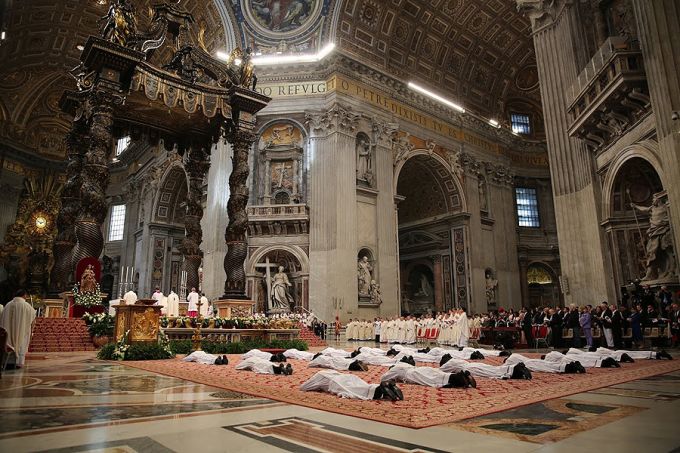
The report also warns seminaries must not become an “artificial environment” detached from the ordinary life of the faithful.

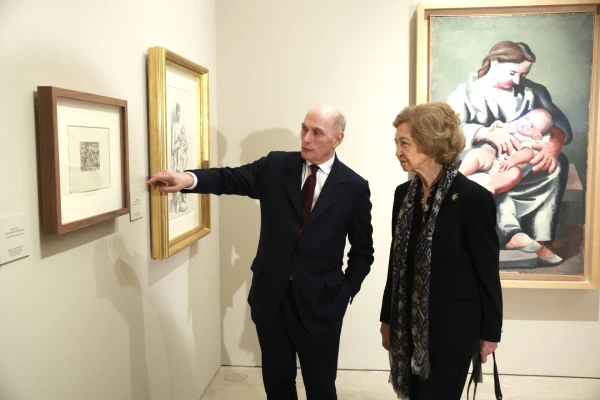
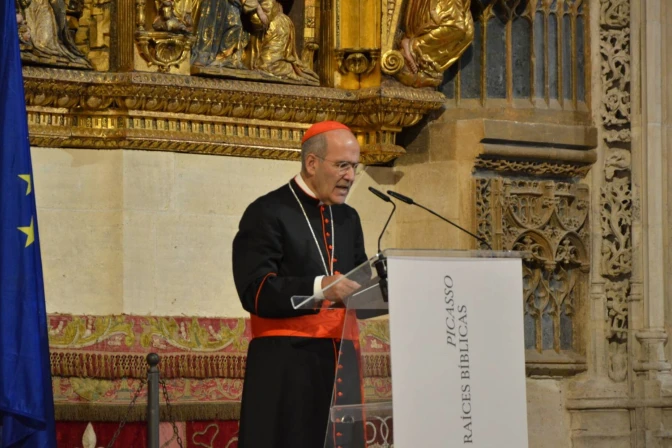
While Pablo Picasso was a professed atheist, a new exhibit in Spain highlights the spiritual sensibilities of his art.
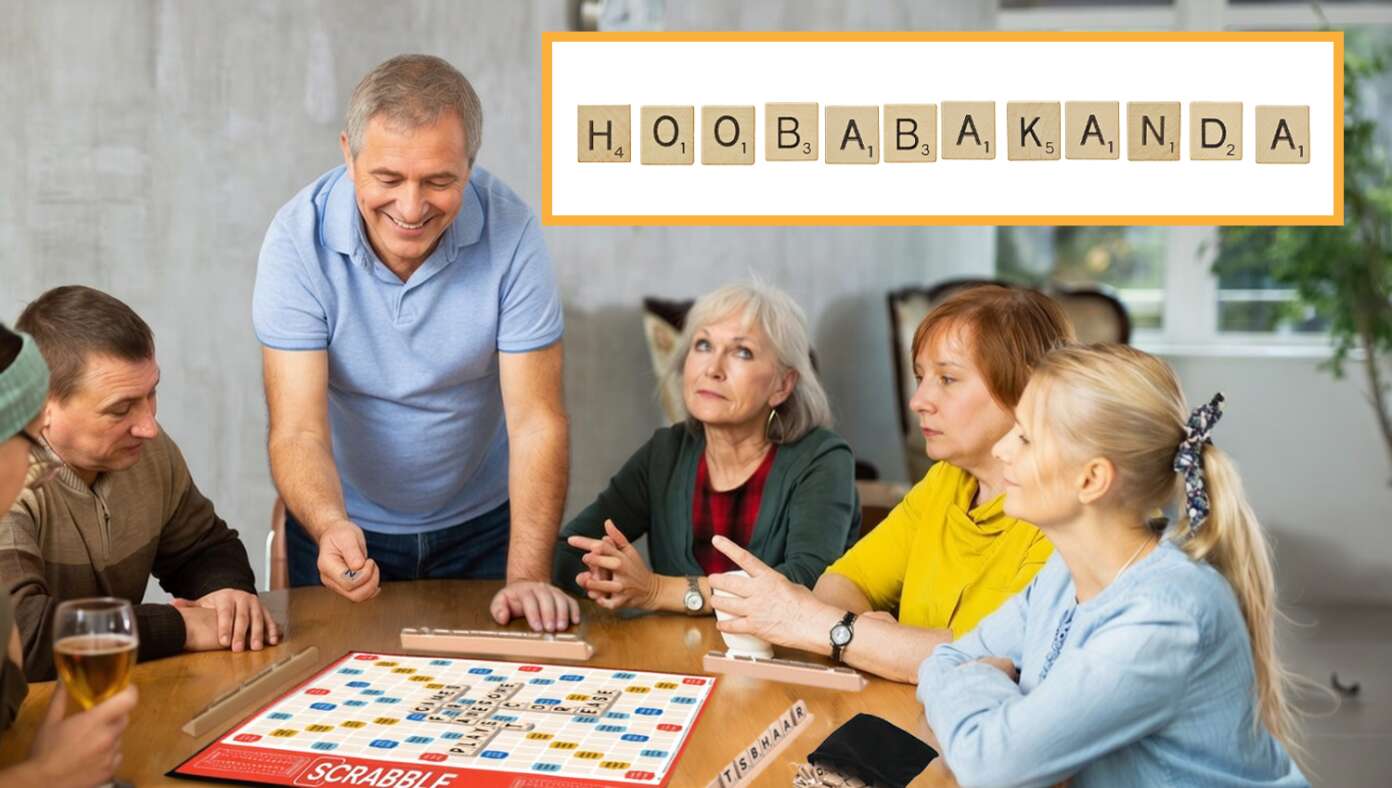
FALLON, NV — Local Pentecostal Christian Glenn Fuller reportedly beat all his friends at Scrabble yet again thanks to his miraculous ability to spell out all words in tongues.
Read More
| Picture of the day |
|---|

|
|
Crane installation in the Duisburg-Nord Landscape Park, North Rhine-Westphalia, Germany
|
![Lou Holtz, legendary Notre Dame football coach and outspoken Catholic, dies at 89 – #Catholic – Lou Holtz, whose lengthy football coaching career included an undefeated championship season at the University of Notre Dame and who spoke regularly about his Catholic faith, died on March 4 at age 89. Holtz’s death was announced by his family through a statement via the athletics department at Notre Dame. The retired coach had entered hospice shortly before his death. TweetThe coach “is remembered for his enduring values of faith, family, service, andan unwavering belief in the potential of others,” his family said. Holtz was preceded in death by his wife, Beth, who passed away in 2020. The two had been married for 59 years at the time of her death. Both are survived by four children. A fixture in college sports for decades, Holtz began his head coaching career in 1969 at the College of William and Mary in Williamsburg, Virginia. He subsequently served as coach at North Carolina State and the University of Arkansas as well as a stint at the University of Minnesota; he also coached the New York Jets briefly in 1976. His most memorable coaching appointment came at the University of Notre Dame, which he joined in 1986. He would go on to lead the team to an undefeated national championship in 1989, beating the West Virginia Mountaineers 34-21 at that year’s Fiesta Bowl in Tempe, Arizona. After a brief retirement and a stint as a commentator for CBS Sports, Holtz took up the head coach position at the University of South Carolina in 1999, where he had previously served as an assistant coach in 1966. He retired from that final role in 2004; his final game was marked by the infamous Clemson-South Carolina football brawl, with Holtz describing it as a “heck of a note” that his last match would be remembered for the fight. In his later years he appeared in various commentary roles on a variety of ESPN programs. One of his four children is Skip Holtz, who has served as head coach at numerous collegiate football teams. On Dec. 3, 2020, Holtz was awarded the Presidential Medal of Freedom by U.S. President Donald Trump. The White House at the time described Holtz as “one of the greatest football coaches of all time” as well as “a philanthropist, author, and true American patriot.”Trump himself while awarding the medal described Holtz as a “great gentleman” and a “great man.” The president said he was amazed at learning about Holtz’s coaching record ahead of the ceremony.“When we were researching this out, I knew he was supposed to be a good coach, but I didn’t know how good he was, because these stats are very amazing,” the president admitted. Known in part for his conservative politics, Holtz at that ceremony described Trump as “the greatest president during my lifetime.”“I get this award; I accept it humbly,” he said. “And you don’t go in life saying ‘I want to win this award.’ You just wake up one day and it happens.”A lifelong Catholic, Holtz was educated by the Sisters of Notre Dame at St. Aloysius Grade School in East Liverpool, Ohio. In 2012 he told the National Catholic Register, the sister news partner of EWTN News, that the nuns “influenced my life tremendously.” “This was due to the fact that they encouraged you always to make sure that God is the focus of your life, and they didn’t allow you to do anything except to the very best of your ability,” he said. Holtz told the Register that he had prayed to God to be made a great athlete, only to have been made a coach instead.“God does answer your prayers, but it’s not always in the way you expect,” he said. “God knows what’s best for us, though, so there’s no need to worry when things don’t go how we originally wanted them to go.”He professed that the Catholic Church is “infallible” on religious principles regarding faith and morals. He said he “[tried] to follow the Catholic teachings [as that’s] what brings meaning and lasting happiness to life.” He said, however, that Church leaders should be “[held] accountable for their choices.” In multiple cases he stressed fidelity to Christ above all, such as during an interview with Southwest Michigan Catholic when he said: “I don’t go to church to honor the pope; I don’t go to church to honor the priest who might have made some mistakes; I go to church to honor Jesus Christ.”He told the publication he and his family attended Mass “every Sunday,” regardless if football was in season or not.After Pope Leo XIV’s election in 2025, Holtz called on Catholics to “pray for [Leo], respect him and support him.” “Pope Leo, I’ll be praying for you. God bless,” he said at the time.In November 2025, meanwhile, he delivered what he said was his “final public speech,” speaking at the America First Policy Institute, where he served as chair of the 1776 initiative. “[M]y commitment to the American dream has never wavered and never will,” he said at the time. “We must protect what makes America exceptional.”“We cannot let God down; we must always do what’s right,” he said.](https://unitedyam.com/wp-content/uploads/2026/03/lou-holtz-legendary-notre-dame-football-coach-and-outspoken-catholic-dies-at-89-catholic-lou-holtz-whose-lengthy-football-coaching-career-included-an-undefeated-championship-season-at-the-univ-scaled.jpg "Lou Holtz, legendary Notre Dame football coach and outspoken Catholic, dies at 89 – #Catholic – Lou Holtz, whose lengthy football coaching career included an undefeated championship season at the University of Notre Dame and who spoke regularly about his Catholic faith, died on March 4 at age 89. Holtz’s death was announced by his family through a statement via the athletics department at Notre Dame. The retired coach had entered hospice shortly before his death. TweetThe coach “is remembered for his enduring values of faith, family, service, andan unwavering belief in the potential of others,” his family said. Holtz was preceded in death by his wife, Beth, who passed away in 2020. The two had been married for 59 years at the time of her death. Both are survived by four children. A fixture in college sports for decades, Holtz began his head coaching career in 1969 at the College of William and Mary in Williamsburg, Virginia. He subsequently served as coach at North Carolina State and the University of Arkansas as well as a stint at the University of Minnesota; he also coached the New York Jets briefly in 1976. His most memorable coaching appointment came at the University of Notre Dame, which he joined in 1986. He would go on to lead the team to an undefeated national championship in 1989, beating the West Virginia Mountaineers 34-21 at that year’s Fiesta Bowl in Tempe, Arizona. After a brief retirement and a stint as a commentator for CBS Sports, Holtz took up the head coach position at the University of South Carolina in 1999, where he had previously served as an assistant coach in 1966. He retired from that final role in 2004; his final game was marked by the infamous Clemson-South Carolina football brawl, with Holtz describing it as a “heck of a note” that his last match would be remembered for the fight. In his later years he appeared in various commentary roles on a variety of ESPN programs. One of his four children is Skip Holtz, who has served as head coach at numerous collegiate football teams. On Dec. 3, 2020, Holtz was awarded the Presidential Medal of Freedom by U.S. President Donald Trump. The White House at the time described Holtz as “one of the greatest football coaches of all time” as well as “a philanthropist, author, and true American patriot.”Trump himself while awarding the medal described Holtz as a “great gentleman” and a “great man.” The president said he was amazed at learning about Holtz’s coaching record ahead of the ceremony.“When we were researching this out, I knew he was supposed to be a good coach, but I didn’t know how good he was, because these stats are very amazing,” the president admitted. Known in part for his conservative politics, Holtz at that ceremony described Trump as “the greatest president during my lifetime.”“I get this award; I accept it humbly,” he said. “And you don’t go in life saying ‘I want to win this award.’ You just wake up one day and it happens.”A lifelong Catholic, Holtz was educated by the Sisters of Notre Dame at St. Aloysius Grade School in East Liverpool, Ohio. In 2012 he told the National Catholic Register, the sister news partner of EWTN News, that the nuns “influenced my life tremendously.” “This was due to the fact that they encouraged you always to make sure that God is the focus of your life, and they didn’t allow you to do anything except to the very best of your ability,” he said. Holtz told the Register that he had prayed to God to be made a great athlete, only to have been made a coach instead.“God does answer your prayers, but it’s not always in the way you expect,” he said. “God knows what’s best for us, though, so there’s no need to worry when things don’t go how we originally wanted them to go.”He professed that the Catholic Church is “infallible” on religious principles regarding faith and morals. He said he “[tried] to follow the Catholic teachings [as that’s] what brings meaning and lasting happiness to life.” He said, however, that Church leaders should be “[held] accountable for their choices.” In multiple cases he stressed fidelity to Christ above all, such as during an interview with Southwest Michigan Catholic when he said: “I don’t go to church to honor the pope; I don’t go to church to honor the priest who might have made some mistakes; I go to church to honor Jesus Christ.”He told the publication he and his family attended Mass “every Sunday,” regardless if football was in season or not.After Pope Leo XIV’s election in 2025, Holtz called on Catholics to “pray for [Leo], respect him and support him.” “Pope Leo, I’ll be praying for you. God bless,” he said at the time.In November 2025, meanwhile, he delivered what he said was his “final public speech,” speaking at the America First Policy Institute, where he served as chair of the 1776 initiative. “[M]y commitment to the American dream has never wavered and never will,” he said at the time. “We must protect what makes America exceptional.”“We cannot let God down; we must always do what’s right,” he said.")




:max_bytes(150000):strip_icc():format(jpeg)/TAL-starved-rock-state-park-illinois-MIDWESTHDNGEMSP0226-73e586e2e12c42d2897e0b742e30054e.jpg)