A reading from the Book of Exodus
17:3-7
In those days, in their thirst for water,
the people grumbled against Moses,
saying, “Why did you ever make us leave Egypt?
Was it just to have us die here of thirst
with our children and our livestock?”
So Moses cried out to the LORD,
“What shall I do with this people?
a little more and they will stone me!”
The LORD answered Moses,
“Go over there in front of the people,
along with some of the elders of Israel,
holding in your hand, as you go,
the staff with which you struck the river.
I will be standing there in front of you on the rock in Horeb.
Strike the rock, and the water will flow from it
for the people to drink.”
This Moses did, in the presence of the elders of Israel.
The place was called Massah and Meribah,
because the Israelites quarreled there
and tested the LORD, saying,
“Is the LORD in our midst or not?”
A reading from the Letter to the Romans
5:1-2, 5-8
Brothers and sisters:
Since we have been justified by faith,
we have peace with God through our Lord Jesus Christ,
through whom we have gained access by faith
to this grace in which we stand,
and we boast in hope of the glory of God.
And hope does not disappoint,
because the love of God has been poured out into our hearts
through the Holy Spirit who has been given to us.
For Christ, while we were still helpless,
died at the appointed time for the ungodly.
Indeed, only with difficulty does one die for a just person,
though perhaps for a good person one might even find courage to die.
But God proves his love for us
in that while we were still sinners Christ died for us.
From the Gospel according to John
4:5-42
Jesus came to a town of Samaria called Sychar,
near the plot of land that Jacob had given to his son Joseph.
Jacob’s well was there.
Jesus, tired from his journey, sat down there at the well.
It was about noon.
A woman of Samaria came to draw water.
Jesus said to her,
“Give me a drink.”
His disciples had gone into the town to buy food.
The Samaritan woman said to him,
“How can you, a Jew, ask me, a Samaritan woman, for a drink?”
—For Jews use nothing in common with Samaritans.—
Jesus answered and said to her,
“If you knew the gift of God
and who is saying to you, ‘Give me a drink, ‘
you would have asked him
and he would have given you living water.”
The woman said to him,
“Sir, you do not even have a bucket and the cistern is deep;
where then can you get this living water?
Are you greater than our father Jacob,
who gave us this cistern and drank from it himself
with his children and his flocks?”
Jesus answered and said to her,
“Everyone who drinks this water will be thirsty again;
but whoever drinks the water I shall give will never thirst;
the water I shall give will become in him
a spring of water welling up to eternal life.”
The woman said to him,
“Sir, give me this water, so that I may not be thirsty
or have to keep coming here to draw water.”
Jesus said to her,
“Go call your husband and come back.”
The woman answered and said to him,
“I do not have a husband.”
Jesus answered her,
“You are right in saying, ‘I do not have a husband.’
For you have had five husbands,
and the one you have now is not your husband.
What you have said is true.”
The woman said to him,
“Sir, I can see that you are a prophet.
Our ancestors worshiped on this mountain;
but you people say that the place to worship is in Jerusalem.”
Jesus said to her,
“Believe me, woman, the hour is coming
when you will worship the Father
neither on this mountain nor in Jerusalem.
You people worship what you do not understand;
we worship what we understand,
because salvation is from the Jews.
But the hour is coming, and is now here,
when true worshipers will worship the Father in Spirit and truth;
and indeed the Father seeks such people to worship him.
God is Spirit, and those who worship him
must worship in Spirit and truth.”
The woman said to him,
“I know that the Messiah is coming, the one called the Christ;
when he comes, he will tell us everything.”
Jesus said to her,
“I am he, the one speaking with you.”
At that moment his disciples returned,
and were amazed that he was talking with a woman,
but still no one said, “What are you looking for?”
or “Why are you talking with her?”
The woman left her water jar
and went into the town and said to the people,
“Come see a man who told me everything I have done.
Could he possibly be the Christ?”
They went out of the town and came to him.
Meanwhile, the disciples urged him, “Rabbi, eat.”
But he said to them,
“I have food to eat of which you do not know.”
So the disciples said to one another,
“Could someone have brought him something to eat?”
Jesus said to them,
“My food is to do the will of the one who sent me
and to finish his work.
Do you not say, ‘In four months the harvest will be here’?
I tell you, look up and see the fields ripe for the harvest.
The reaper is already receiving payment
and gathering crops for eternal life,
so that the sower and reaper can rejoice together.
For here the saying is verified that ‘One sows and another reaps.’
I sent you to reap what you have not worked for;
others have done the work,
and you are sharing the fruits of their work.”
Many of the Samaritans of that town began to believe in him
because of the word of the woman who testified,
“He told me everything I have done.”
When the Samaritans came to him,
they invited him to stay with them;
and he stayed there two days.
Many more began to believe in him because of his word,
and they said to the woman,
“We no longer believe because of your word;
for we have heard for ourselves,
and we know that this is truly the savior of the world.”
In the encounter with the Samaritan woman the symbol of water stands out in the foreground, alluding clearly to the sacrament of Baptism, the source of new life for faith in God’s Grace. This Gospel, in fact, (…) is part of the ancient journey of the catechumen’s preparation for Christian Initiation, which took place at the great Easter Vigil. “Whoever drinks of the water that I shall give him”, Jesus said, “will never thirst; the water that I shall give him will become in him a spring of water welling up to eternal life” (Jn 4:14). This water represents the Holy Spirit, the “gift” par excellence that Jesus came to bring on the part of God the Father. Whoever is reborn by water and by the Holy Spirit, that is, in Baptism, enters into a real relationship with God, a filial relationship, and can worship him “in spirit and in truth” (Jn 4:23, 24), as Jesus went on to reveal to the Samaritan woman. Thanks to the meeting with Jesus Christ and to the gift of the Holy Spirit, the human being’s faith attains fulfilment, as a response to the fullness of God’s revelation. Each one of us can identify himself with the Samaritan woman: Jesus is waiting for us, especially in this Season of Lent, to speak to our hearts, to my heart. Let us pause a moment in silence, in our room or in a church or in a separate place. Let us listen to his voice which tells us “If you knew the gift of God…”. (Benedict XVI – Angelus, 27 March 2011)
Read More




:max_bytes(150000):strip_icc():format(jpeg)/TAL-garden-of-the-gods-shawnee-national-forest-SHAWNEEFOREST0326-373216ee231b4bd8bd8b04ff19be6e70.jpg)


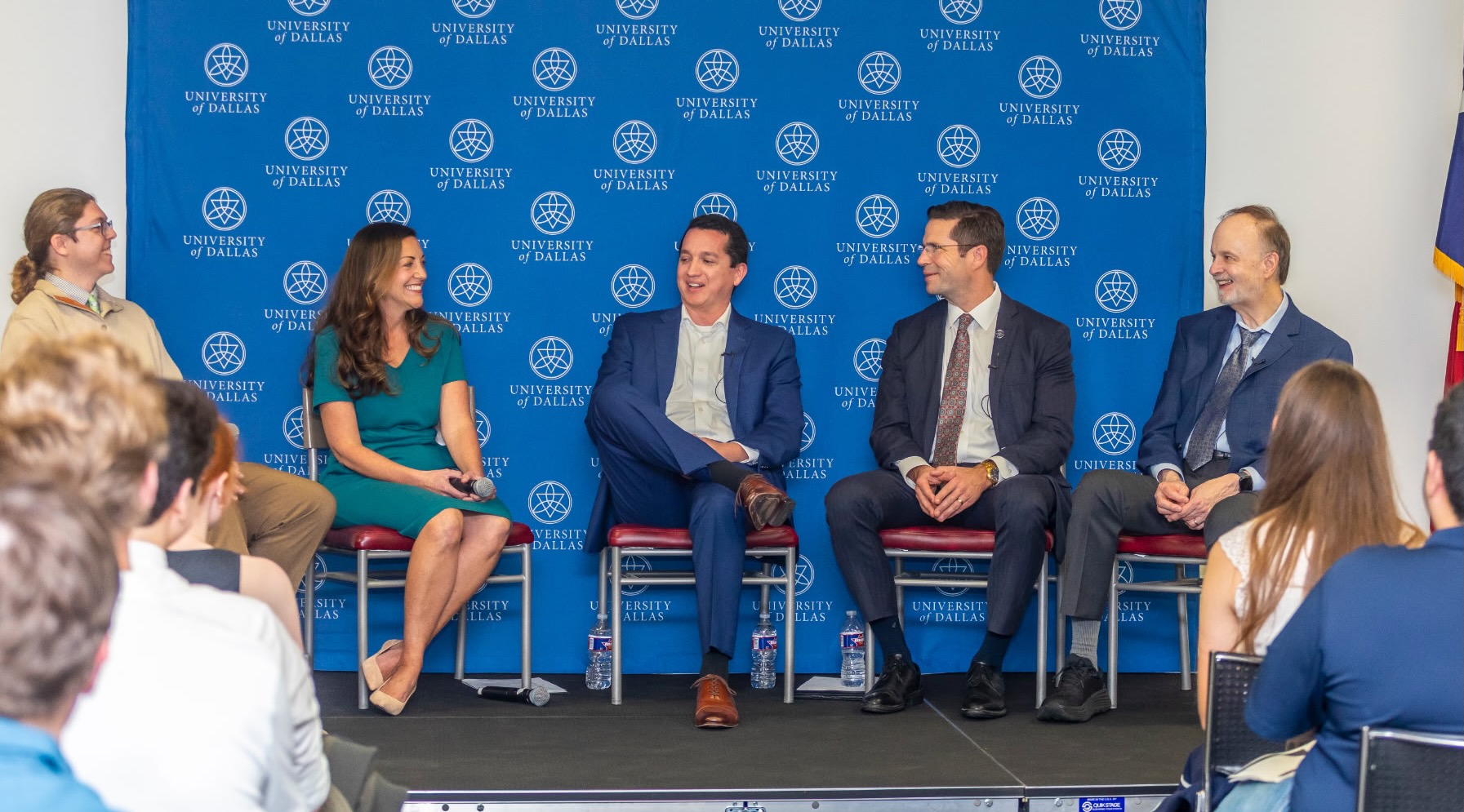
![University of Dallas panel explores American exceptionalism through a Catholic lens #Catholic In a standing-room-only event, college students lined the walls of a large room at the University of Dallas to hear three Catholic academics and an apologist reflect on what makes America exceptional in a celebration marking the 250th anniversary of the founding of the United States.Liam Ritter, a junior and the founder of the university’s Young Americans for Freedom chapter, which hosted the discussion, told EWTN News that the March 4 panel of speakers served as the capstone of three days of celebrations at the university.The panel was comprised of University President Jonathan Sanford; Trent Horn, staff apologist with Catholic Answers; Burt Folsom, distinguished fellow at Hillsdale College and economic historian; and Susan Hanssen, associate professor of history at the University of Dallas.‘We have a population of people who know what is at stake’In response to Ritter’s question, “Why [is it] that our political regime has been so stable for so long,” Hanssen recalled America’s first immigrants. “I think the first thing that makes America exceptional, and its political regime exceptional, is the fact that America was first populated by people who fled the rise of the modern nation state and totalitarianism … and so we have a population of people who know what is at stake in political liberty," she said.“Theyʼve seen what happened to their ancestors,” she continued. “They remember the stories. And America has been blessed in its political constitution with the regime of liberty, which has made possible the flourishing of subsidiary communities and societies.”Hanssen said we should not take for granted today that we still “have a free people." “We need to listen to our latest immigrants … those who have fled Venezuela, those who have fled Iran, like my uncle, a Persian Jew, who refuses to call himself Iranian because he associates modern Iran with the regime of the Ayatollah.”‘Get married, have children, raise them well’Sanford said that though we are a nation of immigrants, “there won’t be enough to pull in to make up for” the continuing demographic decline.“Get married, have children, raise them well,” he said to chuckles from a receptive audience, which was mostly composed of college students.He encouraged the students not to focus on “one big step,” but rather, to take smaller steps: “Get up early. Pray. Exercise. Go through the day in an ordered fashion, give Caesar what is Caesarʼs, and God what is God’s.”“Do the little things thousands and thousands of times,” he said.“In order to exercise liberty properly,” he continued, one has to ask, "How should I live my life?” and then rely on the institutions that “help you do that.”He called the family the “foundational institution” of America. “Recover the family,” he said.In addition, “we need to see those institutions that mediate the virtues — schools, universities — that embrace fully the idea of what [the virtues] are.”Horn also encouraged students to focus on family relationships, telling them “get off the phones and the internet. They’re killing all of us. They’re rewiring our brains.”
Trent Horn (left), an apologist at Catholic Answers, and University of Dallas President Jonathan Sanford participate in a panel on American exceptionalism at the University of Dallas on March 4, 2026. | Credit: Courtesy of University of Dallas Young Americans for Freedom Chapter
Of people currently in their 20s in America, "one in three will never have children,” he lamented, implying too much technology use is partly to blame.The Catholic Answers apologist pointed out, however, that though the Second Industrial Revolution “broke the family” by encouraging workers to move away from their homes and families to pursue careers, the internet “post-Covid,” in the age of “Zoom and telecommuting … might be good” because many people no longer have to choose between a job and staying near their extended families.“Maybe tech can help build up family networks,” he said.‘The greatest outpouring of economic development’ in historyRitter told EWTN news that he chose speakers who could address “the wonderful things the U.S. has contributed” to the world because “a lot of young people don’t have appropriate gratitude for the country.”Ritter asked Folsom, a historian who focuses on economics and industrial affairs, about what the professor believes the U.S. has contributed to world economics and world innovations.Folsom said that the generation after the Civil War, from 1865 to 1905, was responsible for “the greatest outpouring of economic development … in world history” and “gave us the rise of an America that became a world power” by World War I.He listed inventions that facilitated the rapid development of industry and infrastructure in the country during the Second Industrial Revolution, including the typewriter, the telephone, adding machines, the light bulb, electricity, factory-produced cars, and recording devices for music and movies, among other innovations.Through the Declaration of Independence and the U.S. Constitution, “the founders gave us the freedom” to develop these technologies, he said. “We had amazing infrastructure that allowed people to produce, and not have government get in their way.”The professor said the post-Civil War period could be eclipsed in the present day “because with artificial intelligence, this generation may yet be able to come up with more.”‘A responsibility for this political regime of freedom’At the conclusion of the panel discussion, Hanssen called the feeling in the room “electric, it’s teeming with patriotism. This isn’t a normal college campus.”Referring to Sanford’s earlier admonition to ”get married and have kids,” she said: “I agree, be fruitful and multiply … Preach the Gospel, and baptize in the name of Jesus, but also, go into politics!” she exclaimed.She encouraged the students to develop “the ability to love something so much that you would die for it: God, family, country.”“Recognize what is at stake. We have a responsibility for this political regime of freedom, to the immigrants who come here … to our children… to preserve the rule of law.”She concluded to loud applause: “So family; yes! Faith; yes, but to the barricades, ladies and gentlemen!"](https://unitedyam.com/wp-content/uploads/2026/03/university-of-dallas-panel-explores-american-exceptionalism-through-a-catholic-lens-catholic-in-a-standing-room-only-event-college-students-lined-the-walls-of-a-large-room-at-the-university-of-dalla.jpg)
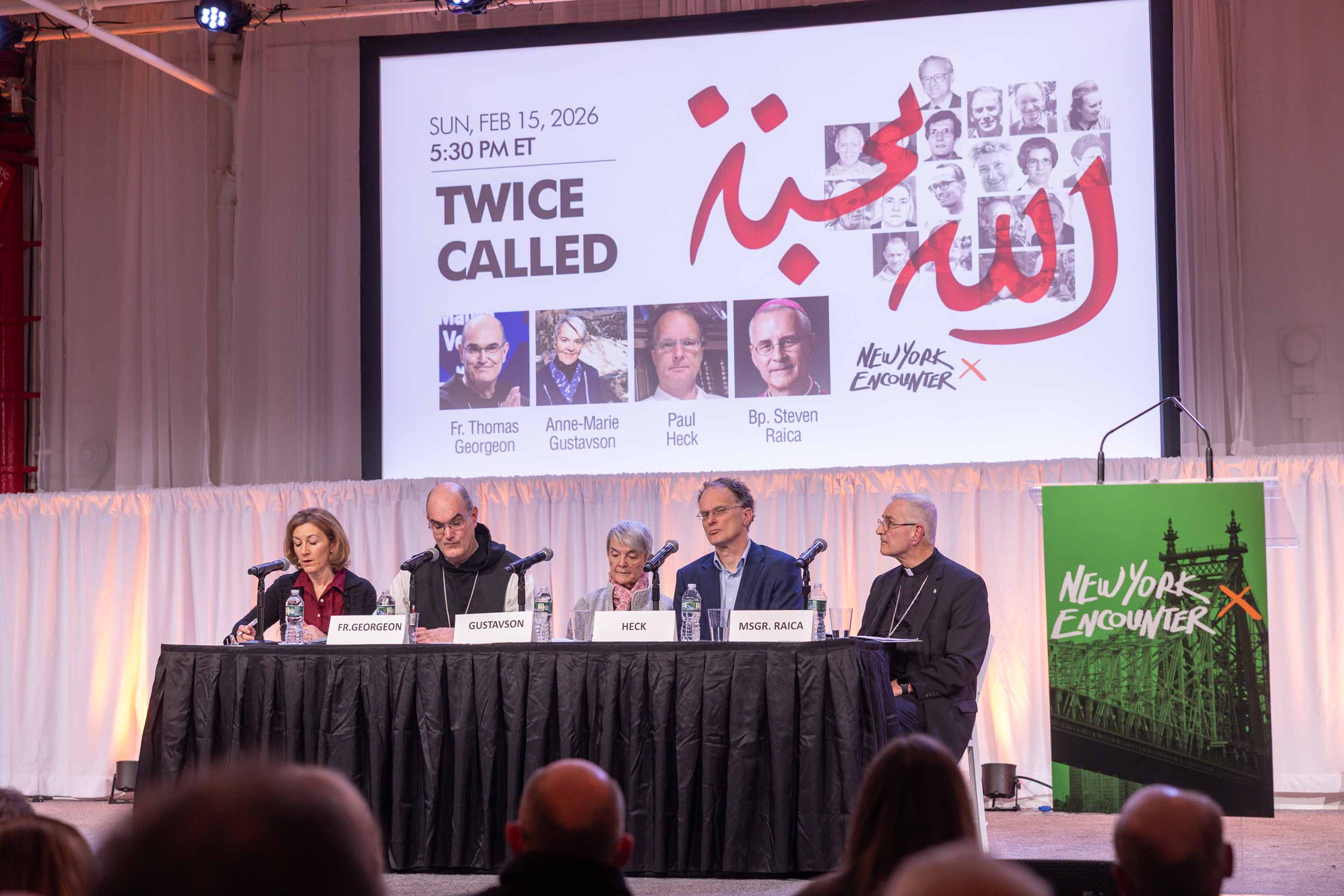
![Sister of slain bishop reflects on traveling exhibit honoring the 19 Algerian martyrs – #Catholic – Anne-Marie Gustavson’s voice was joyful when she recounted her recent visit to New York to speak on a panel about the 19 Algerian martyrs, one of whom was her brother, Bishop Pierre Claverie, OP.“I was absolutely amazed by everything,” she said of New York Encounter — held in February at the Metropolitan Pavilion in New York City’s Chelsea neighborhood — where her brother was featured in an exhibit alongside his fellow 18 martyrs of the so-called “Black Decade” of Algeria from 1992–2002. The Algerian-born French citizen living in New Jersey exclaimed: “I had no idea this existed at all, this New York Encounter!”Gustavson participated in a panel discussion alongside Father Thomas Georgeon, the postulator for the 19 martyrs of Algeria’s cause; Georgetown University professor Paul Heck; and Bishop Steven Raica of Birmingham, Alabama, who moderated the discussion.She said the exhibit was “absolutely beautiful” and marveled at its being scheduled to travel to England and Paris.Indeed, according to Georgeon, the exhibit will travel to many more cities, including Chicago and Nashville, Tennessee, in the U.S. as well as Lourdes, France, and Milan, Rome, and “at least 10 other cities in Italy.” Prior to the New York Encounter, the exhibit was first presented at the Rimini Meeting, the Italian equivalent of the encounter, in August 2025. “The success in Rimini was phenomenal: 15,000 people visited the exhibition in five days,” Georgeon said.“That their reputation of holiness is growing, growing, and growing — that’s clear,” Georgeon said.“Nineteen consecrated men and women, eight different religious congregations; seven women and 12 men who had answered God’s call to devote themselves to him and were called twice to give their lives to the end for the love of Christ and their neighbor,” he said. “The profiles of the 19 martyrs show astonishing variety against the background of the dynamism of a local Church, discerned by events and in a state of resistance to the prevailing violence.”Claverie and his 18 companions were beatified by Pope Francis on Dec. 8, 2018, in Oran, Algeria, marking the first instance of a Catholic beatification taking place in a Muslim-majority country. Claverie served as bishop of Oran from 1981 until his Aug. 1, 1996, martyrdom.The best known of Claverie’s companions are the seven monks of Tibhirine, who were kidnapped from their Trappist priory in March 1996. They were kept as a bartering chip to procure the release of several imprisoned members of the Armed Islamic Group of Algeria and were killed in May 1996. Their story was dramatized in the 2010 French film “Of Gods and Men,” which won the Grand Prix at the Cannes Film Festival.In her interview with EWTN News, Gustavson described her brother as having “a balanced personality,” saying he shared their mother’s vivaciousness and was often “very joyful and teasing people.” At the same time, she said, “he also had my father’s intelligence and a more sober and thoughtful kind of temperament.”“He never doubted his faith,” she said. “Once faith came upon him, he never doubted after that, and his path led him back to Algeria.” Gustavson and her brother were born in Algeria, and their family’s history there had stretched back for five generations. During Algeria’s war of independence from France in the 1960s, the family left Algeria for France. Claverie’s faith journey famously began when he joined a scout troop run by the Order of Preachers, also known as the Dominicans, the order he would eventually enter.Gustavson emphasized the importance to her brother of remaining in Algeria. He was dedicated to helping Algerians to realize their dreams of democracy and peace in wake of the civil war in the 1990s that killed thousands of people. She recounted how he had begun to speak up as bishop of Oran about the suffering of the Algerian people, who were caught between a “a very repressive government and a rebellion based on an extreme form of Islam that had infiltrated the country.”The question for Catholics became, “Do we stay or do we go?” she said.“For us, for the family, at that point, my mom had passed away in ’92,” she recalled. “So for my father, and for us, my husband and I, and our daughters, we knew that something might happen.”“But none of us had the thought of telling him, ‘OK, Pierre, just stop. Just go to France, go wherever.’ No, because he was on the path he wanted to be on,” she said. “And we knew also that he was a great help to the people, the Muslims around him.”The last time Gustavson spoke with her brother was over the phone, a little over a day before he was killed. She said she could hear that “his voice was really not the way that it usually was,” and it had been several months since the monks at Tibhirine had disappeared. “The next day, a friend of ours gave me the call in the evening saying that Pierre had been killed along with [his driver] Mohamed.”“When my brother was killed… so there was a six-hour difference with Algeria. And at the time when he was killed, I was in our bedroom, and I was rearranging some things on the shelves. And I had a picture of my brother at the top of that shelf, and it fell. And I picked it up; it wasn’t broken. And at that point, I said, ‘Oh my God.’ It was such a relief to think that it didn’t break.”“In the years that followed, for me, it became a symbol of the fact that Pierre’s spirit goes on,” she said. “And the proof is now, today, after 30 years, his spirit is still alive.”In the coming month, Georgeon and her brother’s biographer, Father Jean-Jacques Pérennès, OP, will join a delegation including Cardinal Jean-Paul Vesco of Algiers in visiting Pope Leo XIV ahead of his April trip to Algeria. Georgeon said he has seen “great joy, pride, and a desire for brotherhood being expressed” in the Algerian press and on social media.Georgeon said there is nothing specific he expects regarding the cause of the 19 martyrs but said it “will be an opportunity to take stock of the cause and the spread of the reputation for holiness of these men and women throughout the world.”For her part, Gustavson revealed excitedly that she will send a copy of her brother’s biography with them to give Pope Leo and that she has written a message to him inside, saying: “To Pope Leo XIV, from Anne-Marie Gustavson-Claverie. My brother Pierre used to say, ‘I need the truth of others.’ I will be praying for you as you search for that truth among the Algerian people he loved.”Gustavson will visit the country in August on the 30th anniversary of her brother’s martyrdom.](https://unitedyam.com/wp-content/uploads/2026/03/sister-of-slain-bishop-reflects-on-traveling-exhibit-honoring-the-19-algerian-martyrs-catholic-anne-marie-gustavsons-voice-was-joyful-when-she-recounted-her-recent-visit-to-new-york-to-s-scaled.jpg "Sister of slain bishop reflects on traveling exhibit honoring the 19 Algerian martyrs – #Catholic – Anne-Marie Gustavson’s voice was joyful when she recounted her recent visit to New York to speak on a panel about the 19 Algerian martyrs, one of whom was her brother, Bishop Pierre Claverie, OP.“I was absolutely amazed by everything,” she said of New York Encounter — held in February at the Metropolitan Pavilion in New York City’s Chelsea neighborhood — where her brother was featured in an exhibit alongside his fellow 18 martyrs of the so-called “Black Decade” of Algeria from 1992–2002. The Algerian-born French citizen living in New Jersey exclaimed: “I had no idea this existed at all, this New York Encounter!”Gustavson participated in a panel discussion alongside Father Thomas Georgeon, the postulator for the 19 martyrs of Algeria’s cause; Georgetown University professor Paul Heck; and Bishop Steven Raica of Birmingham, Alabama, who moderated the discussion.She said the exhibit was “absolutely beautiful” and marveled at its being scheduled to travel to England and Paris.Indeed, according to Georgeon, the exhibit will travel to many more cities, including Chicago and Nashville, Tennessee, in the U.S. as well as Lourdes, France, and Milan, Rome, and “at least 10 other cities in Italy.” Prior to the New York Encounter, the exhibit was first presented at the Rimini Meeting, the Italian equivalent of the encounter, in August 2025. “The success in Rimini was phenomenal: 15,000 people visited the exhibition in five days,” Georgeon said.“That their reputation of holiness is growing, growing, and growing — that’s clear,” Georgeon said.“Nineteen consecrated men and women, eight different religious congregations; seven women and 12 men who had answered God’s call to devote themselves to him and were called twice to give their lives to the end for the love of Christ and their neighbor,” he said. “The profiles of the 19 martyrs show astonishing variety against the background of the dynamism of a local Church, discerned by events and in a state of resistance to the prevailing violence.”Claverie and his 18 companions were beatified by Pope Francis on Dec. 8, 2018, in Oran, Algeria, marking the first instance of a Catholic beatification taking place in a Muslim-majority country. Claverie served as bishop of Oran from 1981 until his Aug. 1, 1996, martyrdom.The best known of Claverie’s companions are the seven monks of Tibhirine, who were kidnapped from their Trappist priory in March 1996. They were kept as a bartering chip to procure the release of several imprisoned members of the Armed Islamic Group of Algeria and were killed in May 1996. Their story was dramatized in the 2010 French film “Of Gods and Men,” which won the Grand Prix at the Cannes Film Festival.In her interview with EWTN News, Gustavson described her brother as having “a balanced personality,” saying he shared their mother’s vivaciousness and was often “very joyful and teasing people.” At the same time, she said, “he also had my father’s intelligence and a more sober and thoughtful kind of temperament.”“He never doubted his faith,” she said. “Once faith came upon him, he never doubted after that, and his path led him back to Algeria.” Gustavson and her brother were born in Algeria, and their family’s history there had stretched back for five generations. During Algeria’s war of independence from France in the 1960s, the family left Algeria for France. Claverie’s faith journey famously began when he joined a scout troop run by the Order of Preachers, also known as the Dominicans, the order he would eventually enter.Gustavson emphasized the importance to her brother of remaining in Algeria. He was dedicated to helping Algerians to realize their dreams of democracy and peace in wake of the civil war in the 1990s that killed thousands of people. She recounted how he had begun to speak up as bishop of Oran about the suffering of the Algerian people, who were caught between a “a very repressive government and a rebellion based on an extreme form of Islam that had infiltrated the country.”The question for Catholics became, “Do we stay or do we go?” she said.“For us, for the family, at that point, my mom had passed away in ’92,” she recalled. “So for my father, and for us, my husband and I, and our daughters, we knew that something might happen.”“But none of us had the thought of telling him, ‘OK, Pierre, just stop. Just go to France, go wherever.’ No, because he was on the path he wanted to be on,” she said. “And we knew also that he was a great help to the people, the Muslims around him.”The last time Gustavson spoke with her brother was over the phone, a little over a day before he was killed. She said she could hear that “his voice was really not the way that it usually was,” and it had been several months since the monks at Tibhirine had disappeared. “The next day, a friend of ours gave me the call in the evening saying that Pierre had been killed along with [his driver] Mohamed.”“When my brother was killed… so there was a six-hour difference with Algeria. And at the time when he was killed, I was in our bedroom, and I was rearranging some things on the shelves. And I had a picture of my brother at the top of that shelf, and it fell. And I picked it up; it wasn’t broken. And at that point, I said, ‘Oh my God.’ It was such a relief to think that it didn’t break.”“In the years that followed, for me, it became a symbol of the fact that Pierre’s spirit goes on,” she said. “And the proof is now, today, after 30 years, his spirit is still alive.”In the coming month, Georgeon and her brother’s biographer, Father Jean-Jacques Pérennès, OP, will join a delegation including Cardinal Jean-Paul Vesco of Algiers in visiting Pope Leo XIV ahead of his April trip to Algeria. Georgeon said he has seen “great joy, pride, and a desire for brotherhood being expressed” in the Algerian press and on social media.Georgeon said there is nothing specific he expects regarding the cause of the 19 martyrs but said it “will be an opportunity to take stock of the cause and the spread of the reputation for holiness of these men and women throughout the world.”For her part, Gustavson revealed excitedly that she will send a copy of her brother’s biography with them to give Pope Leo and that she has written a message to him inside, saying: “To Pope Leo XIV, from Anne-Marie Gustavson-Claverie. My brother Pierre used to say, ‘I need the truth of others.’ I will be praying for you as you search for that truth among the Algerian people he loved.”Gustavson will visit the country in August on the 30th anniversary of her brother’s martyrdom.")