Day: March 12, 2026

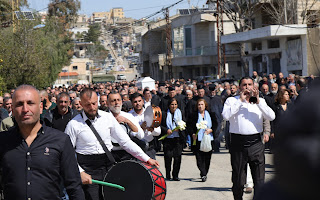
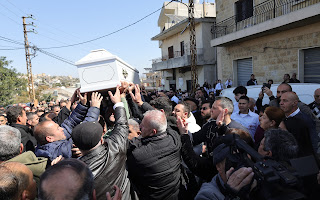
Lebanon mourns Father Pierre El-Rahi as calls for peace echo at his funeral #Catholic Amid a war weighing heavily on southern Lebanon with fear and destruction, a prayer of farewell rose from the town of Qlayaa for a priest who chose to remain beside his people until the very end. In the courtyard of St. George Church in a scene marked by tears, prayer, and hope, mourners bid farewell to Father Pierre El-Rahi, who was killed after shelling struck his town.The funeral and burial rites were held with the participation of Bishop Elias Nassar, representing Maronite Patriarch Cardinal Bechara Boutros al-Rahi, and Maronite Archbishop of Tyre Charbel Abdallah, along with Lebanese Army Commander Gen. Rodolphe Haykal, members of the clergy, and a large crowd of townspeople and loved ones who came to bid farewell to their pastor.In a message read on his behalf by Nassar, al-Rahi expressed his “deep pain and sorrow” at the news of the priest’s martyrdom. He described him as a “zealous and courageous pastor” and a man marked by “priestly virtues filled with divine grace.” Recalling El-Rahi’s priestly journey and pastoral service, the patriarch noted that the late priest was a son of the town of Debel and had lived his priesthood, since his ordination in 2014, with unconditional love, remaining close to children, youth, and families. As a result, St. George Parish in Qlayaa, which he had served for about five years, became “a model of a vibrant parish of Christ.”Al-Rahi noted that the martyred priest’s role was not limited to pastoral work. He also held ecclesial, canonical, and social responsibilities in the Archdiocese of Tyre, while serving those who were suffering, the poor, and prisoners. 
 
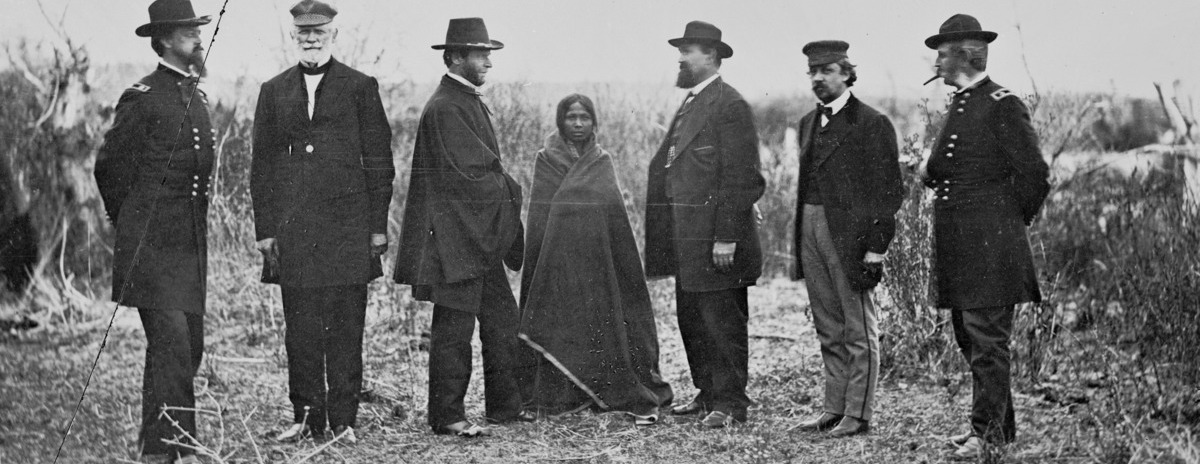
 Mourners gather for the funeral of Father Pierre El-Rahi at St. George Church in the town of Qlayaa in southern Lebanon. | Credit: ACI MENA
 
 The patriarch also stressed El-Rahi’s “courageous” decision to remain with the steadfast people of Qlayaa while the region bears the cost of the ongoing war. He added in his message: “We pray that his martyrdom may be an act of redemption for the people of Qlayaa and for all Lebanon and the Lebanese who reject this war and long for a just, comprehensive, and lasting peace.”Pope Leo XIV mourned the martyred priest at the end of his weekly general audience on Wednesday. He said El-Rahi embodied the meaning of his family name, becoming “a true shepherd,” always close to his flock and filled with the love and sacrifice of Jesus, the Good Shepherd. He added that the priest rushed without hesitation to help members of his parish as soon as he heard they had been wounded in the shelling. The pope concluded with a prayer for peace in the Middle East, saying: “We ask God to make his shed blood a seed of peace for beloved Lebanon.”This story was first published by ACI MENA, the Arabic-language sister service of EWTN News. It has been translated and adapted by EWTN News English.

Lebanon mourns Father Pierre El-Rahi as calls for peace echo at his funeral #Catholic Amid a war weighing heavily on southern Lebanon with fear and destruction, a prayer of farewell rose from the town of Qlayaa for a priest who chose to remain beside his people until the very end. In the courtyard of St. George Church in a scene marked by tears, prayer, and hope, mourners bid farewell to Father Pierre El-Rahi, who was killed after shelling struck his town.The funeral and burial rites were held with the participation of Bishop Elias Nassar, representing Maronite Patriarch Cardinal Bechara Boutros al-Rahi, and Maronite Archbishop of Tyre Charbel Abdallah, along with Lebanese Army Commander Gen. Rodolphe Haykal, members of the clergy, and a large crowd of townspeople and loved ones who came to bid farewell to their pastor.In a message read on his behalf by Nassar, al-Rahi expressed his “deep pain and sorrow” at the news of the priest’s martyrdom. He described him as a “zealous and courageous pastor” and a man marked by “priestly virtues filled with divine grace.” Recalling El-Rahi’s priestly journey and pastoral service, the patriarch noted that the late priest was a son of the town of Debel and had lived his priesthood, since his ordination in 2014, with unconditional love, remaining close to children, youth, and families. As a result, St. George Parish in Qlayaa, which he had served for about five years, became “a model of a vibrant parish of Christ.”Al-Rahi noted that the martyred priest’s role was not limited to pastoral work. He also held ecclesial, canonical, and social responsibilities in the Archdiocese of Tyre, while serving those who were suffering, the poor, and prisoners. Mourners gather for the funeral of Father Pierre El-Rahi at St. George Church in the town of Qlayaa in southern Lebanon. | Credit: ACI MENA The patriarch also stressed El-Rahi’s “courageous” decision to remain with the steadfast people of Qlayaa while the region bears the cost of the ongoing war. He added in his message: “We pray that his martyrdom may be an act of redemption for the people of Qlayaa and for all Lebanon and the Lebanese who reject this war and long for a just, comprehensive, and lasting peace.”Pope Leo XIV mourned the martyred priest at the end of his weekly general audience on Wednesday. He said El-Rahi embodied the meaning of his family name, becoming “a true shepherd,” always close to his flock and filled with the love and sacrifice of Jesus, the Good Shepherd. He added that the priest rushed without hesitation to help members of his parish as soon as he heard they had been wounded in the shelling. The pope concluded with a prayer for peace in the Middle East, saying: “We ask God to make his shed blood a seed of peace for beloved Lebanon.”This story was first published by ACI MENA, the Arabic-language sister service of EWTN News. It has been translated and adapted by EWTN News English.

In the courtyard of St. George Church, in a scene marked by tears, prayer, and hope, mourners bid farewell to a beloved priest who was killed after shelling struck his town.

Read More
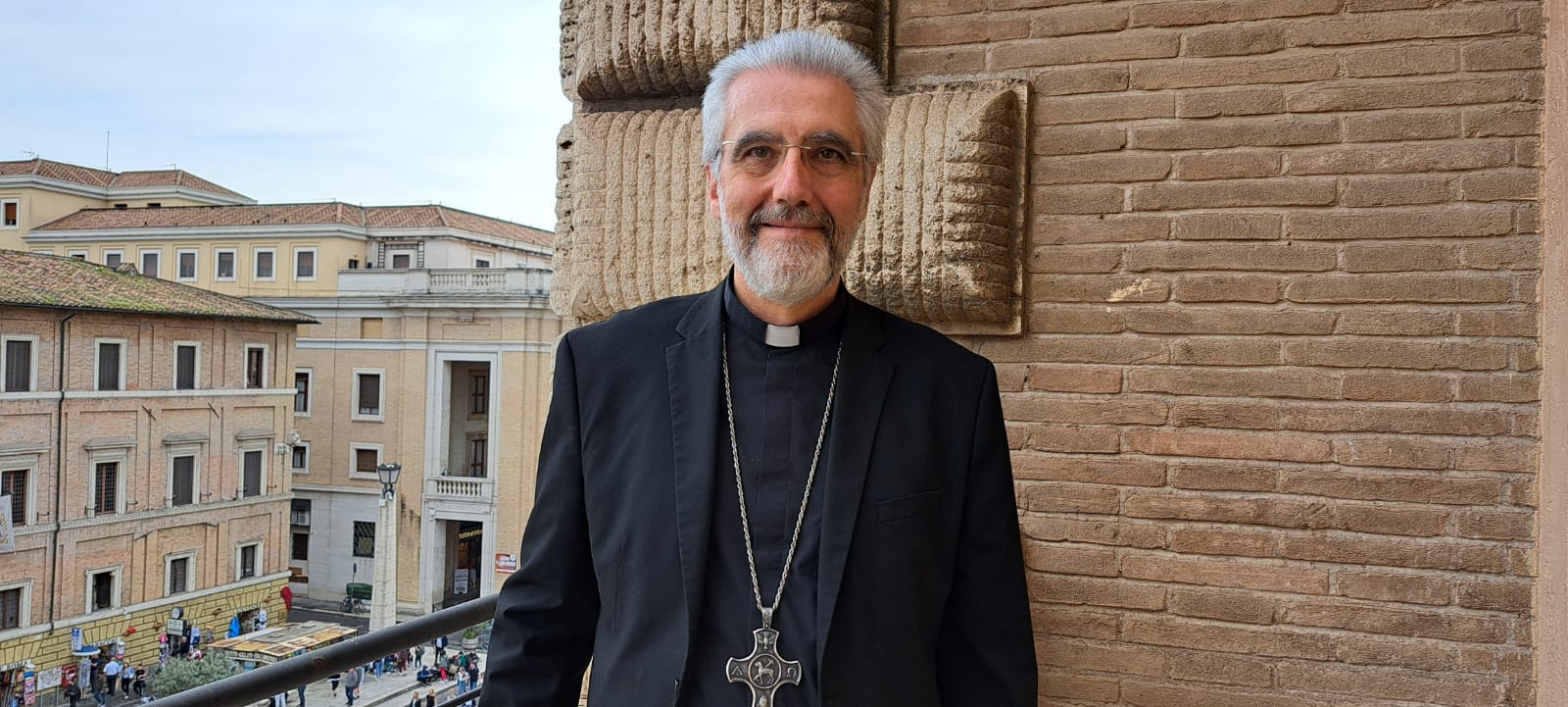
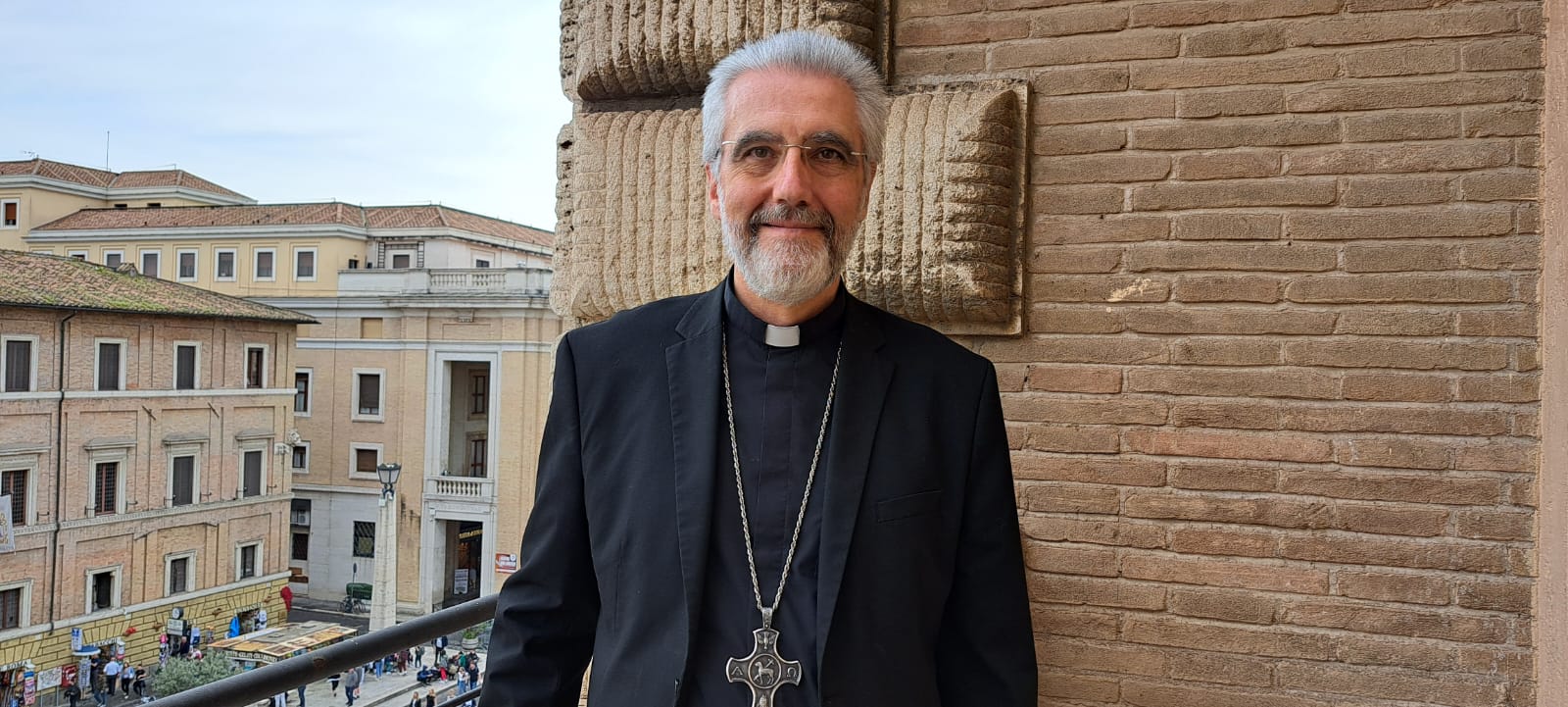
Pope names Spanish Augustinian as papal almoner #Catholic Pope Leo XIV has appointed Spanish Augustinian Archbishop Luis Marín de San Martín as papal almoner and prefect of the Dicastery for the Service of Charity.Cardinal Konrad Krajewski, who has led the office since 2022, will return to his native Poland as the new metropolitan archbishop of Łódź.Marín de San Martín, titular bishop of Suliana, became a more prominent figure in the Vatican during the Synod on Synodality, when Pope Francis named him undersecretary of the Synod of Bishops in 2021.He and Leo XIV, both Augustinians, have known each other for years. In 2008, when the current pontiff was serving as prior general of the Augustinian order, he asked Marín de San Martín to take charge of the order’s archive in Rome, where he has now served for 18 years.Born in Madrid in 1961, Marín de San Martín holds degrees in spiritual theology from the Pontifical Comillas University in Madrid and in dogmatic theology from the Pontifical Gregorian University in Rome. He also earned a doctorate in theology from Comillas with a dissertation on the ecclesiology of St. John XXIII and holds a diploma in archival studies.He served as provincial councilor of the Augustinian Province of Spain from 1999 to 2002 and was pastor of the parish of Santa Ana y la Esperanza in Madrid. Until 2008, he was prior of the Monastery of Santa María de la Vid in Burgos. He has also taught at the San Agustín Theological Center in El Escorial and at the Augustinian Theological Study Center in Valladolid.With extensive experience in lay pastoral ministry, he has served since 2008 as general archivist of the Order of St. Augustine and since 2013 as assistant general to the prior general of the order, as well as president of the Augustinian Spirituality Institute.The Apostolic Almonry, formally renamed the Dicastery for the Service of Charity under Pope Francis’ 2022 reform of the Roman Curia, is the Vatican office responsible for carrying out charitable works for the poor in the name of the Holy Father, especially in Rome and in conflict zones.The papal almoner is also delegated by the pope to grant apostolic blessings through parchment certificates. The office carries the dignity of archbishop and membership in the pontifical family, allowing participation in papal liturgies and official audiences.Krajewski, born in Łódź in 1963, entered the diocesan seminary there in 1982 and earned a theology degree from the John Paul II Catholic University of Lublin before being ordained a priest on June 11, 1988.He later earned a licentiate in liturgy from the Pontifical Liturgical Institute of Sant’Anselmo in Rome and a doctorate in theology with a specialization in liturgy from the Pontifical University of St. Thomas Aquinas, also in Rome. He also worked with the Office for the Liturgical Celebrations of the Supreme Pontiff.Over the years, he served as master of ceremonies to the metropolitan archbishop of Łódź, taught at the diocesan seminary and at Franciscan and Salesian seminaries in the archdiocese, and was a professor at the Warsaw academy.He also served as pontifical master of ceremonies in the Office for the Liturgical Celebrations of the Supreme Pontiff. In 2013, he was named papal almoner and titular archbishop, receiving episcopal ordination on Sept. 17 of that year.Pope Francis made him a cardinal in the June 28, 2018, consistory, assigning him the deaconry of Santa Maria Immacolata all’Esquilino. Since 2022, he has served as prefect of the Dicastery for the Service of Charity.This story was first published by EWTN’s Spanish-language news partner, ACI Prensa. It has been translated and adapted by EWTN News.

Pope names Spanish Augustinian as papal almoner #Catholic Pope Leo XIV has appointed Spanish Augustinian Archbishop Luis Marín de San Martín as papal almoner and prefect of the Dicastery for the Service of Charity.Cardinal Konrad Krajewski, who has led the office since 2022, will return to his native Poland as the new metropolitan archbishop of Łódź.Marín de San Martín, titular bishop of Suliana, became a more prominent figure in the Vatican during the Synod on Synodality, when Pope Francis named him undersecretary of the Synod of Bishops in 2021.He and Leo XIV, both Augustinians, have known each other for years. In 2008, when the current pontiff was serving as prior general of the Augustinian order, he asked Marín de San Martín to take charge of the order’s archive in Rome, where he has now served for 18 years.Born in Madrid in 1961, Marín de San Martín holds degrees in spiritual theology from the Pontifical Comillas University in Madrid and in dogmatic theology from the Pontifical Gregorian University in Rome. He also earned a doctorate in theology from Comillas with a dissertation on the ecclesiology of St. John XXIII and holds a diploma in archival studies.He served as provincial councilor of the Augustinian Province of Spain from 1999 to 2002 and was pastor of the parish of Santa Ana y la Esperanza in Madrid. Until 2008, he was prior of the Monastery of Santa María de la Vid in Burgos. He has also taught at the San Agustín Theological Center in El Escorial and at the Augustinian Theological Study Center in Valladolid.With extensive experience in lay pastoral ministry, he has served since 2008 as general archivist of the Order of St. Augustine and since 2013 as assistant general to the prior general of the order, as well as president of the Augustinian Spirituality Institute.The Apostolic Almonry, formally renamed the Dicastery for the Service of Charity under Pope Francis’ 2022 reform of the Roman Curia, is the Vatican office responsible for carrying out charitable works for the poor in the name of the Holy Father, especially in Rome and in conflict zones.The papal almoner is also delegated by the pope to grant apostolic blessings through parchment certificates. The office carries the dignity of archbishop and membership in the pontifical family, allowing participation in papal liturgies and official audiences.Krajewski, born in Łódź in 1963, entered the diocesan seminary there in 1982 and earned a theology degree from the John Paul II Catholic University of Lublin before being ordained a priest on June 11, 1988.He later earned a licentiate in liturgy from the Pontifical Liturgical Institute of Sant’Anselmo in Rome and a doctorate in theology with a specialization in liturgy from the Pontifical University of St. Thomas Aquinas, also in Rome. He also worked with the Office for the Liturgical Celebrations of the Supreme Pontiff.Over the years, he served as master of ceremonies to the metropolitan archbishop of Łódź, taught at the diocesan seminary and at Franciscan and Salesian seminaries in the archdiocese, and was a professor at the Warsaw academy.He also served as pontifical master of ceremonies in the Office for the Liturgical Celebrations of the Supreme Pontiff. In 2013, he was named papal almoner and titular archbishop, receiving episcopal ordination on Sept. 17 of that year.Pope Francis made him a cardinal in the June 28, 2018, consistory, assigning him the deaconry of Santa Maria Immacolata all’Esquilino. Since 2022, he has served as prefect of the Dicastery for the Service of Charity.This story was first published by EWTN’s Spanish-language news partner, ACI Prensa. It has been translated and adapted by EWTN News.

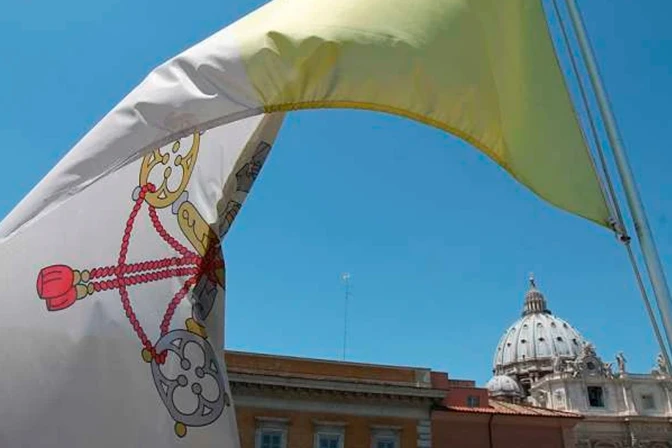
Archbishop Luis Marín de San Martín will succeed Cardinal Konrad Krajewski, who has been appointed metropolitan archbishop of Łódź, Poland.

Read More
US Maronite bishops mourn priest killed in Israeli strike on Lebanon village #Catholic – (OSV News) — Two Maronite bishops in the U.S. are calling for prayer, dialogue and solidarity after a Maronite priest was killed in Lebanon amid the U.S.-Israel war on Iran.
Father Pierre al-Rahi succumbed to injuries sustained March 9 when an Israeli artillery tank fired on a house in the southern Lebanon village of Qlayaa.
Lebanon and several other Middle East nations have come under attack since U.S.-Israel strikes on Iran, launched Feb. 28 and met with counterattacks by that nation, have plunged the region — as well as global relations and markets — into uncertainty.
Father al-Rahi, also known by his French name Pierre el-Raï, had along with other priests refused Israeli orders to evacuate the Maronite village, located a few miles from the border with Israel and home to some 8,000.

Click here to subscribe to our weekly newsletter.

When the strike took place, Father al-Rahi “didn’t wait” but “went to jump in right away” after hearing “one of the homes in his town was bombarded,” Bishop A. Elias Zaidan, who heads the St. Louis-based Maronite Eparchy of Our Lady of Lebanon of Los Angeles, told OSV News.
But, said Bishop Zaidan, the priest was injured in a second strike that took place “right away” after the first, and then “died in the hospital.”
In a message shared with OSV News, Maronite Bishop Gregory J. Mansour of the Eparchy of St. Maron of Brooklyn, New York, reflected on Father al-Rahi’s death by quoting John 15:13: “No greater love has any man than to give his life for his friends.”
“May God’s good servant, Father Pierre Al Rahi, rest in peace,” said Bishop Mansour. “May his patriarch, bishop, brother priests, parishioners and family be consoled by the Holy Spirit.”
Bishop Zaidan called the priest’s death a “sad story and unfortunate situation.”
With roots in Syria and Lebanon, the global Maronite Catholic Church — one of the 23 Eastern Catholic Churches that, along with the Roman Catholic Church, comprise the universal Catholic Church — mourns to see Lebanon ravaged again by war, said Bishop Zaidan.
“It’s definitely a sadness and a sorrow, because Lebanon is a spiritual home for Maronites, like the Vatican is for all Catholics,” he said. “And we feel that attachment.”
Yet in the midst of death, the hope of new life through Christ is present, said Bishop Zaidan.
“The blood of martyrs helps to build the Church in that way, and gives us the determination to keep going despite everything, and to witness to the love of Christ in that perspective,” he said.
Bishop Zaidan offered a message for the faithful following the priest’s death.
“I would say, as Pope Leo XIV has, enough violence; let’s dialogue, let’s talk,” he said.
In addition, “keep praying and praying and praying,” Bishop Zaidan urged.
And, he said, “stand in solidarity” with those suffering in the war by thinking about and reflecting on what they are experiencing.
“I think we go a long way from that perspective, because ‘whatever you have done to the least of my brothers and sisters, you’ve done it to me,’” said Bishop Zaidan, quoting Matthew 25:40. “This gesture of support that says, ‘We’re praying for you, we’re thinking about you, we’re feeling for you’ — I think this beautiful support can help our brothers and sisters.”
Gina Christian is a multimedia reporter for OSV News. Follow her on X @GinaJesseReina.

US Maronite bishops mourn priest killed in Israeli strike on Lebanon village #Catholic – (OSV News) — Two Maronite bishops in the U.S. are calling for prayer, dialogue and solidarity after a Maronite priest was killed in Lebanon amid the U.S.-Israel war on Iran. Father Pierre al-Rahi succumbed to injuries sustained March 9 when an Israeli artillery tank fired on a house in the southern Lebanon village of Qlayaa. Lebanon and several other Middle East nations have come under attack since U.S.-Israel strikes on Iran, launched Feb. 28 and met with counterattacks by that nation, have plunged the region — as well as global relations and markets — into uncertainty. Father al-Rahi, also known by his French name Pierre el-Raï, had along with other priests refused Israeli orders to evacuate the Maronite village, located a few miles from the border with Israel and home to some 8,000. Click here to subscribe to our weekly newsletter. When the strike took place, Father al-Rahi “didn’t wait” but “went to jump in right away” after hearing “one of the homes in his town was bombarded,” Bishop A. Elias Zaidan, who heads the St. Louis-based Maronite Eparchy of Our Lady of Lebanon of Los Angeles, told OSV News. But, said Bishop Zaidan, the priest was injured in a second strike that took place “right away” after the first, and then “died in the hospital.” In a message shared with OSV News, Maronite Bishop Gregory J. Mansour of the Eparchy of St. Maron of Brooklyn, New York, reflected on Father al-Rahi’s death by quoting John 15:13: “No greater love has any man than to give his life for his friends.” “May God’s good servant, Father Pierre Al Rahi, rest in peace,” said Bishop Mansour. “May his patriarch, bishop, brother priests, parishioners and family be consoled by the Holy Spirit.” Bishop Zaidan called the priest’s death a “sad story and unfortunate situation.” With roots in Syria and Lebanon, the global Maronite Catholic Church — one of the 23 Eastern Catholic Churches that, along with the Roman Catholic Church, comprise the universal Catholic Church — mourns to see Lebanon ravaged again by war, said Bishop Zaidan. “It’s definitely a sadness and a sorrow, because Lebanon is a spiritual home for Maronites, like the Vatican is for all Catholics,” he said. “And we feel that attachment.” Yet in the midst of death, the hope of new life through Christ is present, said Bishop Zaidan. “The blood of martyrs helps to build the Church in that way, and gives us the determination to keep going despite everything, and to witness to the love of Christ in that perspective,” he said. Bishop Zaidan offered a message for the faithful following the priest’s death. “I would say, as Pope Leo XIV has, enough violence; let’s dialogue, let’s talk,” he said. In addition, “keep praying and praying and praying,” Bishop Zaidan urged. And, he said, “stand in solidarity” with those suffering in the war by thinking about and reflecting on what they are experiencing. “I think we go a long way from that perspective, because ‘whatever you have done to the least of my brothers and sisters, you’ve done it to me,’” said Bishop Zaidan, quoting Matthew 25:40. “This gesture of support that says, ‘We’re praying for you, we’re thinking about you, we’re feeling for you’ — I think this beautiful support can help our brothers and sisters.” Gina Christian is a multimedia reporter for OSV News. Follow her on X @GinaJesseReina.

US Maronite bishops mourn priest killed in Israeli strike on Lebanon village #Catholic –

(OSV News) — Two Maronite bishops in the U.S. are calling for prayer, dialogue and solidarity after a Maronite priest was killed in Lebanon amid the U.S.-Israel war on Iran.

Father Pierre al-Rahi succumbed to injuries sustained March 9 when an Israeli artillery tank fired on a house in the southern Lebanon village of Qlayaa.

Lebanon and several other Middle East nations have come under attack since U.S.-Israel strikes on Iran, launched Feb. 28 and met with counterattacks by that nation, have plunged the region — as well as global relations and markets — into uncertainty.

Father al-Rahi, also known by his French name Pierre el-Raï, had along with other priests refused Israeli orders to evacuate the Maronite village, located a few miles from the border with Israel and home to some 8,000.


Click here to subscribe to our weekly newsletter.

When the strike took place, Father al-Rahi “didn’t wait” but “went to jump in right away” after hearing “one of the homes in his town was bombarded,” Bishop A. Elias Zaidan, who heads the St. Louis-based Maronite Eparchy of Our Lady of Lebanon of Los Angeles, told OSV News.

But, said Bishop Zaidan, the priest was injured in a second strike that took place “right away” after the first, and then “died in the hospital.”

In a message shared with OSV News, Maronite Bishop Gregory J. Mansour of the Eparchy of St. Maron of Brooklyn, New York, reflected on Father al-Rahi’s death by quoting John 15:13: “No greater love has any man than to give his life for his friends.”

“May God’s good servant, Father Pierre Al Rahi, rest in peace,” said Bishop Mansour. “May his patriarch, bishop, brother priests, parishioners and family be consoled by the Holy Spirit.”

Bishop Zaidan called the priest’s death a “sad story and unfortunate situation.”

With roots in Syria and Lebanon, the global Maronite Catholic Church — one of the 23 Eastern Catholic Churches that, along with the Roman Catholic Church, comprise the universal Catholic Church — mourns to see Lebanon ravaged again by war, said Bishop Zaidan.

“It’s definitely a sadness and a sorrow, because Lebanon is a spiritual home for Maronites, like the Vatican is for all Catholics,” he said. “And we feel that attachment.”

Yet in the midst of death, the hope of new life through Christ is present, said Bishop Zaidan.

“The blood of martyrs helps to build the Church in that way, and gives us the determination to keep going despite everything, and to witness to the love of Christ in that perspective,” he said.

Bishop Zaidan offered a message for the faithful following the priest’s death.

“I would say, as Pope Leo XIV has, enough violence; let’s dialogue, let’s talk,” he said.

In addition, “keep praying and praying and praying,” Bishop Zaidan urged.

And, he said, “stand in solidarity” with those suffering in the war by thinking about and reflecting on what they are experiencing.

“I think we go a long way from that perspective, because ‘whatever you have done to the least of my brothers and sisters, you’ve done it to me,’” said Bishop Zaidan, quoting Matthew 25:40. “This gesture of support that says, ‘We’re praying for you, we’re thinking about you, we’re feeling for you’ — I think this beautiful support can help our brothers and sisters.”

Gina Christian is a multimedia reporter for OSV News. Follow her on X @GinaJesseReina.

(OSV News) — Two Maronite bishops in the U.S. are calling for prayer, dialogue and solidarity after a Maronite priest was killed in Lebanon amid the U.S.-Israel war on Iran. Father Pierre al-Rahi succumbed to injuries sustained March 9 when an Israeli artillery tank fired on a house in the southern Lebanon village of Qlayaa. Lebanon and several other Middle East nations have come under attack since U.S.-Israel strikes on Iran, launched Feb. 28 and met with counterattacks by that nation, have plunged the region — as well as global relations and markets — into uncertainty. Father al-Rahi, also known

Read More
US peacebuilding a ‘strategic and moral imperative,’ advocates say at Notre Dame event #Catholic – WASHINGTON (OSV News) — With American peacebuilding at a “crossroads,” amid global conflict and changes in U.S. foreign policy, a Notre Dame conference March 10 in the nation’s capital examined how to meet new challenges facing international conflict resolution and fostering peace.
The conference, titled “American Peacebuilding at a Crossroads: Lessons, Risks and the Road Ahead,” and hosted by University of Notre Dame’s Keough School of Global Affairs and its Kroc Institute for International Peace Studies, in partnership with the Alliance for Peacebuilding, came as the U.S. engaged in new military actions in Iran.
The evening before the conference, in remarks at the House GOP policy retreat, President Donald Trump was unclear about how long the combat operations against Iran in concert with Israel that killed Iran’s longtime supreme leader, 86-year-old Ayatollah Ali Khamenei, would last.

Click here to subscribe to our weekly newsletter.

“We could call it a tremendous success right now, as we leave here, I could call it, or we could go further, and we’re going to go further,” Trump said.
In remarks at the conference, retired Adm. Gary Roughead, former U.S. Navy chief of naval operations, referenced that conflict, among others, telling the audience, “I could use my time offering thoughts on the wars in Ukraine and the Gulf, which are indeed the future of warfare.”
“But,” the former admiral continued, “we have to be more strategic and forward looking. For the past few years, we’ve known that we were at a geopolitical and security inflection point.”
“I’ve spent my career in uniform, and believe deeply in maintaining a strong defense and deterrence, but I’ve also unclenched the hard fist of military power and extended that hand to relieve suffering and disasters and to help weave the fabric of peace,” Roughead said. “That is not weakness or woke. It conveys the moral strength of a nation. Both hard and soft power, and the uses of that power, demand intention, investment, and collaboration among institutions committed to preventing conflict.”
Roughead, who commanded fleets in the Atlantic and Pacific oceans during his time in active service, argued that the U.S. “faces a strategic and moral imperative to invest deliberately in peacebuilding.”
He further argued that peacebuilding is “essential, not peripheral to national security.”
“To meet this moment, American peacebuilding must evolve, building broader coalitions, forging new partnerships and preparing a new generation of leaders and peacebuilders to collaboratively, comfortably and confidently operate across military and civilian domains, employing public and private initiatives,” he said.
In a panel discussion, former Ambassador Mark Green, who was also previously administrator of the U.S. Agency for International Development, or USAID, and is a former Republican member of Congress from Wisconsin, and former Sen. Russell Feingold, D-Wis., also a former U.S. special envoy to the Great Lakes Region of Africa and the Democratic Republic of Congo, urged participants to find a bipartisan path forward.
“We have to recognize that there is no monopoly on wisdom,” Green said, citing cooperation by the late Sen. John McCain, a Republican, and late Secretary of State Madeleine Albright, a Democrat.
“They disagreed on damn near everything, but it’s the way they disagreed,” he said.
Feingold urged ways to emphasize the “congressional role in warmaking,” over “unilateral military intervention.”
“It’s up to Congress to assert the authority, and it’s up to the people of the states to demand that they do that,” he said. “They’re not going to do it on their own.”
Green concurred.
“Whether it be the Millennium Challenge Corporation, President (Barack) Obama’s Feed the Future or President (George W.) Bush’s PEPFAR AIDS initiative, they’ve lasted and been successful because Congress took it upon themselves to seriously debate and discuss and hone and sharpen and authorize those important tools,” he said. “And that seems gone.”
Liz Hume, executive director of the Alliance for Peacebuilding, said in remarks at the conference that the challenges facing their cause also presented opportunity.
“As terrible as this has been,” Hume said in reference to cuts to international development programs, “we have to see that there’s an opportunity to rebuild it in a way that we’re centering and prioritizing conflict prevention in our policies, laws and strategies.”
Kate Scanlon is a national reporter for OSV News covering Washington. Follow her on X @kgscanlon.
 

US peacebuilding a ‘strategic and moral imperative,’ advocates say at Notre Dame event #Catholic – WASHINGTON (OSV News) — With American peacebuilding at a “crossroads,” amid global conflict and changes in U.S. foreign policy, a Notre Dame conference March 10 in the nation’s capital examined how to meet new challenges facing international conflict resolution and fostering peace. The conference, titled “American Peacebuilding at a Crossroads: Lessons, Risks and the Road Ahead,” and hosted by University of Notre Dame’s Keough School of Global Affairs and its Kroc Institute for International Peace Studies, in partnership with the Alliance for Peacebuilding, came as the U.S. engaged in new military actions in Iran. The evening before the conference, in remarks at the House GOP policy retreat, President Donald Trump was unclear about how long the combat operations against Iran in concert with Israel that killed Iran’s longtime supreme leader, 86-year-old Ayatollah Ali Khamenei, would last. Click here to subscribe to our weekly newsletter. “We could call it a tremendous success right now, as we leave here, I could call it, or we could go further, and we’re going to go further,” Trump said. In remarks at the conference, retired Adm. Gary Roughead, former U.S. Navy chief of naval operations, referenced that conflict, among others, telling the audience, “I could use my time offering thoughts on the wars in Ukraine and the Gulf, which are indeed the future of warfare.” “But,” the former admiral continued, “we have to be more strategic and forward looking. For the past few years, we’ve known that we were at a geopolitical and security inflection point.” “I’ve spent my career in uniform, and believe deeply in maintaining a strong defense and deterrence, but I’ve also unclenched the hard fist of military power and extended that hand to relieve suffering and disasters and to help weave the fabric of peace,” Roughead said. “That is not weakness or woke. It conveys the moral strength of a nation. Both hard and soft power, and the uses of that power, demand intention, investment, and collaboration among institutions committed to preventing conflict.” Roughead, who commanded fleets in the Atlantic and Pacific oceans during his time in active service, argued that the U.S. “faces a strategic and moral imperative to invest deliberately in peacebuilding.” He further argued that peacebuilding is “essential, not peripheral to national security.” “To meet this moment, American peacebuilding must evolve, building broader coalitions, forging new partnerships and preparing a new generation of leaders and peacebuilders to collaboratively, comfortably and confidently operate across military and civilian domains, employing public and private initiatives,” he said. In a panel discussion, former Ambassador Mark Green, who was also previously administrator of the U.S. Agency for International Development, or USAID, and is a former Republican member of Congress from Wisconsin, and former Sen. Russell Feingold, D-Wis., also a former U.S. special envoy to the Great Lakes Region of Africa and the Democratic Republic of Congo, urged participants to find a bipartisan path forward. “We have to recognize that there is no monopoly on wisdom,” Green said, citing cooperation by the late Sen. John McCain, a Republican, and late Secretary of State Madeleine Albright, a Democrat. “They disagreed on damn near everything, but it’s the way they disagreed,” he said. Feingold urged ways to emphasize the “congressional role in warmaking,” over “unilateral military intervention.” “It’s up to Congress to assert the authority, and it’s up to the people of the states to demand that they do that,” he said. “They’re not going to do it on their own.” Green concurred. “Whether it be the Millennium Challenge Corporation, President (Barack) Obama’s Feed the Future or President (George W.) Bush’s PEPFAR AIDS initiative, they’ve lasted and been successful because Congress took it upon themselves to seriously debate and discuss and hone and sharpen and authorize those important tools,” he said. “And that seems gone.” Liz Hume, executive director of the Alliance for Peacebuilding, said in remarks at the conference that the challenges facing their cause also presented opportunity. “As terrible as this has been,” Hume said in reference to cuts to international development programs, “we have to see that there’s an opportunity to rebuild it in a way that we’re centering and prioritizing conflict prevention in our policies, laws and strategies.” Kate Scanlon is a national reporter for OSV News covering Washington. Follow her on X @kgscanlon.  

US peacebuilding a ‘strategic and moral imperative,’ advocates say at Notre Dame event #Catholic –

WASHINGTON (OSV News) — With American peacebuilding at a “crossroads,” amid global conflict and changes in U.S. foreign policy, a Notre Dame conference March 10 in the nation’s capital examined how to meet new challenges facing international conflict resolution and fostering peace.

The conference, titled “American Peacebuilding at a Crossroads: Lessons, Risks and the Road Ahead,” and hosted by University of Notre Dame’s Keough School of Global Affairs and its Kroc Institute for International Peace Studies, in partnership with the Alliance for Peacebuilding, came as the U.S. engaged in new military actions in Iran.

The evening before the conference, in remarks at the House GOP policy retreat, President Donald Trump was unclear about how long the combat operations against Iran in concert with Israel that killed Iran’s longtime supreme leader, 86-year-old Ayatollah Ali Khamenei, would last.


Click here to subscribe to our weekly newsletter.

“We could call it a tremendous success right now, as we leave here, I could call it, or we could go further, and we’re going to go further,” Trump said.

In remarks at the conference, retired Adm. Gary Roughead, former U.S. Navy chief of naval operations, referenced that conflict, among others, telling the audience, “I could use my time offering thoughts on the wars in Ukraine and the Gulf, which are indeed the future of warfare.”

“But,” the former admiral continued, “we have to be more strategic and forward looking. For the past few years, we’ve known that we were at a geopolitical and security inflection point.”

“I’ve spent my career in uniform, and believe deeply in maintaining a strong defense and deterrence, but I’ve also unclenched the hard fist of military power and extended that hand to relieve suffering and disasters and to help weave the fabric of peace,” Roughead said. “That is not weakness or woke. It conveys the moral strength of a nation. Both hard and soft power, and the uses of that power, demand intention, investment, and collaboration among institutions committed to preventing conflict.”

Roughead, who commanded fleets in the Atlantic and Pacific oceans during his time in active service, argued that the U.S. “faces a strategic and moral imperative to invest deliberately in peacebuilding.”

He further argued that peacebuilding is “essential, not peripheral to national security.”

“To meet this moment, American peacebuilding must evolve, building broader coalitions, forging new partnerships and preparing a new generation of leaders and peacebuilders to collaboratively, comfortably and confidently operate across military and civilian domains, employing public and private initiatives,” he said.

In a panel discussion, former Ambassador Mark Green, who was also previously administrator of the U.S. Agency for International Development, or USAID, and is a former Republican member of Congress from Wisconsin, and former Sen. Russell Feingold, D-Wis., also a former U.S. special envoy to the Great Lakes Region of Africa and the Democratic Republic of Congo, urged participants to find a bipartisan path forward.

“We have to recognize that there is no monopoly on wisdom,” Green said, citing cooperation by the late Sen. John McCain, a Republican, and late Secretary of State Madeleine Albright, a Democrat.

“They disagreed on damn near everything, but it’s the way they disagreed,” he said.

Feingold urged ways to emphasize the “congressional role in warmaking,” over “unilateral military intervention.”

“It’s up to Congress to assert the authority, and it’s up to the people of the states to demand that they do that,” he said. “They’re not going to do it on their own.”

Green concurred.

“Whether it be the Millennium Challenge Corporation, President (Barack) Obama’s Feed the Future or President (George W.) Bush’s PEPFAR AIDS initiative, they’ve lasted and been successful because Congress took it upon themselves to seriously debate and discuss and hone and sharpen and authorize those important tools,” he said. “And that seems gone.”

Liz Hume, executive director of the Alliance for Peacebuilding, said in remarks at the conference that the challenges facing their cause also presented opportunity.

“As terrible as this has been,” Hume said in reference to cuts to international development programs, “we have to see that there’s an opportunity to rebuild it in a way that we’re centering and prioritizing conflict prevention in our policies, laws and strategies.”

Kate Scanlon is a national reporter for OSV News covering Washington. Follow her on X @kgscanlon.


WASHINGTON (OSV News) — With American peacebuilding at a “crossroads,” amid global conflict and changes in U.S. foreign policy, a Notre Dame conference March 10 in the nation’s capital examined how to meet new challenges facing international conflict resolution and fostering peace. The conference, titled “American Peacebuilding at a Crossroads: Lessons, Risks and the Road Ahead,” and hosted by University of Notre Dame’s Keough School of Global Affairs and its Kroc Institute for International Peace Studies, in partnership with the Alliance for Peacebuilding, came as the U.S. engaged in new military actions in Iran. The evening before the conference, in

Read More
More than 80 scientists sign Vatican peace manifesto – #Catholic – The Pontifical Academy for Life launched the initiative Scientists for Peace, an appeal to scientists, researchers, and academics worldwide to promote the concrete pursuit of peace through scientific research and international cooperation.The project, promoted under the auspices of the Vatican’s Dicastery for Promoting Integral Human Development, was announced amid global tensions and armed conflicts that, according to the organizers, threaten not only the affected populations but also freedom and cooperation in scientific research.Promotion and defense of human lifeIn a press release, the Vatican body recalled that its mission is to study, from an interdisciplinary perspective, issues related to the promotion and defense of human life. Within this framework, it poses a central question: “Can scientific research, in its methods and objects of study, contribute to the pursuit of peace?”TweetAccording to the document, science — guided by the pursuit of truth and based on rigorous methodologies — develops through the exchange of knowledge and a constant willingness to engage in critical debate.Although competition and debate are part of academic life, the manifesto’s proponents emphasize that these can be addressed through transparent communication and an effort to overcome individual interests in favor of the common good and the advancement of knowledge beyond national borders.In this context, the initiative invites the international scientific community to actively advocate for peace and to work toward reconciliation and conflict resolution through the daily practice of research.The appeal is also inspired by the words of Pope Leo XIV in his message for the 59th World Day of Peace in 2026, where he states: “Peace exists; it wants to dwell within us. It has the gentle power to enlighten and expand our understanding; it resists and overcomes violence.”The initiative is open to scientists from all disciplines, nationalities, and cultural backgrounds, regardless of their political or religious beliefs.Researchers with a significant international presenceSo far, 80 scientists have already signed it. Among them are several researchers with a significant international presence in academic and media debate.One signatory is ecologist David Tilman, considered one of the most influential researchers in the fields of biodiversity, climate change, and sustainable agriculture; another is developmental psychologist Michael Lamb, a professor at the University of Cambridge recognized for his studies on child development and family law.In the field of education, prominent figures include character development expert Thomas Lickona, professor emeritus at the State University of New York at Cortland, and cultural psychologist Barbara Rogoff, a researcher at the University of California Santa Cruz, known for her work on sociocultural learning.In the field of bioethics, the Dutch expert Henk ten Have, professor at Duquesne University and former head of scientific ethics at UNESCO, signed on, along with philosopher of law Laura Palazzani, professor at LUMSA University, and Spanish jurist Federico de Montalvo Jääskeläinen, professor at the Comillas Pontifical University and former president of the Bioethics Committee of Spain.The list also includes social theologian Emilce Cuda, responsible for the Pontifical Commission for Latin America; Italian pediatrician Alberto Villani of the Bambino Gesù Pediatric Hospital in Rome, known for his media presence during the pandemic; neonatologist Daniele De Luca, professor at Paris-Saclay University; and agricultural researcher Felix Prinz zu Löwenstein of the FiBL Research Institute for Organic Agriculture, a leading figure in the European debate on organic farming and food sustainability.This story was first published by ACI Prensa, the Spanish-language sister service of EWTN News. It has been translated and adapted by EWTN News English.

More than 80 scientists sign Vatican peace manifesto – #Catholic – The Pontifical Academy for Life launched the initiative Scientists for Peace, an appeal to scientists, researchers, and academics worldwide to promote the concrete pursuit of peace through scientific research and international cooperation.The project, promoted under the auspices of the Vatican’s Dicastery for Promoting Integral Human Development, was announced amid global tensions and armed conflicts that, according to the organizers, threaten not only the affected populations but also freedom and cooperation in scientific research.Promotion and defense of human lifeIn a press release, the Vatican body recalled that its mission is to study, from an interdisciplinary perspective, issues related to the promotion and defense of human life. Within this framework, it poses a central question: “Can scientific research, in its methods and objects of study, contribute to the pursuit of peace?”TweetAccording to the document, science — guided by the pursuit of truth and based on rigorous methodologies — develops through the exchange of knowledge and a constant willingness to engage in critical debate.Although competition and debate are part of academic life, the manifesto’s proponents emphasize that these can be addressed through transparent communication and an effort to overcome individual interests in favor of the common good and the advancement of knowledge beyond national borders.In this context, the initiative invites the international scientific community to actively advocate for peace and to work toward reconciliation and conflict resolution through the daily practice of research.The appeal is also inspired by the words of Pope Leo XIV in his message for the 59th World Day of Peace in 2026, where he states: “Peace exists; it wants to dwell within us. It has the gentle power to enlighten and expand our understanding; it resists and overcomes violence.”The initiative is open to scientists from all disciplines, nationalities, and cultural backgrounds, regardless of their political or religious beliefs.Researchers with a significant international presenceSo far, 80 scientists have already signed it. Among them are several researchers with a significant international presence in academic and media debate.One signatory is ecologist David Tilman, considered one of the most influential researchers in the fields of biodiversity, climate change, and sustainable agriculture; another is developmental psychologist Michael Lamb, a professor at the University of Cambridge recognized for his studies on child development and family law.In the field of education, prominent figures include character development expert Thomas Lickona, professor emeritus at the State University of New York at Cortland, and cultural psychologist Barbara Rogoff, a researcher at the University of California Santa Cruz, known for her work on sociocultural learning.In the field of bioethics, the Dutch expert Henk ten Have, professor at Duquesne University and former head of scientific ethics at UNESCO, signed on, along with philosopher of law Laura Palazzani, professor at LUMSA University, and Spanish jurist Federico de Montalvo Jääskeläinen, professor at the Comillas Pontifical University and former president of the Bioethics Committee of Spain.The list also includes social theologian Emilce Cuda, responsible for the Pontifical Commission for Latin America; Italian pediatrician Alberto Villani of the Bambino Gesù Pediatric Hospital in Rome, known for his media presence during the pandemic; neonatologist Daniele De Luca, professor at Paris-Saclay University; and agricultural researcher Felix Prinz zu Löwenstein of the FiBL Research Institute for Organic Agriculture, a leading figure in the European debate on organic farming and food sustainability.This story was first published by ACI Prensa, the Spanish-language sister service of EWTN News. It has been translated and adapted by EWTN News English.

The Pontifical Academy for Life has launched a new initiative appealing to the scientific and academic world to contribute to the pursuit of peace.

Read More
Telescopes Team Up for New View of Cat’s Eye Nebula – In Euclid’s wide, near-infrared, and visible light view, the arcs and filaments of the nebula’s bright central region are situated within a halo of colorful fragments of gas zooming away from the star. This ring was ejected from the star at an earlier stage, before the main nebula at the center formed. Hubble captures the very core of the billowing gas with high-resolution visible-light images, adding extra detail in the center of this image. The whole nebula stands out against a backdrop teeming with distant galaxies, demonstrating how local astrophysical beauty and the farthest reaches of the cosmos can be seen together in modern astronomical surveys. Together, these missions provide a rich and complementary view of NGC 6543 — revealing the delicate interplay between stellar end-of-life processes and the vast cosmic tapestry beyond.

In Euclid’s wide, near-infrared, and visible light view, the arcs and filaments of the nebula’s bright central region are situated within a halo of colorful fragments of gas zooming away from the star. This ring was ejected from the star at an earlier stage, before the main nebula at the center formed. Hubble captures the very core of the billowing gas with high-resolution visible-light images, adding extra detail in the center of this image. The whole nebula stands out against a backdrop teeming with distant galaxies, demonstrating how local astrophysical beauty and the farthest reaches of the cosmos can be seen together in modern astronomical surveys. Together, these missions provide a rich and complementary view of NGC 6543 — revealing the delicate interplay between stellar end-of-life processes and the vast cosmic tapestry beyond.

Read More
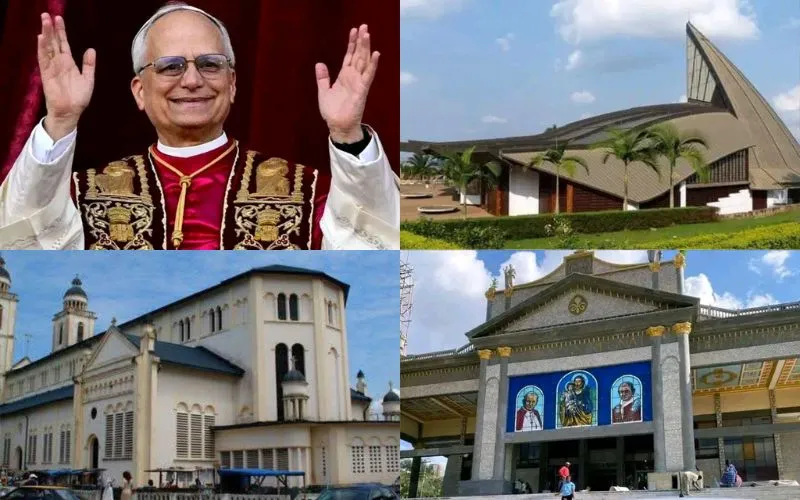
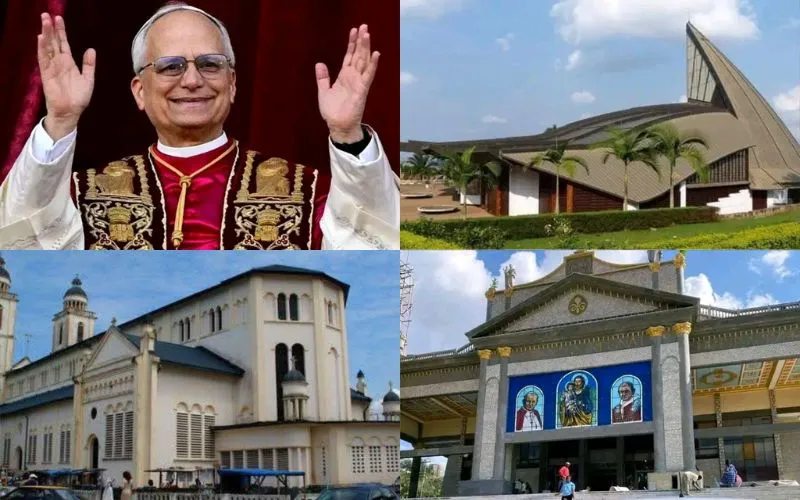
7 key things to know about the Catholic Church in Cameroon ahead of papal visit – #Catholic – YAOUNDÉ, Cameroon — After concluding the first leg of his African apostolic journey in Algeria, Pope Leo XIV is scheduled to travel to Cameroon from April 15–18. In the Central African nation, the Holy Father is set to visit the capital, Yaoundé, and the metropolitan sees of Bamenda and Douala.If Algeria represents the Church as a small minority navigating a Muslim-majority society, Cameroon presents a different ecclesial landscape. The Catholic Church there is demographically significant, institutionally entrenched, socially influential, and politically attentive.Ahead of the papal visit officially announced on Feb. 25, here are seven structural realities that define the Church’s profile in Cameroon.1. A numerically significant and growing Catholic populationCameroon’s population is religiously diverse, comprising Christians, Muslims, and practitioners of African traditional religions. Within the Christian bloc, Catholics constitute one of the largest denominations. Current estimates place Catholics at roughly 30% to 35% of the national population, translating into several million Catholics.This scale gives the Catholic Church measurable public presence. Parishes are numerous, Catholic diocesan structures are well developed, and lay movements are active across urban and rural areas. The Church is not a marginal actor; it is a central stakeholder in national life.Growth trends remain steady rather than explosive. Unlike some East African contexts where Catholic numbers have surged, Cameroon’s expansion is incremental and closely tied to demographic growth. Nonetheless, vocations to the priesthood and Institutes of Consecrated Life and Societies of Apostolic Life (ICLSAL) continue at levels that sustain ecclesial institutions.In Cameroon, Pope Leo XIV is set to encounter with a people of God neither defensive nor peripheral but fully embedded in national society.2. Robust ecclesiastical structure and metropolitan seesThe Catholic Church in Cameroon is organized into five ecclesiastical provinces, each headed by a metropolitan archbishop. These include Yaoundé, Bamenda, Douala, Garoua, and Bertoua.The Archdiocese of Yaoundé serves the political capital and functions as a strategic center for Church-state engagement. Douala, the country’s economic hub, anchors the Littoral region and reflects the Church’s engagement with commerce, urbanization, and migration.Bamenda, in the Anglophone Northwest Region, carries particular pastoral and political weight due to ongoing instability in that part of the country. Garoua Archdiocese is in the north of the country, while Bertoua Archdiocese is in the east.The bishops collectively operate through the National Episcopal Conference of Cameroon (NECC), which regularly issues pastoral letters on social, political, and moral issues.Pope Leo XIV’s decision to visit three metropolitan sees signals recognition of Cameroon’s regional diversity and ecclesial complexity.3. A Church with deep historical rootsCatholic missionary activity in Cameroon dates to the late 19th century, particularly under German colonial administration and later French and British rule. Missionaries established schools, clinics, and parishes that became foundational to local communities.Over time, ecclesial leadership transitioned from missionary congregations to Indigenous clergy. Today, Cameroonian Catholic bishops and priests lead the Church across the country, and missionary institutes have shifted toward collaboration rather than control.This historical trajectory — from missionary implantation to local ownership — has shaped a confident Church. Catholic institutions in education and health care are not peripheral supplements; they are pillars of national infrastructure.The historical memory of missionary sacrifice and local perseverance still informs Catholic identity in Cameroon. Papal visits are therefore received not as external interventions but as moments of communion within an already mature ecclesial body.4. Education and health: The Church as social architectFew institutions in Cameroon rival the Catholic Church in educational reach. Catholic primary and secondary schools are widespread, often regarded for discipline and academic performance. The Church also sponsors tertiary institutions and teacher training colleges.Health care is similarly significant. Catholic hospitals and clinics serve urban centers and remote areas alike. In regions where public health systems are strained, Catholic Church-run facilities frequently fill service gaps.This social footprint gives the Catholic Church influence but also responsibility. It must negotiate regulatory frameworks, maintain quality standards, and manage financial sustainability.This also means that papal messaging on social justice, youth formation, and health care ethics resonates concretely rather than abstractly.In Cameroon, the Church’s credibility is measured as much by service delivery as by liturgical vitality.5. Political engagement and social commentaryCameroon’s Catholic bishops have consistently engaged in public discourse on governance, elections, corruption, and national unity. Pastoral letters issued around electoral cycles often emphasize transparency, accountability, and peaceful participation.This engagement places the Catholic Church in a delicate position. While she does not function as a political party, she operates as a moral voice. Her statements can attract both public support and governmental scrutiny.The Anglophone crisis in the Northwest and Southwest regions — marked by tension between separatist groups and state forces — has intensified the Church’s mediating role. Bishops in affected regions, particularly in Bamenda, have appealed for dialogue and protection of civilians.Pope Leo XIV’s visit to Bamenda is therefore not merely ceremonial. It unfolds against a backdrop of social fragility and political complexity. Any public remarks in that region will be closely analyzed for diplomatic nuance.6. Vocations, seminaries, and local clergy formationCameroon is considered one of the more vocally productive Churches in Central Africa. Major seminaries in the country train diocesan clergy, and religious congregations attract local candidates.The presence of Indigenous clergy has allowed the Church to contextualize liturgy, catechesis, and pastoral strategy. Inculturation — integrating elements of local culture within Catholic worship and life — has developed within the framework permitted by universal Church norms.However, vocations also present governance challenges: ensuring adequate formation, preventing clericalism, and addressing global concerns about safeguarding and accountability. As elsewhere, the Cameroonian Church must navigate expectations of transparency and ethical leadership.A papal visit often includes meetings with clergy and religious. In Cameroon, such encounters are likely to reinforce standards of pastoral responsibility and ecclesial communion.7. Diversity: Linguistic, cultural, and religious pluralismCameroon is frequently described as “Africa in miniature” due to its linguistic and cultural diversity. The country officially operates in both French and English, with numerous Indigenous languages in daily use.This diversity shapes ecclesial life. The Church must minister across Francophone and Anglophone regions, urban and rural contexts, and varied ethnic identities. Liturgies may incorporate local languages and music while maintaining doctrinal unity.Religiously, Cameroon is pluralistic. Alongside Catholics are Protestants, Pentecostals, Muslims, and adherents of traditional religions. Inter-Christian competition — particularly with rapidly growing Pentecostal movements — poses pastoral challenges. The Catholic Church must articulate its identity in an environment where charismatic worship and prosperity preaching attract large followings.Interreligious coexistence with Muslim communities, particularly in northern regions, remains a factor in national stability. The Church has often collaborated with Muslim leaders to promote peace and counter extremism.For Pope Leo XIV, this pluralistic setting requires calibrated messaging — affirming Catholic identity without undermining interreligious harmony.Yaoundé: Political and ecclesial nerve centerThe capital, Yaoundé, is more than an administrative stop. It is the seat of government and the archdiocese that frequently hosts national Catholic events. Meetings with civil authorities are likely to occur here, reflecting the Vatican’s diplomatic engagement with the Cameroonian state.Historically, Yaoundé has hosted major ecclesial gatherings and international visitors. A papal Mass in the capital would draw large crowds and symbolize national unity.Douala: Economic pulse and urban CatholicismDouala, as Cameroon’s commercial capital, presents a different pastoral profile. Rapid urbanization, youth unemployment, migration, and informal economies characterize the city. The Church in Douala must address urban pastoral issues: catechesis in dense neighborhoods, youth outreach, and social advocacy.The Archdiocese of Douala has been vocal on national issues, and its leadership has often carried moral authority beyond ecclesiastical boundaries.A papal stop in Douala situates the Church within the country’s economic heart, where questions of inequality and development are acute.Bamenda: Faith amid instabilityBamenda lies at the epicenter of the Anglophone crisis. Parishes in the region have experienced disruptions, and clergy have navigated security risks. The Church has called for dialogue, ceasefire, and protection of civilians.A papal presence in Bamenda carries symbolic weight. It signals solidarity with communities affected by violence and underscores the Vatican’s concern for peace.However, such a visit must balance encouragement with diplomatic caution. Explicit political statements could complicate local dynamics, while silence might disappoint those seeking moral clarity.Continuity with past papal engagementCameroon has previously hosted a papal visit. In 2009, Pope Benedict XVI visited the country, marking a major ecclesial event that included the promulgation of the Instrumentum Laboris for the Second Synod for Africa. That visit reinforced Cameroon’s role within the continental Church.Pope Leo XIV’s 2026 journey will inevitably be compared with past papal engagements. Expectations will be shaped by memory: large public liturgies, strong doctrinal messages, and calls for ethical governance.A Church of scale, influence, and responsibilityIf Algeria represents the Church as historical memory and minority witness, Cameroon represents scale, institutional density, and public influence. The Catholic Church in Cameroon is not fragile in numbers; it is substantial. Its challenges are not invisibility but responsibility — how to steward influence in a politically sensitive and religiously competitive environment.From April 15–18, as Pope Leo XIV moves through Yaoundé, Douala, and Bamenda, he will engage a Church that is confident yet tested, numerous yet diverse, socially influential yet morally scrutinized.For observers of African Catholicism, Cameroon offers a case study in how demographic strength intersects with political engagement and social service. The papal visit will not redefine that structure overnight. It will, however, place it within the broader narrative of a global Church attentive to Africa not as periphery but as center.In that sense, Cameroon stands not only as the second stop on the Holy Father’s itinerary, but as a microcosm of the contemporary African Catholic experience — complex, vibrant, and consequential.

7 key things to know about the Catholic Church in Cameroon ahead of papal visit – #Catholic – YAOUNDÉ, Cameroon — After concluding the first leg of his African apostolic journey in Algeria, Pope Leo XIV is scheduled to travel to Cameroon from April 15–18. In the Central African nation, the Holy Father is set to visit the capital, Yaoundé, and the metropolitan sees of Bamenda and Douala.If Algeria represents the Church as a small minority navigating a Muslim-majority society, Cameroon presents a different ecclesial landscape. The Catholic Church there is demographically significant, institutionally entrenched, socially influential, and politically attentive.Ahead of the papal visit officially announced on Feb. 25, here are seven structural realities that define the Church’s profile in Cameroon.1. A numerically significant and growing Catholic populationCameroon’s population is religiously diverse, comprising Christians, Muslims, and practitioners of African traditional religions. Within the Christian bloc, Catholics constitute one of the largest denominations. Current estimates place Catholics at roughly 30% to 35% of the national population, translating into several million Catholics.This scale gives the Catholic Church measurable public presence. Parishes are numerous, Catholic diocesan structures are well developed, and lay movements are active across urban and rural areas. The Church is not a marginal actor; it is a central stakeholder in national life.Growth trends remain steady rather than explosive. Unlike some East African contexts where Catholic numbers have surged, Cameroon’s expansion is incremental and closely tied to demographic growth. Nonetheless, vocations to the priesthood and Institutes of Consecrated Life and Societies of Apostolic Life (ICLSAL) continue at levels that sustain ecclesial institutions.In Cameroon, Pope Leo XIV is set to encounter with a people of God neither defensive nor peripheral but fully embedded in national society.2. Robust ecclesiastical structure and metropolitan seesThe Catholic Church in Cameroon is organized into five ecclesiastical provinces, each headed by a metropolitan archbishop. These include Yaoundé, Bamenda, Douala, Garoua, and Bertoua.The Archdiocese of Yaoundé serves the political capital and functions as a strategic center for Church-state engagement. Douala, the country’s economic hub, anchors the Littoral region and reflects the Church’s engagement with commerce, urbanization, and migration.Bamenda, in the Anglophone Northwest Region, carries particular pastoral and political weight due to ongoing instability in that part of the country. Garoua Archdiocese is in the north of the country, while Bertoua Archdiocese is in the east.The bishops collectively operate through the National Episcopal Conference of Cameroon (NECC), which regularly issues pastoral letters on social, political, and moral issues.Pope Leo XIV’s decision to visit three metropolitan sees signals recognition of Cameroon’s regional diversity and ecclesial complexity.3. A Church with deep historical rootsCatholic missionary activity in Cameroon dates to the late 19th century, particularly under German colonial administration and later French and British rule. Missionaries established schools, clinics, and parishes that became foundational to local communities.Over time, ecclesial leadership transitioned from missionary congregations to Indigenous clergy. Today, Cameroonian Catholic bishops and priests lead the Church across the country, and missionary institutes have shifted toward collaboration rather than control.This historical trajectory — from missionary implantation to local ownership — has shaped a confident Church. Catholic institutions in education and health care are not peripheral supplements; they are pillars of national infrastructure.The historical memory of missionary sacrifice and local perseverance still informs Catholic identity in Cameroon. Papal visits are therefore received not as external interventions but as moments of communion within an already mature ecclesial body.4. Education and health: The Church as social architectFew institutions in Cameroon rival the Catholic Church in educational reach. Catholic primary and secondary schools are widespread, often regarded for discipline and academic performance. The Church also sponsors tertiary institutions and teacher training colleges.Health care is similarly significant. Catholic hospitals and clinics serve urban centers and remote areas alike. In regions where public health systems are strained, Catholic Church-run facilities frequently fill service gaps.This social footprint gives the Catholic Church influence but also responsibility. It must negotiate regulatory frameworks, maintain quality standards, and manage financial sustainability.This also means that papal messaging on social justice, youth formation, and health care ethics resonates concretely rather than abstractly.In Cameroon, the Church’s credibility is measured as much by service delivery as by liturgical vitality.5. Political engagement and social commentaryCameroon’s Catholic bishops have consistently engaged in public discourse on governance, elections, corruption, and national unity. Pastoral letters issued around electoral cycles often emphasize transparency, accountability, and peaceful participation.This engagement places the Catholic Church in a delicate position. While she does not function as a political party, she operates as a moral voice. Her statements can attract both public support and governmental scrutiny.The Anglophone crisis in the Northwest and Southwest regions — marked by tension between separatist groups and state forces — has intensified the Church’s mediating role. Bishops in affected regions, particularly in Bamenda, have appealed for dialogue and protection of civilians.Pope Leo XIV’s visit to Bamenda is therefore not merely ceremonial. It unfolds against a backdrop of social fragility and political complexity. Any public remarks in that region will be closely analyzed for diplomatic nuance.6. Vocations, seminaries, and local clergy formationCameroon is considered one of the more vocally productive Churches in Central Africa. Major seminaries in the country train diocesan clergy, and religious congregations attract local candidates.The presence of Indigenous clergy has allowed the Church to contextualize liturgy, catechesis, and pastoral strategy. Inculturation — integrating elements of local culture within Catholic worship and life — has developed within the framework permitted by universal Church norms.However, vocations also present governance challenges: ensuring adequate formation, preventing clericalism, and addressing global concerns about safeguarding and accountability. As elsewhere, the Cameroonian Church must navigate expectations of transparency and ethical leadership.A papal visit often includes meetings with clergy and religious. In Cameroon, such encounters are likely to reinforce standards of pastoral responsibility and ecclesial communion.7. Diversity: Linguistic, cultural, and religious pluralismCameroon is frequently described as “Africa in miniature” due to its linguistic and cultural diversity. The country officially operates in both French and English, with numerous Indigenous languages in daily use.This diversity shapes ecclesial life. The Church must minister across Francophone and Anglophone regions, urban and rural contexts, and varied ethnic identities. Liturgies may incorporate local languages and music while maintaining doctrinal unity.Religiously, Cameroon is pluralistic. Alongside Catholics are Protestants, Pentecostals, Muslims, and adherents of traditional religions. Inter-Christian competition — particularly with rapidly growing Pentecostal movements — poses pastoral challenges. The Catholic Church must articulate its identity in an environment where charismatic worship and prosperity preaching attract large followings.Interreligious coexistence with Muslim communities, particularly in northern regions, remains a factor in national stability. The Church has often collaborated with Muslim leaders to promote peace and counter extremism.For Pope Leo XIV, this pluralistic setting requires calibrated messaging — affirming Catholic identity without undermining interreligious harmony.Yaoundé: Political and ecclesial nerve centerThe capital, Yaoundé, is more than an administrative stop. It is the seat of government and the archdiocese that frequently hosts national Catholic events. Meetings with civil authorities are likely to occur here, reflecting the Vatican’s diplomatic engagement with the Cameroonian state.Historically, Yaoundé has hosted major ecclesial gatherings and international visitors. A papal Mass in the capital would draw large crowds and symbolize national unity.Douala: Economic pulse and urban CatholicismDouala, as Cameroon’s commercial capital, presents a different pastoral profile. Rapid urbanization, youth unemployment, migration, and informal economies characterize the city. The Church in Douala must address urban pastoral issues: catechesis in dense neighborhoods, youth outreach, and social advocacy.The Archdiocese of Douala has been vocal on national issues, and its leadership has often carried moral authority beyond ecclesiastical boundaries.A papal stop in Douala situates the Church within the country’s economic heart, where questions of inequality and development are acute.Bamenda: Faith amid instabilityBamenda lies at the epicenter of the Anglophone crisis. Parishes in the region have experienced disruptions, and clergy have navigated security risks. The Church has called for dialogue, ceasefire, and protection of civilians.A papal presence in Bamenda carries symbolic weight. It signals solidarity with communities affected by violence and underscores the Vatican’s concern for peace.However, such a visit must balance encouragement with diplomatic caution. Explicit political statements could complicate local dynamics, while silence might disappoint those seeking moral clarity.Continuity with past papal engagementCameroon has previously hosted a papal visit. In 2009, Pope Benedict XVI visited the country, marking a major ecclesial event that included the promulgation of the Instrumentum Laboris for the Second Synod for Africa. That visit reinforced Cameroon’s role within the continental Church.Pope Leo XIV’s 2026 journey will inevitably be compared with past papal engagements. Expectations will be shaped by memory: large public liturgies, strong doctrinal messages, and calls for ethical governance.A Church of scale, influence, and responsibilityIf Algeria represents the Church as historical memory and minority witness, Cameroon represents scale, institutional density, and public influence. The Catholic Church in Cameroon is not fragile in numbers; it is substantial. Its challenges are not invisibility but responsibility — how to steward influence in a politically sensitive and religiously competitive environment.From April 15–18, as Pope Leo XIV moves through Yaoundé, Douala, and Bamenda, he will engage a Church that is confident yet tested, numerous yet diverse, socially influential yet morally scrutinized.For observers of African Catholicism, Cameroon offers a case study in how demographic strength intersects with political engagement and social service. The papal visit will not redefine that structure overnight. It will, however, place it within the broader narrative of a global Church attentive to Africa not as periphery but as center.In that sense, Cameroon stands not only as the second stop on the Holy Father’s itinerary, but as a microcosm of the contemporary African Catholic experience — complex, vibrant, and consequential.

After concluding the first leg of his African apostolic journey in Algeria, Pope Leo XIV is scheduled to travel to Cameroon from April 15–18.

Read More
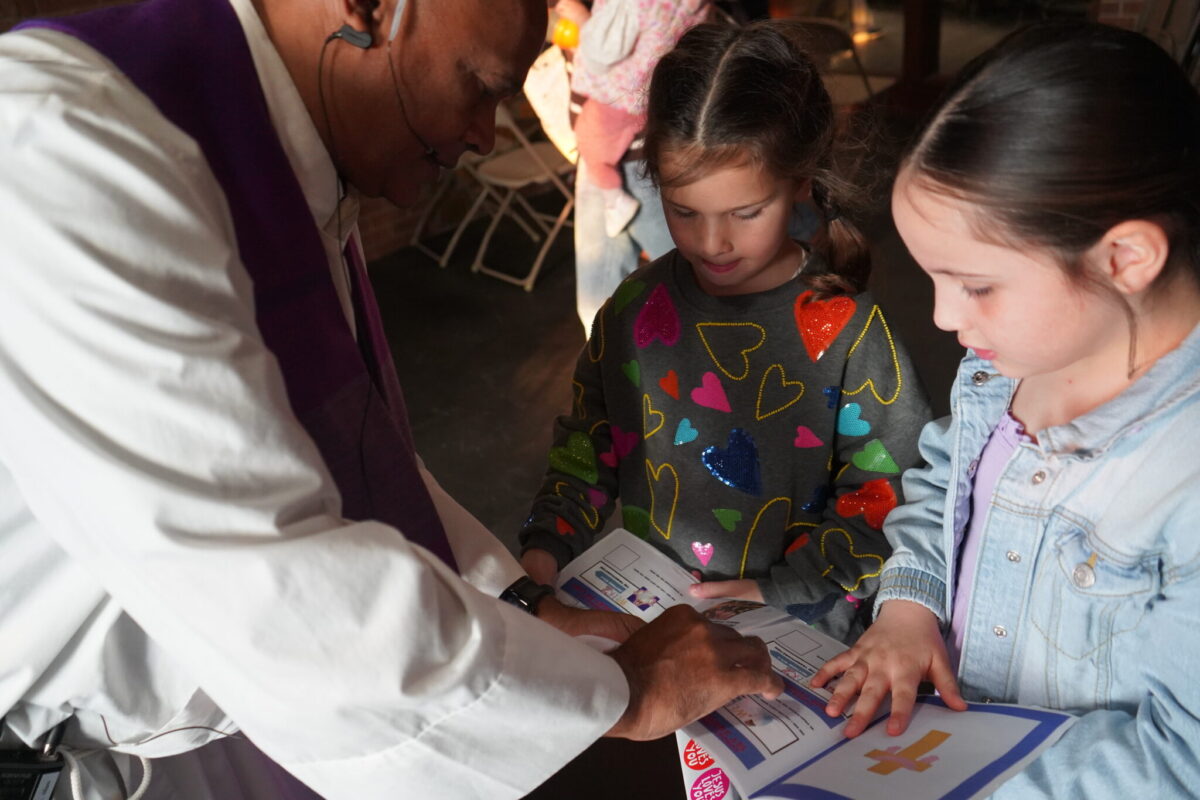
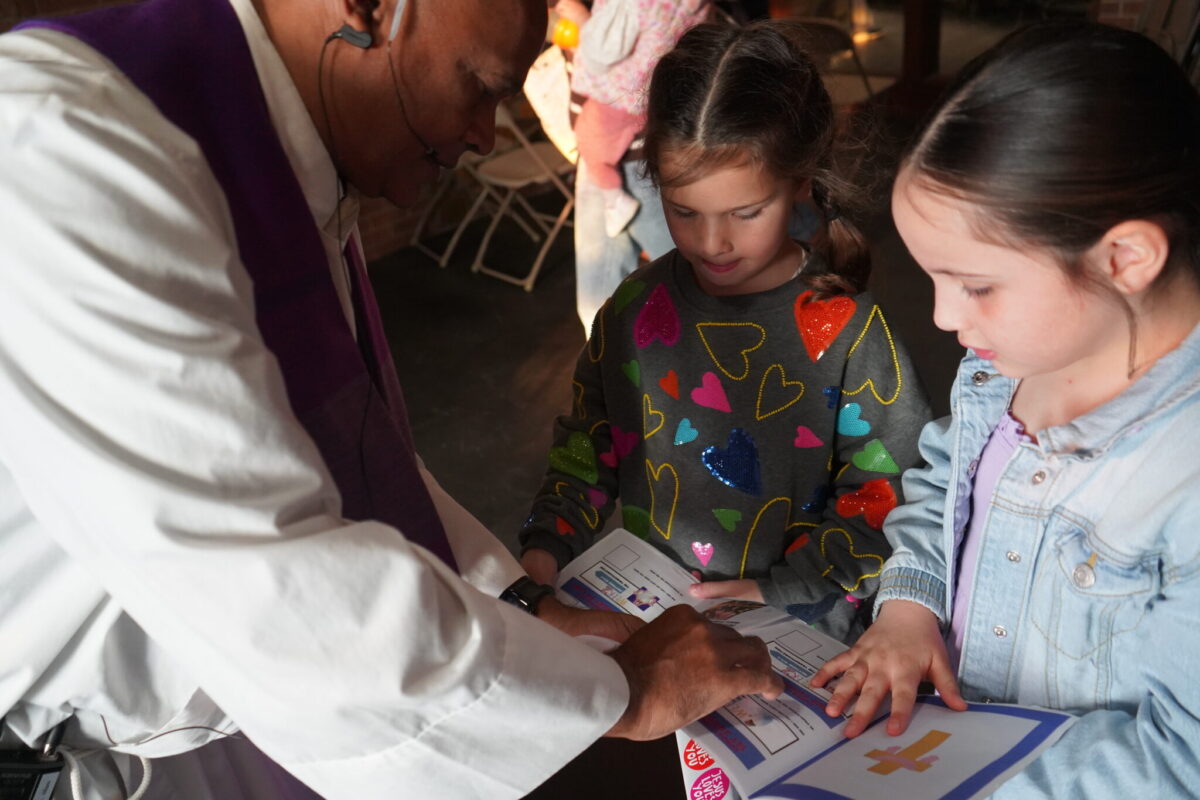
‘Massports’ initiative urges kids to attend Mass during Lent – #Catholic – Children at Our Lady of the Holy Souls Church in Little Rock, Arkansas, have a little more incentive to attend Mass during Lent.The parish instituted an incentive program called Massports during Advent in 2025 and brought it back for Lent this year. All children from 3 years old to eighth grade are encouraged to bring their passport booklets to Mass each weekend to receive a sticker after Mass, personally handed out by the priests and deacons.After the Feb. 21 Saturday night Mass, kids swarmed pastor Father Daniel Velasco, associate pastor Father Joji Reddy Allam, and Deacon Quinton Thomas, eager to get their first sticker.After Easter, children who received a sticker for all six Sundays in Lent will get a special treat. For those who are traveling during spring break, they can attend Mass at another parish and ask their parents or the priest to sign the booklet. For school students who aren’t Catholic, they can ask their minister or parents to sign off each Sunday they go to church.Principal Amber Bagby said the pastoral council began discussing how to encourage greater attendance at Mass, especially among families with children, and the idea of Massports was born.Bagby said she was encouraged by how the program went during Advent, seeing children attend Mass with neighbors or grandparents if their parents couldn’t bring them. The program expanded during Lent to include seventh- and eighth-graders this year.Of the 350 students in pre-K through sixth grade, 220 turned in their Massports after the Christmas break and received a treat from the snow cone truck. After Easter, Bagby said they will plan for another surprise for the students who participated.“The kids thrive off incentives and just the sheer challenge of it all,” Bagby said. “We started small with the Advent season to see how it would play out the first time around, and it was wildly successful. So I told Father, ‘Why don’t we try it one more time at Lent,’ and then we will see how it progresses from there, if it grows into maybe a summer challenge. It’s just a way to get more kids actively invested in their Sunday Mass obligation and try not to put any guilt or shame in there.”Sixth grader Harper Couch said: “Sometimes I would put Mass off, but the Massports motivated me to go. It was more about being with God rather than the big prize. So now I like going.”Classmate Lillian Richards agreed. “I think it is good for kids who typically don’t like going to Mass. It brings me closer to Jesus and keeps me motivated.”After Ash Wednesday, Feb. 18, Massports were given to all children in the parish, including those who attend Youth Faith Formation classes on Sunday mornings. Andrew Baka, youth faith formation director, said Massports were given to the 49 students in parish religious education during Advent, but sadly, none of the children turned them in after Christmas.He said he had already begun promoting it to the parents and students on Feb. 22 in the hope that most of them would get more involved. He said he already noticed that at Sunday Masses, he saw some new families or one student brought a friend to Mass so they could get their sticker.“I know there are a lot of people who don’t go to Mass. I can’t tell you in Advent and (the first Sunday in Lent Feb. 22) how many of the people that I see normally at Mass, with their friends with them that don’t normally come to Mass or families that I don’t always see all the time,” Baka said. “You could tell it was one mom or one dad or one parent was there so the kid could get their sticker. I definitely think the kids are pushing mom and dad or asking if they can go with a friend.”Velasco said he supports the program, encouraging the children at the end of Mass: “Bring your parents to Mass next week.”“I got to see kids that I didn’t see regularly at Mass,” he said of when Massports was introduced during Advent. “The kids had to have the initiative to go to Mass. Sometimes I remember the kids saying they had to ask grandma or grandpa to bring them.”This story was first published by the Arkansas Catholic and is reprinted here with permission.

‘Massports’ initiative urges kids to attend Mass during Lent – #Catholic – Children at Our Lady of the Holy Souls Church in Little Rock, Arkansas, have a little more incentive to attend Mass during Lent.The parish instituted an incentive program called Massports during Advent in 2025 and brought it back for Lent this year. All children from 3 years old to eighth grade are encouraged to bring their passport booklets to Mass each weekend to receive a sticker after Mass, personally handed out by the priests and deacons.After the Feb. 21 Saturday night Mass, kids swarmed pastor Father Daniel Velasco, associate pastor Father Joji Reddy Allam, and Deacon Quinton Thomas, eager to get their first sticker.After Easter, children who received a sticker for all six Sundays in Lent will get a special treat. For those who are traveling during spring break, they can attend Mass at another parish and ask their parents or the priest to sign the booklet. For school students who aren’t Catholic, they can ask their minister or parents to sign off each Sunday they go to church.Principal Amber Bagby said the pastoral council began discussing how to encourage greater attendance at Mass, especially among families with children, and the idea of Massports was born.Bagby said she was encouraged by how the program went during Advent, seeing children attend Mass with neighbors or grandparents if their parents couldn’t bring them. The program expanded during Lent to include seventh- and eighth-graders this year.Of the 350 students in pre-K through sixth grade, 220 turned in their Massports after the Christmas break and received a treat from the snow cone truck. After Easter, Bagby said they will plan for another surprise for the students who participated.“The kids thrive off incentives and just the sheer challenge of it all,” Bagby said. “We started small with the Advent season to see how it would play out the first time around, and it was wildly successful. So I told Father, ‘Why don’t we try it one more time at Lent,’ and then we will see how it progresses from there, if it grows into maybe a summer challenge. It’s just a way to get more kids actively invested in their Sunday Mass obligation and try not to put any guilt or shame in there.”Sixth grader Harper Couch said: “Sometimes I would put Mass off, but the Massports motivated me to go. It was more about being with God rather than the big prize. So now I like going.”Classmate Lillian Richards agreed. “I think it is good for kids who typically don’t like going to Mass. It brings me closer to Jesus and keeps me motivated.”After Ash Wednesday, Feb. 18, Massports were given to all children in the parish, including those who attend Youth Faith Formation classes on Sunday mornings. Andrew Baka, youth faith formation director, said Massports were given to the 49 students in parish religious education during Advent, but sadly, none of the children turned them in after Christmas.He said he had already begun promoting it to the parents and students on Feb. 22 in the hope that most of them would get more involved. He said he already noticed that at Sunday Masses, he saw some new families or one student brought a friend to Mass so they could get their sticker.“I know there are a lot of people who don’t go to Mass. I can’t tell you in Advent and (the first Sunday in Lent Feb. 22) how many of the people that I see normally at Mass, with their friends with them that don’t normally come to Mass or families that I don’t always see all the time,” Baka said. “You could tell it was one mom or one dad or one parent was there so the kid could get their sticker. I definitely think the kids are pushing mom and dad or asking if they can go with a friend.”Velasco said he supports the program, encouraging the children at the end of Mass: “Bring your parents to Mass next week.”“I got to see kids that I didn’t see regularly at Mass,” he said of when Massports was introduced during Advent. “The kids had to have the initiative to go to Mass. Sometimes I remember the kids saying they had to ask grandma or grandpa to bring them.”This story was first published by the Arkansas Catholic and is reprinted here with permission.

A parish in Little Rock, Arkansas, has instituted a program to encourage children to bring a “passport booklet” to Mass each weekend to receive a sticker from priests and deacons.

Read More

Looking for a sky event this week? Check out our full Sky This Week column.  March 11: Time to spot the zodiacal light Europa transits Jupiter this evening, beginning shortly before 10 P.M. EDT. A few hours later, the small moon’s shadow follows it across as a dark blot on the cloud tops.  Early in the evening,Continue reading “The Sky Today on Thursday, March 12: Europa and its shadow cross Jupiter”

The post The Sky Today on Thursday, March 12: Europa and its shadow cross Jupiter appeared first on Astronomy Magazine.

Read More
10 Famous Terrorist Attacks As Described By CNN #BabylonBee – CNN has been a mainstay of the American media since its inception in 1980. The prestigious network has won several awards covering everything from the 1993 World Trade Center bombing to 9/11, making it the most trusted name in news. Aspiring journalists, take note! CNN’s reporting on terrorist attacks is second to none.

CNN has been a mainstay of the American media since its inception in 1980. The prestigious network has won several awards covering everything from the 1993 World Trade Center bombing to 9/11, making it the most trusted name in news. Aspiring journalists, take note! CNN’s reporting on terrorist attacks is second to none.

Read More
Picture of the day


Doll (musha-ningyo) featuring Takenouchi no Sukune, minister of Emperor Ōjin; end of the Edo period, 19th century, Japan. Ann and Gabriel Barbier-Mueller Museum, Dallas (Texas) ; the photograph was taken during an exhibition in the Musée des Arts Premiers in Paris
 #ImageOfTheDay
Picture of the day
Doll (musha-ningyo) featuring Takenouchi no Sukune, minister of Emperor Ōjin; end of the Edo period, 19th century, Japan. Ann and Gabriel Barbier-Mueller Museum, Dallas (Texas) ; the photograph was taken during an exhibition in the Musée des Arts Premiers in Paris
Read More