Day: March 15, 2026

After training in theology and becoming a deacon, Nicolas-Louis de La Caille (born March 15, 1713) turned his focus to geometry and astronomy. He studied at the Paris Observatory, and by 1739 had become professor of mathematics at Paris’ College Marzarin.  Though he constructed a rooftop observatory, published multiple textbooks, and took part in aContinue reading “March 15, 1713: The birth of Nicolas-Louis de La Caille”

The post March 15, 1713: The birth of Nicolas-Louis de La Caille appeared first on Astronomy Magazine.

Read More
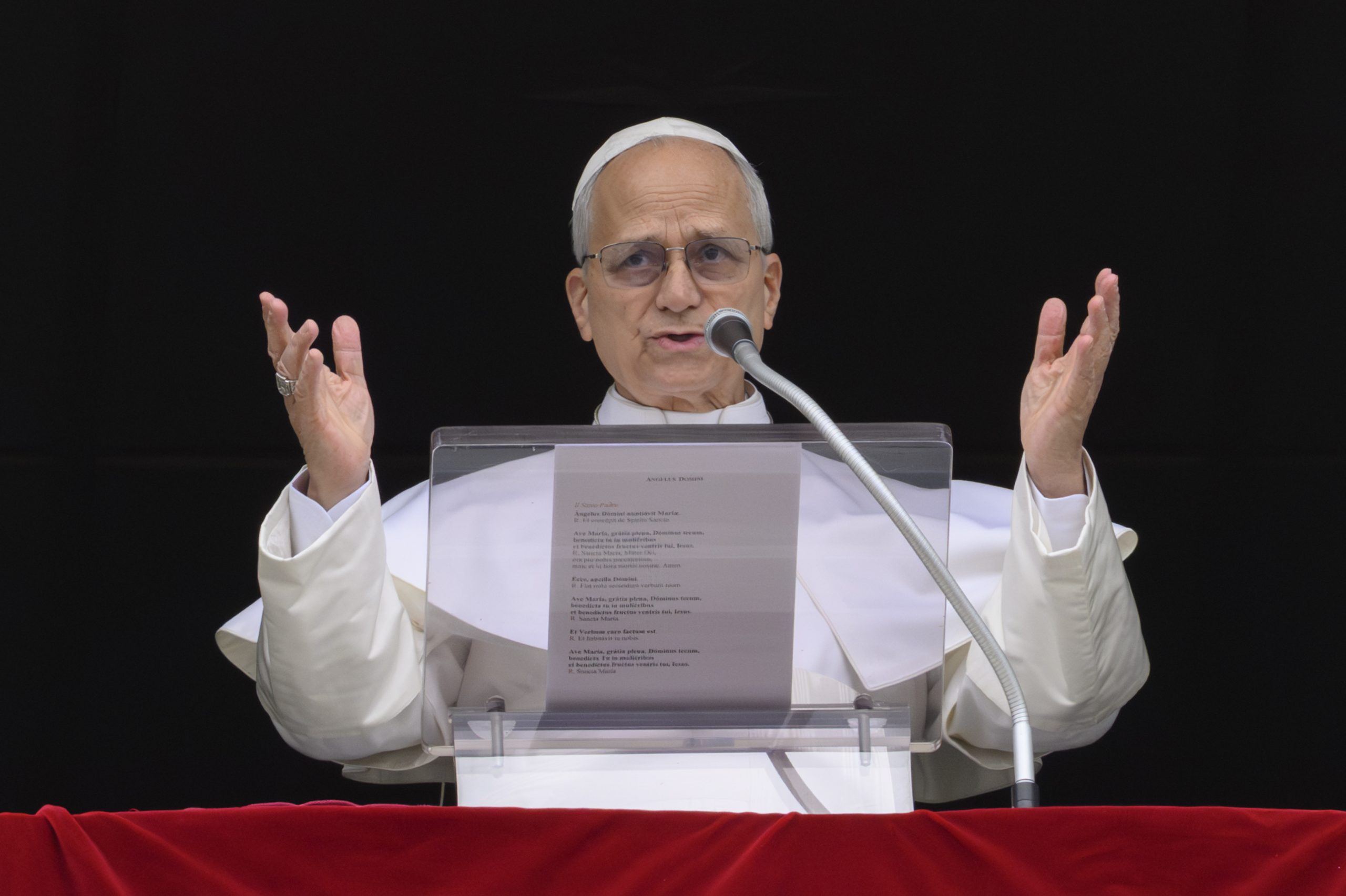
Pope urges ceasefire in Middle East – #Catholic – Pope Leo XIV on Sunday urged those responsible for the escalating war in the Middle East to declare a ceasefire and open paths of dialogue, warning that violence can never lead to justice or peace.“In the name of the Christians of the Middle East and of all women and men of goodwill, I address those responsible for this conflict: Let the fire cease and let paths of dialogue be reopened,” the pope said after praying the Angelus with pilgrims gathered in St. Peter’s Square.The appeal came amid continuing regional tensions and exchanges of attacks in the Middle East. Earlier Sunday, U.S. President Donald Trump said in a telephone interview with NBC that Iran is seeking a ceasefire agreement to end U.S. and Israeli bombing, though he said he is not prepared to accept the proposal for now because the “terms are not good enough yet.”Israel also struck targets in Lebanon, where at least 14 people were reported killed, including four minors. Pope Leo described the situation in the country as “a cause for great concern.”“I hope that paths of dialogue will open that can help the authorities of the country implement lasting solutions to the serious crisis underway, for the common good of all Lebanese,” he said.The pope noted that for the past two weeks the peoples of the Middle East have been suffering “the atrocious violence of war.”“Thousands of innocent people have been killed and many others have been forced to abandon their homes,” he said, expressing his prayerful closeness to those who have lost loved ones in attacks on schools, hospitals, and residential areas.“Violence will never lead to the justice, stability, or peace that peoples hope for,” he added.‘Faith is not a renunciation of reason’Earlier during the Angelus reflection, Pope Leo emphasized that Christian faith does not require abandoning reason but instead allows believers to see reality more clearly.Reflecting on the Gospel account of the healing of the man born blind (John 9:1–41), the pope said the episode reveals the deeper meaning of salvation.“While humanity walked in darkness, God sent his Son as the light of the world to open the eyes of the blind and illuminate our lives,” he said.The pope stressed that faith “is not a blind act,” nor “a renunciation of reason,” nor a conviction that turns believers away from the world.Rather, he explained, “faith helps us to look from the point of view of Jesus, with his eyes.”“It is a participation in his way of seeing,” he said, quoting Lumen Fidei, the first encyclical of Pope Francis.For this reason, Christians are called to open their eyes to the suffering of others and to the wounds of the world.The Gospel, the pope said, contradicts the idea — widespread for centuries and still present today — that faith is a “leap into darkness.”“On the contrary, the Gospel tells us that in contact with Christ the eyes are opened,” he said.Pope Leo added that the Gospel invites believers to view the world with Christ’s eyes and not remain indifferent to human suffering.“Today, in particular, faced with the many questions of the human heart and the dramatic situations of injustice, violence, and suffering that mark our time, there is a need for an awake, attentive, and prophetic faith,” he said.Such faith, he explained, “opens our eyes to the darkness of the world and brings there the light of the Gospel through a commitment to peace, justice, and solidarity.”The pope concluded by encouraging Christians to live a “Christianity with open eyes,” with simplicity and courage.“Brothers and sisters, we too, healed by the love of Christ, are called to live a Christianity with open eyes,” he said.This story was first published in two parts by ACI Prensa, the Spanish-language sister service of EWTN News. It has been translated and adapted by EWTN News English.

Pope urges ceasefire in Middle East – #Catholic – Pope Leo XIV on Sunday urged those responsible for the escalating war in the Middle East to declare a ceasefire and open paths of dialogue, warning that violence can never lead to justice or peace.“In the name of the Christians of the Middle East and of all women and men of goodwill, I address those responsible for this conflict: Let the fire cease and let paths of dialogue be reopened,” the pope said after praying the Angelus with pilgrims gathered in St. Peter’s Square.The appeal came amid continuing regional tensions and exchanges of attacks in the Middle East. Earlier Sunday, U.S. President Donald Trump said in a telephone interview with NBC that Iran is seeking a ceasefire agreement to end U.S. and Israeli bombing, though he said he is not prepared to accept the proposal for now because the “terms are not good enough yet.”Israel also struck targets in Lebanon, where at least 14 people were reported killed, including four minors. Pope Leo described the situation in the country as “a cause for great concern.”“I hope that paths of dialogue will open that can help the authorities of the country implement lasting solutions to the serious crisis underway, for the common good of all Lebanese,” he said.The pope noted that for the past two weeks the peoples of the Middle East have been suffering “the atrocious violence of war.”“Thousands of innocent people have been killed and many others have been forced to abandon their homes,” he said, expressing his prayerful closeness to those who have lost loved ones in attacks on schools, hospitals, and residential areas.“Violence will never lead to the justice, stability, or peace that peoples hope for,” he added.‘Faith is not a renunciation of reason’Earlier during the Angelus reflection, Pope Leo emphasized that Christian faith does not require abandoning reason but instead allows believers to see reality more clearly.Reflecting on the Gospel account of the healing of the man born blind (John 9:1–41), the pope said the episode reveals the deeper meaning of salvation.“While humanity walked in darkness, God sent his Son as the light of the world to open the eyes of the blind and illuminate our lives,” he said.The pope stressed that faith “is not a blind act,” nor “a renunciation of reason,” nor a conviction that turns believers away from the world.Rather, he explained, “faith helps us to look from the point of view of Jesus, with his eyes.”“It is a participation in his way of seeing,” he said, quoting Lumen Fidei, the first encyclical of Pope Francis.For this reason, Christians are called to open their eyes to the suffering of others and to the wounds of the world.The Gospel, the pope said, contradicts the idea — widespread for centuries and still present today — that faith is a “leap into darkness.”“On the contrary, the Gospel tells us that in contact with Christ the eyes are opened,” he said.Pope Leo added that the Gospel invites believers to view the world with Christ’s eyes and not remain indifferent to human suffering.“Today, in particular, faced with the many questions of the human heart and the dramatic situations of injustice, violence, and suffering that mark our time, there is a need for an awake, attentive, and prophetic faith,” he said.Such faith, he explained, “opens our eyes to the darkness of the world and brings there the light of the Gospel through a commitment to peace, justice, and solidarity.”The pope concluded by encouraging Christians to live a “Christianity with open eyes,” with simplicity and courage.“Brothers and sisters, we too, healed by the love of Christ, are called to live a Christianity with open eyes,” he said.This story was first published in two parts by ACI Prensa, the Spanish-language sister service of EWTN News. It has been translated and adapted by EWTN News English.

Speaking at his Sunday Angelus, Pope Leo XIV urged Christians to bring the Gospel to a world marked by violence and injustice.

Read More
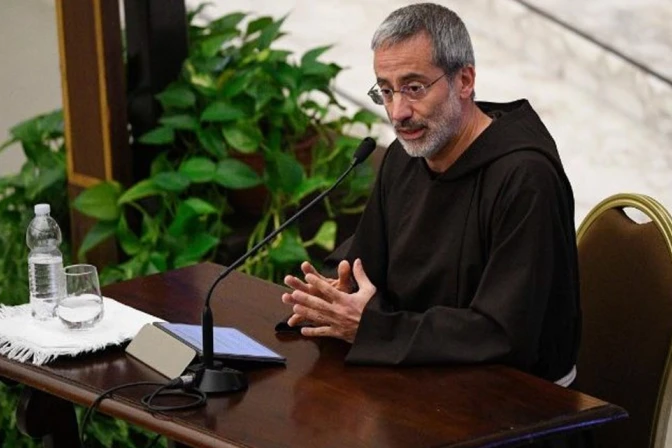
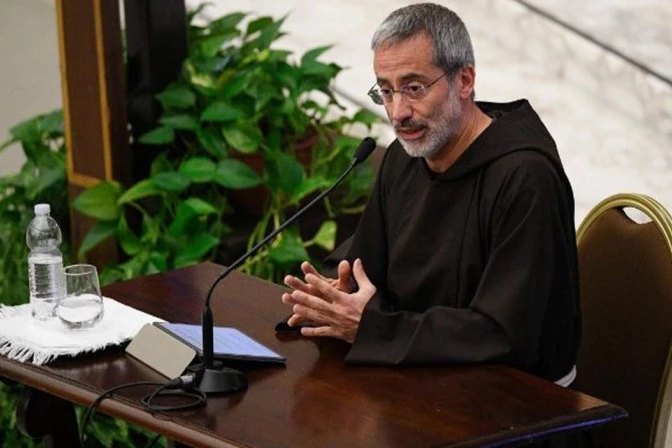
Preacher of the Papal Household: ‘Fraternity is where true conversion takes place’ – #Catholic – Preacher of the Papal Household Father Roberto Pasolini continued on March 13 with the second Lenten homily, inspired by the conversion of St. Francis of Assisi and titled “If Anyone Is in Christ, He Is a New Creation: Conversion to the Gospel According to St. Francis.”Before Pope Leo XIV and members of the Roman Curia gathered in the Paul VI Audience Hall, the Capuchin friar meditated on fraternity, referring to it as both a gift and a “serious and urgent” responsibility — especially in a society marked by division.In his sermon reported by Vatican News, Pasolini explained that conversion is truly realized within fraternity, describing it as “the most eloquent sign of what the Gospel can accomplish in our lives.”He also exhorted his listeners to “go beyond” and to view our brothers and sisters not merely as a source of support or sustenance but as someone entrusted to us “so that our lives may change.”In this context, Pasolini emphasized that brothers and sisters in Christ, therefore, do not merely serve to confirm “what we are” but rather call us to a true transformation: “They become the concrete space in which God works on our humanity, loosening our rigidities and teaching us to live with a truer heart, one more capable of love.”In light of the biblical account of Cain and Abel, the preacher to the papal household noted that a rift between brothers stems “from a problem of perspective” and urged the pope and the Roman Curia to ask themselves “who is Cain within us” and how much space resentment occupies.He also recalled that, for St. Francis, fraternity is an opportunity “to learn the merciful logic of the Gospel toward a neighbor who makes mistakes.”“When relationships crack and communion is wounded,” Pasolini noted, “the Gospel does not first suggest defending one’s own rights. Instead, it urges seeking the greatest and always possible good: the good that allows us to recognize in the other no longer an adversary or a debtor but a brother loved by the Lord,” he affirmed.Pasolini thus invited his audience to focus on the conversion that arises “precisely from what others do to us, even when they hurt us or put us to the test,” and, for this reason, “we must never lose sight of the horizon” or the perspective of eternal life.“Faith does not separate but reminds us that no one can be excluded from our hearts,” he remarked.By way of conclusion, Pasolini noted that, amid the divisions, wars, and conflicts of the present day, Christians “cannot limit ourselves to speaking of fraternity as an ideal to be achieved.” “We are called to receive it as a gift, and, at the same time,” he urged, “to take it on as a very serious and urgent responsibility.”This story was first published by ACI Prensa, the Spanish-language sister service of EWTN News. It has been translated and adapted by EWTN News English.

Preacher of the Papal Household: ‘Fraternity is where true conversion takes place’ – #Catholic – Preacher of the Papal Household Father Roberto Pasolini continued on March 13 with the second Lenten homily, inspired by the conversion of St. Francis of Assisi and titled “If Anyone Is in Christ, He Is a New Creation: Conversion to the Gospel According to St. Francis.”Before Pope Leo XIV and members of the Roman Curia gathered in the Paul VI Audience Hall, the Capuchin friar meditated on fraternity, referring to it as both a gift and a “serious and urgent” responsibility — especially in a society marked by division.In his sermon reported by Vatican News, Pasolini explained that conversion is truly realized within fraternity, describing it as “the most eloquent sign of what the Gospel can accomplish in our lives.”He also exhorted his listeners to “go beyond” and to view our brothers and sisters not merely as a source of support or sustenance but as someone entrusted to us “so that our lives may change.”In this context, Pasolini emphasized that brothers and sisters in Christ, therefore, do not merely serve to confirm “what we are” but rather call us to a true transformation: “They become the concrete space in which God works on our humanity, loosening our rigidities and teaching us to live with a truer heart, one more capable of love.”In light of the biblical account of Cain and Abel, the preacher to the papal household noted that a rift between brothers stems “from a problem of perspective” and urged the pope and the Roman Curia to ask themselves “who is Cain within us” and how much space resentment occupies.He also recalled that, for St. Francis, fraternity is an opportunity “to learn the merciful logic of the Gospel toward a neighbor who makes mistakes.”“When relationships crack and communion is wounded,” Pasolini noted, “the Gospel does not first suggest defending one’s own rights. Instead, it urges seeking the greatest and always possible good: the good that allows us to recognize in the other no longer an adversary or a debtor but a brother loved by the Lord,” he affirmed.Pasolini thus invited his audience to focus on the conversion that arises “precisely from what others do to us, even when they hurt us or put us to the test,” and, for this reason, “we must never lose sight of the horizon” or the perspective of eternal life.“Faith does not separate but reminds us that no one can be excluded from our hearts,” he remarked.By way of conclusion, Pasolini noted that, amid the divisions, wars, and conflicts of the present day, Christians “cannot limit ourselves to speaking of fraternity as an ideal to be achieved.” “We are called to receive it as a gift, and, at the same time,” he urged, “to take it on as a very serious and urgent responsibility.”This story was first published by ACI Prensa, the Spanish-language sister service of EWTN News. It has been translated and adapted by EWTN News English.

In a sermon to the pope and the Roman Curia, Preacher of the Papal Household Father Roberto Pasolini explained that achieving true fraternity poses many challenges and requires inner transformation.

Read More
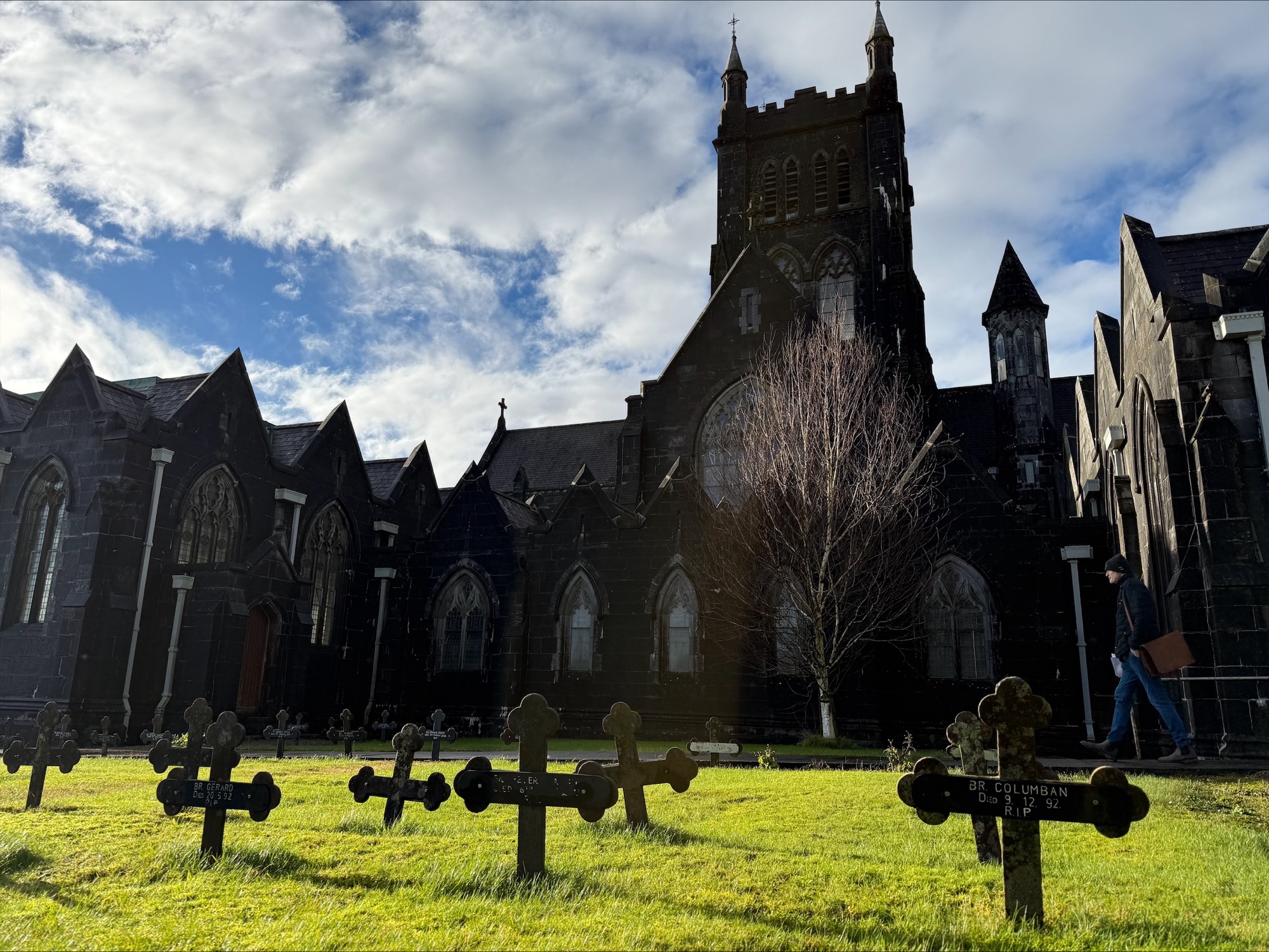
Ave Maria University to send first student group to new Ireland campus at former abbey - #Catholic - Ave Maria University in Florida is setting out to make its students a fixture in the historically Catholic community surrounding Mount Melleray Abbey in County Waterford, Ireland.“We are not here to give our students a cultural exchange; we’re here to have a campus that is steeped both in our culture and the tradition of Ireland,” Daniel Schreck, chief strategy officer for Ave Maria University, told EWTN News. “That means understanding the people of Ireland, County Waterford, the town of Cappoquin, and the Cistercian order,” he said. “I think that’s how you really make this a permanent home and not just a building we’re coming to once a semester with our given cohort of students.”Ave Maria University acquired the abbey after it closed in January 2025, prompted by dwindling numbers among the Cistercian community, which announced its plans to consolidate with monks from St. Joseph Abbey in Roscrea and Mellifont Abbey in Louth in December 2024.Ave Maria plans to bring its first cohort of 100 students to the abbey for the fall 2026 semester. The university had a launch event for the campus earlier this year, which Schreck said was attended by roughly 500 students, and saw 300 applications to the program. The university has accepted 150 so far and hopes one day to accept Irish students as well.Schreck appeared on “EWTN News Nightly” on March 5.An American liberal arts encounter with Irish tradition“The program will be a sort of encounter between the charisms and liberal arts curriculum at Ave Maria University, and the practices and charisms of the Cistercian community,” Mount Melleray Campus Executive Director Samuel Shephard told EWTN News.Students who participate in the program will take classes from Ave Maria’s liberal arts core curriculum of theology, philosophy, and science, as well as Ireland-specific courses, including Irish language courses, Irish Church history, and a course on Irish saints and their holy places.
 
 Aerial image of County Waterford, Ireland. | Credit: Photo courtesy of Ave Maria University
 
 In addition to their studies, Shephard said, students will live the Cistercian tradition of not only study but also work and prayer. The university is planning to rehabilitate the monastery’s farm so students can work on it. Shephard said he hopes to have animals on the land again and restore the abbey’s workshops.The campus will have a live-in priest, either from the university or the local diocese, and students will have access to two Masses per day as well as adoration, confession, and hopefully, Shephard said, Cistercian chant.“One thing I find so wonderful is [the Cistercians] make a vow of stability,” Shephard said. “They’re really focused on this rhythm of life in a particular place. So that’s one of the things we love to jump into, is that real sense of place, and history, and prayer.”Maintaining a local ‘beacon of faith’Shephard, who is originally from Ireland, emphasized the monastery’s historic importance as “a beacon of faith” to the town of Cappoquin. “It was very sad for them [when] the monks moved out,” he said of the local community. “Now that they know another authentic Catholic institution is coming back, and that we’re going to embrace that history, they seem to be generally very excited about the project.” The abbey was first established in 1832 by a group of Cistercian monks who were expelled from France during the French Revolution. “The townspeople of Cappoquin built Mount Melleray by hand, and so did the Cistercians,” Schreck said. “So, it’s important for the people of Ireland and our students who go there and for Americans reading this article to realize we’re part of that continuity of the faith that’s happened there in that county in Ireland.”Shephard also noted the shop, café, and pilgrim’s hostel located on the campus will remain open to those traveling along the Declan’s Way pilgrimage that runs through the property. “For us is very symbolic that there’s still this very public statement and purpose of Mount Melleray, even well beyond our students studying there,” he said regarding the pilgrimage.“We’re going to keep those open, but not in a proselytizing manner, just in the quiet friendship, ‘come and see’ type of quiet,” he said: “Come and see what we’re doing, come and meet the students, come and go to Mass. Just keep that Cistercian tradition of welcome.”A hope for vocationsOne aspect Schreck said is close to the hearts of Ave Maria University President Mark Middendorf and the university’s founder and chancellor, Tom Monaghan, is vocational discernment.Schreck emphasized that students will be encouraged to discern their vocations more clearly while studying at the Ireland campus, with limited Wi-Fi access, opportunities for silent retreats, and a prohibition on inter-visitation between men and women’s dorms.Ultimately, he said, “we hope this benefits the Cistercians because part of the reason the Cistercians have now moved from Mount Melleray is because there weren’t enough vocations.”“We feel like bringing 200 students per year, and in their case, 100 young men per year that believe in the Catholic Church and are happy and are smart, I’m sure we’ll get a few vocations for them each year,” Shephard said.

Ave Maria University to send first student group to new Ireland campus at former abbey – #Catholic – Ave Maria University in Florida is setting out to make its students a fixture in the historically Catholic community surrounding Mount Melleray Abbey in County Waterford, Ireland.“We are not here to give our students a cultural exchange; we’re here to have a campus that is steeped both in our culture and the tradition of Ireland,” Daniel Schreck, chief strategy officer for Ave Maria University, told EWTN News. “That means understanding the people of Ireland, County Waterford, the town of Cappoquin, and the Cistercian order,” he said. “I think that’s how you really make this a permanent home and not just a building we’re coming to once a semester with our given cohort of students.”Ave Maria University acquired the abbey after it closed in January 2025, prompted by dwindling numbers among the Cistercian community, which announced its plans to consolidate with monks from St. Joseph Abbey in Roscrea and Mellifont Abbey in Louth in December 2024.Ave Maria plans to bring its first cohort of 100 students to the abbey for the fall 2026 semester. The university had a launch event for the campus earlier this year, which Schreck said was attended by roughly 500 students, and saw 300 applications to the program. The university has accepted 150 so far and hopes one day to accept Irish students as well.Schreck appeared on “EWTN News Nightly” on March 5.An American liberal arts encounter with Irish tradition“The program will be a sort of encounter between the charisms and liberal arts curriculum at Ave Maria University, and the practices and charisms of the Cistercian community,” Mount Melleray Campus Executive Director Samuel Shephard told EWTN News.Students who participate in the program will take classes from Ave Maria’s liberal arts core curriculum of theology, philosophy, and science, as well as Ireland-specific courses, including Irish language courses, Irish Church history, and a course on Irish saints and their holy places. Aerial image of County Waterford, Ireland. | Credit: Photo courtesy of Ave Maria University In addition to their studies, Shephard said, students will live the Cistercian tradition of not only study but also work and prayer. The university is planning to rehabilitate the monastery’s farm so students can work on it. Shephard said he hopes to have animals on the land again and restore the abbey’s workshops.The campus will have a live-in priest, either from the university or the local diocese, and students will have access to two Masses per day as well as adoration, confession, and hopefully, Shephard said, Cistercian chant.“One thing I find so wonderful is [the Cistercians] make a vow of stability,” Shephard said. “They’re really focused on this rhythm of life in a particular place. So that’s one of the things we love to jump into, is that real sense of place, and history, and prayer.”Maintaining a local ‘beacon of faith’Shephard, who is originally from Ireland, emphasized the monastery’s historic importance as “a beacon of faith” to the town of Cappoquin. “It was very sad for them [when] the monks moved out,” he said of the local community. “Now that they know another authentic Catholic institution is coming back, and that we’re going to embrace that history, they seem to be generally very excited about the project.” The abbey was first established in 1832 by a group of Cistercian monks who were expelled from France during the French Revolution. “The townspeople of Cappoquin built Mount Melleray by hand, and so did the Cistercians,” Schreck said. “So, it’s important for the people of Ireland and our students who go there and for Americans reading this article to realize we’re part of that continuity of the faith that’s happened there in that county in Ireland.”Shephard also noted the shop, café, and pilgrim’s hostel located on the campus will remain open to those traveling along the Declan’s Way pilgrimage that runs through the property. “For us is very symbolic that there’s still this very public statement and purpose of Mount Melleray, even well beyond our students studying there,” he said regarding the pilgrimage.“We’re going to keep those open, but not in a proselytizing manner, just in the quiet friendship, ‘come and see’ type of quiet,” he said: “Come and see what we’re doing, come and meet the students, come and go to Mass. Just keep that Cistercian tradition of welcome.”A hope for vocationsOne aspect Schreck said is close to the hearts of Ave Maria University President Mark Middendorf and the university’s founder and chancellor, Tom Monaghan, is vocational discernment.Schreck emphasized that students will be encouraged to discern their vocations more clearly while studying at the Ireland campus, with limited Wi-Fi access, opportunities for silent retreats, and a prohibition on inter-visitation between men and women’s dorms.Ultimately, he said, “we hope this benefits the Cistercians because part of the reason the Cistercians have now moved from Mount Melleray is because there weren’t enough vocations.”“We feel like bringing 200 students per year, and in their case, 100 young men per year that believe in the Catholic Church and are happy and are smart, I’m sure we’ll get a few vocations for them each year,” Shephard said.

Students at Ave Maria’s new Ireland campus will buck standard Catholic university study abroad standards, opting instead to live a Cistercian lifestyle at a centuries-old abandoned monastery.

Read More

Looking for a sky event this week? Check out our full Sky This Week column.  March 14: Io rounds Jupiter The distant ice giant Uranus is located in Taurus right now, not far from the famous (and easy-to-find) Pleiades star cluster, cataloged as M45. Tonight, the planet also sits a short distance due south of a 6th-magnitudeContinue reading “The Sky Today on Sunday, March 15: Uranus meets 13 Tau”

The post The Sky Today on Sunday, March 15: Uranus meets 13 Tau appeared first on Astronomy Magazine.

Read More