Day: March 19, 2026

Gospel and Word of the Day – 20 March 2026 – A reading from the Book of Wisdom 2:1a, 12-22 The wicked said among themselves, thinking not aright: "Let us beset the just one, because he is obnoxious to us; he sets himself against our doings, Reproaches us for transgressions of the law and charges us with violations of our training. He professes to have knowledge of God and styles himself a child of the LORD. To us he is the censure of our thoughts; merely to see him is a hardship for us, Because his life is not like that of others, and different are his ways. He judges us debased; he holds aloof from our paths as from things impure. He calls blest the destiny of the just and boasts that God is his Father. Let us see whether his words be true; let us find out what will happen to him. For if the just one be the son of God, he will defend him and deliver him from the hand of his foes. With revilement and torture let us put him to the test that we may have proof of his gentleness and try his patience. Let us condemn him to a shameful death; for according to his own words, God will take care of him." These were their thoughts, but they erred; for their wickedness blinded them, and they knew not the hidden counsels of God; neither did they count on a recompense of holiness nor discern the innocent souls’ reward.From the Gospel according to John 7:1-2, 10, 25-30 Jesus moved about within Galilee; he did not wish to travel in Judea, because the Jews were trying to kill him. But the Jewish feast of Tabernacles was near. But when his brothers had gone up to the feast, he himself also went up, not openly but as it were in secret. Some of the inhabitants of Jerusalem said, "Is he not the one they are trying to kill? And look, he is speaking openly and they say nothing to him. Could the authorities have realized that he is the Christ? But we know where he is from. When the Christ comes, no one will know where he is from." So Jesus cried out in the temple area as he was teaching and said, "You know me and also know where I am from. Yet I did not come on my own, but the one who sent me, whom you do not know, is true. I know him, because I am from him, and he sent me." So they tried to arrest him, but no one laid a hand upon him, because his hour had not yet come.The first Reading is almost like an anticipated news report about what happened to Jesus. (…) It is truly a prophecy of what happened. And the Jews sought to kill Him, the Gospel says. They even go to arrest Him, the Gospel tells us, “but because His time had not yet come no one laid a hand on Him” (Jn 7:30). This is called hounding (…). And what should one do in the moment of being hounded? There are two things to be done: to dialogue with these people is not possible because they have their own ideas, fixed ideas, which the devil has sown in their hearts. We have heard what their plan of action is. What can one do? What Jesus did: remain silent. (…) It is the silence of the just one in the face of dogged fury. This is valid even for – we can say – the little, everyday types of hounding … stay silent. Silence. Endure and tolerate the hounding of gossip. (Francis, Santa Marta, 27 March 2020)

A reading from the Book of Wisdom
2:1a, 12-22

The wicked said among themselves,
thinking not aright:
"Let us beset the just one, because he is obnoxious to us;
he sets himself against our doings,
Reproaches us for transgressions of the law
and charges us with violations of our training.
He professes to have knowledge of God
and styles himself a child of the LORD.
To us he is the censure of our thoughts;
merely to see him is a hardship for us,
Because his life is not like that of others,
and different are his ways.
He judges us debased;
he holds aloof from our paths as from things impure.
He calls blest the destiny of the just
and boasts that God is his Father.
Let us see whether his words be true;
let us find out what will happen to him.
For if the just one be the son of God, he will defend him
and deliver him from the hand of his foes.
With revilement and torture let us put him to the test
that we may have proof of his gentleness
and try his patience.
Let us condemn him to a shameful death;
for according to his own words, God will take care of him."
These were their thoughts, but they erred;
for their wickedness blinded them,
and they knew not the hidden counsels of God;
neither did they count on a recompense of holiness
nor discern the innocent souls’ reward.

From the Gospel according to John
7:1-2, 10, 25-30

Jesus moved about within Galilee;
he did not wish to travel in Judea,
because the Jews were trying to kill him.
But the Jewish feast of Tabernacles was near.

But when his brothers had gone up to the feast,
he himself also went up, not openly but as it were in secret.

Some of the inhabitants of Jerusalem said,
"Is he not the one they are trying to kill?
And look, he is speaking openly and they say nothing to him.
Could the authorities have realized that he is the Christ?
But we know where he is from.
When the Christ comes, no one will know where he is from."
So Jesus cried out in the temple area as he was teaching and said,
"You know me and also know where I am from.
Yet I did not come on my own,
but the one who sent me, whom you do not know, is true.
I know him, because I am from him, and he sent me."
So they tried to arrest him,
but no one laid a hand upon him,
because his hour had not yet come.

The first Reading is almost like an anticipated news report about what happened to Jesus. (…) It is truly a prophecy of what happened. And the Jews sought to kill Him, the Gospel says. They even go to arrest Him, the Gospel tells us, “but because His time had not yet come no one laid a hand on Him” (Jn 7:30). This is called hounding (…). And what should one do in the moment of being hounded? There are two things to be done: to dialogue with these people is not possible because they have their own ideas, fixed ideas, which the devil has sown in their hearts. We have heard what their plan of action is. What can one do? What Jesus did: remain silent. (…) It is the silence of the just one in the face of dogged fury. This is valid even for – we can say – the little, everyday types of hounding … stay silent. Silence. Endure and tolerate the hounding of gossip. (Francis, Santa Marta, 27 March 2020)

Read More
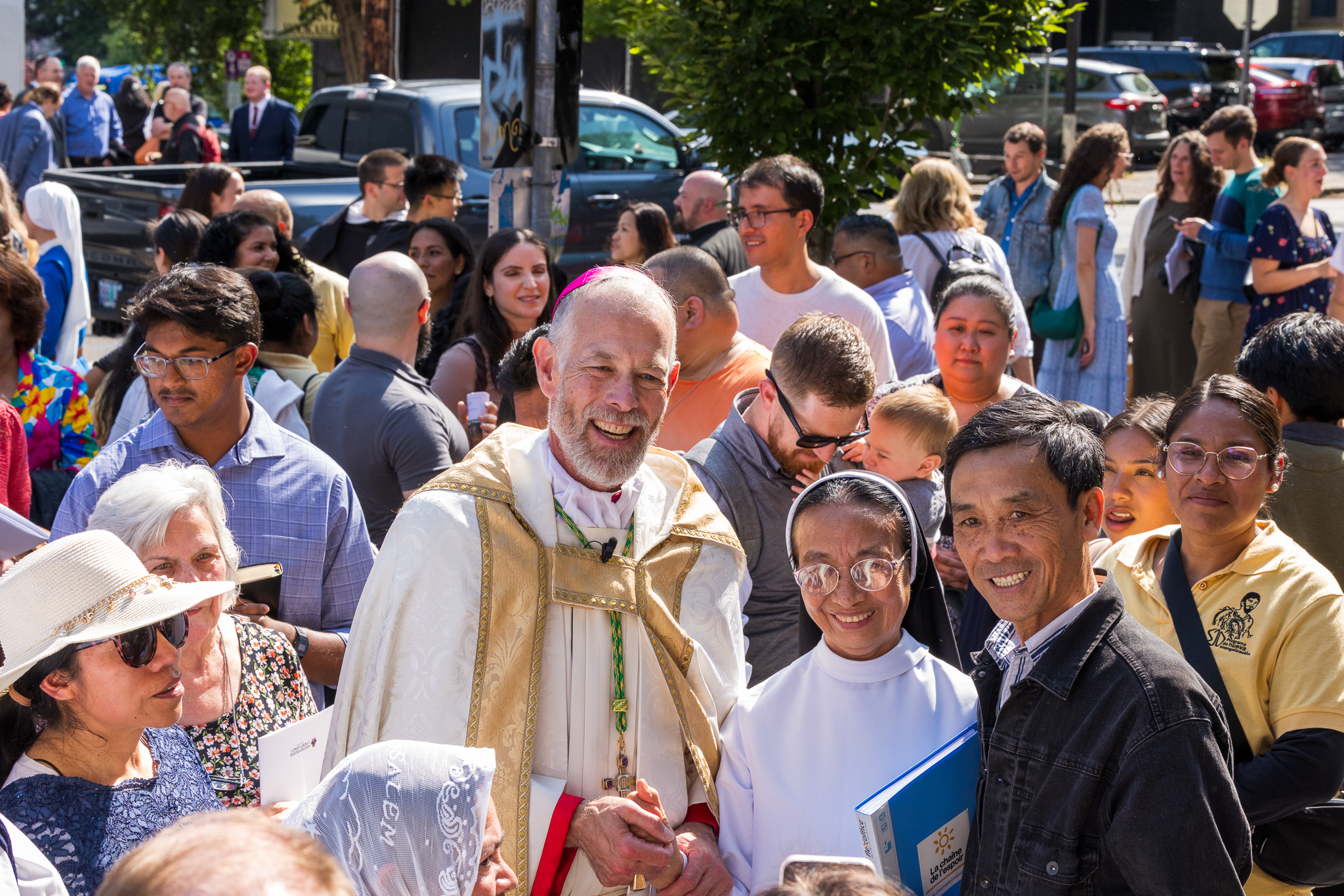
Archbishop Sample urges Catholics to ‘reject conspiracies and lies’ that lead to antisemitism – #Catholic – The U.S. Conference of Catholic Bishops (USCCB) has released a video ahead of Easter decrying antisemitism and calling on Catholics to “speak out clearly” against it.“The Church, mindful of the patrimony she shares with the Jews and moved not by political reasons but by the Gospel’s spiritual love, decries hatred, persecutions, displays of antisemitism directed against Jews at any time and by anyone,” Archbishop Alexander Sample of Portland, Oregon, said in a March 18 video message posted by the USCCB.“The Jewish community is attacked at a far higher rate than any other religious group in the United States,” he said. “If we Catholics, in truly living out the Gospel, are to defend religious freedom with integrity, we must clearly speak out against antisemitism.”The USCCB’s message comes less than 20 days before the Easter Triduum, during which Catholics “celebrate the central events of our faith,” Sample said. However, the archbishop said, “sadly, the celebration of Easter has at times been the occasion for outbursts of hatred and even violence against Jews.”“The guilt for the suffering of Jesus is especially great in us because we who profess to know Christ deny him with our sins,” he said, citing the Catechism of the Council of Trent, which rejects the claim, known as the myth of deicide, that the Jewish people bear the guilt for the death of Jesus, as well as the Second Vatican Council document Nostra Aetate.“Indeed, Good Friday ought to be an occasion for us to return to the Lord, not to scapegoat others,” he said, describing the myth of deicide as “a profound misunderstanding of what took place on Good Friday” and a significant source of historic and modern antisemitism.“As Catholics, we are called to walk in the truth, and so to reject the conspiracies and lies that lead to harassment and even violence against our Jewish brothers and sisters,” Sample said.Nathan Diament, executive director of public policy for the Union of Orthodox Jewish Congregations in America, welcomed Sample’s remarks, telling EWTN News: “The statement by Archbishop Sample on behalf of the USCCB could not come at a more important time with bad actors weaponizing Catholicism to spread antisemitic views.”“We are grateful for the leadership of the Church itself stating unequivocally that the Church rejects those assertions and repudiates antisemitism,” he said.The Church’s views on antisemitism recently became the center of controversy when media personality Carrie Prejean Boller was removed from the White House-sponsored Religious Liberty Commission last month for remarks she made during a hearing focused on antisemitism.The former Miss California repeatedly stated during the hearing that her Catholic faith prevented her from embracing Zionism, despite Catholic teaching that does not oppose Israel as a nation or the Jewish people. Boller also repeatedly pressed Jewish panelists on whether her views made her an antisemite.Catholic teaching does not explicitly oppose Zionism, the movement supporting Jewish self‑determination in a homeland in Israel. Israel is seen as God’s chosen people through whom God revealed himself and prepared the way for the coming of Jesus Christ. The Catholic Church universally condemns antisemitism. The Church recognizes Israel’s fundamental right to exist.

Archbishop Sample urges Catholics to ‘reject conspiracies and lies’ that lead to antisemitism – #Catholic – The U.S. Conference of Catholic Bishops (USCCB) has released a video ahead of Easter decrying antisemitism and calling on Catholics to “speak out clearly” against it.“The Church, mindful of the patrimony she shares with the Jews and moved not by political reasons but by the Gospel’s spiritual love, decries hatred, persecutions, displays of antisemitism directed against Jews at any time and by anyone,” Archbishop Alexander Sample of Portland, Oregon, said in a March 18 video message posted by the USCCB.“The Jewish community is attacked at a far higher rate than any other religious group in the United States,” he said. “If we Catholics, in truly living out the Gospel, are to defend religious freedom with integrity, we must clearly speak out against antisemitism.”The USCCB’s message comes less than 20 days before the Easter Triduum, during which Catholics “celebrate the central events of our faith,” Sample said. However, the archbishop said, “sadly, the celebration of Easter has at times been the occasion for outbursts of hatred and even violence against Jews.”“The guilt for the suffering of Jesus is especially great in us because we who profess to know Christ deny him with our sins,” he said, citing the Catechism of the Council of Trent, which rejects the claim, known as the myth of deicide, that the Jewish people bear the guilt for the death of Jesus, as well as the Second Vatican Council document Nostra Aetate.“Indeed, Good Friday ought to be an occasion for us to return to the Lord, not to scapegoat others,” he said, describing the myth of deicide as “a profound misunderstanding of what took place on Good Friday” and a significant source of historic and modern antisemitism.“As Catholics, we are called to walk in the truth, and so to reject the conspiracies and lies that lead to harassment and even violence against our Jewish brothers and sisters,” Sample said.Nathan Diament, executive director of public policy for the Union of Orthodox Jewish Congregations in America, welcomed Sample’s remarks, telling EWTN News: “The statement by Archbishop Sample on behalf of the USCCB could not come at a more important time with bad actors weaponizing Catholicism to spread antisemitic views.”“We are grateful for the leadership of the Church itself stating unequivocally that the Church rejects those assertions and repudiates antisemitism,” he said.The Church’s views on antisemitism recently became the center of controversy when media personality Carrie Prejean Boller was removed from the White House-sponsored Religious Liberty Commission last month for remarks she made during a hearing focused on antisemitism.The former Miss California repeatedly stated during the hearing that her Catholic faith prevented her from embracing Zionism, despite Catholic teaching that does not oppose Israel as a nation or the Jewish people. Boller also repeatedly pressed Jewish panelists on whether her views made her an antisemite.Catholic teaching does not explicitly oppose Zionism, the movement supporting Jewish self‑determination in a homeland in Israel. Israel is seen as God’s chosen people through whom God revealed himself and prepared the way for the coming of Jesus Christ. The Catholic Church universally condemns antisemitism. The Church recognizes Israel’s fundamental right to exist.

“The Jewish community is attacked at a far higher rate than any other religious group in the United States,” Archbishop Alexander Sample said. “We must clearly speak out against antisemitism.”
Read More
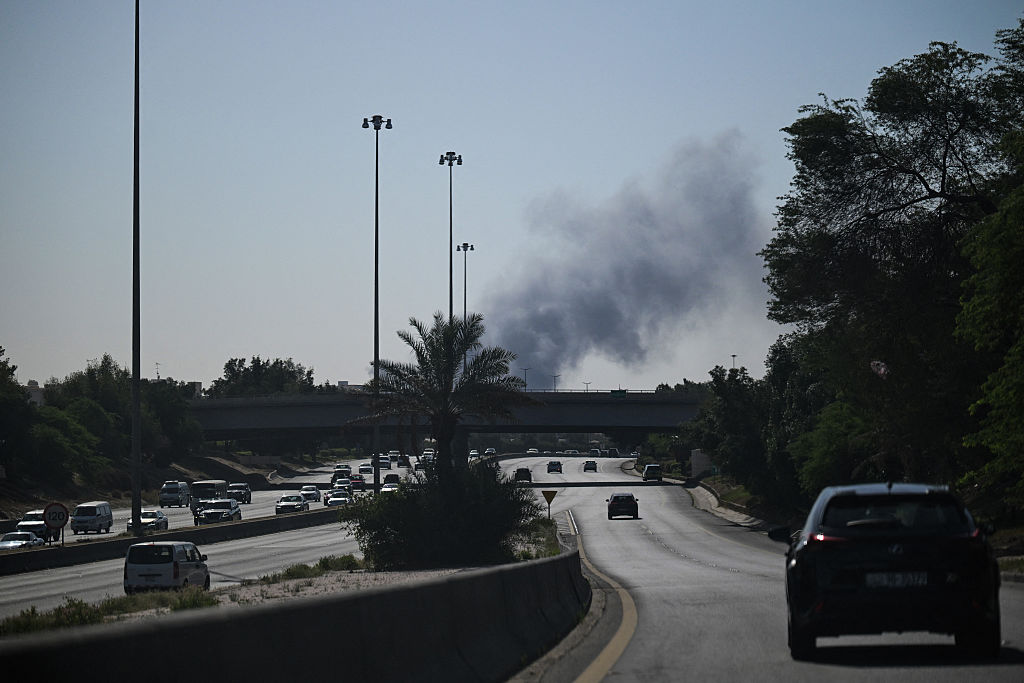
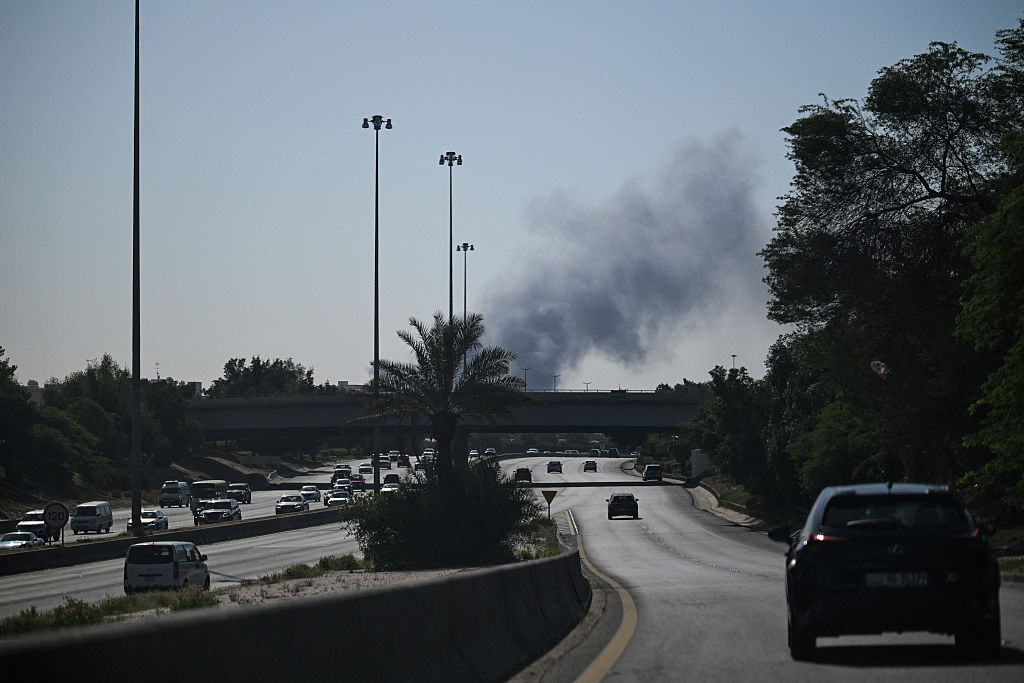
Catholics in Kuwait find refuge in prayer in time of war – #Catholic – The outbreak of the latest confrontations in the Middle East has presented residents of several Gulf countries with unprecedented challenges as they face the whir of missiles, the roar of drones, and the sound of air defenses and explosions, which they have never known in countries long known to be safe havens.Amid anxiety and uncertainty, prayer has emerged as a spiritual refuge and a source of peace and serenity for these Christian communities. Speaking to ACI MENA, the Arabic-language sister service of EWTN News, Catholic faithful living in Kuwait shared their moving experience of clinging to prayer and seeking shelter in it during difficult times.Norma and Angela Fernandez recalled their shock at hearing news of the war’s outbreak on the evening of Feb. 28 as they were preparing to attend Mass after participating in a talk on the Seven Sorrows of Mary during a training course for catechism teachers at Our Lady of Arabia minor basilica in Ahmadi. “We offered the Mass for the intention that the war would end quickly and that peace would return,” they said.In the days that followed, “we were stunned and somewhat afraid, because in Kuwait we are not used to the sound of sirens, followed by the buzz of air defenses intercepting missiles and drones, and the frightening blasts and rumbling they leave behind.” Iranian missiles targeted American bases across Gulf countries, including Kuwait. “But we witnessed the courage of the country’s leaders and its people in confronting the attacks, and their vigilance in protecting Kuwait’s security and the safety of all who live there, citizens and residents alike,” they said.”The Church, too, kept watch over its faithful and worked hard to accompany them spiritually, doing everything possible to remain in contact with them. “Thanks to all the clergy, we were able to continue celebrating holy Mass online, with churches closed in the first days in response to the civil authorities’ instructions. What a great blessing. We are all blessed.” The Fernandez sisters said that gathering in prayer for peace and seeking the intercession of the Virgin Mary, patroness of the apostolic vicariates of Northern and Southern Arabia, fills the hearts of the faithful with peace and strengthens their hope and trust in the Lord Jesus, “for he cares for us and protects us.”Our Lady of Arabia Church reopened its doors on March 9 to worshippers praying for peace and for the safety of every human person. “We are not called to judge those who harm us but to ask God to purify their hearts, fill them with mercy, and forgive them, repeating the words of Our Lord: ‘Father, forgive them, for they know not what they do,’” the sisters said.Another Kuwaiti Catholic, Sharan Diaz, said the difficult times the Middle East is living through are a powerful reminder of God’s grace, because they remind the faithful that Christ is present whenever they gather in prayer and in the sacrament of the Eucharist.Diaz said being unable to attend Mass in person and receive Communion during the period when churches were closed left an emptiness in her heart and reminded her of the importance of the Eucharist. “As soon as the churches reopened, they were filled with faithful eager to celebrate the Eucharist and receive holy Communion. It is a great blessing,” Diaz said. “Despite all that is happening in our world, being able to visit the church, encounter Jesus, and receive him in holy Communion fills my heart with gratitude.”This story was first published by ACI MENA, the Arabic-language sister service of EWTN News. It has been translated and adapted by EWTN News English.

Catholics in Kuwait find refuge in prayer in time of war – #Catholic – The outbreak of the latest confrontations in the Middle East has presented residents of several Gulf countries with unprecedented challenges as they face the whir of missiles, the roar of drones, and the sound of air defenses and explosions, which they have never known in countries long known to be safe havens.Amid anxiety and uncertainty, prayer has emerged as a spiritual refuge and a source of peace and serenity for these Christian communities. Speaking to ACI MENA, the Arabic-language sister service of EWTN News, Catholic faithful living in Kuwait shared their moving experience of clinging to prayer and seeking shelter in it during difficult times.Norma and Angela Fernandez recalled their shock at hearing news of the war’s outbreak on the evening of Feb. 28 as they were preparing to attend Mass after participating in a talk on the Seven Sorrows of Mary during a training course for catechism teachers at Our Lady of Arabia minor basilica in Ahmadi. “We offered the Mass for the intention that the war would end quickly and that peace would return,” they said.In the days that followed, “we were stunned and somewhat afraid, because in Kuwait we are not used to the sound of sirens, followed by the buzz of air defenses intercepting missiles and drones, and the frightening blasts and rumbling they leave behind.” Iranian missiles targeted American bases across Gulf countries, including Kuwait. “But we witnessed the courage of the country’s leaders and its people in confronting the attacks, and their vigilance in protecting Kuwait’s security and the safety of all who live there, citizens and residents alike,” they said.”The Church, too, kept watch over its faithful and worked hard to accompany them spiritually, doing everything possible to remain in contact with them. “Thanks to all the clergy, we were able to continue celebrating holy Mass online, with churches closed in the first days in response to the civil authorities’ instructions. What a great blessing. We are all blessed.” The Fernandez sisters said that gathering in prayer for peace and seeking the intercession of the Virgin Mary, patroness of the apostolic vicariates of Northern and Southern Arabia, fills the hearts of the faithful with peace and strengthens their hope and trust in the Lord Jesus, “for he cares for us and protects us.”Our Lady of Arabia Church reopened its doors on March 9 to worshippers praying for peace and for the safety of every human person. “We are not called to judge those who harm us but to ask God to purify their hearts, fill them with mercy, and forgive them, repeating the words of Our Lord: ‘Father, forgive them, for they know not what they do,’” the sisters said.Another Kuwaiti Catholic, Sharan Diaz, said the difficult times the Middle East is living through are a powerful reminder of God’s grace, because they remind the faithful that Christ is present whenever they gather in prayer and in the sacrament of the Eucharist.Diaz said being unable to attend Mass in person and receive Communion during the period when churches were closed left an emptiness in her heart and reminded her of the importance of the Eucharist. “As soon as the churches reopened, they were filled with faithful eager to celebrate the Eucharist and receive holy Communion. It is a great blessing,” Diaz said. “Despite all that is happening in our world, being able to visit the church, encounter Jesus, and receive him in holy Communion fills my heart with gratitude.”This story was first published by ACI MENA, the Arabic-language sister service of EWTN News. It has been translated and adapted by EWTN News English.

Christians in many Gulf countries are turning to prayer and the sacraments to sustain themselves amid the anxiety and uncertainty the war brings.
Read More
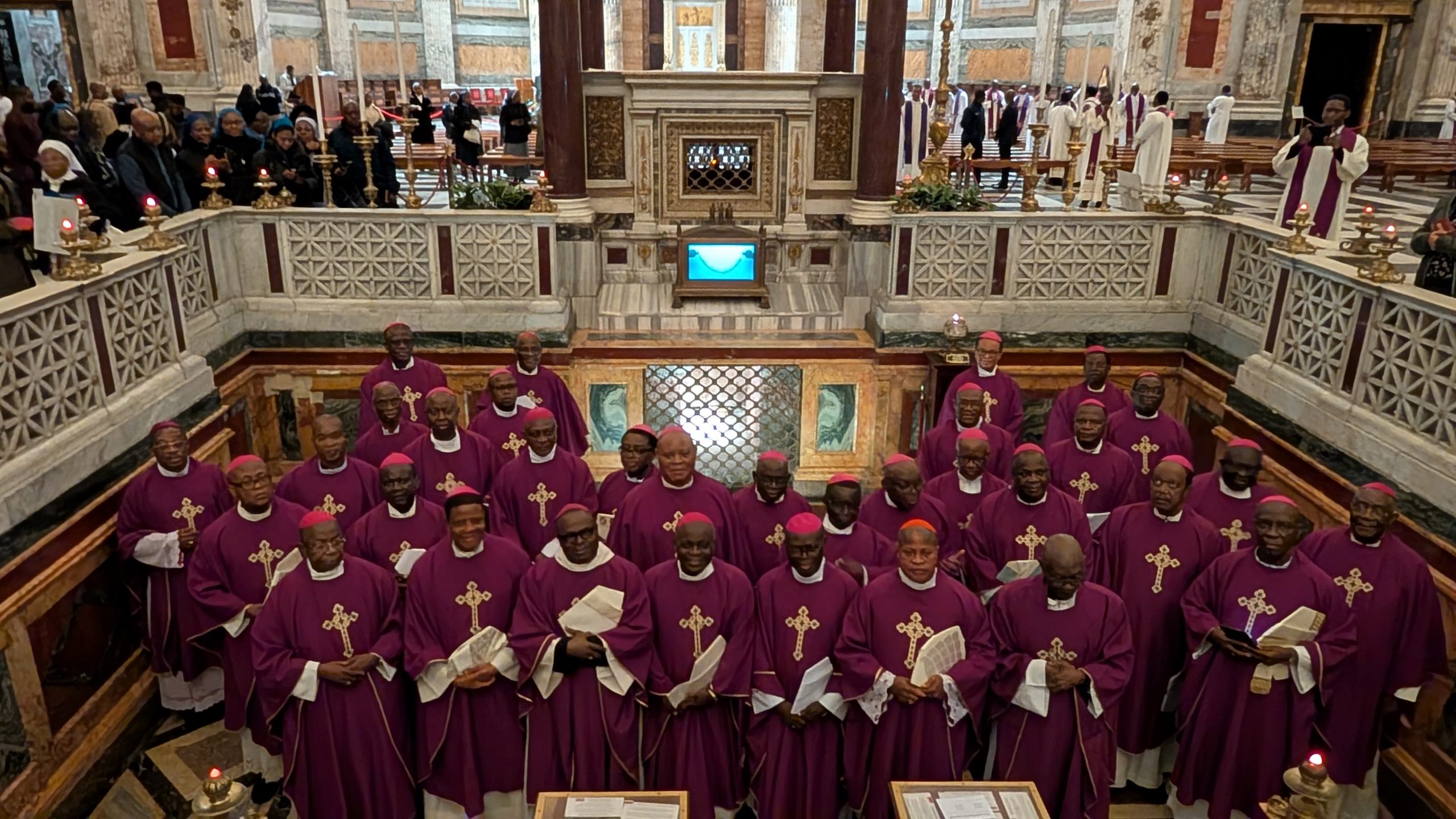
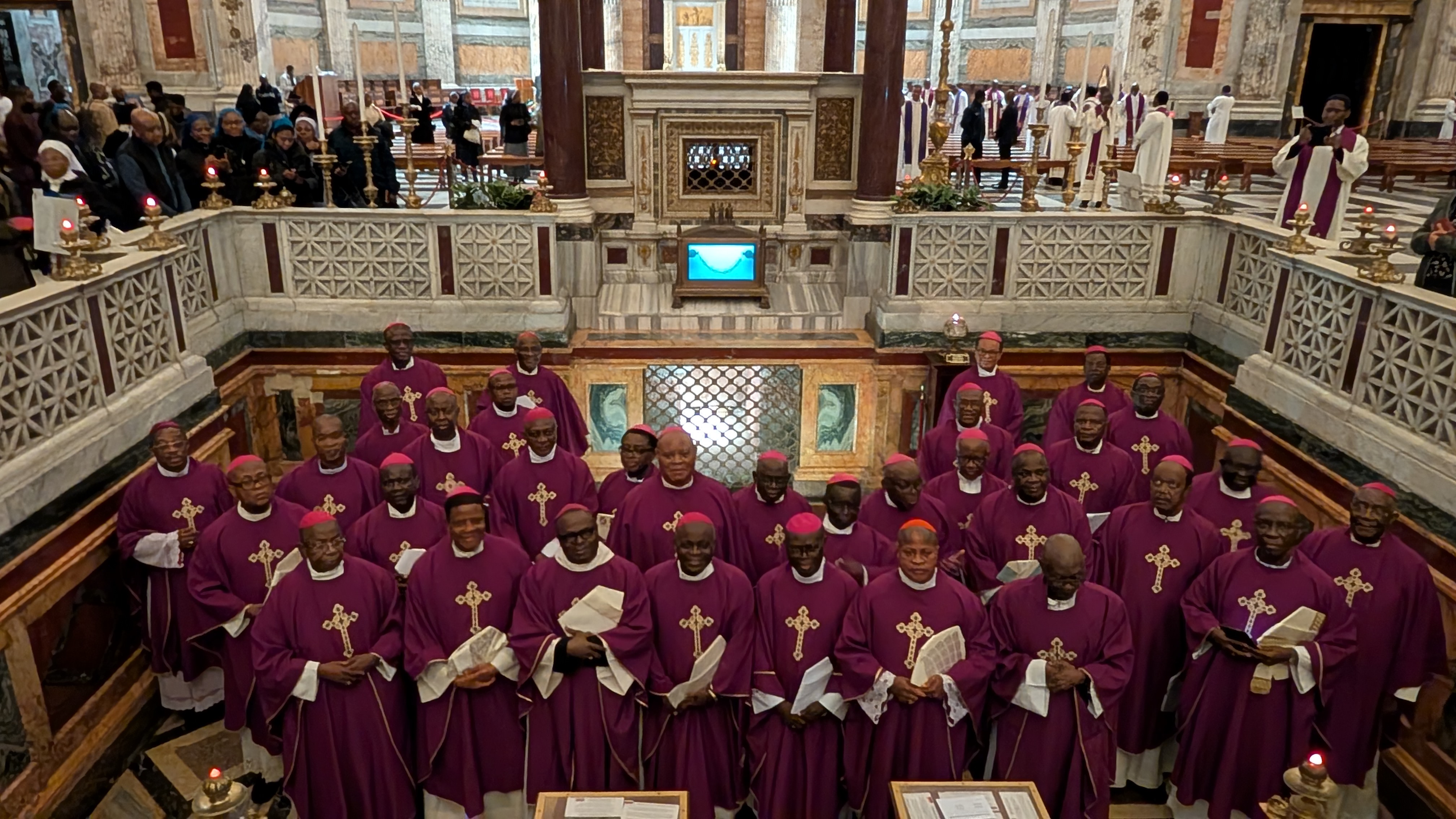
Nigerian bishops tell the pope: Our people are dying – #Catholic – VATICAN CITY — Amid increased religious violence and insecurity in Nigeria, a group of Nigerian bishops recently met Pope Leo XIV during their “ad limina” visit to Rome. The Nigerian bishops described it as an opportunity to amplify the “cries of their people” to the Vatican and to counter “false narratives” from government officials about the situation facing Nigerian Christians.Under canon law, every diocesan bishop must visit Rome — ideally every five years — to meet the pope and report on the state of his diocese. The visit also includes meetings with the dicasteries of the Roman Curia.The Nigerian bishops spoke of their visit March 1–16 as an expression of filial communion with Pope Leo and an opportunity for him to confirm the faith of their beleaguered people.A pilgrimage to Rome with a nation under fireNigeria continues to be plagued by ethnic and religious violence, accounting for 72% of Christian killings, according to Open Doors’ World Watch List in 2026. A study by the World Watch List found the number of Christian killings and kidnappings in Nigeria was the highest in the world in 2024, underscoring the disproportionate targeting of Christians.Pope Leo has raised awareness of religious violence in Nigeria. Last November, he commented to EWTN News on the issue that both “Christians and Muslims have been slaughtered.”Archbishop Matthew Ndagoso, who was recently elected head of the Catholic Bishops’ Conference of Nigeria, told EWTN News that the bishops recounted the reality of the situation to the pope.“Before we came to Rome, we bishops sent reports on our dioceses to the Vatican, and the summary was given to the Holy Father,” he told EWTN News. “But beyond what was written, we discussed with him the violence, the insurgencies, and the difficulties we face as apostles on the ground.”
 
 Archbishop Matthew Ndagoso of Kaduna, Nigeria, president of the Catholic Bishops’ Conference of Nigeria, stands in St. Peter’s Square at the Vatican on March 16, 2026. | Credit: Ishmael Adibuah/EWTN News
 
 Archbishop Adewale Martins of Lagos added that “the issue of Christian violence came up very strongly with the pope, and he told us that he will use whatever possibilities he has to highlight our situation and see what he can do for us.”Rebuttal to Nigerian first lady’s comments on Christian genocideSeveral of the bishops spoke to EWTN News about the comments made in a recent interview by the Nigerian first lady, Oluremi Tinubu. In the face of growing concerns of Christian persecution in Nigeria, the first lady denied that Christians were being targeted for genocide. Cardinal Peter Okpaleke, however, insisted that the plight of Christians in Nigeria is concerning.“There are many interpretations depending on what people understand as persecution,” Okpaleke said. “So, whatever vocabulary people want to use is not our concern. But the reality is that many people are dying.”Archbishop Lucius Iwejuru Ugorji of Owerri also noted the discrimination of Nigerian Christians in the federal constitution.“When you look at the constitution, you see that it is lopsided in favor of Islam,” he told EWTN News. “Christians are often excluded. The Fulani militia has uprooted many communities. These groups are emboldened because of the government’s inability or unwillingness to act.”Ndagoso also criticized the narrative denying the targeting of Christians in religious violence.“For anyone to say there is no persecution of Christians in northern Nigeria is simply not living in reality. In some of our dioceses, the Muslim population is 98% or 99%. We Christians are an eternal minority. I can tell you that for over a century, we have been discriminated against and excluded from government and employment.”The office of Sen. Oluremi Tinubu did not respond to a request for comment from EWTN News.A stagnant canonization cause of Blessed Iwene Tansi?The bishops rejected claims in the Nigerian press that the cause for the canonization of Blessed Iwene Tansi, whom Pope John Paul II beatified in 1998, is stalled. Archbishop Valerian Okeke of Onitsha assured EWTN News that the canonization process is ongoing for Nigeria’s only beatified person.“It is not true that the cause has stalled,” he told EWTN News. “It is proceeding according to the style of the Church. The Church is still waiting for that miracle that will defy all doubt and alternative explanations. The supernatural reality of the event will be so clear even to the uninitiated. The Church is waiting for that, and we are hopeful that it will come.”
 
 Cardinal Peter Okpaleke, bishop of Ekwulobia, Nigeria, speaks to EWTN News in the sacristy of the Basilica of St. Paul Outside the Walls in Rome on March 4, 2026. | Credit: Ishmael Adibuah/EWTN News
 
 Okpaleke also addressed Blessed Tansi’s canonization. “We are not worried that others are ‘faster’ than us. In our own case, yes, we look forward to Blessed Iwene Tansi being canonized, but this also reminds us of the need to continue to invoke him in our prayers,” he said.Looking ahead to 2027 general electionsBefore their pilgrimage to Rome, the Nigerian bishops held their first plenary assembly from Feb. 19–26. They then issued a communiqué regarding the upcoming Nigerian general elections in 2027. Ugorji, who formerly served as president of the Catholic Bishops’ Conference of Nigeria, spoke of the need for political leaders to stop promoting their own interests ahead of those of the nation.“Nigeria is a country where people get into leadership and put their private interests above the common good. So, we needed to emphasize the fact that the common good of society is tied to individual welfare,” he said.Bishop John Niyiring, OSA, of Kano added: “All we want is for them to ensure security for all. Providing security is a constitutional responsibility. Instead of defending a narrative or their own interests, they should protect all citizens.”

Nigerian bishops tell the pope: Our people are dying – #Catholic – VATICAN CITY — Amid increased religious violence and insecurity in Nigeria, a group of Nigerian bishops recently met Pope Leo XIV during their “ad limina” visit to Rome. The Nigerian bishops described it as an opportunity to amplify the “cries of their people” to the Vatican and to counter “false narratives” from government officials about the situation facing Nigerian Christians.Under canon law, every diocesan bishop must visit Rome — ideally every five years — to meet the pope and report on the state of his diocese. The visit also includes meetings with the dicasteries of the Roman Curia.The Nigerian bishops spoke of their visit March 1–16 as an expression of filial communion with Pope Leo and an opportunity for him to confirm the faith of their beleaguered people.A pilgrimage to Rome with a nation under fireNigeria continues to be plagued by ethnic and religious violence, accounting for 72% of Christian killings, according to Open Doors’ World Watch List in 2026. A study by the World Watch List found the number of Christian killings and kidnappings in Nigeria was the highest in the world in 2024, underscoring the disproportionate targeting of Christians.Pope Leo has raised awareness of religious violence in Nigeria. Last November, he commented to EWTN News on the issue that both “Christians and Muslims have been slaughtered.”Archbishop Matthew Ndagoso, who was recently elected head of the Catholic Bishops’ Conference of Nigeria, told EWTN News that the bishops recounted the reality of the situation to the pope.“Before we came to Rome, we bishops sent reports on our dioceses to the Vatican, and the summary was given to the Holy Father,” he told EWTN News. “But beyond what was written, we discussed with him the violence, the insurgencies, and the difficulties we face as apostles on the ground.” Archbishop Matthew Ndagoso of Kaduna, Nigeria, president of the Catholic Bishops’ Conference of Nigeria, stands in St. Peter’s Square at the Vatican on March 16, 2026. | Credit: Ishmael Adibuah/EWTN News Archbishop Adewale Martins of Lagos added that “the issue of Christian violence came up very strongly with the pope, and he told us that he will use whatever possibilities he has to highlight our situation and see what he can do for us.”Rebuttal to Nigerian first lady’s comments on Christian genocideSeveral of the bishops spoke to EWTN News about the comments made in a recent interview by the Nigerian first lady, Oluremi Tinubu. In the face of growing concerns of Christian persecution in Nigeria, the first lady denied that Christians were being targeted for genocide. Cardinal Peter Okpaleke, however, insisted that the plight of Christians in Nigeria is concerning.“There are many interpretations depending on what people understand as persecution,” Okpaleke said. “So, whatever vocabulary people want to use is not our concern. But the reality is that many people are dying.”Archbishop Lucius Iwejuru Ugorji of Owerri also noted the discrimination of Nigerian Christians in the federal constitution.“When you look at the constitution, you see that it is lopsided in favor of Islam,” he told EWTN News. “Christians are often excluded. The Fulani militia has uprooted many communities. These groups are emboldened because of the government’s inability or unwillingness to act.”Ndagoso also criticized the narrative denying the targeting of Christians in religious violence.“For anyone to say there is no persecution of Christians in northern Nigeria is simply not living in reality. In some of our dioceses, the Muslim population is 98% or 99%. We Christians are an eternal minority. I can tell you that for over a century, we have been discriminated against and excluded from government and employment.”The office of Sen. Oluremi Tinubu did not respond to a request for comment from EWTN News.A stagnant canonization cause of Blessed Iwene Tansi?The bishops rejected claims in the Nigerian press that the cause for the canonization of Blessed Iwene Tansi, whom Pope John Paul II beatified in 1998, is stalled. Archbishop Valerian Okeke of Onitsha assured EWTN News that the canonization process is ongoing for Nigeria’s only beatified person.“It is not true that the cause has stalled,” he told EWTN News. “It is proceeding according to the style of the Church. The Church is still waiting for that miracle that will defy all doubt and alternative explanations. The supernatural reality of the event will be so clear even to the uninitiated. The Church is waiting for that, and we are hopeful that it will come.” Cardinal Peter Okpaleke, bishop of Ekwulobia, Nigeria, speaks to EWTN News in the sacristy of the Basilica of St. Paul Outside the Walls in Rome on March 4, 2026. | Credit: Ishmael Adibuah/EWTN News Okpaleke also addressed Blessed Tansi’s canonization. “We are not worried that others are ‘faster’ than us. In our own case, yes, we look forward to Blessed Iwene Tansi being canonized, but this also reminds us of the need to continue to invoke him in our prayers,” he said.Looking ahead to 2027 general electionsBefore their pilgrimage to Rome, the Nigerian bishops held their first plenary assembly from Feb. 19–26. They then issued a communiqué regarding the upcoming Nigerian general elections in 2027. Ugorji, who formerly served as president of the Catholic Bishops’ Conference of Nigeria, spoke of the need for political leaders to stop promoting their own interests ahead of those of the nation.“Nigeria is a country where people get into leadership and put their private interests above the common good. So, we needed to emphasize the fact that the common good of society is tied to individual welfare,” he said.Bishop John Niyiring, OSA, of Kano added: “All we want is for them to ensure security for all. Providing security is a constitutional responsibility. Instead of defending a narrative or their own interests, they should protect all citizens.”

As Christians in their country suffer increased persecution, the Nigerian bishops bring the hopes of a nation to Rome.
Read More

Are you ready to meet Rocky? Project Hail Mary opens March 20, 2026, sending science teacher (and former molecular biologist) Ryland Grace, played by Ryan Gosling, on an adventure light-years from Earth in a last-ditch effort — one might even say a Hail Mary play — to save the Sun. Based on the best-selling novelContinue reading “Ahead of tomorrow’s premiere, rewatch the final trailer for ‘Project Hail Mary’”

The post Ahead of tomorrow’s premiere, rewatch the final trailer for ‘Project Hail Mary’ appeared first on Astronomy Magazine.

Read More
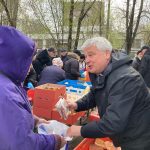
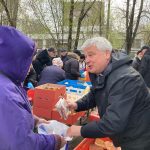
Pope’s Robin Hood wraps almoner’s mission and returns to Polish hometown as archbishop #Catholic – (OSV News) — After 13 years of daring acts of charity that made him break the law in the name of the Gospel and elevate Rome’s homeless to the heart of the Church, Cardinal Konrad Krajewski, the pope’s “Robin Hood” leaves Rome after nearly three decades to become archbishop of Lódz, Poland.
Five months into Pope Francis’ papacy, on Aug. 3, 2013, then-Msgr. Konrad Krajewski was picked by the pontiff to be the charity point-man of the Vatican.
“He told me that I would not have a desk, that I should not stay in the Vatican City, that I should not deal with formal offices … that I should not have my own car, and that I should not have a secretary,” he told OSV News March 12.
“He told me to give up everything,” Cardinal Krajewski said. “And later I realized that I actually received the most when I simply had nothing.”
“It turned my life upside down,” the Polish prelate said. He spoke to OSV News the day the Vatican announced he would leave the post of prefect of the Dicastery for the Service of Charity and return to his hometown.

Click here to subscribe to our weekly newsletter.

Longtime archbishop of Lódz, Cardinal Grzegorz Rys, was been appointed archbishop of Kraków Nov. 26, 2025. Since then, the search for the new archbishop of Lódz continued.
“The Holy Father asked me … whether, after so many years, I could see myself there and whether I would want it. It was not that the Holy Father told me that I must go … he simply asked whether I could see myself there. Whether I would be available,” Cardinal Krajewski told OSV News.
“I said, of course, with joy: yes. But it wasn’t only about joy,” he said.
“From the very beginning of my priesthood, I believed that I had promised obedience to the bishop. And it is precisely in moments like these that this promise is fulfilled: One does not think about oneself, but about what one’s superiors propose.”
He told OSV News he is returning home after 28 years spent in Rome, where he arrived first to serve St. John Paul II, then Pope Benedict XVI as master of papal ceremonies and over 12 years as papal almoner for Pope Francis.
“I never really left Lódz. I left Lódz in order to be here, in Rome, with the universal Church, with the pope. But I never left Lódz in my heart; I always remained connected to it.”
He admitted, however, that in Rome he leaves behind a Vatican family.
“Apart from the homeless who were entrusted to me by Pope Francis and whom I served in his name” — and who sent him many of the 800 “heartfelt” farewell messages he received on March 12 — he said he feels “a very deep bond with the workers of Rome.”
“Not so much with the hierarchy as with the ordinary people — carpenters, those who set up the chairs in St. Peter’s Square, plumbers,” he told OSV News.
“In order to create all those shelters and showers for the poor, I worked together with them — my Roman family. They never needed any documents or paperwork. Whenever I called, they were there.”
They were there when in November 2014, showers for the homeless would be built under the sweeping white colonnade of St. Peter’s Square.
Over the years, an outpatient clinic for the poor was built in that same spot, in the touristy center of the Vatican.
In 2019, the plumbers and carpenters of the Vatican were there for him when Cardinal Krajewski hit another milestone of Pope Francis’ revolution of tenderness: The pope had an empty Roman palace to allocate.
After extensive renovation carried out under the supervision of Cardinal Krajewski, and which left historical frescoes on the walls, Palazzo Migliori was opened in November 2019 in time for the third World Day of the Poor.
Recalling his Roman “family,” Cardinal Krajewski told OSV News: “They also drove around Rome with me whenever some intervention was needed — things that were not always fully possible according to the law, such as turning on water or electricity in abandoned houses. All of them helped me, putting themselves at risk.”
In a move that gained him the nickname of the pope’s Robin Hood, Cardinal Krajewski on May 12, 2019, climbed into a manhole in Rome to restore electricity to an abandoned building occupied by about 450 people, including many migrants, and around 100 children.
The power had been cut because of more than 0,000 in unpaid bills. To reconnect electricity, he broke a police seal — technically committing a crime — but was never charged despite criticism from then-Italy’s interior minister.
When questioned about the legality of his actions, Cardinal Krajewski replied, “The Gospel is my law.” A year later, several migrants living in the building — most of them Muslim — sent him a video thanking him for what he had done.
“In a moment like that you don’t think about the consequences, but only about the fact that the help is necessary,” he said.
“I was able to do many things because I had the trust of Pope Francis. He told me to think according to the Gospel, and that challenged me. It was something that kept me awake at night,” he said.
“He only said: ‘You must have a lot of imagination — evangelical imagination. So think about what Jesus would do.’ When someone leaves you that kind of freedom, but at the same time shows you a clear goal, then all your strength becomes, so to speak, focused and united,” Cardinal Krajewski told OSV News.
“I experienced the most beautiful years of my life here as a person,” he said of his three decades in Rome. “But I think I did not waste those years. They were truly for the Church — through people.”
He said he learned the most from the poor of Rome during his mission as an almoner.
“Their needs had to be discovered, so that we would not help someone the way we wanted to help, but in the way they actually needed. It is very easy to force help on someone — for example, to give someone a ham sandwich when he doesn’t even like ham. Instead, you ask the person what he or she really needs.”
“That is true charity,” Cardinal Krajewski told OSV News. “It means sharing yourself and thinking about what each person needs in order to restore their dignity.”
With Cardinal Krajewski in charge, the poor were regularly welcomed inside Casa Santa Marta, where the pope lived, and the Swiss Guards were saluting them as they made their way to the Elemosineria Apostolica — the Apostolic Almsgiving office — for lunch with Cardinal Krajewski in his apartment every Tuesday. Pope Francis made it perfectly clear — they’re one of us, and they deserve the Vatican to be their home, the cardinal pointed out.
“The task of the Apostolic Almsgiving is to empty the account for the charity of the Holy Father for the poor, according to the logic of the Gospel,” reads the main banner on the website for the office — entrusted now to Spanish Augustinian Archbishop Luis Marín de San Martín, new prefect of the Dicastery for the Service of Charity.
A Vatican almsgiving task that elevated Cardinal Krajewski to one of the major — and most colorful — figures in the universal Church, taught him “to wait.”
Earlier on, “I wanted everything immediately, all at once,” having a “choleric temperament.” But with the poor, “it doesn’t work,” he told OSV News.
“They taught me. They calmed me down a bit. They showed me that everyone has their own path, and that making calculations or statistics doesn’t really make sense,” the cardinal told OSV News.
“If someone asked me how many poor people there are in Rome, I would say: I don’t know. Because every person is different. Restoring the dignity of even one person was the most important thing. Numbers or systems never mattered.”
“You have to wait for them,” he said of ministering to the poor. “The door must always remain open. They must always have your phone number. And you shouldn’t be surprised if someone calls at two in the morning saying that the next day he wants to go back home after 10 years. So they taught me this kind of inner calm — for their sake.”
Cardinal Krajewski traveled to Ukraine 10 times under Pope Francis’ pontificate to distribute help, but above all — to “embrace” the Ukrainians, in his own words, and bring them comfort from the Holy Father.
The Ukraine mission that included escaping gunfire in September 2022, came full circle for Cardinal Krajewski as he sent a truckload valued at over 1 million euros (.15 million) to the war-torn country on behalf of Pope Leo in February.
“In the bull I received from the pope when I became a bishop, it was written that I should teach by example, and only if that was not enough, then by word. And I think that is how it was. It really was,” he told OSV News.
He said he already met with the new papal almoner, telling Archbishop Marín, “You must become an alms yourself.”
“It is the life of solitude, because during the day the almoner has to function in the office — dealing with documents, papal blessings, financial assistance. But in the afternoon, when everyone goes home, that’s when you take the car and drive around to the places where the shelters are, where the parishes are, where there are soup kitchens or places that offer showers,” the cardinal said.
“You stay with them, you strengthen them, you support them financially — but above all, the pope taught me that presence matters. Presence is what counts.”
One of the poor present in a packed lunch March 10 in the almoner’s apartment, asked the cardinal, “Why do you do all this?”
He replied: “Because I represent Jesus.”
“Only then the works of mercy will last. They’re not linked to a person. They’re linked to the Gospel. Only this way they will last.”
Paulina Guzik is international editor for OSV News. Follow her on X @Guzik_Paulina.

Pope’s Robin Hood wraps almoner’s mission and returns to Polish hometown as archbishop #Catholic – (OSV News) — After 13 years of daring acts of charity that made him break the law in the name of the Gospel and elevate Rome’s homeless to the heart of the Church, Cardinal Konrad Krajewski, the pope’s “Robin Hood” leaves Rome after nearly three decades to become archbishop of Lódz, Poland. Five months into Pope Francis’ papacy, on Aug. 3, 2013, then-Msgr. Konrad Krajewski was picked by the pontiff to be the charity point-man of the Vatican. “He told me that I would not have a desk, that I should not stay in the Vatican City, that I should not deal with formal offices … that I should not have my own car, and that I should not have a secretary,” he told OSV News March 12. “He told me to give up everything,” Cardinal Krajewski said. “And later I realized that I actually received the most when I simply had nothing.” “It turned my life upside down,” the Polish prelate said. He spoke to OSV News the day the Vatican announced he would leave the post of prefect of the Dicastery for the Service of Charity and return to his hometown. Click here to subscribe to our weekly newsletter. Longtime archbishop of Lódz, Cardinal Grzegorz Rys, was been appointed archbishop of Kraków Nov. 26, 2025. Since then, the search for the new archbishop of Lódz continued. “The Holy Father asked me … whether, after so many years, I could see myself there and whether I would want it. It was not that the Holy Father told me that I must go … he simply asked whether I could see myself there. Whether I would be available,” Cardinal Krajewski told OSV News. “I said, of course, with joy: yes. But it wasn’t only about joy,” he said. “From the very beginning of my priesthood, I believed that I had promised obedience to the bishop. And it is precisely in moments like these that this promise is fulfilled: One does not think about oneself, but about what one’s superiors propose.” He told OSV News he is returning home after 28 years spent in Rome, where he arrived first to serve St. John Paul II, then Pope Benedict XVI as master of papal ceremonies and over 12 years as papal almoner for Pope Francis. “I never really left Lódz. I left Lódz in order to be here, in Rome, with the universal Church, with the pope. But I never left Lódz in my heart; I always remained connected to it.” He admitted, however, that in Rome he leaves behind a Vatican family. “Apart from the homeless who were entrusted to me by Pope Francis and whom I served in his name” — and who sent him many of the 800 “heartfelt” farewell messages he received on March 12 — he said he feels “a very deep bond with the workers of Rome.” “Not so much with the hierarchy as with the ordinary people — carpenters, those who set up the chairs in St. Peter’s Square, plumbers,” he told OSV News. “In order to create all those shelters and showers for the poor, I worked together with them — my Roman family. They never needed any documents or paperwork. Whenever I called, they were there.” They were there when in November 2014, showers for the homeless would be built under the sweeping white colonnade of St. Peter’s Square. Over the years, an outpatient clinic for the poor was built in that same spot, in the touristy center of the Vatican. In 2019, the plumbers and carpenters of the Vatican were there for him when Cardinal Krajewski hit another milestone of Pope Francis’ revolution of tenderness: The pope had an empty Roman palace to allocate. After extensive renovation carried out under the supervision of Cardinal Krajewski, and which left historical frescoes on the walls, Palazzo Migliori was opened in November 2019 in time for the third World Day of the Poor. Recalling his Roman “family,” Cardinal Krajewski told OSV News: “They also drove around Rome with me whenever some intervention was needed — things that were not always fully possible according to the law, such as turning on water or electricity in abandoned houses. All of them helped me, putting themselves at risk.” In a move that gained him the nickname of the pope’s Robin Hood, Cardinal Krajewski on May 12, 2019, climbed into a manhole in Rome to restore electricity to an abandoned building occupied by about 450 people, including many migrants, and around 100 children. The power had been cut because of more than $300,000 in unpaid bills. To reconnect electricity, he broke a police seal — technically committing a crime — but was never charged despite criticism from then-Italy’s interior minister. When questioned about the legality of his actions, Cardinal Krajewski replied, “The Gospel is my law.” A year later, several migrants living in the building — most of them Muslim — sent him a video thanking him for what he had done. “In a moment like that you don’t think about the consequences, but only about the fact that the help is necessary,” he said. “I was able to do many things because I had the trust of Pope Francis. He told me to think according to the Gospel, and that challenged me. It was something that kept me awake at night,” he said. “He only said: ‘You must have a lot of imagination — evangelical imagination. So think about what Jesus would do.’ When someone leaves you that kind of freedom, but at the same time shows you a clear goal, then all your strength becomes, so to speak, focused and united,” Cardinal Krajewski told OSV News. “I experienced the most beautiful years of my life here as a person,” he said of his three decades in Rome. “But I think I did not waste those years. They were truly for the Church — through people.” He said he learned the most from the poor of Rome during his mission as an almoner. “Their needs had to be discovered, so that we would not help someone the way we wanted to help, but in the way they actually needed. It is very easy to force help on someone — for example, to give someone a ham sandwich when he doesn’t even like ham. Instead, you ask the person what he or she really needs.” “That is true charity,” Cardinal Krajewski told OSV News. “It means sharing yourself and thinking about what each person needs in order to restore their dignity.” With Cardinal Krajewski in charge, the poor were regularly welcomed inside Casa Santa Marta, where the pope lived, and the Swiss Guards were saluting them as they made their way to the Elemosineria Apostolica — the Apostolic Almsgiving office — for lunch with Cardinal Krajewski in his apartment every Tuesday. Pope Francis made it perfectly clear — they’re one of us, and they deserve the Vatican to be their home, the cardinal pointed out. “The task of the Apostolic Almsgiving is to empty the account for the charity of the Holy Father for the poor, according to the logic of the Gospel,” reads the main banner on the website for the office — entrusted now to Spanish Augustinian Archbishop Luis Marín de San Martín, new prefect of the Dicastery for the Service of Charity. A Vatican almsgiving task that elevated Cardinal Krajewski to one of the major — and most colorful — figures in the universal Church, taught him “to wait.” Earlier on, “I wanted everything immediately, all at once,” having a “choleric temperament.” But with the poor, “it doesn’t work,” he told OSV News. “They taught me. They calmed me down a bit. They showed me that everyone has their own path, and that making calculations or statistics doesn’t really make sense,” the cardinal told OSV News. “If someone asked me how many poor people there are in Rome, I would say: I don’t know. Because every person is different. Restoring the dignity of even one person was the most important thing. Numbers or systems never mattered.” “You have to wait for them,” he said of ministering to the poor. “The door must always remain open. They must always have your phone number. And you shouldn’t be surprised if someone calls at two in the morning saying that the next day he wants to go back home after 10 years. So they taught me this kind of inner calm — for their sake.” Cardinal Krajewski traveled to Ukraine 10 times under Pope Francis’ pontificate to distribute help, but above all — to “embrace” the Ukrainians, in his own words, and bring them comfort from the Holy Father. The Ukraine mission that included escaping gunfire in September 2022, came full circle for Cardinal Krajewski as he sent a truckload valued at over 1 million euros ($1.15 million) to the war-torn country on behalf of Pope Leo in February. “In the bull I received from the pope when I became a bishop, it was written that I should teach by example, and only if that was not enough, then by word. And I think that is how it was. It really was,” he told OSV News. He said he already met with the new papal almoner, telling Archbishop Marín, “You must become an alms yourself.” “It is the life of solitude, because during the day the almoner has to function in the office — dealing with documents, papal blessings, financial assistance. But in the afternoon, when everyone goes home, that’s when you take the car and drive around to the places where the shelters are, where the parishes are, where there are soup kitchens or places that offer showers,” the cardinal said. “You stay with them, you strengthen them, you support them financially — but above all, the pope taught me that presence matters. Presence is what counts.” One of the poor present in a packed lunch March 10 in the almoner’s apartment, asked the cardinal, “Why do you do all this?” He replied: “Because I represent Jesus.” “Only then the works of mercy will last. They’re not linked to a person. They’re linked to the Gospel. Only this way they will last.” Paulina Guzik is international editor for OSV News. Follow her on X @Guzik_Paulina.

Pope’s Robin Hood wraps almoner’s mission and returns to Polish hometown as archbishop #Catholic –

(OSV News) — After 13 years of daring acts of charity that made him break the law in the name of the Gospel and elevate Rome’s homeless to the heart of the Church, Cardinal Konrad Krajewski, the pope’s “Robin Hood” leaves Rome after nearly three decades to become archbishop of Lódz, Poland.

Five months into Pope Francis’ papacy, on Aug. 3, 2013, then-Msgr. Konrad Krajewski was picked by the pontiff to be the charity point-man of the Vatican.

“He told me that I would not have a desk, that I should not stay in the Vatican City, that I should not deal with formal offices … that I should not have my own car, and that I should not have a secretary,” he told OSV News March 12.

“He told me to give up everything,” Cardinal Krajewski said. “And later I realized that I actually received the most when I simply had nothing.”

“It turned my life upside down,” the Polish prelate said. He spoke to OSV News the day the Vatican announced he would leave the post of prefect of the Dicastery for the Service of Charity and return to his hometown.


Click here to subscribe to our weekly newsletter.

Longtime archbishop of Lódz, Cardinal Grzegorz Rys, was been appointed archbishop of Kraków Nov. 26, 2025. Since then, the search for the new archbishop of Lódz continued.

“The Holy Father asked me … whether, after so many years, I could see myself there and whether I would want it. It was not that the Holy Father told me that I must go … he simply asked whether I could see myself there. Whether I would be available,” Cardinal Krajewski told OSV News.

“I said, of course, with joy: yes. But it wasn’t only about joy,” he said.

“From the very beginning of my priesthood, I believed that I had promised obedience to the bishop. And it is precisely in moments like these that this promise is fulfilled: One does not think about oneself, but about what one’s superiors propose.”

He told OSV News he is returning home after 28 years spent in Rome, where he arrived first to serve St. John Paul II, then Pope Benedict XVI as master of papal ceremonies and over 12 years as papal almoner for Pope Francis.

“I never really left Lódz. I left Lódz in order to be here, in Rome, with the universal Church, with the pope. But I never left Lódz in my heart; I always remained connected to it.”

He admitted, however, that in Rome he leaves behind a Vatican family.

“Apart from the homeless who were entrusted to me by Pope Francis and whom I served in his name” — and who sent him many of the 800 “heartfelt” farewell messages he received on March 12 — he said he feels “a very deep bond with the workers of Rome.”

“Not so much with the hierarchy as with the ordinary people — carpenters, those who set up the chairs in St. Peter’s Square, plumbers,” he told OSV News.

“In order to create all those shelters and showers for the poor, I worked together with them — my Roman family. They never needed any documents or paperwork. Whenever I called, they were there.”

They were there when in November 2014, showers for the homeless would be built under the sweeping white colonnade of St. Peter’s Square.

Over the years, an outpatient clinic for the poor was built in that same spot, in the touristy center of the Vatican.

In 2019, the plumbers and carpenters of the Vatican were there for him when Cardinal Krajewski hit another milestone of Pope Francis’ revolution of tenderness: The pope had an empty Roman palace to allocate.

After extensive renovation carried out under the supervision of Cardinal Krajewski, and which left historical frescoes on the walls, Palazzo Migliori was opened in November 2019 in time for the third World Day of the Poor.

Recalling his Roman “family,” Cardinal Krajewski told OSV News: “They also drove around Rome with me whenever some intervention was needed — things that were not always fully possible according to the law, such as turning on water or electricity in abandoned houses. All of them helped me, putting themselves at risk.”

In a move that gained him the nickname of the pope’s Robin Hood, Cardinal Krajewski on May 12, 2019, climbed into a manhole in Rome to restore electricity to an abandoned building occupied by about 450 people, including many migrants, and around 100 children.

The power had been cut because of more than $300,000 in unpaid bills. To reconnect electricity, he broke a police seal — technically committing a crime — but was never charged despite criticism from then-Italy’s interior minister.

When questioned about the legality of his actions, Cardinal Krajewski replied, “The Gospel is my law.” A year later, several migrants living in the building — most of them Muslim — sent him a video thanking him for what he had done.

“In a moment like that you don’t think about the consequences, but only about the fact that the help is necessary,” he said.

“I was able to do many things because I had the trust of Pope Francis. He told me to think according to the Gospel, and that challenged me. It was something that kept me awake at night,” he said.

“He only said: ‘You must have a lot of imagination — evangelical imagination. So think about what Jesus would do.’ When someone leaves you that kind of freedom, but at the same time shows you a clear goal, then all your strength becomes, so to speak, focused and united,” Cardinal Krajewski told OSV News.

“I experienced the most beautiful years of my life here as a person,” he said of his three decades in Rome. “But I think I did not waste those years. They were truly for the Church — through people.”

He said he learned the most from the poor of Rome during his mission as an almoner.

“Their needs had to be discovered, so that we would not help someone the way we wanted to help, but in the way they actually needed. It is very easy to force help on someone — for example, to give someone a ham sandwich when he doesn’t even like ham. Instead, you ask the person what he or she really needs.”

“That is true charity,” Cardinal Krajewski told OSV News. “It means sharing yourself and thinking about what each person needs in order to restore their dignity.”

With Cardinal Krajewski in charge, the poor were regularly welcomed inside Casa Santa Marta, where the pope lived, and the Swiss Guards were saluting them as they made their way to the Elemosineria Apostolica — the Apostolic Almsgiving office — for lunch with Cardinal Krajewski in his apartment every Tuesday. Pope Francis made it perfectly clear — they’re one of us, and they deserve the Vatican to be their home, the cardinal pointed out.

“The task of the Apostolic Almsgiving is to empty the account for the charity of the Holy Father for the poor, according to the logic of the Gospel,” reads the main banner on the website for the office — entrusted now to Spanish Augustinian Archbishop Luis Marín de San Martín, new prefect of the Dicastery for the Service of Charity.

A Vatican almsgiving task that elevated Cardinal Krajewski to one of the major — and most colorful — figures in the universal Church, taught him “to wait.”

Earlier on, “I wanted everything immediately, all at once,” having a “choleric temperament.” But with the poor, “it doesn’t work,” he told OSV News.

“They taught me. They calmed me down a bit. They showed me that everyone has their own path, and that making calculations or statistics doesn’t really make sense,” the cardinal told OSV News.

“If someone asked me how many poor people there are in Rome, I would say: I don’t know. Because every person is different. Restoring the dignity of even one person was the most important thing. Numbers or systems never mattered.”

“You have to wait for them,” he said of ministering to the poor. “The door must always remain open. They must always have your phone number. And you shouldn’t be surprised if someone calls at two in the morning saying that the next day he wants to go back home after 10 years. So they taught me this kind of inner calm — for their sake.”

Cardinal Krajewski traveled to Ukraine 10 times under Pope Francis’ pontificate to distribute help, but above all — to “embrace” the Ukrainians, in his own words, and bring them comfort from the Holy Father.

The Ukraine mission that included escaping gunfire in September 2022, came full circle for Cardinal Krajewski as he sent a truckload valued at over 1 million euros ($1.15 million) to the war-torn country on behalf of Pope Leo in February.

“In the bull I received from the pope when I became a bishop, it was written that I should teach by example, and only if that was not enough, then by word. And I think that is how it was. It really was,” he told OSV News.

He said he already met with the new papal almoner, telling Archbishop Marín, “You must become an alms yourself.”

“It is the life of solitude, because during the day the almoner has to function in the office — dealing with documents, papal blessings, financial assistance. But in the afternoon, when everyone goes home, that’s when you take the car and drive around to the places where the shelters are, where the parishes are, where there are soup kitchens or places that offer showers,” the cardinal said.

“You stay with them, you strengthen them, you support them financially — but above all, the pope taught me that presence matters. Presence is what counts.”

One of the poor present in a packed lunch March 10 in the almoner’s apartment, asked the cardinal, “Why do you do all this?”

He replied: “Because I represent Jesus.”

“Only then the works of mercy will last. They’re not linked to a person. They’re linked to the Gospel. Only this way they will last.”

Paulina Guzik is international editor for OSV News. Follow her on X @Guzik_Paulina.

(OSV News) — After 13 years of daring acts of charity that made him break the law in the name of the Gospel and elevate Rome’s homeless to the heart of the Church, Cardinal Konrad Krajewski, the pope’s “Robin Hood” leaves Rome after nearly three decades to become archbishop of Lódz, Poland. Five months into Pope Francis’ papacy, on Aug. 3, 2013, then-Msgr. Konrad Krajewski was picked by the pontiff to be the charity point-man of the Vatican. “He told me that I would not have a desk, that I should not stay in the Vatican City, that I should
Read More
Pope’s visit to show that Christianity is asset, not danger, for Algeria, bishop says #Catholic – (OSV News) — As Pope Leo XIV prepares to visit Algeria as the first stop of his apostolic trip to Africa April 13–23, Bishop Michel Guillaud of Constantine-Hippone told OSV News the Holy Father’s presence will demonstrate that Christianity “is an asset and not a danger” to Algeria.
The birthplace of St. Augustine is the first stop of his trip and “overjoyed” with the fact the pontiff is coming, with the Vatican releasing a detailed itinerary of the first African journey of the pontiff March 16.
“The Holy Father has already visited Algeria twice, in 2003 and 2014, when he was prior general of the Order of St. Augustine,” Bishop Guillard told OSV News. “He is not coming primarily on a personal pilgrimage in the footsteps of St. Augustine, but to meet the Algerian people and to support his Church, drawing on the strong bond between them through the figure of Augustine.”

Click here to subscribe to our weekly newsletter.

Algeria is 99% Sunni Muslim, and the Catholic Church counts just 8,740 members, about 0.019% of the population, out of more than 45 million people, according to the 2025 edition of the Annuario Pontificio, the Vatican’s annual yearbook.
In a conversation with OSV News, the Algerian Church leader discussed the deep connection to St. Augustine that unites the pope with the nation, the daily realities faced by Christians who are “one in a thousand,” and their hopes for a future in a place where Christianity “does not exist primarily through the presence of a priest, but through the presence of Christians.”
Bishop Guillaud, originally from Lyon, France, became a parish priest in Algeria in 2006. He was named administrator of the Diocese of Constantine-Hippone in 2024 and appointed bishop in July 2025.
Reflecting on the May 8, 2025, election of Pope Leo to the Chair of Peter, he said: “When Pope Leo was elected, one of his first statements was: ‘I am the son of Saint Augustine.’ All of Algeria trembled … since then, they have been waiting for him,” the bishop said.
“Algerians know that popes are not only concerned with their flock, but also with peace, justice and reconciliation for all. If the Holy Father is coming to Algeria, it is because he believes that everyone has a part to play in building the Kingdom of God, including the Muslim Algerian people. The hope of the Church in Algeria is that the Algerian people will grow in the conviction that Christians are not a threat, but that their presence and what inspires them can be good news for everyone,” the bishop emphasized.
On April 14, the pope will travel 310 miles from Algiers to celebrate Mass in the Basilica of Hippo, in the city now called Annaba. St. Augustine was the bishop of Hippo from 396 to 430, the year of his death. Annaba is a familiar place for local Muslims who travel Annaba every year to visit — be it families, tourists, school groups and university students — to discover the place and the man whose memory it preserves.
“Every year, we organize ‘Augustinian Days’ in Hippo, attended by both Muslims and Christians,” Bishop Guillaud told OSV News. “The three speakers this year were Algerian and expressed how much the bishop of Hippo was a source of inspiration for them. Augustine was, in his life as in his thinking, a seeker of truth, a builder of unity, a person who scrutinized the world with intelligence and faith. He propels us forward by telling us to love in everything we do, to sing the ‘alleluia of the road’ even when we are going through trials, and to walk with perseverance and confidence.”
Asked about the daily realities faced by Christians, and their hopes for a future, the bishop first highlighted the number of Christians a Muslim-majority country: “(of) 47 million inhabitants, Catholics are perhaps one in a thousand,” he said. “Every day we are questioned about not being Muslim. It takes a great deal of effort to join a Christian community in a country of 2.5 million square kilometers (919,595 square miles), and some have to travel several hours by road to do so.”
A diversity of languages spoken — and those include English, Portuguese, Arabic, French, Berber — provides challenges for Christian gathering in the North African country.
“Sunday is a working day, so we have to meet on the weekend, on Friday or Saturday. We do not have a priest in every parish, and Christians must learn that a community does not begin with the presence of a priest, but with Christians. Our communities are not very large. They rarely exceed fifty people, more often gathering 15 to 30, which gives them a character that is both more austere and more familiar.”
The bishop underlined that the main task of Catholic priests in Algeria is “to support Christians and maintain fraternal ties with Muslims.”
“We sometimes welcome people who come knocking on our door because they feel called to follow Christ. For Christians of European origin, it is considered ‘normal’ for them to be Christians,” but for people from sub-Saharan Africa, “it is more surprising.”
“When Christians are of Algerian origin, it comes as a shock. The authorities tolerate it, respecting the conscience of the country’s citizens, but society struggles to accept it. These new Christians often have to remain very discreet in their family, social and professional environments. And evangelical communities composed solely of Algerians struggle to be recognized. Our presence in society, when it manifests itself in cultural or charitable institutions, must remain modest, proportionate to our numbers,” Bishop Guillaud said.
The pope’s visit, he highlighted, is “To show that difference is not a danger, that unity can coexist with differences, whereas too much emphasis on unanimity stifles freedom. If society becomes more accepting of difference, this will benefit everyone.”
“The Catholic Church is the custodian of a treasure in the Eucharist and the apostolic ministry,” Bishop Guillaud stressed. “But the latter has been exercised for too long in a way that gives it excessive importance. When there are fewer priests, the challenge for the community is to realize that it does not exist primarily through the presence of a priest, but through the presence of Christians, and to rethink itself accordingly. The future depends in part on the emergence of a new way of being Church. It also depends on the place that society will accept to give it. Everything is still possible.”
The bishop stressed that Algerian Christians await the pope “with both great joy and a certain expectation: when St. Peter travels in the Acts of the Apostles, it is anything but ordinary. With his successor, we try to open our hearts to the grace proper to this visit.”
Ngala Killian Chimtom writes for OSV News from Yaounde, Cameroon.

Pope’s visit to show that Christianity is asset, not danger, for Algeria, bishop says #Catholic – (OSV News) — As Pope Leo XIV prepares to visit Algeria as the first stop of his apostolic trip to Africa April 13–23, Bishop Michel Guillaud of Constantine-Hippone told OSV News the Holy Father’s presence will demonstrate that Christianity “is an asset and not a danger” to Algeria. The birthplace of St. Augustine is the first stop of his trip and “overjoyed” with the fact the pontiff is coming, with the Vatican releasing a detailed itinerary of the first African journey of the pontiff March 16. “The Holy Father has already visited Algeria twice, in 2003 and 2014, when he was prior general of the Order of St. Augustine,” Bishop Guillard told OSV News. “He is not coming primarily on a personal pilgrimage in the footsteps of St. Augustine, but to meet the Algerian people and to support his Church, drawing on the strong bond between them through the figure of Augustine.” Click here to subscribe to our weekly newsletter. Algeria is 99% Sunni Muslim, and the Catholic Church counts just 8,740 members, about 0.019% of the population, out of more than 45 million people, according to the 2025 edition of the Annuario Pontificio, the Vatican’s annual yearbook. In a conversation with OSV News, the Algerian Church leader discussed the deep connection to St. Augustine that unites the pope with the nation, the daily realities faced by Christians who are “one in a thousand,” and their hopes for a future in a place where Christianity “does not exist primarily through the presence of a priest, but through the presence of Christians.” Bishop Guillaud, originally from Lyon, France, became a parish priest in Algeria in 2006. He was named administrator of the Diocese of Constantine-Hippone in 2024 and appointed bishop in July 2025. Reflecting on the May 8, 2025, election of Pope Leo to the Chair of Peter, he said: “When Pope Leo was elected, one of his first statements was: ‘I am the son of Saint Augustine.’ All of Algeria trembled … since then, they have been waiting for him,” the bishop said. “Algerians know that popes are not only concerned with their flock, but also with peace, justice and reconciliation for all. If the Holy Father is coming to Algeria, it is because he believes that everyone has a part to play in building the Kingdom of God, including the Muslim Algerian people. The hope of the Church in Algeria is that the Algerian people will grow in the conviction that Christians are not a threat, but that their presence and what inspires them can be good news for everyone,” the bishop emphasized. On April 14, the pope will travel 310 miles from Algiers to celebrate Mass in the Basilica of Hippo, in the city now called Annaba. St. Augustine was the bishop of Hippo from 396 to 430, the year of his death. Annaba is a familiar place for local Muslims who travel Annaba every year to visit — be it families, tourists, school groups and university students — to discover the place and the man whose memory it preserves. “Every year, we organize ‘Augustinian Days’ in Hippo, attended by both Muslims and Christians,” Bishop Guillaud told OSV News. “The three speakers this year were Algerian and expressed how much the bishop of Hippo was a source of inspiration for them. Augustine was, in his life as in his thinking, a seeker of truth, a builder of unity, a person who scrutinized the world with intelligence and faith. He propels us forward by telling us to love in everything we do, to sing the ‘alleluia of the road’ even when we are going through trials, and to walk with perseverance and confidence.” Asked about the daily realities faced by Christians, and their hopes for a future, the bishop first highlighted the number of Christians a Muslim-majority country: “(of) 47 million inhabitants, Catholics are perhaps one in a thousand,” he said. “Every day we are questioned about not being Muslim. It takes a great deal of effort to join a Christian community in a country of 2.5 million square kilometers (919,595 square miles), and some have to travel several hours by road to do so.” A diversity of languages spoken — and those include English, Portuguese, Arabic, French, Berber — provides challenges for Christian gathering in the North African country. “Sunday is a working day, so we have to meet on the weekend, on Friday or Saturday. We do not have a priest in every parish, and Christians must learn that a community does not begin with the presence of a priest, but with Christians. Our communities are not very large. They rarely exceed fifty people, more often gathering 15 to 30, which gives them a character that is both more austere and more familiar.” The bishop underlined that the main task of Catholic priests in Algeria is “to support Christians and maintain fraternal ties with Muslims.” “We sometimes welcome people who come knocking on our door because they feel called to follow Christ. For Christians of European origin, it is considered ‘normal’ for them to be Christians,” but for people from sub-Saharan Africa, “it is more surprising.” “When Christians are of Algerian origin, it comes as a shock. The authorities tolerate it, respecting the conscience of the country’s citizens, but society struggles to accept it. These new Christians often have to remain very discreet in their family, social and professional environments. And evangelical communities composed solely of Algerians struggle to be recognized. Our presence in society, when it manifests itself in cultural or charitable institutions, must remain modest, proportionate to our numbers,” Bishop Guillaud said. The pope’s visit, he highlighted, is “To show that difference is not a danger, that unity can coexist with differences, whereas too much emphasis on unanimity stifles freedom. If society becomes more accepting of difference, this will benefit everyone.” “The Catholic Church is the custodian of a treasure in the Eucharist and the apostolic ministry,” Bishop Guillaud stressed. “But the latter has been exercised for too long in a way that gives it excessive importance. When there are fewer priests, the challenge for the community is to realize that it does not exist primarily through the presence of a priest, but through the presence of Christians, and to rethink itself accordingly. The future depends in part on the emergence of a new way of being Church. It also depends on the place that society will accept to give it. Everything is still possible.” The bishop stressed that Algerian Christians await the pope “with both great joy and a certain expectation: when St. Peter travels in the Acts of the Apostles, it is anything but ordinary. With his successor, we try to open our hearts to the grace proper to this visit.” Ngala Killian Chimtom writes for OSV News from Yaounde, Cameroon.
Pope’s visit to show that Christianity is asset, not danger, for Algeria, bishop says #Catholic –

(OSV News) — As Pope Leo XIV prepares to visit Algeria as the first stop of his apostolic trip to Africa April 13–23, Bishop Michel Guillaud of Constantine-Hippone told OSV News the Holy Father’s presence will demonstrate that Christianity “is an asset and not a danger” to Algeria.

The birthplace of St. Augustine is the first stop of his trip and “overjoyed” with the fact the pontiff is coming, with the Vatican releasing a detailed itinerary of the first African journey of the pontiff March 16.

“The Holy Father has already visited Algeria twice, in 2003 and 2014, when he was prior general of the Order of St. Augustine,” Bishop Guillard told OSV News. “He is not coming primarily on a personal pilgrimage in the footsteps of St. Augustine, but to meet the Algerian people and to support his Church, drawing on the strong bond between them through the figure of Augustine.”


Click here to subscribe to our weekly newsletter.

Algeria is 99% Sunni Muslim, and the Catholic Church counts just 8,740 members, about 0.019% of the population, out of more than 45 million people, according to the 2025 edition of the Annuario Pontificio, the Vatican’s annual yearbook.

In a conversation with OSV News, the Algerian Church leader discussed the deep connection to St. Augustine that unites the pope with the nation, the daily realities faced by Christians who are “one in a thousand,” and their hopes for a future in a place where Christianity “does not exist primarily through the presence of a priest, but through the presence of Christians.”

Bishop Guillaud, originally from Lyon, France, became a parish priest in Algeria in 2006. He was named administrator of the Diocese of Constantine-Hippone in 2024 and appointed bishop in July 2025.

Reflecting on the May 8, 2025, election of Pope Leo to the Chair of Peter, he said: “When Pope Leo was elected, one of his first statements was: ‘I am the son of Saint Augustine.’ All of Algeria trembled … since then, they have been waiting for him,” the bishop said.

“Algerians know that popes are not only concerned with their flock, but also with peace, justice and reconciliation for all. If the Holy Father is coming to Algeria, it is because he believes that everyone has a part to play in building the Kingdom of God, including the Muslim Algerian people. The hope of the Church in Algeria is that the Algerian people will grow in the conviction that Christians are not a threat, but that their presence and what inspires them can be good news for everyone,” the bishop emphasized.

On April 14, the pope will travel 310 miles from Algiers to celebrate Mass in the Basilica of Hippo, in the city now called Annaba. St. Augustine was the bishop of Hippo from 396 to 430, the year of his death. Annaba is a familiar place for local Muslims who travel Annaba every year to visit — be it families, tourists, school groups and university students — to discover the place and the man whose memory it preserves.

“Every year, we organize ‘Augustinian Days’ in Hippo, attended by both Muslims and Christians,” Bishop Guillaud told OSV News. “The three speakers this year were Algerian and expressed how much the bishop of Hippo was a source of inspiration for them. Augustine was, in his life as in his thinking, a seeker of truth, a builder of unity, a person who scrutinized the world with intelligence and faith. He propels us forward by telling us to love in everything we do, to sing the ‘alleluia of the road’ even when we are going through trials, and to walk with perseverance and confidence.”

Asked about the daily realities faced by Christians, and their hopes for a future, the bishop first highlighted the number of Christians a Muslim-majority country: “(of) 47 million inhabitants, Catholics are perhaps one in a thousand,” he said. “Every day we are questioned about not being Muslim. It takes a great deal of effort to join a Christian community in a country of 2.5 million square kilometers (919,595 square miles), and some have to travel several hours by road to do so.”

A diversity of languages spoken — and those include English, Portuguese, Arabic, French, Berber — provides challenges for Christian gathering in the North African country.

“Sunday is a working day, so we have to meet on the weekend, on Friday or Saturday. We do not have a priest in every parish, and Christians must learn that a community does not begin with the presence of a priest, but with Christians. Our communities are not very large. They rarely exceed fifty people, more often gathering 15 to 30, which gives them a character that is both more austere and more familiar.”

The bishop underlined that the main task of Catholic priests in Algeria is “to support Christians and maintain fraternal ties with Muslims.”

“We sometimes welcome people who come knocking on our door because they feel called to follow Christ. For Christians of European origin, it is considered ‘normal’ for them to be Christians,” but for people from sub-Saharan Africa, “it is more surprising.”

“When Christians are of Algerian origin, it comes as a shock. The authorities tolerate it, respecting the conscience of the country’s citizens, but society struggles to accept it. These new Christians often have to remain very discreet in their family, social and professional environments. And evangelical communities composed solely of Algerians struggle to be recognized. Our presence in society, when it manifests itself in cultural or charitable institutions, must remain modest, proportionate to our numbers,” Bishop Guillaud said.

The pope’s visit, he highlighted, is “To show that difference is not a danger, that unity can coexist with differences, whereas too much emphasis on unanimity stifles freedom. If society becomes more accepting of difference, this will benefit everyone.”

“The Catholic Church is the custodian of a treasure in the Eucharist and the apostolic ministry,” Bishop Guillaud stressed. “But the latter has been exercised for too long in a way that gives it excessive importance. When there are fewer priests, the challenge for the community is to realize that it does not exist primarily through the presence of a priest, but through the presence of Christians, and to rethink itself accordingly. The future depends in part on the emergence of a new way of being Church. It also depends on the place that society will accept to give it. Everything is still possible.”

The bishop stressed that Algerian Christians await the pope “with both great joy and a certain expectation: when St. Peter travels in the Acts of the Apostles, it is anything but ordinary. With his successor, we try to open our hearts to the grace proper to this visit.”

Ngala Killian Chimtom writes for OSV News from Yaounde, Cameroon.

(OSV News) — As Pope Leo XIV prepares to visit Algeria as the first stop of his apostolic trip to Africa April 13–23, Bishop Michel Guillaud of Constantine-Hippone told OSV News the Holy Father’s presence will demonstrate that Christianity “is an asset and not a danger” to Algeria. The birthplace of St. Augustine is the first stop of his trip and “overjoyed” with the fact the pontiff is coming, with the Vatican releasing a detailed itinerary of the first African journey of the pontiff March 16. “The Holy Father has already visited Algeria twice, in 2003 and 2014, when he
Read More
Catholic hoops at the highest level take over this year’s March Madness #Catholic – PHILADELPHIA (OSV News) — Catholic universities have quietly taken over March Madness, blending history, talent, and the kind of coaching that shapes every game into an unpredictable contest.
The 2026 NCAA Men’s and Women’s Basketball Tournaments showcase Catholic hoops at the highest level. Twelve programs — seven men’s, five women’s — bring tradition, depth, and star power to the brackets, creating thrilling matchups from the first tip-off.

Click here to subscribe to our weekly newsletter.

Women’s Tournament Highlights
In the women’s bracket, experience meets sharpshooting as the University of Notre Dame faces a Fairfield University team that could surprise anyone.
Notre Dame’s Fighting Irish step onto the court with a 22-10 record and a six-seed, riding a 9-2 surge in their last 11 games. Junior standout Hannah Hidalgo, finalist for the Nancy Lieberman Point Guard of the Year award, anchors a team with a storied NCAA history: two national championships (2001, 2018), nine Final Four appearances, and 21 Sweet 16 showings. Balanced scoring and steady leadership provide the Irish an edge as they prepare for Fairfield.
The Stags, the three-time reigning Metro Atlantic Athletic Conference champion, arrive with the highest seed in Fairfield’s history (No. 11) and a 28-4 record.
Under Stags coach Carly Thibault-DuDonis, the squad ranks first nationally in three-pointers per game (11.4) and top-10 in three-point percentage (.370). MAAC Player of the Year Kaety L’Amoreaux averages 17.6 points, and the team sets a program record with 2,416 points this season. Defensively, Fairfield allows just 55.8 points per game, ranking 13th nationally. Hot shooting and disciplined defense position The Stags as a genuine upset threat, ensuring a matchup against The Fighting Irish that captivates from the opening tip.
Beyond Notre Dame and Fairfield, other Catholic programs join the hunt to make an impact in the tournament.
The College of the Holy Cross claimed the Patriot League championship with a 23-9 record and nine straight wins. The Crusaders excel at defense and forcing turnovers.
Gonzaga University (24-9) spotlights freshman Lauren Whittaker, who has scored 641 points, second nationally among freshmen, while sophomore Allie Turner leads the West Coast Conference with 84 made three-pointers. The Bulldogs rank second nationally in three-point percentage (.390) and thrive in fast-paced games.
Villanova University (25-7) relies on sophomore Jasmine Bascoe, who averages 18.8 points per game and has 1,154 career points, anchoring a team that finishes second in the competitive Big East.
Villanova graduate student Kylee Watson offered a unique perspective, having played at Notre Dame before transferring this year.
Watson’s experience at Pope Leo XIV’s alma mater underscores what sets Catholic colleges apart.
“Something I’ve noticed at both schools is that we say the Lord’s Prayer before every game as a team,” Watson told OSV News. “It’s a really special moment where we take the time to connect with God pregame, and it’s cool that it’s a tradition at both schools.”
Men’s Tournament Highlights
The men’s bracket mixes seasoned champions with rising stars, promising upsets and deep runs.
Villanova (24-8) brings seven Final Four appearances and three national championships into the tournament. Freshman guard Acaden Lewis, junior guard Tyler Perkins, and senior center Duke Brennan combine scoring, leadership, and inside strength.
Gonzaga (30-3) depends on WCC Player of the Year Graham Ike to guide a team dominating in rebounds, points in the paint, and scoring margin (+19.1). Balanced attack and disciplined defense position Gonzaga as a favorite for a deep run.
Santa Clara University (26-8) makes its first NCAA appearance since 1996 after finishing third in the WCC (15-3). Strong perimeter defense and balanced scoring offer the Broncos upset potential.
St. John’s University (28-6) returns as back-to-back Big East regular-season and tournament champions. Coach Rick Pitino appears in his 25th NCAA Tournament across six schools. Veteran leadership and explosive scoring make the Red Storm a dangerous contender.
St. Louis University (28-5) highlights Atlantic 10 Player of the Year Robbie Avila. The Billikens rank second nationally in three-point percentage (.401) and fourth in effective field goal percentage (.600).
Siena University (23-11) celebrated its seventh MAAC championship and returns to the NCAA Tournament for the first time since 2010. The Saints’ veteran guards and methodical offense challenge opponents.
St. Mary’s College (27-5) earned a program-record fifth consecutive NCAA appearance. Balanced scoring, experience, and defense provide the Gaels a solid chance to advance.
John Knebels is an OSV News sports correspondent. He writes from Philadelphia.

Catholic hoops at the highest level take over this year’s March Madness #Catholic – PHILADELPHIA (OSV News) — Catholic universities have quietly taken over March Madness, blending history, talent, and the kind of coaching that shapes every game into an unpredictable contest. The 2026 NCAA Men’s and Women’s Basketball Tournaments showcase Catholic hoops at the highest level. Twelve programs — seven men’s, five women’s — bring tradition, depth, and star power to the brackets, creating thrilling matchups from the first tip-off. Click here to subscribe to our weekly newsletter. Women’s Tournament Highlights In the women’s bracket, experience meets sharpshooting as the University of Notre Dame faces a Fairfield University team that could surprise anyone. Notre Dame’s Fighting Irish step onto the court with a 22-10 record and a six-seed, riding a 9-2 surge in their last 11 games. Junior standout Hannah Hidalgo, finalist for the Nancy Lieberman Point Guard of the Year award, anchors a team with a storied NCAA history: two national championships (2001, 2018), nine Final Four appearances, and 21 Sweet 16 showings. Balanced scoring and steady leadership provide the Irish an edge as they prepare for Fairfield. The Stags, the three-time reigning Metro Atlantic Athletic Conference champion, arrive with the highest seed in Fairfield’s history (No. 11) and a 28-4 record. Under Stags coach Carly Thibault-DuDonis, the squad ranks first nationally in three-pointers per game (11.4) and top-10 in three-point percentage (.370). MAAC Player of the Year Kaety L’Amoreaux averages 17.6 points, and the team sets a program record with 2,416 points this season. Defensively, Fairfield allows just 55.8 points per game, ranking 13th nationally. Hot shooting and disciplined defense position The Stags as a genuine upset threat, ensuring a matchup against The Fighting Irish that captivates from the opening tip. Beyond Notre Dame and Fairfield, other Catholic programs join the hunt to make an impact in the tournament. The College of the Holy Cross claimed the Patriot League championship with a 23-9 record and nine straight wins. The Crusaders excel at defense and forcing turnovers. Gonzaga University (24-9) spotlights freshman Lauren Whittaker, who has scored 641 points, second nationally among freshmen, while sophomore Allie Turner leads the West Coast Conference with 84 made three-pointers. The Bulldogs rank second nationally in three-point percentage (.390) and thrive in fast-paced games. Villanova University (25-7) relies on sophomore Jasmine Bascoe, who averages 18.8 points per game and has 1,154 career points, anchoring a team that finishes second in the competitive Big East. Villanova graduate student Kylee Watson offered a unique perspective, having played at Notre Dame before transferring this year. Watson’s experience at Pope Leo XIV’s alma mater underscores what sets Catholic colleges apart. “Something I’ve noticed at both schools is that we say the Lord’s Prayer before every game as a team,” Watson told OSV News. “It’s a really special moment where we take the time to connect with God pregame, and it’s cool that it’s a tradition at both schools.” Men’s Tournament Highlights The men’s bracket mixes seasoned champions with rising stars, promising upsets and deep runs. Villanova (24-8) brings seven Final Four appearances and three national championships into the tournament. Freshman guard Acaden Lewis, junior guard Tyler Perkins, and senior center Duke Brennan combine scoring, leadership, and inside strength. Gonzaga (30-3) depends on WCC Player of the Year Graham Ike to guide a team dominating in rebounds, points in the paint, and scoring margin (+19.1). Balanced attack and disciplined defense position Gonzaga as a favorite for a deep run. Santa Clara University (26-8) makes its first NCAA appearance since 1996 after finishing third in the WCC (15-3). Strong perimeter defense and balanced scoring offer the Broncos upset potential. St. John’s University (28-6) returns as back-to-back Big East regular-season and tournament champions. Coach Rick Pitino appears in his 25th NCAA Tournament across six schools. Veteran leadership and explosive scoring make the Red Storm a dangerous contender. St. Louis University (28-5) highlights Atlantic 10 Player of the Year Robbie Avila. The Billikens rank second nationally in three-point percentage (.401) and fourth in effective field goal percentage (.600). Siena University (23-11) celebrated its seventh MAAC championship and returns to the NCAA Tournament for the first time since 2010. The Saints’ veteran guards and methodical offense challenge opponents. St. Mary’s College (27-5) earned a program-record fifth consecutive NCAA appearance. Balanced scoring, experience, and defense provide the Gaels a solid chance to advance. John Knebels is an OSV News sports correspondent. He writes from Philadelphia.

Catholic hoops at the highest level take over this year’s March Madness #Catholic –

PHILADELPHIA (OSV News) — Catholic universities have quietly taken over March Madness, blending history, talent, and the kind of coaching that shapes every game into an unpredictable contest.

The 2026 NCAA Men’s and Women’s Basketball Tournaments showcase Catholic hoops at the highest level. Twelve programs — seven men’s, five women’s — bring tradition, depth, and star power to the brackets, creating thrilling matchups from the first tip-off.


Click here to subscribe to our weekly newsletter.

Women’s Tournament Highlights

In the women’s bracket, experience meets sharpshooting as the University of Notre Dame faces a Fairfield University team that could surprise anyone.

Notre Dame’s Fighting Irish step onto the court with a 22-10 record and a six-seed, riding a 9-2 surge in their last 11 games. Junior standout Hannah Hidalgo, finalist for the Nancy Lieberman Point Guard of the Year award, anchors a team with a storied NCAA history: two national championships (2001, 2018), nine Final Four appearances, and 21 Sweet 16 showings. Balanced scoring and steady leadership provide the Irish an edge as they prepare for Fairfield.

The Stags, the three-time reigning Metro Atlantic Athletic Conference champion, arrive with the highest seed in Fairfield’s history (No. 11) and a 28-4 record.

Under Stags coach Carly Thibault-DuDonis, the squad ranks first nationally in three-pointers per game (11.4) and top-10 in three-point percentage (.370). MAAC Player of the Year Kaety L’Amoreaux averages 17.6 points, and the team sets a program record with 2,416 points this season. Defensively, Fairfield allows just 55.8 points per game, ranking 13th nationally. Hot shooting and disciplined defense position The Stags as a genuine upset threat, ensuring a matchup against The Fighting Irish that captivates from the opening tip.

Beyond Notre Dame and Fairfield, other Catholic programs join the hunt to make an impact in the tournament.

The College of the Holy Cross claimed the Patriot League championship with a 23-9 record and nine straight wins. The Crusaders excel at defense and forcing turnovers.

Gonzaga University (24-9) spotlights freshman Lauren Whittaker, who has scored 641 points, second nationally among freshmen, while sophomore Allie Turner leads the West Coast Conference with 84 made three-pointers. The Bulldogs rank second nationally in three-point percentage (.390) and thrive in fast-paced games.

Villanova University (25-7) relies on sophomore Jasmine Bascoe, who averages 18.8 points per game and has 1,154 career points, anchoring a team that finishes second in the competitive Big East.

Villanova graduate student Kylee Watson offered a unique perspective, having played at Notre Dame before transferring this year.

Watson’s experience at Pope Leo XIV’s alma mater underscores what sets Catholic colleges apart.

“Something I’ve noticed at both schools is that we say the Lord’s Prayer before every game as a team,” Watson told OSV News. “It’s a really special moment where we take the time to connect with God pregame, and it’s cool that it’s a tradition at both schools.”

Men’s Tournament Highlights

The men’s bracket mixes seasoned champions with rising stars, promising upsets and deep runs.

Villanova (24-8) brings seven Final Four appearances and three national championships into the tournament. Freshman guard Acaden Lewis, junior guard Tyler Perkins, and senior center Duke Brennan combine scoring, leadership, and inside strength.

Gonzaga (30-3) depends on WCC Player of the Year Graham Ike to guide a team dominating in rebounds, points in the paint, and scoring margin (+19.1). Balanced attack and disciplined defense position Gonzaga as a favorite for a deep run.

Santa Clara University (26-8) makes its first NCAA appearance since 1996 after finishing third in the WCC (15-3). Strong perimeter defense and balanced scoring offer the Broncos upset potential.

St. John’s University (28-6) returns as back-to-back Big East regular-season and tournament champions. Coach Rick Pitino appears in his 25th NCAA Tournament across six schools. Veteran leadership and explosive scoring make the Red Storm a dangerous contender.

St. Louis University (28-5) highlights Atlantic 10 Player of the Year Robbie Avila. The Billikens rank second nationally in three-point percentage (.401) and fourth in effective field goal percentage (.600).

Siena University (23-11) celebrated its seventh MAAC championship and returns to the NCAA Tournament for the first time since 2010. The Saints’ veteran guards and methodical offense challenge opponents.

St. Mary’s College (27-5) earned a program-record fifth consecutive NCAA appearance. Balanced scoring, experience, and defense provide the Gaels a solid chance to advance.

John Knebels is an OSV News sports correspondent. He writes from Philadelphia.

PHILADELPHIA (OSV News) — Catholic universities have quietly taken over March Madness, blending history, talent, and the kind of coaching that shapes every game into an unpredictable contest. The 2026 NCAA Men’s and Women’s Basketball Tournaments showcase Catholic hoops at the highest level. Twelve programs — seven men’s, five women’s — bring tradition, depth, and star power to the brackets, creating thrilling matchups from the first tip-off. Click here to subscribe to our weekly newsletter. Women’s Tournament Highlights In the women’s bracket, experience meets sharpshooting as the University of Notre Dame faces a Fairfield University team that could surprise anyone.

Read More
Former astrologer rediscovers Catholic roots, will enter full communion with Church at Easter #Catholic – LAKE ORION, Mich. (OSV News) — For most of her life, Molly Curtis was looking everywhere for answers, but the truth seemed to be just out of grasp.
She was baptized in the Catholic Church, but as her family grew away from the faith when she was around 8 years old, she too fell away.
“It wasn’t until I was 19 that my mom returned, but my dad didn’t,” Curtis told Detroit Catholic, the news outlet of the Archdiocese of Detroit. “My dad definitely took a more Protestant bent at first, but then we explored New Age spirituality and practices. I actually made a career out of it, studying different religions and then opening an astrology business.”
Curtis would do her own astrology consulting sessions for clients, relying on the movement of the planets and stars to give people direction and help them answer the same type of questions she had: Who were we? Why are we here? What is the purpose of life?
“With astrology, you’re constantly looking at planetary movements in the sky,” Curtis said. “There’s a lot of geometry and math to it, and you’re basically interpreting the stars based on planetary orbits. It dates back to the Hellenistic era; a lot of the texts I would use came from 500 B.C.
“You’re always looking to the future to interpret the next movement and what that means for the world or your client,” Curtis added. “You’re constantly looking for how these signs out there affect you, but you never necessarily get resolution; you don’t get a sense of peace. It’s just interpreting the signs, but then OK, now what?”

Click here to subscribe to our weekly newsletter.

Curtis was always a spiritual person, reading the Bible, studying other religious texts, finding wisdom in Buddhism and other Eastern philosophies. But while she found wisdom, she didn’t find peace.
“I felt like I was on this hamster wheel where I was always projecting into the future, whether it was for me, or for a blog I was writing, or for a client who was coming in,” Curtis said. “It was like I was projecting. And there’s something calming when you drop all of that and say, ‘I don’t have control of all this, and I don’t need to know all the answers.’”
Last year, it all came to a head. With national news stories of political violence, social unrest and a constant bombardment of social media, Curtis was being overwhelmed with what she called a “darkness” in society.
She added that the fallout from the assassination of political commentator Charlie Kirk was a particular pressure breaker.
“So much was going on in the world, and my heart just really broke open,” Curtis said. “It was on one hand the violence and madness of it all, but on a different level, it was the reaction to the violence. I saw so many people who reacted to it with indifference and cruelty, and it made me stop for a second and really think about where we are heading collectively.”
Curtis wanted to find a way to get beyond the darkness she was seeing in the world, and she found it in the Christians who were in her life.
“When I would tune into those who were walking in a faith, specifically the Christian faith, I saw a different perspective,” Curtis said. “And that to me really stood out as an answer to all I was looking for. What I saw was a community that stayed connected, while the rest of us were indifferent. I saw people who were living for one another, while everything else was more divisive and indifferent.
“I then just felt this call to stop focusing all on myself and putting myself as the center and to put God in the center of my life,” Curtis added.
Curtis called the nearby St. Joseph Parish in Lake Orion, where providence would have it, the parish was about to start OCIA classes. OCIA stands for Order of Christian Initiation of Adults.
“Within a week of them forming classes, I think I had missed the first week, but Kelly (Ponce, pastoral associate and co-director of engagement at St. Joseph) was like, ‘Yep, come on in,’” Curtis said. “It happened very quickly, but it felt so right. The moment that I got there and started consuming everything, I was thinking, this is something I finally understood. This has been what I was looking for in my life.”
Curtis recalled her prior attempts at reading the Bible by herself and struggling, but under the direction of Deacon John Manera, director of OCIA at St. Joseph Parish, she grasped the faith in a more complete, mature way than what she previously encountered.
“The OCIA classes are very organized and really break things down to digestible material,” Curtis said. “Whether he uses videos or he uses his own slides, he has a sense of humor about things where he can just bring it down into layman’s terms, but at the same time, still holding the sacredness of the material. He’s just very relatable being a man in the world but still guiding us through this sacred space.”
Since starting her OCIA journey, Curtis has learned to shift from an inward, self-focused worldview to one oriented toward Christ.
“A lot of things that I was practicing before and studying were all about putting the individual at the center,” Curtis said. “With astrology, you look at the stars and ask how it impacts you. You can practice Buddhism without Buddha. But with Christianity, you put Christ at the center of your life. Having a relationship with Christ, it draws you to a person. And when you have Christ at the center, it gives you a better outlook on the world.”
Curtis selected St. Margaret Mary Alacoque, a French Visitation nun and mystic credited with spreading devotion to the Sacred Heart of Jesus, as her confirmation saint. Devotion to the Sacred Heart has allowed Curtis to draw closer to the Lord, and in turn, to others.
“In allowing myself to expand outward in following Christ versus falling inward to myself, I draw closer to others,” Curtis said. “I think that is what brought me back to the faith. I could just feel the reactions of those who are close to the Lord, the Lord living in their lives, and they weren’t calling for violence. They weren’t calling for indifference. And that is what I wanted. I wanted to have that love of God to draw upon.”
Curtis is looking forward to receiving her first Communion this Easter. Her daughter, Elwood, 14, is set to be baptized this May and is in confirmation class. Her husband is “not quite ready” to take the next step, Curtis said, but as a family they have brought up God more in conversations, and Molly and Elwood regularly pray the rosary together.
“I’m very happy that she wants to be baptized,” Curtis said. “She’s been asking for it for a couple of years now, and it’s weighed very heavily on me, especially in the last year. There’s nothing sweeter than when she comes in and says, ‘I want to do a decade of the rosary with you.’ That makes my heart smile, and I feel like it’s my role to let her know how much God loves her.
“It all goes back to putting God at the center and Christ in your heart,” Curtis continued. “I was doing all this research, all this reading about the stars, and when I accepted Christ, his Sacred Heart — the Sacred Heart imagery has played a big part in my conversion — I think that fire has burned off the indifference and allowed me to open my heart up to God and the people around me. It’s expelled the darkness.”
Daniel Meloy is a reporter at Detroit Catholic, the news outlet of the Archdiocese of Detroit. This story was originally published by Detroit Catholic and distributed through a partnership with OSV News.

Former astrologer rediscovers Catholic roots, will enter full communion with Church at Easter #Catholic – LAKE ORION, Mich. (OSV News) — For most of her life, Molly Curtis was looking everywhere for answers, but the truth seemed to be just out of grasp. She was baptized in the Catholic Church, but as her family grew away from the faith when she was around 8 years old, she too fell away. “It wasn’t until I was 19 that my mom returned, but my dad didn’t,” Curtis told Detroit Catholic, the news outlet of the Archdiocese of Detroit. “My dad definitely took a more Protestant bent at first, but then we explored New Age spirituality and practices. I actually made a career out of it, studying different religions and then opening an astrology business.” Curtis would do her own astrology consulting sessions for clients, relying on the movement of the planets and stars to give people direction and help them answer the same type of questions she had: Who were we? Why are we here? What is the purpose of life? “With astrology, you’re constantly looking at planetary movements in the sky,” Curtis said. “There’s a lot of geometry and math to it, and you’re basically interpreting the stars based on planetary orbits. It dates back to the Hellenistic era; a lot of the texts I would use came from 500 B.C. “You’re always looking to the future to interpret the next movement and what that means for the world or your client,” Curtis added. “You’re constantly looking for how these signs out there affect you, but you never necessarily get resolution; you don’t get a sense of peace. It’s just interpreting the signs, but then OK, now what?” Click here to subscribe to our weekly newsletter. Curtis was always a spiritual person, reading the Bible, studying other religious texts, finding wisdom in Buddhism and other Eastern philosophies. But while she found wisdom, she didn’t find peace. “I felt like I was on this hamster wheel where I was always projecting into the future, whether it was for me, or for a blog I was writing, or for a client who was coming in,” Curtis said. “It was like I was projecting. And there’s something calming when you drop all of that and say, ‘I don’t have control of all this, and I don’t need to know all the answers.’” Last year, it all came to a head. With national news stories of political violence, social unrest and a constant bombardment of social media, Curtis was being overwhelmed with what she called a “darkness” in society. She added that the fallout from the assassination of political commentator Charlie Kirk was a particular pressure breaker. “So much was going on in the world, and my heart just really broke open,” Curtis said. “It was on one hand the violence and madness of it all, but on a different level, it was the reaction to the violence. I saw so many people who reacted to it with indifference and cruelty, and it made me stop for a second and really think about where we are heading collectively.” Curtis wanted to find a way to get beyond the darkness she was seeing in the world, and she found it in the Christians who were in her life. “When I would tune into those who were walking in a faith, specifically the Christian faith, I saw a different perspective,” Curtis said. “And that to me really stood out as an answer to all I was looking for. What I saw was a community that stayed connected, while the rest of us were indifferent. I saw people who were living for one another, while everything else was more divisive and indifferent. “I then just felt this call to stop focusing all on myself and putting myself as the center and to put God in the center of my life,” Curtis added. Curtis called the nearby St. Joseph Parish in Lake Orion, where providence would have it, the parish was about to start OCIA classes. OCIA stands for Order of Christian Initiation of Adults. “Within a week of them forming classes, I think I had missed the first week, but Kelly (Ponce, pastoral associate and co-director of engagement at St. Joseph) was like, ‘Yep, come on in,’” Curtis said. “It happened very quickly, but it felt so right. The moment that I got there and started consuming everything, I was thinking, this is something I finally understood. This has been what I was looking for in my life.” Curtis recalled her prior attempts at reading the Bible by herself and struggling, but under the direction of Deacon John Manera, director of OCIA at St. Joseph Parish, she grasped the faith in a more complete, mature way than what she previously encountered. “The OCIA classes are very organized and really break things down to digestible material,” Curtis said. “Whether he uses videos or he uses his own slides, he has a sense of humor about things where he can just bring it down into layman’s terms, but at the same time, still holding the sacredness of the material. He’s just very relatable being a man in the world but still guiding us through this sacred space.” Since starting her OCIA journey, Curtis has learned to shift from an inward, self-focused worldview to one oriented toward Christ. “A lot of things that I was practicing before and studying were all about putting the individual at the center,” Curtis said. “With astrology, you look at the stars and ask how it impacts you. You can practice Buddhism without Buddha. But with Christianity, you put Christ at the center of your life. Having a relationship with Christ, it draws you to a person. And when you have Christ at the center, it gives you a better outlook on the world.” Curtis selected St. Margaret Mary Alacoque, a French Visitation nun and mystic credited with spreading devotion to the Sacred Heart of Jesus, as her confirmation saint. Devotion to the Sacred Heart has allowed Curtis to draw closer to the Lord, and in turn, to others. “In allowing myself to expand outward in following Christ versus falling inward to myself, I draw closer to others,” Curtis said. “I think that is what brought me back to the faith. I could just feel the reactions of those who are close to the Lord, the Lord living in their lives, and they weren’t calling for violence. They weren’t calling for indifference. And that is what I wanted. I wanted to have that love of God to draw upon.” Curtis is looking forward to receiving her first Communion this Easter. Her daughter, Elwood, 14, is set to be baptized this May and is in confirmation class. Her husband is “not quite ready” to take the next step, Curtis said, but as a family they have brought up God more in conversations, and Molly and Elwood regularly pray the rosary together. “I’m very happy that she wants to be baptized,” Curtis said. “She’s been asking for it for a couple of years now, and it’s weighed very heavily on me, especially in the last year. There’s nothing sweeter than when she comes in and says, ‘I want to do a decade of the rosary with you.’ That makes my heart smile, and I feel like it’s my role to let her know how much God loves her. “It all goes back to putting God at the center and Christ in your heart,” Curtis continued. “I was doing all this research, all this reading about the stars, and when I accepted Christ, his Sacred Heart — the Sacred Heart imagery has played a big part in my conversion — I think that fire has burned off the indifference and allowed me to open my heart up to God and the people around me. It’s expelled the darkness.” Daniel Meloy is a reporter at Detroit Catholic, the news outlet of the Archdiocese of Detroit. This story was originally published by Detroit Catholic and distributed through a partnership with OSV News.

Former astrologer rediscovers Catholic roots, will enter full communion with Church at Easter #Catholic –

LAKE ORION, Mich. (OSV News) — For most of her life, Molly Curtis was looking everywhere for answers, but the truth seemed to be just out of grasp.

She was baptized in the Catholic Church, but as her family grew away from the faith when she was around 8 years old, she too fell away.

“It wasn’t until I was 19 that my mom returned, but my dad didn’t,” Curtis told Detroit Catholic, the news outlet of the Archdiocese of Detroit. “My dad definitely took a more Protestant bent at first, but then we explored New Age spirituality and practices. I actually made a career out of it, studying different religions and then opening an astrology business.”

Curtis would do her own astrology consulting sessions for clients, relying on the movement of the planets and stars to give people direction and help them answer the same type of questions she had: Who were we? Why are we here? What is the purpose of life?

“With astrology, you’re constantly looking at planetary movements in the sky,” Curtis said. “There’s a lot of geometry and math to it, and you’re basically interpreting the stars based on planetary orbits. It dates back to the Hellenistic era; a lot of the texts I would use came from 500 B.C.

“You’re always looking to the future to interpret the next movement and what that means for the world or your client,” Curtis added. “You’re constantly looking for how these signs out there affect you, but you never necessarily get resolution; you don’t get a sense of peace. It’s just interpreting the signs, but then OK, now what?”


Click here to subscribe to our weekly newsletter.

Curtis was always a spiritual person, reading the Bible, studying other religious texts, finding wisdom in Buddhism and other Eastern philosophies. But while she found wisdom, she didn’t find peace.

“I felt like I was on this hamster wheel where I was always projecting into the future, whether it was for me, or for a blog I was writing, or for a client who was coming in,” Curtis said. “It was like I was projecting. And there’s something calming when you drop all of that and say, ‘I don’t have control of all this, and I don’t need to know all the answers.’”

Last year, it all came to a head. With national news stories of political violence, social unrest and a constant bombardment of social media, Curtis was being overwhelmed with what she called a “darkness” in society.

She added that the fallout from the assassination of political commentator Charlie Kirk was a particular pressure breaker.

“So much was going on in the world, and my heart just really broke open,” Curtis said. “It was on one hand the violence and madness of it all, but on a different level, it was the reaction to the violence. I saw so many people who reacted to it with indifference and cruelty, and it made me stop for a second and really think about where we are heading collectively.”

Curtis wanted to find a way to get beyond the darkness she was seeing in the world, and she found it in the Christians who were in her life.

“When I would tune into those who were walking in a faith, specifically the Christian faith, I saw a different perspective,” Curtis said. “And that to me really stood out as an answer to all I was looking for. What I saw was a community that stayed connected, while the rest of us were indifferent. I saw people who were living for one another, while everything else was more divisive and indifferent.

“I then just felt this call to stop focusing all on myself and putting myself as the center and to put God in the center of my life,” Curtis added.

Curtis called the nearby St. Joseph Parish in Lake Orion, where providence would have it, the parish was about to start OCIA classes. OCIA stands for Order of Christian Initiation of Adults.

“Within a week of them forming classes, I think I had missed the first week, but Kelly (Ponce, pastoral associate and co-director of engagement at St. Joseph) was like, ‘Yep, come on in,’” Curtis said. “It happened very quickly, but it felt so right. The moment that I got there and started consuming everything, I was thinking, this is something I finally understood. This has been what I was looking for in my life.”

Curtis recalled her prior attempts at reading the Bible by herself and struggling, but under the direction of Deacon John Manera, director of OCIA at St. Joseph Parish, she grasped the faith in a more complete, mature way than what she previously encountered.

“The OCIA classes are very organized and really break things down to digestible material,” Curtis said. “Whether he uses videos or he uses his own slides, he has a sense of humor about things where he can just bring it down into layman’s terms, but at the same time, still holding the sacredness of the material. He’s just very relatable being a man in the world but still guiding us through this sacred space.”

Since starting her OCIA journey, Curtis has learned to shift from an inward, self-focused worldview to one oriented toward Christ.

“A lot of things that I was practicing before and studying were all about putting the individual at the center,” Curtis said. “With astrology, you look at the stars and ask how it impacts you. You can practice Buddhism without Buddha. But with Christianity, you put Christ at the center of your life. Having a relationship with Christ, it draws you to a person. And when you have Christ at the center, it gives you a better outlook on the world.”

Curtis selected St. Margaret Mary Alacoque, a French Visitation nun and mystic credited with spreading devotion to the Sacred Heart of Jesus, as her confirmation saint. Devotion to the Sacred Heart has allowed Curtis to draw closer to the Lord, and in turn, to others.

“In allowing myself to expand outward in following Christ versus falling inward to myself, I draw closer to others,” Curtis said. “I think that is what brought me back to the faith. I could just feel the reactions of those who are close to the Lord, the Lord living in their lives, and they weren’t calling for violence. They weren’t calling for indifference. And that is what I wanted. I wanted to have that love of God to draw upon.”

Curtis is looking forward to receiving her first Communion this Easter. Her daughter, Elwood, 14, is set to be baptized this May and is in confirmation class. Her husband is “not quite ready” to take the next step, Curtis said, but as a family they have brought up God more in conversations, and Molly and Elwood regularly pray the rosary together.

“I’m very happy that she wants to be baptized,” Curtis said. “She’s been asking for it for a couple of years now, and it’s weighed very heavily on me, especially in the last year. There’s nothing sweeter than when she comes in and says, ‘I want to do a decade of the rosary with you.’ That makes my heart smile, and I feel like it’s my role to let her know how much God loves her.

“It all goes back to putting God at the center and Christ in your heart,” Curtis continued. “I was doing all this research, all this reading about the stars, and when I accepted Christ, his Sacred Heart — the Sacred Heart imagery has played a big part in my conversion — I think that fire has burned off the indifference and allowed me to open my heart up to God and the people around me. It’s expelled the darkness.”

Daniel Meloy is a reporter at Detroit Catholic, the news outlet of the Archdiocese of Detroit. This story was originally published by Detroit Catholic and distributed through a partnership with OSV News.

LAKE ORION, Mich. (OSV News) — For most of her life, Molly Curtis was looking everywhere for answers, but the truth seemed to be just out of grasp. She was baptized in the Catholic Church, but as her family grew away from the faith when she was around 8 years old, she too fell away. “It wasn’t until I was 19 that my mom returned, but my dad didn’t,” Curtis told Detroit Catholic, the news outlet of the Archdiocese of Detroit. “My dad definitely took a more Protestant bent at first, but then we explored New Age spirituality and practices.
Read More
Pope Leo XIV calls bishops to Rome to discuss marriage and family in October #Catholic – VATICAN CITY (OSV News) — Pope Leo XIV announced March 19 that he is asking the presidents of all bishops’ conferences around the world to convene in Rome in October to renew and deepen the Church’s discussion on marriage and family in light of “Amoris Laetitia.”
The pope issued the invitation at the end of a message marking the 10th anniversary of the signing of “Amoris Laetitia,” Pope Francis’ post-synodal apostolic exhortation on the pastoral care of families published after the 2014 and 2015 Synods on the Family.
“In light of the changes that continue to impact families, I have decided to convene the presidents of the Episcopal Conferences from around the world in October 2026, in an effort to proceed, in mutual listening, to a synodal discernment on the steps to be taken in order to proclaim the Gospel to families today, in light of Amoris Laetitia and taking into account what is currently being done in the local Churches,” Pope Leo said.

Click here to subscribe to our weekly newsletter.

“I entrust this journey to the intercession of Saint Joseph, guardian of the Holy Family of Nazareth,” he added.
“Amoris Laetitia,” Latin for “The Joy of Love,” was signed by Pope Francis on March 19, 2016, and released publicly the following April. The document, which runs more than 50,000 words, addressed married life and love, children, extended family, education and related pastoral challenges, with special attention to integrating wounded or marginalized families into the life of the Church.
“Our era is marked by rapid changes which make it necessary, even more than ten years ago, to give particular pastoral attention to families, to whom the Lord entrusts the task of participating in the Church’s mission of proclaiming and witnessing to the Gospel,” Pope Leo explained in the message.
He added that there are “places and circumstances in which the Church ‘can become the salt of the earth’ only through the lay faithful and, in particular, through families.”
“For this reason, the Church’s commitment in this area must be renewed and deepened, so that those whom the Lord calls to marriage and family life can, in Christ, fully live out their conjugal love, and that young people may feel attracted, within the Church, to the beauty of the vocation to marriage.”
At the time of its publication, “Amoris Laetitia” garnered an uneven reception. While Church leaders generally praised the exhortation’s aim of improving pastoral care for families, it met swift and sharp criticism for some ambiguities that appeared difficult to reconcile with Church teaching, especially pertaining to divorced Catholics in new civil unions, without a prior declaration of nullity, and their reception of the Eucharist. Disagreement among theologians and Church leaders persists over these elements.
Pope Leo called the document “a luminous message of hope regarding conjugal love and family life” adding that both “Amoris Laetitia” and St. John Paul II’s 1981 exhortation, “Familiaris Consortio,” “strengthened the Church’s doctrinal and pastoral commitment to the service of young people, married couples and families.”
“On this 10th anniversary, we give thanks to the Lord for the stimulus that has encouraged reflection and pastoral conversion in the Church, and ask God for the courage to persevere on this path, always welcoming the Gospel anew in the joy of being able to proclaim it to all,” Pope Leo said.
Courtney Mares is Vatican Editor for OSV News. Follow her on X @catholicourtney.

Pope Leo XIV calls bishops to Rome to discuss marriage and family in October #Catholic – VATICAN CITY (OSV News) — Pope Leo XIV announced March 19 that he is asking the presidents of all bishops’ conferences around the world to convene in Rome in October to renew and deepen the Church’s discussion on marriage and family in light of “Amoris Laetitia.” The pope issued the invitation at the end of a message marking the 10th anniversary of the signing of “Amoris Laetitia,” Pope Francis’ post-synodal apostolic exhortation on the pastoral care of families published after the 2014 and 2015 Synods on the Family. “In light of the changes that continue to impact families, I have decided to convene the presidents of the Episcopal Conferences from around the world in October 2026, in an effort to proceed, in mutual listening, to a synodal discernment on the steps to be taken in order to proclaim the Gospel to families today, in light of Amoris Laetitia and taking into account what is currently being done in the local Churches,” Pope Leo said. Click here to subscribe to our weekly newsletter. “I entrust this journey to the intercession of Saint Joseph, guardian of the Holy Family of Nazareth,” he added. “Amoris Laetitia,” Latin for “The Joy of Love,” was signed by Pope Francis on March 19, 2016, and released publicly the following April. The document, which runs more than 50,000 words, addressed married life and love, children, extended family, education and related pastoral challenges, with special attention to integrating wounded or marginalized families into the life of the Church. “Our era is marked by rapid changes which make it necessary, even more than ten years ago, to give particular pastoral attention to families, to whom the Lord entrusts the task of participating in the Church’s mission of proclaiming and witnessing to the Gospel,” Pope Leo explained in the message. He added that there are “places and circumstances in which the Church ‘can become the salt of the earth’ only through the lay faithful and, in particular, through families.” “For this reason, the Church’s commitment in this area must be renewed and deepened, so that those whom the Lord calls to marriage and family life can, in Christ, fully live out their conjugal love, and that young people may feel attracted, within the Church, to the beauty of the vocation to marriage.” At the time of its publication, “Amoris Laetitia” garnered an uneven reception. While Church leaders generally praised the exhortation’s aim of improving pastoral care for families, it met swift and sharp criticism for some ambiguities that appeared difficult to reconcile with Church teaching, especially pertaining to divorced Catholics in new civil unions, without a prior declaration of nullity, and their reception of the Eucharist. Disagreement among theologians and Church leaders persists over these elements. Pope Leo called the document “a luminous message of hope regarding conjugal love and family life” adding that both “Amoris Laetitia” and St. John Paul II’s 1981 exhortation, “Familiaris Consortio,” “strengthened the Church’s doctrinal and pastoral commitment to the service of young people, married couples and families.” “On this 10th anniversary, we give thanks to the Lord for the stimulus that has encouraged reflection and pastoral conversion in the Church, and ask God for the courage to persevere on this path, always welcoming the Gospel anew in the joy of being able to proclaim it to all,” Pope Leo said. Courtney Mares is Vatican Editor for OSV News. Follow her on X @catholicourtney.

Pope Leo XIV calls bishops to Rome to discuss marriage and family in October #Catholic –

VATICAN CITY (OSV News) — Pope Leo XIV announced March 19 that he is asking the presidents of all bishops’ conferences around the world to convene in Rome in October to renew and deepen the Church’s discussion on marriage and family in light of “Amoris Laetitia.”

The pope issued the invitation at the end of a message marking the 10th anniversary of the signing of “Amoris Laetitia,” Pope Francis’ post-synodal apostolic exhortation on the pastoral care of families published after the 2014 and 2015 Synods on the Family.

“In light of the changes that continue to impact families, I have decided to convene the presidents of the Episcopal Conferences from around the world in October 2026, in an effort to proceed, in mutual listening, to a synodal discernment on the steps to be taken in order to proclaim the Gospel to families today, in light of Amoris Laetitia and taking into account what is currently being done in the local Churches,” Pope Leo said.


Click here to subscribe to our weekly newsletter.

“I entrust this journey to the intercession of Saint Joseph, guardian of the Holy Family of Nazareth,” he added.

“Amoris Laetitia,” Latin for “The Joy of Love,” was signed by Pope Francis on March 19, 2016, and released publicly the following April. The document, which runs more than 50,000 words, addressed married life and love, children, extended family, education and related pastoral challenges, with special attention to integrating wounded or marginalized families into the life of the Church.

“Our era is marked by rapid changes which make it necessary, even more than ten years ago, to give particular pastoral attention to families, to whom the Lord entrusts the task of participating in the Church’s mission of proclaiming and witnessing to the Gospel,” Pope Leo explained in the message.

He added that there are “places and circumstances in which the Church ‘can become the salt of the earth’ only through the lay faithful and, in particular, through families.”

“For this reason, the Church’s commitment in this area must be renewed and deepened, so that those whom the Lord calls to marriage and family life can, in Christ, fully live out their conjugal love, and that young people may feel attracted, within the Church, to the beauty of the vocation to marriage.”
At the time of its publication, “Amoris Laetitia” garnered an uneven reception. While Church leaders generally praised the exhortation’s aim of improving pastoral care for families, it met swift and sharp criticism for some ambiguities that appeared difficult to reconcile with Church teaching, especially pertaining to divorced Catholics in new civil unions, without a prior declaration of nullity, and their reception of the Eucharist. Disagreement among theologians and Church leaders persists over these elements.

Pope Leo called the document “a luminous message of hope regarding conjugal love and family life” adding that both “Amoris Laetitia” and St. John Paul II’s 1981 exhortation, “Familiaris Consortio,” “strengthened the Church’s doctrinal and pastoral commitment to the service of young people, married couples and families.”

“On this 10th anniversary, we give thanks to the Lord for the stimulus that has encouraged reflection and pastoral conversion in the Church, and ask God for the courage to persevere on this path, always welcoming the Gospel anew in the joy of being able to proclaim it to all,” Pope Leo said.

Courtney Mares is Vatican Editor for OSV News. Follow her on X @catholicourtney.

VATICAN CITY (OSV News) — Pope Leo XIV announced March 19 that he is asking the presidents of all bishops’ conferences around the world to convene in Rome in October to renew and deepen the Church’s discussion on marriage and family in light of “Amoris Laetitia.” The pope issued the invitation at the end of a message marking the 10th anniversary of the signing of “Amoris Laetitia,” Pope Francis’ post-synodal apostolic exhortation on the pastoral care of families published after the 2014 and 2015 Synods on the Family. “In light of the changes that continue to impact families, I have
Read More
El Papa León XIV convoca a los obispos a Roma para hablar sobre el matrimonio y la familia en octubre #Catholic – CIUDAD DEL VATICANO (OSV News) — El Papa León XIV anunció el 19 de marzo que ha pedido a los presidentes de todas las conferencias episcopales del mundo que se reúnan en Roma en octubre para renovar y profundizar el debate de la Iglesia sobre el matrimonio y la familia a la luz de “Amoris Laetitia”.
El Papa hizo esta invitación al final de un mensaje con motivo del décimo aniversario de la firma de “Amoris Laetitia”, la exhortación apostólica postsinodal del Papa Francisco sobre la pastoral de la familia, publicada tras los Sínodos sobre la Familia de 2014 y 2015.
“Reconociendo los cambios que siguen afectando a las familias, he decidido convocar en octubre de 2026 a los Presidentes de las Conferencias Episcopales de todo el mundo, con el fin de proceder, en un clima de escucha recíproca, a un discernimiento sinodal sobre los pasos a dar para anunciar el Evangelio a las familias de hoy, a la luz de Amoris laetitia y teniendo en cuenta lo que se está realizando en las Iglesias locales”, dijo el Papa.
“Encomiendo este camino a la intercesión de san José, Custodio de la Sagrada Familia de Nazaret”, añadió.

Para suscribirse a nuestro boletín electrónico semanal, haga click aquí.

“Amoris Laetitia”, que en latín significa “La alegría del amor”, fue firmada por el Papa Francisco el 19 de marzo de 2016 y publicada el siguiente mes de abril. El documento, que cuenta con más de 50.000 palabras, aborda la vida matrimonial y el amor, los hijos, la familia extensa, la educación y los desafíos pastorales relacionados, con especial atención a la integración de las familias heridas o marginadas en la vida de la Iglesia.
“Nuestra época está marcada por rápidas transformaciones que, incluso hoy más que hace diez años, hacen necesaria una especial atención pastoral a las familias, a las que el Señor confía la tarea de participar en la misión de la Iglesia de anunciar y dar testimonio del Evangelio”, explicó el Papa León en el mensaje.
Añadió que hay “lugares y circunstancias en los que la Iglesia ‘sólo puede llegar a ser sal de la tierra’ a través de los fieles laicos y, en particular, de las familias”.
“Por eso, el compromiso de la Iglesia en este ámbito debe renovarse y profundizarse, para que aquellos a quienes el Señor llama al matrimonio y a la familia puedan vivir su amor conyugal en Cristo y los jóvenes se sientan atraídos por la intensidad de la vocación matrimonial en la Iglesia”, dijo.
En el momento de su publicación, “Amoris Laetitia” tuvo una acogida desigual. Si bien los líderes de la Iglesia elogiaron en general el objetivo de la exhortación de mejorar la atención pastoral a las familias, esta fue objeto de críticas rápidas y contundentes por algunas ambigüedades que parecían difíciles de conciliar con la doctrina de la Iglesia, especialmente en lo que respecta a los católicos divorciados que han contraído nuevas uniones civiles sin una declaración previa de nulidad, y a su recepción de la Eucaristía. Persiste el desacuerdo entre teólogos y líderes de la Iglesia sobre estos elementos.
El Papa León calificó el documento como “un luminoso mensaje de esperanza sobre el amor conyugal y familiar”, y añadió que tanto “Amoris Laetitia” como la exhortación de San Juan Pablo II de 1981, “Familiaris Consortio”, “han estimulado el compromiso doctrinal y pastoral de la Iglesia al servicio de los jóvenes, los cónyuges y de las familias”.
“En este décimo aniversario, queremos dar gracias al Señor por el impulso dado al estudio y a la conversión pastoral de la Iglesia, y pedirle el valor para continuar el camino, acogiendo siempre de nuevo el Evangelio, con la alegría de poder anunciarlo a todos”, dijo el Papa León.
Courtney Mares es editora del Vaticano para OSV News. Sígala en X en @catholicourtney.

El Papa León XIV convoca a los obispos a Roma para hablar sobre el matrimonio y la familia en octubre #Catholic – CIUDAD DEL VATICANO (OSV News) — El Papa León XIV anunció el 19 de marzo que ha pedido a los presidentes de todas las conferencias episcopales del mundo que se reúnan en Roma en octubre para renovar y profundizar el debate de la Iglesia sobre el matrimonio y la familia a la luz de “Amoris Laetitia”. El Papa hizo esta invitación al final de un mensaje con motivo del décimo aniversario de la firma de “Amoris Laetitia”, la exhortación apostólica postsinodal del Papa Francisco sobre la pastoral de la familia, publicada tras los Sínodos sobre la Familia de 2014 y 2015. “Reconociendo los cambios que siguen afectando a las familias, he decidido convocar en octubre de 2026 a los Presidentes de las Conferencias Episcopales de todo el mundo, con el fin de proceder, en un clima de escucha recíproca, a un discernimiento sinodal sobre los pasos a dar para anunciar el Evangelio a las familias de hoy, a la luz de Amoris laetitia y teniendo en cuenta lo que se está realizando en las Iglesias locales”, dijo el Papa. “Encomiendo este camino a la intercesión de san José, Custodio de la Sagrada Familia de Nazaret”, añadió. Para suscribirse a nuestro boletín electrónico semanal, haga click aquí. “Amoris Laetitia”, que en latín significa “La alegría del amor”, fue firmada por el Papa Francisco el 19 de marzo de 2016 y publicada el siguiente mes de abril. El documento, que cuenta con más de 50.000 palabras, aborda la vida matrimonial y el amor, los hijos, la familia extensa, la educación y los desafíos pastorales relacionados, con especial atención a la integración de las familias heridas o marginadas en la vida de la Iglesia. “Nuestra época está marcada por rápidas transformaciones que, incluso hoy más que hace diez años, hacen necesaria una especial atención pastoral a las familias, a las que el Señor confía la tarea de participar en la misión de la Iglesia de anunciar y dar testimonio del Evangelio”, explicó el Papa León en el mensaje. Añadió que hay “lugares y circunstancias en los que la Iglesia ‘sólo puede llegar a ser sal de la tierra’ a través de los fieles laicos y, en particular, de las familias”. “Por eso, el compromiso de la Iglesia en este ámbito debe renovarse y profundizarse, para que aquellos a quienes el Señor llama al matrimonio y a la familia puedan vivir su amor conyugal en Cristo y los jóvenes se sientan atraídos por la intensidad de la vocación matrimonial en la Iglesia”, dijo. En el momento de su publicación, “Amoris Laetitia” tuvo una acogida desigual. Si bien los líderes de la Iglesia elogiaron en general el objetivo de la exhortación de mejorar la atención pastoral a las familias, esta fue objeto de críticas rápidas y contundentes por algunas ambigüedades que parecían difíciles de conciliar con la doctrina de la Iglesia, especialmente en lo que respecta a los católicos divorciados que han contraído nuevas uniones civiles sin una declaración previa de nulidad, y a su recepción de la Eucaristía. Persiste el desacuerdo entre teólogos y líderes de la Iglesia sobre estos elementos. El Papa León calificó el documento como “un luminoso mensaje de esperanza sobre el amor conyugal y familiar”, y añadió que tanto “Amoris Laetitia” como la exhortación de San Juan Pablo II de 1981, “Familiaris Consortio”, “han estimulado el compromiso doctrinal y pastoral de la Iglesia al servicio de los jóvenes, los cónyuges y de las familias”. “En este décimo aniversario, queremos dar gracias al Señor por el impulso dado al estudio y a la conversión pastoral de la Iglesia, y pedirle el valor para continuar el camino, acogiendo siempre de nuevo el Evangelio, con la alegría de poder anunciarlo a todos”, dijo el Papa León. Courtney Mares es editora del Vaticano para OSV News. Sígala en X en @catholicourtney.

El Papa León XIV convoca a los obispos a Roma para hablar sobre el matrimonio y la familia en octubre #Catholic –

CIUDAD DEL VATICANO (OSV News) — El Papa León XIV anunció el 19 de marzo que ha pedido a los presidentes de todas las conferencias episcopales del mundo que se reúnan en Roma en octubre para renovar y profundizar el debate de la Iglesia sobre el matrimonio y la familia a la luz de “Amoris Laetitia”.

El Papa hizo esta invitación al final de un mensaje con motivo del décimo aniversario de la firma de “Amoris Laetitia”, la exhortación apostólica postsinodal del Papa Francisco sobre la pastoral de la familia, publicada tras los Sínodos sobre la Familia de 2014 y 2015.

“Reconociendo los cambios que siguen afectando a las familias, he decidido convocar en octubre de 2026 a los Presidentes de las Conferencias Episcopales de todo el mundo, con el fin de proceder, en un clima de escucha recíproca, a un discernimiento sinodal sobre los pasos a dar para anunciar el Evangelio a las familias de hoy, a la luz de Amoris laetitia y teniendo en cuenta lo que se está realizando en las Iglesias locales”, dijo el Papa.

“Encomiendo este camino a la intercesión de san José, Custodio de la Sagrada Familia de Nazaret”, añadió.


Para suscribirse a nuestro boletín electrónico semanal, haga click aquí.

“Amoris Laetitia”, que en latín significa “La alegría del amor”, fue firmada por el Papa Francisco el 19 de marzo de 2016 y publicada el siguiente mes de abril. El documento, que cuenta con más de 50.000 palabras, aborda la vida matrimonial y el amor, los hijos, la familia extensa, la educación y los desafíos pastorales relacionados, con especial atención a la integración de las familias heridas o marginadas en la vida de la Iglesia.

“Nuestra época está marcada por rápidas transformaciones que, incluso hoy más que hace diez años, hacen necesaria una especial atención pastoral a las familias, a las que el Señor confía la tarea de participar en la misión de la Iglesia de anunciar y dar testimonio del Evangelio”, explicó el Papa León en el mensaje.

Añadió que hay “lugares y circunstancias en los que la Iglesia ‘sólo puede llegar a ser sal de la tierra’ a través de los fieles laicos y, en particular, de las familias”.

“Por eso, el compromiso de la Iglesia en este ámbito debe renovarse y profundizarse, para que aquellos a quienes el Señor llama al matrimonio y a la familia puedan vivir su amor conyugal en Cristo y los jóvenes se sientan atraídos por la intensidad de la vocación matrimonial en la Iglesia”, dijo.

En el momento de su publicación, “Amoris Laetitia” tuvo una acogida desigual. Si bien los líderes de la Iglesia elogiaron en general el objetivo de la exhortación de mejorar la atención pastoral a las familias, esta fue objeto de críticas rápidas y contundentes por algunas ambigüedades que parecían difíciles de conciliar con la doctrina de la Iglesia, especialmente en lo que respecta a los católicos divorciados que han contraído nuevas uniones civiles sin una declaración previa de nulidad, y a su recepción de la Eucaristía. Persiste el desacuerdo entre teólogos y líderes de la Iglesia sobre estos elementos.

El Papa León calificó el documento como “un luminoso mensaje de esperanza sobre el amor conyugal y familiar”, y añadió que tanto “Amoris Laetitia” como la exhortación de San Juan Pablo II de 1981, “Familiaris Consortio”, “han estimulado el compromiso doctrinal y pastoral de la Iglesia al servicio de los jóvenes, los cónyuges y de las familias”.

“En este décimo aniversario, queremos dar gracias al Señor por el impulso dado al estudio y a la conversión pastoral de la Iglesia, y pedirle el valor para continuar el camino, acogiendo siempre de nuevo el Evangelio, con la alegría de poder anunciarlo a todos”, dijo el Papa León.

Courtney Mares es editora del Vaticano para OSV News. Sígala en X en @catholicourtney.

CIUDAD DEL VATICANO (OSV News) — El Papa León XIV anunció el 19 de marzo que ha pedido a los presidentes de todas las conferencias episcopales del mundo que se reúnan en Roma en octubre para renovar y profundizar el debate de la Iglesia sobre el matrimonio y la familia a la luz de “Amoris Laetitia”. El Papa hizo esta invitación al final de un mensaje con motivo del décimo aniversario de la firma de “Amoris Laetitia”, la exhortación apostólica postsinodal del Papa Francisco sobre la pastoral de la familia, publicada tras los Sínodos sobre la Familia de 2014 y
Read More
Registration now open for National Eucharistic Pilgrimage events in Paterson Diocese #Catholic – The faithful of the Paterson Diocese in New Jersey are now invited to register to participate in stops on June 14 and 15, almost entirely in Passaic and Paterson, during the 2026 National Eucharistic Pilgrimage, which will travel up the Eastern Seaboard this summer.
Guided by the theme “One Nation Under God,” the pilgrimage includes 18 stops. It is a nationwide call to renewal, unity, and mission, all rooted in the Eucharist. The event honors the United States’ 250th birthday and runs from Pentecost through Independence Day weekend.
This is the first time Paterson will host stops on a National Eucharistic Pilgrimage. The event continues the National Eucharistic Revival and the landmark Congress in 2024.

Click here to subscribe to our weekly newsletter.

The local activities on June 14:
3:30 to 5 p.m.: Influenced by the Eucharist talk in English by Catholic influencer Father Rafael Capo, Holy Rosary Church, 6 Wall St., Passaic, N.J.
3:30 to 5 p.m.: Influenciados por la Eucaristia: Charla de Apertura en Español por Sacerdote Influencer P. Heriberto García, St. Nicholas, 217 President St. Passaic, N.J.
5 to 6:30 p.m.: Eucharistic Procession/Procesión Eucarística through the streets of Passaic. The procession will depart from Holy Rosary Church (6 Wall St, Passaic, N.J.) and end at Boverini Stadium, where the opening Mass will take place. The distance is about 1.5 miles.
6:30 to 8 p.m.: Opening Mass/Misa de Apertura with Bishop Kevin J. Sweeney at Boverini Stadium, 262 River Dr., Passaic.
The following events will occur on June 15:
3 to 5 p.m.: Celebration of Divine Liturgy with the Byzantine Catholic community in New Jersey at St. Michael Chapel, 415 Lackawanna Ave., Woodland Park, N.J.
5:30 to 7 p.m.: Eucharistic Procession with First Communicants, children, and the local faithful of all ages. This loop procession will depart from the front steps of the Cathedral of St. John the Baptist, 381 Grand St., Paterson, N.J., and end at the cathedral.
7 to 8:30 p.m.: Closing Mass/Misa de Clausura with Bishop Sweeney and homily by Catholic influencer Father Casey Cole, O.F.M., at the Cathedral of St. John the Baptist in Paterson (381 Grand St., Paterson, N.J.). Access to the Municipal Parking Lot will be available at 5 p.m., across from the Cathedral on Grand Street. This Mass will be livestreamed at https://rcdopcathedral.org/.
The pilgrimage will travel the Eastern Seaboard on the St. Frances Xavier Cabrini Route. This route is named for the first U.S. citizen to be canonized a saint, known for her missionary service to immigrants and the poor.
The journey will begin May 24 in St. Augustine, Fla., near the site of the first Catholic Mass in what is now the United States. From there, a group of nine young adult Perpetual Pilgrims, accompanied by chaplains, will carry the Blessed Sacrament north through many of the original 13 colonies, 18 dioceses, and two Eastern Rite eparchies.
Several moments along the route will highlight the rich history of Catholicism in the United States. These will include Mass at the Baltimore Basilica, the first cathedral built in the country; a blessing over our nation’s capital atop the Arlington Memorial Bridge; a Eucharistic procession through downtown Washington, D.C.; and a Eucharistic procession along the Freedom Trail in Boston, as well as an outdoor Mass on Lexington Battle Green.
The pilgrimage will conclude over Independence Day weekend in Philadelphia, including 24 hours of Eucharistic adoration in the Cathedral Basilica, multiple showings of the feature film Cabrini, and a solemn closing Mass and Eucharistic procession through the city streets.
In addition to in-person events, Catholics across the country are invited to participate spiritually by submitting prayer intentions and committing time to Eucharistic adoration. The pilgrimage aims to gather 250,000 Holy Hours of prayer for the renewal of the nation, which will be presented to national leaders.
All ages and walks of life are welcome to join in prayer before Our Lord in the Blessed Sacrament during the National Eucharistic Pilgrimage’s travels. All events are free. Please register in advance, so pilgrimage organizers can plan accordingly for the expected number of people.
For questions about events in this diocese, please contact: MMoncaleano@patersondiocese.org. For registration assistance, please contact: registration@eucharisticcongress.org.

Registration now open for National Eucharistic Pilgrimage events in Paterson Diocese #Catholic – The faithful of the Paterson Diocese in New Jersey are now invited to register to participate in stops on June 14 and 15, almost entirely in Passaic and Paterson, during the 2026 National Eucharistic Pilgrimage, which will travel up the Eastern Seaboard this summer. Guided by the theme “One Nation Under God,” the pilgrimage includes 18 stops. It is a nationwide call to renewal, unity, and mission, all rooted in the Eucharist. The event honors the United States’ 250th birthday and runs from Pentecost through Independence Day weekend. This is the first time Paterson will host stops on a National Eucharistic Pilgrimage. The event continues the National Eucharistic Revival and the landmark Congress in 2024. Click here to subscribe to our weekly newsletter. The local activities on June 14: 3:30 to 5 p.m.: Influenced by the Eucharist talk in English by Catholic influencer Father Rafael Capo, Holy Rosary Church, 6 Wall St., Passaic, N.J. 3:30 to 5 p.m.: Influenciados por la Eucaristia: Charla de Apertura en Español por Sacerdote Influencer P. Heriberto García, St. Nicholas, 217 President St. Passaic, N.J. 5 to 6:30 p.m.: Eucharistic Procession/Procesión Eucarística through the streets of Passaic. The procession will depart from Holy Rosary Church (6 Wall St, Passaic, N.J.) and end at Boverini Stadium, where the opening Mass will take place. The distance is about 1.5 miles. 6:30 to 8 p.m.: Opening Mass/Misa de Apertura with Bishop Kevin J. Sweeney at Boverini Stadium, 262 River Dr., Passaic. The following events will occur on June 15: 3 to 5 p.m.: Celebration of Divine Liturgy with the Byzantine Catholic community in New Jersey at St. Michael Chapel, 415 Lackawanna Ave., Woodland Park, N.J. 5:30 to 7 p.m.: Eucharistic Procession with First Communicants, children, and the local faithful of all ages. This loop procession will depart from the front steps of the Cathedral of St. John the Baptist, 381 Grand St., Paterson, N.J., and end at the cathedral. 7 to 8:30 p.m.: Closing Mass/Misa de Clausura with Bishop Sweeney and homily by Catholic influencer Father Casey Cole, O.F.M., at the Cathedral of St. John the Baptist in Paterson (381 Grand St., Paterson, N.J.). Access to the Municipal Parking Lot will be available at 5 p.m., across from the Cathedral on Grand Street. This Mass will be livestreamed at https://rcdopcathedral.org/. The pilgrimage will travel the Eastern Seaboard on the St. Frances Xavier Cabrini Route. This route is named for the first U.S. citizen to be canonized a saint, known for her missionary service to immigrants and the poor. The journey will begin May 24 in St. Augustine, Fla., near the site of the first Catholic Mass in what is now the United States. From there, a group of nine young adult Perpetual Pilgrims, accompanied by chaplains, will carry the Blessed Sacrament north through many of the original 13 colonies, 18 dioceses, and two Eastern Rite eparchies. Several moments along the route will highlight the rich history of Catholicism in the United States. These will include Mass at the Baltimore Basilica, the first cathedral built in the country; a blessing over our nation’s capital atop the Arlington Memorial Bridge; a Eucharistic procession through downtown Washington, D.C.; and a Eucharistic procession along the Freedom Trail in Boston, as well as an outdoor Mass on Lexington Battle Green. The pilgrimage will conclude over Independence Day weekend in Philadelphia, including 24 hours of Eucharistic adoration in the Cathedral Basilica, multiple showings of the feature film Cabrini, and a solemn closing Mass and Eucharistic procession through the city streets. In addition to in-person events, Catholics across the country are invited to participate spiritually by submitting prayer intentions and committing time to Eucharistic adoration. The pilgrimage aims to gather 250,000 Holy Hours of prayer for the renewal of the nation, which will be presented to national leaders. All ages and walks of life are welcome to join in prayer before Our Lord in the Blessed Sacrament during the National Eucharistic Pilgrimage’s travels. All events are free. Please register in advance, so pilgrimage organizers can plan accordingly for the expected number of people. For questions about events in this diocese, please contact: MMoncaleano@patersondiocese.org. For registration assistance, please contact: registration@eucharisticcongress.org.

Registration now open for National Eucharistic Pilgrimage events in Paterson Diocese #Catholic –

The faithful of the Paterson Diocese in New Jersey are now invited to register to participate in stops on June 14 and 15, almost entirely in Passaic and Paterson, during the 2026 National Eucharistic Pilgrimage, which will travel up the Eastern Seaboard this summer.

Guided by the theme “One Nation Under God,” the pilgrimage includes 18 stops. It is a nationwide call to renewal, unity, and mission, all rooted in the Eucharist. The event honors the United States’ 250th birthday and runs from Pentecost through Independence Day weekend.

This is the first time Paterson will host stops on a National Eucharistic Pilgrimage. The event continues the National Eucharistic Revival and the landmark Congress in 2024.


Click here to subscribe to our weekly newsletter.

The local activities on June 14:

3:30 to 5 p.m.: Influenced by the Eucharist talk in English by Catholic influencer Father Rafael Capo, Holy Rosary Church, 6 Wall St., Passaic, N.J.

3:30 to 5 p.m.: Influenciados por la Eucaristia: Charla de Apertura en Español por Sacerdote Influencer P. Heriberto García, St. Nicholas, 217 President St. Passaic, N.J.

5 to 6:30 p.m.: Eucharistic Procession/Procesión Eucarística through the streets of Passaic. The procession will depart from Holy Rosary Church (6 Wall St, Passaic, N.J.) and end at Boverini Stadium, where the opening Mass will take place. The distance is about 1.5 miles.

6:30 to 8 p.m.: Opening Mass/Misa de Apertura with Bishop Kevin J. Sweeney at Boverini Stadium, 262 River Dr., Passaic.

The following events will occur on June 15:

3 to 5 p.m.: Celebration of Divine Liturgy with the Byzantine Catholic community in New Jersey at St. Michael Chapel, 415 Lackawanna Ave., Woodland Park, N.J.

5:30 to 7 p.m.: Eucharistic Procession with First Communicants, children, and the local faithful of all ages. This loop procession will depart from the front steps of the Cathedral of St. John the Baptist, 381 Grand St., Paterson, N.J., and end at the cathedral.

7 to 8:30 p.m.: Closing Mass/Misa de Clausura with Bishop Sweeney and homily by Catholic influencer Father Casey Cole, O.F.M., at the Cathedral of St. John the Baptist in Paterson (381 Grand St., Paterson, N.J.). Access to the Municipal Parking Lot will be available at 5 p.m., across from the Cathedral on Grand Street. This Mass will be livestreamed at https://rcdopcathedral.org/.

The pilgrimage will travel the Eastern Seaboard on the St. Frances Xavier Cabrini Route. This route is named for the first U.S. citizen to be canonized a saint, known for her missionary service to immigrants and the poor.

The journey will begin May 24 in St. Augustine, Fla., near the site of the first Catholic Mass in what is now the United States. From there, a group of nine young adult Perpetual Pilgrims, accompanied by chaplains, will carry the Blessed Sacrament north through many of the original 13 colonies, 18 dioceses, and two Eastern Rite eparchies.

Several moments along the route will highlight the rich history of Catholicism in the United States. These will include Mass at the Baltimore Basilica, the first cathedral built in the country; a blessing over our nation’s capital atop the Arlington Memorial Bridge; a Eucharistic procession through downtown Washington, D.C.; and a Eucharistic procession along the Freedom Trail in Boston, as well as an outdoor Mass on Lexington Battle Green.

The pilgrimage will conclude over Independence Day weekend in Philadelphia, including 24 hours of Eucharistic adoration in the Cathedral Basilica, multiple showings of the feature film Cabrini, and a solemn closing Mass and Eucharistic procession through the city streets.

In addition to in-person events, Catholics across the country are invited to participate spiritually by submitting prayer intentions and committing time to Eucharistic adoration. The pilgrimage aims to gather 250,000 Holy Hours of prayer for the renewal of the nation, which will be presented to national leaders.

All ages and walks of life are welcome to join in prayer before Our Lord in the Blessed Sacrament during the National Eucharistic Pilgrimage’s travels. All events are free. Please register in advance, so pilgrimage organizers can plan accordingly for the expected number of people.

For questions about events in this diocese, please contact: MMoncaleano@patersondiocese.org. For registration assistance, please contact: registration@eucharisticcongress.org.

The faithful of the Paterson Diocese in New Jersey are now invited to register to participate in stops on June 14 and 15, almost entirely in Passaic and Paterson, during the 2026 National Eucharistic Pilgrimage, which will travel up the Eastern Seaboard this summer. Guided by the theme “One Nation Under God,” the pilgrimage includes 18 stops. It is a nationwide call to renewal, unity, and mission, all rooted in the Eucharist. The event honors the United States’ 250th birthday and runs from Pentecost through Independence Day weekend. This is the first time Paterson will host stops on a National
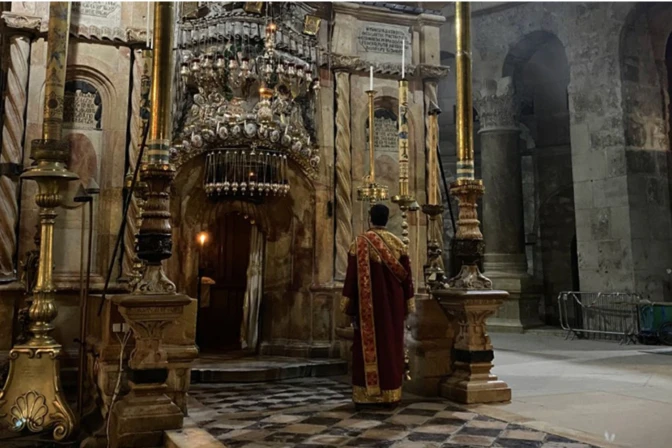
Read More
Collection for the Holy Land: Christians need concrete hope, not just consoling words #Catholic Cardinal Claudio Gugerotti, prefect of the Dicastery for the Eastern Churches, called upon the faithful worldwide to participate in the Good Friday collection aimed at assisting Christian communities in the Holy Land.The Good Friday collection is one of the primary sources of support for the Custody of the Holy Land — the Franciscan institution that for centuries has safeguarded the sites connected to the life of Jesus Christ and accompanied the Christian communities living in the region.The prefect called upon the faithful around the world to respond with a concrete gesture of solidarity. “I wish to propose a small gesture to you: to offer a little of our money to help our brothers and sisters who find themselves in extreme peril to live one more day, to find hope, and to find the possibility of starting anew.”“How many times have I personally visited those Christian minorities who wake up every morning facing the danger of no longer having a place to exist!” Gugerotti wrote in the March 18 letter, which was also signed by the dicastery’s secretary, Archbishop Michel Jalakh.“Help us to offer them concrete hope, not merely words of consolation — for we who visit them will leave, while they remain with their fears, even with the terror that, precisely because they are Christians, they may be eliminated,” the cardinal stated. The cardinal explained that the Good Friday donations hold a twofold significance: on the one hand, providing material aid to those living amid war and poverty, and on the other, challenging the conscience of the faithful.“It is also vital for us, because without sacrifice, without a real change in our way of living, we risk remaining inert before a world in flames — and thus complicit in its destruction,” he said. Gugerotti noted that many Christians in the Holy Land have lost their means of livelihood, especially those who depended on religious tourism, which historically sustained a large portion of the local economy. The conflict that began on Oct. 7, 2023, when Hamas attacked Israel, triggered a sharp decline in religious tourism.“A great many Christians in the Holy Land have lost everything, even the work that came from serving pilgrims,” he pointed out.In early 2025, Israel’s Ministry of Tourism characterized the year as a turning point, with 1.3 million international arrivals. However, 2026 has once again proven to be a highly problematic year for pilgrimages primarily due to the military escalation by the United States and Israel against Iran, which has thrown the entire region into crisis.The drastic reduction in pilgrimages and the current climate of insecurity have  exacerbated the situation. “Now, out of fear, almost everyone tends to avoid venturing into those lands,” he said.What is done with the money collected?In 2023 — the most recent year for which official data are available — the Holy Land collection raised 6,571,893 euros (.5 million). The Custody of the Holy Land typically receives 65% of the proceeds, while the remaining 35% goes to the Dicastery for the Eastern Churches, which uses it for the formation of priests and for subsidies to the various dioceses and eparchies in Palestine, Israel, Jordan, Lebanon, Syria, Turkey, and Iraq.Of the money it receives, the Custody of the Holy Land normally invests 20% in the upkeep of the sites where Jesus Christ walked, while the remainder goes to Christian families, who, in 1948, constituted 20% of the local population but now make up less than 1.4%.In the Gaza Strip, it collaborates with the Latin parish and the Atfa-Luna association to provide psycho-social support “to some 1,000 children and 300 adults,” as well as to distribute emergency kits and aid to families of people with disabilities.In Lebanon, the Church responded to the 2024 crisis (the fighting between Israel and Hezbollah) by providing “hot meals for some 500 beneficiaries every day” and ensuring “drinking water for about 250 people daily.” The Custody of the Holy Land also manages hundreds of housing units at nominal rents to prevent emigration.“It has been said that peace has been achieved; however, even though the media speak of it much less today than before, the shooting continues, people continue to die, lands remain disputed, and Christians continue to emigrate to save their lives,” the cardinal noted.According to the 2023 data released by the Dicastery for the Eastern Churches, 2,376,167 euros (.7 million) was donated to seminaries, houses of religious formation, and cultural institutions. The Franciscan Custody allocated more than 2 million euros (.3 million) to the education of young people in the Holy Land in 2023, funding scholarships at various universities in the region. Nearly 1 million euros (.15 million) were allocated to the Pontifical Oriental Institute, which now encompasses, at Pope Francis’ direction, the Pontifical Gregorian University.A portion was also invested in Bethlehem University, one of the prestigious foundations that underwrites the academic studies of 3,300 young people, both Muslim and Christian, with the aim of educating them to build a future of peace in the Holy Land.A concrete gesture: Giving is a ‘strong sign of faith’In his message, the cardinal invited bishops and pastoral leaders to raise awareness among the faithful regarding the importance of sustaining the Christian presence in the places where Christianity was born.“Let us ensure that our people approach the collection with the awareness that giving is a strong sign of faith,” he wrote. “A Holy Land without believers is a lost land, for the living memory of salvation is lost,” he added.“Pope Leo XIV never ceases to bring to our minds and hearts this commitment to be one, so that there may be peace — not a provisional truce, not perpetual hatred, not an immense expenditure on armaments, but a contribution to our common rebirth,” the cardinal wrote.The prelate concluded his letter by acknowledging that the collection would be merely “a drop in the ocean” but that “the ocean, as a result of losing its drops, is turning into a desert.”In addition to supporting the Franciscan mission in the Holy Land to safeguard the holy places, sustain local Christian communities, and foster peace in the region where Jesus lived, the cardinal said Christians can actively contribute by offering prayers to support this work and inspire new vocations, or by undertaking a pilgrimage to discover the roots of Christianity.This story was first published by ACI Prensa, the Spanish-language sister service of EWTN News. It has been translated and adapted by EWTN News English.

Collection for the Holy Land: Christians need concrete hope, not just consoling words #Catholic Cardinal Claudio Gugerotti, prefect of the Dicastery for the Eastern Churches, called upon the faithful worldwide to participate in the Good Friday collection aimed at assisting Christian communities in the Holy Land.The Good Friday collection is one of the primary sources of support for the Custody of the Holy Land — the Franciscan institution that for centuries has safeguarded the sites connected to the life of Jesus Christ and accompanied the Christian communities living in the region.The prefect called upon the faithful around the world to respond with a concrete gesture of solidarity. “I wish to propose a small gesture to you: to offer a little of our money to help our brothers and sisters who find themselves in extreme peril to live one more day, to find hope, and to find the possibility of starting anew.”“How many times have I personally visited those Christian minorities who wake up every morning facing the danger of no longer having a place to exist!” Gugerotti wrote in the March 18 letter, which was also signed by the dicastery’s secretary, Archbishop Michel Jalakh.“Help us to offer them concrete hope, not merely words of consolation — for we who visit them will leave, while they remain with their fears, even with the terror that, precisely because they are Christians, they may be eliminated,” the cardinal stated. The cardinal explained that the Good Friday donations hold a twofold significance: on the one hand, providing material aid to those living amid war and poverty, and on the other, challenging the conscience of the faithful.“It is also vital for us, because without sacrifice, without a real change in our way of living, we risk remaining inert before a world in flames — and thus complicit in its destruction,” he said. Gugerotti noted that many Christians in the Holy Land have lost their means of livelihood, especially those who depended on religious tourism, which historically sustained a large portion of the local economy. The conflict that began on Oct. 7, 2023, when Hamas attacked Israel, triggered a sharp decline in religious tourism.“A great many Christians in the Holy Land have lost everything, even the work that came from serving pilgrims,” he pointed out.In early 2025, Israel’s Ministry of Tourism characterized the year as a turning point, with 1.3 million international arrivals. However, 2026 has once again proven to be a highly problematic year for pilgrimages primarily due to the military escalation by the United States and Israel against Iran, which has thrown the entire region into crisis.The drastic reduction in pilgrimages and the current climate of insecurity have  exacerbated the situation. “Now, out of fear, almost everyone tends to avoid venturing into those lands,” he said.What is done with the money collected?In 2023 — the most recent year for which official data are available — the Holy Land collection raised 6,571,893 euros ($7.5 million). The Custody of the Holy Land typically receives 65% of the proceeds, while the remaining 35% goes to the Dicastery for the Eastern Churches, which uses it for the formation of priests and for subsidies to the various dioceses and eparchies in Palestine, Israel, Jordan, Lebanon, Syria, Turkey, and Iraq.Of the money it receives, the Custody of the Holy Land normally invests 20% in the upkeep of the sites where Jesus Christ walked, while the remainder goes to Christian families, who, in 1948, constituted 20% of the local population but now make up less than 1.4%.In the Gaza Strip, it collaborates with the Latin parish and the Atfa-Luna association to provide psycho-social support “to some 1,000 children and 300 adults,” as well as to distribute emergency kits and aid to families of people with disabilities.In Lebanon, the Church responded to the 2024 crisis (the fighting between Israel and Hezbollah) by providing “hot meals for some 500 beneficiaries every day” and ensuring “drinking water for about 250 people daily.” The Custody of the Holy Land also manages hundreds of housing units at nominal rents to prevent emigration.“It has been said that peace has been achieved; however, even though the media speak of it much less today than before, the shooting continues, people continue to die, lands remain disputed, and Christians continue to emigrate to save their lives,” the cardinal noted.According to the 2023 data released by the Dicastery for the Eastern Churches, 2,376,167 euros ($2.7 million) was donated to seminaries, houses of religious formation, and cultural institutions. The Franciscan Custody allocated more than 2 million euros ($2.3 million) to the education of young people in the Holy Land in 2023, funding scholarships at various universities in the region. Nearly 1 million euros ($1.15 million) were allocated to the Pontifical Oriental Institute, which now encompasses, at Pope Francis’ direction, the Pontifical Gregorian University.A portion was also invested in Bethlehem University, one of the prestigious foundations that underwrites the academic studies of 3,300 young people, both Muslim and Christian, with the aim of educating them to build a future of peace in the Holy Land.A concrete gesture: Giving is a ‘strong sign of faith’In his message, the cardinal invited bishops and pastoral leaders to raise awareness among the faithful regarding the importance of sustaining the Christian presence in the places where Christianity was born.“Let us ensure that our people approach the collection with the awareness that giving is a strong sign of faith,” he wrote. “A Holy Land without believers is a lost land, for the living memory of salvation is lost,” he added.“Pope Leo XIV never ceases to bring to our minds and hearts this commitment to be one, so that there may be peace — not a provisional truce, not perpetual hatred, not an immense expenditure on armaments, but a contribution to our common rebirth,” the cardinal wrote.The prelate concluded his letter by acknowledging that the collection would be merely “a drop in the ocean” but that “the ocean, as a result of losing its drops, is turning into a desert.”In addition to supporting the Franciscan mission in the Holy Land to safeguard the holy places, sustain local Christian communities, and foster peace in the region where Jesus lived, the cardinal said Christians can actively contribute by offering prayers to support this work and inspire new vocations, or by undertaking a pilgrimage to discover the roots of Christianity.This story was first published by ACI Prensa, the Spanish-language sister service of EWTN News. It has been translated and adapted by EWTN News English.

Now more than ever, the Christian minority in the Holy Land needs the support it receives through the annual Good Friday collection as ongoing violence in the Middle East has curtailed pilgrimages.
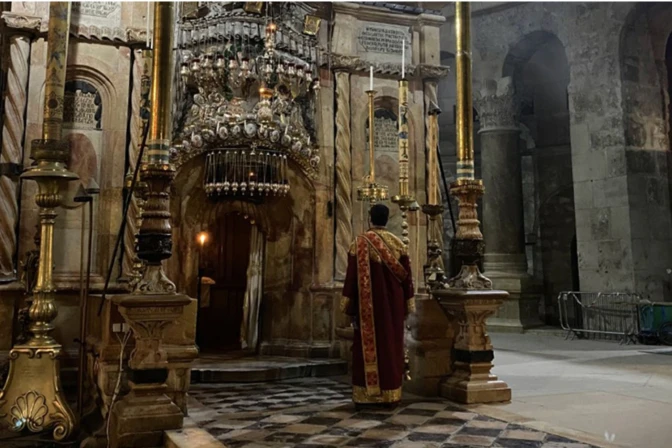
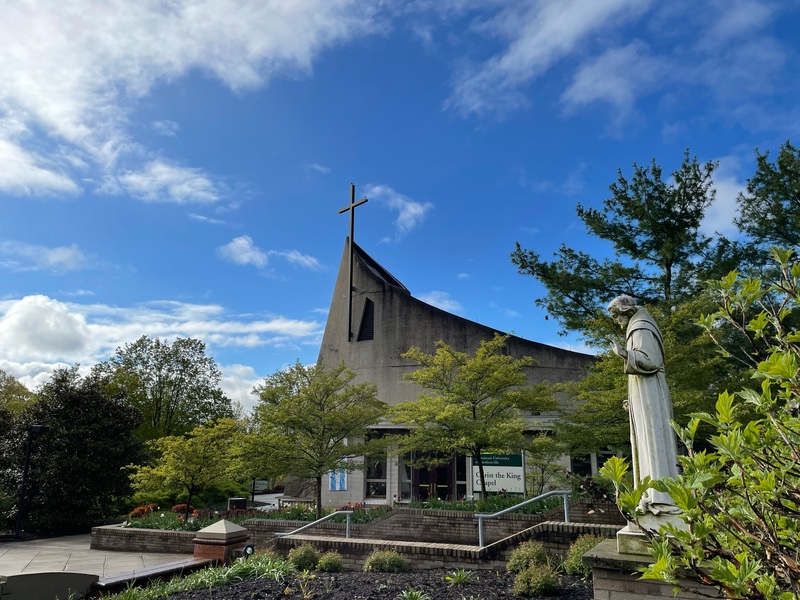
Read More
Speakers at 2026 Catholic graduations to include Ron DeSantis, Cardinal Dolan #Catholic Prominent U.S. Catholic leaders will headline commencement ceremonies at multiple Newman Guide-listed schools this spring, offering words of wisdom and faith to graduates around the country. Clergy, political leaders, and media figures will all take part in graduation events from Florida to Texas to Ohio and beyond. Ave Maria UniversityFlorida Gov. Ron DeSantis will be the commencement speaker at Ave Maria University, a spokesperson for the university told EWTN News.The Florida governor and former presidential candidate, who is a Catholic, will speak at the university’s May 9 graduation ceremony.Benedictine CollegePeter Cancro, the founder and chairman of the popular sandwich chain Jersey Mike’s, will deliver the 2026 commencement address at Benedictine College in Atchison, Kansas.Cancro will address graduates during the college’s commencement exercises on May 16 and will be presented with an honorary doctor of humane letters degree, according to a March 3 press release. Cancro is renowned for his charitable contributions to faith-based organizations, including a  million gift to Ave Maria School of Law.University of DallasCardinal Timothy Dolan, archbishop emeritus of New York, will deliver the commencement address at the University of Dallas this year.The university will present Dolan with an honorary doctor of humane letters degree during the May 16 ceremony, according to a press release. “Cardinal Dolan is one of the Church’s most joyful and widely respected shepherds, and we are honored to welcome him to the University of Dallas,” University of Dallas President Jonathan Sanford said.The Catholic University of AmericaUniversity of Mary President Monsignor James Shea will return to his alma mater, The Catholic University of America in Washington, D.C., to deliver the commencement address for the class of 2026.In a March 3 statement, university President Peter Kilpatrick described Shea as a “teacher, evangelist, interpreter of culture, and preacher,” one who is “deeply committed to the education and formation of young people.” “His ability to engage the larger culture with clarity, Christian hope, and great wit is a much-needed antidote to so many of the challenges we face today and an example I pray our students will take with them into their future vocations,” Kilpatrick said. The school’s graduation ceremony will take place May 16.Wyoming Catholic CollegeCatholicVote President and CEO Kelsey Reinhardt will give the commencement address for Wyoming Catholic College.“As two Wyoming natives, frequently traveling on behalf of our apostolates, our paths cross somewhat regularly,” said Wyoming Catholic College President Kyle Washut in a Feb. 23 press release.“I have had the privilege of visiting with Kelsey a number of times over the past year, and I have been impressed by her clarity on the moral challenges confronting America today and by her generosity and gentleness toward those who do not agree with her own clear-eyed analysis of those challenges.”Reinhardt’s commencement address will take place on May 18.Franciscan University of Steubenville The founders of the Napa Institute, Tim Busch and Father Robert J. Spitzer, SJ, will deliver commencement speeches for Franciscan University of Steubenville in Ohio.Busch, co-founder of the Napa Institute and founder of the Busch Firm, will deliver the commencement address for graduates of Franciscan University’s business and science programs, while Spitzer will give the commencement speech for humanities and social sciences graduates during the May 9 ceremonies, according to a March 10 university press release. The Latin patriarch of Jerusalem, Cardinal Pierbattista Pizzaballa, OFM, will also celebrate the baccalaureate Mass.Christendom CollegeAnne Carroll, founder of Seton School and Seton Home Study, will deliver the commencement address at Christendom College in Front Royal, Virginia.Carroll, who is the wife of the late Christendom College Founder Warren Carroll, will give the commencement address on May 15, the college announced in a March 12 release. The college will also honor Carroll “for her outstanding contributions to the Catholic faith, culture, and public life.”Walsh UniversityEWTN “Real Life Catholic” host Chris Stefanick will serve as commencement speaker for Walsh University, a Catholic university in Ohio.The university will also present Stefanick with an honorary doctorate of applied theology at the May 2 commencement ceremonies. “Commencement is more than a celebration of achievement. It is a commissioning,” President Tim Collins said in a Feb. 25 press release. “The leaders we honor on this day remind us that a life well lived is measured not only by accomplishment, but by impact — by how we place our talents at the service of faith, community, and the greater good. That is our hope for every Walsh University graduate. We pray they carry a deep sense of purpose, lead with integrity, and embrace the calling that gives their lives and work lasting meaning throughout every stage of life.”

Speakers at 2026 Catholic graduations to include Ron DeSantis, Cardinal Dolan #Catholic Prominent U.S. Catholic leaders will headline commencement ceremonies at multiple Newman Guide-listed schools this spring, offering words of wisdom and faith to graduates around the country. Clergy, political leaders, and media figures will all take part in graduation events from Florida to Texas to Ohio and beyond. Ave Maria UniversityFlorida Gov. Ron DeSantis will be the commencement speaker at Ave Maria University, a spokesperson for the university told EWTN News.The Florida governor and former presidential candidate, who is a Catholic, will speak at the university’s May 9 graduation ceremony.Benedictine CollegePeter Cancro, the founder and chairman of the popular sandwich chain Jersey Mike’s, will deliver the 2026 commencement address at Benedictine College in Atchison, Kansas.Cancro will address graduates during the college’s commencement exercises on May 16 and will be presented with an honorary doctor of humane letters degree, according to a March 3 press release. Cancro is renowned for his charitable contributions to faith-based organizations, including a $5 million gift to Ave Maria School of Law.University of DallasCardinal Timothy Dolan, archbishop emeritus of New York, will deliver the commencement address at the University of Dallas this year.The university will present Dolan with an honorary doctor of humane letters degree during the May 16 ceremony, according to a press release. “Cardinal Dolan is one of the Church’s most joyful and widely respected shepherds, and we are honored to welcome him to the University of Dallas,” University of Dallas President Jonathan Sanford said.The Catholic University of AmericaUniversity of Mary President Monsignor James Shea will return to his alma mater, The Catholic University of America in Washington, D.C., to deliver the commencement address for the class of 2026.In a March 3 statement, university President Peter Kilpatrick described Shea as a “teacher, evangelist, interpreter of culture, and preacher,” one who is “deeply committed to the education and formation of young people.” “His ability to engage the larger culture with clarity, Christian hope, and great wit is a much-needed antidote to so many of the challenges we face today and an example I pray our students will take with them into their future vocations,” Kilpatrick said. The school’s graduation ceremony will take place May 16.Wyoming Catholic CollegeCatholicVote President and CEO Kelsey Reinhardt will give the commencement address for Wyoming Catholic College.“As two Wyoming natives, frequently traveling on behalf of our apostolates, our paths cross somewhat regularly,” said Wyoming Catholic College President Kyle Washut in a Feb. 23 press release.“I have had the privilege of visiting with Kelsey a number of times over the past year, and I have been impressed by her clarity on the moral challenges confronting America today and by her generosity and gentleness toward those who do not agree with her own clear-eyed analysis of those challenges.”Reinhardt’s commencement address will take place on May 18.Franciscan University of Steubenville The founders of the Napa Institute, Tim Busch and Father Robert J. Spitzer, SJ, will deliver commencement speeches for Franciscan University of Steubenville in Ohio.Busch, co-founder of the Napa Institute and founder of the Busch Firm, will deliver the commencement address for graduates of Franciscan University’s business and science programs, while Spitzer will give the commencement speech for humanities and social sciences graduates during the May 9 ceremonies, according to a March 10 university press release. The Latin patriarch of Jerusalem, Cardinal Pierbattista Pizzaballa, OFM, will also celebrate the baccalaureate Mass.Christendom CollegeAnne Carroll, founder of Seton School and Seton Home Study, will deliver the commencement address at Christendom College in Front Royal, Virginia.Carroll, who is the wife of the late Christendom College Founder Warren Carroll, will give the commencement address on May 15, the college announced in a March 12 release. The college will also honor Carroll “for her outstanding contributions to the Catholic faith, culture, and public life.”Walsh UniversityEWTN “Real Life Catholic” host Chris Stefanick will serve as commencement speaker for Walsh University, a Catholic university in Ohio.The university will also present Stefanick with an honorary doctorate of applied theology at the May 2 commencement ceremonies. “Commencement is more than a celebration of achievement. It is a commissioning,” President Tim Collins said in a Feb. 25 press release. “The leaders we honor on this day remind us that a life well lived is measured not only by accomplishment, but by impact — by how we place our talents at the service of faith, community, and the greater good. That is our hope for every Walsh University graduate. We pray they carry a deep sense of purpose, lead with integrity, and embrace the calling that gives their lives and work lasting meaning throughout every stage of life.”

Multiple Catholic leaders are slated to be commencement speakers at Newman Guide Schools in 2026.
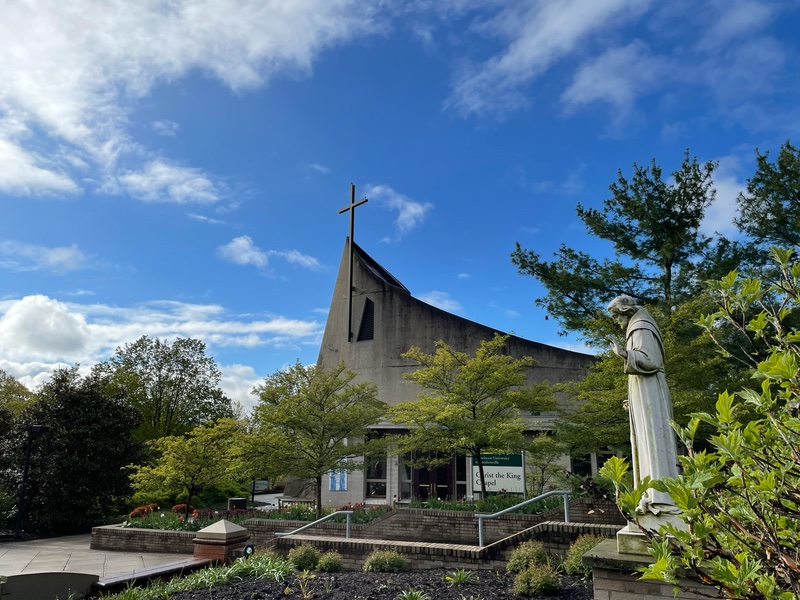
Read More
Parsippany pastor to explore ‘When is Enough, Enough?’ on radio show #Catholic – Father David Pickens, pastor of St. Peter the Apostle Parish in Parsippany, N.J., will discuss the renewed interest in faith-based films, the meaning of Holy Week, and hopeful signs of people returning to church during the March 25 episode of “Let Go and Let God.” This weekly radio show addresses listeners who are struggling with their Catholic faith, have doubts, or wish to strengthen their beliefs.
Click here to subscribe to our weekly newsletter.

In a busy, distracted world, this episode, “When is Enough, Enough?”, invites listeners to pause and remember what truly matters. Listeners will be reminded that God has already blessed them abundantly, and that true peace comes not from having more, but from gratitude and trust in him.
Art Suriano of Newton, N.J., the show’s creator, host, and producer, interviews a wide variety of guests, who cover different topical issues. He includes performances of his original Christian contemporary songs to further illuminate the episode’s theme.
Stream the episode on or after Wednesday, March 25, here or on all podcast platforms. The show will be broadcast locally on Sunday, March 29, on WRSK in Sussex at 7 a.m., and on WOLD in Edison at 8 a.m.

Parsippany pastor to explore ‘When is Enough, Enough?’ on radio show #Catholic –

Father David Pickens, pastor of St. Peter the Apostle Parish in Parsippany, N.J., will discuss the renewed interest in faith-based films, the meaning of Holy Week, and hopeful signs of people returning to church during the March 25 episode of “Let Go and Let God.” This weekly radio show addresses listeners who are struggling with their Catholic faith, have doubts, or wish to strengthen their beliefs.


Click here to subscribe to our weekly newsletter.

In a busy, distracted world, this episode, “When is Enough, Enough?”, invites listeners to pause and remember what truly matters. Listeners will be reminded that God has already blessed them abundantly, and that true peace comes not from having more, but from gratitude and trust in him.

Art Suriano of Newton, N.J., the show’s creator, host, and producer, interviews a wide variety of guests, who cover different topical issues. He includes performances of his original Christian contemporary songs to further illuminate the episode’s theme.

Stream the episode on or after Wednesday, March 25, here or on all podcast platforms. The show will be broadcast locally on Sunday, March 29, on WRSK in Sussex at 7 a.m., and on WOLD in Edison at 8 a.m.

Father David Pickens, pastor of St. Peter the Apostle Parish in Parsippany, N.J., will discuss the renewed interest in faith-based films, the meaning of Holy Week, and hopeful signs of people returning to church during the March 25 episode of “Let Go and Let God.” This weekly radio show addresses listeners who are struggling with their Catholic faith, have doubts, or wish to strengthen their beliefs. Click here to subscribe to our weekly newsletter. In a busy, distracted world, this episode, “When is Enough, Enough?”, invites listeners to pause and remember what truly matters. Listeners will be reminded that God
Read More
Sacred oils to be consecrated at Paterson Chrism Mass #Catholic – All the faithful of the Paterson Diocese in New Jersey are invited to join Bishop Kevin J. Sweeney for the Chrism Mass on Tuesday, March 31, at 7 p.m. in the Cathedral of St. John the Baptist in Paterson, N.J. All the priests of the diocese attend the annual Mass for the blessing of coming together in spiritual fellowship with Bishop Sweeney.
During the Mass, Bishop Sweeney will consecrate and bless the Oil of the Sick, used in the Anointing of the Sick, and the Oil of Catechumens, used for anointing those preparing for baptism. He will also consecrate the Sacred Chrism, used for baptism, confirmation, holy orders, and the dedication of altars. These holy oils will be used in parishes throughout the diocese during the coming year for various sacramental celebrations.

Click here to subscribe to our weekly newsletter.

Bishop Sweeney will be the homilist and principal celebrant of the Mass, with the priests of the diocese in attendance, concelebrating. The priests will renew their priestly promises before the bishop and receive the prayers and support of the people of God. Diocesan faithful, including deacons, religious, and laity, typically attend the liturgy, which will be livestreamed.
Father Jared Brogan, diocesan director of the Office of Worship and diocesan master of ceremonies, is coordinating the Chrism Mass.
“For priests, concelebrating the Chrism Mass with the bishop and presbyterate shows our relationship with the bishop and with one another,” Father Brogan said. “It is also an opportunity to renew our priestly promises before the bishop and to be present as he blesses the holy oils to be used by priests in their parishes. There is a great sense of communion: time to reflect, be reminded of, and appreciate the gift and mystery of the priesthood. It is also a sign of communion with all the faithful at this liturgy. They witness the priesthood and are invited to pray for the priests,” he said.
After the Mass, the holy oils will be distributed to representatives from each parish in the diocese, who will use them for the first time at the Easter Vigil. Once a year, a bishop blesses holy oils in his diocese, uniting him with the parishes when the sacraments are celebrated, and the oils are used.

Sacred oils to be consecrated at Paterson Chrism Mass #Catholic – All the faithful of the Paterson Diocese in New Jersey are invited to join Bishop Kevin J. Sweeney for the Chrism Mass on Tuesday, March 31, at 7 p.m. in the Cathedral of St. John the Baptist in Paterson, N.J. All the priests of the diocese attend the annual Mass for the blessing of coming together in spiritual fellowship with Bishop Sweeney. During the Mass, Bishop Sweeney will consecrate and bless the Oil of the Sick, used in the Anointing of the Sick, and the Oil of Catechumens, used for anointing those preparing for baptism. He will also consecrate the Sacred Chrism, used for baptism, confirmation, holy orders, and the dedication of altars. These holy oils will be used in parishes throughout the diocese during the coming year for various sacramental celebrations. Click here to subscribe to our weekly newsletter. Bishop Sweeney will be the homilist and principal celebrant of the Mass, with the priests of the diocese in attendance, concelebrating. The priests will renew their priestly promises before the bishop and receive the prayers and support of the people of God. Diocesan faithful, including deacons, religious, and laity, typically attend the liturgy, which will be livestreamed. Father Jared Brogan, diocesan director of the Office of Worship and diocesan master of ceremonies, is coordinating the Chrism Mass. “For priests, concelebrating the Chrism Mass with the bishop and presbyterate shows our relationship with the bishop and with one another,” Father Brogan said. “It is also an opportunity to renew our priestly promises before the bishop and to be present as he blesses the holy oils to be used by priests in their parishes. There is a great sense of communion: time to reflect, be reminded of, and appreciate the gift and mystery of the priesthood. It is also a sign of communion with all the faithful at this liturgy. They witness the priesthood and are invited to pray for the priests,” he said. After the Mass, the holy oils will be distributed to representatives from each parish in the diocese, who will use them for the first time at the Easter Vigil. Once a year, a bishop blesses holy oils in his diocese, uniting him with the parishes when the sacraments are celebrated, and the oils are used.

Sacred oils to be consecrated at Paterson Chrism Mass #Catholic –

All the faithful of the Paterson Diocese in New Jersey are invited to join Bishop Kevin J. Sweeney for the Chrism Mass on Tuesday, March 31, at 7 p.m. in the Cathedral of St. John the Baptist in Paterson, N.J. All the priests of the diocese attend the annual Mass for the blessing of coming together in spiritual fellowship with Bishop Sweeney.

During the Mass, Bishop Sweeney will consecrate and bless the Oil of the Sick, used in the Anointing of the Sick, and the Oil of Catechumens, used for anointing those preparing for baptism. He will also consecrate the Sacred Chrism, used for baptism, confirmation, holy orders, and the dedication of altars. These holy oils will be used in parishes throughout the diocese during the coming year for various sacramental celebrations.


Click here to subscribe to our weekly newsletter.

Bishop Sweeney will be the homilist and principal celebrant of the Mass, with the priests of the diocese in attendance, concelebrating. The priests will renew their priestly promises before the bishop and receive the prayers and support of the people of God. Diocesan faithful, including deacons, religious, and laity, typically attend the liturgy, which will be livestreamed.

Father Jared Brogan, diocesan director of the Office of Worship and diocesan master of ceremonies, is coordinating the Chrism Mass.

“For priests, concelebrating the Chrism Mass with the bishop and presbyterate shows our relationship with the bishop and with one another,” Father Brogan said. “It is also an opportunity to renew our priestly promises before the bishop and to be present as he blesses the holy oils to be used by priests in their parishes. There is a great sense of communion: time to reflect, be reminded of, and appreciate the gift and mystery of the priesthood. It is also a sign of communion with all the faithful at this liturgy. They witness the priesthood and are invited to pray for the priests,” he said.

After the Mass, the holy oils will be distributed to representatives from each parish in the diocese, who will use them for the first time at the Easter Vigil. Once a year, a bishop blesses holy oils in his diocese, uniting him with the parishes when the sacraments are celebrated, and the oils are used.

All the faithful of the Paterson Diocese in New Jersey are invited to join Bishop Kevin J. Sweeney for the Chrism Mass on Tuesday, March 31, at 7 p.m. in the Cathedral of St. John the Baptist in Paterson, N.J. All the priests of the diocese attend the annual Mass for the blessing of coming together in spiritual fellowship with Bishop Sweeney. During the Mass, Bishop Sweeney will consecrate and bless the Oil of the Sick, used in the Anointing of the Sick, and the Oil of Catechumens, used for anointing those preparing for baptism. He will also consecrate the
Read More
Walk possible saint’s footsteps on the Mexican pilgrimage with bishop #Catholic – A young girl from the World Villages for Children Girlstown in Chalco, Mexico, Zayra used to walk two hours to school daily, avoiding a human trafficker who had been stalking her. She spent her evenings with an alcoholic and abusive grandfather. Zayra prayed before an Our Lady of Guadalupe statue for relief. Then, the Sisters of Mary found her.
Kevin Wells remembers Zayra telling him the story, one of thousands he’d heard while visiting the mission, a school-orphanage started by Venerable Father Aloysius Schwartz. When he went to Chalco to research a biography on Father Schwartz, affectionately known as “Father Al,” the mother superior of the Sisters of Mary at Girlstown told him, “If you want to get to know Father Al, I want you to start with these girls first.”
“Since then, I’ve spoken to hundreds worldwide about these nightmares,” said Wells, who wrote “Priest and Beggar: The Heroic Life of Venerable Aloysius Schwartz.”
Bishop Kevin J. Sweeney of the Diocese of Paterson in New Jersey will lead a pilgrimage in the footsteps of Venerable Father Aloysius Schwartz, titled “A Journey of Faith & Joy: Guadalupe to Girlstown,” in Chalco, Mexico, from Friday, Sept. 18 to Monday, Sept. 21. He will be accompanied by Kevin Wells and his brother, Father David Wells of the Archdiocese of Washington, D.C.
All diocesan faithful are invited to join Bishop Sweeney and the Wells brothers on this life-changing pilgrimage, designed to help participants come to know the possible future U.S. saint who founded the Sisters of Mary. For more information about Venerable Father Aloysius Schwartz and the experience of visiting Mexico, watch this episode of the bishop’s Beyond the Beacon podcast.

The pilgrims will also visit Girlstown, witnessing how the Sisters of Mary transform the lives of poor children through education, faith formation, and vocational skills training, and sending them out into the world as Christ-like missionaries. In 1989, Venerable Father Aloysius Schwartz was diagnosed with ALS, or Lou Gehrig’s Disease, and knew he would die soon. Yet he heard the Blessed Mother call him to found a Girlstown in Chalco and the Boystown in Guadalajara.
“Without exaggerating, I can tell you that everybody weeps,” Kevin Wells said of the upwards of 20 pilgrimages he has led to Chalco. “When people go down, they expect to see wounded girls. Instead, they see girls filled with joy, because the Sisters of Mary work all day long, from before dawn until they go to bed at night, mothering the wounds away, removing the nightmares and woundedness so the graces can come in.”
Also, pilgrims will attend daily Masses with Bishop Sweeney at the nearby Basilica Shrine of Our Lady of Guadalupe — the most visited Marian shrine in the world. There, they will see the miraculous Tilma of St. Juan Diego, an image created by God. They will climb Tepeyac Hill, where the Blessed Mother appeared and spoke to St. Juan Diego in 1531.

Click here to subscribe to our weekly newsletter.

The trip’s itinerary also includes several reflections on intimacy with Our Lady, prayer, sacrifice, and living the faith, led by Bishop Sweeney and the Wells brothers. Pilgrims will stay at a hotel near the Basilica Shrine of Our Lady of Guadalupe, allowing for easy access to these spiritual experiences.
The Cause for Canonization of Father Schwartz was opened by the Archdiocese of Manila, the Philippines, in 2003. Pope Francis recognized Father Al’s “heroic virtue,” declaring him “venerable” Jan. 22, 2015.
Venerable Father Aloysius Schwartz established Girlstown orphanages, staffed by the Sisters of Mary, in several countries, serving more than 180,000. With Mary’s help, he raised hundreds of millions of dollars to build Boystowns, Girlstowns, hospitals, hospices, leprosaria, and schools worldwide, Kevin Wells said.
Born in 1930 in Washington, D.C., Venerable Father Aloysius Schwartz was ordained a priest of the Society of the Auxiliaries of the Missions in Belgium in 1957. Here, he encountered Our Lady of the Poor, or Our Lady of Banneux. In 1964, while serving in post-war South Korea, he founded the Sisters of Mary.
Summing up Father Al’s character, Kevin Wells added, “Father Al didn’t care about his own comfort. He made a promise to Mary that he would do revolting things, hard things, if only she would give him the poorest of the poor.”
This selfless commitment continued in 1989, when Father Al traveled to Mexico despite having Lou Gehrig’s Disease. He heard that “many of the Mexicans were leaving the faith because of poverty,” Kevin Wells said. After visiting the Basilica Shrine, he began to serve Mary under the mantle of Our Lady of Guadalupe. Subsequently, Father Al returned to the Philippines, where he had been incardinated as a priest, and died on March 16, 1992.
The seeds for the pilgrimage in September first germinated when Bishop Sweeney discovered Father Al’s story, reading “Priest and Beggar.” A friend of Kevin Wells forwarded him a column the bishop wrote about Father Al. Wells offered to bring the bishop to Chalco to visit, which they did with 14 men in 2024. The bishop met the Girlstown community.
“They fell in love with Bishop Sweeney because they saw his joy, and they saw that he was a good priest. He fell in love with the mission and wanted to go back, so he reached out, and we decided to do it again,” Kevin Wells said.
Pilgrimage prices start at ,799 per person, excluding travel expenses. For more information, visit worldvillages.org/events/sweeney-wells. Register online by Aug. 18.

Walk possible saint’s footsteps on the Mexican pilgrimage with bishop #Catholic – A young girl from the World Villages for Children Girlstown in Chalco, Mexico, Zayra used to walk two hours to school daily, avoiding a human trafficker who had been stalking her. She spent her evenings with an alcoholic and abusive grandfather. Zayra prayed before an Our Lady of Guadalupe statue for relief. Then, the Sisters of Mary found her. Kevin Wells remembers Zayra telling him the story, one of thousands he’d heard while visiting the mission, a school-orphanage started by Venerable Father Aloysius Schwartz. When he went to Chalco to research a biography on Father Schwartz, affectionately known as “Father Al,” the mother superior of the Sisters of Mary at Girlstown told him, “If you want to get to know Father Al, I want you to start with these girls first.” “Since then, I’ve spoken to hundreds worldwide about these nightmares,” said Wells, who wrote “Priest and Beggar: The Heroic Life of Venerable Aloysius Schwartz.” Bishop Kevin J. Sweeney of the Diocese of Paterson in New Jersey will lead a pilgrimage in the footsteps of Venerable Father Aloysius Schwartz, titled “A Journey of Faith & Joy: Guadalupe to Girlstown,” in Chalco, Mexico, from Friday, Sept. 18 to Monday, Sept. 21. He will be accompanied by Kevin Wells and his brother, Father David Wells of the Archdiocese of Washington, D.C. All diocesan faithful are invited to join Bishop Sweeney and the Wells brothers on this life-changing pilgrimage, designed to help participants come to know the possible future U.S. saint who founded the Sisters of Mary. For more information about Venerable Father Aloysius Schwartz and the experience of visiting Mexico, watch this episode of the bishop’s Beyond the Beacon podcast. The pilgrims will also visit Girlstown, witnessing how the Sisters of Mary transform the lives of poor children through education, faith formation, and vocational skills training, and sending them out into the world as Christ-like missionaries. In 1989, Venerable Father Aloysius Schwartz was diagnosed with ALS, or Lou Gehrig’s Disease, and knew he would die soon. Yet he heard the Blessed Mother call him to found a Girlstown in Chalco and the Boystown in Guadalajara. “Without exaggerating, I can tell you that everybody weeps,” Kevin Wells said of the upwards of 20 pilgrimages he has led to Chalco. “When people go down, they expect to see wounded girls. Instead, they see girls filled with joy, because the Sisters of Mary work all day long, from before dawn until they go to bed at night, mothering the wounds away, removing the nightmares and woundedness so the graces can come in.” Also, pilgrims will attend daily Masses with Bishop Sweeney at the nearby Basilica Shrine of Our Lady of Guadalupe — the most visited Marian shrine in the world. There, they will see the miraculous Tilma of St. Juan Diego, an image created by God. They will climb Tepeyac Hill, where the Blessed Mother appeared and spoke to St. Juan Diego in 1531. Click here to subscribe to our weekly newsletter. The trip’s itinerary also includes several reflections on intimacy with Our Lady, prayer, sacrifice, and living the faith, led by Bishop Sweeney and the Wells brothers. Pilgrims will stay at a hotel near the Basilica Shrine of Our Lady of Guadalupe, allowing for easy access to these spiritual experiences. The Cause for Canonization of Father Schwartz was opened by the Archdiocese of Manila, the Philippines, in 2003. Pope Francis recognized Father Al’s “heroic virtue,” declaring him “venerable” Jan. 22, 2015. Venerable Father Aloysius Schwartz established Girlstown orphanages, staffed by the Sisters of Mary, in several countries, serving more than 180,000. With Mary’s help, he raised hundreds of millions of dollars to build Boystowns, Girlstowns, hospitals, hospices, leprosaria, and schools worldwide, Kevin Wells said. Born in 1930 in Washington, D.C., Venerable Father Aloysius Schwartz was ordained a priest of the Society of the Auxiliaries of the Missions in Belgium in 1957. Here, he encountered Our Lady of the Poor, or Our Lady of Banneux. In 1964, while serving in post-war South Korea, he founded the Sisters of Mary. Summing up Father Al’s character, Kevin Wells added, “Father Al didn’t care about his own comfort. He made a promise to Mary that he would do revolting things, hard things, if only she would give him the poorest of the poor.” This selfless commitment continued in 1989, when Father Al traveled to Mexico despite having Lou Gehrig’s Disease. He heard that “many of the Mexicans were leaving the faith because of poverty,” Kevin Wells said. After visiting the Basilica Shrine, he began to serve Mary under the mantle of Our Lady of Guadalupe. Subsequently, Father Al returned to the Philippines, where he had been incardinated as a priest, and died on March 16, 1992. The seeds for the pilgrimage in September first germinated when Bishop Sweeney discovered Father Al’s story, reading “Priest and Beggar.” A friend of Kevin Wells forwarded him a column the bishop wrote about Father Al. Wells offered to bring the bishop to Chalco to visit, which they did with 14 men in 2024. The bishop met the Girlstown community. “They fell in love with Bishop Sweeney because they saw his joy, and they saw that he was a good priest. He fell in love with the mission and wanted to go back, so he reached out, and we decided to do it again,” Kevin Wells said. Pilgrimage prices start at $1,799 per person, excluding travel expenses. For more information, visit worldvillages.org/events/sweeney-wells. Register online by Aug. 18.

Walk possible saint’s footsteps on the Mexican pilgrimage with bishop #Catholic –

A young girl from the World Villages for Children Girlstown in Chalco, Mexico, Zayra used to walk two hours to school daily, avoiding a human trafficker who had been stalking her. She spent her evenings with an alcoholic and abusive grandfather. Zayra prayed before an Our Lady of Guadalupe statue for relief. Then, the Sisters of Mary found her.

Kevin Wells remembers Zayra telling him the story, one of thousands he’d heard while visiting the mission, a school-orphanage started by Venerable Father Aloysius Schwartz. When he went to Chalco to research a biography on Father Schwartz, affectionately known as “Father Al,” the mother superior of the Sisters of Mary at Girlstown told him, “If you want to get to know Father Al, I want you to start with these girls first.”

“Since then, I’ve spoken to hundreds worldwide about these nightmares,” said Wells, who wrote “Priest and Beggar: The Heroic Life of Venerable Aloysius Schwartz.”

Bishop Kevin J. Sweeney of the Diocese of Paterson in New Jersey will lead a pilgrimage in the footsteps of Venerable Father Aloysius Schwartz, titled “A Journey of Faith & Joy: Guadalupe to Girlstown,” in Chalco, Mexico, from Friday, Sept. 18 to Monday, Sept. 21. He will be accompanied by Kevin Wells and his brother, Father David Wells of the Archdiocese of Washington, D.C.

All diocesan faithful are invited to join Bishop Sweeney and the Wells brothers on this life-changing pilgrimage, designed to help participants come to know the possible future U.S. saint who founded the Sisters of Mary. For more information about Venerable Father Aloysius Schwartz and the experience of visiting Mexico, watch this episode of the bishop’s Beyond the Beacon podcast.

The pilgrims will also visit Girlstown, witnessing how the Sisters of Mary transform the lives of poor children through education, faith formation, and vocational skills training, and sending them out into the world as Christ-like missionaries. In 1989, Venerable Father Aloysius Schwartz was diagnosed with ALS, or Lou Gehrig’s Disease, and knew he would die soon. Yet he heard the Blessed Mother call him to found a Girlstown in Chalco and the Boystown in Guadalajara.

“Without exaggerating, I can tell you that everybody weeps,” Kevin Wells said of the upwards of 20 pilgrimages he has led to Chalco. “When people go down, they expect to see wounded girls. Instead, they see girls filled with joy, because the Sisters of Mary work all day long, from before dawn until they go to bed at night, mothering the wounds away, removing the nightmares and woundedness so the graces can come in.”

Also, pilgrims will attend daily Masses with Bishop Sweeney at the nearby Basilica Shrine of Our Lady of Guadalupe — the most visited Marian shrine in the world. There, they will see the miraculous Tilma of St. Juan Diego, an image created by God. They will climb Tepeyac Hill, where the Blessed Mother appeared and spoke to St. Juan Diego in 1531.


Click here to subscribe to our weekly newsletter.

The trip’s itinerary also includes several reflections on intimacy with Our Lady, prayer, sacrifice, and living the faith, led by Bishop Sweeney and the Wells brothers. Pilgrims will stay at a hotel near the Basilica Shrine of Our Lady of Guadalupe, allowing for easy access to these spiritual experiences.

The Cause for Canonization of Father Schwartz was opened by the Archdiocese of Manila, the Philippines, in 2003. Pope Francis recognized Father Al’s “heroic virtue,” declaring him “venerable” Jan. 22, 2015.

Venerable Father Aloysius Schwartz established Girlstown orphanages, staffed by the Sisters of Mary, in several countries, serving more than 180,000. With Mary’s help, he raised hundreds of millions of dollars to build Boystowns, Girlstowns, hospitals, hospices, leprosaria, and schools worldwide, Kevin Wells said.

Born in 1930 in Washington, D.C., Venerable Father Aloysius Schwartz was ordained a priest of the Society of the Auxiliaries of the Missions in Belgium in 1957. Here, he encountered Our Lady of the Poor, or Our Lady of Banneux. In 1964, while serving in post-war South Korea, he founded the Sisters of Mary.

Summing up Father Al’s character, Kevin Wells added, “Father Al didn’t care about his own comfort. He made a promise to Mary that he would do revolting things, hard things, if only she would give him the poorest of the poor.”

This selfless commitment continued in 1989, when Father Al traveled to Mexico despite having Lou Gehrig’s Disease. He heard that “many of the Mexicans were leaving the faith because of poverty,” Kevin Wells said. After visiting the Basilica Shrine, he began to serve Mary under the mantle of Our Lady of Guadalupe. Subsequently, Father Al returned to the Philippines, where he had been incardinated as a priest, and died on March 16, 1992.

The seeds for the pilgrimage in September first germinated when Bishop Sweeney discovered Father Al’s story, reading “Priest and Beggar.” A friend of Kevin Wells forwarded him a column the bishop wrote about Father Al. Wells offered to bring the bishop to Chalco to visit, which they did with 14 men in 2024. The bishop met the Girlstown community.

“They fell in love with Bishop Sweeney because they saw his joy, and they saw that he was a good priest. He fell in love with the mission and wanted to go back, so he reached out, and we decided to do it again,” Kevin Wells said.

Pilgrimage prices start at $1,799 per person, excluding travel expenses. For more information, visit worldvillages.org/events/sweeney-wells. Register online by Aug. 18.

A young girl from the World Villages for Children Girlstown in Chalco, Mexico, Zayra used to walk two hours to school daily, avoiding a human trafficker who had been stalking her. She spent her evenings with an alcoholic and abusive grandfather. Zayra prayed before an Our Lady of Guadalupe statue for relief. Then, the Sisters of Mary found her. Kevin Wells remembers Zayra telling him the story, one of thousands he’d heard while visiting the mission, a school-orphanage started by Venerable Father Aloysius Schwartz. When he went to Chalco to research a biography on Father Schwartz, affectionately known as “Father

Read More