
NASA astronaut and Expedition 74 crew member Chris Williams smiles for the camera during a spacesuit fit verification inside the International Space Station’s Quest airlock.
Read MoreNASA astronaut and Expedition 74 crew member Chris Williams smiles for the camera during a spacesuit fit verification inside the International Space Station’s Quest airlock.
Read More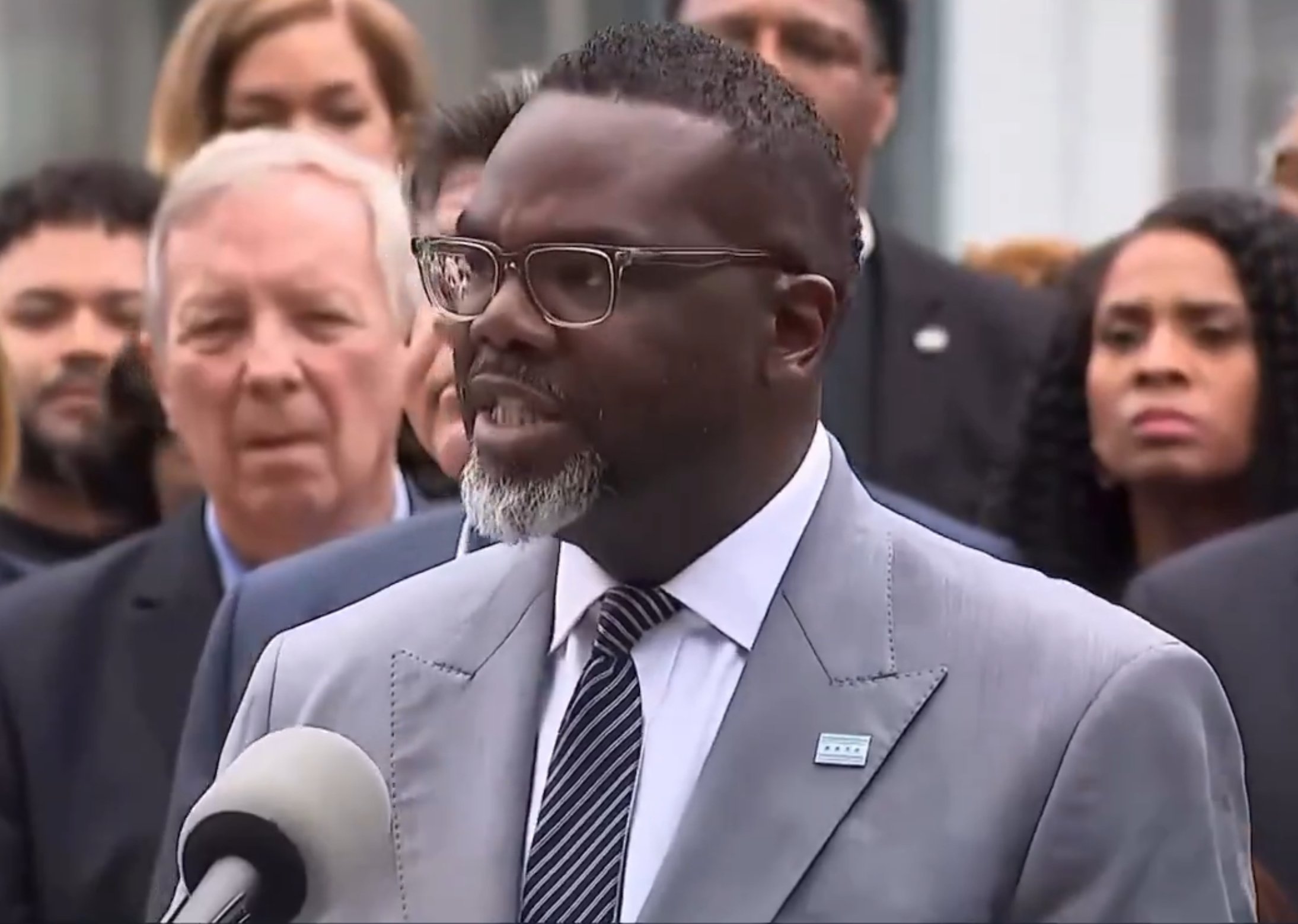


The city of Chicago is facing a serious financial crisis, and while their budget problems are not a secret, at least one financial expert is trying to sound the alarm.
The post Financial Expert Sounds Alarm on the City of Chicago – Facing Budget Gap of More Than a Billion Dollars appeared first on The Gateway Pundit.
Read More


California Democrats have revealed their thoughts and feelings about another Kamala Harris run for president.
The post New Polling Reveals California Democrats Are NOT INTERESTED in Another Kamala Harris Run for President appeared first on The Gateway Pundit.
Read More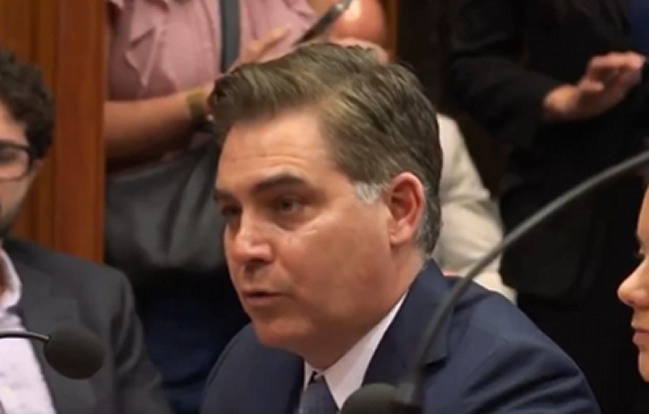


Former CNN employee Jim Acosta is deeply worried that ‘partisan hacks’ are taking over the news business.
The post Partisan Hack Jim Acosta Warns Partisan Hacks Are Taking Over the News Business (VIDEO) appeared first on The Gateway Pundit.
Read MoreA reading from the Book of Jeremiah
11:18-20
I knew their plot because the LORD informed me;
at that time you, O LORD, showed me their doings.
Yet I, like a trusting lamb led to slaughter,
had not realized that they were hatching plots against me:
"Let us destroy the tree in its vigor;
let us cut him off from the land of the living,
so that his name will be spoken no more."
But, you, O LORD of hosts, O just Judge,
searcher of mind and heart,
Let me witness the vengeance you take on them,
for to you I have entrusted my cause!
From the Gospel according to John
7:40-53
Some in the crowd who heard these words of Jesus said,
"This is truly the Prophet."
Others said, "This is the Christ."
But others said, "The Christ will not come from Galilee, will he?
Does not Scripture say that the Christ will be of David’s family
and come from Bethlehem, the village where David lived?"
So a division occurred in the crowd because of him.
Some of them even wanted to arrest him,
but no one laid hands on him.
So the guards went to the chief priests and Pharisees,
who asked them, "Why did you not bring him?"
The guards answered, "Never before has anyone spoken like this man."
So the Pharisees answered them, "Have you also been deceived?
Have any of the authorities or the Pharisees believed in him?
But this crowd, which does not know the law, is accursed."
Nicodemus, one of their members who had come to him earlier, said to them,
"Does our law condemn a man before it first hears him
and finds out what he is doing?"
They answered and said to him,
"You are not from Galilee also, are you?
Look and see that no prophet arises from Galilee."
Then each went to his own house.
“Then each went to his own house” (Jn 7:53). After debating everyone returned to their own convictions. There is a division within the people: the people who follow Jesus and who listen to Him – they are not aware of the time spent listening to Him, for the Word of Jesus enters the heart – and the group of the Doctors of the Law who reject Jesus a priori because, in their opinion, He was not observing the Law. The people were divided in two camps: The people who loved Jesus and followed Him, and the group of the intellectuals of the Law, the leaders of Israel, the leaders of the people. This is clear when the guards went to the chief priests who asked them: “Why haven’t you brought him?” And the guards answered: “There has never been anybody who has spoken like him.” But the Pharisees answered them: “So, you have been led astray as well? (…) And this small group of the elite, the Doctors of the Law, despise Jesus. And they also despise the people, “that crowd” which is ignorant and does not know anything. The holy, faithful People of God. (Francis, Santa Marta, 28 March 2020)
Read More![Death of doomsday population ‘prophet’ prompts retrospection by Catholic thought leaders – #Catholic – Paul Ehrlich, the biologist whose 1968 bestseller “The Population Bomb” warned of imminent mass starvation and environmental catastrophe from overpopulation and whose predictions proved spectacularly wrong, died March 13 at age 93. His death has prompted retrospection among Catholic scholars, who condemned his legacy as a “false prophet” whose ideas fueled deadly population control policies and demographic decline worldwide.Several of those scholars, whose work deals directly with the fallout of Ehrlich’s ideas, did not mince words when talking with EWTN News about the immense responsibility Ehrlich bore for his “wrong predictions,” which they say led to the deaths and nonexistence of millions of people around the world.“He was a false prophet of the worst kind,” said Steve Mosher, president of the Population Research Institute and a specialist on China. “He is responsible for hundreds of millions of deaths worldwide, and his wrong predictions prevented millions of souls from coming into existence. There is nothing more diabolical than that.”Ehrlich’s book famously opened with the following statement: “The battle to feed all of humanity is over. In the 1970s hundreds of millions of people will starve to death in spite of any crash programs embarked upon now.”Later editions of the book, which Ehrlich co-authored with his wife, Anne, sometimes broadened the dates slightly to “the 1970s and 1980s,” but his core prediction, that large-scale famines killing hundreds of millions were inevitable in the immediate future, never came to pass.Ehrlich “never acknowledged how extraordinarily, absolutely wrong he was about every one of his predictions,” Mosher said. “America and many parts of the world are now below replacement birth rate in part because of his false proclamations of doom.”In the book, Ehrlich suggested voluntary, mass contraceptive use, tax penalties on large families, “luxury taxes” on goods such as cribs and diapers, and “responsibility prizes” and other incentives for childlessness or delayed marriage.If these methods failed to change people’s “value systems,” however, he suggested governments force change “by compulsion,” such as adding temporary sterilants to water supplies or staple foods (with government-rationed antidotes to control birth rates).He also called for a powerful federal bureau to enforce population limits and the conditioning of foreign aid on recipient countries’ population-control efforts, which, according to Mosher, to this day remains part of U.S. law.Ehrlich framed these as necessary to avert catastrophe, emphasizing “conscious regulation of human numbers” and that “the cancer [of population growth] itself must be cut out.”Ehrlich’s death “marks the end of the life of one of the great enemies of mankind,” said Catherine Pakaluk, a Harvard-trained economist at The Catholic University of America and author of the 2024 book “Hannah’s Daughters: The Women Quietly Defying the Birth Dearth,” in which college-educated women explain why they chose to have large families.“He was unbalanced, and no part of his work was correct,” she said. “The great scandal is that he was welcomed not only by progressives all over the world but even by Christians and Catholics as some kind of prophet.”Mosher agreed: “Many people have regretted that they were deceived by Ehrlich and his false claims. They tell me they were deceived into contracepting or aborting the children they would have had out of existence.”He taught “really nasty, humanity-hating stuff. I will pray for the repose of his soul,” Mosher said.Though Ehrlich later distanced himself from the more coercive policies he urgently suggested in his first book, Mosher told EWTN News that Ehrlich often refused to debate others with ideas that opposed his “because he didn’t like being contradicted and could not admit that he was wrong.”Instead, Ehrlich doubled down, Mosher said: “With each passing decade, he would write a new book, explaining his predictions were merely premature, not wrong. He taught that people were jeopardizing earth’s ability to support life and were a plague on the planet. By killing ourselves, we’d be doing mother earth a favor.”Indeed, in 2018, Ehrlich said civilization’s collapse was “a near certainty in the next few decades.”An obituary in the New York Times last week called Ehrlich’s predictions of ecosystem collapse and mass starvation “premature” rather than wrong.China’s 1-child policy an outcome of Ehrlich’s ideasIn 1979, Mosher, who studied anthropology, oceanography, and East Asian studies at Stanford University, where Ehrlich taught, was the first American social scientist to visit mainland China. Invited there by the Chinese government, he personally witnessed women forced to have abortions under the “one-child policy.”Mosher was a pro-choice atheist at the time, he said, but seeing the brutality of the forced abortions, sterilizations, and infanticide led him to change his views and eventually become a pro-life Catholic.Mosher called Ehrlich the “godfather of China’s one-child policy” because the communist regime adopted principles directly from Ehrlich’s book, among other sources.“His proposals, which suggested governments should impose harsh regimens of population controls and resource conservation, using whatever means necessary, led to the forced killing of 400 million unborn and newborn children,” Mosher said.He pointed out that Ehrlich’s ideas were so wrong, China is now having a “population implosion. The government is desperate to raise the birth rate, proposing incentives to young couples to have children.”Ehrlich’s thinking ‘rejects the providence of God’Ehrlich’s thinking “rejects the providence of God,” Pakaluk said, “specifically in the domains which are God’s: Scripture says God is the author of life and death.”Regarding population growth (or decline) and climate change, Pakaluk said people of faith should ask: “How does this thing, which seems difficult or impossible, how does it propose a challenge we as a society have to meet in order to see the plan of God?”“With the hopeful expectation of people of faith, we say with Our Lady … how? How is it going to work out that people aren’t going to be a threat to mankind? That’s always been the question of Our Lady. She doesn’t doubt, she just has a question,” Pakaluk said.“The ‘how’ question is the job of people of goodwill, specifically, men and women of science,” she said.The Green RevolutionEhrlich’s predictions of worldwide starvation did not come to pass in part because of the Green Revolution, which massively transformed agriculture through advances in technology. It was a vast, global, technological initiative to fight hunger by introducing high-yield, disease-resistant seeds (especially wheat and rice). Key elements included synthetic fertilizers, pesticides, and intensive irrigation, shifting agriculture toward industrial methods. This dramatically increased food production globally and prevented the predicted scale of famine, though hunger and malnutrition have persisted in parts of the world for political or economic reasons.Ehrlich’s ‘huge cultural impact’Although Ehrlich was one of many scientists claiming the world could not handle its growing population, Ehrlich’s charisma helped popularize his ideas. He appeared on “The Tonight Show Starring Johnny Carson“ at least 20 times.“Ehrlich had a huge cultural impact,” Mosher said. “He was a pied piper who misled generations of American young people, forced by their professors to read his screed. They thought it was the socially responsible thing to do to have one child.”Ehrlich wrote more than 50 books and founded Zero Population Growth, now called Population Connection, which blames overpopulation for climate change. He received dozens of awards for his work.Ehrlich was born in Philadelphia in 1932 and earned a bachelor’s degree at the University of Pennsylvania and received his doctoral degree in entomology from the University of Kansas, specializing in butterflies.](https://unitedyam.com/wp-content/uploads/2026/03/death-of-doomsday-population-prophet-prompts-retrospection-by-catholic-thought-leaders-catholic-paul-ehrlich-the-biologist-whose-1968-bestseller-the-population-bomb.jpg "Death of doomsday population ‘prophet’ prompts retrospection by Catholic thought leaders – #Catholic – Paul Ehrlich, the biologist whose 1968 bestseller “The Population Bomb” warned of imminent mass starvation and environmental catastrophe from overpopulation and whose predictions proved spectacularly wrong, died March 13 at age 93. His death has prompted retrospection among Catholic scholars, who condemned his legacy as a “false prophet” whose ideas fueled deadly population control policies and demographic decline worldwide.Several of those scholars, whose work deals directly with the fallout of Ehrlich’s ideas, did not mince words when talking with EWTN News about the immense responsibility Ehrlich bore for his “wrong predictions,” which they say led to the deaths and nonexistence of millions of people around the world.“He was a false prophet of the worst kind,” said Steve Mosher, president of the Population Research Institute and a specialist on China. “He is responsible for hundreds of millions of deaths worldwide, and his wrong predictions prevented millions of souls from coming into existence. There is nothing more diabolical than that.”Ehrlich’s book famously opened with the following statement: “The battle to feed all of humanity is over. In the 1970s hundreds of millions of people will starve to death in spite of any crash programs embarked upon now.”Later editions of the book, which Ehrlich co-authored with his wife, Anne, sometimes broadened the dates slightly to “the 1970s and 1980s,” but his core prediction, that large-scale famines killing hundreds of millions were inevitable in the immediate future, never came to pass.Ehrlich “never acknowledged how extraordinarily, absolutely wrong he was about every one of his predictions,” Mosher said. “America and many parts of the world are now below replacement birth rate in part because of his false proclamations of doom.”In the book, Ehrlich suggested voluntary, mass contraceptive use, tax penalties on large families, “luxury taxes” on goods such as cribs and diapers, and “responsibility prizes” and other incentives for childlessness or delayed marriage.If these methods failed to change people’s “value systems,” however, he suggested governments force change “by compulsion,” such as adding temporary sterilants to water supplies or staple foods (with government-rationed antidotes to control birth rates).He also called for a powerful federal bureau to enforce population limits and the conditioning of foreign aid on recipient countries’ population-control efforts, which, according to Mosher, to this day remains part of U.S. law.Ehrlich framed these as necessary to avert catastrophe, emphasizing “conscious regulation of human numbers” and that “the cancer [of population growth] itself must be cut out.”Ehrlich’s death “marks the end of the life of one of the great enemies of mankind,” said Catherine Pakaluk, a Harvard-trained economist at The Catholic University of America and author of the 2024 book “Hannah’s Daughters: The Women Quietly Defying the Birth Dearth,” in which college-educated women explain why they chose to have large families.“He was unbalanced, and no part of his work was correct,” she said. “The great scandal is that he was welcomed not only by progressives all over the world but even by Christians and Catholics as some kind of prophet.”Mosher agreed: “Many people have regretted that they were deceived by Ehrlich and his false claims. They tell me they were deceived into contracepting or aborting the children they would have had out of existence.”He taught “really nasty, humanity-hating stuff. I will pray for the repose of his soul,” Mosher said.Though Ehrlich later distanced himself from the more coercive policies he urgently suggested in his first book, Mosher told EWTN News that Ehrlich often refused to debate others with ideas that opposed his “because he didn’t like being contradicted and could not admit that he was wrong.”Instead, Ehrlich doubled down, Mosher said: “With each passing decade, he would write a new book, explaining his predictions were merely premature, not wrong. He taught that people were jeopardizing earth’s ability to support life and were a plague on the planet. By killing ourselves, we’d be doing mother earth a favor.”Indeed, in 2018, Ehrlich said civilization’s collapse was “a near certainty in the next few decades.”An obituary in the New York Times last week called Ehrlich’s predictions of ecosystem collapse and mass starvation “premature” rather than wrong.China’s 1-child policy an outcome of Ehrlich’s ideasIn 1979, Mosher, who studied anthropology, oceanography, and East Asian studies at Stanford University, where Ehrlich taught, was the first American social scientist to visit mainland China. Invited there by the Chinese government, he personally witnessed women forced to have abortions under the “one-child policy.”Mosher was a pro-choice atheist at the time, he said, but seeing the brutality of the forced abortions, sterilizations, and infanticide led him to change his views and eventually become a pro-life Catholic.Mosher called Ehrlich the “godfather of China’s one-child policy” because the communist regime adopted principles directly from Ehrlich’s book, among other sources.“His proposals, which suggested governments should impose harsh regimens of population controls and resource conservation, using whatever means necessary, led to the forced killing of 400 million unborn and newborn children,” Mosher said.He pointed out that Ehrlich’s ideas were so wrong, China is now having a “population implosion. The government is desperate to raise the birth rate, proposing incentives to young couples to have children.”Ehrlich’s thinking ‘rejects the providence of God’Ehrlich’s thinking “rejects the providence of God,” Pakaluk said, “specifically in the domains which are God’s: Scripture says God is the author of life and death.”Regarding population growth (or decline) and climate change, Pakaluk said people of faith should ask: “How does this thing, which seems difficult or impossible, how does it propose a challenge we as a society have to meet in order to see the plan of God?”“With the hopeful expectation of people of faith, we say with Our Lady … how? How is it going to work out that people aren’t going to be a threat to mankind? That’s always been the question of Our Lady. She doesn’t doubt, she just has a question,” Pakaluk said.“The ‘how’ question is the job of people of goodwill, specifically, men and women of science,” she said.The Green RevolutionEhrlich’s predictions of worldwide starvation did not come to pass in part because of the Green Revolution, which massively transformed agriculture through advances in technology. It was a vast, global, technological initiative to fight hunger by introducing high-yield, disease-resistant seeds (especially wheat and rice). Key elements included synthetic fertilizers, pesticides, and intensive irrigation, shifting agriculture toward industrial methods. This dramatically increased food production globally and prevented the predicted scale of famine, though hunger and malnutrition have persisted in parts of the world for political or economic reasons.Ehrlich’s ‘huge cultural impact’Although Ehrlich was one of many scientists claiming the world could not handle its growing population, Ehrlich’s charisma helped popularize his ideas. He appeared on “The Tonight Show Starring Johnny Carson“ at least 20 times.“Ehrlich had a huge cultural impact,” Mosher said. “He was a pied piper who misled generations of American young people, forced by their professors to read his screed. They thought it was the socially responsible thing to do to have one child.”Ehrlich wrote more than 50 books and founded Zero Population Growth, now called Population Connection, which blames overpopulation for climate change. He received dozens of awards for his work.Ehrlich was born in Philadelphia in 1932 and earned a bachelor’s degree at the University of Pennsylvania and received his doctoral degree in entomology from the University of Kansas, specializing in butterflies.")
Prominent Catholic scholars say the late Paul Ehrlich’s ideas were “diabolical” and helped lead to millions of deaths through forced population control measures.

Astronomy advocacy groups are ringing alarm bells about two proposed satellite constellations, warning that they threaten to change the sky forever. SpaceX has applied to the U.S. Federal Communications Commission (FCC) to launch up to 1 million satellites as orbital data centers for artificial intelligence. California-based startup Reflect Orbital wants to deploy as many asContinue reading “New satellite constellations could ruin the night sky, astronomers warn”
The post New satellite constellations could ruin the night sky, astronomers warn appeared first on Astronomy Magazine.
Read More
News reports have claimed that a Georgia woman was charged with murder for having an illegal abortion. An EWTN News fact check finds the claim misleading.

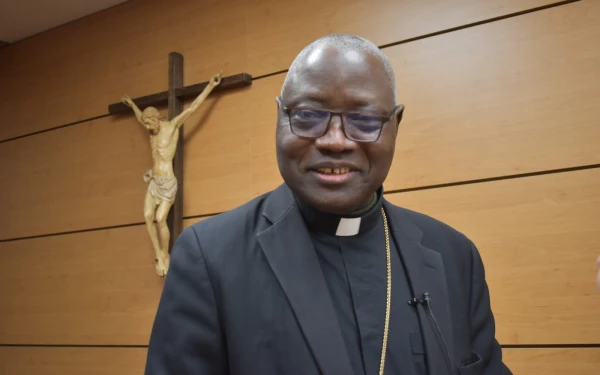
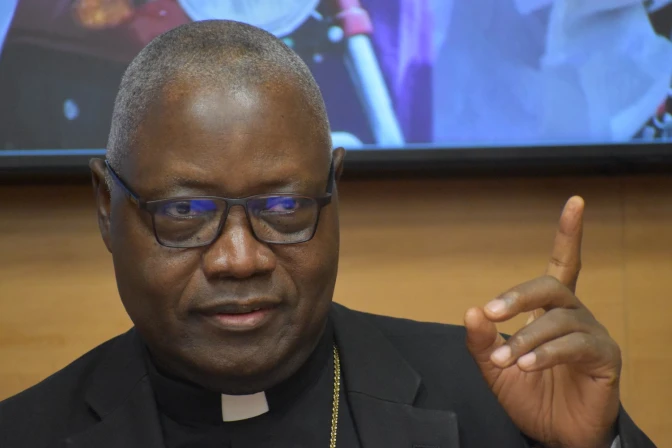
Archbishop Ignatius Ayau Kaigama appealed for U.S. assistance in combatting Islamic terrorism.
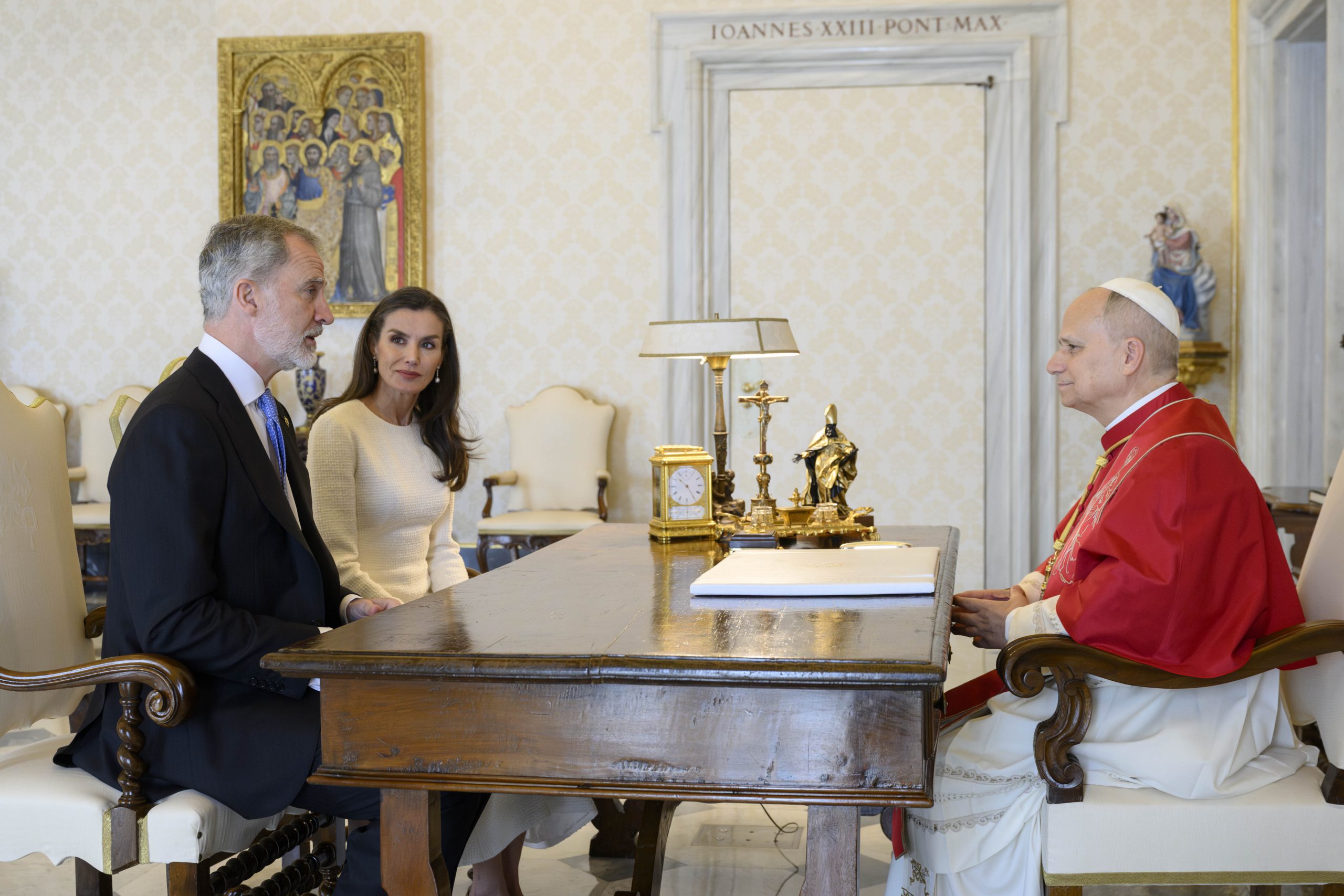
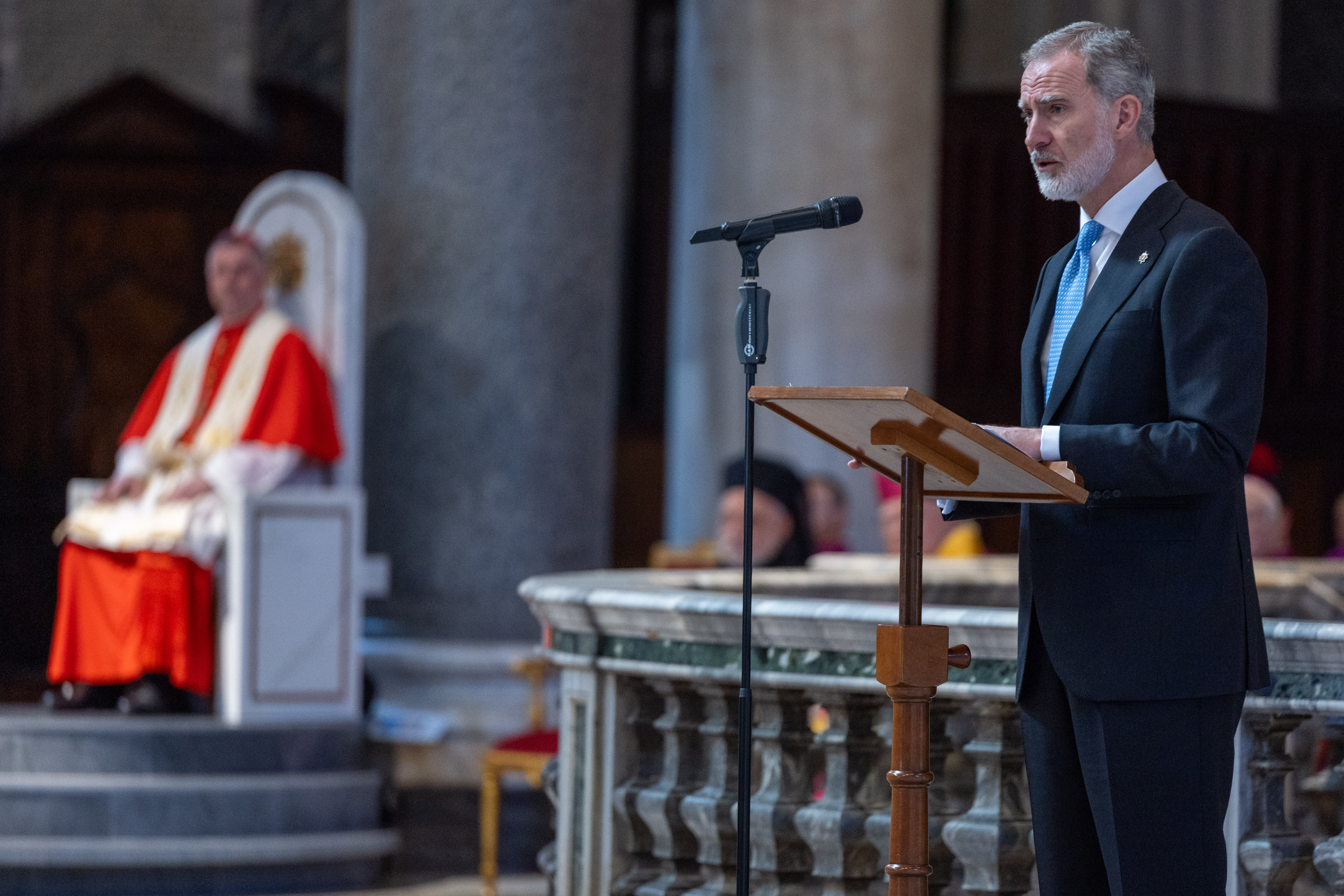
“Protocanon” is an honorary title reserved exclusively for the Spanish head of state, recognizing the monarch as a collaborator of the pope.

Five new itineraries offer palace stays, wildlife safaris, and iconic landmarks like the Taj Mahal.
:max_bytes(150000):strip_icc():format(jpeg)/TAL-header-mayur-mahal-dining-car-maharajas-express-INDIALUXETRAINS0326-10ebf8cd3e6a4745b116c465d6a31d15.jpg)
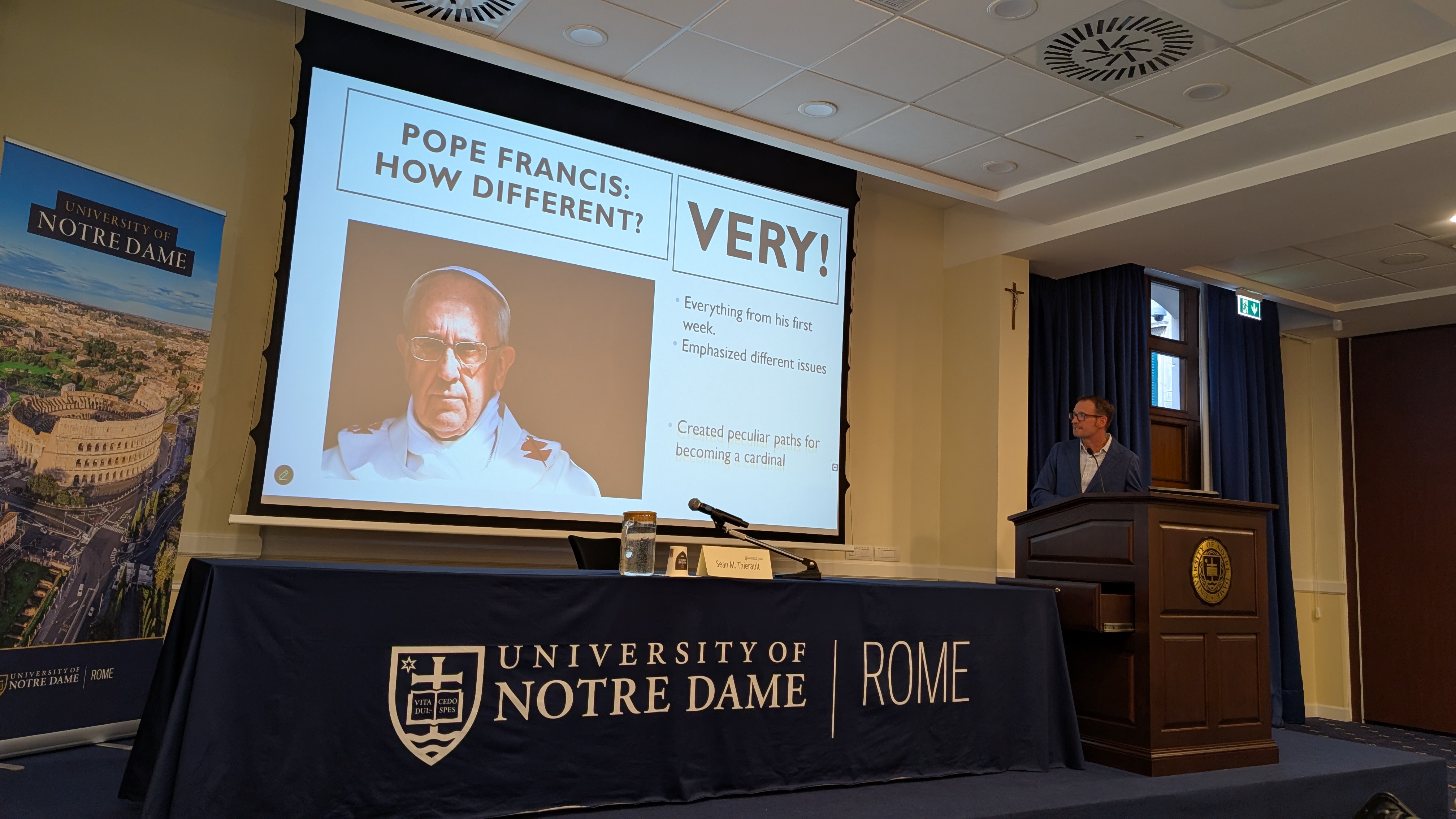
![Pope Francis broke with predecessors on policy, appointments, and papal trips, sociologist says – #Catholic – ROME — A political science professor from the U.S. has used data analysis to show how Pope Francis differed from predecessors regarding policy, appointments, and papal trips, while notably omitting discussion of the deceased pontiff’s doctrinal differences.The University of Notre Dame in Rome hosted the lecture “Francis and His Predecessors: Quantifying Continuity and Change in the Modern Papacy,” by Sean Theriault, on March 19.Avoiding theological debate?Theriault, a self-described sociologist and professor at the University of Texas at Austin, told EWTN News that he became interested in studying Pope Francis’ legacy two years ago after discussing the papacy with his students and fellow Catholics.“I had heard people suggest that Pope Francis was different, and I thought I could bring data to help assess how different he was. In other words, as a social scientist, I could actually supply some facts to the question at hand.”He noted that his study avoids theological debate entirely, observing that while many theologians emphasize Francis’ doctrinal shifts, his study focuses on quantifiable patterns in the data.What do the numbers say about Francis?Examining the data reveals that Pope Francis was vastly different from his predecessors. The first metric used in the study was papal policy.To quantify policy, Theriault analyzed papal addresses to the diplomatic corps — the so-called “State of the World address” — dating back to St. John XXIII. By parsing the words of each speech, he found that Francis had the lowest statistical correlation to any of his predecessors, focusing more on issues like immigration and refugees than traditional diplomatic concerns.“I parsed out these speeches going back to the early 1960s by sentence or quasi-sentence, categorizing them,” Theriault said in his lecture. “If we separate international relations, Francis had the lowest correlation among his recent predecessors. For instance, in his 2025 address, though he did discuss the release of Israeli hostages in Gaza, Francis touched on issues like artificial intelligence, respect for migrants, and the elimination of the death penalty.”Increased diversity in cardinals and saintsThe next metric analyzed was personnel, chiefly the makeup of the College of Cardinals and the canonization of new saints.Theriault noted that while St. Paul VI was the first to diversify the demographics of the cardinals significantly, Francis had accelerated this trend toward a less Eurocentric cardinalate.“The conclave that elected Paul VI was dominated by Europe (55 out of 80 cardinals), but he spread the reach of the college to other parts of the world. John Paul II continued this, Benedict, a bit less so, but Francis did it by far the most by 55%. He brought in cardinals from places like Laos, Sweden, and Brunei, and passed over traditional sees like Paris and Milan.”Theriault also pointed out anomalies in Francis’ selection of cardinals from suffragan dioceses — rather than major archdioceses as done before — and his approach to canonization. “When Cardinal Roger Mahony of Los Angeles retired, we all expected the red hat to be given to the new archbishop, José Gómez. Instead, he gave the red hat to Bishop [Robert] McElroy, the bishop of San Diego, a suffragan diocese of Los Angeles.”He added regarding canonizations: “Francis shortened the average time to canonization to 151 years. He canonized a vastly higher percentage of laypeople (18%) than his predecessors. He paired John XXIII with John Paul II for canonization, effectively blocking the canonization paths for Pius IX and Pius XII.”Pilgrimages to the marginsPapal travel was the third metric Theriault analyzed. He observed that while previous popes spent their time abroad ministering primarily to Catholic audiences, Francis preferred to spend time with the marginalized.“John Paul II loved meeting with everyday Catholics during his travels, especially the Polish and Hispanic communities. Benedict XVI focused on meeting with the Church hierarchy. Francis chose rather to visit prisons and homeless centers, focusing on the marginalized rather than exclusively Catholic audiences,” he said.Looking ahead to Pope Leo XIVTheriault concluded the lecture by predicting that Pope Leo XIV’s pontificate would reveal far more about Pope Francis’ time as pope than when he was still alive.“Pope Leo is more of an institutionalist than Pope Francis, and significantly more reserved. In the long run, Pope Francis’ legacy is going to be far more pronounced precisely because he was succeeded by Leo, who is bringing along the whole Church and institutionalizing that vision in a way Francis just did not know how to do,” he said.](https://unitedyam.com/wp-content/uploads/2026/03/pope-francis-broke-with-predecessors-on-policy-appointments-and-papal-trips-sociologist-says-catholic-rome-a-political-science-professor-from-the-u-s-has-used-data-analysis-to-show-scaled.jpg "Pope Francis broke with predecessors on policy, appointments, and papal trips, sociologist says – #Catholic – ROME — A political science professor from the U.S. has used data analysis to show how Pope Francis differed from predecessors regarding policy, appointments, and papal trips, while notably omitting discussion of the deceased pontiff’s doctrinal differences.The University of Notre Dame in Rome hosted the lecture “Francis and His Predecessors: Quantifying Continuity and Change in the Modern Papacy,” by Sean Theriault, on March 19.Avoiding theological debate?Theriault, a self-described sociologist and professor at the University of Texas at Austin, told EWTN News that he became interested in studying Pope Francis’ legacy two years ago after discussing the papacy with his students and fellow Catholics.“I had heard people suggest that Pope Francis was different, and I thought I could bring data to help assess how different he was. In other words, as a social scientist, I could actually supply some facts to the question at hand.”He noted that his study avoids theological debate entirely, observing that while many theologians emphasize Francis’ doctrinal shifts, his study focuses on quantifiable patterns in the data.What do the numbers say about Francis?Examining the data reveals that Pope Francis was vastly different from his predecessors. The first metric used in the study was papal policy.To quantify policy, Theriault analyzed papal addresses to the diplomatic corps — the so-called “State of the World address” — dating back to St. John XXIII. By parsing the words of each speech, he found that Francis had the lowest statistical correlation to any of his predecessors, focusing more on issues like immigration and refugees than traditional diplomatic concerns.“I parsed out these speeches going back to the early 1960s by sentence or quasi-sentence, categorizing them,” Theriault said in his lecture. “If we separate international relations, Francis had the lowest correlation among his recent predecessors. For instance, in his 2025 address, though he did discuss the release of Israeli hostages in Gaza, Francis touched on issues like artificial intelligence, respect for migrants, and the elimination of the death penalty.”Increased diversity in cardinals and saintsThe next metric analyzed was personnel, chiefly the makeup of the College of Cardinals and the canonization of new saints.Theriault noted that while St. Paul VI was the first to diversify the demographics of the cardinals significantly, Francis had accelerated this trend toward a less Eurocentric cardinalate.“The conclave that elected Paul VI was dominated by Europe (55 out of 80 cardinals), but he spread the reach of the college to other parts of the world. John Paul II continued this, Benedict, a bit less so, but Francis did it by far the most by 55%. He brought in cardinals from places like Laos, Sweden, and Brunei, and passed over traditional sees like Paris and Milan.”Theriault also pointed out anomalies in Francis’ selection of cardinals from suffragan dioceses — rather than major archdioceses as done before — and his approach to canonization. “When Cardinal Roger Mahony of Los Angeles retired, we all expected the red hat to be given to the new archbishop, José Gómez. Instead, he gave the red hat to Bishop [Robert] McElroy, the bishop of San Diego, a suffragan diocese of Los Angeles.”He added regarding canonizations: “Francis shortened the average time to canonization to 151 years. He canonized a vastly higher percentage of laypeople (18%) than his predecessors. He paired John XXIII with John Paul II for canonization, effectively blocking the canonization paths for Pius IX and Pius XII.”Pilgrimages to the marginsPapal travel was the third metric Theriault analyzed. He observed that while previous popes spent their time abroad ministering primarily to Catholic audiences, Francis preferred to spend time with the marginalized.“John Paul II loved meeting with everyday Catholics during his travels, especially the Polish and Hispanic communities. Benedict XVI focused on meeting with the Church hierarchy. Francis chose rather to visit prisons and homeless centers, focusing on the marginalized rather than exclusively Catholic audiences,” he said.Looking ahead to Pope Leo XIVTheriault concluded the lecture by predicting that Pope Leo XIV’s pontificate would reveal far more about Pope Francis’ time as pope than when he was still alive.“Pope Leo is more of an institutionalist than Pope Francis, and significantly more reserved. In the long run, Pope Francis’ legacy is going to be far more pronounced precisely because he was succeeded by Leo, who is bringing along the whole Church and institutionalizing that vision in a way Francis just did not know how to do,” he said.")