A reading from the Book of Daniel
13:1-9, 15-17, 19-30, 33-62
In Babylon there lived a man named Joakim,
who married a very beautiful and God-fearing woman, Susanna,
the daughter of Hilkiah;
her pious parents had trained their daughter
according to the law of Moses.
Joakim was very rich;
he had a garden near his house,
and the Jews had recourse to him often
because he was the most respected of them all.
That year, two elders of the people were appointed judges,
of whom the Lord said, “Wickedness has come out of Babylon:
from the elders who were to govern the people as judges.”
These men, to whom all brought their cases,
frequented the house of Joakim.
When the people left at noon,
Susanna used to enter her husband’s garden for a walk.
When the old men saw her enter every day for her walk,
they began to lust for her.
They suppressed their consciences;
they would not allow their eyes to look to heaven,
and did not keep in mind just judgments.
One day, while they were waiting for the right moment,
she entered the garden as usual, with two maids only.
She decided to bathe, for the weather was warm.
Nobody else was there except the two elders,
who had hidden themselves and were watching her.
“Bring me oil and soap,” she said to the maids,
“and shut the garden doors while I bathe.”
As soon as the maids had left,
the two old men got up and hurried to her.
“Look,” they said, “the garden doors are shut, and no one can see us;
give in to our desire, and lie with us.
If you refuse, we will testify against you
that you dismissed your maids because a young man was here with you.”
“I am completely trapped,” Susanna groaned.
“If I yield, it will be my death;
if I refuse, I cannot escape your power.
Yet it is better for me to fall into your power without guilt
than to sin before the Lord.”
Then Susanna shrieked, and the old men also shouted at her,
as one of them ran to open the garden doors.
When the people in the house heard the cries from the garden,
they rushed in by the side gate to see what had happened to her.
At the accusations by the old men,
the servants felt very much ashamed,
for never had any such thing been said about Susanna.
When the people came to her husband Joakim the next day,
the two wicked elders also came,
fully determined to put Susanna to death.
Before all the people they ordered:
“Send for Susanna, the daughter of Hilkiah,
the wife of Joakim.”
When she was sent for,
she came with her parents, children and all her relatives.
All her relatives and the onlookers were weeping.
In the midst of the people the two elders rose up
and laid their hands on her head.
Through tears she looked up to heaven,
for she trusted in the Lord wholeheartedly.
The elders made this accusation:
“As we were walking in the garden alone,
this woman entered with two girls
and shut the doors of the garden, dismissing the girls.
A young man, who was hidden there, came and lay with her.
When we, in a corner of the garden, saw this crime,
we ran toward them.
We saw them lying together,
but the man we could not hold, because he was stronger than we;
he opened the doors and ran off.
Then we seized her and asked who the young man was,
but she refused to tell us.
We testify to this.”
The assembly believed them,
since they were elders and judges of the people,
and they condemned her to death.
But Susanna cried aloud:
“O eternal God, you know what is hidden
and are aware of all things before they come to be:
you know that they have testified falsely against me.
Here I am about to die,
though I have done none of the things
with which these wicked men have charged me.”
The Lord heard her prayer.
As she was being led to execution,
God stirred up the holy spirit of a young boy named Daniel,
and he cried aloud:
“I will have no part in the death of this woman.”
All the people turned and asked him, “What is this you are saying?”
He stood in their midst and continued,
“Are you such fools, O children of Israel!
To condemn a woman of Israel without examination
and without clear evidence?
Return to court, for they have testified falsely against her.”
Then all the people returned in haste.
To Daniel the elders said,
“Come, sit with us and inform us,
since God has given you the prestige of old age.”
But he replied,
“Separate these two far from each other that I may examine them.”
After they were separated one from the other,
he called one of them and said:
“How you have grown evil with age!
Now have your past sins come to term:
passing unjust sentences, condemning the innocent,
and freeing the guilty, although the Lord says,
‘The innocent and the just you shall not put to death.’
Now, then, if you were a witness,
tell me under what tree you saw them together.”
“Under a mastic tree,” he answered.
Daniel replied, “Your fine lie has cost you your head,
for the angel of God shall receive the sentence from him
and split you in two.”
Putting him to one side, he ordered the other one to be brought.
Daniel said to him,
“Offspring of Canaan, not of Judah, beauty has seduced you,
lust has subverted your conscience.
This is how you acted with the daughters of Israel,
and in their fear they yielded to you;
but a daughter of Judah did not tolerate your wickedness.
Now, then, tell me under what tree you surprised them together.”
“Under an oak,” he said.
Daniel replied, “Your fine lie has cost you also your head,
for the angel of God waits with a sword to cut you in two
so as to make an end of you both.”
The whole assembly cried aloud,
blessing God who saves those who hope in him.
They rose up against the two elders,
for by their own words Daniel had convicted them of perjury.
According to the law of Moses,
they inflicted on them
the penalty they had plotted to impose on their neighbor:
they put them to death.
Thus was innocent blood spared that day.
From the Gospel according to John
8:1-11
Jesus went to the Mount of Olives.
But early in the morning he arrived again in the temple area,
and all the people started coming to him,
and he sat down and taught them.
Then the scribes and the Pharisees brought a woman
who had been caught in adultery
and made her stand in the middle.
They said to him,
“Teacher, this woman was caught
in the very act of committing adultery.
Now in the law, Moses commanded us to stone such women.
So what do you say?”
They said this to test him,
so that they could have some charge to bring against him.
Jesus bent down and began to write on the ground with his finger.
But when they continued asking him,
he straightened up and said to them,
“Let the one among you who is without sin
be the first to throw a stone at her.”
Again he bent down and wrote on the ground.
And in response, they went away one by one,
beginning with the elders.
So he was left alone with the woman before him.
Then Jesus straightened up and said to her,
“Woman, where are they?
Has no one condemned you?”
She replied, “No one, sir.”
Then Jesus said, “Neither do I condemn you.
Go, and from now on do not sin any more.”
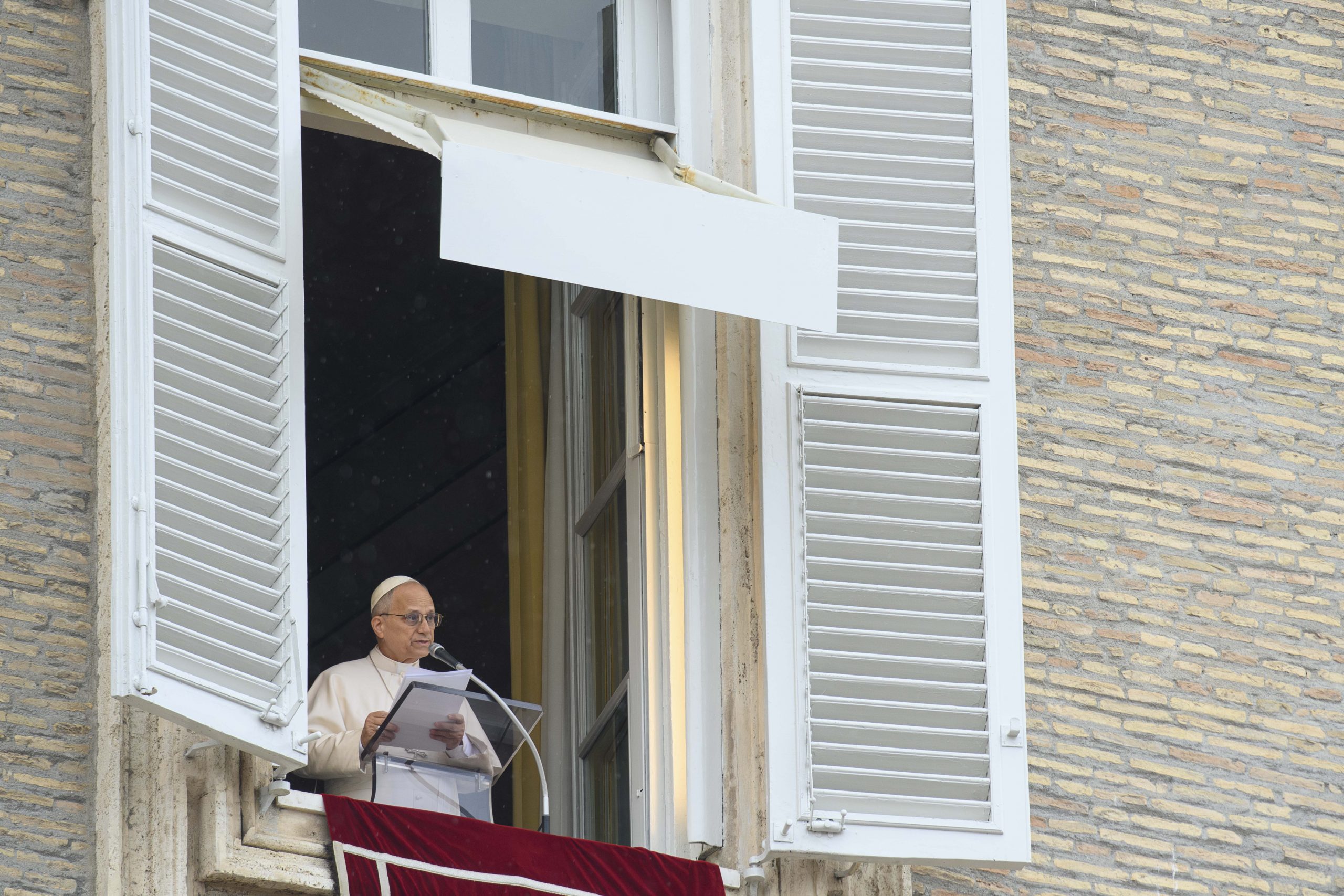
What a difference there is between the Master and the woman’s accusers! They cited the Scriptures to condemn her; Jesus, the very Word of God, completely rehabilitates the woman, restoring her hope. From this story, we learn that any judgment that is not inspired and moved by charity only serves to make things worse for those who receive it. God, on the other hand, always leaves room for second chance; he can always find paths that lead to liberation and salvation. Forgiveness changed that woman’s life. Mercy and misery embraced. Mercy and misery met there, and the woman’s life changed. We can even speculate whether, after being forgiven by Jesus, she was able in turn to forgive others. Perhaps she even came to see her accusers no longer as harsh and wicked men, but as the means that led to her encounter with Jesus. The Lord also wants us, his disciples, his Church, likewise forgiven by him, to become tireless witnesses of reconciliation. Witnesses of a God for whom the word “irredeemable” does not exist, a God who always forgives. God always forgives. We are the ones who get tired of asking for forgiveness. Our God is a God who never stops believing in us and always gives us a chance to start anew. There is no sin or failure that we can bring before him that cannot become the opportunity for starting to live a new and different life under the banner of mercy. There is no sin that cannot be treated in this manner. God forgives everything. He forgives every sin. (Francis – Homily in the Holy Mass on Floriana, 3 April 2022)
Read More
:max_bytes(150000):strip_icc():format(jpeg)/TAL-lead-image-CITIESFORBIZTRIPS0326-1bd7c98100674f3b98f15cd1b05a81fc.jpg)






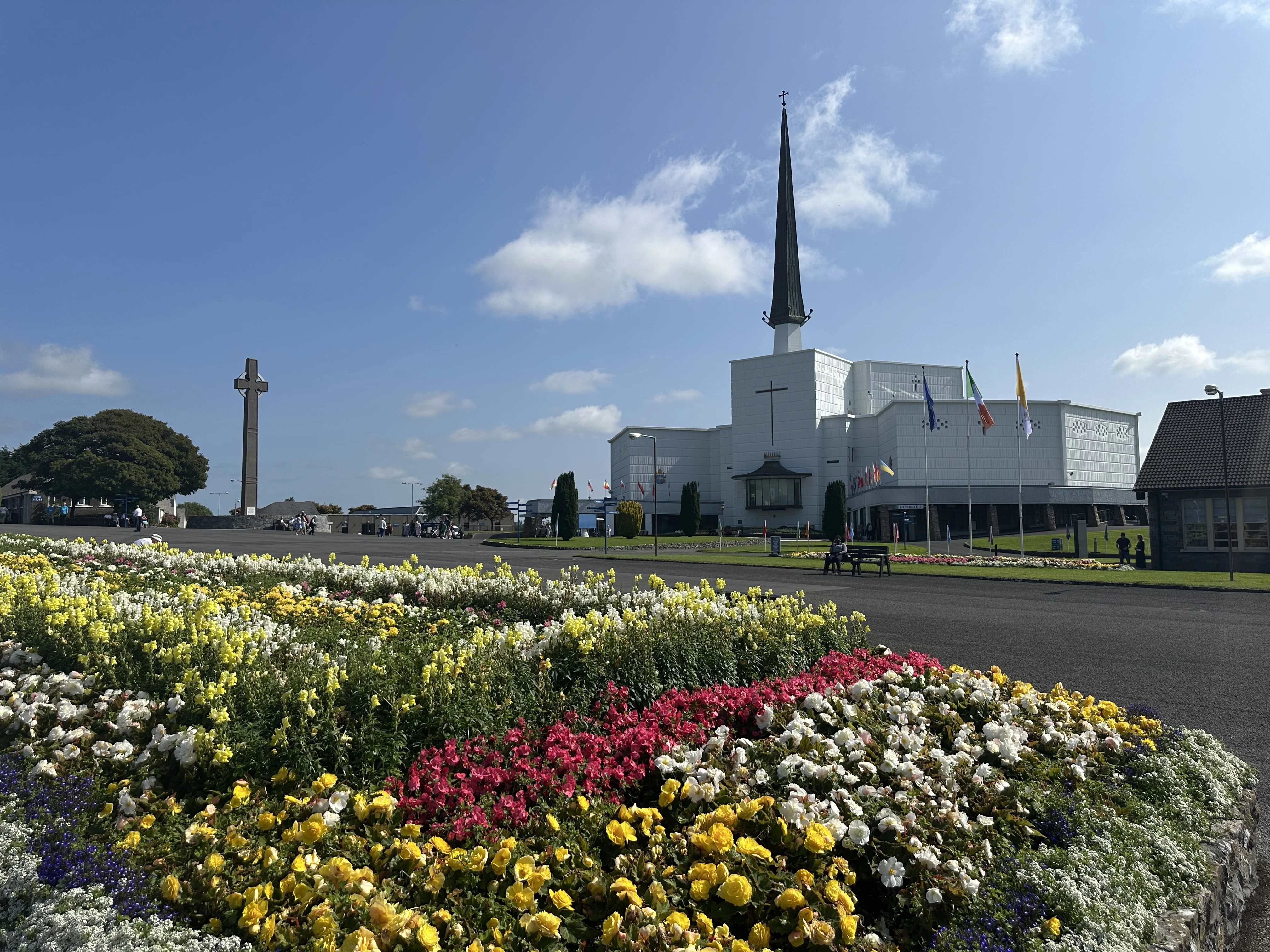
![Ireland sees modest revival in faith, especially among youth and young adults #Catholic An increase in spirituality and religious practice among young adults in Ireland aged 18 to 30 and confirmation that Ireland is in the “middle range” of religious countries in Europe are among the trends identified in a new report published by the Irish Catholic bishops titled “Turning the Tide.”Archbishop Eamon Martin of Armagh, primate of all Ireland, told EWTN News: “There has been a lot of talk recently about the so-called quiet revival in religious practice in recent years. The [report] looks at some of the research studies that have been carried out north and south of the island of Ireland into religious practice, religious awareness and spirituality, and interest in religion, and asks a question by comparing this with European social studies: Is there actually any uptake [in] religious practice and awareness and interest in Ireland?”Drawing on research from the European Social Survey, the Iona Institute’s two recent surveys conducted by Amárach Research, and a variety of relevant academic studies, the report seeks to provide an integrated, relevant, and current look at religious practice in Ireland.“The report very interestingly points to some type of uptick, as they call it, particularly among young people around the ages of 16 to 30 and the fact that they are taking a new interest in religion and in spirituality.”Encouraged by the positive trends emerging across different studies, Martin sounded a note of caution, highlighting the challenges that these findings pose for the Catholic Church in Ireland.“I don’t think we should get ourselves too enthusiastic thinking this is a complete reversal of the very obvious decline and religious practice over the last 10 or 20 years,” he said. “However, it is saying something on the turning tide.”The archbishop pointed to the implications for the Irish Church: “It’s asking us to reflect on this phenomenon in the light of research, and for instance what does this mean for us as Church, as parishes, as dioceses? How are we responding to this growing body of young people who want to know more more about God, about church, and about religion?”The report, co-authored by Stephen Bullivant, professor of theology and the sociology of religion at St. Mary’s University, Twickenham, and Emily Nelson, a doctoral student of sociology at Queen’s University Belfast, examined the overall religious profile of the island of Ireland, including areas of convergence and divergence between Northern Ireland and the Republic of Ireland.The authors drew together research studies on patterns in belief, practice, and religious identification between generations, with particular attention to differences within young adult cohorts. The work also provided insight on dimensions of religiosity, religious transmission, and attitudes toward Church teaching and institutions among both men and women.Ireland remains among the more religious countries in Europe, on measures of religious affiliation, religious service attendance, and frequency of prayer. Among western European countries, it is one of few outliers with a relatively high level of overall religiosity. It also ranks toward the higher end of (especially western) European countries on measures of weekly Mass attendance and daily prayer.While key measures of Irish religiosity have declined significantly since the European Social Survey began in 2002-2003, the most recent round in 2023-2024 shows a strong uptick in religious affiliation and religious practice.This effect is most strongly evident among those aged 16–29 years, across both Catholics and Protestants.Northern Ireland is both the most religious region of the United Kingdom, by a large margin, and the most religious part of the island of Ireland, in terms of both affiliation and religious practice.Although women in the Republic of Ireland are equally as likely as men to be religious, they continue to play an influential role in transmitting faith, even as they express higher levels of moral dissent and institutional dissatisfaction. The report revealed that 74% of Irish Catholic women were found to believe that the Church did not treat them with “a lot of respect.”According to the report, 51% of Irish adults — and 27% of Irish young adults —pray at least once a week, and 31% say they attend Mass at least once a week, placing them fourth overall, alongside Italy (32%) but well behind Poland (49%) and Slovakia (46%).There is a significant drop-off among young adults, whose reported religious practice is roughly half that of older adults. Irish 16- to 29-year-olds rank sixth overall compared with other countries, at 17%, though that is at least double the rates of the same age group in Switzerland, Germany, and Belgium, at 5%, and in Austria with less than 1%.The Irish report also pointed to a 2023 Barna study that found in certain respects, Irish teens are more religious than their global peers. Just over 3 in 5 (62%) Irish teens identify as Christian with nearly a third identify as atheist, agnostic, or of no faith.On average, 18- to 24-year-olds in the Republic of Ireland aren’t particularly positive about both Christianity and the Catholic Church in Ireland, but they are more positive than those in the 25–34 age range, and fewer have a negative attitude toward priests and nuns.In 2023, EWTN News’ Colm Flynn traveled to Ireland with the question “Is Ireland still Catholic?” He explored the various reasons for the decline of the faith in Ireland and the challenges the Church faces there today. In the three years since, and after many emails and messages pointing to signs of a “quiet revival” of faith in Ireland, Flynn recently returned to the country to explore those signs of renewal. In his report, he refers to the “Turning the Tide” report:](https://unitedyam.com/wp-content/uploads/2026/03/ireland-sees-modest-revival-in-faith-especially-among-youth-and-young-adults-catholic-an-increase-in-spirituality-and-religious-practice-among-young-adults-in-ireland-aged-18-to-30-and-confirmation-scaled.jpg "Ireland sees modest revival in faith, especially among youth and young adults #Catholic An increase in spirituality and religious practice among young adults in Ireland aged 18 to 30 and confirmation that Ireland is in the “middle range” of religious countries in Europe are among the trends identified in a new report published by the Irish Catholic bishops titled “Turning the Tide.”Archbishop Eamon Martin of Armagh, primate of all Ireland, told EWTN News: “There has been a lot of talk recently about the so-called quiet revival in religious practice in recent years. The [report] looks at some of the research studies that have been carried out north and south of the island of Ireland into religious practice, religious awareness and spirituality, and interest in religion, and asks a question by comparing this with European social studies: Is there actually any uptake [in] religious practice and awareness and interest in Ireland?”Drawing on research from the European Social Survey, the Iona Institute’s two recent surveys conducted by Amárach Research, and a variety of relevant academic studies, the report seeks to provide an integrated, relevant, and current look at religious practice in Ireland.“The report very interestingly points to some type of uptick, as they call it, particularly among young people around the ages of 16 to 30 and the fact that they are taking a new interest in religion and in spirituality.”Encouraged by the positive trends emerging across different studies, Martin sounded a note of caution, highlighting the challenges that these findings pose for the Catholic Church in Ireland.“I don’t think we should get ourselves too enthusiastic thinking this is a complete reversal of the very obvious decline and religious practice over the last 10 or 20 years,” he said. “However, it is saying something on the turning tide.”The archbishop pointed to the implications for the Irish Church: “It’s asking us to reflect on this phenomenon in the light of research, and for instance what does this mean for us as Church, as parishes, as dioceses? How are we responding to this growing body of young people who want to know more more about God, about church, and about religion?”The report, co-authored by Stephen Bullivant, professor of theology and the sociology of religion at St. Mary’s University, Twickenham, and Emily Nelson, a doctoral student of sociology at Queen’s University Belfast, examined the overall religious profile of the island of Ireland, including areas of convergence and divergence between Northern Ireland and the Republic of Ireland.The authors drew together research studies on patterns in belief, practice, and religious identification between generations, with particular attention to differences within young adult cohorts. The work also provided insight on dimensions of religiosity, religious transmission, and attitudes toward Church teaching and institutions among both men and women.Ireland remains among the more religious countries in Europe, on measures of religious affiliation, religious service attendance, and frequency of prayer. Among western European countries, it is one of few outliers with a relatively high level of overall religiosity. It also ranks toward the higher end of (especially western) European countries on measures of weekly Mass attendance and daily prayer.While key measures of Irish religiosity have declined significantly since the European Social Survey began in 2002-2003, the most recent round in 2023-2024 shows a strong uptick in religious affiliation and religious practice.This effect is most strongly evident among those aged 16–29 years, across both Catholics and Protestants.Northern Ireland is both the most religious region of the United Kingdom, by a large margin, and the most religious part of the island of Ireland, in terms of both affiliation and religious practice.Although women in the Republic of Ireland are equally as likely as men to be religious, they continue to play an influential role in transmitting faith, even as they express higher levels of moral dissent and institutional dissatisfaction. The report revealed that 74% of Irish Catholic women were found to believe that the Church did not treat them with “a lot of respect.”According to the report, 51% of Irish adults — and 27% of Irish young adults —pray at least once a week, and 31% say they attend Mass at least once a week, placing them fourth overall, alongside Italy (32%) but well behind Poland (49%) and Slovakia (46%).There is a significant drop-off among young adults, whose reported religious practice is roughly half that of older adults. Irish 16- to 29-year-olds rank sixth overall compared with other countries, at 17%, though that is at least double the rates of the same age group in Switzerland, Germany, and Belgium, at 5%, and in Austria with less than 1%.The Irish report also pointed to a 2023 Barna study that found in certain respects, Irish teens are more religious than their global peers. Just over 3 in 5 (62%) Irish teens identify as Christian with nearly a third identify as atheist, agnostic, or of no faith.On average, 18- to 24-year-olds in the Republic of Ireland aren’t particularly positive about both Christianity and the Catholic Church in Ireland, but they are more positive than those in the 25–34 age range, and fewer have a negative attitude toward priests and nuns.In 2023, EWTN News’ Colm Flynn traveled to Ireland with the question “Is Ireland still Catholic?” He explored the various reasons for the decline of the faith in Ireland and the challenges the Church faces there today. In the three years since, and after many emails and messages pointing to signs of a “quiet revival” of faith in Ireland, Flynn recently returned to the country to explore those signs of renewal. In his report, he refers to the “Turning the Tide” report:")
![Faith-based summer camp restores hope for kids of fallen heroes - #Catholic - On their first day at LifeCampUSA, middle-school-aged campers are taught how to use a map and a compass to learn how to find their way around. Then they’re given a Bible — for many, their first time having one — and shown how to find the different books of the Bible, after which there’s a discussion about how God’s word can serve as a map and compass in life.For boys and girls who have lost their dads in military service, as first responders, or in law enforcement, LifeCampUSA and its Bible-based curriculum can be a life-changing summer experience where they forge new friendships and find a relationship with God.Founded by married couple Mark and Jane Neumann, the camp — which, according to its website, is “a Christian ministry unassociated with a specific church or religious denomination” — first opened in the summer of 2021 after the Neumanns met a group of middle schoolers from military families and heard about the struggles they faced in the aftermath of losing their fathers. Having experience working with middle schoolers in youth ministry at their church, the Neumanns felt called to help these children and “become fathers to the fatherless.”Despite neither one growing up in a typical military family, both Jane and Mark grew up with a “general sense of patriotism,” Jane told EWTN News in an interview.The Neumanns emphasized that they start the week at camp with the map and compass lesson because they want the children to leave knowing that “just like with the compass you’re not going to get lost if you follow the Bible’s lessons and what this book has for you; it’s going to give you direction in life,” Mark said.
Middle-school-aged girls attend LifeCampUSA. | Credit: Photo courtesy of LifeCampUSA
LifeCampUSA offers their summer camp program in several different states across the United States including Colorado, Montana, South Dakota, Minnesota, and Wisconsin. Each camp has spaces for 10 boys and 10 girls. Each boy is assigned his own male mentor, while five couples serve as mentors for the girls’ camp.“We have five couples for the girls so that the men can speak into the girls’ lives safely there and that the girls can see father figures [and] hear the things that a dad would want to tell their daughters, but also see the healthy marriages,” Mark explained.Additionally, all expenses — including airfare — are completely covered by LifeCampUSA for the campers who attend. Also, all campers can take part in a 12-month program called LifeCare after their week at camp to continue their mentorship.Mark and Jane also highlighted the way in which they’ve seen young boys in particular grow into young men during their time at camp. Jane shared that much of the feedback she receives from moms once their sons get back home is how much more respectful they are and how they begin to take more initiative in helping around the house.One of Mark’s favorite stories was from a mom who shared with him that her son began leading his family in prayer before every meal after getting back home from camp.“I mean there’s countless stories — it’s been such a blessing,” Mark said.The Neumanns also pointed out the impact camp has on the many children who have lost their fathers due to suicide after serving the country. They shared that out of the 100 children who are signed up to attend camp this summer, 80% have lost their dads from suicide.“Moms will tell us that they didn’t mean for this to happen, but they feel a sense of shame when their husbands have taken their own lives, and they didn’t even want necessarily that sense of shame, but it just naturally happens and they don’t mean to project that onto their kids, but it just has,” Jane explained.She added that these children also face bullying in school after kids find out the manner in which they lost their fathers.
A group of campers and their mentors at LifeCampUSA. | Credit: Photo courtesy of LifeCampUSA
“Their dads are our nation’s heroes. [Yet] somebody finds out that that dad had an injury to their mind, they don’t understand that, but they have no problem bullying our kids, teasing them that their dads took their own lives. And so they don’t want anybody to know,” she shared. “… And now these kids — they’re almost suppressing their patriotism, putting shame into their lives. So our kids come to camp with that stigmatism.”However, many of the mothers of these children have shared that after they attend camp they witness a “change in their hearts and their heads and it puts more confidence in them, it puts a pride in there for their dad, it puts pride back in for our nation,” Jane said.Most importantly, the children are introduced to Jesus, which Mark and Jane believe is the greatest reason for the success seen during their summer camps.“So, [when] you put the Creator in the heart and you know who your creator is, so many things get worked out. … We recognize the fact that Jesus is the one — when we can put Jesus into the program, we’re going to have the best success for these kiddos and families,” Jane said.“We know that really we have the answer to the healing for these kids. That’s it. And so we want to tell them about Jesus because that’s the real solution,” Mark added.Mark shared that their main hope for children who attend LifeCampUSA is to give them “hope, to be honest, because a lot of them are pretty hopeless,” and to “change the direction of their life.”](https://unitedyam.com/wp-content/uploads/2026/03/faith-based-summer-camp-restores-hope-for-kids-of-fallen-heroes-catholic-on-their-first-day-at-lifecampusa-middle-school-aged-campers-are-taught-how-to-use-a-map-and-a-compass-to-learn-how-to-fi.png)