Day: March 25, 2026

U.S. bishops hold ecumenical meeting with evangelicals for joint migration initiative #Catholic The U.S. Conference of Catholic Bishops (USCCB) took part in an ecumenical meeting with the National Association of Evangelicals (NAE) to engage in dialogue and collaborate on pastoral solutions to heightened immigration enforcement.The meeting was held on March 24 to launch the Evangelical-Catholic Dialogue on Immigration (ECDI) — a joint initiative focused on the subject.It builds on previous collaborations, particularly a report on how President Donald Trump’s mass deportation plans could affect Christian families. According to a USCCB news release, Catholic and evangelical leaders continue to grapple with pastoral challenges related to the policy, such as an increase in fear and anxiety among members.“I view the ECDI as a means of growing in Christian unity with our evangelical brothers and sisters, while also furthering our shared goal of bringing the message of the Gospel to bear on one of the most pressing issues of our time,” Bishop Brendan Cahill, chair of the USCCB’s Committee on Migration, said in a statement.Cahill co-chairs the ECDI with the Rev. Walter Kim, president of the NAE. It also includes five other Catholic and five other evangelical members and organizational observers.“Whatever theological differences exist between us, Catholics and evangelicals across our country are navigating many of the same complex realities — political and social — and the issue of immigration is an important example,” Cahill said. “Together, we place our hope in Jesus Christ, and we seek to live out his teaching in relation to this challenging topic.”Cahill cited Pope Leo XIV’s emphasis on dialogue being necessary for “peace, understanding, and fraternity, especially between different faith traditions.” He expressed gratitude for Kim’s leadership and “willingness to collaborate in this way and for the commitment of all those participating.”In November, the USCCB voted 216-5 to oppose “the indiscriminate mass deportation of people.” The bishops have expressed concerns that the Department of Homeland Security rescinded guidelines that had previously limited immigration enforcement at “sensitive locations,” including churches.

U.S. bishops hold ecumenical meeting with evangelicals for joint migration initiative #Catholic The U.S. Conference of Catholic Bishops (USCCB) took part in an ecumenical meeting with the National Association of Evangelicals (NAE) to engage in dialogue and collaborate on pastoral solutions to heightened immigration enforcement.The meeting was held on March 24 to launch the Evangelical-Catholic Dialogue on Immigration (ECDI) — a joint initiative focused on the subject.It builds on previous collaborations, particularly a report on how President Donald Trump’s mass deportation plans could affect Christian families. According to a USCCB news release, Catholic and evangelical leaders continue to grapple with pastoral challenges related to the policy, such as an increase in fear and anxiety among members.“I view the ECDI as a means of growing in Christian unity with our evangelical brothers and sisters, while also furthering our shared goal of bringing the message of the Gospel to bear on one of the most pressing issues of our time,” Bishop Brendan Cahill, chair of the USCCB’s Committee on Migration, said in a statement.Cahill co-chairs the ECDI with the Rev. Walter Kim, president of the NAE. It also includes five other Catholic and five other evangelical members and organizational observers.“Whatever theological differences exist between us, Catholics and evangelicals across our country are navigating many of the same complex realities — political and social — and the issue of immigration is an important example,” Cahill said. “Together, we place our hope in Jesus Christ, and we seek to live out his teaching in relation to this challenging topic.”Cahill cited Pope Leo XIV’s emphasis on dialogue being necessary for “peace, understanding, and fraternity, especially between different faith traditions.” He expressed gratitude for Kim’s leadership and “willingness to collaborate in this way and for the commitment of all those participating.”In November, the USCCB voted 216-5 to oppose “the indiscriminate mass deportation of people.” The bishops have expressed concerns that the Department of Homeland Security rescinded guidelines that had previously limited immigration enforcement at “sensitive locations,” including churches.

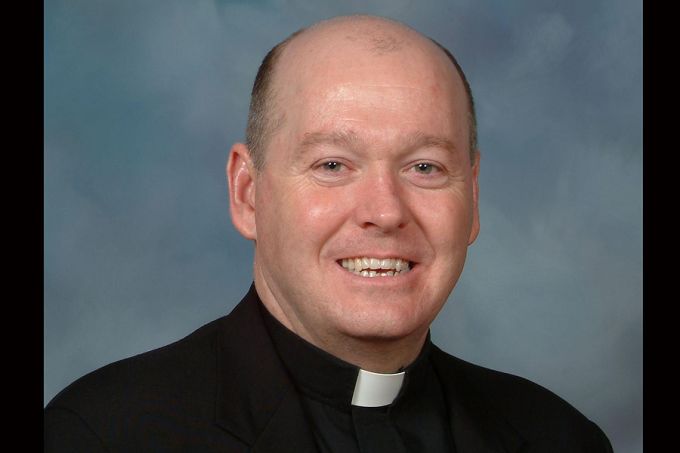
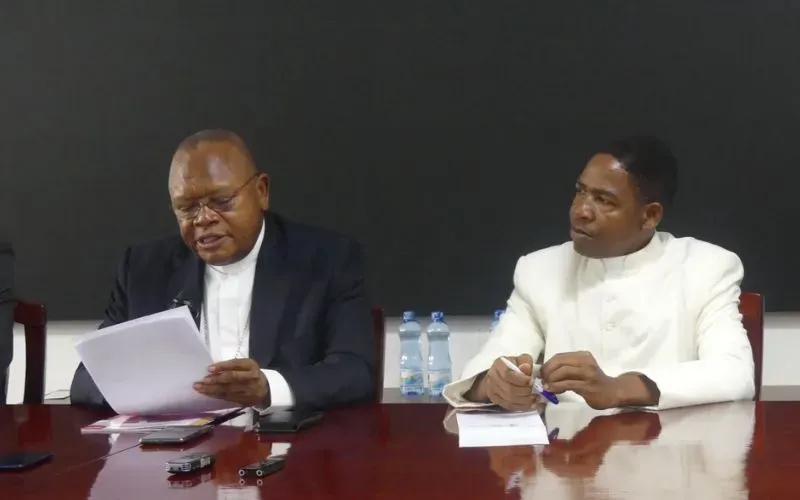
Bishop Brendan Cahill noted the importance of ecumenical approaches to “one of the most pressing issues of our time.”
Read More
Catholic bishops in Africa release final report addressing pastoral challenge of polygamy #Catholic NAIROBI, Kenya — Catholic bishops in Africa have released a final report addressing the pastoral challenge of polygamy across Africa. The 25-page document responds directly to the mandate that the multiyear XVI Ordinary General Assembly of the Synod of Bishops, the Synod on Synodality, gave to members of the Symposium of Episcopal Conferences of Africa and Madagascar (SECAM) “to promote theological and pastoral discernment on the issue of polygamy.”Compiled by a SECAM commission made up of selected theologians and professionals from relevant ecclesiastical disciplines, the report presents a structured reflection on the phenomenon through what it describes as a process of “quadruple listening”: attentive engagement with African cultural realities, sacred Scripture, Church teaching on Christian marriage, and pastoral practices already operative within ecclesial communities across the continent.Polygamy within the context of the African familyThe report begins by situating polygamy within the broader cultural and religious context of the African family. According to the SECAM commission: “The African family is built on the covenant: an alliance between human groups, an alliance with ancestors, and an alliance with God.”Within this worldview, the birth of children is central. The commission members explained that “at the heart of this family, the child represents an inestimable treasure, a divine blessing. He perpetuates the name of the lineage while helping to consolidate the present life.”It is within this framework that members of the SECAM commission situated polygamy, defined as “a marital regime in which an individual is linked at the same time to several spouses.” They clarified that although the term technically includes both polyandry and polygyny, the latter — a man married to multiple women — remains by far the most common form in Africa.Historically, the practice emerged from specific social needs. In early agrarian and nomadic societies, large families provided economic stability and security, they noted, recalling: “Polygamous marriages were practiced not only for the sake of large families, but also for reasons of solidarity, alliances, and political objectives.”Marriage in traditional African societies also carried communal and spiritual dimensions that made divorce rare, they further noted, recalling that marriage ceremonies involved not only the spouses but entire families and even calling upon ancestors, reflecting a deeply communal understanding of family life.
 
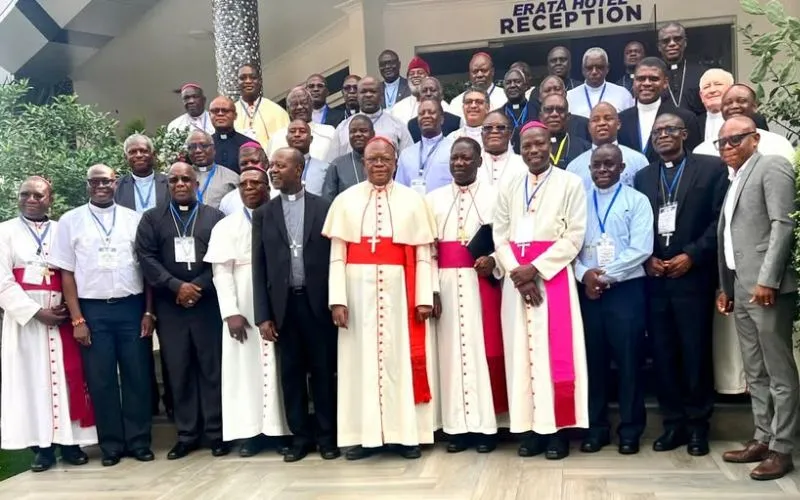
 SECAM president Cardinal Fridolin Ambongo (left) and secretary-general Father Rafael Simbine Junior (right). | Credit: ACI Africa
 
 Biblical discernmentTurning to Scripture, the SECAM commission members noted that the Bible itself reflects diverse marital practices. In the Old Testament world, “forms of marriage varied, from polygamy to monogamy,” and several biblical figures lived in polygamous unions.Nevertheless, the commission members stressed in the report that monogamy gradually emerged as the biblical ideal. They pointed to the Book of Tobit as a text that strongly “exalts monogamy,” describing families that are “strictly monogamous” and characterized by fidelity and religious devotion.The commission members interpreted this development as part of what they call a “divine pedagogy.” According to their report, God allowed polygamy historically but ultimately revealed the ideal of monogamous marriage through Christ.“In his Son, he shows that polygamy is not the ideal couple desired by God,” they said, emphasizing Jesus’ teaching that marriage is a union between “one man and one woman.”This biblical reflection also addressed one of the most common cultural motivations for polygamy — infertility. The commission insisted that biological impediments to fertility do not justify polygamy.They explained that biblical tradition broadens the understanding of motherhood and fatherhood beyond biological reproduction. True fruitfulness, the commission members wrote, can consist in fidelity to God and virtuous life rather than biological offspring alone.Ethical questions raised by polygamyThe report on the pastoral challenges of polygamy raised ethical questions about whether the core meaning of Christian marriage can be reconciled with polygamous unions. The commission highlighted the Christian understanding of marriage as a total mutual gift between two persons.“If marriage translates into ‘the gift of oneself to another,’ one might wonder how a man or woman can experience this ‘gift of self’ by giving themselves to several wives or husbands at the same time,” they observed.Commission members also raised questions about emotional and psychological dimensions, asking whether shared marital relationships risk undermining authentic communion between spouses.The Christian understanding of marriage, they noted, is further illuminated by the apostle Paul’s comparison of marriage with the relationship between Christ and the Church — a singular and exclusive covenant of love.Pastoral challenges: Baptism and sacramental lifeThe commission acknowledged that polygamy has long posed pastoral challenges for the Church in Africa, especially when individuals living in polygamous unions seek baptism or integration into Catholic communities.Historically, missionaries often approached the issue by requiring monogamy as a condition for baptism, they recalled, adding that “monogamous marriage was therefore a requirement for being or becoming a Christian.”Today, however, pastoral practice has evolved in many African dioceses, they said, identifying several pastoral approaches currently used within local churches.One approach requires a man seeking full sacramental participation to choose one spouse while continuing to provide for the other women and their children.Another response is the “permanent catechumenate,” in which a polygamous individual participates in catechetical formation and community life without receiving baptism or the other sacraments due to the continuing marital situation.A third practice involves baptizing the first wife when she has been placed in a polygamous relationship without her consent. In such cases, she may be fully integrated into the Christian community while remaining within her family environment.Position on baptism for polygamistsOne of the clearest conclusions of the SECAM commission concerned the sacrament of baptism. The commission argued that baptizing someone who intends to remain in a polygamous union risks undermining the theological meaning of baptism itself.“Baptizing a polygamist who will continue to remain so would give every appearance of legitimizing this irregularity and could distort or even devalue baptism of its substance,” they stated.For this reason, the commission recommended that baptism should normally follow a clear commitment to monogamous marriage.According to their report, polygamous catechumens should undergo thorough preparation and be ready to “accept the Gospel message, adhere to the Christian ideal, and commit to monogamous marriage before receiving baptism.”Implications for Catholics living in polygamous familiesAt the pastoral level, the members of the commission stressed accompaniment rather than exclusion. The Church, the report says, must practice “a pastoral approach of proximity, listening, and accompaniment.”This approach acknowledges that many polygamous families cannot easily dissolve existing marital bonds. In such cases, pastoral accompaniment may maintain the family structure while gradually introducing the Christian vision of marriage.The commission noted that some members of polygamous families — particularly the first wife and children — may meet the conditions for full sacramental participation, while others may live their faith “in a penitent manner and in the hope of full integration into the community of Jesus’ disciples.”Ultimately, the commission members framed the issue as part of a broader process of inculturation. The challenge for the Church in Africa, they concluded, is to present the Gospel within cultural realities while remaining faithful to the Christian understanding of marriage.This story was first published by ACI Africa, the sister service of EWTN News in Africa, and has been adapted by EWTN News.

Catholic bishops in Africa release final report addressing pastoral challenge of polygamy #Catholic NAIROBI, Kenya — Catholic bishops in Africa have released a final report addressing the pastoral challenge of polygamy across Africa. The 25-page document responds directly to the mandate that the multiyear XVI Ordinary General Assembly of the Synod of Bishops, the Synod on Synodality, gave to members of the Symposium of Episcopal Conferences of Africa and Madagascar (SECAM) “to promote theological and pastoral discernment on the issue of polygamy.”Compiled by a SECAM commission made up of selected theologians and professionals from relevant ecclesiastical disciplines, the report presents a structured reflection on the phenomenon through what it describes as a process of “quadruple listening”: attentive engagement with African cultural realities, sacred Scripture, Church teaching on Christian marriage, and pastoral practices already operative within ecclesial communities across the continent.Polygamy within the context of the African familyThe report begins by situating polygamy within the broader cultural and religious context of the African family. According to the SECAM commission: “The African family is built on the covenant: an alliance between human groups, an alliance with ancestors, and an alliance with God.”Within this worldview, the birth of children is central. The commission members explained that “at the heart of this family, the child represents an inestimable treasure, a divine blessing. He perpetuates the name of the lineage while helping to consolidate the present life.”It is within this framework that members of the SECAM commission situated polygamy, defined as “a marital regime in which an individual is linked at the same time to several spouses.” They clarified that although the term technically includes both polyandry and polygyny, the latter — a man married to multiple women — remains by far the most common form in Africa.Historically, the practice emerged from specific social needs. In early agrarian and nomadic societies, large families provided economic stability and security, they noted, recalling: “Polygamous marriages were practiced not only for the sake of large families, but also for reasons of solidarity, alliances, and political objectives.”Marriage in traditional African societies also carried communal and spiritual dimensions that made divorce rare, they further noted, recalling that marriage ceremonies involved not only the spouses but entire families and even calling upon ancestors, reflecting a deeply communal understanding of family life. SECAM president Cardinal Fridolin Ambongo (left) and secretary-general Father Rafael Simbine Junior (right). | Credit: ACI Africa Biblical discernmentTurning to Scripture, the SECAM commission members noted that the Bible itself reflects diverse marital practices. In the Old Testament world, “forms of marriage varied, from polygamy to monogamy,” and several biblical figures lived in polygamous unions.Nevertheless, the commission members stressed in the report that monogamy gradually emerged as the biblical ideal. They pointed to the Book of Tobit as a text that strongly “exalts monogamy,” describing families that are “strictly monogamous” and characterized by fidelity and religious devotion.The commission members interpreted this development as part of what they call a “divine pedagogy.” According to their report, God allowed polygamy historically but ultimately revealed the ideal of monogamous marriage through Christ.“In his Son, he shows that polygamy is not the ideal couple desired by God,” they said, emphasizing Jesus’ teaching that marriage is a union between “one man and one woman.”This biblical reflection also addressed one of the most common cultural motivations for polygamy — infertility. The commission insisted that biological impediments to fertility do not justify polygamy.They explained that biblical tradition broadens the understanding of motherhood and fatherhood beyond biological reproduction. True fruitfulness, the commission members wrote, can consist in fidelity to God and virtuous life rather than biological offspring alone.Ethical questions raised by polygamyThe report on the pastoral challenges of polygamy raised ethical questions about whether the core meaning of Christian marriage can be reconciled with polygamous unions. The commission highlighted the Christian understanding of marriage as a total mutual gift between two persons.“If marriage translates into ‘the gift of oneself to another,’ one might wonder how a man or woman can experience this ‘gift of self’ by giving themselves to several wives or husbands at the same time,” they observed.Commission members also raised questions about emotional and psychological dimensions, asking whether shared marital relationships risk undermining authentic communion between spouses.The Christian understanding of marriage, they noted, is further illuminated by the apostle Paul’s comparison of marriage with the relationship between Christ and the Church — a singular and exclusive covenant of love.Pastoral challenges: Baptism and sacramental lifeThe commission acknowledged that polygamy has long posed pastoral challenges for the Church in Africa, especially when individuals living in polygamous unions seek baptism or integration into Catholic communities.Historically, missionaries often approached the issue by requiring monogamy as a condition for baptism, they recalled, adding that “monogamous marriage was therefore a requirement for being or becoming a Christian.”Today, however, pastoral practice has evolved in many African dioceses, they said, identifying several pastoral approaches currently used within local churches.One approach requires a man seeking full sacramental participation to choose one spouse while continuing to provide for the other women and their children.Another response is the “permanent catechumenate,” in which a polygamous individual participates in catechetical formation and community life without receiving baptism or the other sacraments due to the continuing marital situation.A third practice involves baptizing the first wife when she has been placed in a polygamous relationship without her consent. In such cases, she may be fully integrated into the Christian community while remaining within her family environment.Position on baptism for polygamistsOne of the clearest conclusions of the SECAM commission concerned the sacrament of baptism. The commission argued that baptizing someone who intends to remain in a polygamous union risks undermining the theological meaning of baptism itself.“Baptizing a polygamist who will continue to remain so would give every appearance of legitimizing this irregularity and could distort or even devalue baptism of its substance,” they stated.For this reason, the commission recommended that baptism should normally follow a clear commitment to monogamous marriage.According to their report, polygamous catechumens should undergo thorough preparation and be ready to “accept the Gospel message, adhere to the Christian ideal, and commit to monogamous marriage before receiving baptism.”Implications for Catholics living in polygamous familiesAt the pastoral level, the members of the commission stressed accompaniment rather than exclusion. The Church, the report says, must practice “a pastoral approach of proximity, listening, and accompaniment.”This approach acknowledges that many polygamous families cannot easily dissolve existing marital bonds. In such cases, pastoral accompaniment may maintain the family structure while gradually introducing the Christian vision of marriage.The commission noted that some members of polygamous families — particularly the first wife and children — may meet the conditions for full sacramental participation, while others may live their faith “in a penitent manner and in the hope of full integration into the community of Jesus’ disciples.”Ultimately, the commission members framed the issue as part of a broader process of inculturation. The challenge for the Church in Africa, they concluded, is to present the Gospel within cultural realities while remaining faithful to the Christian understanding of marriage.This story was first published by ACI Africa, the sister service of EWTN News in Africa, and has been adapted by EWTN News.

SECAM has issued a 25-page final report addressing the pastoral challenge of polygamy across Africa, a direct response to a mandate given at the Synod on Synodality.
Read More
Alaskan Chrism Masses: bishops and priests unite with joy #Catholic – In most parts of the world, Catholic dioceses celebrate the Chrism Mass during Holy Week as they prepare for the Sacred Triduum. However, in Alaska, this annual liturgy typically follows a different schedule.
The Church in this vast state, covering 665,384 square miles, usually holds Chrism Masses a few weeks before Holy Week. That’s to enable the many missionary priests, who travel long distances to serve their remote faith communities, to receive the sacred oils, which are consecrated during the Mass, or to have them mailed to their parishes by around Eastertime. The packages contain the Oil of the Sick, the Oil of Catechumens, and the Oil of Chrism, which priests use throughout the year.
Father Kamil Kiszka, moderator of St. Joseph Parish in Kotlik and Holy Family in Mertarvik, serves remote southwestern Alaska villages with populations ranging from 200 to 750. He is also a priest of the Paterson Diocese in New Jersey.

Click here to subscribe to our weekly newsletter.

This year, Father Kiszka had a satisfying spiritual moment during a noteworthy Chrism Mass on March 12, following the recent Alaska Priestly Convocation. Every year, priests ministering in Alaska gather for three days of priestly fraternity and spiritual development at the Cathedral of Our Lady of Guadalupe in Anchorage, in the Archdiocese of Anchorage-Juneau.
At the end of their convocation, priests from Anchorage-Juneau celebrate the Chrism Mass with Archbishop Andrew Bellisario, while priests from the Diocese of Fairbanks travel to Fairbanks to celebrate the Mass with Bishop Steven Maekawa, O.P.
“It was wonderful to be in the presence of the two bishops and my brother priests for the time of convocation. I was even happier to celebrate the Chrism Mass in Fairbanks with the diocesan priests. During the Mass, we receive the sacred oils from the bishop, which unite us priests with the bishop in our ministry. It’s great to have a sense of spiritual support and unity,” said Father Kiszka. “The oils are a sign of the grace of God, which I pass on to the people as a priest to strengthen them spiritually.”
Father Kiszka attended an “Oil Mass” last year in Bethel, which he said was unique but lacked the spiritual and fraternal elements of the Chrism Mass, where the bishop consecrates the holy oils and priests renew their promises.
After the Chrism Mass in Fairbanks, large bottles of the sacred oils were taken by one of the priests to another city, Bethel. There, the oils were redistributed at a local church into many smaller bottles, which were sent to some remote parishes. Father Kiszka was able to pick up the set of oils for his parish in Kotlik, located on the Yukon-Kuskokwim Delta near the coast.
However, the set for his parish in Mertarvik has to wait for his next trip to visit the village.
Unpredictable winter flights make airmail deliveries of the oils difficult. Oils are mailed to parishes without resident priests. In some cases, one priest serves multiple parishes, so oils are mailed ahead when he cannot visit all of them before Easter.
The considerable logistics of distributing and mailing the holy oils only hint at the difficulties faced by mission priests living and ministering in Alaska’s “bush” country. Father Kiszka started his full-time missionary work in Alaska in 2024 and is expected to return to Paterson this July.
The Polish-born priest travels by snowmobile, boat, and four-wheel vehicle. Sometimes he faces sub-zero temperatures. He often lacks access to running water, showers, restrooms, phone service, the Internet, transportation, or food supplies.
To reach Mertarvik, Father Kiszka takes three planes. He sleeps on the floor in the local school to celebrate Mass for parishioners the next day. He enjoys hearing confessions in Yugtun, the native language of the Yupik Indigenous peoples. He also enjoys singing the “Our Father” in Yugtun during Mass.
This winter has been the toughest in Alaska since the 1990s. Illustrating the difficulties, pipes broke in his church in Kotlik, and the city of North Pole, near Fairbanks, experienced extreme temperatures of -66 degrees below zero, according to Father Kiszka.
“Missionary priests like me are getting a sense that there is a wider Church in the world. It’s challenging, but with God’s grace, I see that I’m doing something here in Alaska that will continue: the building up of the Church,” Father Kiszka said. “I’m bringing God with me to the native people I have been serving. I want to help make their faith more alive than I have in myself and my priesthood.”
 

Alaskan Chrism Masses: bishops and priests unite with joy #Catholic – In most parts of the world, Catholic dioceses celebrate the Chrism Mass during Holy Week as they prepare for the Sacred Triduum. However, in Alaska, this annual liturgy typically follows a different schedule. The Church in this vast state, covering 665,384 square miles, usually holds Chrism Masses a few weeks before Holy Week. That’s to enable the many missionary priests, who travel long distances to serve their remote faith communities, to receive the sacred oils, which are consecrated during the Mass, or to have them mailed to their parishes by around Eastertime. The packages contain the Oil of the Sick, the Oil of Catechumens, and the Oil of Chrism, which priests use throughout the year. Father Kamil Kiszka, moderator of St. Joseph Parish in Kotlik and Holy Family in Mertarvik, serves remote southwestern Alaska villages with populations ranging from 200 to 750. He is also a priest of the Paterson Diocese in New Jersey. Click here to subscribe to our weekly newsletter. This year, Father Kiszka had a satisfying spiritual moment during a noteworthy Chrism Mass on March 12, following the recent Alaska Priestly Convocation. Every year, priests ministering in Alaska gather for three days of priestly fraternity and spiritual development at the Cathedral of Our Lady of Guadalupe in Anchorage, in the Archdiocese of Anchorage-Juneau. At the end of their convocation, priests from Anchorage-Juneau celebrate the Chrism Mass with Archbishop Andrew Bellisario, while priests from the Diocese of Fairbanks travel to Fairbanks to celebrate the Mass with Bishop Steven Maekawa, O.P. “It was wonderful to be in the presence of the two bishops and my brother priests for the time of convocation. I was even happier to celebrate the Chrism Mass in Fairbanks with the diocesan priests. During the Mass, we receive the sacred oils from the bishop, which unite us priests with the bishop in our ministry. It’s great to have a sense of spiritual support and unity,” said Father Kiszka. “The oils are a sign of the grace of God, which I pass on to the people as a priest to strengthen them spiritually.” Father Kiszka attended an “Oil Mass” last year in Bethel, which he said was unique but lacked the spiritual and fraternal elements of the Chrism Mass, where the bishop consecrates the holy oils and priests renew their promises. After the Chrism Mass in Fairbanks, large bottles of the sacred oils were taken by one of the priests to another city, Bethel. There, the oils were redistributed at a local church into many smaller bottles, which were sent to some remote parishes. Father Kiszka was able to pick up the set of oils for his parish in Kotlik, located on the Yukon-Kuskokwim Delta near the coast. However, the set for his parish in Mertarvik has to wait for his next trip to visit the village. Unpredictable winter flights make airmail deliveries of the oils difficult. Oils are mailed to parishes without resident priests. In some cases, one priest serves multiple parishes, so oils are mailed ahead when he cannot visit all of them before Easter. The considerable logistics of distributing and mailing the holy oils only hint at the difficulties faced by mission priests living and ministering in Alaska’s “bush” country. Father Kiszka started his full-time missionary work in Alaska in 2024 and is expected to return to Paterson this July. The Polish-born priest travels by snowmobile, boat, and four-wheel vehicle. Sometimes he faces sub-zero temperatures. He often lacks access to running water, showers, restrooms, phone service, the Internet, transportation, or food supplies. To reach Mertarvik, Father Kiszka takes three planes. He sleeps on the floor in the local school to celebrate Mass for parishioners the next day. He enjoys hearing confessions in Yugtun, the native language of the Yupik Indigenous peoples. He also enjoys singing the “Our Father” in Yugtun during Mass. This winter has been the toughest in Alaska since the 1990s. Illustrating the difficulties, pipes broke in his church in Kotlik, and the city of North Pole, near Fairbanks, experienced extreme temperatures of -66 degrees below zero, according to Father Kiszka. “Missionary priests like me are getting a sense that there is a wider Church in the world. It’s challenging, but with God’s grace, I see that I’m doing something here in Alaska that will continue: the building up of the Church,” Father Kiszka said. “I’m bringing God with me to the native people I have been serving. I want to help make their faith more alive than I have in myself and my priesthood.”  

Alaskan Chrism Masses: bishops and priests unite with joy #Catholic –

In most parts of the world, Catholic dioceses celebrate the Chrism Mass during Holy Week as they prepare for the Sacred Triduum. However, in Alaska, this annual liturgy typically follows a different schedule.

The Church in this vast state, covering 665,384 square miles, usually holds Chrism Masses a few weeks before Holy Week. That’s to enable the many missionary priests, who travel long distances to serve their remote faith communities, to receive the sacred oils, which are consecrated during the Mass, or to have them mailed to their parishes by around Eastertime. The packages contain the Oil of the Sick, the Oil of Catechumens, and the Oil of Chrism, which priests use throughout the year.

Father Kamil Kiszka, moderator of St. Joseph Parish in Kotlik and Holy Family in Mertarvik, serves remote southwestern Alaska villages with populations ranging from 200 to 750. He is also a priest of the Paterson Diocese in New Jersey.


Click here to subscribe to our weekly newsletter.

This year, Father Kiszka had a satisfying spiritual moment during a noteworthy Chrism Mass on March 12, following the recent Alaska Priestly Convocation. Every year, priests ministering in Alaska gather for three days of priestly fraternity and spiritual development at the Cathedral of Our Lady of Guadalupe in Anchorage, in the Archdiocese of Anchorage-Juneau.

At the end of their convocation, priests from Anchorage-Juneau celebrate the Chrism Mass with Archbishop Andrew Bellisario, while priests from the Diocese of Fairbanks travel to Fairbanks to celebrate the Mass with Bishop Steven Maekawa, O.P.

“It was wonderful to be in the presence of the two bishops and my brother priests for the time of convocation. I was even happier to celebrate the Chrism Mass in Fairbanks with the diocesan priests. During the Mass, we receive the sacred oils from the bishop, which unite us priests with the bishop in our ministry. It’s great to have a sense of spiritual support and unity,” said Father Kiszka. “The oils are a sign of the grace of God, which I pass on to the people as a priest to strengthen them spiritually.”

Father Kiszka attended an “Oil Mass” last year in Bethel, which he said was unique but lacked the spiritual and fraternal elements of the Chrism Mass, where the bishop consecrates the holy oils and priests renew their promises.

After the Chrism Mass in Fairbanks, large bottles of the sacred oils were taken by one of the priests to another city, Bethel. There, the oils were redistributed at a local church into many smaller bottles, which were sent to some remote parishes. Father Kiszka was able to pick up the set of oils for his parish in Kotlik, located on the Yukon-Kuskokwim Delta near the coast.

However, the set for his parish in Mertarvik has to wait for his next trip to visit the village.
Unpredictable winter flights make airmail deliveries of the oils difficult. Oils are mailed to parishes without resident priests. In some cases, one priest serves multiple parishes, so oils are mailed ahead when he cannot visit all of them before Easter.

The considerable logistics of distributing and mailing the holy oils only hint at the difficulties faced by mission priests living and ministering in Alaska’s “bush” country. Father Kiszka started his full-time missionary work in Alaska in 2024 and is expected to return to Paterson this July.
The Polish-born priest travels by snowmobile, boat, and four-wheel vehicle. Sometimes he faces sub-zero temperatures. He often lacks access to running water, showers, restrooms, phone service, the Internet, transportation, or food supplies.

To reach Mertarvik, Father Kiszka takes three planes. He sleeps on the floor in the local school to celebrate Mass for parishioners the next day. He enjoys hearing confessions in Yugtun, the native language of the Yupik Indigenous peoples. He also enjoys singing the “Our Father” in Yugtun during Mass.

This winter has been the toughest in Alaska since the 1990s. Illustrating the difficulties, pipes broke in his church in Kotlik, and the city of North Pole, near Fairbanks, experienced extreme temperatures of -66 degrees below zero, according to Father Kiszka.

“Missionary priests like me are getting a sense that there is a wider Church in the world. It’s challenging, but with God’s grace, I see that I’m doing something here in Alaska that will continue: the building up of the Church,” Father Kiszka said. “I’m bringing God with me to the native people I have been serving. I want to help make their faith more alive than I have in myself and my priesthood.”


In most parts of the world, Catholic dioceses celebrate the Chrism Mass during Holy Week as they prepare for the Sacred Triduum. However, in Alaska, this annual liturgy typically follows a different schedule. The Church in this vast state, covering 665,384 square miles, usually holds Chrism Masses a few weeks before Holy Week. That’s to enable the many missionary priests, who travel long distances to serve their remote faith communities, to receive the sacred oils, which are consecrated during the Mass, or to have them mailed to their parishes by around Eastertime. The packages contain the Oil of the Sick,
Read More
‘Everything’s possible in Christ’: EPIC group is transforming young lives at St. Anthony of Padua #Catholic – A youth ministry of the Diocese of Paterson gathers more than 40 young adults every week — people who are looking for something more than a meeting: they are looking for a family.
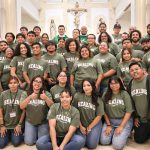
Every week, at St. Anthony of Padua Parish in Passaic, a group of young adults comes together to pray, share their faith, and grow side by side. The EPIC ministry — Everything’s Possible in Christ — has grown from humble beginnings into one of the most vibrant youth spaces in the Diocese of Paterson, drawing young adults from different cities and even from other states.
The weekly gatherings combine faith reflection, Bible study, and prayer, but over time they have become something harder to put into words: a place where young people can arrive with their questions, their history, and their search — without fear of being judged. The group also organizes recreational activities — including a recent ski trip — that strengthen the bonds of community beyond the parish setting.
A fire he didn’t want to let die
For Danquiewiez González, it all began with a spiritual retreat and an experience he simply could not ignore.
“I felt the fire of God’s love in my heart,” he recalls. “After the retreat ended, I didn’t want that fire to go out inside me — that’s why I decided to join the EPIC group, to keep learning more about God and strengthen my faith.”
Since then, his involvement in the parish has only grown. He now serves as a lector at Mass and speaks about his faith with a clarity he traces directly to that moment of grace. “Now I see life from a different point of view. All of this is born from the fact that God is in my heart, and I want to serve Him with joy.”
Jonathan Moran came to the group with a similar desire: to draw closer to his faith again and find accompaniment along the way. What he found was that — and more. “Since I joined the group, I’ve received many helpful resources and met people who are willing to help me in my discernment process,” he shares.
Among the experiences that have marked him most is the group’s retreat. To describe what they lived during those days, Jonathan turns to the words of Psalm 133: “How good and pleasant it is when brothers and sisters live together in unity.”

Click here to subscribe to our weekly newsletter.

An unexpected return
Brenda Marte grew up in the Church. But like so many young people, her college years gradually drew her away from the practice of her faith. It was a personal experience of conversion that awakened in her the desire to come back.
One day, she noticed an announcement in the parish bulletin for a young adult retreat. She decided to go. That seemingly small decision marked the beginning of a new chapter.
“I have made friendships centered on God. My life has changed for the better,” she says today, with the simplicity of someone speaking from deep conviction rather than fleeting enthusiasm. Her commitment has continued to grow: she now serves as a catechist for the first year of Confirmation and participates in the Shalom missionary community in New York.
What she treasures most about the group are the holy hours before the Blessed Sacrament. “There is something very special about being in the presence of Jesus in the Blessed Sacrament together with all your friends. Knowing that there are so many young people seeking God, and that we have that mutual support — it is something truly beautiful.”
Building a family, not just a group
Behind EPIC’s growth are people who have invested their time and their hearts in building something that goes beyond a parish program.
Kenneth Acevedo, one of the coordinators, describes his experience in EPIC as something deeply meaningful in his life. Reflecting on his involvement in the ministry, he explains that being part of the group was already a very valuable experience, but taking on the role of coordinator has been even more special. In his own words: “Being part of EPIC has been truly rewarding, but being a coordinator has been one of the best experiences of my life.”
As he shares, the group has grown in recent years and now brings together young adults from different cities and even from other states. The goal of the ministry, he explains, is to offer a space where young people can feel heard and accompanied on their faith journey. With that purpose in mind, he adds: “We have created a place where young adults can come without feeling judged or alone.”
Jessica Alvarez remembers the early days, when only a handful of people would show up to a given meeting. Today, it is not uncommon to see more than 40 young adults gathered on a single evening. For her, that growth cannot be explained by communication strategies or appealing programs — it comes down to something simpler: the human warmth of genuine welcome. “We strive to treat every person like a member of our family.”
And to that family, the coordinators extend an open invitation to any young adult looking to deepen their faith, or who simply wants to find out whether there is something here for them. As Jessica puts it: “There is always a place for you in our family.”
Visit the parish website or social media to learn more.


‘Everything’s possible in Christ’: EPIC group is transforming young lives at St. Anthony of Padua #Catholic – A youth ministry of the Diocese of Paterson gathers more than 40 young adults every week — people who are looking for something more than a meeting: they are looking for a family. Every week, at St. Anthony of Padua Parish in Passaic, a group of young adults comes together to pray, share their faith, and grow side by side. The EPIC ministry — Everything’s Possible in Christ — has grown from humble beginnings into one of the most vibrant youth spaces in the Diocese of Paterson, drawing young adults from different cities and even from other states. The weekly gatherings combine faith reflection, Bible study, and prayer, but over time they have become something harder to put into words: a place where young people can arrive with their questions, their history, and their search — without fear of being judged. The group also organizes recreational activities — including a recent ski trip — that strengthen the bonds of community beyond the parish setting. A fire he didn’t want to let die For Danquiewiez González, it all began with a spiritual retreat and an experience he simply could not ignore. “I felt the fire of God’s love in my heart,” he recalls. “After the retreat ended, I didn’t want that fire to go out inside me — that’s why I decided to join the EPIC group, to keep learning more about God and strengthen my faith.” Since then, his involvement in the parish has only grown. He now serves as a lector at Mass and speaks about his faith with a clarity he traces directly to that moment of grace. “Now I see life from a different point of view. All of this is born from the fact that God is in my heart, and I want to serve Him with joy.” Jonathan Moran came to the group with a similar desire: to draw closer to his faith again and find accompaniment along the way. What he found was that — and more. “Since I joined the group, I’ve received many helpful resources and met people who are willing to help me in my discernment process,” he shares. Among the experiences that have marked him most is the group’s retreat. To describe what they lived during those days, Jonathan turns to the words of Psalm 133: “How good and pleasant it is when brothers and sisters live together in unity.” Click here to subscribe to our weekly newsletter. An unexpected return Brenda Marte grew up in the Church. But like so many young people, her college years gradually drew her away from the practice of her faith. It was a personal experience of conversion that awakened in her the desire to come back. One day, she noticed an announcement in the parish bulletin for a young adult retreat. She decided to go. That seemingly small decision marked the beginning of a new chapter. “I have made friendships centered on God. My life has changed for the better,” she says today, with the simplicity of someone speaking from deep conviction rather than fleeting enthusiasm. Her commitment has continued to grow: she now serves as a catechist for the first year of Confirmation and participates in the Shalom missionary community in New York. What she treasures most about the group are the holy hours before the Blessed Sacrament. “There is something very special about being in the presence of Jesus in the Blessed Sacrament together with all your friends. Knowing that there are so many young people seeking God, and that we have that mutual support — it is something truly beautiful.” Building a family, not just a group Behind EPIC’s growth are people who have invested their time and their hearts in building something that goes beyond a parish program. Kenneth Acevedo, one of the coordinators, describes his experience in EPIC as something deeply meaningful in his life. Reflecting on his involvement in the ministry, he explains that being part of the group was already a very valuable experience, but taking on the role of coordinator has been even more special. In his own words: “Being part of EPIC has been truly rewarding, but being a coordinator has been one of the best experiences of my life.” As he shares, the group has grown in recent years and now brings together young adults from different cities and even from other states. The goal of the ministry, he explains, is to offer a space where young people can feel heard and accompanied on their faith journey. With that purpose in mind, he adds: “We have created a place where young adults can come without feeling judged or alone.” Jessica Alvarez remembers the early days, when only a handful of people would show up to a given meeting. Today, it is not uncommon to see more than 40 young adults gathered on a single evening. For her, that growth cannot be explained by communication strategies or appealing programs — it comes down to something simpler: the human warmth of genuine welcome. “We strive to treat every person like a member of our family.” And to that family, the coordinators extend an open invitation to any young adult looking to deepen their faith, or who simply wants to find out whether there is something here for them. As Jessica puts it: “There is always a place for you in our family.” Visit the parish website or social media to learn more.        

‘Everything’s possible in Christ’: EPIC group is transforming young lives at St. Anthony of Padua #Catholic –

A youth ministry of the Diocese of Paterson gathers more than 40 young adults every week — people who are looking for something more than a meeting: they are looking for a family.

Every week, at St. Anthony of Padua Parish in Passaic, a group of young adults comes together to pray, share their faith, and grow side by side. The EPIC ministry — Everything’s Possible in Christ — has grown from humble beginnings into one of the most vibrant youth spaces in the Diocese of Paterson, drawing young adults from different cities and even from other states.

The weekly gatherings combine faith reflection, Bible study, and prayer, but over time they have become something harder to put into words: a place where young people can arrive with their questions, their history, and their search — without fear of being judged. The group also organizes recreational activities — including a recent ski trip — that strengthen the bonds of community beyond the parish setting.

A fire he didn’t want to let die

For Danquiewiez González, it all began with a spiritual retreat and an experience he simply could not ignore.

“I felt the fire of God’s love in my heart,” he recalls. “After the retreat ended, I didn’t want that fire to go out inside me — that’s why I decided to join the EPIC group, to keep learning more about God and strengthen my faith.”

Since then, his involvement in the parish has only grown. He now serves as a lector at Mass and speaks about his faith with a clarity he traces directly to that moment of grace. “Now I see life from a different point of view. All of this is born from the fact that God is in my heart, and I want to serve Him with joy.”

Jonathan Moran came to the group with a similar desire: to draw closer to his faith again and find accompaniment along the way. What he found was that — and more. “Since I joined the group, I’ve received many helpful resources and met people who are willing to help me in my discernment process,” he shares.

Among the experiences that have marked him most is the group’s retreat. To describe what they lived during those days, Jonathan turns to the words of Psalm 133: “How good and pleasant it is when brothers and sisters live together in unity.”


Click here to subscribe to our weekly newsletter.

An unexpected return

Brenda Marte grew up in the Church. But like so many young people, her college years gradually drew her away from the practice of her faith. It was a personal experience of conversion that awakened in her the desire to come back.

One day, she noticed an announcement in the parish bulletin for a young adult retreat. She decided to go. That seemingly small decision marked the beginning of a new chapter.

“I have made friendships centered on God. My life has changed for the better,” she says today, with the simplicity of someone speaking from deep conviction rather than fleeting enthusiasm. Her commitment has continued to grow: she now serves as a catechist for the first year of Confirmation and participates in the Shalom missionary community in New York.

What she treasures most about the group are the holy hours before the Blessed Sacrament. “There is something very special about being in the presence of Jesus in the Blessed Sacrament together with all your friends. Knowing that there are so many young people seeking God, and that we have that mutual support — it is something truly beautiful.”

Building a family, not just a group

Behind EPIC’s growth are people who have invested their time and their hearts in building something that goes beyond a parish program.

Kenneth Acevedo, one of the coordinators, describes his experience in EPIC as something deeply meaningful in his life. Reflecting on his involvement in the ministry, he explains that being part of the group was already a very valuable experience, but taking on the role of coordinator has been even more special. In his own words: “Being part of EPIC has been truly rewarding, but being a coordinator has been one of the best experiences of my life.”

As he shares, the group has grown in recent years and now brings together young adults from different cities and even from other states. The goal of the ministry, he explains, is to offer a space where young people can feel heard and accompanied on their faith journey. With that purpose in mind, he adds: “We have created a place where young adults can come without feeling judged or alone.”

Jessica Alvarez remembers the early days, when only a handful of people would show up to a given meeting. Today, it is not uncommon to see more than 40 young adults gathered on a single evening. For her, that growth cannot be explained by communication strategies or appealing programs — it comes down to something simpler: the human warmth of genuine welcome. “We strive to treat every person like a member of our family.”

And to that family, the coordinators extend an open invitation to any young adult looking to deepen their faith, or who simply wants to find out whether there is something here for them. As Jessica puts it: “There is always a place for you in our family.”

Visit the parish website or social media to learn more.


A youth ministry of the Diocese of Paterson gathers more than 40 young adults every week — people who are looking for something more than a meeting: they are looking for a family. Every week, at St. Anthony of Padua Parish in Passaic, a group of young adults comes together to pray, share their faith, and grow side by side. The EPIC ministry — Everything’s Possible in Christ — has grown from humble beginnings into one of the most vibrant youth spaces in the Diocese of Paterson, drawing young adults from different cities and even from other states. The weekly
Read More

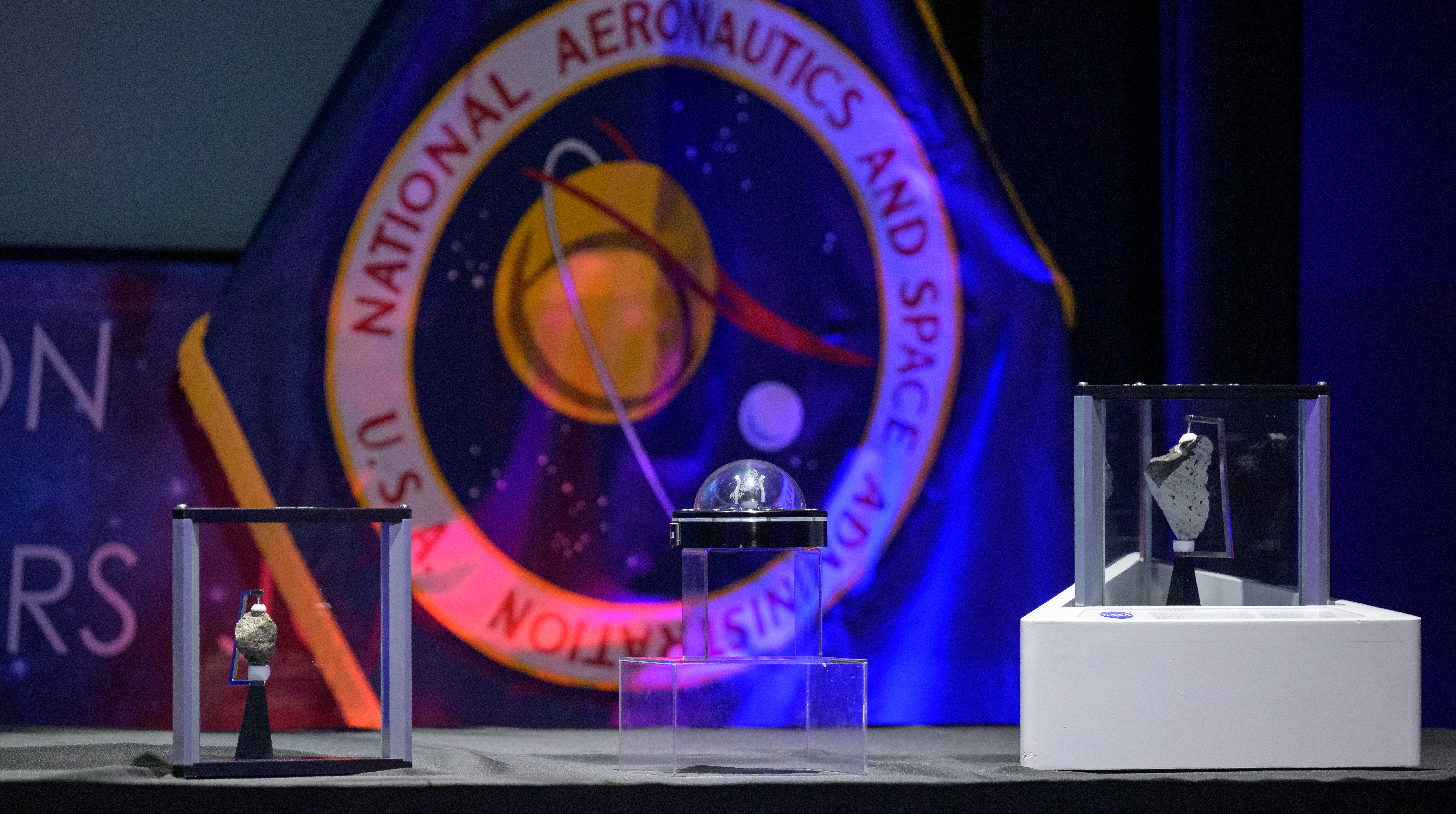
Moon rocks are seen during a March 24, 2026, event where NASA is outlining how the agency is executing the National Space Policy and accelerating preparations for America’s return to the surface of the Moon by 2028.

Read More