

The Moon, seen here backlit by the Sun during a solar eclipse on April 6, 2026, is photographed by one of the cameras on the Orion spacecraft’s solar array wings. Orion is visible in the foreground on the left.
Read More
Catholic educators and parents say the proposal could deepen learning gaps and increase screen addiction, especially for low-income families.
Vilnius’ hospice stands as a living work of Divine Mercy as city prepares to host global congress #Catholic – 
(OSV News) — Thousands of pilgrims are expected to gather in June in the Lithuanian capital for the sixth World Apostolic Congress on Mercy, or WACOM, a five-day event that has previously been held in cities such as Rome, Kraków, Bogota and Manila.
But in Vilnius, the theme “Building the City of Mercy” is not only a slogan — it is a living heritage.
The June 7-12 congress, organized by the Vatican’s Dicastery for Evangelization, is expected to draw up to 5,000 participants from around the world. The choice of Vilnius as host city is not accidental.
It was here, in 1934, that St. Faustina Kowalska received visions that led to the painting of the first image of Divine Mercy, created by Eugeniusz Kazimirowski. Since then, numerous versions of the image have been painted by other artists, including a popular interpretation by Adolf Hyla in Kraków — both images are now found in churches across the globe.
Click here to subscribe to our weekly newsletter.
The WACOM program will include conferences, testimonies, concerts and daily moments of prayer held across the city. “While in Vilnius, WACOM participants can explore the Way of Mercy — a pilgrimage route linking 14 sacred sites, St. Faustina’s house and the Gate of Dawn chapel, home to a 17th-century icon of the Mother of Mercy,” said Archbishop Gintaras Grušas of Vilnius.
At the Hospice of Blessed Father Michal Sopocko — named after St. Faustina’s confessor — the message of Divine Mercy takes concrete form in daily care for the sick and dying. In fact, the hospice is an indispensable part of the Way of Mercy itself.
The building now housing the Sisters of Merciful Jesus was once the studio of painter Kazimirowski, where he created the first Divine Mercy image. It was also a place associated with Blessed Sopocko, and St. Faustina would come here often.
Sister Michaela Rak, the founder of the hospice, told OSV News — speaking ahead of April 12 Divine Mercy Sunday — that the continuity is clear: The message that began in this place is now lived out daily through care for the over 300 sick and dying patients.
The image of Merciful Jesus “came out of Vilnius and went to the whole world,” she said. “But it is not a decoration on a wall. It is a call: Experience my mercy and bring it where you are sent.”
“For many people, hospice is still something they are afraid of,” Aneta Górniewicz, deputy director of the facility, told OSV News. “But what we try to give here first of all is a sense of safety, dignity and daily care.”
Górniewicz did not plan such a path. She arrived in 2013, just after finishing her studies. “I was looking for work that would have a deeper sense — not just a source of income,” she said. A meeting with Sister Michaela changed everything. “I thought, ‘It’s worth trying.’ And I’ve been here 13 years.”
Sister Michaela, a Polish nun from the Congregation of the Sisters of Merciful Jesus, arrived in Vilnius in early 2000s with the idea of creating the country’s first hospice, which opened in 2009. Sister Michaela built the institution from the ground up, turning it into a place that now serves both adults and children at the end of life.
Inside the hospice, mercy is often expressed in small, almost invisible moments, such as a physiotherapist helping a woman, weakened by cancer, achieve a simple goal: to sit up on her own.
“It may seem like a small thing,” Górniewicz said, “but for that patient it was a huge success, a great achievement.” Other days bring different forms of care — reading books to patients who can no longer hold them, organizing shared moments of music, or even laughter therapy for a young woman with lung cancer. “It looked unusual,” Górniewicz recalled, describing a room filled with staff and patients laughing together. “But it really helped her — both physically and emotionally.”
The hospice also cares for children, some only a few years old. When possible, they are taken outside for walks. Volunteers sit with them, read stories or simply remain present. “Sometimes you don’t need words,” Górniewicz told OSV News. “You hold a hand, you pray, you just are with the person.” She described this as a “language of the heart.”
“We often tell volunteers that not every meeting will be about talking,” she said. “Sometimes it is about silence, about presence.” That presence extends to families as well. Górniewicz remembers one family thanking her simply for a kind welcome. “For me, it felt like something completely natural,” she said. “But for them it was very important — that someone received them with kindness and empathy.”
Moments like these have convinced her that mercy is not abstract. “Mercy is love of the heart,” she said. “Giving your time, your attention, your care to another person.”
Her work has also deepened her faith. Accompanying people at the end of life brings both difficulty and clarity. “From a human perspective, it is hard — especially when young people die,” she said. “But I believe that life does not end, it changes. That gives hope.”
Górniewicz recalled a patient who initially refused any spiritual care: “She said, ‘I don’t want a chaplain, I don’t need confession.’” But as her condition worsened, something shifted. “In the end she asked for the sacraments,” she said. “It was like she took hold of a lifeline.”
For Sister Michaela, this connection between faith and action is essential.
“Jesus looks at everyone with the same gaze — with a gaze of mercy,” she told OSV News. “At the one who loves him and at the one who rejects him.” That gaze, she said, defines what mercy truly is. “To look with the same love at the one who hurts me as at the one who loves me — that is mercy,” she said.
She pointed to another key element: initiative. “Jesus takes the first step,” she said, referring to the Gospel account of the risen Christ entering the room where the disciples were hiding. “He does not accuse them. He says, ‘Peace be with you.’” For Sister Michaela, this movement outward is at the heart of Christian life. “Mercy is to take the first step toward another person,” she told OSV News.
“We look at each person as we look at the image of Jesus — with love,” she said of her hospice. “We take the first step to relieve their suffering.”
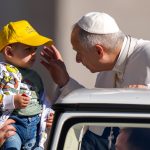
Pope Francis made a surprise stop to bless patients of the Blessed Father Sopocko hospice during his 2018 apostolic trip to Vilnius.
“We feed the body, but also care for the soul,” Sister Michaela told OSV News, pointing to the role of the sacraments and spiritual support. If that dimension is lost, she warned, the consequences extend far beyond one institution. “When people lose the source of mercy, the world becomes a place of war, hatred and exploitation,” she said.
The June congress is expected to highlight not only Vilnius’ key religious sites — including the Shrine of Divine Mercy and the Gate of Dawn — but also the lived experience of mercy in the city.
“I would encourage everyone to come and see Vilnius,” she said. “Not only for its beauty, but to discover this spirit of mercy.” She pointed to the congress program, which will include not only conferences but also testimonies and opportunities to encounter works of mercy directly — also at the hospice.
“People today need mercy — even if they don’t always realize it,” she said. “We need to return to its source.”
Katarzyna Szalajko writes for OSV News from Warsaw, Poland.
– (OSV News) — Thousands of pilgrims are expected to gather in June in the Lithuanian capital for the sixth World Apostolic Congress on Mercy, or WACOM, a five-day event that has previously been held in cities such as Rome, Kraków, Bogota and Manila. But in Vilnius, the theme “Building the City of Mercy” is not only a slogan — it is a living heritage. The June 7-12 congress, organized by the Vatican’s Dicastery for Evangelization, is expected to draw up to 5,000 participants from around the world. The choice of Vilnius as host city is not accidental. It was here,
Pope Leo praises ceasefire as ‘genuine hope,’ presses for dialogue, peace #Catholic – 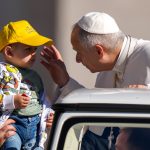
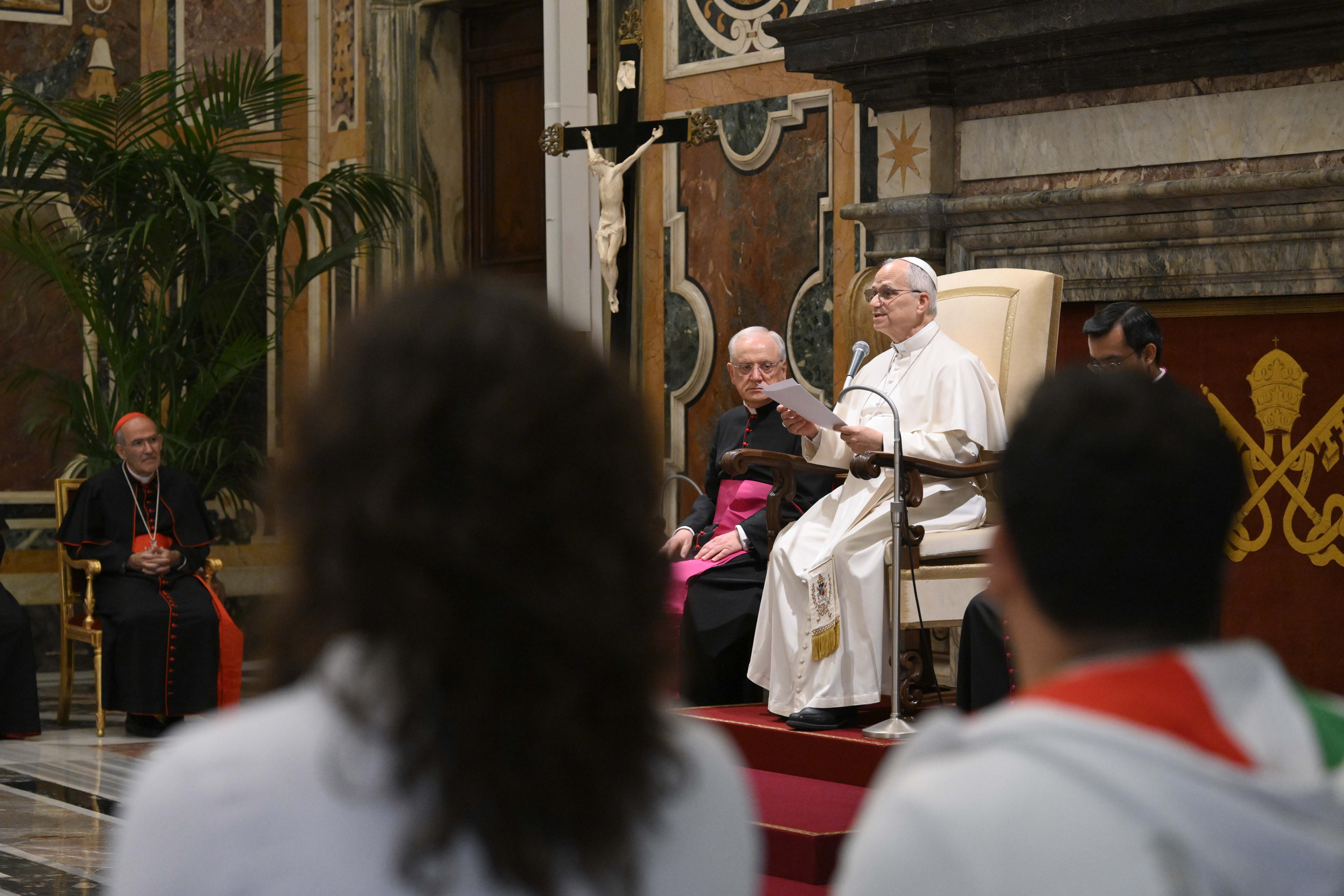
VATICAN CITY (CNS) — Pope Leo XIV welcomed the newly announced ceasefire in the Middle East as “a sign of genuine hope” after what he described as “hours of extreme tension,” while urging a return to negotiations and calling the faithful to prayer.
“Only by returning to negotiations can the war be brought to an end,” he said in remarks in Italian following his April 8 general audience in St. Peter’s Square.
His comments came just hours after a two-week ceasefire was reached between Iran and the United States, narrowly averting further escalation. The agreement followed a stark warning from U.S. President Donald Trump late April 7, when he threatened to destroy Iran’s critical infrastructure, saying “a whole civilization will die tonight” if Tehran did not reopen the Strait of Hormuz to oil and gas tankers. The ceasefire was announced roughly two hours before the White House’s deadline.
Click here to subscribe to our weekly newsletter.
The pope’s appeal for dialogue echoed remarks he made the previous evening at Castel Gandolfo, where he urged leaders to return to the negotiating table even before the ceasefire was announced.
“Today, as we all know, there has also been this threat against the entire people of Iran, and this is truly unacceptable,” he told journalists April 7. “There are certainly issues of international law here, but even more, it is a moral question concerning the good of the people as a whole.”
Expanding on the broader implications of the conflict, he warned of a global economic crisis marked by “great instability,” which he said risks fueling further hatred, and he called on ordinary citizens to contact their political leaders to advocate for peace.
The pope also invited the faithful to join him in a prayer vigil for peace on April 11 in his general audience address. As flowers lined the steps of St. Peter’s Basilica during the Easter season, he used his main talk to reflect on holiness, emphasizing that it is a calling shared by all believers.
“Every baptized person is called to be holy; to live in God’s grace, to practice virtue and to become like Christ,” he said in his address to English speakers.
Continuing his series on the documents of the Second Vatican Council, he described charity as the foundation of holiness, “the fullness of love towards God and towards one’s neighbor,” and said its highest expression is martyrdom, calling it the “supreme witness of faith and charity.” He added that the sacraments, especially the Eucharist, sustain believers in this call.
He continued his analysis of the Dogmatic Constitution “Lumen Gentium,” specifically, the important role of consecrated life. “Indeed, signs of the Kingdom of God, already present in the mystery of the Church, are those evangelical counsels that shape every experience of consecrated life: poverty, chastity and obedience.
Poverty demonstrates “complete trust” in God — free of self-interest, obedience follows Christ’s “self-giving” offered to God, and chastity is the “gift of a heart that is whole and pure in love, at the service of God and Church.” The pope called these virtues a form of “radical discipleship.”
“These three virtues are not rules that shackle freedom, but liberating gifts of the Holy Spirit, through which some of the faithful are wholly consecrated to God,” he said.
Closing his main address, the pope said that Christ’s sacrifice makes holiness possible even in suffering.
“By contemplating this event, we know that there is no human experience that God does not redeem,” he said. “Even suffering, lived in union with the passion of the Lord, becomes a path of holiness.”
– VATICAN CITY (CNS) — Pope Leo XIV welcomed the newly announced ceasefire in the Middle East as “a sign of genuine hope” after what he described as “hours of extreme tension,” while urging a return to negotiations and calling the faithful to prayer. “Only by returning to negotiations can the war be brought to an end,” he said in remarks in Italian following his April 8 general audience in St. Peter’s Square. His comments came just hours after a two-week ceasefire was reached between Iran and the United States, narrowly averting further escalation. The agreement followed a stark warning from
![Concordat with Vatican halted in Czech Republic over seal of confession - #Catholic - The Constitutional Court of the Czech Republic on April 1 found that parts of a treaty between the Czech Republic and the Holy See are inconsistent with the Czech constitution and therefore cannot be ratified.“We disagree with the decision of the majority of judges at the Constitutional Court but accept it,” the Czech Bishops' Conference wrote in a press release. The episcopate finds it “positive that the court did not reject the idea of the existence of a treaty with the Holy See but only limited itself to partial passages.”The agreement on certain legal issues was signed in 2024 by Vatican Secretary of State Cardinal Pietro Parolin and then-Prime Minister Petr Fiala. It was later approved by both chambers of the countryʼs Parliament and was submitted to the president of the country for ratification. However, a group of senators filed a complaint with the Constitutional Court, which on April 1 stated that two parts of the accord are problematic.The ruling says that the concordat would “give Catholic Church legal entities a powerful tool to prevent their documents (archive materials) from being made available.” Church archives are important sources of cultural wealth and history, but the accord would “exempt Catholic churches from the obligation to respect the Archives Act, which would, however, continue to apply to all other churches,” the court explained.The second objection deals with the seal of confession, which would be enacted without any exceptions and would be “a clear violation of the neutrality of the state and the principle of equal treatment of different churches.”
Czech bishop declares Year of Reconciliation 80 years after World War II expulsions
Each side of the treaty understood it differently, the ruling observed, adding that the seal of confession would be more protected than professional secrecy.Dissenting opinionsThree out of 15 judges of the Constitutional Court presented a different position, arguing the court did not deal with an important part of the legal file presented by senators, such as objections to “the alleged privilege of the Catholic Church in the provision of pastoral care in various types of institutions and facilities.”However, they admitted that “the Holy See is a subject of international law, which the Czech Republic has recognized,” and so it is “undoubtedly an objective reason for the different treatment of the Catholic Church in various issues.” They further argued that the two problematic passages in the majority decision are not in conflict with the constitution.Another two judges presented a different position each. One of them, Judge Tomáš Langášek, argued that “the dissenting opinions show that it was possible to adopt a rational interpretation of the concordat in good faith that would not in any way conflict with the constitutional order.”He said he considers the decision “a paradigmatic change in the role and function of the constitutional judiciary.” The Constitutional Court opposed the intention of the Parliament “to take on an international legal obligation to maintain” the already existing and “legally guaranteed standard of protection of fundamental religious rights and freedoms in [the] future,” Langášek opined.“The courtʼs concern for equal treatment among churches and religious communities is only a proxy problem,” the constitutional judge added.‘A legal defeat for people who consider religious freedom an important value’“It is a political victory for some, and a legal defeat for people, believers and nonbelievers, who consider religious freedom an important value,” commented Jakub Kříž, a lawyer who teaches at the Catholic Theological Faculty of Charles University in Prague.At the same time, he said he believes “the absence of a concordat is not a tragedy” either for religious freedom or “for Catholics who, after all, always benefit the most when the state does not get along with them.”The proposal “would have had no chance of success if” Czech President Petr Pavel “had not intervened and introduced new arguments,” for example suggesting that “the agreement contradicts the sovereignty of the state and its secular and republican character,” the scholar underscored.The negotiated agreement was “poor in content, innocent, almost devoid of substance,” and the Czech side did not try to “negotiate anything beyond what is already in force today,” Kříž said, adding that it had “more a symbolic” value.‘A big disappointment’The decision was a “big disappointment” and “a very unfortunate event,” lamented Father Jiří Rajmund Tretera, a Dominican and professor of canon law at the Faculty of Law of Charles University.On the seal of confession, there would be “no change to the current situation,” as all believers “were guaranteed that the current legal provisions” regarding “confessional secrecy could not be so easily eliminated” if a religion-averse group “came to power in our democratic state,” the priest said.Tretera also said he believes the Constitutional Court committed “an unintentional attack against the ecumenical movement.” It argued that the proposed agreement “was not in accordance with the principle of equality of all churches,” yet “this is in conflict with the reality commonly recognized in non-Catholic churches.”Kříž clarified that “non-Catholic churches did not” oppose the treaty, and “many even welcomed it, seeing its role as a stabilizer of guarantees of religious freedom.”The only way to proceed is “to start negotiations from the beginning,” as this is not “a bill where a sentence can be deleted,” the lawyer warned.Yet he said he is skeptical that the Holy See would risk another “embarrassment,” as “the Czech Republic showed to be a rather unreliable international partner.”](https://unitedyam.com/wp-content/uploads/2026/04/concordat-with-vatican-halted-in-czech-republic-over-seal-of-confession-catholic-the-constitutional-court-of-the-czech-republic-on-april-1-found-that-parts-of-a-treaty-between-the-czech-republic.jpg)
Experts say the ruling is a setback for religious freedom in one of Europe’s most secular countries, where a concordat had been decades in the making.
In 1959, having determined that military test pilots would make the best astronauts, NASA began screening the records of 508 candidates. From there the group was narrowed to 110 men who went through interviews and written tests; of the 110, 32 candidates were selected to undergo extensive physical and mental testing. Finally, on April 1,Continue reading “April 9, 1959: The Mercury 7 debut”
The post April 9, 1959: The Mercury 7 debut appeared first on Astronomy Magazine.
Read More![Christians must be messengers of peace this Easter, Comboni missionary says – #Catholic – Christians are called to live the Easter message of peace, especially during times of war and violence, said a Comboni missionary priest once kidnapped in Uganda.“On the very day of Jesus’ resurrection, on Easter day, Jesus appeared to the apostles [and] the message he delivered to them was, ‘Peace to you!’” Father Giulio Albanese, MCCJ, said in an exclusive interview with EWTN News reporter Valentina Di Donato.“Peace, from a Christian perspective, is not simply a wish, it’s a gift, and we must be aware that this is our vocation, to bring peace to the world. What is shameful is that nowadays we are doing exactly the opposite,” he said.Albanese, who was kidnapped in northern Uganda by armed rebels in 2002 and witnessed several atrocities of war firsthand, said today’s Christians cannot turn a blind eye to people’s sufferings.“We have to be aware that we are living in a society, at an international level, where there are many, many contradictions,” he said.“There are many innocent people who are slaughtered out of human selfishness. Look at what is taking place in Iran, in the Middle East, in Africa,” he continued.In order to address the obstacles to peace, Albanese said it is necessary for Christians to undergo a conversion and to take Jesus’ Easter message of peace to heart.“During Easter day and even in the following days we have to pray for peace because if there is a lack of peace in the world it’s because our Christianity has become meaningless,” he said.After witnessing the violent killings of a woman and her young children in Uganda, Albanese shared with Di Donato how his faith in the risen Jesus was put to the test.“I must be sincere, in that very moment, I started screaming against the Lord, I said, ‘Lord where are you? Why are you allowing innocent people [to be] killed like that in that way? Why do they have to suffer in such a way? Lord have you forgotten us? Have you forgotten these people?” he said.But it was through the help of an elderly priest that Albanese was able to sense the presence of God, when he was told: “You should ask yourself where is man, not where is God.”Describing his heartfelt conversion as a “story of resurrection,” the Comboni missionary said these days of Easter can help Christians renew their commitment to work toward peace.“We have to believe that our life is in the hands of God,” he said. “The Lord is faithful, and in the very moment you live an experience like this you understand also the significance of life.”During Holy Week, Pope Leo XIV made several pleas to world leaders to bring all conflict and violence to an end.Describing Jesus Christ as the “King of Peace” during the Palm Sunday Mass in St. Peter’s Square, the Holy Father said God does not listen to those who “wage war.”“Just as the Church contemplates the mystery of the Lord’s passion, we cannot forget those who today are truly sharing in his suffering,” he said in his March 29 homily.On Easter Sunday, the pope renewed his prayerful petition for peace during his “urbi et orbi” blessing delivered from the central loggia of St. Peter’s Basilica.“The peace that Jesus gives us is not merely the silence of weapons but the peace that touches and transforms the heart of each one of us!” he said. “Let us allow ourselves to be transformed by the peace of Christ! Let us make heard the cry for peace that springs from our hearts!”Pope Leo will preside over a prayer vigil for peace in St. Peter’s Basilica on April 11.](https://unitedyam.com/wp-content/uploads/2026/04/christians-must-be-messengers-of-peace-this-easter-comboni-missionary-says-catholic-christians-are-called-to-live-the-easter-message-of-peace-especially-during-times-of-war-and-violence-said-a.jpg "Christians must be messengers of peace this Easter, Comboni missionary says – #Catholic – Christians are called to live the Easter message of peace, especially during times of war and violence, said a Comboni missionary priest once kidnapped in Uganda.“On the very day of Jesus’ resurrection, on Easter day, Jesus appeared to the apostles [and] the message he delivered to them was, ‘Peace to you!’” Father Giulio Albanese, MCCJ, said in an exclusive interview with EWTN News reporter Valentina Di Donato.“Peace, from a Christian perspective, is not simply a wish, it’s a gift, and we must be aware that this is our vocation, to bring peace to the world. What is shameful is that nowadays we are doing exactly the opposite,” he said.Albanese, who was kidnapped in northern Uganda by armed rebels in 2002 and witnessed several atrocities of war firsthand, said today’s Christians cannot turn a blind eye to people’s sufferings.“We have to be aware that we are living in a society, at an international level, where there are many, many contradictions,” he said.“There are many innocent people who are slaughtered out of human selfishness. Look at what is taking place in Iran, in the Middle East, in Africa,” he continued.In order to address the obstacles to peace, Albanese said it is necessary for Christians to undergo a conversion and to take Jesus’ Easter message of peace to heart.“During Easter day and even in the following days we have to pray for peace because if there is a lack of peace in the world it’s because our Christianity has become meaningless,” he said.After witnessing the violent killings of a woman and her young children in Uganda, Albanese shared with Di Donato how his faith in the risen Jesus was put to the test.“I must be sincere, in that very moment, I started screaming against the Lord, I said, ‘Lord where are you? Why are you allowing innocent people [to be] killed like that in that way? Why do they have to suffer in such a way? Lord have you forgotten us? Have you forgotten these people?” he said.But it was through the help of an elderly priest that Albanese was able to sense the presence of God, when he was told: “You should ask yourself where is man, not where is God.”Describing his heartfelt conversion as a “story of resurrection,” the Comboni missionary said these days of Easter can help Christians renew their commitment to work toward peace.“We have to believe that our life is in the hands of God,” he said. “The Lord is faithful, and in the very moment you live an experience like this you understand also the significance of life.”During Holy Week, Pope Leo XIV made several pleas to world leaders to bring all conflict and violence to an end.Describing Jesus Christ as the “King of Peace” during the Palm Sunday Mass in St. Peter’s Square, the Holy Father said God does not listen to those who “wage war.”“Just as the Church contemplates the mystery of the Lord’s passion, we cannot forget those who today are truly sharing in his suffering,” he said in his March 29 homily.On Easter Sunday, the pope renewed his prayerful petition for peace during his “urbi et orbi” blessing delivered from the central loggia of St. Peter’s Basilica.“The peace that Jesus gives us is not merely the silence of weapons but the peace that touches and transforms the heart of each one of us!” he said. “Let us allow ourselves to be transformed by the peace of Christ! Let us make heard the cry for peace that springs from our hearts!”Pope Leo will preside over a prayer vigil for peace in St. Peter’s Basilica on April 11.")
Father Giulio Albanese, MCCJ, who has witnessed several atrocities of war firsthand, said today’s Christians cannot turn a blind eye to people’s sufferings.
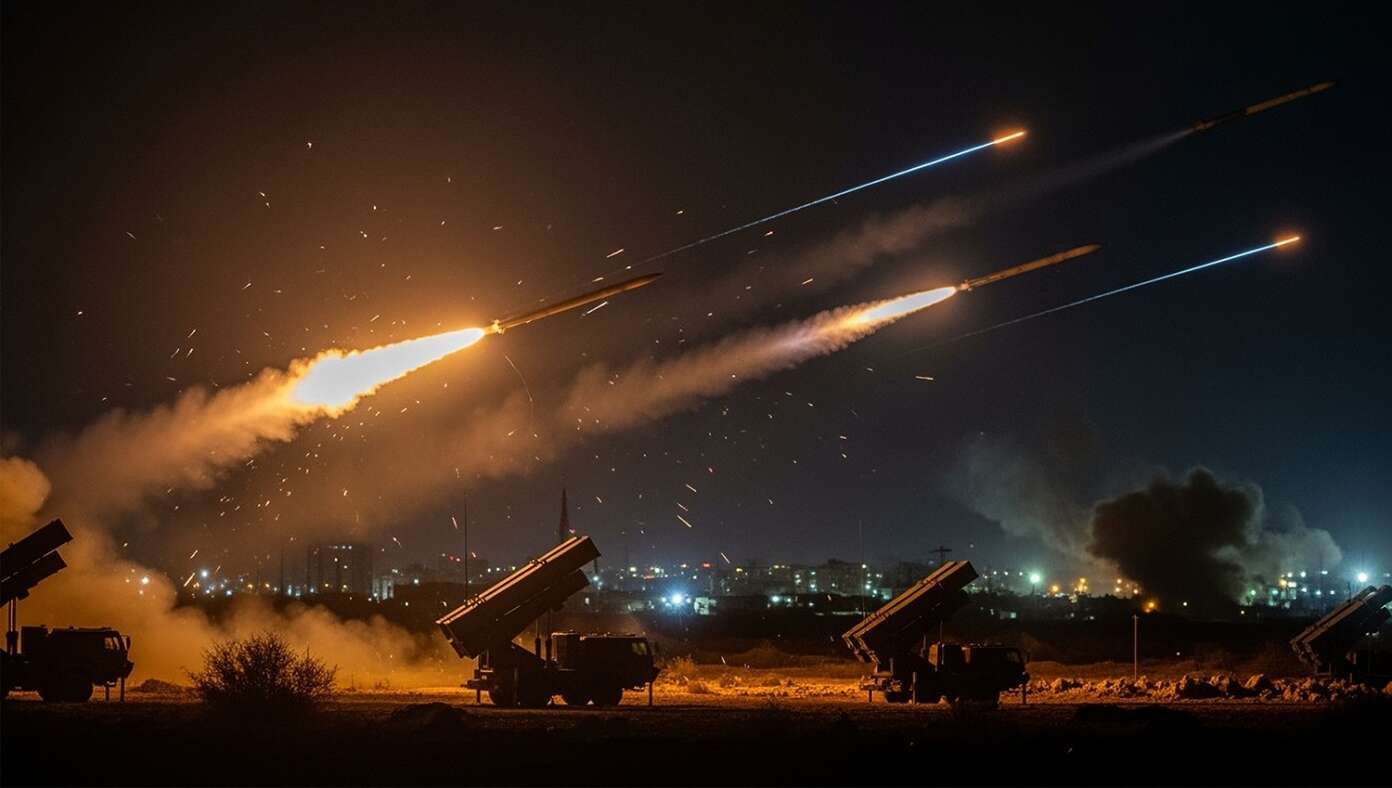
MIDDLE EAST — The nations of the Middle East celebrated the announcement of a ceasefire with an massive fireworks display that lit up the entire region.
Read More
The U.S.-Iran War has captured hearts and headlines all over the world. Now, with a two-week ceasefire agreement in place, here’s how popular media outlets are reporting it:
Read More
| Picture of the day |
|---|
_-_S%C3%A8te_-_December_2018.jpg)
|
|
Viking Sky (ship, 2017) – moored in the harbour of Sète (Hérault, France)
|