Day: April 10, 2026

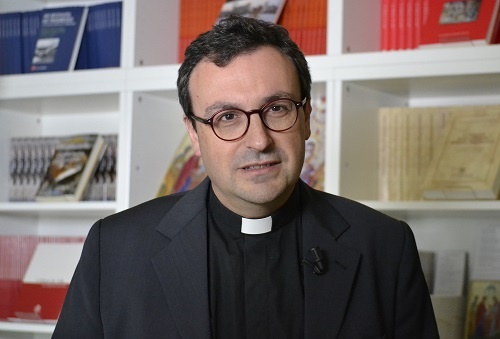
Pope Leo names Father Andrea Ciucci chancellor of Pontifical Academy for Life #Catholic Pope Leo XIV on Friday appointed Father Andrea Ciucci chancellor of the Pontifical Academy for Life. The Italian priest has served as the academyʼs secretariat coordinator since 2016.Originally from Milan, the 59-year-old Ciucci has a doctorate in the philosophy of religion from the Pontifical University of Sant’Anselmo in Rome. After serving as a parish vicar in Milan, he worked at the former Pontifical Council for the Family from 2012–2016.He is also the general secretary of the RenAIssance Foundation, a Vatican institution that promotes an ethical perspective on artificial intelligence.Ciucci is a professor at the Pontifical Theological Institute John Paul II in Rome and he is a public speaker and writer on the topic of new technologies and their influence on young people and families.Last month, the president of the Pontifical Academy for Life, Renzo Pegoraro, received the title of “bishop” from Pope Leo for his role.Pegoraro was chancellor of the academy from 2011 until his appointment as president in May 2025.According to the academyʼs statutes, the chancellor “may represent the Pontifical Academy for Life on behalf of the president and collaborates with him in the direction and administration of the academy’s activities.”The Pontifical Academy for Life was founded in February 1994 by St. John Paul II. It is one of several academic and cultural institutions at the Vatican that bring together experts in their fields to discuss issues of relevance to the Church and the world.

Pope Leo names Father Andrea Ciucci chancellor of Pontifical Academy for Life #Catholic Pope Leo XIV on Friday appointed Father Andrea Ciucci chancellor of the Pontifical Academy for Life. The Italian priest has served as the academyʼs secretariat coordinator since 2016.Originally from Milan, the 59-year-old Ciucci has a doctorate in the philosophy of religion from the Pontifical University of Sant’Anselmo in Rome. After serving as a parish vicar in Milan, he worked at the former Pontifical Council for the Family from 2012–2016.He is also the general secretary of the RenAIssance Foundation, a Vatican institution that promotes an ethical perspective on artificial intelligence.Ciucci is a professor at the Pontifical Theological Institute John Paul II in Rome and he is a public speaker and writer on the topic of new technologies and their influence on young people and families.Last month, the president of the Pontifical Academy for Life, Renzo Pegoraro, received the title of “bishop” from Pope Leo for his role.Pegoraro was chancellor of the academy from 2011 until his appointment as president in May 2025.According to the academyʼs statutes, the chancellor “may represent the Pontifical Academy for Life on behalf of the president and collaborates with him in the direction and administration of the academy’s activities.”The Pontifical Academy for Life was founded in February 1994 by St. John Paul II. It is one of several academic and cultural institutions at the Vatican that bring together experts in their fields to discuss issues of relevance to the Church and the world.

The Italian priest has served as the academy’s secretariat coordinator since 2016.

Read More
8,645 candles light Finland’s Parliament in pro-life vigil for unborn #Catholic HELSINKI — Thousands of candles illuminated the steps of Finlandʼs Parliament in Helsinki on March 21 as pro-life advocates held a public vigil commemorating children lost to abortion.Organized by the Finnish pro-life group Oikeus elämään ry, the “Muistamme” (“In remembrance”) event featured 8,645 candles, one for each abortion performed in Finland in 2024. Johannes Laitinen, one of the eventʼs organizers, said approximately 100 preselected participants were invited to light the candles, chosen because of their personal connection to the loss of children through abortion. Members of the public were also given the opportunity to take part in the candle lighting during the vigil.
 
 Johannes Laitinen, one of the organizers of the “Muistamme” pro-life vigil held outside Finland’s Parliament in Helsinki on March 21, 2026. | Credit: Miika Soininen
 
 After the candles were lit, participants observed a minute of silence, while volunteers remained through the night as the display continued glowing in central Helsinki.A public witness in the heart of HelsinkiSpeaking to EWTN News, Kirsi Morgan-MacKay, chairman of Finlandʼs Right to Life Association, said the vigil sought both to honor the unborn and to confront the public with the scale of abortion in the country. “The event created a visual that touched peopleʼs hearts and perhaps made them stop and think about how many children are actually lost every year through abortion,” she said.Morgan-MacKay added that the vigil also aimed to acknowledge the often-unspoken grief experienced by women and families affected by abortion.
 
 The full display of 8,645 candles glows on the steps of Finland’s Parliament in Helsinki on the night of March 21, 2026. | Credit: Jaakko Haapanen
 
 She noted that leaders from multiple Christian denominations attended the event, which organizers viewed as an encouraging sign of broader ecclesial engagement. “We have always hoped that churches would come together to defend the lives of unborn children,” she said, explaining that abortion is not merely political but “a spiritual, ethical, and moral issue.”A prayer gathering was also held in connection with the vigil at Luther Church in Helsinki, where clergy from Lutheran, Presbyterian, and Catholic communities offered prayers. Representing the Catholic Church, Jean Claude Kabeza, vicar general of the Diocese of Helsinki, conveyed greetings from Bishop Raimo Goyarrola.Finlandʼs welfare state and the limits of social supportWhile happy about Finlandʼs reputation for its strong social welfare system, Morgan-MacKay noted that many women facing crisis pregnancies still experience profound isolation. “Many women and families are still left alone in the midst of a crisis,” she said, adding that loneliness and lack of support often persist even within families.She also observed that in Finland, the lives of unborn children often go unvalued when a pregnancy is unwanted. She pointed out that women confronted with an unplanned pregnancy, sometimes in shock, may see abortion as an “easy” way out, particularly since medical abortion is frequently presented as a simple “procedure.”
 
 Pro-life advocates carry the “Muistamme” banner through central Helsinki during the candlelit vigil on March 21, 2026. | Credit: Miika Soininen
 
 Morgan-MacKay also drew attention to Finlandʼs liberalized abortion framework, particularly the increased accessibility of medical abortion, arguing that women may be pressured into rushed decisions without adequate counseling.“Sometimes the health care system offers abortion as the only option,” she said. “Many times, these women need space to pause, think everything through, and receive real support.”She added that while Finlandʼs pro-life movement remains relatively small, it is gradually growing, with increased awareness of abortionʼs broader social and personal consequences. She expressed particular encouragement at the involvement of younger supporters, especially young men, saying she believes “God is raising up a new generation of pro-lifers” as more Finns begin speaking openly about the issue.A bishopʼs medical perspective on abortionEWTN News also spoke with Goyarrola, who said he remains hopeful that Finland can become more receptive to pro-life values, despite abortion remaining a sensitive and often taboo topic in public life.Goyarrolaʼs comments carry added weight in Finlandʼs abortion debates because of his medical background. Before entering the priesthood, he trained as a physician, graduating with a degree in medicine and surgery from the University of Navarra in Spain in 1992, and has pursued doctoral research in palliative care at the University of Eastern Finland since 2022.
 
 Spanish Opus Dei priest announced as new Helsinki bishop
 
 Drawing on his medical knowledge, he has also written extensively on social issues for general audiences, authoring “Ihmiselämää äidin kohdussa” (“Human Life in the Womb”), on abortion, and “Arvokas kuolema” (“A Dignified Death”), on euthanasia. Both books were widely praised for making complex bioethical questions accessible to ordinary readers.Reflecting on his experience, Goyarrola said that with regard to discussing abortion, conversations require clarity and compassion rather than confrontation.“I believe that positive language is what truly reaches people and opens hearts to reflection,” he said. “The Church speaks in defense of life by offering real solutions to real problems and proposing ways to prevent abortion.”“No one celebrates abortion as a joyful experience,” he added.Signs of change among younger FinnsAssessing the broader cultural climate, Goyarrola said abortion has historically remained difficult to discuss openly in Finnish society. “Abortion has long been a taboo subject in Finland, and to a large extent it still is,” he said, noting that public discourse is often narrowly framed around “the womanʼs right to her own body.”Yet the bishop said younger generations appear increasingly willing to engage the issue more thoughtfully. “Among young people, the topic is beginning to be discussed more openly, and with many serious questions,” he noted.
 
 Participants light some of the 8,645 candles on the steps of Finlandʼs Parliament in Helsinki on March 21, 2026, one for each abortion performed in Finland in 2024. | Credit: Jaakko Haapanen
 
 Goyarrola explained that because over 90% of abortions in Finland are carried out for social rather than medical reasons, the underlying causes must be addressed socially as well. He called for “better education, access to information, healthier lifestyles, and more personal responsibility and support for marriage and family life.”He added that the Church must continue promoting a concrete vision of family and human dignity, saying: “We aim to promote a culture that values life, family, and hope.” He also noted that the Catholic Church in Finland tries to speak about the “need for more children in society,” not for economic or labor-related reasons but rather for the future of Finnish society itself.“I hope that we can speak about abortion and about life in the motherʼs womb without prejudice, in a rational and thoughtful way,” Goyarrola added. “Only through open and respectful conversation can we better understand the complexity of the issue and seek humane and responsible solutions.”

8,645 candles light Finland’s Parliament in pro-life vigil for unborn #Catholic HELSINKI — Thousands of candles illuminated the steps of Finlandʼs Parliament in Helsinki on March 21 as pro-life advocates held a public vigil commemorating children lost to abortion.Organized by the Finnish pro-life group Oikeus elämään ry, the “Muistamme” (“In remembrance”) event featured 8,645 candles, one for each abortion performed in Finland in 2024. Johannes Laitinen, one of the eventʼs organizers, said approximately 100 preselected participants were invited to light the candles, chosen because of their personal connection to the loss of children through abortion. Members of the public were also given the opportunity to take part in the candle lighting during the vigil. Johannes Laitinen, one of the organizers of the “Muistamme” pro-life vigil held outside Finland’s Parliament in Helsinki on March 21, 2026. | Credit: Miika Soininen After the candles were lit, participants observed a minute of silence, while volunteers remained through the night as the display continued glowing in central Helsinki.A public witness in the heart of HelsinkiSpeaking to EWTN News, Kirsi Morgan-MacKay, chairman of Finlandʼs Right to Life Association, said the vigil sought both to honor the unborn and to confront the public with the scale of abortion in the country. “The event created a visual that touched peopleʼs hearts and perhaps made them stop and think about how many children are actually lost every year through abortion,” she said.Morgan-MacKay added that the vigil also aimed to acknowledge the often-unspoken grief experienced by women and families affected by abortion. The full display of 8,645 candles glows on the steps of Finland’s Parliament in Helsinki on the night of March 21, 2026. | Credit: Jaakko Haapanen She noted that leaders from multiple Christian denominations attended the event, which organizers viewed as an encouraging sign of broader ecclesial engagement. “We have always hoped that churches would come together to defend the lives of unborn children,” she said, explaining that abortion is not merely political but “a spiritual, ethical, and moral issue.”A prayer gathering was also held in connection with the vigil at Luther Church in Helsinki, where clergy from Lutheran, Presbyterian, and Catholic communities offered prayers. Representing the Catholic Church, Jean Claude Kabeza, vicar general of the Diocese of Helsinki, conveyed greetings from Bishop Raimo Goyarrola.Finlandʼs welfare state and the limits of social supportWhile happy about Finlandʼs reputation for its strong social welfare system, Morgan-MacKay noted that many women facing crisis pregnancies still experience profound isolation. “Many women and families are still left alone in the midst of a crisis,” she said, adding that loneliness and lack of support often persist even within families.She also observed that in Finland, the lives of unborn children often go unvalued when a pregnancy is unwanted. She pointed out that women confronted with an unplanned pregnancy, sometimes in shock, may see abortion as an “easy” way out, particularly since medical abortion is frequently presented as a simple “procedure.” Pro-life advocates carry the “Muistamme” banner through central Helsinki during the candlelit vigil on March 21, 2026. | Credit: Miika Soininen Morgan-MacKay also drew attention to Finlandʼs liberalized abortion framework, particularly the increased accessibility of medical abortion, arguing that women may be pressured into rushed decisions without adequate counseling.“Sometimes the health care system offers abortion as the only option,” she said. “Many times, these women need space to pause, think everything through, and receive real support.”She added that while Finlandʼs pro-life movement remains relatively small, it is gradually growing, with increased awareness of abortionʼs broader social and personal consequences. She expressed particular encouragement at the involvement of younger supporters, especially young men, saying she believes “God is raising up a new generation of pro-lifers” as more Finns begin speaking openly about the issue.A bishopʼs medical perspective on abortionEWTN News also spoke with Goyarrola, who said he remains hopeful that Finland can become more receptive to pro-life values, despite abortion remaining a sensitive and often taboo topic in public life.Goyarrolaʼs comments carry added weight in Finlandʼs abortion debates because of his medical background. Before entering the priesthood, he trained as a physician, graduating with a degree in medicine and surgery from the University of Navarra in Spain in 1992, and has pursued doctoral research in palliative care at the University of Eastern Finland since 2022. Spanish Opus Dei priest announced as new Helsinki bishop Drawing on his medical knowledge, he has also written extensively on social issues for general audiences, authoring “Ihmiselämää äidin kohdussa” (“Human Life in the Womb”), on abortion, and “Arvokas kuolema” (“A Dignified Death”), on euthanasia. Both books were widely praised for making complex bioethical questions accessible to ordinary readers.Reflecting on his experience, Goyarrola said that with regard to discussing abortion, conversations require clarity and compassion rather than confrontation.“I believe that positive language is what truly reaches people and opens hearts to reflection,” he said. “The Church speaks in defense of life by offering real solutions to real problems and proposing ways to prevent abortion.”“No one celebrates abortion as a joyful experience,” he added.Signs of change among younger FinnsAssessing the broader cultural climate, Goyarrola said abortion has historically remained difficult to discuss openly in Finnish society. “Abortion has long been a taboo subject in Finland, and to a large extent it still is,” he said, noting that public discourse is often narrowly framed around “the womanʼs right to her own body.”Yet the bishop said younger generations appear increasingly willing to engage the issue more thoughtfully. “Among young people, the topic is beginning to be discussed more openly, and with many serious questions,” he noted. Participants light some of the 8,645 candles on the steps of Finlandʼs Parliament in Helsinki on March 21, 2026, one for each abortion performed in Finland in 2024. | Credit: Jaakko Haapanen Goyarrola explained that because over 90% of abortions in Finland are carried out for social rather than medical reasons, the underlying causes must be addressed socially as well. He called for “better education, access to information, healthier lifestyles, and more personal responsibility and support for marriage and family life.”He added that the Church must continue promoting a concrete vision of family and human dignity, saying: “We aim to promote a culture that values life, family, and hope.” He also noted that the Catholic Church in Finland tries to speak about the “need for more children in society,” not for economic or labor-related reasons but rather for the future of Finnish society itself.“I hope that we can speak about abortion and about life in the motherʼs womb without prejudice, in a rational and thoughtful way,” Goyarrola added. “Only through open and respectful conversation can we better understand the complexity of the issue and seek humane and responsible solutions.”

Organizers of the “Muistamme” vigil lit one candle for each of the 8,645 abortions performed in Finland in 2024, drawing Catholic, Lutheran, and Presbyterian clergy together in central Helsinki.

Read More
Investing with ‘the lordship of Christ’ in mind: Ecumenical business conference convenes in Denver – #Catholic – Remembering "the lordship of Christ is over everything,” Catholic and Protestant leaders are prioritizing ethical investing by making their voices heard as shareholders. At the 2026 Christian Institutional Investors conference in Lakewood, Colorado, on April 8, speakers urged Christian businesses, schools, and apostolates to stand up for their beliefs as investors. More than 150 attendees from across the country attended the conference, which was hosted by the faith-based investment consulting company Innovest Portfolio Solutions along with the Archdiocese of Denver, Catholic Benefits Association, The Catholic Foundation of Northern Colorado, AmPhil, Alliance Defending Freedom, and Colorado Christian University, where the event took place.“This ecumenical gathering brings together Catholic and Protestant leaders to explore portfolio screening, values alignment with asset managers, and the importance of proxy voting and corporate engagement,” Innovest principal Sarah Newman said.“Our goal is for attendees to leave informed, inspired, and equipped to better understand how their portfolios are built and why the partners they choose truly matter to create returns they need for their Christian mission,” Newman told EWTN News.Fighting for Christian values through proxy votingIn the fight to bring Christian values into investing, speakers emphasized the importance of proxy voting — a process where shareholders authorize someone else to vote on their behalf in shareholder meetings.“As a shareholder, youʼre sort of a citizen of a company and are entitled to vote on these matters — but most people donʼt realize that their proxies are being delegated to an adviser and unintentionally support things that are opposed to their own values,” speaker Dustin DeVito said.DeVito is a research director at the 1792 Exchange, a company working to bring “ideological balance back to public corporations.”Nicholas Schmitz, the Traviesa chair of finance at The Catholic University of America’s Busch School of Business, noted that Christian investors “need a custom proxy option that actually represents Christian viewpoints” to have a cumulative, widespread impact across corporate America.Custom proxy options enable institutions to vote according to their own guidelines rather than the default options.“That would be a huge, huge uptake that would get long-term cultural change,” Schmitz said in a panel titled “Leading Change: Bringing Faithful Christian Proxy Voting Rules to Institutional Systems.”In November, The Catholic University of America developed new proxy guidelines that leading companies representing shareholders accepted — giving a faith-based option in line with the Catholic Churchʼs teachings.“Catholicism … I joke, weʼre the most organized religion in America, but the least organized in capital markets. We donʼt really have an excuse for not getting this right,” Schmitz said.In his talk, “The Post-ESG Landscape: Where Corporate America Is Headed and How Faith-Aligned Capital Can Lead,” DeVito also encouraged Christian investors to stand up for their faith.
 
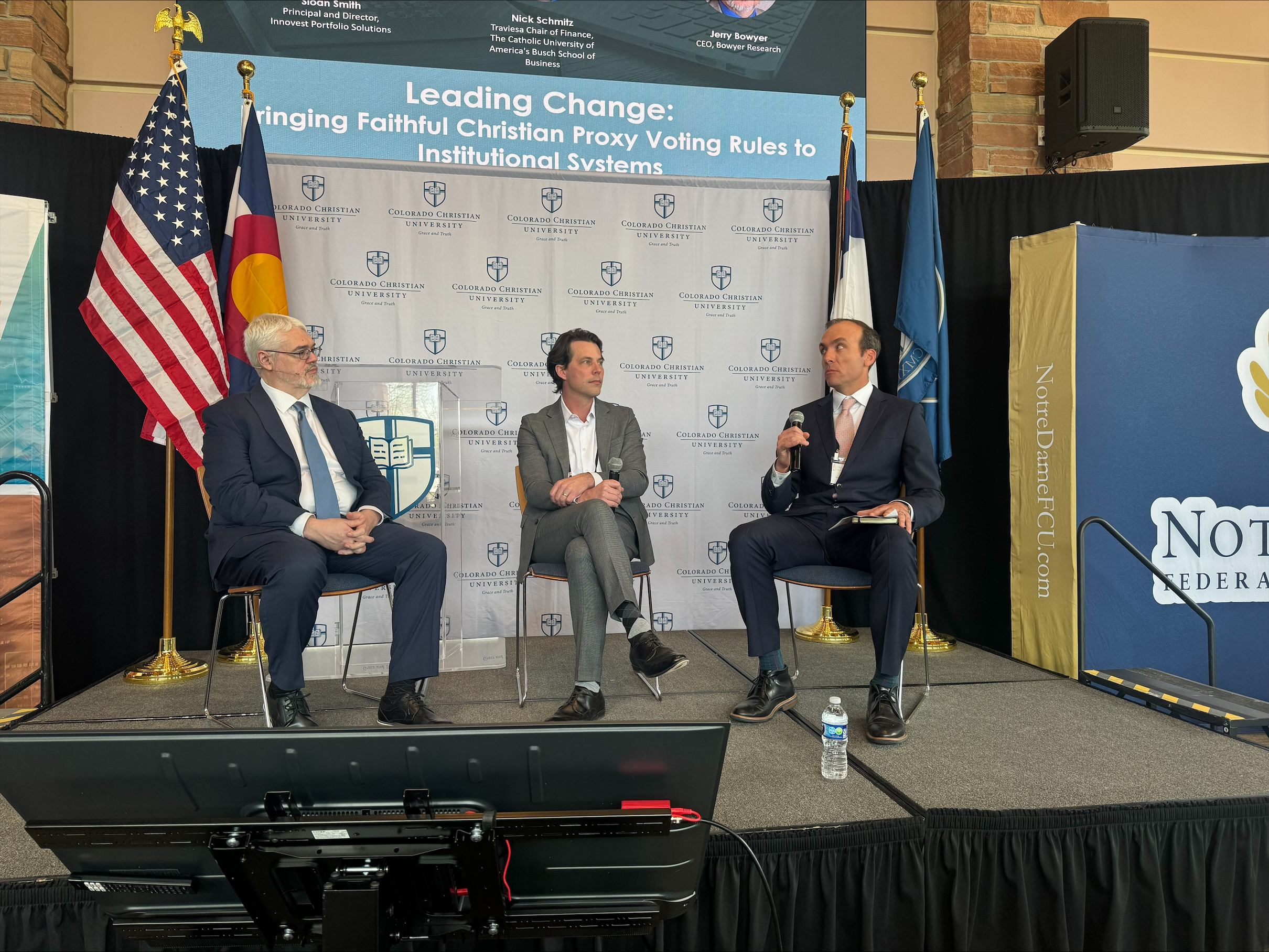
 A panel discusses the Christian Investing Movement on April 8, 2026. Left to right: Jeremy Beer of AmPhil, Richard Todd of Innovest, Derek Kreifels of Prospr Aligned, and Bridgett Wagner of The Heritage Foundation. | Credit: Photo courtesy of Innovest
 
 “As Christians, we want to be the ones boldly leading because the lordship of Christ is over everything,” DeVito said. “So if thereʼs any issue in which companies are engaging in something thatʼs biased and thatʼs harming Christians, we need to be willing to have the courage and put ourselves out there and engage on the issue.”As an example, DeVito cited the debanking of Christians and conservatives. In 2025, President Donald Trump signed an executive order prohibiting banks and financial institutions from debanking clients based on their political or religious views after Christians and conservatives expressed concern about the controversial practice.“Even just with a small amount of shares and the willingness to engage these companies and to talk through the research, we end up seeing incredible wins,” DeVito continued. “All it takes is just some people willing to fight.”In his research at 1792, DeVito said he has seen a trend away from DEI (diversity, equity, and inclusion) initiatives and “ESG” (environmental, social, and governance) — politically-motivated standards that large companies subscribed to but that recently fell out of favor after criticism from conservatives.DeVito pointed to the work of Robby Starbuck, an influencer known for raising awareness of DEI policies at companies like Tractor Supply, as well as the Trump administration as defining moments in the decline of DEI and ESG.“For the first time in over 20 years, corporate America is headed back in the direction of depoliticizing and focusing on business,” DeVito said. “And this is good because the companies are supported for the value they bring in, the goods and services they provide, not for identifying and solving all the worldʼs problems.”

Investing with ‘the lordship of Christ’ in mind: Ecumenical business conference convenes in Denver – #Catholic – Remembering "the lordship of Christ is over everything,” Catholic and Protestant leaders are prioritizing ethical investing by making their voices heard as shareholders. At the 2026 Christian Institutional Investors conference in Lakewood, Colorado, on April 8, speakers urged Christian businesses, schools, and apostolates to stand up for their beliefs as investors. More than 150 attendees from across the country attended the conference, which was hosted by the faith-based investment consulting company Innovest Portfolio Solutions along with the Archdiocese of Denver, Catholic Benefits Association, The Catholic Foundation of Northern Colorado, AmPhil, Alliance Defending Freedom, and Colorado Christian University, where the event took place.“This ecumenical gathering brings together Catholic and Protestant leaders to explore portfolio screening, values alignment with asset managers, and the importance of proxy voting and corporate engagement,” Innovest principal Sarah Newman said.“Our goal is for attendees to leave informed, inspired, and equipped to better understand how their portfolios are built and why the partners they choose truly matter to create returns they need for their Christian mission,” Newman told EWTN News.Fighting for Christian values through proxy votingIn the fight to bring Christian values into investing, speakers emphasized the importance of proxy voting — a process where shareholders authorize someone else to vote on their behalf in shareholder meetings.“As a shareholder, youʼre sort of a citizen of a company and are entitled to vote on these matters — but most people donʼt realize that their proxies are being delegated to an adviser and unintentionally support things that are opposed to their own values,” speaker Dustin DeVito said.DeVito is a research director at the 1792 Exchange, a company working to bring “ideological balance back to public corporations.”Nicholas Schmitz, the Traviesa chair of finance at The Catholic University of America’s Busch School of Business, noted that Christian investors “need a custom proxy option that actually represents Christian viewpoints” to have a cumulative, widespread impact across corporate America.Custom proxy options enable institutions to vote according to their own guidelines rather than the default options.“That would be a huge, huge uptake that would get long-term cultural change,” Schmitz said in a panel titled “Leading Change: Bringing Faithful Christian Proxy Voting Rules to Institutional Systems.”In November, The Catholic University of America developed new proxy guidelines that leading companies representing shareholders accepted — giving a faith-based option in line with the Catholic Churchʼs teachings.“Catholicism … I joke, weʼre the most organized religion in America, but the least organized in capital markets. We donʼt really have an excuse for not getting this right,” Schmitz said.In his talk, “The Post-ESG Landscape: Where Corporate America Is Headed and How Faith-Aligned Capital Can Lead,” DeVito also encouraged Christian investors to stand up for their faith. A panel discusses the Christian Investing Movement on April 8, 2026. Left to right: Jeremy Beer of AmPhil, Richard Todd of Innovest, Derek Kreifels of Prospr Aligned, and Bridgett Wagner of The Heritage Foundation. | Credit: Photo courtesy of Innovest “As Christians, we want to be the ones boldly leading because the lordship of Christ is over everything,” DeVito said. “So if thereʼs any issue in which companies are engaging in something thatʼs biased and thatʼs harming Christians, we need to be willing to have the courage and put ourselves out there and engage on the issue.”As an example, DeVito cited the debanking of Christians and conservatives. In 2025, President Donald Trump signed an executive order prohibiting banks and financial institutions from debanking clients based on their political or religious views after Christians and conservatives expressed concern about the controversial practice.“Even just with a small amount of shares and the willingness to engage these companies and to talk through the research, we end up seeing incredible wins,” DeVito continued. “All it takes is just some people willing to fight.”In his research at 1792, DeVito said he has seen a trend away from DEI (diversity, equity, and inclusion) initiatives and “ESG” (environmental, social, and governance) — politically-motivated standards that large companies subscribed to but that recently fell out of favor after criticism from conservatives.DeVito pointed to the work of Robby Starbuck, an influencer known for raising awareness of DEI policies at companies like Tractor Supply, as well as the Trump administration as defining moments in the decline of DEI and ESG.“For the first time in over 20 years, corporate America is headed back in the direction of depoliticizing and focusing on business,” DeVito said. “And this is good because the companies are supported for the value they bring in, the goods and services they provide, not for identifying and solving all the worldʼs problems.”

Remembering “the lordship of Christ” over all things, Catholic and Protestant leaders discussed ethical investing.

Read More
Congressman criticizes Vatican for hosting China’s top organ transplant official in 2017 – #Catholic – A New Jersey congressman sharply criticized the Vatican for giving a platform to one of Beijing’s top transplant officials at a 2017 international conference on organ trafficking.During an April 9 event hosted by the Hudson Institute highlighting new evidence of forced organ harvesting in China, Rep. Chris Smith, R-New Jersey, called out the Vatican for hosting China’s leading transplant official at the Summit on Organ Trafficking and Transplant Tourism in 2017. Smith was a panelist at the Hudson Institute event with Ethan Gutmann, the author of a new book, “The Xinjiang Procedure,” which presents evidence of forced organ harvesting targeting Uyghur and other Turkic Muslim communities on an industrial scale in China.Gutmann testified during the panel about his findings while on an undercover mission where he secretly interviewed former detainees of Chinese concentration camps, whose testimonies included accounts of gang rape, water torture, and forced organ harvesting.“I’ve argued with [the Vatican],” Smith said. “If you’re bringing in people who are doing terrible evil, you’re giving them a platform.”Participants at the 2017 Vatican conference, organized by the Pontifical Academy of Sciences, signed a statement agreeing to unite in fighting the crime of organ trafficking, submitting 11 proposals for implementation by health care and law enforcement professionals around the world. China’s participation in the conference was the source of controversy at the time, as the advocacy group Doctors Against Forced Organ Harvesting said in a statement that there was “no evidence that past practices of forced organ harvesting have ended” in China.The group further criticized the Vatican’s decision to invite Huang Jiefu, Beijing’s top official on transplants, saying that it would compromise the conference’s image and objectives, when there was not sufficient evidence that China was changing its ways.Human rights advocate and Hudson Institute Senior Fellow Nina Shea, who also spoke at the April 9 event, echoed Smith’s censure of the Vatican for hosting Jiefu. She told EWTN News the Vatican’s first point of leverage to help prevent organ harvesting is to “start by doing no harm.”“What they did was host the public face of the organ transplant sector of China at their conference in Rome,” she said, describing Jiefu as a “longtime member of the Central Committee of the Chinese Communist Party.”Shea said the Vatican conference helped “open doors” for Jiefu with the World Health Organization (WHO), after which she said he proposed a “task force for best practices on organ transplants.”“That’s part of his propaganda,” she said. “The Vatican thought that was a great idea and introduced him to WHO, and when he proposed it, they said, ‘Yes, at the Vatican’s urging we’ll create a task force and you’re on it.’”“So, they appointed this Chinese Communist Party Central Committee member, who is the vice minister of health and the public face of their organ transplant sector, to this task force,” she said. “Needless to say, the task force has done nothing," she said. “I think Pope Leo should pronounce against forced organ harvesting. Itʼs a great human rights issue,” she said. “It hasnʼt been addressed on the world stage, and the pope has the platform to do that and the moral authority to do it."Legislative efforts in the U.S.On a policy level, Smith emphasized the need to “seriously criminalize” forced organ harvesting to combat the practice on an international level. He also lamented that the Senate failed to pass the Stop Organ Harvesting Act of 2023 after it passed in the House with nearly unanimously.The congressman warned that the latest attempt to pass legislation with the Stop Forced Organ Harvesting Act of 2025 could face the same fate if the Senate fails to lend its support. The current legislation, he noted, would require the president to impose sanctions on individuals and entities involved in forced organ harvesting and authorize the State Department to revoke passports of individuals found complicit in the practice. “This would have a chilling effect on [organ] brokers,” Smith said.

Congressman criticizes Vatican for hosting China’s top organ transplant official in 2017 – #Catholic – A New Jersey congressman sharply criticized the Vatican for giving a platform to one of Beijing’s top transplant officials at a 2017 international conference on organ trafficking.During an April 9 event hosted by the Hudson Institute highlighting new evidence of forced organ harvesting in China, Rep. Chris Smith, R-New Jersey, called out the Vatican for hosting China’s leading transplant official at the Summit on Organ Trafficking and Transplant Tourism in 2017. Smith was a panelist at the Hudson Institute event with Ethan Gutmann, the author of a new book, “The Xinjiang Procedure,” which presents evidence of forced organ harvesting targeting Uyghur and other Turkic Muslim communities on an industrial scale in China.Gutmann testified during the panel about his findings while on an undercover mission where he secretly interviewed former detainees of Chinese concentration camps, whose testimonies included accounts of gang rape, water torture, and forced organ harvesting.“I’ve argued with [the Vatican],” Smith said. “If you’re bringing in people who are doing terrible evil, you’re giving them a platform.”Participants at the 2017 Vatican conference, organized by the Pontifical Academy of Sciences, signed a statement agreeing to unite in fighting the crime of organ trafficking, submitting 11 proposals for implementation by health care and law enforcement professionals around the world. China’s participation in the conference was the source of controversy at the time, as the advocacy group Doctors Against Forced Organ Harvesting said in a statement that there was “no evidence that past practices of forced organ harvesting have ended” in China.The group further criticized the Vatican’s decision to invite Huang Jiefu, Beijing’s top official on transplants, saying that it would compromise the conference’s image and objectives, when there was not sufficient evidence that China was changing its ways.Human rights advocate and Hudson Institute Senior Fellow Nina Shea, who also spoke at the April 9 event, echoed Smith’s censure of the Vatican for hosting Jiefu. She told EWTN News the Vatican’s first point of leverage to help prevent organ harvesting is to “start by doing no harm.”“What they did was host the public face of the organ transplant sector of China at their conference in Rome,” she said, describing Jiefu as a “longtime member of the Central Committee of the Chinese Communist Party.”Shea said the Vatican conference helped “open doors” for Jiefu with the World Health Organization (WHO), after which she said he proposed a “task force for best practices on organ transplants.”“That’s part of his propaganda,” she said. “The Vatican thought that was a great idea and introduced him to WHO, and when he proposed it, they said, ‘Yes, at the Vatican’s urging we’ll create a task force and you’re on it.’”“So, they appointed this Chinese Communist Party Central Committee member, who is the vice minister of health and the public face of their organ transplant sector, to this task force,” she said. “Needless to say, the task force has done nothing," she said. “I think Pope Leo should pronounce against forced organ harvesting. Itʼs a great human rights issue,” she said. “It hasnʼt been addressed on the world stage, and the pope has the platform to do that and the moral authority to do it."Legislative efforts in the U.S.On a policy level, Smith emphasized the need to “seriously criminalize” forced organ harvesting to combat the practice on an international level. He also lamented that the Senate failed to pass the Stop Organ Harvesting Act of 2023 after it passed in the House with nearly unanimously.The congressman warned that the latest attempt to pass legislation with the Stop Forced Organ Harvesting Act of 2025 could face the same fate if the Senate fails to lend its support. The current legislation, he noted, would require the president to impose sanctions on individuals and entities involved in forced organ harvesting and authorize the State Department to revoke passports of individuals found complicit in the practice. “This would have a chilling effect on [organ] brokers,” Smith said.

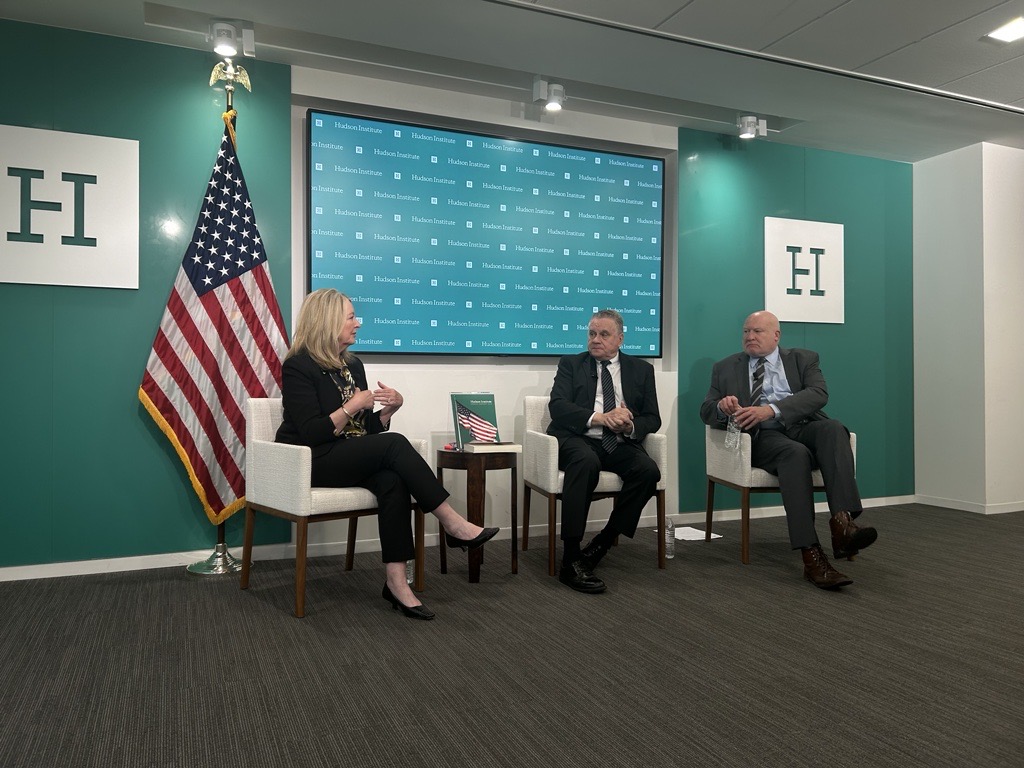
Rep. Chris Smith and Hudson Institute Senior Fellow and human rights advocate Nina Shea criticized the Vatican for hosting China’s top organ transplant official at an event in 2017.
Read More
Chaldean Catholic bishops meet Pope Leo as they prepare to elect new patriarch – #Catholic – The bishops of the Chaldean Catholic Church met with Pope Leo XIV at the Vatican on Friday as part of their synodal meetings in Rome to elect a new patriarch. The encounter comes after Cardinal Louis Raphael Sako resigned as patriarch last month, prompting the bishops to gather in the Italian capital.The electoral synod represents a pivotal moment in the life of the Chaldean Catholic Church, as the bishops are expected to choose a new shepherd to lead Chaldean Catholics amid complex internal and national challenges. The meetings also reflect a broader dimension that goes beyond the local framework, highlighting a close relationship with the Holy See.Leoʼs hope for the next patriarchThe Holy Father addressed the bishops on April 10, praying that the Holy Spirit would guide them in their election of a patriarch. He expressed the hope that the patriarch would be a father in faith and a sign of unity; a person of the beatitudes who lives daily holiness based on fidelity, mercy, and purity of heart; and a shepherd close to his people, steadfast in prayer, capable of facing difficulties with hope, and working with the bishops in a spirit of unity.The pope described the Chaldeans as guardians of a living and noble memory, and of a faith transmitted through the centuries with courage and fidelity. He added that their history is glorious but also marked by harsh experiences: wars, persecutions, and trials that affected their communities and scattered many believers around the world.Leo further stated that it is precisely in these wounds that the witness of faith shines, because a Church that bears the scars of history shows how wounds, in the risen Lord, can become signs of hope and new life. He affirmed his closeness to them in their trials, calling for communion with Christians of other denominations.He urged the bishops to remain vigilant and transparent in managing Church property, to exercise moderation and responsibility in the use of media, and to be cautious in public statements so that every word contributes to building ecclesial communion rather than harm it. He also emphasized the importance of forming priests, supporting consecrated persons, and accompanying laypeople. He highlighted the importance of believers remaining in their homelands and respecting the freedom of Christians in the Middle East.He also described those present as signs of hope in a world full of violence, noting that they are called to be peacemakers, since only dialogue creates true peace. He said they have a great mission: to proclaim the risen Christ and keep hope alive.
 
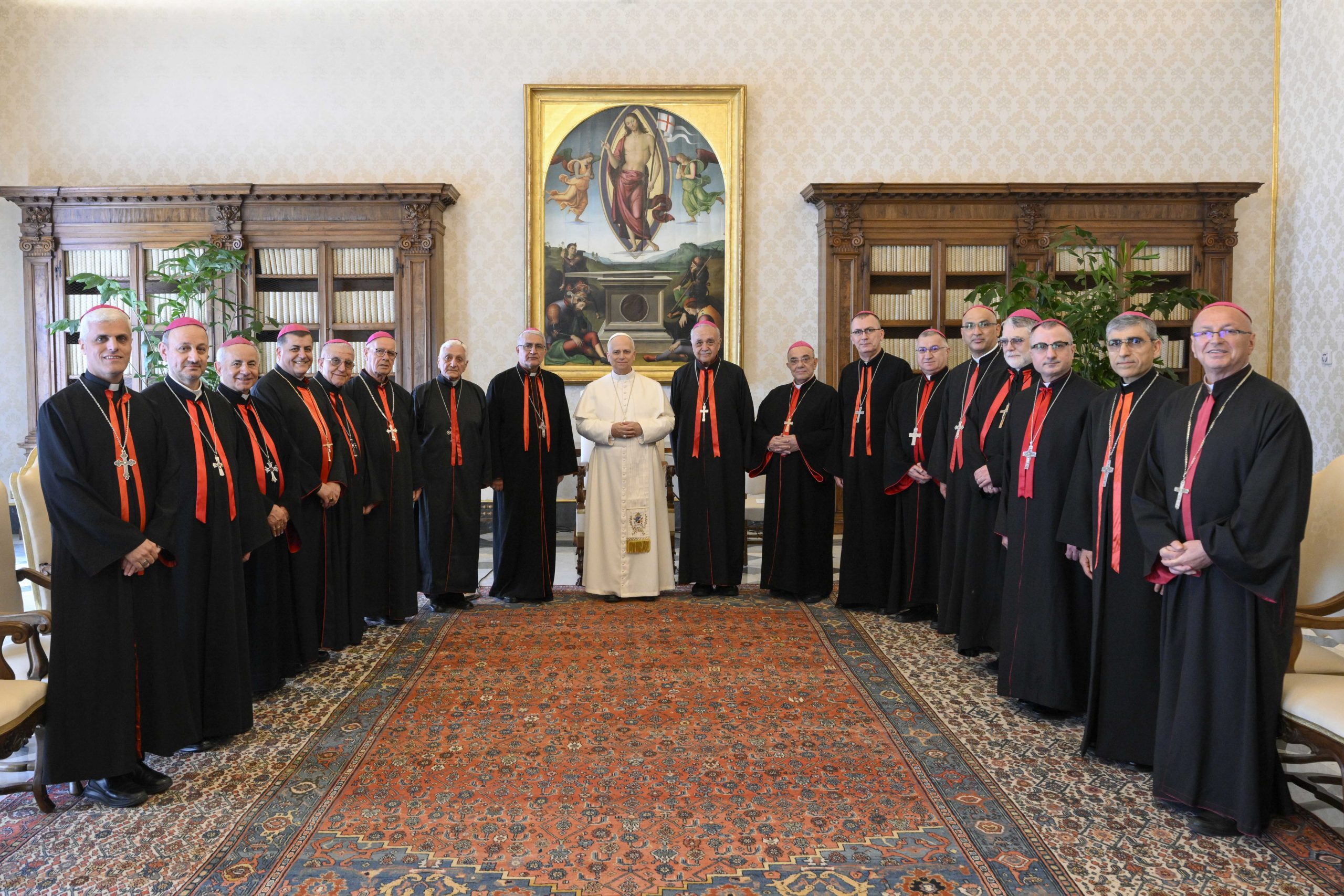
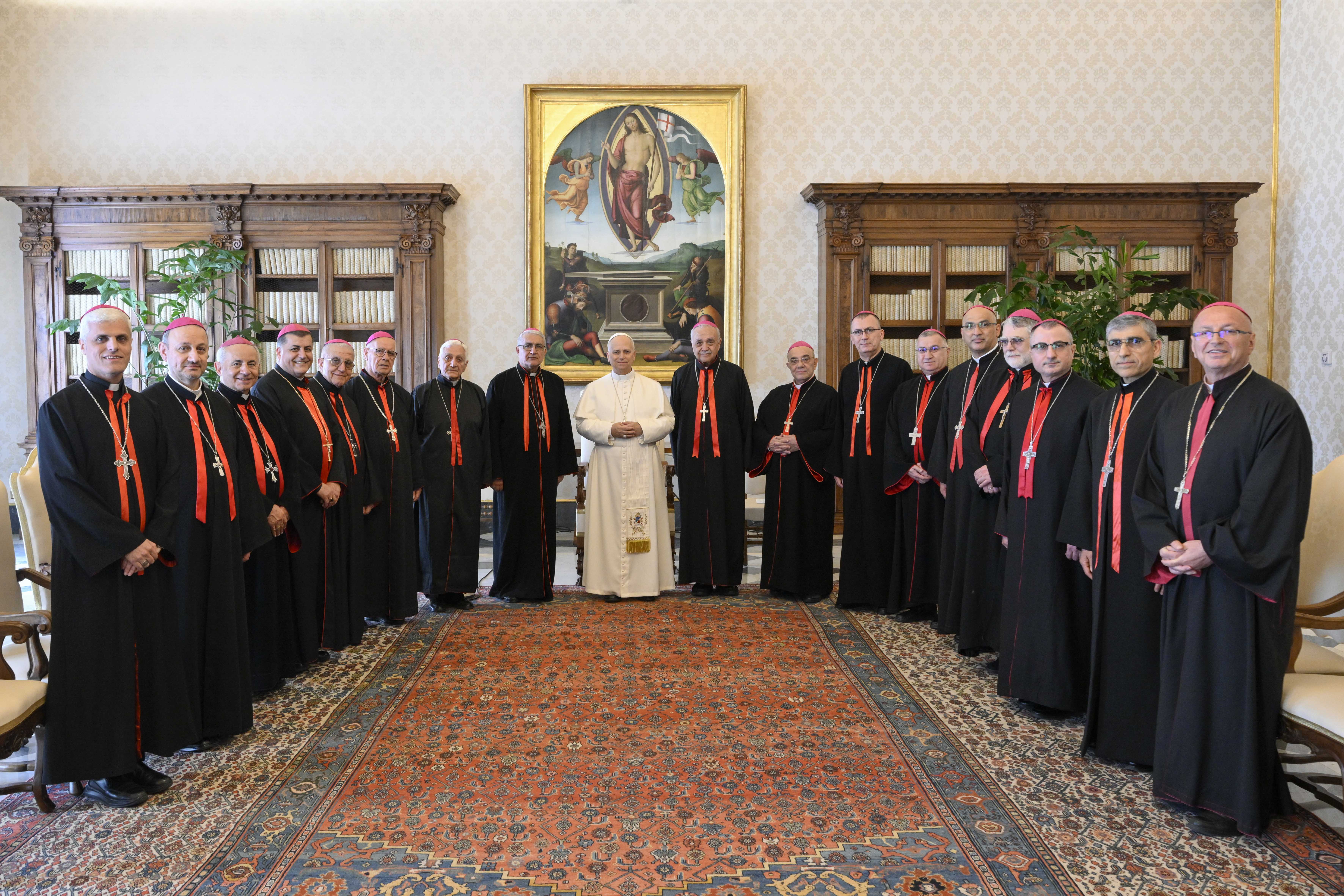
 Pope Leo XIV greets Chaldean Catholic bishops during an audience at the Vatican on April 10, 2026. | Credit: Vatican Media
 
 Sako bids farewell to his ChurchLeo accepted the resignation of Sako on March 10, one day after the patriarch requested to step down to “dedicate himself quietly to prayer, writing, and simple service.”In a farewell letter April 9, Sako expressed his deep gratitude to all those who supported him during his 13 years as patriarch, noting his profound emotion at the messages of solidarity he received from Church figures and believers of different backgrounds. He affirmed his commitment to pray for the Church and the bishops gathered in Rome, calling for the election of a patriarch who embodies unity and serves the people with love.Sako also emphasized his neutrality in the electoral process, considering his absence from the synod an expression of respect for the bishops’ freedom. He also reviewed key aspects of his ministry, through which he sought to balance tradition and renewal, affirming that ecclesial tradition must remain alive and engaged with the times.Sako noted his influence since the Second Vatican Council, his participation in Catholic Church synods, and his role in the Middle East Council of Churches. These experiences, he said, shaped his efforts to develop Church discourse in liturgy and teaching in a modern and accessible language. He highlighted his efforts to strengthen Christian-Muslim dialogue, unify Church positions, defend the presence of Christians in Iraq, and advocate for a state based on citizenship and equality. He said he considers his resignation not an end but the beginning of a new phase of quiet service.After the election and announcement of a new patriarch, a holy Mass, an expression of ecclesial communion, will be celebrated by the new leader of the Chaldean Catholic Church with Pope Leo XIV or his representative. The newly elected patriarch will also announce, in consultation with the synod fathers, the date of his enthronement at the patriarchal seat in Baghdad, the Iraqi capital.

Chaldean Catholic bishops meet Pope Leo as they prepare to elect new patriarch – #Catholic – The bishops of the Chaldean Catholic Church met with Pope Leo XIV at the Vatican on Friday as part of their synodal meetings in Rome to elect a new patriarch. The encounter comes after Cardinal Louis Raphael Sako resigned as patriarch last month, prompting the bishops to gather in the Italian capital.The electoral synod represents a pivotal moment in the life of the Chaldean Catholic Church, as the bishops are expected to choose a new shepherd to lead Chaldean Catholics amid complex internal and national challenges. The meetings also reflect a broader dimension that goes beyond the local framework, highlighting a close relationship with the Holy See.Leoʼs hope for the next patriarchThe Holy Father addressed the bishops on April 10, praying that the Holy Spirit would guide them in their election of a patriarch. He expressed the hope that the patriarch would be a father in faith and a sign of unity; a person of the beatitudes who lives daily holiness based on fidelity, mercy, and purity of heart; and a shepherd close to his people, steadfast in prayer, capable of facing difficulties with hope, and working with the bishops in a spirit of unity.The pope described the Chaldeans as guardians of a living and noble memory, and of a faith transmitted through the centuries with courage and fidelity. He added that their history is glorious but also marked by harsh experiences: wars, persecutions, and trials that affected their communities and scattered many believers around the world.Leo further stated that it is precisely in these wounds that the witness of faith shines, because a Church that bears the scars of history shows how wounds, in the risen Lord, can become signs of hope and new life. He affirmed his closeness to them in their trials, calling for communion with Christians of other denominations.He urged the bishops to remain vigilant and transparent in managing Church property, to exercise moderation and responsibility in the use of media, and to be cautious in public statements so that every word contributes to building ecclesial communion rather than harm it. He also emphasized the importance of forming priests, supporting consecrated persons, and accompanying laypeople. He highlighted the importance of believers remaining in their homelands and respecting the freedom of Christians in the Middle East.He also described those present as signs of hope in a world full of violence, noting that they are called to be peacemakers, since only dialogue creates true peace. He said they have a great mission: to proclaim the risen Christ and keep hope alive. Pope Leo XIV greets Chaldean Catholic bishops during an audience at the Vatican on April 10, 2026. | Credit: Vatican Media Sako bids farewell to his ChurchLeo accepted the resignation of Sako on March 10, one day after the patriarch requested to step down to “dedicate himself quietly to prayer, writing, and simple service.”In a farewell letter April 9, Sako expressed his deep gratitude to all those who supported him during his 13 years as patriarch, noting his profound emotion at the messages of solidarity he received from Church figures and believers of different backgrounds. He affirmed his commitment to pray for the Church and the bishops gathered in Rome, calling for the election of a patriarch who embodies unity and serves the people with love.Sako also emphasized his neutrality in the electoral process, considering his absence from the synod an expression of respect for the bishops’ freedom. He also reviewed key aspects of his ministry, through which he sought to balance tradition and renewal, affirming that ecclesial tradition must remain alive and engaged with the times.Sako noted his influence since the Second Vatican Council, his participation in Catholic Church synods, and his role in the Middle East Council of Churches. These experiences, he said, shaped his efforts to develop Church discourse in liturgy and teaching in a modern and accessible language. He highlighted his efforts to strengthen Christian-Muslim dialogue, unify Church positions, defend the presence of Christians in Iraq, and advocate for a state based on citizenship and equality. He said he considers his resignation not an end but the beginning of a new phase of quiet service.After the election and announcement of a new patriarch, a holy Mass, an expression of ecclesial communion, will be celebrated by the new leader of the Chaldean Catholic Church with Pope Leo XIV or his representative. The newly elected patriarch will also announce, in consultation with the synod fathers, the date of his enthronement at the patriarchal seat in Baghdad, the Iraqi capital.

The synod of Chaldean Catholic bishops is meeting in Rome this week to elect a new patriarch amid complex internal and national challenges.
Read More

On April 10, 2019, astronomers revealed the first image ever taken of a black hole, bringing a dramatic conclusion to a decades-long effort. The iconic image offered humanity its first glimpse at the gas and debris that swirl around its event horizon, the point beyond which material disappears forever. A favorite object of science fictionContinue reading “April 10, 2019: First look at a black hole”

The post April 10, 2019: First look at a black hole appeared first on Astronomy Magazine.

Read More
Picture of the day


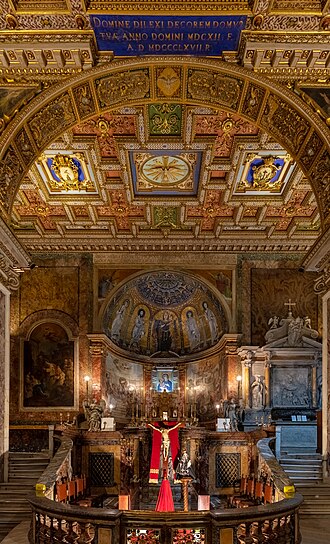
Basilica of Santa Francesca, Rome, Italy. A church at the site was known by the tenth century. It was named Santa Maria Nova (“New St Mary”), to distinguish it from the other church inside the Roman forum devoted to St Mary, Santa Maria Antiqua (“Ancient St Mary”), which had fallen into ruin by then. The relics from the ancient church were moved to this church under Pope Leo. Santa Maria Nuova was enlarged in the second half of the tenth century, and then rebuilt by Pope Honorius III in the thirteenth century, adding the campanile and the apse, as well as being decorated with a mosaic Maestà, a depiction of the Madonna enthroned accompanied by saints (as seen in the picture). Since 1352 the church has been in the care of the Olivetans. In the 16th century, the church was rededicated to Frances of Rome (Francesca Buzzi), who was canonized in 1608 and whose relics are in the crypt. The interior of the church has undergone many refurbishments.
 #ImageOfTheDay
Picture of the day
Basilica of Santa Francesca, Rome, Italy. A church at the site was known by the tenth century. It was named Santa Maria Nova (“New St Mary”), to distinguish it from the other church inside the Roman forum devoted to St Mary, Santa Maria Antiqua (“Ancient St Mary”), which had fallen into ruin by then. The relics from the ancient church were moved to this church under Pope Leo. Santa Maria Nuova was enlarged in the second half of the tenth century, and then rebuilt by Pope Honorius III in the thirteenth century, adding the campanile and the apse, as well as being decorated with a mosaic Maestà, a depiction of the Madonna enthroned accompanied by saints (as seen in the picture). Since 1352 the church has been in the care of the Olivetans. In the 16th century, the church was rededicated to Frances of Rome (Francesca Buzzi), who was canonized in 1608 and whose relics are in the crypt. The interior of the church has undergone many refurbishments.
Read More