
Day: April 11, 2026

Artemis II Recovery – NASA’s Orion spacecraft with Artemis II crewmembers NASA astronauts Reid Wiseman, commander; Victor Glover, pilot; Christina Koch, mission specialist; and CSA (Canadian Space Agency) astronaut Jeremy Hansen, mission specialist aboard is seen under parachutes as it lands in the Pacific Ocean off the coast of California, Friday, April 10, 2026. NASA’s Artemis II mission took Wiseman, Glover, Koch, and Hansen on a 10-day journey around the Moon and back to Earth. Following a splashdown at 7:07 p.m. EDT, NASA, U.S. Navy, and U.S. Air Force teams are working to bring the crewmembers and Orion spacecraft aboard USS John P. Murtha.

NASA’s Orion spacecraft with Artemis II crewmembers NASA astronauts Reid Wiseman, commander; Victor Glover, pilot; Christina Koch, mission specialist; and CSA (Canadian Space Agency) astronaut Jeremy Hansen, mission specialist aboard is seen under parachutes as it lands in the Pacific Ocean off the coast of California, Friday, April 10, 2026. NASA’s Artemis II mission took Wiseman, Glover, Koch, and Hansen on a 10-day journey around the Moon and back to Earth. Following a splashdown at 7:07 p.m. EDT, NASA, U.S. Navy, and U.S. Air Force teams are working to bring the crewmembers and Orion spacecraft aboard USS John P. Murtha.

Read More

Minnesota bishop: Singer Gracie Abrams helps young people confront ‘gaping wounds in their hearts’ #Catholic Hereʼs a roundup of the latest Catholic education news in the U.S.Minnesota bishop cites Gracie Abrams in speech on educators’ role in healing woundsBishop Andrew Cozzens of Crookston shared a video performance of pop singer Gracie Abrams during his keynote speech at the National Catholic Educational Association convention.While discussing the role of educators in helping young people to heal from their wounds, Cozzens played a video of Abrams performing her song “Camden."“The poetry that she sings about expresses the depth of pain that she carries in her heart, and whatʼs even more clear is that it resonates with tens of thousands of people in the stadium all her same age,” Cozzens said during his April 7 keynote, according to UCA News. "Many people in the stadium also feel like singing.”In the song, an extended reflection on insecurity and personal struggles, Abrams sings, in part, “All of me, a wound to close / But I leave the whole thing open / I just wanted you to know / I was never good at coping.”“This is the height of popular culture,” he said. “This is what our young people are singing about, the gaping wounds in their hearts." Catholic educators must invite young people to encounter Christ in their wounds, rather than seeking value from social media, artificial intelligence, popular culture, or politics, he said.The National Catholic Educational Association convention took place April 7-9. Other highlights at the event included a live butter sculpture of Pope Leo XIV, and “Puppy Love” sessions sponsored by Safe Hands Rescue and Healing Hearts Rescue, according to the event schedule.Chicago Archdiocese says public school system abruptly cut off funding for students with disabilitiesMore than 800 students with disabilities attending Chicago Catholic schools will be affected after the city’s public school system suddenly suspended funding to social services before the end of the school year.The Chicago Archdiocese said in an April 10 statement that Chicago Public Schools (CPS) targeted only Catholic schools in terminating services for individuals with special needs under the Individuals with Disabilities Education Act (IDEA). The statement noted students with learning differences will lose access to math, reading, and writing tutoring, which will create “severe hardship for hundreds of students” who were relying on the services through the end of the year.“We are not aware of any other non-public school system or individual school, religious or secular, whose IDEA services have been terminated,” the archdiocese said. “It is not clear why Catholic schools are being treated differently, but Catholic school students have the right to be treated equally under the law.”Chicago Archbishop Cardinal Blase Cupich said the archdiocese "cannot allow this shocking and possibly discriminatory action by CPS to stand, not only given its affront to Catholics, but even more so since this injustice would disenfranchise the students we serve.” The archdiocese said efforts to reach CPS Superintendent Macquline King “have not yielded a response.”The archdiocese said the Chicago school system had verbally confirmed funding for the services would continue through the end of the school year “as recently as March 25" before informing the archdiocese during Holy Week that the services would be suspended. “While federal funding for these services was provided to CPS for the full school year, we were informed that the last day of services would be [April 10],” the archdiocese said.Georgia archdiocese launches virtual Catholic high schoolThe Archdiocese of Atlanta is starting a fully online Catholic high school program this fall in partnership with Catholic Education Services.The launch of Sacred Heart Virtual Academy comes amid increased demand among homeschooling families, according to an April 8 report from the Georgia Bulletin. Curriculum will be provided by Catholic Education Services, whose mission “is to partner with Catholic school leaders and provide services that extend the reach and impact of your school’s mission through a faith-centered, rigorously academic education with a flexible learning platform,” according to its website.“We knew that we were not filling the needs of a group of kids that were in our parishes,” Kim Shields, the archdiocesan associate superintendent of schools, said in the report. “This allows a child that doesn’t want to go to a brick-and-mortar school to have that opportunity.” The school will serve grades 9-12, according to its website, and is open to students outside of the archdiocese.“My hope is that it serves what we’re about — to provide programs for students to help them develop in all areas of their life,” Shields said. “The premise is that everything is centered around the mission of the Catholic Church.”

Minnesota bishop: Singer Gracie Abrams helps young people confront ‘gaping wounds in their hearts’ #Catholic Hereʼs a roundup of the latest Catholic education news in the U.S.Minnesota bishop cites Gracie Abrams in speech on educators’ role in healing woundsBishop Andrew Cozzens of Crookston shared a video performance of pop singer Gracie Abrams during his keynote speech at the National Catholic Educational Association convention.While discussing the role of educators in helping young people to heal from their wounds, Cozzens played a video of Abrams performing her song “Camden."“The poetry that she sings about expresses the depth of pain that she carries in her heart, and whatʼs even more clear is that it resonates with tens of thousands of people in the stadium all her same age,” Cozzens said during his April 7 keynote, according to UCA News. "Many people in the stadium also feel like singing.”In the song, an extended reflection on insecurity and personal struggles, Abrams sings, in part, “All of me, a wound to close / But I leave the whole thing open / I just wanted you to know / I was never good at coping.”“This is the height of popular culture,” he said. “This is what our young people are singing about, the gaping wounds in their hearts." Catholic educators must invite young people to encounter Christ in their wounds, rather than seeking value from social media, artificial intelligence, popular culture, or politics, he said.The National Catholic Educational Association convention took place April 7-9. Other highlights at the event included a live butter sculpture of Pope Leo XIV, and “Puppy Love” sessions sponsored by Safe Hands Rescue and Healing Hearts Rescue, according to the event schedule.Chicago Archdiocese says public school system abruptly cut off funding for students with disabilitiesMore than 800 students with disabilities attending Chicago Catholic schools will be affected after the city’s public school system suddenly suspended funding to social services before the end of the school year.The Chicago Archdiocese said in an April 10 statement that Chicago Public Schools (CPS) targeted only Catholic schools in terminating services for individuals with special needs under the Individuals with Disabilities Education Act (IDEA). The statement noted students with learning differences will lose access to math, reading, and writing tutoring, which will create “severe hardship for hundreds of students” who were relying on the services through the end of the year.“We are not aware of any other non-public school system or individual school, religious or secular, whose IDEA services have been terminated,” the archdiocese said. “It is not clear why Catholic schools are being treated differently, but Catholic school students have the right to be treated equally under the law.”Chicago Archbishop Cardinal Blase Cupich said the archdiocese "cannot allow this shocking and possibly discriminatory action by CPS to stand, not only given its affront to Catholics, but even more so since this injustice would disenfranchise the students we serve.” The archdiocese said efforts to reach CPS Superintendent Macquline King “have not yielded a response.”The archdiocese said the Chicago school system had verbally confirmed funding for the services would continue through the end of the school year “as recently as March 25" before informing the archdiocese during Holy Week that the services would be suspended. “While federal funding for these services was provided to CPS for the full school year, we were informed that the last day of services would be [April 10],” the archdiocese said.Georgia archdiocese launches virtual Catholic high schoolThe Archdiocese of Atlanta is starting a fully online Catholic high school program this fall in partnership with Catholic Education Services.The launch of Sacred Heart Virtual Academy comes amid increased demand among homeschooling families, according to an April 8 report from the Georgia Bulletin. Curriculum will be provided by Catholic Education Services, whose mission “is to partner with Catholic school leaders and provide services that extend the reach and impact of your school’s mission through a faith-centered, rigorously academic education with a flexible learning platform,” according to its website.“We knew that we were not filling the needs of a group of kids that were in our parishes,” Kim Shields, the archdiocesan associate superintendent of schools, said in the report. “This allows a child that doesn’t want to go to a brick-and-mortar school to have that opportunity.” The school will serve grades 9-12, according to its website, and is open to students outside of the archdiocese.“My hope is that it serves what we’re about — to provide programs for students to help them develop in all areas of their life,” Shields said. “The premise is that everything is centered around the mission of the Catholic Church.”

A roundup of the latest Catholic education news in the U.S.

Read More
Federal judge pauses Louisiana telehealth abortion suit pending FDA review #Catholic After the Trump administration appealed, a federal judge put on pause a lawsuit filed by the state of Louisiana that challenges the federal policy of allowing mail-order abortion pills.U.S. District Judge David Joseph in Lafayette, Louisiana, ruled that the challenge be paused pending the U.S. Food and Drug Administration (FDA)’s review of the safety of the drug but noted that the state could continue the challenge after the review was completed.Louisiana Attorney General Liz Murrill filed a lawsuit in late 2025 to challenge the 2023 deregulation of mifepristone, which is used in chemical abortions. The 2023 rule changes, initiated during former president Joe Biden’s administration, allowed the drugs to be delivered through the mail and prescribed without any visits to a doctor.In January of this year, President Donald Trump’s Department of Justice (DOJ) filed a motion with a federal district court to pause the suit, pending a review by the FDA of the chemical abortion drug.Louisiana had filed the lawsuit after residents — including Rosalie Markezich, who is named in the lawsuit — said they were coerced into taking abortion pills that were obtained through the mail. In Markezich’s case, she said her boyfriend forced her to take it.Study: Maternal mortality decreased in states that protect unborn lifeA recent study published by JAMA Network Open found a decrease in maternal mortality in states that protect unborn children from abortions as well as in states with permissive abortion laws.The study considered 22 million births and more than 12,000 pregnancy-related deaths from 2018 to 2023, with 14 states with abortion bans and 37 control jurisdictions.“This cohort study found that abortion bans were not associated with statistically significant overall or state-specific increases in pregnancy-associated mortality,” the study read.In states with strong pro-life laws, on average, maternal mortality rates declined slightly faster than pro-abortion states.Illinois pregnancy centers continue to appeal for conscience rightsA court heard arguments on Friday from Illinois pregnancy centers that are appealing an Illinois district court decision that affirmed a law requiring pregnancy centers to refer women for abortions.The National Institute of Family and Life Advocates and three Illinois pregnancy centers appealed after an April 2025 court ruling found that requiring pregnancy centers to refer pregnant women for an abortion was not a violation of speech and conscience rights.“No one should be forced to express a message that violates their convictions, and compelling people to refer others for abortions does that,” said Alliance Defending Freedom Counsel Erin Hawley. “The U.S. Supreme Court held in NIFLA v. Becerra that forcing people to promote abortion is unconstitutional.”Maryland bill to force hospitals to offer abortions goes to governor’s deskA Maryland bill that would force hospitals to offer abortions, even against their conscience, in some circumstances, heads to the stateʼs governor after the state Legislature passed it this week.The bill would require “a hospital to allow the termination of a pregnancy in certain circumstances” under the federal 1986 Emergency Medical Treatment and Labor Act (EMTALA), which ensures that emergency care is offered regardless of a patient’s ability to pay.The bill would also require a hospital to screen patients for “emergency pregnancy-related medical condition[s]” and to provide “transfer of a patient who has an emergency pregnancy-related medical condition.”“This bill will result in a new government-created loss of valuable highly trained and experienced emergency department physicians, nurses, providers, and staff,” said Dr. James Kelly, representing the Association of American Physicians and Surgeons. “The legislation will increase the already existing severe shortages of qualified medical staff and will decrease access to emergency medical care, and endanger the health and safety of patients seeking emergency medical care.”

Federal judge pauses Louisiana telehealth abortion suit pending FDA review #Catholic After the Trump administration appealed, a federal judge put on pause a lawsuit filed by the state of Louisiana that challenges the federal policy of allowing mail-order abortion pills.U.S. District Judge David Joseph in Lafayette, Louisiana, ruled that the challenge be paused pending the U.S. Food and Drug Administration (FDA)’s review of the safety of the drug but noted that the state could continue the challenge after the review was completed.Louisiana Attorney General Liz Murrill filed a lawsuit in late 2025 to challenge the 2023 deregulation of mifepristone, which is used in chemical abortions. The 2023 rule changes, initiated during former president Joe Biden’s administration, allowed the drugs to be delivered through the mail and prescribed without any visits to a doctor.In January of this year, President Donald Trump’s Department of Justice (DOJ) filed a motion with a federal district court to pause the suit, pending a review by the FDA of the chemical abortion drug.Louisiana had filed the lawsuit after residents — including Rosalie Markezich, who is named in the lawsuit — said they were coerced into taking abortion pills that were obtained through the mail. In Markezich’s case, she said her boyfriend forced her to take it.Study: Maternal mortality decreased in states that protect unborn lifeA recent study published by JAMA Network Open found a decrease in maternal mortality in states that protect unborn children from abortions as well as in states with permissive abortion laws.The study considered 22 million births and more than 12,000 pregnancy-related deaths from 2018 to 2023, with 14 states with abortion bans and 37 control jurisdictions.“This cohort study found that abortion bans were not associated with statistically significant overall or state-specific increases in pregnancy-associated mortality,” the study read.In states with strong pro-life laws, on average, maternal mortality rates declined slightly faster than pro-abortion states.Illinois pregnancy centers continue to appeal for conscience rightsA court heard arguments on Friday from Illinois pregnancy centers that are appealing an Illinois district court decision that affirmed a law requiring pregnancy centers to refer women for abortions.The National Institute of Family and Life Advocates and three Illinois pregnancy centers appealed after an April 2025 court ruling found that requiring pregnancy centers to refer pregnant women for an abortion was not a violation of speech and conscience rights.“No one should be forced to express a message that violates their convictions, and compelling people to refer others for abortions does that,” said Alliance Defending Freedom Counsel Erin Hawley. “The U.S. Supreme Court held in NIFLA v. Becerra that forcing people to promote abortion is unconstitutional.”Maryland bill to force hospitals to offer abortions goes to governor’s deskA Maryland bill that would force hospitals to offer abortions, even against their conscience, in some circumstances, heads to the stateʼs governor after the state Legislature passed it this week.The bill would require “a hospital to allow the termination of a pregnancy in certain circumstances” under the federal 1986 Emergency Medical Treatment and Labor Act (EMTALA), which ensures that emergency care is offered regardless of a patient’s ability to pay.The bill would also require a hospital to screen patients for “emergency pregnancy-related medical condition[s]” and to provide “transfer of a patient who has an emergency pregnancy-related medical condition.”“This bill will result in a new government-created loss of valuable highly trained and experienced emergency department physicians, nurses, providers, and staff,” said Dr. James Kelly, representing the Association of American Physicians and Surgeons. “The legislation will increase the already existing severe shortages of qualified medical staff and will decrease access to emergency medical care, and endanger the health and safety of patients seeking emergency medical care.”

A roundup of recent pro-life and abortion-related news.

Read More
Philippine parishes enforce smoke-free, vape-free rules on church grounds – #Catholic – MANILA, Philippines — Several parishes in the Philippines have begun enforcing smoke-free and vape-free policies on church grounds, citing both the sacredness of the premises and the health of parishioners.“I support the smoke-free and vape-free policies in church premises for the good of all,” Maria Christina Jomen, a parishioner of St. John the Baptist Parish in Jimenez, Misamis Occidental, told EWTN News. “Having a healthy environment is a responsibility for all, especially in places of worship.”
 
 Parishioners and clergy at St. John the Baptist Parish in Jimenez, Misamis Occidental, Philippines, after a Holy Week liturgy on April 1, 2026. | Credit: Photo courtesy of St. John the Baptist Parish
 
 The church, some 755.89 kilometers (469.69 miles) south of Manila, is among the parishes implementing the smoke-free policy in response to health initiatives from the Catholic Bishops' Conference of the Philippines (CBCP) in collaboration with local governments.On April 2, the executive secretary of the CBCP Episcopal Commission on Health Care, Camillian Father Dan Vicente Cancino Jr., issued a statement directing parishes nationwide to adhere to smoking bans as a sign of respect for sacred spaces. The Department of Health later circulated a video message from Cancino on its platforms.Cancino said tobacco use leads to preventable disease, premature death, and suffering, and called on all parishes to strictly enforce smoke-free and vape-free policies. The bishops' conference has voiced alarm at the prevalence of smoking and vaping among Filipinos, particularly among the young.
 
 Camillian Father Dan Vicente Cancino Jr., executive secretary of the Catholic Bishops’ Conference of the Philippines Episcopal Commission on Health Care, addresses participants at a community-based mental health and psychosocial support seminar at St. Joseph Pastoral Center in Ipil, Zamboanga Sibugay, on March 10, 2026. | Credit: Photo courtesy of CBCP Episcopal Commission on Health Care
 
 “This initiative is in accordance with our existing laws, and the move is also out of respect for the sacred and concern for community health,” the priest said, noting that smoking in public places such as churches endangers both individual and community health.“These habits pose serious threats to both individuals and the community. I hope that all our parishes and communities strictly enforce smoke-free and vape-free policies in accordance with existing laws,” Cancino said.“We understand it is not easy. But with Godʼs grace, liberation is possible. We can do it,” he added.A long-standing precedentThe National Shrine of Our Mother of Perpetual Help, Parañaque City, Manila, has enforced a no-smoking policy on its premises since 2015, partly in response to Pope Francis' encyclical on care for creation, Laudato Si'.Other parishes have moved in step with municipal anti-smoking ordinances in cities including Baguio, Davao, Balanga, and Iloilo, pairing health-conscious campaigns with what Church officials describe as “green” initiatives to protect public health and the environment.Smoking and vaping in the PhilippinesAccording to the World Health Organizationʼs 2025 Global Report on Trends in Prevalence of Tobacco Use, roughly 1 in 5 Filipino adults — about 19.7% of those aged 15 and over — currently smoke, with the rate among men (35.6%) more than eight times higher than among women (4.2%).The 2021 Philippines Global Adult Tobacco Survey, conducted by the Philippine Statistics Authority and the Department of Health with WHO support, similarly found that 18.5% of Filipino adults currently smoke tobacco. WHO estimates that smoking causes roughly 88,000 deaths in the Philippines each year.Data from the Food and Nutrition Research Institute of the Department of Science and Technology indicate that 4.8% of Filipinos aged 10 to 19 smoked in 2023, up from 2.3% in 2021.The World Health Organization has reported that, globally, children aged 13 to 15 are using e-cigarettes at higher rates than adults. The Philippine Department of Health has urged the public to reject vaping products, warning they are not a safer alternative to cigarettes and citing the rising trend of nicotine use among young Filipinos.

Philippine parishes enforce smoke-free, vape-free rules on church grounds – #Catholic – MANILA, Philippines — Several parishes in the Philippines have begun enforcing smoke-free and vape-free policies on church grounds, citing both the sacredness of the premises and the health of parishioners.“I support the smoke-free and vape-free policies in church premises for the good of all,” Maria Christina Jomen, a parishioner of St. John the Baptist Parish in Jimenez, Misamis Occidental, told EWTN News. “Having a healthy environment is a responsibility for all, especially in places of worship.” Parishioners and clergy at St. John the Baptist Parish in Jimenez, Misamis Occidental, Philippines, after a Holy Week liturgy on April 1, 2026. | Credit: Photo courtesy of St. John the Baptist Parish The church, some 755.89 kilometers (469.69 miles) south of Manila, is among the parishes implementing the smoke-free policy in response to health initiatives from the Catholic Bishops' Conference of the Philippines (CBCP) in collaboration with local governments.On April 2, the executive secretary of the CBCP Episcopal Commission on Health Care, Camillian Father Dan Vicente Cancino Jr., issued a statement directing parishes nationwide to adhere to smoking bans as a sign of respect for sacred spaces. The Department of Health later circulated a video message from Cancino on its platforms.Cancino said tobacco use leads to preventable disease, premature death, and suffering, and called on all parishes to strictly enforce smoke-free and vape-free policies. The bishops' conference has voiced alarm at the prevalence of smoking and vaping among Filipinos, particularly among the young. Camillian Father Dan Vicente Cancino Jr., executive secretary of the Catholic Bishops’ Conference of the Philippines Episcopal Commission on Health Care, addresses participants at a community-based mental health and psychosocial support seminar at St. Joseph Pastoral Center in Ipil, Zamboanga Sibugay, on March 10, 2026. | Credit: Photo courtesy of CBCP Episcopal Commission on Health Care “This initiative is in accordance with our existing laws, and the move is also out of respect for the sacred and concern for community health,” the priest said, noting that smoking in public places such as churches endangers both individual and community health.“These habits pose serious threats to both individuals and the community. I hope that all our parishes and communities strictly enforce smoke-free and vape-free policies in accordance with existing laws,” Cancino said.“We understand it is not easy. But with Godʼs grace, liberation is possible. We can do it,” he added.A long-standing precedentThe National Shrine of Our Mother of Perpetual Help, Parañaque City, Manila, has enforced a no-smoking policy on its premises since 2015, partly in response to Pope Francis' encyclical on care for creation, Laudato Si'.Other parishes have moved in step with municipal anti-smoking ordinances in cities including Baguio, Davao, Balanga, and Iloilo, pairing health-conscious campaigns with what Church officials describe as “green” initiatives to protect public health and the environment.Smoking and vaping in the PhilippinesAccording to the World Health Organizationʼs 2025 Global Report on Trends in Prevalence of Tobacco Use, roughly 1 in 5 Filipino adults — about 19.7% of those aged 15 and over — currently smoke, with the rate among men (35.6%) more than eight times higher than among women (4.2%).The 2021 Philippines Global Adult Tobacco Survey, conducted by the Philippine Statistics Authority and the Department of Health with WHO support, similarly found that 18.5% of Filipino adults currently smoke tobacco. WHO estimates that smoking causes roughly 88,000 deaths in the Philippines each year.Data from the Food and Nutrition Research Institute of the Department of Science and Technology indicate that 4.8% of Filipinos aged 10 to 19 smoked in 2023, up from 2.3% in 2021.The World Health Organization has reported that, globally, children aged 13 to 15 are using e-cigarettes at higher rates than adults. The Philippine Department of Health has urged the public to reject vaping products, warning they are not a safer alternative to cigarettes and citing the rising trend of nicotine use among young Filipinos.

A Catholic bishops’ health official is urging parishes nationwide to enforce smoke-free and vape-free rules out of respect for sacred space and concern for public health.

Read More

On April 11, 1970, the Apollo 13 mission launched. Intended to be the third lunar landing, it was crewed by Commander Jim Lovell, who had flown previously on Apollo 8, and Fred Haise and Jack Swigert, both on their first spaceflights. Despite a last-minute crew change – Swigert was an eleventh-hour replacement for Ken Mattingly,Continue reading “April 11, 1970: Apollo 13 blasts off for the Moon”

The post April 11, 1970: Apollo 13 blasts off for the Moon appeared first on Astronomy Magazine.

Read More
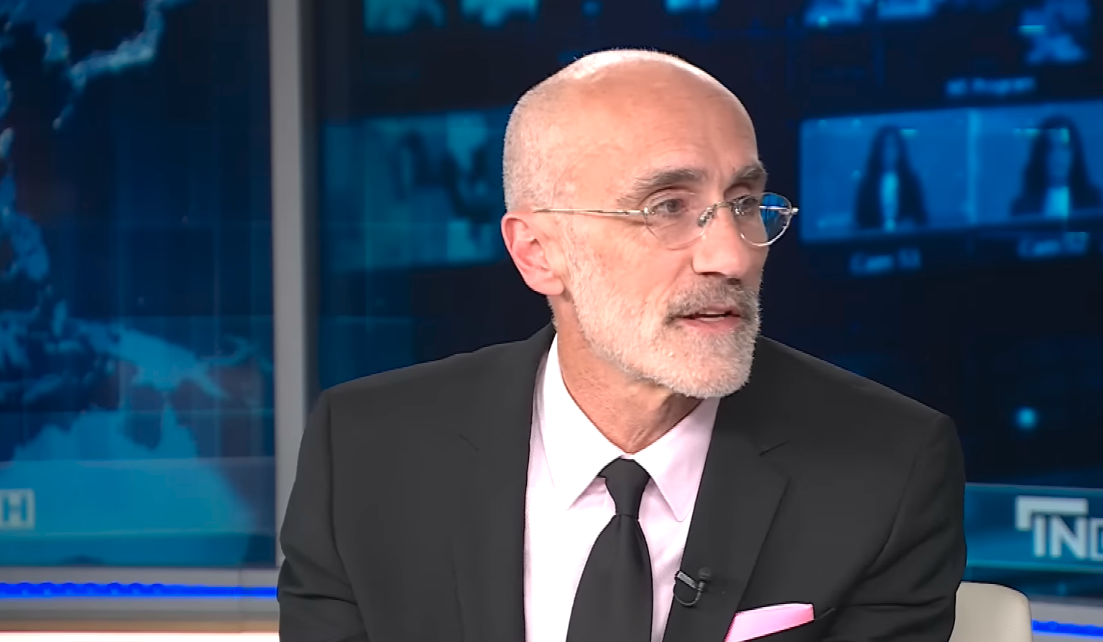
Arthur Brooks: ‘The world needs American Catholicism’ – #Catholic – Now is the time to invite people to the faith, as it “is the moment for the American Catholic Church,” says bestselling author, Harvard professor, and renowned social scientist Arthur Brooks.Catholics must have “the entrepreneurial zeal to go out and get souls and to promise people what they actually deeply want,” Brooks said. “This is so critically important, but the way it could fail is because we just donʼt have the guts for it. We donʼt have the stomach for it. We donʼt have the heart for it.”In an April 10 interview with “EWTN News In Depth,” Brooks spoke about the increasing numbers of Catholics. He also shared what is driving people to the Church and how the Church can best reach new people in natural and simple ways.While there have been increasing numbers of baptisms and confirmations, Brooks said Catholics “canʼt just rest on our laurels,” as there are still “trends largely going in the other direction with respect to people coming to church,” he said.The Pew Research Center “shows us that 840 Catholics left last year for every 100 who came into the Church. These are not good statistics. But what we see thatʼs really encouraging is a lot of young people, especially young men, coming into the Church searching for a sense of transcendence and really looking for in-real-life community,” he said.People want meaning, because the “sense of meaninglessness is characteristic of why people are feeling depression, anxiety, loneliness, addiction,“ Brooks said. “And people are starting to fight back.”Brooks said: “Theyʼre starting to recognize that the little friend in their pocket, the supercomputer thatʼs their smartphone, is not doing them any favors because itʼs mediating their relationship with other people and they want real-life life.”“We need meaning, and we have these natural questions: ‘Why am I alive? For what would I give my life? Why does my life matter?’ … And weʼre starting to figure out after about 15 years that you canʼt Google these questions,” he said.People “feel that thereʼs something bigger,” he said. “Young people today, they have a craving for something thatʼs bigger and bigger. And if we donʼt feed it, then weʼre not feeding our sheep. Then weʼre not following the teachings of Christ.”Bring back boredom, but not ‘in a bad way’In his newest book, “The Meaning of Your Life: Finding Purpose in an Age of Emptiness,” Brooks discusses how he wants to bring back “boredom.”“We have actual protocols built into the Catholic Church that give us moments of peace, that give us moments of perspective that most people just donʼt have,” he said. Catholics have prayer, Mass, and Communion that offer us these moments throughout our days.“The first thing that I do is I get up very early, then I exercise, and then I go to Mass every day,” Brooks said. “Iʼve been a daily communicant for a long time and so has my wife. And we finish the day, even when Iʼm on the road … we pray the rosary together on the phone before we go to sleep.”“These are the moments,” and “when I say boredom, I donʼt mean boredom in a bad way,” he said.“Iʼm not casting aspersions at all. Iʼm talking about blank space. Iʼm talking about turning on the structures in the brain called the default mode network that you need to understand your life. ‘When do I understand my life the most?’ When Iʼm at holy Mass. ‘When do I understand it the most?’ When Iʼm in conversation with God,” he said.This time in prayer can actually benefit brain function, because “you only have access to certain parts of your brain that you need to find meaning and to love your life when you have these metaphysical experiences,” he said."Thereʼs a lot of research on this," he said. "This is not speculation. Thereʼs a ton of neuroscience research that shows that you only have access to certain parts of your brain that you need to find meaning and to love your life when you have these metaphysical experiences.”Evangelization should be ‘as natural as putting on your shirt’Brooks also discussed his personal conversion and how through simple ways of “friendship and excellence,” people can invite others to the Church.“When I was 15, I had an experience at the Shrine of Guadalupe in Mexico City on a music trip,” Brooks said. “I came into the Church when I was 16. I went and told my parents, ‘Iʼve discovered that Iʼm Catholic.’”“I come from a good, strong, Christian background, good evangelical background. I had missionaries on both sides of the family. And my parents looked at each other and they said, ‘I guess itʼs better than drugs.’ They just thought it was rebellion, but the truth is I was called to it. I really was,” he said.As people now come to the Church the question is: “‘Do you want to go deeper?’ I have something deeper. I have something more profound. I have something that has more historical significance. I have something that has more structure. Come with me, come with me … youʼre hungry and Iʼm going to give you real food,” he said.“Itʼs the only thing that can fill this hollowness thatʼs in our lives. Itʼs the only thing that can break us out of the simulation,” he said. “People know it in their hearts, and we just have to show that to them. We have to take them by the hand and bring them along.”As a professor, Brooks said he uses his role to guide students but does not force his faith and beliefs on them.“I tell them on the first day of class at Harvard, my Catholic faith is the single most important thing in my life. And then I go on and I teach them science,” he said.“The science of human happiness is what I teach. And they look it up and they say, ‘you know, thatʼs not weird. Itʼs not weird with him. Heʼs doing a good job with his life … He also has a good family life. He loves his wife a lot. Heʼs got kids and grandkids. Thatʼs apostolate. Thatʼs how apostolate actually works,” he said.“Live your life and live it right and let people see your Catholic faith and donʼt make it weird … Just make it as natural as putting on your shirt. Thatʼs the deal. And thatʼs what Iʼm trying to do every day," he said.“When my students come to me in office hours, the No. 1 question they ask me is not about my paper, my term project. The No. 1 question they ask me is, ‘How do I fall in love, stay in love, start a family?’ Which, of course, the university doesnʼt teach them, but thatʼs the single most important thing in their lives,” Brooks said.“No. 2, ‘How do I find my faith?“ Brooks said. ”What do I do to find my faith? They want to be led. You know, this is what it means to be a shepherd … We all have an ability to actually influence other people. And the question is, ‘Am I influencing other people to get them a little closer to heaven? Am I cracking the door that the Holy Spirit in his wisdom can kick in or not?’”

Arthur Brooks: ‘The world needs American Catholicism’ – #Catholic – Now is the time to invite people to the faith, as it “is the moment for the American Catholic Church,” says bestselling author, Harvard professor, and renowned social scientist Arthur Brooks.Catholics must have “the entrepreneurial zeal to go out and get souls and to promise people what they actually deeply want,” Brooks said. “This is so critically important, but the way it could fail is because we just donʼt have the guts for it. We donʼt have the stomach for it. We donʼt have the heart for it.”In an April 10 interview with “EWTN News In Depth,” Brooks spoke about the increasing numbers of Catholics. He also shared what is driving people to the Church and how the Church can best reach new people in natural and simple ways.While there have been increasing numbers of baptisms and confirmations, Brooks said Catholics “canʼt just rest on our laurels,” as there are still “trends largely going in the other direction with respect to people coming to church,” he said.The Pew Research Center “shows us that 840 Catholics left last year for every 100 who came into the Church. These are not good statistics. But what we see thatʼs really encouraging is a lot of young people, especially young men, coming into the Church searching for a sense of transcendence and really looking for in-real-life community,” he said.People want meaning, because the “sense of meaninglessness is characteristic of why people are feeling depression, anxiety, loneliness, addiction,“ Brooks said. “And people are starting to fight back.”Brooks said: “Theyʼre starting to recognize that the little friend in their pocket, the supercomputer thatʼs their smartphone, is not doing them any favors because itʼs mediating their relationship with other people and they want real-life life.”“We need meaning, and we have these natural questions: ‘Why am I alive? For what would I give my life? Why does my life matter?’ … And weʼre starting to figure out after about 15 years that you canʼt Google these questions,” he said.People “feel that thereʼs something bigger,” he said. “Young people today, they have a craving for something thatʼs bigger and bigger. And if we donʼt feed it, then weʼre not feeding our sheep. Then weʼre not following the teachings of Christ.”Bring back boredom, but not ‘in a bad way’In his newest book, “The Meaning of Your Life: Finding Purpose in an Age of Emptiness,” Brooks discusses how he wants to bring back “boredom.”“We have actual protocols built into the Catholic Church that give us moments of peace, that give us moments of perspective that most people just donʼt have,” he said. Catholics have prayer, Mass, and Communion that offer us these moments throughout our days.“The first thing that I do is I get up very early, then I exercise, and then I go to Mass every day,” Brooks said. “Iʼve been a daily communicant for a long time and so has my wife. And we finish the day, even when Iʼm on the road … we pray the rosary together on the phone before we go to sleep.”“These are the moments,” and “when I say boredom, I donʼt mean boredom in a bad way,” he said.“Iʼm not casting aspersions at all. Iʼm talking about blank space. Iʼm talking about turning on the structures in the brain called the default mode network that you need to understand your life. ‘When do I understand my life the most?’ When Iʼm at holy Mass. ‘When do I understand it the most?’ When Iʼm in conversation with God,” he said.This time in prayer can actually benefit brain function, because “you only have access to certain parts of your brain that you need to find meaning and to love your life when you have these metaphysical experiences,” he said."Thereʼs a lot of research on this," he said. "This is not speculation. Thereʼs a ton of neuroscience research that shows that you only have access to certain parts of your brain that you need to find meaning and to love your life when you have these metaphysical experiences.”Evangelization should be ‘as natural as putting on your shirt’Brooks also discussed his personal conversion and how through simple ways of “friendship and excellence,” people can invite others to the Church.“When I was 15, I had an experience at the Shrine of Guadalupe in Mexico City on a music trip,” Brooks said. “I came into the Church when I was 16. I went and told my parents, ‘Iʼve discovered that Iʼm Catholic.’”“I come from a good, strong, Christian background, good evangelical background. I had missionaries on both sides of the family. And my parents looked at each other and they said, ‘I guess itʼs better than drugs.’ They just thought it was rebellion, but the truth is I was called to it. I really was,” he said.As people now come to the Church the question is: “‘Do you want to go deeper?’ I have something deeper. I have something more profound. I have something that has more historical significance. I have something that has more structure. Come with me, come with me … youʼre hungry and Iʼm going to give you real food,” he said.“Itʼs the only thing that can fill this hollowness thatʼs in our lives. Itʼs the only thing that can break us out of the simulation,” he said. “People know it in their hearts, and we just have to show that to them. We have to take them by the hand and bring them along.”As a professor, Brooks said he uses his role to guide students but does not force his faith and beliefs on them.“I tell them on the first day of class at Harvard, my Catholic faith is the single most important thing in my life. And then I go on and I teach them science,” he said.“The science of human happiness is what I teach. And they look it up and they say, ‘you know, thatʼs not weird. Itʼs not weird with him. Heʼs doing a good job with his life … He also has a good family life. He loves his wife a lot. Heʼs got kids and grandkids. Thatʼs apostolate. Thatʼs how apostolate actually works,” he said.“Live your life and live it right and let people see your Catholic faith and donʼt make it weird … Just make it as natural as putting on your shirt. Thatʼs the deal. And thatʼs what Iʼm trying to do every day," he said.“When my students come to me in office hours, the No. 1 question they ask me is not about my paper, my term project. The No. 1 question they ask me is, ‘How do I fall in love, stay in love, start a family?’ Which, of course, the university doesnʼt teach them, but thatʼs the single most important thing in their lives,” Brooks said.“No. 2, ‘How do I find my faith?“ Brooks said. ”What do I do to find my faith? They want to be led. You know, this is what it means to be a shepherd … We all have an ability to actually influence other people. And the question is, ‘Am I influencing other people to get them a little closer to heaven? Am I cracking the door that the Holy Spirit in his wisdom can kick in or not?’”

“Young people today, they have a craving for something that’s bigger and bigger. And if we don’t feed it, then we’re not feeding our sheep,” Brooks said.

Read More
New Catholic group seeks ‘a kinder world for all animals’ through Church teaching – #Catholic – A newly launched Catholic group is seeking to apply the Church’s teachings to the topic of animal welfare in order to counteract the “needless suffering” of animals and underscore the “inherent value” they hold.“I believe most Catholics would be surprised, as I was, to learn about the extent of preventable animal suffering in our world today,” Kristin Dunn, the founder of the Saint Francis Institute for Animals, told EWTN News.The group launched in March and is promoting community outreach and parish partnerships in order to spread its message. It also offers a guided 30-day program of “reflections, readings, short videos, and exercises” meant to introduce Catholics to the topic of animal welfare.Dunn said she began learning more about animal welfare more than a decade ago. She “loved dogs,” she said, but had given “very little thought to other animals.”Her growing awareness of the issue was bolstered by works such as Pope Francis’ encyclical Laudato Si’, which, as part of its reflections on the environment, criticized the “indifference or cruelty” humans often show toward animals.Dunn also pointed to Catholic writer Matthew Scully’s 2003 book “Dominion,” which criticized “the many ways our society has turned its gaze away from animals” and allowed animal suffering to flourish.“It’s something I’ve felt called to start for the past decade, since learning about the issues, realizing how connected they are to my Catholic values, and knowing that other Catholics could make a tremendous impact with increased awareness,” Dunn said.The group has thus far drawn funding from small donors and has received pro-bono legal support and design assistance. Since the launch, “many Catholics have reached out sharing that they’ve hoped for something like this, which has been extremely encouraging,” Dunn said.‘Not to hurt our humble brethren’The institute is named for St. Francis of Assisi, who lived during the High Middle Ages and who became famous for his exhortations to treat animals kindly and respectfully. Catholic theologians throughout the centuries have not always evinced such concern for animals. St. Augustine, for instance, largely dismissed objections to animal suffering in part by arguing that animals are “nonrational” and “do not share the use of reason with us.” St. Francis, on the other hand, argued strongly for including animals within the human moral framework. He famously wrote that “if you have men who will exclude any of God’s creatures from the shelter of compassion and pity, you will have men who will deal likewise with their fellow men.”“Not to hurt our humble brethren is our first duty to them,” the saint wrote, though he advised that “to stop there is not enough” and that we must “be of service to them wherever they require it.”Pope Francis echoed those sentiments in his landmark 2015 encyclical Laudato Si’. In the document he also pointed to the Catechism of the Catholic Church, which, while arguing that it is “legitimate to use animals for food and clothing,” stipulates that it is “contrary to human dignity to cause animals to suffer or die needlessly.”The Vatican also regularly recognizes the importance of animals within creation through a yearly blessing of the animals in St. Peter’s Square.“God cherishes his creation. He cares for the animals, the plants, because these create the conditions for life to continue and flourish, especially intelligent life, the life of humankind,” Cardinal Mauro Gambetti said last year during the blessing.
 
 Cardinal Mauro Gambetti, the archpriest of St. Peter’s Basilica, individually greets many of the animals after offering a blessing on the feast of St. Anthony Abbot, Jan. 17, 2023. | Credit: Alan Koppschall/EWTN News
 
 Many animal advocates over the centuries have opted for vegetarianism or veganism in order to avoid any use of animals for food or other materials. In the modern era, meanwhile, many consumers concerned about animal welfare have opted for “humane” agricultural options such as pasture-based farms rather than the intensive factory-style animal farming from which most meat comes. Dunn said the Saint Francis Institute is “encouraging people to learn about factory farming, given what so many animals endure and given the urgent need for change.” “Our focus is on choosing plant-based foods to make the greatest impact for animals, and, within that, to take the first step,” she said. Among its other outreach efforts, “we’re focused on building partnerships with parishes to share practical, meaningful ways to protect God’s creatures,” Dunn said. “We can advise on straightforward changes they can make to be more animal-friendly, coordinate talks with animal experts, provide our printed brochures, and explore other ways to work together,” she said. Dunn said those uncertain of how to start advocating on behalf of animals should “learn about who the animals are — how smart, sensitive, and gentle they are.”“For example, most people don’t know that pigs are known to be as intelligent as dogs. How can we treat them so differently?” she said. She quoted Pope Francis, who in Laudato Si’ wrote that if humans “feel intimately united with all that exists, then sobriety and care will well up spontaneously.”Learning about animals, Dunn said, “follows the example set by St. Francis, who saw each creature as an individual worthy of love and care.”

New Catholic group seeks ‘a kinder world for all animals’ through Church teaching – #Catholic – A newly launched Catholic group is seeking to apply the Church’s teachings to the topic of animal welfare in order to counteract the “needless suffering” of animals and underscore the “inherent value” they hold.“I believe most Catholics would be surprised, as I was, to learn about the extent of preventable animal suffering in our world today,” Kristin Dunn, the founder of the Saint Francis Institute for Animals, told EWTN News.The group launched in March and is promoting community outreach and parish partnerships in order to spread its message. It also offers a guided 30-day program of “reflections, readings, short videos, and exercises” meant to introduce Catholics to the topic of animal welfare.Dunn said she began learning more about animal welfare more than a decade ago. She “loved dogs,” she said, but had given “very little thought to other animals.”Her growing awareness of the issue was bolstered by works such as Pope Francis’ encyclical Laudato Si’, which, as part of its reflections on the environment, criticized the “indifference or cruelty” humans often show toward animals.Dunn also pointed to Catholic writer Matthew Scully’s 2003 book “Dominion,” which criticized “the many ways our society has turned its gaze away from animals” and allowed animal suffering to flourish.“It’s something I’ve felt called to start for the past decade, since learning about the issues, realizing how connected they are to my Catholic values, and knowing that other Catholics could make a tremendous impact with increased awareness,” Dunn said.The group has thus far drawn funding from small donors and has received pro-bono legal support and design assistance. Since the launch, “many Catholics have reached out sharing that they’ve hoped for something like this, which has been extremely encouraging,” Dunn said.‘Not to hurt our humble brethren’The institute is named for St. Francis of Assisi, who lived during the High Middle Ages and who became famous for his exhortations to treat animals kindly and respectfully. Catholic theologians throughout the centuries have not always evinced such concern for animals. St. Augustine, for instance, largely dismissed objections to animal suffering in part by arguing that animals are “nonrational” and “do not share the use of reason with us.” St. Francis, on the other hand, argued strongly for including animals within the human moral framework. He famously wrote that “if you have men who will exclude any of God’s creatures from the shelter of compassion and pity, you will have men who will deal likewise with their fellow men.”“Not to hurt our humble brethren is our first duty to them,” the saint wrote, though he advised that “to stop there is not enough” and that we must “be of service to them wherever they require it.”Pope Francis echoed those sentiments in his landmark 2015 encyclical Laudato Si’. In the document he also pointed to the Catechism of the Catholic Church, which, while arguing that it is “legitimate to use animals for food and clothing,” stipulates that it is “contrary to human dignity to cause animals to suffer or die needlessly.”The Vatican also regularly recognizes the importance of animals within creation through a yearly blessing of the animals in St. Peter’s Square.“God cherishes his creation. He cares for the animals, the plants, because these create the conditions for life to continue and flourish, especially intelligent life, the life of humankind,” Cardinal Mauro Gambetti said last year during the blessing. Cardinal Mauro Gambetti, the archpriest of St. Peter’s Basilica, individually greets many of the animals after offering a blessing on the feast of St. Anthony Abbot, Jan. 17, 2023. | Credit: Alan Koppschall/EWTN News Many animal advocates over the centuries have opted for vegetarianism or veganism in order to avoid any use of animals for food or other materials. In the modern era, meanwhile, many consumers concerned about animal welfare have opted for “humane” agricultural options such as pasture-based farms rather than the intensive factory-style animal farming from which most meat comes. Dunn said the Saint Francis Institute is “encouraging people to learn about factory farming, given what so many animals endure and given the urgent need for change.” “Our focus is on choosing plant-based foods to make the greatest impact for animals, and, within that, to take the first step,” she said. Among its other outreach efforts, “we’re focused on building partnerships with parishes to share practical, meaningful ways to protect God’s creatures,” Dunn said. “We can advise on straightforward changes they can make to be more animal-friendly, coordinate talks with animal experts, provide our printed brochures, and explore other ways to work together,” she said. Dunn said those uncertain of how to start advocating on behalf of animals should “learn about who the animals are — how smart, sensitive, and gentle they are.”“For example, most people don’t know that pigs are known to be as intelligent as dogs. How can we treat them so differently?” she said. She quoted Pope Francis, who in Laudato Si’ wrote that if humans “feel intimately united with all that exists, then sobriety and care will well up spontaneously.”Learning about animals, Dunn said, “follows the example set by St. Francis, who saw each creature as an individual worthy of love and care.”

The Saint Francis Institute wants to mitigate “needless suffering” on the part of both wild and domestic animals.

Read More