Day: May 4, 2026

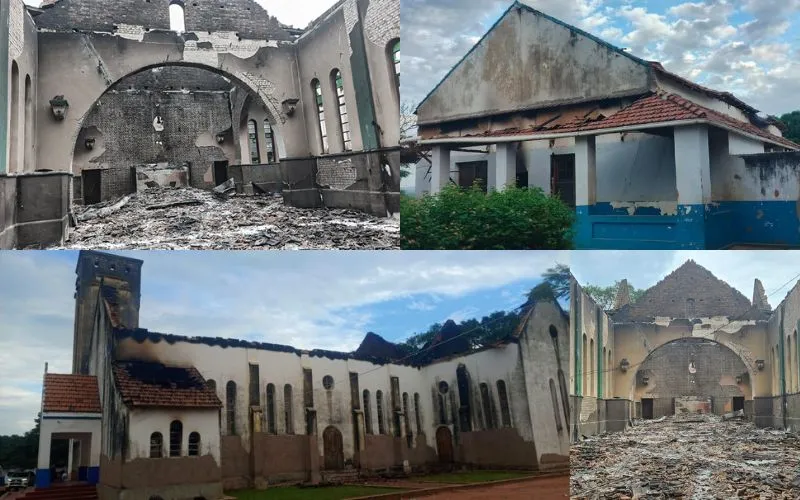
Catholic community in shock after terrorists torch historic church in Mozambique #Catholic MAPUTO, Mozambique — The bishop of Mozambique’s Catholic Diocese of Pemba has expressed sorrow following a terrorist attack that destroyed the historic St. Louis de Montfort Parish in Cabo Delgado province, saying the local community “remains in shock” after the assault.In a message sent to Aid to the Church in Need (ACN) International, a Catholic charity foundation that supports the suffering Church all over the world, on May 1, Bishop António Juliasse Ferreira Sandramo said the parish in Meza, northern Mozambique, was completely burned down during an attack carried out by insurgents on April 30.“The terrorists arrived around 4 p.m. and entered the parish of St. Louis of Montfort, a symbol, since 1946, of the Catholic presence in the region,” the bishop said.He added: “The parish was attacked and completely burned down by the insurgents. The scene was one of terror: Houses and infrastructure destroyed, the historic parish reduced to rubble.”According to Sandramo, civilians were captured during the attack and forced to listen to hate speeches delivered by the assailants.The Cameroonian missionaries serving the parish were not present at the time of the attack and are safe.“The missionaries are safe, but the community remains in shock,” the bishop said.The Catholic Church leader appealed for international solidarity with the victims of violence in Cabo Delgado, where Islamist insurgency has persisted for nearly nine years.“We ask for attention and solidarity with the victims of Meza. For almost nine years now, chapels and churches have been burned in the Diocese of Pemba,” the bishop said.Despite the destruction, he expressed hope and resilience among the Christian faithful.“But the faith of this people of God will never be burned; it is rebuilt daily!” he emphasized.According to ACN, the church building, which dates back to colonial times, was vandalized and reduced to ashes. The attack is the latest in a series of assaults attributed to militants linked to the Islamic State in Mozambique.During a December 2025 visit to Mozambique by Vatican Secretary of State Cardinal Pietro Parolin, Sandramo shared the extent of the devastation caused by the insurgency in Cabo Delgado.“More than 300 Catholics were killed, most by decapitation,” the bishop said at the time, referring to catechists, parish animators, and ordinary faithful.He also reported that since the insurgency began in October 2017, at least 117 churches and chapels had been destroyed in the Pemba Diocese, including 23 in 2025 alone. The destruction of St. Louis de Montfort Parish adds to that toll.Parolin visited Cabo Delgado during his Dec. 5–10 trip to Mozambique, where he met victims and heard testimonies from communities affected by the violence.This story was first published by ACI Africa, the sister service of EWTN News in Africa, and has been adapted by EWTN News.

Catholic community in shock after terrorists torch historic church in Mozambique #Catholic MAPUTO, Mozambique — The bishop of Mozambique’s Catholic Diocese of Pemba has expressed sorrow following a terrorist attack that destroyed the historic St. Louis de Montfort Parish in Cabo Delgado province, saying the local community “remains in shock” after the assault.In a message sent to Aid to the Church in Need (ACN) International, a Catholic charity foundation that supports the suffering Church all over the world, on May 1, Bishop António Juliasse Ferreira Sandramo said the parish in Meza, northern Mozambique, was completely burned down during an attack carried out by insurgents on April 30.“The terrorists arrived around 4 p.m. and entered the parish of St. Louis of Montfort, a symbol, since 1946, of the Catholic presence in the region,” the bishop said.He added: “The parish was attacked and completely burned down by the insurgents. The scene was one of terror: Houses and infrastructure destroyed, the historic parish reduced to rubble.”According to Sandramo, civilians were captured during the attack and forced to listen to hate speeches delivered by the assailants.The Cameroonian missionaries serving the parish were not present at the time of the attack and are safe.“The missionaries are safe, but the community remains in shock,” the bishop said.The Catholic Church leader appealed for international solidarity with the victims of violence in Cabo Delgado, where Islamist insurgency has persisted for nearly nine years.“We ask for attention and solidarity with the victims of Meza. For almost nine years now, chapels and churches have been burned in the Diocese of Pemba,” the bishop said.Despite the destruction, he expressed hope and resilience among the Christian faithful.“But the faith of this people of God will never be burned; it is rebuilt daily!” he emphasized.According to ACN, the church building, which dates back to colonial times, was vandalized and reduced to ashes. The attack is the latest in a series of assaults attributed to militants linked to the Islamic State in Mozambique.During a December 2025 visit to Mozambique by Vatican Secretary of State Cardinal Pietro Parolin, Sandramo shared the extent of the devastation caused by the insurgency in Cabo Delgado.“More than 300 Catholics were killed, most by decapitation,” the bishop said at the time, referring to catechists, parish animators, and ordinary faithful.He also reported that since the insurgency began in October 2017, at least 117 churches and chapels had been destroyed in the Pemba Diocese, including 23 in 2025 alone. The destruction of St. Louis de Montfort Parish adds to that toll.Parolin visited Cabo Delgado during his Dec. 5–10 trip to Mozambique, where he met victims and heard testimonies from communities affected by the violence.This story was first published by ACI Africa, the sister service of EWTN News in Africa, and has been adapted by EWTN News.

The bishop of the Pemba Diocese in northern Mozambique has expressed sadness and solidarity with victims of violence in a region where Islamist insurgency has persisted for nearly nine years.

Read More
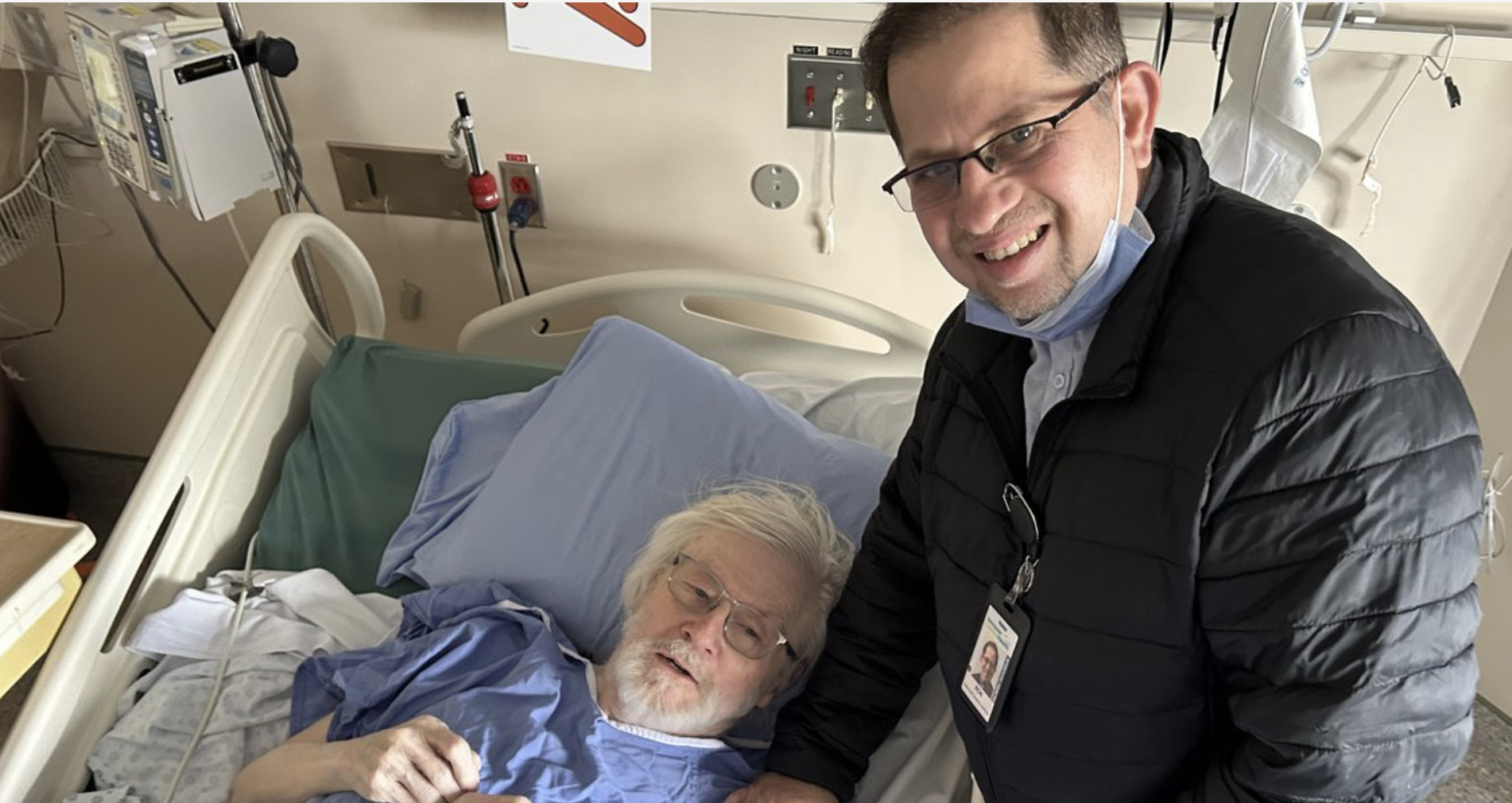
Canadian priest offered euthanasia twice while recovering from hip fracture #Catholic A priest from Vancouver, British Columbia, Canada, recovering from a hip fracture at Vancouver General Hospital (VGH) said he was twice offered assisted death by healthcare staff who knew he was a priest and opposed to euthanasia — a practice critics say is growing as medical professionals are increasingly encouraged to initiate such conversations.“There are some things you just don’t talk about to some people,” said Father Larry Holland, who has completed studies in healthcare chaplaincy in addition to serving at numerous parishes in the Archdiocese of Vancouver.He described his reaction when a doctor brought up the option of medical aid in dying (MAID) should his condition deteriorate. “I think I was very shocked,” he said. “It is such a sensitive subject.”Holland, 79, is currently convalescing at VGH after suffering a hip fracture from a fall in his bathroom on Christmas Day. He spoke to The B.C. Catholic about the offers of MAID from two healthcare professionals, despite their knowing he was a Catholic priest.Holland said he wasn’t dying then or now and that the doctor’s mention of MAID left him “kind of silent” for a moment. The doctor then raised the subject again, saying it’s “something they have to discuss with someone who’s been given a terminal diagnosis.”Holland recalled telling the doctor he was morally opposed to euthanasia. The doctor explained that “he just wanted to make sure that, if a [terminal] diagnosis came up or not … I knew of the different services I had access to.”Weeks later, a second offer of MAID came from a nurse who the priest said seemed uncomfortable raising the topic and was likely doing so out of compassion because of the pain he was enduring.“It’s a false compassion, really,” he said.A spokesman for Vancouver Coastal Health, which operates VGH, told The B.C. Catholic in an email that “staff may consider bringing up MAID based on their clinical judgment, provided they possess the necessary knowledge and skills to do so.”Staff are also “responsible for answering questions when patients bring up the topic of MAID,” the spokesman said.The two incidents arise as Canada approaches 100,000 assisted dying deaths.Father Larry Lynn, the archdiocese’s pro-life chaplain, said he was shocked to hear about Holland’s case.“This must surely be among the most appalling examples of Canada’s coercive and insensitive euthanasia regime,” Lynn said in an interview.He said it’s disturbing that a healthcare provider suggests euthanasia with any patient, and particularly when the patient is a consecrated religious known to be morally opposed. “It places the medical practitioner into the role of the devil, tempting a vulnerable person into mortal sin.”He’s equally troubled that Canadian euthanasia providers aren’t ruling out initiating discussions with Roman Catholics about MAID. In a document titled “Bringing up Medical Assistance in Dying (MAID) as a Clinical Care Option,” the Canadian Association of MAID Assessors and Providers recommends against assuming patients oppose MAID because of their faith.The document says: “Healthcare professionals may draw incorrect assumptions about a person’s views on MAID; e.g., they may assume that a patient objects to MAID because she is a Roman Catholic nun, and yet Roman Catholic nuns and others dedicated to a faith-based way of life have requested MAID.” The booklet does not provide a source for the information.An updated version published in March removes the Catholic reference but gives the same advice regarding people of a “faith community” and even those of “strong faith.”Lynn called it “diabolical” to use a nun as an example for overcoming a patient’s moral objections.The booklet reflects a recent trend of encouraging healthcare personnel to initiate MAID discussions with patients. In November 2025, The B.C. Catholic reported on a little-known 2023 Health Canada document urging health authorities and professional bodies to adopt “practice standards” requiring doctors and nurse practitioners to raise MAID with certain patients.The MAID assessors and providers document similarly says physicians and nurse practitioners involved in care planning and consent processes “have a professional obligation to initiate a discussion about MAID if a patient might be eligible for MAID.” However, Health Canada does not have the authority to require provinces or health authorities to adopt such guidelines and The B.C. Catholic found no evidence of any public agency or professional body in British Columbia doing so.Amanda Achtman, creator of the anti-euthanasia project Dying to Meet You and ethics director of Canadian Physicians for Life, said initiating MAID discussions in a medical setting is a form of coercion that attacks patients’ deepest convictions when they’re vulnerable. To “torment” someone who has deeply held beliefs with an offer of MAID is “an attack on their identity,” Achtman said.Holland admitted he was in so much pain that he could “feel the temptation” to accept MAID. “It’s a human reaction. We always look for the easy way out.”Conservative member of Parliament Garnett Genuis has introduced Bill C-260, An Act to Prevent Coercion of Persons Not Seeking Medical Assistance in Dying, which would prohibit federal employees from proactively offering or recommending MAID. The bill resulted from incidents of bureaucrats such as veterans counselors trying to steer vulnerable people toward assisted dying.The Alberta government introduced legislation in March that would restrict regulated health professionals from providing information about MAID to their patients unless the patient brings it up. The Safeguards for Last Resort Termination of Life Act would also restrict the public display of MAID information, such as posters, within healthcare facilities.The bill is worth supporting, said Achtman, who lives in Calgary. “Simply being offered euthanasia already kills the person, because it defeats and deflates their sense of self-worth and value.”The unwanted initiation of MAID discussions in Canada made international headlines in March after Achtman shared the story of an 84-year-old woman, Miriam Lancaster, who went to VGH last year for severe back pain. She said the first doctor she spoke with in the emergency room raised MAID before any diagnostic work had been done. Lancaster’s daughter was present and confirmed the incident, adding her mother eventually responded to rehabilitation and rest.The Catholic chaplain at VGH, Father Ronald Sequeira, said it’s a constant struggle to help suffering patients not lose hope. He said he tries to offer them “some kind of encouragement and comfort,” but many give up.“The moment you lose hope, the devil comes in, in different personalities, and says, ‘Do you want MAID? I don’t want people to suffer.’”Patients often don’t realize that suffering is redemptive, he said. “God makes us more pure, more strong, through the suffering when we offer it up,” Sequeira said. “So we give hope — help them not to lose hope.”Holland said turning down an offer of death opens one to new experiences. Even enduring pain “can encourage growth,” he said. “It can motivate you, it can open up new worlds, new vistas, new opportunities,” including enriched relationships.He said he is sharing his story in the hope it will help others. “I went through it; you can go through it, too.”This story was first published in The B.C. Catholic and is reprinted here with permission and adaptations.

Canadian priest offered euthanasia twice while recovering from hip fracture #Catholic A priest from Vancouver, British Columbia, Canada, recovering from a hip fracture at Vancouver General Hospital (VGH) said he was twice offered assisted death by healthcare staff who knew he was a priest and opposed to euthanasia — a practice critics say is growing as medical professionals are increasingly encouraged to initiate such conversations.“There are some things you just don’t talk about to some people,” said Father Larry Holland, who has completed studies in healthcare chaplaincy in addition to serving at numerous parishes in the Archdiocese of Vancouver.He described his reaction when a doctor brought up the option of medical aid in dying (MAID) should his condition deteriorate. “I think I was very shocked,” he said. “It is such a sensitive subject.”Holland, 79, is currently convalescing at VGH after suffering a hip fracture from a fall in his bathroom on Christmas Day. He spoke to The B.C. Catholic about the offers of MAID from two healthcare professionals, despite their knowing he was a Catholic priest.Holland said he wasn’t dying then or now and that the doctor’s mention of MAID left him “kind of silent” for a moment. The doctor then raised the subject again, saying it’s “something they have to discuss with someone who’s been given a terminal diagnosis.”Holland recalled telling the doctor he was morally opposed to euthanasia. The doctor explained that “he just wanted to make sure that, if a [terminal] diagnosis came up or not … I knew of the different services I had access to.”Weeks later, a second offer of MAID came from a nurse who the priest said seemed uncomfortable raising the topic and was likely doing so out of compassion because of the pain he was enduring.“It’s a false compassion, really,” he said.A spokesman for Vancouver Coastal Health, which operates VGH, told The B.C. Catholic in an email that “staff may consider bringing up MAID based on their clinical judgment, provided they possess the necessary knowledge and skills to do so.”Staff are also “responsible for answering questions when patients bring up the topic of MAID,” the spokesman said.The two incidents arise as Canada approaches 100,000 assisted dying deaths.Father Larry Lynn, the archdiocese’s pro-life chaplain, said he was shocked to hear about Holland’s case.“This must surely be among the most appalling examples of Canada’s coercive and insensitive euthanasia regime,” Lynn said in an interview.He said it’s disturbing that a healthcare provider suggests euthanasia with any patient, and particularly when the patient is a consecrated religious known to be morally opposed. “It places the medical practitioner into the role of the devil, tempting a vulnerable person into mortal sin.”He’s equally troubled that Canadian euthanasia providers aren’t ruling out initiating discussions with Roman Catholics about MAID. In a document titled “Bringing up Medical Assistance in Dying (MAID) as a Clinical Care Option,” the Canadian Association of MAID Assessors and Providers recommends against assuming patients oppose MAID because of their faith.The document says: “Healthcare professionals may draw incorrect assumptions about a person’s views on MAID; e.g., they may assume that a patient objects to MAID because she is a Roman Catholic nun, and yet Roman Catholic nuns and others dedicated to a faith-based way of life have requested MAID.” The booklet does not provide a source for the information.An updated version published in March removes the Catholic reference but gives the same advice regarding people of a “faith community” and even those of “strong faith.”Lynn called it “diabolical” to use a nun as an example for overcoming a patient’s moral objections.The booklet reflects a recent trend of encouraging healthcare personnel to initiate MAID discussions with patients. In November 2025, The B.C. Catholic reported on a little-known 2023 Health Canada document urging health authorities and professional bodies to adopt “practice standards” requiring doctors and nurse practitioners to raise MAID with certain patients.The MAID assessors and providers document similarly says physicians and nurse practitioners involved in care planning and consent processes “have a professional obligation to initiate a discussion about MAID if a patient might be eligible for MAID.” However, Health Canada does not have the authority to require provinces or health authorities to adopt such guidelines and The B.C. Catholic found no evidence of any public agency or professional body in British Columbia doing so.Amanda Achtman, creator of the anti-euthanasia project Dying to Meet You and ethics director of Canadian Physicians for Life, said initiating MAID discussions in a medical setting is a form of coercion that attacks patients’ deepest convictions when they’re vulnerable. To “torment” someone who has deeply held beliefs with an offer of MAID is “an attack on their identity,” Achtman said.Holland admitted he was in so much pain that he could “feel the temptation” to accept MAID. “It’s a human reaction. We always look for the easy way out.”Conservative member of Parliament Garnett Genuis has introduced Bill C-260, An Act to Prevent Coercion of Persons Not Seeking Medical Assistance in Dying, which would prohibit federal employees from proactively offering or recommending MAID. The bill resulted from incidents of bureaucrats such as veterans counselors trying to steer vulnerable people toward assisted dying.The Alberta government introduced legislation in March that would restrict regulated health professionals from providing information about MAID to their patients unless the patient brings it up. The Safeguards for Last Resort Termination of Life Act would also restrict the public display of MAID information, such as posters, within healthcare facilities.The bill is worth supporting, said Achtman, who lives in Calgary. “Simply being offered euthanasia already kills the person, because it defeats and deflates their sense of self-worth and value.”The unwanted initiation of MAID discussions in Canada made international headlines in March after Achtman shared the story of an 84-year-old woman, Miriam Lancaster, who went to VGH last year for severe back pain. She said the first doctor she spoke with in the emergency room raised MAID before any diagnostic work had been done. Lancaster’s daughter was present and confirmed the incident, adding her mother eventually responded to rehabilitation and rest.The Catholic chaplain at VGH, Father Ronald Sequeira, said it’s a constant struggle to help suffering patients not lose hope. He said he tries to offer them “some kind of encouragement and comfort,” but many give up.“The moment you lose hope, the devil comes in, in different personalities, and says, ‘Do you want MAID? I don’t want people to suffer.’”Patients often don’t realize that suffering is redemptive, he said. “God makes us more pure, more strong, through the suffering when we offer it up,” Sequeira said. “So we give hope — help them not to lose hope.”Holland said turning down an offer of death opens one to new experiences. Even enduring pain “can encourage growth,” he said. “It can motivate you, it can open up new worlds, new vistas, new opportunities,” including enriched relationships.He said he is sharing his story in the hope it will help others. “I went through it; you can go through it, too.”This story was first published in The B.C. Catholic and is reprinted here with permission and adaptations.

A Vancouver priest says he was twice offered assisted death by hospital medical staff who knew he was a priest and opposed to euthanasia — a practice critics say is growing.

Read More
Pope Leo to visit a much more secularized Spain since Pope Benedict’s World Youth Day in 2011 – #Catholic – Pope Benedict XVI drew more than a million young people to World Youth Day 2011 in Madrid, an event that left its mark on an entire generation. Fifteen years later, Spain is preparing to welcome a new pontiff, Leo XIV, in a profoundly different religious landscape.Over this period, the faith and religious practice of Spanish society have undergone significant changes. Ahead of the popeʼs upcoming visit in June, two experts reflected on this development and the spiritual reality that Leo XIV will encounter upon his arrival in Spain.A less religious societyRafael Ruiz Andrés, a professor who holds a doctorate in sociology from the Complutense University of Madrid, explained to ACI Prensa, the Spanish-language sister service of EWTN News, that Benedict XVI arrived in Spain during what he called “the third wave of secularization” since the beginning of the 21st century.He noted that in today’s society and especially among young people, this secularization has accelerated and intensified: “Undoubtedly, we are in a less religious society,” he stated.According to the latest data released by the Pluralism and Coexistence Foundation in its 2025 Barometer on Religion and Beliefs in Spain, nearly half of all Spaniards (42%) no longer identify with any religion, while the percentage of religious individuals — predominantly Catholic — stands at around 50% to 56%.Ruiz noted that just a few decades ago, the majority of the Spanish population identified as Catholic, a fact that in his view also underscores “our sense of secularization.” Nevertheless, he emphasized that half the population still represents a significant number of people.
 
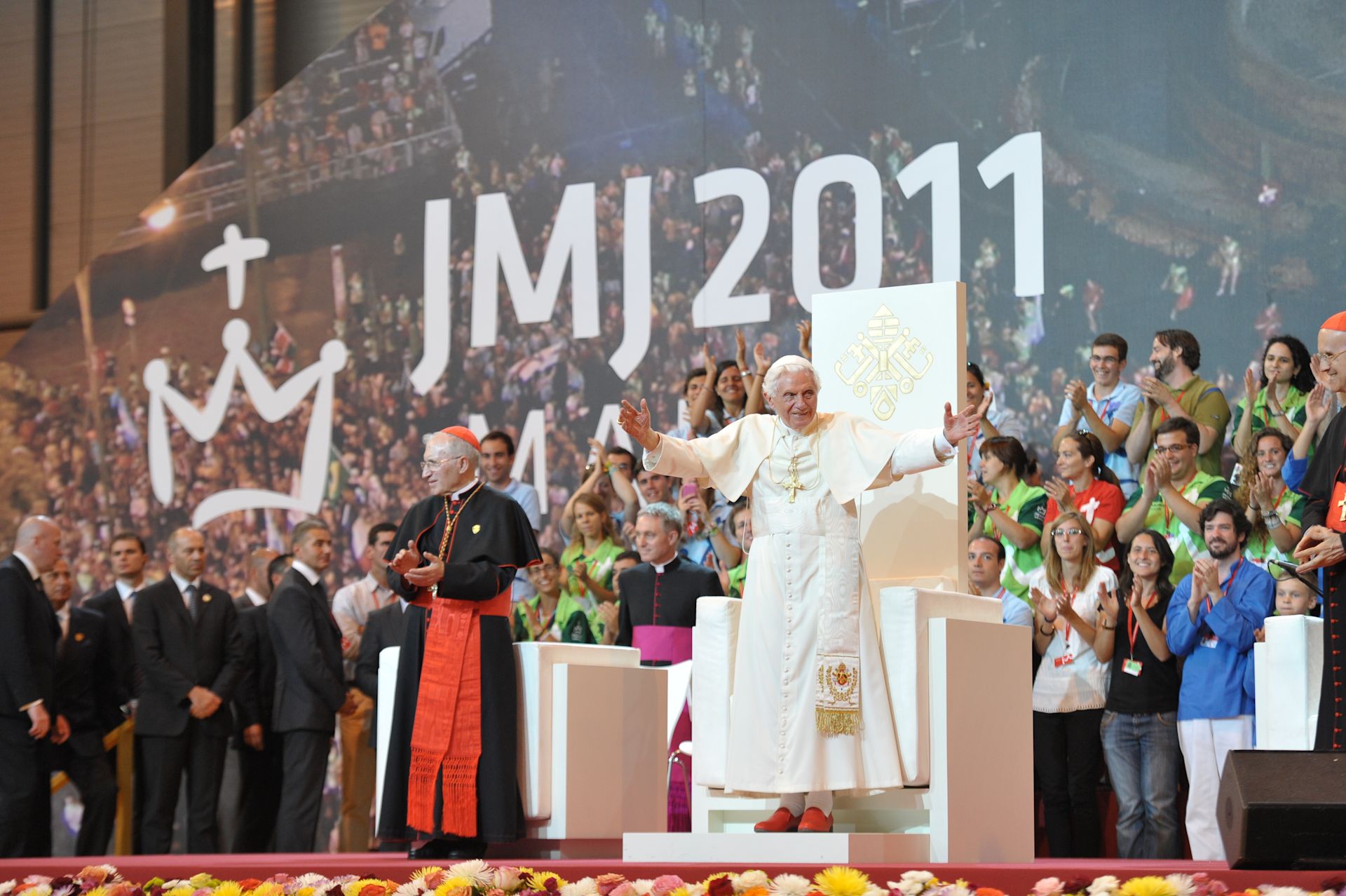
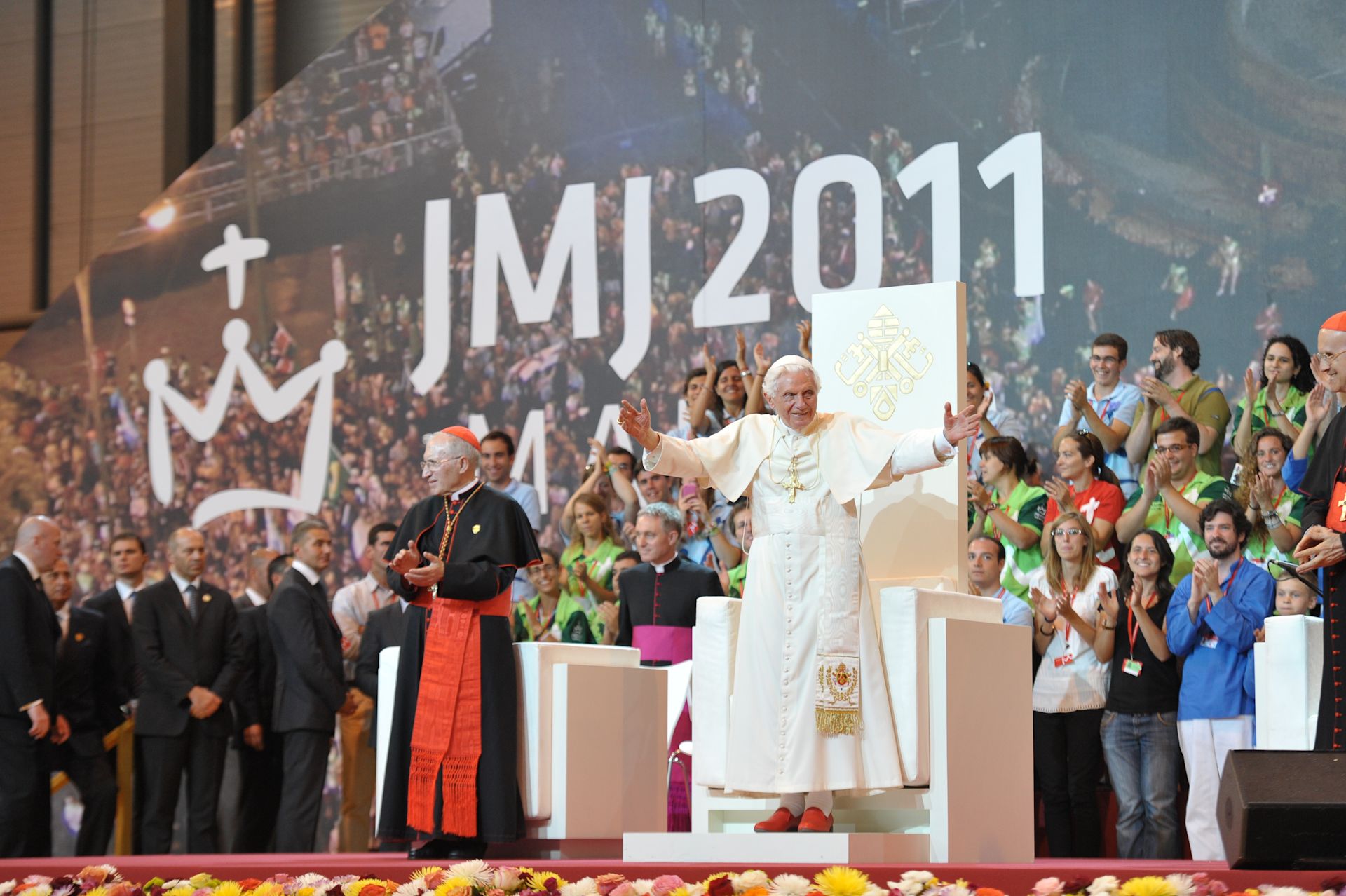
 Pope Benedict XVI greets the crowd at World Youth Day on Aug. 18, 2026, in Spain. | Credit: Vatican Media
 
 Catholic youth in 2011 and todayThough there are currently fewer young Catholics than in 2011, Ruiz emphasized that among the youth of 2026, there are signs "that Catholicism once again interests and challenges them.”Reflecting this trend are the findings of the “Young Spaniards 2026” report by the SM Foundation, which reveals an increase in the importance young people attach to religion: 38.4% state that it is “quite or very important” in their lives.The number of young people who identify as Catholic has also grown notably: In 2020, it stood at 31.6%, and by 2025, it had risen to 45%.Bishop Emeritus César Augusto Franco Martínez of Segovia was responsible for coordinating Pope Benedict XVI’s World Youth Day as well as writing the lyrics for the hymn “Firmes en la Fe” (“Firm in the Faith”), which was composed for the event.The prelate noted the similarities between the two generations. “They are young people who wish to live happily, who desire to achieve the goals they may have set for themselves, and who possess faith,” he said in a conversation with ACI Prensa.Reflecting on young people’s faith, the prelate alluded to World Youth Day (WYD) in Lisbon in 2023: “There, I thought that even though time has passed, it seems that young people have not changed.”“In Lisbon, too, there were a million and a half young people, and their conduct, their dedication, generosity, and joy was truly spectacular,” he said.Young people living out their faith without inhibitionsRuiz said the Catholic youth of 15 years ago were marked by polarization surrounding debates on sexual and reproductive rights, abortion, or same-sex marriage legislation. “One could say that at that time the Church had a more marginalized position with respect to young people.”“I believe that the young person of 2026 is, generally speaking, less inhibited when discussing their faith and religiosity with their peers. The current generation takes being Catholic more naturally. It has become more normalized and, consequently, is also more visible,” he noted.He also emphasized that the phenomena of youth apostolates such as Hakuna, Effetá, and their extensive impact on social media “point to that increased visibility in 2026 compared to 2011.”Ultimately, he stated that although the number of young Catholics in 2026 is lower than in 2011, “a new dialogue is now opening up between the Catholic Church and Spanish youth, one that moves beyond those polarizations and is in fact fostered by the very context of secularity.”
 
 Pope Benedict XVI arrives at World Youth Day on Aug. 18, 2011, in Spain. | Credit: Vatican Media
 
 Ruiz emphasized that religion continues to be “a very important issue” in Spain as well as tradition, culture, spirituality, and the search for meaning — elements that have not disappeared despite secularization.The professor also said that secularization in Spain “is not an inevitable destiny.”Catholic ‘awakening’ needs maturity and depthAccording to the bishop emeritus of Segovia, today’s youth are marked by a “tsunami” culture; that is, “they seek to live somewhat through their senses, through whatever impacts them immediately, enjoying the present day without harboring many expectations for tomorrow, even though the future also worries them.”“Faith,” he added, “is not a fleeting sentiment that is here today and gone tomorrow; faith is something far more profound; it is entering into a relationship with Christ in a vital, existential way. This requires depth, requires personal engagement, requires prayer, requires living in community, and not letting oneself be carried away solely by trends that may end up being more or less passing.”He said that many young people express their religious yearnings, even if they do not know how to articulate them or put them into practice. “We also live in a multicultural and multireligious society … many say they believe in God, yet they also believe in reincarnation and in other trends coming from Asia.”The prelate emphasized that man “is a religious being by nature, even if he denies it, because imprinted within his very being is a yearning for transcendence that only God could have put there: a yearning for the infinite, for boundless happiness, for beauty, and for truth; and that’s something that young people have.”He also pointed to the increase in adult baptisms: “It’s a phenomenon that must be examined closely, without allowing oneself to be carried away by facile slogans.”A message of hope for Spanish youthRuiz emphasized that Pope Leo XIV’s visit to Spain could serve as a “compass for Catholicism in Spain.” He highlighted in particular the pope’s trip to the Canary Islands as a gesture of solidarity with the migration situation in the country: “The social dimension is one of the challenges facing certain sectors of the Church,” he noted.He emphasized that the pope’s dialogue with contemporary society will differ from the one maintained by Benedict XVI. “I believe it will be post-secular in nature, that of a religious leader belonging to a denomination of immense significance in our country, yet one who speaks to a diverse, pluralistic society and who offers a vital message capable of being heard by audiences wider than the Church itself."He said he hopes his visit will “encourage young people and everyone to follow Christ with fidelity and to love the Church without prejudice, despite the failings that we Christians may have.”“For me, this is a trip filled with hope, and I am certain that it will encourage us to be better Christians and to live in today’s world as witnesses to the Gospel,” he added.This story was first published by ACI Prensa, the Spanish-language sister service of EWTN News. It has been translated and adapted by EWTN News English.

Pope Leo to visit a much more secularized Spain since Pope Benedict’s World Youth Day in 2011 – #Catholic – Pope Benedict XVI drew more than a million young people to World Youth Day 2011 in Madrid, an event that left its mark on an entire generation. Fifteen years later, Spain is preparing to welcome a new pontiff, Leo XIV, in a profoundly different religious landscape.Over this period, the faith and religious practice of Spanish society have undergone significant changes. Ahead of the popeʼs upcoming visit in June, two experts reflected on this development and the spiritual reality that Leo XIV will encounter upon his arrival in Spain.A less religious societyRafael Ruiz Andrés, a professor who holds a doctorate in sociology from the Complutense University of Madrid, explained to ACI Prensa, the Spanish-language sister service of EWTN News, that Benedict XVI arrived in Spain during what he called “the third wave of secularization” since the beginning of the 21st century.He noted that in today’s society and especially among young people, this secularization has accelerated and intensified: “Undoubtedly, we are in a less religious society,” he stated.According to the latest data released by the Pluralism and Coexistence Foundation in its 2025 Barometer on Religion and Beliefs in Spain, nearly half of all Spaniards (42%) no longer identify with any religion, while the percentage of religious individuals — predominantly Catholic — stands at around 50% to 56%.Ruiz noted that just a few decades ago, the majority of the Spanish population identified as Catholic, a fact that in his view also underscores “our sense of secularization.” Nevertheless, he emphasized that half the population still represents a significant number of people. Pope Benedict XVI greets the crowd at World Youth Day on Aug. 18, 2026, in Spain. | Credit: Vatican Media Catholic youth in 2011 and todayThough there are currently fewer young Catholics than in 2011, Ruiz emphasized that among the youth of 2026, there are signs "that Catholicism once again interests and challenges them.”Reflecting this trend are the findings of the “Young Spaniards 2026” report by the SM Foundation, which reveals an increase in the importance young people attach to religion: 38.4% state that it is “quite or very important” in their lives.The number of young people who identify as Catholic has also grown notably: In 2020, it stood at 31.6%, and by 2025, it had risen to 45%.Bishop Emeritus César Augusto Franco Martínez of Segovia was responsible for coordinating Pope Benedict XVI’s World Youth Day as well as writing the lyrics for the hymn “Firmes en la Fe” (“Firm in the Faith”), which was composed for the event.The prelate noted the similarities between the two generations. “They are young people who wish to live happily, who desire to achieve the goals they may have set for themselves, and who possess faith,” he said in a conversation with ACI Prensa.Reflecting on young people’s faith, the prelate alluded to World Youth Day (WYD) in Lisbon in 2023: “There, I thought that even though time has passed, it seems that young people have not changed.”“In Lisbon, too, there were a million and a half young people, and their conduct, their dedication, generosity, and joy was truly spectacular,” he said.Young people living out their faith without inhibitionsRuiz said the Catholic youth of 15 years ago were marked by polarization surrounding debates on sexual and reproductive rights, abortion, or same-sex marriage legislation. “One could say that at that time the Church had a more marginalized position with respect to young people.”“I believe that the young person of 2026 is, generally speaking, less inhibited when discussing their faith and religiosity with their peers. The current generation takes being Catholic more naturally. It has become more normalized and, consequently, is also more visible,” he noted.He also emphasized that the phenomena of youth apostolates such as Hakuna, Effetá, and their extensive impact on social media “point to that increased visibility in 2026 compared to 2011.”Ultimately, he stated that although the number of young Catholics in 2026 is lower than in 2011, “a new dialogue is now opening up between the Catholic Church and Spanish youth, one that moves beyond those polarizations and is in fact fostered by the very context of secularity.” Pope Benedict XVI arrives at World Youth Day on Aug. 18, 2011, in Spain. | Credit: Vatican Media Ruiz emphasized that religion continues to be “a very important issue” in Spain as well as tradition, culture, spirituality, and the search for meaning — elements that have not disappeared despite secularization.The professor also said that secularization in Spain “is not an inevitable destiny.”Catholic ‘awakening’ needs maturity and depthAccording to the bishop emeritus of Segovia, today’s youth are marked by a “tsunami” culture; that is, “they seek to live somewhat through their senses, through whatever impacts them immediately, enjoying the present day without harboring many expectations for tomorrow, even though the future also worries them.”“Faith,” he added, “is not a fleeting sentiment that is here today and gone tomorrow; faith is something far more profound; it is entering into a relationship with Christ in a vital, existential way. This requires depth, requires personal engagement, requires prayer, requires living in community, and not letting oneself be carried away solely by trends that may end up being more or less passing.”He said that many young people express their religious yearnings, even if they do not know how to articulate them or put them into practice. “We also live in a multicultural and multireligious society … many say they believe in God, yet they also believe in reincarnation and in other trends coming from Asia.”The prelate emphasized that man “is a religious being by nature, even if he denies it, because imprinted within his very being is a yearning for transcendence that only God could have put there: a yearning for the infinite, for boundless happiness, for beauty, and for truth; and that’s something that young people have.”He also pointed to the increase in adult baptisms: “It’s a phenomenon that must be examined closely, without allowing oneself to be carried away by facile slogans.”A message of hope for Spanish youthRuiz emphasized that Pope Leo XIV’s visit to Spain could serve as a “compass for Catholicism in Spain.” He highlighted in particular the pope’s trip to the Canary Islands as a gesture of solidarity with the migration situation in the country: “The social dimension is one of the challenges facing certain sectors of the Church,” he noted.He emphasized that the pope’s dialogue with contemporary society will differ from the one maintained by Benedict XVI. “I believe it will be post-secular in nature, that of a religious leader belonging to a denomination of immense significance in our country, yet one who speaks to a diverse, pluralistic society and who offers a vital message capable of being heard by audiences wider than the Church itself."He said he hopes his visit will “encourage young people and everyone to follow Christ with fidelity and to love the Church without prejudice, despite the failings that we Christians may have.”“For me, this is a trip filled with hope, and I am certain that it will encourage us to be better Christians and to live in today’s world as witnesses to the Gospel,” he added.This story was first published by ACI Prensa, the Spanish-language sister service of EWTN News. It has been translated and adapted by EWTN News English.

Two experts analyze the state of the Catholic faith among Spanish youth today, noting that while Spain is increasingly secularized, the faith is growing among young people.

Read More

What would Earth be like if there were no Moon? Peter Allen RhodesNorth Bellmore, New York Without the Moon, Earth’s geology, biology, and climate — as well as human philosophy — would be different in many significant ways. If Earth had no Moon, the postulated origin of the Moon through a collision between the proto-EarthContinue reading “What would Earth be like if there were no Moon?”

The post What would Earth be like if there were no Moon? appeared first on Astronomy Magazine.

Read More
Paterson hits record, sending letters to seminarians through Knights #Catholic – Seminarian John Peter Zappe sometimes feels discouraged by challenging classes and assignments, asking himself, “Why am I doing this?”
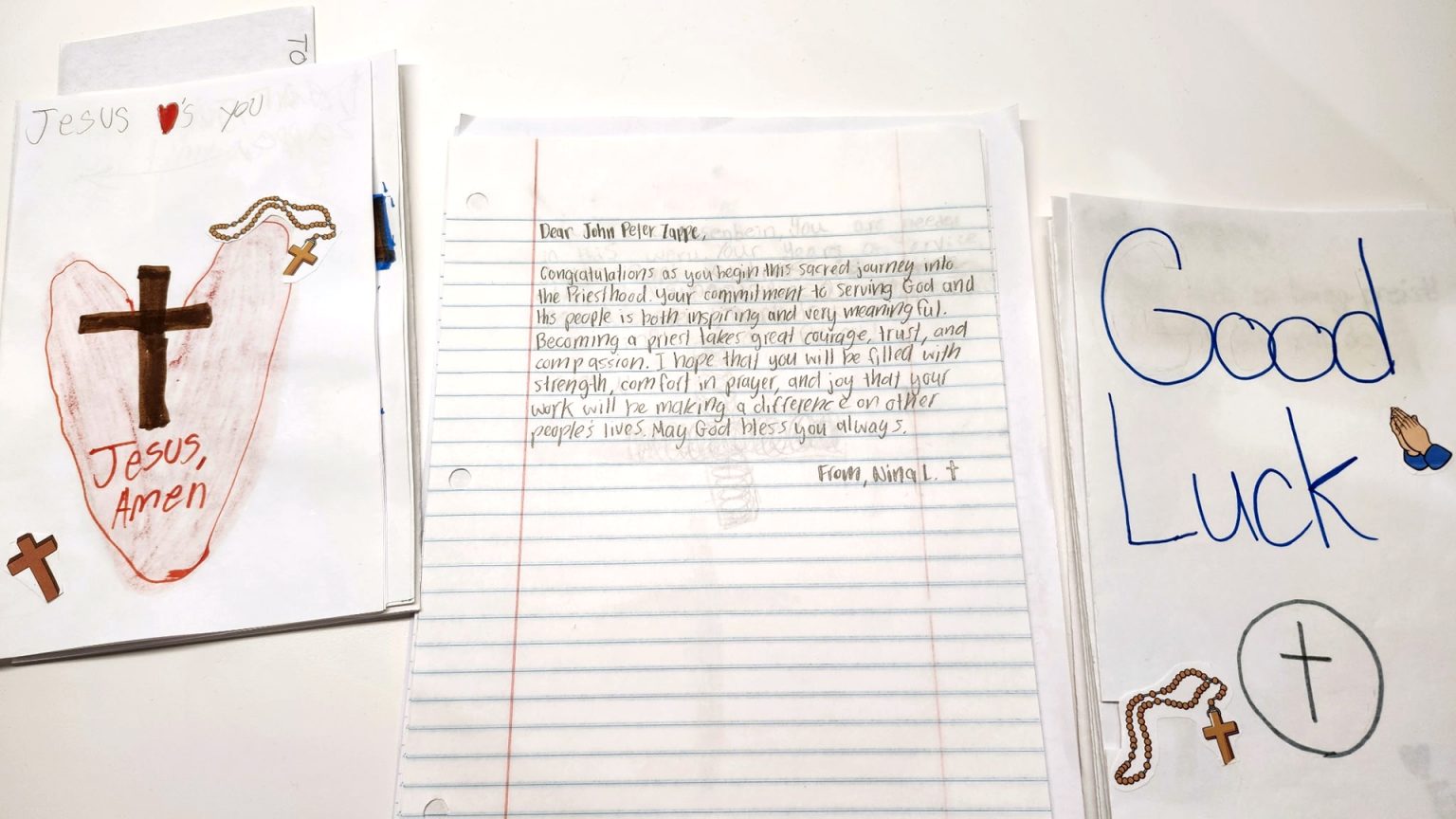
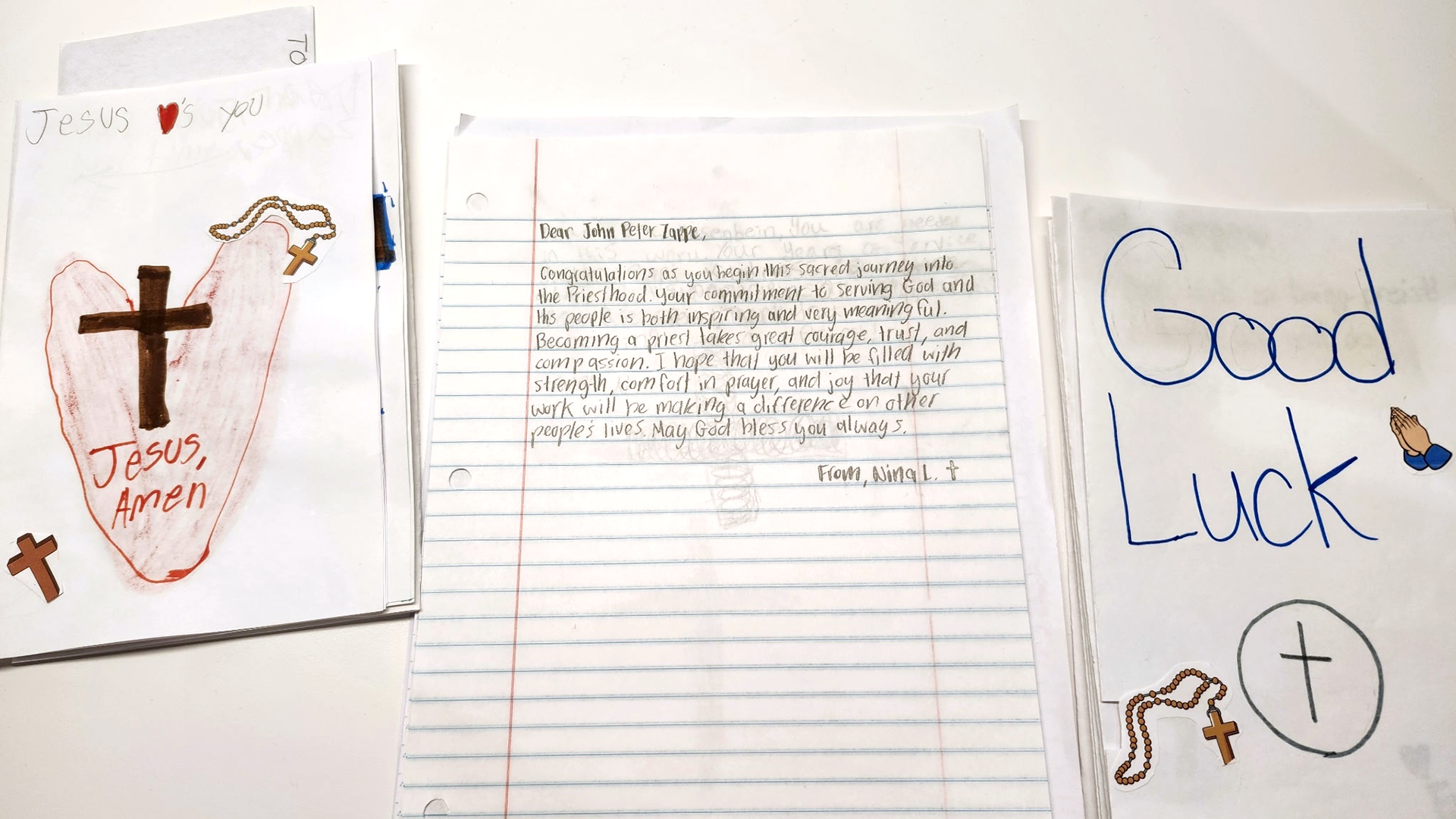
Recently, Zappe, a seminarian of the Paterson Diocese, N.J., received several faith-filled letters and cards of encouragement in his studies from local Catholic children. Among these, Nina L., of the religious education program at Immaculate Heart of Mary (IHM) Parish in Wayne, N.J., wrote one of these moving and inspiring letter.
“Congratulations as you begin this sacred journey into the priesthood,” Nina wrote to Zappe, 27. He is finishing his second year of theology studies at Immaculate Conception Seminary in South Orange, N.J. She continued, “Becoming a priest takes great courage, trust, and compassion. I hope that you will be filled with strength, comfort in prayer, and joy that your work will be making a difference in other people’s lives. May God bless you always.”
In March, as part of this ongoing support, Zappe and the diocese’s nine other seminarians received stacks of children’s letters of support, prayers, and appreciation, including from Nina A., courtesy of the Seminarian Letter Project, an annual initiative of the N.J. State Council of the Knights of Columbus.
“These days, it’s nice to get physical letters from students who write that they are praying for you, a man who is studying in seminary and is planning to go into the priesthood. The answer to ‘Why am I doing this?” is them: these young people of God, who are waiting for me to serve them in the future,” said Zappe, who emphasized that he also finds encouragement from other sources, especially from God in prayer. Additionally, he noted, “It’s also great to see that by writing these letters, the children are thinking about their own vocations.”

Click here to subscribe to our weekly newsletter.

This year, the Paterson Diocese set a record by sending more letters and cards to seminarians than ever before. Students in religious-education programs from four parishes provided over 100 pieces of encouragement. Statewide, Catholic school students also participated, according to John Tirado, the council’s faith director who has overseen the Project for 25 years.
In one letter, Linda, also of the Paterson Diocese, sought to motivate the seminarians by writing, “You got this and God’s got you.” Younger children drew cartoon crosses and angels on their cards.
Participating from the Paterson Diocese were: Father Joseph A. Cassidy, Council 6100 in the Budd Lake neighborhood of Mount Olive, N.J.; St. John Vianney Council 12649 in the Stockholm neighborhood of Hardyston, N.J.; John Fitzgerald Kennedy Council 5486 in Lincoln Park, N.J.; and IHM Council 10206 in Wayne. These councils will be recognized at the State Knights’ convention in Wildwood, N.J., in May, Tirado said.
Throughout the state, local Knights’ council Project chairmen coordinate the letter-writing efforts with their Catholic schools and religious education programs. Tirado collects them and forwards them to each diocese. For the Paterson Diocese seminarians, the letters were delivered from the Vocations Office at the annual Chrism Mass on March 31 at the Cathedral of St. John the Baptist in Paterson, N.J.
“The letters are fresh, inspiring, thoughtful, and honest. They are surprising in their depth, and the children’s thinking about the church and vocations. It’s a spiritual gift the seminarians respond to. You don’t get that with Artificial Intelligence,” said Tirado. He noted that their insights get deeper with each successive grade level. “They are also thinking about the men who will be there for them and their families when they get older,” he said.
This year marked the first time the Hardyston and Mount Olive councils participated. The St. John Vianney Council serves St. Thomas the Apostle Parish in the Oak Ridge neighborhood of Jefferson, N.J., and St. John Vianney Parish in Hardyston.
Summing up the project’s impact, Joseph Tarallo, St. John Vianney’s grand knight and Project chairman, said, “The letters brighten the seminarians’ day. If we don’t encourage our seminarians, we won’t have priests. Writing a letter to them is easy to do. The kids enjoy it,” he said.

Paterson hits record, sending letters to seminarians through Knights #Catholic – Seminarian John Peter Zappe sometimes feels discouraged by challenging classes and assignments, asking himself, “Why am I doing this?” Recently, Zappe, a seminarian of the Paterson Diocese, N.J., received several faith-filled letters and cards of encouragement in his studies from local Catholic children. Among these, Nina L., of the religious education program at Immaculate Heart of Mary (IHM) Parish in Wayne, N.J., wrote one of these moving and inspiring letter. “Congratulations as you begin this sacred journey into the priesthood,” Nina wrote to Zappe, 27. He is finishing his second year of theology studies at Immaculate Conception Seminary in South Orange, N.J. She continued, “Becoming a priest takes great courage, trust, and compassion. I hope that you will be filled with strength, comfort in prayer, and joy that your work will be making a difference in other people’s lives. May God bless you always.” In March, as part of this ongoing support, Zappe and the diocese’s nine other seminarians received stacks of children’s letters of support, prayers, and appreciation, including from Nina A., courtesy of the Seminarian Letter Project, an annual initiative of the N.J. State Council of the Knights of Columbus. “These days, it’s nice to get physical letters from students who write that they are praying for you, a man who is studying in seminary and is planning to go into the priesthood. The answer to ‘Why am I doing this?” is them: these young people of God, who are waiting for me to serve them in the future,” said Zappe, who emphasized that he also finds encouragement from other sources, especially from God in prayer. Additionally, he noted, “It’s also great to see that by writing these letters, the children are thinking about their own vocations.” Click here to subscribe to our weekly newsletter. This year, the Paterson Diocese set a record by sending more letters and cards to seminarians than ever before. Students in religious-education programs from four parishes provided over 100 pieces of encouragement. Statewide, Catholic school students also participated, according to John Tirado, the council’s faith director who has overseen the Project for 25 years. In one letter, Linda, also of the Paterson Diocese, sought to motivate the seminarians by writing, “You got this and God’s got you.” Younger children drew cartoon crosses and angels on their cards. Participating from the Paterson Diocese were: Father Joseph A. Cassidy, Council 6100 in the Budd Lake neighborhood of Mount Olive, N.J.; St. John Vianney Council 12649 in the Stockholm neighborhood of Hardyston, N.J.; John Fitzgerald Kennedy Council 5486 in Lincoln Park, N.J.; and IHM Council 10206 in Wayne. These councils will be recognized at the State Knights’ convention in Wildwood, N.J., in May, Tirado said. Throughout the state, local Knights’ council Project chairmen coordinate the letter-writing efforts with their Catholic schools and religious education programs. Tirado collects them and forwards them to each diocese. For the Paterson Diocese seminarians, the letters were delivered from the Vocations Office at the annual Chrism Mass on March 31 at the Cathedral of St. John the Baptist in Paterson, N.J. “The letters are fresh, inspiring, thoughtful, and honest. They are surprising in their depth, and the children’s thinking about the church and vocations. It’s a spiritual gift the seminarians respond to. You don’t get that with Artificial Intelligence,” said Tirado. He noted that their insights get deeper with each successive grade level. “They are also thinking about the men who will be there for them and their families when they get older,” he said. This year marked the first time the Hardyston and Mount Olive councils participated. The St. John Vianney Council serves St. Thomas the Apostle Parish in the Oak Ridge neighborhood of Jefferson, N.J., and St. John Vianney Parish in Hardyston. Summing up the project’s impact, Joseph Tarallo, St. John Vianney’s grand knight and Project chairman, said, “The letters brighten the seminarians’ day. If we don’t encourage our seminarians, we won’t have priests. Writing a letter to them is easy to do. The kids enjoy it,” he said.

Paterson hits record, sending letters to seminarians through Knights #Catholic –

Seminarian John Peter Zappe sometimes feels discouraged by challenging classes and assignments, asking himself, “Why am I doing this?”

Recently, Zappe, a seminarian of the Paterson Diocese, N.J., received several faith-filled letters and cards of encouragement in his studies from local Catholic children. Among these, Nina L., of the religious education program at Immaculate Heart of Mary (IHM) Parish in Wayne, N.J., wrote one of these moving and inspiring letter.

“Congratulations as you begin this sacred journey into the priesthood,” Nina wrote to Zappe, 27. He is finishing his second year of theology studies at Immaculate Conception Seminary in South Orange, N.J. She continued, “Becoming a priest takes great courage, trust, and compassion. I hope that you will be filled with strength, comfort in prayer, and joy that your work will be making a difference in other people’s lives. May God bless you always.”

In March, as part of this ongoing support, Zappe and the diocese’s nine other seminarians received stacks of children’s letters of support, prayers, and appreciation, including from Nina A., courtesy of the Seminarian Letter Project, an annual initiative of the N.J. State Council of the Knights of Columbus.

“These days, it’s nice to get physical letters from students who write that they are praying for you, a man who is studying in seminary and is planning to go into the priesthood. The answer to ‘Why am I doing this?” is them: these young people of God, who are waiting for me to serve them in the future,” said Zappe, who emphasized that he also finds encouragement from other sources, especially from God in prayer. Additionally, he noted, “It’s also great to see that by writing these letters, the children are thinking about their own vocations.”


Click here to subscribe to our weekly newsletter.

This year, the Paterson Diocese set a record by sending more letters and cards to seminarians than ever before. Students in religious-education programs from four parishes provided over 100 pieces of encouragement. Statewide, Catholic school students also participated, according to John Tirado, the council’s faith director who has overseen the Project for 25 years.

In one letter, Linda, also of the Paterson Diocese, sought to motivate the seminarians by writing, “You got this and God’s got you.” Younger children drew cartoon crosses and angels on their cards.

Participating from the Paterson Diocese were: Father Joseph A. Cassidy, Council 6100 in the Budd Lake neighborhood of Mount Olive, N.J.; St. John Vianney Council 12649 in the Stockholm neighborhood of Hardyston, N.J.; John Fitzgerald Kennedy Council 5486 in Lincoln Park, N.J.; and IHM Council 10206 in Wayne. These councils will be recognized at the State Knights’ convention in Wildwood, N.J., in May, Tirado said.

Throughout the state, local Knights’ council Project chairmen coordinate the letter-writing efforts with their Catholic schools and religious education programs. Tirado collects them and forwards them to each diocese. For the Paterson Diocese seminarians, the letters were delivered from the Vocations Office at the annual Chrism Mass on March 31 at the Cathedral of St. John the Baptist in Paterson, N.J.

“The letters are fresh, inspiring, thoughtful, and honest. They are surprising in their depth, and the children’s thinking about the church and vocations. It’s a spiritual gift the seminarians respond to. You don’t get that with Artificial Intelligence,” said Tirado. He noted that their insights get deeper with each successive grade level. “They are also thinking about the men who will be there for them and their families when they get older,” he said.

This year marked the first time the Hardyston and Mount Olive councils participated. The St. John Vianney Council serves St. Thomas the Apostle Parish in the Oak Ridge neighborhood of Jefferson, N.J., and St. John Vianney Parish in Hardyston.

Summing up the project’s impact, Joseph Tarallo, St. John Vianney’s grand knight and Project chairman, said, “The letters brighten the seminarians’ day. If we don’t encourage our seminarians, we won’t have priests. Writing a letter to them is easy to do. The kids enjoy it,” he said.

Seminarian John Peter Zappe sometimes feels discouraged by challenging classes and assignments, asking himself, “Why am I doing this?” Recently, Zappe, a seminarian of the Paterson Diocese, N.J., received several faith-filled letters and cards of encouragement in his studies from local Catholic children. Among these, Nina L., of the religious education program at Immaculate Heart of Mary (IHM) Parish in Wayne, N.J., wrote one of these moving and inspiring letter. “Congratulations as you begin this sacred journey into the priesthood,” Nina wrote to Zappe, 27. He is finishing his second year of theology studies at Immaculate Conception Seminary in South

Read More
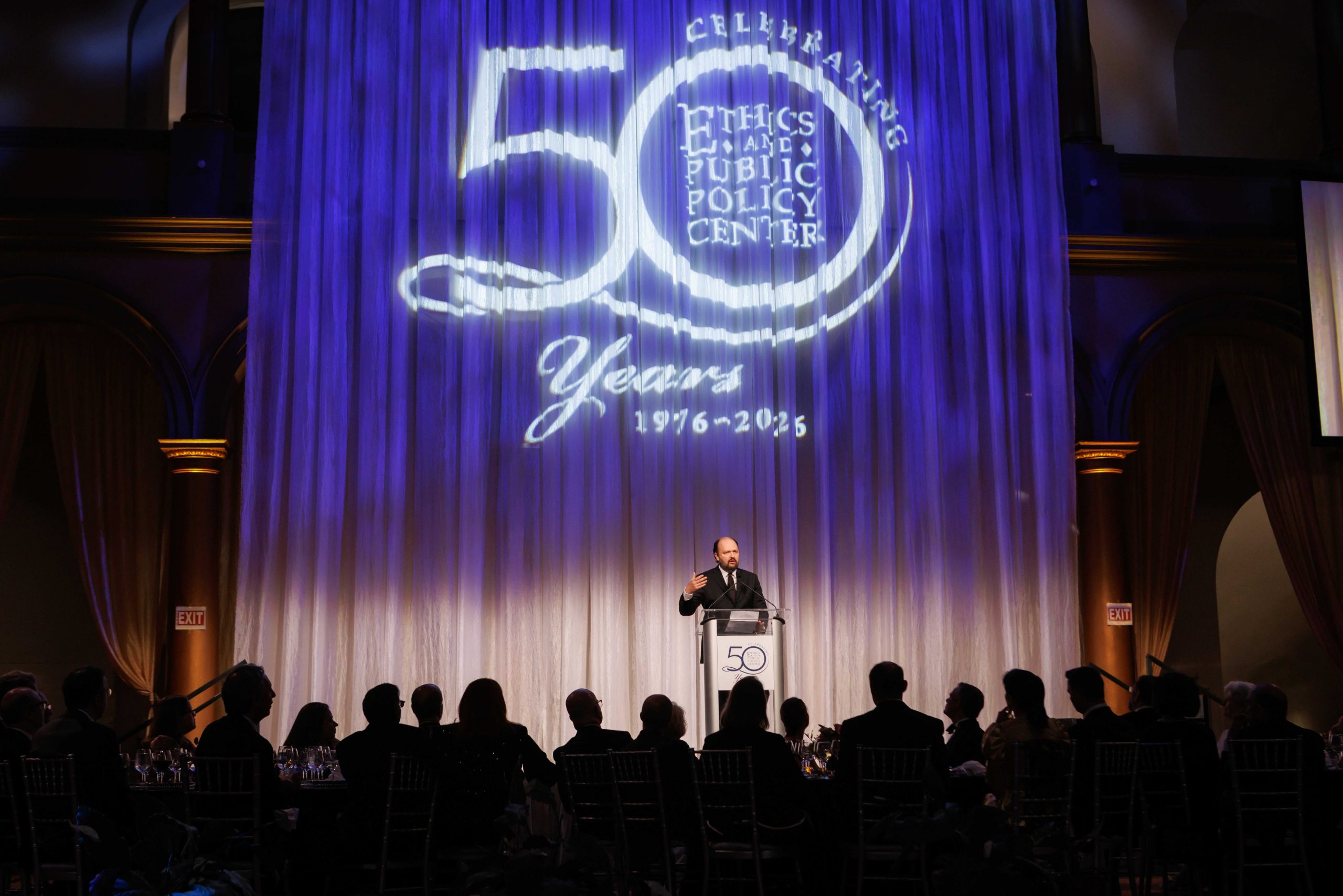
Ethics and Public Policy Center at 50: A part of America’s ‘secret sauce’ – #Catholic – WASHINGTON — As the United States celebrates its 250th anniversary, the Ethics and Public Policy Center (EPPC) is also celebrating an auspicious anniversary this year: its 50th.Several hundred supporters of this uniquely ecumenical think tank, which explicitly engages on pressing public policy questions within the context of the country’s historic Judeo-Christian moral framework, celebrated the milestone at an April 30 gala at the cavernous National Building Museum.The event was headlined by New York Times columnist Ross Douthat, a Catholic, as keynote speaker. In an interview with EWTN News just prior to the event, Douthat credited the EPPC for both its success and resilience in “maintaining a place for a serious religious conservativism in American political discourse.”Douthat contrasted the influence of EPPC’s scholars and the American experience with that of Western Europe, which he said suffers severely from a “suffocating secular-liberal, social and cultural liberal consensus in which religious arguments don’t find any purchase and in which ethical norms are all basically utilitarian, in which abortion and increasingly euthanasia are sort of taken for granted.”For his part, EPPC President Ryan Anderson, also a Catholic, told EWTN News the think tank is part of the “secret sauce” of a country whose founders, such as President John Adams, firmly held that “our Constitution was made only for a moral and religious people. It is wholly inadequate to the government of any other."Citing the U.S. Declaration of Independence during his speech to the assembly, Anderson said EPPC stands for “the proposition that all men are created equal, that we’re endowed by our Creator with inalienable rights, and that amongst these are life, liberty, and the pursuit of happiness.”
 
 Current EPPC President Ryan Anderson (at right end) is pictured here with former EPPC presidents (from left to right) George Weigel, Elliott Abrams, and Ed Whelan. | Credit: Photo courtesy of EPPC/Rui Barros Photography
 
 “Our guiding lights 50 years ago remain the same today: the Hebrew and Christian Scriptures, the natural law tradition, Western Civilization in general, and the American constitutional order in particular,” Anderson said.Anderson pointed out that as the country celebrates its 250th and EPPC its 50th, “EPPC is needed now more than ever, to bear witness to the truth about the human person.”He said EPPC conducts its work in an “intentionally ecumenical way” as a community of Jewish, Protestant, and Catholic scholars “developing and deploying the Jewish and Christian traditions to contemporary questions of law, culture, and politics.”As they do in the country at large, Catholic scholars and related initiatives play a major role in the EPPC’s work. The institution runs ongoing programs in fields including bioethics, technology and human flourishing, and Catholic studies, and runs the Catholic Women’s Forum, the Person and Identity Project, and the Life and Family Initiative, among others.In addition to Anderson, Catholic scholars who continue to occupy leadership roles at the EPPC include two of the institution’s former presidents, George Weigel and Ed Whelan, along with Mary Hasson, Stephen White, O. Carter Snead, Noelle Mering, Aaron Kheriaty, Theresa Farnan, Mary FioRito, Francis Maier, Jennifer Bryson, and Clare Morell, among others.

Ethics and Public Policy Center at 50: A part of America’s ‘secret sauce’ – #Catholic – WASHINGTON — As the United States celebrates its 250th anniversary, the Ethics and Public Policy Center (EPPC) is also celebrating an auspicious anniversary this year: its 50th.Several hundred supporters of this uniquely ecumenical think tank, which explicitly engages on pressing public policy questions within the context of the country’s historic Judeo-Christian moral framework, celebrated the milestone at an April 30 gala at the cavernous National Building Museum.The event was headlined by New York Times columnist Ross Douthat, a Catholic, as keynote speaker. In an interview with EWTN News just prior to the event, Douthat credited the EPPC for both its success and resilience in “maintaining a place for a serious religious conservativism in American political discourse.”Douthat contrasted the influence of EPPC’s scholars and the American experience with that of Western Europe, which he said suffers severely from a “suffocating secular-liberal, social and cultural liberal consensus in which religious arguments don’t find any purchase and in which ethical norms are all basically utilitarian, in which abortion and increasingly euthanasia are sort of taken for granted.”For his part, EPPC President Ryan Anderson, also a Catholic, told EWTN News the think tank is part of the “secret sauce” of a country whose founders, such as President John Adams, firmly held that “our Constitution was made only for a moral and religious people. It is wholly inadequate to the government of any other."Citing the U.S. Declaration of Independence during his speech to the assembly, Anderson said EPPC stands for “the proposition that all men are created equal, that we’re endowed by our Creator with inalienable rights, and that amongst these are life, liberty, and the pursuit of happiness.” Current EPPC President Ryan Anderson (at right end) is pictured here with former EPPC presidents (from left to right) George Weigel, Elliott Abrams, and Ed Whelan. | Credit: Photo courtesy of EPPC/Rui Barros Photography “Our guiding lights 50 years ago remain the same today: the Hebrew and Christian Scriptures, the natural law tradition, Western Civilization in general, and the American constitutional order in particular,” Anderson said.Anderson pointed out that as the country celebrates its 250th and EPPC its 50th, “EPPC is needed now more than ever, to bear witness to the truth about the human person.”He said EPPC conducts its work in an “intentionally ecumenical way” as a community of Jewish, Protestant, and Catholic scholars “developing and deploying the Jewish and Christian traditions to contemporary questions of law, culture, and politics.”As they do in the country at large, Catholic scholars and related initiatives play a major role in the EPPC’s work. The institution runs ongoing programs in fields including bioethics, technology and human flourishing, and Catholic studies, and runs the Catholic Women’s Forum, the Person and Identity Project, and the Life and Family Initiative, among others.In addition to Anderson, Catholic scholars who continue to occupy leadership roles at the EPPC include two of the institution’s former presidents, George Weigel and Ed Whelan, along with Mary Hasson, Stephen White, O. Carter Snead, Noelle Mering, Aaron Kheriaty, Theresa Farnan, Mary FioRito, Francis Maier, Jennifer Bryson, and Clare Morell, among others.

Several hundred supporters gathered to celebrate the ecumenical think tank that engages on public policy questions within the context of America’s historic Judeo-Christian moral framework.

Read More