
O Almighty and merciful God, who hast commissioned Thy angels to guide and protect us, command them to be our assiduous companions from our setting out until our return; to clothe us with their invisible protection; to keep from us all danger of collision, of fire, of explosion, of fall and bruises, and finally, having preserved us from all evil, and especially from sin, to guide us to our heavenly home. Through Jesus Christ, our Lord. Amen.
Read More
This celestial image captured from a window on a SpaceX Dragon spacecraft docked to the International Space Station highlights the Milky Way rising above Earth’s atmospheric glow.
Read More
African bishops highlighted the pope’s trip to Africa as a defining moment of his ministry as well as the pontiff’s emphasis on dialogue, reconciliation, missionary outreach, justice, and peace.

We already knew interstellar comet 3I/ATLAS came from somewhere far beyond our solar system. Now scientists have more information on how alien that somewhere really is — a corner of the universe colder than, less irradiated than, and chemically distinct from the conditions that shaped our home. A study published April 23 in Nature AstronomyContinue reading “3I/ATLAS came from a strange, cold world”
The post 3I/ATLAS came from a strange, cold world appeared first on Astronomy Magazine.
Read More![Spanish bishops: ‘We cannot simply stand by and watch the ship sink’ – #Catholic – Just weeks before Pope Leo XIV’s apostolic visit to Spain, the Spanish Bishops’ Conference (CEE, by its Spanish acronym) released a document that establishes seven pastoral priorities for the 2026–2030 period in which they embrace a bracing challenge: “We cannot just stand by and watch the ship sink.”The document, titled “Set Out on the Journey,” was approved during the plenary assembly in November 2025 but was not published until after the conferenceʼs meeting in April.Following an exercise in “conversation in the Spirit” — the same method used during the Synod on Synodality — the Spanish prelates established the following seven priority pastoral goals:1. Proclaiming the Gospel and initiation into the Christian lifeThe prelates observed that “in Spain, the era — firmly established for centuries — in which we would say, ‘I am Catholic because I was born in Spain,’ has passed. We can no longer take Christian conversion for granted.”Consequently, the catechumenate is an “indispensable” reality in the dioceses, serving to ensure the continued growth of impactful experiences following the initial proclamation of the Gospel. “Today, Christian initiation along with the creation of communities that accompany individuals through this process and welcome the newly initiated constitute a fundamental priority,” they stated.The bishops further emphasized that “in secularized Spanish society, the Church’s challenge is not so much atheism as it is the hunger for God, which manifests itself in very diverse ways,” such that all pastoral actions “should assess their impact on the initial proclamation.”2. Celebrating SundayAdded to the challenge of Christian initiation is “another great challenge of ecclesial life: the celebration of the Lord’s Day” — that is, participation in Sunday Mass, which, as the prelates underscored, “is not a mere act of private devotion or fulfilling an obligation but rather the experience of being an assembly of the called — those who, summoned by the Word, are gathered together as a people taking the form of the body of Christ, in order to be sent forth on mission.”In Spain, only about 8 million of the country’s 45 million inhabitants attend Mass regularly on Sundays.3. A Church with fewer people but a lot of parishesThe bishops' third pastoral concern stems from the realization that the Catholic Church in Spain has more than 22,000 parishes distributed across over 11,000 municipalities and smaller local entities, many of which have fewer than 100 inhabitants.This distribution reveals “a great asymmetry.” As the prelates expressed with concern, “many baptismal fonts ‘hold no water’ — that is to say, there is no Christian community that, under the action of the Spirit, possesses the capacity to bring forth new Christians.”On the other hand, in areas with larger populations, the parish community “possesses a very weak awareness of the responsibility entailed by the baptismal font.”Beyond the diocesan parochial structure, Spain is home to 1,400 monasteries and shrines as well as hundreds of non-parochial churches where the Sunday Eucharist is celebrated, institutions that are typically under the care of religious communities.In this regard, the prelates declared: “We cannot simply stand by and watch the ship sink.”4. Promoting formative communitiesGiven that “one has never been able to be a Christian alone,” the prelates consider it necessary to “offer a visible communal face” and to foster the creation of communities “where the integral formation of the heart may be lived out.”The bishops acknowledged that, despite experiences of initial proclamation, “at times there exists the difficulty of transforming emotion into virtue,” as noted in the recently published document “Cor ad cor loquitur” (“Heart Speaks to Heart”).In this regard, they consider the integration of Catholic immigrants to be a “great opportunity to revive and rejuvenate” the communities.5. Living the faith in a pluralistic societyThe Spanish prelates focused their attention on the pluralistic social reality in which “people of diverse ethnic origins, with diverse ideological, ethical, and religious worldviews” coexist — and not always “in a proper spirit of coexistence, but rather they fall into confrontation.”Given that “the religious map of Spain is changing” and there are “increasingly more adherents of other religions who do not come ‘from abroad,’” this poses “a new challenge for the Church, which must establish channels for coexistence based on mutual respect and the fundamental right to religious freedom.”6. Welcome, protect, promote, and integrate migrantsThe bishops’ conference also takes into account the need to address the reality of increasing migration, in a twofold sense.“Catholics must be incorporated into the Christian community”; therefore, the CEE called for an effort to welcome them by “offering the possibility of a space of their own that does not break off communion with the whole.”With regard to those of other faiths, the prelates highlighted the “opportunity for interreligious dialogue and collaboration in the service of the common good,” while acknowledging that this constitutes “a challenge for Catholics, who must be formed in order to engage in dialogue based on mutual respect.”7. Bringing the love of the heart of Christ to the worldBeyond matters more specific to the Spanish context, the prelates, in their latest pastoral guidance, aim to make the love of God present beyond the confines of the Church: “It is essential to practice political charity in schools, in neighborhoods, in hospitals, and in our relationships with one another — fostering a presence, where possible, within institutional politics, the life of political parties, or other channels of institutional action.”In the charitable sphere, the bishops also warned that “we run the risk that our organizations — so dependent on the welfare state, its regulations, and its subsidies for the third sector — may offer the novelty of Christian love in a weak manner and be easily confused with NGOs [nongovernmental organizations]. The same could happen to us in our educational institutions or our media outlets.”This story was first published by ACI Prensa, the Spanish-language sister service of EWTN News. It has been translated and adapted by EWTN News English. Spanish bishops: ‘We cannot simply stand by and watch the ship sink’ – #Catholic – Just weeks before Pope Leo XIV’s apostolic visit to Spain, the Spanish Bishops’ Conference (CEE, by its Spanish acronym) released a document that establishes seven pastoral priorities for the 2026–2030 period in which they embrace a bracing challenge: “We cannot just stand by and watch the ship sink.”The document, titled “Set Out on the Journey,” was approved during the plenary assembly in November 2025 but was not published until after the conferenceʼs meeting in April.Following an exercise in “conversation in the Spirit” — the same method used during the Synod on Synodality — the Spanish prelates established the following seven priority pastoral goals:1. Proclaiming the Gospel and initiation into the Christian lifeThe prelates observed that “in Spain, the era — firmly established for centuries — in which we would say, ‘I am Catholic because I was born in Spain,’ has passed. We can no longer take Christian conversion for granted.”Consequently, the catechumenate is an “indispensable” reality in the dioceses, serving to ensure the continued growth of impactful experiences following the initial proclamation of the Gospel. “Today, Christian initiation along with the creation of communities that accompany individuals through this process and welcome the newly initiated constitute a fundamental priority,” they stated.The bishops further emphasized that “in secularized Spanish society, the Church’s challenge is not so much atheism as it is the hunger for God, which manifests itself in very diverse ways,” such that all pastoral actions “should assess their impact on the initial proclamation.”2. Celebrating SundayAdded to the challenge of Christian initiation is “another great challenge of ecclesial life: the celebration of the Lord’s Day” — that is, participation in Sunday Mass, which, as the prelates underscored, “is not a mere act of private devotion or fulfilling an obligation but rather the experience of being an assembly of the called — those who, summoned by the Word, are gathered together as a people taking the form of the body of Christ, in order to be sent forth on mission.”In Spain, only about 8 million of the country’s 45 million inhabitants attend Mass regularly on Sundays.3. A Church with fewer people but a lot of parishesThe bishops' third pastoral concern stems from the realization that the Catholic Church in Spain has more than 22,000 parishes distributed across over 11,000 municipalities and smaller local entities, many of which have fewer than 100 inhabitants.This distribution reveals “a great asymmetry.” As the prelates expressed with concern, “many baptismal fonts ‘hold no water’ — that is to say, there is no Christian community that, under the action of the Spirit, possesses the capacity to bring forth new Christians.”On the other hand, in areas with larger populations, the parish community “possesses a very weak awareness of the responsibility entailed by the baptismal font.”Beyond the diocesan parochial structure, Spain is home to 1,400 monasteries and shrines as well as hundreds of non-parochial churches where the Sunday Eucharist is celebrated, institutions that are typically under the care of religious communities.In this regard, the prelates declared: “We cannot simply stand by and watch the ship sink.”4. Promoting formative communitiesGiven that “one has never been able to be a Christian alone,” the prelates consider it necessary to “offer a visible communal face” and to foster the creation of communities “where the integral formation of the heart may be lived out.”The bishops acknowledged that, despite experiences of initial proclamation, “at times there exists the difficulty of transforming emotion into virtue,” as noted in the recently published document “Cor ad cor loquitur” (“Heart Speaks to Heart”).In this regard, they consider the integration of Catholic immigrants to be a “great opportunity to revive and rejuvenate” the communities.5. Living the faith in a pluralistic societyThe Spanish prelates focused their attention on the pluralistic social reality in which “people of diverse ethnic origins, with diverse ideological, ethical, and religious worldviews” coexist — and not always “in a proper spirit of coexistence, but rather they fall into confrontation.”Given that “the religious map of Spain is changing” and there are “increasingly more adherents of other religions who do not come ‘from abroad,’” this poses “a new challenge for the Church, which must establish channels for coexistence based on mutual respect and the fundamental right to religious freedom.”6. Welcome, protect, promote, and integrate migrantsThe bishops’ conference also takes into account the need to address the reality of increasing migration, in a twofold sense.“Catholics must be incorporated into the Christian community”; therefore, the CEE called for an effort to welcome them by “offering the possibility of a space of their own that does not break off communion with the whole.”With regard to those of other faiths, the prelates highlighted the “opportunity for interreligious dialogue and collaboration in the service of the common good,” while acknowledging that this constitutes “a challenge for Catholics, who must be formed in order to engage in dialogue based on mutual respect.”7. Bringing the love of the heart of Christ to the worldBeyond matters more specific to the Spanish context, the prelates, in their latest pastoral guidance, aim to make the love of God present beyond the confines of the Church: “It is essential to practice political charity in schools, in neighborhoods, in hospitals, and in our relationships with one another — fostering a presence, where possible, within institutional politics, the life of political parties, or other channels of institutional action.”In the charitable sphere, the bishops also warned that “we run the risk that our organizations — so dependent on the welfare state, its regulations, and its subsidies for the third sector — may offer the novelty of Christian love in a weak manner and be easily confused with NGOs [nongovernmental organizations]. The same could happen to us in our educational institutions or our media outlets.”This story was first published by ACI Prensa, the Spanish-language sister service of EWTN News. It has been translated and adapted by EWTN News English.](https://unitedyam.com/wp-content/uploads/2026/05/spanish-bishops-we-cannot-simply-stand-by-and-watch-the-ship-sink-catholic-just-weeks-before-pope-leo-xivs-apostolic-visit-to-spain-the-spanish-bishops-confe-scaled.jpg)
In Spain, only about 8 million of the country’s 45 million inhabitants attend Mass regularly on Sundays.


The Holy Father marked the first anniversary of his pontificate on May 8 by visiting the historic cities in southern Italy.

![Leo XIV makes Marian pilgrimage on 1-year anniversary as pope #Catholic POMPEI, Italy — Pope Leo XIV placed his pontificate under the protection of Mary during a visit to two cities in southern Italy on Friday — the first anniversary of his election to the papacy on May 8, 2025.Leo celebrated Mass for an estimated 20,000 people outside the Shrine of Our Lady of the Rosary of Pompei, whose feast day is May 8, during the day trip to Pompei and Naples.“Exactly one year ago,” the pope said in his homily, amid thunderous applause from the assembled faithful, “when the ministry of successor of Peter was entrusted to me, it was precisely the day of the Supplication to the Virgin, this beautiful day of the Supplication to the Virgin of the Holy Rosary of Pompei! I therefore had to come here, to place my service under the protection of the Holy Virgin.”“Having then chosen the name Leo places me in the footsteps of Leo XIII, who, among his many merits, also developed a rich magisterium on the holy rosary. Added to all of this is the recent canonization of St. Bartolo Longo, apostle of the rosary,” Leo added.Before Mass, the pope — who flew about 150 miles from Rome to Pompei by helicopter early on May 8 — visited the Shrine of Our Lady of Pompei. Despite forecasts of rain, thousands of people filled Bartolo Longo Square from the first light of dawn.At the shrine, the Holy Father met the “Temple of Charity,” an organization that welcomes and assists people coming from situations of hardship.
Pope Leo XIV meets the “Temple of Charity,” an organization that welcomes and assists people coming from situations of hardship, during a pastoral visit to Pompei, Italy, on May 8, 2026. | Credit: Vatican Media
“Good morning, Pompei! Our Mother Mary — our mom — is always with us,” the pope said, informally greeting the faithful who were waiting for Mass. Before the Eucharistic celebration, Leo also greeted the sick and people with disabilities inside the shrine.The pope’s homily at the outdoor Mass focused on the power of the rosary.“The Hail Mary repeated in the holy rosary is an act of love,” he said. “Generations of believers have been shaped and safeguarded by this prayer — simple and popular, yet at the same time capable of mystical heights and a treasure chest of the most essential Christian theology.”He also called the Hail Mary prayer “an invitation to joy.”“It tells Mary, and in her all of us, that upon the ruins of our humanity, tried by sin and therefore always inclined to abuses, oppression, and war, the caress of God has come — the caress of mercy, which in Jesus takes on a human face. Mary thus becomes the mother of mercy.”“When St. John Paul II proclaimed the Year of the Rosary [2002–2003], he wished to place it in a special way under the gaze of the Virgin of Pompei,” Leo XIV continued. “Times have not improved since then. The wars still being fought in so many regions of the world call for renewed commitment, not only economic and political, but also spiritual and religious.”“Peace is born within the heart,” he added. “We cannot resign ourselves to the images of death that the news presents to us every day. St. Bartolo Longo, reflecting on Mary’s faith, called her ‘omnipotent by grace.’ Through her intercession, may an abundant outpouring of mercy come from the God of peace — touching hearts, calming resentments and fratricidal hatred, and enlightening those who bear special responsibilities of governance. No earthly power will save the world, but only the divine power of love.”At the conclusion of Mass, Pope Leo prayed together with the faithful the traditional Supplication to Our Lady of Pompei.The Supplication to the Queen of the Holy Rosary of Pompei was written in 1883 by St. Bartolo Longo. It is solemnly recited twice a year, at noon on May 8 and on the first Sunday of October. The supplication was composed in response to the invitation that Pope Leo XIII addressed to Catholics in his first encyclical on the rosary, Supremi Apostolatus Officio, calling for a spiritual commitment to confront the evils of society.
Pope Leo XIV prays at the Cathedral of the Assumption of Mary in Naples, Italy, on Friday, May 8, 2026. | Credit: Vatican Media
Visit to NaplesAfter lunch in private, Pope Leo took a helicopter about 16 miles northwest to Naples, the capital city of the Campania region of Italy, where he met with priests and religious brothers and sisters in the Naples cathedral.During his visit to the cathedral, Leo stopped in the Chapel of the Treasure of St. Januarius, where the miracle of the liquefaction of the blood of St. Januarius had taken place on May 3. The pope kissed the relic and with it blessed those in the packed cathedral.After some time in adoration of the Blessed Sacrament, the pope addressed the Catholic community: “What I therefore ask of you is this: Listen to one another, walk together, create a symphony of charisms and ministries, and in this way find ways to move from a pastoral ministry of maintenance to a missionary pastoral ministry, capable of engaging with the concrete lives of people.”“In a city marked by inequality, youth unemployment, school dropout rates, and fragile family situations, the proclamation of the Gospel cannot be separated from a concrete and supportive presence that involves everyone — priests, religious, and laypeople alike,” he added.Pope Leo XIV then arrived in the popemobile to Piazza del Plebiscito, the main square of Naples, where authorities estimate about 50,000 people were present.The pope’s address focused on peace and justice: a peace that “begins in the human heart, passes through relationships, takes root in neighborhoods and on the outskirts, and expands to embrace the entire city and the world.” A peace that needs justice “to be authentic” and that “can never be separated from charity.”Leo also spoke about the “Neapolitan paradox:” on the one hand, the significant increase in tourism, which however struggles to correspond to “economic dynamism capable of truly involving the entire social community.” He described a city “marked by a social divide that no longer separates the center from the outskirts but is even evident within every area, with existential peripheries nested even in the heart of the historic center.” Faced with these disparities, Pope Leo XIV recalled the presence of the state as “more necessary than ever, to provide security and confidence to citizens and to take space away from organized crime.”He then encouraged moving forward with the projects of hope taking shape in the city: “Gather your strength, work together, walk united — institutions, Church, and civil society — to connect the city, protect your children from the snares of hardship and evil, and restore to Naples its vocation to be a capital of humanity and hope.”This story was first published in multiple parts by ACI Stampa, the Italian-language sister service of EWTN News. It has been translated and adapted by EWTN News English.](https://unitedyam.com/wp-content/uploads/2026/05/leo-xiv-makes-marian-pilgrimage-on-1-year-anniversary-as-pope-catholic-pompei-italy-pope-leo-xiv-placed-his-pontificate-under-the-protection-of-mary-during-a-visit-to-two-cities-in-souther-scaled.jpg)
Pope Leo XIV traveled around 150 miles south of Rome to the Italian cities of Pompei and Naples on the first anniversary of his election.


An archdiocesan investigation in 2018 claimed Bishop Michael Bransfield engaged in multiple instances of sexual harassment and financial malfeasance of diocesan funds.


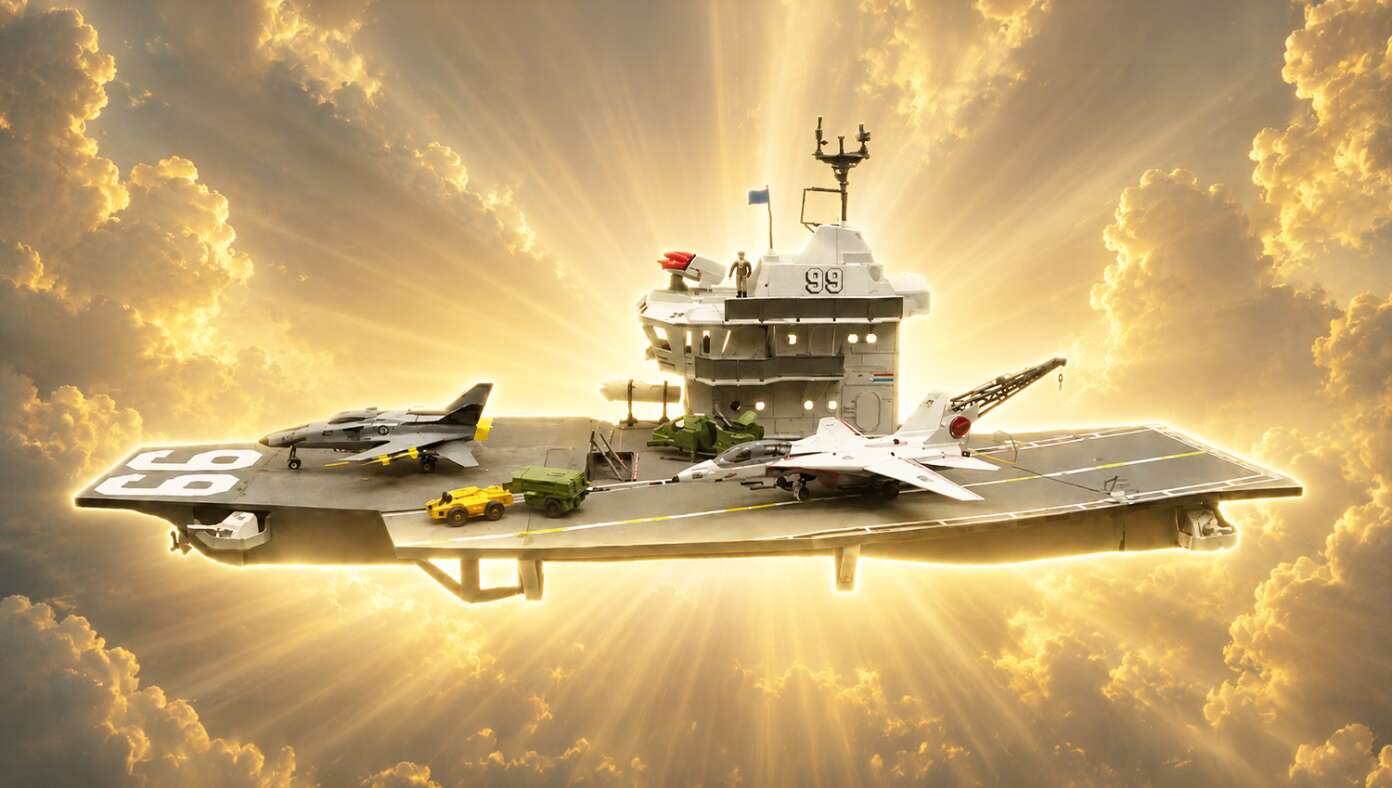
CAMBRIDGE — A paper published by professors at the University of Cambridge affirmed a long-speculated theory about Heaven, that everyone gets their own G.I. Joe Aircraft Carrier toy.
Read More

Peter Jackson’s The Fellowship of the Ring is among the best films ever made, but it’s long. Clocking in at almost three hours for the theatrical release (3h 48m for the extended edition), it’s hard to know when the best time to watch it is. Fortunately, we’ve got you covered.
Read More
| Picture of the day |
|---|
|
|
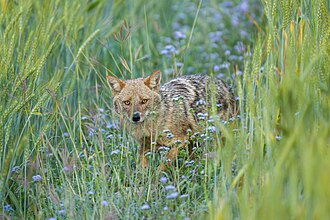
Golden jackal (Canis aureus) in azureum flowers (Jim Corbett National Park, India)
|

From tropical luxury to frosty serenity, there’s an island to suit every traveler’s taste.
Read More
:max_bytes(150000):strip_icc():format(jpeg)/gili-trawangan-60d04a61d1944e2990171c1dbc761236.jpg)