Day: May 21, 2026

Picture of the day


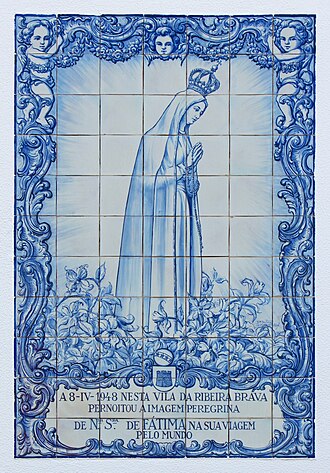
This azulejo from the Igreja de São Bento (Ribeira Brava, Madeira, Portugal) depicts Our Lady of Fátima. Today is the feast of Our Lady of Fátima in the Catholic Church and the 110th anniversary of her first apparition to three shepherd children.
 #ImageOfTheDay
Picture of the day
This azulejo from the Igreja de São Bento (Ribeira Brava, Madeira, Portugal) depicts Our Lady of Fátima. Today is the feast of Our Lady of Fátima in the Catholic Church and the 110th anniversary of her first apparition to three shepherd children.
Read More
Catholic Charities USA brings traveling exhibit to U.S. Capitol on annual lobbying day – #Catholic – Catholic Charities USA brought its traveling “People of Hope Museum” to Capitol Hill for its annual advocacy day, inviting members of Congress to see firsthand how its ministries impact both those who serve and those they serve.“We’re anxious to get them to visit this,” Luz Tavarez, vice president for government relations at Catholic Charities USA (CCUSA), told EWTN News. Tavarez was among 21 diocesan officials who participated in CCUSA’s annual “Hill Day” on May 19-20 to lobby Congress on housing, food insecurities, and other poverty-related issues.CCUSA’s mobile museum is scheduled to be parked on the National Mall in front of the Capitol through May 22.“Whatʼs really amazing about the People of Hope Museum is that itʼs a firsthand account of how we see Jesus in the people we serve,” she said. “So, I really hope that they do get down here. We have invited every single one of them to come, so weʼll see.”The group met with about 60 offices, Tavarez said, including members of the House and Senate.Four members addressed CCUSA, including Rep. Jim McGovern, D-Massachusetts, Rep. James Clyburn, D-South Carolina, Rep. Mike Lawler, R-New York, and Sen. Susan Collins, R-Maine.“All of those members challenged us to just continue to hit the ground educating members of the important work that we do,” Tavarez said. “I think thereʼs a recognition on both sides of the aisle of how critical the work that Catholic Charities around the country, the work that we do, is. But again, our goal was just really to ensure that government funding, government appropriations, is reaching the most vulnerable.”Tavarez highlighted the recently-passed farm bill and housing issues as areas where they found bipartisan support among members. She said the group did not experience much pushback but that the challenge lay in educating members “on how our Catholic faith is translated into the policy positions we take, and thatʼs just consistent on both sides of the aisle.”
 
 Women observe data on medical debt in exhibit inside the People of Hope Museum in Washington, D.C., May 21, 2026. | Credit: Madalaine Elhabbal/EWTN News
 
 The lobbying day came a week after Democratic senators pressed Housing and Urban Development (HUD) Secretary Scott Turner over missing data on homelessness and the Trump administration’s planned cuts to federal funding for homelessness.“Itʼs important to understand that not everyone understands the work that we do,” she said. “And for some people, Catholic Charities means just one thing, you know, perhaps itʼs working with immigrants. For other people, Catholic Charities is just the local food pantries. And there is some intersection there.”“What is beautiful about ‘Hill Day’ in my view is that Catholic Charities, of course, is not a political or partisan entity,” CCUSA CEO Kerry Alys Robinson told EWTN News. “It is a social ministry of the Church, and it encompasses the full political spectrum.”
 
 CCUSA CEO Kerry Alys Robinson stands in front of the traveling exhibit People of Hope Museum on the National Mall in Washington, D.C., on May 21, 2026. | Credit: Madalaine Elhabbal/EWTN News
 
 “Elected officials across the aisle all understand just how important Catholic Charities is to their constituents in their districts and in their states,” she said. “So I think judging from all reports, the meetings went very, very well, and our diocesan directors are especially happy to be here.”

Catholic Charities USA brings traveling exhibit to U.S. Capitol on annual lobbying day – #Catholic – Catholic Charities USA brought its traveling “People of Hope Museum” to Capitol Hill for its annual advocacy day, inviting members of Congress to see firsthand how its ministries impact both those who serve and those they serve.“We’re anxious to get them to visit this,” Luz Tavarez, vice president for government relations at Catholic Charities USA (CCUSA), told EWTN News. Tavarez was among 21 diocesan officials who participated in CCUSA’s annual “Hill Day” on May 19-20 to lobby Congress on housing, food insecurities, and other poverty-related issues.CCUSA’s mobile museum is scheduled to be parked on the National Mall in front of the Capitol through May 22.“Whatʼs really amazing about the People of Hope Museum is that itʼs a firsthand account of how we see Jesus in the people we serve,” she said. “So, I really hope that they do get down here. We have invited every single one of them to come, so weʼll see.”The group met with about 60 offices, Tavarez said, including members of the House and Senate.Four members addressed CCUSA, including Rep. Jim McGovern, D-Massachusetts, Rep. James Clyburn, D-South Carolina, Rep. Mike Lawler, R-New York, and Sen. Susan Collins, R-Maine.“All of those members challenged us to just continue to hit the ground educating members of the important work that we do,” Tavarez said. “I think thereʼs a recognition on both sides of the aisle of how critical the work that Catholic Charities around the country, the work that we do, is. But again, our goal was just really to ensure that government funding, government appropriations, is reaching the most vulnerable.”Tavarez highlighted the recently-passed farm bill and housing issues as areas where they found bipartisan support among members. She said the group did not experience much pushback but that the challenge lay in educating members “on how our Catholic faith is translated into the policy positions we take, and thatʼs just consistent on both sides of the aisle.” Women observe data on medical debt in exhibit inside the People of Hope Museum in Washington, D.C., May 21, 2026. | Credit: Madalaine Elhabbal/EWTN News The lobbying day came a week after Democratic senators pressed Housing and Urban Development (HUD) Secretary Scott Turner over missing data on homelessness and the Trump administration’s planned cuts to federal funding for homelessness.“Itʼs important to understand that not everyone understands the work that we do,” she said. “And for some people, Catholic Charities means just one thing, you know, perhaps itʼs working with immigrants. For other people, Catholic Charities is just the local food pantries. And there is some intersection there.”“What is beautiful about ‘Hill Day’ in my view is that Catholic Charities, of course, is not a political or partisan entity,” CCUSA CEO Kerry Alys Robinson told EWTN News. “It is a social ministry of the Church, and it encompasses the full political spectrum.” CCUSA CEO Kerry Alys Robinson stands in front of the traveling exhibit People of Hope Museum on the National Mall in Washington, D.C., on May 21, 2026. | Credit: Madalaine Elhabbal/EWTN News “Elected officials across the aisle all understand just how important Catholic Charities is to their constituents in their districts and in their states,” she said. “So I think judging from all reports, the meetings went very, very well, and our diocesan directors are especially happy to be here.”

Twenty-one diocesan officials lobbied Congress on housing, food insecurities, and other poverty-related issues.

Read More
EWTN expands reach in northern Europe with new office in Sweden – #Catholic – EWTN Global Catholic Network will open a new office in Stockholm, the network announced May 21. As part of the expansion, EWTN will extend its Swedish services to reach Scandinavian and northern European audiences.The move comes amid growth of the Catholic Church in Sweden. The nation, which historically restricted religious freedom, has 130,000 registered Catholics.The Stockholm office will produce news from the Vatican along with devotional and catechetical content for local audiences and beyond.“EWTN’s mission has always been to bring the truth and beauty of the Catholic faith to people wherever they are,” said Michael P. Warsaw, chairman of the board and CEO of EWTN.Founded by Mother Angelica 45 years ago, EWTN is the largest Catholic media organization in the world. EWTN is the parent company of EWTN News.“The opening of our Stockholm office is an important step in serving a growing Catholic community in Sweden driven by immigration and conversions,” Warsaw said. “For EWTN, the Catholic Church in Sweden represents a dynamic and expanding audience for faithful Catholic media and local-language evangelization.”EWTN looks to reach the growing online audience in Sweden, where 93% of people go online daily, according to a 2025 report by the Swedish Internet Foundation.“EWTN Sweden is built for the way people in Sweden live and consume media today,” said Ulf Silfverling, director of EWTN Sweden. “Through EWTN.se and our media channels, we want to provide faithful, accessible, and relevant Catholic content that speaks to Swedish audiences in their own language and context.”“This office represents more than a new location; it is a commitment to Scandinavia, Sweden, and its growing community of faithful as EWTN continues to work on reaching every home and every heart,” said Andreas Thonhauser, chief global officer of EWTN.“By producing native Swedish content and collaborating more closely with Catholics in the region, EWTN can help deepen the faith and connect northern Europe more fully with the life of the universal Church,” Thonhauser added.

EWTN expands reach in northern Europe with new office in Sweden – #Catholic – EWTN Global Catholic Network will open a new office in Stockholm, the network announced May 21. As part of the expansion, EWTN will extend its Swedish services to reach Scandinavian and northern European audiences.The move comes amid growth of the Catholic Church in Sweden. The nation, which historically restricted religious freedom, has 130,000 registered Catholics.The Stockholm office will produce news from the Vatican along with devotional and catechetical content for local audiences and beyond.“EWTN’s mission has always been to bring the truth and beauty of the Catholic faith to people wherever they are,” said Michael P. Warsaw, chairman of the board and CEO of EWTN.Founded by Mother Angelica 45 years ago, EWTN is the largest Catholic media organization in the world. EWTN is the parent company of EWTN News.“The opening of our Stockholm office is an important step in serving a growing Catholic community in Sweden driven by immigration and conversions,” Warsaw said. “For EWTN, the Catholic Church in Sweden represents a dynamic and expanding audience for faithful Catholic media and local-language evangelization.”EWTN looks to reach the growing online audience in Sweden, where 93% of people go online daily, according to a 2025 report by the Swedish Internet Foundation.“EWTN Sweden is built for the way people in Sweden live and consume media today,” said Ulf Silfverling, director of EWTN Sweden. “Through EWTN.se and our media channels, we want to provide faithful, accessible, and relevant Catholic content that speaks to Swedish audiences in their own language and context.”“This office represents more than a new location; it is a commitment to Scandinavia, Sweden, and its growing community of faithful as EWTN continues to work on reaching every home and every heart,” said Andreas Thonhauser, chief global officer of EWTN.“By producing native Swedish content and collaborating more closely with Catholics in the region, EWTN can help deepen the faith and connect northern Europe more fully with the life of the universal Church,” Thonhauser added.

Amid growth in the Catholic Church in Sweden, EWTN Global Catholic Network has opened a new office in Stockholm to expand reach across northern Europe.

Read More

Gospel and Word of the Day – 22 May 2026 – A reading from the Book of the Acts of the Apostles Acts 25:13b-21 King Agrippa and Bernice arrived in Caesarea on a visit to Festus. Since they spent several days there, Festus referred Paul’s case to the king, saying, "There is a man here left in custody by Felix. When I was in Jerusalem the chief priests and the elders of the Jews brought charges against him and demanded his condemnation. I answered them that it was not Roman practice to hand over an accused person before he has faced his accusers and had the opportunity to defend himself against their charge. So when they came together here, I made no delay; the next day I took my seat on the tribunal and ordered the man to be brought in. His accusers stood around him, but did not charge him with any of the crimes I suspected. Instead they had some issues with him about their own religion and about a certain Jesus who had died but who Paul claimed was alive. Since I was at a loss how to investigate this controversy, I asked if he were willing to go to Jerusalem and there stand trial on these charges. And when Paul appealed that he be held in custody for the Emperor’s decision, I ordered him held until I could send him to Caesar."From the Gospel according to John 21:15-19 After Jesus had revealed himself to his disciples and eaten breakfast with them,  he said to Simon Peter, "Simon, son of John, do you love me more than these?" Simon Peter answered him, "Yes, Lord, you know that I love you." Jesus said to him, "Feed my lambs." He then said to Simon Peter a second time, "Simon, son of John, do you love me?" Simon Peter answered him, "Yes, Lord, you know that I love you."  He said to him, "Tend my sheep." He said to him the third time, "Simon, son of John, do you love me?" Peter was distressed that he had said to him a third time, "Do you love me?" and he said to him, "Lord, you know everything; you know that I love you." Jesus said to him, "Feed my sheep. Amen, amen, I say to you, when you were younger, you used to dress yourself and go where you wanted;  but when you grow old, you will stretch out your hands, and someone else will dress you and lead you where you do not want to go." He said this signifying by what kind of death he would glorify God. And when he had said this, he said to him, "Follow me."Jesus asks Peter the first time:  "Simon… do you love me (agapas-me)" with this total and unconditional love (Jn 21: 15)? Prior to the experience of betrayal, the Apostle certainly would have said:  "I love you (agapo-se) unconditionally". Now that he has known the bitter sadness of infidelity, the drama of his own weakness, he says with humility:  "Lord; you know that I love you (filo-se)", that is, "I love you with my poor human love". Christ insists:  "Simon, do you love me with this total love that I want?". And Peter repeats the response of his humble human love:  "Kyrie, filo-se", "Lord, I love you as I am able to love you". The third time Jesus only says to Simon:  "Fileis-me?", "Do you love me?". Simon understands that his poor love is enough for Jesus, it is the only one of which he is capable, nonetheless he is grieved that the Lord spoke to him in this way. He thus replies:  "Lord, you know everything; you know that I love you (filo-se)". This is to say that Jesus has put himself on the level of Peter, rather than Peter on Jesus’ level! It is exactly this divine conformity that gives hope to the Disciple, who experienced the pain of infidelity. From here is born the trust that makes him able to follow [Christ] to the end. (…) Peter succeeded in entrusting himself to that Jesus who adapted himself to his poor capacity of love. And in this way he shows us the way, notwithstanding all of our weakness. We know that Jesus adapts himself to this weakness of ours. (Benedict XVI – General audience, 24 May 2006)

A reading from the Book of the Acts of the Apostles
Acts 25:13b-21

King Agrippa and Bernice arrived in Caesarea
on a visit to Festus.
Since they spent several days there,
Festus referred Paul’s case to the king, saying,
"There is a man here left in custody by Felix.
When I was in Jerusalem the chief priests and the elders of the Jews
brought charges against him and demanded his condemnation.
I answered them that it was not Roman practice
to hand over an accused person before he has faced his accusers
and had the opportunity to defend himself against their charge.
So when they came together here, I made no delay;
the next day I took my seat on the tribunal
and ordered the man to be brought in.
His accusers stood around him,
but did not charge him with any of the crimes I suspected.
Instead they had some issues with him about their own religion
and about a certain Jesus who had died
but who Paul claimed was alive.
Since I was at a loss how to investigate this controversy,
I asked if he were willing to go to Jerusalem
and there stand trial on these charges.
And when Paul appealed that he be held in custody
for the Emperor’s decision,
I ordered him held until I could send him to Caesar."

From the Gospel according to John
21:15-19

After Jesus had revealed himself to his disciples and eaten breakfast with them, 
he said to Simon Peter,
"Simon, son of John, do you love me more than these?"
Simon Peter answered him, "Yes, Lord, you know that I love you."
Jesus said to him, "Feed my lambs."
He then said to Simon Peter a second time,
"Simon, son of John, do you love me?"
Simon Peter answered him, "Yes, Lord, you know that I love you." 
He said to him, "Tend my sheep."
He said to him the third time,
"Simon, son of John, do you love me?"
Peter was distressed that he had said to him a third time,
"Do you love me?" and he said to him,
"Lord, you know everything; you know that I love you."
Jesus said to him, "Feed my sheep.
Amen, amen, I say to you, when you were younger,
you used to dress yourself and go where you wanted; 
but when you grow old, you will stretch out your hands,
and someone else will dress you
and lead you where you do not want to go."
He said this signifying by what kind of death he would glorify God.
And when he had said this, he said to him, "Follow me."

Jesus asks Peter the first time:  "Simon… do you love me (agapas-me)" with this total and unconditional love (Jn 21: 15)? Prior to the experience of betrayal, the Apostle certainly would have said:  "I love you (agapo-se) unconditionally". Now that he has known the bitter sadness of infidelity, the drama of his own weakness, he says with humility:  "Lord; you know that I love you (filo-se)", that is, "I love you with my poor human love". Christ insists:  "Simon, do you love me with this total love that I want?". And Peter repeats the response of his humble human love:  "Kyrie, filo-se", "Lord, I love you as I am able to love you". The third time Jesus only says to Simon:  "Fileis-me?", "Do you love me?". Simon understands that his poor love is enough for Jesus, it is the only one of which he is capable, nonetheless he is grieved that the Lord spoke to him in this way. He thus replies:  "Lord, you know everything; you know that I love you (filo-se)". This is to say that Jesus has put himself on the level of Peter, rather than Peter on Jesus’ level! It is exactly this divine conformity that gives hope to the Disciple, who experienced the pain of infidelity. From here is born the trust that makes him able to follow [Christ] to the end. (…) Peter succeeded in entrusting himself to that Jesus who adapted himself to his poor capacity of love. And in this way he shows us the way, notwithstanding all of our weakness. We know that Jesus adapts himself to this weakness of ours. (Benedict XVI – General audience, 24 May 2006)

Read More
Hubble Sights Galaxy in Transition – This NASA Hubble Space Telescope images reveals the lenticular galaxy, NGC 1266. This enigmatic post-starburst galaxy has a bright center and a face that hints at spiral structure, yet it holds no discernable spiral arms.

This NASA Hubble Space Telescope images reveals the lenticular galaxy, NGC 1266. This enigmatic post-starburst galaxy has a bright center and a face that hints at spiral structure, yet it holds no discernable spiral arms.

Read More
Loyola University Maryland gets 0K private grant for community projects, ‘social trust’ efforts – #Catholic – Loyola University Maryland received a 0,000 grant from the Aspen Institute to facilitate community projects and dialogue aimed at strengthening “social trust” among groups historically divided by race and income.The grant, awarded to the Jesuit university on May 19, is part of the Aspen Institute’s Trust in Practice Award grants, which are sponsored by the insurance company Allstate. Loyola is one of 11 recipients of the grant.According to a news release by Loyola, the grant will establish a program called “Rooted in Trust,” which will build on its York Road Community Day program. Its stated goal is to build trust across racial, generational, and socioeconomic divides.The grant funds a two-year project through April 2028 that begins with several months of community dialogue and listening sessions between people from the east side and from the west side of York Road in North Baltimore, which the news release said was historically divided.The west side of the divide has a higher white population and higher income, while the east side has a higher Black population and lower income, which is rooted in 1930s efforts to segregate the communities, according to a 2020 article in The Johns Hopkins Newsletter.According to the Loyola news release, the dialogue sessions will help develop a plan for five greening and public space activation community projects. It’s not yet clear what the specific projects will be.Each project will have one co-lead from the west side and one from the east side. The project site will have signs that explain the history and the culture of the area.“The Rooted in Trust Program will start with community dialogues in order to understand how historic divides have shaped relationships, access, and use of space,” said Gia Grier McGinnis, Loyola executive director of the neighborhood resilience and community engagement.“Then, through intergenerational environmental stewardship and placemaking activities, we hope deeper connections can form — both among people who might not otherwise interact and with spaces they reimagine together,” she said. “We are honored that the Aspen Institute and Allstate have given us this incredible opportunity, and we look forward to sharing what we learn with others across Baltimore and across the country.”Loyola will lead the program that will include three other partners: the Govans-Boundary United Methodist Church; the York Road Partnership, which has more than 30 member organizations; and the York Road Improvement District.“Rooted in Trust builds upon Loyola’s long-standing, place-based community development efforts in the Greater Govans and York Road corridor neighborhoods, which emphasize community-university collaboration and partnership,” Deb Cady Melzer, Loyola vice president of student development, said in a statement.“We are incredibly grateful to the Aspen Institute and Allstate for this transformational award, which empowers Loyola and our neighbors to continue this important work,” she said.The Aspen Institute launched the Trust in Practice Awards initiative in October 2025 with a  million donation from Allstate. According to a news release, the initiative is to fund community organizations that support civic engagement, volunteering, and bridging differences with intergenerational participants.“In today’s interconnected world, trust among people is a key part of what strengthens our communities and country,” Dan Porterfield, Aspen Institute president and CEO, said in a statement at the time.“The Trust in Practice Awards are an example of our joint commitment to building and sustaining trust across communities and among individuals of all backgrounds and beliefs,” he said. “We are grateful to Allstate for their leadership and partnership in this important effort.”It was launched in response to Allstate research that found 41% of people said they generally trust other Americans.

Loyola University Maryland gets $500K private grant for community projects, ‘social trust’ efforts – #Catholic – Loyola University Maryland received a $500,000 grant from the Aspen Institute to facilitate community projects and dialogue aimed at strengthening “social trust” among groups historically divided by race and income.The grant, awarded to the Jesuit university on May 19, is part of the Aspen Institute’s Trust in Practice Award grants, which are sponsored by the insurance company Allstate. Loyola is one of 11 recipients of the grant.According to a news release by Loyola, the grant will establish a program called “Rooted in Trust,” which will build on its York Road Community Day program. Its stated goal is to build trust across racial, generational, and socioeconomic divides.The grant funds a two-year project through April 2028 that begins with several months of community dialogue and listening sessions between people from the east side and from the west side of York Road in North Baltimore, which the news release said was historically divided.The west side of the divide has a higher white population and higher income, while the east side has a higher Black population and lower income, which is rooted in 1930s efforts to segregate the communities, according to a 2020 article in The Johns Hopkins Newsletter.According to the Loyola news release, the dialogue sessions will help develop a plan for five greening and public space activation community projects. It’s not yet clear what the specific projects will be.Each project will have one co-lead from the west side and one from the east side. The project site will have signs that explain the history and the culture of the area.“The Rooted in Trust Program will start with community dialogues in order to understand how historic divides have shaped relationships, access, and use of space,” said Gia Grier McGinnis, Loyola executive director of the neighborhood resilience and community engagement.“Then, through intergenerational environmental stewardship and placemaking activities, we hope deeper connections can form — both among people who might not otherwise interact and with spaces they reimagine together,” she said. “We are honored that the Aspen Institute and Allstate have given us this incredible opportunity, and we look forward to sharing what we learn with others across Baltimore and across the country.”Loyola will lead the program that will include three other partners: the Govans-Boundary United Methodist Church; the York Road Partnership, which has more than 30 member organizations; and the York Road Improvement District.“Rooted in Trust builds upon Loyola’s long-standing, place-based community development efforts in the Greater Govans and York Road corridor neighborhoods, which emphasize community-university collaboration and partnership,” Deb Cady Melzer, Loyola vice president of student development, said in a statement.“We are incredibly grateful to the Aspen Institute and Allstate for this transformational award, which empowers Loyola and our neighbors to continue this important work,” she said.The Aspen Institute launched the Trust in Practice Awards initiative in October 2025 with a $5 million donation from Allstate. According to a news release, the initiative is to fund community organizations that support civic engagement, volunteering, and bridging differences with intergenerational participants.“In today’s interconnected world, trust among people is a key part of what strengthens our communities and country,” Dan Porterfield, Aspen Institute president and CEO, said in a statement at the time.“The Trust in Practice Awards are an example of our joint commitment to building and sustaining trust across communities and among individuals of all backgrounds and beliefs,” he said. “We are grateful to Allstate for their leadership and partnership in this important effort.”It was launched in response to Allstate research that found 41% of people said they generally trust other Americans.

The grant will facilitate dialogue between Baltimore communities historically divided by race and income.

Read More
Alabama cannot execute convicted murderer with low IQ after Supreme Court ruling #Catholic The Supreme Court on May 21 rejected an attempt by the state of Alabama to execute a convicted murderer whose low IQ may render him intellectually disabled and thus protected from capital punishment by the U.S. Constitution. The court in an unsigned order dismissed an appeal from Alabama after the 11th Circuit Court of Appeals ruled in favor of Joseph Clifton Smith, with the appeals court holding that Smithʼs low-70s IQ put him close enough to the threshold of an intellectually disability to render his death sentence unconstitutional. The court heard oral arguments in the case in December 2025. The case had followed a twisting path through the federal court system; the 11th Circuit first ruled in Smithʼs favor in 2023, after which the Supreme Court in 2024 vacated that decision and ordered the appeals court to consider it again. A second review by the lower court, with another favorable ruling for Smith, again brought the case before the Supreme Court last year; the high courtʼs May 21 ruling brought the case to an end.The latest ruling represents a potential precedent in how the Supreme Court considers certain cases of capital punishment. The court ruled in the 2002 case Atkins v. Virginia that executing people with intellectual disabilities violated the Constitution’s Eighth Amendment, which prohibits “cruel and unusual punishment." The justices did not define “intellectual disability” in that case, though it cited expert opinion that “an IQ between 70 and 75 or lower” is “typically considered the cutoff” in some definitions. Theresa Farnan, philosopher on the Ethics and Public Policy Committee of the National Catholic Partnership on Disability, told EWTN News in April that Smithʼs death sentence was “clearly a borderline case.” Smith was convicted in the brutal 1997 slaying of Durk Van Dam. “It’s obvious to me he could not grasp the gravity of his crimes,“ Farnan said of Smith. ”In cases like these, the burden on us as a society is even more pronounced to be radically pro-life.”The Catholic Church in recent decades has come out increasingly against the death penalty, with multiple popes arguing that modern penal systems have rendered capital punishment inadmissible in many if not most cases.Pope Leo XIV in particular has spoken out several times against the death penalty in just the first year of his pontificate, arguing that “human life is to be respected” and that support for capital punishment is incompatible with a pro-life philosophy.

Alabama cannot execute convicted murderer with low IQ after Supreme Court ruling #Catholic The Supreme Court on May 21 rejected an attempt by the state of Alabama to execute a convicted murderer whose low IQ may render him intellectually disabled and thus protected from capital punishment by the U.S. Constitution. The court in an unsigned order dismissed an appeal from Alabama after the 11th Circuit Court of Appeals ruled in favor of Joseph Clifton Smith, with the appeals court holding that Smithʼs low-70s IQ put him close enough to the threshold of an intellectually disability to render his death sentence unconstitutional. The court heard oral arguments in the case in December 2025. The case had followed a twisting path through the federal court system; the 11th Circuit first ruled in Smithʼs favor in 2023, after which the Supreme Court in 2024 vacated that decision and ordered the appeals court to consider it again. A second review by the lower court, with another favorable ruling for Smith, again brought the case before the Supreme Court last year; the high courtʼs May 21 ruling brought the case to an end.The latest ruling represents a potential precedent in how the Supreme Court considers certain cases of capital punishment. The court ruled in the 2002 case Atkins v. Virginia that executing people with intellectual disabilities violated the Constitution’s Eighth Amendment, which prohibits “cruel and unusual punishment." The justices did not define “intellectual disability” in that case, though it cited expert opinion that “an IQ between 70 and 75 or lower” is “typically considered the cutoff” in some definitions. Theresa Farnan, philosopher on the Ethics and Public Policy Committee of the National Catholic Partnership on Disability, told EWTN News in April that Smithʼs death sentence was “clearly a borderline case.” Smith was convicted in the brutal 1997 slaying of Durk Van Dam. “It’s obvious to me he could not grasp the gravity of his crimes,“ Farnan said of Smith. ”In cases like these, the burden on us as a society is even more pronounced to be radically pro-life.”The Catholic Church in recent decades has come out increasingly against the death penalty, with multiple popes arguing that modern penal systems have rendered capital punishment inadmissible in many if not most cases.Pope Leo XIV in particular has spoken out several times against the death penalty in just the first year of his pontificate, arguing that “human life is to be respected” and that support for capital punishment is incompatible with a pro-life philosophy.

The court has previously held that people with intellectual disabilities may not be executed under the U.S. Constitution.

Read More
Villa Walsh senior chosen one of MCRTL pro-life essay contest winners #Catholic – Morris County Right to Life of Morriston, N.J., recently announced the winners of the John E. Mulholland Memorial Pro-Life Essay Contest. The contest was open to all Morris County high school seniors. First place awarded to Anthony Ricardo of Morris Knolls High School, and second place was tied between Amelia Kelinle of Villa Walsh Academy and Brendan Critchley of Morristown High School. First-place winner received 0 and the second-place winners each received 0. John and Mary Ellen Muholland were avid pro-life warriors, and the scholarship has been awarded in their memory. 

Click here to subscribe to our weekly newsletter.


Villa Walsh senior chosen one of MCRTL pro-life essay contest winners #Catholic –

Morris County Right to Life of Morriston, N.J., recently announced the winners of the John E. Mulholland Memorial Pro-Life Essay Contest. The contest was open to all Morris County high school seniors. First place awarded to Anthony Ricardo of Morris Knolls High School, and second place was tied between Amelia Kelinle of Villa Walsh Academy and Brendan Critchley of Morristown High School. First-place winner received $750 and the second-place winners each received $500. John and Mary Ellen Muholland were avid pro-life warriors, and the scholarship has been awarded in their memory. 


Click here to subscribe to our weekly newsletter.


Morris County Right to Life of Morriston, N.J., recently announced the winners of the John E. Mulholland Memorial Pro-Life Essay Contest. The contest was open to all Morris County high school seniors. First place awarded to Anthony Ricardo of Morris Knolls High School, and second place was tied between Amelia Kelinle of Villa Walsh Academy and Brendan Critchley of Morristown High School. First-place winner received $750 and the second-place winners each received $500. John and Mary Ellen Muholland were avid pro-life warriors, and the scholarship has been awarded in their memory.  Click here to subscribe to our weekly newsletter.  

Read More
Vatican warns that AI ‘deepfakes’ threaten the human experience #Catholic Cardinal Jose Tolentino de Mendonça, prefect of the Dicastery for Culture and Education, on Thursday criticized AI deepfakes as a threat to human encounter.Speaking at a conference on AI in Rome on May 21, Mendonça warned of the dangers of AI, saying that it can “have painful consequences on the destiny of individuals.”“When a deepfake lends a personʼs face to words they have never spoken … it is the very grammar of the human encounter that is altered,” Mendonça said. “Technology that exploits our need for relationship … can not only have painful consequences on the destiny of individuals, but it can also damage the social, cultural, and political fabric of societies.”Preserving humanity in the age of AIComing a few days before of the release of Pope Leo XIVʼs Magnifica Humanitas, which will treat moral and social questions related to AI, the theme of the conference was “Preserving Human Voices and Faces.”Organized by the Dicastery for Communication and held at the Pontifical Urban University, the conference brought together professors, journalists, and engineers who offered insights into the risks AI poses to authentic human experiences.Mendonça, citing the popeʼs message for the 60th World Day of Social Communications, clarified that the goal “lies not in stopping digital innovation but in guiding it.”Paolo Ruffini, prefect of the Dicastery for Communication, added: “The greatest danger consists in passively accepting the idea that knowledge no longer belongs to us.”Magnifica Humanitas: Keeping the human at the centerSome of the conference panelists expressed their hopes for Leoʼs upcoming encyclical on AI.One of those was Bishop Paul Tighe, secretary of the Section of Culture of the Dicastery for Culture and Education. Speaking to EWTN News on the sidelines, Tighe gave his impressions about what the pope intends to contribute with this document.“I think the pope is doing two things: First, he will be offering perspectives that enable people to reflect and think critically about AI and its role in society. Second, he is initiating a dialogue,” Tighe told EWTN News. “He wants to create an environment where all the various people who have a part in the development of AI are attentive to keeping the human at the center.”

Vatican warns that AI ‘deepfakes’ threaten the human experience #Catholic Cardinal Jose Tolentino de Mendonça, prefect of the Dicastery for Culture and Education, on Thursday criticized AI deepfakes as a threat to human encounter.Speaking at a conference on AI in Rome on May 21, Mendonça warned of the dangers of AI, saying that it can “have painful consequences on the destiny of individuals.”“When a deepfake lends a personʼs face to words they have never spoken … it is the very grammar of the human encounter that is altered,” Mendonça said. “Technology that exploits our need for relationship … can not only have painful consequences on the destiny of individuals, but it can also damage the social, cultural, and political fabric of societies.”Preserving humanity in the age of AIComing a few days before of the release of Pope Leo XIVʼs Magnifica Humanitas, which will treat moral and social questions related to AI, the theme of the conference was “Preserving Human Voices and Faces.”Organized by the Dicastery for Communication and held at the Pontifical Urban University, the conference brought together professors, journalists, and engineers who offered insights into the risks AI poses to authentic human experiences.Mendonça, citing the popeʼs message for the 60th World Day of Social Communications, clarified that the goal “lies not in stopping digital innovation but in guiding it.”Paolo Ruffini, prefect of the Dicastery for Communication, added: “The greatest danger consists in passively accepting the idea that knowledge no longer belongs to us.”Magnifica Humanitas: Keeping the human at the centerSome of the conference panelists expressed their hopes for Leoʼs upcoming encyclical on AI.One of those was Bishop Paul Tighe, secretary of the Section of Culture of the Dicastery for Culture and Education. Speaking to EWTN News on the sidelines, Tighe gave his impressions about what the pope intends to contribute with this document.“I think the pope is doing two things: First, he will be offering perspectives that enable people to reflect and think critically about AI and its role in society. Second, he is initiating a dialogue,” Tighe told EWTN News. “He wants to create an environment where all the various people who have a part in the development of AI are attentive to keeping the human at the center.”

A top Vatican official warned of the dangers of AI at a conference ahead of the pope’s upcoming encyclical.

Read More
Pope will find a living, growing Church in Madrid, Spanish cardinal says #Catholic – (OSV News) — Pope Leo XIV will encounter a living and growing Church when he arrives in Madrid, a revitalization highlighted by his planned blessing of the cornerstones for 12 new parishes, said Cardinal José Cobo of Madrid.
In a May 20 interview with OSV News, Cardinal Cobo described the new parishes as a sign of continuous growth and “an interesting moment of revitalization.” Looking ahead to the fruits of the papal visit in his archdiocese, the Spanish cardinal emphasized the importance of its long-term impact.
“We don’t want it to stay there because the events are events that fade away like fireworks,” he said. But “the pope is (not only) going to leave us with experiences, but also messages,” the cardinal stressed.
“So, afterward it will lead us to ensure that in every area — in parishes, in culture, in education — we will continue working on what we have started and continue creating processes so that this doesn’t just remain in the pages of a speech,” the cardinal added.
Pope Leo XIV’s June 6-12 apostolic visit to Spain will begin in Madrid with a packed schedule of events, including meetings with King Felipe VI and his wife, Queen Letizia, government authorities and the faithful.
‘Evangelical gesture’
Among his first pastoral stops is a visit to CEDIA 24 horas, a social center run by Caritas Madrid that serves as a shelter and offers social services, psychological care and workshops for the city’s homeless.
For Cardinal Cobo, the fact that the pope’s first pastoral stop will be a homeless shelter is “an obviously evangelical gesture” where he will visit a place “where the Church is with the most vulnerable.”
“The Archdiocese of Madrid and the Church are present in the realities of the last ones. Thank God I can say — and I am very grateful for this — that there is no social reality where the Church is not present in some way,” the cardinal told OSV News.
Pope Leo’s visit to CEDIA 24 horas, he added, indicates “from where he wants to look at the Church and from where he wants the Church to be from the beginning, which is first placing the most vulnerable at the forefront.”

Click here to subscribe to our weekly newsletter.

Among the most anticipated events during the pope’s stop in Madrid will be a Mass on the feast of Corpus Christi at Madrid’s Plaza de Cibeles, followed by a Eucharistic procession reflecting the city’s local traditions.
Cardinal Cobo told OSV News that the feast of Corpus Christi is “a very important day” in Spain and that Eucharistic adoration “is very alive and belongs not only to the ecclesial tradition in general but to popular piety.”
When asked what he hopes people will see or understand about Catholic tradition and faith in Spain, the cardinal said he hopes people will see that the Eucharistic procession celebrates the presence of Jesus “not only in the Church but in the streets.”
“That is the moment of this day. It is like centralizing a bit of what we are and our source. And to live it with our neighbors in the middle of the street, I think it almost brings us more joy. To be in the center of Madrid, being able to live the Eucharist and say, ‘Let us extend our hands to all who are unwell, to all who want to search.’ So for us it is a reason for joy. And I think it will also be a very special moment to revitalize faith and open doors to those who want to search,” he said.
Meeting with survivors proposed
However, among the events not included in the schedule released by the Vatican May 6 was a meeting with survivors of sexual abuse, an issue on the minds of many in Spain.
In October 2023, a government-led independent commission revealed in a 700-page report that over 200,000 minors had been abused by clergy since 1940. It also stated that when accounting for abuses committed by lay members of the Church, the number of victims rose to 400,000.
Recently, in January, the Catholic Church and the Spanish government signed an agreement that would seek to provide reparations to victims of clerical sexual abuse.
Cardinal Cobo told OSV News that although the pope’s schedule is full, a meeting with survivors has been proposed and will be announced only after it happens to “not create false expectations.”
Nevertheless, he noted, a meeting between the pope and survivors is “very necessary,” and Pope Leo is aware of the Archdiocese of Madrid’s efforts, such as “Proyecto Repara,” the archdiocesan office for the prevention of abuse.
The pope “knows ‘Proyecto Repara’ very well and everything we have been doing for many years, attending not only to victims of child abuse, but victims of all kinds of abuse, and how we are entering into an integral accompaniment” with them.
According to its website, “Proyecto Repara” was established in 2020 as an independent office where survivors of abuse, both within and outside of the Church, could receive support, including legal and canonical assistance, therapy and spiritual accompaniment.
The office also works with civil authorities in denouncing cases of abuse involving minors and informs victims of their rights to report alleged abuse to police.
A timely encyclical
The Vatican announced that Pope Leo’s first encyclical, “Magnifica Humanitas” (“Magnificent Humanity”), on the protection of the human person in the age of artificial intelligence, will be published May 25, less than two weeks before he lands in Madrid.
At a May 6 press conference, Archbishop Luis Argüello of Valladolid, president of the Spanish bishops’ conference, noted that the soon-to-be-released encyclical will likely “highlight the centrality of the human person” and focus on “human dignity, the common good, dialogue and encounter.”
Noting the timeliness of the encyclical’s release, Cardinal Cobo told OSV News that it will likely “be the framework for all the messages that the pope is going to give,” especially when he delivers his anticipated address to the country’s parliament.
In Spain, where politics “is very, very polarized” and “very segmented,” Pope Leo comes not “to impose anything on anyone,” but “simply to offer a higher perspective,” the cardinal said.
That perspective, he continued, is “to speak of the importance of the common good above differences, the importance of human dignity as the axis or the filter to face problems.”
“I think the pope can offer that, which is what the Church always offers: higher perspectives,” Cardinal Cobo said. “Let us not forget the grand horizons. Then we can be more or less in agreement on the small judgments, on the specifics. But let us not forget that, above the polarizations, there are broad outlines, and that the Christian tradition has something to say to society if it wants to listen to us.”
Junno Arocho Esteves is an international correspondent for OSV News. Follow him on X @jae_journalist.

Pope will find a living, growing Church in Madrid, Spanish cardinal says #Catholic – (OSV News) — Pope Leo XIV will encounter a living and growing Church when he arrives in Madrid, a revitalization highlighted by his planned blessing of the cornerstones for 12 new parishes, said Cardinal José Cobo of Madrid. In a May 20 interview with OSV News, Cardinal Cobo described the new parishes as a sign of continuous growth and “an interesting moment of revitalization.” Looking ahead to the fruits of the papal visit in his archdiocese, the Spanish cardinal emphasized the importance of its long-term impact. “We don’t want it to stay there because the events are events that fade away like fireworks,” he said. But “the pope is (not only) going to leave us with experiences, but also messages,” the cardinal stressed. “So, afterward it will lead us to ensure that in every area — in parishes, in culture, in education — we will continue working on what we have started and continue creating processes so that this doesn’t just remain in the pages of a speech,” the cardinal added. Pope Leo XIV’s June 6-12 apostolic visit to Spain will begin in Madrid with a packed schedule of events, including meetings with King Felipe VI and his wife, Queen Letizia, government authorities and the faithful. ‘Evangelical gesture’ Among his first pastoral stops is a visit to CEDIA 24 horas, a social center run by Caritas Madrid that serves as a shelter and offers social services, psychological care and workshops for the city’s homeless. For Cardinal Cobo, the fact that the pope’s first pastoral stop will be a homeless shelter is “an obviously evangelical gesture” where he will visit a place “where the Church is with the most vulnerable.” “The Archdiocese of Madrid and the Church are present in the realities of the last ones. Thank God I can say — and I am very grateful for this — that there is no social reality where the Church is not present in some way,” the cardinal told OSV News. Pope Leo’s visit to CEDIA 24 horas, he added, indicates “from where he wants to look at the Church and from where he wants the Church to be from the beginning, which is first placing the most vulnerable at the forefront.” Click here to subscribe to our weekly newsletter. Among the most anticipated events during the pope’s stop in Madrid will be a Mass on the feast of Corpus Christi at Madrid’s Plaza de Cibeles, followed by a Eucharistic procession reflecting the city’s local traditions. Cardinal Cobo told OSV News that the feast of Corpus Christi is “a very important day” in Spain and that Eucharistic adoration “is very alive and belongs not only to the ecclesial tradition in general but to popular piety.” When asked what he hopes people will see or understand about Catholic tradition and faith in Spain, the cardinal said he hopes people will see that the Eucharistic procession celebrates the presence of Jesus “not only in the Church but in the streets.” “That is the moment of this day. It is like centralizing a bit of what we are and our source. And to live it with our neighbors in the middle of the street, I think it almost brings us more joy. To be in the center of Madrid, being able to live the Eucharist and say, ‘Let us extend our hands to all who are unwell, to all who want to search.’ So for us it is a reason for joy. And I think it will also be a very special moment to revitalize faith and open doors to those who want to search,” he said. Meeting with survivors proposed However, among the events not included in the schedule released by the Vatican May 6 was a meeting with survivors of sexual abuse, an issue on the minds of many in Spain. In October 2023, a government-led independent commission revealed in a 700-page report that over 200,000 minors had been abused by clergy since 1940. It also stated that when accounting for abuses committed by lay members of the Church, the number of victims rose to 400,000. Recently, in January, the Catholic Church and the Spanish government signed an agreement that would seek to provide reparations to victims of clerical sexual abuse. Cardinal Cobo told OSV News that although the pope’s schedule is full, a meeting with survivors has been proposed and will be announced only after it happens to “not create false expectations.” Nevertheless, he noted, a meeting between the pope and survivors is “very necessary,” and Pope Leo is aware of the Archdiocese of Madrid’s efforts, such as “Proyecto Repara,” the archdiocesan office for the prevention of abuse. The pope “knows ‘Proyecto Repara’ very well and everything we have been doing for many years, attending not only to victims of child abuse, but victims of all kinds of abuse, and how we are entering into an integral accompaniment” with them. According to its website, “Proyecto Repara” was established in 2020 as an independent office where survivors of abuse, both within and outside of the Church, could receive support, including legal and canonical assistance, therapy and spiritual accompaniment. The office also works with civil authorities in denouncing cases of abuse involving minors and informs victims of their rights to report alleged abuse to police. A timely encyclical The Vatican announced that Pope Leo’s first encyclical, “Magnifica Humanitas” (“Magnificent Humanity”), on the protection of the human person in the age of artificial intelligence, will be published May 25, less than two weeks before he lands in Madrid. At a May 6 press conference, Archbishop Luis Argüello of Valladolid, president of the Spanish bishops’ conference, noted that the soon-to-be-released encyclical will likely “highlight the centrality of the human person” and focus on “human dignity, the common good, dialogue and encounter.” Noting the timeliness of the encyclical’s release, Cardinal Cobo told OSV News that it will likely “be the framework for all the messages that the pope is going to give,” especially when he delivers his anticipated address to the country’s parliament. In Spain, where politics “is very, very polarized” and “very segmented,” Pope Leo comes not “to impose anything on anyone,” but “simply to offer a higher perspective,” the cardinal said. That perspective, he continued, is “to speak of the importance of the common good above differences, the importance of human dignity as the axis or the filter to face problems.” “I think the pope can offer that, which is what the Church always offers: higher perspectives,” Cardinal Cobo said. “Let us not forget the grand horizons. Then we can be more or less in agreement on the small judgments, on the specifics. But let us not forget that, above the polarizations, there are broad outlines, and that the Christian tradition has something to say to society if it wants to listen to us.” Junno Arocho Esteves is an international correspondent for OSV News. Follow him on X @jae_journalist.

Pope will find a living, growing Church in Madrid, Spanish cardinal says #Catholic –

(OSV News) — Pope Leo XIV will encounter a living and growing Church when he arrives in Madrid, a revitalization highlighted by his planned blessing of the cornerstones for 12 new parishes, said Cardinal José Cobo of Madrid.

In a May 20 interview with OSV News, Cardinal Cobo described the new parishes as a sign of continuous growth and “an interesting moment of revitalization.” Looking ahead to the fruits of the papal visit in his archdiocese, the Spanish cardinal emphasized the importance of its long-term impact.

“We don’t want it to stay there because the events are events that fade away like fireworks,” he said. But “the pope is (not only) going to leave us with experiences, but also messages,” the cardinal stressed.

“So, afterward it will lead us to ensure that in every area — in parishes, in culture, in education — we will continue working on what we have started and continue creating processes so that this doesn’t just remain in the pages of a speech,” the cardinal added.

Pope Leo XIV’s June 6-12 apostolic visit to Spain will begin in Madrid with a packed schedule of events, including meetings with King Felipe VI and his wife, Queen Letizia, government authorities and the faithful.

‘Evangelical gesture’

Among his first pastoral stops is a visit to CEDIA 24 horas, a social center run by Caritas Madrid that serves as a shelter and offers social services, psychological care and workshops for the city’s homeless.

For Cardinal Cobo, the fact that the pope’s first pastoral stop will be a homeless shelter is “an obviously evangelical gesture” where he will visit a place “where the Church is with the most vulnerable.”

“The Archdiocese of Madrid and the Church are present in the realities of the last ones. Thank God I can say — and I am very grateful for this — that there is no social reality where the Church is not present in some way,” the cardinal told OSV News.

Pope Leo’s visit to CEDIA 24 horas, he added, indicates “from where he wants to look at the Church and from where he wants the Church to be from the beginning, which is first placing the most vulnerable at the forefront.”


Click here to subscribe to our weekly newsletter.

Among the most anticipated events during the pope’s stop in Madrid will be a Mass on the feast of Corpus Christi at Madrid’s Plaza de Cibeles, followed by a Eucharistic procession reflecting the city’s local traditions.

Cardinal Cobo told OSV News that the feast of Corpus Christi is “a very important day” in Spain and that Eucharistic adoration “is very alive and belongs not only to the ecclesial tradition in general but to popular piety.”

When asked what he hopes people will see or understand about Catholic tradition and faith in Spain, the cardinal said he hopes people will see that the Eucharistic procession celebrates the presence of Jesus “not only in the Church but in the streets.”

“That is the moment of this day. It is like centralizing a bit of what we are and our source. And to live it with our neighbors in the middle of the street, I think it almost brings us more joy. To be in the center of Madrid, being able to live the Eucharist and say, ‘Let us extend our hands to all who are unwell, to all who want to search.’ So for us it is a reason for joy. And I think it will also be a very special moment to revitalize faith and open doors to those who want to search,” he said.

Meeting with survivors proposed

However, among the events not included in the schedule released by the Vatican May 6 was a meeting with survivors of sexual abuse, an issue on the minds of many in Spain.

In October 2023, a government-led independent commission revealed in a 700-page report that over 200,000 minors had been abused by clergy since 1940. It also stated that when accounting for abuses committed by lay members of the Church, the number of victims rose to 400,000.

Recently, in January, the Catholic Church and the Spanish government signed an agreement that would seek to provide reparations to victims of clerical sexual abuse.

Cardinal Cobo told OSV News that although the pope’s schedule is full, a meeting with survivors has been proposed and will be announced only after it happens to “not create false expectations.”

Nevertheless, he noted, a meeting between the pope and survivors is “very necessary,” and Pope Leo is aware of the Archdiocese of Madrid’s efforts, such as “Proyecto Repara,” the archdiocesan office for the prevention of abuse.

The pope “knows ‘Proyecto Repara’ very well and everything we have been doing for many years, attending not only to victims of child abuse, but victims of all kinds of abuse, and how we are entering into an integral accompaniment” with them.

According to its website, “Proyecto Repara” was established in 2020 as an independent office where survivors of abuse, both within and outside of the Church, could receive support, including legal and canonical assistance, therapy and spiritual accompaniment.

The office also works with civil authorities in denouncing cases of abuse involving minors and informs victims of their rights to report alleged abuse to police.

A timely encyclical

The Vatican announced that Pope Leo’s first encyclical, “Magnifica Humanitas” (“Magnificent Humanity”), on the protection of the human person in the age of artificial intelligence, will be published May 25, less than two weeks before he lands in Madrid.

At a May 6 press conference, Archbishop Luis Argüello of Valladolid, president of the Spanish bishops’ conference, noted that the soon-to-be-released encyclical will likely “highlight the centrality of the human person” and focus on “human dignity, the common good, dialogue and encounter.”

Noting the timeliness of the encyclical’s release, Cardinal Cobo told OSV News that it will likely “be the framework for all the messages that the pope is going to give,” especially when he delivers his anticipated address to the country’s parliament.

In Spain, where politics “is very, very polarized” and “very segmented,” Pope Leo comes not “to impose anything on anyone,” but “simply to offer a higher perspective,” the cardinal said.

That perspective, he continued, is “to speak of the importance of the common good above differences, the importance of human dignity as the axis or the filter to face problems.”

“I think the pope can offer that, which is what the Church always offers: higher perspectives,” Cardinal Cobo said. “Let us not forget the grand horizons. Then we can be more or less in agreement on the small judgments, on the specifics. But let us not forget that, above the polarizations, there are broad outlines, and that the Christian tradition has something to say to society if it wants to listen to us.”

Junno Arocho Esteves is an international correspondent for OSV News. Follow him on X @jae_journalist.

(OSV News) — Pope Leo XIV will encounter a living and growing Church when he arrives in Madrid, a revitalization highlighted by his planned blessing of the cornerstones for 12 new parishes, said Cardinal José Cobo of Madrid. In a May 20 interview with OSV News, Cardinal Cobo described the new parishes as a sign of continuous growth and “an interesting moment of revitalization.” Looking ahead to the fruits of the papal visit in his archdiocese, the Spanish cardinal emphasized the importance of its long-term impact. “We don’t want it to stay there because the events are events that fade

Read More
Pope Leo tells graduating Villanovans to uphold Augustinian values, recall US guiding principles #Catholic – (OSV News) — Pope Leo XIV exhorted graduating students at his alma mater to take with them three key values that define the Augustinian tradition, while reflecting on the foundational principles of the U.S. as it marks its 250th anniversary.
The pope’s words were shared with the class of 2026 at Villanova University during its May 19 commencement exercises.
“Graduates, it is fitting that I share with you today a message from a very special member of our Villanova community — an alumnus who once sat where you are sitting now, as a proud graduate of the Class of 1977,” said Villanova president and Augustinian Father Peter M. Donohue at the ceremony.
As then-Robert F. Prevost, the first U.S.-born pope earned a bachelor’s degree in mathematics at the school in a Philadelphia suburb, graduating in 1977 — the same year he entered the Augustinian order that founded and oversees Villanova.
“Pope Leo XIV has asked me to share these words with you as you begin your journey beyond Villanova,” Father Donohue told graduating students.
Quoting the pope, he said: “The world beyond Villanova is waiting for you, sometimes with open arms, and sometimes with truly dangerous intent.”
The pope said in his message that the graduates would “have the challenge and the opportunity to make a big difference, if you carry with you those Augustinian values of Veritas, Unitas, Caritas.”

Click here to subscribe to our weekly newsletter.

The three values, whose Latin names respectively mean “truth,” “unity” and “charity,” have been named by the Augustinian order as central to the thought of its patron, St. Augustine.
According to the order’s Augustinian Values Institute — part of the order’s educational ministry — St. Augustine did not, amid his prolific writings, specifically offer a “systematic and clear presentation of a scheme for Christian education.”
However, the institute noted on its webpage (hosted on that of the order’s Midwestern province), the three values have been discerned from “reflection on the life and teachings of Augustine and the experience of those who have been touched by their experience with him and with them.”
The institute explained that veritas is rooted in an awareness that “God is the source of all truth,” encountered through faith and reason. St. Augustine “insists that we are to ‘teach the truth in love,’” said the institute.
Unitas speaks to “the Christian understanding of being one with one another” that “is based on our common origin in creation by God and re-creation in Christ,” the institute explained.
Caritas witnesses to “the great commandment of Christ … to love God and neighbor,” said the institute.
As part of that “active friendship” with God and others, caritas is “that impulse of the Spirit of Jesus that is expressed in hundreds of kind and gracious ways,” the institute said.
Along with the core Augustinian values, Pope Leo — noting the nation will soon mark its 250th anniversary — told graduates, “I would invite you to recall in a special way the guiding principles of the foundations of our nation.”
The pope cited a well-known introductory line from the Declaration of Independence, the July 4, 1776, document by which the American colonies formally dissolved “all political connection” with Great Britain and established themselves as sovereign:
“‘We hold these truths to be self-evident: that all (people) are created equal; that they are endowed by our Creator with certain inalienable rights, and among those are Life, Liberty and the pursuit of happiness,’” the pope quoted.
As part of the 250th celebrations, Pope Leo will be awarded the National Constitution Center’s Liberty Medal on July 3. Announced in March, the honor acknowledges the pope’s efforts to promote religious liberty as well as freedom of expression and conscience.
Pope Leo is set to deliver live acceptance remarks from the Vatican, which will be livestreamed to in-person attendees in Philadelphia — once the nation’s capital, and home to several sites of historical significance in the nation’s founding — as well as online at the center’s website.
Concluding his message to the Villanova class of 2026, Pope Leo said, “May the graduates of 2026 always be faithful to the guiding light that has been so important for these 250 years. Congratulations, and please know that I send all of you my apostolic blessing.”
Gina Christian is a multimedia reporter for OSV News. Follow her on X @GinaJesseReina.

Pope Leo tells graduating Villanovans to uphold Augustinian values, recall US guiding principles #Catholic – (OSV News) — Pope Leo XIV exhorted graduating students at his alma mater to take with them three key values that define the Augustinian tradition, while reflecting on the foundational principles of the U.S. as it marks its 250th anniversary. The pope’s words were shared with the class of 2026 at Villanova University during its May 19 commencement exercises. “Graduates, it is fitting that I share with you today a message from a very special member of our Villanova community — an alumnus who once sat where you are sitting now, as a proud graduate of the Class of 1977,” said Villanova president and Augustinian Father Peter M. Donohue at the ceremony. As then-Robert F. Prevost, the first U.S.-born pope earned a bachelor’s degree in mathematics at the school in a Philadelphia suburb, graduating in 1977 — the same year he entered the Augustinian order that founded and oversees Villanova. “Pope Leo XIV has asked me to share these words with you as you begin your journey beyond Villanova,” Father Donohue told graduating students. Quoting the pope, he said: “The world beyond Villanova is waiting for you, sometimes with open arms, and sometimes with truly dangerous intent.” The pope said in his message that the graduates would “have the challenge and the opportunity to make a big difference, if you carry with you those Augustinian values of Veritas, Unitas, Caritas.” Click here to subscribe to our weekly newsletter. The three values, whose Latin names respectively mean “truth,” “unity” and “charity,” have been named by the Augustinian order as central to the thought of its patron, St. Augustine. According to the order’s Augustinian Values Institute — part of the order’s educational ministry — St. Augustine did not, amid his prolific writings, specifically offer a “systematic and clear presentation of a scheme for Christian education.” However, the institute noted on its webpage (hosted on that of the order’s Midwestern province), the three values have been discerned from “reflection on the life and teachings of Augustine and the experience of those who have been touched by their experience with him and with them.” The institute explained that veritas is rooted in an awareness that “God is the source of all truth,” encountered through faith and reason. St. Augustine “insists that we are to ‘teach the truth in love,’” said the institute. Unitas speaks to “the Christian understanding of being one with one another” that “is based on our common origin in creation by God and re-creation in Christ,” the institute explained. Caritas witnesses to “the great commandment of Christ … to love God and neighbor,” said the institute. As part of that “active friendship” with God and others, caritas is “that impulse of the Spirit of Jesus that is expressed in hundreds of kind and gracious ways,” the institute said. Along with the core Augustinian values, Pope Leo — noting the nation will soon mark its 250th anniversary — told graduates, “I would invite you to recall in a special way the guiding principles of the foundations of our nation.” The pope cited a well-known introductory line from the Declaration of Independence, the July 4, 1776, document by which the American colonies formally dissolved “all political connection” with Great Britain and established themselves as sovereign: “‘We hold these truths to be self-evident: that all (people) are created equal; that they are endowed by our Creator with certain inalienable rights, and among those are Life, Liberty and the pursuit of happiness,’” the pope quoted. As part of the 250th celebrations, Pope Leo will be awarded the National Constitution Center’s Liberty Medal on July 3. Announced in March, the honor acknowledges the pope’s efforts to promote religious liberty as well as freedom of expression and conscience. Pope Leo is set to deliver live acceptance remarks from the Vatican, which will be livestreamed to in-person attendees in Philadelphia — once the nation’s capital, and home to several sites of historical significance in the nation’s founding — as well as online at the center’s website. Concluding his message to the Villanova class of 2026, Pope Leo said, “May the graduates of 2026 always be faithful to the guiding light that has been so important for these 250 years. Congratulations, and please know that I send all of you my apostolic blessing.” Gina Christian is a multimedia reporter for OSV News. Follow her on X @GinaJesseReina.

Pope Leo tells graduating Villanovans to uphold Augustinian values, recall US guiding principles #Catholic –

(OSV News) — Pope Leo XIV exhorted graduating students at his alma mater to take with them three key values that define the Augustinian tradition, while reflecting on the foundational principles of the U.S. as it marks its 250th anniversary.

The pope’s words were shared with the class of 2026 at Villanova University during its May 19 commencement exercises.

“Graduates, it is fitting that I share with you today a message from a very special member of our Villanova community — an alumnus who once sat where you are sitting now, as a proud graduate of the Class of 1977,” said Villanova president and Augustinian Father Peter M. Donohue at the ceremony.

As then-Robert F. Prevost, the first U.S.-born pope earned a bachelor’s degree in mathematics at the school in a Philadelphia suburb, graduating in 1977 — the same year he entered the Augustinian order that founded and oversees Villanova.

“Pope Leo XIV has asked me to share these words with you as you begin your journey beyond Villanova,” Father Donohue told graduating students.

Quoting the pope, he said: “The world beyond Villanova is waiting for you, sometimes with open arms, and sometimes with truly dangerous intent.”

The pope said in his message that the graduates would “have the challenge and the opportunity to make a big difference, if you carry with you those Augustinian values of Veritas, Unitas, Caritas.”


Click here to subscribe to our weekly newsletter.

The three values, whose Latin names respectively mean “truth,” “unity” and “charity,” have been named by the Augustinian order as central to the thought of its patron, St. Augustine.

According to the order’s Augustinian Values Institute — part of the order’s educational ministry — St. Augustine did not, amid his prolific writings, specifically offer a “systematic and clear presentation of a scheme for Christian education.”

However, the institute noted on its webpage (hosted on that of the order’s Midwestern province), the three values have been discerned from “reflection on the life and teachings of Augustine and the experience of those who have been touched by their experience with him and with them.”

The institute explained that veritas is rooted in an awareness that “God is the source of all truth,” encountered through faith and reason. St. Augustine “insists that we are to ‘teach the truth in love,’” said the institute.

Unitas speaks to “the Christian understanding of being one with one another” that “is based on our common origin in creation by God and re-creation in Christ,” the institute explained.

Caritas witnesses to “the great commandment of Christ … to love God and neighbor,” said the institute.

As part of that “active friendship” with God and others, caritas is “that impulse of the Spirit of Jesus that is expressed in hundreds of kind and gracious ways,” the institute said.

Along with the core Augustinian values, Pope Leo — noting the nation will soon mark its 250th anniversary — told graduates, “I would invite you to recall in a special way the guiding principles of the foundations of our nation.”

The pope cited a well-known introductory line from the Declaration of Independence, the July 4, 1776, document by which the American colonies formally dissolved “all political connection” with Great Britain and established themselves as sovereign:

“‘We hold these truths to be self-evident: that all (people) are created equal; that they are endowed by our Creator with certain inalienable rights, and among those are Life, Liberty and the pursuit of happiness,’” the pope quoted.

As part of the 250th celebrations, Pope Leo will be awarded the National Constitution Center’s Liberty Medal on July 3. Announced in March, the honor acknowledges the pope’s efforts to promote religious liberty as well as freedom of expression and conscience.

Pope Leo is set to deliver live acceptance remarks from the Vatican, which will be livestreamed to in-person attendees in Philadelphia — once the nation’s capital, and home to several sites of historical significance in the nation’s founding — as well as online at the center’s website.

Concluding his message to the Villanova class of 2026, Pope Leo said, “May the graduates of 2026 always be faithful to the guiding light that has been so important for these 250 years. Congratulations, and please know that I send all of you my apostolic blessing.”

Gina Christian is a multimedia reporter for OSV News. Follow her on X @GinaJesseReina.

(OSV News) — Pope Leo XIV exhorted graduating students at his alma mater to take with them three key values that define the Augustinian tradition, while reflecting on the foundational principles of the U.S. as it marks its 250th anniversary. The pope’s words were shared with the class of 2026 at Villanova University during its May 19 commencement exercises. “Graduates, it is fitting that I share with you today a message from a very special member of our Villanova community — an alumnus who once sat where you are sitting now, as a proud graduate of the Class of 1977,”

Read More
National Eucharistic Pilgrimage’s Florida kickoff roots US history in the Mass #Catholic – (OSV News) — Before the Declaration of Independence was boldly signed in 1776, before pilgrims feasted at what became popularly regarded as the “First Thanksgiving” in 1621, there was St. Augustine, Florida.
The coastal Florida city was founded in 1565 by Spanish Catholic explorer Pedro Menéndez de Avilés, is celebrated as the longest continually inhabited European-founded city in the U.S., and is home to the United States’ oldest continuously operating parish, the Cathedral Basilica of St. Augustine.
It is also the May 24 starting point for the 2026 National Eucharistic Pilgrimage, themed “One Nation Under God” in honor of America’s 250th year.
The pilgrimage begins on the historic grounds of America’s oldest Marian shrine: the National Shrine of Our Lady of La Leche at Mission Nombre de Dios, which Bishop Erik T. Pohlmeier of St. Augustine has described as “the oldest site of continuous Catholic presence in the United States.”
With its founding, St. Augustine became the site of an early Mass in what is now the United States, celebrated in 1565 to commemorate the landing of a Spanish explorer, his crew and Catholic clergy.
“As we focus this year on the Declaration of Independence and the 250th anniversary of that, St. Augustine helps us begin not with politics, but with worship,” said Jason Shanks, National Eucharistic Congress president. “And I think that’s critically important.”

Click here to subscribe to our weekly newsletter.

Both the shrine and the mission, its caretakers say, “stand as living witnesses” not just to the founding of St. Augustine, but also to the practice of the Mass in the United States. The site roots its history in the landing of Spanish Admiral Pedro Menéndez de Avilés. In 1565, his crew sighted land on Aug. 28, the feast of St. Augustine, and Menéndez came ashore Sept. 8. The admiral claimed the land for Spain, “establishing the settlement that would become the first permanent European settlement in what is now the continental United States,” according to the shrine’s website.
Soon after landfall, the expedition’s chaplain, Father Francisco López de Mendoza Grajales, celebrated a Mass of thanksgiving.
The shrine and mission grounds, known as “The Sacred Acre,” still yield discoveries, said the shrine’s rector, Father Timothy Lindenfelser.
“We’re constantly doing archaeological excavations. Most recently, we found the foundations of the Franciscan church that was on the property. That was found with burials of Indigenous people around it, and then the kitchen that was connected to it,” he said. “Every time we do a renovation or do archaeological digs, we’re always finding new things.”
The mission and shrine’s website describes Father Francisco’s Mass as the “first Catholic Mass of Thanksgiving in what is now the United States, establishing the first parish and planting the roots of the Catholic faith in the New World.”
However, “we do not claim to be the first Catholic Mass in what is today the United States,” said Father Lindenfelser. “The first that’s documented would have been in Pensacola in 1559. The Spanish established a settlement there, so we know there were priests and Mass was celebrated. But the settlement didn’t last.”
Kathleen Bagg, the Diocese of St. Augustine’s communications director, elaborated, telling OSV News, “What makes St. Augustine historically significant is that the Sept. 8, 1565, Mass of Thanksgiving was connected to the founding of the first permanent European settlement in what is now the continental United States, and to a Catholic community whose presence has continued into the present day.”
“The phrase ‘first Catholic Mass of Thanksgiving in what is now the United States’ is intended as a historical distinction connected to the founding of St. Augustine, rather than a claim that no earlier Masses had ever been celebrated elsewhere in territories that later became part of the United States,” she said.
If the wording seems intentionally careful, it is because there is some historical wrestling over the location of the first Mass celebrated in what would become the United States of America.
“There are a whole series of Spanish expeditions into Florida and elsewhere in the Southeast, long before Pensacola was established in 1559,” said J. Michael Francis, a history professor and chair of Florida studies at the University of South Florida.
He noted expeditions led by Juan Ponce de León — the first of which made landfall in 1513, probably south of Cape Canaveral — as well as subsequent expeditions, and the settlement of San Miguel de Guadalupe.
“It hasn’t been located archaeologically,” Francis told OSV News, “but it was likely somewhere in present-day South Carolina in 1526. That settlement lasted for less than one year — but assuredly there were many Masses said at San Miguel. Then you have the 1539 Hernando de Soto expedition, and there were likely dozens — if not hundreds — of Masses said between 1539 and 1543 during the course of that expedition.
“So,” he emphasized, “this is where it gets really tricky.”
The 1565 Mass at St. Augustine, held on the feast of the Nativity of Mary, “is often attributed to an account written by the priest” — Father Francisco López de Mendoza Grajales — “who allegedly said that Mass. But he never says that in his account. What he says is that on Sept. 8, 1565 — when Menéndez, the founder of St. Augustine, comes ashore — they greet him singing the ‘Te Deum laudamus,’” a hymn of rejoicing.
Father López, Francis continued, “said Menéndez — and all of the others with him — approached him on their knees, and they kissed the cross. … But he never specifically says, ‘I said Mass.’ He says there were ‘other ceremonies.’ There’s another account — that has been attributed to Pedro Menéndez de Avilés’ brother-in-law — in which he says that on that day, Menéndez ordered that a solemn Mass be said.
“So what often happens with these kind of stories is that different sources get conflated,” Francis stressed.
Bagg pointed out what she described as another “important historical nuance.”
“While St. Augustine remained continuously inhabited as a city, Catholic parish life was interrupted during the British period (1763–1784), when Spanish clergy departed and public Catholic worship ceased until the arrival of the Minorcans and Father Pedro Camps in 1777,” she told OSV News. “Even with that interruption in sacramental life, the broader Catholic presence associated with the founding of St. Augustine and Mission Nombre de Dios remains foundational in American Catholic history.”
Ultimately, the St. Augustine site remains a place of witness. When the tourist trolleys stop at the National Shrine of Our Lady of La Leche at Mission Nombre de Dios, Father Lindenfelser says visitors often find themselves deeply affected.
“Many people have come back to the faith,” he said. “Some people have for the very first time heard the message of the Gospel, just because they were sitting there — and one of the chaplains or one of the staff, we come up and talk to them,” Father Lindenfelser said.
“So, it’s still today a great place of evangelization,” he added, “by just being present to those who come.”
Kimberley Heatherington is a correspondent for OSV News. She writes from Virginia.
 

National Eucharistic Pilgrimage’s Florida kickoff roots US history in the Mass #Catholic – (OSV News) — Before the Declaration of Independence was boldly signed in 1776, before pilgrims feasted at what became popularly regarded as the “First Thanksgiving” in 1621, there was St. Augustine, Florida. The coastal Florida city was founded in 1565 by Spanish Catholic explorer Pedro Menéndez de Avilés, is celebrated as the longest continually inhabited European-founded city in the U.S., and is home to the United States’ oldest continuously operating parish, the Cathedral Basilica of St. Augustine. It is also the May 24 starting point for the 2026 National Eucharistic Pilgrimage, themed “One Nation Under God” in honor of America’s 250th year. The pilgrimage begins on the historic grounds of America’s oldest Marian shrine: the National Shrine of Our Lady of La Leche at Mission Nombre de Dios, which Bishop Erik T. Pohlmeier of St. Augustine has described as “the oldest site of continuous Catholic presence in the United States.” With its founding, St. Augustine became the site of an early Mass in what is now the United States, celebrated in 1565 to commemorate the landing of a Spanish explorer, his crew and Catholic clergy. “As we focus this year on the Declaration of Independence and the 250th anniversary of that, St. Augustine helps us begin not with politics, but with worship,” said Jason Shanks, National Eucharistic Congress president. “And I think that’s critically important.” Click here to subscribe to our weekly newsletter. Both the shrine and the mission, its caretakers say, “stand as living witnesses” not just to the founding of St. Augustine, but also to the practice of the Mass in the United States. The site roots its history in the landing of Spanish Admiral Pedro Menéndez de Avilés. In 1565, his crew sighted land on Aug. 28, the feast of St. Augustine, and Menéndez came ashore Sept. 8. The admiral claimed the land for Spain, “establishing the settlement that would become the first permanent European settlement in what is now the continental United States,” according to the shrine’s website. Soon after landfall, the expedition’s chaplain, Father Francisco López de Mendoza Grajales, celebrated a Mass of thanksgiving. The shrine and mission grounds, known as “The Sacred Acre,” still yield discoveries, said the shrine’s rector, Father Timothy Lindenfelser. “We’re constantly doing archaeological excavations. Most recently, we found the foundations of the Franciscan church that was on the property. That was found with burials of Indigenous people around it, and then the kitchen that was connected to it,” he said. “Every time we do a renovation or do archaeological digs, we’re always finding new things.” The mission and shrine’s website describes Father Francisco’s Mass as the “first Catholic Mass of Thanksgiving in what is now the United States, establishing the first parish and planting the roots of the Catholic faith in the New World.” However, “we do not claim to be the first Catholic Mass in what is today the United States,” said Father Lindenfelser. “The first that’s documented would have been in Pensacola in 1559. The Spanish established a settlement there, so we know there were priests and Mass was celebrated. But the settlement didn’t last.” Kathleen Bagg, the Diocese of St. Augustine’s communications director, elaborated, telling OSV News, “What makes St. Augustine historically significant is that the Sept. 8, 1565, Mass of Thanksgiving was connected to the founding of the first permanent European settlement in what is now the continental United States, and to a Catholic community whose presence has continued into the present day.” “The phrase ‘first Catholic Mass of Thanksgiving in what is now the United States’ is intended as a historical distinction connected to the founding of St. Augustine, rather than a claim that no earlier Masses had ever been celebrated elsewhere in territories that later became part of the United States,” she said. If the wording seems intentionally careful, it is because there is some historical wrestling over the location of the first Mass celebrated in what would become the United States of America. “There are a whole series of Spanish expeditions into Florida and elsewhere in the Southeast, long before Pensacola was established in 1559,” said J. Michael Francis, a history professor and chair of Florida studies at the University of South Florida. He noted expeditions led by Juan Ponce de León — the first of which made landfall in 1513, probably south of Cape Canaveral — as well as subsequent expeditions, and the settlement of San Miguel de Guadalupe. “It hasn’t been located archaeologically,” Francis told OSV News, “but it was likely somewhere in present-day South Carolina in 1526. That settlement lasted for less than one year — but assuredly there were many Masses said at San Miguel. Then you have the 1539 Hernando de Soto expedition, and there were likely dozens — if not hundreds — of Masses said between 1539 and 1543 during the course of that expedition. “So,” he emphasized, “this is where it gets really tricky.” The 1565 Mass at St. Augustine, held on the feast of the Nativity of Mary, “is often attributed to an account written by the priest” — Father Francisco López de Mendoza Grajales — “who allegedly said that Mass. But he never says that in his account. What he says is that on Sept. 8, 1565 — when Menéndez, the founder of St. Augustine, comes ashore — they greet him singing the ‘Te Deum laudamus,’” a hymn of rejoicing. Father López, Francis continued, “said Menéndez — and all of the others with him — approached him on their knees, and they kissed the cross. … But he never specifically says, ‘I said Mass.’ He says there were ‘other ceremonies.’ There’s another account — that has been attributed to Pedro Menéndez de Avilés’ brother-in-law — in which he says that on that day, Menéndez ordered that a solemn Mass be said. “So what often happens with these kind of stories is that different sources get conflated,” Francis stressed. Bagg pointed out what she described as another “important historical nuance.” “While St. Augustine remained continuously inhabited as a city, Catholic parish life was interrupted during the British period (1763–1784), when Spanish clergy departed and public Catholic worship ceased until the arrival of the Minorcans and Father Pedro Camps in 1777,” she told OSV News. “Even with that interruption in sacramental life, the broader Catholic presence associated with the founding of St. Augustine and Mission Nombre de Dios remains foundational in American Catholic history.” Ultimately, the St. Augustine site remains a place of witness. When the tourist trolleys stop at the National Shrine of Our Lady of La Leche at Mission Nombre de Dios, Father Lindenfelser says visitors often find themselves deeply affected. “Many people have come back to the faith,” he said. “Some people have for the very first time heard the message of the Gospel, just because they were sitting there — and one of the chaplains or one of the staff, we come up and talk to them,” Father Lindenfelser said. “So, it’s still today a great place of evangelization,” he added, “by just being present to those who come.” Kimberley Heatherington is a correspondent for OSV News. She writes from Virginia.  

National Eucharistic Pilgrimage’s Florida kickoff roots US history in the Mass #Catholic –

(OSV News) — Before the Declaration of Independence was boldly signed in 1776, before pilgrims feasted at what became popularly regarded as the “First Thanksgiving” in 1621, there was St. Augustine, Florida.

The coastal Florida city was founded in 1565 by Spanish Catholic explorer Pedro Menéndez de Avilés, is celebrated as the longest continually inhabited European-founded city in the U.S., and is home to the United States’ oldest continuously operating parish, the Cathedral Basilica of St. Augustine.

It is also the May 24 starting point for the 2026 National Eucharistic Pilgrimage, themed “One Nation Under God” in honor of America’s 250th year.

The pilgrimage begins on the historic grounds of America’s oldest Marian shrine: the National Shrine of Our Lady of La Leche at Mission Nombre de Dios, which Bishop Erik T. Pohlmeier of St. Augustine has described as “the oldest site of continuous Catholic presence in the United States.”

With its founding, St. Augustine became the site of an early Mass in what is now the United States, celebrated in 1565 to commemorate the landing of a Spanish explorer, his crew and Catholic clergy.

“As we focus this year on the Declaration of Independence and the 250th anniversary of that, St. Augustine helps us begin not with politics, but with worship,” said Jason Shanks, National Eucharistic Congress president. “And I think that’s critically important.”


Click here to subscribe to our weekly newsletter.

Both the shrine and the mission, its caretakers say, “stand as living witnesses” not just to the founding of St. Augustine, but also to the practice of the Mass in the United States. The site roots its history in the landing of Spanish Admiral Pedro Menéndez de Avilés. In 1565, his crew sighted land on Aug. 28, the feast of St. Augustine, and Menéndez came ashore Sept. 8. The admiral claimed the land for Spain, “establishing the settlement that would become the first permanent European settlement in what is now the continental United States,” according to the shrine’s website.

Soon after landfall, the expedition’s chaplain, Father Francisco López de Mendoza Grajales, celebrated a Mass of thanksgiving.

The shrine and mission grounds, known as “The Sacred Acre,” still yield discoveries, said the shrine’s rector, Father Timothy Lindenfelser.

“We’re constantly doing archaeological excavations. Most recently, we found the foundations of the Franciscan church that was on the property. That was found with burials of Indigenous people around it, and then the kitchen that was connected to it,” he said. “Every time we do a renovation or do archaeological digs, we’re always finding new things.”

The mission and shrine’s website describes Father Francisco’s Mass as the “first Catholic Mass of Thanksgiving in what is now the United States, establishing the first parish and planting the roots of the Catholic faith in the New World.”

However, “we do not claim to be the first Catholic Mass in what is today the United States,” said Father Lindenfelser. “The first that’s documented would have been in Pensacola in 1559. The Spanish established a settlement there, so we know there were priests and Mass was celebrated. But the settlement didn’t last.”

Kathleen Bagg, the Diocese of St. Augustine’s communications director, elaborated, telling OSV News, “What makes St. Augustine historically significant is that the Sept. 8, 1565, Mass of Thanksgiving was connected to the founding of the first permanent European settlement in what is now the continental United States, and to a Catholic community whose presence has continued into the present day.”

“The phrase ‘first Catholic Mass of Thanksgiving in what is now the United States’ is intended as a historical distinction connected to the founding of St. Augustine, rather than a claim that no earlier Masses had ever been celebrated elsewhere in territories that later became part of the United States,” she said.

If the wording seems intentionally careful, it is because there is some historical wrestling over the location of the first Mass celebrated in what would become the United States of America.

“There are a whole series of Spanish expeditions into Florida and elsewhere in the Southeast, long before Pensacola was established in 1559,” said J. Michael Francis, a history professor and chair of Florida studies at the University of South Florida.

He noted expeditions led by Juan Ponce de León — the first of which made landfall in 1513, probably south of Cape Canaveral — as well as subsequent expeditions, and the settlement of San Miguel de Guadalupe.

“It hasn’t been located archaeologically,” Francis told OSV News, “but it was likely somewhere in present-day South Carolina in 1526. That settlement lasted for less than one year — but assuredly there were many Masses said at San Miguel. Then you have the 1539 Hernando de Soto expedition, and there were likely dozens — if not hundreds — of Masses said between 1539 and 1543 during the course of that expedition.

“So,” he emphasized, “this is where it gets really tricky.”

The 1565 Mass at St. Augustine, held on the feast of the Nativity of Mary, “is often attributed to an account written by the priest” — Father Francisco López de Mendoza Grajales — “who allegedly said that Mass. But he never says that in his account. What he says is that on Sept. 8, 1565 — when Menéndez, the founder of St. Augustine, comes ashore — they greet him singing the ‘Te Deum laudamus,’” a hymn of rejoicing.

Father López, Francis continued, “said Menéndez — and all of the others with him — approached him on their knees, and they kissed the cross. … But he never specifically says, ‘I said Mass.’ He says there were ‘other ceremonies.’ There’s another account — that has been attributed to Pedro Menéndez de Avilés’ brother-in-law — in which he says that on that day, Menéndez ordered that a solemn Mass be said.

“So what often happens with these kind of stories is that different sources get conflated,” Francis stressed.

Bagg pointed out what she described as another “important historical nuance.”

“While St. Augustine remained continuously inhabited as a city, Catholic parish life was interrupted during the British period (1763–1784), when Spanish clergy departed and public Catholic worship ceased until the arrival of the Minorcans and Father Pedro Camps in 1777,” she told OSV News. “Even with that interruption in sacramental life, the broader Catholic presence associated with the founding of St. Augustine and Mission Nombre de Dios remains foundational in American Catholic history.”

Ultimately, the St. Augustine site remains a place of witness. When the tourist trolleys stop at the National Shrine of Our Lady of La Leche at Mission Nombre de Dios, Father Lindenfelser says visitors often find themselves deeply affected.

“Many people have come back to the faith,” he said. “Some people have for the very first time heard the message of the Gospel, just because they were sitting there — and one of the chaplains or one of the staff, we come up and talk to them,” Father Lindenfelser said.

“So, it’s still today a great place of evangelization,” he added, “by just being present to those who come.”

Kimberley Heatherington is a correspondent for OSV News. She writes from Virginia.


(OSV News) — Before the Declaration of Independence was boldly signed in 1776, before pilgrims feasted at what became popularly regarded as the “First Thanksgiving” in 1621, there was St. Augustine, Florida. The coastal Florida city was founded in 1565 by Spanish Catholic explorer Pedro Menéndez de Avilés, is celebrated as the longest continually inhabited European-founded city in the U.S., and is home to the United States’ oldest continuously operating parish, the Cathedral Basilica of St. Augustine. It is also the May 24 starting point for the 2026 National Eucharistic Pilgrimage, themed “One Nation Under God” in honor of America’s

Read More
Papa León: La liturgia sostiene a los fieles, renovándolos en su fe y misión #Catholic – CIUDAD DEL VATICANO (CNS) — Cristo está presente en la liturgia — en la palabra proclamada, en los sacramentos, en los ministros, en la comunidad y, sobre todo, en la Eucaristía– afirmó el Papa León XIV.
“Dejémonos moldear interiormente por los ritos, por los símbolos, por los gestos y, sobre todo, por la presencia viva de Cristo en la liturgia”, dijo durante su discurso en la audiencia general en la Plaza de San Pedro el 20 de mayo.
Antes de comenzar su catequesis, el Papa dio la bienvenida al Catolicós de la Iglesia armenia, Aram I de Cilicia, quien se sentó a su lado durante la audiencia.
La Gran Casa de Cilicia de la Iglesia Ortodoxa Armenia abarca el Líbano, Siria, Chipre, Kuwait, los Emiratos Árabes Unidos, la región del Golfo, Irán, Grecia y las Américas, por lo que el Papa León hizo un llamado a todos a orar por la paz en el Líbano y en el Medio Oriente, que están “una vez más desgarrados por la violencia y la guerra”.
El Papa León también expresó su alegría por recibir al Catolicós Aram y a su delegación, calificando su visita de “una ocasión importante para fortalecer los lazos de unidad que ya existen entre nosotros, a medida que nos acercamos a la plena comunión entre nuestras Iglesias”.

Para suscribirse a nuestro boletín electrónico semanal, haga click aquí.

En su discurso principal, el Papa León continuó su serie de catequesis sobre el Concilio Vaticano II, pero presentó el siguiente documento conciliar en el que deseaba centrarse: la constitución del concilio sobre la sagrada liturgia, “Sacrosanctum Concilium”.
“Este documento enseña que la liturgia nos sumerge en el misterio de la pasión, muerte, resurrección y glorificación de Cristo”, dijo en su resumen a los fieles de habla inglesa.
“Cristo sigue actuando, presente en la Palabra proclamada, en los sacramentos, en los ministros que celebran, en la comunidad reunida y, sobre todo, en la Eucaristía”, afirmó al leer su resumen a los fieles hispanoparlantes.
Al redactar esta constitución, dijo que “los Padres conciliares quisieron no solo emprender una reforma de los ritos, sino también llevar a la Iglesia a contemplar y profundizar en ese vínculo vivo que la constituye y la une: el misterio de Cristo”.
“La liturgia, en efecto, toca el corazón mismo de este misterio: es a la vez el espacio, el tiempo y el contexto en el que la Iglesia recibe de Cristo su propia vida”, dijo el Papa León en su discurso principal en italiano.
“He aquí, pues, el Misterio cristiano: el acontecimiento pascual, es decir, la pasión, la muerte, la resurrección y la glorificación de Cristo, que precisamente en la liturgia se nos hace sacramentalmente presente, de modo que cada vez que participamos en la asamblea reunida ‘en su nombre’ estamos inmersos en este Misterio”, expresó.
La liturgia ayuda a sostener a los fieles, animándolos y renovándolos “en su compromiso de fe y en su misión”, y contribuye a formar “una comunidad abierta y acogedora para todos”, dijo el Papa León.
La liturgia que se celebra debe traducirse y vivirse en la vida cotidiana, “en una dinámica ética y espiritual”, dijo. Exige “una existencia fiel, capaz de hacer concreto lo que se ha vivido en la celebración: es así como nuestra vida se convierte en ‘sacrificio vivo, santo y agradable a Dios’, realizando nuestro ‘culto espiritual’”.
 

Papa León: La liturgia sostiene a los fieles, renovándolos en su fe y misión #Catholic – CIUDAD DEL VATICANO (CNS) — Cristo está presente en la liturgia — en la palabra proclamada, en los sacramentos, en los ministros, en la comunidad y, sobre todo, en la Eucaristía– afirmó el Papa León XIV. “Dejémonos moldear interiormente por los ritos, por los símbolos, por los gestos y, sobre todo, por la presencia viva de Cristo en la liturgia”, dijo durante su discurso en la audiencia general en la Plaza de San Pedro el 20 de mayo. Antes de comenzar su catequesis, el Papa dio la bienvenida al Catolicós de la Iglesia armenia, Aram I de Cilicia, quien se sentó a su lado durante la audiencia. La Gran Casa de Cilicia de la Iglesia Ortodoxa Armenia abarca el Líbano, Siria, Chipre, Kuwait, los Emiratos Árabes Unidos, la región del Golfo, Irán, Grecia y las Américas, por lo que el Papa León hizo un llamado a todos a orar por la paz en el Líbano y en el Medio Oriente, que están “una vez más desgarrados por la violencia y la guerra”. El Papa León también expresó su alegría por recibir al Catolicós Aram y a su delegación, calificando su visita de “una ocasión importante para fortalecer los lazos de unidad que ya existen entre nosotros, a medida que nos acercamos a la plena comunión entre nuestras Iglesias”. Para suscribirse a nuestro boletín electrónico semanal, haga click aquí. En su discurso principal, el Papa León continuó su serie de catequesis sobre el Concilio Vaticano II, pero presentó el siguiente documento conciliar en el que deseaba centrarse: la constitución del concilio sobre la sagrada liturgia, “Sacrosanctum Concilium”. “Este documento enseña que la liturgia nos sumerge en el misterio de la pasión, muerte, resurrección y glorificación de Cristo”, dijo en su resumen a los fieles de habla inglesa. “Cristo sigue actuando, presente en la Palabra proclamada, en los sacramentos, en los ministros que celebran, en la comunidad reunida y, sobre todo, en la Eucaristía”, afirmó al leer su resumen a los fieles hispanoparlantes. Al redactar esta constitución, dijo que “los Padres conciliares quisieron no solo emprender una reforma de los ritos, sino también llevar a la Iglesia a contemplar y profundizar en ese vínculo vivo que la constituye y la une: el misterio de Cristo”. “La liturgia, en efecto, toca el corazón mismo de este misterio: es a la vez el espacio, el tiempo y el contexto en el que la Iglesia recibe de Cristo su propia vida”, dijo el Papa León en su discurso principal en italiano. “He aquí, pues, el Misterio cristiano: el acontecimiento pascual, es decir, la pasión, la muerte, la resurrección y la glorificación de Cristo, que precisamente en la liturgia se nos hace sacramentalmente presente, de modo que cada vez que participamos en la asamblea reunida ‘en su nombre’ estamos inmersos en este Misterio”, expresó. La liturgia ayuda a sostener a los fieles, animándolos y renovándolos “en su compromiso de fe y en su misión”, y contribuye a formar “una comunidad abierta y acogedora para todos”, dijo el Papa León. La liturgia que se celebra debe traducirse y vivirse en la vida cotidiana, “en una dinámica ética y espiritual”, dijo. Exige “una existencia fiel, capaz de hacer concreto lo que se ha vivido en la celebración: es así como nuestra vida se convierte en ‘sacrificio vivo, santo y agradable a Dios’, realizando nuestro ‘culto espiritual’”.  

Papa León: La liturgia sostiene a los fieles, renovándolos en su fe y misión #Catholic –

CIUDAD DEL VATICANO (CNS) — Cristo está presente en la liturgia — en la palabra proclamada, en los sacramentos, en los ministros, en la comunidad y, sobre todo, en la Eucaristía– afirmó el Papa León XIV.

“Dejémonos moldear interiormente por los ritos, por los símbolos, por los gestos y, sobre todo, por la presencia viva de Cristo en la liturgia”, dijo durante su discurso en la audiencia general en la Plaza de San Pedro el 20 de mayo.

Antes de comenzar su catequesis, el Papa dio la bienvenida al Catolicós de la Iglesia armenia, Aram I de Cilicia, quien se sentó a su lado durante la audiencia.

La Gran Casa de Cilicia de la Iglesia Ortodoxa Armenia abarca el Líbano, Siria, Chipre, Kuwait, los Emiratos Árabes Unidos, la región del Golfo, Irán, Grecia y las Américas, por lo que el Papa León hizo un llamado a todos a orar por la paz en el Líbano y en el Medio Oriente, que están “una vez más desgarrados por la violencia y la guerra”.

El Papa León también expresó su alegría por recibir al Catolicós Aram y a su delegación, calificando su visita de “una ocasión importante para fortalecer los lazos de unidad que ya existen entre nosotros, a medida que nos acercamos a la plena comunión entre nuestras Iglesias”.


Para suscribirse a nuestro boletín electrónico semanal, haga click aquí.

En su discurso principal, el Papa León continuó su serie de catequesis sobre el Concilio Vaticano II, pero presentó el siguiente documento conciliar en el que deseaba centrarse: la constitución del concilio sobre la sagrada liturgia, “Sacrosanctum Concilium”.

“Este documento enseña que la liturgia nos sumerge en el misterio de la pasión, muerte, resurrección y glorificación de Cristo”, dijo en su resumen a los fieles de habla inglesa.

“Cristo sigue actuando, presente en la Palabra proclamada, en los sacramentos, en los ministros que celebran, en la comunidad reunida y, sobre todo, en la Eucaristía”, afirmó al leer su resumen a los fieles hispanoparlantes.

Al redactar esta constitución, dijo que “los Padres conciliares quisieron no solo emprender una reforma de los ritos, sino también llevar a la Iglesia a contemplar y profundizar en ese vínculo vivo que la constituye y la une: el misterio de Cristo”.

“La liturgia, en efecto, toca el corazón mismo de este misterio: es a la vez el espacio, el tiempo y el contexto en el que la Iglesia recibe de Cristo su propia vida”, dijo el Papa León en su discurso principal en italiano.

“He aquí, pues, el Misterio cristiano: el acontecimiento pascual, es decir, la pasión, la muerte, la resurrección y la glorificación de Cristo, que precisamente en la liturgia se nos hace sacramentalmente presente, de modo que cada vez que participamos en la asamblea reunida ‘en su nombre’ estamos inmersos en este Misterio”, expresó.

La liturgia ayuda a sostener a los fieles, animándolos y renovándolos “en su compromiso de fe y en su misión”, y contribuye a formar “una comunidad abierta y acogedora para todos”, dijo el Papa León.

La liturgia que se celebra debe traducirse y vivirse en la vida cotidiana, “en una dinámica ética y espiritual”, dijo. Exige “una existencia fiel, capaz de hacer concreto lo que se ha vivido en la celebración: es así como nuestra vida se convierte en ‘sacrificio vivo, santo y agradable a Dios’, realizando nuestro ‘culto espiritual’”.


CIUDAD DEL VATICANO (CNS) — Cristo está presente en la liturgia — en la palabra proclamada, en los sacramentos, en los ministros, en la comunidad y, sobre todo, en la Eucaristía– afirmó el Papa León XIV. “Dejémonos moldear interiormente por los ritos, por los símbolos, por los gestos y, sobre todo, por la presencia viva de Cristo en la liturgia”, dijo durante su discurso en la audiencia general en la Plaza de San Pedro el 20 de mayo. Antes de comenzar su catequesis, el Papa dio la bienvenida al Catolicós de la Iglesia armenia, Aram I de Cilicia, quien se

Read More
Assembly speaker explores important issues with N.J. Catholic bishops #Catholic – On May 5, the pastoral center of the Metuchen Diocese in Piscataway, N.J., hosted a meeting of the bishops of New Jersey with State Assemblyman Craig J. Coughlin, who also is speaker of the N.J. General Assembly. The bishops hold regular meetings to discuss issues of importance to Catholics in our state. The meeting with Speaker Coughlin covered a number of topics on the state level.
Pictured in the photo (from left) is Bishop Gregory J. Studerus, retired auxiliary bishop of Newark; Bishop Michael A. Saporito, auxiliary bishop of Newark; Bishop Kevin J. Sweeney of Paterson; Cardinal Joseph Tobin, C.Ss.R., D.D., archbishop of Newark; Speaker Coughlin; Bishop Joseph A. Williams of Camden; Bishop Pedro Bismarck Chau, auxiliary bishop of Newark; Bishop Elias R. Lorenzo, OSB, auxiliary bishop of Newark; Bishop Manuel A. Cruz, auxiliary bishop of Newark, and Bishop Jonathan S. Toborowsky, administrator of Metuchen.

Click here to subscribe to our weekly newsletter.


Assembly speaker explores important issues with N.J. Catholic bishops #Catholic –

On May 5, the pastoral center of the Metuchen Diocese in Piscataway, N.J., hosted a meeting of the bishops of New Jersey with State Assemblyman Craig J. Coughlin, who also is speaker of the N.J. General Assembly. The bishops hold regular meetings to discuss issues of importance to Catholics in our state. The meeting with Speaker Coughlin covered a number of topics on the state level.

Pictured in the photo (from left) is Bishop Gregory J. Studerus, retired auxiliary bishop of Newark; Bishop Michael A. Saporito, auxiliary bishop of Newark; Bishop Kevin J. Sweeney of Paterson; Cardinal Joseph Tobin, C.Ss.R., D.D., archbishop of Newark; Speaker Coughlin; Bishop Joseph A. Williams of Camden; Bishop Pedro Bismarck Chau, auxiliary bishop of Newark; Bishop Elias R. Lorenzo, OSB, auxiliary bishop of Newark; Bishop Manuel A. Cruz, auxiliary bishop of Newark, and Bishop Jonathan S. Toborowsky, administrator of Metuchen.


Click here to subscribe to our weekly newsletter.


On May 5, the pastoral center of the Metuchen Diocese in Piscataway, N.J., hosted a meeting of the bishops of New Jersey with State Assemblyman Craig J. Coughlin, who also is speaker of the N.J. General Assembly. The bishops hold regular meetings to discuss issues of importance to Catholics in our state. The meeting with Speaker Coughlin covered a number of topics on the state level. Pictured in the photo (from left) is Bishop Gregory J. Studerus, retired auxiliary bishop of Newark; Bishop Michael A. Saporito, auxiliary bishop of Newark; Bishop Kevin J. Sweeney of Paterson; Cardinal Joseph Tobin, C.Ss.R.,

Read More