Day: May 23, 2026

Psyche Spacecraft Completes Mars Flyby – NASA’s Psyche spacecraft completed its close approach of Mars on May 15, capturing images as it came within 2,864 miles (4,609 kilometers) of the planet’s surface. This is an enhanced-color view of the large double-ring crater Huygens and the surrounding heavily cratered southern highlands.

NASA’s Psyche spacecraft completed its close approach of Mars on May 15, capturing images as it came within 2,864 miles (4,609 kilometers) of the planet’s surface. This is an enhanced-color view of the large double-ring crater Huygens and the surrounding heavily cratered southern highlands.

Read More
Gospel and Word of the Day – 24 May 2026 – A reading from the Book of the Acts of the Apostles Acts 2:1-11 When the time for Pentecost was fulfilled, they were all in one place together. And suddenly there came from the sky a noise like a strong driving wind, and it filled the entire house in which they were. Then there appeared to them tongues as of fire, which parted and came to rest on each one of them. And they were all filled with the Holy Spirit and began to speak in different tongues, as the Spirit enabled them to proclaim. Now there were devout Jews from every nation under heaven staying in Jerusalem. At this sound, they gathered in a large crowd, but they were confused because each one heard them speaking in his own language. They were astounded, and in amazement they asked, "Are not all these people who are speaking Galileans? Then how does each of us hear them in his native language? We are Parthians, Medes, and Elamites, inhabitants of Mesopotamia, Judea and Cappadocia, Pontus and Asia, Phrygia and Pamphylia, Egypt and the districts of Libya near Cyrene, as well as travelers from Rome, both Jews and converts to Judaism, Cretans and Arabs, yet we hear them speaking in our own tongues of the mighty acts of God."   A reading from the first Letter of Saint Paul to the Corinthians 12:3b-7, 12-13 Brothers and sisters: No one can say, "Jesus is Lord," except by the Holy Spirit. There are different kinds of spiritual gifts but the same Spirit; there are different forms of service but the same Lord; there are different workings but the same God who produces all of them in everyone. To each individual the manifestation of the Spirit is given for some benefit. As a body is one though it has many parts, and all the parts of the body, though many, are one body, so also Christ. For in one Spirit we were all baptized into one body, whether Jews or Greeks, slaves or free persons, and we were all given to drink of one Spirit.From the Gospel according to John 20:19-23 On the evening of that first day of the week, when the doors were locked, where the disciples were, for fear of the Jews, Jesus came and stood in their midst and said to them, "Peace be with you." When he had said this, he showed them his hands and his side. The disciples rejoiced when they saw the Lord. Jesus said to them again, "Peace be with you. As the Father has sent me, so I send you." And when he had said this, he breathed on them and said to them, "Receive the Holy Spirit. Whose sins you forgive are forgiven them, and whose sins you retain are retained."Today, the Solemnity of Pentecost, the Gospel takes us to the Upper Room, where the apostles had taken refuge after the death of Jesus (Jn  20:19-23). On the evening of Passover, the Risen One presents himself precisely into that situation of fear and anguish and, breathing on them, says: “Receive the Holy Spirit” (v. 22). In this way, with the gift of the Spirit, Jesus wishes to free the disciples from fear, from this fear that keeps them holed up at home, and he frees them so that they may be able to go out and become witnesses and proclaimers of the Gospel. Let us dwell a little on what the Spirit does: he frees from fear. The disciples had closed the doors, the Gospel says, “for fear” (v. 19). The death of Jesus had shocked them, their dreams had been shattered, their hopes had vanished. And they had closed themselves inside. Not only in that room, but within, in the heart. I would like to underline this: closed inside. How often do we too shut ourselves in? How often, because of some difficult situation, because of some personal or family problem, because of the suffering that marks us or the evil we breathe around us, do we risk slipping slowly into loss of hope and lack the courage to go on? (…) However, the Gospel offers us the remedy of the Risen One: the Holy Spirit. He frees us from the prisons of fear. (…) Because this is what the Spirit does: he makes us feel God’s closeness, and thus, his love casts out fear, illuminates the way, consoles, sustains in adversity. Faced with fears and closure, then, let us invoke the Holy Spirit for us, for the Church and for the whole world: let a new Pentecost cast out the fears that assail us and revive the flame of God’s love. (Pope Francis, Regina Caeli, 28 May 2023)

A reading from the Book of the Acts of the Apostles
Acts 2:1-11

When the time for Pentecost was fulfilled,
they were all in one place together.
And suddenly there came from the sky
a noise like a strong driving wind,
and it filled the entire house in which they were.
Then there appeared to them tongues as of fire,
which parted and came to rest on each one of them.
And they were all filled with the Holy Spirit
and began to speak in different tongues,
as the Spirit enabled them to proclaim.

Now there were devout Jews from every nation under heaven
staying in Jerusalem.
At this sound, they gathered in a large crowd,
but they were confused
because each one heard them speaking in his own language.
They were astounded, and in amazement they asked,
"Are not all these people who are speaking Galileans?
Then how does each of us hear them in his native language?
We are Parthians, Medes, and Elamites,
inhabitants of Mesopotamia, Judea and Cappadocia,
Pontus and Asia, Phrygia and Pamphylia,
Egypt and the districts of Libya near Cyrene,
as well as travelers from Rome,
both Jews and converts to Judaism, Cretans and Arabs,
yet we hear them speaking in our own tongues
of the mighty acts of God."


A reading from the first Letter of Saint Paul to the Corinthians
12:3b-7, 12-13

Brothers and sisters:

No one can say, "Jesus is Lord," except by the Holy Spirit.

There are different kinds of spiritual gifts but the same Spirit;
there are different forms of service but the same Lord;
there are different workings but the same God
who produces all of them in everyone.
To each individual the manifestation of the Spirit
is given for some benefit.

As a body is one though it has many parts,
and all the parts of the body, though many, are one body,
so also Christ.
For in one Spirit we were all baptized into one body,
whether Jews or Greeks, slaves or free persons,
and we were all given to drink of one Spirit.

From the Gospel according to John
20:19-23

On the evening of that first day of the week,
when the doors were locked, where the disciples were,
for fear of the Jews,
Jesus came and stood in their midst
and said to them, "Peace be with you."
When he had said this, he showed them his hands and his side.
The disciples rejoiced when they saw the Lord.
Jesus said to them again, "Peace be with you.
As the Father has sent me, so I send you."
And when he had said this, he breathed on them and said to them,
"Receive the Holy Spirit.
Whose sins you forgive are forgiven them,
and whose sins you retain are retained."

Today, the Solemnity of Pentecost, the Gospel takes us to the Upper Room, where the apostles had taken refuge after the death of Jesus (Jn  20:19-23). On the evening of Passover, the Risen One presents himself precisely into that situation of fear and anguish and, breathing on them, says: “Receive the Holy Spirit” (v. 22). In this way, with the gift of the Spirit, Jesus wishes to free the disciples from fear, from this fear that keeps them holed up at home, and he frees them so that they may be able to go out and become witnesses and proclaimers of the Gospel. Let us dwell a little on what the Spirit does: he frees from fear. The disciples had closed the doors, the Gospel says, “for fear” (v. 19). The death of Jesus had shocked them, their dreams had been shattered, their hopes had vanished. And they had closed themselves inside. Not only in that room, but within, in the heart. I would like to underline this: closed inside. How often do we too shut ourselves in? How often, because of some difficult situation, because of some personal or family problem, because of the suffering that marks us or the evil we breathe around us, do we risk slipping slowly into loss of hope and lack the courage to go on? (…) However, the Gospel offers us the remedy of the Risen One: the Holy Spirit. He frees us from the prisons of fear. (…) Because this is what the Spirit does: he makes us feel God’s closeness, and thus, his love casts out fear, illuminates the way, consoles, sustains in adversity. Faced with fears and closure, then, let us invoke the Holy Spirit for us, for the Church and for the whole world: let a new Pentecost cast out the fears that assail us and revive the flame of God’s love. (Pope Francis, Regina Caeli, 28 May 2023)

Read More
Last remaining Paterson Catholic school celebrates 60 years strong #Catholic - St. Gerard Majella School, the last remaining Catholic school in Paterson, celebrated its 60th anniversary with a Mass and reception on May 17. Bishop Kevin J. Sweeney was the main celebrant of the Mass, which was concelebrated by Msgr. George Hundt, pastor of St. Gerard Majella Parish.
St. Gerard Majella School concluded celebrating 60 years of offering excellent, family-centered, Gospel-grounded Catholic education for children in the city.
The Cognia-accredited St. Gerard’s has a diverse, growing student population of students from pre-K4 to eighth grade. Opened on Oct. 3, 1965, the school has weathered many challenges to remain a pillar of Catholic education in the city.
BEACON PHOTOS | JOE GIGLI
 [See image gallery at beaconnj.org]

Click here to subscribe to our weekly newsletter.

Last remaining Paterson Catholic school celebrates 60 years strong #Catholic –

St. Gerard Majella School, the last remaining Catholic school in Paterson, celebrated its 60th anniversary with a Mass and reception on May 17. Bishop Kevin J. Sweeney was the main celebrant of the Mass, which was concelebrated by Msgr. George Hundt, pastor of St. Gerard Majella Parish.

St. Gerard Majella School concluded celebrating 60 years of offering excellent, family-centered, Gospel-grounded Catholic education for children in the city.

The Cognia-accredited St. Gerard’s has a diverse, growing student population of students from pre-K4 to eighth grade. Opened on Oct. 3, 1965, the school has weathered many challenges to remain a pillar of Catholic education in the city.

BEACON PHOTOS | JOE GIGLI

[See image gallery at beaconnj.org]


Click here to subscribe to our weekly newsletter.

St. Gerard Majella School, the last remaining Catholic school in Paterson, celebrated its 60th anniversary with a Mass and reception on May 17. Bishop Kevin J. Sweeney was the main celebrant of the Mass, which was concelebrated by Msgr. George Hundt, pastor of St. Gerard Majella Parish. St. Gerard Majella School concluded celebrating 60 years of offering excellent, family-centered, Gospel-grounded Catholic education for children in the city. The Cognia-accredited St. Gerard’s has a diverse, growing student population of students from pre-K4 to eighth grade. Opened on Oct. 3, 1965, the school has weathered many challenges to remain a pillar of

Read More
59 Mendham youth receive Eucharist for first time #Catholic - Fifty-nine children received their First Holy Communion at St. Joseph Parish in Mendham, N.J., on May 2. The sacrament was celebrated during two Masses.
At the first Mass, Father Frank Agresti was the main celebrant and Msgr. Joseph Anginoli concelebrated. Roles were reversed for the second Mass.
The liturgy included participation from many of the First Communicants.
BEACON PHOTO | JOE GIGLI

Click here to subscribe to our weekly newsletter.

On social media, St. Joseph’s posted, “With joyful hearts, we congratulate all of our children who received Jesus in the Eucharist for the very first time.”
The parish also posted, “May this sacred moment be the beginning of a lifelong relationship with Christ, filled with grace, faith, and love. We are so proud of each of you and thank your families and catechists for guiding you on this journey. Please know that our parish community continues to keep you in our prayers as you grow in faith.”
BEACON PHOTOS | JOE GIGLI
 [See image gallery at beaconnj.org]  

59 Mendham youth receive Eucharist for first time #Catholic –

Fifty-nine children received their First Holy Communion at St. Joseph Parish in Mendham, N.J., on May 2. The sacrament was celebrated during two Masses.

At the first Mass, Father Frank Agresti was the main celebrant and Msgr. Joseph Anginoli concelebrated. Roles were reversed for the second Mass.

The liturgy included participation from many of the First Communicants.

BEACON PHOTO | JOE GIGLI

Click here to subscribe to our weekly newsletter.

On social media, St. Joseph’s posted, “With joyful hearts, we congratulate all of our children who received Jesus in the Eucharist for the very first time.”

The parish also posted, “May this sacred moment be the beginning of a lifelong relationship with Christ, filled with grace, faith, and love. We are so proud of each of you and thank your families and catechists for guiding you on this journey. Please know that our parish community continues to keep you in our prayers as you grow in faith.”

BEACON PHOTOS | JOE GIGLI

Fifty-nine children received their First Holy Communion at St. Joseph Parish in Mendham, N.J., on May 2. The sacrament was celebrated during two Masses. At the first Mass, Father Frank Agresti was the main celebrant and Msgr. Joseph Anginoli concelebrated. Roles were reversed for the second Mass. The liturgy included participation from many of the First Communicants. BEACON PHOTO | JOE GIGLI Click here to subscribe to our weekly newsletter. On social media, St. Joseph’s posted, “With joyful hearts, we congratulate all of our children who received Jesus in the Eucharist for the very first time.” The parish also posted,

Read More
How Catholics can receive a plenary indulgence on Pentecost #Catholic On the solemnity of Pentecost, which this year is celebrated on May 24, Catholics have the opportunity to gain a plenary indulgence.An indulgence can be received by praying or singing the hymn "Veni Creator Spiritus" during the solemnity of Pentecost. The prayer is below.What is a plenary indulgence?The following “General Remarks on Indulgences” from “Gift of the Indulgence” summarizes the usual conditions given in the Churchʼs law (cf. Apostolic Penitentiary, Prot. N. 39/05/I): “This is how an indulgence is defined in the Code of Canon Law (can. 992) and in the Catechism of the Catholic Church (n. 1471): ‘An indulgence is a remission before God of the temporal punishment due to sins whose guilt has already been forgiven, which the faithful Christian who is duly disposed gains under certain prescribed conditions through the action of the Church which, as the minister of redemption, dispenses and applies with authority the treasury of the satisfactions of Christ and the saints.’”Conditions in all casesIn order to obtain the plenary indulgence, in addition to praying or signing the hymn mentioned above, the following conditions must be fulfilled:1. Detachment from all sin, even venial.2. Sacramental confession, holy Communion, and prayer for the intentions of the pope. These three conditions can be fulfilled a few days before or after performing the works to gain the indulgence, but it is appropriate that Communion and the prayer take place on the same day that the work is completed.A single sacramental confession is sufficient for several plenary indulgences, but frequent sacramental confession is encouraged in order to obtain the grace of deeper conversion and purity of heart.Prayer: Veni Creator SpiritusCome, Holy Spirit, Creator blest, and in our souls take up thy rest; come with thy grace and heavenly aid to fill the hearts which thou hast made.O comforter, to thee we cry, O heavenly gift of God Most High, O fount of life and fire of love, and sweet anointing from above.Thou in thy sevenfold gifts are known; thou, finger of Godʼs hand we own; thou, promise of the Father, thou who dost the tongue with power imbue.Kindle our sense from above, and make our hearts oʼerflow with love; with patience firm and virtue high the weakness of our flesh supply.Far from us drive the foe we dread, and grant us thy peace instead; so shall we not, with thee for guide, turn from the path of life aside.Oh, may thy grace on us bestow the Father and the Son to know; and thee, through endless times confessed, of both the eternal Spirit blest.Now to the Father and the Son, who rose from death, be glory given, with thou, O Holy Comforter, henceforth by all in earth and heaven. Amen.This story was first published by ACI Prensa, the Spanish-language sister service of EWTN News, and has been translated and adapted by EWTN News English.

How Catholics can receive a plenary indulgence on Pentecost #Catholic On the solemnity of Pentecost, which this year is celebrated on May 24, Catholics have the opportunity to gain a plenary indulgence.An indulgence can be received by praying or singing the hymn "Veni Creator Spiritus" during the solemnity of Pentecost. The prayer is below.What is a plenary indulgence?The following “General Remarks on Indulgences” from “Gift of the Indulgence” summarizes the usual conditions given in the Churchʼs law (cf. Apostolic Penitentiary, Prot. N. 39/05/I): “This is how an indulgence is defined in the Code of Canon Law (can. 992) and in the Catechism of the Catholic Church (n. 1471): ‘An indulgence is a remission before God of the temporal punishment due to sins whose guilt has already been forgiven, which the faithful Christian who is duly disposed gains under certain prescribed conditions through the action of the Church which, as the minister of redemption, dispenses and applies with authority the treasury of the satisfactions of Christ and the saints.’”Conditions in all casesIn order to obtain the plenary indulgence, in addition to praying or signing the hymn mentioned above, the following conditions must be fulfilled:1. Detachment from all sin, even venial.2. Sacramental confession, holy Communion, and prayer for the intentions of the pope. These three conditions can be fulfilled a few days before or after performing the works to gain the indulgence, but it is appropriate that Communion and the prayer take place on the same day that the work is completed.A single sacramental confession is sufficient for several plenary indulgences, but frequent sacramental confession is encouraged in order to obtain the grace of deeper conversion and purity of heart.Prayer: Veni Creator SpiritusCome, Holy Spirit, Creator blest, and in our souls take up thy rest; come with thy grace and heavenly aid to fill the hearts which thou hast made.O comforter, to thee we cry, O heavenly gift of God Most High, O fount of life and fire of love, and sweet anointing from above.Thou in thy sevenfold gifts are known; thou, finger of Godʼs hand we own; thou, promise of the Father, thou who dost the tongue with power imbue.Kindle our sense from above, and make our hearts oʼerflow with love; with patience firm and virtue high the weakness of our flesh supply.Far from us drive the foe we dread, and grant us thy peace instead; so shall we not, with thee for guide, turn from the path of life aside.Oh, may thy grace on us bestow the Father and the Son to know; and thee, through endless times confessed, of both the eternal Spirit blest.Now to the Father and the Son, who rose from death, be glory given, with thou, O Holy Comforter, henceforth by all in earth and heaven. Amen.This story was first published by ACI Prensa, the Spanish-language sister service of EWTN News, and has been translated and adapted by EWTN News English.

On the solemnity of Pentecost, which this year is celebrated on May 24, Catholics have the opportunity to gain a plenary indulgence.

Read More
Madrid archbishop says Catholics feel ‘incredible expectation’ at pope’s upcoming trip to Spain #Catholic Madrid Archbishop Cardinal José Cobo Cano said that the imminent visit of Pope Leo XIV to Spain has generated “incredible expectations” and that the main challenge will not only be organizational, but pastoral.“The challenge is that it is not an event. We are used to concerts, which are prepared, closed and thatʼs it," he said in an interview with EWTN News about the preparations for the trip of Pope Leo XIV, who will visit Madrid, Barcelona and the Canary Islands from June 6 to 12. He expressed hope that the visit will be “a moment of experience and … a moment also that will be slow, that it helps us to look up and take a step forward.”Preparations in record timeCardinal Cobo explained that the visit has been organized in “record time,” with just three months of work, and with a much greater social and ecclesial response than expected.“We have had three scarce months to prepare a trip, during which we have also found that there is a great desire and an incredible expectation. I think we thought it was going to be something [for which] we had to motivate [Catholics] a lot, but nothing was needed,” he said.As he highlighted, the popeʼs program in Madrid has been designed as a “pastoral triptych” with three major components: the celebration of the Eucharist on the feast of Corpus Christi, the great meeting with the Church of Madrid at the Santiago Bernabéu stadium, and a space for dialogue with leaders of culture, economy and sport.“The celebration of the Eucharist, [especially on] Corpus Christi — which is a very important holiday for us — and celebrating it with the successor of Peter, is a gift for the whole Church of Madrid and for the whole Church of Spain, because they will come from all places. This is the most celebratory central moment,” said the cardinal.The pope and “politics with capital letters”In Coboʼs opinion, one of the most delicate moments will be the appearance of the Holy Father in the Cortes, or the Spanish parliament, before a joint session of both the Congress of Deputies and the Senate.Cobo warned that he is concerned that a message about “politics with capital letters” may be reduced to a partisan reading.“In a society where we are used to talking about political parties, that moment is important,” he said. “Of course the intention is that the pope will come, that he will support politicians, that he will support politics and that he will thus be able to reinforce democracy from the experience and tradition of the Church,” he said.Asked if the recent accusation of alleged corruption of the former Spanish Prime Minister José Luis Rodríguez Zapatero could have any impact on the visit, Cobo indicated it was unlikely. “We are used to working with many events in political life. Thatʼs already part of life and the headlines are moving,” he said. “I think the good thing about a papal visit is that … it can help us look up and see that despite the political situation that is painful … there is a higher level.”“There is another level, a level that speaks to us of hope, it is a level that speaks to us of responsibility, that speaks to us of ethics,” he said. “I believe that we are not going to contradict one thing with another, but we are going to get used to being also in another space, which is that of non-confrontation and welcoming wounds and difficulties and putting them in front of the space of meaning that life gives and that faith tells us.”The hope of the young, and not so youngThe cardinal also noted that for young people the visit could represent a response to a climate of “disorientation”, “uprooting” and “hopelessness.” He maintained that many are looking for “anchors” and answers about the meaning of life, something that, in his opinion, explains the renewed interest in the figure of the pope among new generations.“I think it is a response to a longing that young people have … and not only young people, I think it is from a very broad generation, I believe that there is an experience of a certain discomfort, a disorientation … a certain de-rooting. People need anchors that they donʼt have.”A meeting between Pope Leo XIV and Bad Bunny?Regarding the coincidence of the popeʼs presence in Madrid occurring at the same time as the rapper Bad Bunnyʼs concerts, Cobo did not close the door to a possible meeting, although he left it in the hands of both parties. “The pope is never closed to talking to anyone who wants to enter into dialogue with him,” he said.“If at some point that can happen, we wouldnʼt rule it out of course, but that depends on the two of them. What is certain is that indeed Madrid is very big and can have different events on the same day,” he said.

Madrid archbishop says Catholics feel ‘incredible expectation’ at pope’s upcoming trip to Spain #Catholic Madrid Archbishop Cardinal José Cobo Cano said that the imminent visit of Pope Leo XIV to Spain has generated “incredible expectations” and that the main challenge will not only be organizational, but pastoral.“The challenge is that it is not an event. We are used to concerts, which are prepared, closed and thatʼs it," he said in an interview with EWTN News about the preparations for the trip of Pope Leo XIV, who will visit Madrid, Barcelona and the Canary Islands from June 6 to 12. He expressed hope that the visit will be “a moment of experience and … a moment also that will be slow, that it helps us to look up and take a step forward.”Preparations in record timeCardinal Cobo explained that the visit has been organized in “record time,” with just three months of work, and with a much greater social and ecclesial response than expected.“We have had three scarce months to prepare a trip, during which we have also found that there is a great desire and an incredible expectation. I think we thought it was going to be something [for which] we had to motivate [Catholics] a lot, but nothing was needed,” he said.As he highlighted, the popeʼs program in Madrid has been designed as a “pastoral triptych” with three major components: the celebration of the Eucharist on the feast of Corpus Christi, the great meeting with the Church of Madrid at the Santiago Bernabéu stadium, and a space for dialogue with leaders of culture, economy and sport.“The celebration of the Eucharist, [especially on] Corpus Christi — which is a very important holiday for us — and celebrating it with the successor of Peter, is a gift for the whole Church of Madrid and for the whole Church of Spain, because they will come from all places. This is the most celebratory central moment,” said the cardinal.The pope and “politics with capital letters”In Coboʼs opinion, one of the most delicate moments will be the appearance of the Holy Father in the Cortes, or the Spanish parliament, before a joint session of both the Congress of Deputies and the Senate.Cobo warned that he is concerned that a message about “politics with capital letters” may be reduced to a partisan reading.“In a society where we are used to talking about political parties, that moment is important,” he said. “Of course the intention is that the pope will come, that he will support politicians, that he will support politics and that he will thus be able to reinforce democracy from the experience and tradition of the Church,” he said.Asked if the recent accusation of alleged corruption of the former Spanish Prime Minister José Luis Rodríguez Zapatero could have any impact on the visit, Cobo indicated it was unlikely. “We are used to working with many events in political life. Thatʼs already part of life and the headlines are moving,” he said. “I think the good thing about a papal visit is that … it can help us look up and see that despite the political situation that is painful … there is a higher level.”“There is another level, a level that speaks to us of hope, it is a level that speaks to us of responsibility, that speaks to us of ethics,” he said. “I believe that we are not going to contradict one thing with another, but we are going to get used to being also in another space, which is that of non-confrontation and welcoming wounds and difficulties and putting them in front of the space of meaning that life gives and that faith tells us.”The hope of the young, and not so youngThe cardinal also noted that for young people the visit could represent a response to a climate of “disorientation”, “uprooting” and “hopelessness.” He maintained that many are looking for “anchors” and answers about the meaning of life, something that, in his opinion, explains the renewed interest in the figure of the pope among new generations.“I think it is a response to a longing that young people have … and not only young people, I think it is from a very broad generation, I believe that there is an experience of a certain discomfort, a disorientation … a certain de-rooting. People need anchors that they donʼt have.”A meeting between Pope Leo XIV and Bad Bunny?Regarding the coincidence of the popeʼs presence in Madrid occurring at the same time as the rapper Bad Bunnyʼs concerts, Cobo did not close the door to a possible meeting, although he left it in the hands of both parties. “The pope is never closed to talking to anyone who wants to enter into dialogue with him,” he said.“If at some point that can happen, we wouldnʼt rule it out of course, but that depends on the two of them. What is certain is that indeed Madrid is very big and can have different events on the same day,” he said.

Archbishop José Cobo Cano hopes Pope Leo XIV’s visit will help Catholics “look up and take a step forward.”

Read More
In Italian region marred by toxic waste, Pope Leo XIV praises ‘beauty no injustice can erase’ – #Catholic – Pope Leo XIV greeted residents and civic leaders in the southern Italian town of Acerra on May 23, a region marred by toxic wastes but possessing what the pope said was “beauty no injustice can ever erase.” “In life, we come to understand that the more fragile a beauty is, the greater the care and responsibility it demands,” the pope told the crowd in Acerraʼs Piazza Calipari. 
 
 Pope Leo XIV addresses crowds in the Piazza Calipari in Acerra, Italy, May 23, 2026. The pope was visiting the “Land of Fires,” a region in southern Italy devastated by illegal waste dumping. | Credit: Daniel Ibáñez/EWTN News
 
 The Holy Father arrived in the small town earlier in the day for a brief pastoral visit. Acerra is located about 130 miles southeast of Rome. After meeting with local Church leaders at the Cathedral of St. Mary of the Assumption, the pope headed to the piazza, where he said he was “delighted” to spend the Saturday morning with the crowd of around 15,000. 
 
 A child smiles excitedly during Pope Leo XIVʼs address in the Piazza Calipari in Acerra, Italy, May 23, 2026. The pope was visiting the “Land of Fires,” a region in southern Italy devastated by illegal waste dumping. | Credit: Daniel Ibáñez/EWTN News
 
 The popeʼs visit to the Land of Fires came on the 11th anniversary of the late Pope Francis' landmark environmental encyclical Laudato Si'. Acerra has for years suffered environmental fallout due to the dumping of waste materials in the region.Yet “life is present here, and it stands in opposition to death; justice exists, and it will prevail,” the pope said. “We must, of course, choose life and break free from the bonds of death.” “There is always a subtle convenience to be found in resignation, in compromise, and in postponing necessary and courageous decisions,” he continued. “Fatalism, complaining, and shifting the blame onto others serve as a breeding ground for lawlessness and mark the beginning of a desertification of consciences.” “For this reason, I would like to say to you all: Let each of us shoulder our own responsibilities; let us choose justice; let us serve life!”The pontiff further reminded the citizens of Acerra of the need to care for creation.“I would like to thank those ‘pioneers’ who, through their courageous commitment, were the first to denounce the ills plaguing this land and to draw attention to the obscured and denied reality of its poisoning,” the pope said. “I am thinking, in particular, of the members of environmental associations,” the pope said. “We all know that we must stand guard over the health of creation just as we stand guard over our own front door, and that we must resist the temptations of power and enrichment linked to practices that pollute the earth, the water, the air, and our shared life.”
 
 Crowds hold up signs as Pope Leo XIV makes an address in the Piazza Calipari in Acerra, Italy, May 23, 2026. The pope was visiting the “Land of Fires,” a region in southern Italy devastated by illegal waste dumping. | Credit: Daniel Ibáñez/EWTN News
 
 Acerra Mayor Tito dʼErrico expressed his gratitude to the pope for his presence, pointing to the significance of the Laudato Si' anniversary. “Integral ecology is not merely a label; it is a social and economic model that places the dignity of the human person at its very center,” dʼErrico said.During the visit Acerra Bishop Antonio Di Donna presented the Holy Father with two precious mementos linked to St. Alphonsus Maria de Liguori, the patron saint of the diocese: a statue of the saint and an autograph letter.Following the event in the piazza, the pope departed by helicopter to Rome. This story was first published by ACI Stampa, the Italian-language sister service of EWTN News. It has been translated and adapted by EWTN News English.

In Italian region marred by toxic waste, Pope Leo XIV praises ‘beauty no injustice can erase’ – #Catholic – Pope Leo XIV greeted residents and civic leaders in the southern Italian town of Acerra on May 23, a region marred by toxic wastes but possessing what the pope said was “beauty no injustice can ever erase.” “In life, we come to understand that the more fragile a beauty is, the greater the care and responsibility it demands,” the pope told the crowd in Acerraʼs Piazza Calipari. Pope Leo XIV addresses crowds in the Piazza Calipari in Acerra, Italy, May 23, 2026. The pope was visiting the “Land of Fires,” a region in southern Italy devastated by illegal waste dumping. | Credit: Daniel Ibáñez/EWTN News The Holy Father arrived in the small town earlier in the day for a brief pastoral visit. Acerra is located about 130 miles southeast of Rome. After meeting with local Church leaders at the Cathedral of St. Mary of the Assumption, the pope headed to the piazza, where he said he was “delighted” to spend the Saturday morning with the crowd of around 15,000. A child smiles excitedly during Pope Leo XIVʼs address in the Piazza Calipari in Acerra, Italy, May 23, 2026. The pope was visiting the “Land of Fires,” a region in southern Italy devastated by illegal waste dumping. | Credit: Daniel Ibáñez/EWTN News The popeʼs visit to the Land of Fires came on the 11th anniversary of the late Pope Francis' landmark environmental encyclical Laudato Si'. Acerra has for years suffered environmental fallout due to the dumping of waste materials in the region.Yet “life is present here, and it stands in opposition to death; justice exists, and it will prevail,” the pope said. “We must, of course, choose life and break free from the bonds of death.” “There is always a subtle convenience to be found in resignation, in compromise, and in postponing necessary and courageous decisions,” he continued. “Fatalism, complaining, and shifting the blame onto others serve as a breeding ground for lawlessness and mark the beginning of a desertification of consciences.” “For this reason, I would like to say to you all: Let each of us shoulder our own responsibilities; let us choose justice; let us serve life!”The pontiff further reminded the citizens of Acerra of the need to care for creation.“I would like to thank those ‘pioneers’ who, through their courageous commitment, were the first to denounce the ills plaguing this land and to draw attention to the obscured and denied reality of its poisoning,” the pope said. “I am thinking, in particular, of the members of environmental associations,” the pope said. “We all know that we must stand guard over the health of creation just as we stand guard over our own front door, and that we must resist the temptations of power and enrichment linked to practices that pollute the earth, the water, the air, and our shared life.” Crowds hold up signs as Pope Leo XIV makes an address in the Piazza Calipari in Acerra, Italy, May 23, 2026. The pope was visiting the “Land of Fires,” a region in southern Italy devastated by illegal waste dumping. | Credit: Daniel Ibáñez/EWTN News Acerra Mayor Tito dʼErrico expressed his gratitude to the pope for his presence, pointing to the significance of the Laudato Si' anniversary. “Integral ecology is not merely a label; it is a social and economic model that places the dignity of the human person at its very center,” dʼErrico said.During the visit Acerra Bishop Antonio Di Donna presented the Holy Father with two precious mementos linked to St. Alphonsus Maria de Liguori, the patron saint of the diocese: a statue of the saint and an autograph letter.Following the event in the piazza, the pope departed by helicopter to Rome. This story was first published by ACI Stampa, the Italian-language sister service of EWTN News. It has been translated and adapted by EWTN News English.

The Holy Father on May 23 met with Church leaders and local residents at Acerra in Italy’s “Land of Fires.”

Read More
In Italy’s ‘Land of Fires,’ Pope Leo XIV laments ‘the cry of creation and the poor’ #Catholic Pope Leo XIV arrived in Italyʼs “Terra dei Fuochi,” or “Land of Fires,” for a one-day visit on May 23, the first pope in history to meet with this population amid a yearslong battle against illegal waste disposal.The pope arrived in Acerra around 8:45 a.m., landing at the Arcoleo sports field, where he was immediately welcomed by Acerra Bishop Antonio Di Donna.Numerous dignitaries were also present, including Tito d’Errico, the mayor of Acerra.Pope Leo XIVʼs visit to the region also marks the 11th anniversary of the publication of the late Pope Francis’ landmark environmental encyclical Laudato Si'.Pope Francis himself was originally scheduled to visit the area for the encyclical’s fifth anniversary, though the visit was canceled due to the COVID-19 pandemic. From the sports field, Pope Leo XIV traveled immediately by car to the Cathedral of St. Mary of the Assumption in Acerra, where he met with bishops, clergy, members of religious orders, and the families of victims of environmental pollution. Approximately 12,000 faithful were present for the occasion.
 
 Pope Leo XIV greets the faithful at the Cathedral of Santa Maria Assunta in Acerra, Italy, May 23, 2026. The pope was visiting the so-called “Land of Fires” near Naples where illegal waste dumping has created a yearslong health crisis. | Credit: Daniel Ibáñez/EWTN News
 
 "Today we wish to fulfill Pope Francis’ desire, recognizing the great gift that the encyclical Laudato Si’ has represented for the Church’s mission in this land," the Holy Father said."Indeed, the cry of creation and of the poor among you has been felt most dramatically due to a deadly concentration of shadowy interests and indifference toward the common good — forces that have poisoned both the natural and social environments," he said, adding: "It is a cry that calls for conversion!” Di Donna himself recounted the history of the region at the cathedral, stating that the “environmental tragedy” began in the 1980s, “when certain industrialists in the north needed to dispose of vast quantities of toxic waste.”“Over the span of roughly 30 years, hundreds of thousands of tons of toxic waste arrived from numerous industries across northern Italy, only to be dumped in a specific part of this territory,” the bishop said. The environmental crisis triggered “a collapse of the agricultural industry,” the bishop said, describing the “Terra dei Fuochi” label as “a mark of infamy for our region.” Pope Leo XIV told the assembly he had come to listen to those in the region who have lost loved ones to the environmental devastation. The pope said he also wished to “thank those who have responded to evil with good.” 
 
 Pope Leo XIV greets crowds in Acerra, Italy, May 23, 2026. The pope was visiting the so-called “Land of Fires” near Naples where illegal waste dumping has created a yearslong health crisis. | Credit: Daniel Ibáñez/EWTN News
 
 “We suffer because of the devastation that has compromised a marvelous ecosystem — places, histories, and memories,” the pope said. “Faced with this reality, there are two possible attitudes: indifference or responsibility,” he continued. “You have chosen responsibility, and — with God’s help — you have embarked upon a path of commitment and the pursuit of justice.”“Can these lands come back to life?” the pope continued. “Be the answer yourselves: a united community, in faith and in commitment. Then life will multiply.”The pope was scheduled to return to Rome after his visit to Acerra, located a little over 130 miles southeast of Rome. The Holy Father also met with civic leaders and local residents of Acerra. This story was first published by ACI Stampa, the Italian-language sister service of EWTN News. It has been translated and adapted by EWTN News English.

In Italy’s ‘Land of Fires,’ Pope Leo XIV laments ‘the cry of creation and the poor’ #Catholic Pope Leo XIV arrived in Italyʼs “Terra dei Fuochi,” or “Land of Fires,” for a one-day visit on May 23, the first pope in history to meet with this population amid a yearslong battle against illegal waste disposal.The pope arrived in Acerra around 8:45 a.m., landing at the Arcoleo sports field, where he was immediately welcomed by Acerra Bishop Antonio Di Donna.Numerous dignitaries were also present, including Tito d’Errico, the mayor of Acerra.Pope Leo XIVʼs visit to the region also marks the 11th anniversary of the publication of the late Pope Francis’ landmark environmental encyclical Laudato Si'.Pope Francis himself was originally scheduled to visit the area for the encyclical’s fifth anniversary, though the visit was canceled due to the COVID-19 pandemic. From the sports field, Pope Leo XIV traveled immediately by car to the Cathedral of St. Mary of the Assumption in Acerra, where he met with bishops, clergy, members of religious orders, and the families of victims of environmental pollution. Approximately 12,000 faithful were present for the occasion. Pope Leo XIV greets the faithful at the Cathedral of Santa Maria Assunta in Acerra, Italy, May 23, 2026. The pope was visiting the so-called “Land of Fires” near Naples where illegal waste dumping has created a yearslong health crisis. | Credit: Daniel Ibáñez/EWTN News "Today we wish to fulfill Pope Francis’ desire, recognizing the great gift that the encyclical Laudato Si’ has represented for the Church’s mission in this land," the Holy Father said."Indeed, the cry of creation and of the poor among you has been felt most dramatically due to a deadly concentration of shadowy interests and indifference toward the common good — forces that have poisoned both the natural and social environments," he said, adding: "It is a cry that calls for conversion!” Di Donna himself recounted the history of the region at the cathedral, stating that the “environmental tragedy” began in the 1980s, “when certain industrialists in the north needed to dispose of vast quantities of toxic waste.”“Over the span of roughly 30 years, hundreds of thousands of tons of toxic waste arrived from numerous industries across northern Italy, only to be dumped in a specific part of this territory,” the bishop said. The environmental crisis triggered “a collapse of the agricultural industry,” the bishop said, describing the “Terra dei Fuochi” label as “a mark of infamy for our region.” Pope Leo XIV told the assembly he had come to listen to those in the region who have lost loved ones to the environmental devastation. The pope said he also wished to “thank those who have responded to evil with good.” Pope Leo XIV greets crowds in Acerra, Italy, May 23, 2026. The pope was visiting the so-called “Land of Fires” near Naples where illegal waste dumping has created a yearslong health crisis. | Credit: Daniel Ibáñez/EWTN News “We suffer because of the devastation that has compromised a marvelous ecosystem — places, histories, and memories,” the pope said. “Faced with this reality, there are two possible attitudes: indifference or responsibility,” he continued. “You have chosen responsibility, and — with God’s help — you have embarked upon a path of commitment and the pursuit of justice.”“Can these lands come back to life?” the pope continued. “Be the answer yourselves: a united community, in faith and in commitment. Then life will multiply.”The pope was scheduled to return to Rome after his visit to Acerra, located a little over 130 miles southeast of Rome. The Holy Father also met with civic leaders and local residents of Acerra. This story was first published by ACI Stampa, the Italian-language sister service of EWTN News. It has been translated and adapted by EWTN News English.

The Holy Father said Pope Francis’ encyclical Laudato Si’ is a framework for addressing the social and environmental crises of the region.

Read More

Looking for a sky event this week? Check out our full Sky This Week column.  May 22: Busy moons around Jupiter The Moon passes 0.08° south of Regulus at 3 A.M. EDT. A few hours later, First Quarter Moon occurs at 7:11 A.M. EDT. First Quarter Moon offers some great targets for lunar observers. Plus, the greatContinue reading “The Sky Today on Saturday, May 23: View Vallis Alpes”

The post The Sky Today on Saturday, May 23: View Vallis Alpes appeared first on Astronomy Magazine.

Read More
Picture of the day


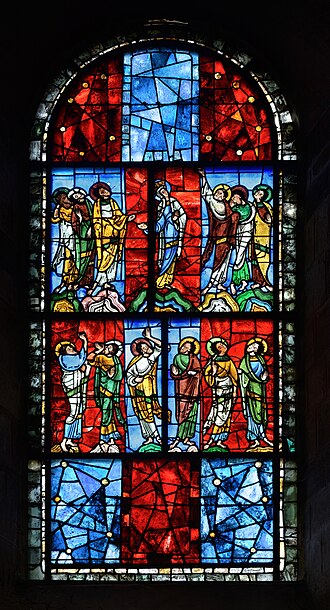
This stained glass window in the Cathedral of Saint Julian of Le Mans (Le Mans, France) depicts the Virgin Mary and the apostles during the Ascension of Jesus. Today is the Feast of the Ascension in Western Christianity.
 #ImageOfTheDay
Picture of the day
This stained glass window in the Cathedral of Saint Julian of Le Mans (Le Mans, France) depicts the Virgin Mary and the apostles during the Ascension of Jesus. Today is the Feast of the Ascension in Western Christianity.
Read More