Day: May 27, 2026

2 years after Pakistan mob lynching, Christian family still seeks justice #Catholic LAHORE, Pakistan — As Muslims across Pakistan celebrate Eid al-Adha, Sultan Gill is quietly preparing for the death anniversary of his father, who died after a violent mob attack over allegations of blasphemy in 2024.Nearly 2,000 people attacked Gillʼs family in Sargodha, in northern Punjab province, on May 25, 2024, after allegations emerged that his father, Nazir (Lazar) Masih, had desecrated pages of the Quran. EWTN News covered the attack at the time.The mob ransacked the familyʼs home and shoe factory in Mujahid Colony and later set the business on fire after a mosque announcement reportedly amplified the accusations.Police managed to evacuate nine members of the family, but Masih was caught by the crowd and beaten with stones, bricks, and sticks. The 74-year-old succumbed to his injuries on the night of June 2–3, 2024.The killing sparked protests by Christian groups across the country, while politicians and Catholic bishops visited the family and held meetings with police officials.Yet nearly two years later, the family says it is still waiting for justice and compensation for the destruction of their property, which remains abandoned after they fled Sargodha.“Our wounds became fresh during Eid. The cruelty cannot be described in words,” Gill told EWTN News.“The confidence is gone. We cannot move around or talk freely. Two of my children had to discontinue their education and start working to support the family in a new city and help pay house rent,” he said.“The police assured us of 1.2 million rupees [about $4,300] as compensation for damage to the factory, which was actually worth millions. But despite repeated visits to the district administration and Punjabʼs minority affairs minister, we received nothing.”Arrests but no accountabilitySargodha police registered cases against about 450 unidentified suspects under anti-terrorism laws, and 25 people were arrested over the attack on Masih.However, all of the accused were released within weeks, according to Sunil Kaleem, director of the Organization for Legal Aid, which has provided legal support to the family.“We challenged the bails granted to the accused, but without success. The biased judges of lower courts often rely on consistency and benefit-of-doubt principles in such cases,” Kaleem said.“There are no independent eyewitnesses apart from police officials, and there is little interest in pursuing accountability. The chances of punishment in mob attacks linked to blasphemy allegations remain very low.”Church leaders and rights groups have long argued that Pakistanʼs blasphemy laws disproportionately affect religious minorities and often fail to uphold principles of justice, including due process and the presumption of innocence.At least 26 Christians were killed extrajudicially in Pakistan between 1994 and 2024 following blasphemy allegations, according to the Center for Social Justice, a Lahore-based advocacy group.Church responseFather David John, parish priest of St. Francis Xavier Church in Sargodha, said Masihʼs family received financial assistance and shelter from the National Commission for Justice and Peace, the Catholic bishops' rights body, for 20 months.“Psychological support was crucial for frightened Christians in the area, and it was important to stand with them,” he said.“We did what we could. There was a long struggle to restore normalcy in the city with the support of district peace committees and Muslim friends.”“Religious minorities in Pakistan deserve to live in peace and harmony. People of goodwill stand with us. There is tremendous scope for interfaith dialogue, and efforts toward acceptance must continue.”Catholic activist Ashiknaz Khokhar criticized delays in the justice process and warned of wider consequences.“It weakens public trust and leaves vulnerable communities exposed to further harm. When cases remain unresolved, fear and instability increase,” he said, adding that Masihʼs family now plans to sell its two homes after losing its business in Sargodha.He called for stronger preventive measures, including proactive law enforcement to manage crowds before violence escalates.“The state should use digital monitoring systems to address online hate speech, provide administrative and security safeguards to ensure judicial independence, discourage misuse of laws through consistent accountability, and introduce educational reforms promoting religious tolerance and civic responsibility,” he said.

2 years after Pakistan mob lynching, Christian family still seeks justice #Catholic LAHORE, Pakistan — As Muslims across Pakistan celebrate Eid al-Adha, Sultan Gill is quietly preparing for the death anniversary of his father, who died after a violent mob attack over allegations of blasphemy in 2024.Nearly 2,000 people attacked Gillʼs family in Sargodha, in northern Punjab province, on May 25, 2024, after allegations emerged that his father, Nazir (Lazar) Masih, had desecrated pages of the Quran. EWTN News covered the attack at the time.The mob ransacked the familyʼs home and shoe factory in Mujahid Colony and later set the business on fire after a mosque announcement reportedly amplified the accusations.Police managed to evacuate nine members of the family, but Masih was caught by the crowd and beaten with stones, bricks, and sticks. The 74-year-old succumbed to his injuries on the night of June 2–3, 2024.The killing sparked protests by Christian groups across the country, while politicians and Catholic bishops visited the family and held meetings with police officials.Yet nearly two years later, the family says it is still waiting for justice and compensation for the destruction of their property, which remains abandoned after they fled Sargodha.“Our wounds became fresh during Eid. The cruelty cannot be described in words,” Gill told EWTN News.“The confidence is gone. We cannot move around or talk freely. Two of my children had to discontinue their education and start working to support the family in a new city and help pay house rent,” he said.“The police assured us of 1.2 million rupees [about $4,300] as compensation for damage to the factory, which was actually worth millions. But despite repeated visits to the district administration and Punjabʼs minority affairs minister, we received nothing.”Arrests but no accountabilitySargodha police registered cases against about 450 unidentified suspects under anti-terrorism laws, and 25 people were arrested over the attack on Masih.However, all of the accused were released within weeks, according to Sunil Kaleem, director of the Organization for Legal Aid, which has provided legal support to the family.“We challenged the bails granted to the accused, but without success. The biased judges of lower courts often rely on consistency and benefit-of-doubt principles in such cases,” Kaleem said.“There are no independent eyewitnesses apart from police officials, and there is little interest in pursuing accountability. The chances of punishment in mob attacks linked to blasphemy allegations remain very low.”Church leaders and rights groups have long argued that Pakistanʼs blasphemy laws disproportionately affect religious minorities and often fail to uphold principles of justice, including due process and the presumption of innocence.At least 26 Christians were killed extrajudicially in Pakistan between 1994 and 2024 following blasphemy allegations, according to the Center for Social Justice, a Lahore-based advocacy group.Church responseFather David John, parish priest of St. Francis Xavier Church in Sargodha, said Masihʼs family received financial assistance and shelter from the National Commission for Justice and Peace, the Catholic bishops' rights body, for 20 months.“Psychological support was crucial for frightened Christians in the area, and it was important to stand with them,” he said.“We did what we could. There was a long struggle to restore normalcy in the city with the support of district peace committees and Muslim friends.”“Religious minorities in Pakistan deserve to live in peace and harmony. People of goodwill stand with us. There is tremendous scope for interfaith dialogue, and efforts toward acceptance must continue.”Catholic activist Ashiknaz Khokhar criticized delays in the justice process and warned of wider consequences.“It weakens public trust and leaves vulnerable communities exposed to further harm. When cases remain unresolved, fear and instability increase,” he said, adding that Masihʼs family now plans to sell its two homes after losing its business in Sargodha.He called for stronger preventive measures, including proactive law enforcement to manage crowds before violence escalates.“The state should use digital monitoring systems to address online hate speech, provide administrative and security safeguards to ensure judicial independence, discourage misuse of laws through consistent accountability, and introduce educational reforms promoting religious tolerance and civic responsibility,” he said.

As Pakistan marks Eid al-Adha, the son of a Christian man killed by a mob over blasphemy allegations says his family has received no compensation and no one has been punished.

Read More
Pope sets up commission to tackle 0 million debt at Padre Pio’s hospital #Catholic Pope Leo XIV on Wednesday created a commission to identify solutions for long-term sustainability at the Casa Sollievo della Sofferenza, a major hospital complex founded by St. Pio of Pietrelcina and directly overseen by the Vatican Secretariat of State.The Catholic hospital — which is located in the southern Italian region of Puglia — is facing a debt crisis from which “we will emerge together,” Secretary of State Cardinal Pietro Parolin said during a May 5 visit to the facility.The hospital in San Giovanni Rotondo, where the saint known as Padre Pio lived for most of his life, has debts estimated to run between 250 million to 300 million euros (about 0 million to 0 million).The hospital is currently in a dispute with officials from the Puglia region over reimbursements — the regional authority claims it is owed 32 million euros ( million) — and is also involved in a conflict over new labor contracts.The new commission now aims to resolve what is a highly complex situation.The papal chirograph (a kind of decree) establishing the commission states that the pope’s decision arises from the Apostolic See’s love for works of charity and from the awareness that large institutions, in order to remain faithful to their mission, must be capable of facing the challenges of change.“The evolution of the times, technology, law, and economics places the mission of the Church before the challenge of continuous renewal,” particularly in sectors such as healthcare that require vision, investment, and prudent management, the chirograph says.Among these institutions is Casa Sollievo della Sofferenza, founded “with the aim of providing hospitality, assistance, and care to the sick, pilgrims, and their families, inspired by the spirituality and the figure of its saintly founder.”The guidance and oversight commission has the task of analyzing the hospital foundation’s “current situation, identifying the best solutions for ever-greater efficiency, effectiveness, and long-term sustainability of its work and mission, and ensuring the concrete implementation of those solutions.”The commission will operate on all fronts — financial, patrimonial, and operational — with full authority to carry out the necessary acts of both ordinary and extraordinary administration. It will report directly to the pope before any decision of particular significance and before adopting measures of special importance or those that would have a decisive and substantial impact on the foundation’s assets or modify its statutes.The commission represents a combined effort by Vatican economic bodies and the Secretariat of State. Maximino Caballero Ledo, prefect of the Secretariat for the Economy, will serve as president. The coordinator is Fabio Gasperini, secretary-general of the Governorate. Archbishop Giordano Piccinotti, president of the Administration of the Patrimony of the Apostolic See, is a member together with Archbishop Paolo Rudelli, undersecretary for general affairs of the Secretariat of State. The technical committee includes Benjamín Estévez de Cominges, Gino Gumirato, and attorney Alessandro Ela Oyana.Casa Sollievo della Sofferenza was born from Padre Pio’s concrete faith, rooted in the conviction that caring for the body is an integral part of the Christian mission.The decision to establish an ad hoc commission is a sign of Leo’s interest in the hospital but also unusual, given that Pope Francis already established a Vatican commission for Catholic healthcare.This story was first published by ACI Stampa, the Italian-language sister service of EWTN News. It has been translated and adapted by EWTN News English.

Pope sets up commission to tackle $290 million debt at Padre Pio’s hospital #Catholic Pope Leo XIV on Wednesday created a commission to identify solutions for long-term sustainability at the Casa Sollievo della Sofferenza, a major hospital complex founded by St. Pio of Pietrelcina and directly overseen by the Vatican Secretariat of State.The Catholic hospital — which is located in the southern Italian region of Puglia — is facing a debt crisis from which “we will emerge together,” Secretary of State Cardinal Pietro Parolin said during a May 5 visit to the facility.The hospital in San Giovanni Rotondo, where the saint known as Padre Pio lived for most of his life, has debts estimated to run between 250 million to 300 million euros (about $290 million to $350 million).The hospital is currently in a dispute with officials from the Puglia region over reimbursements — the regional authority claims it is owed 32 million euros ($37 million) — and is also involved in a conflict over new labor contracts.The new commission now aims to resolve what is a highly complex situation.The papal chirograph (a kind of decree) establishing the commission states that the pope’s decision arises from the Apostolic See’s love for works of charity and from the awareness that large institutions, in order to remain faithful to their mission, must be capable of facing the challenges of change.“The evolution of the times, technology, law, and economics places the mission of the Church before the challenge of continuous renewal,” particularly in sectors such as healthcare that require vision, investment, and prudent management, the chirograph says.Among these institutions is Casa Sollievo della Sofferenza, founded “with the aim of providing hospitality, assistance, and care to the sick, pilgrims, and their families, inspired by the spirituality and the figure of its saintly founder.”The guidance and oversight commission has the task of analyzing the hospital foundation’s “current situation, identifying the best solutions for ever-greater efficiency, effectiveness, and long-term sustainability of its work and mission, and ensuring the concrete implementation of those solutions.”The commission will operate on all fronts — financial, patrimonial, and operational — with full authority to carry out the necessary acts of both ordinary and extraordinary administration. It will report directly to the pope before any decision of particular significance and before adopting measures of special importance or those that would have a decisive and substantial impact on the foundation’s assets or modify its statutes.The commission represents a combined effort by Vatican economic bodies and the Secretariat of State. Maximino Caballero Ledo, prefect of the Secretariat for the Economy, will serve as president. The coordinator is Fabio Gasperini, secretary-general of the Governorate. Archbishop Giordano Piccinotti, president of the Administration of the Patrimony of the Apostolic See, is a member together with Archbishop Paolo Rudelli, undersecretary for general affairs of the Secretariat of State. The technical committee includes Benjamín Estévez de Cominges, Gino Gumirato, and attorney Alessandro Ela Oyana.Casa Sollievo della Sofferenza was born from Padre Pio’s concrete faith, rooted in the conviction that caring for the body is an integral part of the Christian mission.The decision to establish an ad hoc commission is a sign of Leo’s interest in the hospital but also unusual, given that Pope Francis already established a Vatican commission for Catholic healthcare.This story was first published by ACI Stampa, the Italian-language sister service of EWTN News. It has been translated and adapted by EWTN News English.

The hospital in San Giovanni Rotondo, Italy, where the saint known as Padre Pio lived for most of his life, has debts estimated to run between about $290 million to $350 million.

Read More

The phenomenon of a Full Moon arises when our planet, Earth, is precisely sandwiched between the Sun and the Moon. This alignment ensures the entire side of the Moon that faces us gleams under sunlight. Thanks to the Moon’s orbit around Earth, the angle of sunlight hitting the lunar surface and being reflected back toContinue reading “2026 Full Moon calendar: When to see the Full Moon and phases”

The post 2026 Full Moon calendar: When to see the Full Moon and phases appeared first on Astronomy Magazine.

Read More
Pope urges priests to respect ‘norms of the liturgy’ to avoid confusion at Mass – #Catholic – At the general audience on May 27, Pope Leo XIV urged priests to respect the “norms of the liturgy” and not to make changes to the Mass “on their own initiative,” in order to avoid confusing the faithful.“I encourage all priests to respect the texts and norms of the liturgy with openness, humility, trust in God’s greatness, and with sincere fidelity to ecclesial communion,” the pope said in remarks in St. Peterʼs Square.
 
 Pope Leo XIV waves to pilgrims in St. Peter’s Square during the general audience on May 27, 2026. The pope spoke about the Second Vatican Council and the need for priests to follow liturgical norms. | Credit: Daniel Ibáñez/EWTN News
 
 The Second Vatican Council “affirmed that legitimate progress in the liturgy must also preserve sound tradition and that certain elements of the liturgy can never change because they are divinely instituted,” he said.Vatican II’s reform of the MassLeo’s catechesis on Wednesday continued his reflections on the magisterium of the Second Vatican Council, focusing on the constitution Sacrosanctum Concilium, promulgated by St. Paul VI on Dec. 4, 1963. It is one of the most important documents to emerge from the council, since it transformed the way Catholics celebrate the Mass.The pope offered a historical overview of the context in which Vatican II was convened, noting: “At that moment in history, there was a strong sense of the need for a renewal of the ritual forms through which, for centuries, the Church had glorified God and sanctified the Christian people.”
 
 Pope Leo XIV blesses a baby in St. Peter’s Square during the general audience on May 27, 2026. The pope spoke about the Second Vatican Council and the need for priests to follow liturgical norms. | Credit: Daniel Ibáñez/EWTN News
 
 He also underscored that, thanks to the liturgical movement, the conviction had developed — later expressed by St. John Paul II — that “‘a very close and organic bond exists between the renewal of the liturgy and the renewal of the whole life of the Church. The Church not only acts but also expresses herself in the liturgy, lives by the liturgy, and draws from the liturgy the strength for her life’ (Letter Dominicae Cenae, 13).”The pontiff reflected on Sacrosanctum Concilium, which he said sought “to encourage the access of the faithful to the richness of the gifts of grace dispensed by the sacred liturgy.” The pope highlighted the formula adopted by the council fathers: “That sound tradition may be retained, and yet the way remain open to legitimate progress.”To deepen this idea, the pope quoted Pope Benedict XVI, who explained that the council fathers’ “reform program” sought “a balance between the great liturgical tradition of the past and that of the future." 
 
 Pilgrims stand in St. Peter’s Square during Pope Leo XIV’s general audience on May 27, 2026. The pope spoke about the Second Vatican Council and the need for priests to follow liturgical norms. | Credit: Daniel Ibáñez/EWTN News
 
 Benedict XVI said that “tradition and progress are often clumsily opposed,” but the late pope noted that “actually, the two concepts merge: Tradition is a living reality, which therefore includes in itself the principle of development, of progress.”Leo XIV said the progress referred to by Sacrosanctum Concilium “in no way compromises ecclesial communion; rather, it seeks to confirm and foster it.”He emphasized that “changes of this type have taken place constantly over the centuries in order to enable the faithful to participate fruitfully, through ritual actions, in the paschal mystery of Christ, the foundation of the Christian faith.”“For the good of the entire Church, every reform must always be preceded by careful ‘theological, historical, and pastoral’ investigation,” the Holy Father said. “The council magisterium, in this way, thus calls for the avoidance of confusion amongst the faithful, discouraging anyone from adding, removing, or altering anything in liturgical matters on their own initiative.”The Church’s worship, he added, has been “embodied” in the cultural forms of each age and has been able to influence them and even transform them.“The liturgy has thus been, for centuries, a driving force for evangelization. Today, this energy must be renewed in continuity with the authentic and living Catholic tradition, that is, in accordance with a dynamic aimed at introducing believers to the fullness of the truth,” he said.War in UkraineIn an appeal at the end of the audience, Leo expressed his concern over a recent intensification of the war in Ukraine. The Holy Father said he was entrusting everyone affected by war to the protection of Mary, Queen of Peace.“I wish to express my solidarity with all those suffering as a result of the recent attacks, which have also targeted civilians,” he said. “War does not solve problems; it exacerbates them,“ he said. ”It does not build security; it multiplies suffering and hatred. Where missiles and drones fall, hopes are crushed, homes and places of worship are destroyed, and innocent lives are cut short.”This story was first published by ACI Prensa, the Spanish-language sister service of EWTN News. It has been translated and adapted by EWTN News English.

Pope urges priests to respect ‘norms of the liturgy’ to avoid confusion at Mass – #Catholic – At the general audience on May 27, Pope Leo XIV urged priests to respect the “norms of the liturgy” and not to make changes to the Mass “on their own initiative,” in order to avoid confusing the faithful.“I encourage all priests to respect the texts and norms of the liturgy with openness, humility, trust in God’s greatness, and with sincere fidelity to ecclesial communion,” the pope said in remarks in St. Peterʼs Square. Pope Leo XIV waves to pilgrims in St. Peter’s Square during the general audience on May 27, 2026. The pope spoke about the Second Vatican Council and the need for priests to follow liturgical norms. | Credit: Daniel Ibáñez/EWTN News The Second Vatican Council “affirmed that legitimate progress in the liturgy must also preserve sound tradition and that certain elements of the liturgy can never change because they are divinely instituted,” he said.Vatican II’s reform of the MassLeo’s catechesis on Wednesday continued his reflections on the magisterium of the Second Vatican Council, focusing on the constitution Sacrosanctum Concilium, promulgated by St. Paul VI on Dec. 4, 1963. It is one of the most important documents to emerge from the council, since it transformed the way Catholics celebrate the Mass.The pope offered a historical overview of the context in which Vatican II was convened, noting: “At that moment in history, there was a strong sense of the need for a renewal of the ritual forms through which, for centuries, the Church had glorified God and sanctified the Christian people.” Pope Leo XIV blesses a baby in St. Peter’s Square during the general audience on May 27, 2026. The pope spoke about the Second Vatican Council and the need for priests to follow liturgical norms. | Credit: Daniel Ibáñez/EWTN News He also underscored that, thanks to the liturgical movement, the conviction had developed — later expressed by St. John Paul II — that “‘a very close and organic bond exists between the renewal of the liturgy and the renewal of the whole life of the Church. The Church not only acts but also expresses herself in the liturgy, lives by the liturgy, and draws from the liturgy the strength for her life’ (Letter Dominicae Cenae, 13).”The pontiff reflected on Sacrosanctum Concilium, which he said sought “to encourage the access of the faithful to the richness of the gifts of grace dispensed by the sacred liturgy.” The pope highlighted the formula adopted by the council fathers: “That sound tradition may be retained, and yet the way remain open to legitimate progress.”To deepen this idea, the pope quoted Pope Benedict XVI, who explained that the council fathers’ “reform program” sought “a balance between the great liturgical tradition of the past and that of the future." Pilgrims stand in St. Peter’s Square during Pope Leo XIV’s general audience on May 27, 2026. The pope spoke about the Second Vatican Council and the need for priests to follow liturgical norms. | Credit: Daniel Ibáñez/EWTN News Benedict XVI said that “tradition and progress are often clumsily opposed,” but the late pope noted that “actually, the two concepts merge: Tradition is a living reality, which therefore includes in itself the principle of development, of progress.”Leo XIV said the progress referred to by Sacrosanctum Concilium “in no way compromises ecclesial communion; rather, it seeks to confirm and foster it.”He emphasized that “changes of this type have taken place constantly over the centuries in order to enable the faithful to participate fruitfully, through ritual actions, in the paschal mystery of Christ, the foundation of the Christian faith.”“For the good of the entire Church, every reform must always be preceded by careful ‘theological, historical, and pastoral’ investigation,” the Holy Father said. “The council magisterium, in this way, thus calls for the avoidance of confusion amongst the faithful, discouraging anyone from adding, removing, or altering anything in liturgical matters on their own initiative.”The Church’s worship, he added, has been “embodied” in the cultural forms of each age and has been able to influence them and even transform them.“The liturgy has thus been, for centuries, a driving force for evangelization. Today, this energy must be renewed in continuity with the authentic and living Catholic tradition, that is, in accordance with a dynamic aimed at introducing believers to the fullness of the truth,” he said.War in UkraineIn an appeal at the end of the audience, Leo expressed his concern over a recent intensification of the war in Ukraine. The Holy Father said he was entrusting everyone affected by war to the protection of Mary, Queen of Peace.“I wish to express my solidarity with all those suffering as a result of the recent attacks, which have also targeted civilians,” he said. “War does not solve problems; it exacerbates them,“ he said. ”It does not build security; it multiplies suffering and hatred. Where missiles and drones fall, hopes are crushed, homes and places of worship are destroyed, and innocent lives are cut short.”This story was first published by ACI Prensa, the Spanish-language sister service of EWTN News. It has been translated and adapted by EWTN News English.

Pope Leo’s catechesis focused on the Second Vatican Council’s constitution, “Sacrosanctum Concilium,” a document that transformed the way Catholics celebrate Mass.

Read More
Clifton parish ablaze with Holy Spirit on Pentecost Sunday #Catholic - On May 24, Pentecost Sunday, Bishop Kevin J. Sweeney visited St. Paul Parish in Clifton, N.J., where he celebrated a 1 p.m. Spanish Mass. Earlier that day, during his pastoral visit, the bishop also confirmed 15 parish youth at an 11 a.m. Mass he presided over.
Joining him at 1 p.m. Spanish Mass, Father Leonardo Jaramillo, pastor of St. Paul’s, concelebrated, while Deacon Hector Castellanos, also of the parish, assisted.

Click here to subscribe to our weekly newsletter.

The Solemnity of Pentecost is not simply the end of Easter. It is the day the Church celebrates the descent of the Holy Spirit upon the apostles, the Blessed Virgin Mary, and the first disciples gathered in Jerusalem. That moment marks when the fearful followers of Jesus were strengthened to proclaim the Gospel boldly to the world. For this reason, Pentecost is often called “the birthday of the Church,” according to Catholic Answers.
BEACON PHOTOS | JOE GIGLI
 [See image gallery at beaconnj.org]  

Clifton parish ablaze with Holy Spirit on Pentecost Sunday #Catholic –

On May 24, Pentecost Sunday, Bishop Kevin J. Sweeney visited St. Paul Parish in Clifton, N.J., where he celebrated a 1 p.m. Spanish Mass. Earlier that day, during his pastoral visit, the bishop also confirmed 15 parish youth at an 11 a.m. Mass he presided over.

Joining him at 1 p.m. Spanish Mass, Father Leonardo Jaramillo, pastor of St. Paul’s, concelebrated, while Deacon Hector Castellanos, also of the parish, assisted.


Click here to subscribe to our weekly newsletter.

The Solemnity of Pentecost is not simply the end of Easter. It is the day the Church celebrates the descent of the Holy Spirit upon the apostles, the Blessed Virgin Mary, and the first disciples gathered in Jerusalem. That moment marks when the fearful followers of Jesus were strengthened to proclaim the Gospel boldly to the world. For this reason, Pentecost is often called “the birthday of the Church,” according to Catholic Answers.

BEACON PHOTOS | JOE GIGLI

On May 24, Pentecost Sunday, Bishop Kevin J. Sweeney visited St. Paul Parish in Clifton, N.J., where he celebrated a 1 p.m. Spanish Mass. Earlier that day, during his pastoral visit, the bishop also confirmed 15 parish youth at an 11 a.m. Mass he presided over. Joining him at 1 p.m. Spanish Mass, Father Leonardo Jaramillo, pastor of St. Paul’s, concelebrated, while Deacon Hector Castellanos, also of the parish, assisted. Click here to subscribe to our weekly newsletter. The Solemnity of Pentecost is not simply the end of Easter. It is the day the Church celebrates the descent of the

Read More
Hawthorne parish celebrates as Bishop installs new pastor #Catholic - On May 23, the faithful of St. Anthony Parish in Hawthorne, N.J., rejoiced as Father Stephen Prisk was officially installed as their 11th pastor by Bishop Kevin J. Sweeney, who celebrated the Mass in the church.
Ordained on May 23, 2015, by Bishop Emeritus Arthur J. Serratelli, Father Prisk was appointed St. Anthony’s pastor on July 1, 2025. He succeeds Msgr. Raymond Kupke, the parish’s former pastor. Msgr. Kupke retired from active ministry last year but remains archivist of the Paterson Diocese, N.J. Father Prisk also retains his position as diocesan vice chancellor.
At the event, two members of the Hawthorne Borough Council presented Father Prisk with a congratulatory resolution.

Click here to subscribe to our weekly newsletter.

In addition to Father Prisk and Msgr. Kupke, several priests concelebrated the installation Mass with Bishop Sweeney. Among them were Father Charles Lana, diocesan vocations director, and Msgr. Francis Duffy, a retired diocesan priest. Also concelebrating were Father Pawel Tomczyk, pastoral-formation director and assistant professor of moral theology at Immaculate Conception Seminary in South Orange, N.J.; Father Thomas Rekiel, pastor of Holy Family Parish in Florham Park, N.J.; and Father Brendon Harfmann, parochial vicar of St. Anthony’s.
Father Jared Brogan, director of the diocesan Worship Office, served as master of ceremonies. Deacon Ronnie Gonzalez of St. Anthony’s and Brian Reilly, a diocesan seminarian assigned to the parish for the summer, assisted with the liturgy.
An only child, Father Prisk was born and raised in Clifton and belonged to Sacred Heart Parish there, where he attended elementary school.
After graduating from Seton Hall Preparatory High School in South Orange, N.J., Father Prisk earned a bachelor’s degree in biology from Franciscan University in Steubenville, Ohio.
Father Prisk discerned the call to the priesthood while in college. He attended Immaculate Conception Seminary at Seton Hall University in South Orange for a year before transferring to the North American College in Rome for theology studies.
While in Rome, Father Prisk earned a Baccalaureate in Sacred Theology from the Pontifical Gregorian University. He also received a Licentiate in Sacred Theology from the Pontifical Institute of John Paul II for Studies on Marriage and the Family.
Father Prisk’s first priestly assignment, in 2015, was as parochial vicar at St. Joseph Parish in Mendham, N.J. In 2019, he was named diocesan vice chancellor and priest-secretary to Bishop Serratelli.
In 2021, he had been appointed pastor of Holy Spirit Parish in Pequannock, N.J., while continuing as diocesan vice chancellor. He served at Holy Spirit before being transferred to St. Anthony’s.
BEACON PHOTOS | JOE GIGLI
 [See image gallery at beaconnj.org]  

Hawthorne parish celebrates as Bishop installs new pastor #Catholic – On May 23, the faithful of St. Anthony Parish in Hawthorne, N.J., rejoiced as Father Stephen Prisk was officially installed as their 11th pastor by Bishop Kevin J. Sweeney, who celebrated the Mass in the church. Ordained on May 23, 2015, by Bishop Emeritus Arthur J. Serratelli, Father Prisk was appointed St. Anthony’s pastor on July 1, 2025. He succeeds Msgr. Raymond Kupke, the parish’s former pastor. Msgr. Kupke retired from active ministry last year but remains archivist of the Paterson Diocese, N.J. Father Prisk also retains his position as diocesan vice chancellor. At the event, two members of the Hawthorne Borough Council presented Father Prisk with a congratulatory resolution. Click here to subscribe to our weekly newsletter. In addition to Father Prisk and Msgr. Kupke, several priests concelebrated the installation Mass with Bishop Sweeney. Among them were Father Charles Lana, diocesan vocations director, and Msgr. Francis Duffy, a retired diocesan priest. Also concelebrating were Father Pawel Tomczyk, pastoral-formation director and assistant professor of moral theology at Immaculate Conception Seminary in South Orange, N.J.; Father Thomas Rekiel, pastor of Holy Family Parish in Florham Park, N.J.; and Father Brendon Harfmann, parochial vicar of St. Anthony’s. Father Jared Brogan, director of the diocesan Worship Office, served as master of ceremonies. Deacon Ronnie Gonzalez of St. Anthony’s and Brian Reilly, a diocesan seminarian assigned to the parish for the summer, assisted with the liturgy. An only child, Father Prisk was born and raised in Clifton and belonged to Sacred Heart Parish there, where he attended elementary school. After graduating from Seton Hall Preparatory High School in South Orange, N.J., Father Prisk earned a bachelor’s degree in biology from Franciscan University in Steubenville, Ohio. Father Prisk discerned the call to the priesthood while in college. He attended Immaculate Conception Seminary at Seton Hall University in South Orange for a year before transferring to the North American College in Rome for theology studies. While in Rome, Father Prisk earned a Baccalaureate in Sacred Theology from the Pontifical Gregorian University. He also received a Licentiate in Sacred Theology from the Pontifical Institute of John Paul II for Studies on Marriage and the Family. Father Prisk’s first priestly assignment, in 2015, was as parochial vicar at St. Joseph Parish in Mendham, N.J. In 2019, he was named diocesan vice chancellor and priest-secretary to Bishop Serratelli. In 2021, he had been appointed pastor of Holy Spirit Parish in Pequannock, N.J., while continuing as diocesan vice chancellor. He served at Holy Spirit before being transferred to St. Anthony’s. BEACON PHOTOS | JOE GIGLI [See image gallery at beaconnj.org]  

Hawthorne parish celebrates as Bishop installs new pastor #Catholic –

On May 23, the faithful of St. Anthony Parish in Hawthorne, N.J., rejoiced as Father Stephen Prisk was officially installed as their 11th pastor by Bishop Kevin J. Sweeney, who celebrated the Mass in the church.

Ordained on May 23, 2015, by Bishop Emeritus Arthur J. Serratelli, Father Prisk was appointed St. Anthony’s pastor on July 1, 2025. He succeeds Msgr. Raymond Kupke, the parish’s former pastor. Msgr. Kupke retired from active ministry last year but remains archivist of the Paterson Diocese, N.J. Father Prisk also retains his position as diocesan vice chancellor.

At the event, two members of the Hawthorne Borough Council presented Father Prisk with a congratulatory resolution.


Click here to subscribe to our weekly newsletter.

In addition to Father Prisk and Msgr. Kupke, several priests concelebrated the installation Mass with Bishop Sweeney. Among them were Father Charles Lana, diocesan vocations director, and Msgr. Francis Duffy, a retired diocesan priest. Also concelebrating were Father Pawel Tomczyk, pastoral-formation director and assistant professor of moral theology at Immaculate Conception Seminary in South Orange, N.J.; Father Thomas Rekiel, pastor of Holy Family Parish in Florham Park, N.J.; and Father Brendon Harfmann, parochial vicar of St. Anthony’s.

Father Jared Brogan, director of the diocesan Worship Office, served as master of ceremonies. Deacon Ronnie Gonzalez of St. Anthony’s and Brian Reilly, a diocesan seminarian assigned to the parish for the summer, assisted with the liturgy.

An only child, Father Prisk was born and raised in Clifton and belonged to Sacred Heart Parish there, where he attended elementary school.

After graduating from Seton Hall Preparatory High School in South Orange, N.J., Father Prisk earned a bachelor’s degree in biology from Franciscan University in Steubenville, Ohio.

Father Prisk discerned the call to the priesthood while in college. He attended Immaculate Conception Seminary at Seton Hall University in South Orange for a year before transferring to the North American College in Rome for theology studies.

While in Rome, Father Prisk earned a Baccalaureate in Sacred Theology from the Pontifical Gregorian University. He also received a Licentiate in Sacred Theology from the Pontifical Institute of John Paul II for Studies on Marriage and the Family.

Father Prisk’s first priestly assignment, in 2015, was as parochial vicar at St. Joseph Parish in Mendham, N.J. In 2019, he was named diocesan vice chancellor and priest-secretary to Bishop Serratelli.

In 2021, he had been appointed pastor of Holy Spirit Parish in Pequannock, N.J., while continuing as diocesan vice chancellor. He served at Holy Spirit before being transferred to St. Anthony’s.

BEACON PHOTOS | JOE GIGLI

On May 23, the faithful of St. Anthony Parish in Hawthorne, N.J., rejoiced as Father Stephen Prisk was officially installed as their 11th pastor by Bishop Kevin J. Sweeney, who celebrated the Mass in the church. Ordained on May 23, 2015, by Bishop Emeritus Arthur J. Serratelli, Father Prisk was appointed St. Anthony’s pastor on July 1, 2025. He succeeds Msgr. Raymond Kupke, the parish’s former pastor. Msgr. Kupke retired from active ministry last year but remains archivist of the Paterson Diocese, N.J. Father Prisk also retains his position as diocesan vice chancellor. At the event, two members of the

Read More
Cardinal highlights 10 key points to understand Magnifica Humanitas – #Catholic – Cardinal Fernando Chomali, archbishop of Santiago, Chile, offered a 10-point guide to understanding the central message of Magnifica Humanitas, Pope Leo XIVʼs first encyclical, presented May 25.The encyclicalʼs theme is “On Safeguarding the Human Person in the Time of Artificial Intelligence." In it, the pope calls upon both society and those who design artificial intelligence (AI) technologies to be subject to “more rigorous ethical constraints” out of “respect for human dignity and the sanctity of life.”The cardinal shared 10 points on social media to foster a deeper understanding of the Holy Fatherʼs central message in the document:1. The human person lies at the center of all technological progress.2. The great challenge of our time is not technical but human and spiritual.3. Artificial intelligence must be placed at the service of the common good.4. Human dignity does not depend on productivity or capabilities.5. Fragility is not a defect that must be eliminated.6. No artificial intelligence can replace human experience.7. Truth is a common good that must be protected.8. Human work cannot be subjected to the logic of machines.9. Freedom is threatened by new, invisible forms of control.10. Peace and the civilization of love constitute the true alternative to technological power.An illuminating document for Chile’s situationThe president of the Chilean Bishops’ Conference, Archbishop René Rebolledo Salinas, expressed his gratitude to the Holy Father for the encyclical while highlighting the document’s “profound resonance” with Chile’s pastoral and social challenges.He specifically noted the pope’s concern regarding the vulnerability of young people to technological addictions and digital manipulation, a challenge currently facing the country. He also observed that one of the Church’s great challenges is transforming the enthusiasm of young people into an enduring missionary witness.“The digital environment is the natural mission territory for the new generations,” said the prelate, warning that “it’s not enough to turn off the screens; we must accompany them so that they may carry the light of the Gospel to this new continent.”He also mentioned the upcoming International Church Communications Seminar, which will take place in Chile July 27–28 with the theme: “The Challenges of Artificial Intelligence.”"The publication of Magnifica Humanitas arrives at a providential moment as all the countryʼs bishops will gather at the end of July for the seminar on communications and AI," he noted, saying the gathering will make the encyclical an "illuminating foundational text."Addressing the popeʼs warning regarding how AI may undermine truth and democratic life, Rebolledo emphasized that, in the current scenario of political and social transformations, the Churchʼs role will continue to be that of enlightening consciences through the Gospel and the social doctrine of the Church.“The Holy Father is clear: a technology that seeks only economic gain constructs a new Babel that sacrifices the most vulnerable,” the prelate emphasized, reflecting: “In Chile, this directly challenges us to pay closer attention to the new forms of poverty currently emerging.” At the same time, he urged the protection of truth “in an era where disinformation and artificial intelligence can confuse what is true and what is false.”This story was first published by ACI Prensa, the Spanish-language sister service of EWTN News. It has been translated and adapted by EWTN News English.

Cardinal highlights 10 key points to understand Magnifica Humanitas – #Catholic – Cardinal Fernando Chomali, archbishop of Santiago, Chile, offered a 10-point guide to understanding the central message of Magnifica Humanitas, Pope Leo XIVʼs first encyclical, presented May 25.The encyclicalʼs theme is “On Safeguarding the Human Person in the Time of Artificial Intelligence." In it, the pope calls upon both society and those who design artificial intelligence (AI) technologies to be subject to “more rigorous ethical constraints” out of “respect for human dignity and the sanctity of life.”The cardinal shared 10 points on social media to foster a deeper understanding of the Holy Fatherʼs central message in the document:1. The human person lies at the center of all technological progress.2. The great challenge of our time is not technical but human and spiritual.3. Artificial intelligence must be placed at the service of the common good.4. Human dignity does not depend on productivity or capabilities.5. Fragility is not a defect that must be eliminated.6. No artificial intelligence can replace human experience.7. Truth is a common good that must be protected.8. Human work cannot be subjected to the logic of machines.9. Freedom is threatened by new, invisible forms of control.10. Peace and the civilization of love constitute the true alternative to technological power.An illuminating document for Chile’s situationThe president of the Chilean Bishops’ Conference, Archbishop René Rebolledo Salinas, expressed his gratitude to the Holy Father for the encyclical while highlighting the document’s “profound resonance” with Chile’s pastoral and social challenges.He specifically noted the pope’s concern regarding the vulnerability of young people to technological addictions and digital manipulation, a challenge currently facing the country. He also observed that one of the Church’s great challenges is transforming the enthusiasm of young people into an enduring missionary witness.“The digital environment is the natural mission territory for the new generations,” said the prelate, warning that “it’s not enough to turn off the screens; we must accompany them so that they may carry the light of the Gospel to this new continent.”He also mentioned the upcoming International Church Communications Seminar, which will take place in Chile July 27–28 with the theme: “The Challenges of Artificial Intelligence.”"The publication of Magnifica Humanitas arrives at a providential moment as all the countryʼs bishops will gather at the end of July for the seminar on communications and AI," he noted, saying the gathering will make the encyclical an "illuminating foundational text."Addressing the popeʼs warning regarding how AI may undermine truth and democratic life, Rebolledo emphasized that, in the current scenario of political and social transformations, the Churchʼs role will continue to be that of enlightening consciences through the Gospel and the social doctrine of the Church.“The Holy Father is clear: a technology that seeks only economic gain constructs a new Babel that sacrifices the most vulnerable,” the prelate emphasized, reflecting: “In Chile, this directly challenges us to pay closer attention to the new forms of poverty currently emerging.” At the same time, he urged the protection of truth “in an era where disinformation and artificial intelligence can confuse what is true and what is false.”This story was first published by ACI Prensa, the Spanish-language sister service of EWTN News. It has been translated and adapted by EWTN News English.

The archbishop of Santiago, Chile, distills 10 important takeaways from the timely document on artificial intelligence.

Read More
Neocatechumenal Way to conclude diocesan phase of co-founder’s cause for canonization – #Catholic – The Neocatechumenal Way will soon celebrate its 60th anniversary and conclude the diocesan phase of the canonization process of Carmen Hernández, who co-founded the apostolate with Kiko Argüello.The archbishop of Madrid, Cardinal José Cobo, will offer a Mass of Thanksgiving at Our Lady of Almudena Cathedral to mark the 60th anniversary of the birth of the Neocatechumenal Way on May 30.The ceremony, which was originally scheduled to take place last year but was postponed due to the death of Pope Francis, will be concelebrated by other Spanish prelates, and more than 100 priests will attend.The Neocatechumenal Way, also known as the Neocatechumenate, was founded in 1964 and is a post-baptismal formation program within the Catholic Church designed to help baptized adults rediscover and deepen their faith.“It is a moment of joy that encompasses the entire reality of the Neocatechumenal Way: this itinerary of Christian Initiation lived out in small communities and currently present in over 6,250 parishes across some 1,400 dioceses worldwide, which was born in one of the poorest areas of the Spanish capital,” states a press release from the apostolate.
 
 Interior view of the shack where Kiko Argüello lived during the early days of the Neocatechumenal Way apostolate. | Credit: Photo courtesy of Neocatechumenal Way
 
 The celebration will continue on June 2, when the closing rite for the cause of canonization of Carmen Hernández will take place. As a young woman, she and Argüello founded the Neocatechumenal Way with the encouragement of the archbishop of Madrid-Alcalá, Casimiro Morcillo González.The cause for canonization began on Dec. 4, 2022, after postulator Carlos Metola gathered nearly 30,000 pages of documentation, and will conclude almost 10 years after her death on July 19, 2016.The event will feature addresses by Cobo, Metola, and Argüello himself, who shared his evangelizing mission with Hernández for over 50 years. It will take place at the Redemptoris Mater Seminary in Madrid, where Hernández is buried. According to the Neocatechumenal Way, over the past decade, more than 118,000 people have visited her tomb, “and favors are continually received through her intercession.”Hernández’s contribution was “fundamental,” the Neocatechumenal Way states, particularly “thanks to her studies regarding the renewal of the Second Vatican Council.”
 
 The burial site of Carmen Hernández at the Redemptoris Mater Seminary in Madrid. | Credit: Photo courtesy of Neocatechumenal Way
 
 “This contribution was made in many aspects: the formation of the small Christian community, the liturgy, Easter, the relationship with the word of God, including the Old Testament and patristic and Jewish sources,” the press release notes.Argüello and Hernández met in the mid-1960s in the Palomeras Altas neighborhood of Madrid, where the former, despite a promising career as a painter, abandoned everything to live in a shack and begin proclaiming the resurrection of Jesus Christ to the poor.This Christian initiation for adults soon spread to the parishes through the impetus of Morcillo, and today it is present in 138 countries across five continents and has 116 diocesan missionary seminaries in which nearly 3,500 priests have been formed.This story was first published by ACI Prensa, the Spanish-language sister service of EWTN News. It has been translated and adapted by EWTN News English.

Neocatechumenal Way to conclude diocesan phase of co-founder’s cause for canonization – #Catholic – The Neocatechumenal Way will soon celebrate its 60th anniversary and conclude the diocesan phase of the canonization process of Carmen Hernández, who co-founded the apostolate with Kiko Argüello.The archbishop of Madrid, Cardinal José Cobo, will offer a Mass of Thanksgiving at Our Lady of Almudena Cathedral to mark the 60th anniversary of the birth of the Neocatechumenal Way on May 30.The ceremony, which was originally scheduled to take place last year but was postponed due to the death of Pope Francis, will be concelebrated by other Spanish prelates, and more than 100 priests will attend.The Neocatechumenal Way, also known as the Neocatechumenate, was founded in 1964 and is a post-baptismal formation program within the Catholic Church designed to help baptized adults rediscover and deepen their faith.“It is a moment of joy that encompasses the entire reality of the Neocatechumenal Way: this itinerary of Christian Initiation lived out in small communities and currently present in over 6,250 parishes across some 1,400 dioceses worldwide, which was born in one of the poorest areas of the Spanish capital,” states a press release from the apostolate. Interior view of the shack where Kiko Argüello lived during the early days of the Neocatechumenal Way apostolate. | Credit: Photo courtesy of Neocatechumenal Way The celebration will continue on June 2, when the closing rite for the cause of canonization of Carmen Hernández will take place. As a young woman, she and Argüello founded the Neocatechumenal Way with the encouragement of the archbishop of Madrid-Alcalá, Casimiro Morcillo González.The cause for canonization began on Dec. 4, 2022, after postulator Carlos Metola gathered nearly 30,000 pages of documentation, and will conclude almost 10 years after her death on July 19, 2016.The event will feature addresses by Cobo, Metola, and Argüello himself, who shared his evangelizing mission with Hernández for over 50 years. It will take place at the Redemptoris Mater Seminary in Madrid, where Hernández is buried. According to the Neocatechumenal Way, over the past decade, more than 118,000 people have visited her tomb, “and favors are continually received through her intercession.”Hernández’s contribution was “fundamental,” the Neocatechumenal Way states, particularly “thanks to her studies regarding the renewal of the Second Vatican Council.” The burial site of Carmen Hernández at the Redemptoris Mater Seminary in Madrid. | Credit: Photo courtesy of Neocatechumenal Way “This contribution was made in many aspects: the formation of the small Christian community, the liturgy, Easter, the relationship with the word of God, including the Old Testament and patristic and Jewish sources,” the press release notes.Argüello and Hernández met in the mid-1960s in the Palomeras Altas neighborhood of Madrid, where the former, despite a promising career as a painter, abandoned everything to live in a shack and begin proclaiming the resurrection of Jesus Christ to the poor.This Christian initiation for adults soon spread to the parishes through the impetus of Morcillo, and today it is present in 138 countries across five continents and has 116 diocesan missionary seminaries in which nearly 3,500 priests have been formed.This story was first published by ACI Prensa, the Spanish-language sister service of EWTN News. It has been translated and adapted by EWTN News English.

The cause for canonization began in 2022 with nearly 30,000 pages of documentation. More than 118,000 people have visited her tomb, and favors are continually received through her intercession.

Read More

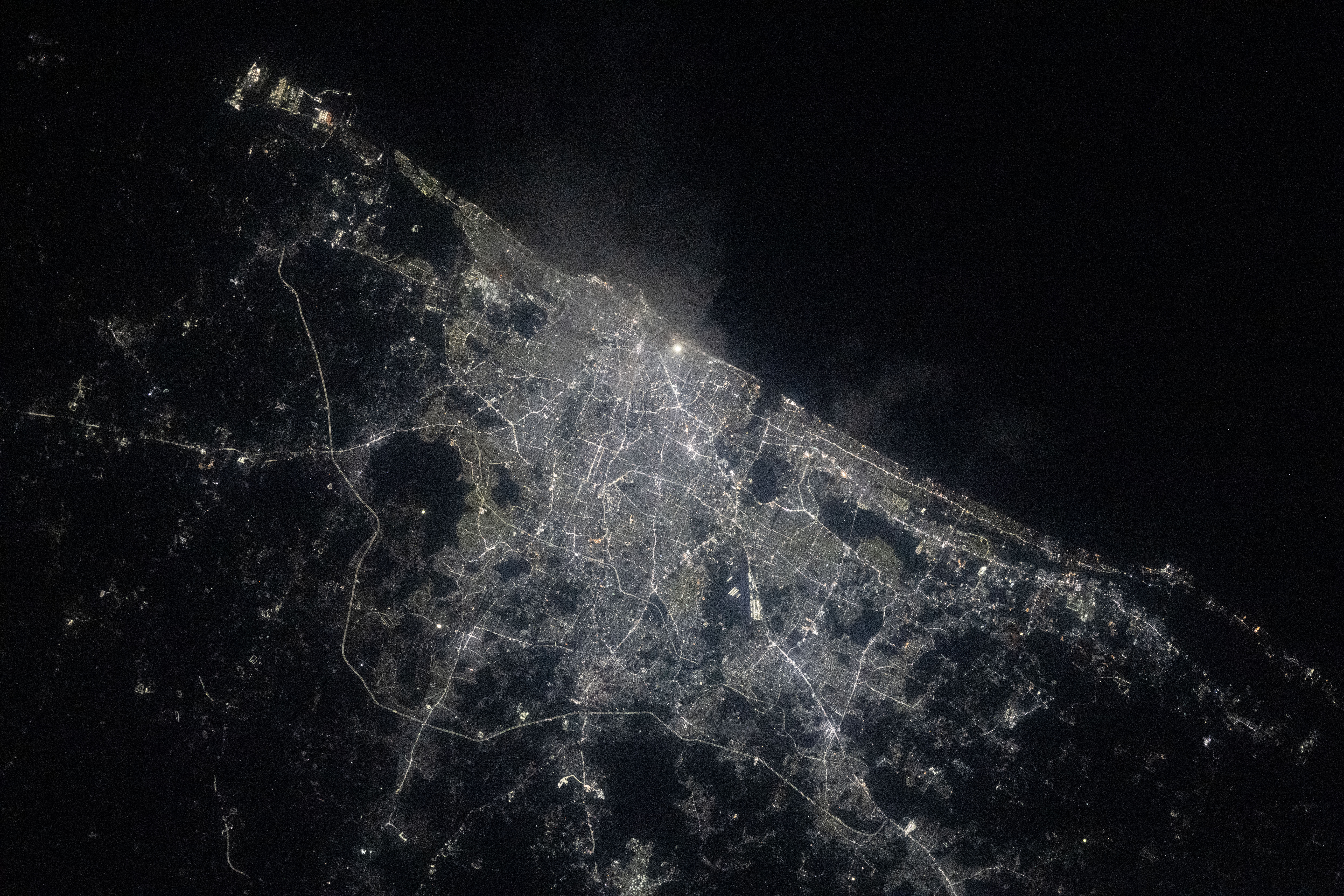
Chennai, on India’s southern coast along the Bay of Bengal and with a metropolitan population of about 8.7 million, shines with white LED streetlights in this photograph taken at approximately 9:13 p.m. local time on May 2, 2026, from the International Space Station.

Read More