Day: August 7, 2026

Picture of the day


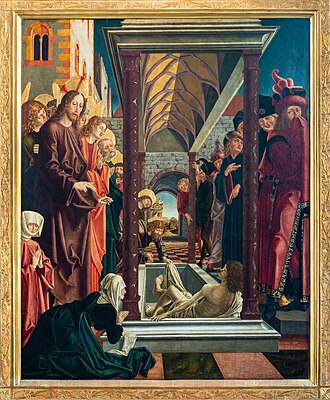
The Raising of Lazarus at the St. Wolfgang Altarpiece of the Catholic parish- and pilgrimage church St. Wolfgang im Salzkammergut, Upper Austria. Michael Pacher, 1471–79, set up in 1481. Today is the feast day of St. Lazarus in Western Christianity.
 #ImageOfTheDay
Picture of the day
The Raising of Lazarus at the St. Wolfgang Altarpiece of the Catholic parish- and pilgrimage church St. Wolfgang im Salzkammergut, Upper Austria. Michael Pacher, 1471–79, set up in 1481. Today is the feast day of St. Lazarus in Western Christianity.
Read More
Aug. 7 marks 90th anniversary of Spanish ‘execution’ of Sacred Heart of Jesus statue – #Catholic – Aug. 7 marks the 90th anniversary of the day when militiamen from the Popular Front, one of the factions in the Spanish Civil War, fired upon the monument to the Sacred Heart of Jesus, before which King Alfonso XIII in 1919 had consecrated Spain.The original monument, the work of architect Carlos Maura and sculptor Aniceto Marinas, was built on the Cerro de los Ángeles, the geographical center of Spain, and was funded through public subscription, although the statue itself was donated by the count of Guaqui, Juan Marino de Goyeneche.The monumental complex, standing 92 feet tall, consisted not only of the central figure of Jesus Christ but also of two sculptural groups representing, respectively, sanctified humanity and humanity journeying toward holiness.The first group featured St. Margaret Mary Alacoque, St. Augustine, St. Francis of Assisi, St. Teresa of Jesus, Blessed Bernardo de Hoyos, and St. John the Evangelist, among others. The second group comprised figures representing the path of charity, virtue, and the love essential for conversion and sanctification.Its inauguration, originally scheduled for 1918, was postponed due to the Spanish flu pandemic until May 30, 1919. It was then that, in the presence of the government, the apostolic nuncio, Archbishop Francesco Ragonesi, and a large group of bishops and cardinals, Alfonso XIII pronounced the formula for the consecration of Spain to the Sacred Heart: “Spain, the people of your heritage and predilection, bows reverently today before that throne of goodness raised for you in the heart of the peninsula. Reign in the hearts of men, in the bosom of our homes, in the minds of the wise, in the halls of science and letters, and in our laws and national institutions.”
 
 At the foot of the Sacred Heart of Jesus statue, in 1919 King Alfonso XIII pronounces the formula of consecration of Spain to the Sacred Heart of Jesus. | Credit: Public domain
 
 Tried, shot by firing squad, and blown up with dynamiteThe Spanish Civil War broke out on July 18, 1936. Just five days later, five young men who had remained near the monument to defend it against potential desecration were killed.On Aug. 7, the first Friday of the month, Popular Front militiamen staged a mock summary trial of Jesus; after passing sentence, they fired upon the monument while shouting, “Aim with hatred! Fire with rage!”They subsequently attempted to topple and demolish the monument using various tools, including cables and sledgehammers, but failed. They then decided to blow it up with dynamite. They subsequently dragged the head of the Christ figure behind a horse to further humiliate the image.The site, renamed Cerro Rojo (Red Hill), was retaken by Nationalist forces on Nov. 6, 1936, which was another first Friday of the month. Troops under the command of Gen. José Enrique Varela attended a Mass of reparation officiated by a military chaplain.New monumentFollowing the end of the Civil War in 1939, reconstruction of the site began in 1944. This coincided with the 25th anniversary of the consecration of Spain, an occasion for which the Holy See had granted a jubilee year.The sculptor of the original work was engaged for the 38-foot-tall statue of the Sacred Heart, which stands atop an 85-foot pedestal. 
 
 The inscriptions that appear on the foundation of the monument to the Sacred Heart of Jesus in Spain. | Credit: Photo courtesy of the Diocese of Getafe
 
 Four sculptural groups by Fernando Cruz were placed around the base. The first group, representing “Missionary Spain,” features Isabella the Catholic, Christopher Columbus, Hernán Cortés, and St. Junípero Serra. The second group, representing “Spain: Defender of the Faith,” includes Bishop Osio of Córdoba, Don Pelayo, Diego Laínez, John of Austria, and Blessed Anselmo Polanco, a bishop martyred during the war.The third group, dedicated to the Church militant, consists of figures representing charity, virtue, and love. The final sculptural ensemble, representing the Church triumphant, reproduces the saints from the original monument.The new monument, inaugurated in 1965, is located on the site of the original, the ruins of which are preserved on the other side of the complexʼs large esplanade. Ten years later, a sanctuary was inaugurated featuring a temple carved into the rock.This story was first published by ACI Prensa, the Spanish-language sister service of EWTN News. It has been translated and adapted by EWTN News English.

Aug. 7 marks 90th anniversary of Spanish ‘execution’ of Sacred Heart of Jesus statue – #Catholic – Aug. 7 marks the 90th anniversary of the day when militiamen from the Popular Front, one of the factions in the Spanish Civil War, fired upon the monument to the Sacred Heart of Jesus, before which King Alfonso XIII in 1919 had consecrated Spain.The original monument, the work of architect Carlos Maura and sculptor Aniceto Marinas, was built on the Cerro de los Ángeles, the geographical center of Spain, and was funded through public subscription, although the statue itself was donated by the count of Guaqui, Juan Marino de Goyeneche.The monumental complex, standing 92 feet tall, consisted not only of the central figure of Jesus Christ but also of two sculptural groups representing, respectively, sanctified humanity and humanity journeying toward holiness.The first group featured St. Margaret Mary Alacoque, St. Augustine, St. Francis of Assisi, St. Teresa of Jesus, Blessed Bernardo de Hoyos, and St. John the Evangelist, among others. The second group comprised figures representing the path of charity, virtue, and the love essential for conversion and sanctification.Its inauguration, originally scheduled for 1918, was postponed due to the Spanish flu pandemic until May 30, 1919. It was then that, in the presence of the government, the apostolic nuncio, Archbishop Francesco Ragonesi, and a large group of bishops and cardinals, Alfonso XIII pronounced the formula for the consecration of Spain to the Sacred Heart: “Spain, the people of your heritage and predilection, bows reverently today before that throne of goodness raised for you in the heart of the peninsula. Reign in the hearts of men, in the bosom of our homes, in the minds of the wise, in the halls of science and letters, and in our laws and national institutions.” At the foot of the Sacred Heart of Jesus statue, in 1919 King Alfonso XIII pronounces the formula of consecration of Spain to the Sacred Heart of Jesus. | Credit: Public domain Tried, shot by firing squad, and blown up with dynamiteThe Spanish Civil War broke out on July 18, 1936. Just five days later, five young men who had remained near the monument to defend it against potential desecration were killed.On Aug. 7, the first Friday of the month, Popular Front militiamen staged a mock summary trial of Jesus; after passing sentence, they fired upon the monument while shouting, “Aim with hatred! Fire with rage!”They subsequently attempted to topple and demolish the monument using various tools, including cables and sledgehammers, but failed. They then decided to blow it up with dynamite. They subsequently dragged the head of the Christ figure behind a horse to further humiliate the image.The site, renamed Cerro Rojo (Red Hill), was retaken by Nationalist forces on Nov. 6, 1936, which was another first Friday of the month. Troops under the command of Gen. José Enrique Varela attended a Mass of reparation officiated by a military chaplain.New monumentFollowing the end of the Civil War in 1939, reconstruction of the site began in 1944. This coincided with the 25th anniversary of the consecration of Spain, an occasion for which the Holy See had granted a jubilee year.The sculptor of the original work was engaged for the 38-foot-tall statue of the Sacred Heart, which stands atop an 85-foot pedestal. The inscriptions that appear on the foundation of the monument to the Sacred Heart of Jesus in Spain. | Credit: Photo courtesy of the Diocese of Getafe Four sculptural groups by Fernando Cruz were placed around the base. The first group, representing “Missionary Spain,” features Isabella the Catholic, Christopher Columbus, Hernán Cortés, and St. Junípero Serra. The second group, representing “Spain: Defender of the Faith,” includes Bishop Osio of Córdoba, Don Pelayo, Diego Laínez, John of Austria, and Blessed Anselmo Polanco, a bishop martyred during the war.The third group, dedicated to the Church militant, consists of figures representing charity, virtue, and love. The final sculptural ensemble, representing the Church triumphant, reproduces the saints from the original monument.The new monument, inaugurated in 1965, is located on the site of the original, the ruins of which are preserved on the other side of the complexʼs large esplanade. Ten years later, a sanctuary was inaugurated featuring a temple carved into the rock.This story was first published by ACI Prensa, the Spanish-language sister service of EWTN News. It has been translated and adapted by EWTN News English.

The site was subsequently retaken by Nationalist forces on November 6, 1936. Troops under the command of General José Enrique Varela attended a Mass of reparation officiated by a military chaplain.

Read More
Baltimore Archdiocese suspends deacon from ministry after arrest over solicitation of a minor – #Catholic – A deacon in the Archdiocese of Baltimore has been removed from ministry after he was arrested by law enforcement on charges of sexually soliciting a minor. The Harford County Sheriff’s Office said Deacon Kenneth Goedeke was arrested after arranging a meeting with what he believed was a 15-year-old boy. Harford County Sheriff Jeff Gahler said in an official statement on Aug. 6 that the 45-year-old Goedeke had been communicating with an undercover detective rather than an underage boy. He was charged with two counts of soliciting a minor. Gahler in the statement said he was “angry” and “disgusted” but added that he was “deeply thankful” to detectives for “intervening before a child was harmed.”In a separate statement on Aug. 6, the Archdiocese of Baltimore confirmed Goedeke’s arrest and said it had “removed Goedeke’s faculties to function as a deacon and suspended him from ministry and employment” pending the results of the investigation. The archdiocese said the charges were “not related to anyone at the parishes or schools” where Goedeke served. He was ordained as a deacon in 2023, the archdiocese said, and he passed a “thorough employment screening” including background checks and a fingerprint criminal history check. In his statement, Gahler expressed “anger and resolve, and an unwavering commitment to the safety of our children.”He urged parents to talk to their children not only about Goedeke’s arrest but “about the broader dangers posed by trusted adults who misuse their positions and by online predators who target our youth.”Under Maryland law, Goedeke faces up to 30 years in prison and fines of up to ,000.

Baltimore Archdiocese suspends deacon from ministry after arrest over solicitation of a minor – #Catholic – A deacon in the Archdiocese of Baltimore has been removed from ministry after he was arrested by law enforcement on charges of sexually soliciting a minor. The Harford County Sheriff’s Office said Deacon Kenneth Goedeke was arrested after arranging a meeting with what he believed was a 15-year-old boy. Harford County Sheriff Jeff Gahler said in an official statement on Aug. 6 that the 45-year-old Goedeke had been communicating with an undercover detective rather than an underage boy. He was charged with two counts of soliciting a minor. Gahler in the statement said he was “angry” and “disgusted” but added that he was “deeply thankful” to detectives for “intervening before a child was harmed.”In a separate statement on Aug. 6, the Archdiocese of Baltimore confirmed Goedeke’s arrest and said it had “removed Goedeke’s faculties to function as a deacon and suspended him from ministry and employment” pending the results of the investigation. The archdiocese said the charges were “not related to anyone at the parishes or schools” where Goedeke served. He was ordained as a deacon in 2023, the archdiocese said, and he passed a “thorough employment screening” including background checks and a fingerprint criminal history check. In his statement, Gahler expressed “anger and resolve, and an unwavering commitment to the safety of our children.”He urged parents to talk to their children not only about Goedeke’s arrest but “about the broader dangers posed by trusted adults who misuse their positions and by online predators who target our youth.”Under Maryland law, Goedeke faces up to 30 years in prison and fines of up to $75,000.

Deputies arrested Deacon Kenneth Goedeke after he reportedly arranged a meeting with what he believed was a 15-year-old boy.

Read More
Poland prepares for possible papal visit – #Catholic – Polish government and Church officials have begun preparations for a possible visit by Pope Leo XIV, although no date has yet been announced.Polish Deputy Prime Minister and Foreign Minister Radosław Sikorski met with Archbishop Tadeusz Wojda of Gdańsk, president of the Polish Bishops’ Conference, to begin coordinating preparations for what would be Leo’s first pilgrimage to Poland as pope.The papal visit would be organized jointly by the Polish government and the Catholic Church.Formal invitations have already been extended to Pope Leo XIV by both the Polish state and the Church, Vatican News reported. On behalf of the Republic of Poland, invitations have come from Presidents Andrzej Duda and Karol Nawrocki as well as Prime Minister Donald Tusk. The presidium of the Polish Bishops’ Conference has also invited the pope.Because of the international nature of the visit, Poland’s Ministry of Foreign Affairs will coordinate preparations on the government’s side.A date for the pilgrimage has not yet been determined. Once it is established, a working group composed of representatives of the relevant Church and state authorities will be created to organize the visit.Three popes have visited Poland a total of 11 times.St. John Paul II, a native of Poland, made nine papal visits to the country. Benedict XVI visited in 2006, while Pope Francis traveled to Poland in 2016 for World Youth Day in Kraków.This story was first published by ACI Stampa, the Italian-language sister service of EWTN News. It has been translated and adapted by EWTN News English

Poland prepares for possible papal visit – #Catholic – Polish government and Church officials have begun preparations for a possible visit by Pope Leo XIV, although no date has yet been announced.Polish Deputy Prime Minister and Foreign Minister Radosław Sikorski met with Archbishop Tadeusz Wojda of Gdańsk, president of the Polish Bishops’ Conference, to begin coordinating preparations for what would be Leo’s first pilgrimage to Poland as pope.The papal visit would be organized jointly by the Polish government and the Catholic Church.Formal invitations have already been extended to Pope Leo XIV by both the Polish state and the Church, Vatican News reported. On behalf of the Republic of Poland, invitations have come from Presidents Andrzej Duda and Karol Nawrocki as well as Prime Minister Donald Tusk. The presidium of the Polish Bishops’ Conference has also invited the pope.Because of the international nature of the visit, Poland’s Ministry of Foreign Affairs will coordinate preparations on the government’s side.A date for the pilgrimage has not yet been determined. Once it is established, a working group composed of representatives of the relevant Church and state authorities will be created to organize the visit.Three popes have visited Poland a total of 11 times.St. John Paul II, a native of Poland, made nine papal visits to the country. Benedict XVI visited in 2006, while Pope Francis traveled to Poland in 2016 for World Youth Day in Kraków.This story was first published by ACI Stampa, the Italian-language sister service of EWTN News. It has been translated and adapted by EWTN News English

No date has been set, but the Polish government and bishops’ conference are jointly preparing for what would be Leo XIV’s first visit to the country as pope.

Read More

On August 12, the New Moon’s shadow will fall over a portion of Earth’s surface. When that happens, the Sun will temporarily disappear from the sky in a total solar eclipse. These breathtaking events are spectacular and ethereal, as the sky falls dark during the day, leaving only the soft glow of our star’s outerContinue reading “How to see the August 12 total solar eclipse”

The post How to see the August 12 total solar eclipse appeared first on Astronomy Magazine.

Read More