Day: November 1, 2026

Gospel and Word of the Day – 2 November 2026 – A reading from the Book of Wisdom 3:1-9 The souls of the just are in the hand of God, and no torment shall touch them. They seemed, in the view of the foolish, to be dead; and their passing away was thought an affliction and their going forth from us, utter destruction. But they are in peace. For if before men, indeed, they be punished, yet is their hope full of immortality; chastised a little, they shall be greatly blessed, because God tried them and found them worthy of himself. As gold in the furnace, he proved them, and as sacrificial offerings he took them to himself. In the time of their visitation they shall shine, and shall dart about as sparks through stubble; they shall judge nations and rule over peoples, and the Lord shall be their King forever. Those who trust in him shall understand truth, and the faithful shall abide with him in love: because grace and mercy are with his holy ones, and his care is with his elect.   A reading from the Letter of St. Paul to the Romans 5:5-11 Brothers and sisters: Hope does not disappoint, because the love of God has been poured out into our hearts through the Holy Spirit who has been given to us.  For Christ, while we were still helpless, died at the appointed time for the ungodly. Indeed, only with difficulty does one die for a just person, though perhaps for a good person one might even find courage to die. But God proves his love for us in that while we were still sinners Christ died for us. How much more then, since we are now justified by his Blood, will we be saved through him from the wrath. Indeed, if, while we were enemies, we were reconciled to God through the death of his Son, how much more, once reconciled, will we be saved by his life. Not only that, but we also boast of God through our Lord Jesus Christ, through whom we have now received reconciliation.From the Gospel according to John 6:37-40 Jesus said to the crowds: “Everything that the Father gives me will come to me, and I will not reject anyone who comes to me, because I came down from heaven not to do my own will but the will of the one who sent me. And this is the will of the one who sent me, that I should not lose anything of what he gave me, but that I should raise it on the last day. For this is the will of my Father, that everyone who sees the Son and believes in him may have eternal life, and I shall raise him on the last day.”The resurrection of the crucified Jesus from the dead sheds light on the destiny of each one of us. For he told us: “This is the will of him who sent me, that I should lose nothing of all that he has given me, but raise it up on the last day” (Jn 6:39). Thus, the focus of God’s concerns is clear: that no one should perish forever and that everyone should have their own place and radiate their unique beauty (…). For this reason, Christians always remember the deceased in every Eucharist, and still today ask that those dear to them be remembered in the Eucharistic Prayer. From this proclamation arises the hope that no one will perish. May visiting the cemetery, where silence interrupts the hustle and bustle of life, invite us all to remember and to wait in hope. As we say in the Creed: “I look forward to the resurrection of the dead and the life of the world to come.” Let us commemorate, therefore, the future, for we are not enclosed in the past or in sentimental tears of nostalgia. Neither are we sealed within the present, as in a tomb. May the familiar voice of Jesus reach us, and reach everyone, because it is the only one that comes from the future. (Pope Leo XIV, Angelus, 2 November 2025)  

A reading from the Book of Wisdom
3:1-9

The souls of the just are in the hand of God,
and no torment shall touch them.
They seemed, in the view of the foolish, to be dead;
and their passing away was thought an affliction
and their going forth from us, utter destruction.
But they are in peace.
For if before men, indeed, they be punished,
yet is their hope full of immortality;
chastised a little, they shall be greatly blessed,
because God tried them
and found them worthy of himself.
As gold in the furnace, he proved them,
and as sacrificial offerings he took them to himself.
In the time of their visitation they shall shine,
and shall dart about as sparks through stubble;
they shall judge nations and rule over peoples,
and the Lord shall be their King forever.
Those who trust in him shall understand truth,
and the faithful shall abide with him in love:
because grace and mercy are with his holy ones,
and his care is with his elect.


A reading from the Letter of St. Paul to the Romans
5:5-11

Brothers and sisters:
Hope does not disappoint,
because the love of God has been poured out into our hearts
through the Holy Spirit who has been given to us. 
For Christ, while we were still helpless,
died at the appointed time for the ungodly.
Indeed, only with difficulty does one die for a just person,
though perhaps for a good person
one might even find courage to die.
But God proves his love for us
in that while we were still sinners Christ died for us.
How much more then, since we are now justified by his Blood,
will we be saved through him from the wrath.
Indeed, if, while we were enemies,
we were reconciled to God through the death of his Son,
how much more, once reconciled,
will we be saved by his life.
Not only that,
but we also boast of God through our Lord Jesus Christ,
through whom we have now received reconciliation.

From the Gospel according to John
6:37-40

Jesus said to the crowds:
“Everything that the Father gives me will come to me,
and I will not reject anyone who comes to me,
because I came down from heaven not to do my own will
but the will of the one who sent me.
And this is the will of the one who sent me,
that I should not lose anything of what he gave me,
but that I should raise it on the last day.
For this is the will of my Father,
that everyone who sees the Son and believes in him
may have eternal life,
and I shall raise him on the last day.”

The resurrection of the crucified Jesus from the dead sheds light on the destiny of each one of us. For he told us: “This is the will of him who sent me, that I should lose nothing of all that he has given me, but raise it up on the last day” (Jn 6:39). Thus, the focus of God’s concerns is clear: that no one should perish forever and that everyone should have their own place and radiate their unique beauty (…). For this reason, Christians always remember the deceased in every Eucharist, and still today ask that those dear to them be remembered in the Eucharistic Prayer. From this proclamation arises the hope that no one will perish. May visiting the cemetery, where silence interrupts the hustle and bustle of life, invite us all to remember and to wait in hope. As we say in the Creed: “I look forward to the resurrection of the dead and the life of the world to come.” Let us commemorate, therefore, the future, for we are not enclosed in the past or in sentimental tears of nostalgia. Neither are we sealed within the present, as in a tomb. May the familiar voice of Jesus reach us, and reach everyone, because it is the only one that comes from the future. (Pope Leo XIV, Angelus, 2 November 2025)


Read More
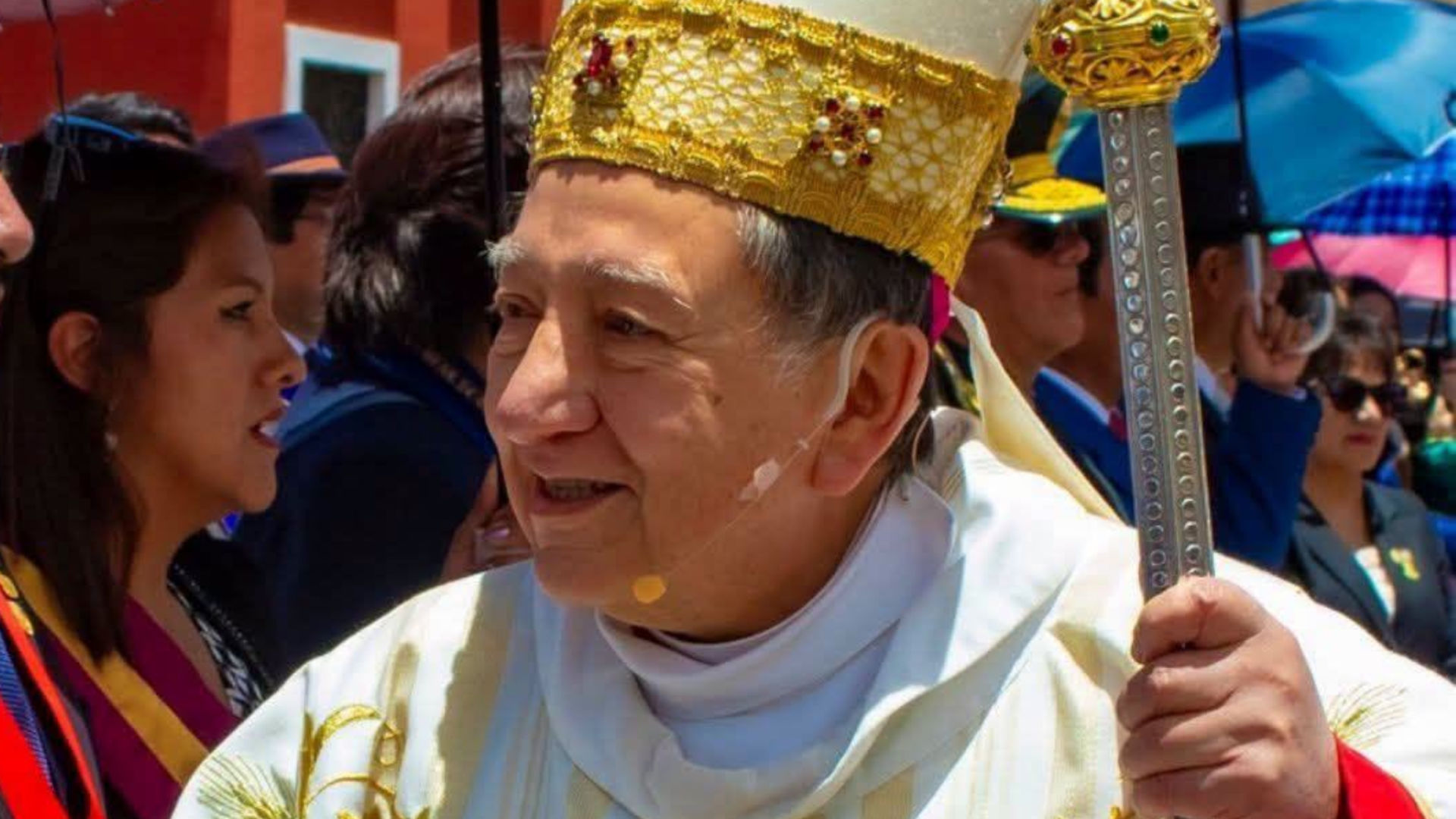
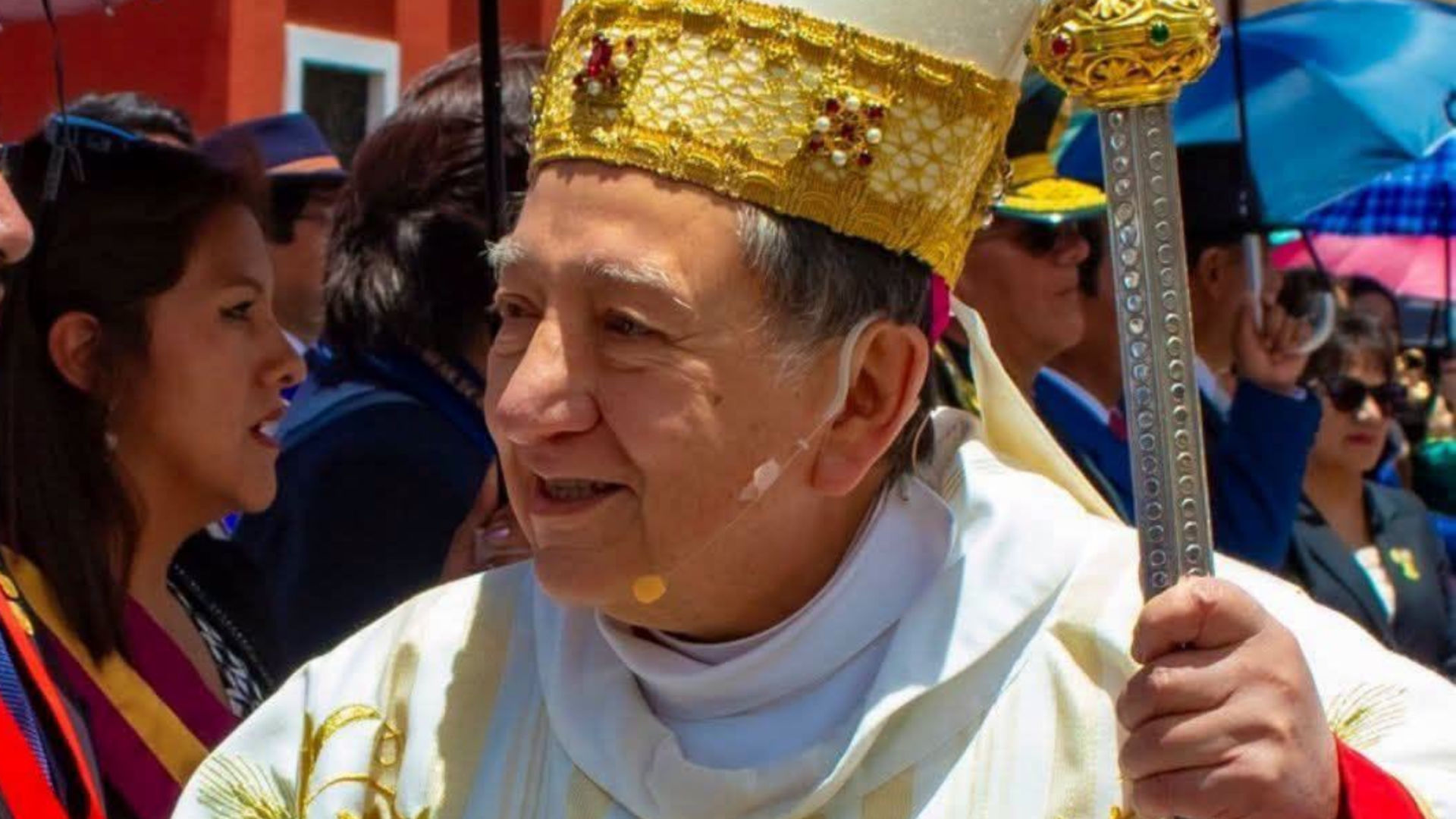
Peru loses second bishop in two days as Pope Leo’s visit nears – #Catholic – Bishop Jorge Pedro Carrión Pavlich of Puno, Peru, died at age 76, just two days after the death of Archbishop Richard Daniel Alarcón Urrutia of Cusco and less than two weeks before Pope Leo XIV arrives in the country.His death was announced Sunday, Nov. 1, during a Mass at the Shrine of the Virgin of Candelaria in Puno. He had been hospitalized at a clinic in Lima.The Peruvian bishops' conference issued a statement of condolence shortly afterward. “We join in prayer with the Church of Puno, his family and the entire Catholic community, thanking God for his life and his dedication to the service of the Church,” the bishops said, asking prayers for his eternal rest and for the consolation of his family.Alarcón, 74, died Friday, Oct. 30, after a battle with cancer. He had been helping prepare for the popeʼs stop in Cusco on Nov. 15, and Pope Leo expressed sorrow at his death. Meanwhile, Leo, who served for two decades in Peru as a missionary and later as bishop of Chiclayo, will visit the country Nov. 11–16, according to the published schedule. Puno is not on the itinerary.Five decades of serviceCarrión was born in Tarma, in Peruʼs central Andes. The Archdiocese of Lima noted that he had marked 50 years as a priest and more than 26 years as a bishop.Pope John Paul II named him a bishop in May 2000, and he went on to lead the Diocese of Puno, on the shores of Lake Titicaca, for more than 24 years. Before that, he served as assistant secretary of the Peruvian bishops' conference.Funeral arrangementsA wake was held Nov. 1 at the Archdiocesan Shrine of the Sacred Heart of Jesus in Santiago de Surco, Lima. The vigil continues Nov. 2 in Puno, where his funeral Mass will be celebrated Nov. 3.He will be buried Nov. 4 in the cemetery in his hometown of Tarma.This story was first published by EWTN News Español. It has been translated and adapted by EWTN News English.

Peru loses second bishop in two days as Pope Leo’s visit nears – #Catholic – Bishop Jorge Pedro Carrión Pavlich of Puno, Peru, died at age 76, just two days after the death of Archbishop Richard Daniel Alarcón Urrutia of Cusco and less than two weeks before Pope Leo XIV arrives in the country.His death was announced Sunday, Nov. 1, during a Mass at the Shrine of the Virgin of Candelaria in Puno. He had been hospitalized at a clinic in Lima.The Peruvian bishops' conference issued a statement of condolence shortly afterward. “We join in prayer with the Church of Puno, his family and the entire Catholic community, thanking God for his life and his dedication to the service of the Church,” the bishops said, asking prayers for his eternal rest and for the consolation of his family.Alarcón, 74, died Friday, Oct. 30, after a battle with cancer. He had been helping prepare for the popeʼs stop in Cusco on Nov. 15, and Pope Leo expressed sorrow at his death. Meanwhile, Leo, who served for two decades in Peru as a missionary and later as bishop of Chiclayo, will visit the country Nov. 11–16, according to the published schedule. Puno is not on the itinerary.Five decades of serviceCarrión was born in Tarma, in Peruʼs central Andes. The Archdiocese of Lima noted that he had marked 50 years as a priest and more than 26 years as a bishop.Pope John Paul II named him a bishop in May 2000, and he went on to lead the Diocese of Puno, on the shores of Lake Titicaca, for more than 24 years. Before that, he served as assistant secretary of the Peruvian bishops' conference.Funeral arrangementsA wake was held Nov. 1 at the Archdiocesan Shrine of the Sacred Heart of Jesus in Santiago de Surco, Lima. The vigil continues Nov. 2 in Puno, where his funeral Mass will be celebrated Nov. 3.He will be buried Nov. 4 in the cemetery in his hometown of Tarma.This story was first published by EWTN News Español. It has been translated and adapted by EWTN News English.

Bishop Jorge Carrión Pavlich, who led the Diocese of Puno for more than 24 years, has died at 76, two days after Archbishop Richard Alarcón of Cusco.

Read More
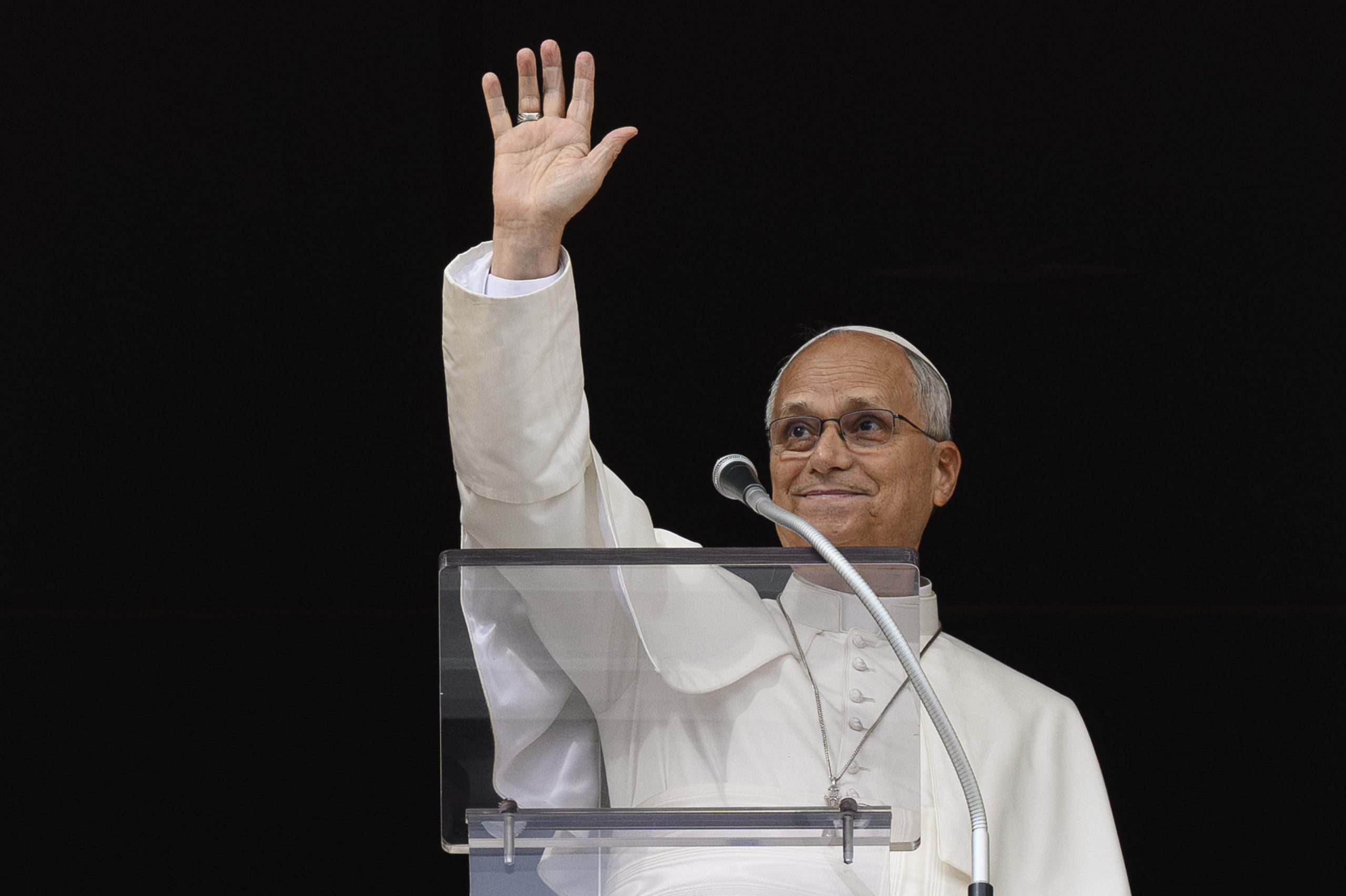
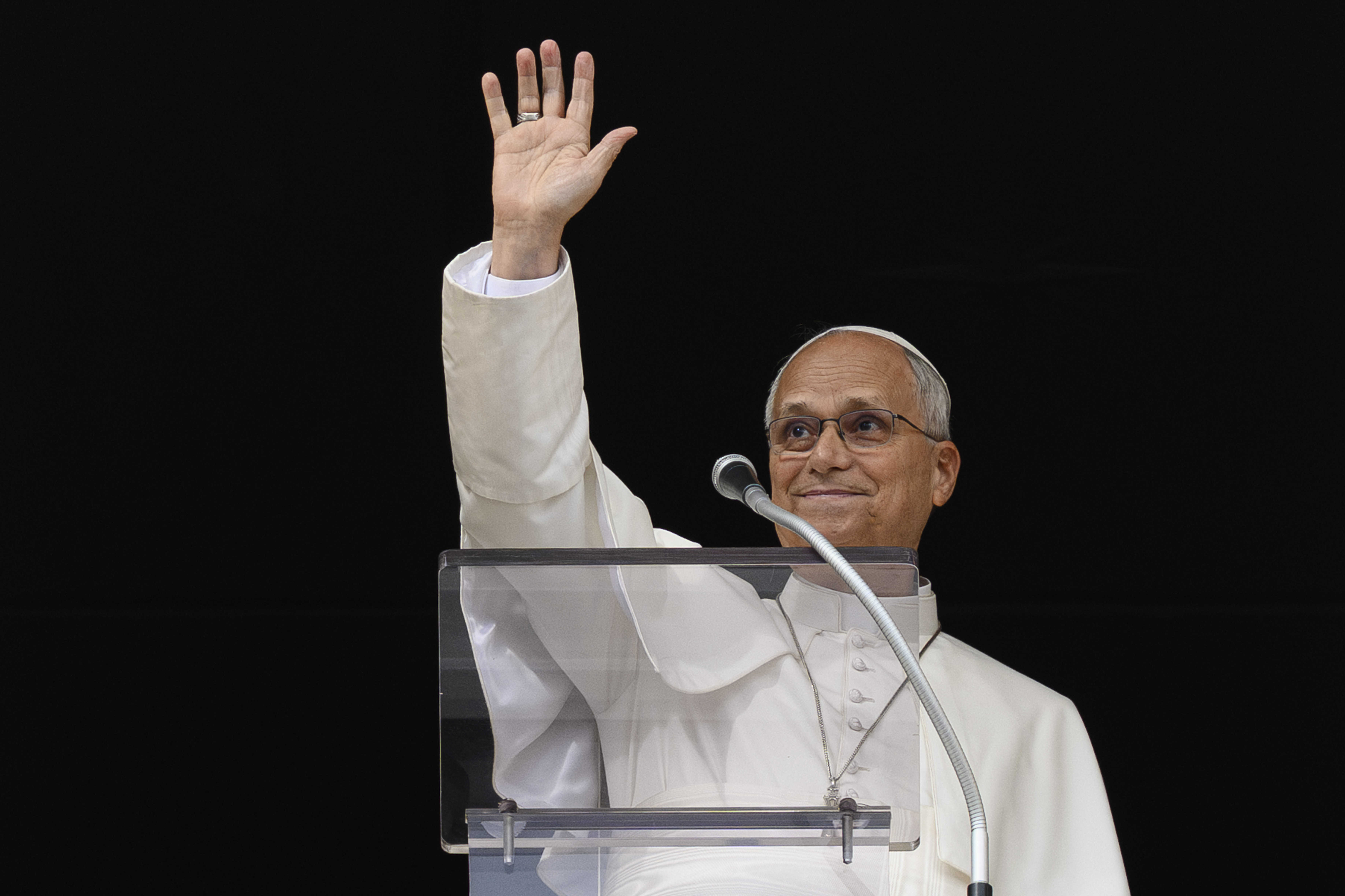
Pope Leo XIV: ‘Holiness is not a privilege reserved for a few’ – #Catholic – Pope Leo XIV said Sunday that holiness is a calling for everyone, not an achievement reserved for a select group, as he reflected on the Solemnity of All Saints during his Angelus address in St. Peter’s Square.“The Solemnity of All Saints, which we celebrate today, invites us to share in the joy of that countless family of men and women who, following the Lord Jesus, have made their lives a gift to God and to their neighbors,” the pope said.Quoting Pope Benedict XVI’s encyclical Spe Salvi, Leo said the saints, along their different paths to holiness, “have longed for ‘the ocean of infinite love.’”The pope noted that the Church celebrates not only canonized saints on Nov. 1 but also “the countless others who have not been formally recognized but are known to God.”“It is indeed true that it is impossible to count this multitude of brothers and sisters, and not just in numerical terms,” he said. “Holiness, in fact, cannot be reduced to any calculation, for such is the good that all the saints have spread around them in the world.”Leo said the saints brought forth “actions and choices of love that transcend the calculations of greed and the arrogance of evil, which at times seems to prevail.”“The saints are the most beautiful and powerful sign of the Kingdom of God that is coming — or rather, as Jesus teaches us, is already among us,” he said.The pope emphasized that the multitude of saints includes people “from the most diverse backgrounds, cultures and walks of life.”“Holiness is not a privilege reserved for a few, but a universal vocation that speaks to each of us where we live,” Leo said.“This is the hope-filled message of today’s feast: God sees the good that we do not see, knows stories that we do not know and reaches hearts to which we have no access.”He entrusted the faithful to the Blessed Virgin Mary, praying that she would accompany them “along the path to holiness, so that we may never grow weary of fostering peace, both in the most important situations and in the ordinary circumstances of everyday life.”Pope recalls newly beatified Georgia martyrsAfter the Angelus, Leo recalled the beatification the previous day in Savannah, Georgia, of Pedro de Corpa and four companions, Franciscan friars killed in odium fidei, or “in hatred of the faith,” in 1597.“Originally from Spain, they responded generously to the Lordʼs call to evangelize the peoples of the Americas, even to the point of giving their lives,” the pope said. “Let us invoke the intercession of these martyrs for all missionaries of the Gospel.”Leo also spoke about a recent humanitarian operation to assist civilians in Oleshky, expressing hope that cooperation between the parties involved would lead to further steps toward peace.“I hope that the cooperation between the parties, which made this necessary humanitarian act possible, will strengthen the desire for dialogue and lead to new concrete peace initiatives,” he said.The pope then highlighted the Youth Olympic Games in Dakar, Senegal, calling the first Olympic event held on the African continent “a sign of hope coming from the world of sport.”He also noted that the Friars Minor will hold a Mission with the Poor in Rome from Nov. 8–15.“I congratulate the sons of Saint Francis who, through this initiative, are placing the poor at the center, as the Lord Jesus did and as Saint Francis of Assisi did,” Leo said.Finally, ahead of the Nov. 2 Commemoration of All the Faithful Departed, the pope announced that he would celebrate Mass at Rome’s Verano Cemetery.“During these days, let us feel united in the Communion of Saints with the immense family of our brothers and sisters who have gone before us on our earthly pilgrimage,” he said, “and let us pray for the departed, especially those whom no one remembers.”This story was first published by ACI Stampa, the Italian-language sister service of EWTN News. It has been translated and adapted by EWTN News English.

Pope Leo XIV: ‘Holiness is not a privilege reserved for a few’ – #Catholic – Pope Leo XIV said Sunday that holiness is a calling for everyone, not an achievement reserved for a select group, as he reflected on the Solemnity of All Saints during his Angelus address in St. Peter’s Square.“The Solemnity of All Saints, which we celebrate today, invites us to share in the joy of that countless family of men and women who, following the Lord Jesus, have made their lives a gift to God and to their neighbors,” the pope said.Quoting Pope Benedict XVI’s encyclical Spe Salvi, Leo said the saints, along their different paths to holiness, “have longed for ‘the ocean of infinite love.’”The pope noted that the Church celebrates not only canonized saints on Nov. 1 but also “the countless others who have not been formally recognized but are known to God.”“It is indeed true that it is impossible to count this multitude of brothers and sisters, and not just in numerical terms,” he said. “Holiness, in fact, cannot be reduced to any calculation, for such is the good that all the saints have spread around them in the world.”Leo said the saints brought forth “actions and choices of love that transcend the calculations of greed and the arrogance of evil, which at times seems to prevail.”“The saints are the most beautiful and powerful sign of the Kingdom of God that is coming — or rather, as Jesus teaches us, is already among us,” he said.The pope emphasized that the multitude of saints includes people “from the most diverse backgrounds, cultures and walks of life.”“Holiness is not a privilege reserved for a few, but a universal vocation that speaks to each of us where we live,” Leo said.“This is the hope-filled message of today’s feast: God sees the good that we do not see, knows stories that we do not know and reaches hearts to which we have no access.”He entrusted the faithful to the Blessed Virgin Mary, praying that she would accompany them “along the path to holiness, so that we may never grow weary of fostering peace, both in the most important situations and in the ordinary circumstances of everyday life.”Pope recalls newly beatified Georgia martyrsAfter the Angelus, Leo recalled the beatification the previous day in Savannah, Georgia, of Pedro de Corpa and four companions, Franciscan friars killed in odium fidei, or “in hatred of the faith,” in 1597.“Originally from Spain, they responded generously to the Lordʼs call to evangelize the peoples of the Americas, even to the point of giving their lives,” the pope said. “Let us invoke the intercession of these martyrs for all missionaries of the Gospel.”Leo also spoke about a recent humanitarian operation to assist civilians in Oleshky, expressing hope that cooperation between the parties involved would lead to further steps toward peace.“I hope that the cooperation between the parties, which made this necessary humanitarian act possible, will strengthen the desire for dialogue and lead to new concrete peace initiatives,” he said.The pope then highlighted the Youth Olympic Games in Dakar, Senegal, calling the first Olympic event held on the African continent “a sign of hope coming from the world of sport.”He also noted that the Friars Minor will hold a Mission with the Poor in Rome from Nov. 8–15.“I congratulate the sons of Saint Francis who, through this initiative, are placing the poor at the center, as the Lord Jesus did and as Saint Francis of Assisi did,” Leo said.Finally, ahead of the Nov. 2 Commemoration of All the Faithful Departed, the pope announced that he would celebrate Mass at Rome’s Verano Cemetery.“During these days, let us feel united in the Communion of Saints with the immense family of our brothers and sisters who have gone before us on our earthly pilgrimage,” he said, “and let us pray for the departed, especially those whom no one remembers.”This story was first published by ACI Stampa, the Italian-language sister service of EWTN News. It has been translated and adapted by EWTN News English.

The pontiff said the Solemnity of All Saints offers a “hope-filled message”: God sees goodness hidden from us and calls every person to holiness.

Read More
Africa surpasses Europe in Catholic population; Church leaders highlight missionary role – #Catholic – NAIROBI, Kenya — Catholic leaders in Africa have described the Church’s growth there as an opportunity to share its faith, vocations, and missionary experience with the universal Church while continuing to receive gifts from other local Churches.According to the latest statistics published by Agenzia Fides, Africa’s Catholic population has now surpassed Europe’s, rising to 288.3 million compared with Europe’s 287.2 million. Africa now has the second-largest Catholic population, after the Americas, which the organization counts as one region.The data Fides used comes from the Church’s Book of Statistics, which is updated yearly. The latest edition includes data through Dec. 31, 2024.In responses shared with ACI Africa, the sister service of EWTN News in Africa,  Catholic leaders in Africa pointed to families, catechists, pastoral presence, and the witness of missionaries among factors they believe have contributed to the growth.Catholics in the world numbered 1.4 billion, with an overall increase of 15.8 million Catholics compared with the previous year. As in previous years, increases were registered above all in Africa and in the Americas, followed by Asia, Europe, and Oceania. The African continent recorded the largest increase in Catholics, adding 7.58 million compared with an increase of 6.99 million in the Americas. Africa gained 1,676 priests, the largest continental increase, compared with a worldwide net increase of 425 priests.According to the Fides report, Africa was the only continent to register growth in seminarians, adding 786, while the global total declined by 2,891.Sharing the gift of faithFor Bishop Edward Hiiboro Kussala of South Sudan’s Diocese of Tombura-Yambio, the findings are a reason for gratitude and renewed missionary responsibility.“Having received the gift of faith through the missionary witness of others, we are now blessed to share that gift with the universal Church,” Hiiboro said.
 
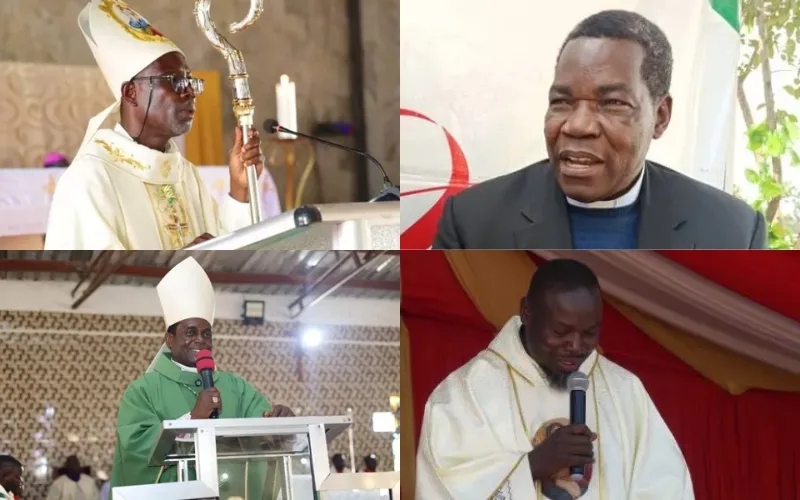
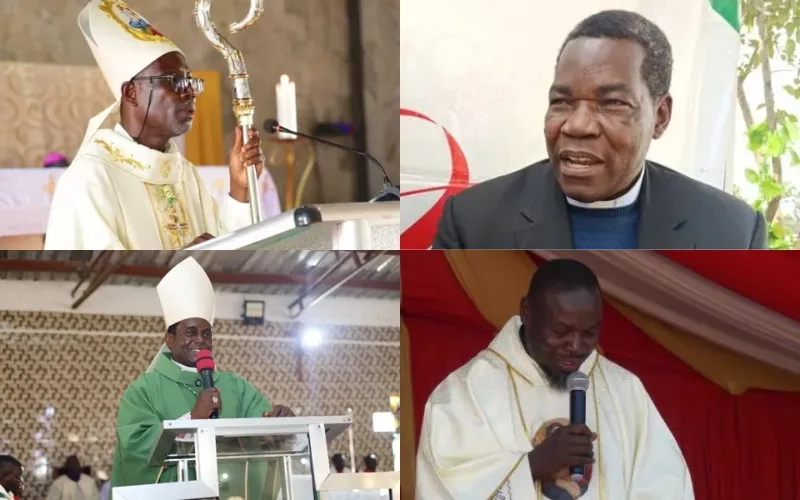
 Bishop Edward Hiiboro Kussala of the Diocese of Tombura-Yambio in South Sudan. | Credit: ACI Africa
 
 As bishop of Tombura-Yambio since 2008, Hiiboro also serves as president of the Integral Human Development Commission of the Sudan and South Sudan Catholic Bishops’ Conference. He said that growth of faith is not a competition.“Africa is not competing with any continent in the growth of faith. We are part of one universal Church, united in Christ and enriched by the gifts of different peoples and cultures,” he said.Father Vincent Simba, rector of Nairobi-based St. Thomas Aquinas Senior Seminary, said the increase in Catholics and priests offers hope for Africa and the universal Church.
 
 Father Vincent Simba, rector of Nairobi-based St. Thomas Aquinas Senior Seminary. | Credit: St. Thomas Aquinas Senior Seminary-Theologicum, Nairobi
 
 Simba expressed hope that Africa would have opportunities to send missionaries to places from which the continent received the Christian faith.Bishop Joseph Kacou Aka of Ivory Coast’s Diocese of Yamoussoukro said the figures are an invitation to deepen communion among local Churches.“Africa is called to share its gifts: its vocations, its community experience, its theological reflection, and its witness of faith,” he said. “But mission remains a fraternal exchange in which each Church both gives and receives.”Aka, who was consecrated bishop in 2023, said pastoral action in his diocese is guided by the theme “Autonomous and Missionary Church, Communion of Communities.”
 
 Bishop Joseph Kacou Aka of Ivory Coast’s Diocese of Yamoussoukro. | Credit: Catholic Diocese of Yamoussoukro
 
 Families, communities, and pastoral presenceIn his response to ACI Africa, Hiiboro pointed to family bonds, community life, and openness to God as among the conditions he believes have helped the growth of Christian faith in Africa, alongside the work of missionaries, catechists, priests, women and men religious, and laypeople.In Nigeria, Bishop Gerald Mamman Musa of the Diocese of Katsina identified the continent’s youthful population, family life, liturgies, and the work of Catholic institutions among factors contributing to growth.“In Nigeria, parish communities, Catholic schools, hospitals, and lay movements help transmit the faith across generations,” Musa said.
 
 Bishop Gerald Mamman Musa of Nigeria’s Diocese of Katsina. | Credit: ACI Africa
 
 Musa, who also chairs the Communications Commission of the Catholic Bishops’ Conference of Nigeria (CBCN), said his diocese had seen its number of seminarians rise from about 21 in 2023 to more than 40 in 2026. He cautioned that “demographic growth alone does not explain conversion.”Father George Omondi, a Kenyan-born member of the Congregation of the Holy Spirit, commonly known as the Spiritans, pointed to the accessibility of pastoral services.Omondi, who previously served as vice provincial superior and councilor for formation in the Spiritans’ Kenya and South Sudan Province, recalled seeing an increase in parishes in Kenyan Catholic dioceses, bringing services closer to the faithful.
 
 Father George Omondi. | Credit: ACI Africa
 
 Omondi said during his parish ministry he also observed adult baptisms and received converts from other churches into the Catholic Church.In his own response, Aka cautioned against assigning a single cause to the growth. The statistics, he said, “describe a development without, by themselves, establishing its causes,” and do not determine the respective contributions of family transmission, adult baptisms, and demographic factors.This story was first published by ACI Africa, the sister service of EWTN News in Africa, and has been adapted by EWTN News.

Africa surpasses Europe in Catholic population; Church leaders highlight missionary role – #Catholic – NAIROBI, Kenya — Catholic leaders in Africa have described the Church’s growth there as an opportunity to share its faith, vocations, and missionary experience with the universal Church while continuing to receive gifts from other local Churches.According to the latest statistics published by Agenzia Fides, Africa’s Catholic population has now surpassed Europe’s, rising to 288.3 million compared with Europe’s 287.2 million. Africa now has the second-largest Catholic population, after the Americas, which the organization counts as one region.The data Fides used comes from the Church’s Book of Statistics, which is updated yearly. The latest edition includes data through Dec. 31, 2024.In responses shared with ACI Africa, the sister service of EWTN News in Africa,  Catholic leaders in Africa pointed to families, catechists, pastoral presence, and the witness of missionaries among factors they believe have contributed to the growth.Catholics in the world numbered 1.4 billion, with an overall increase of 15.8 million Catholics compared with the previous year. As in previous years, increases were registered above all in Africa and in the Americas, followed by Asia, Europe, and Oceania. The African continent recorded the largest increase in Catholics, adding 7.58 million compared with an increase of 6.99 million in the Americas. Africa gained 1,676 priests, the largest continental increase, compared with a worldwide net increase of 425 priests.According to the Fides report, Africa was the only continent to register growth in seminarians, adding 786, while the global total declined by 2,891.Sharing the gift of faithFor Bishop Edward Hiiboro Kussala of South Sudan’s Diocese of Tombura-Yambio, the findings are a reason for gratitude and renewed missionary responsibility.“Having received the gift of faith through the missionary witness of others, we are now blessed to share that gift with the universal Church,” Hiiboro said. Bishop Edward Hiiboro Kussala of the Diocese of Tombura-Yambio in South Sudan. | Credit: ACI Africa As bishop of Tombura-Yambio since 2008, Hiiboro also serves as president of the Integral Human Development Commission of the Sudan and South Sudan Catholic Bishops’ Conference. He said that growth of faith is not a competition.“Africa is not competing with any continent in the growth of faith. We are part of one universal Church, united in Christ and enriched by the gifts of different peoples and cultures,” he said.Father Vincent Simba, rector of Nairobi-based St. Thomas Aquinas Senior Seminary, said the increase in Catholics and priests offers hope for Africa and the universal Church. Father Vincent Simba, rector of Nairobi-based St. Thomas Aquinas Senior Seminary. | Credit: St. Thomas Aquinas Senior Seminary-Theologicum, Nairobi Simba expressed hope that Africa would have opportunities to send missionaries to places from which the continent received the Christian faith.Bishop Joseph Kacou Aka of Ivory Coast’s Diocese of Yamoussoukro said the figures are an invitation to deepen communion among local Churches.“Africa is called to share its gifts: its vocations, its community experience, its theological reflection, and its witness of faith,” he said. “But mission remains a fraternal exchange in which each Church both gives and receives.”Aka, who was consecrated bishop in 2023, said pastoral action in his diocese is guided by the theme “Autonomous and Missionary Church, Communion of Communities.” Bishop Joseph Kacou Aka of Ivory Coast’s Diocese of Yamoussoukro. | Credit: Catholic Diocese of Yamoussoukro Families, communities, and pastoral presenceIn his response to ACI Africa, Hiiboro pointed to family bonds, community life, and openness to God as among the conditions he believes have helped the growth of Christian faith in Africa, alongside the work of missionaries, catechists, priests, women and men religious, and laypeople.In Nigeria, Bishop Gerald Mamman Musa of the Diocese of Katsina identified the continent’s youthful population, family life, liturgies, and the work of Catholic institutions among factors contributing to growth.“In Nigeria, parish communities, Catholic schools, hospitals, and lay movements help transmit the faith across generations,” Musa said. Bishop Gerald Mamman Musa of Nigeria’s Diocese of Katsina. | Credit: ACI Africa Musa, who also chairs the Communications Commission of the Catholic Bishops’ Conference of Nigeria (CBCN), said his diocese had seen its number of seminarians rise from about 21 in 2023 to more than 40 in 2026. He cautioned that “demographic growth alone does not explain conversion.”Father George Omondi, a Kenyan-born member of the Congregation of the Holy Spirit, commonly known as the Spiritans, pointed to the accessibility of pastoral services.Omondi, who previously served as vice provincial superior and councilor for formation in the Spiritans’ Kenya and South Sudan Province, recalled seeing an increase in parishes in Kenyan Catholic dioceses, bringing services closer to the faithful. Father George Omondi. | Credit: ACI Africa Omondi said during his parish ministry he also observed adult baptisms and received converts from other churches into the Catholic Church.In his own response, Aka cautioned against assigning a single cause to the growth. The statistics, he said, “describe a development without, by themselves, establishing its causes,” and do not determine the respective contributions of family transmission, adult baptisms, and demographic factors.This story was first published by ACI Africa, the sister service of EWTN News in Africa, and has been adapted by EWTN News.

According to the latest statistics published by Agenzia Fides, Africa’s Catholic population has now surpassed Europe’s, rising to 288.3 million.

Read More
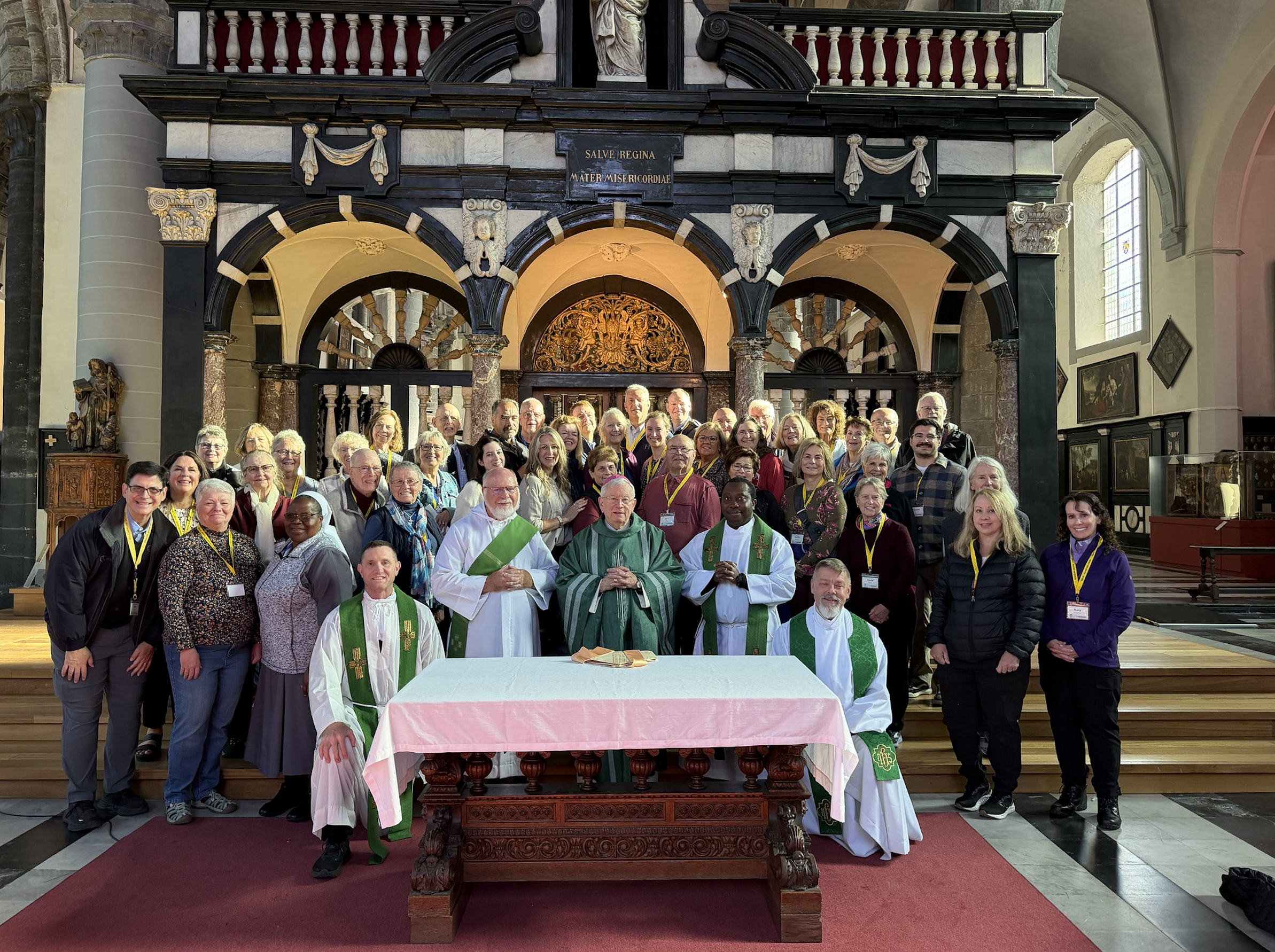
Wisconsin pilgrims visit Belgium to explore roots of Our Lady of Champion visionary #Catholic A group of 50 people from the Diocese of Green Bay, Wisconsin, recently walked in the footsteps of Servant of God Adele Brice during a 10-day pilgrimage to Belgium where they visited locations associated with the Marian visionary at the center of the story behind the National Shrine of Our Lady of Champion — the only approved Marian apparition site in the United States.Led by Bishop David Ricken of the Diocese of Green Bay, the group visited the cities of Brussels, Bruges, Antwerp, Dion-le-Val, and Leuven from Oct. 10–20 on the first-of-its-kind pilgrimage.Among the stops were the Church of Our Lady, home to The Madonna of Bruges sculpture created by Michelangelo; the Basilica of Our Lady of Scherpenheuvel, Belgium’s most visited Marian shrine; the tomb of St. Damien of Molokai, a Belgian priest known for his service to the leper community on the island of Molokai in Hawaii; the Catholic University of Leuven, the oldest Catholic university in the world; and several locations associated with Brice, including her hometown of Dion-le-Val, her home parish, the site of her confirmation, and the port where Brice and her family embarked for New York in 1855.
 
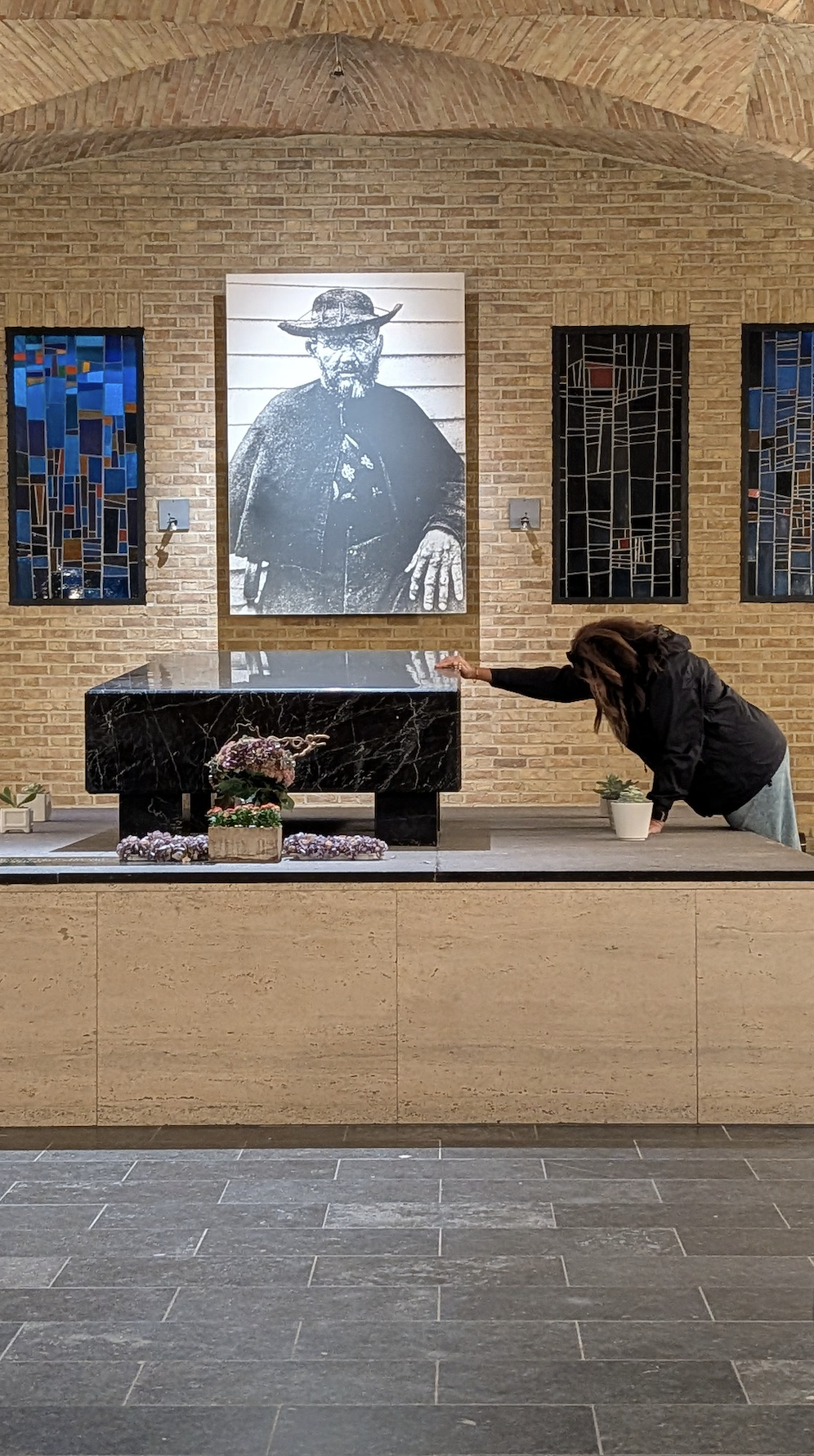
 A pilgrim from the Diocese of Green Bay prays at the tomb of St. Damien of Molokai, which is located in the St. Anthony of Padua Chapel in Leuven, Belgium. | Credit: On Mission Media
 
 In an interview with EWTN News, Ricken described the pilgrimage for those who took part as a “discovering of roots.”He explained that most of the pilgrims were from Door County in Wisconsin, which is one of the largest Belgian communities in the United States.“Thereʼs a Belgian heritage center here and lots of deep connections, and they havenʼt forgotten those,” he shared. “And they just loved Adele from the time she came.”With this in mind, and since Brice’s cause for canonization was officially opened in February, Ricken and others involved with the pilgrimage thought it could serve as a “moment of connecting with her [Brice’s] roots so that we can understand her better” as well as give the pilgrims in attendance “a chance to reconnect” with their Belgian roots.Ricken recalled that one of the most impactful stops on the pilgrimage was the Mass celebrated at Brice’s home parish, the Church of St. Martin in Dion-le-Val. This small parish typically has roughly 20 people in attendance — as Catholicism in Belgium is currently at a low point, Ricken explained — but for this Mass, 250 people crammed into the space to celebrate the special occasion.
 
 Bishop David Ricken of the Diocese of Green Bay celebrates Mass at St. Martin Parish in Dion-le-Val, Belgium, the home parish of Servant of God Adele Brice. | Credit: Amy Kawula
 
 “I think it gave them a whole new sense of pride in their own history over there. So it was a renewal for them. You could see that. The people were so thrilled to have us,” he shared.After the Mass — which was concelebrated by Ricken, several other priests from the Diocese of Green Bay who were on the pilgrimage, and local Belgian priests — a reception was held. Despite having a language barrier, Ricken said everyone was still able to communicate and many of the local Belgians recognized the family last names of the American pilgrims and found family connections. He shared that one of his priests from the diocese found a relative of his that he “never knew existed before.”“It was just beautiful and itʼs going to take quite a while to unpack all of that and understand exactly what happened, but it was deeply enriching for everybody, including me,” he said.The Church of St. Martin was also the recipient of the Our Lady of Champion Adele Brice icon done by Father Paul Czerwonka from the Diocese of La Crosse in Wisconsin. The icon depicts the Blessed Virgin Mary appearing to Brice and has two angels holding a banner with the message the Blessed Mother gave Brice: “I am the Queen of Heaven … Gather the children in this wild country and teach them what they should know for salvation. Teach them their catechism, how to sign themselves with the sign of the cross, and how to approach the sacraments. That is what I wish you to do. Go and fear nothing, I will help you.”The icon is 8 feet tall by 4 feet wide and took two months to complete.
 
 The Our Lady of Champion-Adele Brice icon by Father Paul Czerwonka from the Diocese of La Crosse in Wisconsin. | Credit: The National Shrine of Our Lady of Champion
 
 Ricken said one moment that was very personal for him during the pilgrimage was when the group visited the Catholic University of Leuven. The bishop received his graduate degree in sacred theology and completed his seminary formation at this university in 1980. While the seminary building is now used for student housing, the chapel from the seminary is still in use.“We were able to arrange for an anointing service of the pilgrims … there in the seminary chapel where I attended Mass every day as a student and loved it so much,” he shared. “And I was able to lead the anointing service. And many people took advantage of that … not everybody, but many did, and it was so beautiful that right there in the former seminary chapel to be able to take care of my own people from here who went on that pilgrimage. That was very touching.”
 
 The faithful gather for a reception after the Mass celebrated at St. Martin Parish in Dion-le-Val, Belgium, the home parish of Servant of God Adele Brice. | Credit: Amy Kawula
 
 Reflecting on the pilgrimage as a whole, Ricken said he believes “there will be a lot of answered prayers” through Brice’s intercession.Ricken said he hopes those who went “see all of their instincts and their love of their culture and language as something thatʼs still alive, still vibrant in certain places, and that the shrine is their connection with home.”“Theyʼve always felt that, but now they actually saw it themselves. They were able to go to her hometown and experience that connection,” he added. “And my hope is that theyʼll continue to volunteer and do all the beautiful things they do and have even more commitment to it and be able to identify the work of grace and the Holy Spirit in everything thatʼs happening today in and around the shrine through Adele [Brice] and through the Blessed Mother.”

Wisconsin pilgrims visit Belgium to explore roots of Our Lady of Champion visionary #Catholic A group of 50 people from the Diocese of Green Bay, Wisconsin, recently walked in the footsteps of Servant of God Adele Brice during a 10-day pilgrimage to Belgium where they visited locations associated with the Marian visionary at the center of the story behind the National Shrine of Our Lady of Champion — the only approved Marian apparition site in the United States.Led by Bishop David Ricken of the Diocese of Green Bay, the group visited the cities of Brussels, Bruges, Antwerp, Dion-le-Val, and Leuven from Oct. 10–20 on the first-of-its-kind pilgrimage.Among the stops were the Church of Our Lady, home to The Madonna of Bruges sculpture created by Michelangelo; the Basilica of Our Lady of Scherpenheuvel, Belgium’s most visited Marian shrine; the tomb of St. Damien of Molokai, a Belgian priest known for his service to the leper community on the island of Molokai in Hawaii; the Catholic University of Leuven, the oldest Catholic university in the world; and several locations associated with Brice, including her hometown of Dion-le-Val, her home parish, the site of her confirmation, and the port where Brice and her family embarked for New York in 1855. A pilgrim from the Diocese of Green Bay prays at the tomb of St. Damien of Molokai, which is located in the St. Anthony of Padua Chapel in Leuven, Belgium. | Credit: On Mission Media In an interview with EWTN News, Ricken described the pilgrimage for those who took part as a “discovering of roots.”He explained that most of the pilgrims were from Door County in Wisconsin, which is one of the largest Belgian communities in the United States.“Thereʼs a Belgian heritage center here and lots of deep connections, and they havenʼt forgotten those,” he shared. “And they just loved Adele from the time she came.”With this in mind, and since Brice’s cause for canonization was officially opened in February, Ricken and others involved with the pilgrimage thought it could serve as a “moment of connecting with her [Brice’s] roots so that we can understand her better” as well as give the pilgrims in attendance “a chance to reconnect” with their Belgian roots.Ricken recalled that one of the most impactful stops on the pilgrimage was the Mass celebrated at Brice’s home parish, the Church of St. Martin in Dion-le-Val. This small parish typically has roughly 20 people in attendance — as Catholicism in Belgium is currently at a low point, Ricken explained — but for this Mass, 250 people crammed into the space to celebrate the special occasion. Bishop David Ricken of the Diocese of Green Bay celebrates Mass at St. Martin Parish in Dion-le-Val, Belgium, the home parish of Servant of God Adele Brice. | Credit: Amy Kawula “I think it gave them a whole new sense of pride in their own history over there. So it was a renewal for them. You could see that. The people were so thrilled to have us,” he shared.After the Mass — which was concelebrated by Ricken, several other priests from the Diocese of Green Bay who were on the pilgrimage, and local Belgian priests — a reception was held. Despite having a language barrier, Ricken said everyone was still able to communicate and many of the local Belgians recognized the family last names of the American pilgrims and found family connections. He shared that one of his priests from the diocese found a relative of his that he “never knew existed before.”“It was just beautiful and itʼs going to take quite a while to unpack all of that and understand exactly what happened, but it was deeply enriching for everybody, including me,” he said.The Church of St. Martin was also the recipient of the Our Lady of Champion Adele Brice icon done by Father Paul Czerwonka from the Diocese of La Crosse in Wisconsin. The icon depicts the Blessed Virgin Mary appearing to Brice and has two angels holding a banner with the message the Blessed Mother gave Brice: “I am the Queen of Heaven … Gather the children in this wild country and teach them what they should know for salvation. Teach them their catechism, how to sign themselves with the sign of the cross, and how to approach the sacraments. That is what I wish you to do. Go and fear nothing, I will help you.”The icon is 8 feet tall by 4 feet wide and took two months to complete. The Our Lady of Champion-Adele Brice icon by Father Paul Czerwonka from the Diocese of La Crosse in Wisconsin. | Credit: The National Shrine of Our Lady of Champion Ricken said one moment that was very personal for him during the pilgrimage was when the group visited the Catholic University of Leuven. The bishop received his graduate degree in sacred theology and completed his seminary formation at this university in 1980. While the seminary building is now used for student housing, the chapel from the seminary is still in use.“We were able to arrange for an anointing service of the pilgrims … there in the seminary chapel where I attended Mass every day as a student and loved it so much,” he shared. “And I was able to lead the anointing service. And many people took advantage of that … not everybody, but many did, and it was so beautiful that right there in the former seminary chapel to be able to take care of my own people from here who went on that pilgrimage. That was very touching.” The faithful gather for a reception after the Mass celebrated at St. Martin Parish in Dion-le-Val, Belgium, the home parish of Servant of God Adele Brice. | Credit: Amy Kawula Reflecting on the pilgrimage as a whole, Ricken said he believes “there will be a lot of answered prayers” through Brice’s intercession.Ricken said he hopes those who went “see all of their instincts and their love of their culture and language as something thatʼs still alive, still vibrant in certain places, and that the shrine is their connection with home.”“Theyʼve always felt that, but now they actually saw it themselves. They were able to go to her hometown and experience that connection,” he added. “And my hope is that theyʼll continue to volunteer and do all the beautiful things they do and have even more commitment to it and be able to identify the work of grace and the Holy Spirit in everything thatʼs happening today in and around the shrine through Adele [Brice] and through the Blessed Mother.”

Bishop David Ricken led 50 pilgrims from Wisconsin to Belgium to retrace Adele Brice’s footsteps and deepen their connection to the visionary behind the National Shrine of Our Lady of Champion.

Read More
Picture of the day
Vodno Telecommunication Tower under construction in Skopje, North Macedonia. Today is the Day of the Macedonian Revolutionary Struggle, a national holiday in North Macedonia celebrated on the occasion of the formation of the Internal Macedonian Revolutionary Organization.
Read More

Looking for a sky event this week? Check out our full Sky This Week column.  October 31: Glimpse the ghostly Phantom Galaxy Daylight saving time ends at 2 A.M. local daylight time this morning, when clocks fall back one hour to 1 A.M. local standard time.  Early this morning, the waning gibbous Moon is in Cancer, justContinue reading “The Sky Today on Sunday, November 1: The Moon in Cancer”

The post The Sky Today on Sunday, November 1: The Moon in Cancer appeared first on Astronomy Magazine.

Read More