Day: November 8, 2026

Gospel and Word of the Day – 9 November 2026 – A reading from the Book of Ezekiel 47:1-2, 8-9, 12 The angel brought me back to the entrance of the temple, and I saw water flowing out from beneath the threshold of the temple toward the east, for the façade of the temple was toward the east; the water flowed down from the southern side of the temple, south of the altar. He led me outside by the north gate, and around to the outer gate facing the east, where I saw water trickling from the southern side. He said to me, "This water flows into the eastern district down upon the Arabah, and empties into the sea, the salt waters, which it makes fresh. Wherever the river flows, every sort of living creature that can multiply shall live, and there shall be abundant fish, for wherever this water comes the sea shall be made fresh. Along both banks of the river, fruit trees of every kind shall grow; their leaves shall not fade, nor their fruit fail. Every month they shall bear fresh fruit, for they shall be watered by the flow from the sanctuary. Their fruit shall serve for food, and their leaves for medicine."   A reading from the First Letter of St. Paul to Corinthians 3:9c-11, 16-17 Brothers and sisters: You are God’s building. According to the grace of God given to me, like a wise master builder I laid a foundation, and another is building upon it. But each one must be careful how he builds upon it, for no one can lay a foundation other than the one that is there, namely, Jesus Christ. Do you not know that you are the temple of God, and that the Spirit of God dwells in you? If anyone destroys God’s temple, God will destroy that person; for the temple of God, which you are, is holy.From the Gospel according to John 2:13-22 Since the Passover of the Jews was near, Jesus went up to Jerusalem. He found in the temple area those who sold oxen, sheep, and doves, as well as the money-changers seated there. He made a whip out of cords and drove them all out of the temple area, with the sheep and oxen, and spilled the coins of the money-changers and overturned their tables, and to those who sold doves he said, "Take these out of here, and stop making my Father’s house a marketplace." His disciples recalled the words of Scripture, Zeal for your house will consume me. At this the Jews answered and said to him, "What sign can you show us for doing this?" Jesus answered and said to them, "Destroy this temple and in three days I will raise it up." The Jews said, "This temple has been under construction for forty-six years, and you will raise it up in three days?" But he was speaking about the temple of his Body. Therefore, when he was raised from the dead, his disciples remembered that he had said this, and they came to believe the Scripture and the word Jesus had spoken.In order to better understand today’s Gospel passage, we must highlight an important characteristic. The merchants were in the courtyard reserved for Gentiles, the area that was accessible to non Jews. This very hall had been transformed into a market. But God wants his temple to be “a house of prayer for all peoples” (Is 56:7).(…) Jesus knows that this provocative behaviour will cost him dear. And when they ask him: “What sign have you to show us for doing this?” (Jn 2:18), the Lord answers by saying: “Destroy this temple, and in three days I will raise it up” (Jn 2:19). (…) In our lives as sinners, we often happen to distance ourselves from the Lord and to dampen the Spirit. We destroy the temple of God which is each of us. And yet this is never a definitive situation: three days are enough for the Lord to rebuild his temple within us! As much as they may have been wounded by evil, no one is condemned to be forever separated from God on this earth. In an often mysterious but real way, the Lord opens new small openings in hearts, the desire for truth, good and beauty that make room for evangelization. At times, one can come across mistrust and hostility. One should not allow oneself to be stopped but rather safeguard the conviction that for God three days are enough to resuscitate his Son in the heart of man. (Pope Francis, Homily, 9 November 2019)  

A reading from the Book of Ezekiel
47:1-2, 8-9, 12

The angel brought me
back to the entrance of the temple,
and I saw water flowing out
from beneath the threshold of the temple toward the east,
for the façade of the temple was toward the east;
the water flowed down from the southern side of the temple,
south of the altar.
He led me outside by the north gate,
and around to the outer gate facing the east,
where I saw water trickling from the southern side.
He said to me,
"This water flows into the eastern district down upon the Arabah,
and empties into the sea, the salt waters, which it makes fresh.
Wherever the river flows,
every sort of living creature that can multiply shall live,
and there shall be abundant fish,
for wherever this water comes the sea shall be made fresh.
Along both banks of the river, fruit trees of every kind shall grow;
their leaves shall not fade, nor their fruit fail.
Every month they shall bear fresh fruit,
for they shall be watered by the flow from the sanctuary.
Their fruit shall serve for food, and their leaves for medicine."


A reading from the First Letter of St. Paul to Corinthians
3:9c-11, 16-17

Brothers and sisters:
You are God’s building.
According to the grace of God given to me,
like a wise master builder I laid a foundation,
and another is building upon it.
But each one must be careful how he builds upon it,
for no one can lay a foundation other than the one that is there,
namely, Jesus Christ.

Do you not know that you are the temple of God,
and that the Spirit of God dwells in you?
If anyone destroys God’s temple,
God will destroy that person;
for the temple of God, which you are, is holy.

From the Gospel according to John
2:13-22

Since the Passover of the Jews was near,
Jesus went up to Jerusalem.
He found in the temple area those who sold oxen, sheep, and doves,
as well as the money-changers seated there.
He made a whip out of cords
and drove them all out of the temple area, with the sheep and oxen,
and spilled the coins of the money-changers
and overturned their tables,
and to those who sold doves he said,
"Take these out of here,
and stop making my Father’s house a marketplace."
His disciples recalled the words of Scripture,
Zeal for your house will consume me.
At this the Jews answered and said to him,
"What sign can you show us for doing this?"
Jesus answered and said to them,
"Destroy this temple and in three days I will raise it up."
The Jews said,
"This temple has been under construction for forty-six years,
and you will raise it up in three days?"
But he was speaking about the temple of his Body.
Therefore, when he was raised from the dead,
his disciples remembered that he had said this,
and they came to believe the Scripture
and the word Jesus had spoken.

In order to better understand today’s Gospel passage, we must highlight an important characteristic. The merchants were in the courtyard reserved for Gentiles, the area that was accessible to non Jews. This very hall had been transformed into a market. But God wants his temple to be “a house of prayer for all peoples” (Is 56:7).(…) Jesus knows that this provocative behaviour will cost him dear. And when they ask him: “What sign have you to show us for doing this?” (Jn 2:18), the Lord answers by saying: “Destroy this temple, and in three days I will raise it up” (Jn 2:19). (…)
In our lives as sinners, we often happen to distance ourselves from the Lord and to dampen the Spirit. We destroy the temple of God which is each of us. And yet this is never a definitive situation: three days are enough for the Lord to rebuild his temple within us! As much as they may have been wounded by evil, no one is condemned to be forever separated from God on this earth. In an often mysterious but real way, the Lord opens new small openings in hearts, the desire for truth, good and beauty that make room for evangelization. At times, one can come across mistrust and hostility. One should not allow oneself to be stopped but rather safeguard the conviction that for God three days are enough to resuscitate his Son in the heart of man. (Pope Francis, Homily, 9 November 2019)


Read More
In Argentina, Pope Leo XIV highlights social problems #Catholic BUENOS AIRES, Argentina — Pope Leo XIV spoke about crime, economic inequality, and political polarization, among other topics, in a wide-ranging speech to President Javier Milei and other dignitaries Nov. 8, the pope’s first day in Argentina.Milei is a self-described “anarcho-capitalist” whose policies of austerity have drawn criticism from Argentina’s Catholic bishops. Though Leo did not directly criticize the president, his speech was the most political he has given so far on his tour of South America, which began Nov. 6 in Uruguay and will conclude Nov. 16 in Peru.The pope opened by stating that he had come to Argentina “as a pastor,” but that the Church wishes “to propose to those who hold public office a message inspired by the Gospel and aimed at safeguarding the dignity of every person, civic concord, and the common good.”Leo highlighted several widespread social problems, including public safety. “Organized crime, human trafficking networks, arms and drug trafficking together with corruption all undermine social cohesion, fuel violence and divert resources necessary for the common good,” the pope said.Violent crime is an urgent concern across the region. According to a U.N. report, the homicide rate for Latin America and the Caribbean was the world’s highest in 2023, and nearly four times the world average.Addressing the question of inequality, the pope said that efforts should be made to ensure “that economic growth also benefits those who are disadvantaged. Here I think of families facing an uncertain future, the unemployed, the elderly who for years contributed to society, and all those who, despite hard work, nonetheless struggle to meet their household’s needs.”Leo pointed to the plight of young people driven to emigrate in search of opportunities. “A nation must seriously ask itself where it has failed when its young people have to leave their homeland in order to make their dreams come true,” he said.
 
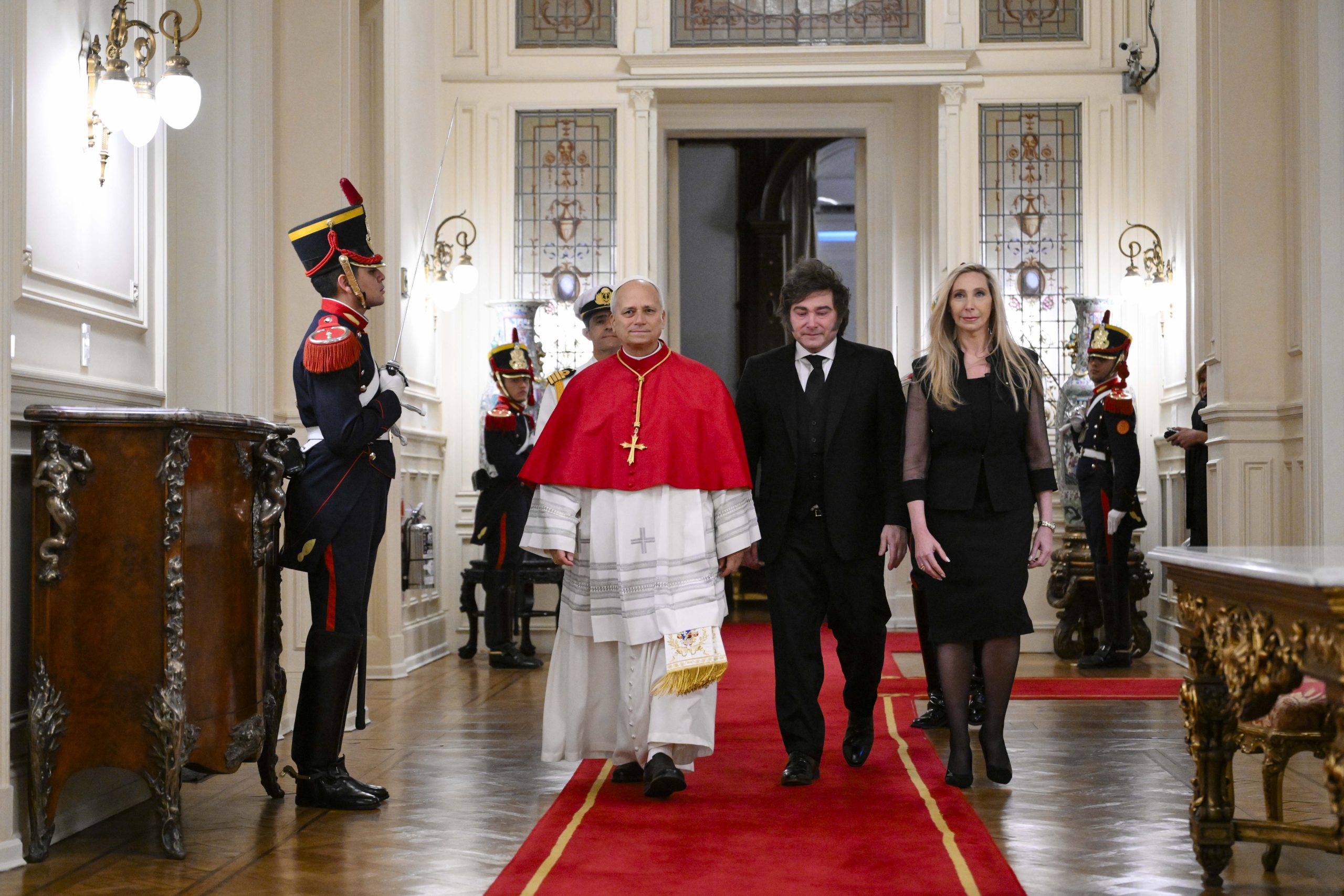
 Pope Leo XIV tours the Casa Rosada alongside Argentine President Javier Milei and other members of the delegation during his visit to Buenos Aires on Nov. 8, 2026. | Credit: Vatican Media
 
 He also addressed what he described as a threat to democracy from political polarization, a widely noted trend in Latin America and beyond.The pope said democracy is strengthened “through willingness to listen, through careful use of words, through the patient search for agreement, and through the ability to see those who think differently as fellow citizens with whom we share a common future. In this way, a spirit of trust is created, one that enables a society to deal with its differences without losing sight of the things that keep it united,” Leo said.Milei campaigned for president as a firebrand, wielding a chainsaw to show what he would do to government budgets and deriding his fellow Argentine Pope Francis as, among other things, a “filthy leftist,” though he later said he apologized personally to Francis. On Sunday, speaking right before the current pope, the president lauded the late pontiff as “an exceptional figure who inspired us all with his humanity, regardless of our creed. A person of immense generosity, whom I had the honor of knowing personally.”Leo opened his own speech by recalling his predecessor, saying the universal Church had “listened to the voice of an Argentinian pope” for years. The pope also urged the countryʼs leaders to make room for the unborn.  The audience of foreign diplomats and Argentine civil and political leaders frequently interrupted Leo’s speech with vigorous applause and cheering reminiscent of a parliament or a political convention.Earlier on Sunday, Milei met Leo’s plane at the airport and met with him privately at the seat of government, the Casa Rosada, before he and the pope gave their speeches.

In Argentina, Pope Leo XIV highlights social problems #Catholic BUENOS AIRES, Argentina — Pope Leo XIV spoke about crime, economic inequality, and political polarization, among other topics, in a wide-ranging speech to President Javier Milei and other dignitaries Nov. 8, the pope’s first day in Argentina.Milei is a self-described “anarcho-capitalist” whose policies of austerity have drawn criticism from Argentina’s Catholic bishops. Though Leo did not directly criticize the president, his speech was the most political he has given so far on his tour of South America, which began Nov. 6 in Uruguay and will conclude Nov. 16 in Peru.The pope opened by stating that he had come to Argentina “as a pastor,” but that the Church wishes “to propose to those who hold public office a message inspired by the Gospel and aimed at safeguarding the dignity of every person, civic concord, and the common good.”Leo highlighted several widespread social problems, including public safety. “Organized crime, human trafficking networks, arms and drug trafficking together with corruption all undermine social cohesion, fuel violence and divert resources necessary for the common good,” the pope said.Violent crime is an urgent concern across the region. According to a U.N. report, the homicide rate for Latin America and the Caribbean was the world’s highest in 2023, and nearly four times the world average.Addressing the question of inequality, the pope said that efforts should be made to ensure “that economic growth also benefits those who are disadvantaged. Here I think of families facing an uncertain future, the unemployed, the elderly who for years contributed to society, and all those who, despite hard work, nonetheless struggle to meet their household’s needs.”Leo pointed to the plight of young people driven to emigrate in search of opportunities. “A nation must seriously ask itself where it has failed when its young people have to leave their homeland in order to make their dreams come true,” he said. Pope Leo XIV tours the Casa Rosada alongside Argentine President Javier Milei and other members of the delegation during his visit to Buenos Aires on Nov. 8, 2026. | Credit: Vatican Media He also addressed what he described as a threat to democracy from political polarization, a widely noted trend in Latin America and beyond.The pope said democracy is strengthened “through willingness to listen, through careful use of words, through the patient search for agreement, and through the ability to see those who think differently as fellow citizens with whom we share a common future. In this way, a spirit of trust is created, one that enables a society to deal with its differences without losing sight of the things that keep it united,” Leo said.Milei campaigned for president as a firebrand, wielding a chainsaw to show what he would do to government budgets and deriding his fellow Argentine Pope Francis as, among other things, a “filthy leftist,” though he later said he apologized personally to Francis. On Sunday, speaking right before the current pope, the president lauded the late pontiff as “an exceptional figure who inspired us all with his humanity, regardless of our creed. A person of immense generosity, whom I had the honor of knowing personally.”Leo opened his own speech by recalling his predecessor, saying the universal Church had “listened to the voice of an Argentinian pope” for years. The pope also urged the countryʼs leaders to make room for the unborn.  The audience of foreign diplomats and Argentine civil and political leaders frequently interrupted Leo’s speech with vigorous applause and cheering reminiscent of a parliament or a political convention.Earlier on Sunday, Milei met Leo’s plane at the airport and met with him privately at the seat of government, the Casa Rosada, before he and the pope gave their speeches.

The pontiff met with President Javier Milei on his first day in the country.

Read More
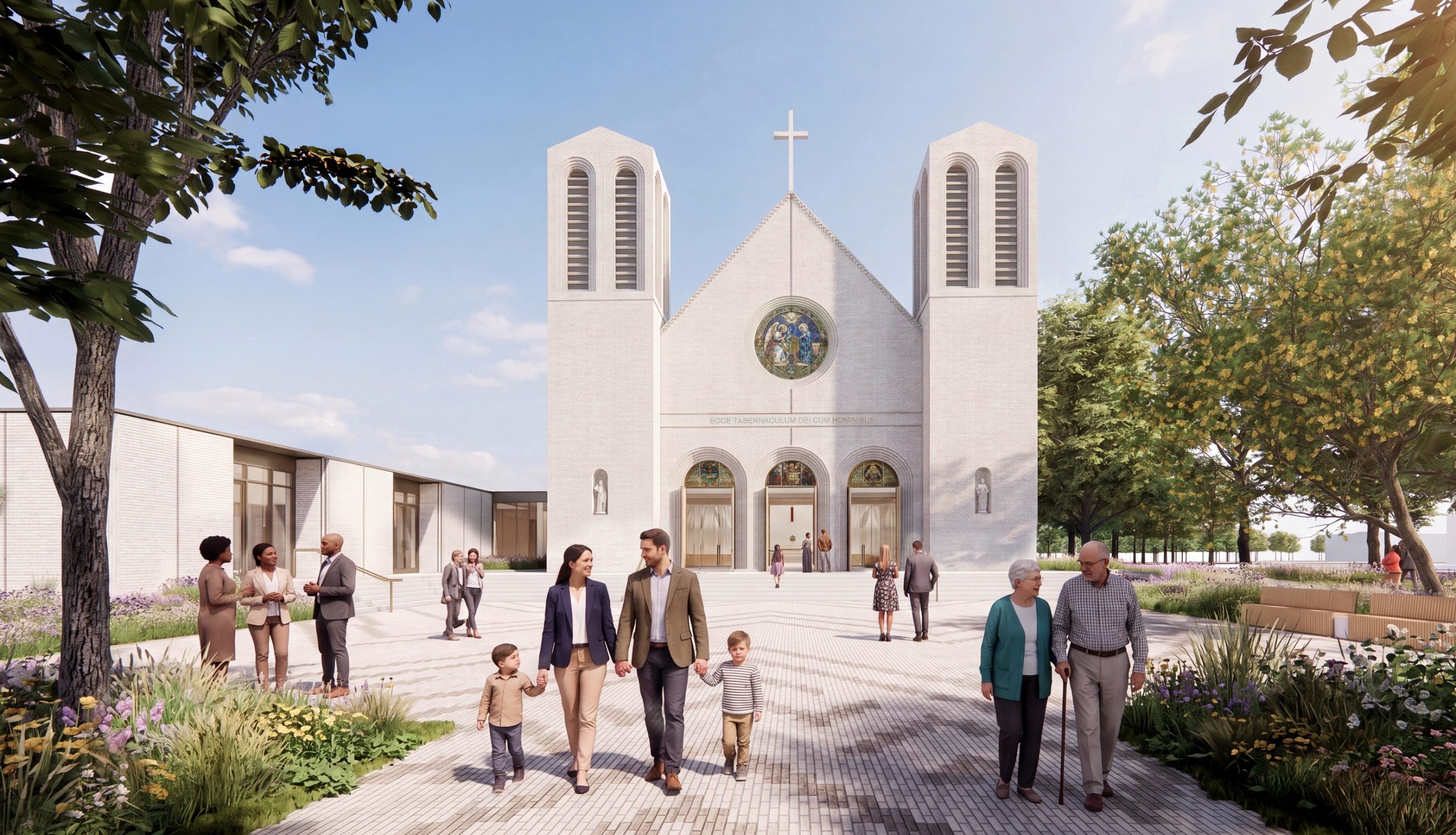
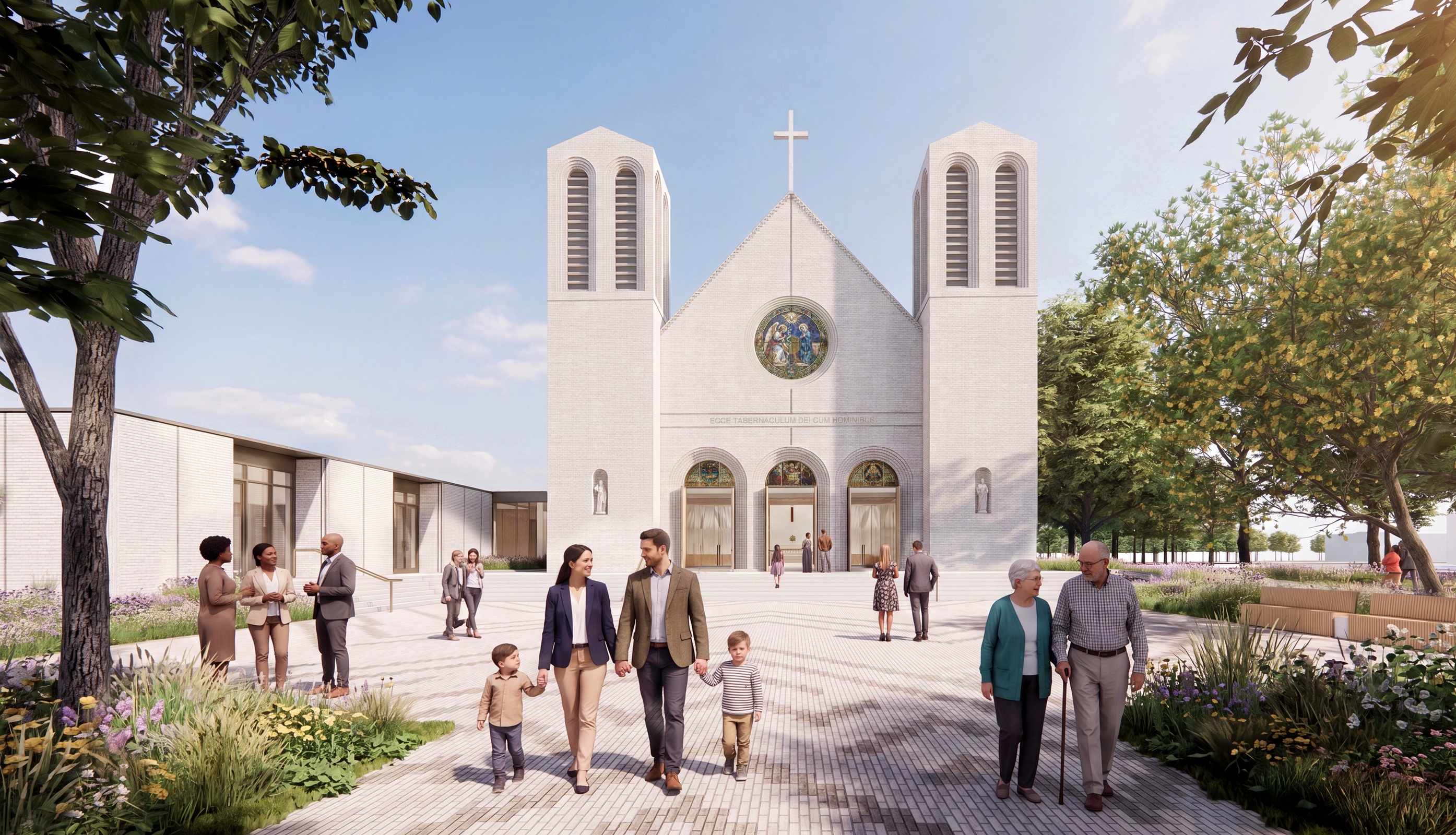
Built to flex, made to last: Inside New Zealand’s first new cathedral in a century #Catholic The architects of Christchurchʼs new cathedral have revealed new details about the building that they will last for generationsWarren and Mahoney, the Christchurch firm responsible for the master plan, architecture and landscape design, has released new details of New Zealandʼs first new Catholic cathedral in more than 120 years.“Some projects carry a different responsibility. They ask us to think beyond our own lifetime and consider what stewardship looks like 50, 100, or even 200 years from now,” said Joseph Hampton, the firmʼs principal and lead architect.The church will have seating for 800 people and go up on Barbadoes Street, a mere 20 meters (65 feet) from where its 1905 predecessor stood until it was demolished in 2020, nine years after the Canterbury earthquakes left it beyond repair.The walls will be of local brick and stone, with glass-fiber reinforced concrete. The structure is designed to bend rather than break in a quake. To keep costs down, much of the building will be made off-site in building modules, which the firm said still allows “a sense of monumentality within a constrained budget.”While the old cathedral faced the street, the new edifice will face north, toward a planned Catholic campus. Behind it will be a perpetual adoration chapel, which Bishop Michael Gielen said will be open day and night, along with the Te Rangimarie community center.The diocese unveiled the design in July and appealed to Catholics to help pay for it. The project will cost 80 million New Zealand dollars (about  million). Insurance proceeds and asset sales cover 45 million New Zealand dollars.Construction can start once the total reaches 72 million New Zealand dollars.To save money, the diocese will put electronic bells in the two towers instead of real ones, saving about 7 million New Zealand dollars. Students from Catholic schools will design the side windows until the diocese can afford stained glass.Gielen told “EWTN News Nightly” in September that the rebuild is “a metaphor.”“Itʼs not only the cathedral weʼre rebuilding. We lost 30 or 35 of our churches — damaged or demolished — in the last 15 years,” he said.Hampton said the cathedral is meant to reach beyond its walls.“It is a home for the Catholic community, but it is also part of Christchurch,” he said.

Built to flex, made to last: Inside New Zealand’s first new cathedral in a century #Catholic The architects of Christchurchʼs new cathedral have revealed new details about the building that they will last for generationsWarren and Mahoney, the Christchurch firm responsible for the master plan, architecture and landscape design, has released new details of New Zealandʼs first new Catholic cathedral in more than 120 years.“Some projects carry a different responsibility. They ask us to think beyond our own lifetime and consider what stewardship looks like 50, 100, or even 200 years from now,” said Joseph Hampton, the firmʼs principal and lead architect.The church will have seating for 800 people and go up on Barbadoes Street, a mere 20 meters (65 feet) from where its 1905 predecessor stood until it was demolished in 2020, nine years after the Canterbury earthquakes left it beyond repair.The walls will be of local brick and stone, with glass-fiber reinforced concrete. The structure is designed to bend rather than break in a quake. To keep costs down, much of the building will be made off-site in building modules, which the firm said still allows “a sense of monumentality within a constrained budget.”While the old cathedral faced the street, the new edifice will face north, toward a planned Catholic campus. Behind it will be a perpetual adoration chapel, which Bishop Michael Gielen said will be open day and night, along with the Te Rangimarie community center.The diocese unveiled the design in July and appealed to Catholics to help pay for it. The project will cost 80 million New Zealand dollars (about $46 million). Insurance proceeds and asset sales cover 45 million New Zealand dollars.Construction can start once the total reaches 72 million New Zealand dollars.To save money, the diocese will put electronic bells in the two towers instead of real ones, saving about 7 million New Zealand dollars. Students from Catholic schools will design the side windows until the diocese can afford stained glass.Gielen told “EWTN News Nightly” in September that the rebuild is “a metaphor.”“Itʼs not only the cathedral weʼre rebuilding. We lost 30 or 35 of our churches — damaged or demolished — in the last 15 years,” he said.Hampton said the cathedral is meant to reach beyond its walls.“It is a home for the Catholic community, but it is also part of Christchurch,” he said.

Architects say Christchurch’s new Cathedral of the Blessed Sacrament, the first Catholic cathedral built in New Zealand in more than 120 years, is designed to serve for the next 200 years.

Read More

Three high school students in the Project Hōkūlani internship at Gemini North on Maunakea, Hawaii, chose this pair of clashing spirals, cataloged collectively as NGC 7253 or Arp 278, for imaging with the 8.1-meter telescope. It captured this photo — the most detailed ever taken of these galaxies — in October 2025. The students selectedContinue reading “Gemini North reveals Twin Spirits in Pegasus”

The post Gemini North reveals Twin Spirits in Pegasus appeared first on Astronomy Magazine.

Read More
Pope Leo XIV’s appeal to mothers: ‘Never tire of passing on the faith!’ – #Catholic – FLORIDA, Uruguay — Pope Leo XIV celebrated Mass at Uruguay’s most prominent Marian shrine on Sunday, where he paid tribute to women’s role in transmitting the Catholic faith and urged them to continue doing so despite secular trends.“Mothers and grandmothers: never tire of passing on the faith!” Leo told a congregation in the square outside the cathedral of Florida, a city in south-central Uruguay. “Even if your loved ones seem far from God, continue to place them before him. Do not stop blessing them, accompanying them, and simply reminding them of what they once received.”Uruguay is one of Latin America’s most secular countries, where the majority of people are not affiliated with any organized religion and 28% identity as atheist or agnostic.The cathedral in Florida houses the Virgin of Thirty-Three, a small wooden sculpture of Mary named for the number of early 19th-century patriots who entrusted their efforts for Uruguay’s independence to her intercession.Leo noted the history to underscore, as he has done throughout his visit, that Catholicism has deep roots in the country.
 
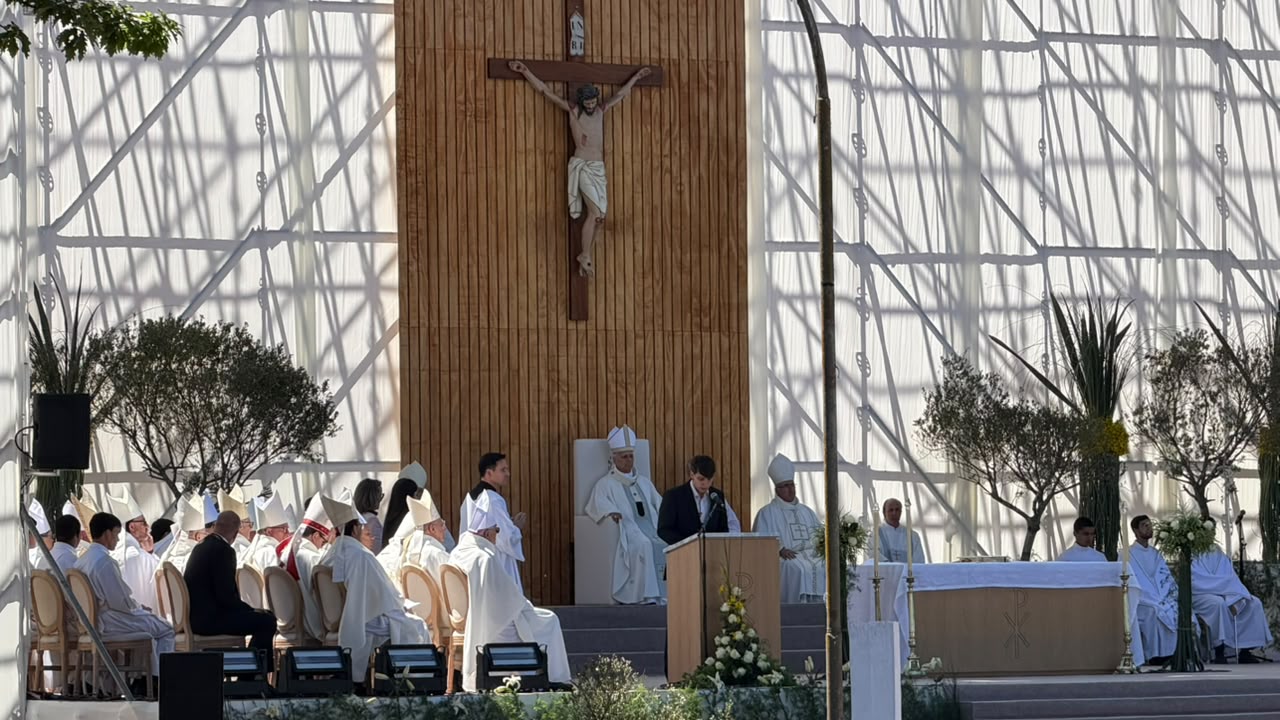
 Pope Leo XIV says Mass at the Shrine of Our Lady of the Thirty-Three in Florida, Uruguay. | Credit: Daniel Ibáñez/EWTN News
 
 The patriots’ “gesture reminds us that the history of peoples, too, cannot be fully understood without reference to God. Thus, from the earliest days of the nation’s founding, Uruguay has been intimately linked to a Mother,” the pope said.He linked the figure of Mary to the tradition of mothers and grandmothers teaching children how to pray and “live out Christian charity.”Thanking such women for their efforts, the pope commiserated with them over a widespread decline in religious practice.“I know that many of you carry a very specific sorrow. You taught your children to pray, and today they no longer do so. You used to attend Mass together, and it has been years since they entered a church. You spoke to your grandchildren about God, and now you do not know if those words left a mark. Sometimes you wonder if you did something wrong or if it was all futile,” Leo said.He encouraged them with the example of St. Monica, mother of St. Augustine, the inspiration for Leo’s religious order, who never despaired of her son’s eventual conversion and sanctity.
 
 Thousands of faithful participate in the Mass that Pope Leo XIV is celebrating at the Shrine of Our Lady of the Thirty-Three. | Credit: Daniel Ibáñez/EWTN News
 
 The pope also urged fathers and grandfathers to foster faith in the young. “Children learn a great deal by seeing that their father can kneel before God without feeling that he is any less of a man doing it,” he said.Leo concluded by urging all Uruguayan Catholics to evangelize in their daily lives.“You must enter people’s homes once more, draw near to them, listen to their questions and bring them to Christ! Each of you knows a person toward whom you need to take that step: perhaps a child, a friend, a neighbor, someone who stopped believing long ago or who has never had anyone close to them to speak to them about God,” the pope said.At the end of the Mass, Leo placed a golden rose before the image of the Virgin, a traditional papal devotion. But his homily contained a note of caution about veneration of Mary, recalling the Vatican’s decision last year to reject the title of “co-redemptrix” for her as potentially confusing.There is “one mediator between God and humankind, Christ Jesus,” the pope said, quoting St. Paul. The he added: “All of Mary’s greatness is based on her relationship with Christ: she welcomes him, lives by him, and leads others to him. An encounter with the Master is the goal of all evangelization and of all authentic Marian devotion.”Instagram postSilvia, from Uruguay, shared her excitement about serving as a Eucharistic minister at the Mass.“It truly is a beautiful moment, very, very moving. I’m eager to help people and to be part of this celebration, which belongs to all of us. It is also a privilege to be able to distribute the Eucharist,” she said.She said being from the city hosting the Holy Father is “a tremendous gift from God,” especially on the feast day of its patroness, Our Lady of the Thirty-Three, celebrated on Nov. 8.Reflecting on the three days the Holy Father has spent in her country, she recalled the pope’s homily during Mass in Paysandú, in which he encouraged the faithful to be bridges, build communities, and accompany others. 
 
 Pope Leo XIV places a golden rose before the image of the Virgin, a traditional papal devotion, on Nov. 8, 2026 at the end of Mass at the Shrine of Our Lady of the Thirty-Three in Florida, Uruguay. | Credit: Vatican Media
 
 “I think it is a challenge and an invitation that we need in Uruguay,” she said.Later in the afternoon, the pope is scheduled to depart for Argentina, where he is set to visit the Monument to General San Martín and meet with President Javier Milei.Instagram post

Pope Leo XIV’s appeal to mothers: ‘Never tire of passing on the faith!’ – #Catholic – FLORIDA, Uruguay — Pope Leo XIV celebrated Mass at Uruguay’s most prominent Marian shrine on Sunday, where he paid tribute to women’s role in transmitting the Catholic faith and urged them to continue doing so despite secular trends.“Mothers and grandmothers: never tire of passing on the faith!” Leo told a congregation in the square outside the cathedral of Florida, a city in south-central Uruguay. “Even if your loved ones seem far from God, continue to place them before him. Do not stop blessing them, accompanying them, and simply reminding them of what they once received.”Uruguay is one of Latin America’s most secular countries, where the majority of people are not affiliated with any organized religion and 28% identity as atheist or agnostic.The cathedral in Florida houses the Virgin of Thirty-Three, a small wooden sculpture of Mary named for the number of early 19th-century patriots who entrusted their efforts for Uruguay’s independence to her intercession.Leo noted the history to underscore, as he has done throughout his visit, that Catholicism has deep roots in the country. Pope Leo XIV says Mass at the Shrine of Our Lady of the Thirty-Three in Florida, Uruguay. | Credit: Daniel Ibáñez/EWTN News The patriots’ “gesture reminds us that the history of peoples, too, cannot be fully understood without reference to God. Thus, from the earliest days of the nation’s founding, Uruguay has been intimately linked to a Mother,” the pope said.He linked the figure of Mary to the tradition of mothers and grandmothers teaching children how to pray and “live out Christian charity.”Thanking such women for their efforts, the pope commiserated with them over a widespread decline in religious practice.“I know that many of you carry a very specific sorrow. You taught your children to pray, and today they no longer do so. You used to attend Mass together, and it has been years since they entered a church. You spoke to your grandchildren about God, and now you do not know if those words left a mark. Sometimes you wonder if you did something wrong or if it was all futile,” Leo said.He encouraged them with the example of St. Monica, mother of St. Augustine, the inspiration for Leo’s religious order, who never despaired of her son’s eventual conversion and sanctity. Thousands of faithful participate in the Mass that Pope Leo XIV is celebrating at the Shrine of Our Lady of the Thirty-Three. | Credit: Daniel Ibáñez/EWTN News The pope also urged fathers and grandfathers to foster faith in the young. “Children learn a great deal by seeing that their father can kneel before God without feeling that he is any less of a man doing it,” he said.Leo concluded by urging all Uruguayan Catholics to evangelize in their daily lives.“You must enter people’s homes once more, draw near to them, listen to their questions and bring them to Christ! Each of you knows a person toward whom you need to take that step: perhaps a child, a friend, a neighbor, someone who stopped believing long ago or who has never had anyone close to them to speak to them about God,” the pope said.At the end of the Mass, Leo placed a golden rose before the image of the Virgin, a traditional papal devotion. But his homily contained a note of caution about veneration of Mary, recalling the Vatican’s decision last year to reject the title of “co-redemptrix” for her as potentially confusing.There is “one mediator between God and humankind, Christ Jesus,” the pope said, quoting St. Paul. The he added: “All of Mary’s greatness is based on her relationship with Christ: she welcomes him, lives by him, and leads others to him. An encounter with the Master is the goal of all evangelization and of all authentic Marian devotion.”Instagram postSilvia, from Uruguay, shared her excitement about serving as a Eucharistic minister at the Mass.“It truly is a beautiful moment, very, very moving. I’m eager to help people and to be part of this celebration, which belongs to all of us. It is also a privilege to be able to distribute the Eucharist,” she said.She said being from the city hosting the Holy Father is “a tremendous gift from God,” especially on the feast day of its patroness, Our Lady of the Thirty-Three, celebrated on Nov. 8.Reflecting on the three days the Holy Father has spent in her country, she recalled the pope’s homily during Mass in Paysandú, in which he encouraged the faithful to be bridges, build communities, and accompany others. Pope Leo XIV places a golden rose before the image of the Virgin, a traditional papal devotion, on Nov. 8, 2026 at the end of Mass at the Shrine of Our Lady of the Thirty-Three in Florida, Uruguay. | Credit: Vatican Media “I think it is a challenge and an invitation that we need in Uruguay,” she said.Later in the afternoon, the pope is scheduled to depart for Argentina, where he is set to visit the Monument to General San Martín and meet with President Javier Milei.Instagram post

The pontiff celebrated Mass at Uruguay’s principal Marian shrine.

Read More
Chaldean monks return historic manuscripts to Iraqi archdiocese after more than 50 years – #Catholic – After safeguarding them for more than half a century, the Chaldean Antonian Order of St. Hormizd has returned a collection of historic manuscripts belonging to the former Chaldean Diocese of Akra in northern Iraq to its ecclesiastical authorities.The formal handover ceremony took place at the Monastery of the Servant of God and Martyr Gabriel Danbo in Ankawa, Iraq, a predominantly Christian district of Erbil. It was attended by Archbishop Najeeb Michaeel of Mosul and Akra; Abbot Samer Soreshow, superior general of the Chaldean Antonian Order of St. Hormizd; and several monks.The manuscripts were entrusted to the order in the 1960s amid the difficult circumstances and widespread displacement affecting the region, Soreshow explained in an interview with ACI MENA, the Arabic-language sister service of EWTN News.According to Soreshow, Abdul-Ahad Rabban, a member of the order who served as its superior general and later became bishop of Akra, sought to protect the ecclesiastical heritage from being lost. The manuscripts were placed in the order’s care until circumstances would allow their safe return to the diocese.Soreshow emphasized that throughout the decades, the order regarded the manuscripts not only as priceless treasures but also as an essential part of the Chaldean Church’s historical and spiritual memory and a legacy preserving its identity.He explained that changing conditions over the years forced the order’s manuscript collections, including those belonging to the Diocese of Akra, to be moved repeatedly in search of safety.
 
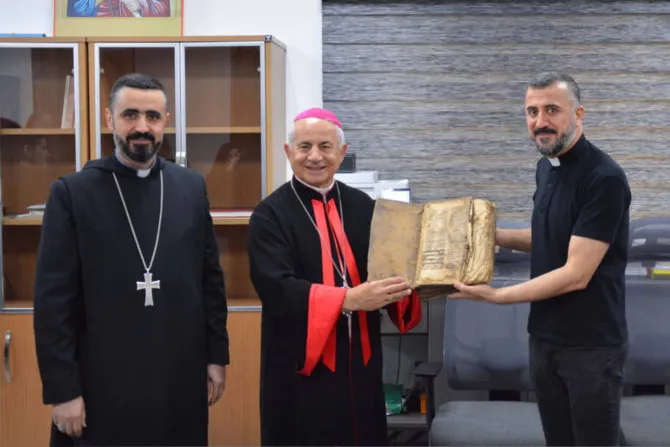
 Manuscripts of the Diocese of Akra are returned after decades of preservation by the Chaldean Antonian Order of St. Hormizd. | Credit: Chaldean Antonian Order of St. Hormizd
 
 The manuscripts were transferred from the Monastery of Our Lady of the Seeds in Alqosh to St. George Monastery in Mosul and later to St. Anthony Monastery in Baghdad. Their journey eventually brought them to the order’s general headquarters in Ankawa in 2021, which houses the Scriptorium Syriacum, a cultural center dedicated to preserving Syriac manuscripts.The repeated relocations resulted in the Akra manuscripts becoming mixed with other collections held by the order, requiring extensive efforts to identify and separate them.Soreshow said the monks relied on earlier manuscript catalogs compiled at different times by Bishop Addai Scher, Belgian Dominican orientalist Jacques-Marie Vosté, and Fathers Yousif Habbi, Boutros Haddad, and Jacques Isaac. These cataloging efforts included work published by the Iraqi Academy in 1988.However, the order’s work went well beyond identifying and sorting the manuscripts.Soreshow explained that the restoration and preservation process involved cleaning the manuscripts, gathering their scattered pages, photographing and numbering them, reassembling them into complete volumes, and preparing comprehensive catalogs.This work was particularly demanding, he noted, “especially since several copies of the same manuscript existed, many of which had been copied at the Monastery of Our Lady of the Seeds.”The project required considerable time and effort from the Chaldean Antonian monks, who began the work in 2021 through the Scriptorium Syriacum.The work was carried out under the direction of Father Yousif Ajim, the center’s director, with assistance from other staff members who graduated from the Department of Syriac Language at Salahaddin University in Erbil.
 
 Manuscripts of the Diocese of Akra are returned after decades of preservation by the Chaldean Antonian Order of St. Hormizd. | Credit: Chaldean Antonian Order of St. Hormizd
 
 93 manuscripts returned, while 4 remain unaccounted for in the collectionAccording to Soreshow, the Diocese of Akra’s collection originally comprised 97 manuscripts, of which 93 were handed over to Michaeel.Of the remaining four, three were identified in the Chaldean Patriarchate’s digitized archives, made available through manuscript digitization efforts and accessible via the Hill Museum & Manuscript Library in Minnesota.The fourth manuscript remains missing.Soreshow praised the commitment of both the religious order and the archdiocese to ensuring that the manuscripts remain properly preserved and accessible to researchers, scholars, and clergy, contributing to the study of Church history and the advancement of academic research.“The smooth transfer of these manuscripts from the custody of our order to that of their diocese reflects the continuity of the Church’s mission to safeguard its historical memory and preserve its heritage for future generations,” he said.Akra was formerly an independent Chaldean Catholic diocese. However, the unrest and conflicts that affected the region during the 1960s led to the displacement of many of its Christian inhabitants and a decline in the local Church’s presence.In 2018, the independent Diocese of Akra was merged with the Archdiocese of Mosul, forming the Chaldean Catholic Archeparchy of Mosul and Akra, currently headed by Michaeel.This story was first published by ACI MENA, the Arabic-language sister service of EWTN News. It has been translated and adapted by EWTN News English.

Chaldean monks return historic manuscripts to Iraqi archdiocese after more than 50 years – #Catholic – After safeguarding them for more than half a century, the Chaldean Antonian Order of St. Hormizd has returned a collection of historic manuscripts belonging to the former Chaldean Diocese of Akra in northern Iraq to its ecclesiastical authorities.The formal handover ceremony took place at the Monastery of the Servant of God and Martyr Gabriel Danbo in Ankawa, Iraq, a predominantly Christian district of Erbil. It was attended by Archbishop Najeeb Michaeel of Mosul and Akra; Abbot Samer Soreshow, superior general of the Chaldean Antonian Order of St. Hormizd; and several monks.The manuscripts were entrusted to the order in the 1960s amid the difficult circumstances and widespread displacement affecting the region, Soreshow explained in an interview with ACI MENA, the Arabic-language sister service of EWTN News.According to Soreshow, Abdul-Ahad Rabban, a member of the order who served as its superior general and later became bishop of Akra, sought to protect the ecclesiastical heritage from being lost. The manuscripts were placed in the order’s care until circumstances would allow their safe return to the diocese.Soreshow emphasized that throughout the decades, the order regarded the manuscripts not only as priceless treasures but also as an essential part of the Chaldean Church’s historical and spiritual memory and a legacy preserving its identity.He explained that changing conditions over the years forced the order’s manuscript collections, including those belonging to the Diocese of Akra, to be moved repeatedly in search of safety. Manuscripts of the Diocese of Akra are returned after decades of preservation by the Chaldean Antonian Order of St. Hormizd. | Credit: Chaldean Antonian Order of St. Hormizd The manuscripts were transferred from the Monastery of Our Lady of the Seeds in Alqosh to St. George Monastery in Mosul and later to St. Anthony Monastery in Baghdad. Their journey eventually brought them to the order’s general headquarters in Ankawa in 2021, which houses the Scriptorium Syriacum, a cultural center dedicated to preserving Syriac manuscripts.The repeated relocations resulted in the Akra manuscripts becoming mixed with other collections held by the order, requiring extensive efforts to identify and separate them.Soreshow said the monks relied on earlier manuscript catalogs compiled at different times by Bishop Addai Scher, Belgian Dominican orientalist Jacques-Marie Vosté, and Fathers Yousif Habbi, Boutros Haddad, and Jacques Isaac. These cataloging efforts included work published by the Iraqi Academy in 1988.However, the order’s work went well beyond identifying and sorting the manuscripts.Soreshow explained that the restoration and preservation process involved cleaning the manuscripts, gathering their scattered pages, photographing and numbering them, reassembling them into complete volumes, and preparing comprehensive catalogs.This work was particularly demanding, he noted, “especially since several copies of the same manuscript existed, many of which had been copied at the Monastery of Our Lady of the Seeds.”The project required considerable time and effort from the Chaldean Antonian monks, who began the work in 2021 through the Scriptorium Syriacum.The work was carried out under the direction of Father Yousif Ajim, the center’s director, with assistance from other staff members who graduated from the Department of Syriac Language at Salahaddin University in Erbil. Manuscripts of the Diocese of Akra are returned after decades of preservation by the Chaldean Antonian Order of St. Hormizd. | Credit: Chaldean Antonian Order of St. Hormizd 93 manuscripts returned, while 4 remain unaccounted for in the collectionAccording to Soreshow, the Diocese of Akra’s collection originally comprised 97 manuscripts, of which 93 were handed over to Michaeel.Of the remaining four, three were identified in the Chaldean Patriarchate’s digitized archives, made available through manuscript digitization efforts and accessible via the Hill Museum & Manuscript Library in Minnesota.The fourth manuscript remains missing.Soreshow praised the commitment of both the religious order and the archdiocese to ensuring that the manuscripts remain properly preserved and accessible to researchers, scholars, and clergy, contributing to the study of Church history and the advancement of academic research.“The smooth transfer of these manuscripts from the custody of our order to that of their diocese reflects the continuity of the Church’s mission to safeguard its historical memory and preserve its heritage for future generations,” he said.Akra was formerly an independent Chaldean Catholic diocese. However, the unrest and conflicts that affected the region during the 1960s led to the displacement of many of its Christian inhabitants and a decline in the local Church’s presence.In 2018, the independent Diocese of Akra was merged with the Archdiocese of Mosul, forming the Chaldean Catholic Archeparchy of Mosul and Akra, currently headed by Michaeel.This story was first published by ACI MENA, the Arabic-language sister service of EWTN News. It has been translated and adapted by EWTN News English.

The formal handover ceremony took place at the Monastery of the Servant of God and Martyr Gabriel Danbo in Ankawa, a predominantly Christian district of Erbil.

Read More
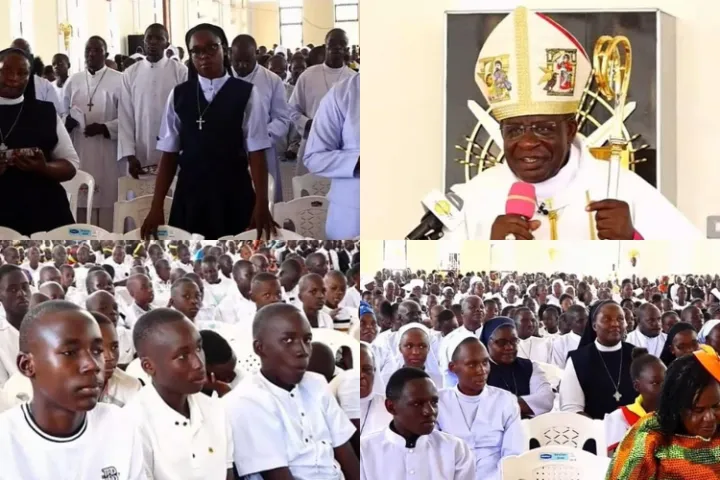
‘Bless those who wrong you,’ Kenyan bishop urges Christians – #Catholic – BUNGOMA, Kenya — Bishop Mark Kadima Wamukoya of Kenya’s Diocese of Bungoma has urged Christians to pray for those who hurt or mistreat them and to set aside their differences when gathering for worship.In his homily during the consecration of St. Mark’s Ojamii Catholic Parish church on Nov. 5, Kadima reflected on Jesus Christ’s institution of the Eucharist amid betrayal.“Jesus Christ instituted the Eucharist at the time he was betrayed. Despite the pain, suffering, and betrayal, he gave us a lasting blessing,” he said.The Kenyan bishop called on Christians to follow this example in their relationships with others.“This teaches us that even when someone wrongs us, we should still bless them. Even when we are hurt or mistreated, we should come to church, pray, and ask God to bless others,” he said. “This is a place where we should leave our differences behind and say, ‘May everyone be blessed.’”Kadima emphasized the importance of the church as a place for prayer and the celebration of the sacraments, particularly the Eucharist. He encouraged the faithful to participate in worship despite difficulties in their personal and family lives.“Coming to church does not mean that everything in our lives is perfect. Our families, marriages, and children may be facing challenges, but we still come to church to pray and ask God to bless everyone,” he said.Turning to promises made before God, Kadima urged Christians to take their commitments seriously, including those made at priestly ordination and in the sacrament of matrimony.“The Church is a place where we come to make promises and honor them,” he said. “When we say yes at the altar, that yes must mean something.”Recalling his own ordination, the bishop said: “Even my own priestly ordination involved being brought before the altar, where I was instructed to lie down. Once you make a commitment, you must be ready to fulfill it.”He added: “We need the Church because we are a people of promises. Our lives as Godʼs people cannot be built without promises and their fulfillment. When we say, ‘I accept’ or ‘I promise,’ we must mean it.”Kadima also called on Catholics to respect rules and regulations in their daily lives.“As Catholics, including myself, we are called to be people who respect and obey the law. The Church reminds us that we must live according to rules and regulations,” he said. Kadima linked this responsibility to service, good conduct, and respectful communication.“When we come to church, we are reminded to become people of service and good conduct. We must cultivate a culture of obedience and respect for rules, whether in the Church, at the table, at the altar, or in the way we communicate with one another,” he said.This story was first published by ACI Africa, the sister service of EWTN News in Africa, and has been adapted by EWTN News.

‘Bless those who wrong you,’ Kenyan bishop urges Christians – #Catholic – BUNGOMA, Kenya — Bishop Mark Kadima Wamukoya of Kenya’s Diocese of Bungoma has urged Christians to pray for those who hurt or mistreat them and to set aside their differences when gathering for worship.In his homily during the consecration of St. Mark’s Ojamii Catholic Parish church on Nov. 5, Kadima reflected on Jesus Christ’s institution of the Eucharist amid betrayal.“Jesus Christ instituted the Eucharist at the time he was betrayed. Despite the pain, suffering, and betrayal, he gave us a lasting blessing,” he said.The Kenyan bishop called on Christians to follow this example in their relationships with others.“This teaches us that even when someone wrongs us, we should still bless them. Even when we are hurt or mistreated, we should come to church, pray, and ask God to bless others,” he said. “This is a place where we should leave our differences behind and say, ‘May everyone be blessed.’”Kadima emphasized the importance of the church as a place for prayer and the celebration of the sacraments, particularly the Eucharist. He encouraged the faithful to participate in worship despite difficulties in their personal and family lives.“Coming to church does not mean that everything in our lives is perfect. Our families, marriages, and children may be facing challenges, but we still come to church to pray and ask God to bless everyone,” he said.Turning to promises made before God, Kadima urged Christians to take their commitments seriously, including those made at priestly ordination and in the sacrament of matrimony.“The Church is a place where we come to make promises and honor them,” he said. “When we say yes at the altar, that yes must mean something.”Recalling his own ordination, the bishop said: “Even my own priestly ordination involved being brought before the altar, where I was instructed to lie down. Once you make a commitment, you must be ready to fulfill it.”He added: “We need the Church because we are a people of promises. Our lives as Godʼs people cannot be built without promises and their fulfillment. When we say, ‘I accept’ or ‘I promise,’ we must mean it.”Kadima also called on Catholics to respect rules and regulations in their daily lives.“As Catholics, including myself, we are called to be people who respect and obey the law. The Church reminds us that we must live according to rules and regulations,” he said. Kadima linked this responsibility to service, good conduct, and respectful communication.“When we come to church, we are reminded to become people of service and good conduct. We must cultivate a culture of obedience and respect for rules, whether in the Church, at the table, at the altar, or in the way we communicate with one another,” he said.This story was first published by ACI Africa, the sister service of EWTN News in Africa, and has been adapted by EWTN News.

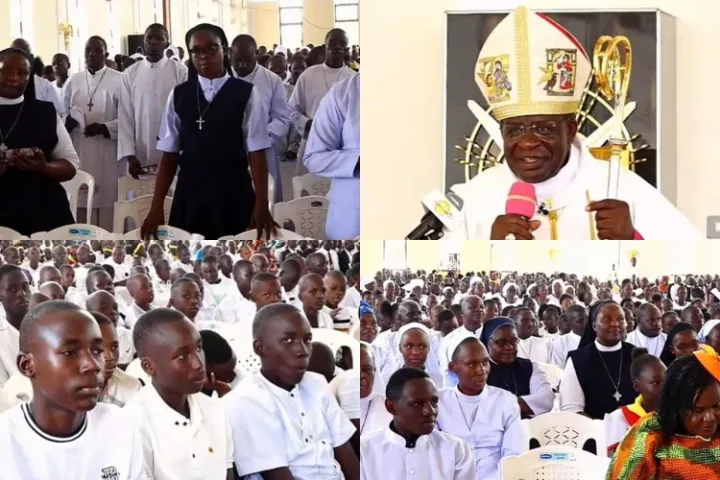
Bishop Mark Kadima Wamukoya reminded Christians to follow Christ’s example to pray for everyone, even those who “hurt and betray.”

Read More
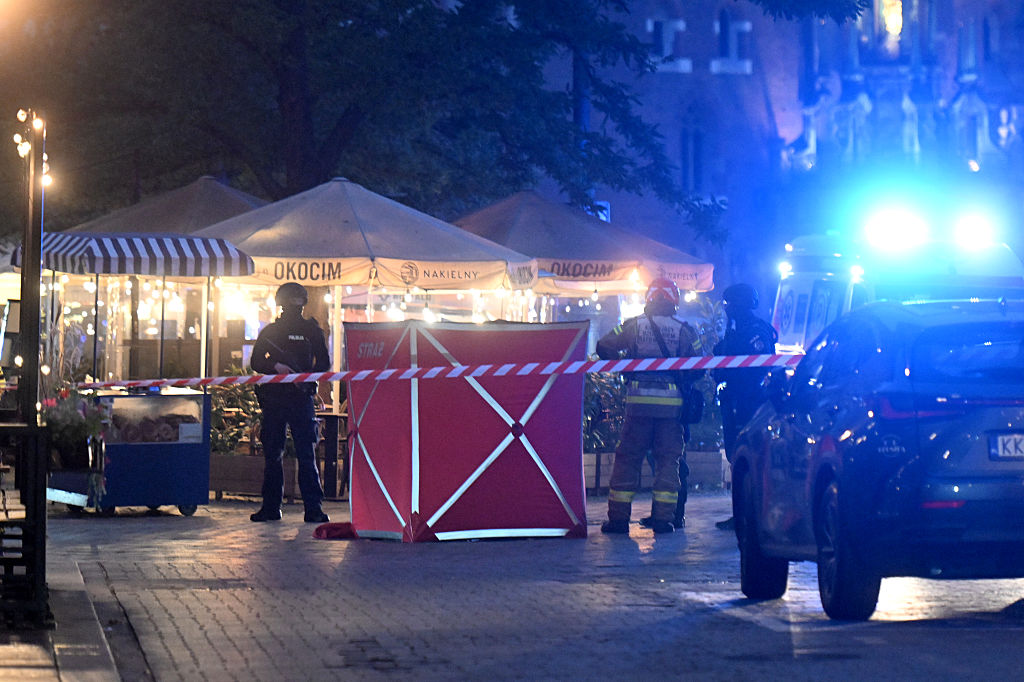
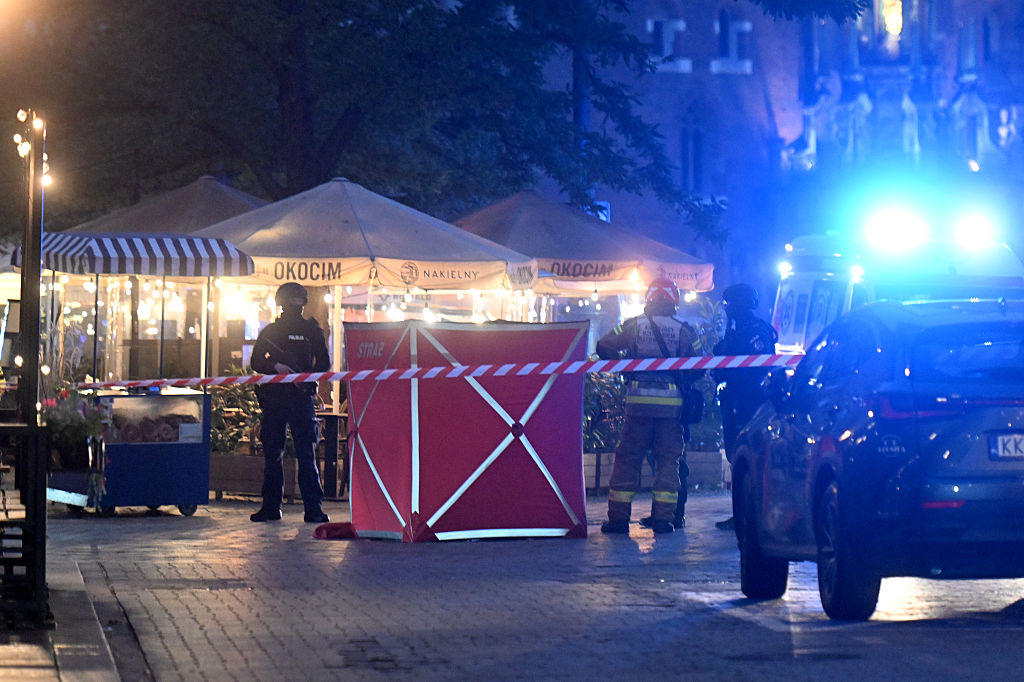
Polish bishops call for prayer after gunman kills 6 in Kraków’s historic square #Catholic The archbishop of Kraków called on the city to stand “together” in prayer after a gunman killed six people in its Main Market Square, a few steps from St. Maryʼs Basilica, on Saturday afternoon.“We do not want to, we cannot, we are unable to be indifferent at such a moment. We want, we need and we must be together,” Cardinal Grzegorz Ryś wrote in a letter to the faithful on Nov. 7.“I write ‘us’ because in truth any one of us could have been in the Square at that time, passing where the bullets struck random, unsuspecting people,” the Polish prelate wrote.Ryś invited residents to a Mass for the dead, the wounded and their families at St. Maryʼs Basilica on Sunday, Nov. 8, at 4 p.m. local time, saying that “the last word does not and cannot belong to hatred.”The cardinal asked the pastors of the victims' parishes to “be there” for them and give every possible help.Police said the gunman drove onto the square shortly after 3 p.m. and fired at passersby from his car. Four women and two men were killed, among them three Polish women and a British national. Sixteen people were wounded, including the suspect and two police officers, one of whom was shot three times.Officers shot and detained the attacker, a man in his mid-20s from Ostrowiec Świętokrzyski, a town in southeastern Poland. Interior Minister Marcin Kierwiński said the suspect held “very radical views” and that “everything indicates he was fascinated by far-right ideologies,” though this had yet to be verified. Prime Minister Donald Tusk called the attack terrorism.Police found three bodies in the suspectʼs flat. President Karol Nawrocki declared national mourning for Nov. 8 and 9.Archbishop Tadeusz Wojda, president of the Polish bishops' conference, said he was “deeply shaken.”“It is hard even to grasp that in the very heart of Kraków, right by St. Maryʼs Basilica … such dramatic scenes could unfold,” he said.Archbishop Wojciech Polak, the primate of Poland, said he was praying for the dead and the wounded and expressed solidarity with Ryś. He spoke of “faith that good is stronger than hatred and love always wins.”Warsawʼs Archbishop Adrian Galbas echoed the Kraków cardinal.“As Cardinal Grzegorz asked: let us be together!” he wrote on Facebook, echoing the Kraków cardinal.

Polish bishops call for prayer after gunman kills 6 in Kraków’s historic square #Catholic The archbishop of Kraków called on the city to stand “together” in prayer after a gunman killed six people in its Main Market Square, a few steps from St. Maryʼs Basilica, on Saturday afternoon.“We do not want to, we cannot, we are unable to be indifferent at such a moment. We want, we need and we must be together,” Cardinal Grzegorz Ryś wrote in a letter to the faithful on Nov. 7.“I write ‘us’ because in truth any one of us could have been in the Square at that time, passing where the bullets struck random, unsuspecting people,” the Polish prelate wrote.Ryś invited residents to a Mass for the dead, the wounded and their families at St. Maryʼs Basilica on Sunday, Nov. 8, at 4 p.m. local time, saying that “the last word does not and cannot belong to hatred.”The cardinal asked the pastors of the victims' parishes to “be there” for them and give every possible help.Police said the gunman drove onto the square shortly after 3 p.m. and fired at passersby from his car. Four women and two men were killed, among them three Polish women and a British national. Sixteen people were wounded, including the suspect and two police officers, one of whom was shot three times.Officers shot and detained the attacker, a man in his mid-20s from Ostrowiec Świętokrzyski, a town in southeastern Poland. Interior Minister Marcin Kierwiński said the suspect held “very radical views” and that “everything indicates he was fascinated by far-right ideologies,” though this had yet to be verified. Prime Minister Donald Tusk called the attack terrorism.Police found three bodies in the suspectʼs flat. President Karol Nawrocki declared national mourning for Nov. 8 and 9.Archbishop Tadeusz Wojda, president of the Polish bishops' conference, said he was “deeply shaken.”“It is hard even to grasp that in the very heart of Kraków, right by St. Maryʼs Basilica … such dramatic scenes could unfold,” he said.Archbishop Wojciech Polak, the primate of Poland, said he was praying for the dead and the wounded and expressed solidarity with Ryś. He spoke of “faith that good is stronger than hatred and love always wins.”Warsawʼs Archbishop Adrian Galbas echoed the Kraków cardinal.“As Cardinal Grzegorz asked: let us be together!” he wrote on Facebook, echoing the Kraków cardinal.

Cardinal Grzegorz Ryś invited Kraków to a Mass for the victims at St. Mary’s Basilica after a gunman killed six people in the city’s Main Market Square.

Read More