Day: November 16, 2026

Beyond The Beacon podcast 123: The Gospel comes alive with your generous gift #Catholic – 
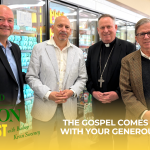
Bishop Kevin J. Sweeney hosts this episode of Beyond The Beacon at the newly renovated Catholic Charities Father English Food Pantry in Paterson. The first segment begins in the thrift shop with Scott Miliken, president of Catholic Charities of the Diocese of Paterson; Tim Potter, chief development officer of the Diocese of Paterson and coordinator of the Diocesan Ministries Appeal; and Carlos Roldan, the facility’s director. The second part of the interview takes place in the food pantry area, where Roldan describes how the new site helps meet the needs of the clients who depend on it. In 2023, the Diocese of Paterson committed 0,000 annually for three years to expand the Catholic Charities Father English Food Pantry. Thanks to the generosity of so many through the Diocesan Ministries Appeal, the goal was met.
Listen to or watch the episode here, on any major podcast platform, or on Bishop Sweeney’s YouTube channel.

Click here to subscribe to our weekly newsletter.

Beyond The Beacon podcast 123: The Gospel comes alive with your generous gift #Catholic –

Bishop Kevin J. Sweeney hosts this episode of Beyond The Beacon at the newly renovated Catholic Charities Father English Food Pantry in Paterson. The first segment begins in the thrift shop with Scott Miliken, president of Catholic Charities of the Diocese of Paterson; Tim Potter, chief development officer of the Diocese of Paterson and coordinator of the Diocesan Ministries Appeal; and Carlos Roldan, the facility’s director. The second part of the interview takes place in the food pantry area, where Roldan describes how the new site helps meet the needs of the clients who depend on it. In 2023, the Diocese of Paterson committed $200,000 annually for three years to expand the Catholic Charities Father English Food Pantry. Thanks to the generosity of so many through the Diocesan Ministries Appeal, the goal was met.

Listen to or watch the episode here, on any major podcast platform, or on Bishop Sweeney’s YouTube channel.


Click here to subscribe to our weekly newsletter.

– Bishop Kevin J. Sweeney hosts this episode of Beyond The Beacon at the newly renovated Catholic Charities Father English Food Pantry in Paterson. The first segment begins in the thrift shop with Scott Miliken, president of Catholic Charities of the Diocese of Paterson; Tim Potter, chief development officer of the Diocese of Paterson and coordinator of the Diocesan Ministries Appeal; and Carlos Roldan, the facility’s director. The second part of the interview takes place in the food pantry area, where Roldan describes how the new site helps meet the needs of the clients who depend on it. In 2023, the
Read More
Rockaway confirmation celebrates young man’s commitment to Catholic faith #Catholic – Bishop Kevin J. Sweeney visited Sacred Heart of Jesus Parish in Rockaway, N.J., on Nov. 8 to celebrate 10 a.m. Mass, where he also confirmed a young man, Anderson Buchanan — a significant milestone in his Catholic faith journey.
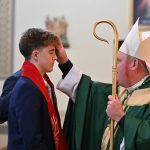
Concelebrating the Mass that Sunday with Bishop Sweeney was Father Cerilo Javinez, administrator of Sacred Heart. Assisting with the Mass were Deacon Richard Van Glahn and Deacon Elmer Maximo of the parish. Father Vic Karljohn R.R. Leviste, parochial vicar of St. Therese Parish in the Succasunna neighborhood of Roxbury Township, N.J., and assistant director of worship of the Paterson Diocese, N.J., served as master of ceremonies of the liturgy.
That morning, Buchanan received the Sacrament of Confirmation, strengthening his baptismal commitment and receiving the fullness of the gifts of the Holy Spirit: wisdom, understanding, counsel, fortitude, knowledge, piety, and fear of the Lord. This sacrament also strengthens the faithful to be courageous witnesses of Christ, living their Catholic faith in prayer, love, and service to others.
Amanda Krause DiScala oversees Sacred Heart’s confirmation classes and preparation program.
BEACON PHOTOS | JOE GIGLI
 [See image gallery at beaconnj.org] 

Click here to subscribe to our weekly newsletter.

Rockaway confirmation celebrates young man’s commitment to Catholic faith #Catholic –

Bishop Kevin J. Sweeney visited Sacred Heart of Jesus Parish in Rockaway, N.J., on Nov. 8 to celebrate 10 a.m. Mass, where he also confirmed a young man, Anderson Buchanan — a significant milestone in his Catholic faith journey.

Concelebrating the Mass that Sunday with Bishop Sweeney was Father Cerilo Javinez, administrator of Sacred Heart. Assisting with the Mass were Deacon Richard Van Glahn and Deacon Elmer Maximo of the parish. Father Vic Karljohn R.R. Leviste, parochial vicar of St. Therese Parish in the Succasunna neighborhood of Roxbury Township, N.J., and assistant director of worship of the Paterson Diocese, N.J., served as master of ceremonies of the liturgy.

That morning, Buchanan received the Sacrament of Confirmation, strengthening his baptismal commitment and receiving the fullness of the gifts of the Holy Spirit: wisdom, understanding, counsel, fortitude, knowledge, piety, and fear of the Lord. This sacrament also strengthens the faithful to be courageous witnesses of Christ, living their Catholic faith in prayer, love, and service to others.

Amanda Krause DiScala oversees Sacred Heart’s confirmation classes and preparation program.

BEACON PHOTOS | JOE GIGLI

Click here to subscribe to our weekly newsletter.

– Bishop Kevin J. Sweeney visited Sacred Heart of Jesus Parish in Rockaway, N.J., on Nov. 8 to celebrate 10 a.m. Mass, where he also confirmed a young man, Anderson Buchanan — a significant milestone in his Catholic faith journey. Concelebrating the Mass that Sunday with Bishop Sweeney was Father Cerilo Javinez, administrator of Sacred Heart. Assisting with the Mass were Deacon Richard Van Glahn and Deacon Elmer Maximo of the parish. Father Vic Karljohn R.R. Leviste, parochial vicar of St. Therese Parish in the Succasunna neighborhood of Roxbury Township, N.J., and assistant director of worship of the Paterson Diocese, N.J.,

Read More

On Nov. 16, 1974, a group gathered at Arecibo Observatory in the rainforest interior of Puerto Rico, there for a reopening celebration after upgrades to the facility. After the requisite speeches, scientists used the radio telescope to send what would be known as the Arecibo message: 1,679 bits of data in 73 lines, each 23Continue reading “Nov. 16, 1974: Arecibo sends a message”

The post Nov. 16, 1974: Arecibo sends a message appeared first on Astronomy Magazine.

Read More
Study: Only 29% of U.S. Catholics believe Christ is present in Eucharist despite bishops’ efforts – #Catholic – A new study has found that less than one-third of American Catholics believe Jesus Christ is truly present in the Eucharist, despite the Eucharistic revival initiative launched by the bishops more than four years ago.The study, published in the academic journal Sociological Inquiry, found that American Catholic belief in the Real Presence has remained stagnant in recent years. Most Catholics, researchers found, continue to view the Blessed Sacrament as merely a symbol.Researchers asked 1,049 Catholics whether they believe the Eucharist actually becomes “the Body and Blood of Christ” during consecration or whether they believe “the bread and wine are symbols of his body and blood.”Only 28.8% answered that “the bread and wine truly become the Body and Blood of Christ” and about 58.8% expressed belief that “they are just symbols,” with approximately 12.4% saying “I’m not sure what happens.”As one of the study’s authors Mark Regnerus pointed out in a blog post, their research found no statistically significant change from a 2019 Pew Research Center poll that found just 31% of Catholics believe in the Real Presence or from a 1992 Gallup poll that found only 30% of the faithful hold the belief.Weekly Mass-goers were much more likely than other Catholics to believe in the Real Presence, at about 60%. Among those who attend Mass more frequently, slightly less than 70% believed in the Real Presence. Among those who self-identify as “very religious,” about 40% believed in the Real Presence.“In a world wherein Catholics are saturated with information — and hence competitors to orthodox belief — it is incumbent on priests to remind parishioners what the Church holds to be true theologically (and socially, etc.),” Regnerus, who is Catholic, wrote in his blog post.“Unfortunately, the study’s analyses also reveal that those who most need it aren’t likely to be present and listening,” he wrote.The Eucharistic revivalTo respond to the ongoing issue, in June 2022 the U.S. Conference of Catholic Bishops (USCCB) launched what it called a National Eucharistic Revival initiative designed to emphasize the real presence of Christ in the Eucharist.With a goal of deepening devotion to the Eucharist, the nation’s bishops worked with priests to encourage adoration of the Blessed Sacrament and coordinated Eucharistic processions throughout the country. In 2024 a National Eucharistic Congress was held, attended by about 60,000 people.“This study highlights that Catholic belief in the Real Presence has been a problem for many years, and it is going to take a while to correct,” David Spesia, the executive director for the USCCB’s Secretariat of Evangelization and Catechesis, told EWTN News.“The message is clear that Catholics need to encounter Christ in the Eucharist regularly and live as though they have encountered him,” he said. “When we begin to do this, the natural next step is to prayerfully accompany friends or family members to a deeper relationship with the Lord — to ‘Walk with One’ person in our daily life, wherever they might be on their faith journey.”Spesia said one issue the Church faces is the “secularization” of individuals and communities, and another is an “impoverished understanding of signs and symbols” and “an emptying of a sacramental worldview in favor of a materialistic worldview.”“The Catholic faithful need to recover a deeper understanding and lived experience of what really happens when we celebrate the sacraments, and this requires lifelong formation and conversion of heart,” he said.Spesia said the long-term goal of the revival is to reach everyone, “and there is still much work to be done.” Yet, he urged people not to dismiss “short-term fruit among those who engaged with the Eucharistic revival,” which deepened “the belief and practice of those Catholics who are actively practicing their faith so they would be better prepared to take on the mission of the Church to evangelize.”As the revival initiative continues, Spesia said the bishops received “great feedback” from small-group studies held by parishes during the Eucharistic revival and there is an ongoing strategy “to invite people to hear and respond to the good news in conversation with fellow pilgrims on the journey.”‘This is my body’The Council of Trent proclaims that at the moment of consecration, the “substance” of the bread and the wine do not remain. Rather, it is transubstantiated into the true body, blood, soul, and divinity of Jesus Christ even though it maintains the outward appearance and chemical structure of bread and wine.Affirmation of the Real Presence dates back to Christ himself at the Last Supper, declaring “this is my body” and “this is my blood.” St. Justin Martyr, a bishop and philosopher, explained in the A.D. 150s what the Eucharist meant to Christians: “The food which is blessed by the prayer of His word, and from which our blood and flesh by transmutation are nourished, is the flesh and blood of that Jesus who was made flesh.”St. Ignatius of Antioch discussed this even earlier, writing in about A.D. 110, warning against the early Docetist heresy, which rejected that Christ had a physical body and also rejected the real presence of Christ in the Eucharist on that basis.“They refrain from the Eucharist and from prayer because they do not confess that the Eucharist is the flesh of our Saviour Jesus Christ, which suffered for our sins, and which the Father of His goodness raised up,” the bishop wrote. Tom Nash, a staff apologist at Catholic Answers, told EWTN News that understanding the real presence of Christ in the Eucharist is important because “it sacramentally re-presents Christ’s one sacrifice of Calvary and so enables us to offer anew and partake of the Real Presence of his new covenant Passover Communion sacrifice.”“The Eucharistic sacrifice is the source of the Christian life because in re-presenting Christ’s one sacrifice of Calvary, we come in contact with the very means by which Our Lord objectively redeemed the world and enabled us to have forgiveness of our sins and the prospect of eternal life,” he said. “Thus our Lord’s words regarding his Eucharistic body and blood, namely, that those who consume it reverently will live forever.”Jonathan Ciraulo, a theology professor at The Catholic University of America, explained to EWTN News that belief in the real presence of Christ in the Eucharist “is not a marginal concern” for the Church.Ciraulo said the Real Presence affirms other doctrines: “Christ’s true humanity and real body; the dignity of the human body and its future resurrection; and the interior transformation whereby Christ comes to dwell in the Christian.”“We would do well to ask ourselves how this apparent loss has reverberations far beyond polls regarding faith in the sacraments,” he observed.In the Gospel of John, the apostle documents that Christ himself had his own dissenters from this doctrine, who wondered: “How can this man give us his flesh to eat?”“Amen, amen, I say to you, unless you eat the flesh of the Son of Man and drink his blood, you do not have life within you,” Christ responded. “Whoever eats my flesh and drinks my blood has eternal life, and I will raise him on the last day. For my flesh is true food, and my blood is true drink. Whoever eats my flesh and drinks my blood remains in me and I in him.”

Study: Only 29% of U.S. Catholics believe Christ is present in Eucharist despite bishops’ efforts – #Catholic – A new study has found that less than one-third of American Catholics believe Jesus Christ is truly present in the Eucharist, despite the Eucharistic revival initiative launched by the bishops more than four years ago.The study, published in the academic journal Sociological Inquiry, found that American Catholic belief in the Real Presence has remained stagnant in recent years. Most Catholics, researchers found, continue to view the Blessed Sacrament as merely a symbol.Researchers asked 1,049 Catholics whether they believe the Eucharist actually becomes “the Body and Blood of Christ” during consecration or whether they believe “the bread and wine are symbols of his body and blood.”Only 28.8% answered that “the bread and wine truly become the Body and Blood of Christ” and about 58.8% expressed belief that “they are just symbols,” with approximately 12.4% saying “I’m not sure what happens.”As one of the study’s authors Mark Regnerus pointed out in a blog post, their research found no statistically significant change from a 2019 Pew Research Center poll that found just 31% of Catholics believe in the Real Presence or from a 1992 Gallup poll that found only 30% of the faithful hold the belief.Weekly Mass-goers were much more likely than other Catholics to believe in the Real Presence, at about 60%. Among those who attend Mass more frequently, slightly less than 70% believed in the Real Presence. Among those who self-identify as “very religious,” about 40% believed in the Real Presence.“In a world wherein Catholics are saturated with information — and hence competitors to orthodox belief — it is incumbent on priests to remind parishioners what the Church holds to be true theologically (and socially, etc.),” Regnerus, who is Catholic, wrote in his blog post.“Unfortunately, the study’s analyses also reveal that those who most need it aren’t likely to be present and listening,” he wrote.The Eucharistic revivalTo respond to the ongoing issue, in June 2022 the U.S. Conference of Catholic Bishops (USCCB) launched what it called a National Eucharistic Revival initiative designed to emphasize the real presence of Christ in the Eucharist.With a goal of deepening devotion to the Eucharist, the nation’s bishops worked with priests to encourage adoration of the Blessed Sacrament and coordinated Eucharistic processions throughout the country. In 2024 a National Eucharistic Congress was held, attended by about 60,000 people.“This study highlights that Catholic belief in the Real Presence has been a problem for many years, and it is going to take a while to correct,” David Spesia, the executive director for the USCCB’s Secretariat of Evangelization and Catechesis, told EWTN News.“The message is clear that Catholics need to encounter Christ in the Eucharist regularly and live as though they have encountered him,” he said. “When we begin to do this, the natural next step is to prayerfully accompany friends or family members to a deeper relationship with the Lord — to ‘Walk with One’ person in our daily life, wherever they might be on their faith journey.”Spesia said one issue the Church faces is the “secularization” of individuals and communities, and another is an “impoverished understanding of signs and symbols” and “an emptying of a sacramental worldview in favor of a materialistic worldview.”“The Catholic faithful need to recover a deeper understanding and lived experience of what really happens when we celebrate the sacraments, and this requires lifelong formation and conversion of heart,” he said.Spesia said the long-term goal of the revival is to reach everyone, “and there is still much work to be done.” Yet, he urged people not to dismiss “short-term fruit among those who engaged with the Eucharistic revival,” which deepened “the belief and practice of those Catholics who are actively practicing their faith so they would be better prepared to take on the mission of the Church to evangelize.”As the revival initiative continues, Spesia said the bishops received “great feedback” from small-group studies held by parishes during the Eucharistic revival and there is an ongoing strategy “to invite people to hear and respond to the good news in conversation with fellow pilgrims on the journey.”‘This is my body’The Council of Trent proclaims that at the moment of consecration, the “substance” of the bread and the wine do not remain. Rather, it is transubstantiated into the true body, blood, soul, and divinity of Jesus Christ even though it maintains the outward appearance and chemical structure of bread and wine.Affirmation of the Real Presence dates back to Christ himself at the Last Supper, declaring “this is my body” and “this is my blood.” St. Justin Martyr, a bishop and philosopher, explained in the A.D. 150s what the Eucharist meant to Christians: “The food which is blessed by the prayer of His word, and from which our blood and flesh by transmutation are nourished, is the flesh and blood of that Jesus who was made flesh.”St. Ignatius of Antioch discussed this even earlier, writing in about A.D. 110, warning against the early Docetist heresy, which rejected that Christ had a physical body and also rejected the real presence of Christ in the Eucharist on that basis.“They refrain from the Eucharist and from prayer because they do not confess that the Eucharist is the flesh of our Saviour Jesus Christ, which suffered for our sins, and which the Father of His goodness raised up,” the bishop wrote. Tom Nash, a staff apologist at Catholic Answers, told EWTN News that understanding the real presence of Christ in the Eucharist is important because “it sacramentally re-presents Christ’s one sacrifice of Calvary and so enables us to offer anew and partake of the Real Presence of his new covenant Passover Communion sacrifice.”“The Eucharistic sacrifice is the source of the Christian life because in re-presenting Christ’s one sacrifice of Calvary, we come in contact with the very means by which Our Lord objectively redeemed the world and enabled us to have forgiveness of our sins and the prospect of eternal life,” he said. “Thus our Lord’s words regarding his Eucharistic body and blood, namely, that those who consume it reverently will live forever.”Jonathan Ciraulo, a theology professor at The Catholic University of America, explained to EWTN News that belief in the real presence of Christ in the Eucharist “is not a marginal concern” for the Church.Ciraulo said the Real Presence affirms other doctrines: “Christ’s true humanity and real body; the dignity of the human body and its future resurrection; and the interior transformation whereby Christ comes to dwell in the Christian.”“We would do well to ask ourselves how this apparent loss has reverberations far beyond polls regarding faith in the sacraments,” he observed.In the Gospel of John, the apostle documents that Christ himself had his own dissenters from this doctrine, who wondered: “How can this man give us his flesh to eat?”“Amen, amen, I say to you, unless you eat the flesh of the Son of Man and drink his blood, you do not have life within you,” Christ responded. “Whoever eats my flesh and drinks my blood has eternal life, and I will raise him on the last day. For my flesh is true food, and my blood is true drink. Whoever eats my flesh and drinks my blood remains in me and I in him.”

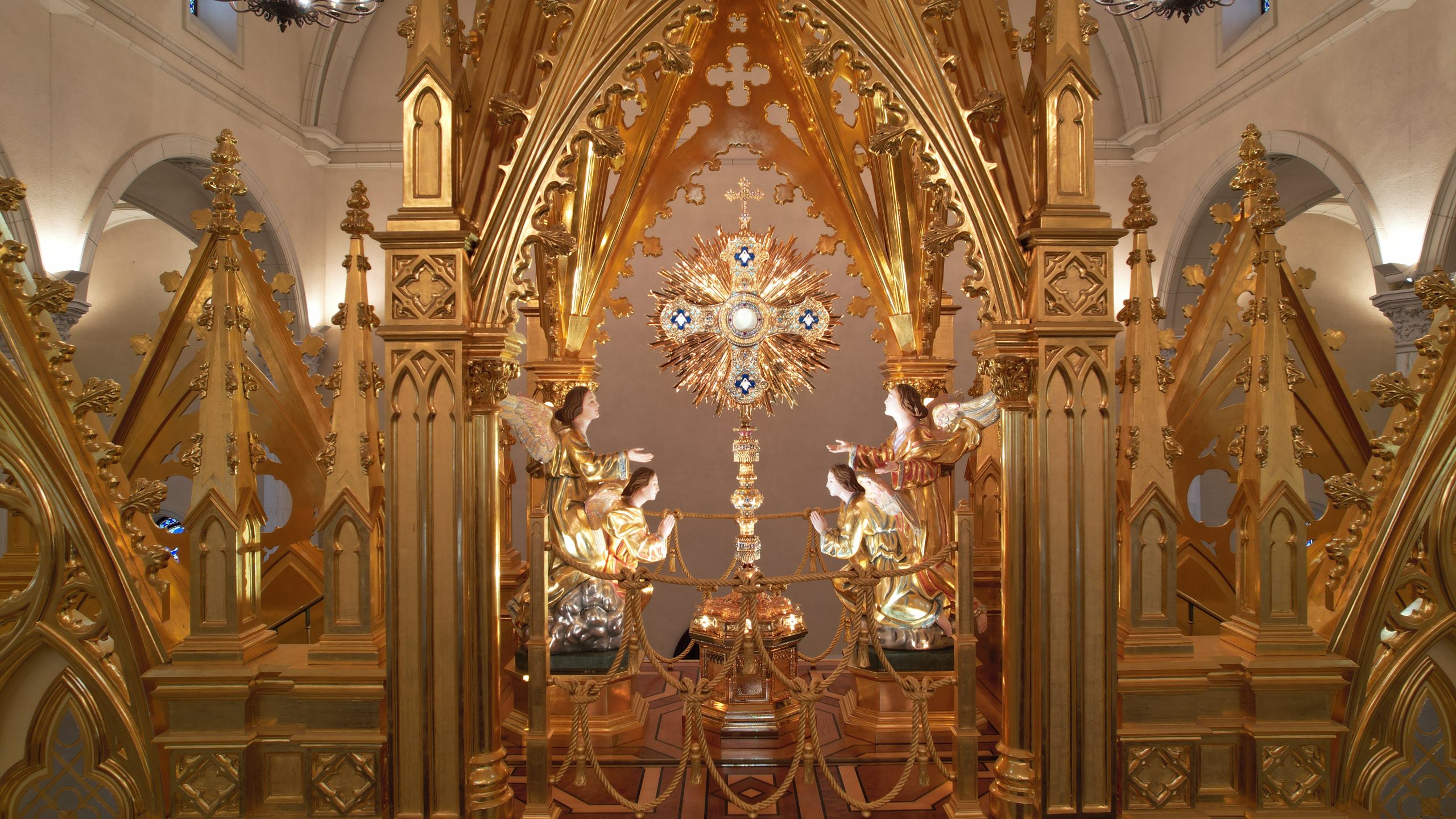
As the U.S. bishops promote a Eucharistic revival, a lack of belief in the real presence of Christ in the Eucharist remains a serious, ongoing problem in the Catholic Church.

Read More
5 things to watch at bishops’ meeting in Baltimore – #Catholic – The 2026 fall plenary assembly of the U.S. Conference of Catholic Bishops (USCCB) is expected to set direction for the Church in the United States, address pastoral challenges, and clarify emerging priorities.Here are five things to watch when bishops gather in Baltimore Nov. 17–18.1. Catholic renewal and interest among young adultsA panel will look at reports of increased numbers of people entering the Catholic Church and renewed religious interest among young adults. Watch for bishops to identify factors contributing to more interest in Catholicism and how young adults’ interest is translating into sustained parish participation.Bishops have noted a marked increase in the number of people entering the Church, and some surveys have indicated that young people are showing renewed interest in religion while others have shown “mixed signals.” A question is whether the Church is witnessing a durable generational shift or a still-developing trend.2. Immigration: 1 year after bishops’ special messageThe Committee on Migration will update bishops following the USCCB’s November 2025 special message on immigration. Dioceses and Catholic institutions have identified concrete ways to respond. Texas bishops such as Bishop Mark Seitz of El Paso and Archbishop Gustavo García-Siller of San Antonio have echoed Pope Leo XIV’s words about family separation and the treatment of migrants.Pope Leo XIV said in November 2025 that “when people are living good lives, and many of them [in the United States] for 10, 15, 20 years, to treat them in a way that is extremely disrespectful, to say the least” is not acceptable.3. Leadership electionsU.S. bishops will elect a conference secretary and chairs for six standing committees, deciding which bishops will help shape the conference’s priorities and public messaging.The public portion of the assembly will begin with an address by Archbishop Paul Coakley, USCCB president. The bishops also will hear from Archbishop Gabriele Caccia, papal nuncio to the United States.4. Votes on pro-life priorities, liturgy, racial justice, financesBishops also will vote on whether to authorize a review and update the conference’s pastoral plan for pro-life activities, a plan first adopted in 1975 that underwent a revision in 2001. They also will vote on the new edition of the Lectionary for Mass and Book of the Gospels. They will consider whether to begin an annual Day of Prayer for Racial Justice. Bishops also will approve a 2027 budget and vote on updates to the USCCB’s Diocesan Financial Reporting Guidelines and Socially Responsible Investment Guidelines.The sainthood causes of Maria Middleton and Thomas Steven Vander Woude also could advance.
 
 Tom Vander Woude with two of his grandchildren, Michael and Bobby Vander Woude (from left to right). The Diocese of Arlington, Virginia, is investigating Tom Vander Woude’s cause for sainthood almost two decades after he died saving his son. | Credit: Photo courtesy of the Tom Vander Woude Guild
 
 5. AI and human dignityU.S. bishops will amplify the Church’s public voice on AI and hear from a newly-established Task Force on Preserving Human Dignity in the Age of Artificial Intelligence. Bishop Oscar Cantù of the Diocese of San José, California, chairs the task force, which could move beyond general ethical principles toward concrete recommendations. As the Church shapes the moral boundaries of AI development, echoing Pope Leo’s encyclical Magnifica Humanitas, bishops are likely to continue raising concerns about AI’s impact on workers, children, families, and vulnerable populations.Watch the meeting onlineWhere to watch the fall plenary assembly? The bishops plan to livesteam the public sessions.

5 things to watch at bishops’ meeting in Baltimore – #Catholic – The 2026 fall plenary assembly of the U.S. Conference of Catholic Bishops (USCCB) is expected to set direction for the Church in the United States, address pastoral challenges, and clarify emerging priorities.Here are five things to watch when bishops gather in Baltimore Nov. 17–18.1. Catholic renewal and interest among young adultsA panel will look at reports of increased numbers of people entering the Catholic Church and renewed religious interest among young adults. Watch for bishops to identify factors contributing to more interest in Catholicism and how young adults’ interest is translating into sustained parish participation.Bishops have noted a marked increase in the number of people entering the Church, and some surveys have indicated that young people are showing renewed interest in religion while others have shown “mixed signals.” A question is whether the Church is witnessing a durable generational shift or a still-developing trend.2. Immigration: 1 year after bishops’ special messageThe Committee on Migration will update bishops following the USCCB’s November 2025 special message on immigration. Dioceses and Catholic institutions have identified concrete ways to respond. Texas bishops such as Bishop Mark Seitz of El Paso and Archbishop Gustavo García-Siller of San Antonio have echoed Pope Leo XIV’s words about family separation and the treatment of migrants.Pope Leo XIV said in November 2025 that “when people are living good lives, and many of them [in the United States] for 10, 15, 20 years, to treat them in a way that is extremely disrespectful, to say the least” is not acceptable.3. Leadership electionsU.S. bishops will elect a conference secretary and chairs for six standing committees, deciding which bishops will help shape the conference’s priorities and public messaging.The public portion of the assembly will begin with an address by Archbishop Paul Coakley, USCCB president. The bishops also will hear from Archbishop Gabriele Caccia, papal nuncio to the United States.4. Votes on pro-life priorities, liturgy, racial justice, financesBishops also will vote on whether to authorize a review and update the conference’s pastoral plan for pro-life activities, a plan first adopted in 1975 that underwent a revision in 2001. They also will vote on the new edition of the Lectionary for Mass and Book of the Gospels. They will consider whether to begin an annual Day of Prayer for Racial Justice. Bishops also will approve a 2027 budget and vote on updates to the USCCB’s Diocesan Financial Reporting Guidelines and Socially Responsible Investment Guidelines.The sainthood causes of Maria Middleton and Thomas Steven Vander Woude also could advance. Tom Vander Woude with two of his grandchildren, Michael and Bobby Vander Woude (from left to right). The Diocese of Arlington, Virginia, is investigating Tom Vander Woude’s cause for sainthood almost two decades after he died saving his son. | Credit: Photo courtesy of the Tom Vander Woude Guild 5. AI and human dignityU.S. bishops will amplify the Church’s public voice on AI and hear from a newly-established Task Force on Preserving Human Dignity in the Age of Artificial Intelligence. Bishop Oscar Cantù of the Diocese of San José, California, chairs the task force, which could move beyond general ethical principles toward concrete recommendations. As the Church shapes the moral boundaries of AI development, echoing Pope Leo’s encyclical Magnifica Humanitas, bishops are likely to continue raising concerns about AI’s impact on workers, children, families, and vulnerable populations.Watch the meeting onlineWhere to watch the fall plenary assembly? The bishops plan to livesteam the public sessions.

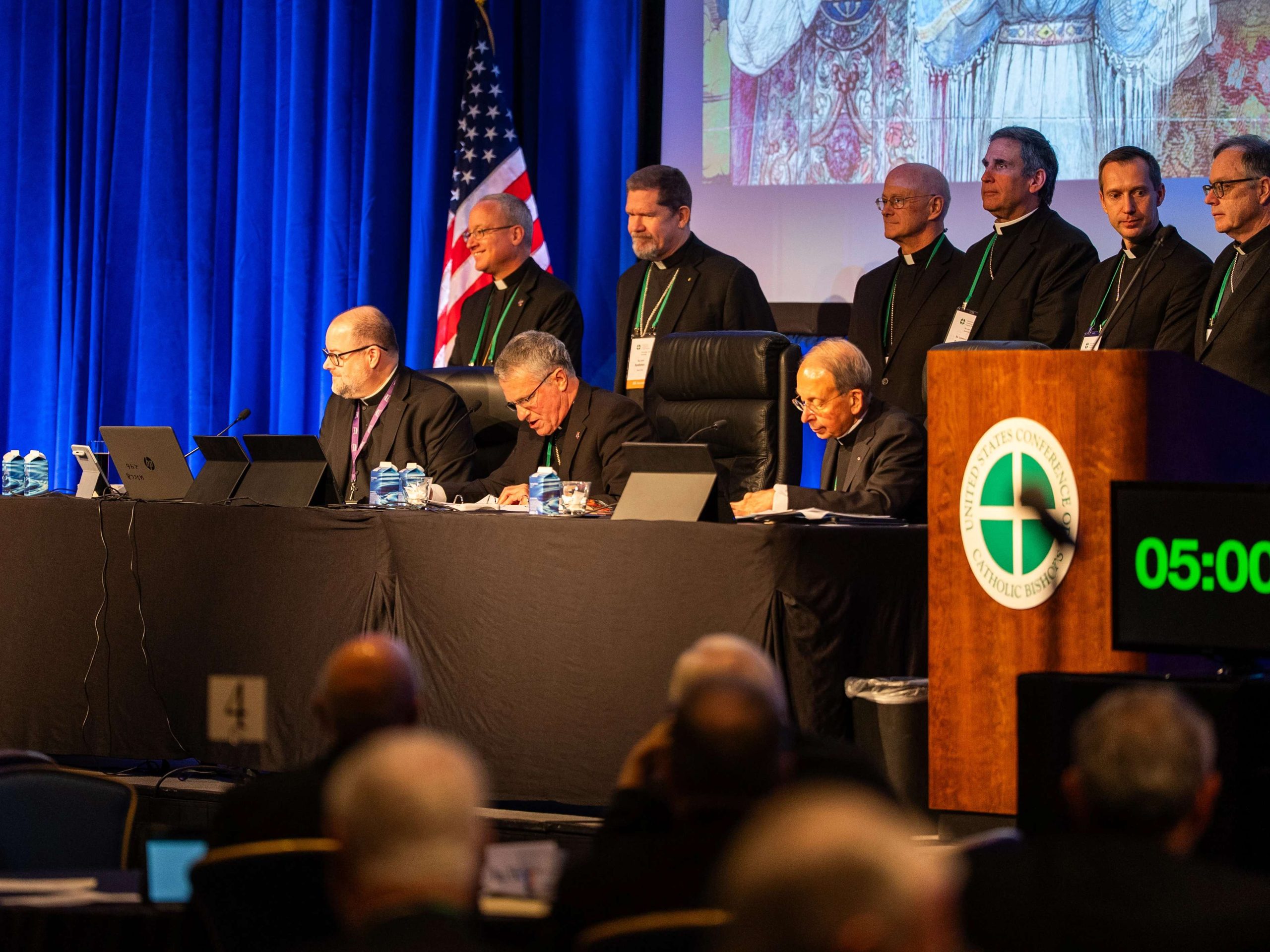
The 2026 fall plenary assembly of the U.S. Conference of Catholic Bishops is set for Nov. 17–18.

Read More
Pope Leo XIV celebrates popular piety and Indigenous cultures in Peru #Catholic LIMA, Peru — Pope Leo XIV’s last full day in South America on Sunday, Nov. 15, was the most physically demanding and geographically ambitious of his three-country tour, taking in coastal desert, Andean highlands and the Amazon rainforest in a few hours.It was an impressive show of stamina by the 71-year-old pope, only a month after he underwent surgery for lung cancer that removed part of his right lung. Leo has shown no signs of fatigue during the trip, not even on Sunday morning when he presided at a prayer service at an archaeological site over 12,000 feet above sea level.The event was a celebration of popular piety as expressed in traditions such as festivals, pilgrimages and processions.“I invite you to make these festivals a school of fraternity and charity, where you work, pray, and have fun together — and also care for those in need — so that everyone can be joyful and united before God,” Leo told the congregation, estimated by local authorities at about 100,000 people. An estimated half-million lined the streets to greet the pope as he rode in from the airport.Some had made great efforts to reach the plateau overlooking the city of Cusco.“It has been very, very hard for me, because I am elderly and I have had to climb it all myself. The kids, the young people, were going past me and I could not run. But here I am. Here I am before His Holiness, who is the pope,” said Ana María Nina Delgado of the southern Peruvian region of Arequipa.
 
 PHOTOS: Pope Leo XIV heads to Cusco, Pucallpa
 
 The Saqsaywaman National Archaeological Park was once a sacred Inca ceremonial center known as the House of the Sun and is the location today of a revived Festival of the Sun.Following the meeting, Leo led a recitation of the Angelus in the square in front of Cusco’s cathedral. He announced that he was donating a shroud to cover the Lord of the Earthquakes, an image of the crucified Jesus venerated as patron of the city and traditionally believed to have miraculously stopped an earthquake in 1650.Leo spent the afternoon in a very different ecosystem, the humid Amazon lowlands, where he celebrated Mass for a congregation of about 100,000 people at a sports field in the city of Pucallpa.In his homily, the pope connected the poverty of the region to threats to its natural resources.“All labor exploitation is a plundering of the environment,” he said. “Violence against people is violence against the earth, and violence against the earth is violence against human beings.”
 
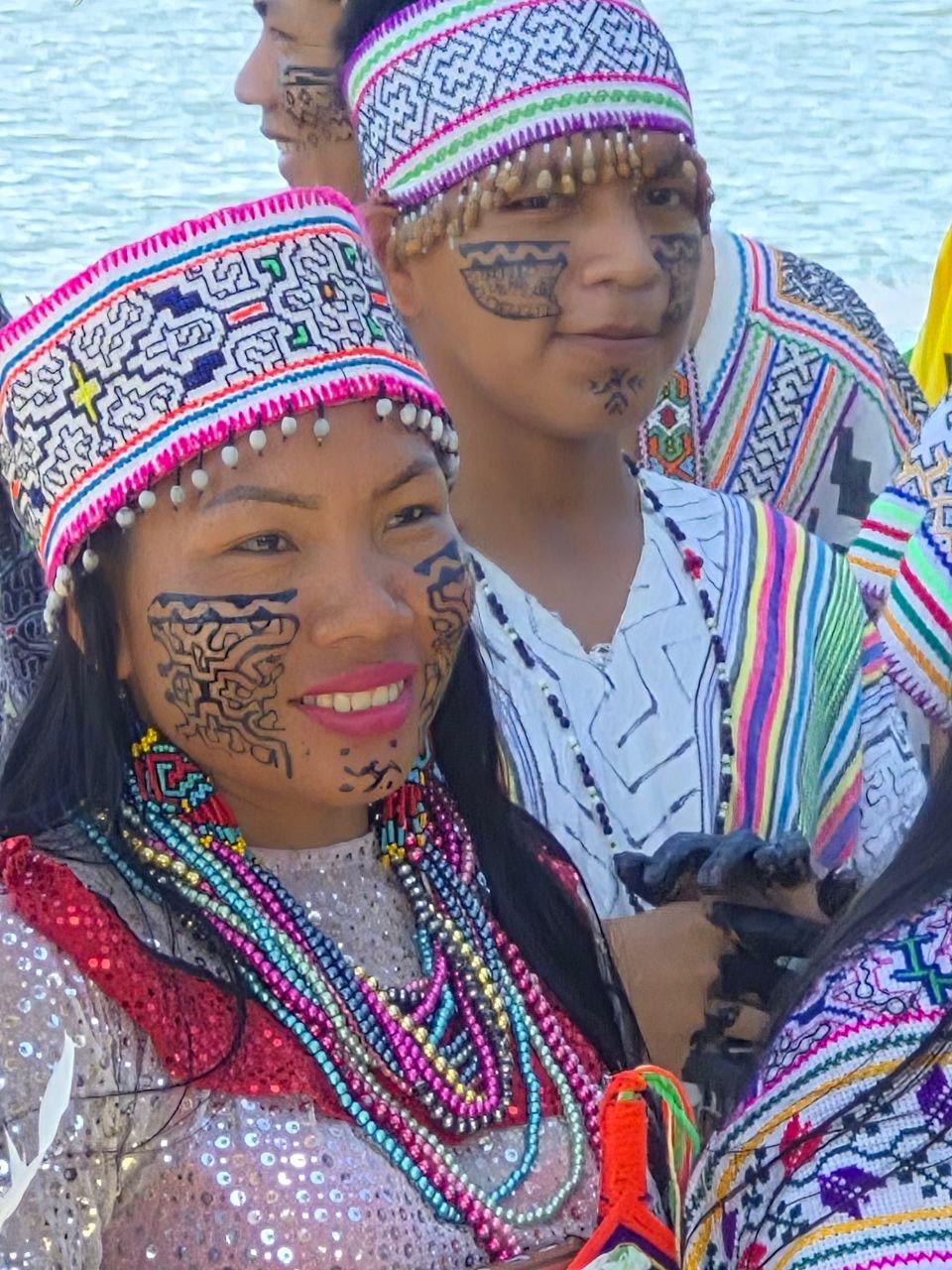
 An Amazonian woman in Pucallpa greets Pope Leo on Nov. 15, 2026. | Credit: Daniel Ibañez/EWTN News
 
 Leo’s words echoed his remarks prior to the Mass, at a meeting with representatives of the Indigenous peoples of the Amazon and some missionaries who minister to them. The pope told the meeting that defending the rainforest also means defending the rights of its inhabitants.“The cry of the earth and the cry of the poor are inseparable, exposing patterns of exploitation and economic activity that threaten the balance of creation. Protecting the Amazon rainforest cannot be separated from concern for the people who live there,” he said.The pope flew to Lima on Sunday evening and was scheduled to celebrate Mass there the next day before leaving for Rome in the early afternoon.

Pope Leo XIV celebrates popular piety and Indigenous cultures in Peru #Catholic LIMA, Peru — Pope Leo XIV’s last full day in South America on Sunday, Nov. 15, was the most physically demanding and geographically ambitious of his three-country tour, taking in coastal desert, Andean highlands and the Amazon rainforest in a few hours.It was an impressive show of stamina by the 71-year-old pope, only a month after he underwent surgery for lung cancer that removed part of his right lung. Leo has shown no signs of fatigue during the trip, not even on Sunday morning when he presided at a prayer service at an archaeological site over 12,000 feet above sea level.The event was a celebration of popular piety as expressed in traditions such as festivals, pilgrimages and processions.“I invite you to make these festivals a school of fraternity and charity, where you work, pray, and have fun together — and also care for those in need — so that everyone can be joyful and united before God,” Leo told the congregation, estimated by local authorities at about 100,000 people. An estimated half-million lined the streets to greet the pope as he rode in from the airport.Some had made great efforts to reach the plateau overlooking the city of Cusco.“It has been very, very hard for me, because I am elderly and I have had to climb it all myself. The kids, the young people, were going past me and I could not run. But here I am. Here I am before His Holiness, who is the pope,” said Ana María Nina Delgado of the southern Peruvian region of Arequipa. PHOTOS: Pope Leo XIV heads to Cusco, Pucallpa The Saqsaywaman National Archaeological Park was once a sacred Inca ceremonial center known as the House of the Sun and is the location today of a revived Festival of the Sun.Following the meeting, Leo led a recitation of the Angelus in the square in front of Cusco’s cathedral. He announced that he was donating a shroud to cover the Lord of the Earthquakes, an image of the crucified Jesus venerated as patron of the city and traditionally believed to have miraculously stopped an earthquake in 1650.Leo spent the afternoon in a very different ecosystem, the humid Amazon lowlands, where he celebrated Mass for a congregation of about 100,000 people at a sports field in the city of Pucallpa.In his homily, the pope connected the poverty of the region to threats to its natural resources.“All labor exploitation is a plundering of the environment,” he said. “Violence against people is violence against the earth, and violence against the earth is violence against human beings.” An Amazonian woman in Pucallpa greets Pope Leo on Nov. 15, 2026. | Credit: Daniel Ibañez/EWTN News Leo’s words echoed his remarks prior to the Mass, at a meeting with representatives of the Indigenous peoples of the Amazon and some missionaries who minister to them. The pope told the meeting that defending the rainforest also means defending the rights of its inhabitants.“The cry of the earth and the cry of the poor are inseparable, exposing patterns of exploitation and economic activity that threaten the balance of creation. Protecting the Amazon rainforest cannot be separated from concern for the people who live there,” he said.The pope flew to Lima on Sunday evening and was scheduled to celebrate Mass there the next day before leaving for Rome in the early afternoon.

From Inca ruins high in the Andes to a Mass for 100,000 in the Amazon, the pontiff’s most demanding day in Peru put popular faith and the rainforest’s peoples at center stage.

Read More