Day: November 17, 2026

Obituary: Father Alfred James Lampron, retired diocesan priest, 78 #Catholic – A Mass of Christian Burial will be held on Friday, Nov. 20, 2026 at 10 a.m. at St. Virgil Church in Morris Plains, N.J. for Father Alfred “Fr. Al” James Lampron, a retired priest of the Paterson Diocese, N.J., who died on Nov. 13 at Merry Heart Nursing Home in the Succasunna neighborhood of Roxbury Township, N.J., surrounded by his loving family. He was 78.
Born in Newark, N.J., Father Lampron graduated from the former Bayley Ellard High School in Madison, N.J. and Mount St. Paul Dominican College in Wisconsin. He then studied for the priesthood at St. Mary’s Seminary and University in Baltimore, Md.
In 1975, Bishop Lawrence B. Casey ordained Father Lampron as a diocesan priest.
Father Lampron served many parishes in the diocese, including Holy Trinity in Passaic, N.J., St. Christopher’s in Parsippany, N.J., St. Virgil’s in Morris Plains, Holy Spirit in Pequannock, where he served as pastor, and St. Bernard of Clairvaux in Wharton, N.J., where he was pastor for 18 years.
In addition, Father Lampron served as the chaplain of the Morris Plains Fire Department while at St. Virgil’s. He retired in 2024 after 50 years of active ministry.
Upon his retirement, Father Lampron lived at Nazareth Village in Chester, N.J.
Surviving Father Lampron are his sisters, Kathleen Oakley and Rosemary Strelec, and her husband, Thomas; his brother-in-law and sister-in-law, Ronald Lovenberg and Cathy Lampron; his nieces and nephews, Christopher, Mary (Harris), Patricia (Shen), Amanda (Christopher), Michael (Trisha), Matthew (Hayley), Melissa, Thomas, and Sarah; and his great-nieces and great-nephews, Rylie, Cam, Bryson, Raelyn, River, Wilder, Danger, Lavender, Cora, Lola, and Cashel.
Father Lampron was predeceased by his parents, Alfred James and Mary Elizabeth Lampron; his brother, Thomas B. Lampron; and his sister, Nancy J. Lovenberg.
Visitation for Father Lampron will be held on Thursday, Nov. 19 from 4 to 8 p.m. at St. Virgil Church in Morris Plains. His Mass of Christian Burial will be held on Friday, Nov. 20 at 10 a.m. at St. Virgil’s. Priests are invited to concelebrate the funeral Mass. Please bring diocesan vestments.
Interment will follow at Gate of Heaven Cemetery, East Hanover, N.J.
Please make donations in Father Lampron’s memory to St. Jude Children’s Research Hospital or Tunnel to Towers Foundation.
Condolences may be sent to the attention of Clergy Personnel Office, 205 Madison Ave. Madison, N.J. 07940
Please keep Father Lampron, his predeceased parents, Alfred and Mary (Betty); his predeceased sister, Nancy and brother, Thomas; his surviving siblings, Kathleen and Rosemary; his family and friends; and all priests of the Paterson Diocese, in your prayers, especially at the Eucharist.

Click here to subscribe to our weekly newsletter.

Obituary: Father Alfred James Lampron, retired diocesan priest, 78 #Catholic – A Mass of Christian Burial will be held on Friday, Nov. 20, 2026 at 10 a.m. at St. Virgil Church in Morris Plains, N.J. for Father Alfred “Fr. Al” James Lampron, a retired priest of the Paterson Diocese, N.J., who died on Nov. 13 at Merry Heart Nursing Home in the Succasunna neighborhood of Roxbury Township, N.J., surrounded by his loving family. He was 78. Born in Newark, N.J., Father Lampron graduated from the former Bayley Ellard High School in Madison, N.J. and Mount St. Paul Dominican College in Wisconsin. He then studied for the priesthood at St. Mary’s Seminary and University in Baltimore, Md. In 1975, Bishop Lawrence B. Casey ordained Father Lampron as a diocesan priest. Father Lampron served many parishes in the diocese, including Holy Trinity in Passaic, N.J., St. Christopher’s in Parsippany, N.J., St. Virgil’s in Morris Plains, Holy Spirit in Pequannock, where he served as pastor, and St. Bernard of Clairvaux in Wharton, N.J., where he was pastor for 18 years. In addition, Father Lampron served as the chaplain of the Morris Plains Fire Department while at St. Virgil’s. He retired in 2024 after 50 years of active ministry. Upon his retirement, Father Lampron lived at Nazareth Village in Chester, N.J. Surviving Father Lampron are his sisters, Kathleen Oakley and Rosemary Strelec, and her husband, Thomas; his brother-in-law and sister-in-law, Ronald Lovenberg and Cathy Lampron; his nieces and nephews, Christopher, Mary (Harris), Patricia (Shen), Amanda (Christopher), Michael (Trisha), Matthew (Hayley), Melissa, Thomas, and Sarah; and his great-nieces and great-nephews, Rylie, Cam, Bryson, Raelyn, River, Wilder, Danger, Lavender, Cora, Lola, and Cashel. Father Lampron was predeceased by his parents, Alfred James and Mary Elizabeth Lampron; his brother, Thomas B. Lampron; and his sister, Nancy J. Lovenberg. Visitation for Father Lampron will be held on Thursday, Nov. 19 from 4 to 8 p.m. at St. Virgil Church in Morris Plains. His Mass of Christian Burial will be held on Friday, Nov. 20 at 10 a.m. at St. Virgil’s. Priests are invited to concelebrate the funeral Mass. Please bring diocesan vestments. Interment will follow at Gate of Heaven Cemetery, East Hanover, N.J. Please make donations in Father Lampron’s memory to St. Jude Children’s Research Hospital or Tunnel to Towers Foundation. Condolences may be sent to the attention of Clergy Personnel Office, 205 Madison Ave. Madison, N.J. 07940 Please keep Father Lampron, his predeceased parents, Alfred and Mary (Betty); his predeceased sister, Nancy and brother, Thomas; his surviving siblings, Kathleen and Rosemary; his family and friends; and all priests of the Paterson Diocese, in your prayers, especially at the Eucharist. Click here to subscribe to our weekly newsletter.

Obituary: Father Alfred James Lampron, retired diocesan priest, 78 #Catholic –

A Mass of Christian Burial will be held on Friday, Nov. 20, 2026 at 10 a.m. at St. Virgil Church in Morris Plains, N.J. for Father Alfred “Fr. Al” James Lampron, a retired priest of the Paterson Diocese, N.J., who died on Nov. 13 at Merry Heart Nursing Home in the Succasunna neighborhood of Roxbury Township, N.J., surrounded by his loving family. He was 78.

Born in Newark, N.J., Father Lampron graduated from the former Bayley Ellard High School in Madison, N.J. and Mount St. Paul Dominican College in Wisconsin. He then studied for the priesthood at St. Mary’s Seminary and University in Baltimore, Md.

In 1975, Bishop Lawrence B. Casey ordained Father Lampron as a diocesan priest.

Father Lampron served many parishes in the diocese, including Holy Trinity in Passaic, N.J., St. Christopher’s in Parsippany, N.J., St. Virgil’s in Morris Plains, Holy Spirit in Pequannock, where he served as pastor, and St. Bernard of Clairvaux in Wharton, N.J., where he was pastor for 18 years.

In addition, Father Lampron served as the chaplain of the Morris Plains Fire Department while at St. Virgil’s. He retired in 2024 after 50 years of active ministry.

Upon his retirement, Father Lampron lived at Nazareth Village in Chester, N.J.

Surviving Father Lampron are his sisters, Kathleen Oakley and Rosemary Strelec, and her husband, Thomas; his brother-in-law and sister-in-law, Ronald Lovenberg and Cathy Lampron; his nieces and nephews, Christopher, Mary (Harris), Patricia (Shen), Amanda (Christopher), Michael (Trisha), Matthew (Hayley), Melissa, Thomas, and Sarah; and his great-nieces and great-nephews, Rylie, Cam, Bryson, Raelyn, River, Wilder, Danger, Lavender, Cora, Lola, and Cashel.

Father Lampron was predeceased by his parents, Alfred James and Mary Elizabeth Lampron; his brother, Thomas B. Lampron; and his sister, Nancy J. Lovenberg.

Visitation for Father Lampron will be held on Thursday, Nov. 19 from 4 to 8 p.m. at St. Virgil Church in Morris Plains. His Mass of Christian Burial will be held on Friday, Nov. 20 at 10 a.m. at St. Virgil’s. Priests are invited to concelebrate the funeral Mass. Please bring diocesan vestments.

Interment will follow at Gate of Heaven Cemetery, East Hanover, N.J.

Please make donations in Father Lampron’s memory to St. Jude Children’s Research Hospital or Tunnel to Towers Foundation.

Condolences may be sent to the attention of Clergy Personnel Office, 205 Madison Ave. Madison, N.J. 07940

Please keep Father Lampron, his predeceased parents, Alfred and Mary (Betty); his predeceased sister, Nancy and brother, Thomas; his surviving siblings, Kathleen and Rosemary; his family and friends; and all priests of the Paterson Diocese, in your prayers, especially at the Eucharist.


Click here to subscribe to our weekly newsletter.

– A Mass of Christian Burial will be held on Friday, Nov. 20, 2026 at 10 a.m. at St. Virgil Church in Morris Plains, N.J. for Father Alfred “Fr. Al” James Lampron, a retired priest of the Paterson Diocese, N.J., who died on Nov. 13 at Merry Heart Nursing Home in the Succasunna neighborhood of Roxbury Township, N.J., surrounded by his loving family. He was 78. Born in Newark, N.J., Father Lampron graduated from the former Bayley Ellard High School in Madison, N.J. and Mount St. Paul Dominican College in Wisconsin. He then studied for the priesthood at St. Mary’s Seminary
Read More
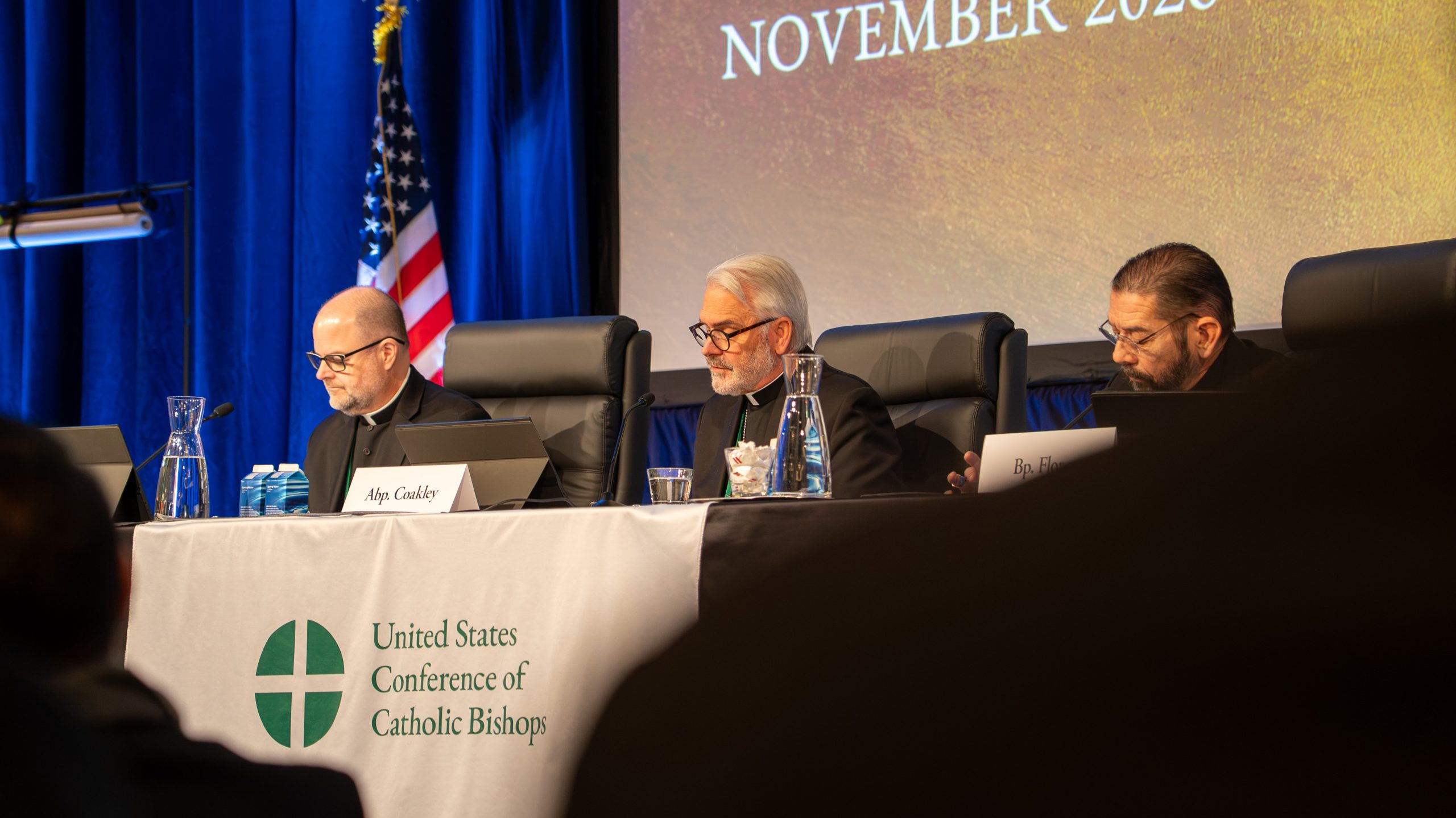
USCCB president says Church must focus on mission, not political divisions – #Catholic – BALTIMORE — Archbishop Paul Coakley of Oklahoma City, president of the United States Conference of Catholic Bishops (USCCB), told his brother bishops that the Church must resist the tendency to view its affairs through political and ideological divisions, saying its work is centered on mission rather than power.In his address Nov. 17 at the fall plenary assembly of the USCCB in Baltimore, Coakley referred to the recent midterm elections, in which Democrats won a majority in both chambers of Congress.“As a nation, we have just come through a difficult and often contentious election cycle which yielded, if not surprising, undeniably consequential results,” Coakley said. “No matter the results, I want to congratulate those elected and encourage them to work together promoting the common good and protecting the human dignity of every person.”Coakley then touched back on the idea that the same forces of secularism and polarization affecting society are also influencing how people understand the Church. He said those interpretations are common not only in the wider culture but also among Catholics, including in Catholic media and on social media.“For the world thinks in terms of power. The world sees things through a false binary logic, a world of yes or no, of left or right, of either or,” Coakley said. “But, as you and I know, the Church thinks in terms of mission.”The archbishop added that an emphasis on political maneuvering and winning can cause people to lose sight of what should bring the Church together. “One fundamental loss,” he said, “is the loss of hope.”Coakley pointed to a recent meeting in Rome, in which he and Bishop Daniel Flores, vice president of the USCCB, joined presidents of episcopal conferences and Eastern Churches to discuss the impact of Pope Francis’ 2016 apostolic exhortation Amoris Laetitia on marriage and family life.He said he had been apprehensive before the meeting but was surprised by how calmly the discussions took place. Rather than focusing on disagreements surrounding the document, the participants shared their experiences and discussed the decline in sacramental marriage.The meeting, he said, showed what can happen when bishops come together to listen and consider a common pastoral concern.‘Construction sites of hope’Coakley described the family as “the basic structure of society,” saying it is where people develop a sense of belonging, learn social skills and values, experience love, and pass on the faith.Referencing Pope Leo XIV’s encyclical Magnifica Humanitas, he also outlined four areas where he believes the Church must concentrate its efforts, describing them as “construction sites of hope.”The first is family life. Coakley said the Church needs to do more to support couples beyond marriage preparation programs and their wedding day, accompanying them throughout their married lives.“The world sees marriage as a transaction; but we know it is the foundation for a life of love and fidelity; not a transaction, but a covenant,” he said. “We need to share that knowledge and experience more broadly and with renewed vigor and confidence.”
 
 Archbishop Paul Coakley addresses his brother bishops at the USCCB plenary meeting in Baltimore, Nov. 17, 2026. | Credit: Gigi Duncan/EWTN News
 
 He also called for greater attention to worship and liturgical formation, pointing to the fruits of the National Eucharistic Revival and the need to build on its foundation.Another priority, he added, is strengthening dialogue and discernment through the synodal process. “These are not just buzzwords, at least they shouldn’t be,” he said. “I encourage us to develop these skills even more carefully as we continue to walk together receiving and implementing the fruits of the recent synod.”He encouraged bishops to make listening and prayer part of their work with priests, parish councils, and the faithful. “I encourage us,” he said, “to develop these skills even more carefully as we continued to walk together receiving and implementing the fruits of the synod.”Coakley also addressed the Churchʼs role in civic life, saying Catholics must help counter polarization in their communities and families.“The polarization, isolation, and anger in our communities and even our families can only be overcome when we rediscover a shared hope,” he said. He encouraged bishops to show how that hope can “be found in a common understanding of the dignity of human life and of each person,” especially amid the “challenges and opportunities of artificial intelligence.”Coakley concluded by telling the bishops that the state of the USCCB and the Church in the United States and around the world is good, even as challenges remain.“Yes, we have much work to do,” he said. “Letʼs do it together with fraternal respect, renewed cooperation, and pastoral charity.”He ended with a prayer from Pope Leo, the same one he used to conclude his June address.“With the same faith as Mary, let us become ‘weavers of hope’ in our world, sharing who we are and what we have,” he said, “so that the presence of Jesus may grow among us and his kingdom take shape.”

USCCB president says Church must focus on mission, not political divisions – #Catholic – BALTIMORE — Archbishop Paul Coakley of Oklahoma City, president of the United States Conference of Catholic Bishops (USCCB), told his brother bishops that the Church must resist the tendency to view its affairs through political and ideological divisions, saying its work is centered on mission rather than power.In his address Nov. 17 at the fall plenary assembly of the USCCB in Baltimore, Coakley referred to the recent midterm elections, in which Democrats won a majority in both chambers of Congress.“As a nation, we have just come through a difficult and often contentious election cycle which yielded, if not surprising, undeniably consequential results,” Coakley said. “No matter the results, I want to congratulate those elected and encourage them to work together promoting the common good and protecting the human dignity of every person.”Coakley then touched back on the idea that the same forces of secularism and polarization affecting society are also influencing how people understand the Church. He said those interpretations are common not only in the wider culture but also among Catholics, including in Catholic media and on social media.“For the world thinks in terms of power. The world sees things through a false binary logic, a world of yes or no, of left or right, of either or,” Coakley said. “But, as you and I know, the Church thinks in terms of mission.”The archbishop added that an emphasis on political maneuvering and winning can cause people to lose sight of what should bring the Church together. “One fundamental loss,” he said, “is the loss of hope.”Coakley pointed to a recent meeting in Rome, in which he and Bishop Daniel Flores, vice president of the USCCB, joined presidents of episcopal conferences and Eastern Churches to discuss the impact of Pope Francis’ 2016 apostolic exhortation Amoris Laetitia on marriage and family life.He said he had been apprehensive before the meeting but was surprised by how calmly the discussions took place. Rather than focusing on disagreements surrounding the document, the participants shared their experiences and discussed the decline in sacramental marriage.The meeting, he said, showed what can happen when bishops come together to listen and consider a common pastoral concern.‘Construction sites of hope’Coakley described the family as “the basic structure of society,” saying it is where people develop a sense of belonging, learn social skills and values, experience love, and pass on the faith.Referencing Pope Leo XIV’s encyclical Magnifica Humanitas, he also outlined four areas where he believes the Church must concentrate its efforts, describing them as “construction sites of hope.”The first is family life. Coakley said the Church needs to do more to support couples beyond marriage preparation programs and their wedding day, accompanying them throughout their married lives.“The world sees marriage as a transaction; but we know it is the foundation for a life of love and fidelity; not a transaction, but a covenant,” he said. “We need to share that knowledge and experience more broadly and with renewed vigor and confidence.” Archbishop Paul Coakley addresses his brother bishops at the USCCB plenary meeting in Baltimore, Nov. 17, 2026. | Credit: Gigi Duncan/EWTN News He also called for greater attention to worship and liturgical formation, pointing to the fruits of the National Eucharistic Revival and the need to build on its foundation.Another priority, he added, is strengthening dialogue and discernment through the synodal process. “These are not just buzzwords, at least they shouldn’t be,” he said. “I encourage us to develop these skills even more carefully as we continue to walk together receiving and implementing the fruits of the recent synod.”He encouraged bishops to make listening and prayer part of their work with priests, parish councils, and the faithful. “I encourage us,” he said, “to develop these skills even more carefully as we continued to walk together receiving and implementing the fruits of the synod.”Coakley also addressed the Churchʼs role in civic life, saying Catholics must help counter polarization in their communities and families.“The polarization, isolation, and anger in our communities and even our families can only be overcome when we rediscover a shared hope,” he said. He encouraged bishops to show how that hope can “be found in a common understanding of the dignity of human life and of each person,” especially amid the “challenges and opportunities of artificial intelligence.”Coakley concluded by telling the bishops that the state of the USCCB and the Church in the United States and around the world is good, even as challenges remain.“Yes, we have much work to do,” he said. “Letʼs do it together with fraternal respect, renewed cooperation, and pastoral charity.”He ended with a prayer from Pope Leo, the same one he used to conclude his June address.“With the same faith as Mary, let us become ‘weavers of hope’ in our world, sharing who we are and what we have,” he said, “so that the presence of Jesus may grow among us and his kingdom take shape.”

Archbishop Paul Coakley outlined four priorities for the Church, including strengthening marriage and family life, worship, dialogue, and civic engagement.

Read More

There are likely fewer satellites in Earth orbit right now than there will be at any point for the rest of your life.  It’s a sobering thought. The threats from our ever-more-crowded skies are well documented: light pollution from megaconstellations, aluminum oxide accumulating in the upper atmosphere as satellites burn up on reentry, and theContinue reading “Can robots save Earth orbit?”

The post Can robots save Earth orbit? appeared first on Astronomy Magazine.

Read More
How Christian art attracts: First Christian Art Conference in London sells out – #Catholic – LONDON — A day dedicated to the dialogue between beauty and faith — the idea behind the first Christian Art Conference in London — drew more than 1,200 participants. On Nov. 14, the Queen Elizabeth II Centre across the street from Westminster Abbey was sold out and filled to the last seat. The lectures, panels, and workshops brought together artists, theologians, church leaders, and Catholic ministries promoting evangelization.The enormous interest in the first Christian Art Conference in London came as a surprise even to the organizers. Father Patrick van der Vorst told EWTN News he had not expected the event to sell out three months in advance. “It shows there is a great appetite in the world to talk about God through beauty and to have this soft element of evangelization, to invite people back into the faith through the doors of beauty,” he said. Combining evangelization with art is nothing new for Van der Vorst. A former director of Sotheby’s Europe, he spent 25 years in the art world before entering seminary at the Pontifical Beda College in Rome in 2019. He was ordained to the priesthood for the Diocese of Westminster on June 24, 2023, and continues to write and speak about art and faith through his website and newsletter, Christian.art, which has more than 100,000 subscribers.EWTN Great Britain covered the priest’s presentation on why the Church fought to defend sacred images.Asked what “Christian art” really means, Van der Vorst hesitated at first. “Thatʼs a very big question,” he said. For some it means an overtly Christian image of Our Lord, of Our Lady; for others, he noted, Christian art is simply a very beautiful landscape depicting Godʼs creation. “Christian art can be a very wide range of things,” he said. Maybe it is this variety that captures the interest of people. He attributed the positive turnout of the conference to the nature of art itself. “With everything that goes on in the world, thereʼs a lot of negative news. Art brings a bit of joy, a bit of color. This is such an important aspect of our Christian faith, this element of joy,” he explained. Art and joy, he said, give hope in darker times.The conference also attracted high-level speakers, including Cardinal Timothy Radcliffe, OP, former Archbishop of Canterbury Rowan Williams, and Baroness Sheila Hollins. According to Van der Vorst, it was not difficult to persuade them to join this new format, even though many of them do not often speak about art. “So for them, it was also a bit of a challenge to talk about God through the lens of art,” he said, adding: “We are very blessed with having a very good series of speakers.”
 
 Bishop Paul Tighe, secretary of the culture section at the Dicastery for Culture and Education, at the office of the dicastery at the Vatican on July 21, 2026. | Credit: Ishmael Adibuah/EWTN News
 
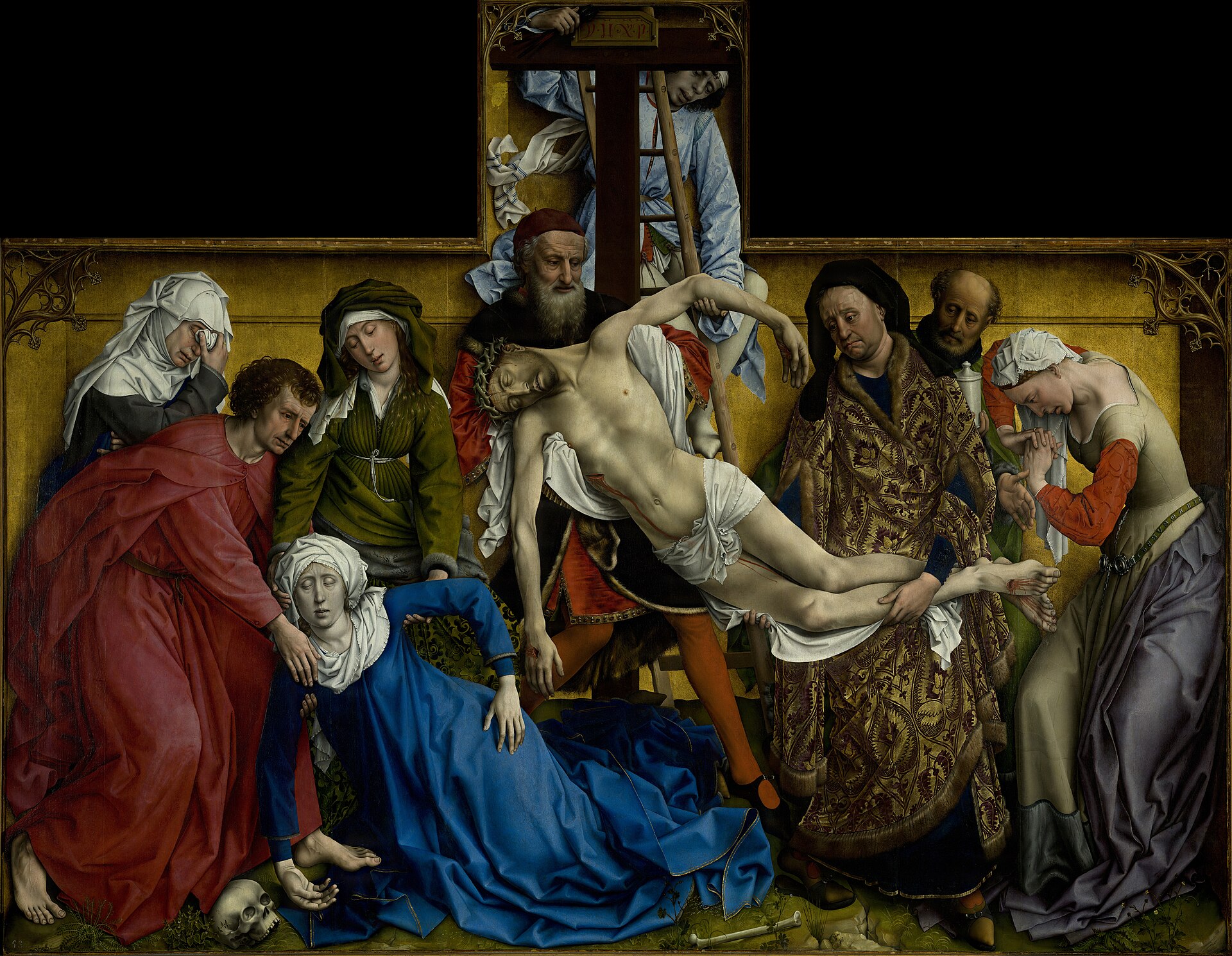
 Among the keynote speakers was also Bishop Paul Tighe, the secretary for culture of the Dicastery for Culture and Education at the Holy See. Based in Rome, his work focuses on the Church’s dialogue with contemporary culture and the role of creativity, education, and communication in shaping spiritual life. In his address at the conference, he said that the Church needs artists. In an interview with EWTN News, he expanded on the point: “In saying the Church needs artists, I was arguing something Pope Paul VI said and that was reiterated by St. John Paul II. If it werenʼt for artists, theologians would have to be artists because words are not enough to communicate the fullness of the Gospel. We need images. We need things that brings it to life in the minds of people.”St. Paul VI made that appeal in a May 7, 1964, address to artists, and St. John Paul II returned to it in his 1999 letter. Tighe said he believes that the Church also needs artists who do not focus on religious themes: “Those who oblige us to see differently, to see things we donʼt want to look at. To oblige us to confront issues that are concerning and worrying people today.” That is why Tighe said he welcomes Pope Leo XIV’s recent call for an alliance with artists. “Can we walk together so that we work together to preserve and safeguard our essential humanity? And artists can keep us aligned to that in so many ways,” Tighe said.The conference closed with Sir Gabriele Finaldi, the director of the National Gallery in London. Formerly deputy director for collections and research at the Prado Museum in Madrid, he has curated major exhibitions internationally and written extensively on Italian and Spanish sacred art. This knowledge he put on display also during the conference, speaking about masterpieces such as Rogier van der Weyden’s “The Descent from the Cross” (c. 1435), now in the Prado. “The Eucharistic body and the realistic body of Christ meet in this piece of art,” Finaldi told the audience, suggesting that the painter was aware of the mystical reality of the Eucharist when creating this work.
 
 In “The Song of the Lark” (1884) by French painter Jules Breton, a young peasant woman pauses in a field at sunrise. | Credit: Art Institute of Chicago/Public domain
 
 Finaldi’s passion for art’s power to convey faith and hope was evident. “Paintings can save lives,” he asserted and immediately displayed Jules Breton’s “The Song of the Lark” from 1884 on the big screens of the conference hall while recounting a story shared by American actor Bill Murray. In the early days of his career, Murray was so frustrated and disillusioned that he contemplated ending his life. It was Breton’s work of art, which Murray came across in the Art Institute of Chicago, that made him change his mind. Standing before the painting and seeing the image of a peasant woman facing the heavy work for the day under a rising sun, he felt that — like the dawn in the artwork — he too was a person who got a new chance every new day, Finaldi explained to an intently listening audience.That sentiment is well known to Monsignor John Armitage, the master of the Guild of Our Lady of Ransom, one of the main sponsors of the conference, which exists to enable evangelization. “You can see by the sheer numbers of people who go into our national galleries that there is a power in art, which is linked to beauty, truth, and goodness,” Armitage said. Art inspires, he is convinced — and ultimately, it can point the way to God.

How Christian art attracts: First Christian Art Conference in London sells out – #Catholic – LONDON — A day dedicated to the dialogue between beauty and faith — the idea behind the first Christian Art Conference in London — drew more than 1,200 participants. On Nov. 14, the Queen Elizabeth II Centre across the street from Westminster Abbey was sold out and filled to the last seat. The lectures, panels, and workshops brought together artists, theologians, church leaders, and Catholic ministries promoting evangelization.The enormous interest in the first Christian Art Conference in London came as a surprise even to the organizers. Father Patrick van der Vorst told EWTN News he had not expected the event to sell out three months in advance. “It shows there is a great appetite in the world to talk about God through beauty and to have this soft element of evangelization, to invite people back into the faith through the doors of beauty,” he said. Combining evangelization with art is nothing new for Van der Vorst. A former director of Sotheby’s Europe, he spent 25 years in the art world before entering seminary at the Pontifical Beda College in Rome in 2019. He was ordained to the priesthood for the Diocese of Westminster on June 24, 2023, and continues to write and speak about art and faith through his website and newsletter, Christian.art, which has more than 100,000 subscribers.EWTN Great Britain covered the priest’s presentation on why the Church fought to defend sacred images.Asked what “Christian art” really means, Van der Vorst hesitated at first. “Thatʼs a very big question,” he said. For some it means an overtly Christian image of Our Lord, of Our Lady; for others, he noted, Christian art is simply a very beautiful landscape depicting Godʼs creation. “Christian art can be a very wide range of things,” he said. Maybe it is this variety that captures the interest of people. He attributed the positive turnout of the conference to the nature of art itself. “With everything that goes on in the world, thereʼs a lot of negative news. Art brings a bit of joy, a bit of color. This is such an important aspect of our Christian faith, this element of joy,” he explained. Art and joy, he said, give hope in darker times.The conference also attracted high-level speakers, including Cardinal Timothy Radcliffe, OP, former Archbishop of Canterbury Rowan Williams, and Baroness Sheila Hollins. According to Van der Vorst, it was not difficult to persuade them to join this new format, even though many of them do not often speak about art. “So for them, it was also a bit of a challenge to talk about God through the lens of art,” he said, adding: “We are very blessed with having a very good series of speakers.” Bishop Paul Tighe, secretary of the culture section at the Dicastery for Culture and Education, at the office of the dicastery at the Vatican on July 21, 2026. | Credit: Ishmael Adibuah/EWTN News Among the keynote speakers was also Bishop Paul Tighe, the secretary for culture of the Dicastery for Culture and Education at the Holy See. Based in Rome, his work focuses on the Church’s dialogue with contemporary culture and the role of creativity, education, and communication in shaping spiritual life. In his address at the conference, he said that the Church needs artists. In an interview with EWTN News, he expanded on the point: “In saying the Church needs artists, I was arguing something Pope Paul VI said and that was reiterated by St. John Paul II. If it werenʼt for artists, theologians would have to be artists because words are not enough to communicate the fullness of the Gospel. We need images. We need things that brings it to life in the minds of people.”St. Paul VI made that appeal in a May 7, 1964, address to artists, and St. John Paul II returned to it in his 1999 letter. Tighe said he believes that the Church also needs artists who do not focus on religious themes: “Those who oblige us to see differently, to see things we donʼt want to look at. To oblige us to confront issues that are concerning and worrying people today.” That is why Tighe said he welcomes Pope Leo XIV’s recent call for an alliance with artists. “Can we walk together so that we work together to preserve and safeguard our essential humanity? And artists can keep us aligned to that in so many ways,” Tighe said.The conference closed with Sir Gabriele Finaldi, the director of the National Gallery in London. Formerly deputy director for collections and research at the Prado Museum in Madrid, he has curated major exhibitions internationally and written extensively on Italian and Spanish sacred art. This knowledge he put on display also during the conference, speaking about masterpieces such as Rogier van der Weyden’s “The Descent from the Cross” (c. 1435), now in the Prado. “The Eucharistic body and the realistic body of Christ meet in this piece of art,” Finaldi told the audience, suggesting that the painter was aware of the mystical reality of the Eucharist when creating this work. In “The Song of the Lark” (1884) by French painter Jules Breton, a young peasant woman pauses in a field at sunrise. | Credit: Art Institute of Chicago/Public domain Finaldi’s passion for art’s power to convey faith and hope was evident. “Paintings can save lives,” he asserted and immediately displayed Jules Breton’s “The Song of the Lark” from 1884 on the big screens of the conference hall while recounting a story shared by American actor Bill Murray. In the early days of his career, Murray was so frustrated and disillusioned that he contemplated ending his life. It was Breton’s work of art, which Murray came across in the Art Institute of Chicago, that made him change his mind. Standing before the painting and seeing the image of a peasant woman facing the heavy work for the day under a rising sun, he felt that — like the dawn in the artwork — he too was a person who got a new chance every new day, Finaldi explained to an intently listening audience.That sentiment is well known to Monsignor John Armitage, the master of the Guild of Our Lady of Ransom, one of the main sponsors of the conference, which exists to enable evangelization. “You can see by the sheer numbers of people who go into our national galleries that there is a power in art, which is linked to beauty, truth, and goodness,” Armitage said. Art inspires, he is convinced — and ultimately, it can point the way to God.

The inaugural Christian Art Conference, organized by a former Sotheby’s director who is now a priest, sold out London’s Queen Elizabeth II Centre on Nov. 14.

Read More
The impact of Pope Leo XIV’s first Latin American trip – #Catholic – On his first trip to Latin America as pope, Leo XIV articulated three distinct messages for three different realities. In Uruguay, he called for awakening a faith that appears to have fallen asleep; in Argentina, he appealed for reconciliation and dialogue to strengthen democracy; and in Peru, he returned to the roots of his own story to remind the Church that it cannot forget those living on the margins.His first stop was in Uruguay. He arrived 12 days ago in a country that had not received a papal visit in 38 years. St. John Paul II traveled there in 1987 and returned again in 1988.Uruguay is often described as the most secularized nation in Latin America. With a population of around 3.5 million, approximately 33% identify as Catholic. In other words, only one in three Uruguayans is Catholic. It will take a few weeks to gauge the impact of the Holy Father’s visit. Still, it seems undeniable that his message has left a deep mark on the country.Mary ‘has remained here’Leo XIV chose to bid farewell Uruguay alongside the one who has accompanied its history from the very beginning. Before the image of Our Lady of the Thirty-Three, patroness of the nation, he celebrated his final major event on Uruguayan soil on Nov. 15, once again raising one of the challenges that ran throughout his visit: how to transmit the faith in a society where many have drifted away from it.The choice of location was no accident. The small Marian image is linked to one of the defining moments in Uruguayan history. In 1825, those fighting for the freedom of the land also turned to Mary, placing the beginning of their endeavor under her protection. “The history of peoples, too, cannot be fully understood without reference to God,” the pontiff recalled.Since then, he said, generations have changed, circumstances have changed, and so too has “the relationship of many Uruguayans with the faith.” Yet Mary “has remained here.”The women who preserved the faithThe pope wished to dwell especially on those who have passed on that faith from one generation to the next: “While Mary accompanied the history of this people, at the same time in so many homes other women preserved the faith and passed it on to their children.”He spoke of mothers who taught the first prayers, brought their children for baptism, and prepared them to receive the sacraments. He also spoke of grandmothers who kept a small home altar, prayed for the living and the dead, and made God present in ordinary life.Faith must have ‘a genuine place’ in the lives of the men in their familiesHis message, however, was not limited to women. Leo XIV addressed fathers and grandfathers directly, saying that young people need to see that faith has “a genuine place” in the lives of the men in their families.“Children learn a great deal by seeing that their father can kneel before God without feeling that he is any less of a man for doing it,” he said before departing for Argentina.That same day, the pontiff arrived in Buenos Aires, beginning the second leg of his apostolic journey through Latin America. Upon arrival, he was welcomed by President Javier Milei.
 
 Javier Milei, president of Argentina, welcomes Pope Leo XIV at airport in Buenos Aires on Nov. 8, 2026. | Credit: Vatican Media
 
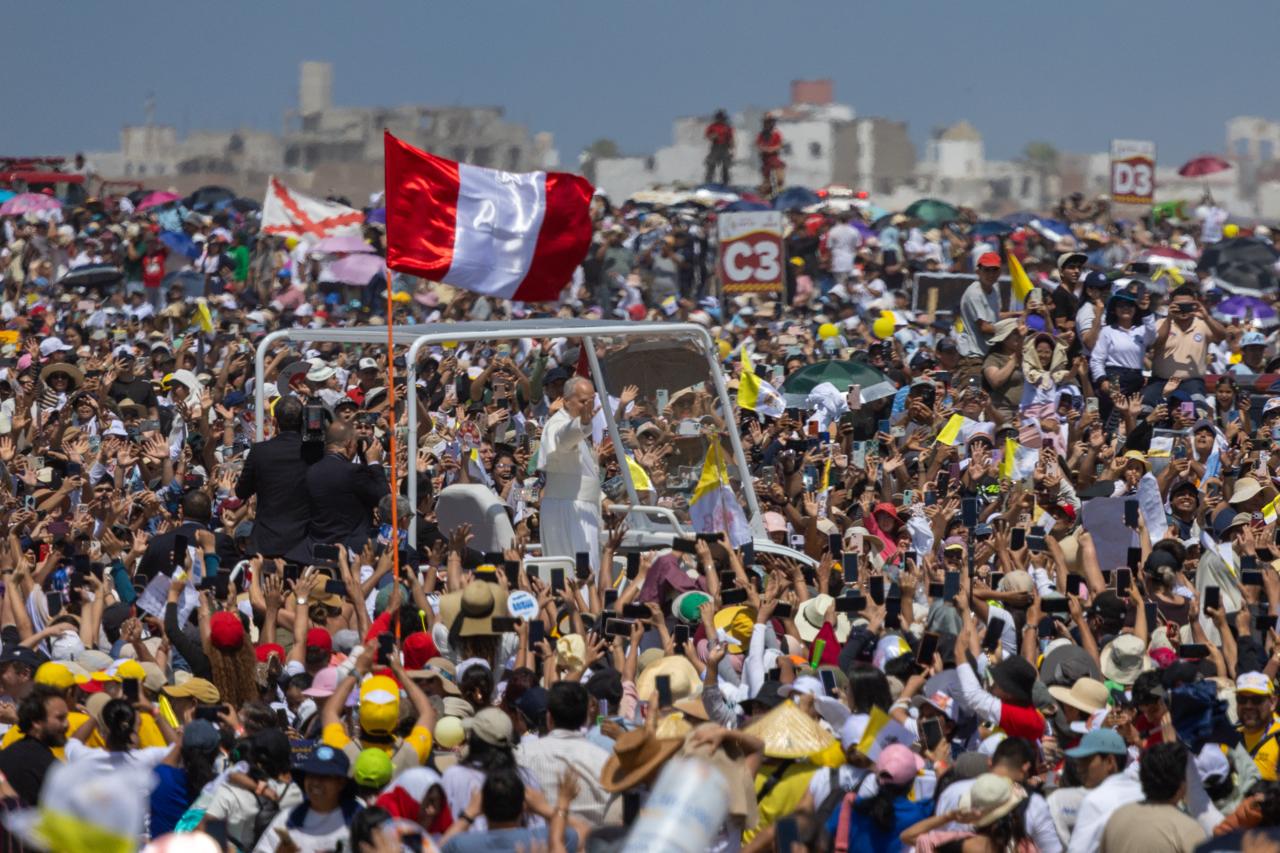
 His arrival in Argentina marked what was probably the most politically delicate phase of the tour. Not only because the country is experiencing a period of deep social and political polarization, but also because Leo XIV was setting foot in the homeland of his predecessor, Francis, a country the Argentine pontiff never returned to during the 12 years of his papacy.Handing on ‘a united homeland’ to future generationsThe pope’s first speech in Argentina set the tone for the visit. Shortly after arriving, he met with public authorities, representatives of civil society, and members of the diplomatic corps.There he recalled Pope Francis: “For years, the universal Church listened to the voice of an Argentinian pope, who treasured, in his memories and in his heart, the places, the people and the faith that he received here,” he said. “Today, as his Successor in the Petrine ministry, I am in some sense retracing his steps in this country where the personal history of Pope Francis would later be joined to that of the entire Church.”Leo XIV also highlighted the diversity that has shaped Argentina and its historic ability to “open its doors” and rise amid difficulties. But he reminded Argentines that “no generation builds its homeland from scratch. It inherits it.”Finally, he urged Argentina to preserve its willingness to engage in dialogue and to seek paths of mutual understanding, both within the country and in its relations with the other nations of South America. “It now falls to us to make fruitful what we have received and to keep alive that purpose of ‘constituting the national union,’” he said, quoting the preamble of the Argentine Constitution. “May those who come after us receive a united homeland, worthy of its history and of the possibilities it contains.”The family, ‘a pillar amid the many insecurities of our time’Leo XIV’s arrival in Buenos Aires sparked a historic mobilization that transformed the Argentine capital into a vast stage of faith. Before nearly 2.5 million people gathered for Mass, the pontiff defended the role of the family in contemporary society, urging the country to “not give in to those who dismiss the Christian family as outdated.” The family, he added, remains “a pillar amid the many insecurities of our time.”Thousands of faithful filled the city’s main avenues from the early hours of the day, while hundreds of thousands more lined the papal motorcade route to greet the pope in what became the largest celebration of his pontificate so far.Peru: Returning homeLeo XIV reserved the most emotional stage of the South American tour for Peru. In many ways, it was a true homecoming. He lived there for more than two decades, an experience that profoundly shaped his pastoral ministry, from his early years as a missionary to his service as a bishop and even his naturalization as a Peruvian citizen.After visiting Uruguay and Argentina, the pontiff undertook the longest leg of the journey in Peru, spending six days in Lima, Cusco, Pucallpa, and Chiclayo. In the latter city, he returned to places that had been part of the diocese he shepherded for eight years, from 2015 to 2023.The messages he delivered during his stay reflected concerns that have accompanied his entire pontificate: closeness to the forgotten, social reconciliation, and the defense of those living on the peripheries.In Santa Cruz de Succhabamba, an isolated Andean town he reached by helicopter, he denounced the neglect of rural communities and urged farmers not to yield “to discouragement or violence” in the face of poverty and emigration.In Zaña, a town marked by a lack of potable water and decades of neglect, he offered one of the most personal appeals of the trip: “To care for one another and never to grow accustomed to the suffering of others.”In Cusco, at an altitude of 11,150 feet (3,400 meters), he emphasized the role of faith as an instrument of reconciliation “in a time like ours, marked by wounds and divisions.” There he was welcomed by crowds of pilgrims from across the Andes, many of whom had traveled for days to be there.The final major stop was the Peruvian Amazon. In Pucallpa, Leo XIV delivered the strongest speech of the entire tour, demanding justice for Indigenous leaders murdered for defending their territories against illegal mining and deforestation.“The blood of these brothers cries out to God and demands justice,” he said before missionaries and representatives of Amazonian peoples.On his final day in Peru, he wanted to show his affection for the Home for the Elderly run by the Little Sisters of the Poor in Callao. There he left the message that summed up the spirit of the journey: a call to combat indifference and build a more supportive society.“We cannot remain indifferent when we know that the bodies and souls of so many of our brothers and sisters are neglected and often manipulated,” he warned.Finally, in Lima, before more than 1.5 million faithful gathered for the closing Mass, he highlighted the example of the Spanish St. Toribio de Mogrovejo (1538-1606), born in Mayorga, Valladolid, sent to Lima as archbishop, and who died in Peru. In doing so, Leo offered a key to the way the Good News should be proclaimed.The pope presented St. Toribio as a missionary, “evangelizer, father, and shepherd” who preached with “gentleness” and traveled throughout the country with “great freedom of spirit and a patient way of listening” in order “to know and help his faithful, and, when necessary, to correct them.”This story was first published by EWTN News Español, the Spanish-language sister service of EWTN News. It has been translated and adapted by EWTN News English.

The impact of Pope Leo XIV’s first Latin American trip – #Catholic – On his first trip to Latin America as pope, Leo XIV articulated three distinct messages for three different realities. In Uruguay, he called for awakening a faith that appears to have fallen asleep; in Argentina, he appealed for reconciliation and dialogue to strengthen democracy; and in Peru, he returned to the roots of his own story to remind the Church that it cannot forget those living on the margins.His first stop was in Uruguay. He arrived 12 days ago in a country that had not received a papal visit in 38 years. St. John Paul II traveled there in 1987 and returned again in 1988.Uruguay is often described as the most secularized nation in Latin America. With a population of around 3.5 million, approximately 33% identify as Catholic. In other words, only one in three Uruguayans is Catholic. It will take a few weeks to gauge the impact of the Holy Father’s visit. Still, it seems undeniable that his message has left a deep mark on the country.Mary ‘has remained here’Leo XIV chose to bid farewell Uruguay alongside the one who has accompanied its history from the very beginning. Before the image of Our Lady of the Thirty-Three, patroness of the nation, he celebrated his final major event on Uruguayan soil on Nov. 15, once again raising one of the challenges that ran throughout his visit: how to transmit the faith in a society where many have drifted away from it.The choice of location was no accident. The small Marian image is linked to one of the defining moments in Uruguayan history. In 1825, those fighting for the freedom of the land also turned to Mary, placing the beginning of their endeavor under her protection. “The history of peoples, too, cannot be fully understood without reference to God,” the pontiff recalled.Since then, he said, generations have changed, circumstances have changed, and so too has “the relationship of many Uruguayans with the faith.” Yet Mary “has remained here.”The women who preserved the faithThe pope wished to dwell especially on those who have passed on that faith from one generation to the next: “While Mary accompanied the history of this people, at the same time in so many homes other women preserved the faith and passed it on to their children.”He spoke of mothers who taught the first prayers, brought their children for baptism, and prepared them to receive the sacraments. He also spoke of grandmothers who kept a small home altar, prayed for the living and the dead, and made God present in ordinary life.Faith must have ‘a genuine place’ in the lives of the men in their familiesHis message, however, was not limited to women. Leo XIV addressed fathers and grandfathers directly, saying that young people need to see that faith has “a genuine place” in the lives of the men in their families.“Children learn a great deal by seeing that their father can kneel before God without feeling that he is any less of a man for doing it,” he said before departing for Argentina.That same day, the pontiff arrived in Buenos Aires, beginning the second leg of his apostolic journey through Latin America. Upon arrival, he was welcomed by President Javier Milei. Javier Milei, president of Argentina, welcomes Pope Leo XIV at airport in Buenos Aires on Nov. 8, 2026. | Credit: Vatican Media His arrival in Argentina marked what was probably the most politically delicate phase of the tour. Not only because the country is experiencing a period of deep social and political polarization, but also because Leo XIV was setting foot in the homeland of his predecessor, Francis, a country the Argentine pontiff never returned to during the 12 years of his papacy.Handing on ‘a united homeland’ to future generationsThe pope’s first speech in Argentina set the tone for the visit. Shortly after arriving, he met with public authorities, representatives of civil society, and members of the diplomatic corps.There he recalled Pope Francis: “For years, the universal Church listened to the voice of an Argentinian pope, who treasured, in his memories and in his heart, the places, the people and the faith that he received here,” he said. “Today, as his Successor in the Petrine ministry, I am in some sense retracing his steps in this country where the personal history of Pope Francis would later be joined to that of the entire Church.”Leo XIV also highlighted the diversity that has shaped Argentina and its historic ability to “open its doors” and rise amid difficulties. But he reminded Argentines that “no generation builds its homeland from scratch. It inherits it.”Finally, he urged Argentina to preserve its willingness to engage in dialogue and to seek paths of mutual understanding, both within the country and in its relations with the other nations of South America. “It now falls to us to make fruitful what we have received and to keep alive that purpose of ‘constituting the national union,’” he said, quoting the preamble of the Argentine Constitution. “May those who come after us receive a united homeland, worthy of its history and of the possibilities it contains.”The family, ‘a pillar amid the many insecurities of our time’Leo XIV’s arrival in Buenos Aires sparked a historic mobilization that transformed the Argentine capital into a vast stage of faith. Before nearly 2.5 million people gathered for Mass, the pontiff defended the role of the family in contemporary society, urging the country to “not give in to those who dismiss the Christian family as outdated.” The family, he added, remains “a pillar amid the many insecurities of our time.”Thousands of faithful filled the city’s main avenues from the early hours of the day, while hundreds of thousands more lined the papal motorcade route to greet the pope in what became the largest celebration of his pontificate so far.Peru: Returning homeLeo XIV reserved the most emotional stage of the South American tour for Peru. In many ways, it was a true homecoming. He lived there for more than two decades, an experience that profoundly shaped his pastoral ministry, from his early years as a missionary to his service as a bishop and even his naturalization as a Peruvian citizen.After visiting Uruguay and Argentina, the pontiff undertook the longest leg of the journey in Peru, spending six days in Lima, Cusco, Pucallpa, and Chiclayo. In the latter city, he returned to places that had been part of the diocese he shepherded for eight years, from 2015 to 2023.The messages he delivered during his stay reflected concerns that have accompanied his entire pontificate: closeness to the forgotten, social reconciliation, and the defense of those living on the peripheries.In Santa Cruz de Succhabamba, an isolated Andean town he reached by helicopter, he denounced the neglect of rural communities and urged farmers not to yield “to discouragement or violence” in the face of poverty and emigration.In Zaña, a town marked by a lack of potable water and decades of neglect, he offered one of the most personal appeals of the trip: “To care for one another and never to grow accustomed to the suffering of others.”In Cusco, at an altitude of 11,150 feet (3,400 meters), he emphasized the role of faith as an instrument of reconciliation “in a time like ours, marked by wounds and divisions.” There he was welcomed by crowds of pilgrims from across the Andes, many of whom had traveled for days to be there.The final major stop was the Peruvian Amazon. In Pucallpa, Leo XIV delivered the strongest speech of the entire tour, demanding justice for Indigenous leaders murdered for defending their territories against illegal mining and deforestation.“The blood of these brothers cries out to God and demands justice,” he said before missionaries and representatives of Amazonian peoples.On his final day in Peru, he wanted to show his affection for the Home for the Elderly run by the Little Sisters of the Poor in Callao. There he left the message that summed up the spirit of the journey: a call to combat indifference and build a more supportive society.“We cannot remain indifferent when we know that the bodies and souls of so many of our brothers and sisters are neglected and often manipulated,” he warned.Finally, in Lima, before more than 1.5 million faithful gathered for the closing Mass, he highlighted the example of the Spanish St. Toribio de Mogrovejo (1538-1606), born in Mayorga, Valladolid, sent to Lima as archbishop, and who died in Peru. In doing so, Leo offered a key to the way the Good News should be proclaimed.The pope presented St. Toribio as a missionary, “evangelizer, father, and shepherd” who preached with “gentleness” and traveled throughout the country with “great freedom of spirit and a patient way of listening” in order “to know and help his faithful, and, when necessary, to correct them.”This story was first published by EWTN News Español, the Spanish-language sister service of EWTN News. It has been translated and adapted by EWTN News English.

It will take a few weeks to gauge the impact of the Holy Father’s visit. Still, it seems undeniable that his message has left a deep mark on the country.

Read More