
(OSV News) — On his last day in Equatorial Guinea, Pope Leo XIV reminded Catholics in the country to seek strength, justice and hope from the Gospel and the sacraments.
“If you are oppressed by injustice, he is justice; if you are in need of help, he is strength; if you fear death, he is life; if you desire Heaven, he is the way; if you are in darkness, he is light,” the pope said, quoting St. Ambrose April 23, at a Mass with an estimated 30,000 people at Malabo Stadium in Equatorial Guinea.
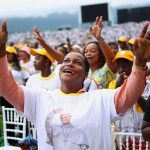
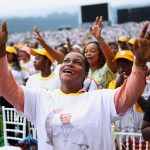
The Mass marked the final event of the pope’s 11-day visit to Africa. Arriving at the stadium in his popemobile, Pope Leo was greeted with cheers from the people attending the Mass, many of whom were dressed in the Vatican’s white and yellow colors.
Before beginning his homily, the pope expressed his condolences to the archdiocese, priests and family members for the death of Father Fortunato Nsue Esono, vicar general of the Archdiocese of Malabo.
Click here to subscribe to our weekly newsletter.
According to a statement by the bishops’ conference of Equatorial Guinea, Father Esono died “unexpectedly” April 17 at his residence in Our Lady of Bisila Parish. No cause of death has been given.
The 39-year-old priest, who was named vicar general nine months ago, played a key role in preparations for the papal visit, the bishops’ conference said.
“I invite you to live this moment of pain with a spirit of faith, and I trust that, without being carried away by rumors or hasty conclusions, full clarity will be brought to the circumstances of his death,” Pope Leo said.
Speaking in Spanish, the pope reflected on the day’s reading from the Acts of the Apostles, which recounted the deacon Philip’s encounter with an Ethiopian eunuch reading the Scriptures as he was traveling from Jerusalem to Africa.
In the reading, Philip asks the eunuch if he understood what he was reading, to which the eunuch replied, “How can I, unless someone instructs me?”
The “humble wisdom” in the Ethiopian’s response, Pope Leo said, was “not only a search for truth, but also an expression of openness and desire.”
However, while the man is wealthy, intelligent and cultured, he is a slave and “not fully free.”
“This painful reality is marked even on his body: he is, in fact, a eunuch. He cannot bring forth life; all his vitality is placed at the service of a power that controls and rules over him,” the pope said.
Nevertheless, the “proclamation of the Gospel sets him free,” and through his encounter with Philip, the man is “transformed from a mere reader, a spectator, of Scripture into a protagonist in the very story that captivates him,” the pope said.
The word of God, the pope continued, “becomes a lived reality” and through the sacrament of baptism, “he is no longer a stranger, but becomes a child of God, our brother in faith.”
“Though a slave and childless, he is reborn into a new and free life in the name of the Lord Jesus. And we speak of his salvation to this day, precisely as we read these Scriptures,” he said.
Pope Leo said that, like the eunuch, through baptism, Christians have received “the same faith” and the same word. Reading and reflecting on Scripture “is always both a personal and an ecclesial act; it is never something done in isolation or in a merely mechanical way.”
“Together we read Scripture as the shared heritage of the Church, guided by the Holy Spirit, who inspired its composition, and by Apostolic Tradition, which has preserved and transmitted it throughout the world,” the pope said. “Like the eunuch, we too can come to understand the Word of God with the help of a guide who accompanies us on our journey of faith.”
Turning his attention to the Gospel reading from St. John, in which Jesus says he “is the bread that comes down from heaven so that one may eat it and not die.”
Christ, the pope said, “is the Risen One” who “continues to give his life for all.”
“Do I trust that his love is stronger than my death? By deciding to believe in him, each of us chooses between inevitable despair and the hope that God offers. Our hunger for life and justice is then satisfied by Jesus’ words: ‘The bread that I will give for the life of the world is my flesh,’” he said.
Encouraging the faithful to “joyfully proclaim” that “Christ is everything for us,” Pope Leo reminded Christians that in Jesus, “we find the fullness of life and meaning.”
“Our problems do not disappear in the Lord’s presence, but they are illuminated,” he said. “Just as every cross finds redemption in Jesus, so too the story of our lives finds its meaning in the Gospel.”
“Through our witness,” he added, “the proclamation of salvation is made visible in action, service and forgiveness — in a word, it becomes the Church!”
Before the final blessing, Archbishop Juan Nsue Edjang Mayé of Malabo expressed his gratitude on behalf of the people of Equatorial Guinea for the pope’s visit.
“Indeed, in these days we have experienced the evangelical solidarity of the Church, which has rekindled our faith and our commitment to contribute to the creation of a new homeland in Christ,” Archbishop May said.
Calling Pope Leo’s visit “a powerful call to reconciliation and peace,” the archbishop expressed the local Church’s commitment to “continue working for justice, equality, fraternity, and reconciliation among all the sons and daughters of our country.”
“May this visit be for us a powerful encouragement of faith and conversion for a local Church affectionately united to the Chair of Peter, more evangelizing and more committed to development that includes the poor and the marginalized,” Archbishop Mayé said.
Archbishop Mayé then invited a procession of people dressed in traditional clothing and presenting gifts “that are fruits of our mother Earth and the work of human hands.”
Bidding farewell to the people of Equatorial Guinea, Pope Leo said that he was leaving Africa “carrying with me an invaluable treasure of faith, hope, and charity.”
“It is a great treasure, made up of stories, faces, and joyful and suffering testimonies that greatly enrich my life and my ministry as the successor of Peter,” the pope said.
He also noted that just as in the early centuries of the Church, “today Africa is called to contribute significantly to the holiness and missionary character of the Christian people.”
“I entrust this intention to the intercession of the Virgin Mary, to whom I commend myself wholeheartedly, as well as your families, your communities, your nation, and all the peoples of Africa,” the pope said.
Junno Arocho Esteves is an international correspondent for OSV News. Follow him on X @jae_journalist.
Gospel message brings freedom, hope, pope says at final Mass in Equatorial Guinea #Catholic –
(OSV News) — On his last day in Equatorial Guinea, Pope Leo XIV reminded Catholics in the country to seek strength, justice and hope from the Gospel and the sacraments.
“If you are oppressed by injustice, he is justice; if you are in need of help, he is strength; if you fear death, he is life; if you desire Heaven, he is the way; if you are in darkness, he is light,” the pope said, quoting St. Ambrose April 23, at a Mass with an estimated 30,000 people at Malabo Stadium in Equatorial Guinea.
The Mass marked the final event of the pope’s 11-day visit to Africa. Arriving at the stadium in his popemobile, Pope Leo was greeted with cheers from the people attending the Mass, many of whom were dressed in the Vatican’s white and yellow colors.
Before beginning his homily, the pope expressed his condolences to the archdiocese, priests and family members for the death of Father Fortunato Nsue Esono, vicar general of the Archdiocese of Malabo.
Click here to subscribe to our weekly newsletter.
According to a statement by the bishops’ conference of Equatorial Guinea, Father Esono died “unexpectedly” April 17 at his residence in Our Lady of Bisila Parish. No cause of death has been given.
The 39-year-old priest, who was named vicar general nine months ago, played a key role in preparations for the papal visit, the bishops’ conference said.
“I invite you to live this moment of pain with a spirit of faith, and I trust that, without being carried away by rumors or hasty conclusions, full clarity will be brought to the circumstances of his death,” Pope Leo said.
Speaking in Spanish, the pope reflected on the day’s reading from the Acts of the Apostles, which recounted the deacon Philip’s encounter with an Ethiopian eunuch reading the Scriptures as he was traveling from Jerusalem to Africa.
In the reading, Philip asks the eunuch if he understood what he was reading, to which the eunuch replied, “How can I, unless someone instructs me?”
The “humble wisdom” in the Ethiopian’s response, Pope Leo said, was “not only a search for truth, but also an expression of openness and desire.”
However, while the man is wealthy, intelligent and cultured, he is a slave and “not fully free.”
“This painful reality is marked even on his body: he is, in fact, a eunuch. He cannot bring forth life; all his vitality is placed at the service of a power that controls and rules over him,” the pope said.
Nevertheless, the “proclamation of the Gospel sets him free,” and through his encounter with Philip, the man is “transformed from a mere reader, a spectator, of Scripture into a protagonist in the very story that captivates him,” the pope said.
The word of God, the pope continued, “becomes a lived reality” and through the sacrament of baptism, “he is no longer a stranger, but becomes a child of God, our brother in faith.”
“Though a slave and childless, he is reborn into a new and free life in the name of the Lord Jesus. And we speak of his salvation to this day, precisely as we read these Scriptures,” he said.
Pope Leo said that, like the eunuch, through baptism, Christians have received “the same faith” and the same word. Reading and reflecting on Scripture “is always both a personal and an ecclesial act; it is never something done in isolation or in a merely mechanical way.”
“Together we read Scripture as the shared heritage of the Church, guided by the Holy Spirit, who inspired its composition, and by Apostolic Tradition, which has preserved and transmitted it throughout the world,” the pope said. “Like the eunuch, we too can come to understand the Word of God with the help of a guide who accompanies us on our journey of faith.”
Turning his attention to the Gospel reading from St. John, in which Jesus says he “is the bread that comes down from heaven so that one may eat it and not die.”
Christ, the pope said, “is the Risen One” who “continues to give his life for all.”
“Do I trust that his love is stronger than my death? By deciding to believe in him, each of us chooses between inevitable despair and the hope that God offers. Our hunger for life and justice is then satisfied by Jesus’ words: ‘The bread that I will give for the life of the world is my flesh,’” he said.
Encouraging the faithful to “joyfully proclaim” that “Christ is everything for us,” Pope Leo reminded Christians that in Jesus, “we find the fullness of life and meaning.”
“Our problems do not disappear in the Lord’s presence, but they are illuminated,” he said. “Just as every cross finds redemption in Jesus, so too the story of our lives finds its meaning in the Gospel.”
“Through our witness,” he added, “the proclamation of salvation is made visible in action, service and forgiveness — in a word, it becomes the Church!”
Before the final blessing, Archbishop Juan Nsue Edjang Mayé of Malabo expressed his gratitude on behalf of the people of Equatorial Guinea for the pope’s visit.
“Indeed, in these days we have experienced the evangelical solidarity of the Church, which has rekindled our faith and our commitment to contribute to the creation of a new homeland in Christ,” Archbishop May said.
Calling Pope Leo’s visit “a powerful call to reconciliation and peace,” the archbishop expressed the local Church’s commitment to “continue working for justice, equality, fraternity, and reconciliation among all the sons and daughters of our country.”
“May this visit be for us a powerful encouragement of faith and conversion for a local Church affectionately united to the Chair of Peter, more evangelizing and more committed to development that includes the poor and the marginalized,” Archbishop Mayé said.
Archbishop Mayé then invited a procession of people dressed in traditional clothing and presenting gifts “that are fruits of our mother Earth and the work of human hands.”
Bidding farewell to the people of Equatorial Guinea, Pope Leo said that he was leaving Africa “carrying with me an invaluable treasure of faith, hope, and charity.”
“It is a great treasure, made up of stories, faces, and joyful and suffering testimonies that greatly enrich my life and my ministry as the successor of Peter,” the pope said.
He also noted that just as in the early centuries of the Church, “today Africa is called to contribute significantly to the holiness and missionary character of the Christian people.”
“I entrust this intention to the intercession of the Virgin Mary, to whom I commend myself wholeheartedly, as well as your families, your communities, your nation, and all the peoples of Africa,” the pope said.
Junno Arocho Esteves is an international correspondent for OSV News. Follow him on X @jae_journalist.