![Pope Leo XIV’s face featured on new set of Vatican coins - #Catholic - Pope Leo XIV’s image features for the first time in a new set of commemorative euro coins for Vatican City.As announced by the Vatican City State Governorate on July 30, these coins are part of a new Vatican euro collector coin set honoring the new pontificate. This also marks the first time since 2014 that the papal image has appeared on the coins, following Pope Francis’ personal request that his face not be used.Except for the 5-euro coin, the Vatican coins can be used to buy things in the 21 European Union member states that have adopted the euro as their common currency.A unique design in the history of Vatican coin-makingAlthough these new coins with Leo are not the first to feature the pope’s face, they are part of an entirely unique design.Leo’s coat of arms appears on the 1-cent, 2-cent, and 5-cent euro coins, while his face appears on the larger denominations.The pope’s image has appeared on minted coins since the Middle Ages, when pontiffs held temporal power over the Papal States. Shortly after the establishment of Vatican City in 1929, the sovereign state issued lira coins (the Italian currency before the euro) bearing the papal image. The Vatican stopped making lira coins after it adopted the euro in 2001.
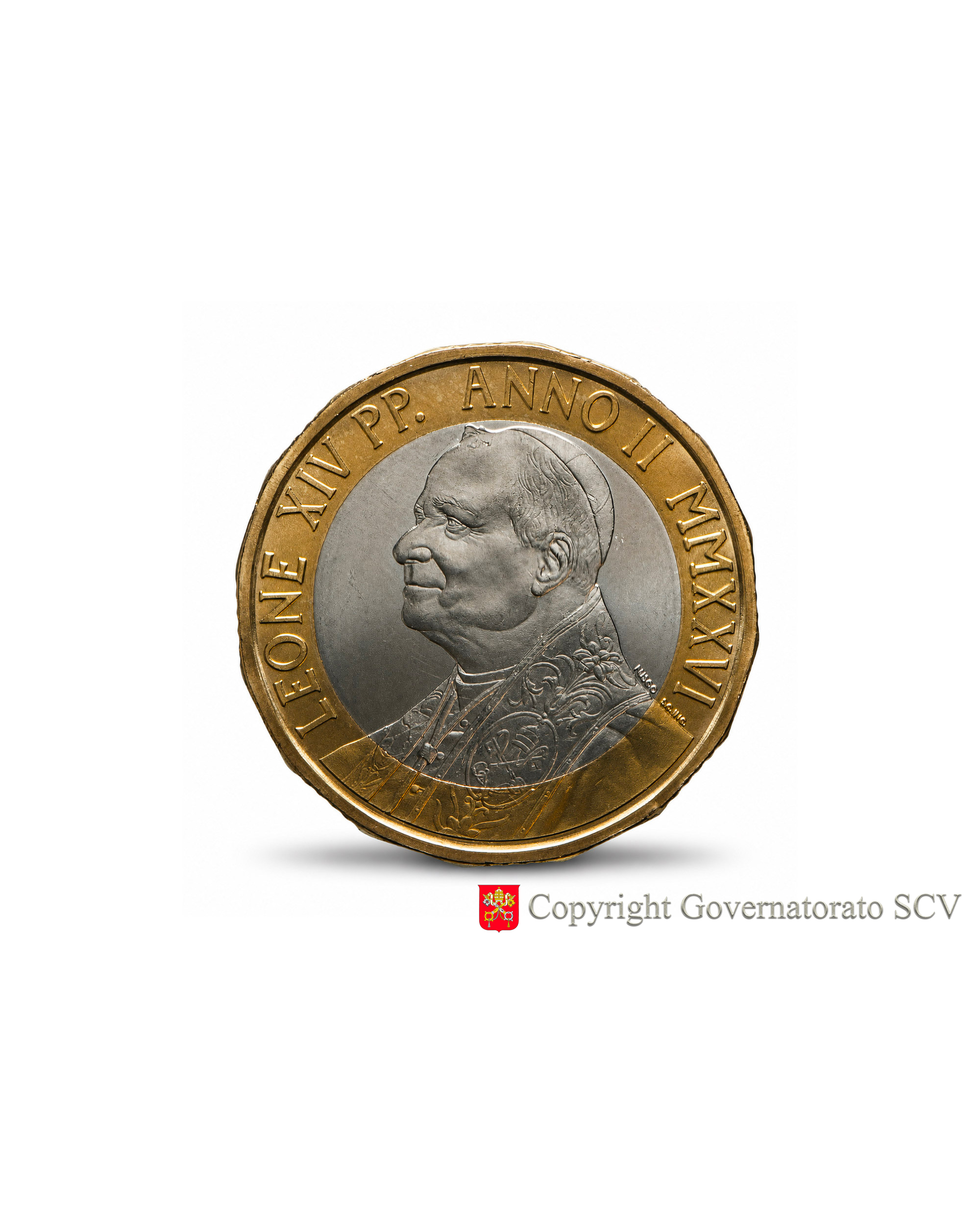
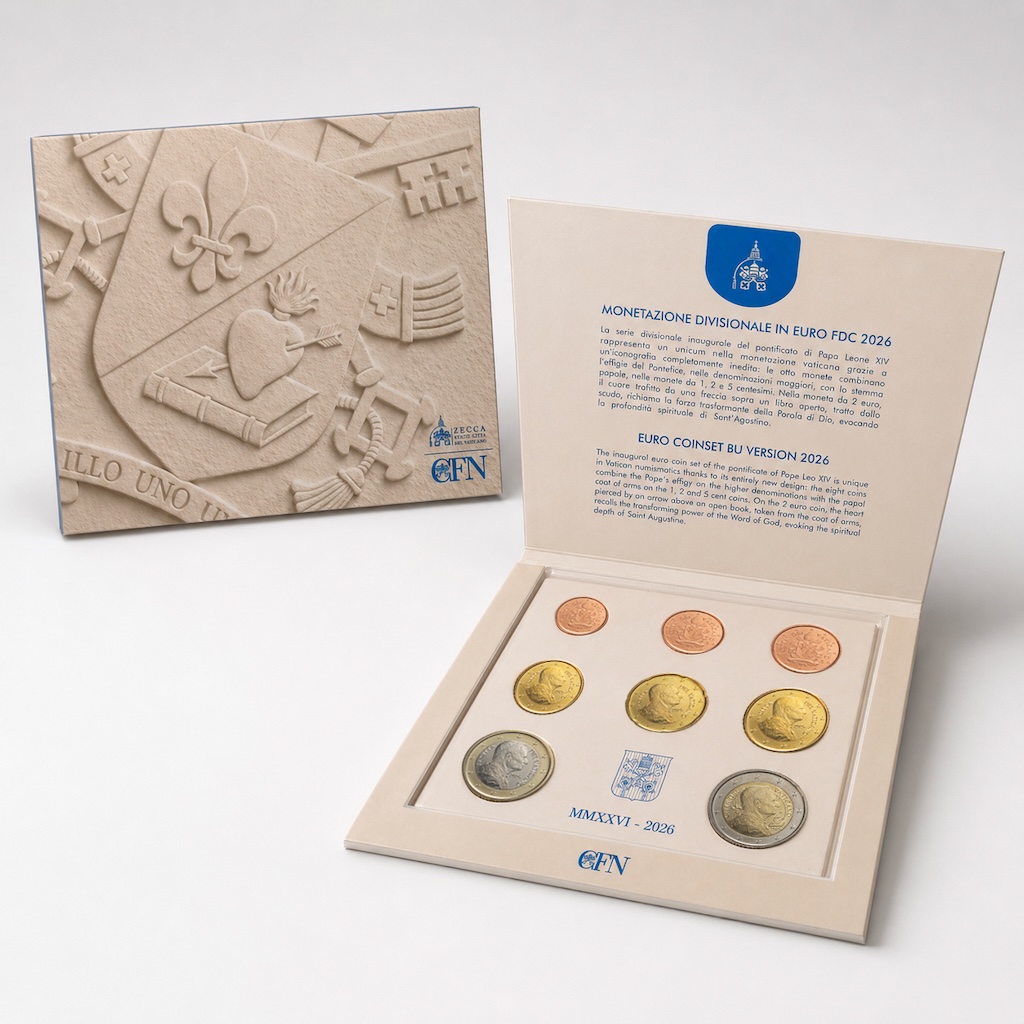
A Vatican collector coin set to honor the new pontificate of Leo XIV. | Credit: Governatorato SCV
According to the European Central Bank, the first Vatican coins for the euro were issued in 2002 with the face of St. John Paul II. From 2006–2013, another set of coins was issued with the face of Pope Benedict XVI. The coins featuring Francis in 2014 were the last until Leo to feature the pope’s face.Francis’ refusal to be depicted on Vatican coinsFor the 2017 issue of Vatican coins, Francis personally requested that his face not be used. Instead, they featured his coat of arms.In a 2017 interview for Radio Vaticana, Mauro Olivieri, the then-director of the Philatelic and Numismatic Office for Vatican City State, explained the difficulties in accommodating his request.“[Francis] asked that he no longer appear on coins, medals in general — and especially on those issued by his state — and we did everything we could to accommodate him,” Olivieri said. “We succeeded, despite some difficulties with the EU authorities, which were later resolved, and so the 2017 coinage features the popeʼs coat of arms.”The newest Vatican coins can be purchased for 59 euros through the Vatican’s Philatelic and Numismatic Office, responsible for its coins and stamps.](https://unitedyam.com/wp-content/uploads/2026/08/pope-leo-xivs-face-featured-on-new-set-of-vatican-coins-catholic-pope-leo-xivs-image-features-for-the-first-time-in-a-new-set-of-commemorative-euro-coins-for-vatican-city-as-ann.jpg)
Pope Leo XIV’s image features for the first time in a new set of commemorative euro coins for Vatican City.
As announced by the Vatican City State Governorate on July 30, these coins are part of a new Vatican euro collector coin set honoring the new pontificate. This also marks the first time since 2014 that the papal image has appeared on the coins, following Pope Francis’ personal request that his face not be used.
Except for the 5-euro coin, the Vatican coins can be used to buy things in the 21 European Union member states that have adopted the euro as their common currency.
A unique design in the history of Vatican coin-making
Although these new coins with Leo are not the first to feature the pope’s face, they are part of an entirely unique design.
Leo’s coat of arms appears on the 1-cent, 2-cent, and 5-cent euro coins, while his face appears on the larger denominations.
The pope’s image has appeared on minted coins since the Middle Ages, when pontiffs held temporal power over the Papal States. Shortly after the establishment of Vatican City in 1929, the sovereign state issued lira coins (the Italian currency before the euro) bearing the papal image. The Vatican stopped making lira coins after it adopted the euro in 2001.
According to the European Central Bank, the first Vatican coins for the euro were issued in 2002 with the face of St. John Paul II. From 2006–2013, another set of coins was issued with the face of Pope Benedict XVI.
The coins featuring Francis in 2014 were the last until Leo to feature the pope’s face.
Francis’ refusal to be depicted on Vatican coins
For the 2017 issue of Vatican coins, Francis personally requested that his face not be used. Instead, they featured his coat of arms.
In a 2017 interview for Radio Vaticana, Mauro Olivieri, the then-director of the Philatelic and Numismatic Office for Vatican City State, explained the difficulties in accommodating his request.
“[Francis] asked that he no longer appear on coins, medals in general — and especially on those issued by his state — and we did everything we could to accommodate him,” Olivieri said. “We succeeded, despite some difficulties with the EU authorities, which were later resolved, and so the 2017 coinage features the popeʼs coat of arms.”
The newest Vatican coins can be purchased for 59 euros through the Vatican’s Philatelic and Numismatic Office, responsible for its coins and stamps.
Pope Leo XIV’s face featured on new set of Vatican coins – #Catholic –
Pope Leo XIV’s image features for the first time in a new set of commemorative euro coins for Vatican City.
As announced by the Vatican City State Governorate on July 30, these coins are part of a new Vatican euro collector coin set honoring the new pontificate. This also marks the first time since 2014 that the papal image has appeared on the coins, following Pope Francis’ personal request that his face not be used.
Except for the 5-euro coin, the Vatican coins can be used to buy things in the 21 European Union member states that have adopted the euro as their common currency.
A unique design in the history of Vatican coin-making
Although these new coins with Leo are not the first to feature the pope’s face, they are part of an entirely unique design.
Leo’s coat of arms appears on the 1-cent, 2-cent, and 5-cent euro coins, while his face appears on the larger denominations.
The pope’s image has appeared on minted coins since the Middle Ages, when pontiffs held temporal power over the Papal States. Shortly after the establishment of Vatican City in 1929, the sovereign state issued lira coins (the Italian currency before the euro) bearing the papal image. The Vatican stopped making lira coins after it adopted the euro in 2001.
According to the European Central Bank, the first Vatican coins for the euro were issued in 2002 with the face of St. John Paul II. From 2006–2013, another set of coins was issued with the face of Pope Benedict XVI.
The coins featuring Francis in 2014 were the last until Leo to feature the pope’s face.
Francis’ refusal to be depicted on Vatican coins
For the 2017 issue of Vatican coins, Francis personally requested that his face not be used. Instead, they featured his coat of arms.
In a 2017 interview for Radio Vaticana, Mauro Olivieri, the then-director of the Philatelic and Numismatic Office for Vatican City State, explained the difficulties in accommodating his request.
“[Francis] asked that he no longer appear on coins, medals in general — and especially on those issued by his state — and we did everything we could to accommodate him,” Olivieri said. “We succeeded, despite some difficulties with the EU authorities, which were later resolved, and so the 2017 coinage features the popeʼs coat of arms.”
The newest Vatican coins can be purchased for 59 euros through the Vatican’s Philatelic and Numismatic Office, responsible for its coins and stamps.
This marks the first time since 2014 that the papal image has been printed on the coins.