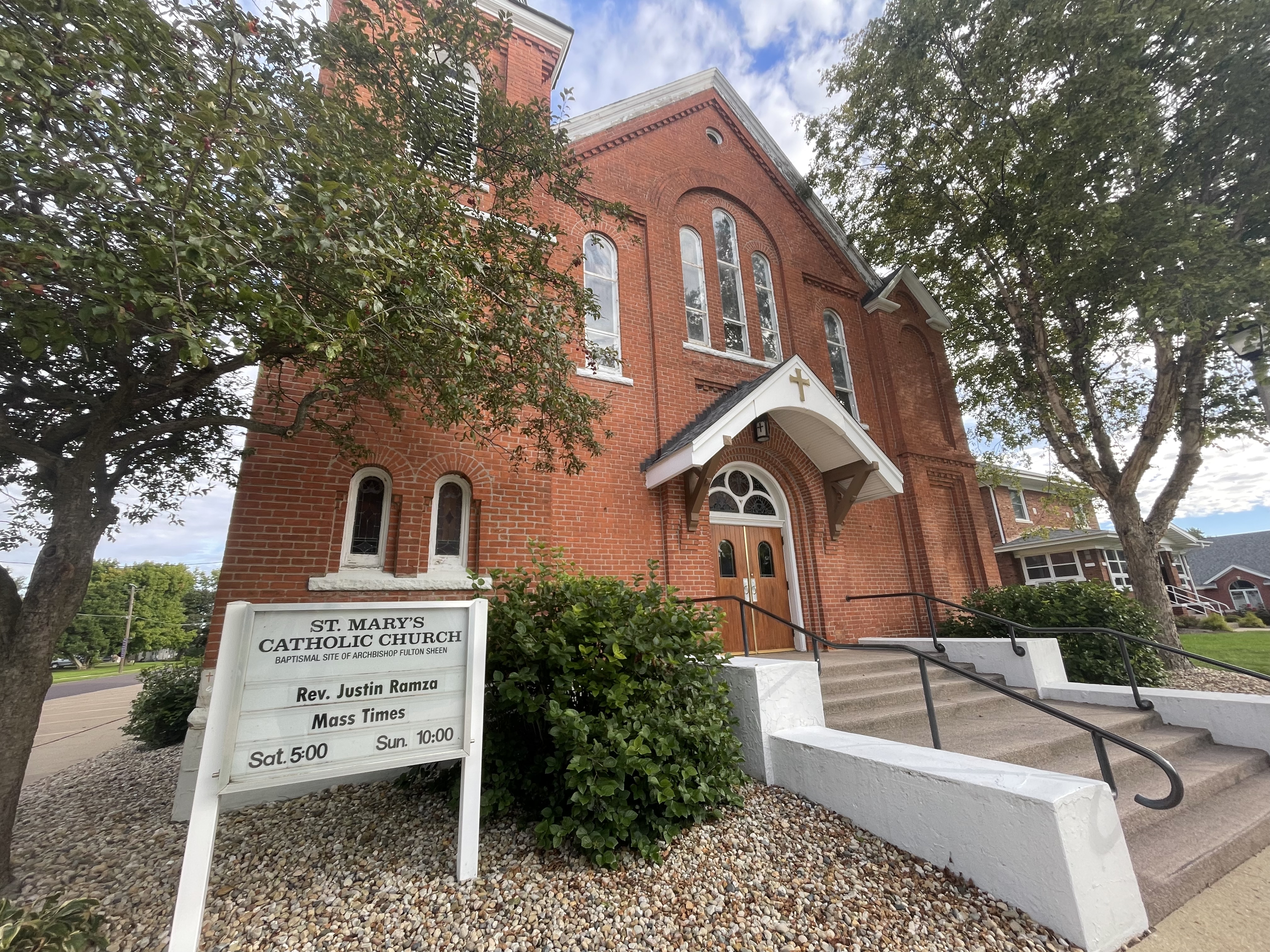
More than six decades after Archbishop Josef Karel Matocha died under communist internment, a Czech court has formally recognized his imprisonment as unlawful.


More than six decades after Archbishop Josef Karel Matocha died under communist internment, a Czech court has formally recognized his imprisonment as unlawful.

![A quarter of Irish Gen Z will have no children, new report says #Catholic One in 4 members of Ireland’s Gen Z demographic are expected to be childless by age 45, according to a new report from Dublin’s Iona Institute, which promotes marriage, freedom of conscience, and religion in society. Gen Z generally refers to people born between 1997 and 2012.Drawing on cohort-level data from the Human Fertility Database (HFD), as well as using demographic modeling, the instituteʼs "Choice or Circumstance? Rising Childlessness in Ireland" report, released in May, charts a huge increase in the number of Irish women who are childless.Among those born in the late 1950s, only 30.9% were childless by age 30, rising to 63.6% for those born in the early 1990s. This trend suggests 25% of women born in the late 1990s will be childless when they reach age 45.Breda OʼBrien of the Iona Institute told EWTN News that “a huge question is whether this will be by choice or circumstance.""Much will be unplanned and forced by circumstance, such as the cost of living," she said. "It’s worrying and weʼre sliding into it without too much discussion. Before the 1930s, we had similar rates of childlessness in Ireland, but that was because of extreme poverty, late marriage, and low marriage rates. Weʼre supposed to be in an era where women have every possible choice.”She continued: “The choice to have children, which is fundamental, is being taken away from young women. Itʼs being painted as a kind of freedom. I donʼt think young women themselves consider it to be a type of freedom, and I think a lot of them are worried about it."According to Central Statistics Office data, the average man’s age at marriage is now nearing 38 and the average womanʼs age is almost 36. A 2022 Amarach Research poll for Iona showed that 85% of people want to have at least two children and only 2% expressed a wish for no children. Births in Ireland have fallen by almost 18% in the last decade, according to Central Statistics Office.With clear indications that the longer a person delays having children, the less likely he or she will have any, O’Brien said “itʼs part of the whole growth of individualism and this idea for kids, from the time theyʼre tiny, [that] you get your education, you travel, you have your career in order, you have fun, you donʼt tie yourself down, and then sometimes in your 30s, you think about settling down. But a lot of women in their mid-30s realize that it is increasingly difficult to conceive.”She added: “The fertility industry is booming, which does show us that people are willing to go to extraordinary lengths to have children, but the life script theyʼve been presented with is actually working against their best interests. Nature has no knowledge of this life script that young people are being presented with.”“The longer you leave it, the more chances there are of miscarriage, of complications in labor, and of medical intervention during birth, if you get that far. So itʼs not consequence-free,” she said.O’Brien told EWTN News that there needs to be debate about why this is happening as a society. "It is a phenomenon we should discuss far more widely if our aim is to help people achieve their eventual life goals. I think among people of faith, they are still prioritizing children and family, and marriage. The Catholic Church needs to support those young families in every way possible.”She pointed out that having fewer children “has very significant social and economic consequences because of the effects of an aging population and growing loneliness.”The report highlights a series of demographic issues related to childlessness and to Ireland’s already-aging population. Lower fertility rates, combined with rising childlessness, mean that the ratio of working-age adults to elderly dependents is set to worsen. Fewer births today mean fewer workers in 20 to 30 years.O’Brien said: “In Ireland, thereʼs still a degree of respect for older people, but one of the awful possible consequences is that younger people will start to resent older people.” The Iona report highlights the situation where a smaller working-age population will be asked to support a larger elderly population, putting pension sustainability, healthcare, and long-term care provision under growing financial pressure.The instituteʼs findings also highlight the effect on housing and household-formation patterns. A rise in the proportion of adults who never have children increases demand for smaller dwellings and single-person households. Additionally, in recent decades, inward migration to Ireland has been an effective and economically rational response in periods of strong demand. However, it is not a response to childlessness.O’Brien pointed to other countries and the demographic shifts they are facing with an increasing aging population. “Other countries are further along the road than we are. South Korea, or even Japan, where theyʼre repurposing childcare facilities for eldercare facilities, moving from baby formula to fortified drinks from the elderly, and from producing diapers for children, to producing incontinence products for the elderly — this is not a good road that weʼre on,” she said. A quarter of Irish Gen Z will have no children, new report says #Catholic One in 4 members of Ireland’s Gen Z demographic are expected to be childless by age 45, according to a new report from Dublin’s Iona Institute, which promotes marriage, freedom of conscience, and religion in society. Gen Z generally refers to people born between 1997 and 2012.Drawing on cohort-level data from the Human Fertility Database (HFD), as well as using demographic modeling, the instituteʼs "Choice or Circumstance? Rising Childlessness in Ireland" report, released in May, charts a huge increase in the number of Irish women who are childless.Among those born in the late 1950s, only 30.9% were childless by age 30, rising to 63.6% for those born in the early 1990s. This trend suggests 25% of women born in the late 1990s will be childless when they reach age 45.Breda OʼBrien of the Iona Institute told EWTN News that “a huge question is whether this will be by choice or circumstance.""Much will be unplanned and forced by circumstance, such as the cost of living," she said. "It’s worrying and weʼre sliding into it without too much discussion. Before the 1930s, we had similar rates of childlessness in Ireland, but that was because of extreme poverty, late marriage, and low marriage rates. Weʼre supposed to be in an era where women have every possible choice.”She continued: “The choice to have children, which is fundamental, is being taken away from young women. Itʼs being painted as a kind of freedom. I donʼt think young women themselves consider it to be a type of freedom, and I think a lot of them are worried about it."According to Central Statistics Office data, the average man’s age at marriage is now nearing 38 and the average womanʼs age is almost 36. A 2022 Amarach Research poll for Iona showed that 85% of people want to have at least two children and only 2% expressed a wish for no children. Births in Ireland have fallen by almost 18% in the last decade, according to Central Statistics Office.With clear indications that the longer a person delays having children, the less likely he or she will have any, O’Brien said “itʼs part of the whole growth of individualism and this idea for kids, from the time theyʼre tiny, [that] you get your education, you travel, you have your career in order, you have fun, you donʼt tie yourself down, and then sometimes in your 30s, you think about settling down. But a lot of women in their mid-30s realize that it is increasingly difficult to conceive.”She added: “The fertility industry is booming, which does show us that people are willing to go to extraordinary lengths to have children, but the life script theyʼve been presented with is actually working against their best interests. Nature has no knowledge of this life script that young people are being presented with.”“The longer you leave it, the more chances there are of miscarriage, of complications in labor, and of medical intervention during birth, if you get that far. So itʼs not consequence-free,” she said.O’Brien told EWTN News that there needs to be debate about why this is happening as a society. "It is a phenomenon we should discuss far more widely if our aim is to help people achieve their eventual life goals. I think among people of faith, they are still prioritizing children and family, and marriage. The Catholic Church needs to support those young families in every way possible.”She pointed out that having fewer children “has very significant social and economic consequences because of the effects of an aging population and growing loneliness.”The report highlights a series of demographic issues related to childlessness and to Ireland’s already-aging population. Lower fertility rates, combined with rising childlessness, mean that the ratio of working-age adults to elderly dependents is set to worsen. Fewer births today mean fewer workers in 20 to 30 years.O’Brien said: “In Ireland, thereʼs still a degree of respect for older people, but one of the awful possible consequences is that younger people will start to resent older people.” The Iona report highlights the situation where a smaller working-age population will be asked to support a larger elderly population, putting pension sustainability, healthcare, and long-term care provision under growing financial pressure.The instituteʼs findings also highlight the effect on housing and household-formation patterns. A rise in the proportion of adults who never have children increases demand for smaller dwellings and single-person households. Additionally, in recent decades, inward migration to Ireland has been an effective and economically rational response in periods of strong demand. However, it is not a response to childlessness.O’Brien pointed to other countries and the demographic shifts they are facing with an increasing aging population. “Other countries are further along the road than we are. South Korea, or even Japan, where theyʼre repurposing childcare facilities for eldercare facilities, moving from baby formula to fortified drinks from the elderly, and from producing diapers for children, to producing incontinence products for the elderly — this is not a good road that weʼre on,” she said.](https://unitedyam.com/wp-content/uploads/2026/06/a-quarter-of-irish-gen-z-will-have-no-children-new-report-says-catholic-one-in-4-members-of-irelands-gen-z-demographic-are-expected-to-be-childless-by-age-45-according-to-a-new-report-from-scaled.jpg)
While current trends show that 1 in 4 young women today will remain childless, Iona Institute’s Breda O’Brien said the huge question is “whether this will be by choice or circumstance.”

![Human dignity, national security ‘not in conflict,’ U.S. bishops say amid Trump ‘aliens’ campaign #Catholic The U.S. bishops are reiterating their calls for immigrants in the U.S. to be treated with dignity as the Trump administration launched a campaign that likens immigrants living in the country illegally to extraterrestrials.The White House on May 28 launched a government website “Aliens.gov,” a retro sci-fi-styled site that claims the government has “kept a closely guarded secret” about “aliens” and an “invasion” for decades. The site mimics sci‑fi aesthetics, with a bold, geometric sans‑serif typeface in neon green and black, like 1950s movie posters used to advertise Cold‑War‑era sci‑fi films featuring monstrous extraterrestrials.“Aliens have been walking among us, living in our neighborhoods, and interacting with us in our daily lives,” the site claims, alleging that “aliens” have “shopped in the same stores, attended the same classes as our children, and lived seemingly normal human existences.”Promoting an “alien arrest map” of immigrant detentions around the country, the site states bluntly that people without legal status “do not belong here.”The website urges visitors to “report suspicious aliens” to an “ICE tip line.” In U.S. law, the word alien is a formal legal classification meaning a person who is not a U.S. citizen or national, a definition that appears in the Immigration and Nationality Act and is used in statutes, regulations, and court decisions.Dignity, national security ‘not in conflict,’ bishops saysImmigrants have long been portrayed through metaphors in U.S. culture, from 19th‑century political cartoons that depicted Irish, Italian, and Chinese newcomers as monsters or subhuman creatures to modern rhetoric framing migrant groups as “invaders,” “infestations,” or something other than fully human.The U.S. Conference of Catholic Bishops (USCCB) lamented “the state of contemporary debate and the vilification of immigrants” in a special message in November 2025. In February, the bishops condemned a plan from U.S. Immigration and Customs Enforcement to increase the capacity of migrant detention centers around the U.S. The government earlier this year indicated it would spend about $38 billion to bolster detention space. Victoria, Texas Bishop Brendan Cahill, chair of the bishops' immigration committee, called the plans “deeply troubling” at the time.“The thought of holding thousands of families in massive warehouses should challenge the conscience of every American," the bishop said. Asked about the governmentʼs new “aliens” campaign on May 29, USCCB spokeswoman Chieko Noguchi told EWTN News that the bishops have “continuously condemned vilification of immigrants and dehumanizing rhetoric and consistently advocated for a meaningful reform of our nation’s immigration laws and procedures.” “They’ve also repeatedly asserted that human dignity and national security are not in conflict,” she said, pointing to the bishops' special message. The bishops at that time said they “oppose[d] the indiscriminate mass deportation of people,” with the prelates praying “for an end to dehumanizing rhetoric and violence, whether directed at immigrants or at law enforcement.”The bishops in February urged the U.S. Supreme Court to uphold the U.S. constitutional policy of “birthright citizenship” wherein any individual born on U.S. soil is counted as an American citizen. The dispute before the court was launched after Trump in January 2025 signed an order directing that children born to parents in the country illegally were not entitled to U.S. citizenship. Pope Leo XIV — the first pope in history from the United States — has also weighed in, affirming in November 2025 that while nations have “a right to determine who and how and when people enter,” countries “have to look for ways of treating people humanely, treating people with the dignity that they have.”“When people are living good lives — and many of them (in the United States) for 10, 15, 20 years — to treat them in a way that is extremely disrespectful, to say the least,” is not acceptable, the pope said on Nov. 18, 2025.Regarding the bishops' Nov. 12, 2025 message on immigration, the pope remarked: “I appreciate very much what the bishops have said. I think it’s a very important statement. I would invite, especially all Catholics, but people of goodwill to listen carefully to what they said."In a statement to EWTN News, meanwhile, a spokesperson for the U.S. Department of Homeland Security on May 29 argued that news reports “too often” ignore “the victims [of illegal immigration] and their stories.” "These victims and their families are why we work around the clock to arrest and deport illegal aliens from our communities," the department said, describing crimes committed by undocumented immigrants as "completely preventable.”“What makes someone a target of ICE is if they are in the U.S. illegally,” the statement continued, arguing that “nearly 70% of ICE arrests are of criminal illegal aliens who have been convicted or have pending charges.”ICE data shows most people arrested and booked into ICE custody do not have criminal convictions, and some analyses show the 70% figure comes from redefining “criminal” to include pending charges, foreign allegations untested in a U.S. court, and people who have never been found guilty of a crime. Roughly 25–30% of people arrested by ICE have a prior conviction, according to analyses of ICE arrest and detention data, including work by the Cato Institute and the Transactional Records Access Clearinghouse based on ICE data. Human dignity, national security ‘not in conflict,’ U.S. bishops say amid Trump ‘aliens’ campaign #Catholic The U.S. bishops are reiterating their calls for immigrants in the U.S. to be treated with dignity as the Trump administration launched a campaign that likens immigrants living in the country illegally to extraterrestrials.The White House on May 28 launched a government website “Aliens.gov,” a retro sci-fi-styled site that claims the government has “kept a closely guarded secret” about “aliens” and an “invasion” for decades. The site mimics sci‑fi aesthetics, with a bold, geometric sans‑serif typeface in neon green and black, like 1950s movie posters used to advertise Cold‑War‑era sci‑fi films featuring monstrous extraterrestrials.“Aliens have been walking among us, living in our neighborhoods, and interacting with us in our daily lives,” the site claims, alleging that “aliens” have “shopped in the same stores, attended the same classes as our children, and lived seemingly normal human existences.”Promoting an “alien arrest map” of immigrant detentions around the country, the site states bluntly that people without legal status “do not belong here.”The website urges visitors to “report suspicious aliens” to an “ICE tip line.” In U.S. law, the word alien is a formal legal classification meaning a person who is not a U.S. citizen or national, a definition that appears in the Immigration and Nationality Act and is used in statutes, regulations, and court decisions.Dignity, national security ‘not in conflict,’ bishops saysImmigrants have long been portrayed through metaphors in U.S. culture, from 19th‑century political cartoons that depicted Irish, Italian, and Chinese newcomers as monsters or subhuman creatures to modern rhetoric framing migrant groups as “invaders,” “infestations,” or something other than fully human.The U.S. Conference of Catholic Bishops (USCCB) lamented “the state of contemporary debate and the vilification of immigrants” in a special message in November 2025. In February, the bishops condemned a plan from U.S. Immigration and Customs Enforcement to increase the capacity of migrant detention centers around the U.S. The government earlier this year indicated it would spend about $38 billion to bolster detention space. Victoria, Texas Bishop Brendan Cahill, chair of the bishops' immigration committee, called the plans “deeply troubling” at the time.“The thought of holding thousands of families in massive warehouses should challenge the conscience of every American," the bishop said. Asked about the governmentʼs new “aliens” campaign on May 29, USCCB spokeswoman Chieko Noguchi told EWTN News that the bishops have “continuously condemned vilification of immigrants and dehumanizing rhetoric and consistently advocated for a meaningful reform of our nation’s immigration laws and procedures.” “They’ve also repeatedly asserted that human dignity and national security are not in conflict,” she said, pointing to the bishops' special message. The bishops at that time said they “oppose[d] the indiscriminate mass deportation of people,” with the prelates praying “for an end to dehumanizing rhetoric and violence, whether directed at immigrants or at law enforcement.”The bishops in February urged the U.S. Supreme Court to uphold the U.S. constitutional policy of “birthright citizenship” wherein any individual born on U.S. soil is counted as an American citizen. The dispute before the court was launched after Trump in January 2025 signed an order directing that children born to parents in the country illegally were not entitled to U.S. citizenship. Pope Leo XIV — the first pope in history from the United States — has also weighed in, affirming in November 2025 that while nations have “a right to determine who and how and when people enter,” countries “have to look for ways of treating people humanely, treating people with the dignity that they have.”“When people are living good lives — and many of them (in the United States) for 10, 15, 20 years — to treat them in a way that is extremely disrespectful, to say the least,” is not acceptable, the pope said on Nov. 18, 2025.Regarding the bishops' Nov. 12, 2025 message on immigration, the pope remarked: “I appreciate very much what the bishops have said. I think it’s a very important statement. I would invite, especially all Catholics, but people of goodwill to listen carefully to what they said."In a statement to EWTN News, meanwhile, a spokesperson for the U.S. Department of Homeland Security on May 29 argued that news reports “too often” ignore “the victims [of illegal immigration] and their stories.” "These victims and their families are why we work around the clock to arrest and deport illegal aliens from our communities," the department said, describing crimes committed by undocumented immigrants as "completely preventable.”“What makes someone a target of ICE is if they are in the U.S. illegally,” the statement continued, arguing that “nearly 70% of ICE arrests are of criminal illegal aliens who have been convicted or have pending charges.”ICE data shows most people arrested and booked into ICE custody do not have criminal convictions, and some analyses show the 70% figure comes from redefining “criminal” to include pending charges, foreign allegations untested in a U.S. court, and people who have never been found guilty of a crime. Roughly 25–30% of people arrested by ICE have a prior conviction, according to analyses of ICE arrest and detention data, including work by the Cato Institute and the Transactional Records Access Clearinghouse based on ICE data.](https://unitedyam.com/wp-content/uploads/2026/05/human-dignity-national-security-not-in-conflict-u-s-bishops-say-amid-trump-aliens-campaign-catholic-the-u-s-bishops-are-reiterating-their-calls-for-immigrants-in-the-u-s-to-be-treated-wi.jpg)
The Trump administration launched an “alien arrest map” with images and rhetoric that likens immigrants living illegally in the country to extraterrestrials.