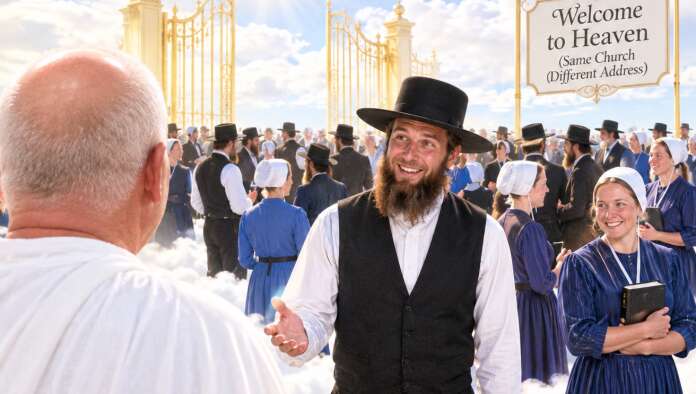

HEAVEN — After his recent earthly passing, Rev. Richard O’Hara was surprised to find out that heaven is mostly filled with Amish people.
Read MoreHEAVEN — After his recent earthly passing, Rev. Richard O’Hara was surprised to find out that heaven is mostly filled with Amish people.
Read More
KEARNEY, NE — The tide turned this morning in the upcoming national midterm elections after Beverly Franks from Nebraska put a political sign in her front yard.
Read More
Archbishop Fulton J. Sheen declared ‘Blessed’ at beatification Mass in St. Louis #Catholic – 
ST. LOUIS (OSV News) — Archbishop Fulton J. Sheen — the 20th-century theologian, evangelizer, Catholic communications pioneer, teacher and preacher — is now Blessed Fulton J. Sheen.
Cardinal Luis Antonio Tagle, a pro-prefect for the Holy See’s Dicastery for Evangelization and papal delegate, pronounced the Church’s declaration on Archbishop Sheen’s holiness of life and witness to Jesus Christ at a Sept. 24 Mass celebrated in The Dome at America’s Center in St. Louis.
To the applause of pilgrims, Cardinal Tagle described Archbishop Sheen as a “son of Illinois, son of the United States of America” and “indeed, son of the world.”
Hundreds of clergy, including dozens of bishops and cardinals, had processed into the arena for the Mass as choirs, accompanied by an orchestra, performed a succession of hymns. The priests’ vestments were embroidered with “JMJ,” Archbishop Sheen’s signature dedication to Jesus, Mary and Joseph.
The location had been selected by Archbishop Sheen’s home Diocese of Peoria, Illinois, to accommodate the number of pilgrims who arrived for the beatification and its surrounding events. Around 50,000 people were in attendance, according to organizers.
During a press conference a few hours prior to the Mass, Bishop Louis Tylka of Peoria said that almost every U.S. state and several additional nations were represented by pilgrims. A number of the faithful hailed from Italy, Poland and Brazil, he said.
Close to 90 bishops, some 1,000 priests, an estimated 1,600 men and women religious, and almost 250 deacons were present, added Bishop Tylka, who wore Archbishop Sheen’s pectoral cross. Among the concelebrating prelates was Archbishop Gabriele G. Caccia, apostolic nuncio to the United States.
The beatification — a papal act affirming an individual’s presence in heaven is worthy of belief — officially occurred between the liturgy’s Penitential Rite and the Gloria. Bishop Tylka made a formal request for Archbishop Sheen’s beatification to Cardinal Tagle.
A short biography of Archbishop Sheen, who was born in El Paso, Illinois, in 1895 and died in New York in 1979, was read by Archbishop Sheen’s great-nephew, Paul Cunningham, after which Cardinal Tagle proclaimed the apostolic letter from Pope Leo XIV declaring the beatification in Latin. Bishop Tylka then read the letter in English, as applause followed both.
With the papal decree’s public proclamation, Archbishop Sheen became formally counted among the Church’s “beati,” from the Latin word for “blessed.”
James Fulton Engstrom — whose revival from stillbirth in 2010, attributed to Archbishop Sheen’s intercession, was formally declared the miracle that moved Archbishop Sheen to beatification — processed with his parents and siblings to present a major relic of Archbishop Sheen during the liturgy.
Enclosed in a special case called a reliquary, the relic is Archbishop Sheen’s mandible, or jawbone, chosen because it represents the archbishop’s tremendous gifts as an orator, teacher and evangelist.
As part of the beatification, a portrait of a haloed Blessed Fulton Sheen was also unveiled. In the image, he is notably holding a piece of chalk, which he famously used — along with a blackboard — during his Emmy-winning television show, “Life Is Worth Living.”
The image was also simultaneously unveiled in the Diocese of Peoria at the Cathedral of St. Mary of the Immaculate Conception.
The first reading from the beatification Mass, Isaiah 52:7-10, was delivered in Spanish, with the second reading, 2 Corinthians 4:1-2, 5-7, proclaimed in Portuguese, while the Gospel taken from Mark 16:15-20 was proclaimed in English. The prayers of the faithful were offered in a variety of other languages, illustrating both the universal character of the Church and also the missionary mindset of Blessed Fulton J. Sheen, who served as the U.S. director for the Society for the Propagation of the Faith.
In his homily, Cardinal Tagle praised Archbishop Sheen as a “storyteller of Jesus” and “a “missionary who digs deep into the heart of the poor to meet Jesus there.”
The cardinal noted then-Bishop Sheen’s passionate advocacy for the poor during the Second Vatican Council. During the 1964 discussions on the document “Ad Gentes,” on the missionary activity of the Church, then-Bishop Sheen asked his brother bishops to “affirm” the notion of poverty and the bishops who came from poor and suffering parts of the Church.
“As only a wounded Christ could convert a doubting Thomas, so only a Church wounded by poverty can convert a doubting world,” he said.
Cardinal Tagle commended Archbishop Sheen for making genuine connections with the people he met and to whom he preached and ministered.
“The missionary evangelizer is blessed by the communion with persons and peoples, especially the poor and vulnerable, and this is communion in the name of Jesus Christ,” he said.
Cardinal Tagle shared how Archbishop Sheen told a friend, who asked why he became a priest, that he was called to share the Gospel and tell the story of Jesus.
“I never tire of telling it; I never tire of improving my telling of it. I love my calling,” Archbishop Sheen said, as Cardinal Tagle recounted.
In remarks after Communion, Bishop Tylka urged all attendees to pray for Archbishop Sheen’s canonization, leading them together in a prayer for that intention.
“It is God who has given the Church the extraordinary witness of the man we may now call Blessed Fulton J. Sheen,” he said.
Thanking the many prelates involved in the Mass, including Archbishop Mitchell T. Rozanski, whose archdiocese hosted the beatification, and representatives from the Archdiocese of New York, Diocese of Rochester and the Pontifical Mission Societies, Bishop Tylka noted, “Your presence today is a beautiful reminder that while Peoria is incredibly proud to call Fulton Sheen one of our own, he is a gift to the whole Church.”
Bishop Tylka also expressed his gratitude to Archbishop Sheen’s family, individuals and benefactors involved in preparations and liturgy, and the faithful who made the pilgrimage to attend the beatification.
“Fulton Sheen has left us a great legacy,” he said. “He fearlessly proclaimed the Gospel in challenging cultural times. He supported the Church’s missions throughout the world. He won tens of thousands of converts and preached to millions. His time of prayer before the Blessed Sacrament was the source of his insight into the Son of God. He used every gift God gave him for one purpose: to bring people to Christ. And his legacy is now ours.”
Following the Mass, attendees were invited to remain in prayer to venerate Archbishop Sheen’s relics.
Gina Christian is a multimedia reporter for OSV News. Follow her on X @GinaJesseReina. Maria Wiering, senior managing editor of OSV News, contributed to this article.
– ST. LOUIS (OSV News) — Archbishop Fulton J. Sheen — the 20th-century theologian, evangelizer, Catholic communications pioneer, teacher and preacher — is now Blessed Fulton J. Sheen. Cardinal Luis Antonio Tagle, a pro-prefect for the Holy See’s Dicastery for Evangelization and papal delegate, pronounced the Church’s declaration on Archbishop Sheen’s holiness of life and witness to Jesus Christ at a Sept. 24 Mass celebrated in The Dome at America’s Center in St. Louis. To the applause of pilgrims, Cardinal Tagle described Archbishop Sheen as a “son of Illinois, son of the United States of America” and “indeed, son of the
![New pastor unites Paterson parish during historic merger #Catholic – Two Catholic churches in the Stoney Road section of Paterson and Woodland Park, N.J., became one parish on Divine Mercy Sunday this year, on April 12, when Our Lady of Pompei (OLP) and St. Bonaventure parishes were merged into the newly formed Padre Pio Parish.
Father Manuel Cuellar, Padre Pio’s pastor since that day, knew that bringing distinct, bilingual parish communities into one cohesive Catholic parish wouldn’t happen immediately.
Bishop Kevin J. Sweeney officially installed Father Cuellar as pastor of Padre Pio on Sept. 12. The new pastor used the last few months to weave the parish communities into a tapestry of God’s presence among the faithful. Padre Pio has been providing three Masses at each of the parish’s two churches, while also helping connect each former parish into the shared ministries of the singular Padre Pio Parish.
“We are one now,” Father Cuellar said. “Instead of two or four, we are one.”
Click here to subscribe to our weekly newsletter.
The newly formed parish is officially named for St. Pio of Pietrelcina, also known as “Padre Pio. With the merger streamlining the administration of St. Bonaventure’s and OLP parishes, each with its own histories and traditions, both churches have remained open with adjusted Mass schedules to ensure the parish continues to meet people’s spiritual and pastoral needs.
During this merger, Father Cuellar has encountered people who often want to hold onto their traditions. Yet he sees the steps his parishioners have taken to embrace each other and unify.
“People were attached to their own buildings. People were attached to their own cultures. They wanted the same Mass times at the beginning. Now, I think they understand it in a better way.” Father Cuellar said. “Instead of two different communities, I see one now trying to be together, trying to celebrate together, trying to get to know each other,” he said.
Father Cuellar’s installation Mass provided an impactful example of how two parishes with a combined 260 years of distinct traditions have become one.
The installation Mass for Father Cuellar was held at the St. Bonaventure Church site and celebrated in English and Spanish. The liturgy utilized two different sets of lectors and music ministries working together to create one unified faith experience.
“It was such a beautiful Mass. You really felt the love,” said Raysa Gonzalez, a parishioner who came from OLP and assists with Mass planning and the team of lectors.
Gonzalez added, “We had goosebumps because the music is a combination of the Spanish and the English. I had people from the English Mass that do not speak any Spanish come up to me and tell me that even though they didn’t obviously understand the words in the readings that I was saying because it was in a different language that they don’t speak, they were able to feel the readings.”
Father Cuellar says the installation Mass also connected people whose exposure to fellow parishioners usually comes only from attending the same liturgy every week, which doesn’t normally increase the chance of meeting other church members.
“If they come to the 10 a.m. Mass, they know the people there, but they don’t know the other people from the 7.30 a.m. Mass, from the noon Mass or the 5.30 Mass on Sunday,” he said. “But now this event helped everybody to be together,” he said.
A Colombian-born, bilingual priest, Father Cuellar has especially helped bridge the gap between the English- and Spanish-speaking members of the combined parish. As parochial vicar at OLP in 2024, he helped establish a Spanish-speaking Mass, which St. Bonaventure already had for about 10 years.
Father Cuellar has also helped combine ministries across parishes and languages, often turning important Masses involving the sacraments of initiation into bilingual experiences that touch every parishioner’s faith journey.
“We had a lot of kids do their first Holy Communion. Some of them even got baptized, and it was a mix because it was in Spanish and English,” Gonzalez said.
Father Cuellar has also encouraged members of both parishes, representing both languages, to come together in ministries like the lectoring. Gonzalez has joined a bilingual Liturgy Committee from both former church communities that is helping shape people’s experiences of faith in both languages.
“A parish becomes truly alive when its members recognize that each of us has a unique role to play in the mission of the Church,” Father Cuellar wrote in a bulletin announcement about forming the Liturgy Committee.
He has also used a pilgrimage and mission to help earthquake victims in his native Colombia as a chance to unite the parish. They raised more than ,600, which helped empower those in need during the trip he and 22 others took in early September.
While Father Cuellar credits the countless parishioners who have embraced two parishes becoming one, those parishioners feel the newly installed pastor has been the main force that God has used to connect these parishes as one body of Christ.
“Father Manuel has such a blessing to guide us through the change, through the combination, through the different languages of the different communities and putting it together,” Gonzalez said. “Father Manuel has a good balance in respecting everyone’s ways in a way that no one feels excluded. It makes you really want to be part of this parish, this community,” she said.
BEACON PHOTOS | JOE GIGLI
[See image gallery at beaconnj.org]](https://unitedyam.com/wp-content/uploads/2026/09/new-pastor-unites-paterson-parish-during-historic-merger-catholic-two-catholic-churches-in-the-stoney-road-section-of-paterson-and-woodland-park-n-j-became-one-parish-on-divine-mercy-sunday-this.jpg "New pastor unites Paterson parish during historic merger #Catholic – Two Catholic churches in the Stoney Road section of Paterson and Woodland Park, N.J., became one parish on Divine Mercy Sunday this year, on April 12, when Our Lady of Pompei (OLP) and St. Bonaventure parishes were merged into the newly formed Padre Pio Parish.
Father Manuel Cuellar, Padre Pio’s pastor since that day, knew that bringing distinct, bilingual parish communities into one cohesive Catholic parish wouldn’t happen immediately.
Bishop Kevin J. Sweeney officially installed Father Cuellar as pastor of Padre Pio on Sept. 12. The new pastor used the last few months to weave the parish communities into a tapestry of God’s presence among the faithful. Padre Pio has been providing three Masses at each of the parish’s two churches, while also helping connect each former parish into the shared ministries of the singular Padre Pio Parish.
“We are one now,” Father Cuellar said. “Instead of two or four, we are one.”
Click here to subscribe to our weekly newsletter.
The newly formed parish is officially named for St. Pio of Pietrelcina, also known as “Padre Pio. With the merger streamlining the administration of St. Bonaventure’s and OLP parishes, each with its own histories and traditions, both churches have remained open with adjusted Mass schedules to ensure the parish continues to meet people’s spiritual and pastoral needs.
During this merger, Father Cuellar has encountered people who often want to hold onto their traditions. Yet he sees the steps his parishioners have taken to embrace each other and unify.
“People were attached to their own buildings. People were attached to their own cultures. They wanted the same Mass times at the beginning. Now, I think they understand it in a better way.” Father Cuellar said. “Instead of two different communities, I see one now trying to be together, trying to celebrate together, trying to get to know each other,” he said.
Father Cuellar’s installation Mass provided an impactful example of how two parishes with a combined 260 years of distinct traditions have become one.
The installation Mass for Father Cuellar was held at the St. Bonaventure Church site and celebrated in English and Spanish. The liturgy utilized two different sets of lectors and music ministries working together to create one unified faith experience.
“It was such a beautiful Mass. You really felt the love,” said Raysa Gonzalez, a parishioner who came from OLP and assists with Mass planning and the team of lectors.
Gonzalez added, “We had goosebumps because the music is a combination of the Spanish and the English. I had people from the English Mass that do not speak any Spanish come up to me and tell me that even though they didn’t obviously understand the words in the readings that I was saying because it was in a different language that they don’t speak, they were able to feel the readings.”
Father Cuellar says the installation Mass also connected people whose exposure to fellow parishioners usually comes only from attending the same liturgy every week, which doesn’t normally increase the chance of meeting other church members.
“If they come to the 10 a.m. Mass, they know the people there, but they don’t know the other people from the 7.30 a.m. Mass, from the noon Mass or the 5.30 Mass on Sunday,” he said. “But now this event helped everybody to be together,” he said.
A Colombian-born, bilingual priest, Father Cuellar has especially helped bridge the gap between the English- and Spanish-speaking members of the combined parish. As parochial vicar at OLP in 2024, he helped establish a Spanish-speaking Mass, which St. Bonaventure already had for about 10 years.
Father Cuellar has also helped combine ministries across parishes and languages, often turning important Masses involving the sacraments of initiation into bilingual experiences that touch every parishioner’s faith journey.
“We had a lot of kids do their first Holy Communion. Some of them even got baptized, and it was a mix because it was in Spanish and English,” Gonzalez said.
Father Cuellar has also encouraged members of both parishes, representing both languages, to come together in ministries like the lectoring. Gonzalez has joined a bilingual Liturgy Committee from both former church communities that is helping shape people’s experiences of faith in both languages.
“A parish becomes truly alive when its members recognize that each of us has a unique role to play in the mission of the Church,” Father Cuellar wrote in a bulletin announcement about forming the Liturgy Committee.
He has also used a pilgrimage and mission to help earthquake victims in his native Colombia as a chance to unite the parish. They raised more than ,600, which helped empower those in need during the trip he and 22 others took in early September.
While Father Cuellar credits the countless parishioners who have embraced two parishes becoming one, those parishioners feel the newly installed pastor has been the main force that God has used to connect these parishes as one body of Christ.
“Father Manuel has such a blessing to guide us through the change, through the combination, through the different languages of the different communities and putting it together,” Gonzalez said. “Father Manuel has a good balance in respecting everyone’s ways in a way that no one feels excluded. It makes you really want to be part of this parish, this community,” she said.
BEACON PHOTOS | JOE GIGLI
[See image gallery at beaconnj.org]")
New pastor unites Paterson parish during historic merger #Catholic – 
Two Catholic churches in the Stoney Road section of Paterson and Woodland Park, N.J., became one parish on Divine Mercy Sunday this year, on April 12, when Our Lady of Pompei (OLP) and St. Bonaventure parishes were merged into the newly formed Padre Pio Parish.
Father Manuel Cuellar, Padre Pio’s pastor since that day, knew that bringing distinct, bilingual parish communities into one cohesive Catholic parish wouldn’t happen immediately.
Bishop Kevin J. Sweeney officially installed Father Cuellar as pastor of Padre Pio on Sept. 12. The new pastor used the last few months to weave the parish communities into a tapestry of God’s presence among the faithful. Padre Pio has been providing three Masses at each of the parish’s two churches, while also helping connect each former parish into the shared ministries of the singular Padre Pio Parish.
“We are one now,” Father Cuellar said. “Instead of two or four, we are one.”
The newly formed parish is officially named for St. Pio of Pietrelcina, also known as “Padre Pio. With the merger streamlining the administration of St. Bonaventure’s and OLP parishes, each with its own histories and traditions, both churches have remained open with adjusted Mass schedules to ensure the parish continues to meet people’s spiritual and pastoral needs.
During this merger, Father Cuellar has encountered people who often want to hold onto their traditions. Yet he sees the steps his parishioners have taken to embrace each other and unify.
“People were attached to their own buildings. People were attached to their own cultures. They wanted the same Mass times at the beginning. Now, I think they understand it in a better way.” Father Cuellar said. “Instead of two different communities, I see one now trying to be together, trying to celebrate together, trying to get to know each other,” he said.
Father Cuellar’s installation Mass provided an impactful example of how two parishes with a combined 260 years of distinct traditions have become one.
The installation Mass for Father Cuellar was held at the St. Bonaventure Church site and celebrated in English and Spanish. The liturgy utilized two different sets of lectors and music ministries working together to create one unified faith experience.
“It was such a beautiful Mass. You really felt the love,” said Raysa Gonzalez, a parishioner who came from OLP and assists with Mass planning and the team of lectors.
Gonzalez added, “We had goosebumps because the music is a combination of the Spanish and the English. I had people from the English Mass that do not speak any Spanish come up to me and tell me that even though they didn’t obviously understand the words in the readings that I was saying because it was in a different language that they don’t speak, they were able to feel the readings.”
Father Cuellar says the installation Mass also connected people whose exposure to fellow parishioners usually comes only from attending the same liturgy every week, which doesn’t normally increase the chance of meeting other church members.
“If they come to the 10 a.m. Mass, they know the people there, but they don’t know the other people from the 7.30 a.m. Mass, from the noon Mass or the 5.30 Mass on Sunday,” he said. “But now this event helped everybody to be together,” he said.
A Colombian-born, bilingual priest, Father Cuellar has especially helped bridge the gap between the English- and Spanish-speaking members of the combined parish. As parochial vicar at OLP in 2024, he helped establish a Spanish-speaking Mass, which St. Bonaventure already had for about 10 years.
Father Cuellar has also helped combine ministries across parishes and languages, often turning important Masses involving the sacraments of initiation into bilingual experiences that touch every parishioner’s faith journey.
“We had a lot of kids do their first Holy Communion. Some of them even got baptized, and it was a mix because it was in Spanish and English,” Gonzalez said.
Father Cuellar has also encouraged members of both parishes, representing both languages, to come together in ministries like the lectoring. Gonzalez has joined a bilingual Liturgy Committee from both former church communities that is helping shape people’s experiences of faith in both languages.
“A parish becomes truly alive when its members recognize that each of us has a unique role to play in the mission of the Church,” Father Cuellar wrote in a bulletin announcement about forming the Liturgy Committee.
He has also used a pilgrimage and mission to help earthquake victims in his native Colombia as a chance to unite the parish. They raised more than $3,600, which helped empower those in need during the trip he and 22 others took in early September.
While Father Cuellar credits the countless parishioners who have embraced two parishes becoming one, those parishioners feel the newly installed pastor has been the main force that God has used to connect these parishes as one body of Christ.
“Father Manuel has such a blessing to guide us through the change, through the combination, through the different languages of the different communities and putting it together,” Gonzalez said. “Father Manuel has a good balance in respecting everyone’s ways in a way that no one feels excluded. It makes you really want to be part of this parish, this community,” she said.
– Two Catholic churches in the Stoney Road section of Paterson and Woodland Park, N.J., became one parish on Divine Mercy Sunday this year, on April 12, when Our Lady of Pompei (OLP) and St. Bonaventure parishes were merged into the newly formed Padre Pio Parish. Father Manuel Cuellar, Padre Pio’s pastor since that day, knew that bringing distinct, bilingual parish communities into one cohesive Catholic parish wouldn’t happen immediately. Bishop Kevin J. Sweeney officially installed Father Cuellar as pastor of Padre Pio on Sept. 12. The new pastor used the last few months to weave the parish communities into a
![Carmelite sister professes final vows before Bishop in Morristown #Catholic – On Sept. 8, Carmelite Sister Faustina Gloria of the Merciful Heart of Jesus made solemn vows at the Monastery of the Most Blessed Virgin Mary of Mount Carmel in Morristown, N.J., before Bishop Kevin J. Sweeney during a Mass he celebrated.
Born in Ghana, Sister Faustina Gloria moved to the United States with her family at age eight.
Concelebrating the Mass were Father Brendan Murray, a retired priest of the Paterson Diocese, N.J., who regularly celebrates Mass at the monastery, and other priests who are close to Sister Faustina Gloria. Friends and family also attended.
The Discalced Carmelites are a cloistered order with a schedule that includes eight hours of prayer each day, manual labor, some recreation, and contemplation. The sisters observe strict silence so their prayers may be more continuous.
BEACON PHOTOS | JOE GIGLI
[See image gallery at beaconnj.org]
Click here to subscribe to our weekly newsletter.](https://unitedyam.com/wp-content/uploads/2026/09/carmelite-sister-professes-final-vows-before-bishop-in-morristown-catholic-on-sept-8-carmelite-sister-faustina-gloria-of-the-merciful-heart-of-jesus-made-solemn-vows-at-the-monastery-of-the-most.jpg "Carmelite sister professes final vows before Bishop in Morristown #Catholic – On Sept. 8, Carmelite Sister Faustina Gloria of the Merciful Heart of Jesus made solemn vows at the Monastery of the Most Blessed Virgin Mary of Mount Carmel in Morristown, N.J., before Bishop Kevin J. Sweeney during a Mass he celebrated.
Born in Ghana, Sister Faustina Gloria moved to the United States with her family at age eight.
Concelebrating the Mass were Father Brendan Murray, a retired priest of the Paterson Diocese, N.J., who regularly celebrates Mass at the monastery, and other priests who are close to Sister Faustina Gloria. Friends and family also attended.
The Discalced Carmelites are a cloistered order with a schedule that includes eight hours of prayer each day, manual labor, some recreation, and contemplation. The sisters observe strict silence so their prayers may be more continuous.
BEACON PHOTOS | JOE GIGLI
[See image gallery at beaconnj.org]
Click here to subscribe to our weekly newsletter.")
Carmelite sister professes final vows before Bishop in Morristown #Catholic – 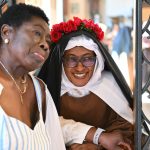
On Sept. 8, Carmelite Sister Faustina Gloria of the Merciful Heart of Jesus made solemn vows at the Monastery of the Most Blessed Virgin Mary of Mount Carmel in Morristown, N.J., before Bishop Kevin J. Sweeney during a Mass he celebrated.
Born in Ghana, Sister Faustina Gloria moved to the United States with her family at age eight.
Concelebrating the Mass were Father Brendan Murray, a retired priest of the Paterson Diocese, N.J., who regularly celebrates Mass at the monastery, and other priests who are close to Sister Faustina Gloria. Friends and family also attended.
The Discalced Carmelites are a cloistered order with a schedule that includes eight hours of prayer each day, manual labor, some recreation, and contemplation. The sisters observe strict silence so their prayers may be more continuous.
– On Sept. 8, Carmelite Sister Faustina Gloria of the Merciful Heart of Jesus made solemn vows at the Monastery of the Most Blessed Virgin Mary of Mount Carmel in Morristown, N.J., before Bishop Kevin J. Sweeney during a Mass he celebrated. Born in Ghana, Sister Faustina Gloria moved to the United States with her family at age eight. Concelebrating the Mass were Father Brendan Murray, a retired priest of the Paterson Diocese, N.J., who regularly celebrates Mass at the monastery, and other priests who are close to Sister Faustina Gloria. Friends and family also attended. The Discalced Carmelites are a
A reading from the Book of Ezekiel
18:25-28
Thus says the LORD:
You say, "The LORD’s way is not fair!"
Hear now, house of Israel:
Is it my way that is unfair, or rather, are not your ways unfair?
When someone virtuous turns away from virtue to commit iniquity, and dies,
it is because of the iniquity he committed that he must die.
But if he turns from the wickedness he has committed,
and does what is right and just,
he shall preserve his life;
since he has turned away from all the sins that he has committed,
he shall surely live, he shall not die.
A reading from the Letter of St. Paul to the Philippians
2:1-11
Brothers and sisters:
If there is any encouragement in Christ,
any solace in love,
any participation in the Spirit,
any compassion and mercy,
complete my joy by being of the same mind, with the same love,
united in heart, thinking one thing.
Do nothing out of selfishness or out of vainglory;
rather, humbly regard others as more important than yourselves,
each looking out not for his own interests,
but also for those of others.
Have in you the same attitude
that is also in Christ Jesus,
Who, though he was in the form of God,
did not regard equality with God
something to be grasped.
Rather, he emptied himself,
taking the form of a slave,
coming in human likeness;
and found human in appearance,
he humbled himself,
becoming obedient to the point of death,
even death on a cross.
Because of this, God greatly exalted him
and bestowed on him the name
which is above every name,
that at the name of Jesus
every knee should bend,
of those in heaven and on earth and under the earth,
and every tongue confess that
Jesus Christ is Lord,
to the glory of God the Father.
From the Gospel according to Matthew
21:28-32
Jesus said to the chief priests and elders of the people:
"What is your opinion?
A man had two sons.
He came to the first and said,
‘Son, go out and work in the vineyard today.’
He said in reply, ‘I will not,’
but afterwards changed his mind and went.
The man came to the other son and gave the same order.
He said in reply, ‘Yes, sir, ‘but did not go.
Which of the two did his father’s will?"
They answered, "The first."
Jesus said to them, "Amen, I say to you,
tax collectors and prostitutes
are entering the kingdom of God before you.
When John came to you in the way of righteousness,
you did not believe him;
but tax collectors and prostitutes did.
Yet even when you saw that,
you did not later change your minds and believe him."
If your heart is not a repentant heart, if you do not listen to the Lord, if you do not accept correction and do not trust in Him, you have an unrepentant heart. But these hypocrites who take offence at what Jesus says about tax collectors and prostitutes, yet then secretly went to them, either to indulge their passions or to do business – but all in secret – they were ‘pure’! And the Lord does not want them. (…) These people cannot receive Salvation. They are closed off to Salvation. “I will leave in the midst of you a people humble and lowly; they shall seek refuge in the name of the Lord”, for their whole lives. And this remains true to this day, does it not? When we see God’s holy people who are humble, who find their riches in faith in the Lord, in trust in the Lord – the humble, lowly people who trust in the Lord: these are the saved, and this is the way of the Church, is it not? She must take this path, not the other path that does not listen to the voice, that does not accept correction and does not trust in the Lord. (…). When we are able to say to the Lord: “Lord, these are my sins – they are not his, or hers, they are mine… They are mine. Take them upon yourself, and so I shall be saved” – when we are able to do this, we shall be the beautiful people, the “humble and poor people”, who trust in the name of the Lord. May the Lord grant us this grace. (Pope Francis, Homily of 16 December 2014)
Read More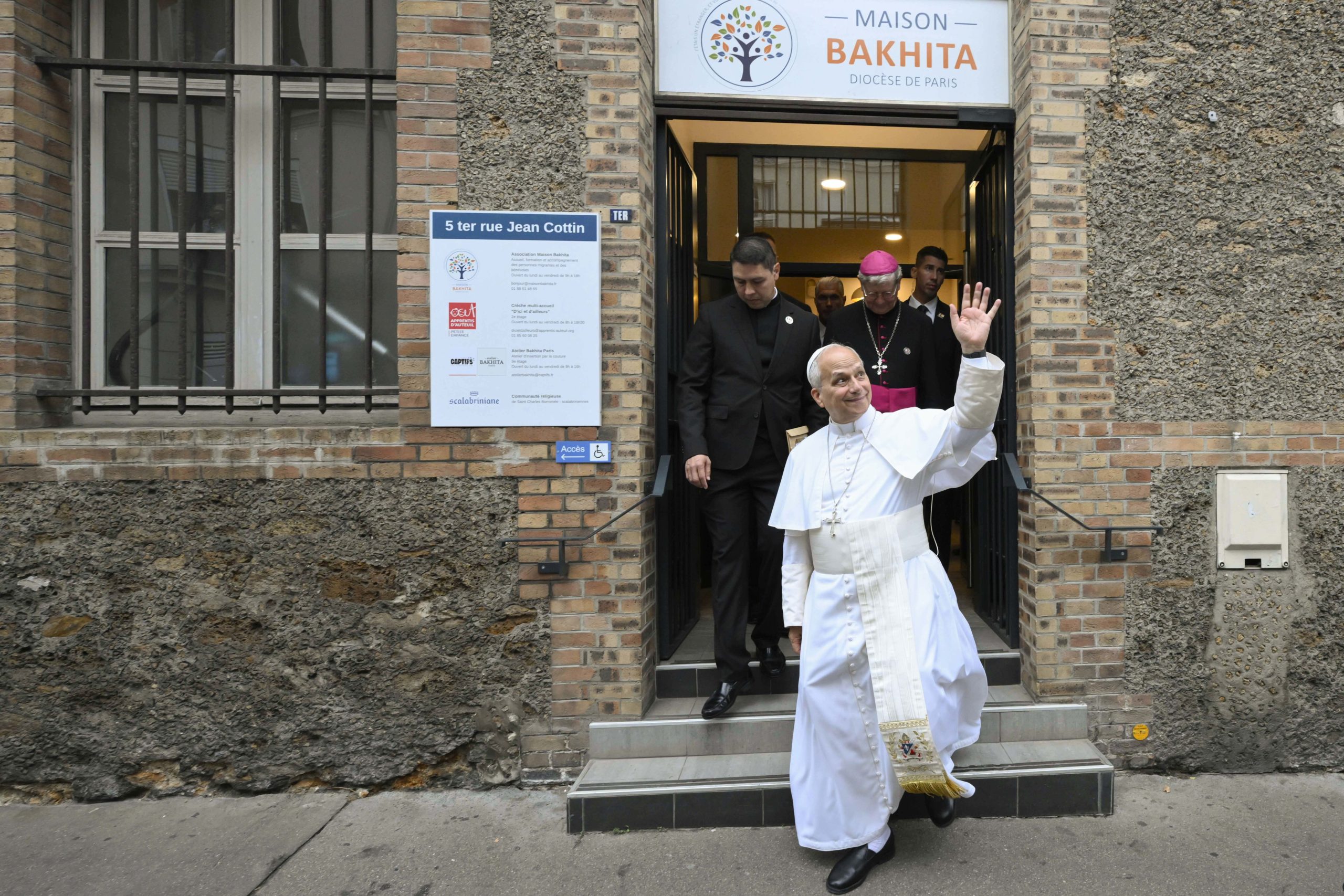
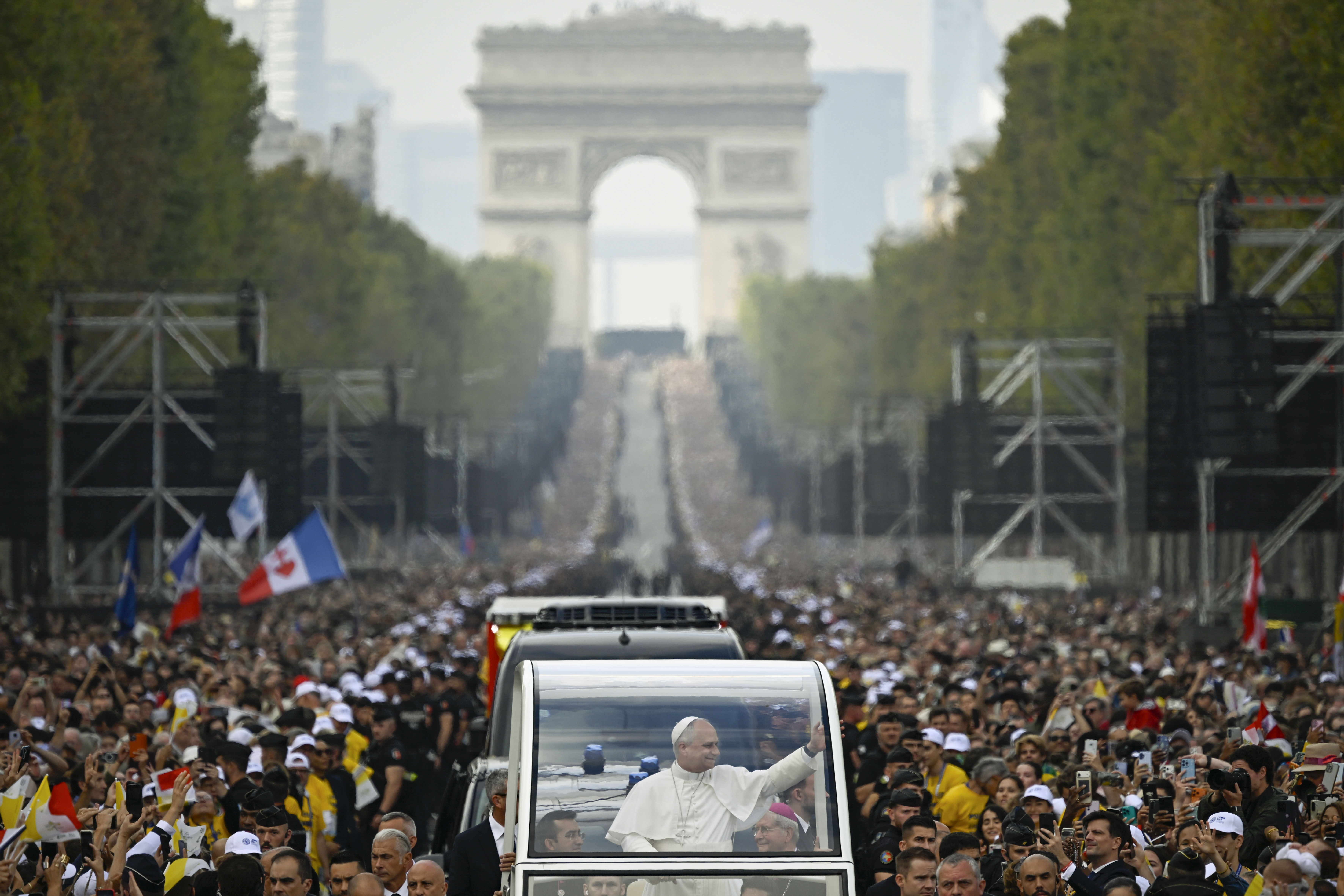
Pope Leo XIV visited the Maison Bakhita Center and celebrated an open-air Mass at Place de la Concorde in Paris before concluding his day at the Shrine of Our Lady of Lourdes.
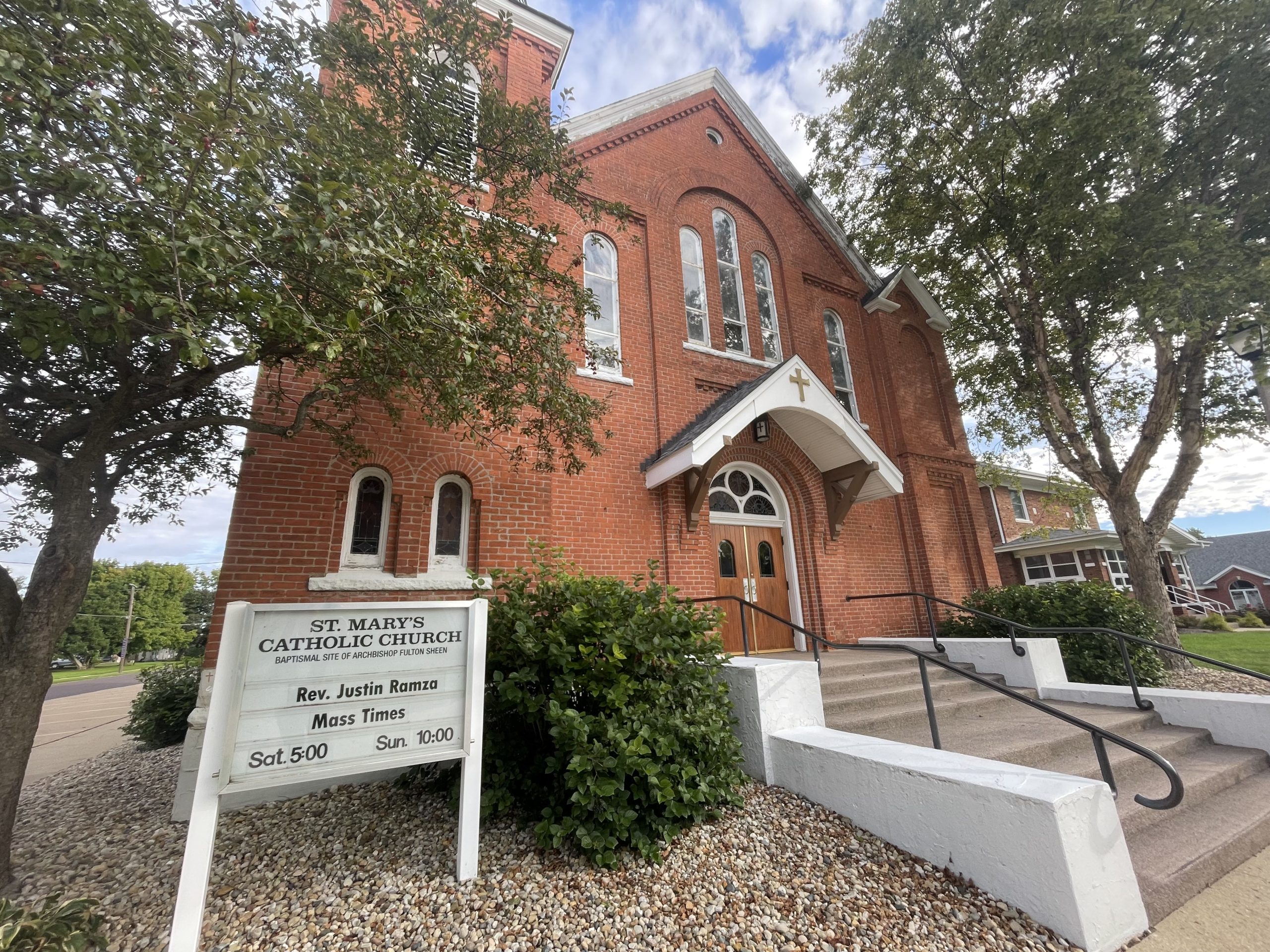
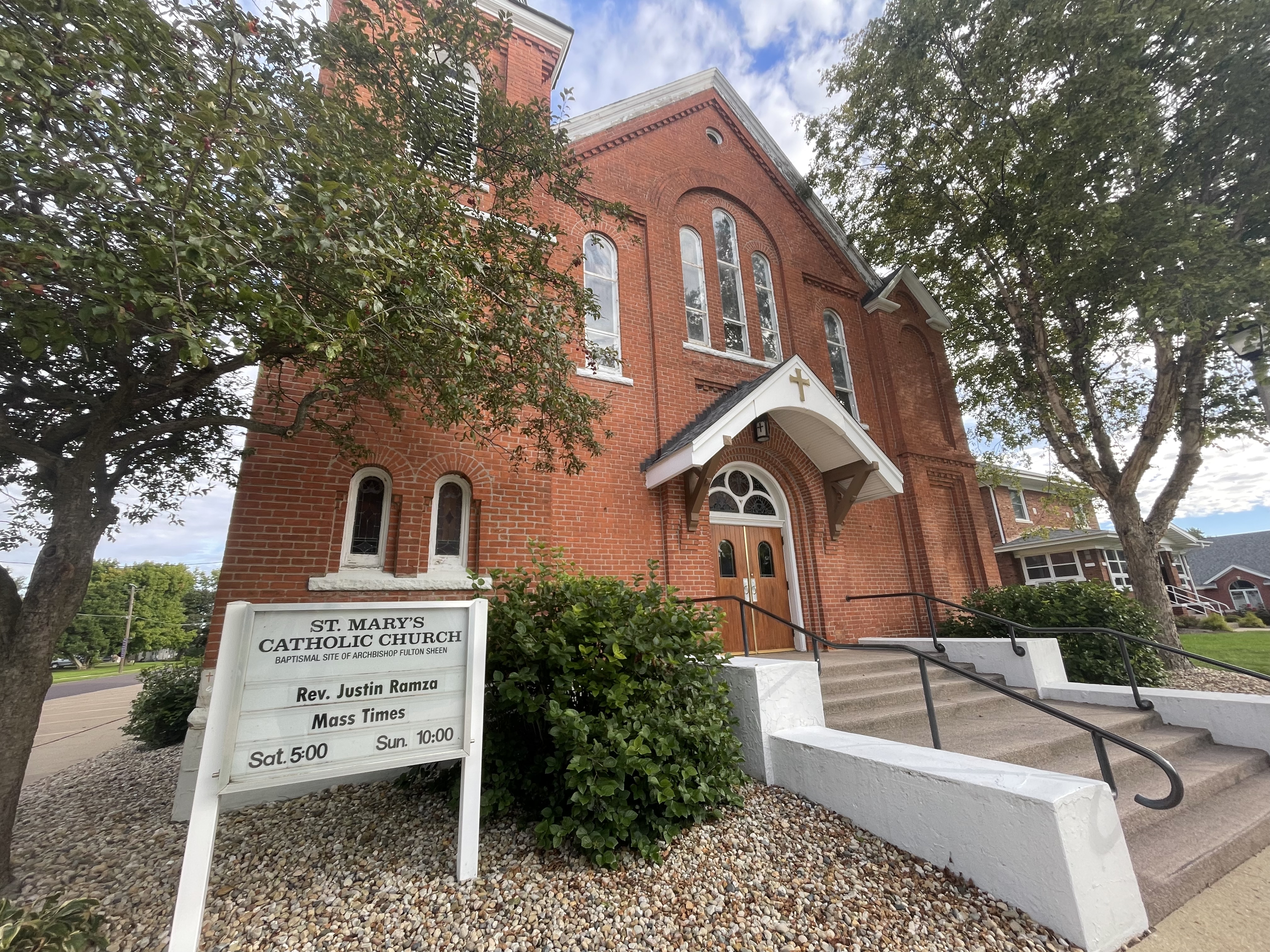
The combined parish of St. Mary in El Paso, Illinois, and St. John in Benson, Illinois, will be the first parish in the world to be named after the new blessed.
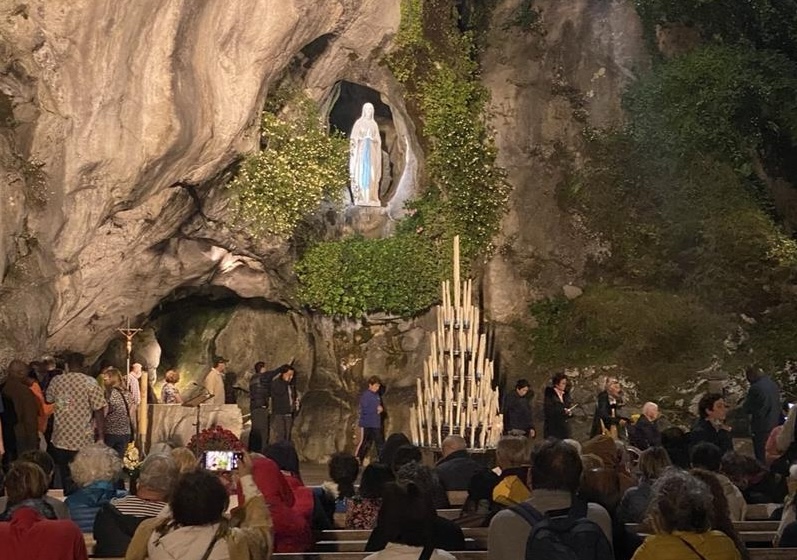
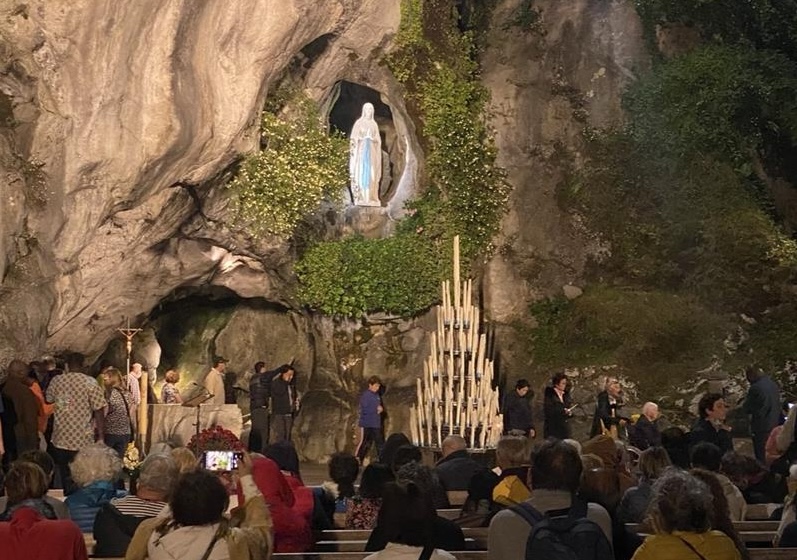
Among the throngs of pilgrims in Lourdes this weekend will be a 27-year-old woman who be there with a group of Cistercian nuns, hoping the visit will confirm her call to contemplative life.
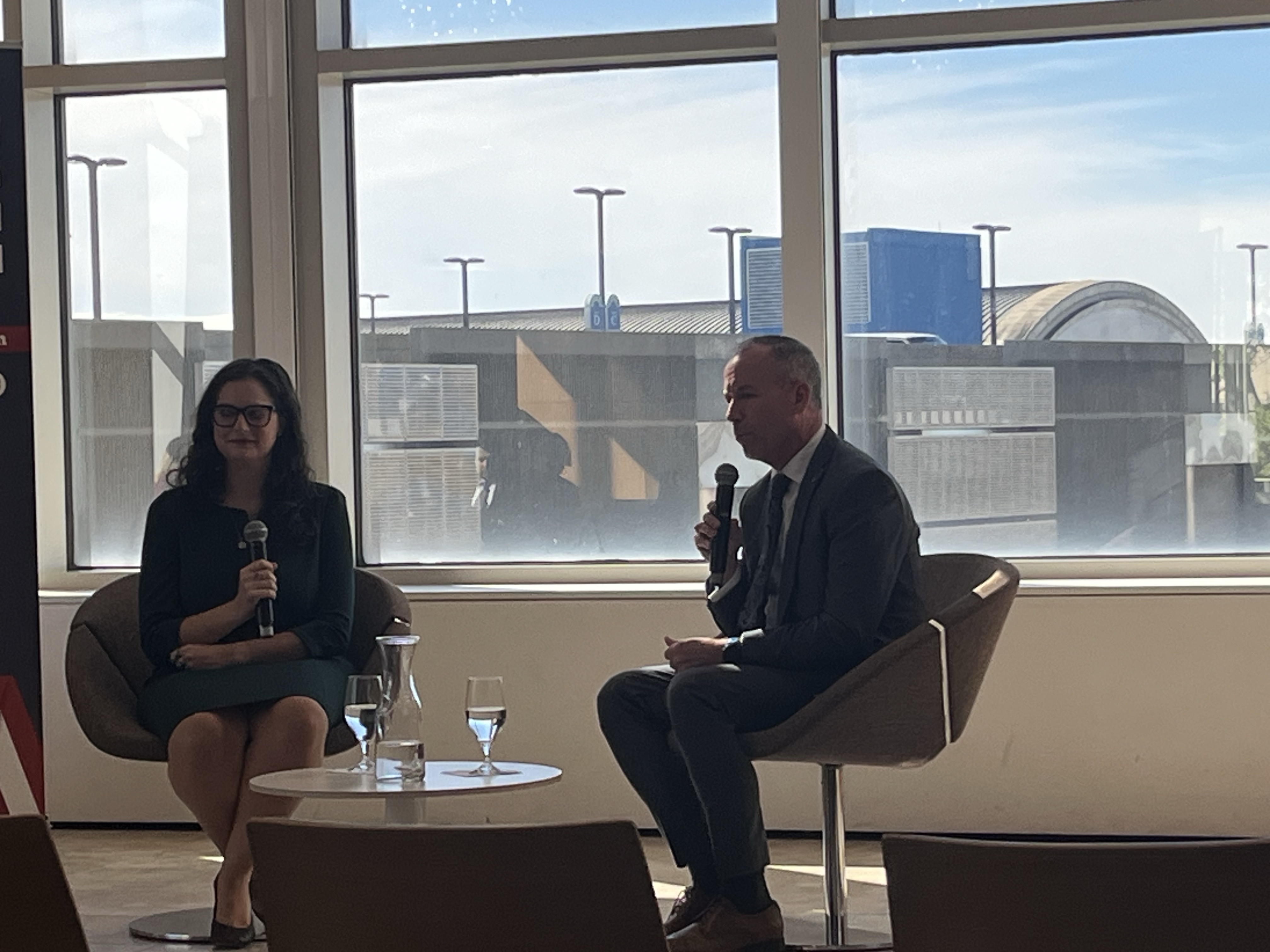
![Knights of Columbus pitch their role at Symposium on Young American Men – #Catholic – A senior adviser to the Knights of Columbus discussed the need for men to have fraternal community at the Second Symposium on Young American Men held in Washington, D.C., on Sept. 25.“We’re social beings, so we want to join communities … where we can be our authentic selves,” said Joseph McInerney, the Knights’ chief strategy adviser and senior vice president for leader development.The symposium, sponsored in part by the Knights, was focused on problems faced by young American men in 2026. The symposium focused primarily on public policy solutions advanced by both Republicans and Democrats but also included talks unrelated to government, such as McInerney’s, which was about the role of fraternal community in helping strengthen men.Other conference sponsors included the Institute for Family Studies, the National Parents Organization, and the Men’s Health Network. Although the Knights are known for being popular with older, retired men, McInerney noted significant growth in recent years with young men on college campuses and those who recently entered the workforce. He pointed out that men who are under 35 are the organization’s fastest-growing membership segment, and there are now more than 300 active college Knights councils, with nearly half of those in the United States.“The lifeblood of the Knights is young men,” McInerney said, adding that “it’s a place where they can … spend time with other men — their peers — and that, frankly, is very powerful.”McInerney pitched fraternal communities as a means to combat male loneliness and isolation but also to build up men into leaders and “better themselves so they can be better husbands, fathers, … and members of their community.”Warning against isolation, which McInerney said is amplified through the internet and media, he said: “We’re not made for that.” Rather, “we’re made for rich and beautiful relationships with the people that we love.”Although the broader symposium was not primarily focused on matters of faith, McInerney said a major attraction of the Knights for young men is faith formation. He referenced in particular the Knights’ Cor program, which develops small groups for men focused on prayer, formation, and fraternity. The Knights also run the McGivney Fellowship, which is a two-year leadership formation program.“They become good people,” McInerney said of the goals of the Knights’ programs. “They become people who are worthy of trust, and those are the type of people we want to lead us.”Speaking to EWTN News after his talk, McInerney noted that the uniqueness of the Knights of Columbus is that it is a Catholic fraternal organization that is also focused on serving others through charity, which he sees as another attraction for young men.“We want to help people spiritually, but we also have this mandate to serve,” he said. “Thatʼs why we exist, [it] is to help other people. And so, when you join the group, thatʼs kind of part of the package deal that we offer.”“Itʼs natural if youʼre working on your spiritual life, you want to share the grace that youʼre receiving in your relationship with God,” McInerney said.McInerney said Catholic men who wish to join can visit their website and get connected to a local council.“Whatever councilʼs closest to you, weʼll get that person in contact,” he said. “And then whatʼs most important. … Entry might be online there, but whatʼs most important is then getting that man in touch with a man face-to-face.”](https://unitedyam.com/wp-content/uploads/2026/09/knights-of-columbus-pitch-their-role-at-symposium-on-young-american-men-catholic-a-senior-adviser-to-the-knights-of-columbus-discussed-the-need-for-men-to-have-fraternal-community-at-the-second-s-scaled.jpg "Knights of Columbus pitch their role at Symposium on Young American Men – #Catholic – A senior adviser to the Knights of Columbus discussed the need for men to have fraternal community at the Second Symposium on Young American Men held in Washington, D.C., on Sept. 25.“We’re social beings, so we want to join communities … where we can be our authentic selves,” said Joseph McInerney, the Knights’ chief strategy adviser and senior vice president for leader development.The symposium, sponsored in part by the Knights, was focused on problems faced by young American men in 2026. The symposium focused primarily on public policy solutions advanced by both Republicans and Democrats but also included talks unrelated to government, such as McInerney’s, which was about the role of fraternal community in helping strengthen men.Other conference sponsors included the Institute for Family Studies, the National Parents Organization, and the Men’s Health Network. Although the Knights are known for being popular with older, retired men, McInerney noted significant growth in recent years with young men on college campuses and those who recently entered the workforce. He pointed out that men who are under 35 are the organization’s fastest-growing membership segment, and there are now more than 300 active college Knights councils, with nearly half of those in the United States.“The lifeblood of the Knights is young men,” McInerney said, adding that “it’s a place where they can … spend time with other men — their peers — and that, frankly, is very powerful.”McInerney pitched fraternal communities as a means to combat male loneliness and isolation but also to build up men into leaders and “better themselves so they can be better husbands, fathers, … and members of their community.”Warning against isolation, which McInerney said is amplified through the internet and media, he said: “We’re not made for that.” Rather, “we’re made for rich and beautiful relationships with the people that we love.”Although the broader symposium was not primarily focused on matters of faith, McInerney said a major attraction of the Knights for young men is faith formation. He referenced in particular the Knights’ Cor program, which develops small groups for men focused on prayer, formation, and fraternity. The Knights also run the McGivney Fellowship, which is a two-year leadership formation program.“They become good people,” McInerney said of the goals of the Knights’ programs. “They become people who are worthy of trust, and those are the type of people we want to lead us.”Speaking to EWTN News after his talk, McInerney noted that the uniqueness of the Knights of Columbus is that it is a Catholic fraternal organization that is also focused on serving others through charity, which he sees as another attraction for young men.“We want to help people spiritually, but we also have this mandate to serve,” he said. “Thatʼs why we exist, [it] is to help other people. And so, when you join the group, thatʼs kind of part of the package deal that we offer.”“Itʼs natural if youʼre working on your spiritual life, you want to share the grace that youʼre receiving in your relationship with God,” McInerney said.McInerney said Catholic men who wish to join can visit their website and get connected to a local council.“Whatever councilʼs closest to you, weʼll get that person in contact,” he said. “And then whatʼs most important. … Entry might be online there, but whatʼs most important is then getting that man in touch with a man face-to-face.”")
“The lifeblood of the Knights is young men,” said Joseph McInerney, who noted that men under 35 are currently the fraternal organization’s fastest-growing membership segment.
Resembling a lumpy chunk of coral floating through space, Hyperion is one of the weirdest moons not just of Saturn, but in the whole solar system. Its shape is irregular, its rotation is chaotic, and it looks oddly spongelike. On Sept. 26, 2005, Cassini completed its first flyby of this bizarre moon, giving NASA bothContinue reading “Sept. 26, 2005: Cassini visits Saturn’s weirdest moon”
The post Sept. 26, 2005: Cassini visits Saturn’s weirdest moon appeared first on Astronomy Magazine.
Read More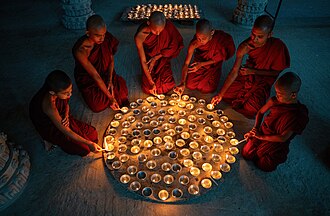
| Picture of the day |
|---|
.jpg)
|
|
A group of newly ordained Buddhist śramaṇas performing the traditional lamp-lighting ritual on Prabarana Purnima, Bangladesh.
|

:max_bytes(150000):strip_icc():format(jpeg)/TAL-autumn-copper-harbor-michigan-LEAFPEEPMICH0825-16b625d6af79473bab51a216b60c25bd.jpg)