2005

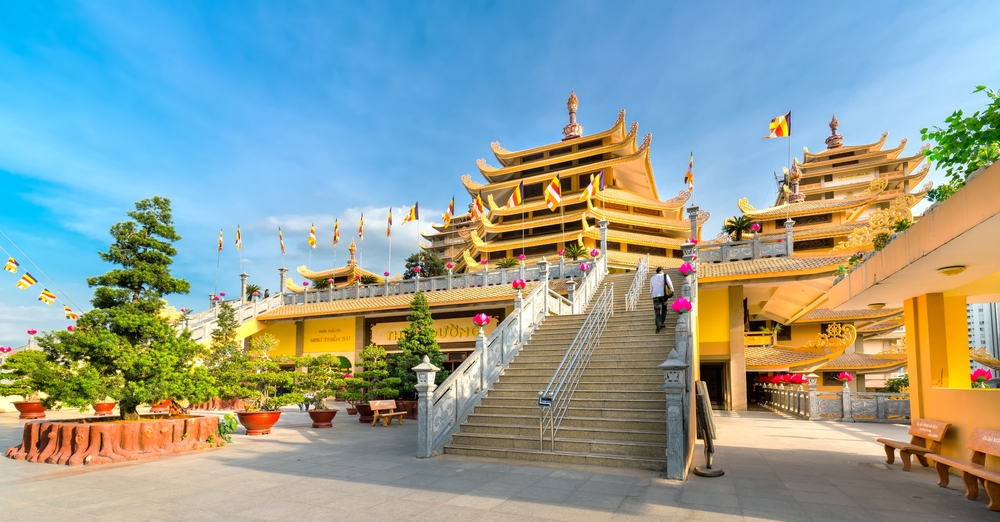
Catholic sisters’ visit to Buddhist temple stirs controversy in Vietnam #Catholic Vietnamese Catholics are debating the limits of interreligious dialogue following a visit of some 100 Catholic sisters to a Buddhist temple in Ho Chi Minh City.The sisters of the Theological Institute of the Inter-Congregations of Lovers of the Holy Cross learned basic principles of Buddhist prayers and “practiced seated meditations” at the visit to Minh Dang Quang Buddhist Monastery on Oct. 26, according to a UCA News report. Controversy followed after photos circulated online of the visit, the report said. Redemptorist Father Peter Nguyen Van Khai said the visit, which included offering incense and praying in front of a Buddhist statue, was inconsistent with Catholic teaching. “Good subjective intentions are not sufficient to justify an action that is objectively incompatible with the faith,” he said.Number of bishops in Ireland to drop by a third following mergerThe number of Catholic bishops in Ireland could decrease from 26 to 17 after a merger that was decided by Vatican consultations in which Pope Leo XIV participated prior to his election as pope.The merger was planned during a meeting in February 2025 with Archbishop Eamon Martin of Armagh, Archbishop Dermot Farrell of Dublin, Archbishop Kieran O’Reilly of Cashel and Emly, and Archbishop Francis Duffy of Tuam, according to an Oct. 27 report from the Irish Times. “Since the meeting in Rome held in February 2025, between the four archbishops of Ireland with Cardinal Robert Prevost … the subject of reconfiguration of dioceses within the province of Munster has been on the agenda of the regular meetings of the seven Munster bishops,” a spokesperson for the bishops said in the report, noting a consultative process is underway that could take “a number of years.”At UN, Holy See calls for ‘peaceful uses of outer space’ The apostolic nuncio to the United Nations, Archbishop Christophe El-Kassis, spoke out against the expansion of space activity at the expense of environmental damage at the 81st session of the U.N. General Assembly in New York City.“Outer space is a common good entrusted to the responsibility of the entire human family. Its exploration and use hold extraordinary promise for scientific advancement and integral human development,” El-Kassis said in his Oct. 28 statement. “However, it is essential that such progress benefits all peoples, without creating new inequalities or exclusions.” The nuncio further called for “greater international cooperation,” especially so that developing countries may benefit from any possible advances. “The Holy See therefore encourages States to pursue their common efforts to preserve outer space as a realm of peace, stability, and cooperation, for the benefit of present and future generations,” he said.Displaced Christians in southern Lebanon appeal for protection, return homeFamilies from Qouzah, a Christian village in southern Lebanon, are appealing to the Vatican and the United States for help returning to their homes after months of displacement.Residents have called for their village to be protected from further conflict, while Father Antonios Hanna, the parish priest, reported extensive damage to homes and the 120-year-old St. Joseph Church, ACI MENA, the Arabic-language sister service of EWTN News, reported on Oct. 27. Before the latest displacement, approximately 54 families lived in the village. Many now face unemployment, rent payments, and difficulties meeting basic needs. Hanna emphasized that residents want neither conflict nor confrontation but lasting peace that will allow them to return to their homes, churches, and farmland.Syrian curriculum changes spark controversy over religion, womenChanges to Syrian school textbooks have sparked criticism over the removal or alteration of material concerning women, the arts, civic education, and national history.According to documented comparisons of older and revised textbooks, images of women and girls were removed or digitally altered to include Islamic coverings, ACI MENA reported Oct. 26. References to traditional dances, famous artworks, and historical figures were also deleted. Some lessons on citizenship, democracy, and respect for the law were replaced or removed, while changes to historical and geographical references raised further concerns. Critics argue that the revisions promote a narrower religious and cultural perspective at the expense of Syriaʼs diverse heritage. The controversy has renewed debate over the role of education in preserving historical accuracy, encouraging critical thinking, and respecting the countryʼs social and religious diversity.African Church leaders urge quality formation as priestly vocations growCatholic leaders and formation personnel in Africa are calling for careful discernment of candidates, qualified formators, and continuing formation for clergy and laypeople as the continent records growth in priestly vocations.In responses shared with ACI Africa, the sister service of EWTN News in Africa, they said the increase in major seminarians calls for attention to candidates’ motivations, human and spiritual maturity, pastoral preparation, and safeguarding. “Rigorous discernment at the entry level should be the norm,” Archbishop Ignatius Ayau Kaigama of Abuja, Nigeria, said. “Careful vetting matters more than recruitment drives.” The archbishop further urged psychological and human screening, and for willingness to turn away candidates who are deemed unfit for the priesthood.Bishop reflects on 20 years of faith and service in Arabian PeninsulaAfter nearly two decades of service in the Arabian Peninsula, Swiss Capuchin Bishop Paul Hinder is preparing to return home, carrying with him memories of a diverse and deeply faithful Church.Appointed apostolic vicar of Arabia in 2005 and of Southern Arabia in 2011, he served communities across six countries, visiting Christians in Yemen and witnessing the devotion of migrant Catholics in Saudi Arabia, ACI MENA reported Oct. 23. Hinder helped build more than seven churches, supported the growth of the clergy, and encouraged lay participation, vocations, and Catholic education. He said his most lasting contribution was helping form people, whom he called the “living stones” of the Church. As he departs, he urged the faithful to remain united, resist hatred, and become peacemakers.

Catholic sisters’ visit to Buddhist temple stirs controversy in Vietnam #Catholic Vietnamese Catholics are debating the limits of interreligious dialogue following a visit of some 100 Catholic sisters to a Buddhist temple in Ho Chi Minh City.The sisters of the Theological Institute of the Inter-Congregations of Lovers of the Holy Cross learned basic principles of Buddhist prayers and “practiced seated meditations” at the visit to Minh Dang Quang Buddhist Monastery on Oct. 26, according to a UCA News report. Controversy followed after photos circulated online of the visit, the report said. Redemptorist Father Peter Nguyen Van Khai said the visit, which included offering incense and praying in front of a Buddhist statue, was inconsistent with Catholic teaching. “Good subjective intentions are not sufficient to justify an action that is objectively incompatible with the faith,” he said.Number of bishops in Ireland to drop by a third following mergerThe number of Catholic bishops in Ireland could decrease from 26 to 17 after a merger that was decided by Vatican consultations in which Pope Leo XIV participated prior to his election as pope.The merger was planned during a meeting in February 2025 with Archbishop Eamon Martin of Armagh, Archbishop Dermot Farrell of Dublin, Archbishop Kieran O’Reilly of Cashel and Emly, and Archbishop Francis Duffy of Tuam, according to an Oct. 27 report from the Irish Times. “Since the meeting in Rome held in February 2025, between the four archbishops of Ireland with Cardinal Robert Prevost … the subject of reconfiguration of dioceses within the province of Munster has been on the agenda of the regular meetings of the seven Munster bishops,” a spokesperson for the bishops said in the report, noting a consultative process is underway that could take “a number of years.”At UN, Holy See calls for ‘peaceful uses of outer space’ The apostolic nuncio to the United Nations, Archbishop Christophe El-Kassis, spoke out against the expansion of space activity at the expense of environmental damage at the 81st session of the U.N. General Assembly in New York City.“Outer space is a common good entrusted to the responsibility of the entire human family. Its exploration and use hold extraordinary promise for scientific advancement and integral human development,” El-Kassis said in his Oct. 28 statement. “However, it is essential that such progress benefits all peoples, without creating new inequalities or exclusions.” The nuncio further called for “greater international cooperation,” especially so that developing countries may benefit from any possible advances. “The Holy See therefore encourages States to pursue their common efforts to preserve outer space as a realm of peace, stability, and cooperation, for the benefit of present and future generations,” he said.Displaced Christians in southern Lebanon appeal for protection, return homeFamilies from Qouzah, a Christian village in southern Lebanon, are appealing to the Vatican and the United States for help returning to their homes after months of displacement.Residents have called for their village to be protected from further conflict, while Father Antonios Hanna, the parish priest, reported extensive damage to homes and the 120-year-old St. Joseph Church, ACI MENA, the Arabic-language sister service of EWTN News, reported on Oct. 27. Before the latest displacement, approximately 54 families lived in the village. Many now face unemployment, rent payments, and difficulties meeting basic needs. Hanna emphasized that residents want neither conflict nor confrontation but lasting peace that will allow them to return to their homes, churches, and farmland.Syrian curriculum changes spark controversy over religion, womenChanges to Syrian school textbooks have sparked criticism over the removal or alteration of material concerning women, the arts, civic education, and national history.According to documented comparisons of older and revised textbooks, images of women and girls were removed or digitally altered to include Islamic coverings, ACI MENA reported Oct. 26. References to traditional dances, famous artworks, and historical figures were also deleted. Some lessons on citizenship, democracy, and respect for the law were replaced or removed, while changes to historical and geographical references raised further concerns. Critics argue that the revisions promote a narrower religious and cultural perspective at the expense of Syriaʼs diverse heritage. The controversy has renewed debate over the role of education in preserving historical accuracy, encouraging critical thinking, and respecting the countryʼs social and religious diversity.African Church leaders urge quality formation as priestly vocations growCatholic leaders and formation personnel in Africa are calling for careful discernment of candidates, qualified formators, and continuing formation for clergy and laypeople as the continent records growth in priestly vocations.In responses shared with ACI Africa, the sister service of EWTN News in Africa, they said the increase in major seminarians calls for attention to candidates’ motivations, human and spiritual maturity, pastoral preparation, and safeguarding. “Rigorous discernment at the entry level should be the norm,” Archbishop Ignatius Ayau Kaigama of Abuja, Nigeria, said. “Careful vetting matters more than recruitment drives.” The archbishop further urged psychological and human screening, and for willingness to turn away candidates who are deemed unfit for the priesthood.Bishop reflects on 20 years of faith and service in Arabian PeninsulaAfter nearly two decades of service in the Arabian Peninsula, Swiss Capuchin Bishop Paul Hinder is preparing to return home, carrying with him memories of a diverse and deeply faithful Church.Appointed apostolic vicar of Arabia in 2005 and of Southern Arabia in 2011, he served communities across six countries, visiting Christians in Yemen and witnessing the devotion of migrant Catholics in Saudi Arabia, ACI MENA reported Oct. 23. Hinder helped build more than seven churches, supported the growth of the clergy, and encouraged lay participation, vocations, and Catholic education. He said his most lasting contribution was helping form people, whom he called the “living stones” of the Church. As he departs, he urged the faithful to remain united, resist hatred, and become peacemakers.

Catholic sisters visit Buddhist shrine, number of bishops in Ireland to drop by a third, Holy See at U.N. meeting calls for “peaceful uses of outer space,” and more in this week’s world news roundup.
Read More
‘He died doing what he loved’: Memories of the Ecuadorian priest who died at the altar #Catholic “He died doing what he loved, the Eucharist” is how Father Pedro Calle remembered his fellow Redemptorist, Father Patricio Sánchez Molinari, who died Oct. 17 after a large crucifix broke loose from the sanctuary wall and fell on him during Mass.“It’s not so easy to process or come to terms with this situation, given the way it happened,” Calle shared in an interview with EWTN News Español, the Spanish-language sister service of EWTN News. “I could break down at any moment because of the pain I feel inside.”Calle lives in Quito, Ecuador, and manages the administrative needs of the Redemptorist congregation in the Andean-Caribbean Province, which comprises Venezuela, Colombia, and Ecuador. He is currently in Guayaquil serving also as the legal representative to handle matters related to Sánchez’s death. He is also taking part in the Oct. 19–27 novena for the repose of his soul.
 
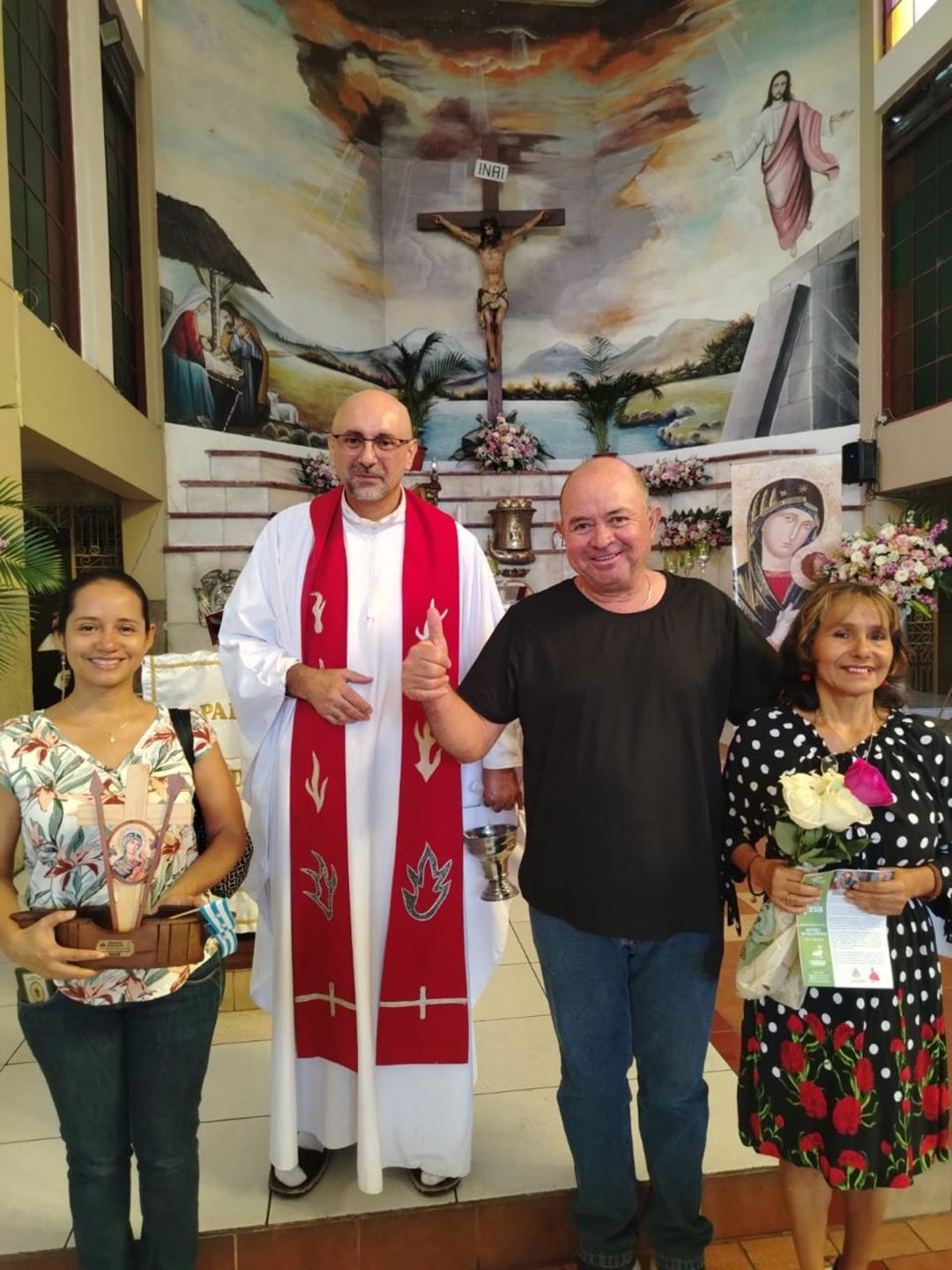
 Father Patricio Sánchez Molinari with some of the faithful at Our Lady of Perpetual Help Church. | Credit: Photo courtesy of Father Pedro Calle
 
 “He died embracing the cross. The crucifix was not damaged, save for the part of the leg [of the corpus]. It is striking how he celebrated the Lord’s passover, and the Lord celebrated his passover with him… And Patricio died doing what he loved: the Eucharist,” the priest emphasized.He loved the Eucharist and the Blessed Virgin MaryCalle described Sánchez as a man “with a pure heart and a ready smile, a smile that created a sense of closeness. People were drawn to him because of his purity of heart, in which there was no trace of ill intent. He was always so very calm, patient, and tolerant.”“He very much loved the Blessed Sacrament. Wherever he went to any parish he would always emphasize this devotion. And he was always the first one there; he wouldn’t just expose the Blessed Sacrament for a while and then leave, he would stay to pray,” the priest recounted.Sánchez served in Loja, in southern Ecuador, and later in a mission area called Vinces. He also spent nine years at a parish in Manta, and finally about four years in Guayaquil, at Our Lady of Perpetual Help Church. He served as the pastor there, and it was in that church that he died.
 
 Father Patricio Sánchez Molinari with some of the faithful. | Credit: Photo courtesy of Father Pedro Calle
 
 “He also loved the Most Holy Virgin Mary. We can describe Patricio as someone who throughout his ministry everyone felt his closeness to them, absolutely everyone,” the Redemptorist priest highlighted.“He was always a very dedicated man, always spiritual and pastoral. He would say ‘yes’ to everyone. We could say, then, that he was a hardworking man, very self-sacrificing, very devoted,” he remarked.Calle further noted that “Patricio was a very simple person, very approachable and full of human warmth. That’s why his homilies were so simple.”“My enduring memory of Patricio,” he added, “is that he was a very welcoming person, always concerned with making sure one had something to eat or drink. He enjoyed going to the cinema and was an athletic person; he liked going for a walk and swimming.”‘A sign of grace’The priest shared that he never had a conversation with Sánchez about how he would have liked to be remembered, but he highlighted one aspect he has been reflecting on in recent days following the tragic death of his fellow priest.“Patricio’s death will become, or is already becoming, a sign of grace for Catholics and for humanity, given the fact that he was in the midst of broadcasting [the Mass] and that the tragedy unfolded in precisely this way, rather than any other. That was a message for everyone,” Calle remarked.
 
 Father Patricio Sánchez Molinari with a group of the faithful. | Credit: Photo courtesy of Father Pedro Calle
 
 The priest remarked, in closing, that he does not know where the story of this priest will ultimately lead but that it certainly will not leave anyone indifferent.“I don’t know if his mission is beginning now. I cannot offer any certainty or assurance; it is simply a personal perception, based on the context and the way he died.”‘One day, all of us here will also die’Sánchez was born on Nov. 6, 1973, in Cuenca, Ecuador. He made his profession in the Congregation of the Most Holy Redeemer (Redemptorists) on Aug. 15, 2000, the solemnity of the Assumption of the Blessed Virgin Mary. He was ordained a priest on Oct. 15, 2005.He was pastor at Our Lady of Perpetual Help Parish in south Guayaquil. He served as the superior of his religious community, where he lived alongside a fellow religious brother who had taken his perpetual vows.In his final homily, on the day of his death, he spoke about the importance of making time for God. “He must come first,” he said, adding: “Dear brothers and sisters, one day, all of us here will also die. Sometimes, the time we have spent on material things does not hold as much meaning as the time we dedicate to God, that quality time we give to God, to our brothers and sisters, to our wife, our husband, to our children, and to our families. That is time spent in the best possible way.”This story was first published by EWTN News Español, the Spanish-language sister service of EWTN News. It has been translated and adapted by EWTN News English.

‘He died doing what he loved’: Memories of the Ecuadorian priest who died at the altar #Catholic “He died doing what he loved, the Eucharist” is how Father Pedro Calle remembered his fellow Redemptorist, Father Patricio Sánchez Molinari, who died Oct. 17 after a large crucifix broke loose from the sanctuary wall and fell on him during Mass.“It’s not so easy to process or come to terms with this situation, given the way it happened,” Calle shared in an interview with EWTN News Español, the Spanish-language sister service of EWTN News. “I could break down at any moment because of the pain I feel inside.”Calle lives in Quito, Ecuador, and manages the administrative needs of the Redemptorist congregation in the Andean-Caribbean Province, which comprises Venezuela, Colombia, and Ecuador. He is currently in Guayaquil serving also as the legal representative to handle matters related to Sánchez’s death. He is also taking part in the Oct. 19–27 novena for the repose of his soul. Father Patricio Sánchez Molinari with some of the faithful at Our Lady of Perpetual Help Church. | Credit: Photo courtesy of Father Pedro Calle “He died embracing the cross. The crucifix was not damaged, save for the part of the leg [of the corpus]. It is striking how he celebrated the Lord’s passover, and the Lord celebrated his passover with him… And Patricio died doing what he loved: the Eucharist,” the priest emphasized.He loved the Eucharist and the Blessed Virgin MaryCalle described Sánchez as a man “with a pure heart and a ready smile, a smile that created a sense of closeness. People were drawn to him because of his purity of heart, in which there was no trace of ill intent. He was always so very calm, patient, and tolerant.”“He very much loved the Blessed Sacrament. Wherever he went to any parish he would always emphasize this devotion. And he was always the first one there; he wouldn’t just expose the Blessed Sacrament for a while and then leave, he would stay to pray,” the priest recounted.Sánchez served in Loja, in southern Ecuador, and later in a mission area called Vinces. He also spent nine years at a parish in Manta, and finally about four years in Guayaquil, at Our Lady of Perpetual Help Church. He served as the pastor there, and it was in that church that he died. Father Patricio Sánchez Molinari with some of the faithful. | Credit: Photo courtesy of Father Pedro Calle “He also loved the Most Holy Virgin Mary. We can describe Patricio as someone who throughout his ministry everyone felt his closeness to them, absolutely everyone,” the Redemptorist priest highlighted.“He was always a very dedicated man, always spiritual and pastoral. He would say ‘yes’ to everyone. We could say, then, that he was a hardworking man, very self-sacrificing, very devoted,” he remarked.Calle further noted that “Patricio was a very simple person, very approachable and full of human warmth. That’s why his homilies were so simple.”“My enduring memory of Patricio,” he added, “is that he was a very welcoming person, always concerned with making sure one had something to eat or drink. He enjoyed going to the cinema and was an athletic person; he liked going for a walk and swimming.”‘A sign of grace’The priest shared that he never had a conversation with Sánchez about how he would have liked to be remembered, but he highlighted one aspect he has been reflecting on in recent days following the tragic death of his fellow priest.“Patricio’s death will become, or is already becoming, a sign of grace for Catholics and for humanity, given the fact that he was in the midst of broadcasting [the Mass] and that the tragedy unfolded in precisely this way, rather than any other. That was a message for everyone,” Calle remarked. Father Patricio Sánchez Molinari with a group of the faithful. | Credit: Photo courtesy of Father Pedro Calle The priest remarked, in closing, that he does not know where the story of this priest will ultimately lead but that it certainly will not leave anyone indifferent.“I don’t know if his mission is beginning now. I cannot offer any certainty or assurance; it is simply a personal perception, based on the context and the way he died.”‘One day, all of us here will also die’Sánchez was born on Nov. 6, 1973, in Cuenca, Ecuador. He made his profession in the Congregation of the Most Holy Redeemer (Redemptorists) on Aug. 15, 2000, the solemnity of the Assumption of the Blessed Virgin Mary. He was ordained a priest on Oct. 15, 2005.He was pastor at Our Lady of Perpetual Help Parish in south Guayaquil. He served as the superior of his religious community, where he lived alongside a fellow religious brother who had taken his perpetual vows.In his final homily, on the day of his death, he spoke about the importance of making time for God. “He must come first,” he said, adding: “Dear brothers and sisters, one day, all of us here will also die. Sometimes, the time we have spent on material things does not hold as much meaning as the time we dedicate to God, that quality time we give to God, to our brothers and sisters, to our wife, our husband, to our children, and to our families. That is time spent in the best possible way.”This story was first published by EWTN News Español, the Spanish-language sister service of EWTN News. It has been translated and adapted by EWTN News English.

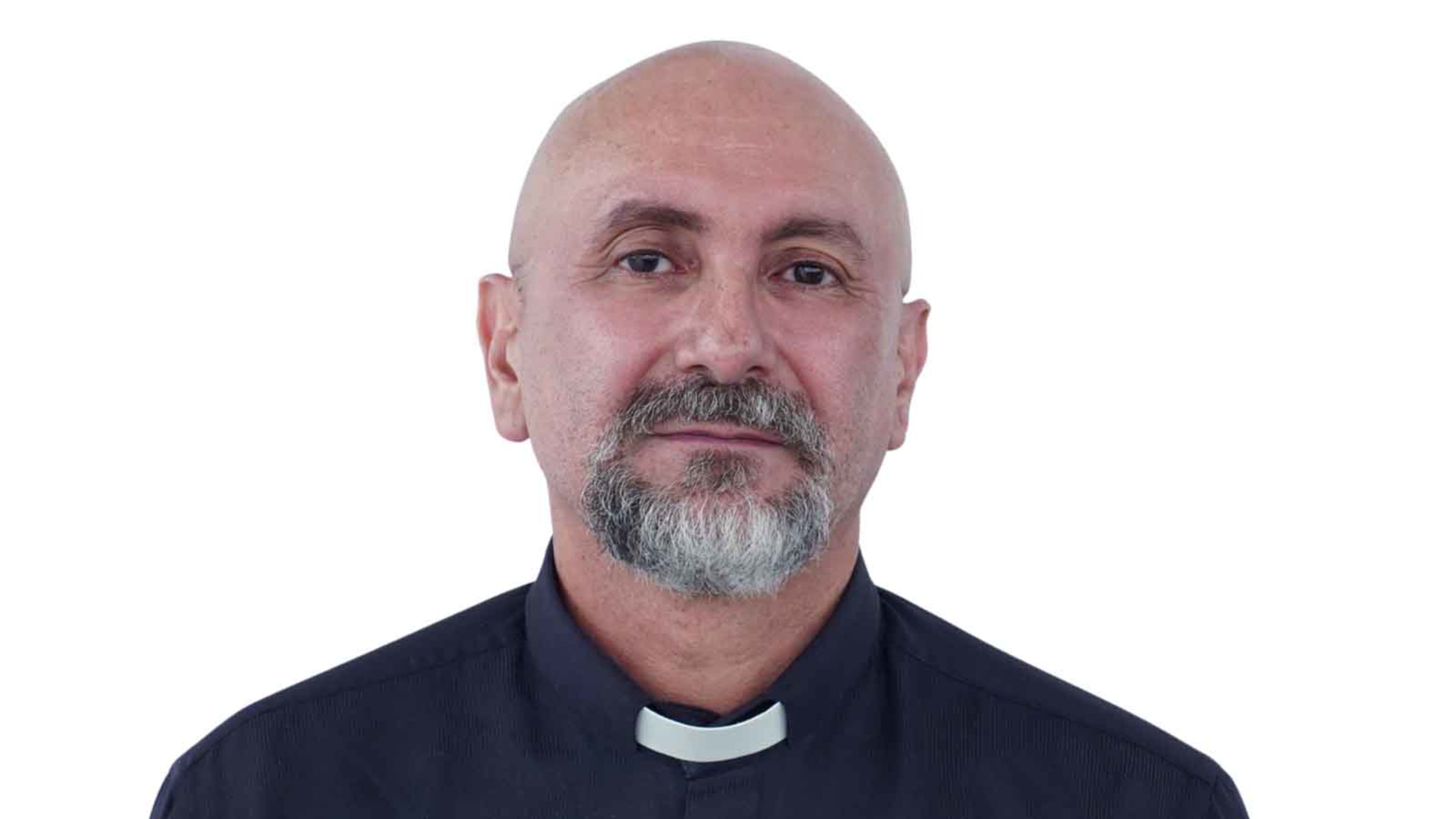
The late Father Patricio Sánchez Molinari was described as a man “with a pure heart and a ready smile … he was always so very calm, patient, and tolerant.” asFather Patricio Sánchez
Read More