architecture

Vatican urges Catholics not to leave Pope Leo XIV alone in opposing war #Catholic VATICAN CITY — Vatican Secretary of State Cardinal Pietro Parolin warned that the “logic of the strongest” risks prevailing on the international stage and called on Christians to become “voices of peace” who do not leave Pope Leo XIV standing alone in his opposition to war.In an interview with Dialoghi, a cultural magazine linked to Italian Catholic Action, Parolin said the voice of the pope is “prophetic” but risks becoming “a voice crying in the wilderness if it is not supported and helped concretely.”His remarks also offer a key to understanding the peace prayer vigil Leo XIV has called for April 11 in St. Peter’s Basilica.Parolin recalled the 2003 Iraq war, when St. John Paul II pleaded for the conflict to be avoided but “was left alone.” He therefore stressed the need to support the current pontiff’s appeal for a peace that is “unarmed and disarming” and to reject “the false propaganda of rearmament.”“There is a need for more voices of peace, more voices against the madness of the rush toward rearmament, more voices raised in favor of our poorest brothers and sisters, more voices and more proposals — I am thinking, for example, of the world of Catholic universities — for new economic models inspired by justice and care for the weakest instead of the idolatry of money,” Parolin said.The cardinal described an alarming international climate in which military action appears to impose itself too easily.“I am struck by how much determination — I was about to say ease — with which the military option is presented as decisive, almost inevitable,” he said.According to the Vatican secretary of state, this trend has left diplomacy practically “mute,” unable to activate alternative tools, while awareness of the tragedy of war and the value of shared rules is being lost.Parolin said the root of the problem is a “multi-polarism inspired by the primacy of power,” in which states place greater trust in force than in international law. That, he said, has produced “double standards,” visible in the differing reactions to attacks on civilians in Ukraine and the destruction in Gaza.“Many governments,” Parolin said, “have expressed indignation over attacks against Ukrainian civilians by Russian missiles and drones, imposing sanctions on the aggressors.”“I do not think the same has happened with the tragedy of the destruction of Gaza,” he added.For the cardinal, this is a case of “double standards” tied to the “primacy of power” — the dominance of one’s own country over others — with international law invoked “only when convenient” and ignored in many other cases.“It seems there has been a lack of awareness of the value of peace, awareness of the tragic reality of war, awareness of the importance of shared rules and of respecting them,” he said.Parolin also lamented the weakening of the global diplomatic architecture and said it is “utopian” to think peace can be guaranteed “by weapons and by balances imposed by the strongest rather than by international agreements.”“We cannot surrender to the logic of the strongest,” the cardinal insisted, because that logic “bends international law to its own interests” and weakens multilateral institutions.In that context, he also expressed regret that Europe has been unable to speak with one voice. He said it is necessary “to rekindle in peoples the sense of European belonging and, in leadership, the awareness of the need for common actions without ever failing the principles that are at the foundation of the European Union itself.”Regarding the United Nations, Parolin said the Holy See “continues to believe in its importance,” considering international organizations essential for restraining the logic of the strongest. At the same time, he acknowledged that the use of the veto has limited the U.N.’s ability to act.“We cannot move from the force of law to the law of force,” he warned.Parolin also highlighted the role believers can play, including defending life and human dignity, protecting religious freedom, promoting reforms to the economic and financial system in line with the Church’s social doctrine, and caring for creation.Finally, the cardinal addressed the cultural impact of new technologies, saying hyper-connectivity and the spread of fake news help fuel fear and build new walls.“As Christians, we must oppose this drift with our daily lives,” he concluded.This story was first published by ACI Prensa, the Spanish-language sister service of EWTN News. It has been translated and adapted by EWTN News English.

Vatican urges Catholics not to leave Pope Leo XIV alone in opposing war #Catholic VATICAN CITY — Vatican Secretary of State Cardinal Pietro Parolin warned that the “logic of the strongest” risks prevailing on the international stage and called on Christians to become “voices of peace” who do not leave Pope Leo XIV standing alone in his opposition to war.In an interview with Dialoghi, a cultural magazine linked to Italian Catholic Action, Parolin said the voice of the pope is “prophetic” but risks becoming “a voice crying in the wilderness if it is not supported and helped concretely.”His remarks also offer a key to understanding the peace prayer vigil Leo XIV has called for April 11 in St. Peter’s Basilica.Parolin recalled the 2003 Iraq war, when St. John Paul II pleaded for the conflict to be avoided but “was left alone.” He therefore stressed the need to support the current pontiff’s appeal for a peace that is “unarmed and disarming” and to reject “the false propaganda of rearmament.”“There is a need for more voices of peace, more voices against the madness of the rush toward rearmament, more voices raised in favor of our poorest brothers and sisters, more voices and more proposals — I am thinking, for example, of the world of Catholic universities — for new economic models inspired by justice and care for the weakest instead of the idolatry of money,” Parolin said.The cardinal described an alarming international climate in which military action appears to impose itself too easily.“I am struck by how much determination — I was about to say ease — with which the military option is presented as decisive, almost inevitable,” he said.According to the Vatican secretary of state, this trend has left diplomacy practically “mute,” unable to activate alternative tools, while awareness of the tragedy of war and the value of shared rules is being lost.Parolin said the root of the problem is a “multi-polarism inspired by the primacy of power,” in which states place greater trust in force than in international law. That, he said, has produced “double standards,” visible in the differing reactions to attacks on civilians in Ukraine and the destruction in Gaza.“Many governments,” Parolin said, “have expressed indignation over attacks against Ukrainian civilians by Russian missiles and drones, imposing sanctions on the aggressors.”“I do not think the same has happened with the tragedy of the destruction of Gaza,” he added.For the cardinal, this is a case of “double standards” tied to the “primacy of power” — the dominance of one’s own country over others — with international law invoked “only when convenient” and ignored in many other cases.“It seems there has been a lack of awareness of the value of peace, awareness of the tragic reality of war, awareness of the importance of shared rules and of respecting them,” he said.Parolin also lamented the weakening of the global diplomatic architecture and said it is “utopian” to think peace can be guaranteed “by weapons and by balances imposed by the strongest rather than by international agreements.”“We cannot surrender to the logic of the strongest,” the cardinal insisted, because that logic “bends international law to its own interests” and weakens multilateral institutions.In that context, he also expressed regret that Europe has been unable to speak with one voice. He said it is necessary “to rekindle in peoples the sense of European belonging and, in leadership, the awareness of the need for common actions without ever failing the principles that are at the foundation of the European Union itself.”Regarding the United Nations, Parolin said the Holy See “continues to believe in its importance,” considering international organizations essential for restraining the logic of the strongest. At the same time, he acknowledged that the use of the veto has limited the U.N.’s ability to act.“We cannot move from the force of law to the law of force,” he warned.Parolin also highlighted the role believers can play, including defending life and human dignity, protecting religious freedom, promoting reforms to the economic and financial system in line with the Church’s social doctrine, and caring for creation.Finally, the cardinal addressed the cultural impact of new technologies, saying hyper-connectivity and the spread of fake news help fuel fear and build new walls.“As Christians, we must oppose this drift with our daily lives,” he concluded.This story was first published by ACI Prensa, the Spanish-language sister service of EWTN News. It has been translated and adapted by EWTN News English.

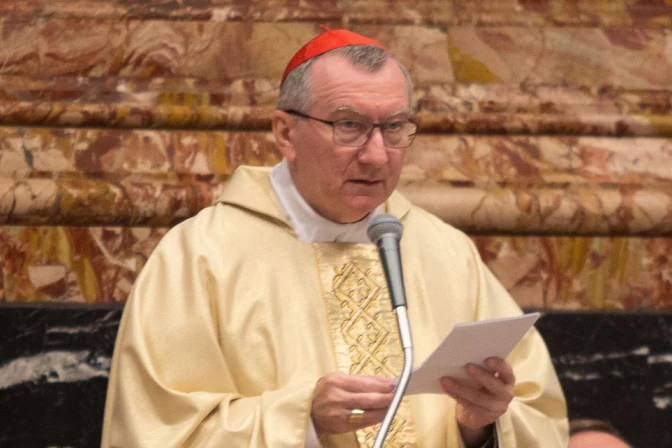
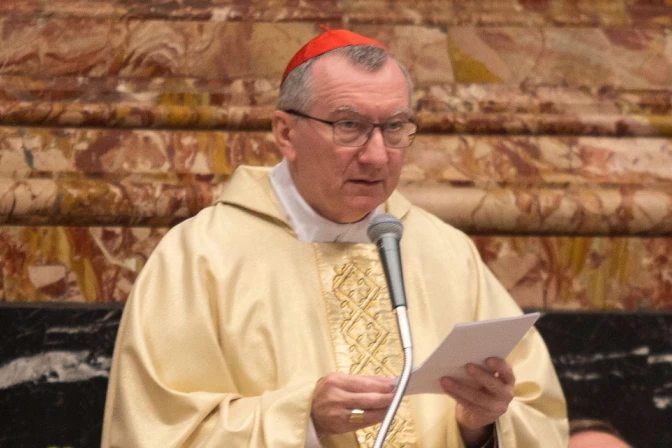
The Vatican Secretary of State said the pope’s appeals for peace need concrete support.

Read More
Hundreds of adults to be baptized in Paris at Easter as part of national surge #Catholic The Catholic revival that Paris has been experiencing over the past five years continues unabated, even amid the city’s long-running status as a symbol of European secularization.On the night of the Easter Vigil, April 4, more than 700 adults across the French capital will be received into the Catholic Church as part of a sudden nationwide surge.Across France, more than 13,000 adults will be baptized this Easter, according to data released by the French Bishops’ Conference — an increase of 28% compared with 2025.The “boom” in adult baptisms in France is a relatively recent phenomenon. It has intensified over the past decade, with a marked acceleration following the COVID-19 pandemic, reaching record levels since 2024.Within this national picture, Paris stands out as a beating heart of such renewal. According to figures provided by the archdiocese, 788 adult catechumens will be baptized in the city during the Easter Vigil, a 17% increase from the previous year.These baptisms will take place across 94 parishes and several communities, mobilizing more than 1,000 accompanying members, mostly laypeople. The age distribution is characterized by a predominance of younger people, with nearly one-third under the age of 25, about half between the ages of 26 and 40, and 1 in 5 over the age of 40, with candidates ranging in age from 18 to 73.Women remain the majority among catechumens, accounting for 58% in Paris, a proportion consistent with national patterns.The list of Parisian parishes with particularly high numbers of catechumens reveals a landscape that cuts across ecclesial sensibilities and social geographies. Parishes where the Traditional Latin Mass is regularly celebrated such as Saint-Roch in the 1st arrondissement or Saint-Eugène Sainte-Cécile (9th) stand alongside parishes in more working-class or mixed neighborhoods, including Notre-Dame de Clignancourt (18th), Notre-Dame de la Gare (13th), or Saint-Ambroise (11th). Many of these communities, often led by young and dynamic clergy, have become vibrant centers of parish life.Robin, a 30-year-old catechumen preparing to be baptized at Saint-Ambroise this Saturday, embodies this trend. Raised in a nonbelieving family with no religious background, he began his spiritual journey through a gradual process of questioning the purpose of life. “In a world where everything moves so fast, where we lose sight of what matters, the Church has done me a world of good,” he told EWTN News. “It has helped me put the ‘why’ back at the center of everything.”His path has been shaped by a growing desire for silence and contemplation as well as a yearning for beauty. “I would go to churches to find a moment of calm, where time would stop,” he explained. “I was looking for a place where you can listen to yourself and reflect on what you want to do with your life.” “What moves me deeply,” he added, “is the beauty that surrounds my church — its architecture, its music… that’s where I feel something powerful.”Like many catechumens, Robin described an experience of welcome that proved decisive. At an early stage in his journey, he met a young parish priest who, despite a busy schedule, took the time to speak with him. “We talked for an hour. It was incredibly reassuring,” he recalled. He was then introduced to a group of parishioners who accompanied him throughout his catechumenate, forming what he describes as a “deep bond of humanity.”This communal dimension appears to be a key factor in the current surge. While the French model of catechumenate has traditionally been more individual, the growing number of candidates is prompting parishes to rethink their approach, often favoring group dynamics that foster a sense of belonging from the outset.Many catechumens come from families with little or no Christian background, reflecting a broader shift from cultural Catholicism toward a more deliberate, conviction-based faith. On a national level, the number of catechumens identifying as having no religious tradition now represent a proportion comparable with those from Christian backgrounds.The scale of the phenomenon is now prompting serious reflection among French Church leaders. In response to the steady increase in adult baptisms, the eight dioceses of the Île-de-France region, together with the Diocese for the Armed Forces, have convened a provincial council set to open on May 31 at Notre-Dame Cathedral.Under the theme “Catechumens and Neophytes: New Perspectives for the Life of Our Church,” the council will seek to discern how local structures and pastoral practices should adapt to this unexpected growth.

Hundreds of adults to be baptized in Paris at Easter as part of national surge #Catholic The Catholic revival that Paris has been experiencing over the past five years continues unabated, even amid the city’s long-running status as a symbol of European secularization.On the night of the Easter Vigil, April 4, more than 700 adults across the French capital will be received into the Catholic Church as part of a sudden nationwide surge.Across France, more than 13,000 adults will be baptized this Easter, according to data released by the French Bishops’ Conference — an increase of 28% compared with 2025.The “boom” in adult baptisms in France is a relatively recent phenomenon. It has intensified over the past decade, with a marked acceleration following the COVID-19 pandemic, reaching record levels since 2024.Within this national picture, Paris stands out as a beating heart of such renewal. According to figures provided by the archdiocese, 788 adult catechumens will be baptized in the city during the Easter Vigil, a 17% increase from the previous year.These baptisms will take place across 94 parishes and several communities, mobilizing more than 1,000 accompanying members, mostly laypeople. The age distribution is characterized by a predominance of younger people, with nearly one-third under the age of 25, about half between the ages of 26 and 40, and 1 in 5 over the age of 40, with candidates ranging in age from 18 to 73.Women remain the majority among catechumens, accounting for 58% in Paris, a proportion consistent with national patterns.The list of Parisian parishes with particularly high numbers of catechumens reveals a landscape that cuts across ecclesial sensibilities and social geographies. Parishes where the Traditional Latin Mass is regularly celebrated such as Saint-Roch in the 1st arrondissement or Saint-Eugène Sainte-Cécile (9th) stand alongside parishes in more working-class or mixed neighborhoods, including Notre-Dame de Clignancourt (18th), Notre-Dame de la Gare (13th), or Saint-Ambroise (11th). Many of these communities, often led by young and dynamic clergy, have become vibrant centers of parish life.Robin, a 30-year-old catechumen preparing to be baptized at Saint-Ambroise this Saturday, embodies this trend. Raised in a nonbelieving family with no religious background, he began his spiritual journey through a gradual process of questioning the purpose of life. “In a world where everything moves so fast, where we lose sight of what matters, the Church has done me a world of good,” he told EWTN News. “It has helped me put the ‘why’ back at the center of everything.”His path has been shaped by a growing desire for silence and contemplation as well as a yearning for beauty. “I would go to churches to find a moment of calm, where time would stop,” he explained. “I was looking for a place where you can listen to yourself and reflect on what you want to do with your life.” “What moves me deeply,” he added, “is the beauty that surrounds my church — its architecture, its music… that’s where I feel something powerful.”Like many catechumens, Robin described an experience of welcome that proved decisive. At an early stage in his journey, he met a young parish priest who, despite a busy schedule, took the time to speak with him. “We talked for an hour. It was incredibly reassuring,” he recalled. He was then introduced to a group of parishioners who accompanied him throughout his catechumenate, forming what he describes as a “deep bond of humanity.”This communal dimension appears to be a key factor in the current surge. While the French model of catechumenate has traditionally been more individual, the growing number of candidates is prompting parishes to rethink their approach, often favoring group dynamics that foster a sense of belonging from the outset.Many catechumens come from families with little or no Christian background, reflecting a broader shift from cultural Catholicism toward a more deliberate, conviction-based faith. On a national level, the number of catechumens identifying as having no religious tradition now represent a proportion comparable with those from Christian backgrounds.The scale of the phenomenon is now prompting serious reflection among French Church leaders. In response to the steady increase in adult baptisms, the eight dioceses of the Île-de-France region, together with the Diocese for the Armed Forces, have convened a provincial council set to open on May 31 at Notre-Dame Cathedral.Under the theme “Catechumens and Neophytes: New Perspectives for the Life of Our Church,” the council will seek to discern how local structures and pastoral practices should adapt to this unexpected growth.

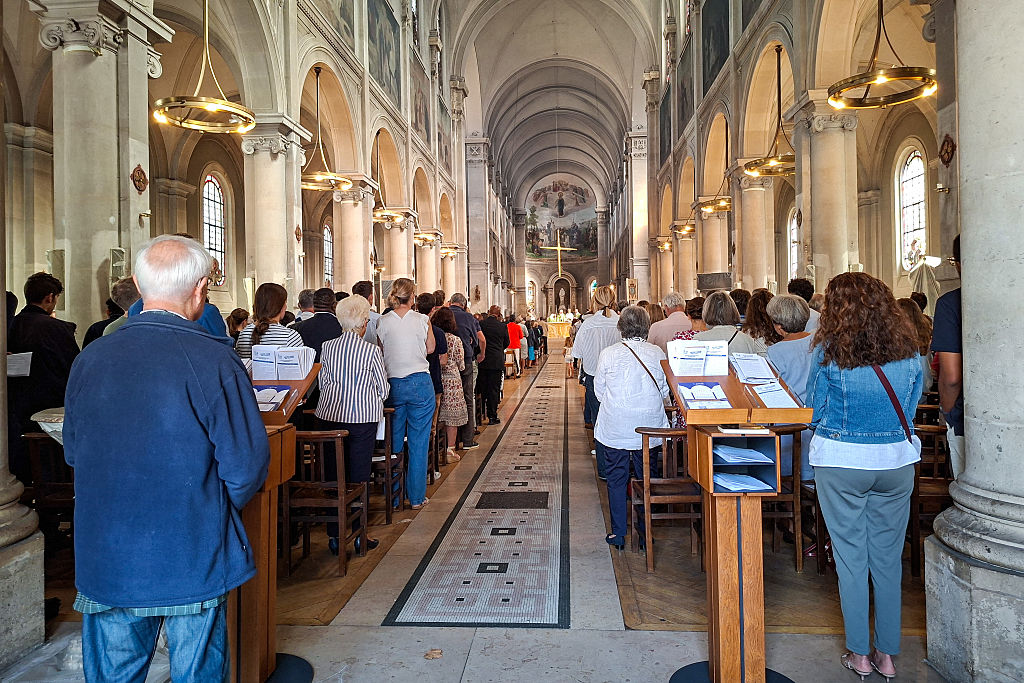
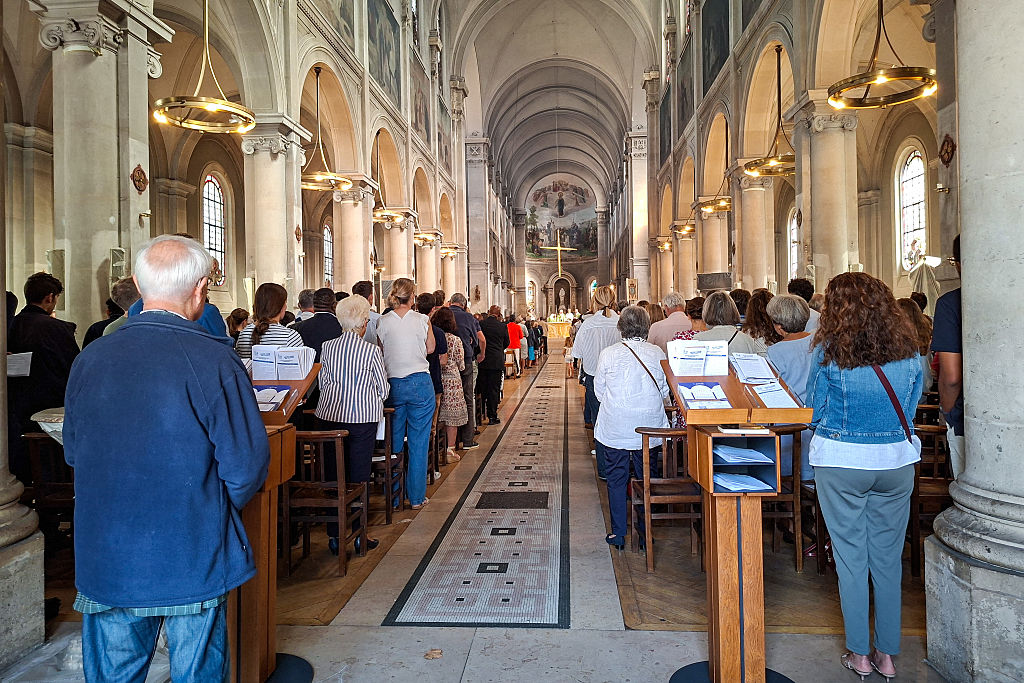
Across France, more than 13,000 adults will be baptized this Easter, according to data released by the French Bishops’ Conference — an increase of 28% compared with 2025. 
Read More
EWTN+ docuseries ‘Seeking Beauty’ aims to point viewers to the divine through beauty #Catholic EWTN+ recently launched “Seeking Beauty,” a first-of-its-kind adventure documentary series that explores culture, architecture, food, art, and music, and aims to point viewers to the beautiful — and ultimately to the divine.The show’s host, David Henrie, who is best known for his role as Justin Russo on Disney’s “Wizards of Waverly Place,” believes a show like this is needed right now as more and more people are searching for authentic, human experiences.“We live in such a fast-paced society. Things are moving at 24, 30 frames a second. And then AI is on the horizon. We’re just getting inundated with so much,” Henrie told EWTN News on the red carpet at the premiere of the series on Jan. 16. “I think there’s this deep craving for the human, for the real, for the natural.”The Catholic actor explained he believes that in order to provide authentic experiences, “you should go back and revisit cultures who have done beauty in a magnificent way — and there’s always a theological component to it.”He added: “Beauty to me is the language of the divine. It’s a fingerprint of God. And I think it’ll continue to be more and more attractive the more society gets sucked into our devices. I think you’re seeing a big rejection of that, so I think the timing is perfect for a show on beauty.”
 
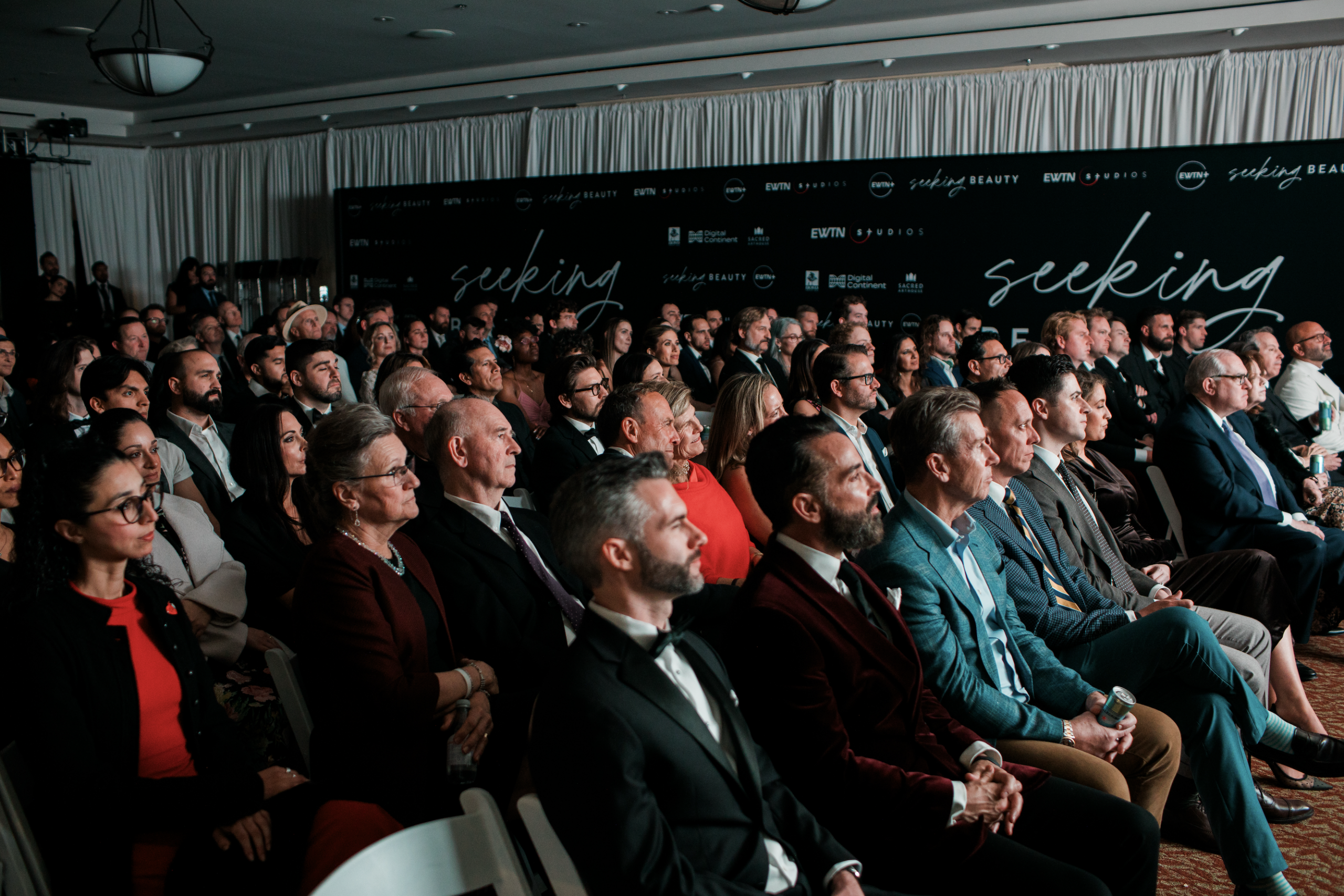
 “Seeking Beauty” is screened during its premiere in Los Angeles on Jan. 16, 2026. | Credit: Grant Whitty
 
 Peter Gagnon, president of EWTN Studios, and EWTN CEO Michael Warsaw highlighted EWTN’s desire to offer content portraying beauty through the faith and God’s creation.“EWTN has always wanted to present beauty. God is beautiful. His creation is beautiful, and there are many areas that you can see the divine in beauty,” Gagnon shared. “So this series, when the concept was brought to us, fit in exactly with our new content strategy because it leads the viewer in that journey along with David. It’s not David telling you. You’re journeying with David to find beauty.”Warsaw added: “For us, with all we do at EWTN, it’s really about introducing people to the beauty, the truth, the goodness of our faith as Catholics. So clearly this series about beauty that engages people with understanding, and being exposed to beauty in various forms — through the arts, through music, through culture — all of these things that really the Church has always been a patron of though the centuries and to bring that into this current moment so that people can really develop a deeper relationship with Our Lord, a deeper connection to the faith, a deeper connection to the Church.”Henrie said he hopes viewers will be left “curious about beauty and invite it into your life more.”“I think that even if you have a strong faith, especially growing up in America, beauty is not a part of the conversation. It’s something superfluous, it’s a cost that can be cut, but God never cut beauty,” he said. “Learning about the old world and how they saw beauty will hopefully inspire you to bring it into your soul most importantly.”Gagnon echoed Henrie’s sentiments in that he said he hopes viewers will be led to reflect on what they see in the show and to “not just see the beauty that they’re watching on the screen but to then go back home and to see the beauty around them in their lives, a beauty they may not have seen or not realized it was there, and through seeing that and being inspired by that, be led to the divine.”“Seeking Beauty” is available to watch exclusively on EWTN+, a free digital streaming platform that offers faith-based content. EWTN+ is available on RokuTV, GoogleTV, AppleTV, AmazonFireTV, and on EWTN.com.

EWTN+ docuseries ‘Seeking Beauty’ aims to point viewers to the divine through beauty #Catholic EWTN+ recently launched “Seeking Beauty,” a first-of-its-kind adventure documentary series that explores culture, architecture, food, art, and music, and aims to point viewers to the beautiful — and ultimately to the divine.The show’s host, David Henrie, who is best known for his role as Justin Russo on Disney’s “Wizards of Waverly Place,” believes a show like this is needed right now as more and more people are searching for authentic, human experiences.“We live in such a fast-paced society. Things are moving at 24, 30 frames a second. And then AI is on the horizon. We’re just getting inundated with so much,” Henrie told EWTN News on the red carpet at the premiere of the series on Jan. 16. “I think there’s this deep craving for the human, for the real, for the natural.”The Catholic actor explained he believes that in order to provide authentic experiences, “you should go back and revisit cultures who have done beauty in a magnificent way — and there’s always a theological component to it.”He added: “Beauty to me is the language of the divine. It’s a fingerprint of God. And I think it’ll continue to be more and more attractive the more society gets sucked into our devices. I think you’re seeing a big rejection of that, so I think the timing is perfect for a show on beauty.” “Seeking Beauty” is screened during its premiere in Los Angeles on Jan. 16, 2026. | Credit: Grant Whitty Peter Gagnon, president of EWTN Studios, and EWTN CEO Michael Warsaw highlighted EWTN’s desire to offer content portraying beauty through the faith and God’s creation.“EWTN has always wanted to present beauty. God is beautiful. His creation is beautiful, and there are many areas that you can see the divine in beauty,” Gagnon shared. “So this series, when the concept was brought to us, fit in exactly with our new content strategy because it leads the viewer in that journey along with David. It’s not David telling you. You’re journeying with David to find beauty.”Warsaw added: “For us, with all we do at EWTN, it’s really about introducing people to the beauty, the truth, the goodness of our faith as Catholics. So clearly this series about beauty that engages people with understanding, and being exposed to beauty in various forms — through the arts, through music, through culture — all of these things that really the Church has always been a patron of though the centuries and to bring that into this current moment so that people can really develop a deeper relationship with Our Lord, a deeper connection to the faith, a deeper connection to the Church.”Henrie said he hopes viewers will be left “curious about beauty and invite it into your life more.”“I think that even if you have a strong faith, especially growing up in America, beauty is not a part of the conversation. It’s something superfluous, it’s a cost that can be cut, but God never cut beauty,” he said. “Learning about the old world and how they saw beauty will hopefully inspire you to bring it into your soul most importantly.”Gagnon echoed Henrie’s sentiments in that he said he hopes viewers will be led to reflect on what they see in the show and to “not just see the beauty that they’re watching on the screen but to then go back home and to see the beauty around them in their lives, a beauty they may not have seen or not realized it was there, and through seeing that and being inspired by that, be led to the divine.”“Seeking Beauty” is available to watch exclusively on EWTN+, a free digital streaming platform that offers faith-based content. EWTN+ is available on RokuTV, GoogleTV, AppleTV, AmazonFireTV, and on EWTN.com.

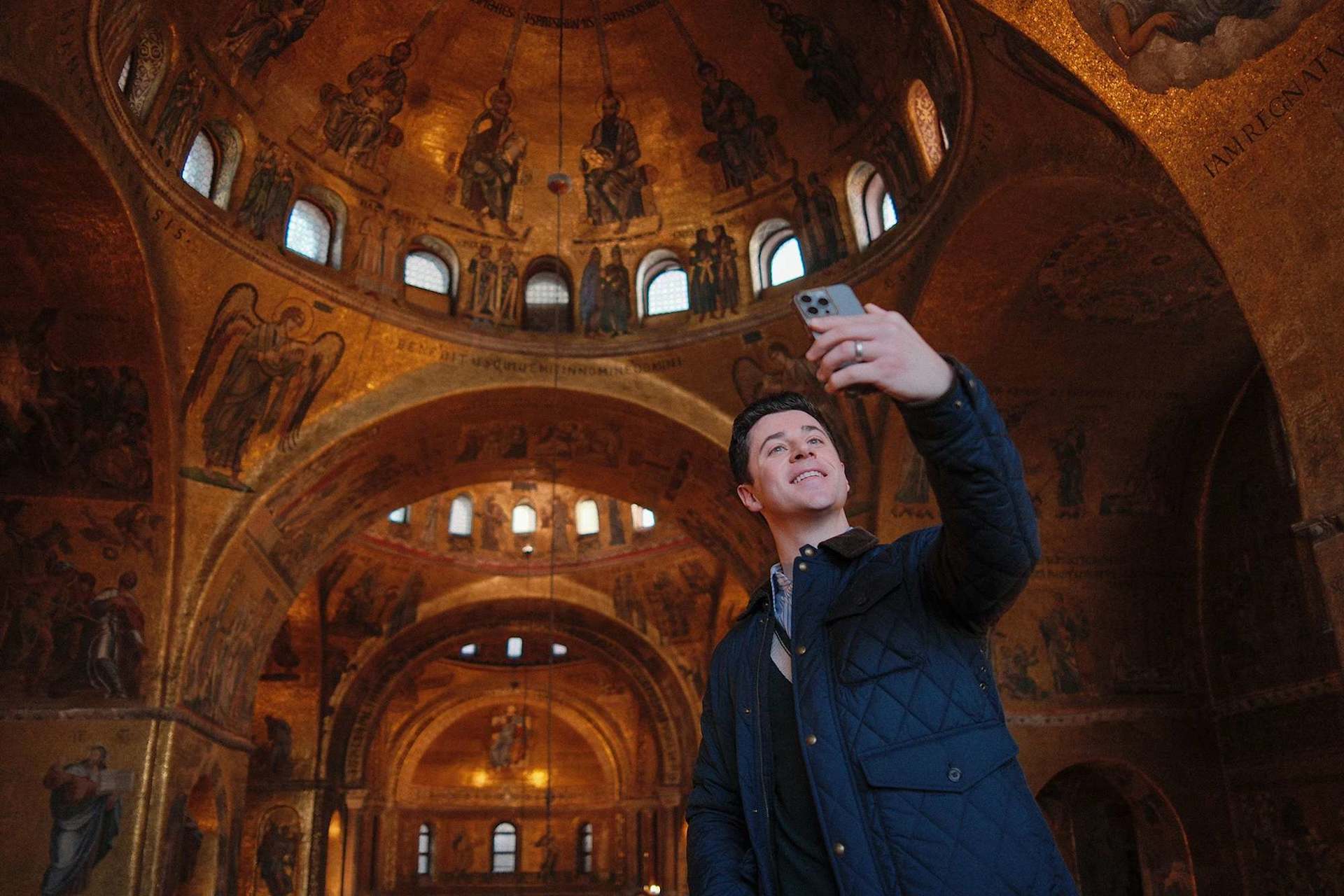
The first season of “Seeking Beauty” takes viewers to cities in Italy including Milan, Rome, Florence, Venice, and Vatican City.
Read More
Picture of the day


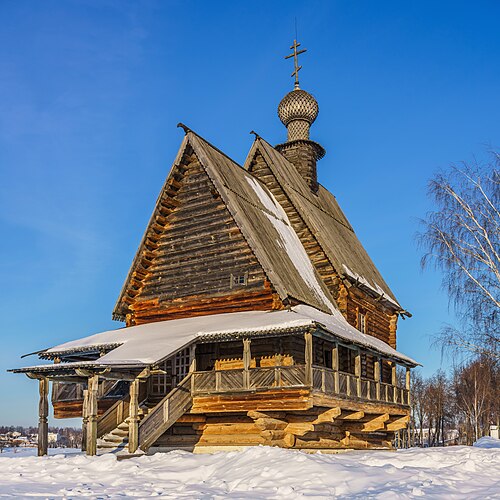
St. Nicholas the Wonderworker Church (1766) was relocated from the village of Glotovo, Vladimir Oblast to the Museum of Wooden Architecture at the Kremlin in Suzdal, Russia. Today is Saint Nicholas Day in much of Eastern and Western Christianity.
 #ImageOfTheDay
Picture of the day
St. Nicholas the Wonderworker Church (1766) was relocated from the village of Glotovo, Vladimir Oblast to the Museum of Wooden Architecture at the Kremlin in Suzdal, Russia. Today is Saint Nicholas Day in much of Eastern and Western Christianity.
Read More
Picture of the day


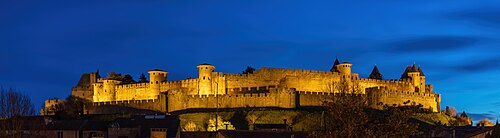
Fortified city of Carcassonne during the blue hour, France. Founded during the Gallo-Roman period, the citadel derives its reputation from its 3 kilometres (1.9 mi) long double surrounding walls interspersed by 52 towers. The medieval citadel, situated on a hill on the right bank of the river Aude, was restored at the end of the 19th century by the theorist and architect Eugène Viollet-le-Duc. In 1997, it was added to the UNESCO list of World Heritage Sites because of its exceptional testimony to the architecture and planning of a medieval fortress town.
 #ImageOfTheDay
Picture of the day
Fortified city of Carcassonne during the blue hour, France. Founded during the Gallo-Roman period, the citadel derives its reputation from its 3 kilometres (1.9 mi) long double surrounding walls interspersed by 52 towers. The medieval citadel, situated on a hill on the right bank of the river Aude, was restored at the end of the 19th century by the theorist and architect Eugène Viollet-le-Duc. In 1997, it was added to the UNESCO list of World Heritage Sites because of its exceptional testimony to the architecture and planning of a medieval fortress town.
Read More