Australia

Answering call to serve the poor: Papal Foundation announces more than  million in grants #Catholic The Papal Foundation this week announced a record-setting  million in grants for its annual distribution of humanitarian aid to support more than 144 projects across 75 countries.Since its founding, the Papal Foundation has served the Catholic Church with collaboration of laity, clergy, and hierarchy. The United States-based organization is dedicated to fulfilling the requests of the Holy Father for the needs of the Church in developing countries.The foundation has distributed more than 0 million in grants, scholarships, and humanitarian aid to more than 2,700 projects selected by Pope Leo XIV, Pope Francis, Pope Benedict XVI, and St. John Paul II.During his recent papal trip to Africa April 13–23, Pope Leo prayed at the Basilica of St. Augustine in Annaba, Algeria, and he visited the restored Church of Notre Dame dʼAfrique. Both sites were restored through the generosity of The Papal Foundation, with investments of ,000 each from the foundation in 2008.This year, The Papal Foundation’s board of trustees approved  million, including ,502,765 in current grants and an additional  million to be distributed in 2026 to further new projects. The grants will fund initiatives across the globe including the construction and renovation of Catholic schools, classrooms, monasteries, orphanages, and medical clinics in numerous countries including Tanzania, the Central African Republic, and the Philippines.“This year’s grants are a powerful testament to what can be accomplished through faithful stewardship and shared mission,” said Ward Fitzgerald, president of The Papal Foundation board of trustees, in a press release announcing the grants.“Each project represents hope, meeting urgent needs and strengthening the resolve of the Catholic Church community in developing nations,” he said.In Tanzania, the grant will aid the creation of a dormitory to rescue girls from early marriage, trafficking, and sexual abuse, and boys from school dropout. In India, a safe school for marginalized tribal children will be built.The grants will fund the creation of a library and technology center in the Central African Republic and professional IT training for vulnerable women in the Philippines. Also, in the Republic of Guinea, a well and water tower will be built for the community.“Supporting these life-changing grants is the core of the mission of The Papal Foundation,” Fitzgerald said. “The impact we have on the poor and most vulnerable is the organization’s gift to the Church and the Catholic Church’s gift to its people around the world.”Requests for the grants come in from developing nations after local bishops identify the most urgent needs. They are then advanced by apostolic nuncios to the foundation’s grants committee. The requests are then reviewed through the assessor’s office at the Vatican, led by its current assessor for general affairs of the secretariat Monsignor Anthony Onyemuche Ekpo. Members of the foundation’s grants committee met with Ekpo this week to review proposals and begin building a working relationship.“It was encouraging to meet Monsignor Ekpo at the start of his tenure and to hear his focus on expanding impact while strengthening efficiency and accountability,” Fitzgerald told EWTN News.“Those are principles we take seriously. Our goal is to be the most highly disciplined and transparent steward of funds, and the most effective means to get resources to the most in need.”Fitzgerald noted Ekpo’s work in Nigeria and in Australia, which he said has proven to be strength allowing him to bring "a clear understanding of the realities facing developing countries, along with firsthand experience in more advanced economies.” “That perspective allows us to evaluate requests more effectively and align our resources with the priorities identified by the Holy Father,” Fitzgerald said.Growing engagementThe Holy Father met with members of the Papal Foundation in an audience at the Vatican on May 2, where he said he was “deeply grateful” for the work of the foundation “to assist the Successor of Peter in his mission to care for the needs of the universal Church.”
 
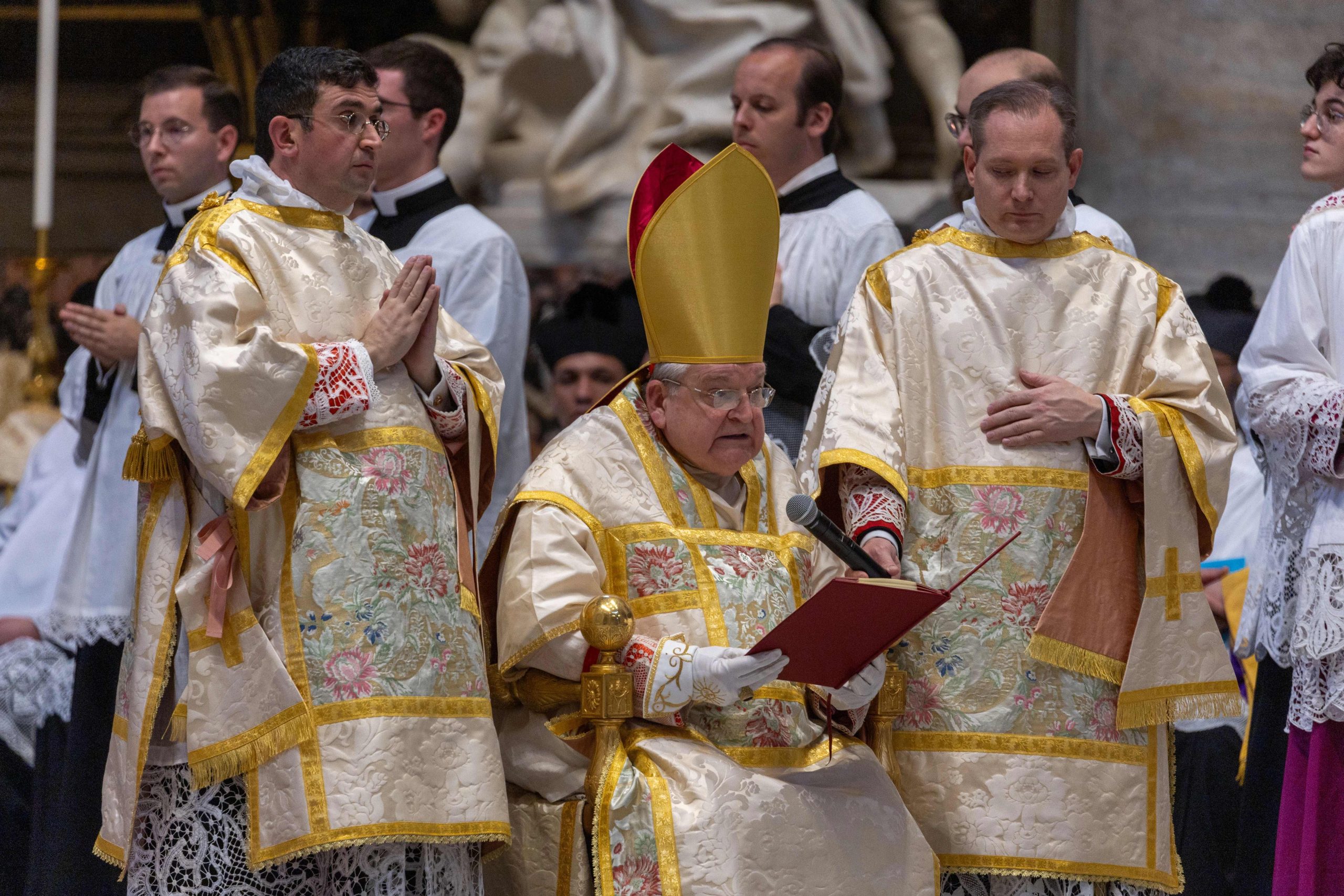
 Pope Leo XIV poses with members of the Papal Foundation in the Sala Clementina at the Vatican Apostolic Palace, Saturday, May 2, 2026. | Credit: Vatican Media
 
 “Your generosity has allowed countless people to experience in a concrete fashion the goodness and kindness of God in their own communities,” the pope said. He pointed out that the charity workers “will probably never meet everyone who has benefitted from your kindness, so in their name I express heartfelt appreciation.”The 2026 grants are the result of an evaluation process led by the foundation’s grants committee, chaired by Dr. Tammy Tenaglia of the Archdiocese of Philadelphia, with assistance from the foundation’s mission fund committee.The work of The Papal Foundation has been accomplished with the help of the foundation’s Stewards of Saint Peter, which is made up of North American Catholic philanthropists committed to bringing the love of Christ to those most in need.Since Pope Leo’s election, the community of Stewards of Saint Peter has welcomed 25 new families committed to supporting the Holy Father’s mission to serve the poor. “The growth we’re seeing is incredibly encouraging, as it reflects a shared commitment to serve, to give, and to bring the Church’s mission to life in meaningful ways across the globe,” said David Savage, executive director of The Papal Foundation.The foundation’s annual pilgrimage to Rome the week of April 27 brought together 56 of the Steward families. Led by The Papal Foundation’s chairman, Cardinal Timothy Dolan, the trip included a visit to St. Peter’s Basilica and an audience with Pope Leo XIV on Saturday, May 2.

Answering call to serve the poor: Papal Foundation announces more than $15 million in grants #Catholic The Papal Foundation this week announced a record-setting $15 million in grants for its annual distribution of humanitarian aid to support more than 144 projects across 75 countries.Since its founding, the Papal Foundation has served the Catholic Church with collaboration of laity, clergy, and hierarchy. The United States-based organization is dedicated to fulfilling the requests of the Holy Father for the needs of the Church in developing countries.The foundation has distributed more than $270 million in grants, scholarships, and humanitarian aid to more than 2,700 projects selected by Pope Leo XIV, Pope Francis, Pope Benedict XVI, and St. John Paul II.During his recent papal trip to Africa April 13–23, Pope Leo prayed at the Basilica of St. Augustine in Annaba, Algeria, and he visited the restored Church of Notre Dame dʼAfrique. Both sites were restored through the generosity of The Papal Foundation, with investments of $90,000 each from the foundation in 2008.This year, The Papal Foundation’s board of trustees approved $15 million, including $12,502,765 in current grants and an additional $3 million to be distributed in 2026 to further new projects. The grants will fund initiatives across the globe including the construction and renovation of Catholic schools, classrooms, monasteries, orphanages, and medical clinics in numerous countries including Tanzania, the Central African Republic, and the Philippines.“This year’s grants are a powerful testament to what can be accomplished through faithful stewardship and shared mission,” said Ward Fitzgerald, president of The Papal Foundation board of trustees, in a press release announcing the grants.“Each project represents hope, meeting urgent needs and strengthening the resolve of the Catholic Church community in developing nations,” he said.In Tanzania, the grant will aid the creation of a dormitory to rescue girls from early marriage, trafficking, and sexual abuse, and boys from school dropout. In India, a safe school for marginalized tribal children will be built.The grants will fund the creation of a library and technology center in the Central African Republic and professional IT training for vulnerable women in the Philippines. Also, in the Republic of Guinea, a well and water tower will be built for the community.“Supporting these life-changing grants is the core of the mission of The Papal Foundation,” Fitzgerald said. “The impact we have on the poor and most vulnerable is the organization’s gift to the Church and the Catholic Church’s gift to its people around the world.”Requests for the grants come in from developing nations after local bishops identify the most urgent needs. They are then advanced by apostolic nuncios to the foundation’s grants committee. The requests are then reviewed through the assessor’s office at the Vatican, led by its current assessor for general affairs of the secretariat Monsignor Anthony Onyemuche Ekpo. Members of the foundation’s grants committee met with Ekpo this week to review proposals and begin building a working relationship.“It was encouraging to meet Monsignor Ekpo at the start of his tenure and to hear his focus on expanding impact while strengthening efficiency and accountability,” Fitzgerald told EWTN News.“Those are principles we take seriously. Our goal is to be the most highly disciplined and transparent steward of funds, and the most effective means to get resources to the most in need.”Fitzgerald noted Ekpo’s work in Nigeria and in Australia, which he said has proven to be strength allowing him to bring "a clear understanding of the realities facing developing countries, along with firsthand experience in more advanced economies.” “That perspective allows us to evaluate requests more effectively and align our resources with the priorities identified by the Holy Father,” Fitzgerald said.Growing engagementThe Holy Father met with members of the Papal Foundation in an audience at the Vatican on May 2, where he said he was “deeply grateful” for the work of the foundation “to assist the Successor of Peter in his mission to care for the needs of the universal Church.” Pope Leo XIV poses with members of the Papal Foundation in the Sala Clementina at the Vatican Apostolic Palace, Saturday, May 2, 2026. | Credit: Vatican Media “Your generosity has allowed countless people to experience in a concrete fashion the goodness and kindness of God in their own communities,” the pope said. He pointed out that the charity workers “will probably never meet everyone who has benefitted from your kindness, so in their name I express heartfelt appreciation.”The 2026 grants are the result of an evaluation process led by the foundation’s grants committee, chaired by Dr. Tammy Tenaglia of the Archdiocese of Philadelphia, with assistance from the foundation’s mission fund committee.The work of The Papal Foundation has been accomplished with the help of the foundation’s Stewards of Saint Peter, which is made up of North American Catholic philanthropists committed to bringing the love of Christ to those most in need.Since Pope Leo’s election, the community of Stewards of Saint Peter has welcomed 25 new families committed to supporting the Holy Father’s mission to serve the poor. “The growth we’re seeing is incredibly encouraging, as it reflects a shared commitment to serve, to give, and to bring the Church’s mission to life in meaningful ways across the globe,” said David Savage, executive director of The Papal Foundation.The foundation’s annual pilgrimage to Rome the week of April 27 brought together 56 of the Steward families. Led by The Papal Foundation’s chairman, Cardinal Timothy Dolan, the trip included a visit to St. Peter’s Basilica and an audience with Pope Leo XIV on Saturday, May 2.

The grants will fund initiatives across the globe including the construction and renovation of Catholic schools, monasteries, orphanages, and medical clinics in numerous countries.

Read More
Chaldean Church chooses Archbishop Amel Nona as patriarch, succeeding Cardinal Sako #Catholic The Chaldean Synod has elected Archbishop Amel Shamon Nona as the new Patriarch of the Chaldean Catholic Church, succeeding Cardinal Louis Raphael Sako, who submitted his resignation to Pope Leo XIV on March 9 amid a financial and legal scandal concerning a former Chaldean bishop in San Diego.The election took place during the synod’s meetings held in Rome since April 9.This election comes at a critical time for both the Chaldean Church and the wider region, amid ongoing political challenges in Iraq and the Middle East, as well as internal ecclesial issues related to unity and the organization of Church life both locally and in the diaspora.Following the election, the Chaldean bishops issued a statement saying:“After deep spiritual and fraternal deliberations, conducted in a spirit of prayer and ecclesial discernment, and mindful of the apostolic responsibility entrusted to them, the Fathers of the Synod elected the Patriarch of the Chaldean Church according to the established canonical procedures. After completing the required ballots, and in accordance with the will expressed by the Synod, His Excellency Archbishop Amel Shamon Nona was elected Patriarch of the Chaldean Church and chose for himself the name His Beatitude Patriarch Mar Paul III Nona.”The statement continued: “His Beatitude accepted the election in accordance with canonical norms, expressing his reliance on God’s grace and his commitment to exercise his patriarchal ministry with fidelity and responsibility, in full communion with the Fathers of the Synod, in service of the unity of the Chaldean Church and its mission in the homeland and the diaspora.”“The Fathers of the Synod raise their prayers to the Lord Jesus Christ, the Good Shepherd, asking that He grant the elected Patriarch wisdom and strength,“ the statement continued. ”They affirm their confidence that this ministry will contribute to strengthening the faithful in their faith, enhancing their unity, and revitalizing the Church’s mission in bearing witness to the Gospel.”The Synod also called on all members of the Chaldean Church — clergy and faithful alike — to unite around the new Patriarch and support him through prayer and shared responsibility for the good of the Church and the growth of its mission.Archbishop Nona was born in Alqosh in northern Iraq in 1967. He was ordained a priest in 1991 after completing his studies at the Patriarchal Seminary in Baghdad. He later pursued higher studies in Rome, earning a doctorate in theological anthropology from the Pontifical Lateran University.He served in the parishes of Alqosh before being appointed Archbishop of Mosul in 2009, during a period marked by escalating violence against Christians in Iraq.During the events of 2014, he left Mosul along with his faithful following the takeover of the city by the terrorist group ISIS, marking a pivotal moment in the modern history of the Chaldean Church.In 2015, the Holy See appointed him head of the Chaldean Eparchy of St. Thomas the Apostle in Australia and New Zealand, where he continued his pastoral ministry among the Chaldean diaspora.His appointment comes following the resignation of Cardinal Raphael Sako, who announced that he submitted his resignation to Pope Leo XIV of his own free will on the morning of March 9 so he could “dedicate himself quietly to prayer, writing, and simple service.”The timing sparked controversy within the Chaldean community. Pope Leo XIV on March 10 accepted the resignation of Bishop Emanuel Shaleta, a Chaldean Catholic bishop arrested in San Diego in March on charges of embezzling Church funds.Sako had allegedly attempted to support or transfer the embattled bishop to a higher position, leading many to question whether the financial scandal played a role in the patriarch’s decision.This story was first published by ACI MENA, the Arabic-language sister service of EWTN News. It has been translated and adapted by EWTN News English.

Chaldean Church chooses Archbishop Amel Nona as patriarch, succeeding Cardinal Sako #Catholic The Chaldean Synod has elected Archbishop Amel Shamon Nona as the new Patriarch of the Chaldean Catholic Church, succeeding Cardinal Louis Raphael Sako, who submitted his resignation to Pope Leo XIV on March 9 amid a financial and legal scandal concerning a former Chaldean bishop in San Diego.The election took place during the synod’s meetings held in Rome since April 9.This election comes at a critical time for both the Chaldean Church and the wider region, amid ongoing political challenges in Iraq and the Middle East, as well as internal ecclesial issues related to unity and the organization of Church life both locally and in the diaspora.Following the election, the Chaldean bishops issued a statement saying:“After deep spiritual and fraternal deliberations, conducted in a spirit of prayer and ecclesial discernment, and mindful of the apostolic responsibility entrusted to them, the Fathers of the Synod elected the Patriarch of the Chaldean Church according to the established canonical procedures. After completing the required ballots, and in accordance with the will expressed by the Synod, His Excellency Archbishop Amel Shamon Nona was elected Patriarch of the Chaldean Church and chose for himself the name His Beatitude Patriarch Mar Paul III Nona.”The statement continued: “His Beatitude accepted the election in accordance with canonical norms, expressing his reliance on God’s grace and his commitment to exercise his patriarchal ministry with fidelity and responsibility, in full communion with the Fathers of the Synod, in service of the unity of the Chaldean Church and its mission in the homeland and the diaspora.”“The Fathers of the Synod raise their prayers to the Lord Jesus Christ, the Good Shepherd, asking that He grant the elected Patriarch wisdom and strength,“ the statement continued. ”They affirm their confidence that this ministry will contribute to strengthening the faithful in their faith, enhancing their unity, and revitalizing the Church’s mission in bearing witness to the Gospel.”The Synod also called on all members of the Chaldean Church — clergy and faithful alike — to unite around the new Patriarch and support him through prayer and shared responsibility for the good of the Church and the growth of its mission.Archbishop Nona was born in Alqosh in northern Iraq in 1967. He was ordained a priest in 1991 after completing his studies at the Patriarchal Seminary in Baghdad. He later pursued higher studies in Rome, earning a doctorate in theological anthropology from the Pontifical Lateran University.He served in the parishes of Alqosh before being appointed Archbishop of Mosul in 2009, during a period marked by escalating violence against Christians in Iraq.During the events of 2014, he left Mosul along with his faithful following the takeover of the city by the terrorist group ISIS, marking a pivotal moment in the modern history of the Chaldean Church.In 2015, the Holy See appointed him head of the Chaldean Eparchy of St. Thomas the Apostle in Australia and New Zealand, where he continued his pastoral ministry among the Chaldean diaspora.His appointment comes following the resignation of Cardinal Raphael Sako, who announced that he submitted his resignation to Pope Leo XIV of his own free will on the morning of March 9 so he could “dedicate himself quietly to prayer, writing, and simple service.”The timing sparked controversy within the Chaldean community. Pope Leo XIV on March 10 accepted the resignation of Bishop Emanuel Shaleta, a Chaldean Catholic bishop arrested in San Diego in March on charges of embezzling Church funds.Sako had allegedly attempted to support or transfer the embattled bishop to a higher position, leading many to question whether the financial scandal played a role in the patriarch’s decision.This story was first published by ACI MENA, the Arabic-language sister service of EWTN News. It has been translated and adapted by EWTN News English.

His appointment comes following the resignation of Cardinal Raphael Sako, who submitted his resignation to Pope Leo XIV on March 9 amid a legal and financial scandal surrounding a former bishop.

Read More
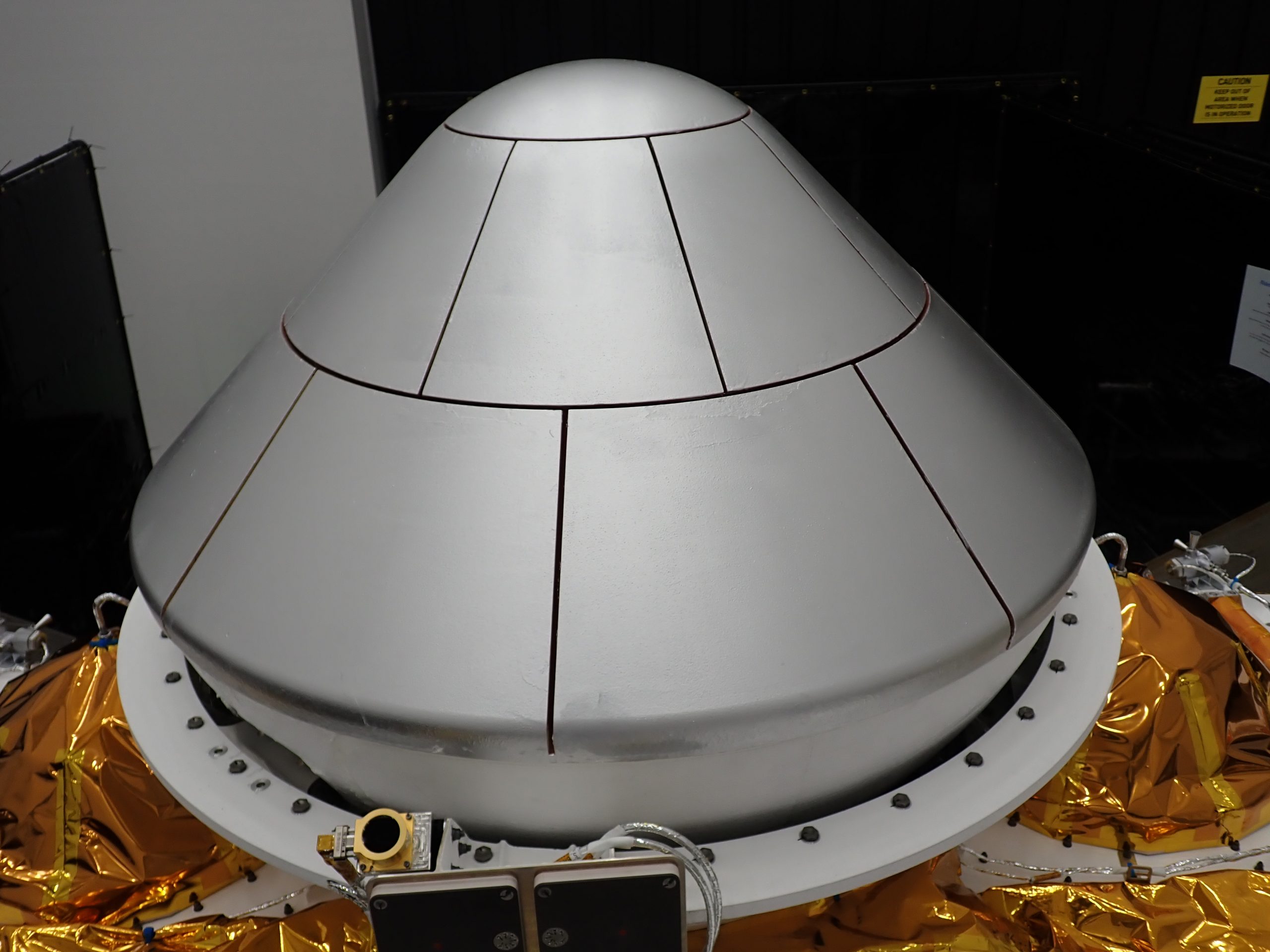
NASA Heat Shield Tech Contributes to America’s Space Industry – The Varda Space Industries W-5 capsule returned to Earth in Koonibba in South Australia on Jan. 29, 2026, with the protection of a heat shield made of C-PICA, a cutting-edge material licensed from NASA and manufactured by Varda. The capsule’s successful return marks the first time a capsule protected entirely by Varda-made C-PICA has come back to Earth.

The Varda Space Industries W-5 capsule returned to Earth in Koonibba in South Australia on Jan. 29, 2026, with the protection of a heat shield made of C-PICA, a cutting-edge material licensed from NASA and manufactured by Varda. The capsule’s successful return marks the first time a capsule protected entirely by Varda-made C-PICA has come back to Earth.

Read More
Landsat 9 Sees Buccaneer Archipelago

In the sparsely populated Kimberley region of Western Australia, jagged landforms reach like fingers into the turquoise-blue ocean waters. Along the coastline north of Derby, they used to reach even farther. But rising sea levels submerged part of the coastal landscape, giving rise to hundreds of islands and low-lying reefs that compose the Buccaneer Archipelago.

Read More